All posts by: Sarah Hansen, M.S. '15


UMBC ecologist Matt Baker partners with Chesapeake Conservancy to improve stream mapping

The Chesapeake Bay Trust, a non-profit organization dedicated to restoring the Chesapeake Bay, has recently funded a high-resolution mapping project that will inform restoration efforts in the Chesapeake Bay Watershed. Matt Baker, professor of geography and environmental systems and expert on ecological restoration, will contribute to the project by developing and studying cutting-edge stream mapping methods in partnership with the Chesapeake Conservancy.

Baker’s project will focus on mapping tiny headwater channels (the points where streams begin) that can be hard to detect with traditional mapping techniques. “Headwater streams turn out to be really important, because that’s where human activities have a much more direct impact on downstream conditions,” says Baker. He explains, “Headwaters are intimately involved in transporting whatever we put onto the landscape down toward larger systems and the Bay. They’re the places where the land-water connection happens.”

Baker’s project will use Light Detection and Ranging (LiDAR) to map select locations in a wide range of landscapes across the watershed, from mountains to coastal plains, agricultural fields to urban sewer outfalls. LiDAR directs laser pulses from aircraft down at Earth’s surface, and how quickly and the angle at which the pulses return to the aircraft are used to detect the land surface’s height and whether it’s covered by plants or water.

Although LiDAR generates detailed maps, “current computer algorithms can be fooled” by some terrain results, so a human interpreter is still needed to ensure accuracy, Baker explains. In an effort to improve how computers can do this work automatically, the project will test the performance of a variety of new algorithms in different physical settings.

A later phase of this work will attempt to map every stream in the six-state, 64,000-square mile Chesapeake Bay Watershed based on recommendations that Baker and the Chesapeake Conservancy make about which mapping methods will work best, and where.

Mapping streams, and especially previously unmapped headwaters, has major implications for protection of the watershed. “Currently, there’s some controversy over what constitute the ‘waters of the United States,’ which are protected by the Clean Water Act,” Baker says. Smaller headwaters may not be included if they haven’t been mapped. Although Baker is not in a position to decide which waterways make the legal cut, “We can provide information that can inform those decisions,” he says.

Also, mapping headwaters has a role to play in preventing pollution from reaching the Bay. “The stream network is really the circulatory system of the Bay watershed,” Baker says, “and getting a better picture of that is critical for understanding water movement, erosion, and how pollutants and wastes are transported, as well as what features are important for keeping the water clean.”

Overall, his project with the Chesapeake Conservancy is “a great example of a partnership among agencies, academia, and non-profits,” Baker says. “I’m a researcher, the Conservancy is a non-profit conservation organization, and we are working with state and federal agencies to give them a product they can use to better manage the restoration efforts in the Bay watershed.”

Image: Matt Baker, professor of geography and environmental systems. Photo by Marlayna Demond ’11 for UMBC.

Fourth annual Cangialosi Business Innovation Competition celebrates student entrepreneurs

At the fourth annual Cangialosi Business Innovation Competition, held on April 26, 2017, six finalists pitched their business ideas to a three-judge expert panel. The projects, selected from 33 contest entries, ranged from an innovative advertising platform to a solar-powered fresh water generator. The top three projects would receive a monetary prize, membership to BetaMore, and advice from members of the Baltimore Angels venture capital organization.

“The idea behind the competition,” says Greg Cangialosi ‘96, English, a long-time supporter of emerging business innovators from UMBC and across the region, “is to enable the students who want to become entrepreneurs to have the opportunity to manifest their reality.”

Mustafa Al-Adhami M.S. ’15, mechanical engineering, leads GermoSense, which took third place. He proposed a device that can quickly detect the efficacy of antibiotics against sepsis, which causes more deaths than prostate cancer, breast cancer, and AIDS combined each year in the United States. The current protocol can take up to a week to detect antibiotic efficacy, while Al-Adhami’s device would take only an hour. It’s also less expensive and more convenient. Time is of the essence in sepsis treatment, as survival rates drop rapidly if it goes untreated. Al-Adhami completed his master’s at UMBC’s Center for Advanced Sensor Technology (CAST) and is now pursuing a Ph.D. in mechanical engineering at CAST, after working there for a year as a research scientist.

Greg Cangialosi ’96 addresses the crowd at the Cangialosi Business Innovation Competition on April 26.

The four-person team behind Aerwell earned second place with a device that uses the principles of a dehumidifier to provide fresh water. About the size of a small doghouse, Aerwell uses solar power to run fans and takes advantage of near-constant temperatures underground to induce condensation. The team hopes to sell the device below cost in developing countries suffering from severe, long-term drought while turning a profit selling to microfarmers who want to use water-conserving farming techniques.

Noting that water stress is increasing worldwide, Christian Ingham ’17, mechanical engineering, says, “We’re really excited about how our technology could impact the world.” Other team members include Elyse Hill, Hannah Corcos, and Ben Hallett, who are all also senior mechanical engineering majors.

Chris Bodan ‘18, psychology, and James Baker, who studied mechanical engineering at Cooper Union, won this year’s competition with Aye-Aye, a device designed to provide a type of vision for people with vision impairments. It applies vibrations to a person’s back that the brain can interpret to form images. The venture’s first prototype involved a bike helmet and an XBox Kinect, but a second model the team demonstrated at the competition is much sleeker. The team plans to work with blind user testers and organizations that support the blind community to ensure Aye-Aye meets their needs, and to eventually seek FDA approval for the tool as an assistive technology. In the meantime, they hope to market it to gamers and explore other potential users, such as first responders who find themselves in low-visibility conditions like smoke or whiteout snow.

“This whole competition just allowed me to come out of my shell” and engage more with the campus community, Bodan shared, saying, “I’m really excited and inspired to work on this project.”

Igor Kuzmin ‘17 (left) and his friend Nick Shields make their pitch for Advertuozo, an innovative advertising platform, at the CBIC.

Markus Proctor ’16, interdisciplinary studies, who won the competition in its first year, agrees that the positive effects of crafting and pitching entrepreneurial projects can extend far beyond a particular business idea. “I’m still leveraging the benefits of the CBIC experience four years later,” he says. The program “puts the spark in education for students,” Proctor says, and he believes it is “one of the best learning vehicles at UMBC.”

Vivian Armor, director of UMBC’s Alex Brown Center for Entrepreneurship, adds that while the program “targets students who are very serious about starting a business in the next year or so,” she, Cangialosi, and program mentors “look at this as a learning opportunity for students.” Armor thanked the mentors for “helping to develop the next generation of entrepreneurs.”

The contest’s additional three finalists included Laptop Buyers, by Fabrice Pani ‘18, information systems; Hilltop Apparel, by Mohammad Marzooghian ’17, computer science, Peter Roberts ‘20, biological sciences, Sean Gawron ’20, physics, Jamen King ‘18, biochemistry and molecular biology, and James Seeman ’19, undeclared; and Advertuozo, by Igor Kuzmin ‘17, financial economics, and Nick Shields, computer science major at Howard Community College.

For Cangialosi, though, it wasn’t just about the top finalists or who won the competition that day. He had a message for all participating teams: By simply entering the contest, taking a chance on submitting their ideas, they had already taken the first essential step to succeed as entrepreneurs. Keeping an eye on the future, he said, “Let’s make things happen.”

Banner image: Mustafa Al-Adhami ’15, mechanical engineering, makes his case for GermoSense, which won third place at the CBIC on April 26. All photos by Marlayna Demond ’11 for UMBC.

UMBC celebrates Interdisciplinary Life Sciences Building groundbreaking

UMBC’s newInterdisciplinary Life Sciences Building (ILSB) is an answer to two questions, says Dean Bill LaCourse, of the College of Natural and Mathematical Sciences (CNMS): “What is UMBC going to be in the future?” and “What are our students going to need in the 21st century?”

The ILSB, scheduled for completion in summer 2019 on the footprint of the old Academic Services Building, will provide 70,000 square feet of flexible research and education space to support interdisciplinary, collaborative efforts in the life sciences. The building will primarily house labs and classes associated with CNMS, but the university also anticipates departments in the College of Arts, Humanities, and Social Sciences (such as geography and environmental systems) and in the College of Engineering and IT (such as chemical, biochemical, and environmental engineering) will utilize the innovative research and teaching facility.

Dean LaCourse addresses the crowd at the groundbreaking ceremony.

Speakers at the informal groundbreaking ceremony, held May 1 on the quad just before it closed for construction, focused on the flexibility of the building. The ILSB will create opportunities for “interdisciplinary research, active learning, and innovation,” said LaCourse. “It fits right in with the model of what UMBC is, with our reputation as an agent of change.”

Features of the new building include an observation and research lab to study pedagogy, eight active learning classrooms, and four teaching labs, which will all support innovative education for UMBC students. Twelve research labs will each accommodate three faculty members and their students, an environmental systems lab will allow field research on aquatic and other ecosystems, and specialized lab spaces will support activities such as cell culture.

Joe Rexing, director of UMBC design and construction, shared that UMBC has again partnered with the Maryland Public Art Initiative to include an art installation inside the building, as Thomas Sayre’s sculpture Forum appears alongside UMBC’s new Performing Arts and Humanities Building.

UMBC faculty and administrators celebrate the groundbreaking. From left: Phil Farabaugh, professor and chair of biological sciences; Kathleen Hoffman, professor of mathematics; President Freeman Hrabowski; Julie Ross, dean of the College of Engineering and Information Technology; Bill LaCourse, dean of the College of Natural and Mathematical Sciences; Karl Steiner, vice president for research.

The ILSB seeks to create spaces that encourage the kind of interdisciplinary work that UMBC has increasingly become known for, regionally, nationally, and internationally. “I like to use the word ‘convergent.’ We’re going to take the skills and expertise of our faculty and students and converge on societal problems,” says LaCourse. “By bringing people together, we’ll be able to do more than if we stayed in our individual silos,” he adds. The ILSB “is a symbol of our strength in diversity.”

Remarks from LaCourse, Rexing, President Freeman Hrabowski, and Provost Philip Rous also stressed the collaborative nature of the building design process. Faculty, administrators, and facilities management staff all played important roles in determining what kinds of spaces the ILSB would include. “All their decisions were not about what would be best for them as individuals,” said LaCourse, “but what would be best for student success, what would be best for the future of UMBC.”

President Hrabowski emphasized how the construction of both the Performing Arts and Humanities Building, completed in 2014, and the ILSB “represent the best of collaboration and interdisciplinarity, and also of community.” He also spoke to the future impact of the building.

“As we break ground today, I want you to think about the thousands of students and faculty over the next century who’ll be coming through this building,” Hrabowski said, “but even more, the thousands of lives that will be touched by our graduates and our research. I can’t think of a notion more powerful than that.”

Learn more about how the ILSB construction process may impact members of the UMBC community and campus visitors.

Banner image: Faculty and administrators “break ground” to celebrate the beginning of construction of the Interdisciplinary Life Sciences Building, slated for completion in summer 2019. All photos by Marlayna Demond ’11 for UMBC.

Third annual UMBC-UMB Partnership Symposium reveals impact of collaborative research

Researchers and campus leaders from UMBC and the University of Maryland, Baltimore (UMB) convened at bwtech@UMBC South on April 12 to celebrate ongoing research partnerships and announce a new round of Research and Innovation Seed Grants. The awards provide one or two years of funding for interdisciplinary projects with collaborators from both institutions, and are available to faculty in every college at UMBC and every school at UMB.

UMB President Jay Perman, who is also a physician, thanked the researchers for tackling challenging issues that transcend the boundaries between fields. “Your collaborative work empowers people like me to help improve the human condition,” he shared. “You need to know that your work is critically important.”

Wendy Perrow, CEO of AsclepiX Therapeutics, also emphasized the connection between research and clinical work in her keynote address. She encouraged attendees to “bring your technology to the market to help patients,” while acknowledging the many challenges along the way. Perrow’s wealth of experience includes launching a now-mainstream high-blood pressure drug and the first-ever chicken pox vaccine. Most recently, she played a key role in a breakthrough celiac disease drug entering stage three clinical trials.

Following Perrow, five teams who received funding last year presented updates on their progress. Xudong Ge, assistant director of the UMBC Center for Advanced Sensor Technology, and Richard Pierson, professor of surgery at UMB, presented the improvements they’ve made to a non-invasive respiration sensor for adults, children, and even babies. The device would be a boon for intensive care units. Its accuracy parallels that of traditional methods, without the potential to cause burns, a pitfall of current respiration monitoring technologies.

Tonya Santaus, Ph.D. student in Chris Geddes’ lab at UMBC, shared the development of a rapid, low-cost test for cholera. The lab is applying the same technology to tests for sexually-transmitted infections. “The goal is to get this to rural Africa and rural Haiti,” shared UMB collaborator Colin Stine, professor of epidemiology and public health. Geddes, professor of chemistry, added that while he and Stine have known each other for 15 years, it is “because of this grant [that] we’ve actually been able to work together.”

Elsa Garcin, UMBC associate professor of chemistry and biochemistry, presented her work with Patrick Wintrode, UMB associate professor of pharmaceutical sciences. Their research seeks to better understand how a molecule naturally found in cells, called GAPDH, is able to either activate or shut down another molecule known to contribute to autoimmune conditions and cancer. Eventually, that knowledge could be used to harness GAPDH to treat those conditions.

Soobum Lee, UMBC assistant professor of mechanical engineering, and Mary Melo, UMB clinical assistant professor of dentistry, explained how they intend to use the movement of people’s own jaws to provide the energy for deep brain stimulation, a proven treatment for some neurodegenerative diseases. The proposed new method would avoid the need for repeated surgeries to replace the battery.

Christine Mair, UMBC assistant professor of sociology, and Amanda Lehning, UMB assistant professor of social work, examine the relationship between neighborhood environments and cardiovascular health in Baltimore City to identify social determinants of health inequality such as violent crime and low social cohesion.

Don Engel, UMBC assistant vice president for research, and Terry Rogers, assistant dean of research affairs at the UMB School of Medicine, announced this year’s cohort of awardees. “We’re delighted to see this program reaching across many areas of both universities,” shared Engel. The new projects include research on oyster herpes, opioid addiction, and non-invasive neonatal glucose monitoring.

Closing the program, UMBC President Freeman Hrabowski reiterated the value and strength of the UMBC-UMB relationship. The $1.5 million invested so far in UMBC-UMB partnership grants has led to $15 million of external grant funding, a return on investment that indicates the effectiveness of the program. In a challenging federal funding climate, it is more important than ever to creatively collaborate to demonstrate the importance of scientific research and generate new funding sources, Hrabowski explained.

“We want to be strong in our commitment to investing in and supporting” collaborative work, said Hrabowski, of uniting inquisitive minds across the institutions. “Our very future, not just in Maryland, not just in America, but of humankind, in large part depends on [this] kind of work.”

Banner image: 2017 UMBC-UMB Partnership Grant recipients with the university presidents. From left to right: Jay Perman, President of UMB; Rose Viscardi, UMB School of Medicine; Leah Tolosa, UMBC Center for Advanced Sensor Technologies; Shaya Fadia, UMB School of Pharmacy; Michael Abrams, UMBC Hilltop Institute; Colleen Burge, UMBC Department of Marine Biotechnology; Matthew Frieman, UMB School of Medicine; Freeman Hrabowski, President of UMBC. All photos by Marlayna Demond ’11 for UMBC.

UMBC biologist Jeffrey Gardner explains how “bio-prospecting” may solve biotech challenges

Jeffrey Gardner, assistant professor of biological sciences, is prospecting for enzymes. The field of “bio-prospecting” has contributed to discoveries such as anti-cancer drugs and super-strong spider silk, Gardner explains in a new piece for The Conversation. He and his students are focused on finding enzymes that can break down long chains of sugars found in plants, called polysaccharides, with an eye on producing biofuels and other chemical products more efficiently.

“It takes unique microbes to produce the enzymes that will degrade plant polysaccharides,” Gardner writes, “…and they are found everywhere in nature, including the soil of your backyard.” Some of these enzymes have already proved useful for technologies like better detergents or biodegradable plastics.

The bacteria that produce the enzymes have specific methods for breaking down different polysaccharides. For example, a bacterium Gardner’s lab studies produces almost 200 distinct enzymes, which together can break down any polysaccharide found in plants. He explains, “We can adopt their methods to find solutions to real-world problems, such as creating better nutritional supplements, detergents, and fuels.”

Gardner has three main questions about the bacterium he’s studying and others like it: Why do they produce so many different enzymes? What does each enzyme do? And how does the bacterium use cues from the environment to regulate how much of each enzyme it produces at any given time?

So far, Gardner’s team has found that very few of the 200 enzymes the bacterium produces are actually required to break down cellulose, the primary component of plant cell walls. This smaller set of key enzymes may be very useful in industrial applications, such as next-generation biofuel production.

Although Gardner has a clear vision for the utility of his research, he is also adamant that bio-prospecting is worthwhile even if each study isn’t sure to produce the next big thing in biotech. “Many important discoveries, including the initial study of X-rays, green fluorescent protein and bacterial immunity to phages, started off as basic research,” he writes. “Over time, these fundamental studies developed, respectively, into the power to image broken bones, study cancer cells, and edit the genomes of many types of organisms.”

Still, Gardner is excited that his basic research is starting to turn up exciting applications. “As we continue to prospect for new enzymes,” he writes, “I expect that we will find solutions to many technical challenges by studying the fascinating ways microbes go about obtaining their next meal.”

Read Jeffrey Gardner’s full article and other articles by UMBC researchers at The Conversation. Gardner’s article is also available at Phys.orgIdaho Press-Tribune, and Lincoln Journal-Star, among others.

Update (6/15/2017): Learn more about Gardner’s research through a new segment on The Academic Minute, a WAMC national production supported by the Association of American Colleges & Universities.

Image: Jeffrey Gardner (fourth from left) and members of his lab, fall 2016. Photo by Kartik Joshi.


UMBC a case study for success supporting STEM students of all backgrounds

In a new article for Issues in Science and Technology, President Freeman Hrabowski and Peter Henderson, senior advisor to the president, describe the concerning continued underrepresentation of minorities in the STEM workforce, and what UMBC has done to tackle this problem head-on.

“If the nation’s policymakers and education leaders take the deliberate steps needed to expand the participation and success of underrepresented minorities in STEM based on what we know works,” they write, “success is possible.” But there’s a long way to go.

A 2011 report published by the National Academies, Expanding Underrepresented Minority Participation: America’s Science and Technology Talent at the Crossroads, noted that only 9.1 percent of the U.S. STEM workforce identified as African American, Hispanic, or Native American, compared to 28.5 percent of the nation’s overall population. Also, only about 20 percent of black, Latino, and Native American students who started in STEM majors graduated with a degree in a STEM field within five years. White and Asian American students did not fare well either, but their degree attainment rates were notably higher (33 and 42 percent, respectively).

“This is not a problem for minorities only; it’s a national problem,” write Hrabowski and Henderson. “To solve the problem, we in academia just need to look in the mirror.”

Since the 2011 report, there has been little overall movement in the national statistics. Some institutions, however, have made significant progress in supporting students from underrepresented groups to achieve success in advanced degree programs and careers in STEM. Hrabowski and Henderson cite several deliberate steps UMBC has taken to more effectively support underrepresented minority students in STEM.

At the highest levels, UMBC has rejected the concept of “weed-out” courses, which assume it is inevitable that only a small portion of students can succeed. Instead, the university has held firm that the institution is responsible for supporting student success across the board.

Faculty have redesigned introductory and other courses accordingly, and the article highlights UMBC’s Anne Spence in mechanical engineering, Taryn Bayles formerly of chemical engineering, and Jeff Leips in biological sciences for their work with pedagogical techniques like the “flipped classroom” approach and team-based learning. The authors also spotlight Dean Bill LaCourse, of the College of Natural and Mathematical Sciences, who spearheaded the creation of the Chemistry Discovery Center, an interactive learning space for introductory chemistry courses.

Federal agencies have also joined the effort to increase minority participation in STEM. UMBC is involved in the NIH’s Building Infrastructure Leading to Diversity program, as well as NSF programs including the Louis Stokes Alliances for Minority Participation, Alliances for Graduate Education and the Professoriate, and Maximizing Access to Research Careers Undergraduate Student Training in Academic Research.

UMBC is perhaps best known for its Meyerhoff Scholars Program, founded in 1989 and now over 1,000 alumni strong, which provides students with financial, academic, and social support as well as professional development and intensive mentorship. Graduates of the Meyerhoff program are five times more likely to earn doctoral degrees than students who were admitted to the program but chose to attend another university, and the Meyerhoff program’s success has led to an $8 million investment from the Howard Hughes Medical Institute to adapt the program at Pennsylvania State University and University of North Carolina at Chapel Hill.

“The strategy is to deliberately form a sense of belonging and community that nurtures the students,” write Hrabowski and Henderson.

As a result of all these efforts, UMBC has climbed the list of institutions that best support minority students in STEM. Today, UMBC graduates the most black students who go on to complete M.D.-Ph.D. degrees in the nation, and only follows MIT for the percentage of black undergraduate degree recipients who go on to earn Ph.D.s in STEM. UMBC is also the sixth top university in graduating black undergraduates who then earn doctoral degrees in any field, with the top five all being Historically Black College and Universities.

“We must identify and learn from institutions that have been successful in educating African American undergraduates in the natural sciences and engineering through a focused effort,” write Hrabowski and Henderson. Additionally, they note, “We have learned that a campus that helps underrepresented minority students is also one that helps students in general.”

Now, “the nation must decide whether or not it will take the path leading to a science and technology talent pool…that draws from people throughout our population,” Henderson and Hrabowski suggest. “It is only by tapping all of that talent pool that the country will succeed in realizing the economic, security, and health goals the American people prize.”

Read the full article, “Toward a more diverse research community: Models of success.”

Image: President Hrabowski speaks with students in the UMBC Commons. Photo by Marlayna Demond ’11 for UMBC.

Reimagined Graduate Research Conference focuses on clear communication across all fields

The 2017 Graduate Research Conference (GRC) at UMBC delivered on its theme, “diversity across disciplines,” with research talks, posters, and keynote speakers in areas from history to atmospheric physics. The event also celebrated and encouraged interdisciplinary research and creative achievement.

“The boundaries between traditional disciplines are dissolving as our human curiosity leads us to understand much more complex issues,” shared Provost Philip Rous. He pointed to UMBC’s emphasis on inclusion as a boon toward that end. “Advancing our research mission,” he said to the attendees, “is inextricably linked to our ability to bring together students, faculty, and staff of diverse backgrounds to work together on the most challenging social, scientific, and humanitarian problems we face today.”

That’s exactly what happened at the GRC on March 29. In a panel highlighting work related to climate change, Marshall Washick, emergency health services, presented his proposed research on the relationship between tuberculosis and air pollution in South Africa, Alexandra St. Pé, geography and environmental systems, discussed her work on the under-performance of offshore wind farms, and Michael Battaglia, Jr., chemical, biochemical, and environmental engineering, addressed how urban heat islands affect the chemistry of tiny particles in the air.

In another panel, Shawntay Stocks, language, literacy, and culture, described research utilizing critical race theory just before Chrissie Reilly, media and communication studies, discussed how the film Jiro Dreams of Sushi demonstrates complex relationships with consumption, with both talks touching on the session’s “media manipulation” theme.

“Mechanical engineers and historians are here in the same room talking to one another,” said Dean Scott Casper, of the College of Arts, Humanities, and Social Sciences. “That is what is really exciting about today.” Casper encouraged students to use the opportunity to hone their communications skills, both by presenting their own work and observing techniques others use to share complex ideas in different fields.

In his featured talk, Casper discussed specific techniques to improve one’s presentation, such as knowing your audience and catering to what they want to get out of the experience. No matter how excited researchers are about their work, he said, it’s “translating that enthusiasm into a form that people who are not as immersed in the work as you will understand, appreciate, and enjoy that is really the key to great presentations.”

In addition to the panels and microtalks, four students tested their communication skills by competing in the international Three Minute Thesis competition, where each presented a summary of her graduate thesis in three minutes. Janae Baptiste, chemistry and biochemistry, won second place from the judges and first place from the audience for her presentation on research in Michael Summers’ lab on Feline Immunodeficiency Virus, the cat version of HIV. Denise Williams, chemistry and biochemistry, took first place for her talk on the toxicity of quantum dots—luminescent nanomaterials with a wide range of potential applications—based on her research in Zeev Rosenzweig’s lab. She will represent UMBC at the Council of Southern Graduate Schools regional competition. Both Baptiste and Williams are Meyerhoff Graduate Fellows.

Onimi Jademi, vice president of the UMBC Graduate Student Association, chair of the GRC planning committee, and a Ph.D. student in information systems, shares, “The GRC provides a platform for all graduate students, across all disciplines and at all levels and stages of research, to discuss and exchange ideas.” Interactions with faculty, staff, and students from every corner of the university are a major advantage of the event, she explains, offering unique feedback to developing researchers, artists, and scholars.

“GRC is not just a melting pot,” Jademi says, it’s an opportunity for graduate students to try out, retest, and “mold ideas and communication styles” that will help them connect with fellow researchers and the public throughout their careers.

Banner image: Alexandra St. Pé answers a question about her research on wind turbines during a panel discussion. All photos by Marlayna Demond ’11 for UMBC.

UMBC research team develops statistical analysis to enable targeted cancer drug development

A new study led by Thomas Peterson Ph.D. ’16, biological sciences, reveals thousands of previously ignored, rare mutations that likely contribute to cancer. Peterson conducted the work as a student in the lab of Maricel Kann, associate professor of biological sciences, with additional contributions from Iris Gauran, Ph.D. student; Junyong Park, associate professor; and DoHwan Park, assistant professor, from the UMBC department of mathematics and statistics.

The research applied an innovative statistical analysis to genetic data from cancer patients. It focused on functional regions in proteins (called protein domains) within protein families that include proteins already implicated in cancer. Within this framework, even mutations that only appear in one or two patients could be considered meaningful if the mutations are in the same position in the protein domain as in other proteins in the same family.

The new method is “a really good way to identify important variants that you wouldn’t normally find in traditional methods,” says Peterson, “because we can look across gene families, which is something we normally don’t do.”

By identifying domains that are more likely to contribute to cancer, which the authors dub “oncodomains,” this study could help scientists prioritize particular areas within the very large field of cancer research. Their approach encourages drug development targeting the function of these domains, and because the domains are the same across so many proteins, it is possible that a single treatment could tackle cancers caused by a broad spectrum of mutated proteins.

It may even be possible to use the same statistical methods to help identify mutations that cause rare diseases. Many rare diseases may be caused by mutated proteins in the same families as those that cause more common diseases with more available data. Looking at protein domains across patients with several different diseases could point researchers toward the mutations that are most likely to be involved in causing a rare disease, even if there are only data from very few patients.

“Maybe only two patients have a mutation in a particular protein, but when you realize it is in exactly the same position within the domain as mutations in other proteins in other patients,” says Kann, “you realize it’s important to jointly investigate those different mutations.”

Peterson started in Kann’s lab as an undergraduate as a system administrator for her databases. Eventually, he shifted gears to independent research, and Kann found a project that tapped into his passion and curiosity. After publishing three papers as an undergraduate, Peterson decided to pursue graduate work in Kann’s lab and solidified his career path as a bioinformatician.

Now a postdoctoral fellow at the University of California, San Francisco, Peterson is expanding on the work he completed while at UMBC, and he remains connected to Kann’s lab by helping to train her new students to pick up where he left off.

“Tom made me realize how important it is for a mentor to find the project that best matches the student,” says Kann. “Nothing motivates a student more than working on a project he is passionate about.”

See the original article, Oncodomains: A Protein Domain-Centric Framework for Analyzing Rare Variants in Tumor Samples in PLOS Computational Biology.

Image: Model of the structure of a kinase, a protein and enzyme. Positions that are most often mutated in disease (yellow, orange, and red, left) correspond with positions that are involved in the kinase’s primary function (blue, right). Figure 3 from Peterson et al. (2017).

Ecologist Matt Baker discusses the health of our streams in new interview

Matthew Baker, professor of geography and environmental systems, sees an uncertain future ahead for the health of our streams, while the services they provide—from diluting pollution to generating energy—are only becoming more important.

“As human populations grow,” Baker says in an interview with the Ohio Valley Resource, “land transformation is degrading stream ecosystems at a truly historic pace.” Development for housing and agriculture are major causes of that transformation. Many people suggest we can easily, or at least eventually, fix whatever we break in an ecosystem, Baker says, but that may not be accurate, as we’re still working to understand the intricacies of how stream systems function.

“It’s tough to design what we don’t fully comprehend,” Baker says, with the result that most attempted restorations only address one component of an ecosystem, sometimes with negative effects on other elements. In addition, restoration efforts often address symptoms of stream damage, rather than underlying causes, so any positive outcomes may disappear only a few years later.

As a researcher focused on watershed ecology, Baker says it’s frustrating to see these efforts fail. “It’s sad…because the folks that designed and built it had the best intentions and relied on the best available science at the time,” he shares.

Baker argues that stream restoration projects need to be organized at the watershed level, rather than focusing on a single polluted stream or algae-swamped lake. But without comprehensive knowledge of how the watershed works as a biological system, even these well-intended and -informed projects can have undesirable consequences.

“I don’t want to criticize those efforts,” says Baker, “because they have the right idea, but neither do I want to communicate that we’ve got everything figured out.”

On top of the major challenges of better understanding complex stream ecology and the impacts of human actions on streams, Baker says, “Current regulations are not adequate for protecting streams and their watersheds.” Further, some economic-based regulations, like those that allow developers to pay for restoration elsewhere while damaging ecosystems where they are, may not even be effective.

Still, while there is significant difficult work ahead to develop effective stream health improvement projects, Baker says he remains steadfast in moving forward with evidence-based restoration efforts: “…it is a work in progress.”

Read the full interview, On restoration: A scientist’s concerns. Part of the interview was broadcast on NPR’s Here and Now segment,In coal country, environmental regulations are creating jobs.”

Image: Matt Baker launches a drone to take photographs of a dam on the Patapsco River that is in line for removal. Photo by Andy Miller.

UMBC’s Deborah Rudacille awarded Guggenheim Fellowship to pursue writing project on addiction

Deborah Rudacille, professor of the practice in English, has received a Guggenheim Fellowship for Science Writing. She is one of only two recipients in the category this year, and one of 173 new fellows in all fields, selected from a pool of more than 3,000 applicants from the U.S. and Canada.

Rudacille will spend the 2017 – 2018 academic year researching and writing “The Family Disease: Alcoholism, Addiction, and Inheritance.” This work continues her legacy of writing about scientific topics for broad public audiences in a way that is engaging, nuanced, and resonates with her readers.

The English professor’s previous writing has focused on topics such as gender identity, working class communities, animal rights, and autism. “In all of my work,” she shares, “I’m always trying to illuminate something that I feel is not very well understood.”

“I think the more knowledge that is generated and the more we understand things, sometimes things that we find very scary or frightening, the better we are able to make good policy decisions and personal decisions on the basis of science,” Rudacille explains.

In her new project, Rudacille plans to focus on how addiction affects family, friends, and colleagues of those who struggle with it, noting that almost everyone has been touched by addiction in some way. She’ll interview people struggling with addiction or in recovery and their personal networks, as well as researchers in fields such as neurobiology, genetics, psychology, and sociology.

“I’m a believer in the disease model of addiction, but I’m also not discounting the social factors,” Rudacille notes. “I’m interested in teasing all that out and also helping to reduce the shame and stigma around addiction.”

“One of the things I admire most about Deborah’s work is her dedication to articulating the stories…of those who cannot or will not speak for themselves, as well as her willingness to attend to the historical context that informs these stories,” shares Orianne Smith, professor and chair of English.

Dean Scott Casper, of the College of Arts, Humanities, and Social Sciences, says, “With the Guggenheim Fellowship, Professor Rudacille is being honored for what makes her work so exemplary, and so important for UMBC: her humanistic approach to essential scientific issues.”

After publishing several books, Rudacille shifted her focus to teaching and shorter writing forms. She joined the UMBC faculty in 2012, and since then has created four new courses and taken steps with colleagues in the English and biological sciences departments to develop a minor in science writing. When she returns to UMBC, Rudacille says, “I’m sure I’ll develop new courses based on having the time to think through ideas about new approaches and new topics.”

“I believe part of what I’ve been doing at UMBC is giving students the same kind of support that I received from my many mentors as I grew my career, and also passing on skills to my students,” says Rudacille. “In another 10 or 15 or 20 years, one of them is going to be getting a Guggenheim or a Pulitzer or some other prize and I’ll be able to say ‘I taught them!’”

Image: Deborah Rudacille outside the Performing Arts and Humanities Building at UMBC. Photo by Marlayna Demond ’11 for UMBC.
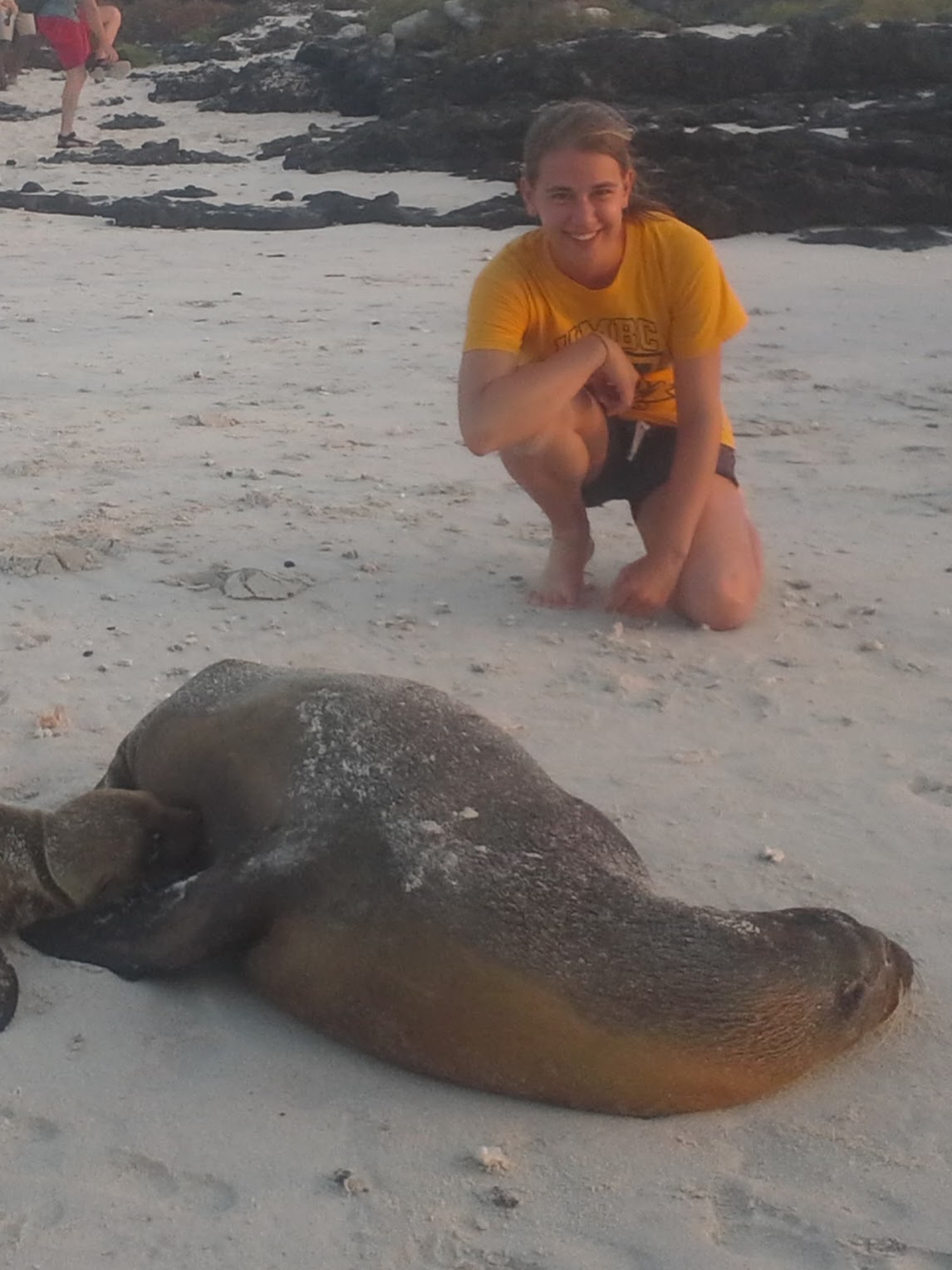
New UMBC study highlights importance of multinational conservation efforts for migratory shorebirds

Populations of iconic birds that spend most of the year in Australia have been declining for decades, despite conservation efforts. A new study has revealed a major hurdle far from the birds’ Australian habitat—a problem that can’t be solved through science alone.

“We’ve seen bird populations plummeting in Australia,” says Colin Studds, “but the thing affecting their populations is actually happening thousands of miles away in China.”

Studds, assistant professor of geography and environmental systems at UMBC, shows in a new study in Nature Communications that a critical factor in the shorebirds’ decline is how dependent they are on mudflats in the Yellow Sea, between China and South Korea, during migration.

The shorebirds, including species of godwit, curlew, and sandpiper, are “cultural keystones” in Asia, says Studds, and some are found nowhere else in the world. “They’re so visible they help people understand biodiversity loss, which in this case happens across borders.”

Many of the birds follow a migratory path from their non-breeding grounds in Australia to breeding sites in the Arctic, via rest stops in the Yellow Sea—a corridor known as the East Asian Australasian Flyway (EAAF).

“These birds may spend several weeks refueling before they continue their migration,” says Studds. Scientists have long believed that degradation in the quality of stopover sites could be related to population declines, but, Studds says, “There was no smoking gun.”

Studds’ new study provides one. He analyzed citizen science data collected between 1993 and 2012 on 10 key species to see if a relationship emerged between reliance on the Yellow Sea as a migration stopover and rate of population decline. What he found was dramatic. The more a species relied on the Yellow Sea mudflats, the faster they were declining. Even though the birds only spend 1-2 months of the year at the mudflats, it was the most important factor in determining the population trend, Studds found.

As a researcher, Studds seeks “to understand what influences population trends of migratory animals,” he says, with a particular focus on the effects of changing land use and climate. “For different species, a different part of the year may be the key part of whether their populations rise or fall.”

Collaboration among scientists was critical for the success of the study, Studds emphasizes. The work that led to this result “started over 40 years ago, when people had the vision and anticipated the need to count birds across the entire continent,” he shared. “It’s only that prescience that allowed us to answer this really important question.”

The birds need protection, but implementing conservation policy can prove difficult, Studds notes. “There are multilateral agreements in place on paper”—most notably the EAAF Partnership, a grouping of 36 governments and other organizations, but the pace of change on the ground is frustratingly slow,” he explains.

The results of Studds’ study stress the need for international cooperation, despite these challenges. “If we’re going to halt these declines and hopefully someday reverse them,” he says, “it will take commitment from all the countries involved.”

Image: An Eastern Curlew; photo Dan Weller.

UMBC’s Deffner finds “quantum speed limit” may put brakes on “quantum supremacy” in computing

Even computers make mistakes. In classical computers, tens of thousands of atoms are involved in each computation, so the system can tolerate a few mistakes and still give correct output. But in quantum computers, information is stored in single electrons, leaving no room for error.

Special techniques now allow quantum systems to operate quickly and free of errors, but speed comes at a cost. Sebastian Deffner, assistant professor of physics at UMBC, and colleague Steve Campbell, postdoctoral fellow at the National Institute of Nuclear Physics in Italy, have coauthored a study calculating that cost for the first time.

Theory suggests the tantalizing idea that using these techniques results in error-free, incredibly fast computing with no additional energy input. In practice, though, Deffner and Campbell found a correlation between a quantum process’ speed and its energy requirements. In other words, explains Deffner, “If you want to go infinitely fast, you have to pay an infinite price.”

The tradeoff between speed and accuracy in computing is why researchers have developed shortcut techniques that allow quantum systems to operate more quickly and still be reliable. But Deffner and Campbell’s work suggests there is a limit to how fast a quantum system can actually go.

“There’s this notion of ‘quantum supremacy,’ which means that quantum computers are exponentially more powerful than classical computers,” explains Deffner. “Well, if you have to operate these quantum computers infinitely slowly to avoid errors, they’re totally useless. This is where these quantum speed limits come into play.”

The “quantum speed limit” dictates the minimum time it takes for a bit of information in a quantum system to transform from one state to another. That time can be very brief, but never zero. As a result, “I don’t think you can universally say that quantum computers will be faster than classical computers,” says Deffner. Because of the quantum speed limit, classical computers may always be faster for certain applications.

While theorists may not be so concerned about the energy costs of quantum computation, understanding costs is critical for researchers working to develop real-world applications like engines made of single atoms. If a system requires a huge amount of energy to run quickly and also accurately, explains Campbell, “then your engine is useless because you’re putting more energy in than you’re getting out.”

With this finding, “There are many interesting problems that we now can attack,” says Deffner. This paper focused on one of several shortcut techniques, but future work could look at the others. He explains that more research could “give experimentalists a guideline: For this process, you might want to use this technique, but for another, you might want to use something else” for greatest efficiency.

In addition to contributing to the quest for optimal quantum computing, “none of these concepts are restricted to quantum technologies,” Deffner says. “These shortcuts are something that we can also imagine in a biological system.” After all, most biological processes are facilitated by enzymes, proteins that speed up chemical reactions that otherwise would occur too slowly to be useful.

While it’s still conjecture at this point, Campbell says, “There’s an obvious analogy” when you look at living organisms. Follow-up research could help solve a longstanding mystery. As Campbell puts it, “How does a biological system manage to do it, when we can’t in the lab with all of our fancy technology? There must be something there.”

Image: Sebastian Deffner, courtesy Sebastian Deffner.