All posts by: Sarah Hansen, M.S. '15


‘You’re outta here!’: UMBC physicists explain black hole ejected from center of galaxy

A team of researchers including UMBC’s Eileen Meyer and Markos Georganopoulos have found strong evidence of a striking astrophysical phenomenon: a supermassive black hole traveling away from the center of its galaxy at an incredibly rapid pace.

A scenario like this has been predicted for some time. “The theory is great, but we’ve got to have some observations to see if our simulations are correct,” says Meyer, assistant professor of physics. Those observations are now in hand, with copious lines of evidence all supporting the team’s explanation.

“There have been previous cases of systems like this,” says Georganopoulos, associate professor of physics, “but ours is the most solid case.” Meyer adds, “It’s the only one I can think of where all the little pieces of evidence line up in favor of this scenario very specifically.”

When two galaxies with black holes at their centers merge, gravitational forces pull the black holes to the center of the newly-formed galaxy. The black holes spin around each other, gradually slowing down. This process releases gravitational waves—ripples in the fabric of spacetime that travel outward at the speed of light. Depending on the relative rotational speeds of the two original black holes, once they merge the new black hole may be kicked out of the galaxy’s center by the gravitational waves.

Video produced by NASA, accessed on Hubble’s site here.

Data collected by the Hubble Space Telescope and other sources confirm that the black hole’s speed  and position—approximately 4.8 million miles per hour, offset from the center of its galaxy—are consistent with the team’s explanation that the black hole has been powerfully ejected from the galaxy by the force of gravitational waves.

First author Marco Chiaberge, research scientist at the Space Telescope Science Institute at Johns Hopkins University, approached Meyer and Georganopoulos almost two years ago to help interpret the surprising data. Georganopoulos shares, “For me, the most exciting thing was to go from the raw data to building up a scenario—gradually realizing that the other scenarios are very implausible.”

Although alternative explanations are unlikely, the team still wants to collect additional observations to further confirm their interpretation. They’re submitting a proposal for time on the Atacama Large Millimeter Array (ALMA), a powerful telescope in Chile that could help them answer remaining questions.

“At the same time that it creates the opportunity to solidify our model, it’s also an opportunity to falsify it,” says Georganopoulos, of the possible opportunity to use the array in Chile, and the importance of remaining open to new interpretations of the data.

Either way, it will be exciting research. “Even if it doesn’t turn out the way we’re expecting,” says Meyer, “this is still a strange and remarkable system that needs to be studied.”

See the NASA press release and other media coverage of this new research in New Scientist, Washington Post, Science, Laboratory News, Sky and Telescope, TrendinTech, The Daily Galaxy, Sputnik International, and others.

Image: NASA’s Hubble Telescope collected this image of a bright quasar, a proxy for the presence of a black hole, far from the galaxy’s center.

CRESST II space science consortium to receive $87.5 million from NASA Goddard

The Center for Research and Exploration in Space Science and Technology (CRESST II) is prepared to embark on a new era of innovative research and teaching with the commitment of $87.5 million from the National Aeronautics and Space Administration (NASA) Goddard Space Flight Center.

UMBC and the University of Maryland, College Park are the leading partners in a consortium formed to compete for this program. New consortium partners under this renewal agreement include Howard University, Catholic University of America, and the Southeastern Universities Research Association (SURA).

CRESST was first launched in 2006 under a ten-year cooperative agreement. The CRESST II agreement is valued at $87.5 million over the next five years, and provides for a renewal option for another five years.

“We are very proud of our long-term relationship with NASA Goddard,” states Karl V. Steiner, UMBC vice president for research. “The CRESST II program builds on the complementary scientific strengths at both UMBC and at College Park, and highlights the value that strong USM partnerships bring to the federal labs in Maryland and their national and global scientific missions. We are especially excited to grow our partnerships with Howard University, Catholic University and SURA. ”

The funding will primarily be used to support CRESST scientists who will work on specific, short-term projects at NASA’s Goddard Space Flight Center in Greenbelt, MD. The collaboration “opens up a broad range of projects in hardware, theory, and observation,” says T. Jane Turner, professor of physics and director of the Center for Space Science and Technology (CSST), the UMBC arm of CRESST.

CSST represents one of three major Cooperative Agreements between NASA Goddard and UMBC.  The other two are the Joint Center for Earth Systems Technology (JCET) and the Goddard Planetary Heliophysics Institute (GPHI).

This partnership provides significant opportunities for university scientists to make major contributions to space science through cutting-edge research in areas like high energy astrophysics, gravitational waves, exoplanet exploration, and the study of planets within our own solar system. Additionally, says Turner, “We offer these scientists an enhanced career path,” by seamlessly connecting them with classroom experiences that relate to their work in the lab.

Turner explains that CSST scientists get “the best of both worlds—the research, networking, and facilities at Goddard and the opportunity to get teaching experience and work with graduate and undergraduate researchers here. There’s a symbiosis.” In turn, the program creates opportunities for UMBC students to learn from expert space scientists in the classroom and the lab, and to contribute to innovative and impactful research.

“This grant—and the important partnership it represents—will enable us to continue research that advances science and benefits our state and beyond,” says President Freeman Hrabowski.  “Moreover, it will create opportunities for students to prepare for careers by working alongside world-class experts.”

NASA also benefits from the educational aspect of the work, as many students go on to postdoctoral and research scientist positions with the agency. “Goddard loves new talent,” says Turner. “They want to have young people involved, and there’s a lot of work that’s really suitable for providing research experience to the students.”

“NASA has played a key role in making the Baltimore region a national leader in scientific research,” says Congressman Elijah Cummings. “This grant will help UMD and UMBC to continue providing students from diverse backgrounds with opportunities to learn and grow so they can launch successful careers in STEM fields.”

Turner is particularly excited to collaborate with the new partners through this new, expanded stage of the consortium’s work. She’s looking forward to “bringing together other local astrophysics students and networking them in,” which aligns with UMBC’s mission to diversify the scientific community. Turner is also working with UMBC’s Meyerhoff Scholars Program to help undergraduates obtain summer internships with NASA through CRESST II.

The renewal is here just in time to create an all-around win. “Several exciting projects are now ramping up at Goddard,” says Turner, “and our scientists and students will move that work forward.”

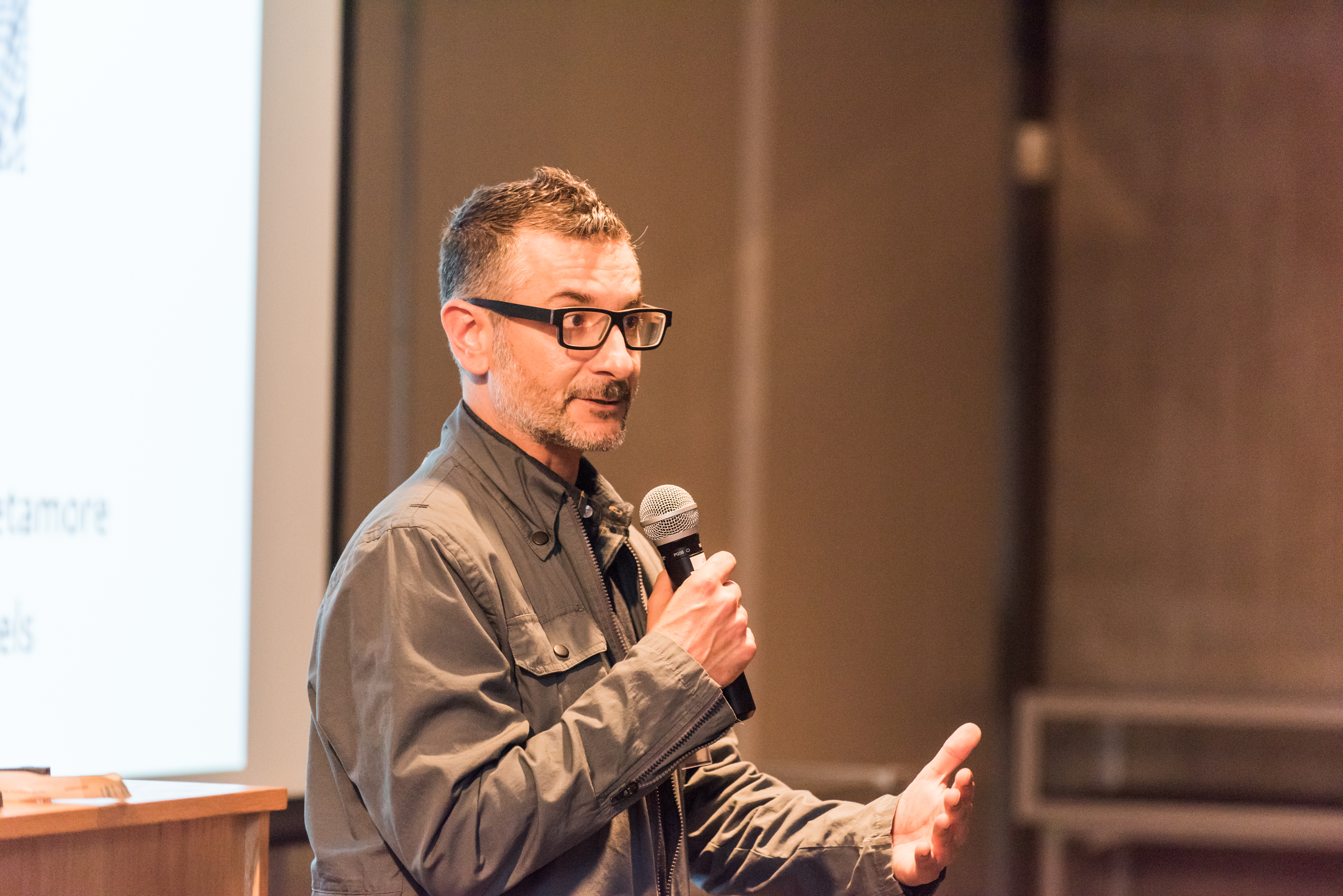
Image: Jan Merka, GPHI director; T. Jane Turner, CSST director; and Belay Demoz, JCET director (l to r). Photo by Marlayna Demond ’11 for UMBC.
The CRESST II renewal has also been featured in The Baltimore Sun, The Daily Record, Baltimore Business Journal, and Washington Business Journal.

Colin Studds discusses how climate change affects seasonal rhythms on WYPR’s On the Record

February 2017 in Baltimore was 8.5 degrees warmer than average, and 1 degree warmer than an average March. The Washington, DC cherry blossoms were forecast to bloom up to two weeks ahead of their average peak before an unusual cold snap sent the region several inches of snow. Are these shifts an impact of climate change? Colin Studds, assistant professor of geography and environmental systems at UMBC, spoke on WYPR’s On the Record about how climate change is affecting phenology—the seasonal rhythms of the natural world—from migration, to hibernation, to blooms.

Studds outlined some of the challenges animals face as a result of changing temperatures and rainfall. For example, migratory birds that winter in the Caribbean have no way of knowing spring has come early in their mid-Atlantic breeding grounds. “By the time they arrive here, they’re really late,” Studds says—the birds have missed the peak availability of food they rely on. “They have to work that much harder to feed their young,” he says, which can result in reduced survival of the offspring.

Drought, another effect of climate change, makes it harder for birds to find enough food to build up the fat stores they need to begin an arduous migration, so they often end up leaving late. As a result, Studds says, “They have to migrate even farther north to find that sweet spot where they can have their young.” And if spring has come early, he says, that results in a “one-two punch” for the birds.

Studds shared several other examples of how climate change is altering seasonal rhythms, from cherry blossoms to pollinators to hibernating bears. Some species, especially those with large geographic ranges who aren’t picky about habitat, will have an easier time adapting to change, he notes. Some birds and insects have already shifted farther north. This adaptability can sometimes have concerning consequences, such as mosquitoes bringing diseases to the U.S. that were once confined to the tropics.

In other cases, animals aren’t able to adapt quickly. “Some species have really particular habitat requirements,” says Studds, “and these are the kind of species that can be marooned as climate change goes forward.”

And what about plants? “There’s a huge question mark,” as to whether plants will be able to shift their ranges, Studds says. “We just don’t know if plants will be able to do that. We’ve built a lot of barriers,” like highways and housing developments, he explains.

“Birds are the proverbial canary in the coal mine,” says Studds, because there’s ample data, mostly collected by citizen scientists.

The Japanese cherry blossoms are another useful indicator, having been tracked since the 11th century. “It’s not until the beginning of the 20th century, and the 1950s, where we start to see a big trend for much earlier blooming,” he says.

“In nature, timing is everything,” says Studds. As climate change affects different seasonal processes in different ways, he reflects, “It means everything is out of sync.” One thing is fairly certain, however. “We’re probably headed for a much warmer world.”

Listen to the entire interview, “Out of Sync in a Warming World.”

Image: Cherry blossoms at peak bloom. Photo by Ilsa Borbély, CC license 2.0.

UMBC’s JCET researchers discover new wrinkle in the role of clouds in climate change

Clouds continue to be one of the greatest sources of uncertainty in climate change models. At night, clouds keep Earth warm by preventing heat from escaping. During the day, most clouds cool Earth by keeping some sunlight from reaching the surface. Understanding the balance of these opposite effects on a global scale, as clouds constantly form, move, and break up, is a major challenge to climate forecasting.

Jasper Lewis and Simone Lolli, scientists at UMBC’s Joint Center for Earth Systems Technology, contributed to new research that reveals clouds’ effects on climate may be even more complex than previously understood. The study focuses on cirrus clouds, the wispy ribbons that float up to 20 km above Earth’s surface.

Cirrus clouds are known to contribute minimally, if at all, to cooling during the day because they are so thin. Lewis and Lolli’s study was the first to show that cirrus clouds can sometimes cool Earth during the day, depending on factors like the cloud’s thickness, height, and the temperature. “A cooling effect during daytime was something before known only in theory,” says Lolli, “but for the very first time we verified it with measurements.”

The study, led by the Naval Research Laboratory in Monterey, California and in collaboration with UCLA, analyzed 2012 data collected by the NASA Micro Pulse Lidar Network (MPLNET) at Goddard Space Flight Center. The team’s previous work used data from NASA’s CALIPSO, an orbiting satellite.

“With the satellite you get many locations, but only one measurement per day,” said Lolli. “With ground-based instruments you can take measurements 24 hours per day.”

These measurement capabilities offer a huge advantage if you’re looking for variations between day and night. The copious data also allow the team to hypothesize how cirrus clouds affect climate differently across seasons and latitudes, which is critical to understanding global energy balance.

The research improved on previous work because Lewis designed new protocols to analyze the data, taking into account the huge size of cirrus clouds (up to hundreds of kilometers across) and their high elevation, which creates noise in the data.

Lolli’s task was to input the data into an existing model to determine whether the clouds were warming or cooling the atmosphere, a process known as “climate forcing.” Data input posed a major challenge, as the type of data MPLNET collected was not in a form the model could use. Lolli had to convert the data into something the model could accept, which required significant time, attention to detail, and, as Lolli puts it, a lot of math.

Recognizing the team’s innovative methodology and groundbreaking study results, the Naval Research Laboratory just honored Lewis and Lolli’s paper with the 2016 Alan Berman Research Publication Award. According to the award ceremony program, these competitive awards “not only honor individuals for superior scientific accomplishments in the field of naval research, but also seek to promote continued excellence in research and its documentation.”

For Lewis, the best part about receiving the award “is recognition of the significance of the work that you’ve done.” Lolli adds, “It’s very important, because it’s motivation for others to get going in this area of research.”

“Uncertainty about climate forcing is one of the big things that people don’t fully understand yet” in climate science, Lewis shares, “so this is a small step in the direction of moving that understanding a bit further.”

Read “Daytime cirrus cloud top-of-the-atmosphere radiative forcing properties at a midlatitude site and their global consequences in the Journal of the American Meteorological Society.

Image: NASA’s CALIPSO satellite, used to collect data for Lewis and Lolli’s previous work. Artist rendering from NASA Goddard Space Flight Center.

UMBC mathematician and novelist Manil Suri offers a cure for math anxiety on WYPR

“Yes, there’s no doubt about it,” says Manil Suri: Large numbers of Americans suffer from math anxiety.

Suri, professor of mathematics at UMBC, novelist, and opinion contributor to the New York Times, discussed why math anxiety arises and ways to counter it on WYPR’s On the Record.

The U.S. is ranked well below other developed nations in math proficiency among secondary students, but that doesn’t mean all students are failing, Suri says. “There will always be a cohort of students who are loving math, and there will be a cohort of students who are not that well engaged,” he says. “So let’s see how we can engage people. That’s the main thing.”

As a writer, Suri says his interactions with people in other fields, such as the arts and humanities, have helped him understand some of the problems leading to math anxiety. One of them is that students who don’t pick up math quickly are “told again and again that they are ‘arts people’ and not ‘math people,’ as if you can only do one or the other,” says Suri. “People absorb these stereotypes, and it becomes very hard to get around them.”

The way math is taught to young children, often revolving around tedious activities like times tables, may lead them to lose interest. Instead, he says, bring in fictional elements—weave math into a story. For example, he observed a class learning about infinity from a story about Rapunzel trying to get to an escape door.

It may sound like a leap to teach elementary students an abstract concept like infinity, but, Suri says, “That’s one of the questions that we all as human beings grapple with,” so it’s naturally of interest. In that classroom, Suri says, “These kids were owning the subject—they were given the tools to make math their own.”

Suri also suggests focusing more on process. “What were the steps that got you to that answer?” he asks. “Encourage people to think about different ways to approach a problem, and even if they are incorrect, get in tune with what that thought process is, and where it might fail and where it might succeed.”

Suri says that from what he’s seen, the Common Core education standards take a positive step in that direction.

Rather than constantly subjecting math lessons to the question, “When will I use this?” Suri argues that math should be experienced and enjoyed for its own sake, like the arts. One way he recommends doing that is by “getting rid of the calculations, which scare a lot of people, and really getting to the ideas.”

For example, if you start with a triangle, and sequentially add sides to it (square, pentagon, etc.), you eventually get to an infinitely-sided shape: a circle. That thought experiment has some serious math behind it, but it’s an idea that an elementary school student can visualize.

Technology can be great for visualizing math, but Suri argues that it’s a double-edged sword. “Math needs to have a component that’s reflective,” he says, and gadgets can encourage us to rush. “Where you are interacting with other people and learning from their mistakes, it can really change things,” he shares. One way communities are accomplishing that is by creating “math circles” as after school options for students.

“We need to get over the notion of math only being for nerds,” Suri says, and “make it a day-to-day activity like soccer practice.”

Listen to the entire interview, “How to Love Math” on WYPR.


UMBC Sondheim Scholar creates the Reach Initiative to support Baltimore teen girls in STEM

As a freshman Sondheim Scholar living in UMBC’s service-focused Shriver Living-Learning Community, Isabel Geisler had big plans. Geisler ’17, global studies, wanted to create a support program for local high school girls in STEM, and after two years of intensive research, planning, and partnership-building, she launched a pilot in 2015-16, all to prepare for the program’s official kick-off this year. Today, Geisler’s Reach Initiative includes 20 mentors serving 20 mentees, with a robust program structure to manage everything from fundraising to evaluating efficacy.

The Reach Initiative has three pillars: mentorship, research, and empowerment. Geisler observes that despite evidence of ongoing gender inequality, Americans often don’t like to admit that gender bias remains a major issue. She suggests that this can leave women unprepared to deal with discrimination, particularly in male-dominated areas like STEM. By “tackling these challenges head on” and giving young women training and information, she hopes to positively influence their education and career paths.

In their first semester of the year-long program, participating teens meet weekly with their mentors on campus, to “make them feel like they belong here,” at a major research university, says Geisler. Workshops teach the girls ways to advocate for themselves and respond to harassment. They also address core aspects of the college application process, like taking standardized tests and completing financial aid paperwork. Guest speakers, including current students in UMBC’s scholars programs, help the high schoolers imagine what their futures could look like.

In the second semester, participants tackle service-oriented independent research projects. Just like professional scientists, participants must create a project proposal and budget before getting to work. Geisler says at least half of the initiative’s overall budget funds the students’ research. A new grant the American Association of University Women just awarded to the Reach Initiative will primarily support these projects.

The initiative has partnered with a number of schools in Baltimore City, including Green Street Academy, Digital Harbor High School, Baltimore Leadership School for Young Women, and Patterson High School to recruit participants.

As Geisler prepares to graduate from UMBC this May and likely head to a Ph.D. program in sociology, she is taking steps to make sure the program is well-situated to continue after her departure. One group of initiative volunteers is already seeking approval to complete a long-term study of the girls’ success and retention rates in STEM, with an eye toward the future and a sense of long-term commitment.

Banner image: Students in the 2015-16 Reach Initiative pilot cohort. Photo provided by Isabel Geisler ’17.

Dawn Biehler spotlights link between urban pests and housing inequality

The last year has brought increased attention to mosquito-borne diseases, including the Zika virus, West Nile virus, and malaria. Dawn Biehler recently brought this discussion closer to home in a wide-ranging interview in Edge Effects about her work to better understand the prevalence of mosquitoes in low-income neighborhoods.

Biehler, an associate professor of geography and environmental systems, is leading the social science component of a major research project where she is examining the connections between mosquito ecology and social inequality in Baltimore. Her team is canvassing Baltimore neighborhoods to collect data on mosquito populations and residents’ contact with mosquitoes as part of the Baltimore Ecosystem Study.

“We’re really talking about how social and ecological processes feed into one another and how we might study interventions into that system,” says Biehler. “I thought that it might also reveal more interesting things about human-environment interactions in a city where the housing market has been declining for a long time.”

When discussing the preliminary findings of the project, Biehler noted that it’s important to understand the historical context of neighborhood change in Baltimore.

“We can take this back probably over a hundred years in order to understand how Baltimore has been segregated by black versus white residents for decades,” says Biehler. “Some of the processes, including redlining that began in the 1930s, urban renewal that began in the 1960s, and highway construction that also began in the 1960s, have resulted in disinvestment—really massive disinvestment—in certain neighborhoods, almost all of them African American neighborhoods.”

Biehler also discussed the potential impact of climate change should Baltimore’s climate become similar to the Carolinas or Georgia, and she explained changes in public focus on different mosquito-borne diseases over time. But ultimately, Biehler says, when looking at Baltimore the biggest issue to focus on today is disinvestment in neighborhoods.

“The punchline here in terms of our results is that the neighborhoods that have this history of disinvestment have up to three times as many Aedes albopictus mosquitoes as do the upper-income neighborhoods that don’t have that history of disinvestment,” she says.

Biehler researches historical geography and environmental history of public health in U.S. cities, environmental justice, urban and feminist political ecology, housing, and human-animal interactions. She is author of Pests in the City: Flies, Bedbugs, Cockroaches, and Rats (University of Washington Press). See this recent interview, in full, in Edge Effects.

Update: Dawn Biehler also spoke about pests and inequality on WYPR’s “On the Record” with Sheilah Kast on March 28, 2017. Listen to the full radio interview on Baltimore’s NPR station.

Photo by Marlayna Demond ’11 for UMBC.

Expanded core facilities offer imaging and analysis services for UMBC and local start-ups

Dean Bill LaCourse, of the College of Natural and Mathematical Sciences (CNMS), has been working for 20 years to build up a set of core analysis and imaging facilities at UMBC, open to the full UMBC community, local startups, and other institutions in need of these research tools. The campus celebrated the realization of his vision on February 24 with the Core Crawl, a special event where dozens of guests toured four core facilities, guided by their managers.

The Keith R. Porter Imaging Facility (KPIF), Nano-Imaging Facility, Research Graphics, and Molecular Characterization and Analysis Complex (MCAC) each offer unique tools to support scientific research, from mass spectrometry to scientific animations. The facilities’ most recent addition is a state-of-the-art transmission electron microscope recently donated by the Howard Hughes Medical Institute’s Janelia Research Campus.

Tools like these “are all about the most fundamental aspect of science—observation,” says LaCourse, and they “leverage and extend our capabilities so we can look at everything from the atom to the ends of the universe.”

The four UMBC facilities are unique among similar facilities at other universities because their directors do much more than analyze experimental samples for researchers. “The leaders of these facilities really are your allies as you are trying to gain new knowledge,” says Karl Steiner, vice president for research at UMBC. “They bring their expertise to your problem and work with you to get somewhere you may not have known you could go.” He adds, “It’s not the newest and latest instrument that makes a facility successful—it’s the people who run it and work with you.”

Core-facilities-crawl17-2918

One of those people is Tagide deCarvalho, manager of the KPIF, who stressed the teaching and learning aspects of the facilities. “I’m really interested in helping people at all levels,” she shared, “from sample prep, to instrument training, to experimental design.”

Joshua Wilhide, M.S. ’10, chemistry, and manager of the MCAC, emphasized that the goals of the facilities extend beyond generating results researchers can publish. “We are a university—at the end of the day we have to look at how we’re teaching the next generation,” he shared, “be it graduate student or undergrad, we’re going to train you on any of the instruments so you not only understand what the analytical techniques are, you can actually run them.” Developing those skill sets early in their scientific careers can open up new and exciting opportunities for students who work in the labs.

As university-based facilities, the labs are also able to provide low rates for instrument time, which is particularly useful for local start-ups. Before making a major investment in expensive equipment, new companies can get advice from dedicated staff and determine what instrumentation they might need down the road.

Dean LaCourse is particularly excited that the four expanded core facilities will reach a broad range of users, within and beyond CNMS. “Now we have facilities that are customer-focused, client-focused. We’re here to service and facilitate the research enterprise in the most effective and efficient way possible,” said LaCourse. “It’s access for everybody.”

Banner image: Joshua Wilhide describes the instruments available at the MCAC; photo by Marlayna Demond ’11 for UMBC.
Michael Lane wins $40,000 in grants to conduct field work in central Greece

Michael Lane, an assistant professor of ancient studies, has been awarded $40,000 in grants from the Institute of Aegean Prehistory (INSTAP).

Lane and his co-investigator, Eleni Kountouri, Director of Prehistoric and Classical Antiquities at the Hellenic Ministry of Culture and Sports, will use the grants to conduct field work around the Kopaic Basin in central Greece.

INSTAP awarded Lane and Kountouri $20,000 for the 2017 season and pledged another $20,000 for the 2018 season. In addition to an international group of specialists, Lane will bring nine UMBC undergraduates and a UMBC alumnus to assist him in his fieldwork in summer 2017.

“This news is fantastic. I hope to supplement INSTAP’s grant with grants from the National Science Foundation and the National Geographic Society in the year ahead,” says Lane. “The pledge of money for 2018 assures that I will be able to complete the bridge to a more extensive landscape archaeology project to be realized from 2019 onward and involving more students in a field school.”

Professor Lane specializes in archaeological survey and excavation, anthropological theory in archaeology, Bronze Age economies in the Eastern Mediterranean, and Mycenaean Greek and the Linear B script in which it was written. He teaches a variety of archaeology courses and Ancient Greek.

For the last several years, Lane has helped lead the Ancient studies study trip during spring break, which in recent years has visited Greece, Turkey, and Italy. The program will visit Spain next month.

To learn more about Professor Lane’s research, visit the Ancient Studies department website.

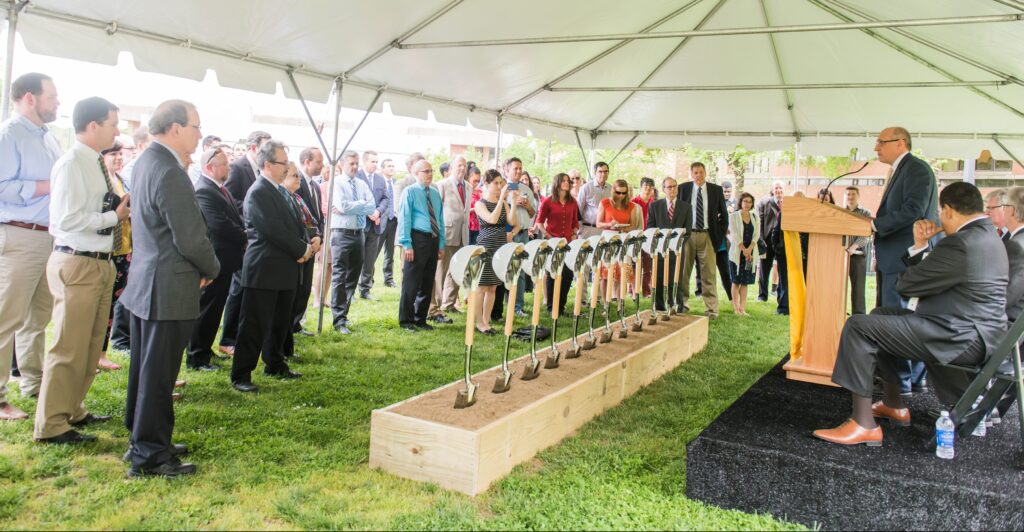
Image: Michael Lane conducts field work. Photo courtesy Michael Lane. 

UMBC students participate in 2017 National Campus Leaders Summit

A group of five UMBC students recently made the trip to Washington, D.C. to serve as leaders and collaborators during the 2017 National Campus Leaders Summit. The event, held at the United States Holocaust Memorial Museum, was centered around the themes of cultivating community and redefining civic engagement.

UMBC was consulted during the planning of the summit after David Hoffman, assistant director of student life for civic agency, Corrine Janet, coordinator of student life for leadership, and Emily Melluso ’17, interdisciplinary studies, made a connection with the summit’s principal organizer at last year’s Civic Learning and Democratic Engagement meeting.

The leadership summit was co-presented with Citizen University, and a description of the program provided by the Holocaust Memorial Museum explains that the event was designed to bring together students to explore how, “In these turbulent times, civic leadership and an understanding of history are more important than ever.” They note, “The Museum is pleased to collaborate with Citizen University and to welcome student leaders and change-makers from ten universities to dive deeply into the history of the Holocaust and explore its relevance for today’s college students.”

Jasir Qiydaar ’18, media and communication studies, is one of the UMBC students who attended the event. He became interested in it after participating in the Imagining America National Conference in Milwaukee last fall.

“I thought having another opportunity to discuss the social issues that affect so many of us with people from other institutions would be valuable,” Qiydaar explains.

The students participated in a two-hour guided tour of the museum and engaged in discussions about the fragility of democracy and the role of civic engagement during the Holocaust. They also examined how the social and psychological dynamics that influenced people’s decisions during the Holocaust can continue to be relevant in the world today.

Qiydaar says that the event served as a powerful learning experience and it provided important historical context for many contemporary issues.

“My key takeaway from the event was a reinforcement for the need for an intersectional approach to solving social problems. The atrocities of the Holocaust were an escalation of Jewish marginalization perpetuated by inaction while their rights were being violated. Today the same issues of ‘othering’ people who are different still exist, and it’s important to understand that this is largely allowed to continue through the inaction of people who aren’t personally affected by it. Collectively people have the power to combat this othering by speaking out against all oppression, especially when it doesn’t harm them personally.”

Qiydaar attended the summit along with Emily Melluso, Andrew Thompson ’19, gender and women’s studies, Hannah Aris ’18, chemical engineering, and Gerardo Herrera-Cortes ’19, visual arts. The other universities that participated in the summit include: Case Western University, Fort Hays State University, George Mason University, Mount St. Mary’s University, New York University, University of Florida, Valdosta State University, Weber State University, and Yale University.

Image: Students from ten universities attended the 2017 National Campus Leaders Summit. Photo courtesy of Corinne Janet. 

Book on the history of UMBC reflects its distinct campus culture of collaboration

When George La Noue started the process of writing a book about the history of UMBC, he had a specific vision in mind, and knew he couldn’t accomplish his goal without the insight of administrators, faculty, staff, and students across the university. In many ways, the process of writing Improbable Excellence: The Saga of UMBC reflects the highly collaborative nature of the campus community, which is rooted in its founding 50 years ago.

Researching such a young university can be difficult because the archives are literally being formed in the moment. However, when La Noue, research professor of public policy and political science, was teaching a constitutional law class one day, he noticed that students became highly engaged when the discussion pivoted to the history of UMBC in the context of higher education desegregation—when students began to see UMBC’s story in the context of a national story.

George La Noue holds his book Improbable Excellence at a reception for UMBC alumni in Annapolis.

Following the vibrant discussion, La Noue decided to create independent study research projects for a team of nine students to investigate different aspects of UMBC’s history. The topics ranged from the development of buildings on campus to the creation and growth of student organizations and academic departments.

“There is no course on UMBC history,” explains La Noue. “I couldn’t direct them to a source for where to begin, so they really had to learn what questions to ask throughout the research process.”

Many of the students who completed the independent studies that helped inform Improbable Excellence went on to graduate school and law school, and credit the intensive research experience for helping to jump-start their careers.

David Bennett ’11, political science, is now a health policy advisor for Senator John McCain. He focused on the development of the social sciences at UMBC for his research project.

“I had the opportunity…to sit down with the various chairs of those departments…some of them who have been here for many, many years to discuss what that department looked like back then and what it looks like now. It’s really quite astounding to see the determination of folks who were in their early thirties to form these departments to [become] what they are today,” explained Bennett at the Roots of Greatness luncheon during UMBC’s 50th anniversary.

Another student, Yasmin Karimian ’11, political science, indexed the book and now works at Amazon in contract law.

It took four years to write the book, which is 424 pages in length and contains 1300 footnotes. In addition to his students, La Noue credits several UMBC colleagues for help with conducting interviews and tracking down research materials, including Ed Orser, professor emeritus of American studies; Joe Tatarewicz, associate professor of history; Tom Beck, chief curator at the Albin O. Kuhn Library; and Lindsey Loeper, Albin O. Kuhn Library archivist.

“A number of people contributed such important work,” says La Noue. “The book was much better because of everyone’s participation. They went in depth in areas that I didn’t have insight or time.”

The book is now on sale in the UMBC Bookstore. Learn more about it in the UMBC Magazine article “Deep Roots.”

Header image: Cover of Improbable Excellence displayed at UMBC alumni reception in Annapolis. Photo by Marlayna Demond ’11 for UMBC. 
UMBC students develop Pulse Finder game to teach local kids about heart health

A team of UMBC students is on a mission to improve cardiovascular health education for kids. Maniraj Jeyaraju ’17, interdisciplinary studies, and Henry Wu ’17, biological sciences, who both have their eye on careers in medicine and health education, lead the team developing a game to engage local middle school students in conversations about heart health.

Jeyaraju approached Wu after class one day to suggest the partnership, and they began envisioning a mobile app that involved racing through arteries and veins and learning about the cardiovascular system along the way. Wu and Jeyaraju generated one level of an app they dubbed “Pulse Finder” with four other friends: William Guzman ’17, biological sciences; and Ryan Jose ’17, Chris Paul ’17, and Duy Tang ’17, who all study computer engineering.

After initial production and testing, they found the app was engaging, but it wasn’t practical for their project timeline or the right fit for their audience, requiring that each student have an internet-connected device. Maniraj and Wu shifted to developing Pulse Finder in a more traditional board game format, where players could build a circulatory system with tiles to make their way across a board, adding tiles as they demonstrated knowledge about cardiovascular health.

Pulse Finder team

The team refined their game based on informal feedback from kids at Baltimore’s Port Discovery and a Baltimore charter school. Wu and Jeyaraju then received an Undergraduate Research Award in spring 2016 to fund production of eight copies of the game in fall 2016.

Since then, the team has focused on testing and refinement, to make sure the game is simple and easy to play, engaging, and effective as a teaching tool. In November and December, the duo tested the game with adults at Sheperd’s Clinic in Baltimore. Jeyaraju shared that the game questions spurred discussion among the participants. “Participants really opened up about their own health conditions,” Wu added.

Now the team is undertaking the approval process to formally test the game with students at Afya Public Charter School, a health-focused middle school in Baltimore. They are hoping for the opportunity to work with teachers to implement a procedure similar to the one they used at the clinic. Students would complete pre- and post-surveys to gauge their learning from a trivia-based version of the game, a scenario-based version, and a lecture-based lesson covering the same content.

For both Jeyaraju and Wu, the game is an opportunity to take their passion for health education beyond their UMBC classrooms and into the community. They are excited to see what is most helpful for kids to become invested in their health in the long term.

“With heart disease, early prevention is critical,” Wu says. “Pulse Finder is a way to support younger people to help them maintain cardiovascular health later in life.”

Banner image: Pulse Finder board; photo by Maniraj Jeyaraju. Original board game artwork by William Guzman.

The team would like to thank their mentors for this project:
Stephen Freeland, director of interdisciplinary studies
Steven McAlpine, assistant director of interdisciplinary studies
Krystl Haerian ’99, graduate program director of health information technology