All posts by: UMBC News Staff


Alternative Spring Break: Homelessness in Baltimore

Here on the giving blog, we’ve been giving you an look at UMBC’s Alternative Spring Break programs, which give students a chance to participate in a service learning project over the March holiday. This next trip takes students right into the city of Baltimore, where, over the course of one year, at least 30,000 people will experience homelessness at one point.

Over their spring break, students will work on various projects throughout the city, and learn about how its homelessness problem intersects with poverty, crime, and other issues facing Baltimore. Your gift will go towards supplies, lodging, food, and transportation for 12 UMBC students.

To give to the Homelessness ASB trip, head to GiveCorps. To learn more about the trip from this year’s student co-leaders, take a look at this video:

The Hilltop Institute Senior Research Analyst Michael Abrams presents 2015 Shinogle Fellowship Lecture

On Friday, December 4, Hilltop Senior Research Analyst and UMBC Public Policy PhD candidate Michael T. Abrams, MPH, gave the 2015 Judith A. Shinogle Memorial Fellowship lecture at UMBC. Abrams discussed the research projects—spearheaded by Shinogle before her tragic death in 2012—that he and UMBC researchers are conducting to inform policy decisions about health care and treatment for adults with serious mental illness, and children with asthma. He also discussed his dissertation research, which focuses on the impact of news coverage on the dissemination of prescription drug warnings issued by the U.S. Food and Drug Administration.

Colleagues from Hilltop and UMBC’s School of Public Policy, faculty mentors, research partners, friends, and family members joined Abrams to celebrate his achievement. Abrams was selected by a faculty committee in recognition of his outstanding scholarship and research in health policy. At Hilltop, Abrams conducts quantitative and qualitative policy and health services research related to the brain and the behavioral health of Medicaid and other low-income populations.

The family of Dr. Judith Shinogle established the award in her memory to provide support for outstanding doctoral students committed to health policy research. Dr. Shinogle had a distinguished and productive career as a health policy analyst and researcher. At the time of her death, she was a senior research scientist with the UMBC Maryland Institute for Policy Analysis and Research and an adjunct faculty member of the School of Public Policy.

The complete 2015 Shinogle Fellowship Lecture can be viewed below.

Note: This article originally appeared on The Hilltop Institute website, written by Marsha Willis, senior policy analyst, The Hilltop Institute. 

Image: School of Public Policy Professor David Salkever, Michael Abrams, and School of Public Policy Professor and Director Donald Norris. Photo by Marsha Willis. 

Data from learning management systems help improve teaching, say UMBC experts

Systems that store and analyze data about how students are progressing through their coursework can be a powerful source of better decision-making in higher education. That’s the theme of a CampusTechnology.com article featuring a lengthy section on UMBC’s use of the Blackboard learning management and data-analysis system to promote student success.

At UMBC, Blackboard data about student performance are now “across all the colleges and all the key functional offices that are responsible for student success, so they’re all able to get the data they want,”  says Jack Suess, chief information officer and vice president of information technology. Among the findings on teaching and learning that have emerged from Blackboard data-crunching at UMBC are these:

  • students who get a D or an F use Blackboard almost 40 percent less than those who get higher grades
  • heavy Blackboard use among students helps flag innovative teaching
  • one way to improve student performance is through use of a Blackboard feature that lets instructors set preconditions for accessing course materials–passing a quiz, for example
  • differences in the way students perform in courses subsequent to a “gateway” course can help pinpoint teaching practices that are especially effective in that course.

John Fritz, UMBC’s assistant vice president of instructional technology and new media, is a fan of the third tier of learning management systems–the area that includes electronic portfolios and the preconditions for release of new material. That part of the system “sets up a structure for student responsibility and self-awareness” that puts the focus on what students are doing for themselves, a necessary complement to what institutions are doing for students, Fritz believes.

Experts from three universities, including Suess and Fritz, named several best practices for using data from a learning management system. One piece of advise is to drop the term “analytics” in favor of, for instance, the more accessible “intelligence.”

Another best practice, according to Fritz,  is to make initial research projects simple but rigorous.”Start small, where you’re following an unsure hypothesis,” advises Fritz. “Refine your method and bring rigor … then help disseminate those findings.”

Read the full article, “How Data From Your LMS Can Impact Student Success,” at CampusTechnology.com.

Image: Student in a UMBC cybersecurity course. Photo by Marlayna Demond ’11 for UMBC.

UMBC and U.S. Navy celebrate partnership establishing Maryland’s first NROTC unit

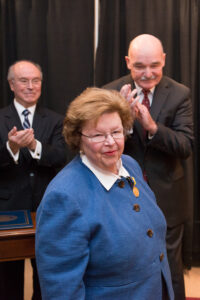
On Monday, November 30, 2015, Assistant Secretary of the U.S. Navy Dennis McGinn and U.S. Senator Barbara Mikulski joined President Freeman Hrabowski for a ceremony to formally celebrate the establishment at UMBC of Maryland’s first Naval Reserve Officers Training Corps (NROTC) program.

The program, which is part of the new Maryland NROTC consortium that includes the University of Maryland, College Park, provides an opportunity for students to earn a commission in the U.S. Navy or Marine Corps while completing their undergraduate degrees.

During the event, McGinn spoke highly of UMBC as an institution with exceptional leadership and innovative approaches to teaching and learning. Through this collaboration, the U.S. Navy will attract individuals from diverse backgrounds and talents to become the leaders of the future, he said.

Hrabowski commended the longstanding relationship between UMBC and the Navy, which began two decades ago through initial conversations about the potential for partnership. Many UMBC graduates already work for the Navy, and many more will do so through this program, said Hrabowski.

The NROTC program is currently accepting applications and naval science courses are expected to begin in fall 2016.

Hrabowski attributed the university’s strong partnership with the Navy to Sen. Mikulski, whose support has been instrumental in the growth of UMBC and its impact on the community, the state and the nation.

“We quite simply would not be here today without the leadership and support of Sen. Mikulski. She has been an amazing champion for the country, for Maryland, and for the work we are doing at UMBC,” said Hrabowski.

Sen. Mikulski receives Distinguished Public Service Award

A highlight of the event came when the Secretary of the Navy recognized Sen. Mikulski with the Distinguished Public Service Award for her exceptional leadership in service to Maryland and the United States. The award came just days after Sen. Mikulski accepted the Presidential Medal of Freedom at the White House for accomplishments during her career as the longest serving woman in U.S. Congress.

Sen. Mikulski expressed her pride in witnessing the establishment of the NROTC at UMBC. By bringing the program to campus, she said, we open many new pathways for talented graduates from science, technology, and the arts to become the next leaders of our country.

“We are investing in the people of the future that will lead our Navy and our Marine Corps, and they will lead it with a tremendous background that starts right here [at UMBC],” said McGinn.

“There could be no better campus in the entire country to do this.”

Image: Senator Mikulski, Assistant Secretary of the U.S. Navy Dennis McGinn, and President Freeman Hrabowski sign the ceremonial proclamation. Photo by Marlayna Demond’ 11 for UMBC.

Donald Norris says metropolitan governance is unlikely for Baltimore region

Is metropolitan governance, or the sharing of power and authority by jurisdictions, a good idea for Baltimore City and its surrounding counties? It’s been a topic that has been proposed many times dating back to the 1930s, and it was most recently in the news following the unrest in Baltimore earlier this spring.

9781409421924.PPC_PPC TemplateDonald Norris, professor and director of the School of Public Policy, is author of the new book Metropolitan Governance in America, which examines the possibility of regional governance in the United States, attempts to establish metropolitan governance in the past, and the problems that have arisen due to the lack of adequate metropolitan governance. Norris, who has extensively researched public management issues, recently discussed his book and the prospects for regional government in Baltimore on the Baltimore Sun podcast Roughly Speaking with Dan Rodricks.

In a wide-ranging discussion, Norris discussed the history of the metropolitan governance debate and how metro government likely won’t happen in the Baltimore region, among other topics.

“It makes great sense theoretically. It doesn’t make any sense whatsoever when you look at the impediments to metropolitan government,” explained Norris. “Whether it’s Harford County or Howard County or Baltimore City…if we don’t live in the region, we don’t identify with the region. We identify with our neighborhoods and the jurisdiction that we pay our taxes to. We expect that jurisdiction and the officials that we elect in it will use those taxes wisely within the jurisdiction to provide services for us, not to spend that money on somebody somewhere else.”

Norris discussed how many people favor local governments, and those who oppose regional governments argue they are too far removed from the daily lives of citizens.

“It gets too big, it’s too remote, and it’s too bureaucratic,” said Norris. “You can’t achieve the kind of economies of scale that you thought you could achieve to begin with.”

Listen to the full podcast (interview begins at 23:00) on the Baltimore Sun website.

Image: Donald Norris speaks at UMBC’s 40th anniversary event for public policy. Photo by Marlayna Demond ’11 for UMBC.

UMBC expert describes the advantages of home-based care for chronically ill patients

A recent Journal of the American Geriatrics Society study found that home-based primary care increased patients’ satisfaction with care and lowered costs, hospitalization rates, and emergency room visits. Following up on the study, The Washington Post published an article that explored how many doctors are now pushing for house calls to bring care to chronically ill patients.

Judah Ronch, dean of the Erickson School, was quoted in the article and outlined the various advantages of home-based care. “If they’re at home, they’re in an environment that can expedite healing, for example, more natural light,” said Ronch, a nationally renowned expert on improving the treatment and mental well-being of elders. Being at home also helps patients see themselves as “not a sick person,” he said.

Not all primary care facilities would qualify for home-based care due to specialized skills and the need to employ and partner with nurse practitioners and social workers. But Ronch also described how health care can be effective, even in the absence of a facility such as a hospital or nursing home.

“Many old people in hospitals don’t need to be there,” he said. “It’s not about serving the needs of the institution, but serving the needs of the people. It’s the idea that we can deconstruct the health-care system and reconstruct it to serve the patient in a way that’s fiscally and medically better.”

Read “Doctors prescribe old-fashioned house calls when treating the old and frail” in the Washington Post. Read more about Ronch’s research on the Erickson School website.

Image: Erickson School Dean Judah Ronch speaks at an event at UMBC. Photo by Marlayna Demond’ 11 for UMBC.

UMBC named a top Baltimore workplace for 2015

For the third consecutive year, the Baltimore Sun has named UMBC as one of the region’s top places to work. UMBC was the only government agency and the only university to rank among the top 100 workplaces in three size bands. With about 1900 employees, UMBC is considered a large employer.

Baltimore Sun Top Workplaces Logo

Organizations were ranked within bands by their scores on a confidential employee survey that measured job satisfaction, organizational health, and engagement. Organizations were invited to participate in part based the nomination of an employee. In all, 172 companies participated, and approximately 22,500 employees out of about 37,300 employees in those organizations responded.

UMBC has also appeared six years in a row on the Chronicle of Higher Education‘s top academic workplace list, including this summer.

Image: True Grit statue near the UMBC Administration Building. Photo by Marlayna Demond ’11 for UMBC.

Alternative Spring Break 2016: Gesundheit! Institute

ASB2016

As we near the end of the calendar year, we’d like to remind our community of the many places their gifts might go this holiday season. This week, we’ll be focusing on next year’s Alternative Spring Break trips. These provide a wonderful opportunity for students to spend their week off doing good for the communities and gaining a new understanding of the world.

One of these trips will take students to Patch Adams’ Gesundheit! Institute. They’ll interact with patients, help maintain the grounds, and learn about Adams’ humanistic model of health care and the Institute’s approach to social justice. In past years on this trip, students have visited veterans’ hospitals and retirement homes in the area, tended to organic gardens, and kept the Institute’s rural West Virginia campus clean and bright.

Your donation will go towards the cost of supplies, lodging, food, and transportation for 12 students over the upcoming spring break. To give to the Gesundheit! trip, head to the GiveCorps site. For more from the students themselves, take a look at this video!


Roundup: UMBC in the News

One of the things that makes UMBC great is how wonderful our alumni, students, faculty, and staff are. Because of these amazing people, UMBC often finds itself “in the news,” so each week, we’ll be sharing with you a round-up of the most newsworthy achievements from our community.

  • Kimberly Moffitt, American studies, appeared on WEAA-FM’s The Marc Steiner Show on Monday to discuss the Freddie Gray case, Maryland political happenings, and the recent shooting at a Planned Parenthood location in Colorado.
  • Ellen Hemmerly, bwtech@UMBC, penned an op-ed for the Baltimore Sun on the city’s future as a cybersecurity hub, citing its proximity to the federal government and to defense and intelligence contractors, its preponderance of cybersecurity firms, and its potential to attract even more startups in the coming years.
  • Christopher Shuman, Joint Center for Earth Systems Technology, confirmed findings from NASA’s Operation IceBridge that both the north and south polar ice caps have decreased dramatically in height, saying this is “not at all surprising given what we have observed with other sensors.”
  • Jason Loviglio, media & communication studies, called for more diversity in the podcasting world after attending the 2015 Podcast Movement in Texas earlier this year.

For more on these stories, and for even more UMBC updates, head to our brand-new news website!

Kimberly Moffitt analyzes the Freddie Gray case and upcoming local elections on The Marc Steiner Show

Kimberly Moffitt, an associate professor of American studies, was a guest on WEAA’s The Marc Steiner Show on November 30 to discuss several local and national topics in the news. Moffitt, who is a frequent guest host on the program, participated in roundtable discussions on topics ranging from local elections to media coverage surrounding the shooting at a Colorado Planned Parenthood clinic last week.

In the local news roundtable portion of the program, Moffitt joined Luke Broadwater, a Baltimore Sun reporter, A. Rod Womack, author of Redwood and former owner of the Redwood Grill in Baltimore, and Richard Vatz, professor of rhetoric and communication at Towson University’s Department of Instructional Leadership and Professional Development. The panelists covered voter participation in the 2014 election, Gov. Larry Hogan’s approval rating and governing style, and the trial of police Baltimore Police Officer William Porter in the Freddie Gray case, among other topics.

In the national roundtable segment, Moffitt provided perspective as a media studies scholar on the national media coverage of the shooting at the Colorado Springs Planned Parenthood clinic. She joined Phil Tran, a political consultant, and Edward Wyckoff Williams, a contributing editor at The Root and political contributor and special correspondent with Al Jazeera America for the discussion.

Listen to the complete Marc Steiner Show podcasts below:

Local news roundtable: Local elections and the Freddie Gray case
National news roundtable: Planned Parenthood shooting

Image: Kimberly Moffitt in her office. Photo by Marlayna Demond ’11 for UMBC. 

Paws of Glory

Retrieving the Greatest Moments of UMBC Athletics History

By Richard Byrne ’86 and Steve Levy ‘85

Athletics has been an essential part of the UMBC experience since the founding of the university. So narrowing down almost five decades of history – and shining a spotlight on a few of the iconic athletes of UMBC history – is not an easy task.

Our guiding principles in what we did include aimed at inclusiveness. We tried to find the moment that spoke to each varsity sport played at UMBC, with equal weight to men’s and women’s teams.

You can read more about the athletes we’ve chosen at our website. And we know didn’t capture every great moment. Not by a long shot. So we want you to share your own with us online as well. Let’s keep the celebration of Retriever athletics going!

1966

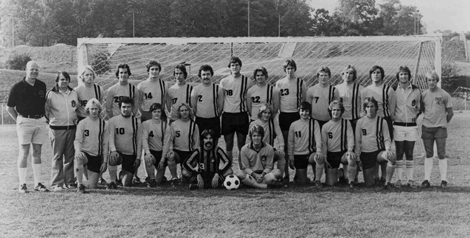
UMBC plays its very first intercollegiate game on November 4 – a spirited 4-1 loss by the men’s soccer squad to the University of Maryland, College Park

1974

Men’s baseball standout Mel Hammel ’76, history, pitches the first UMBC no-hitter in a 20-0 win over Coppin State.

f14-FT-ATHL-zerhusen2STEVE ZERHUSEN ’78

A standout at goalkeeper for UMBC men’s soccer teams of the mid-to-late 1970s, Zerhusen later played professionally for the Fort Lauderdale Strikers of the pioneering North American Soccer League. As a Retriever, he recorded 372 saves and 22 shutouts.

Favorite moment? My favorite moment was the first game in my sophomore season (1976) against the University of Baltimore – who were defending national champions. It was a scoreless 90 minutes of regulation where I would say we had the better of the action. Late in the game, (current UMBC men’s soccer coach) Pete Caringi – who was an All-American senior for University of Baltimore and a dangerous finisher – came in one-on-one on a through ball. I came out of the goal and met him at the top of the box. He tried to go to my right, but I dove and grabbed the ball. Then with two minutes left in overtime, a UMBC freshman, Ricky Roberts, scored the game winner. It was a tremendous confidence booster for a young team. Image: Ft. Lauderdale Strikers at Detroit Express (NASL)

1975

f14-FT-ATHL-1977soccerUMBC men’s cross country team goes 10-0 and wins the Mason-Dixon conference title.

1977

The men’s soccer team becomes the first UMBC team to compete in a postseason NCAA tournament.

f14-FT-ATHL-zerrlaut2

KATHY ZERRLAUT

Few people have the broader and deeper perspective on UMBC’s athletics program and its history than Kathy Zerrlaut – who came to UMBC to coach volleyball and lacrosse in 1973. Zerrlaut spent the next 41 years at the university, with 850 total games as a coach in both sports. She also played a key role in the development of the program for more than two decades in the post of senior associate athletic director and compliance officer at UMBC.

Favorite moment? As a coach, I would have to say my lacrosse team winning the ECAC tournament as a Division II program in 1984. The NCAA had not yet offered a championship in women’s lacrosse, so this was big.

Greatest achievement? I’d say my most significant achievement was compliance-oriented. We were the first division one program to be certified by the NCAA. We always prided ourselves on having no major violations.

What’s special about being part of UMBC athletics? The makeup of the athletic department team. I worked with (longtime UMBC athletic director) Charles Brown, who was committed to the success of the entire program. Women’s athletics started to progress in the 24 years of Dr. Brown’s tenure, due to his efforts and also to the support of Dr. Susan Kitchen. Our administrative group clicked, we had cohesion and the same goal – the welfare of the student-athletes.

1979

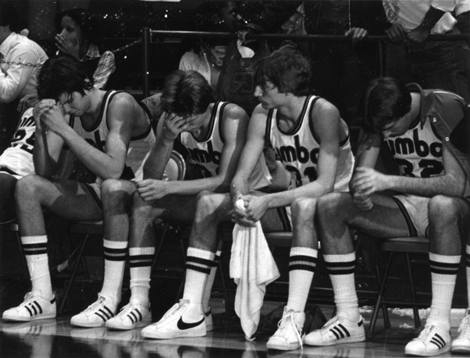
f14-FT-ATHL_basketball-lossThe Retriever men’s basketball squad – ranked number six in the nation – advances to the NCAA Division II tournament quarterfinals, losing at home to Naismith Memorial Basketball Hall of Fame coach John Chaney’s Cheyney State team.

1980

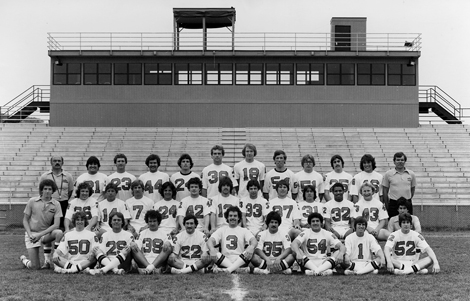
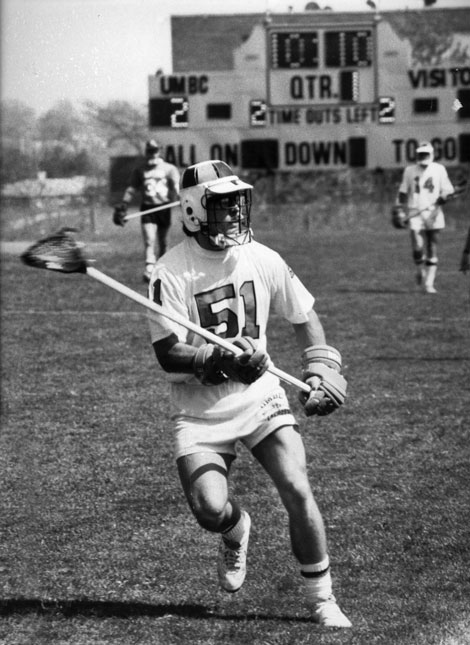
f14-FT-ATHL-1980laxnationalchampteaamUMBC men’s lacrosse team wins the university’s only national championship, beating Adelphi for the NCAA Division II crown.

f14-FT-ATHL-mcgeeney

GEORGE MCGEENEY ’ 82

As a defender for the men’s lacrosse team, McGeeney was a First Team All-American at UMBC in 1982. He later played for Team USA in the World Games of 1986 and 1990 and also played professional indoor lacrosse for the Baltimore Thunder of the National Lacrosse League.

Favorite Moment? I had the good fortune of graduating from UMBC and winning the William C. Schmeisser award as the top defenseman in Division 1 lacrosse on the same weekend, as well as being named captain of the South team in the North-South All Star Game. I was fortunate to have great teammates and a great coach in Dick Watts that pushed me hard to be the best player I could be.

What was special about being a UMBC student -athlete? There were no shortcuts and the ability to balance playing division one lacrosse and working toward my economics degree was challenging but very rewarding. What was most special was the faculty and staff , in particular my advisor Michael Bradley – a great teacher, person, and supporter of UMBC lacrosse and athletics.

f14-FT-ATHL-tammy-mccarthy

TAMMY MCCARTHY ’87

As an All-American guard at UMBC in the mid-to-late 1980s, McCarthy was one of the university’s basketball greats, and she continues to hold university records for most points scored and scoring average, and remains second in total rebounds.

Favorite moment? Every time the ball tipped off.. so every season… every game!

Greatest achievement? Being named to the District II All American Team and continuing to hold the UMBC women’s all -time leading scorer record.

What’s special about being a UMBC student-athlete? I formed lasting friendships that I treasure today.

1993

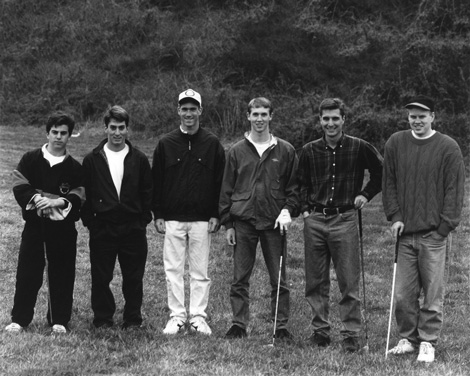
f14-FT-ATHL-golfMike Meyer ’95, interdisciplinary studies, wins Eastern College Athletic Conference golf championship.

1995

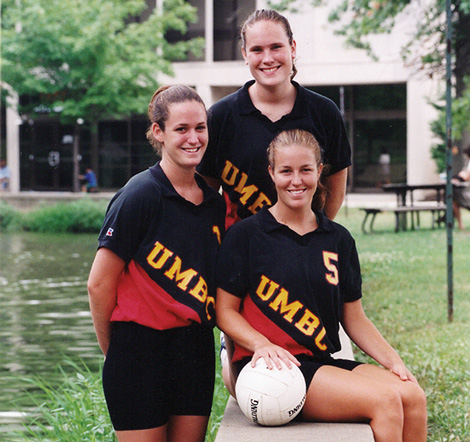
f14-FT-ATHL-volleyball2UMBC women’s volleyball team wins the Big South conference title.

FT-ATHL-davidbobbDAVID BOBB ’97

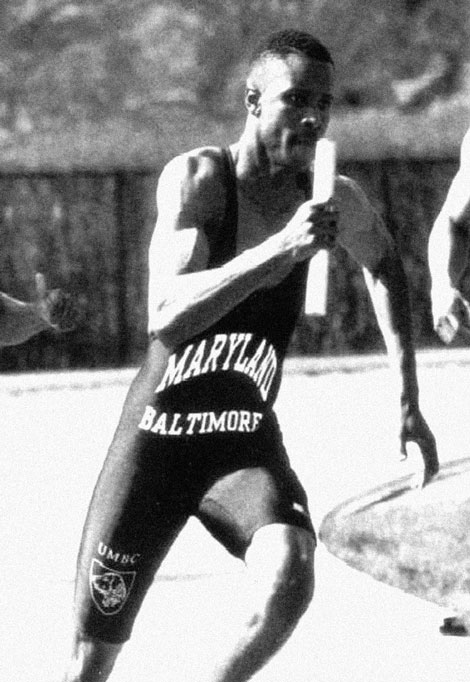
As a track and field standout at UMBC, Dave Bobb garnered more individual honors than any other Retriever athlete. He was the top American-born sprinter in the United States in 1997, Bobb is currently the university’s men’s track and field coach.

Favorite moment? When UMBC’s outdoor track was built in 1997.

Greatest achievement? When the UMBC men’s track and field program was ranked 18th in country. As far as individual achievements, I placed third in the 55 meter dash and third in the 200 meters at the 1996 NCAA Division I indoor championships.

What’s special about being a UMBC student-athlete? The friends I made when I was a student-athlete and the memories with my team are very special to me.

1998

UMBC women’s tennis wins the second of two consecutive conference championships, and qualify for their first-ever NCAA Tournament.

1999

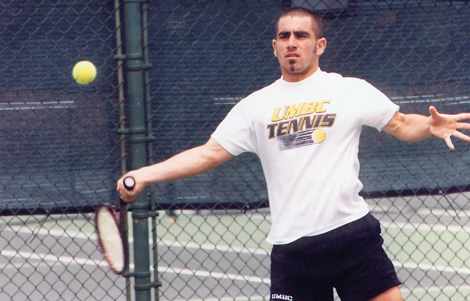
f14-FT-ATHL-oscar-lopez2Men’s tennis standout Oscar Lopez ’00, and M.S. ’02, mechanical engineering, becomes the first UMBC Division I athlete to garner First Team Academic All American honors.

2002

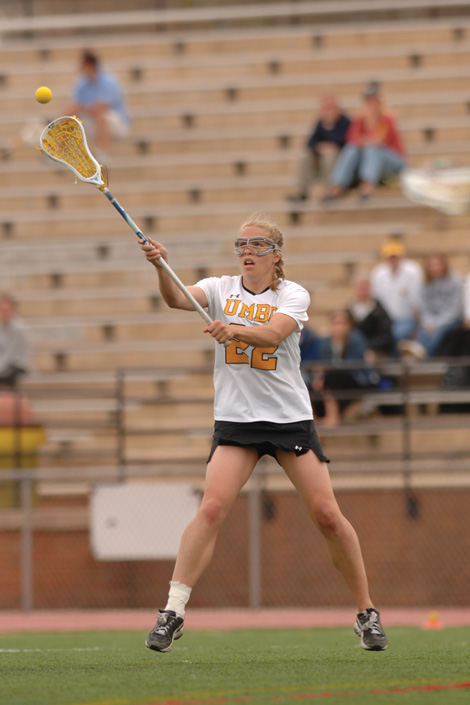
UMBC women’s lacrosse team makes its first NCAA tournament appearance.

2002

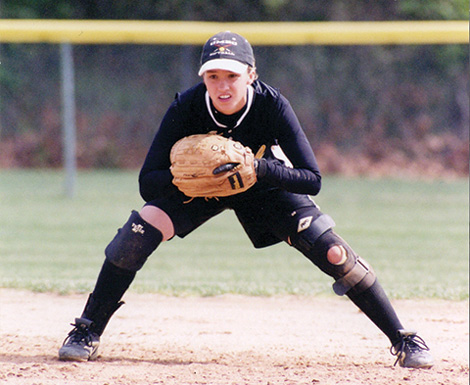
f14-FT-ATHL-2002softballvecchioHOFWomen’s softball squad beats Liberty, 7-1, in the 2002 NCAA Tournament.

2004

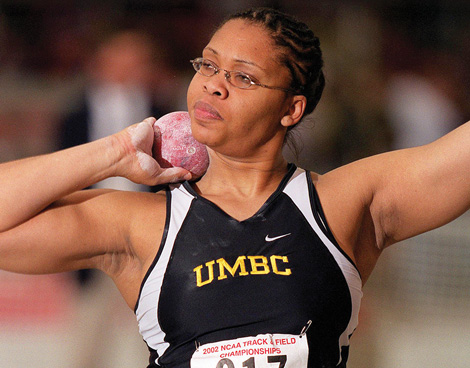
f14-FT-ATHL-borel(2)Women’s track and field phenom Cleopatra Borel’ 02, interdisciplinary studies, competes in the 2004 Olympic Games in Athens, placing 10th in the world in the shot put.

f14-FT-ATHL-kellyfiorani2KELLY FIORANI MARRIOTT ’06

As a standout player in women’s lacrosse who also excelled in the classroom, Marriott is third on the all-time scoring list at UMBC. She also lettered for two seasons in women’s soccer, making her a double threat for Retriever athletics.

What was special about being a UMBC student athlete? What wasn’t special? UMBC is often overlooked as a mainstream competitor. The potential to make a name for yourself is unmatched. The student-athletes are smart and driven, and our community of athletes was tight-knit and small enough that we all knew each other and could support one another – whether it was in our sport or in the classroom. UMBC’s athletics department dedicates time to each individual and each team, and no one sport was favored over another. Athletes can get lost or fall off the map at some of the larger schools. Women’s sports are often considered less important in our nation’s leading division one programs, but that was never the case at UMBC. When I walked in to the RAC whether it be for treatment, to catch a basketball game, or to meet my coach, I always felt I was more than just a number. I was a successful, student-athlete, and people respected me for that. I am proud to have been a student at UMBC. I am proud to have been an athlete there. It’s a special place.

2004

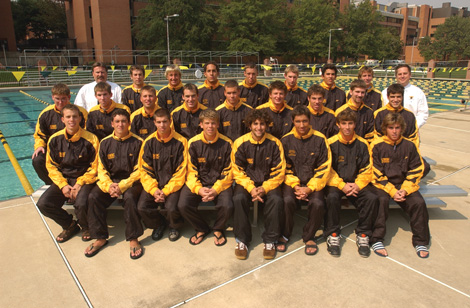
f14-FT-ATHL-swimmingUMBC men’s swimming team wins its first America East championship title.

2007

f14-FT-ATHL-2007womensbb

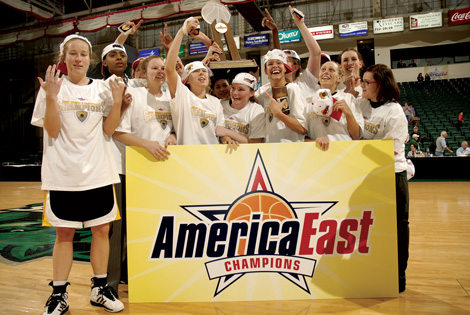
UMBC women’s basketball team earns its first NCAA tournament bid.

f14-FT-ATHL-Jay_Greene2JASON GREENE ’09

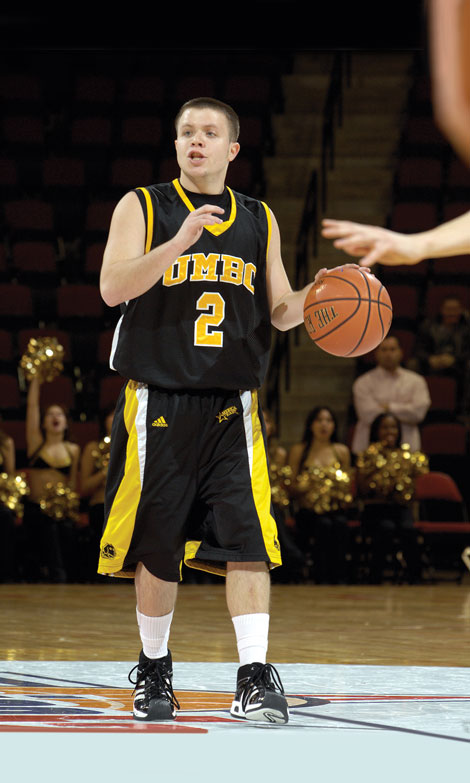
The sparkplug for the UMBC men’s basketball team’s memorable run to the NCAA tournament in 2008, Greene holds school records for most games played, most minutes, and most assists. He is currently an assistant coach for the team.

Favorite moment? Being able to celebrate the 2008 Championship in the RAC with my teammates, family, and friends! A dream made into a reality. Ever since I was a kid, I envisioned myself jumping on top of a scorer’s table celebrating on our way to the NCAA Tournament. No one can ever take that moment away from us.

Greatest achievement? Walking across the stage on graduation day with my family in the stands. It was a very proud moment! As an athlete, it was being a part of history as a member of the first UMBC men’s basketball team ever to reach the NCAA Tournament. Being on a Sports Illustrated cover and in USA Today front centerfold wasn’t too bad either!

2012

Retrievers men’s soccer team advances to the second round of the NCAA tournament for the second time in two years.

2013

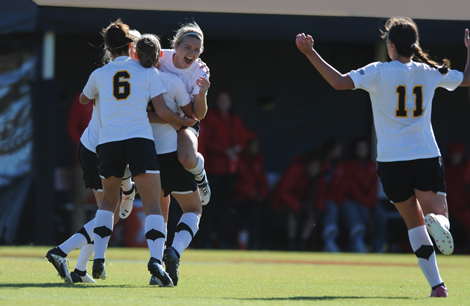
f14-FT-ATHL-ALEXA-soccer-celebration2UMBC women’s soccer team caps a stunning reversal from last place in the conference to first place in a single season with a bid to the NCAA tournament

2014

Women’s swimming standout Emily Escobedo ’17 wins a spot in the NCAA Championships.

Finding a Voice

Biologists at UMBC were on the hunt for female songbirds. The world sat up and took notice when they found them.

By Joel N. Shurkin
Illustrations by David Plunkert

Once upon a time – 60 million years ago or so in Australia – a small, perhaps brightly feathered descendant of the recently extinct dinosaurs opened its beak and produced a melodic set of notes. And while it is impossible to know if the creature was startled by the sound it produced (more likely the change was subtle), that moment was the prelude to all bird song.

Kevin E. Omland, professor of biological science at UMBC, and Karan Odom, a doctoral student in Omland’s lab, are among the scientists taking a closer look at bird song – and reshaping the contours of received knowledge about it that dates back to Charles Darwin’s observations and beyond.

It’s a deliciously complicated problem. While scientists have known for a while that songbirds first evolved in Australia, Omland and Odom have used that fact to disprove a theory of Darwin’s and a common myth about birds: Unlike what most people think, female songbirds sing just as much as male birds do, and may also be just as colorful.

A recent paper with Odom as lead author and Omland as one of the co-authors, detailed the wide extent of female bird song, and garnered media coverage around the world, including the BBC World Service and Australian radio.

“This is not a well-studied area. They are looking at a question that has not been looked at a lot,” explains Michael Webster, a researcher at Cornell’s prestigious ornithology department.

Bird and Dinosaur Combonation Illustration Bird song emerged from descendants of recently-extinct dinosaurs.

Humans have been fascinated by bird song for as long as they have had ears to take it in. And for almost 200 years, theories about bird song would suggest that the proto-songbird who made that first distinctive chirp was male.

The notion of mute, dull females and gloriously colored males in part goes back to Darwin’s observation of Galapagos finches during his second voyage on the HMS Beagle. In The Origin of Species, he later wrote: “Female birds, by selecting, during thousands of generations the most melodious or beautiful males, according to their standard of beauty, might produce a marked effect.”

It was an easy assumption for Darwin to make: songbirds in his native England generally behaved that way as well. In other words, the males competed for females by trying to be the most beautiful and songful, and the females selected on that basis – sexual selection. Think of strutting male peacocks or birds of paradise doing hilariously elaborate dances, for example.

Omland, Odom and their colleagues and students say that this is an incomplete explanation. Darwin and everyone else had it wrong, and why they did so is a matter of geography, not biology.

“A lot of the research on bird songs has been done in North America and Europe,” Odom says “where you see brightly colored males and they are singing and they are singing for a short period of time because they have to breed quickly and migrate.”

In the tropics, it turns out, that isn’t true, she says. What most of temperate zone ornithology was studying was not typical of the world’s birds, particularly songbirds.

In most parts of the world, like the Amazon, the Congo, the rain forests of New Guinea, the observer cannot tell the difference in coloration between the males and females. Female birds are just as likely to sing as male birds and can defend territory just as male birds of some species do.

Omland’s research shows that bird song in fact depends on where the birds were and the kind of life the birds lead. Even birds like the orioles – with whom we live with happily in the Maryland area – have species that vary in behavior, depending upon where they are and their life style.

Odom, a Florida native, studies a species of fancy orioles called Troupials in Puerto Rico for her dissertation. Undergraduates from UMBC and the University of Puerto Rico work on another species, the Puerto Rican Oriole. Back in Maryland, Omland specializes in the Baltimore and Orchard variety of oriole.

Orioles who live in Maryland in the summer follow Darwin’s pattern. The gender rules are quite distinct. They live here for only a few months and then migrate south to Latin America before the snows come. It is easy to spot a female: She is yellow-brown and she does not sing a complex song. The males are the typically black and orange. But orioles dwelling in Puerto Rico – same genus, Icterus – have a different life style.

Ornithologists think singing is a way of declaring presence and defending territory. When you are a migratory bird, time is of the essence and the singing helps with defense.

The Maryland orioles have a time problem: They have to attract mates, reproduce and then leave before winter comes, Omland says. The males arrive first. In songbirds, it is the females that build the nests. So the males need to grab the attention of the females as quickly as possible. Their clock is ticking, so the males tend to use coloration and song to attract mates. That is the sexual selection that Darwin found in his research.

If you live a more sedentary life in the tropics, it is less crucial, or at least it plays out in a different way. Female birds in the tropics play a larger role in the competition for resources. They may even be defending mates. There also is more competition among females in the tropics.

In Troupials that Odom studies, males and females look the same, behave the same way, and males and females sound the same. Usually it is the males who do the “dawn chorus,” and the females who do most of the daytime singing.

Orioles Illustration Orioles who live in Maryland in summer follow Darwin’s pattern.

To do her research on Troupials, Odom sets up camp in a dry forest, mostly distinguished by tall grasses and cacti and sharp-leaved plants worth avoiding.

On a typical research day, Odom and her team get up at 4 a.m. and go out in the field by 5 a.m. to be ready for six hours of observation. By late morning, it’s too hot to work so the researchers go inside, rest and have lunch.

In the afternoon, they follow the birds to wherever they “want to take us” and catch some with traps. Oranges are the main lure. Orioles love oranges. The birds are sexed and then banded by gender, and then let loose unharmed. Females get pink bands, plus an aluminum one for identification.

Odom is studying how these Troupial orioles use their songs. Why are they singing? Do they have different songs? They can sing in chorus or have a “sing out,” with one bird singing, followed by another, as if they are planting stakes in the ground to delineate territory, or simply making an existential declaration, “I sing therefore I am.”

The orioles she studied have such stability and routine that she identifies them by where their nests are located. There is a “greenhouse pair,” and a “visitor center pair.” They can all be found in a 100-to-200 meter square area.

Once Omland came to visit and Odom’s camp and asked to see a particular family and she told him to stand by a certain tree and they would show up. They did.

The birds don’t migrate, and they live together for years. In those species, both males and females are colorful, and both sing. The only way scientists can tell the difference in gender is through DNA analysis. How the birds tell the difference is unknown, Omland says. Other species of orioles in the tropics are also like that.

“Both sexes in the tropics are very progressive,” Omland jokes. “Both sexes wash the dishes. Both sexes defend the territory.”

In 2009, Omland and an international group of ornithologists published a paper suggesting that the changes over time had occurred in females, at least in orioles. The difference in the genders happened because the females evolved through time. The males were always brightly colored and always sang. A remaining question for scientists is why the females changed.

Darwin Illustration Darwin’s observation on bird song drew an incomplete picture.

The question of how many species of birds have females who sing was particularly interesting. Is what UMBC researchers and other ornithologists found in Puerto Rico typical in the rest of the tropical world?

Odom and her colleagues did a massive study to find out. The results, published in Nature Communication last summer, made headlines in newspapers and magazine worldwide, including Germany, Holland, China, South Africa and Great Britain.

“Some of the reasoning for our study is that people have known for a while that songbirds came from Australasia and that in that area and just in the tropics in general, a lot of females sing,” Odom says. Birds like Australian magpies and butcherbirds sing, sometimes standing around in choruses where everybody sings.

Odom and company took the Handbook of the Birds of the World, a 16-volume set printed in Spain, covering every known living species of birds. Every section contained what ornithologists knew about that species. They also took other publications that described bird species.

In an exhaustive review of the texts, Odom and her colleagues found 323 species in which the females was either known to be able to sing or specifically not. To the surprise of most scientists, in 71 percent of these species, the females could sing, far more than anyone expected.

Then they used a phylogenetic tree, which follows genetic attributes of organisms to trace the evolution of the birds back to their common ancestors, and discovered that the common ancestor of the songbirds had female singers.

“No, it’s not rare and it’s not some recent anomaly, and is probably how songs first evolved. It turns the entire field of bird song on its head and that was really, really surprising,” Omland says. The results were not expected, he continues, but the conclusion was much clearer than they thought they would find.

Those conclusions were also a surprise to fellow ornithologists.

“That’s not anything we realized until the folks at [UMBC] did their work,” Cornell’s Webster says. “Both males and females sang. If you asked somebody a year ago about the ancestral songbird they’d say the males sang and the females didn’t. Now we know.”

Now Omland and Odom and other UMBC researchers are turning to the questions that aren’t answered by their pioneering work.

“One of the things not emphasized in our study is that for the majority of species, we still don’t know if females sing,” Omland said.

They are working on it.