We use cookies for analytics and, unless you opt out, advertising.
You can opt out of advertising at any time.UMBC uses essential cookies to run this site. With your permission we would also use analytics cookies (to understand how the site is used) and advertising cookies (to measure and target our ads on other platforms). Nothing else loads unless you accept. You can change your choice any time from Cookie Settings in the footer.Privacy Policy
EssentialRequired for the site to work (login, security, your cookie choice). Always on.
Founded in 1966, UMBC has changed immensely over the years, evolving from a small regional campus to a nationally distinguished research university in a relatively short time. One thing that hasn’t changed, however, is the many kinds of Retrievers who have made us what we are today – an innovative and inclusive community like no other.
As we celebrate Founder’s Day 2022 and our 56th fall semester, what could be more appropriate than a fun Retriever history quiz? (Don’t worry, we’re not grading you.)
And if you’re ready to take a really deep dive into UMBC history, take a look at our new timeline, rebuilt with lots of new photos and factoids to please any Retriever Believer.
Let’s see how you do!
How’d you do? We hope you enjoyed this spin through time at UMBC. Happy Founder’s Day!
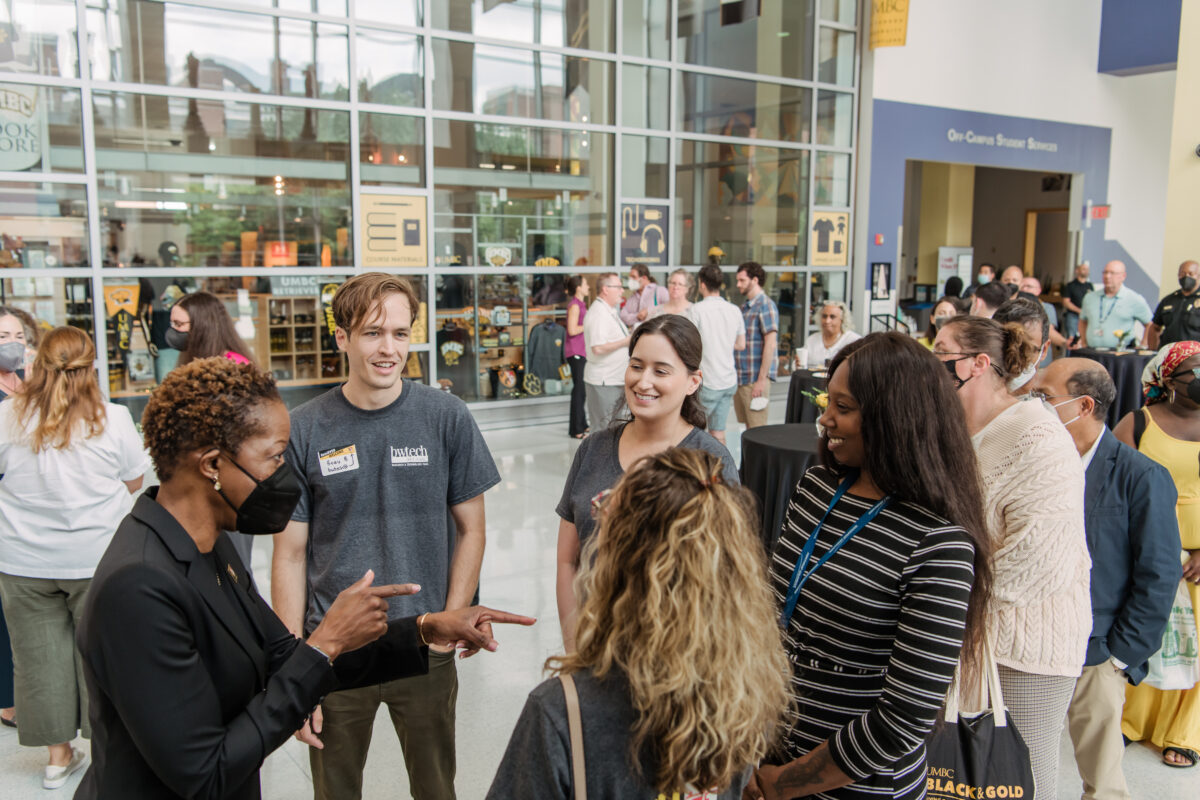
Most new Retrievers begin their time at UMBC checking off a to-do list of essentials. New UMBC President Valerie Sheares Ashby was no exception on August 1, starting her first day by getting her computer set up, taking that all-important photo for her campus ID, and figuring out her go-to order in the Admin Coffee Shop.
And like other new Retrievers, once those duties were finished, the real fun began. For Sheares Ashby, that meant getting straight to what excites her most—getting to know the people of UMBC face to face.
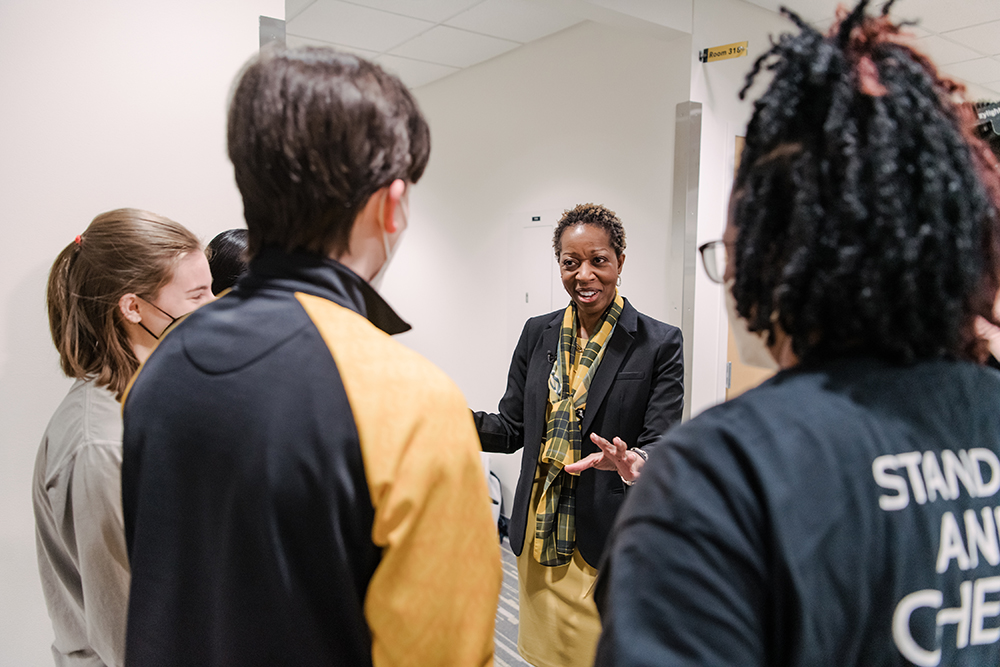
“This day is just pure joy to me. I feel like I am among my people. We have similar values. We have similar goals,” she told a crowd gathered on Main Street in The Commons before calling dozens of students forward for a group photo, and sticking around to meet any and all who wanted to say hello.
Meet and greet with students, staff, and faculty on Main Street in The Commons. (Marlayna Demond ’11/UMBC Magazine)
Connecting with community
Sheares Ashby spent most of her first full day of work visiting colleagues and community members across main campus, traveling from the Administration Building and the Albin O. Kuhn Library in the morning, to Residential Life, Athletics, and the UMBC Police Station in the afternoon. Over the course of the coming year, she plans to conduct a “listening tour” in order to meet as many people as possible across the UMBC community.
Sharing her visible excitement with a crowd of students, staff, and faculty members, Sheares Ashby explained how her parents—teachers of English, and math and science—not only instilled in her an appreciation of the sciences and humanities, but also the importance of thanking people who show her kindness.
“Thank you all. I’m just grateful to each one of you. Those of you I have not yet met, I look forward to it,” she said. “It is a privilege and pleasure to join you. And I look forward to all the work we’re going to do together.”
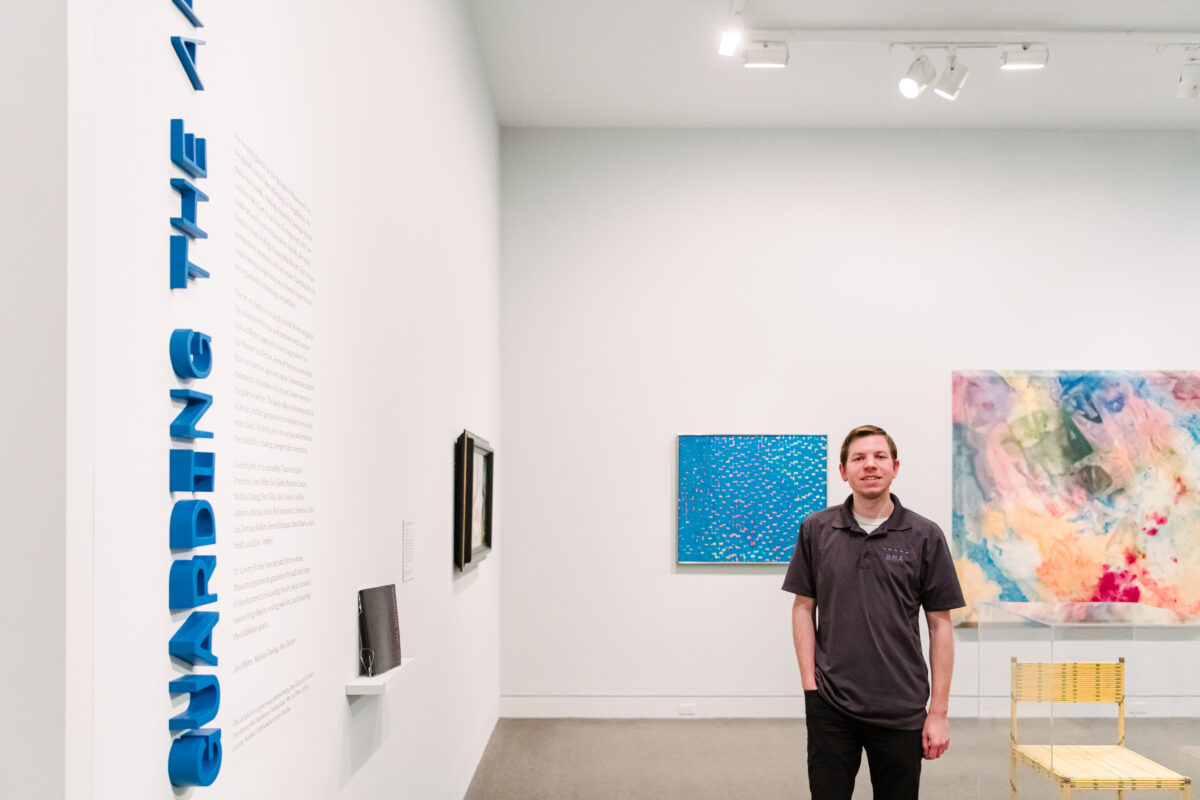
A massive painting dwarfed Rob Kempton ’12, English, as he stood in a Baltimore Museum of Art gallery.
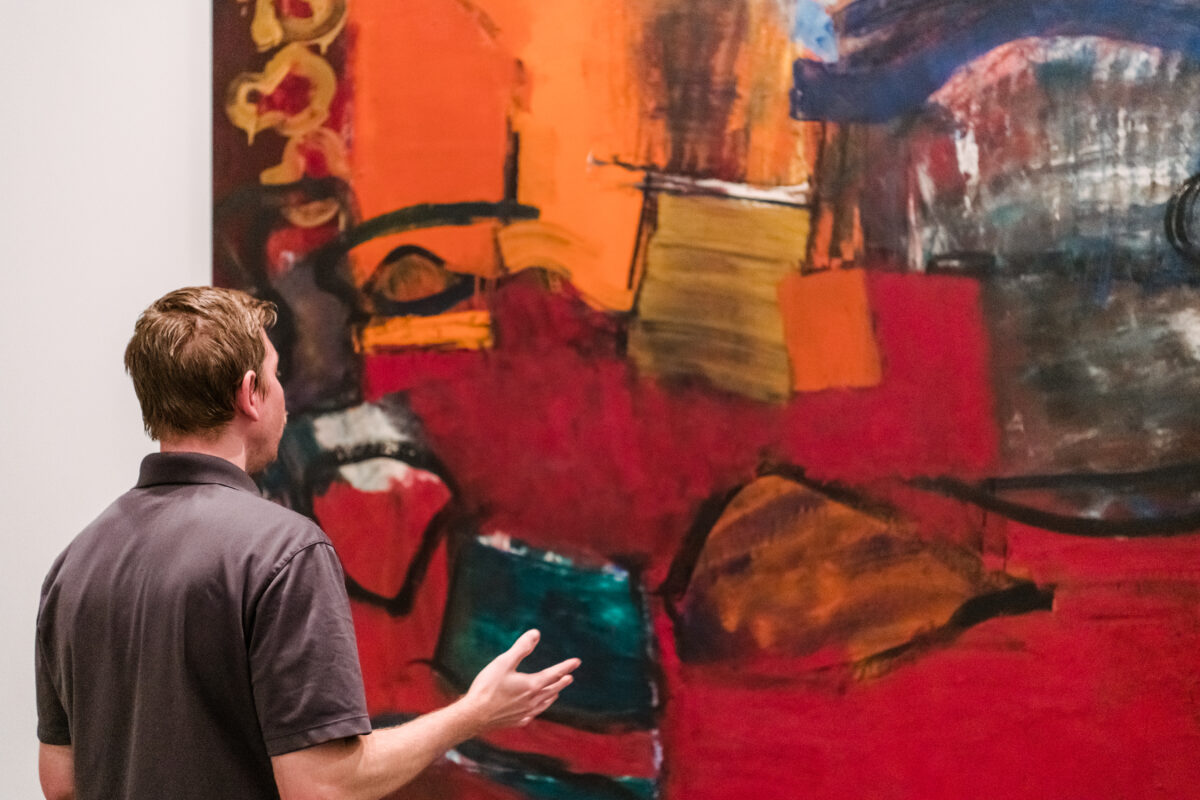
In his security guard uniform, Kempton gestured to the swoop of orange oil paint on the blood-red background, painted by Grace Hartigan in 1957 and titled “Interior – The Creeks.”
“I love the opaque strong colors. There’s such a push and pull, rhythm and movement, it really dances,” he said. “And here,” he said, pointing to a section that Hartigan slathered with paint, then scraped away with a palette knife. “See where she scrapes it away, it’s like revising a poem, so direct. The edits and revisions are adding to the emotion.”
Kempton was one of seventeen security guards at the museum who curated a show that ran from March 27 to July 10, “Guarding the Art,” a pioneering show in which the people who spend the most time with the art had a say in what got hung on the walls.
The collaborative show, which was the idea of museum trustee Amy Elias, reminded Kempton of UMBC’s poetry classes and workshops, where, he said, “I always felt like I had a voice. Like in this exhibition, everyone has a personal take on art.”
Much like the poetry classes at UMBC, Kempton said, the show’s curation was full of discussions and critiques: “It’s a dialogue with peers. You get ideas, you see something for the first time that you didn’t.”
Rob Kempton discusses an abstract painting by Alma Thomas called “Evening Glow.” (Marlayna Demond ’11/UMBC Magazine)
Art and poetry connected
Michael Fallon, senior lecturer emeritus in the English Department, visits the museum often since it’s so close to his home. Over the years, he became reacquainted with Kempton in the sculpture garden and galleries. Fallon remembered Kempton from the poetry workshop as “a really bright guy. This wasn’t a lark for him, he had read a lot of poets and had been writing on his own before the class.”
The poetry workshops, Fallon said, hold “an element of collaboration. … They’re working together, helping other people get better as you get better yourself. There’s an element of excitement, a good fellowship, which is a rare, great thing.”
The “Guarding the Art” show, Fallon said after he’d walked through those galleries, carried that element as well. Fallon said he was “not at all surprised” that Kempton got involved.
“He has turned that situation into a real career.”
Kempton, who still writes poetry, started at the BMA six years ago, seeking an inspiring workplace. He was so enamored with the galleries that he returned to school, earning a master’s in museum studies from Johns Hopkins University in 2020.
“Visual art and poetry live in the same space. My experience in poetry gives me a way to view the art,” Kempton said.
For the show, he first chose one of his favorites, an abstract by Alma Thomas called “Evening Glow” from the museum’s contemporary wing. “I returned to it, when the galleries weren’t busy, again and again,” Kempton said. “It reminds me of dusk, the deep blue, the tessellated patterns like mosaics. I imagine it’s the light through the trees from her kitchen window. You’re in the gallery all day, this is a good reminder that the natural world still exists.”
His second piece, the enormous Hartigan painting, however, was in the museum’s storage rooms. He spotted the work by digitally browsing the BMA’s collection files.
“It was amazing, there is a defiance to it, she was really going for it,” Kempton said.
Kempton shares his favorite parts Grace Hartigan’s 1957 painting “Interior – The Creeks.” (Marlayna Demond ’11/UMBC)
Sharing his voice
When he walked into the “Guarding the Art” galleries recently, he said, “It feels validating. Guards rarely get the opportunity to talk about art, and never in a way that you can interpret for an audience.”
The exhibit granted “agency and authorship to people usually devoid of that power,” he wrote for an Alumni Spotlight for UMBC’s English Department.
The guards went through a year-long professional mentorship while they were curating the show, with museum staff and with Lowery Stokes Sims, an independent curator and art historian. The guards wrote label copy with personal takes on each piece, which rarely happens in museum shows.
“When I first encountered this painting,” reads Kempton’s label for “Evening Glow,” “I experienced a deep calmness, a charge of introspection.”
Kempton wrote a forthcoming piece for BMA Today, the museum’s magazine, about curating the show. He hopes to work as a writer for museums.
Late at night or early in the morning, Kempton strolls through the empty galleries.
“It’s intimate, you’re going toe-to-toe with the art,” Kempton said. “It’s a reverent kind of feeling. Anything you want to do or think is possible in that moment. You can get lost in a piece, and that’s the best.”
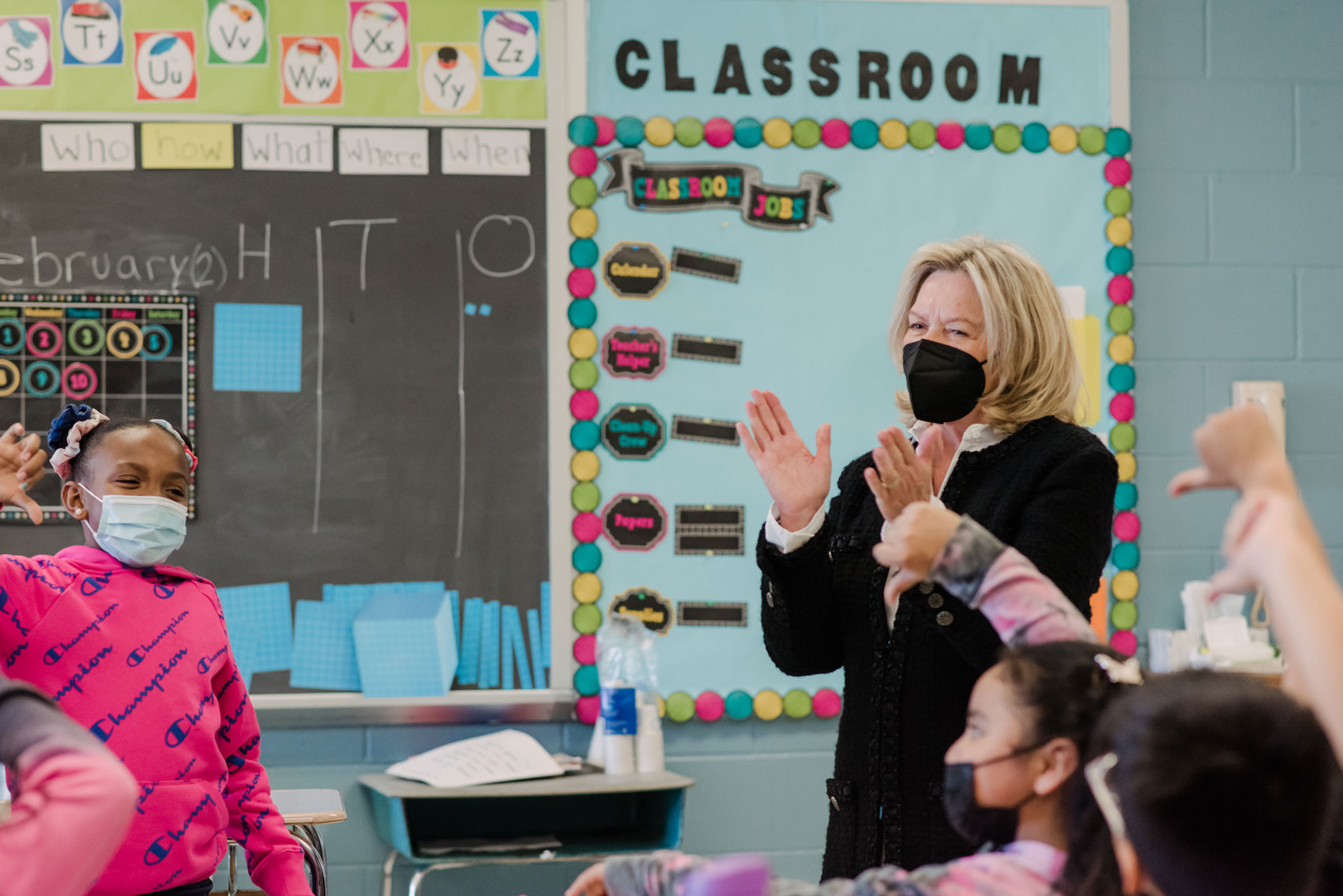
Or in this particular case, a handful of seeds in the form of alumna Tamera Davis’ second grade students at Lakeland Elementary/Middle School. The class is fidgety but tuned in. As they jump into a rhyming exercise, Betsy Sherman joins them in a game of call and response at the front of the classroom.
A former teacher herself, Sherman feels right at home at Lakeland. In a hallway with cut-out paper letters reading “Education = Opportunity,” she smiles and waves to a line of students in puffy winter coats. As she sees kids studying in an alcove, she can’t help but peek over their shoulders in curiosity.
Tamera Davis ’21, psychology, and her second grade students practice rhyming with Betsy Sherman.
Earlier this winter, the Sherman Family Foundation donated $21 million to create the Betsy & George Sherman Center, which will expand and integrate UMBC’s work in teacher preparation, school partnerships, and applied research focused on early childhood education and improving learning outcomes for Baltimore students.
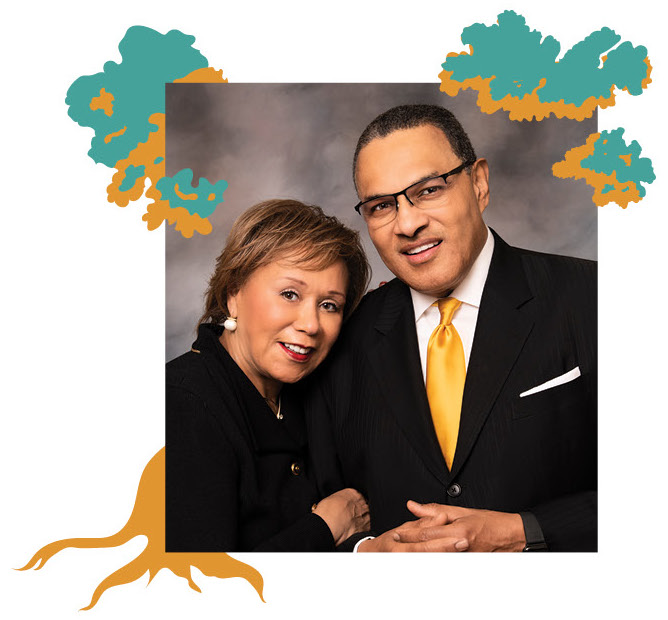
In addition to stewarding philanthropic relationships for UMBC, Freeman and Jackie Hrabowski have also given more than $2.3 million to the university over the past three decades. Photo by Jay Baker ’80, visual and performing arts.
The gift—the largest in UMBC’s history—has the potential to transform both UMBC and generations of local students. The Lakeland partnership has clearly already transformed Sherman.
“You just never know how that one moment you spend with a child impacts their lives. You may never know,” says Sherman, who with her late husband, George, began partnering with UMBC in 2006 to create the Sherman STEM Teacher Scholars Program and other related initiatives. “And so you really need to be aware that your influence can be long lasting.”
Philanthropy of this sort is not about flash or money. It’s about the long game, driven by love and hope. UMBC has, for years, stood as a fertile planting ground for very personal, values-driven giving. It’s a vision shared by Freeman and Jackie Hrabowski and close UMBC partners who have connected over the idea that change is possible—and a belief in the promise one seed can hold.
Driven By Love
For Freeman and Jackie Hrabowski, the seeds of philanthropy were planted very early in childhood. He grew up in Birmingham, Alabama, the son of two teachers; she in rural Virginia, the daughter of two first-generation college students. Both recount stories of how their families helped their communities through work in schools and churches, and how that example stuck with them throughout their lives and careers.
“I think that my foundation for fundraising and philanthropy comes from the strong belief in the power of education to transform lives,” says Freeman, who has been known to sit on the floor with elementary school children to talk excitedly about math. “Jackie and I both understand, as the children of teachers, how important teachers were in our own development.”
Later in life, as Hrabowski matured into his role as president of UMBC, he and his wife became friends with George and Betsy Sherman—folks with similar interests and hopes. As their friendship grew, so did their vision of how they might change the face of education in Baltimore.
“As you build relationships, you build trust,” says Mrs. Hrabowski, who thinks of Betsy Sherman and her late husband as family. “You share lots of time together talking about your differences, your perspectives, and how to make it all work. It’s all about the realities of where we are and what we can do together to make a difference.”
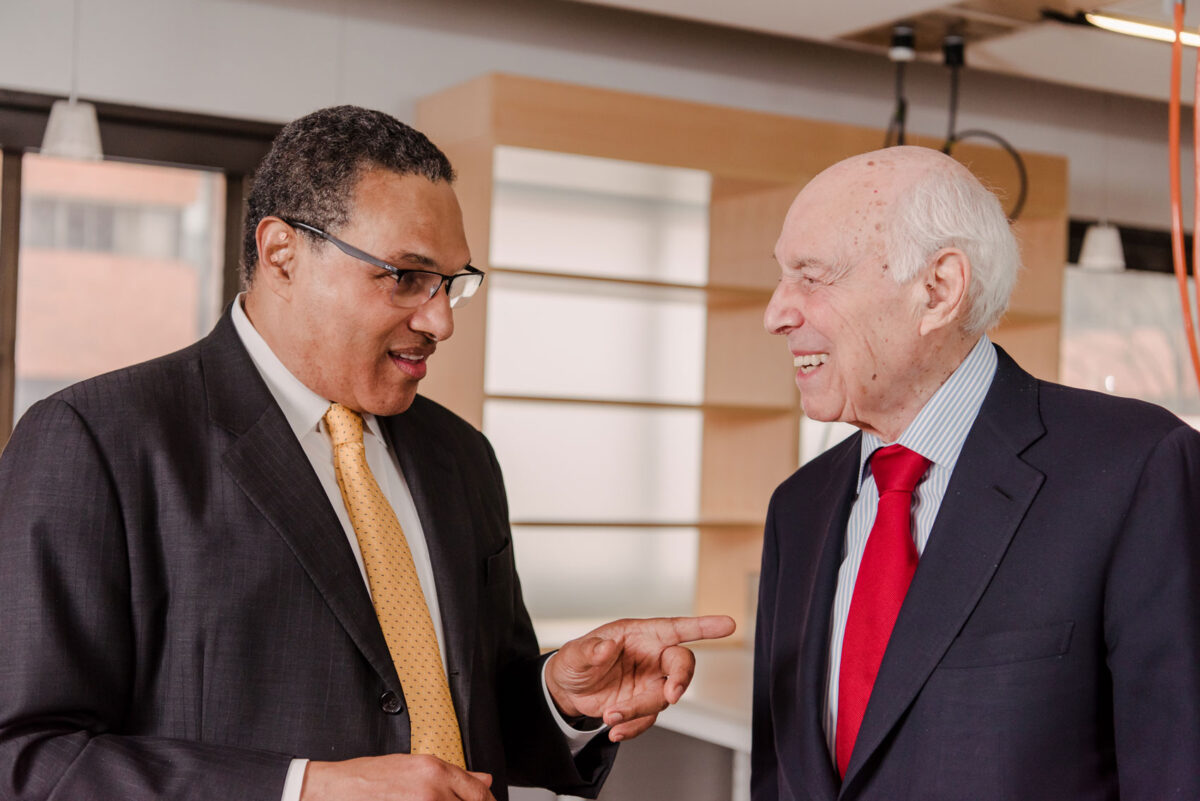
Freeman Hrabowski and Robert Meyerhoff co-founded the Meyerhoff Scholars Program in 1988.
Because “people tend to give to people,” as both Hrabowskis say, it’s not surprising that so many major philanthropic endeavors at UMBC have felt so personal in nature. Dr. Hrabowski’s relationship with Robert Meyerhoff—and a shared vision for making science more accessible to students of color—turned into a more than 30-year endeavor that has since changed the face of science and technology through the Meyerhoff Scholars Program.
“I threw the ball, but he ran for the touchdown,” Meyerhoff said of Hrabowski recently. “He made the most of it. He is a wonderful man.”
Earl and Darielle Linehan created the Linehan Artist Scholars Program at UMBC.
Similarly, a relationship with Earl and Darielle Linehan that began with Mr. Linehan’s serving on and chairing UMBC’s Board of Visitors revealed a deep desire to provide talented artists with an interdisciplinary approach to learning. Today, more than 300 Linehan Artists Scholar alumni are out in the world influencing dance, music, theatre, and other creative disciplines.
At the core of these partnerships—like so many others nurtured by Hrabowski—is a shared desire to help others thrive.
“When my parents and Jackie and Freeman get together, they talk about changing the world,” says Dave Sherman, noting his parents’ great love of Baltimore. “My mom and dad…not only would they provide resources, but they would provide passion. They would provide involvement…but it really all goes back to the people. And my parents wouldn’t support something that they didn’t believe would have the ability to grow.”
Watching It Grow
From her vantage point as a UMBC alumna, a mentee of Jackie Hrabowski, and vice president for economic development at Johns Hopkins University and Health System, Alicia Wilson ’04, political science, knows a good long-term investment when she sees it.
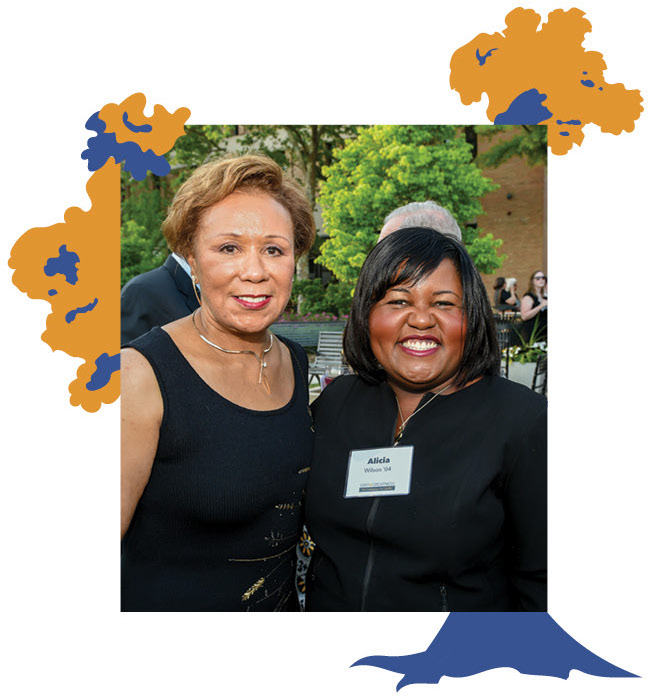
Wilson has felt the personal investment the Hrabowskis have made in her ever since she was a student. Recently, when she was sick, the pair brought Wilson a homemade pot of chicken soup, she says. At night. During a snowstorm.
Jackie Hrabowski and Alicia Wilson ’04
Beyond her own experiences, Wilson understands how personal philanthropic commitment shows up in the community—and what a lasting effect it can make, both structurally and emotionally, for all involved. A program like the Sherman STEM Teacher Scholars is able to put enthusiastic and well-equipped teachers in front of underserved students who will thrive with the extra attention. The effort adds up over time, creating a pipeline of opportunity for kids all over Baltimore.
“If you think about the ripple effect of your impact, it’s really through people and it’s through what we invest in,” says Wilson. “And so, as you think about the impact of the philanthropy that takes place at UMBC, you can point to so many scientific advances, public health, social advances that really started at a school in Catonsville. And really the testimony is in the people.”
For Sandra Evers-Manly, president of the Northrop Grumman Foundation and a partner in the work at Lakeland Elementary/Middle School, what sets these projects apart is the way UMBC engages at all levels, looking at the long-term potential of collaborative effort. “When we first began the discussion with Freeman about his vision for Lakeland and all of our UMBC partnerships, it was never about one element, it was always about the whole picture—the impact and results. In Lakeland’s case, what did the partnership mean to the school, students, teachers, parents, and the surrounding community,” says Evers-Manly.
“UMBC is a great neighbor,” she continues. “Some people will pick just one thing, like scholarships, and that’s it. But UMBC will say, ‘We’re going to work with families. We’re going to work with teachers. And, oh, by the way, we’re coming to you. You don’t have to come up the hill to UMBC. And we’ll find strategic partners to be a part of this.’ UMBC has the magnetism to help bring those key players into the room. What is equally impressive, is that you have both Freeman and Jackie who are so committed to the university, the greater community, and our nation. They do this in so many ways, both professionally and personally.”
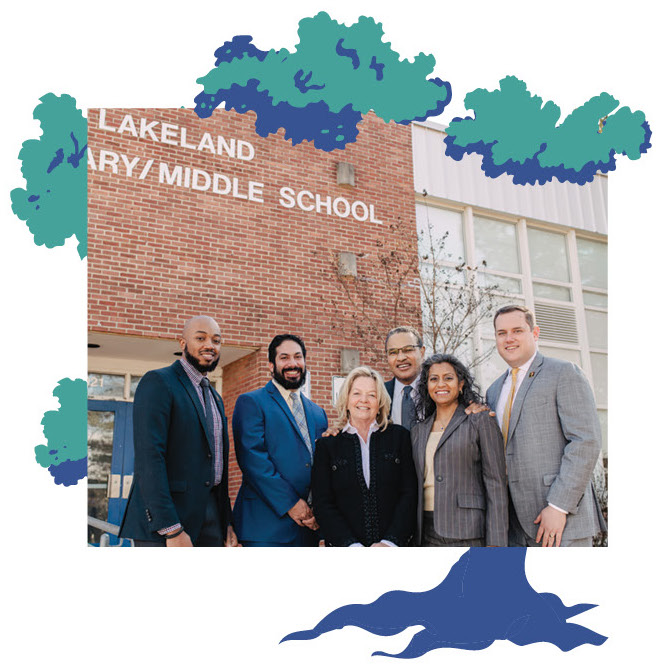
At Lakeland Elementary/Middle School (L-R): Sherman Scholar alum and staff member Corey Carter ’08, M16, biological sciences, M.A.T. ’10; Lakeland Principal Najib Jammal; Betsy Sherman; Freeman Hrabowski; Rihanna Shafi, Director, Sherman Scholars; and Joshua Michael ’10, Director, Baltimore School Partnerships.
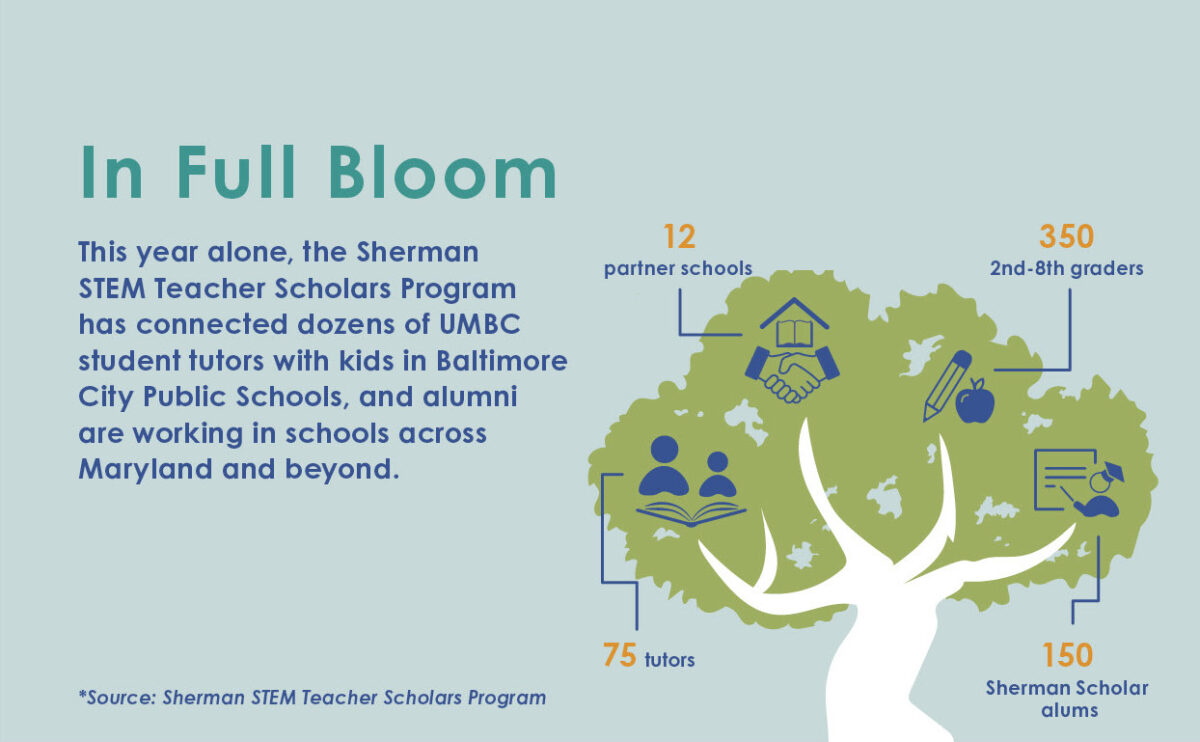
The success of a partnership can be measured in many ways—and UMBC loves to measure and study regularly to make sure their programs are working. The Sherman Scholars program now partners with 10 schools to promote academic achievement through professional development for teachers and intensive tutoring for students. For example, more than 90 UMBC students, including Sherman Scholars and others, provide evidence-based math tutoring for over 350 elementary and middle school students in several schools across Baltimore. Early data show this approach is working.
But much of what drives these programs goes beyond data.
“This isn’t academic. . . It is a heart move,” says Wilson. “And thank God their hearts are pure and good and filled with love for young people. . . and the belief in the fact that young people, regardless of their background, can achieve.”
A Seed Sustained
When Hrabowski was still interim president of UMBC, then Maryland Governor William Donald Schaefer asked what he might do to support him and UMBC. Looking out over campus from the roof of the Administration Building, Hrabowski made what was probably an unexpected request.
“He…asked what he could do, noting that he didn’t have a lot of money to throw around. I said ‘Give me trees!’” Hrabowski writes in The Empowered University, noting that Schaefer quickly followed up by calling the Department of Natural Resources and having trees planted all over the young campus grounds.
Overnight, the campus was visually changed. Thirty years later, stands of mature trees provide sanctuary for wildlife and green space for all.
Thinking back on his years at UMBC, Hrabowski reminds us: “It’s not about me. It’s about us.” None of UMBC’s successes happen without the community, he emphasizes. UMBC is strong because we have put in the work, grown our endowment from practically nothing to more than $125 million, and proven ourselves year after year. UMBC will remain strong because of our shared commitment to inclusive excellence.
In his final months as president, Hrabowski has sealed his legacy yet again with the founding of a named scholarship that will increase access and affordability for undergraduate students with financial need and a commitment to community service. And while he has promised never to stop planting for UMBC, it’s up to the rest of us to nurture the trees he’s so faithfully tended.
“The seeds that he planted so long ago are now mighty trees,” says Wilson. “But, the goal isn’t that we just get to sit under the shade of the trees. We also have to go and plant some trees and build upon that legacy.”
Learn more about the Freeman A. Hrabowski, III, Endowment for Student Excellence at giving.umbc.edu/hrabowskifund.
Earlier in the month, on the day when news rolled out about the appointment of UMBC’s next president, the woman who will take over for retiring president Freeman Hrabowski hopped a plane and made a surprise visit to Baltimore. Valerie Sheares Ashby, current dean of Duke University’s Trinity School of Arts & Sciences, may not officially start her role until August 1, but she’s already making a splash on campus.
“I showed up today, on the day of the announcement, because there was no way I was not going to show up in Freeman Hrabowski’s office to honor him,” Sheares Ashby told a group of campus leaders the morning of April 4th.
Sheares Ashby spent the rest of her two-day visit exploring campus and meeting students, faculty, staff, and civic leaders—much of the time with Hrabowski as her guide. With each new person she met, she shared her growing excitement about joining the UMBC community.
“It is a real honor,” she said. “The biggest compliment I have received today is, ‘Oh, this is perfect for you.’”
Here are some highlights from announcement week:
"I've been the first and only many times woman, the first person of color, the first woman person of color. I am accustomed to only and first, so it's the nature of the world is in which I live in," Valerie Sheares Ashby said. https://t.co/tNAzkLcXI2
“When I get nervous about following Freeman, I think, you know, they are already doing the work,” Valerie Sheares Ashby said. “It is well established what their principles and values are. And those are mine.” https://t.co/0UIG3pPR2o
Glad to see Dr. Ashby, UMBC's next president, is enjoying what will be her new view at #UMBC starting August 1! And you know it wouldn't be a visit with President Hrabowski without a quick selfie. pic.twitter.com/qLJutagdlR
Congratulations to Dr. Valerie Sheares Ashby and @UMBC. I am confident that Dr. Ashby will continue to uphold the university’s commitment to academic excellence and innovation and am excited about how she will lead the university forward. https://t.co/OEdCPqjjAF
— Speaker Adrienne A. Jones (@SpeakerAJones) April 4, 2022
Learn more about our incoming president and planned celebration events for President Hrabowski at president.umbc.edu.
Header image and portrait of Valerie Sheares Ashby with True Grit by Marlayna Demond ’11.
There are three things we find endlessly amusing: throwbacks to childhood, cutting things up, and attempting to predict the future. And there is one thing that magically combines it all: a paper prognosticator like the one we’ve specially fashioned below. We hope this will give you the chance both to joyfully create a fun thing to share with friends and family and choose your own UMBC adventure! Watch our how to video to refresh your memory and then cut, fold, and share the joy with your favorite #FutureRetriever!
In honor of National Veterans Week, we’re chatting with UMBC senior media and communications major Alexandra Hulett, a veteran of the United States Army. Behind the scenes these days, you might find Hulett filming or editing promotional videos of student events and campus engagements for her video production internship with the Office of Institutional Advancement, building off skills she first put to work in the Army.
Can you tell us a little bit about your work before you came to UMBC?
When I joined the Army I worked as a combat photographer/videographer. The last position I held before I transitioned out was an instructor for basic still photography at the Defense Information School on Fort George G. Meade, Maryland. I trained new Soldiers and Marines on the technical skills they needed for their careers.
Why did you decide to take the path of service?
There was always a nagging desire in me to join the military. It was after I found out that the Army has an occupation that combined my love for photography and videography that I decided to join and embark on a 9-year ride to places like Afghanistan and Germany.
How do you bring those experiences into your role as a student today?
The experiences I had in the military have been so invaluable to me as a student now. I gained the self-confidence and work ethic that I needed to help me persevere through the many challenges that life (and school) has thrown at me. Also, I learned that teamwork is critical because no one gets very far without the support of others.
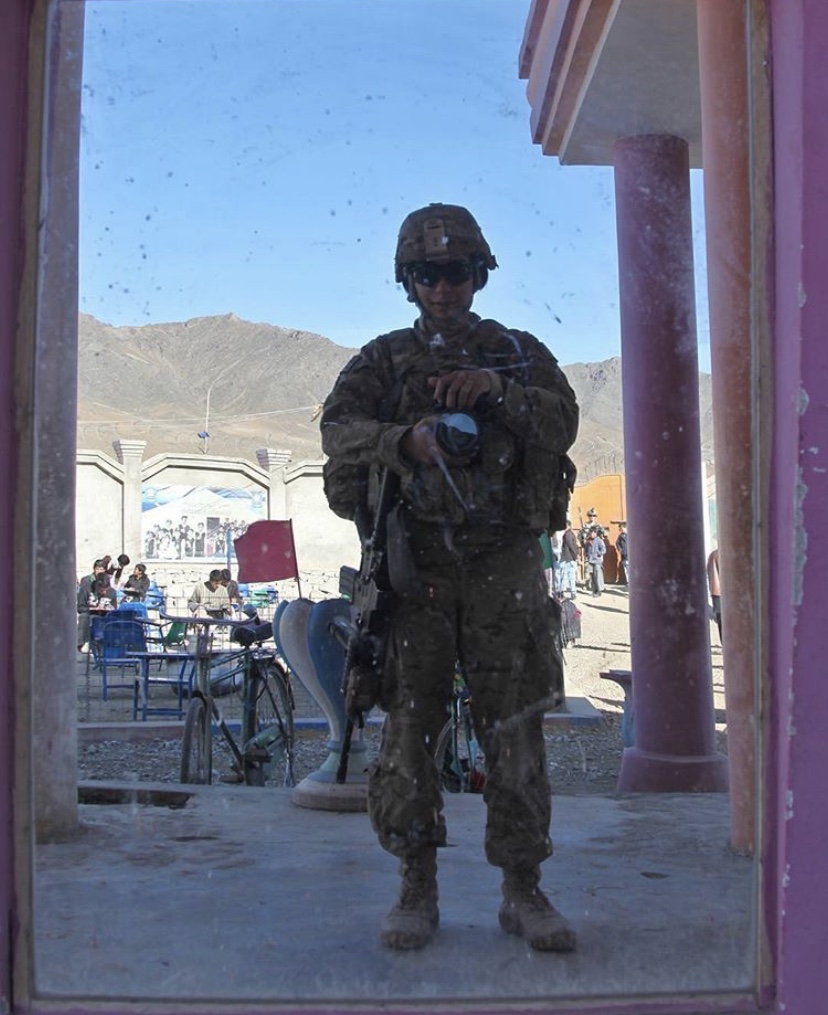
A selfie of Hulett in Afghanistan, 2012.
What do you most enjoy about being a student? What is most challenging?
I love being able to learn new things and engage with my professors. I enjoy the many places UMBC has to offer for places to study and relax between my classes. The most challenging thing about college to me is making friends as I am much older than a typical student with different life experiences and lifestyles that make it hard to relate to others.
What do you hope to do after you graduate?
I plan to stay in Baltimore with my husband and dog and continue to pursue video editing as my career.
What would you like other students to know about what it’s like to be a veteran?
It can be difficult for veterans to interact and make connections with other non-veteran students. Personally, I deal with this internal balancing act of blending in while still trying to put myself out there and meet others. I would challenge other students to befriend the veterans in your classes. We’re a fiercely loyal bunch and experts at knowing how to have a good time.
Header Image: Retired U.S. Army Col. Martin Downie, former Commandant at the Defense Information School, Fort George G. Meade, Md. and Hulett. All photos courtesy of Hulett.
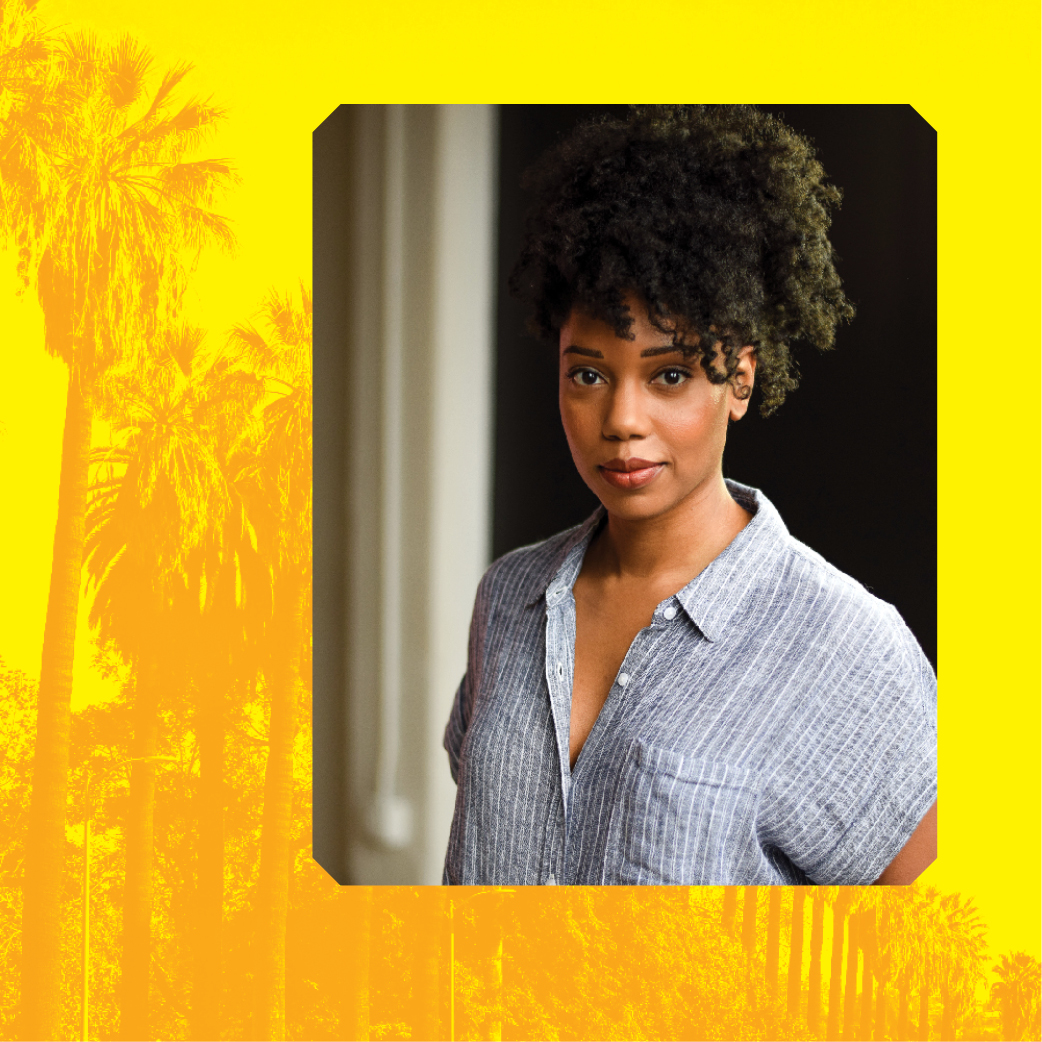
Dimmed lights, Twizzlers, and a big bowl of popcorn. Most of us may not have had the traditional movie theatre experience this year, but in living rooms across the country this year, many have found much-needed solace and escape through television and movies. Behind the scenes, Retrievers working in Hollywood as writers, producers, and directors have embraced the challenges of the moment—and remained ever-thankful for their audiences and creative roots. UMBC Magazine editor Jenny O’Grady sat down with five alumni working in entertainment to hear more about how they got their start, and what has kept them going creatively during this unusual time.
UMBC Magazine:What has it been like to continue working during the pandemic in order to keep up with demand for entertainment? What does that look like?
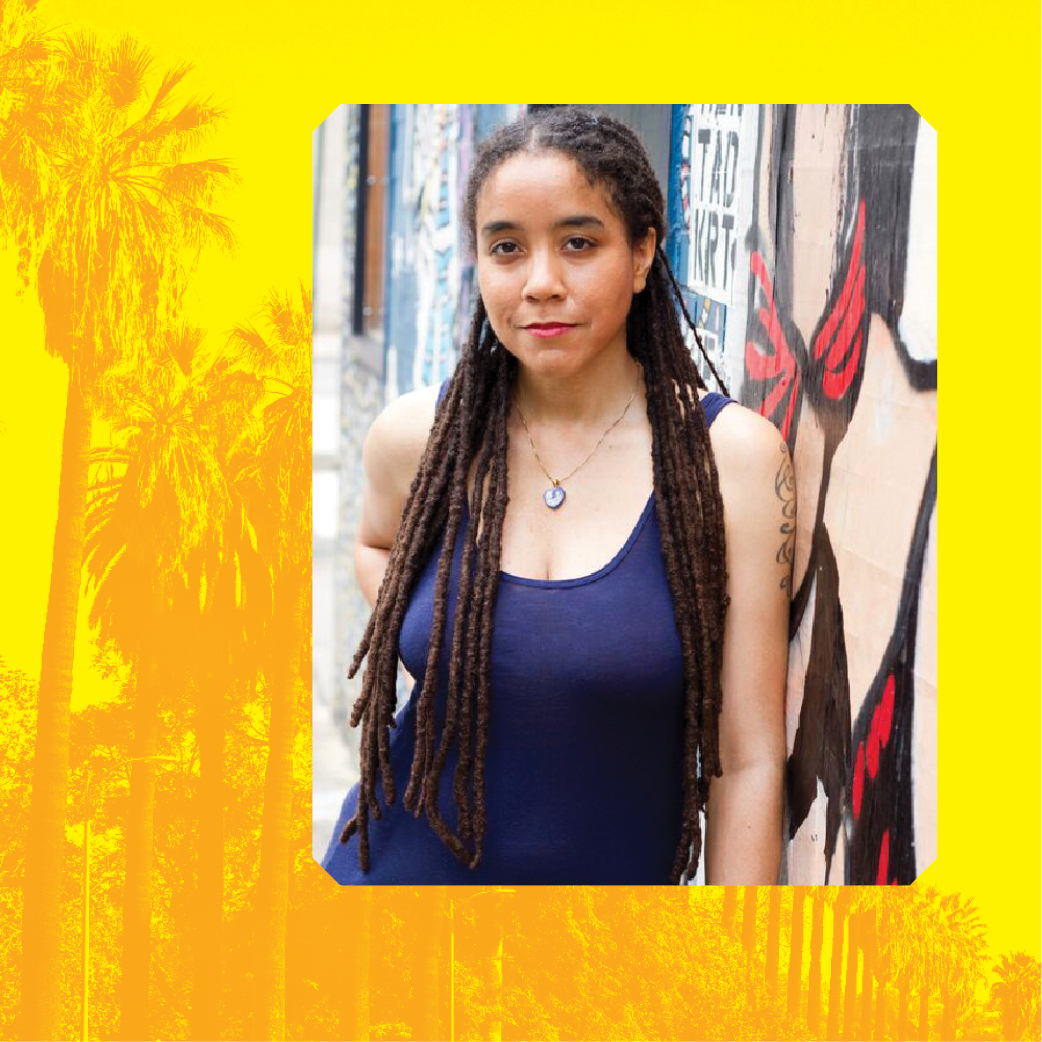
Name: Kara Corthron ’99, theatre Job: Author, playwright, and TV writer About: Author of The Truth of Right Now and Daughters of Jubilation. Plays include What Are You Worth?, Welcome to Fear City, AliceGraceAnon, and Holly Down in Heaven. Writes for the TV drama-thrillers You (Netflix), The Flight Attendant (HBO-Max), and M. Night Shyamalan’s Servant (Apple TV+). A multiyear MacDowell Fellow and resident playwright at New Dramatists. Where do you turn for inspiration? Toni Morrison, Shirley Jackson, and Octavia Butler. Korean horror films. Your favorite creative spot at UMBC? AOK Library’s “colorful Alice in Wonderland chairs” Fave pandemic entertainment?Search Party,Schitt’s Creek, Gilmore Girls
Kara Corthron: Well, I’ll just say, I feel really fortunate that I’ve been able to work, because 40 percent of our country is experiencing food insecurity. But, the biggest shift for me in TV writing was that everything became Zoom meetings…and I still am not in love with it. We’ve found a way to make it work and be productive, but I still would much rather be with humans, and I miss that a lot.
Brandon Spells: On the network side, making that transition from our office on Sunset Boulevard, to taking pitches on Zoom, it’s just a different energy when you’re in the room with talent, and taking pitches and getting excited about things…it’s just different. Initially we stopped all productions, so that was tough. Once we got the green light, we first started productions in countries overseas, and then slowly, during the summer, we started picking up back in America. Last fall we were going nonstop, trying to catch up, because there was a gap from when we stopped. This year, you’re probably going to see that things kind of slow down, as far as the launch cadence. But maybe that’s not a bad thing, because we come out with something every week, and maybe we don’t need to launch a million things in one weekend.
Brian Dannelly: For me, when the virus came on, we were writing all the scripts, prepping everything, trying to figure out the COVID situation and trying to be ahead of it, so that when we were able to get back on set we’d be ready to go. We had no idea when we were going back, and so during that time period I had a physical, and my doctor didn’t want me flying, so I had to give up the show (In the Dark), which was terrible and sad…and really scary, too. I went into the pandemic with the hopes of coming out a better person, a better creator. We’re so lucky because there are so many people who are really struggling, so you’re trying to balance that with how you can use this time for good. And so I helped In the Dark transition to the third season, and then I just started writing like a crazy person. I became a whole food plant-based vegan, I learned how to cook. I’m adopted, so I found all my brothers and sisters—there’s nine of them. And I just really tried to kind of reconnect with who I was when I started the business, who I was when I was at UMBC, and what got me into the business, and I feel like so far I’ve come out in a place that’s really good.
Cat Mihos: For me, it’s been fascinating watching the budgets balloon for COVID compliance. We have two shows in pre-production for Amazon right now that are going to be filmed in Scotland, so we were trying to share things, like catering, so we have one bubble, also trying to make new workarounds so we use the same COVID compliance officers—we’re trying to work smarter. It’s been a year. Brandon, I get it, Netflix has definitely been our biggest supporter, and we love working with them. It comes down to Zoom meetings, our writer rooms are all remote, so if there’s any technical glitch…where you’re just frozen on a screen, ugh. It’s learning to cope, that’s the best skill on any set that you can have. I did work on Brian’s first couple films when he was in AFI (American Film Institute), so we have quite an old friendship. We’re old. But it’s lovely to have that support just right down the street.
UMBC Magazine:Is there anyone who particularly influenced you, or some other takeaway from your time at UMBC, that you still look to now in your careers?
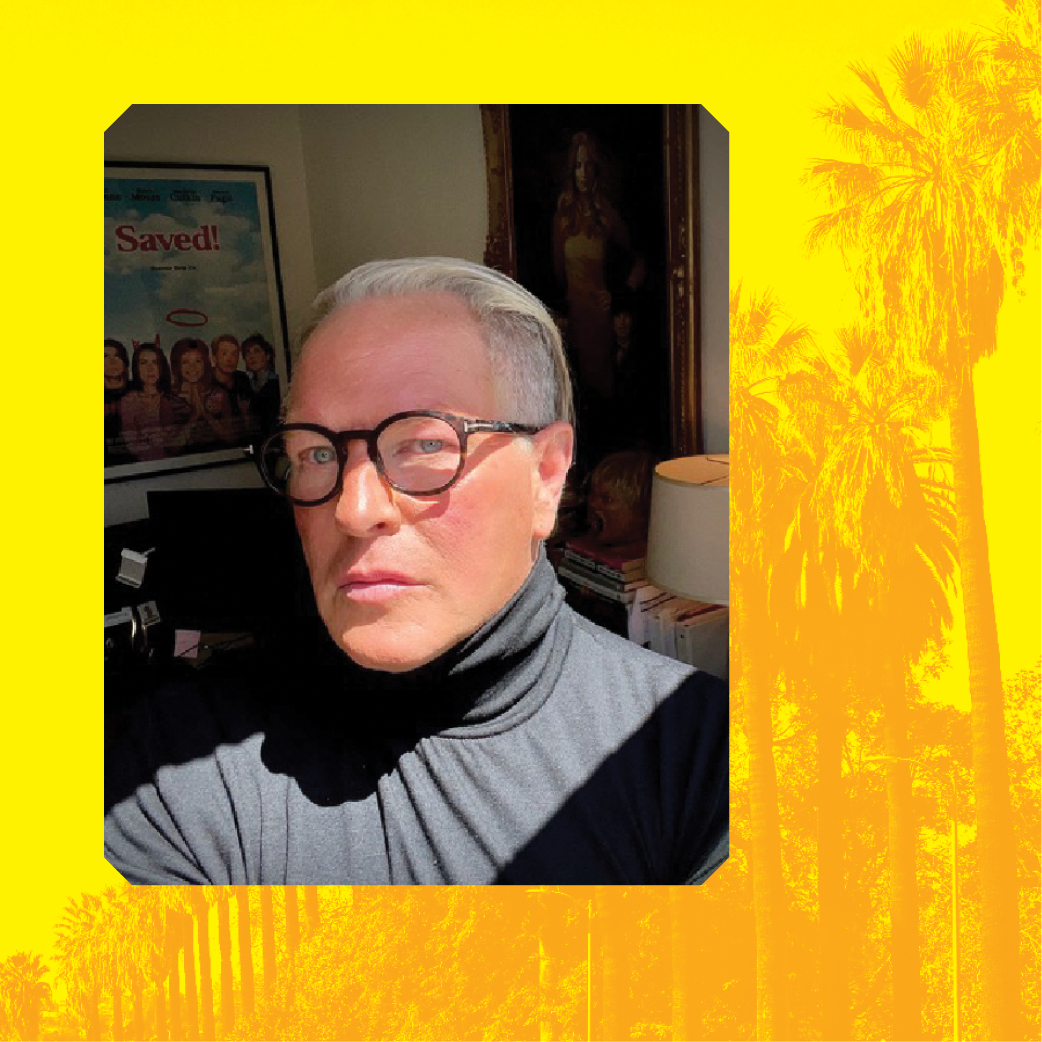
Name: Brian Dannelly ’97, visual arts Job: Writer, director, and producer About: Executive producer and the producing director on The CW’s sleeper hit, In the Dark. Directed shows for Netflix, Hulu, Showtime, MTV, ABC, and CBS, including Scream, Sweet Vicious, Haters Back Off, Pushing Daisies, United States of Tara, and Weeds. Co-wrote and directed the cult teen film, Saved, and directed Struck by Lightning. Currently co-creating an animated series called Humperdinck. Where do you turn for inspiration? Whatever personal crisis I’m going through at the moment. Your favorite creative spot at UMBC? Kathy O’Dell’s office. Fave pandemic entertainment? GENERA+ION on HBO Max
Dannelly: You know, I was a little broken when I got there, which is interesting because UMBC really put me back together again. My first college was Morgan State University, so it was there I made my first film at a satellite program that they had in Towson. I went from being vice president of my class to failing out because I was so freaked out about making this film. And so I struggled for like two years. It didn’t make sense that I could do this, because at the time we didn’t have internet, and we weren’t connected all over the world. It was like, I’m in this small town, how do I go from here to Hollywood?
I knew that John Waters edited his early films at UMBC, and I knew they had a lot of film equipment. I went to a meeting there, I was so scared. And so UMBC said come on in, come do this. And I had teachers like Kathy O’Dell, Holly Rubenstein, Jill Johnson—these women carried me. In fact, I was so broken when I went there, when it came to applying for a master’s degree, I applied to all of the film schools that I thought I could get into, and Kathy O’Dell sat me down and said, “You apply to the best schools.” And I applied to AFI (the American Film Institute) literally running to the train station in Washington, D.C., to put my application in the mail, because I was late and it had to be in by that night. And I never thought in a million years that I would get into that school. So, not only did they help me tap into my creativity and be who I am, but they helped put me back together again.
McKenzie Chinn: For me, part of my identity as a creative person is working in multiple spaces, in multiple disciplines. I’m still an actor, but I’ve forged more space for my own projects, my own writing. I have a poetry collective. And all of these things I do in equal measure. When I was at UMBC, I was an actor, in a very conservatory-like program. And I think the thing that I learned the most, was a level of discipline that allowed me to succeed as much as I have thus far, and that work ethic was reinforced by all my instructors in the Theatre Department. But I think it has been applying that discipline to carving out space for my own ideas and my own stories, and taking my own agency as an artist, especially as a Black person and a woman in this world, that have really benefited me as an artist and advanced my career beyond what I imagined it could be. And it has been that rebellion, frankly, that I think has allowed me to be able to pivot in the ways that I have during the pandemic. Theater is on pause right now, and so we’re all finding ways to do what we do in a different space.
Corthron: In my senior year, I was part of a group that just started writing, and were kind of performing our own works and listening. And we’re like it would be really cool to have a playwriting class, but we don’t have one. So we went to the department head who was Wendy Salkind at that time, who is lovely. We told her we were really interested in writing, and she created a class for us. She found a teacher, and they added it to the curriculum. It was really cool. I feel like she saw that what we were getting wasn’t quite enough, so she thought let’s try and figure out a way to make it enough.
I’ve never thought of myself as one thing, either, which is hard, because people really want you to do your one thing, stay in your lane. And eventually I realized I’m a writer, so I write. But whether that’s playwriting, whether that’s novels—I write young adult fiction—or it’s TV or film, I finally got to a place that’s taken a long time, to realize I can do all of it, it’s my choice if I want to be exhausted. It’s really up to me. So I think that some of that was instilled in me at UMBC.
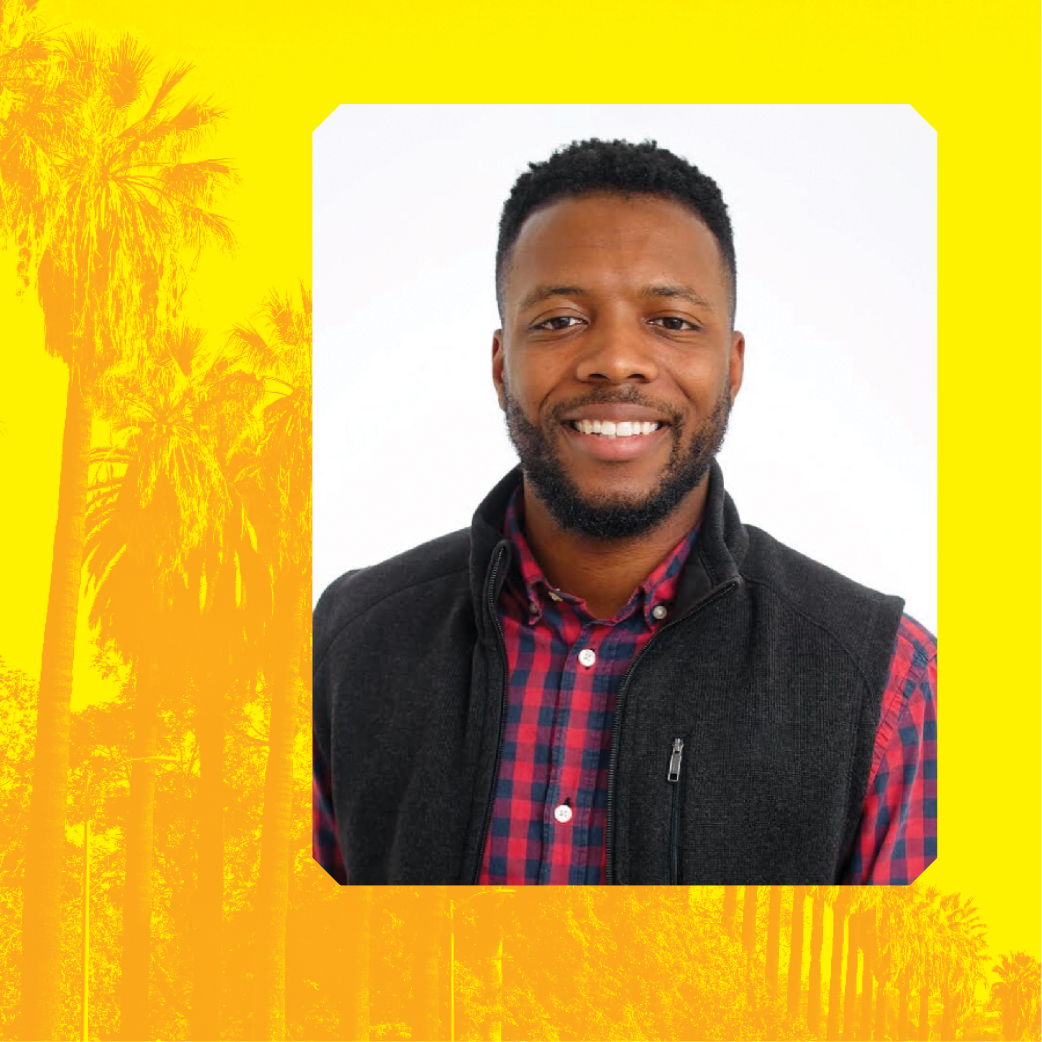
Name: Brandon Spells ’14, media and communication studies Job: Creative assistant at Netflix, unscripted content About: Worked on BET’s “106 & Park” in New York City and on productions with Nat Geo, Sirens Media, and E! In L.A., produced shows like The Doctors, Who Wants to Be a Millionaire?, and The Bachelor. Today, develops and produces impactful global content for Netflix. Where do you turn for inspiration? My mom! She is the reason I never gave up on my goals. Your favorite creative spot at UMBC? Professor Kimberly Moffitt’s “Baltimore in Film” classroom Fave pandemic entertainment? My favorite reality show The Real World
Spells:So my freshman year, I was a graphic design major, and I was supposed to do this portfolio, but of course being a freshman, I procrastinated and I threw something together and submitted it to the program. And I didn’t get in. I wanted to be a cartoonist, graphic design—that was always what I was going to do. And so when I didn’t get into the program, it was a crossroads moment.What other things do I like to do? What are my other passions?
And I remembered me and my friends would shoot and edit YouTube videos and stuff, and so I was like I kind of like entertainment, but I don’t know anyone who is in the entertainment industry. I don’t even know how you get into making films, or any of that stuff. Nobody in my family ever did that. And so I started going into media communications. And the first class that I took was Baltimore Film with Kimberly Moffitt. I enjoyed it, but I just wasn’t looking at film or television in a very analytical way. Professor Moffitt, she broke things down in such a creative way, it really helped me see things I hadn’t thought of before. And I literally use those techniques today. Giving notes on a cut, and kind of using the analytical eye to look at things creatively, I use that everyday. And I honestly think it started with that class, because watching The Wire, watching Crybaby, she was breaking each scene down and why this led to this, and I’m like how? I would never have thought of something like that. And so it was really a full circle moment for me.
Mihos: I was a photography major. I worked in the darkroom at UMBC, and Alan Rutberg was one of my teachers, and I was very sad to hear we lost him two years ago. When I was 12; I built a darkroom with my dad. So it was always about analog film, and poor Alan, really I put him through the paces. I was adamant, why do I have to learn digital, there’s still going to be film. He said nope, and he pulled me into the digital age. He was great, he was challenging. Chris Peregoy, as well, was excellent. Very different teachers, but they both contributed important parts of my photographic life, which I do still use. I’ve done photo shows, I need to return to that. Digital is still not my true love. I had sort of two dads telling me digital is the future, get with it, forget complaining about it, just go. And Peregoy was like no, keep your analog film love, because it is still there, it’s just almost gone.
UMBC Magazine: Why do you think entertainment has been such a unifying force during the pandemic, and what are you hearing from people that keeps you going creatively?
Spells:I feel like some of our stuff has definitely provided people with escapism, because everyone’s cooped up in their house, they’re not traveling, not experiencing things. And so being able to just get out of your little box and put yourself somewhere else for a little bit is always helpful. Love is Blind, for instance, people loved that show. And I feel like people were unified in people’s misery, craziness, misfortune. They’re like this is so crazy, this is so wild. But having that connectivity with people, especially when you feel so far away from them, is always nice.
Corthron: Yeah, I totally agree, I think we’d all love a little bit of a vacation from what’s going on. These shows have helped a lot. I also think not only is it giving us something to connect about, because of the past year, it was giving people a reason to connect over something that wasn’t politics. I feel like there was so much going on that was painful, that it was a way not to have to, at least for like a moment, to have a conversation that wasn’t about how stressed we should be. It was a stressful year.
Name: McKenzie Chinn ’06, theatre Job: Filmmaker, actor, and poet About: Writer, producer, and lead actor of Olympia. Acted in the FOX pilot The Big Leap, Empire, CBS’s The Red Line, and onstage with Goodman and Steppenwolf Theatres, The Second City, and others. Part of Growing Concerns Poetry Collective whose releases include two albums—Big Dark Bright Futures and We Here: Thank You For Noticing. Where do you turn for inspiration? Currently, ideas around Afrofuturism. Your favorite creative spot while at UMBC? Room 318 of the theatre building, which acting students shared with the Registrar. Fave pandemic entertainment? I’ve been very drawn to cult documentaries.
Chinn: I agree with both of you, Brandon and Kara, the world is a lot right now. Even now, if I just think too hard about it, I get really overwhelmed. And I think as creative people we have sensitivity, where we are deeply impacted by things going on around us, and the suffering of others. But in order to be able to show up for ourselves and our families, we need to be able to dispel some of that anxiety, some of that sorrow, some of that tension, because it is so strong.
And so having these various forms of entertainment from prestige television to the trashiest of the trash, has been, I think, for me, been a lifesaver…. I’ve had this really amazing experience over the last year, where my movie, Olympia, got distributed and hit streaming platforms in 2019. And then everything stopped, and so people were watching more media than they ever had. And so I think smaller indie films that maybe would not have gotten as much attention were suddenly being watched by a lot of people, mine included. And my movie is mostly Black people and people of color, and it’s a comedy. It’s got some heavier moments, some heartfelt moments, but it is a lighter movie….I remember thinking, does anybody need this movie right now? Little did I know, that was exactly what people would need during this time. And I got an experience I’m so grateful for, where I’ve had just so many Black people, specifically Black women sliding in my DMs just to thank me for the movie, from all over. And every time it happens, I’m just beside myself with gratitude.
Dannelly: One thing I don’t think people realize is that people making film and TV, they work 16 hours a day. Everyone works so hard, they’re away from their families….The other thing I always say to people, is that Hollywood is just a bunch of people from small towns and cities. It’s not like a bunch of people from L.A. Cat and I came from a little small town, and we didn’t go there as Hollywood people, and I’m sure you guys have the same experience—you go there because that’s where you go to make films and TV.
Mihos:Well, I wanted to add on that note, my dad came from Greece, he came over when he was 16. I went home to see him recently with great concern, because I thought I don’t want to get him sick, he’s 90, and he’s like, please come home. I asked him, “Dad, should I be doing this? Should I be doing this with my life?” He said, “You know what, we need to laugh, we need entertainment!” His 90-year-old wisdom just kind of turned my brain around, because I was thinking, what really is this? Is this going to matter in the big picture? Shouldn’t I be out there fighting for people, healing people, doing something more important? I really appreciated that from my dad, because you never know what you’re giving back to the world.
Dannelly: This is what I love about our business. Yes, we entertain people, that’s part of our job. I think hopefully we’re doing it for good, even if it’s a laugh. But also, we have the ability to affect every single person we work with. We have the ability to change culture by inclusiveness, by who we choose to hire. So it’s like this sort of weird external thing, where we entertain people on many different levels, and it’s also this very active, internal mechanism for change, which I love. I’m always going into a project with an agenda, always, always.
UMBC Magazine:So, what advice would you give a student or recent grad who’s trying to get into this business?
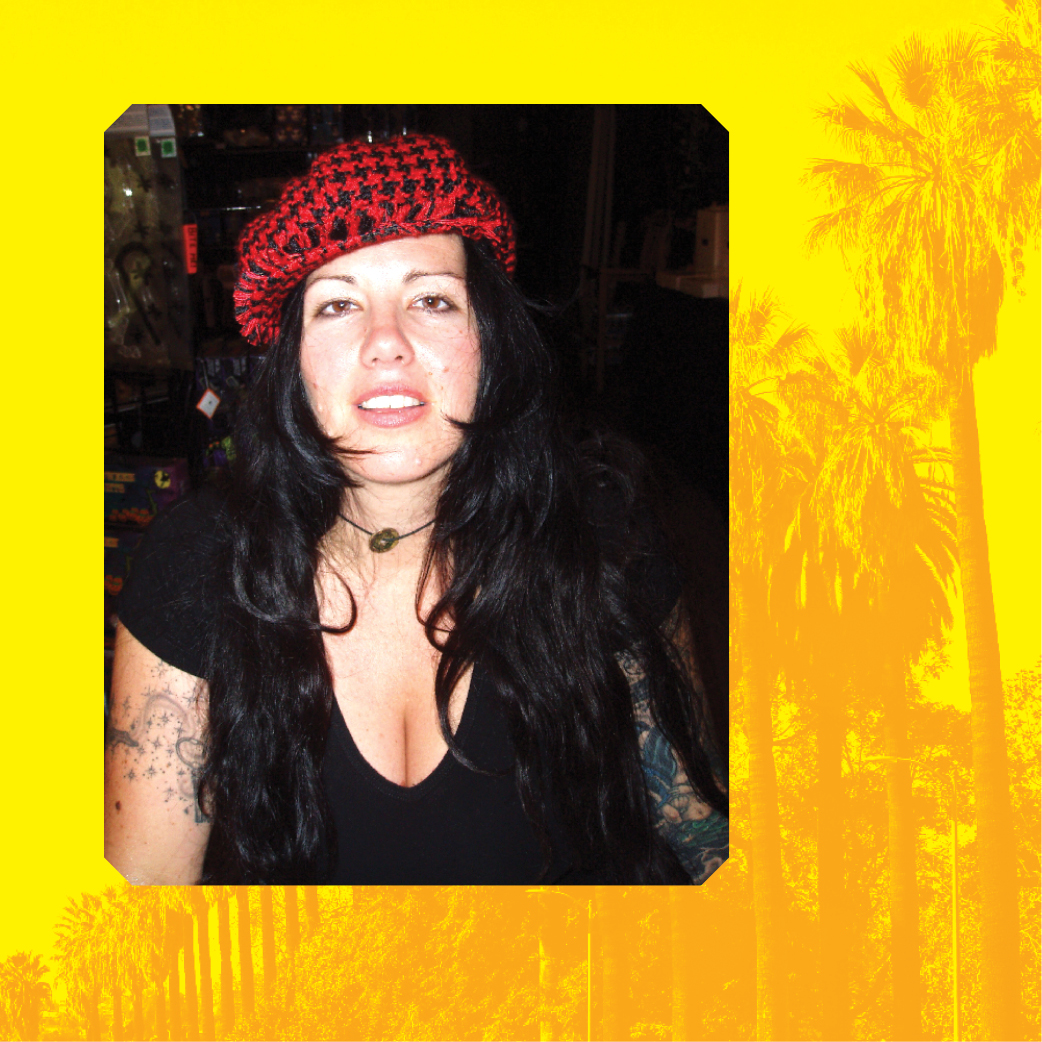
Name: Cat Mihos ’00, visual and performing arts (photography) Job: Producer/writer, photographer, former roadie About: Met author Neil Gaiman while on tour with Tori Amos in 2002. Toured full time with bands like Tool, Mötley Crüe, Soundgarden, and Gaga until 2016 when she set up Gaiman’s production company, which she currently manages on the Jim Henson Studio lot. Worked on American Gods, Good Omens, and managed several book tours. Authored Comic Book Tattoo Tales Inspired by Tori Amos. Writing a graphic novel for Z2 Comics about Vikings titled Lore of the Havamal. Where do you turn for inspiration? I flip through old comics. Your favorite creative spot while at UMBC? Fells Point, where I opened my little shop 9th Life. Fave pandemic entertainment?The Wire,X Files, 30 Rock
Mihos: I think what’s really important in life is you come up with your people. The other assistants, the people working with you on the ground. It’s important to keep checking in with people, even if you have nothing to say, no news, just be like, “how are you doing?” I do so many little mentorships, because I didn’t have much of that, and I didn’t know how to find it. There’s no rule book, and I think the younger kids, they do seem to be fine with asking. I just never thought you were supposed to ask. So please, be generous with your time.
Dannelly: While you’re there at school, understand who you are and what kind of stories you want to tell. Really connect with why you’re at UMBC. Take a lot of different classes outside of the arts department, because no one wants to make projects with people who only have a theater degree. Whatever other interests you have, spend time doing that. Create as much content as you can. Short films, Tik Toks, YouTube. I can’t tell you how many people I discover on Tik Tok and I’m like, that person is interesting, I wonder what they would be like in a film or show.
And then the other thing that’s hugely important, and I think McKenzie and Kara, you touched on this so well, is write. The fastest way to have a career is to have something that you’ve written that somebody wants. You don’t have to do anything but have this thing that you’ve written that you want to direct. And I guess the final thing I would say is don’t sell yourself short, like I did.
Chinn: This year, what I come back to is what a wonderful opportunity this was to enrich yourself as an artist, as a creative person. Before things got surprisingly busy again, I was just like, oh my gosh, I’m going to read so many books. I’m going to watch so many movies that have been on my list. I’m going to grow things in my apartment. I was actually quite excited for the opportunity to connect with the other parts of myself that feed my artistry, that give me something to even talk about, that give me a perspective to have in the world that I bring with me when I sit down at my laptop, or when I walk onto a set. I feel like I need space. I need literal time and space in the world, and also in my head and my heart, to realize what it is that I have to say. And I think if there’s an opportunity like one the pandemic has presented for some people to have that time and space. Or, rest, right? We don’t always have to be productive. We don’t always have to be in making mode. We can also just take a nap, that’s also important work.
Corthron: I’m just going to go with what everybody said, particularly Brian. Write, and write scripts that cannot be ignored.
Mihos: And a P.S. on that, hold onto your intellectual property. Don’t give it away, be careful with that. Starting out, especially. I see it happen so often.
Spells:And like Cat said, relationships are just so important, not only in this industry, but obviously in every industry. A lot of it is about what you can do, but it’s also about who you are and how you connect with the people around you and work with the people around you. And then networking, it’s also not bad to ask for help. When I was just graduating, I quickly found out that no one has made it on their own. And the moment I started connecting with other people, and asking for help, is the moment that they saw how genuine I was, and I saw how genuine they were, and we made those connections. And I was able to help them along the way, and they helped me. And so it’s all a collaborative effort.
This week, Erin Weeks will graduate from UMBC with a degree in biology, a minor in psychology, and her mind set on the next steps of her career.
She will also be closing out one of the most challenging years of her life. During the pandemic, she not only had a baby, but also juggled caring for her mother while completing her final year at UMBC.
“I feel so accomplished—I am excited!” says Weeks, who looks forward to taking part in Commencement with her family, including now almost one-year-old Joshua, Jr.
“I’ve been working towards this degree for almost 9 years. So, it is surreal to actually be crossing the finish line. My family is happy and excited, as well. Everyone keeps telling me how proud they are that I kept pushing and didn’t give up.”
Although the promise of vaccinations and the gradual returns to pre-COVID-19 ways of life loom large, many in the Retriever community are, like Weeks, continuing to balance caretaking with their work and schooling. And more and more—whether they’re caring for children, providing assistance for aging parents, or balancing life with chronic illness—are turning to each other and resources offered by UMBC for support.
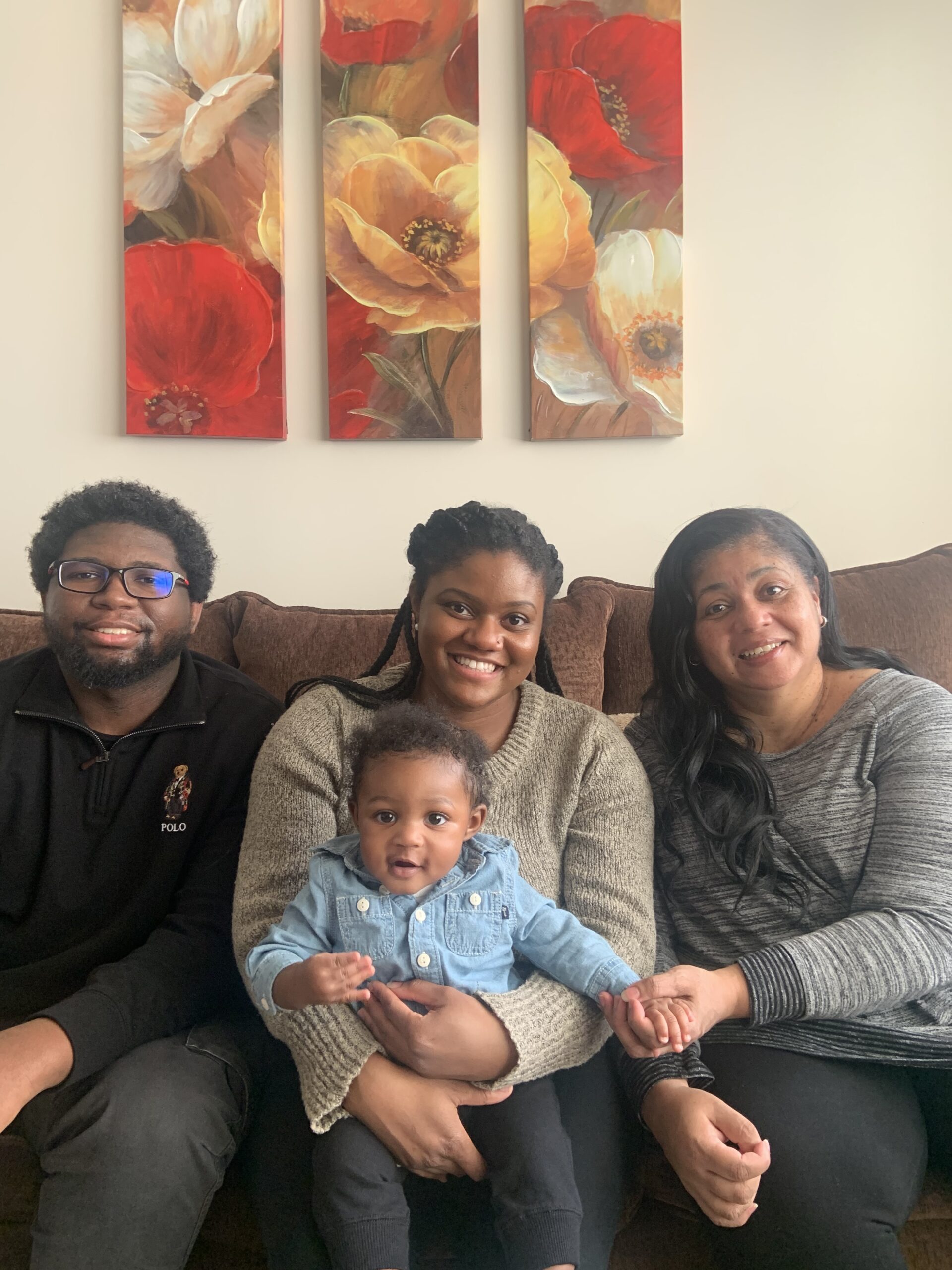
Erin Weeks (center) with her son, Joshua, Jr., her partner, and her mother. Photo courtesy of Weeks.
The Parental Balancing Act
Marshall Denise Turner is both a graduate student in UMBC’s master of arts in teaching program and an administrative assistant in the Department of Mathematics and Statistics—as well as the mother of a 7-year-old daughter and 2-year-old son. Finding time for her studies, while also assisting her daughter with school, has been difficult.
“The academic bar is a lot higher now than it was when I was a child, and I was extremely worried because my daughter was not at standard reading level as her kindergarten year was drawing to an end,” she says. “I even faced my own mental distress while trying to figure out the technological, research, and writing expectations of me as a graduate student. I cried many tears during this time because I could not seem to catch a break.”
Turner has relied on UMBC’s preschool both for her toddler, and for her daughter, who Turner enrolled in an academic support class there. While it cost more to do so, she said, it was worth it “compared to the mental struggle of trying to balance everything with no break in sight,” she says. Doing so has also helped her weather the challenges of being a student herself, she says. As tough as it’s been, she’s proud of how resilient she’s become.
As the mother of a 5-year-old and a 9-year-old third grader with special needs, Adrienne Wheeler has learned it’s okay to accept help that is offered—and just as helpful to ignore unsolicited advice from well-meaning folks who could never truly understand her unique challenges.
“I realize that the intent is helpful but it’s very diminishing for someone to think they’ve hit upon the solution…as if I haven’t been mulling the questions for nigh on almost a year. It’s eroding,” says Wheeler, a business specialist with UMBC’s Maryland Institute for Policy, Analysis, and Research.
“The most helpful work resource I’ve had is my set of coworkers…they know what’s needed day-to-day, they’re generous with the time they have, and they give me much-needed grace.”
Adrienne Wheeler
What she does find helpful is the community she’s found through her family and her colleagues at UMBC, she said. (And escaping reality via her beloved comic books when she has a rare moment to herself.) She was also very happy when the pre-k at the Y Preschool at UMBC daycare re-opened this spring.
“The most helpful work resource I’ve had is my set of coworkers…they know what’s needed day-to-day, they’re generous with the time they have, and they give me much-needed grace,” she says. “My sib, Alynn, has also been with me throughout this whole thing. They’ve driven in from Pittsburgh almost weekly for the last 10 months to help my son with school, my daughter with hugs, and me with everything else.”
Mutual Understanding
Although each situation is ultimately different, many have found similarities among their circumstances as caregivers. Both Matt Fagan, assistant professor in geography and environmental systems, and Joanna Gadsby, instruction coordinator and reference librarian, have two kids. Both are extremely grateful for the community pods that give their children chances for socialization—and allow them a bit of catch-up time.
Matt Fagan on campus before the pandemic. Photo by Marlayna Demond ’11.
Despite the upsides of their situations, or maybe because of those positives, both Fagan and Gadsby took on roles with a faculty-focused caregiving advisory group in Fall 2020 to try to make things easier on their UMBC colleagues as a whole. (A similar group has been formed to focus on staff issues.)
“The teaching is just hard. It’s hard to have very specific hours that are set and you can’t be with your kids. So if your wife has a work emergency, you can’t help. It’s a big imposition on one’s partner, and it’s just hard,” says Fagan, who is in third-year review for tenure but is also trying to carve out time with his kids, ages 4 and 6. That means relying more on his teaching assistant, offering more virtual office hours, and maintaining an active discussion board.
Headshot courtesy of Gadsby.
Gadsby, who has kids in second and fourth grade, has been teaching library instruction and a first-year seminar class. The experience has made her think a lot about how much she “used to outsource for so many kinds of tasks,” she says.
“I’m not just doing my job, and making sure they are doing okay at school, and checking on my parents. I’m also the person who is saying, ‘Did you eat today? Did you drink enough water? Did you get up and take a break? Did you talk to another human? Have you been outside?’” she says. “Normally there are so many more people in our life checking on those kinds of things. Like, ‘Did you participate in class? Did you check on that last assignment? Did you go back to the checklist? Did you ask a friend for his notes?’ It’s exhausting. Now I’m doing what like 25 other people used to do.”
Through their advisory committee, Gadsby and Fagan and others have held listening sessions to better understand how caretakers on the faculty could help each other. They’re also conscious that although vaccinations will begin to open up opportunities, it will take a while for folks to recover from how the pandemic has affected families.
“As hard as everything’s been, I still feel really privileged to be on this committee,” said Gadsby. “We’ve been able to work at home. The kids are able to stay home. We’ve got a pretty good community, so we’re doing okay. And I wanted to be able to do something to try to ease the burden of anyone else right now. It’s just so much.”
Making Time for Self Care
Before the pandemic, Katharine Scrivener was often pretty quiet about her chronic illness at work. But when COVID-19 struck, and work as we knew it turned on its head, she found herself compelled to speak up for herself and others.
Scrivener, the assistant director of alumni and development communications, recently joined a staff-facing caregivers group in order to share her experiences. She hopes that those in her shoes might find care and community just as other types of caregivers may.
Katharine Scrivener with Officer Chip at a pre-pandemic Giving Day on campus. Photo courtesy of Scrivener.
“I’m not sure I had ever really thought about the fact that I could apply the term ‘caregiver’ to myself because I don’t think it’s talked about in that way, even though it really rightfully should be,” says Scrivener, who was diagnosed with cystic fibrosis at age 16.
“And I think part of that is I’ve never found a community at work of people with similar circumstances. And even until this committee, I don’t think I knew very many people at UMBC who maybe dealt with something like this. And so it’s really validating to know I’m not the only one who feels this way or struggles with these things. And I feel I have a sense of connectedness and community I didn’t have before.”
As UMBC begins to plan for return to campus, Scrivener says she hopes the community will learn from the pandemic experience about how best to leverage technology to make the working experience more equitable for those with chronic illnesses. She also hopes to continue to confront ableism as she encounters it.
“I would tell other caregivers that they’re doing a good job…It’s so important to hear that.”
Erin Weeks
“I’m really hopeful that we will continue to be acknowledged and recognized as a part of all of this work that we’re doing about return to campus and flexibility and caregiving and inclusion, and that we can really affect some change,” Scrivener says. “On the one hand, I’m grateful this conversation is happening now. On the other hand, I think I’m a little disappointed it had to take a global pandemic to really look at the fact that remote work and flexible schedules are doable and beneficial to a lot of people.”
Celebrating Successes
With her diploma almost in hand, Weeks is ready to celebrate with her family. But she’s also reflecting on what it has taken to make it through her final year. Patience. Support from her partner. And making the most of whatever free moments she could find to take care of herself—either by taking a walk, or getting some frozen yogurt.
It’s important, she says, to “lean on each other,” and celebrate the resilience born of this moment.
“I would tell other caregivers that they’re doing a good job,” she says. “It’s so important to hear that.”
Every so often, we chat with an alum about what they do and how they got there. Robert Deloatch ’11, M19, computer science, has followed his research interests to an exciting job at Apple. We asked Robert about what his experience as a Meyerhoff Scholar means in his life today, and what he would say to a future scholar.
Q: What is your current job title and employer?
A: I am a Human Factors Engineer at Apple Inc.
Q: Tell us about your current job and what you enjoy most about it.
A: I manage a team of researchers who focus on applying user-centered design principles to design and develop Apple products. I collaborate with teams at Apple to come up with new ways to continue to enhance the customer experience. I enjoy the fast paced environment of Apple which allows for conducting research that leads to immediate customer impact.
Q: When you think about the “ripple effect” of the Meyerhoff Scholars Program, how do you see that playing out in your field and in your life?
A: I’ve been amazed at how the Meyerhoff Scholars Program has continued to affect my field and life. I’ve encountered researchers and faculty of color that were part of the Meyerhoff Scholars Program or programs that were modeled after Meyerhoff at conferences and internships. It’s been a reminder to me of the staying power of such a program and how it’s focus on leadership, diversity, and scholarship has been ingrained into my beliefs and relationships.
Q: Why is the Meyerhoff mission so important, not only to you, but to society?
A: The Meyerhoff mission is important because diversity in STEM is important. To generate the best ideas and solve complex problems requires discussion and being challenged. Having groups from various backgrounds and perspectives is foundational to promote useful discussion.
Q: What advice would you give to a student considering the program?
A: I would tell a student to follow the advice of your Meyerhoff staff. They have been instrumental in helping produce thousands of amazing scholars and have your best interest at heart. Listen to them.
When the pandemic first hit, many of us found ourselves looking closely at what surrounded us and what confined us. For Brea Souders ’01, visual arts, however, the circumstances drove her to look outward through the screen of her upstate New York window, and to wonder deeply about the lives happening beyond her driveway. End of the Road, the latest in the Albin O. Kuhn Library Gallery’s spring online exhibits, pairs Souders’ images with the poetry of UMBC writer-in-residence Lia Purpura, to create tender appreciations of the details that connect us all, even when we’re apart.
We sat down with Souders and Purpura to learn more about the making of End of the Road, on display now through the end of April.
* * * * *
UMBC Magazine: So, Brea, how did the idea for this series come about for you?
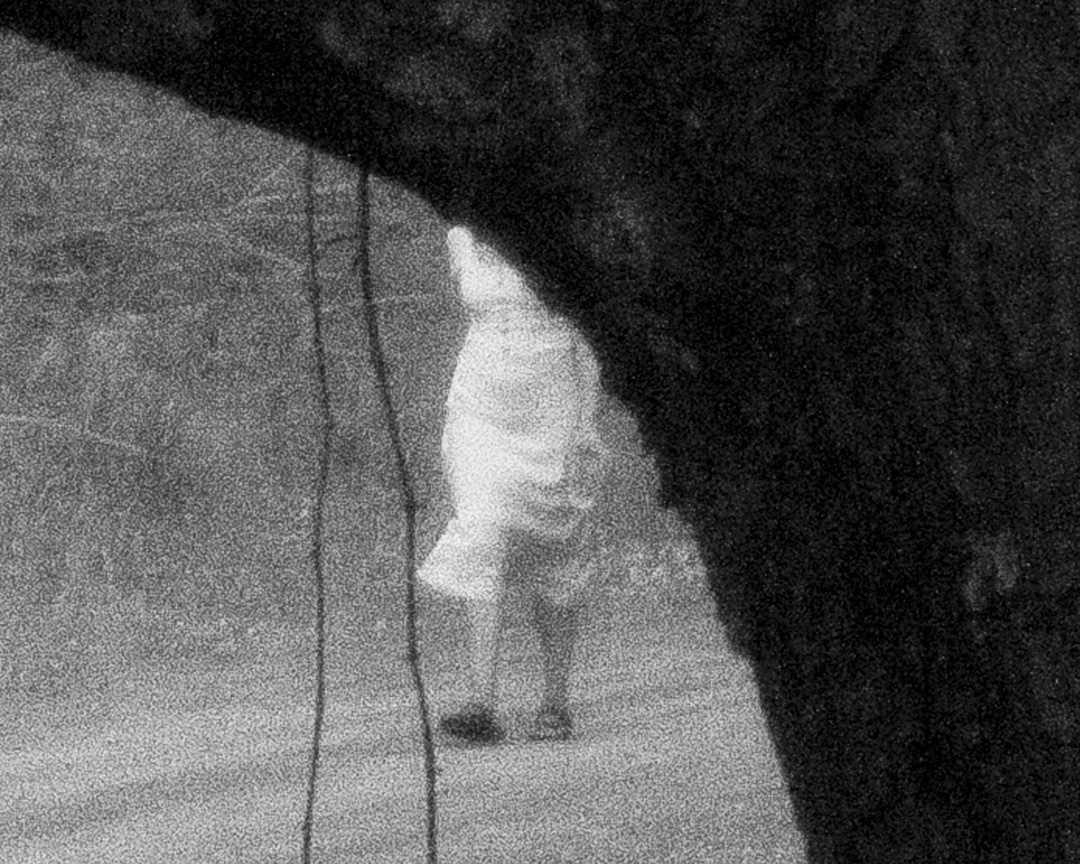
Brea Souders: In late March 2020, I moved from New York City to rural upstate New York. This was the beginning of the pandemic when contact with the outside world was abruptly cut off for many people and would be for the foreseeable future. The house is situated just before the gravel cul-de-sac of a country road and I began to observe people through my window as they wandered back and forth to the end of the road.
So it started in a space of stillness and solitude, which led to focused daily observation. I began to wonder about the people I saw; what brought them to the end of the road and what their stories were. As a photographer it’s second nature to pick up a camera and photograph something that has captured and sustained my attention, especially if it mystifies me in some way, if there is something hidden or unknowleable in what I see. Even if it’s an illusion, the camera draws a line connecting you and your subject and shortens the distance between you.
Brea Souders, End of the Road 7, 2020. Courtesy of the artist.
UMBC Magazine: What was your mindset at that time, making them, versus where you are now?
Souders: There is solid evidence now that the world will begin to open back up and there are already some signs of that happening, but we’re still very much in this emotional and physical space of isolation and stillness. I’ve been making these pictures for a year now, and the trees are beginning to bud again just the way they did when this all started. It’s reassuring to witness some things just carrying on as they do.
UMBC Magazine: And Lia, you were brought into this exhibit by curator Beth Saunders. What did you feel when you saw Brea’s images for the first time? What was your first impression?
Lia Purpura: When I saw Brea’s photos, immediately they seemed like micro-dramas, these brief moments that enacted a form of inward reflection that’s also a part of the way many people are experiencing COVID times. Artists are able to find the under-seen, under-noticed ways of being and Brea’s work does that.
I love is the way Brea sees, and the different postures of these photos. And by “postures” I mean the place from which the eye is seeing. Postures of discovery. The intimacy, the solitude of the space, the stillness the viewer inhabits. That quiet felt inhabited by a presence, a curious eye.
UMBC Magazine: What was it like to collaborate in this way, pairing Brea’s new images with Lia’s poems from her 2015 book,It Shouldn’t Have Been Beautiful?
Souders: I love the way Lia thinks. She categorized the initial list of poems for our collaboration according to the photographer’s point of view, the subject’s point of view, the seasons, the feeling of walking, and sense of place. That approach deepened the connection between the poems and pictures and informed the selection and sequencing of both.
It was Beth’s idea to organize the images loosely by seasons. As you scroll through, you have a general sense of the seasons, although the window screen and distance impart a greyness to the images and you have the feeling of where am I? What day is it? Which of course is the way many people would describe this past year. The human condition and the seasons are so finely articulated in Lia’s poems. I love her exquisite attention to detail and the quiet observation felt in her work. In some of her poems, it feels as if she is looking through a small window just the way that I am.
Hope
To feel the slightest breeze come on but not expect it to last, though it is a lifting, relief that’s been scarce — you can’t help noting the drop in degrees, but it might not be a real change in weather, you might overheat it, or scare it by speaking its name, so hold back, learn to say not just yet, I won’t rush it and no, I’m not dying for a very small sip of whatever that was in the trees.
— Lia Purpura
UMBC Magazine: There’s a lot of trust involved in the process, I’m sure.
Purpura: Yes, absolutely! We didn’t know each other at all. I mean, I think Brea had read some of my work, but at the outset is the decision to trust in many things. A person’s aesthetic, their sense of good will, their collaborative ego—with this relationship in place, you can launch all kinds of thoughts and know the other will receive it in open ways.
Souders: Definitely. I felt it immediately, too. Kindred art souls.
UMBC Magazine: Brea, I understand you have a book coming out in June from Saint Lucy Books, and there are even more UMBC connections there (designer Guenet Abraham and publisher/editor Mark Alice Durant, both visual arts professors). What does it mean to see your work embraced so strongly within the UMBC community?
Souders: I’m floored by all the support. It’s a wonderful thing to be able to collaborate with a network of kind people doing exciting, interesting work in their fields. I’m truly honored to be a part of that.
A new online exhibit featuring alumnus Zachary Z. Handler’s pandemic portraits of friends and strangers makes the most of a challenging situation.
What have you missed most during the pandemic? For many, it’s the freedom to move about the neighborhood safely, to interact with complete strangers on the street—and the magical potential of turning those strangers into friends.
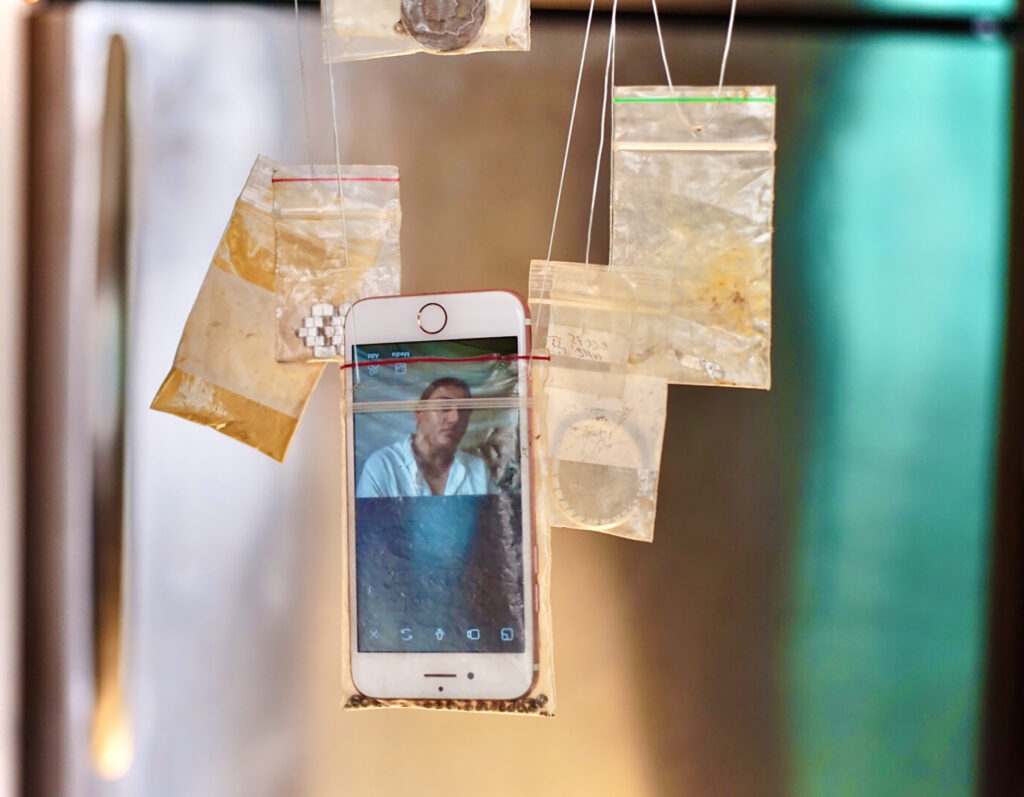
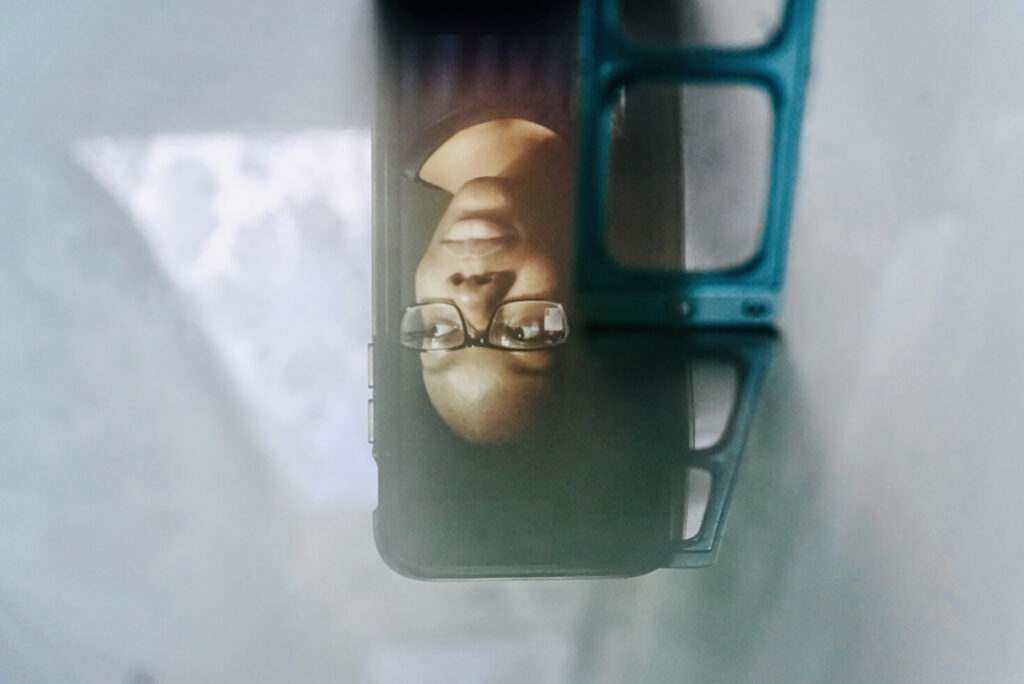
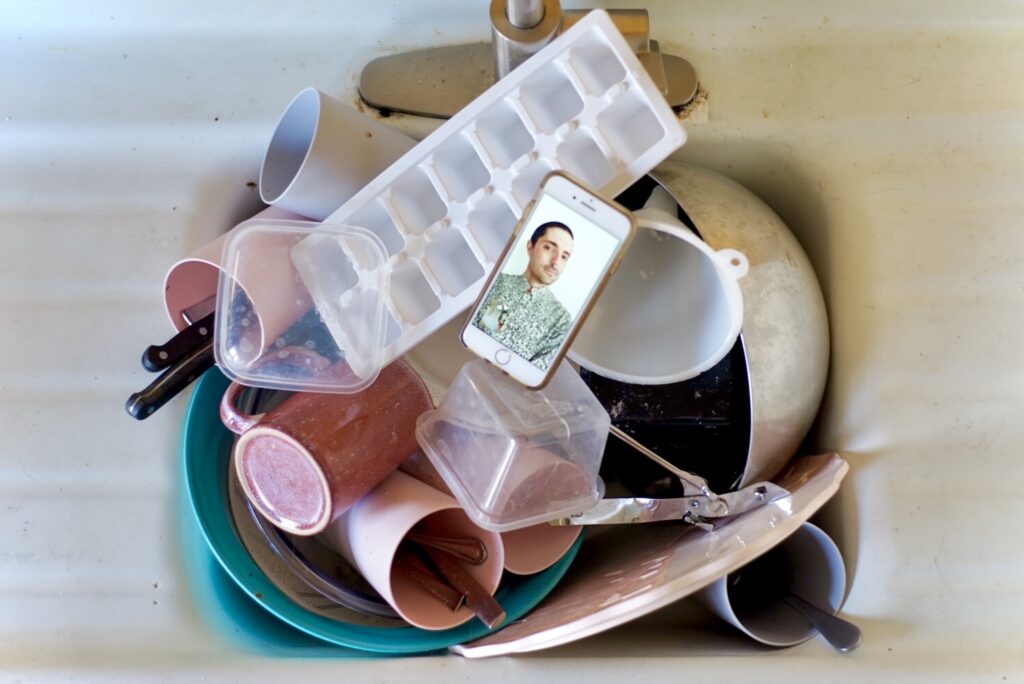
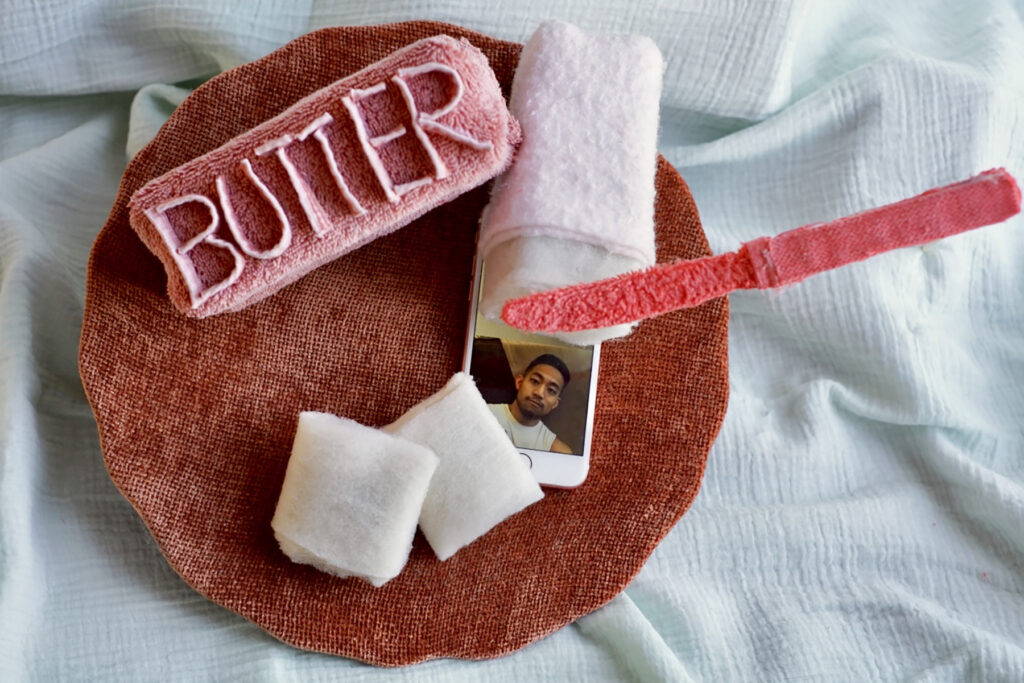
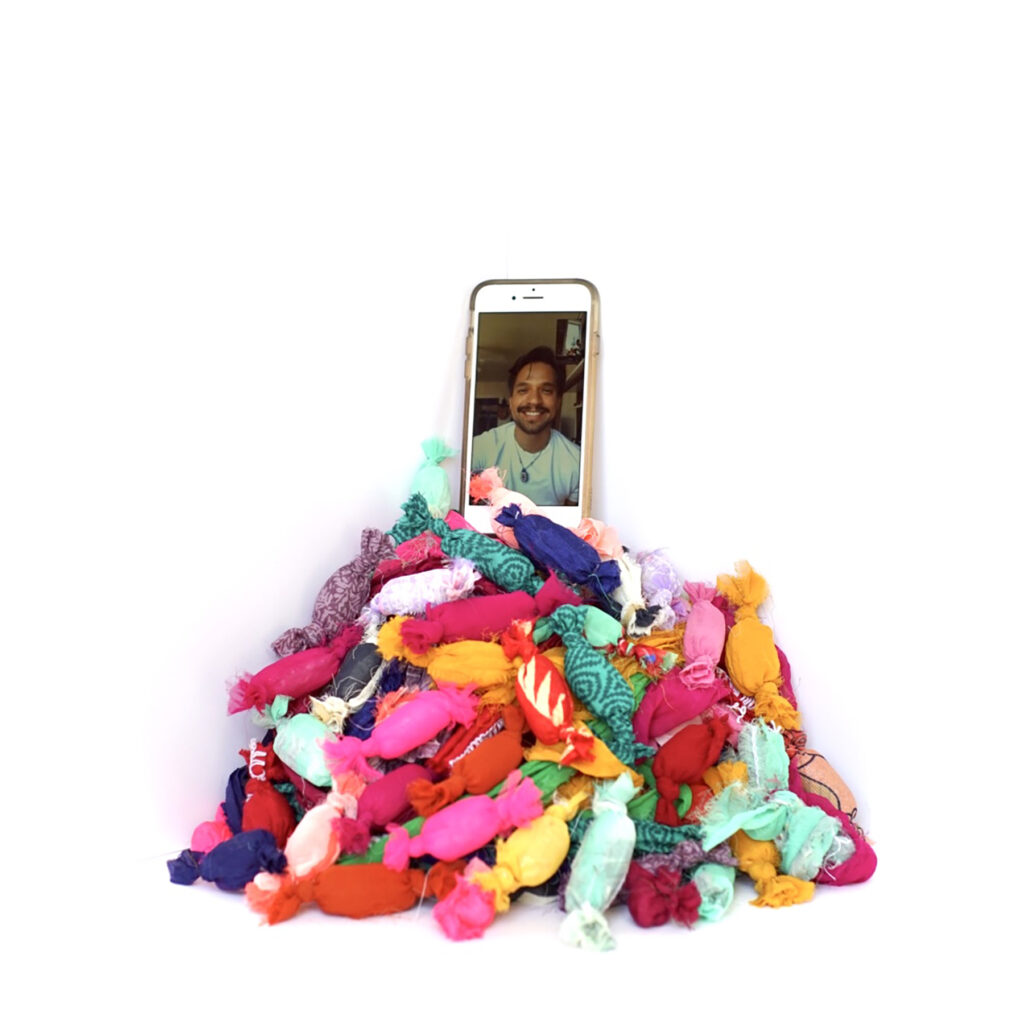
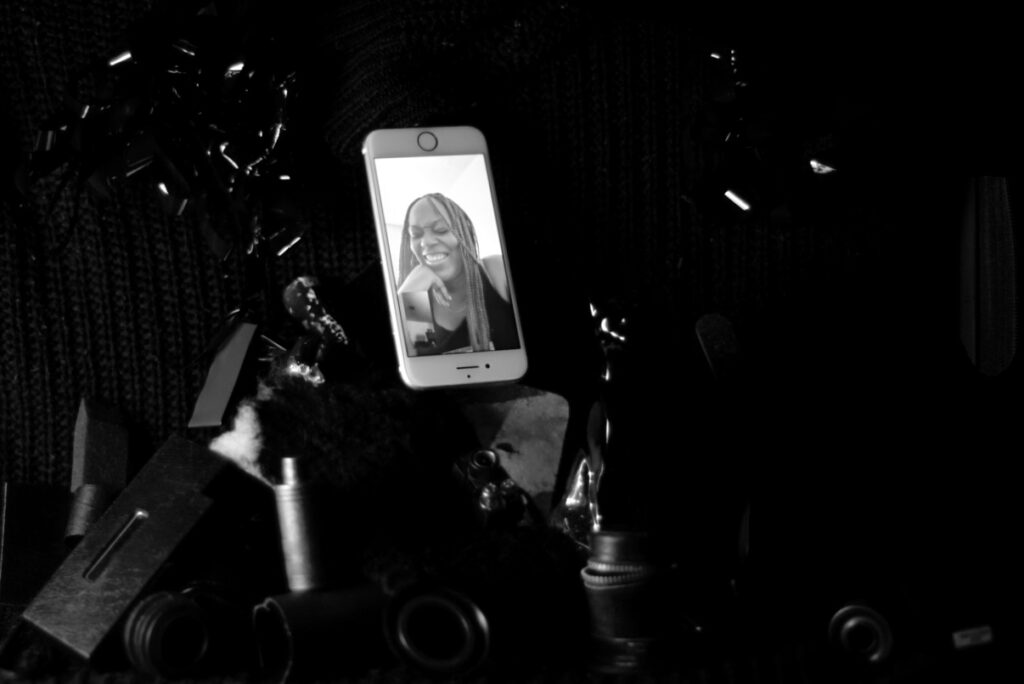
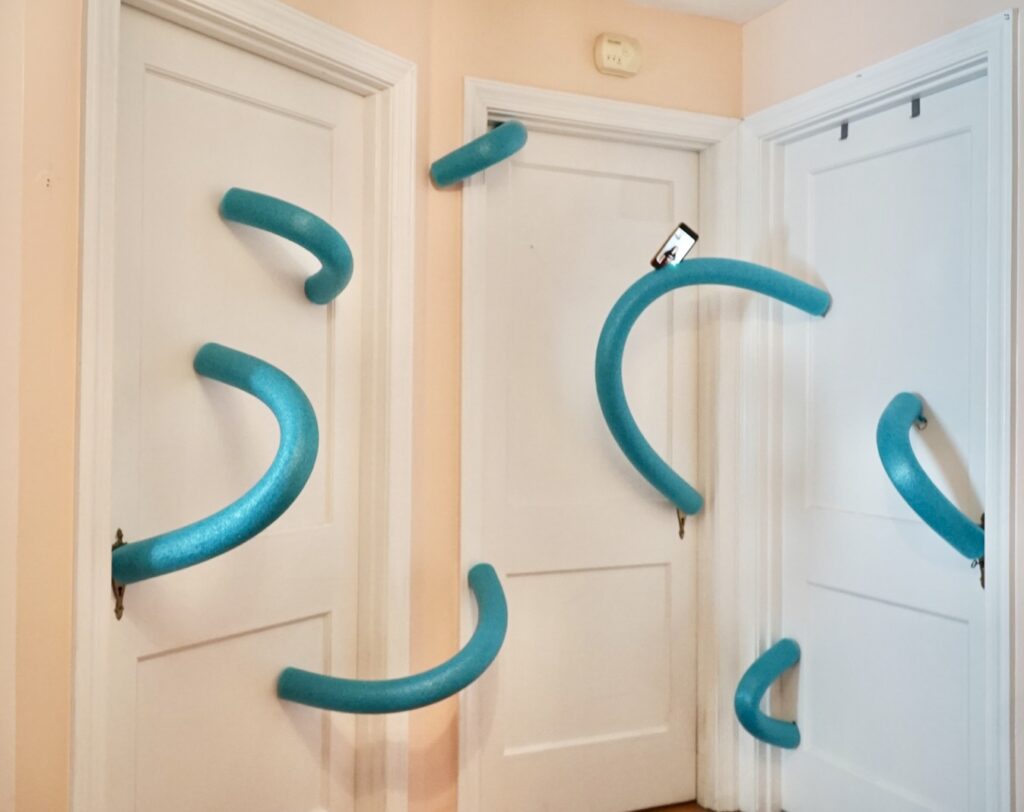
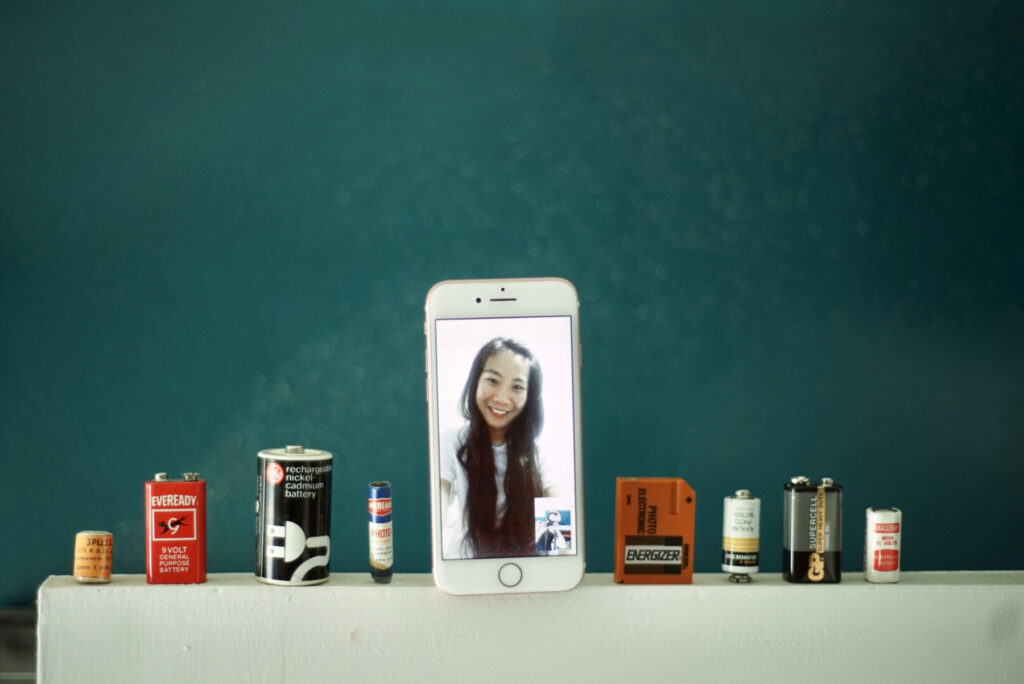
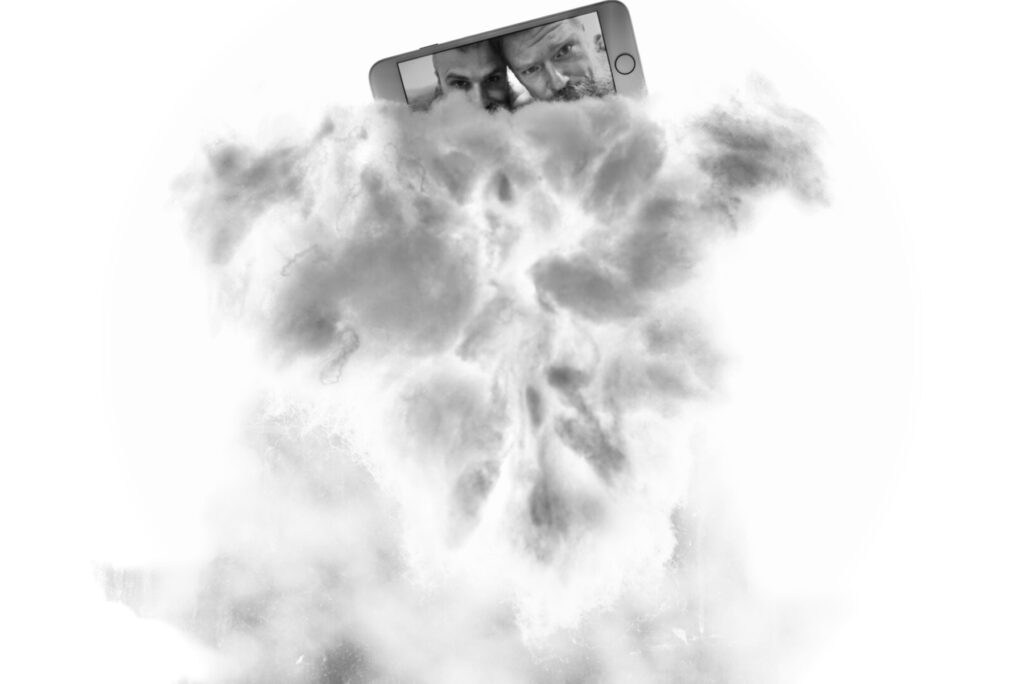
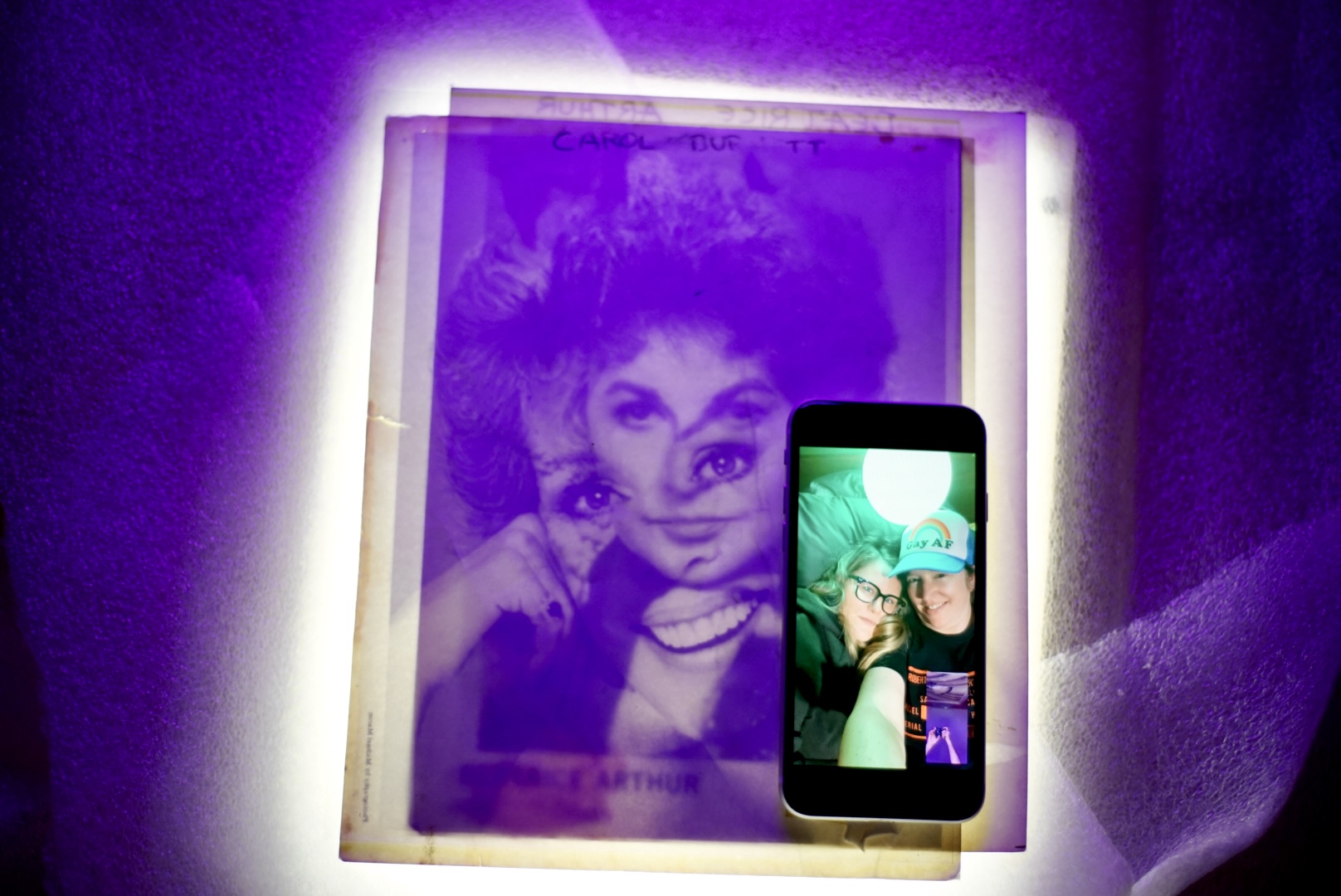
Since last April, artist Zachary Z. Handler ’03, visual arts, has harnessed the creative constraints of lockdown to meet and get to know hundreds of people around the world. And by weaving video chat conversations together with DIY props and dioramas pulled from his own home, he has created a collection of nearly 300 intimate portraits to reflect that shared experience.
“Photography, for me, has always been like a gift exchange, and ERRANDS has definitely proved this true in so many, unexpected ways,” said Handler, who by day works in health care with the Deaf and Hard of Hearing Community, and who captures his subjects within the frame of an iPhone with a clear amber-colored case. “From its inception, ERRANDS was always more about the conversation we have during the call. The set-up and portrait we take are a bonus; a time capsule of this shared moment in our lives. That’s the gift. Each session is the most wonderful gift.”
“The Library Gallery traditionally plays an important role in the intellectual, creative, and social life at UMBC. To continue filling these roles during the closure of UMBC’s physical campus, we are presenting opportunities to engage with photography and the creative community through virtual exhibitions and events,” said gallery curator Emily Cullen ’06, visual arts. “We especially hope that our effort to connect our audiences with artists and share new work and ideas offers respite and inspiration amid all the challenges of the past year.”
That spirit of connection comes through with every piece Handler creates. At the beginning of the pandemic, he began offering portrait sessions to anyone who asked. He posted them on Instagram a few at a time, and the project took off from there, to the point where he was scheduling six to eight 30-minute sessions a night after a full work day—with many more on the weekends, and each encompassing entirely new and different props, feelings, and experiences. He even recruited fellow alum Kiirstn Pagan ’11, theatre, for help with graphic design to accompany the project.
While Handler loves the chance to talk with so many people, he also finds great joy in using the existing objects in his home to build dioramas and make tiny props from scratch. One night he might be stacking slices of white bread or piling frozen peas around the phone. The next, he might be fashioning a butter dish and plate from terry cloth, or pulling the elastic from a pair of underwear to create five tiny sets of shoelaces for only-slightly-larger pairs of Converse All-Stars. It’s a peculiar pandemic-driven sensibility that really resonates with Handler.
“I think it was born out of the pandemic in the sense that I wasn’t going into stores and I didn’t want to spend money when I didn’t need to. I’d rather give that money to charities or fundraisers,” he said. “Plus I’d rather the challenge of repurposing what I already have in my house to make my sets. It worked more for the aesthetic of being quarantined.” Handler adds, “I’m more of a thrift store person than a boutique store person anyway. That’s very much my personality. I just love that objects carry meaning and stories when we receive them, and then once we pass them onto someone else, we get to add that story. “
One such beloved object—a musical album—came into play in Handler’s portrait of Carlyn Thomas ’13, visual arts, with whom he co-curated the exhibition and queer performance series, Miami is Nice, at Space Camp gallery in Baltimore a few years ago. In Thomas’ portrait, Handler evokes the cover of a Christine and the Queens album—a musical artist they both adore—with Thomas as Christine surrounded by a frame of squiggled yellow icing.
“I loved it,” said Thomas. “The month my portrait was taken was June, which is widely known as Pride month and was also around the same time that I came out as non-binary (I actually came out to Zach on that very call), so it felt very affirming for me to see myself reflected and represented in a way that gave me gender euphoria, and was just an honor to be compared to Chris. I think the finished portrait encapsulates a lot of things about Zach and I’s friendship and it’s very special to me. Icing is also just so much fun and yellow is my favorite color!”
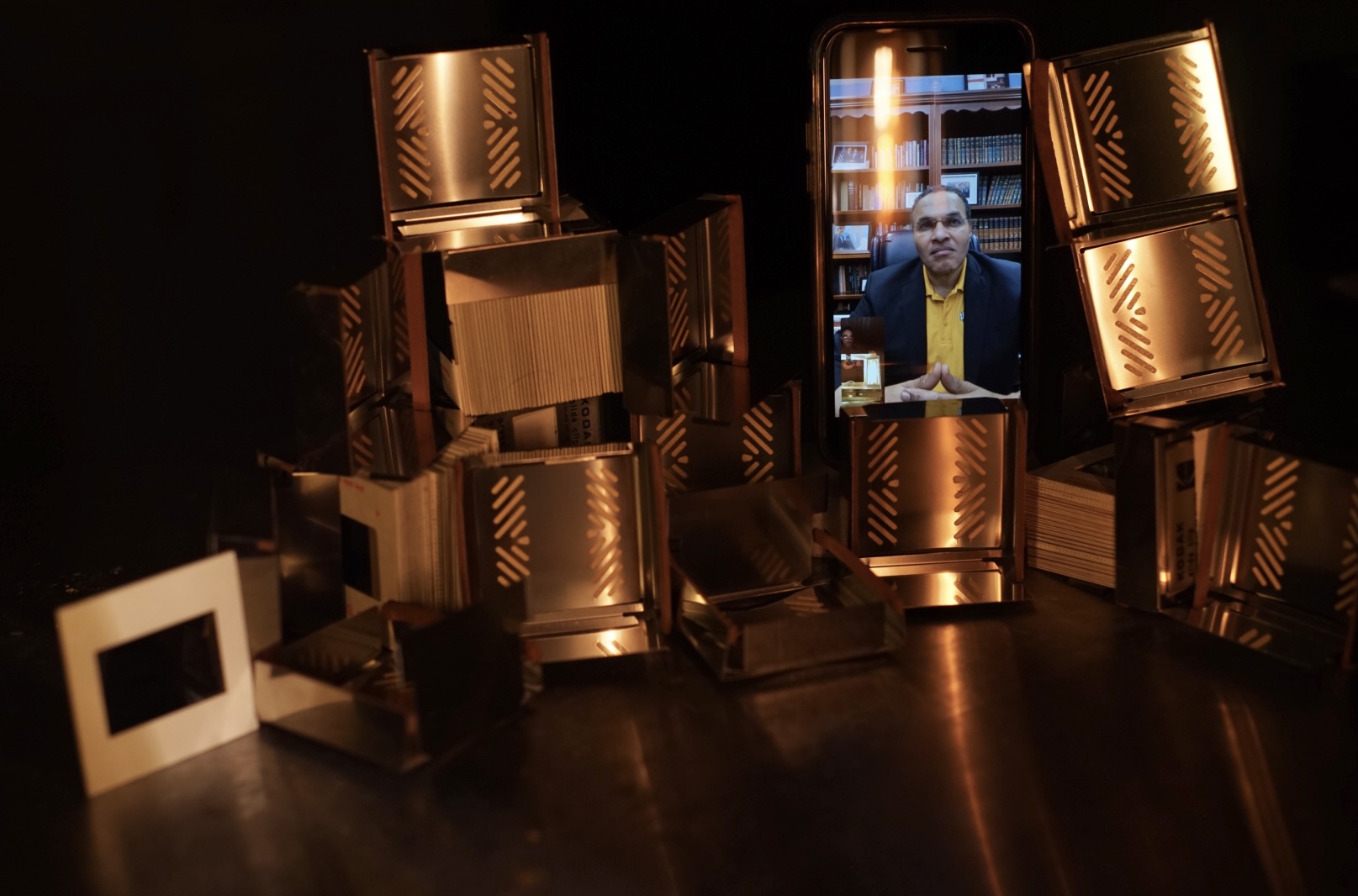
Zachary Z. Handler, Dr. Hrabowski. Owings Mills, MD, USA. 2020. From the series ERRANDS. Courtesy of the artist.
As a special treat for Retriever audiences, Handler also sat with UMBC President Freeman Hrabowski for a portrait session where they explored shared memories of an interaction on campus in the days just after September 11, 2001. As a photographer for the campus newspaper, Handler recalled snapping a photo of Hrabowski—a personal moment that stuck with both of them and remains in newspaper ink to this day.
“Zachary surprised me by bringing me into the process to reflect on the human condition during this challenging time,” said Hrabowski, whose portrait by Handler shows him surrounded by boxes of precious family slides. “I found myself having a substantive conversation with him about our experience years ago when he was a student at UMBC and our campus, along with the rest of the world, was reacting to the 9/11 tragedy. As he talked, he brought me back to the feeling of grabbing for hope in the midst of a storm, and I realized that we human beings go through these periods, and we get through them because of our connections to others. Zachary was masterful.”
Zachary Z. Handler, Anne Marie & Amanda (& Bea & Carol). Baltimore, MD, USA. 2020. From the series ERRANDS. Courtesy of the artist.
ERRANDS is online now through February 28, and Handler will give a public artist’s talk on Thursday, February 18, at noon. American Sign Language interpretation will be provided. Visit https://librarygallery.umbc.edu/zach-handler-errands/ for more information about this exhibit and upcoming shows. See more of Handler’s work on Instagram or at www.zzhandler.com.
Header image: Zachary Z. Handler, Samuel Cullman. Alabama, USA. 2020. From the series ERRANDS. Courtesy of the artist.
Gallery of images, left to right, top to bottom: Allan. Guatemala City, Guatemala; Dejah. Philadelphia, Pennsylvania; Alvaro. Stuttgart, Baden-Wurttemberg, Germany; Grant (Hao-Wei). San Ramon, California; Jose. Washington, DC; Hershey. Baltimore, Maryland; Ryder. Chapel Hill, North Carolina; Yim. Chiang Mai, Thailand; Zeljko and Daniel. Razanac, Croatia. From the the series ERRANDS. Courtesy of Zachary Z. Handler.
Learn more about upcoming exhibits at the AOK Gallery here: