We use cookies for analytics and, unless you opt out, advertising.
You can opt out of advertising at any time.UMBC uses essential cookies to run this site. With your permission we would also use analytics cookies (to understand how the site is used) and advertising cookies (to measure and target our ads on other platforms). Nothing else loads unless you accept. You can change your choice any time from Cookie Settings in the footer.Privacy Policy
EssentialRequired for the site to work (login, security, your cookie choice). Always on.
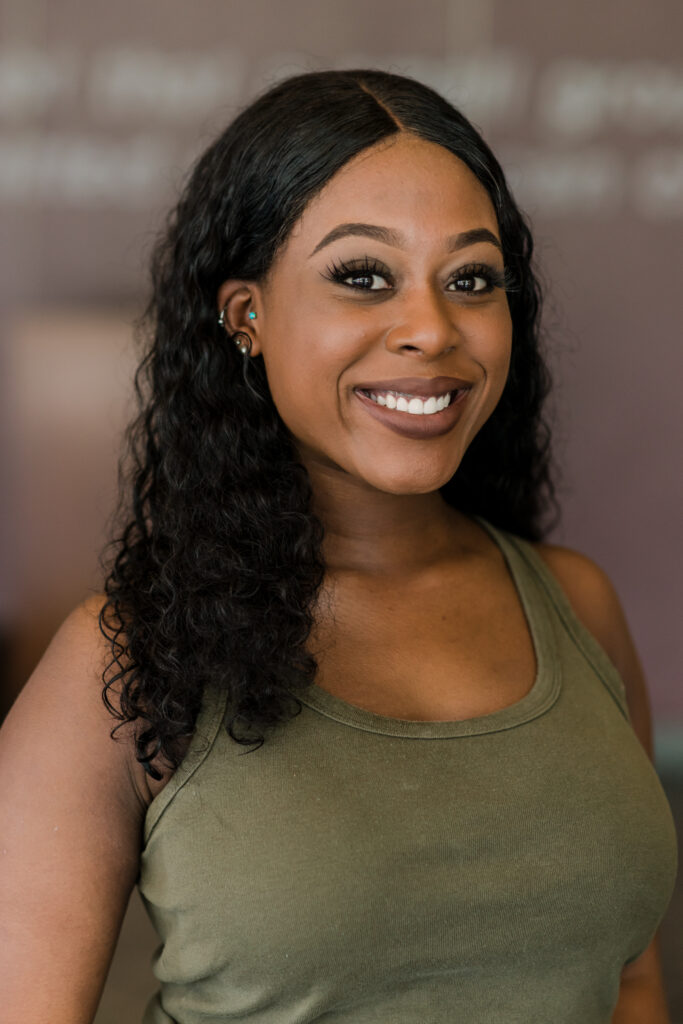
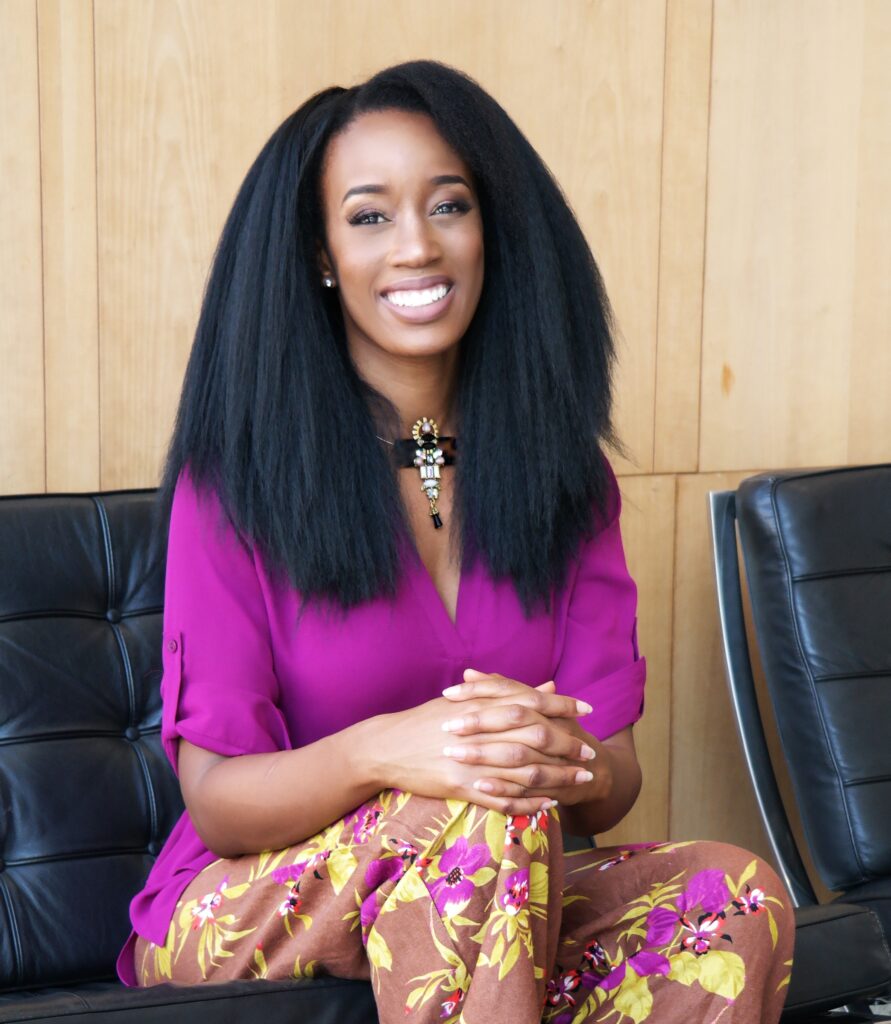
Nihira Mugamba ‘21, political science and Africana studies, has been named a 2020 Newman Civic Fellow—the sixth UMBC student to earn this public service award. The fellowship honors her work promoting literacy in Uganda and the United States.
Mugamba has been dedicated to this cause for years, from her days as a Girl Scout. She earned her Girl Scout Gold Award as a high school student by creating a reading program for a kindergarten class in Uganda, where her family is from. The Girl Scouts describe the Gold Award, the highest honor a Girl Scout can achieve, as “the mark of the truly remarkable.”
Committing to social change
Nihira Mugamba. Photo by Marlayna Demond ’11
Mugamba has sustained her commitment to expanding literacy during her undergraduate years at UMBC. As a sophomore she interned at the Parliament of Uganda, where she worked alongside the education committee. During her internship, she was able to continue her work with the kindergarten reading program. She has also volunteered for two years in Baltimore City Public Schools as a literacy fellow.
This type of long-term commitment to social change is precisely what the Newman Civic Fellowship honors. The year-long fellowship supports each recipient in further developing their social change and leadership skills through regional and state gatherings. Fellows are paired with mentors and become part of a national network of peers. They support each other in finding solutions for challenges facing communities locally, nationally, and internationally.
“Nihira is an exceptional volunteer, organizer, and leader passionate about working within communities in need of support,” shares President Freeman Hrabowski, who supported her nomination. “She is committed to improving educational outcomes for underserved students and families through professional practice and policy.”
Investing in literacy
Mugamba, born and raised in Silver Spring, Maryland, came to UMBC with a vision. Over the past few years, she has worked to define her specific interests within political science, and to imagine a career pursuing her commitment to social change. “This all seems so straightforward when I talk about it,” explains Mugamba. “But it was a path whose dots didn’t connect until recently.”
In her sophomore year she was referred to UMBC’s Sherman Center for Early Learning in Urban Communities. There she was introduced to her mentor, center director Mavis Sanders, professor of education, who was impressed with Mugamba’s vision. Sanders remembers Muganda telling her she wanted to become Secretary of Education.
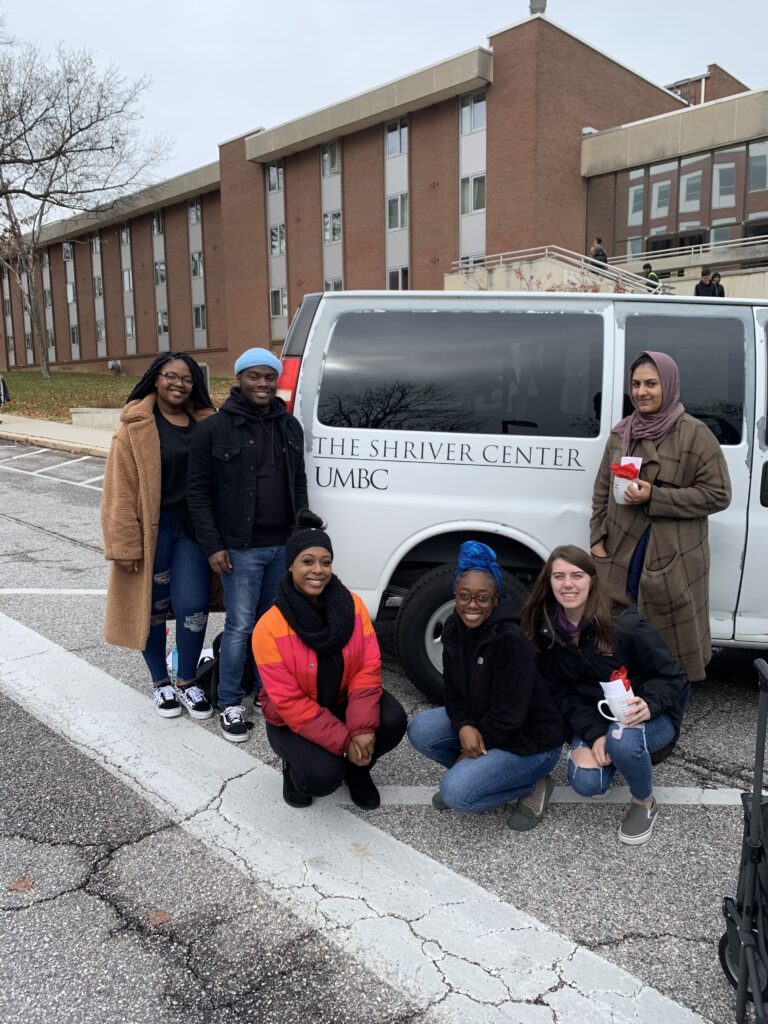
Mugamba, wearing orange jacket, with The Shriver Center literacy fellows.
Mugamba was a great fit for the center’s Literacy Fellows program, a collaboration between the Sherman Center and UMBC’s Shriver Center. The program pairs college students with a Baltimore City elementary school. Fellows visit a classroom and work with a teacher throughout the semester, helping students develop reading and writing skills. Mugamba became a Sherman Early Literacy Fellow at Bay-Brook Elementary/Middle School.
“Nihira is exceptional. Reflective, goal-oriented, and highly organized, she has been critical to building the Literacy Fellows program at Bay-Brook,” shares Mavis Sanders.
Mugamba enjoyed the work so much she soon became the programs’ student coordinator. This experience helped her to better understand educational disparities that can exist between neighboring communities.
Education policy from the ground up
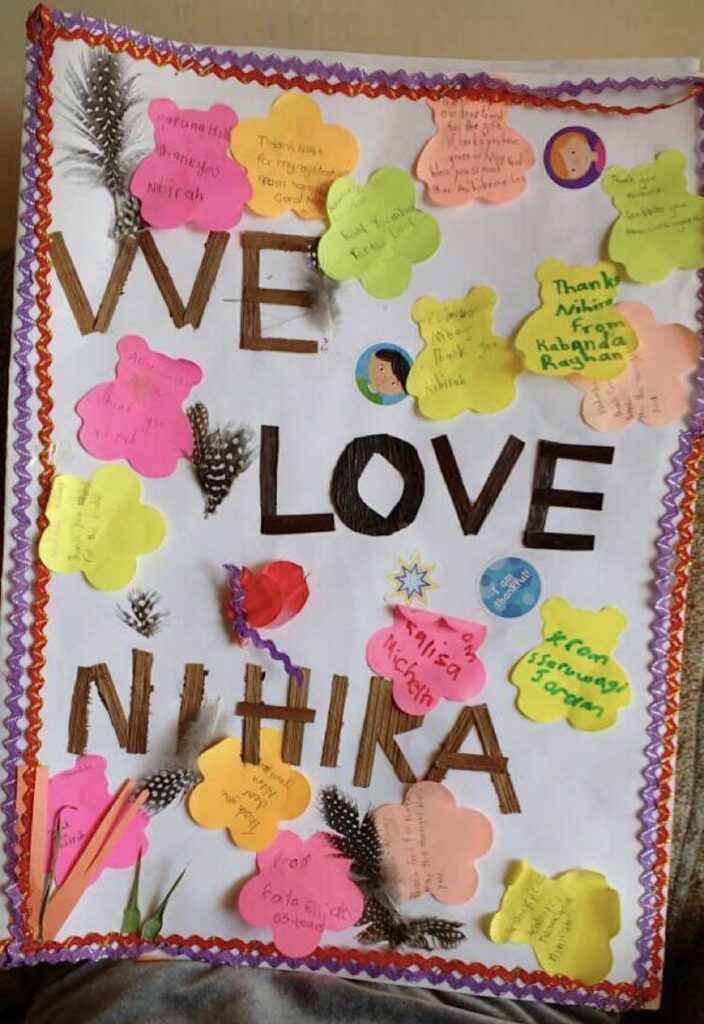
During the 2019-2020 winter break Mugamba returned to Uganda to deliver donated books to the kindergarten where she created a reading program years earlier. She was surprised at the growth of the students in the few years that passed since her first trip.
Thank you card from Ugandan kindergarten class to Mugamba.
Magamba realized the connections between her work with children in Uganda and in Baltimore. In both places, she found that consistent communication and long-term relationships led to more successful community-engaged work.
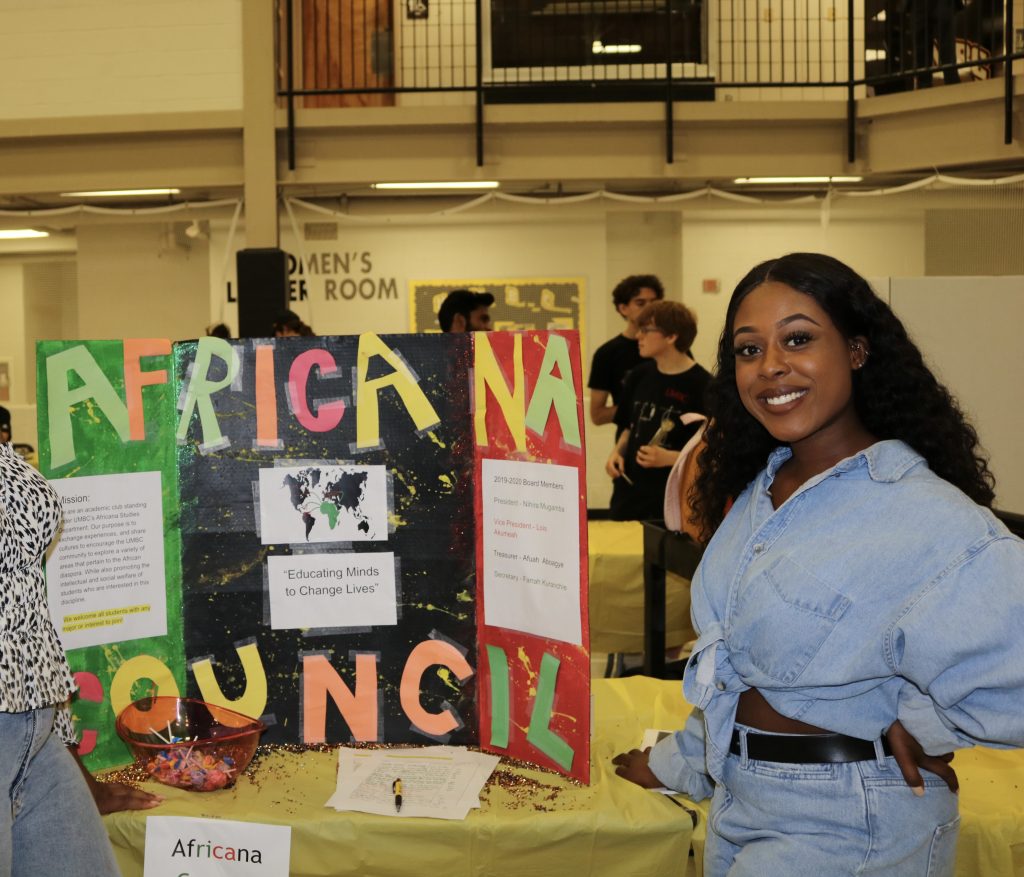
In addition to all this community work, Mugamba served as president of UMBC’s Africana Studies Council. In this role she organized important on-campus discussions about current issues in communities in the African diaspora.
Mugamba sharing information about Africana Council.
She noticed that her academic work, internships, volunteer work, and leadership positions began to have a similar theme and purpose. Each activity led her to realize her passion for bringing people together for a common cause. And often that cause centered around education.
Mugamba now sees a clear path for herself in international education policy. “I have no doubt that she will achieve her goals,” says Sanders.
Forging a future in community engagement
With a clear sense of purpose, the rising senior is embracing her new fellowship. The Newman Civic Fellowship will help her further develop the skills needed to support social change at a large scale. She is excited to have access to the program’s large peer network and is already learning about different paths to civic engagement.
Mugamba is also preparing for life after graduation. She plans to earn a master’s degree in education at UMBC and become a teacher in Baltimore City before working in education policy at the federal level. She also hopes to return to Uganda someday to create an education-focused nonprofit.
“I didn’t know when I was a Girl Scout that it would be the foundation to a life in community-engaged work,” says Mugamba. “Looking back, I now see how much I’ve learned about the real needs of communities by being an active part of them—lessons that I will carry well into the future when I help to develop and implement education policy.”
Banner image: Mugamba working with students at Bay-Brook Elementary/Middle School. All photos courtesy of Mugamba unless otherwise noted.
Eric Ford, director of The Choice Program at UMBC, has been appointed to serve as chair of Maryland’s State Advisory Group (SAG), a part of the Governor’s Office of Crime Prevention, Youth, and Victim Services (GOCCP).
Ford has dedicated his career to serving young people facing inequalities. As director of Choice, he guides the program in providing community-based, family-centered services for youth. Choice seeks to promote positive outcomes for young people who are incarcerated, on probation, or would benefit from support to avoid entering the juvenile justice system. Ford’s new leadership role with Maryland’s SAG extends the impact of his work across the state.
Ford, first on the right, with Choice youth unveil a mural created over spring break at Lane Manor Recreation center in partnership with Artivate Inc.1
As SAG chair, Ford will assist in the review of grant proposals, monitor juvenile justice programs, and advise the governor and legislators on compliance with the Juvenile Justice and Delinquency Prevention Act. The appointment, which began July 1, 2020, comes after four years of service. Ford also served as the vice chair of the SAG for one of those years. During this period, he helped develop a three-year plan outlining the goals and objectives for the SAG.
Dedicated to serving young people
Ford has focused on supporting youth for more than 25 years through a range of community and educational institutions. He actually began his work with Choice as a case worker in 1993, before serving as a case manager, career counselor, community schools coordinator, and in other high-impact roles.
Ford later returned to Choice in 2011 as assistant director, before becoming associate director of operations in 2014. Four years later he advanced to acting director and was then selected as director.
“I am pleased to name Eric Ford as the next Chair of Maryland’s State Advisory Group,” shares Glenn Fueston, executive director of the GOCCP and a fellow former Choice case worker. “As the SAG continues to address Maryland’s juvenile justice system needs, Eric’s background in youth development programming will help solidify the SAG’s commitment and responsibilities under the Juvenile Justice and Delinquency Prevention Act.”
Supporting reform at the state level
The SAG chair appointment is Ford’s second recent appointment from the governor. Last year he was appointed to Maryland’s first Juvenile Justice Reform Council (JJRC), a part of Maryland’s Department of Juvenile Services (DJS). The council develops a statewide framework to reform the state’s juvenile justice strategy and its implementation at the local level.
DJS and Choice have worked closely together over the years. DJS is the top funder for Choice programming, which has demonstrated over decades the value of investing in youth. Choice has supported DJS in developing practices that include youth and family voices and that recognize the importance of racial equity.
Eric Ford (second on the left) with President Freeman Hrabowski and other Hampton University alumni at the Department of Juvenile Services Leadership Conference.
“Eric’s inclusion on the JJRC is important because The Choice Program has been a great partner with DJS for decades,” said Sam Abed, secretary of DJS. “They have a tremendous trove of first-hand knowledge and experience working to support our youth in the community. That perspective is vital to help us shape the future of juvenile services in Maryland.”
Representing youth voices
Both new appointments are important to Ford. Each furthers Choice’s anti-racist mission of a collaborative mentorship process led by young people’s goals for themselves. Ford sees this work as integral to addressing current disparities in the juvenile justice system, including arrest rates and detention rates for young men of color.
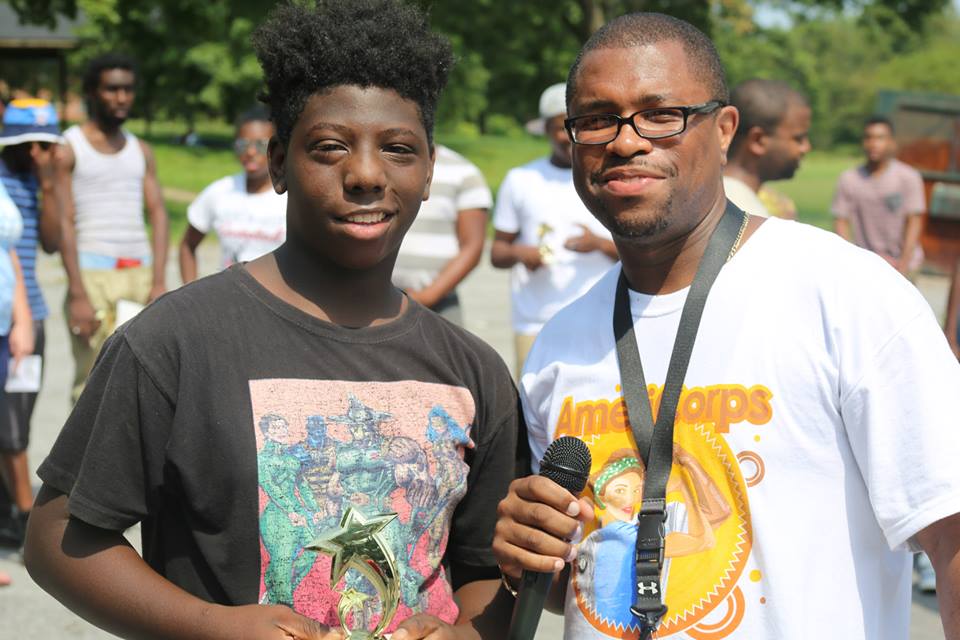
Ford (on the right) presents an award to a Cherry Hill community youth during Choices yearly Jam and Slam Back to School event.
For decades, Ford has supported youth in reaching toward their futures while facing incredible challenges. Now, as Choice’s longest-tenured leader of color, chair of the SAG, and a member of the JJRC, he hopes to offer other leaders a glimpse into the experiences of young people of color in the juvenile justice system.
“I represent all young men and men of color that are still in a juvenile facility who may not have a voice,” says Ford. “I have to speak for them.”
Banner image:Ford (first on the left) Ford (first on left) with students and staff at John Bartram High School in Philadelphia. This mentoring program was run in partnership with Pride Youth Services. All photos courtesy of Eric Ford.
Governors across the United States have been working to determine what safe reopening might look during the COVID-19 pandemic. When the National Governors Association (NGA) needed experts to outline considerations, they reached out to UMBC’s Lucy Wilson.
For more than a decade, Wilson has served as a public health expert on disease response and public health planning at the international, national, and state levels. When the NGA called, she joined an interdisciplinary team of experts in developing “The Roadmap to Recovery: A Public Health Guide for Governors,” published this April.
Keeping Maryland safe
Wilson is an infectious disease physician who is also a professor and graduate program director of emergency health services at UMBC. Prior to coming to UMBC, she served as a medical epidemiologist at the Maryland Department of Health, as chief for the Center for Surveillance, Infection Prevention and Outbreak Response for ten years. There she oversaw Maryland’s infectious disease outbreak responses and infection control guidance in all types of settings.
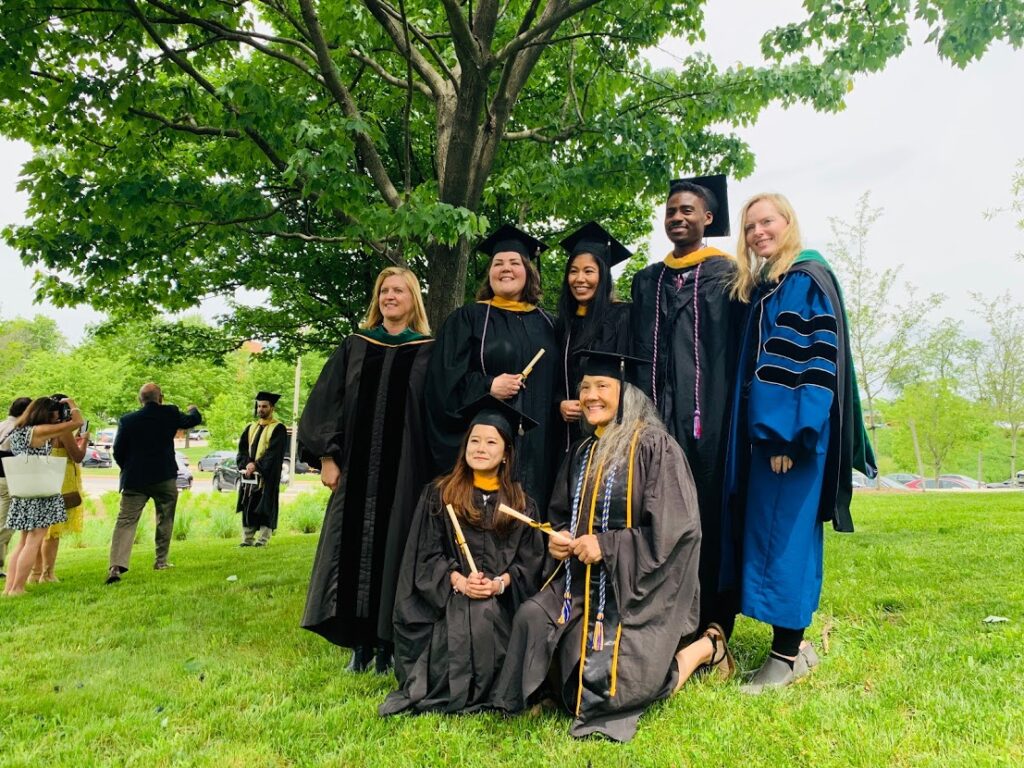
Spring 2019 graduate school graduation ceremony. (Wilson, first on the left in the second row.) Photo courtesy of Wilson.
She has also served on the State’s Physician on Call Team, where she was one of a small group of doctors responsible for assessing potential biological, chemical, and nuclear threats. And she currently is the co-principal investigator of the Healthcare-Associated Infections (HAI) branch of Maryland’s Emerging Infections Program (EIP). Through EIP, she conducts surveillance epidemiology and antibiotic resistance research focusing on healthcare-associated infections (including COVID-19) in hospitals and nursing homes. At UMBC, her research focuses on visualizing health outcomes across the continuum of healthcare.
“I have experience working with stakeholders throughout the state to examine different areas of response…that cut across the spectrum of emergency management and response,” explains Wilson. She notes that this could range from education to agriculture to transportation. “This gave me the perspective to help make recommendations to governors about how to create a team and what type of considerations to have for COVID-19 response.”
Learning from previous outbreaks
The NGA provides governors, cabinet members, Congress, private business, and the international community with guidance related to public policy and governance. To develop a COVID-19 recovery roadmap, Wilson helped assess the various settings impacted by COVID-19. She then applied the science of infection control and disease transmission to help develop criteria to maintain the safety of settings like schools, hospitals, prisons, and nursing homes.
Wilson’s recommendations were informed by her prior work in infection control, disease surveillance, and government response to outbreaks, diseases, and pandemics at a national and international level. These include responding to the novel influenza A (H1N1) virus pandemic of 2009, Ebola, Zika, statewide food-related outbreaks, and medication recalls.
When it comes to COVID-19, Wilson says, “This level of pandemic is unprecedented in modern times.” She explains, “We can look back to 1918 to see how social distancing worked. We can look at other countries who have had different COVID-19 strategies in terms of their response and reopening. But what we need to be prepared for is that the coronavirus is difficult to control.”
Using available tools
“Governors must respond with tools we know will work, as appropriate to their region, to try to minimize illness,” states Wilson. These tools focus on minimizing physical contact between people, from using touchless purchasing and curbside pickup at businesses to adjusting work schedules to spread out employees.
The Roadmap to Recovery report divides states’ COVID-19 responses into two stages. The first stage focused on reducing the spread of infection through mandated physical distancing in the absence of comprehensive testing, treatment, or vaccines. Closing gathering spaces like schools, businesses, places of worship, and recreation areas helped to “flatten the curve.”
The second stage involves necessary measures and infrastructure needed to safely open up society. This includes continuous assessments to determine whether to keep moving forward or to return to previous restrictions.
“This is a multifactorial situation where we will likely see more cases and potentially more waves of disease,” shares Wilson. “It will be difficult to eradicate the coronavirus until we have a vaccine or valid treatment. Hopefully, as we implement and determine best practices, we can minimize the number of infections and deaths.”
Beyond the report, Wilson also provided support to policymakers as a panelist for a Johns Hopkins University Diagnostic Excellence Summit on COVID-19. The summit focused on “Diagnostic Strategy for the COVID-19 Pandemic — Bench to Bedside to Blueprint for Policymakers.” She is currently helping to develop and implement campus policy as part of UMBC’s Incident Management Team and Fall Planning Coordinating Committee.
Informing the public
Since the start of the pandemic, Wilson has also provided guidance to the general public on how to take precautions to reduce coronavirus transmission. “People are being asked to take very drastic measures, which have radically changed their lives,” she says. She takes the time to speak with the media because she knows it is essential for people to understand the reasoning behind public health guidelines.
In March, Wilson explained the need for sufficient protective equipment for healthcare workers in the New York Times. When the virus began to impact cruises she explained the quarantine process in the Washington Post.
“It is important to know what is science and what is reasonable. People want to know what actions people can take to take care of themselves,” says Wilson. Wilson was a guest on the Public Health On Call podcast, produced by Johns Hopkins. She spoke about how nursing homes and first responders can address the threat of COVID-19.
Wilson has now also begun speaking with news agencies, including CNN. She shares what the process of reopening the country might look like. Leaders are learning how to manage rapid changes on a daily basis in all aspects of life, beyond just healthcare.
Wilson expects that, moving forward, some interventions will work better than others, and communities will learn from each others’ experiences. “This is an evolving process. There will be changes in recommendations and information. Our understanding of this virus is that it affects everyone and every sector of our society,” says Wilson. “We need to have patience and be flexible because we are all learning as we go along.”
Banner image: Lucy Wilson. Photo courtesy of Wilson.
Friendship first, story second. These have been the cornerstones of success for Count Me In, Riverdale, and Obsidian, three Retriever-made podcasts.
While their production paths differ, all three started with the same premise—to have more time to talk and create with a good friend about a topic they obsessed about. Podcasts take time and energy, so you had better love the topic you chose.
For sisters Carly Faye Engelke ’08, dance, and Hannah Mae Engelke ’14, psychology, their die-hard topics were dance and Montessori.
“We talked for hours each day, even though we lived in different time zones, to the point where my husband,”—producer Corey Jennings ’10, economics—“strongly suggested we start a podcast,” says Carly Faye. With 82 episodes covering a wide range of dance-related topics and an impressive guest list behind them, Count Me In shows no signs of slowing down.
On the other hand, Riverdale co-creator Imani Spence ’16, English and media and communication studies, produced just six episodes to coincide with her specific fandom. When Spence, a long time fan of the Archie Comics, watched the Archie-inspired teen mystery show, Riverdale, she knew she needed to share her new guilty pleasure. Spence also wanted to keep in touch with her best friend, Amanda Quinn ’16, political science and global studies, who lived across the country. Bam! The Riverdale podcast was born.
“I watched the first season and was hooked,” says Spence. “I got Amanda hooked. Next thing we knew we were watching the show, taking notes, and recording a podcast.”
As in the case of Obsidian, sometimes the obsession is an intentional artistic exploration. The narrative podcast evolved from a creative writing exercise between friends Adetola Abdulkadir ’17, bioinformatics and computational biology, and Safiyah Cheatam M.F.A, ’21, intermedia and digital art, who discovered a mutual love of science fiction and Afrofuturism, which explores the liberation and betterment of black people and black lives through different mediums.
“I wanted to write scripts again and this was a great opportunity,” says Cheatam. “I believe Afrofuturism is a good tool for black people to imagine a better future for themselves.” Over the course of a year, they worked on creative development, hired actors, a sound designer, and an artist to create one episode. They are now funded for 10 more episodes through a Rubys Artist Grant from the Robert W. Deutsch Foundation.
In addition to the importance of collaboration and topic focus, podcasts require some technical skills—and all three of these production teams had either prior experience in radio or friends who did. But, regardless of skill level, they all struggled to find time between life commitments. Their advice? Forgo the fear of lacking technical skills, time, location, an audience, or a certain number of episodes. Make it work.
In the end, they all agree, podcasting is about having fun. It is a medium that can deepen the bonds of friendship and creates a community, making all the hard work worth it.
***** Header image: Carly Faye Engelke and her sister Hannahrecord an episode of Count Me In. Photo by Corey Jennings ’10.
Jim Kruger ’13, political science, M.P.P. ’14, has a favorite spot near the public policy building.
The bench, Kruger’s own donation to UMBC, is strategically positioned to give him a break on his path to and from the public policy building. It was a much-needed respite when he was a first-year political science student at the age of 60 and again as he earned a master’s in public policy a year later.
“Students confuse me for the professor,” says Kruger, who visits the bench still as he pursues a doctorate in public policy at age 70. “They introduce themselves to me and are quite astonished when I sit next to them ready to learn just like them.”
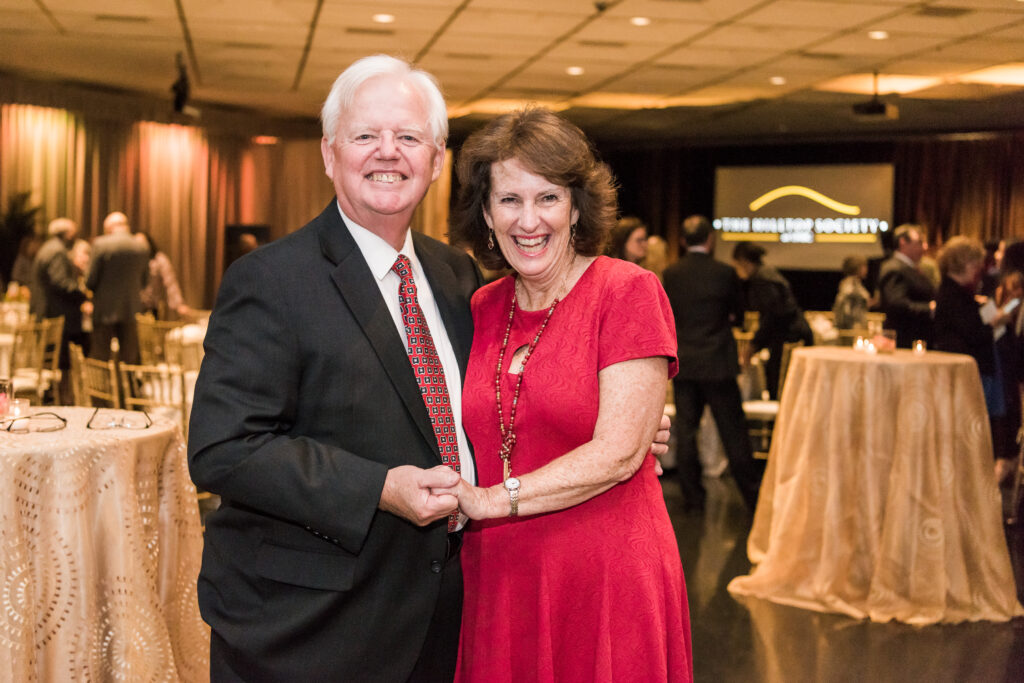
Jim and Kathy Kruger at a Hilltop Society dinner in 2018.
UMBC prides itself on providing flexibility and support for all students regardless of what age they begin their academic journey. In fact, UMBC and the University of Maryland, Baltimore partnered recently to become Maryland’s first “age-friendly” universities. They join 58 institutions worldwide that make up the Age-Friendly University Global Network, led by Dublin City University in Ireland.
Universities earn the “age-friendly” designation by committing to 10 guiding principles related to opportunities and resources that support active and healthy aging from research to enrollment and staffing. The initiative is inspired by the World Health Organization’s age-friendly cities movement. It is an opportunity to provide the support needed to make learning, working, and innovation accessible through life’s continuum.
“This is about mindset,” said UMBC President Freeman Hrabowski. “It is a challenge that we face in our society to rethink how we think about aging. The more we grapple with these challenges together, the more joy we will have in our societies.”
Kruger’s daughters—Sarah Brandt ’97, biology, and M.A. ’08, education, and Megan Kruger ’97, biology, whose names are also listed on the bench—know it hasn’t always been an easy road for their father.
“He has a lot of energy,” says Megan, who notes he starts each morning making sure his grandchildren are fed, dressed, and are on time for the bus. He then heads to UMBC where he has followed a rigorous course of study for the last 10 years. No excuses. Not even through prostate cancer.
Slowing down after retirement was not his plan. In fact, he aims to finish a path he began in 1968, the year he originally entered college. The following year, he married and, shortly after, had his first child, Jim Kruger IV, followed by twins. College gave way to full-time work, and he worked as an industrial steam pipe fitter in Baltimore for 40 years. Regret is not in his vocabulary.
Jim Kruger’s student experience, while at times difficult, was not that much different than that of younger students. Learning French was exasperating. Group work was awkward, especially when group partners had a different sense of timeliness. There was always new technology to learn. And health issues momentarily interrupted his course.
But Kruger also found tremendous support. The Writing Center and online library were crucial to his success, he says. And, like many students, he was grateful for financial support. The Golden ID program, a state program that provides some financial support for people 60 and over, helped fund his undergraduate and graduate study and created a community. Another element of support for Kruger was his daughter-in-law Leslie Kruger, who has worked on campus for more than 12 years.
Through it all, Kruger says he appreciated the support of his family and faculty mentors who were always accessible, especially, during cancer treatments. With more than 40 years invested in his education, he is excited to forge ahead.
“He believes in finding your own path,” says his daughter Megan, “even if it changes many times.”
At times of momentous change some take solace in creating. The UMBC community is no exception, adding to a long history of artists and writers recording everyday life during pandemics. From writing diaries and journals to creating art books and developing archives, Retrievers are finding ways to continue to support and create community during the COVID-19 pandemic.
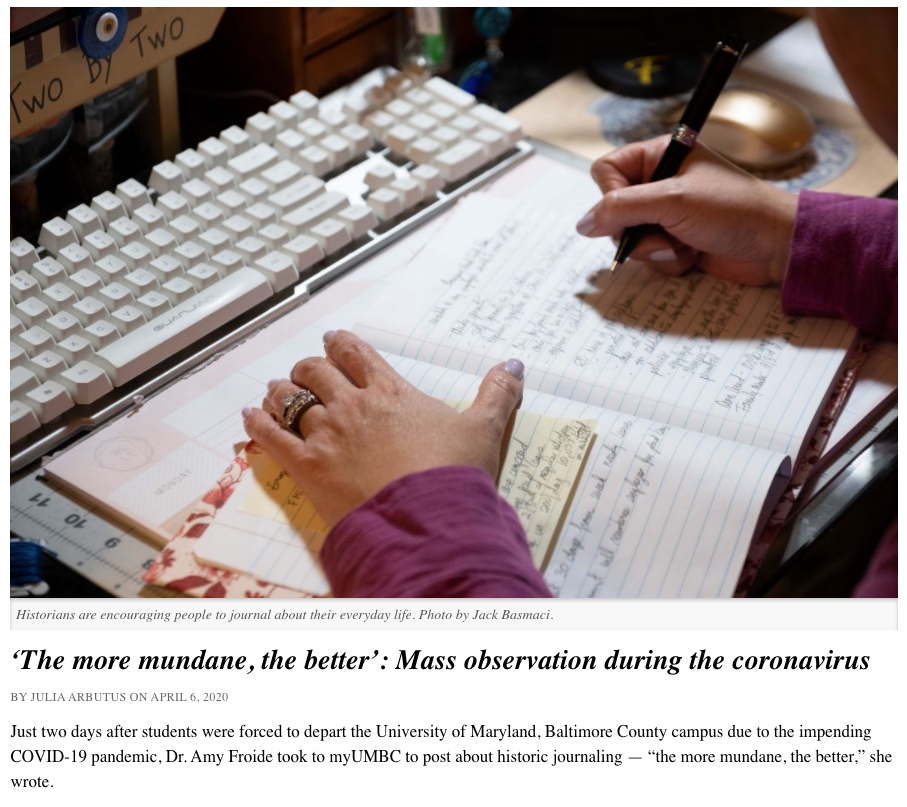
“We rely on scientists, policy makers, and government officials for information,” explains Amy Froide, professor of history, who researches 17th century Britain, including the last great plague epidemic of 1666.
“We need this information. However, it is artists, writers, painters, and musicians who help us understand and process our daily life during this unprecedented time.”
Historians turn to journals and diaries written during the plague of the 17th century in Britain because they painted a picture of everyday life. Artifacts that chronicle how people live, feel, and react to a catastrophic event on a daily basis help us understand the devastating effects across different sections of society. These mundane acts were as important to understanding the impact of a devastating time as were major headline stories.
Early on in the pandemic, Froide encouraged her students and colleagues to document the COVID-19 era through journals and diaries of their own to help future historians understand how daily life changed. Julia Arbutus’20, English and financial economics, the editor of The Retriever, was inspired by Froide’s post and wrote, “‘The more mundane, the better’: Mass observation during the coronavirus.”
“The arts and the humanities are what we depend on to sustain us,” says Froide.
Paying homage
Jill Fannon,MFA ’11, intermedia and digital arts, is trying to balance the fine line between being a partner, mother, independent professional photographer, and a concerned citizen living within a global pandemic. At the beginning of the stay-at-home orders she took pictures of her family and of artists from a distance, but it didn’t feel quite right.
“These small projects weren’t clicking for me,” says Fannon. “I realized that during this historic moment capturing the experience of health care workers would be very meaningful both in the short and long term.”
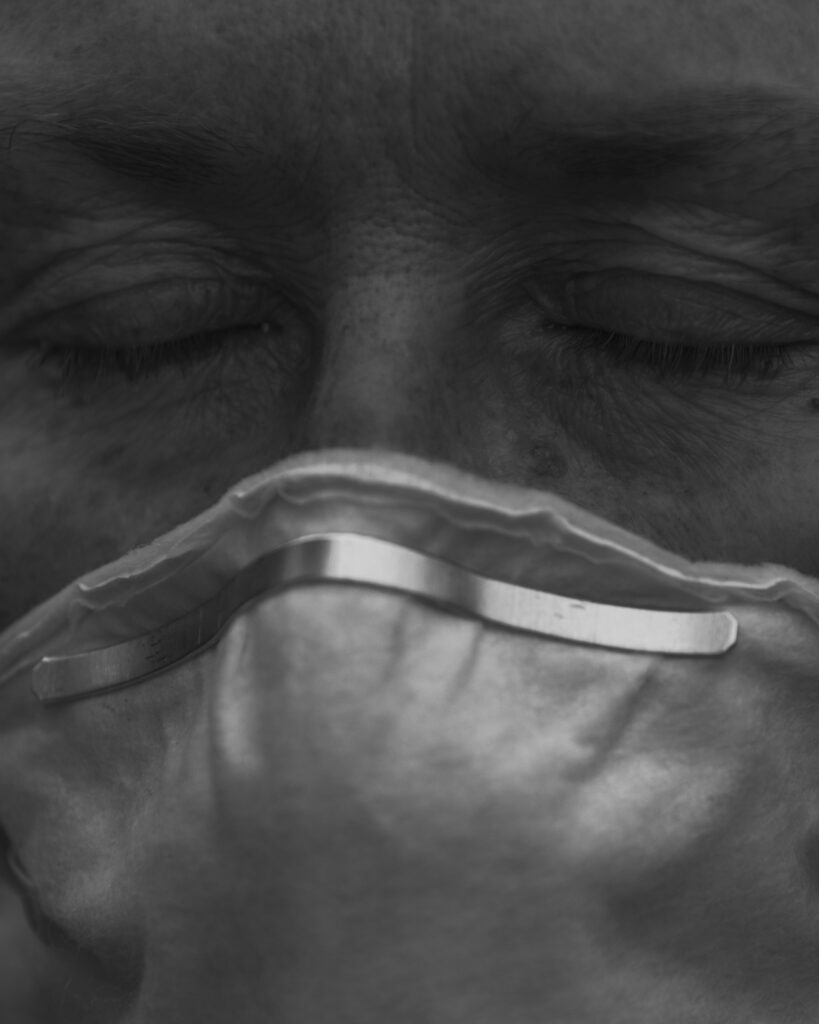
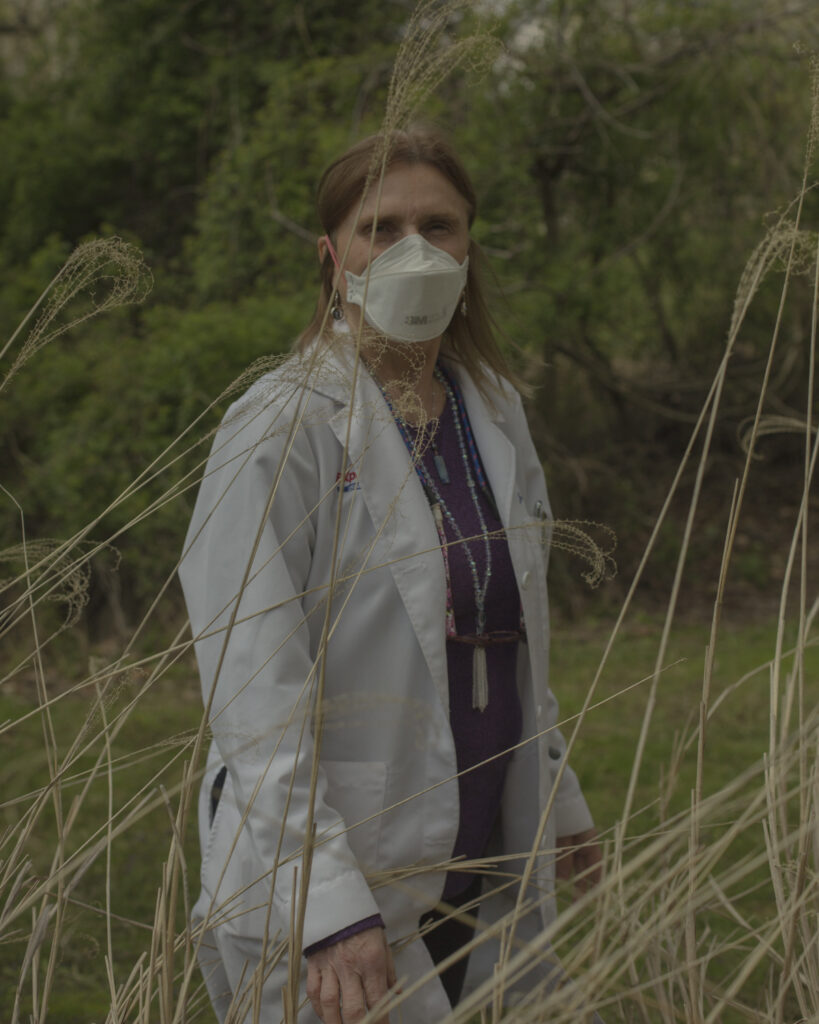
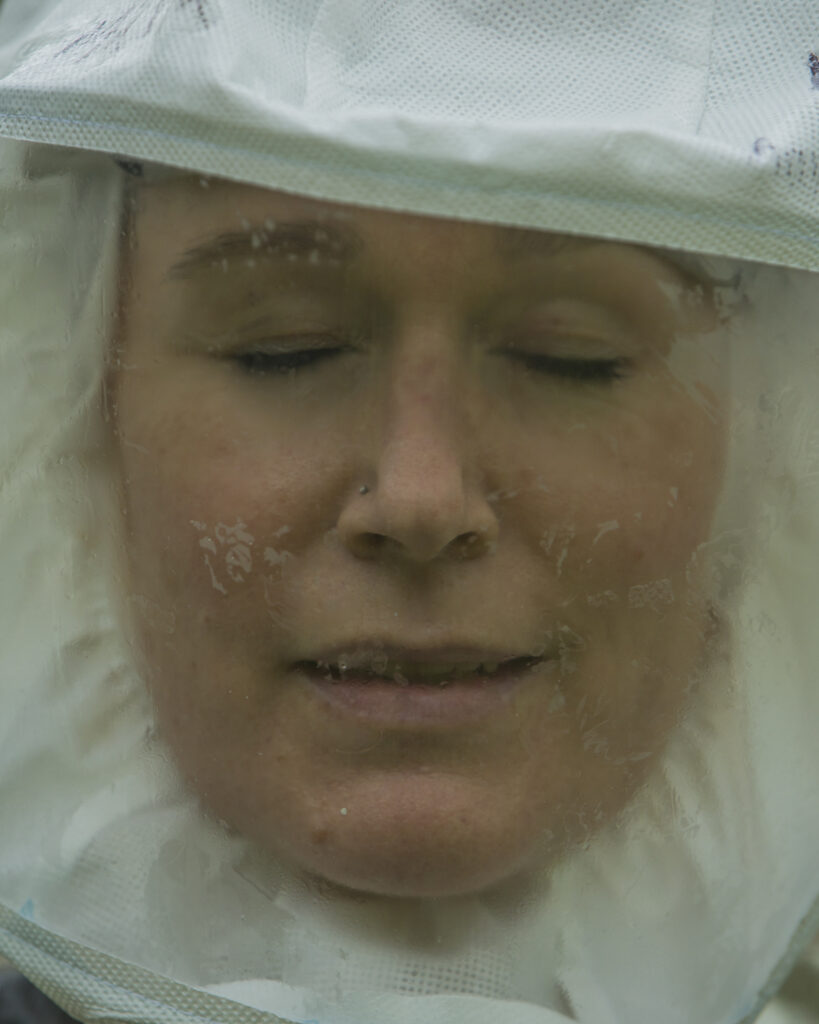
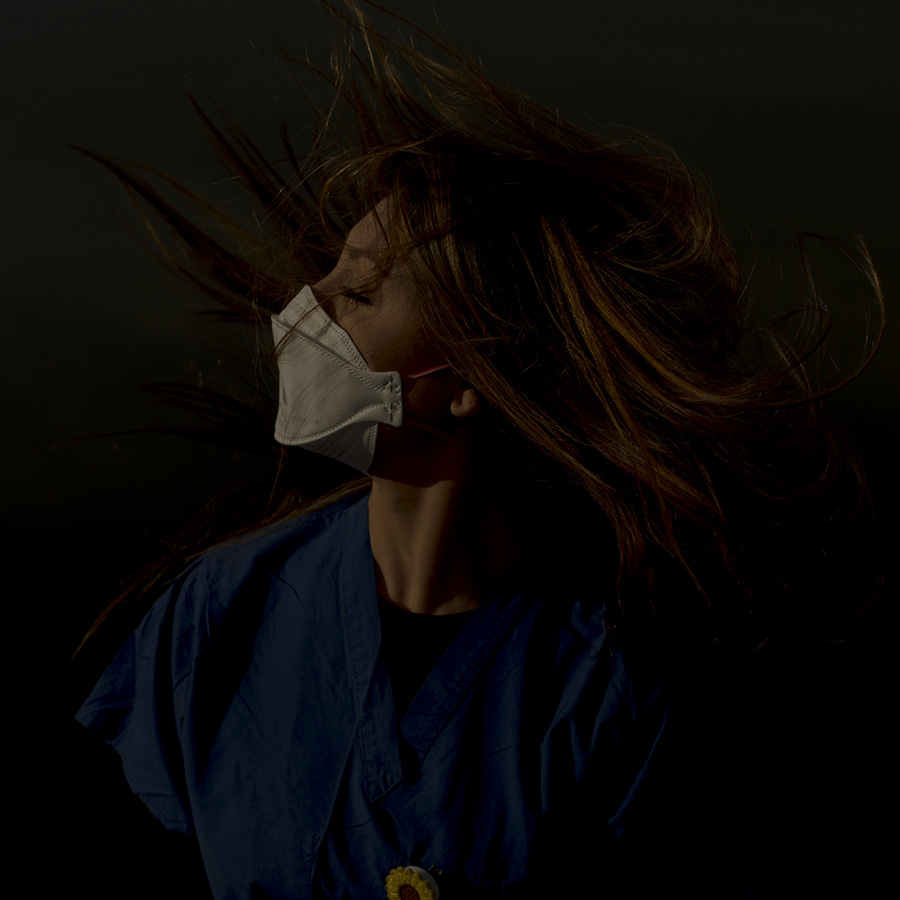
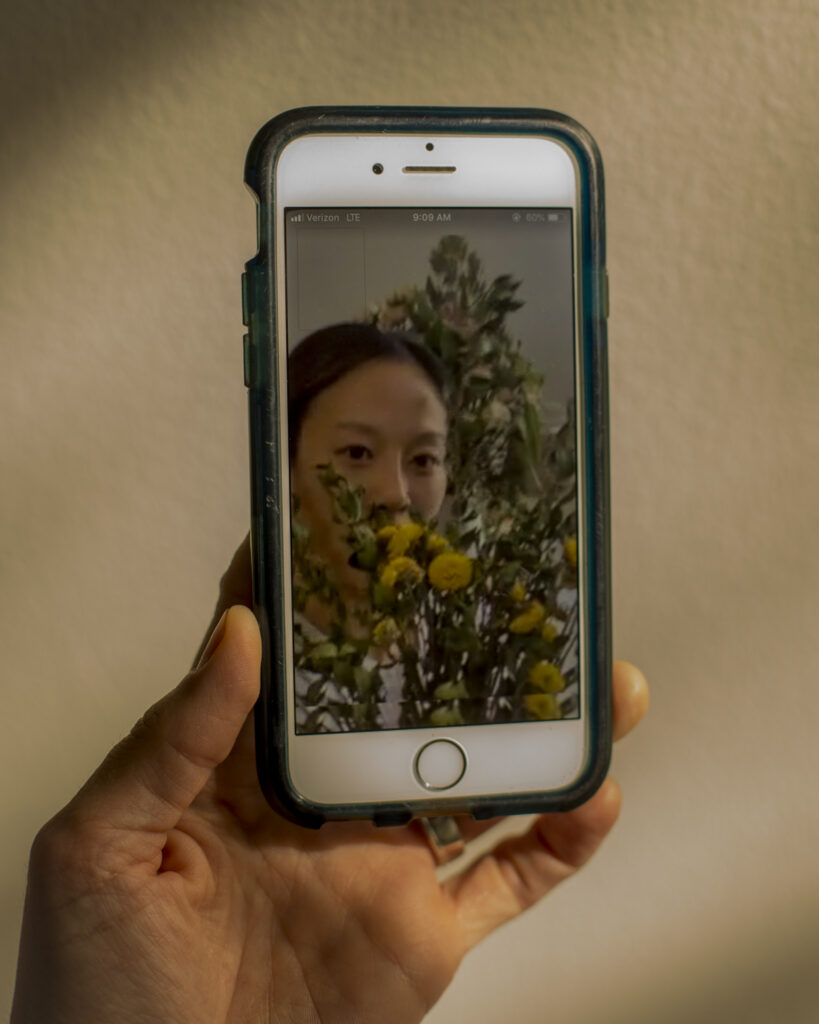
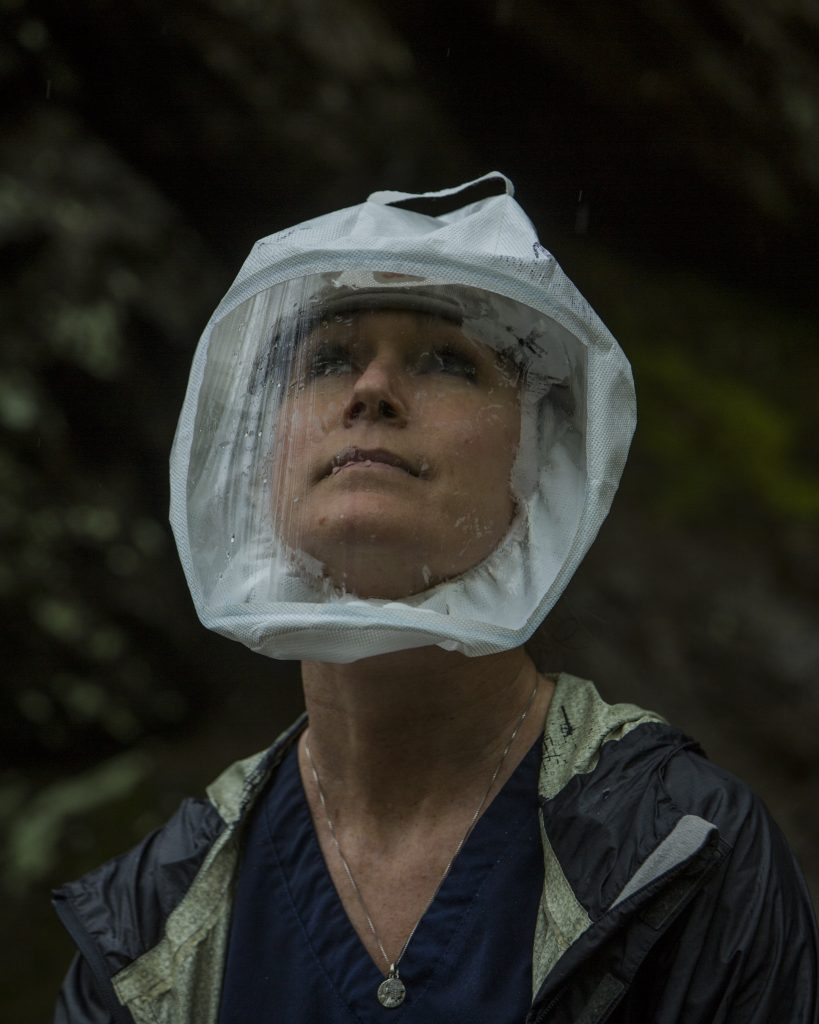
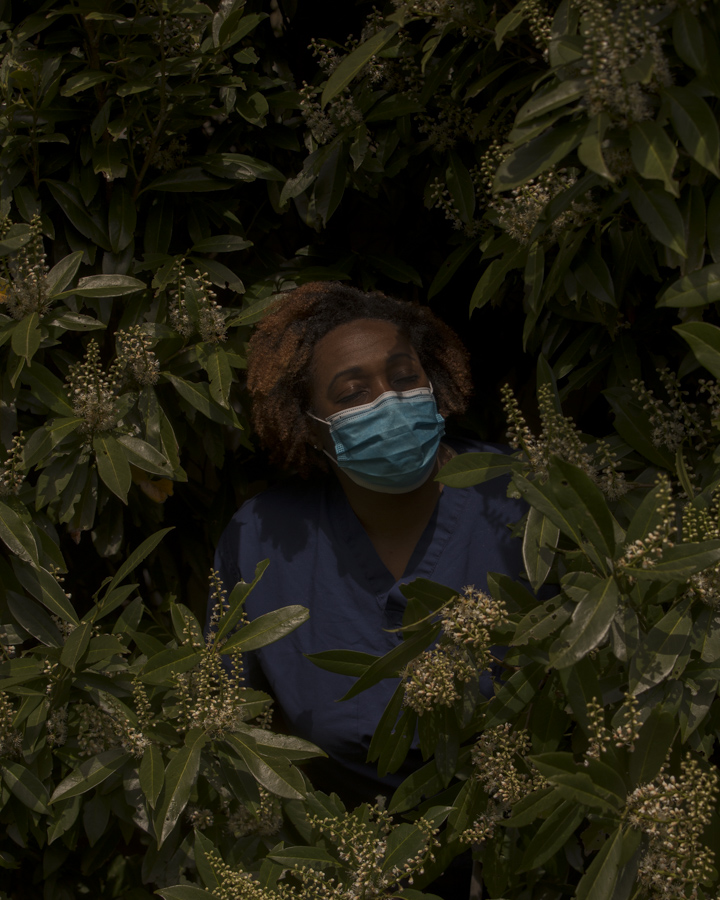
Fannon’s “Care In The Garden” is a series of photographic stories about women health care workers. Therapists, physician assistants, and nurses are captured in their uniforms with different types of personal protective equipment in nature. Capturing the workers in nature serves as a contrast between a sterile and structured medical environment with the natural blooming world of spring. It also serves as a reminder of places where we would usually enjoy breathing in the scents of new blooms but that now pose a threat with a virus that attacks the respiratory system.
The first set of images were compiled in Womanly Magazine, a Brooklyn, NY-based magazine dedicated to serving women and marginalized communities. The series also lives on Jill Fannon’s Photography website.
Pieces from Jill Fannon’s photo series “Care In The Garden.”
Another source of inspiration is Fannon’s family of first responders. Both parents served in Baltimore City and County. Her mother is a retired ICU nurse and her father a retired fire chief, while her brother is a Baltimore City fire chief.
“I wanted to document the people that were working really hard,” says Fannon. “It was a way to share the lives of workers whom the public was depending on and are taking extraordinary risks.” Fannon adds that growing up she remembers her mom taking nostalgic family portraits which she drew inspiration from as well.
In addition to documenting the pandemic, Fannon is also mobilizing fellow artists to give back to the community as a co-creator of Feral Kids – Benefits Maryland Food Bank. The project asks area artists to donate a print they created to sell online with 100 percent of the benefits going to the food bank. This endeavor is co-led by Nick Prevas’03, visual arts, and has received support from Justin Plakas ’04, visual and performing arts, former student Kyle Hurley, Joseph Faura,M.F.A. ’11, intermedia and digital arts; and Carrie Rennolds,M.F.A. ’14, intermedia and digital arts.
Donnan researches the history of the relationship between Native Americans and Irish immigrants, a partnership that has typically not been included in history. “History is a dialogue,” says Donnan. “One of the main reasons for my academic career is diversifying the voices who are heard in these narratives.”
Donnan grew up in Northern Ireland during tumultuous times. After the conflict, he noticed that the history of Northern Ireland rarely included the accounts of everyday people who had to endure the violence, poverty, and famine. Donnan wanted to prevent this from happening during this COVID-19 pandemic.
“In the future, people are going to write about COVID-19 and they are going to analyze presidential speeches and CDC press releases,” explains Donnan. “This archive will be a place where people can now and later learn about what all kinds of people were thinking on the day-to-day. The ones the news and history books rarely document.”
Acknowledging the lost and found
Associate professor of media and communications studies, Rebecca A. Adelman, also took to the digital world, creating the Coronavirus Lost and Found archive. One of the topics that Adelman researches is the role of emotion in public culture, and the forms of suffering that often get overlooked in times of crisis.
“I am interested in non-spectacular forms of suffering. I wanted to capture the stories that would never make the news but still matter,” says Adelman.
The collection so far is as varied as its contributors. In “I Lost First Grade” a first grader talks about her sadness about missing math, her friends, and her beloved teacher. Another person shares their frustration about losing their most cherished “Alone Time;” and in “My [Health] Recovery, readers learn about the anger and hopelessness felt about losing access to doctors for ongoing recovery treatment. In Order and Time for Creativity, contributor Jason Tremblay writes about a “found”—time to be creative and embrace passions.
“I felt it was important to create a forum where people’s losses and finds could be recorded, shared, and acknowledged even if they seemed small in the greater scheme of things,” said Adelman.
Losing a conference, finding stories
Writing and reading stories to help us process what it’s like to live through a pandemic is a long-held practice. In 1348 during the Black Death, Giovanni Boccaccio, an Italian writer, wroteThe Decameron, a story that tells of a group of people who told 10 stories a day for 10 days to pass the time during the bubonic plague. Kate McKinley, professor of English, explains how The Decameron revealed how different economic classes dealt with the Black Death in her article “How the rich reacted to the bubonic plague has eerie similarities to today’s pandemic.”
UMBC’s digital story working group in the humanities, led by Bill Shewbridge’80, history, M.S. ’85, instructional technology, professor of the practice in media and communication studies, had originally planned a Digital Storytelling Conference in March with the University of Loughborough in the United Kingdom. When the conference was postponed, the group found an opportunity to start a Decameron of their own.
UMBC’s version is collecting 10 stories a week for 10 weeks during the COVID-19 pandemic. The stories in The Digital Decameron offer a space to document our current life through digital stories about any topic.
Charlotte Keniston, MFA ’14, intermedia and digital art, associate director of the Peaceworker Program, curated the second week. Over 7,000 Peace Corps volunteers had to be evacuated throughout the world and returned to their homes due to the pandemic, so Keniston used the platform to highlight the digital stories of returned UMBC Peace Corps Volunteers and the lessons their Peace Corps service taught them. All the videos record a meaningful event marking the first time they became truly aware of being a Peace Corps Volunteer either through a ritual they were invited to participate in, a meaningful conversation they had with local community members, or challenging experiences in a new culture.
Calling all artists
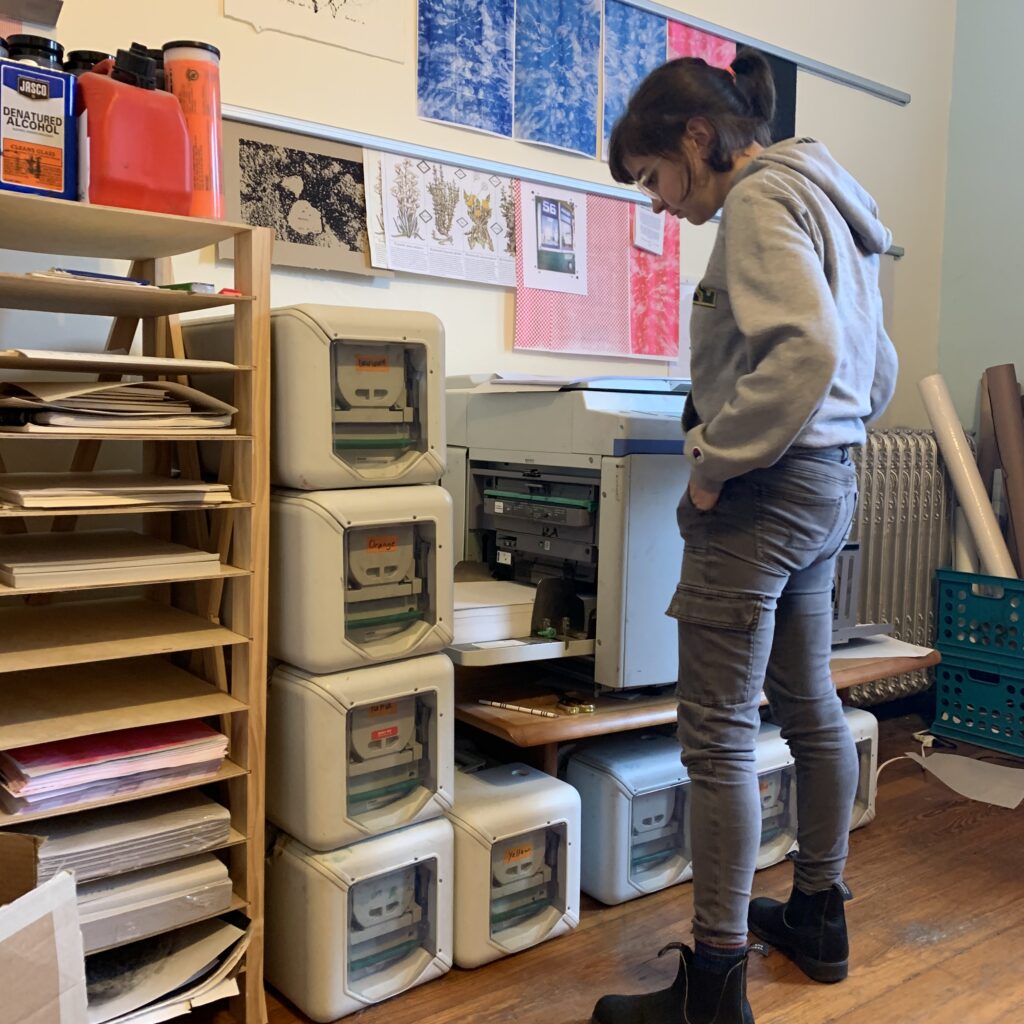
Visual artist Nicole Ringel ’19, M.F.A., intermedia and digital arts, and adjunct professor of visual arts, found herself in need of keeping and widening her artist community during the pandemic shelter-in-place orders. Ringel, who through her work investigates the layered historical and ecological nuances of shared landscapes, had one powerful tool to meet this goal—a risograph machine.
A cross between a silk screen press and a copy machine, the risograph is popular with artists for its ability to make high quality prints at low cost. She found herself equipped with a tool that could create a print book and serve as a platform for artists cut off from their creative communities. In the absence of being able to meet in person, the book would at least bring together their stories, poetry, and photography.
Ringel and her risograph machine. Photo courtesy of Ringel.
COVID Landscapes is the inaugural book of Ringel’s small press Sense of Press. Over forty artists share their perspectives on how home, work, and social environments have changed as a result of COVID-19. Ringel was inspired by the changes she experienced in her own spaces. Her house is now a work, classroom, and home space. She says that even mundane spaces such as the grocery store have changed. They are now charged with anxiety and fear of contagion.
“The book is a way to bring mindfulness into the act of creating things in the wake of all the systemic problems we face every day,” says Ringel. “It is about an exchange of art and labor, a vehicle that brings something precious that we can touch and feel, to remind us of the power of purposeful connection and community especially during a time of isolation and uncertainty.”
Header images, L-R: Nicole Ringel’s Covid Landscapes project, Jill Fannon’s “Care In The Garden,” and class journaling from The Retriever newspaper.
Share your own stories of Retriever Resilience by using the #UMBCtogether hashtag, and read more at umbc.edu/together.
Community-engaged work has been integral to the UMBC experience for Joseph Mayhew, M.A. ‘20, TESOL; Kiplyn Jones, M.A. ‘20, public policy; Malgorzata Bondyra ‘20, management of aging services; and Thao “Rosemary” Do ‘20, biological sciences. Despite coming from such different academic programs, they have all been able to connect in meaningful ways with local and international communities. And after graduating this week, they’ll each apply their talents, skills, and sense of commitment to community-engaged careers.
Using Peace Corps skills at home
Joseph Mayhew, a Catonsville local, left Baltimore over ten years ago for the University of South Carolina. After studying political science, he worked for the Federal Emergency Management Agency (FEMA) as an AmeriCorps volunteer. Mayhew helped set up shelters for refugees and immigrant youth and helped manage FEMA’s news desk hotline. He decided to follow his AmeriCorps service with the Peace Corps in San Bernardino, Paraguay.
Mayhew was excited to improve his Spanish skills and immerse himself in Paraguay’s culture. He taught English, leadership, and entrepreneurial skills to San Bernardino’s youth.
“We were sharing strategies for the community to do their own development work based on their needs and identity as a community,” he shares. “It wasn’t about us staying and directing what needed to happen. It was about us stepping back so communities could move forward in the direction they wanted with new tools.”
Jones (front row, center, in yellow) and Mayhew (back row, third from left) with their Shriver Peaceworker cohort. Photo courtesy of Jones.
After the Peace Corps, Mayhew searched for a graduate program that would build on the skills he gained there. He didn’t know it would take him back home to Baltimore. The more he learned about UMBC’s Shriver Peaceworker Fellows Program, the more he knew it fit his career goals, integrating graduate study, community service, social change leadership, and ethical reflection.
Seeing Baltimore through fresh eyes
The Peaceworker program reintroduced Mayhew to Baltimore, including the history of local communities and the disparities they experience, which he had not learned growing up. Mayhew began to dedicate his time working with Baltimore’s refugee and immigrant communities.
“After his Peace Corps service in Paraguay, Joe was eager to return and connect his grad studies to work that supported our region’s newcomer communities,” explains Joby Taylor Ph.D. ’05, language, literacy, and culture, director of UMBC’s Shriver Peaceworker Program.
Mayhew (blue shirt) and Kiplyn Jones (first on right in back row) on a Peaceworker Baltimore history tour with Taylor (right, with beard and glasses). Photo courtesy of Jones.
Mayhew worked at a refugee and immigrant shelter. He also used the Spanish skills he learned in Paraguay to support the English Speakers of Other Languages (ESOL) program and to develop high school and college readiness programs for the Latino youth at Commodore John Rodgers Elementary/Middle School (CJR).
“Chances are that if you saw young kids and families touring UMBC in the past two years, you saw Joe with his CJR students,” shares Taylor. “He’s led literally hundreds of families on their first ever college visit—that all-important first step to college access and a sense of belonging for newcomers and first-generation students.”
Bridging the language gap
Mayhew’s work with Baltimore’s Southeast community helped him to define a new career path. There, he witnessed first-hand how bridging the language gap helps English language learners access educational opportunities. He decided that the best way for him to help create positive social change was to become an ESOL teacher.
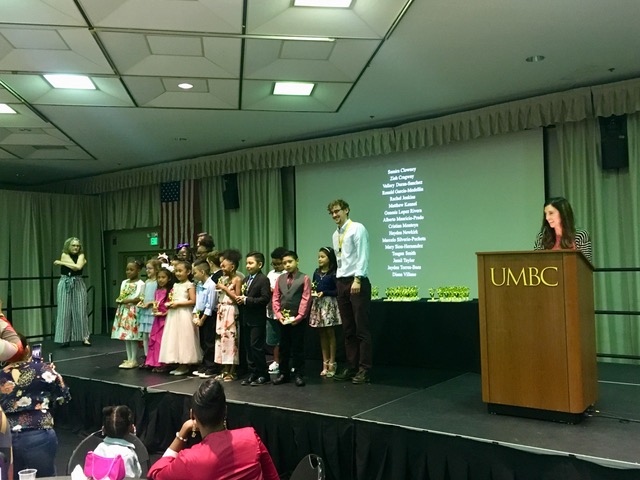
Mayhew (on stage) with CJR students at an end of the year Collegiates Program celebration event at UMBC. Photo courtesy of Taylor.
“I’m a language learner also,” says Mayhew. “Being able to move through multiple worlds and using all of your linguistic repertoire to express yourself is powerful. There are certain things that I can say in Spanish that I can’t express in English.”
“I want students who live anywhere in Baltimore to be able to speak English while preserving their culture and language,” Mayhew shares. “They should be able to hang on to their identity and not have to live with this hierarchy that English is a language above other languages.”
Mayhew will teach ESOL full-time in Baltimore City’s John Ruhrah Elementary/Middle School, working with another Peaceworker alum, Newcomer Center Lead Kevin Okun, M.A. ‘09, TESOL.
Building relationships in Java
Kiplyn Jones grew up in Florida surrounded by a diverse international community that inspired her to broaden her linguistic and cultural knowledge. During high school she worked at a restaurant and began to learn Turkish and about Islam from the family that owned the business. This led her to learn Arabic and earn a B.A. in linguistics from the University of Florida.
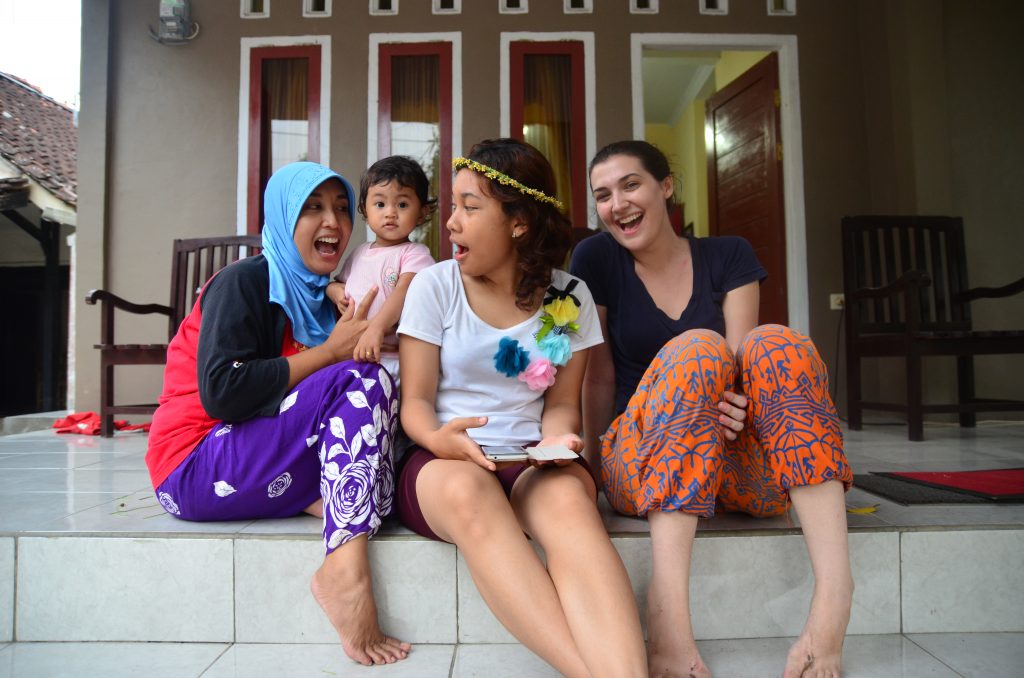
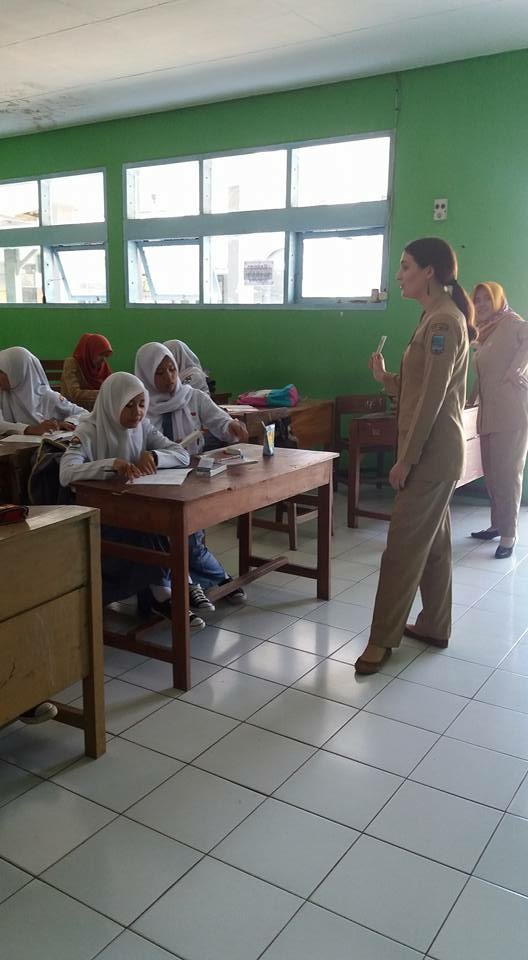
The next step on Jones’s journey was the Peace Corps, which placed her with a linguistically diverse (Javanese, Sundanese, and Indonesian ) speaking Muslim community in Java, Indonesia where she taught English, leadership, and teamwork skills to teens. “Anything I do, I try to do it meaningfully,” explains Jones. She was committed to having a positive impact and to learning as much as she could.
Jones with at home with her host family in Pangandaran, Indonesia. Photo courtesy of Jones.
“In Indonesia personal relationships are very important for developing professional relationships,” Jones says. Both her host mother and co-teachers at a local high school helped her connect with the community.
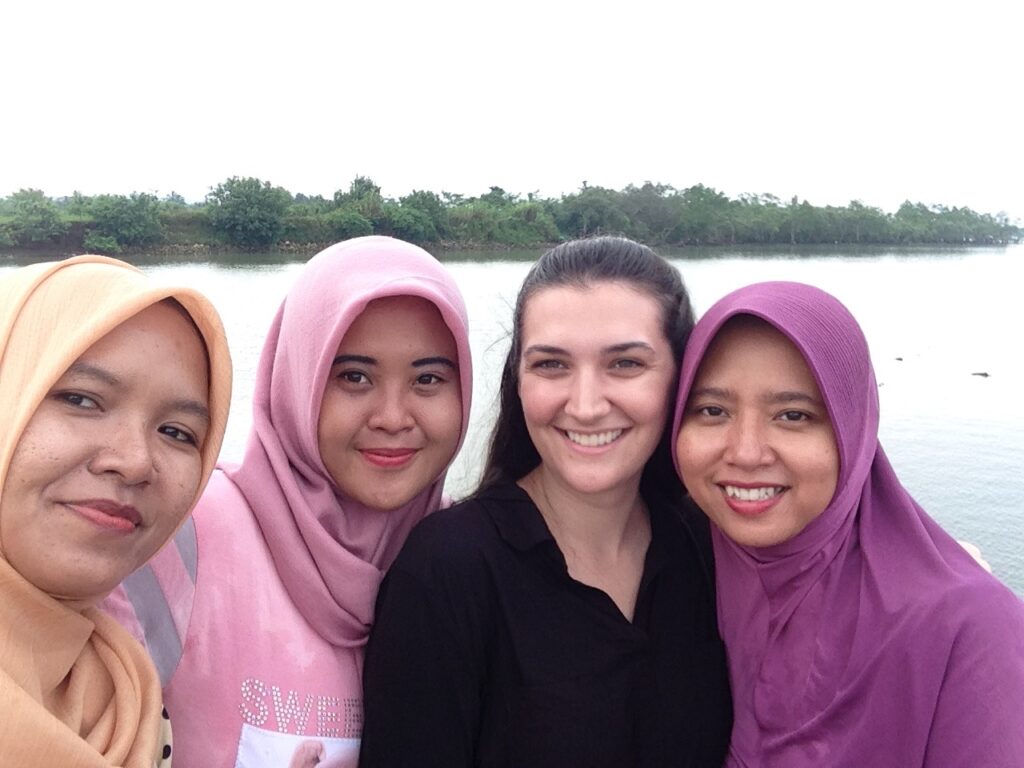
Jones with fellow co-teachers from SMA1 school in Pangandaran, Java. Photo courtesy of Jones.
“I was the first Peace Corps volunteer in this part of Java. The closest volunteer was six hours away,” remembers Jones. “Being the first one meant I had the unique responsibility of learning how to be a part of the community and collaborate on creating programs for future Peace Corps volunteers to build upon.”
Jones facilitating an after school English Club. Photo courtesy of Jones.
Envisioning positive change in the world
Jones’s Peace Corps experience strengthened her desire to pursue a career in international development. She knew the Peaceworker Program would help her meet these goals.
“We have seen Kiplyn grow as a researcher as she dived into the public policy master’s program,” shares Charlotte Keniston, M.F.A ’14, intermedia and digital art, associate director of the Peaceworker Program. “Kiplyn discovered a love for program evaluation and data analysis as she completed each step of the program.”
Building on the skills she learned in Indonesia, Jones also learned to support the students in UMBC’s Grand Challenge Scholars Program (GCSP). The program is designed for undergraduate students interested in developing solutions to global challenges in areas such as sustainability, security, and health.
Jones (third from left) with GCSP director Maria Sanchez, mechanical engineering, (second from right) and mentees at GCSP meeting in Washington, DC. Photo courtesy of Jones.
“Initially, Kiplyn was apprehensive about working with students from STEM fields, as that was very different from her own background in linguistics,” remembers Keniston. “She was able to find a common ground of working together to envision positive change in the world. She’s really helped to grow and shape that program and has been a fantastic mentor to those students.”
Jones (first on left) and Sanchez (first on right) with graduating GCSP scholars.
Jones’s dedication to international development work earned her a Fulbright U.S. Student Program award to Jordan. Fulbright programs are now on pause due to the COVID-19 pandemic, but she looks forward to having the chance to travel again, and to supporting communities wherever she finds herself.
Touring Polish violinist finds home at UMBC
Malgorzata Bondyra came to the United States as a violinist in a Polish folk band. Before she returned to Poland to finish her degree in economics, a friend asked her to replace her in a nanny position in Maryland. Bondyra accepted. She worked and enrolled as an international student in Dundalk Community College, where she earned her associate’s degree.
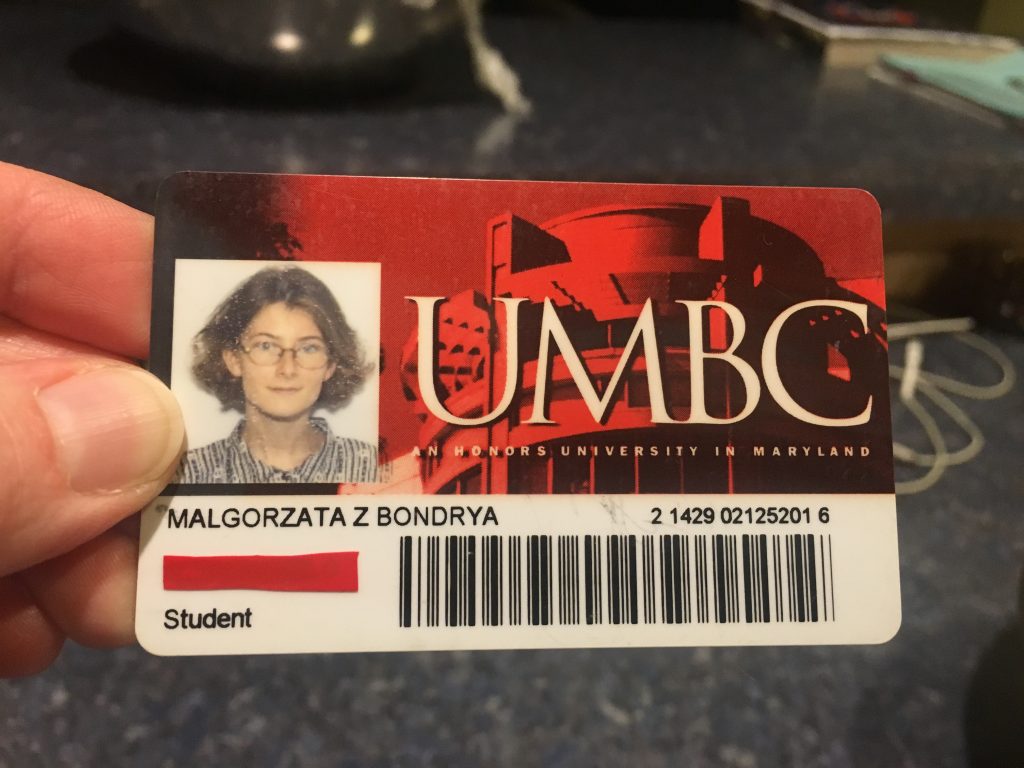
Malgorzata Bondyra’s original UMBC ID. Photo courtesy of Bondyra.
Bondyra next pursued a degree in music performance at UMBC, but during her sophomore year decided to take time off to raise her daughter.
Eighteen years later, she returned to complete her undergraduate degree in the management of aging services. And this time she had company. Bondyra’s daughter, Dominika Bondyra ‘21, computer science, was already a student at UMBC.
Bondyra’s three children. Photo courtesy of Bondyra.
Finding a career within the Polish community
Just as Bondyra’s Polish culture inspired her pursuit of a career in the performing arts when she was younger, the local Polish community in Baltimore inspired her more recent interest in working with older adults.
While raising her daughter, Bondyra had various jobs and volunteered to translate medical forms for older community members. She then began accompanying them to doctor’s visits and helping them ask questions about their healthcare. She enjoyed the experience so much she became a certified Polish language medical translator.
“I really enjoyed working with the Polish seniors,” shared Malgorzata. “When I learned about UMBC’s Erickson School of Aging Studies I was excited to finally complete my degree in this new career path to better serve the elderly in my community.”
An internship with a twist
This spring Bondyra was to begin her final internship at Seven Oaks Senior Center in Baltimore County, home to a large Polish community. There she would help with recreation activities to help members bond with each other and support continued learning and mobility.
After the facility temporarily closed due to COVID-19, the center continued to support its members by providing some services online. And they had a special idea for their intern. “The center asked me to finish my internship by having an online cooking class,” says Bondyra. “I really had to think about it because I am very shy.” In the end, she agreed.
Bondyra cooking pierogi for Seven Oaks Senior Center’s online cooking class. Photo courtesy of Bondyra.
“Cooking with Gosia” (short for Malgorzata) quickly became a hit with the members of the senior center. Bondyra drew on her knowledge of traditional Polish recipes she had grown up eating and cooking. She began with the more familiar recipes, like stuffed cabbage and pierogi, then moved on to lesser known dishes. The online classes drew not only the local Polish community, but also other viewers from around the world interested in Polish cooking.
While the internship offered an entirely new way for Bondyra to support others, her success in the position also reflects two decades of connection to Baltimore’s Polish community. Bondyra plays the violin for a Polish church, serves as vice president of the Baltimore chapter of the Polish National Alliance, and is the artistic director and choreographer for a local Polish folk dancing group.
This spring, in addition to her bachelor’s degree from UMBC, she’ll earn a bachelor’s degree in Polish folk dancing from University of Rzeszow in Poland.
Bondyra (with violin) with a Polish folk dancing group at her church in Baltimore. Photo courtesy of Bondyra.
“I work very hard in everything I am passionate about,” says Bondrya. Next, she’ll pursue a master’s degree through the Erickson School. “I look forward to graduate school at UMBC,” she shares. “Who knows where this next adventure will take me.”
Holistic medicine from Vietnam to UMBC
Rosemary Do chose to attend UMBC at the recommendation of her brother, Duy Do ‘07, biochemistry. UMBC gave him the strong STEM foundation he needed to then attend the Harvard School of Dental Medicine and later Columbia University College of Dental Medicine to specialize as an endodontist. Rosemary heeded his advice and moved from Vietnam to the United States to also pursue a career in dentistry.
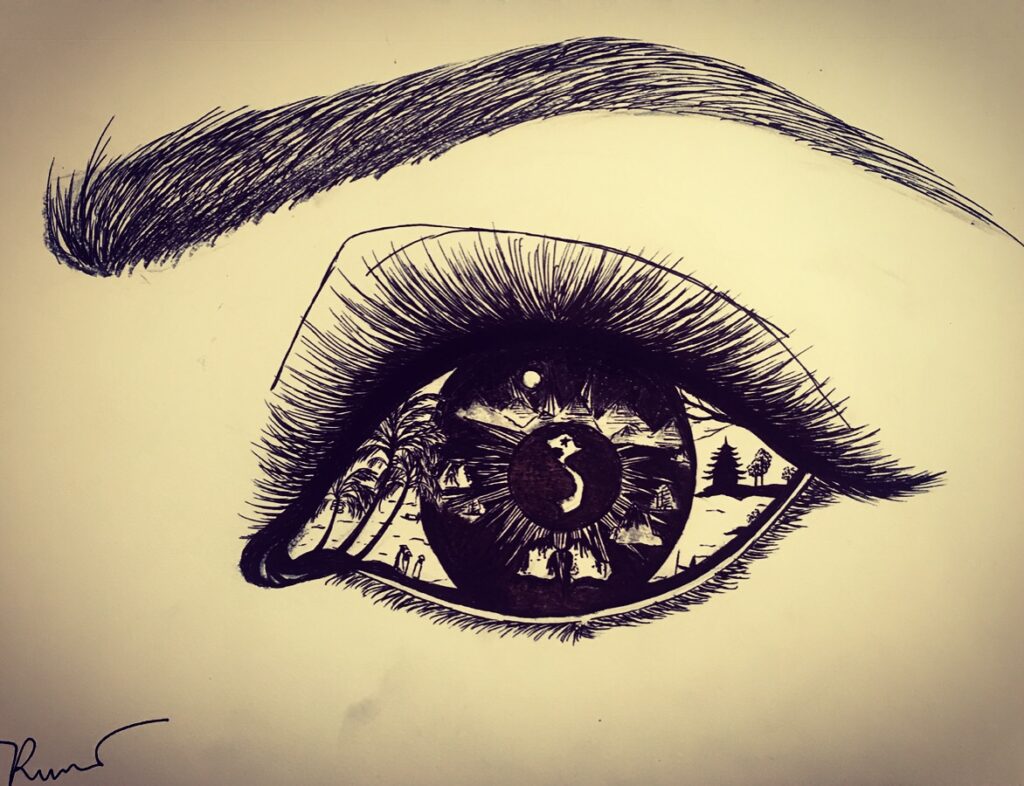
This illustration by Rosemary Do depicts Vietnam and Vietnamese geographic and cultural icons within an eye. Features include Hạ Long Bay (a UNESCO World Heritage Site) and the Thiên Mụ Pagoda (a historic temple). Image courtesy of Rosemary Do.
Rosemary Do’s interest in dentistry comes from a very personal experience. “My father had periodontal disease and diabetes,” she shares. “Dentists in Vietnam did not take into consideration his diabetes limiting the effectiveness of his periodontal surgeries. I want to be able to practice dentistry from a holistic point of view to help the most people.”
Finding a lab and a band
Do’s first trip from Vietnam to Virginia was quite a journey, but she had family in Virginia, so it went smoothly. More daunting was traveling from Virginia to UMBC, Do explains. UMBC meant the beginning of an independent journey with no quick access to family. She made a conscious decision to get out of her comfort zone and find community.
Do knew that she wanted to enrich her academic experience through lab research. She reached out to Jeff Leips, biological sciences, who invited her to support his lab’s developmental biology research with fruit flies. During her three years with the lab, she learned the importance of being meticulous as well as the value of learning from mistakes.
“My attention to detail grew, which is very important in dentistry,” explains Do. “Dr. Leips created a safe environment to learn and be innovative by encouraging us to explore, lead experiments, and make mistakes.”
Rosemary Do (right) with her band The Leips and the Flies. Photo courtesy of Do.
Leips’s lab also gave Do meaningful social connections. This past December, Leips and the students created a band, The Leips and the Flies, with Do on guitar. Their first performance was at the department’s end of the year party.
“Rosemary is one of the most impressive students I’ve had the pleasure of working with,” shares Leips. “She is an amazing student, an impressive young scientist, and an awesome rhythm guitar player in the lab band. We are really going to miss her but wish her well in the next step of her career.”
A better version of myself
Always focused on new opportunities to grow, Do also joined UMBC’s Aikido Club. Before joining she had never played a sport or studied a martial art, but she wanted to try. Eventually, she became the vice president of the club and helped run Women’s Self Defense Seminars.
With a fulfilling and balanced campus experience, Do sought ways in which to engage with UMBC’s surrounding community. She began volunteering in the oncology department at Saint Agnes Hospital in Southwest Baltimore, delivering food to patients. Later she worked with UMBC’s Shriver Center to volunteer in the Multiple Sclerosis Aquatics Program at the Catonsville YMCA.
“I have been a very privileged person all of my life. My mother is a doctor and my father is an engineer. I’ve never had to worry about anything,” shares Do. “My experience with the Shriver Center helped me learn a sense of responsibility to be a better version of myself for the betterment of others.”
Every weekend for six semesters Do assisted patients with stretches in the pool to alleviate their pain and increase their range of motion. Two years ago, she became the student coordinator.
Do (wearing UMBC T-shirt) with the Multiple Sclerosis Aquatics Program at the Catonsville YMCA. Photo courtesy of Do.
As she transitions to the University of Pennsylvania School of Dental Medicine, Rosemary Do knows she made the right decision following her brother’s advice. “Looking back from when I left Vietnam to now, it has been a great journey,” she shares. “Everyone here at UMBC has shaped who I am today and I am grateful for that.”
Banner image: Malgorzata Bondyra (center of first row) at a folk dance festival in Poland.Photo courtesy of Bondyra.
Graduating UMBC students Christine Crisostomo, Emily Satterfield, and Benjamin Park had expected that this May they would be finishing their student teacher internships in person. They would be leading classroom instruction in secondary schools across Maryland. COVID-19 changed all that, as they had to pivot quickly to an online teaching environment.
But as military veterans, these student teachers are used to managing stressful and rapidly changing situations. They have drawn on skills and strategies from their years in the military to support their students and their own families during this time.
After first serving their country in the armed forces, “they have chosen to serve again by being teachers,” says Cheryl North, clinical assistant professor of education. “I am proud of them. All of them are going to be an asset to their schools, and their students are going to get outstanding teachers.”
Unique school, special opportunity
Crisostomo ‘20, chemistry and modern languages, linguistics, and intercultural communication,came to UMBC after eight years of service as a language analyst in the U.S. Navy. She chose UMBC because of its strong chemistry teaching program. Plus, “UMBC felt like an environment that supported adult learners and veterans,” says Crisostomo.
For her, the partnership UMBC has with Fort Meade High School has offered a unique opportunity. Fort Meade High School is the only school in the country that is on military property but is managed by a county school system. The school includes a mixture of military and civilian families.
Crisostomo’s military experience helped her understand the challenges that children of military families face. Her passion for chemistry made her an engaging science teacher. In addition, thanks to her background in linguistics, she knows five languages and has been able to support many English Language Learners (ELL) at the school. These strengths provided an opportunity for her to serve as a lead teacher early on, guiding a classroom of students.
Learning to teach during COVID-19 school closures
Soon after COVID-19 began to affect Maryland, the state changed how it would deliver public education. As a student teacher, Crisostomo didn’t have immediate access to the teaching software. Once she could access the system, she had to develop strategies to help her ELL families, who were struggling with online materials posted in English.
Thanks to her experience in the military, though, she was confident that she’d find a way to make it work. She would support her students and successfully complete her internship.
“I knew there would be a solution… I may have some frustration, but I can’t worry about something I don’t have control over,” says Crisostomo. “In the military you develop skills to adapt to a change in plans and unforeseen problems, and how to step up. Teachers have to use the same skills.”
Everything under one roof
Satterfield, M.A.T. ‘20, misses the classroom. She misses interacting with her students in real time. But she’s also found ways to make it work.
Satterfield while serving in the U.S. Marine Corps. Photo courtesy of Satterfield.
Even before public schools moved online due to the pandemic, Satterfield had a tight schedule. She managed her own course work while also planning and delivering lessons at Chesapeake High School, supporting her third-grader with special needs, and keeping up with her toddler.
At night she would complete her course work, plan her lessons, and manage her family’s needs. It was a juggle, but the skills she brought from her time in the U.S. Marine Corps and the support of the UMBC community helped make it all possible.
“I couldn’t have earned a 4.0 and kept balance in my life without the support of the education faculty,” says Satterfield. “It wasn’t only technicalities of teaching that they helped me with, but they helped me through my own son’s Individualized Education Program process and always truly listened when life became overwhelming.”
Now, her life as a student, teacher, and parent are all under one roof. There are no clear schedules anymore, for her family or the families of students she is teaching.
Satterfield with one of her two children. Photo courtesy of Satterfield.
As Satterfield sees her own third-grader struggle with how to complete and submit lessons online, she knows her students must also be struggling. She has shifted focus to primarily offering support to students outside of the regular 8 a.m. – 3 p.m. school hours.
Preparing for a new normal
Satterfield is leaning on her military training to persevere by preparing for a new normal. Faced with her husband’s shipping orders to North Carolina this summer and the uncertainty of COVID-19, she prepared her lessons far in advance. By the time public schools officially closed, she was ahead of the curve.
Satterfield also completed online teacher development courses in Google Classrooms and online learning. And she maintains clear communication with her mentor teacher and her professors.
“I was a little stressed at the beginning, but life comes and goes, and it is constantly changing. You never know what you are going to do,” says Satterfield. “I offer my own students the same empathy and support the UMBC education faculty have given me. Any time my mentor needs anything and students need me I am there for them.”
Finding a path to teaching
Park ’19, mathematics, and M.A.T. ‘20, left the U.S. Army after five years of service and began his studies at UMBC soon after. He felt UMBC was a great fit for him because of the diversity he experienced in the Army. “Our differences make our lives richer, so why not celebrate them,” he shares.
Park (right) in the Army. Photo courtesy of Park.
When Park arrived at UMBC as an undergraduate, he was confident in his love of mathematics, but didn’t yet clearly see his path as a teacher. Still, UMBC’s education department quickly noticed his skill in helping his peers understand complex math problems.
Park remembers his professors encouraging him many times to consider teaching. With the support of Christopher Rakes, associate professor of education, he eventually took the leap, committing fully to pursuing the M.A.T. and becoming a high school math teacher.
“Ben is quite simply one of the finest students with whom I have had the privilege of working. His intellectual curiosity exemplifies the best of scientific inquiry, which he instills into his mathematics classes,” shares Rakes. “He is dedicated to helping his students see mathematics as a way of thinking and a tool for understanding the world, not just a series of algorithms to memorize.”
“You have to pivot and adapt”
Park’s approach to teaching is grounded in his experience as a child struggling with dyslexia in an education system that was not able to identify or address his needs. Determined to not be left behind, Park discovered that he was able to understand concepts if he could break things down by starting at the end and working his way back.
In the Army, he continued to grow and to hone his self-discipline. His mentors share that all of these qualities and experiences combined make him a dedicated, empathetic, and successful aspiring teacher.
Park (center) with fellow student teachers at his baby shower. Photo courtesy of Park.
Park sees the shift from in-person to online teaching not as a challenge, but as an adaptation needed to fulfill a mission. “No battle plan survives a battle. Going to class, going to a physical building, teaching students, and having the students in that building all day so they can receive a proper education—that was the original battle plan,” he explains. “Things change and you have to pivot and adapt.”
“The first priority is the students,” Park says. “I think that is the main axiom that we need to focus on.”
Park (left) with his family. Photo courtesy of Park.
Learning how to learn
Working alongside Park at home is his wife, Elpiniki Park, who is also a teacher. They manage their classrooms and two young children, in addition to Park’s course work, which means working day and night.
Park’s chief goal now is to help his students learn how to learn in their new environment. Recalling his own challenges in school, it is a mission that is close to his heart.
“It is more important right now to teach them how to study math individually, than to teach the subject,” shares Park. “Learning how to learn gives a good foundation. Then we can pivot and increase the probability of student success.”
“We are going to make it work,” he emphasizes. “We are going to make sure kids get educated.”
Banner image:True Grit statue on graduation day. Photo by Marlayna Demond ’11.
The Association of American Colleges and Universities (AAC&U) has honored UMBC’s Ciara Christian with its 2020 K. Patricia Cross Future Leaders Award. Christian, M.A. ‘18, sociology, is a doctoral student in the language, literacy, and culture program. She is one of just seven graduate students out of 117 applicants from across the country to earn this honor.
The award honors graduate students who are dedicated to teaching and learning in higher education. It highlights students whose exemplary work shows their commitment to academic and civic responsibility with a focus on equity and inclusion.
Michele Wolff, director of UMBC’s Shriver Center and Christian’s mentor, describes her as a clear choice for this award. “She is a scholar and a visionary thinker,” says Wolff.
Working with communities, abroad and at home
Christian has long demonstrated a strong commitment to equity and inclusion in her work. Before enrolling at UMBC, she served as a Peace Corps volunteer in Rwanda. During her service, she helped to create curriculum and workshops to train incoming volunteers and Peace Corps staff. The volunteer training practices and materials she established actively addressed issues of diversity, inclusion, and equity.
After Rwanda, Christian joined UMBC as a Shriver Peaceworker Fellow, combining her graduate program with community service leadership and ethical reflection. She also served as a Sondheim Nonprofit Leadership Fellow. In that role, Christian assisted the Baltimore Neighborhood Indicators Alliance with Baltimore Data Day. The day convened over 300 organizations to learn how to best use data to support Baltimore communities.
As a graduate assistant during her master’s program, Christian helped to develop the Grand Challenge Scholars Program. She worked with Marie desJardins, former associate dean of the College of Engineering and Information Technology, to launch the program in 2016.
Supporting major campus initiatives
Deepening her commitment to equity and inclusion work, Christian began to serve as a leader in campus-wide initiatives. She was part of the steering committee that established UMBC as one of ten AAC&U campus centers for Truth, Racial Healing, and Transformation. She continues to work with the Shriver Center on how to better incorporate those principles in the center’s work. These insights help them improve their programs, marketing practices, and recruitment.
More recently, Christian collaborated with Michele Wolff and Scott Casper, dean of the College of Arts, Humanities, and Social Sciences, on a landmark project for the university. She served as the graduate assistant who helped develop UMBC’s application for the Carnegie Community Engagement Classification. UMBC received this classification from The Carnegie Foundation for the Advancement of Teaching this spring.
“Ciara has shared her perspective, insights, and expertise to enhance the learning of others,” says Wolff. “She continues to deepen her understanding, passion, and area of research, which contribute to our community. I’ve learned—and I know I will continue to learn—so much from her!”
Continuing transformative conversations
Christian was formally acknowledged for her work at the AAC&U conference earlier this year. As she furthers her doctoral studies, she will continue working with Michele Wolff and other campus leaders on new, high-impact projects. Now, Jasmine Lee, director of inclusive excellence,and Christian are helping first-year residential students develop skills for intercultural dialogue. This project will shift to meet student needs during the current distance learning period.
Whether students are living together on campus or connecting online, “empathetic listening and understanding cultural backgrounds, ideas, and beliefs are key to building relationships,” says Christian. “These are the cornerstones of equity and inclusion work.”
Banner image: Ciara Christian. Photo by Marlayna Demond ’11 for UMBC.
UMBC’s Inclusion Imperative is now in its third year of promoting diversity and inclusion in the humanities—on campus and across the region. The five-year initiative, funded by a $750,000 grant from The Andrew W. Mellon Foundation, began in March 2017. This grant provides support for a Visiting Faculty Fellows Program, Diversity Teaching Network in the Humanities, and Humanities Teaching Labs. All three programs have had a notable impact and continue to grow.
The Inclusion Imperative is led by Scott Casper, dean of UMBC’s College of Arts Humanities and Social Sciences, and Jessica Berman, director of the Dresher Center for the Humanities. The three core Inclusion Imperative programs support a regional community of scholars committed to diversity in the humanities. They also focus on expanding community-engaged humanities research and implementing new approaches to teaching and learning in the humanities.
“The Inclusion Imperative has created real excitement about the benefits of connecting humanities faculty with one another,” shares Berman. “Faculty at UMBC have learned a variety of new tools to practice inclusive and engaged teaching. They have been able to exchange ideas with visiting scholars about methods of inclusive research in the humanities.”
Humanities Teaching Labs
Lindsay DiCuirci, associate professor of English, is the director of the Interdisciplinary Humanities Teaching Labs (HT Labs). They bring together visiting fellows, UMBC faculty, graduate and undergraduate students, and Baltimore community partners. Together, these collaborators examine issues of race, equity, inclusion, and justice. The labs share different approaches and strategies in humanities work, and show how faculty can create active learning projects.
Anne Rubin, assistant professor of history, leading the Frederick Douglass Transcription Lab. Photo by Marlayna Demond ’11.
One popular UMBC faculty-led HT Lab focused on integrating crowdsourced transcription projects into undergraduate coursework. Others have explored diversity-focused digital humanities projects in the classroom and best practices for interviewing and collecting oral histories.
Faculty and staff review images from The Baltimore Sun archives at UMBC. Photo courtesy of the Dresher Center.
HT Labs led by external experts have demonstrated how to use software to create content and analyze data. Faculty also participated in a workshop on how to engage diverse communities by using Baltimore Sun photographs housed in UMBC’s Special Collections.
Course transformations
The HT Labs initiative also offers Course Transformation Support Grants. With these grants, faculty redesign their courses to reflect new approaches and technologies, and more diverse perspectives.
One of the first three faculty members awarded a transformation grant was Earl Brooks, assistant professor of English. He used the funding to purchase recording equipment for students to use in his Sounds Like Social Justice course. They created interactive media projects that use sound to tell stories related to social justice.
Brooks presenting his course transformation work. Photo courtesy of the Dresher Center.
“The grant made it possible for my students to have the technology they needed to create high-quality digital media projects,” shares Brooks. “This was a pivotal improvement that strengthened our collective commitment to the digital humanities.”
Jennifer Maher, associate professor of English, combined two of her classes to create a more community-engaged experience. Maher’s communication and technology seminar focused on race, rhetoric, and technology. Students worked closely with Nina Duzhikhin’s Community Closet to create new marketing materials for the clothing donation group. The class also collaborated with UMBC’s Choice Program, New Media Studio, and WombWork Productions on promotions. They developed effective and culturally-sensitive marketing materials to create awareness of clothing drop-off locations throughout Southwest Baltimore.
“The intersections among race, rhetoric, and technology materialized for students in very real and important ways,” says Maher. “Topics such as gentrification manifested right in front of our eyes. These experiences could not be happen in a more traditional class environment.”
Nicole King, professor and chair of American studies and director of the UMBC Orser Center for the Study of Place, Community, and Culture, also received a grant. She used it to engage radio producer Aaron Henkin in her Public Humanities course. She also brought in local speakers to share their expertise in community-engaged humanities work.
Visiting faculty fellows
The Inclusion Imperative also invites full-time faculty from colleges and universities across the region to apply for visiting faculty appointments at UMBC. This fellows program supports humanities scholars who commit to advancing diversity through research. The program works to connect them to the UMBC campus community. Fellows work with UMBC faculty in similar research areas.
(L to R) Bediako, Bankole-Medina, Runstedtler, King. Photo by Marlayna Demond ’11.
UMBC has so far hosted four visiting faculty fellows. Katherine Bankole-Medina, professor of history at Coppin State University, researched the history of African Americans in clinical care settings based on 40 years of the Maryland Medical Journal. Her foundational work at UMBC evolved into a book project. She collaborated with Shawn Bediako, associate professor of psychology and director of UMBC’s Collaborative for the Interdisciplinary Promotion of Health Equity Research (CIPHER).
Theresa Runstedtler, associate professor of history at American University, explored the intersection of blackness, masculinity, labor, and criminalization through the lens of 1970s professional basketball. In the fall of 2019, Runstedtler received a National Endowment for the Humanities Public Scholar award for the project she worked at UMBC. Nicole King collaborated with Runstedtler during her time at UMBC, which led to joint presentations at national meetings and other continuing projects.
This year’s fellows
This year’s fellows are Elizabeth Groeneveld, assistant professor of women’s studies at Old Dominion University, and Tracy Perkins, assistant professor of sociology and criminology at Howard University.
Groenveld is exploring how lesbian pornographic media has shaped ideas about objectification and the body by developing a discourse of sex-positive feminism. Kate Drabinski, senior lecturer of gender, women’s, and sexuality studies, is her faculty collaborator.
L to R: DiCuirci, Groenveld, Perkins, and Berman. Photo courtesy of the Dresher Center.
“Working with Liz has been a great experience. We learn about each other’s research and write together regularly. It keeps both of us on track while also building real community around the writing process itself,” shares Drabinski. “I am excited for the ways our work in queer histories will intersect long after the fellowship year is over.”
Perkins’s project covers a 1990s campaign to stop the construction of a nuclear waste landfill in the Mojave Desert’s Ward Valley. Dillon Mahmoudi, assistant professor of geography and environmental systems, serves as her UMBC collaborator.
Diversity Teaching Network
The Diversity Teaching Network brings together faculty at UMBC, HBCU partners, and other institutions in the Baltimore-DC region. The network’s activities expand conversations on diversity in curricula, socially-aware humanities pedagogies, and community-engaged research. These activities create a supportive environment for faculty to pursue inclusive teaching practices.
The inaugural Diversity Teaching Network event last year was headlined by noted scholar Gloria Ladson-Billings. Kerrie Kephart, associate director of the UMBC Faculty Development Center, led a workshop about practicing inclusive teaching in the classroom.
The workshop “challenged faculty to collaboratively develop responses to real-life teaching challenges,” she explains. “This includes how to create inclusive syllabi and assignments, and how to facilitate class discussions around ‘hot button’ topics.”
One event included discussions about the history and evolution of African texts. It provided suggestions on how to integrate them into U.S. university settings. Another discussed linguistic diversity as a cultural resource.
In the spring of 2019, the Diversity Teaching Network held its inaugural symposium, “Being Human: How the Arts and Humanities Expand Boundaries and Inspire Action in the 21st Century” at Bowie State University. Faculty from UMBC, Bowie State University, Coppin State University, American University, and Howard University participated in panels on the intersection of teaching, action, and justice.
Faculty at the event shared best practices in community-engaged humanities research. They built on connections developed over the past three years and generating ideas for future work together.
“The Inclusion Imperative is fostering an increasingly collaborative, inclusive approach to humanities teaching and scholarship,” shares Dean Casper. “I’m excited about continuing this work, both within UMBC and with our partner institutions.”
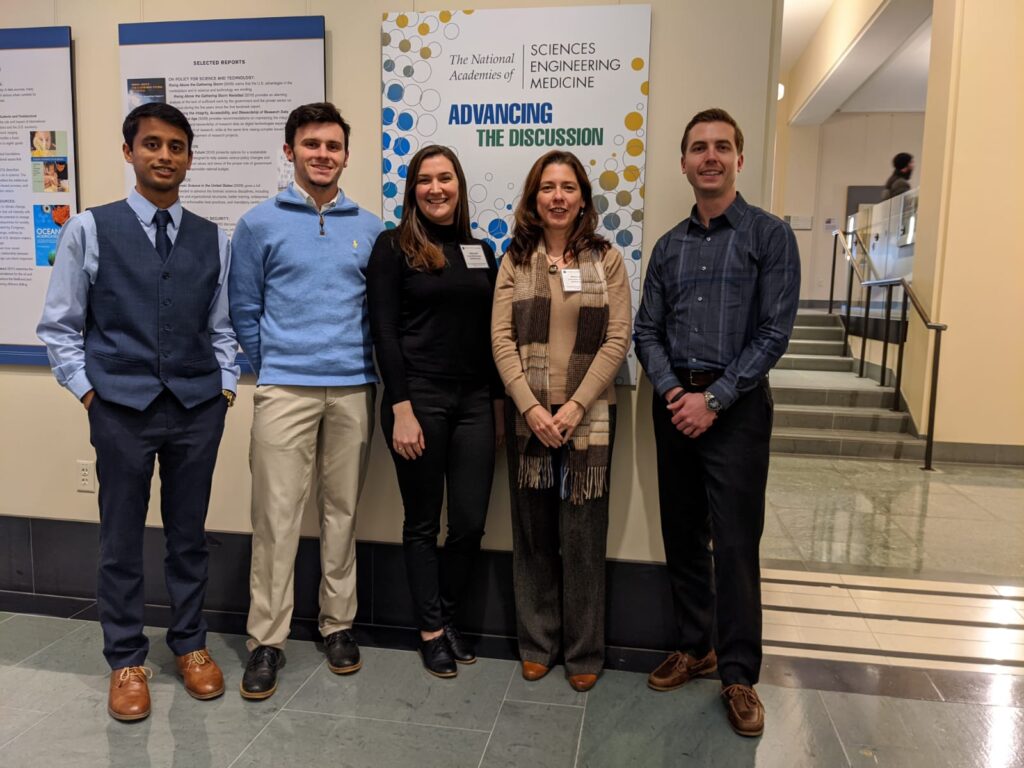
Banner image: (L to R) Courtney C. Hobson M.A.’14, history, coordinator for the Dresher Center; Joby Taylor ’05, Ph.D., LLC, director of the Shriver Peaceworker Program; and Beverly Bickel, clinical associate professor of language, literacy, and culture doctoral program. Photo by Marlayna Demond ’11 for UMBC.
UMBC’s psychology faculty closely collaborate with communities on research to prevent intimate partner and gender-based violence and to support survivors. Their work to transform systems is earning support from government agencies and colleagues in their field, with new awards that will enable them to have an even greater impact.
Meeting the needs of the community
Chris Murphy, a professor of clinical psychology, has received a $420,000 grant from the Department of Justice’s Office on Violence Against Women. The three-year grant will fund a research collaboration with the Gateway Program at the House of Ruth Maryland in Baltimore City to assess their Batterer Intervention Program (BIP) supportive services model.
The 26-week court-ordered rehabilitation program is designed to hold offenders of intimate partner violence (IPV) accountable and to maintain survivors’ safety. It focuses on changing participants’ violent behavior through lessons about power and control as well as nonviolent strategies for communication.
“We know that one abusive partner can create multiple victims and, if they have children, they begin a generational cycle that is difficult to interrupt,” says Lisa Nitsch ‘01, psychology, a social worker and director of training and education at the House of Ruth Maryland. “It is time for us to stop asking why victims choose to stay in abusive relationships and start asking why abusive partners feel entitled to terrorize their victims.”
To better meet the needs of the communities they serve, the Gateway Program developed a culturally sensitive approach to their BIPs over the last two years. Through that process, they found that BIPs don’t usually address several issues impacting clients, such as past trauma, mental health, employment, or parenting.
In collaboration with a number of city agencies, the Gateway Program developed a supportive services model to complement the BIP. This includes optional on-site services related to mental health, parenting, and employment. By addressing these intersecting needs, the Gateway program aims to reduce IPV.
“We have to find more effective ways of addressing abusive partners and engaging them in a change process,” saysNitsch. “We are invested in this project because it is essential to our mission ‘to lead the fight to end intimate partner violence.’”
When Murphy heard about the Gateway Program’s new supportive services model, he offered to develop an assessment to evaluate its effectiveness. “A lot of the field has focused on holding offenders accountable for their behavior, but not necessarily what will make them less likely to engage in abuse or violence,” explains Murphy.
A team approach to IPV research
Murphy brought together a team from across disciplines and institutions to help design a holistic assessment. The team includes Tara Richards, co-principal investigator, assistant professor in the School of Criminology and Criminal Justice at the University of Nebraska, Omaha; Charvonne Holliday, assistant professor in the Johns Hopkins Bloomberg School of Public Health; and Nitsch,who is also aboard member of the National Resource Center on Domestic Violence.
The program evaluation is a three-part process. Murphy and his team will first assess if there is a decrease in IPV incidents among offenders in the Gateway Program after they’ve participated solely in the Batterer Intervention Program. Second, they will examine if there is also a decrease among clients who choose to access additional support services. Third, they will assess the challenges and values that clients express, and if how they receive services fits their expectations and needs.
“We have been working with the Gateway Program for over a year to collaboratively develop the assessments needed to determine who will benefit the most from certain services,” says Murphy.
Richards explains that to identify clients’ needs the team assesses factors such as substance abuse, low educational attainment, and antisocial behavior, which are correlated with criminal behaviors among other types of offenders. She explains her role as evaluating how integrating knowledge of those factors and of abusive behaviors “with a culturally sensitive curriculum to help develop individualized services” can reduce recidivism. She explains, “We can’t separate these issues and expect to get the best outcomes.”
In addition to this research, Murphy also offers training on motivational communication strategies for service providers, to increase the likelihood that their clients will utilize the available services.
The results will be used to improve the delivery of Gateway Program services. They will also inform other programs nationwide, and inform training materials for service providers in other agencies.
“Those of us who work in this field know intimate partner violence tends to carry on through generations,” says Murphy. “If we can stop someone now from being abusive who is in their twenties and has young children, it can benefit everyone else in their family and system.”
Community-based participatory research with survivors of gender-based violence
Nkiru Nnawulezi, assistant professor of psychology, has received the Linda Saltzman New Investigator Award for her work with communities to support survivors of gender-based violence. The award is funded by the Center for Disease Control Foundation, Futures Without Violence, and RALIANCE. It honors her ongoing research and will be formally announced at the 2020 National Conference on Health and Domestic Violence in late April.
Nnawulezi. Photo courtesy of Nnawulezi.
“The award is such an honor because it isn’t just my work, but also the communities I work with. It’s about the people who I have a privilege to know and be surrounded by,” says Nnawulezi. “It is a community honor.”
The accolade acknowledges her work using transformative Community-Based Participatory Research (CBPR) to evaluate the systems and institutions that serve survivors of gender-based violence. Her work in this field spans from her dissertation, through her time as a UMBC Postdoctoral Fellow for Faculty Diversity, to her current scholarship as an assistant professor of community psychology.
Nnawulezi explains that transformative CBPR focuses on shifting the status quo from institutionally-focused research to community-driven research where the community acts on its power and determines what knowledge is generated and how it is used.
She works with survivors to research structures and policies related to domestic violence housing programs. When it comes to her specific focus in that area, she explains, “As a community, the survivors and practitioners decide what they want to research. It may be understanding what it takes for survivors to experience power, whether the organizational policies and culture create a loss of power, or if they support survivors having and using power.”
A focus on intersectional identities
Nnawulezi specializes in working with survivors with intersectional identities and community-based practitioners, exploring how survivors navigate institutions intended to support them. This includes survivors who are people of color, living with HIV, queer and trans, low-income, homeless or housing insecure, experiencing addiction, or experiencing severe mental illnesses.
She finds transformative CBPR to be particularly suited to working with survivors with histories of multiple marginalizations because it questions why and how researchers can support communities facing multiple forms of oppression. This approach dismantles the traditional views of psychologists as altruistic professionals saving people in need, she explains. Instead, it moves toward supporting the liberation of historically marginalized communities by challenging systems of oppression and creating social change with community members.
“The purpose of my work can be summed up by this quote from Lilla Watson, an aboriginal elder, activist and educator,” shares Nnawulezi. “If you have come here to help me you are wasting your time, but if you have come because your liberation is bound up with mine, then let us work together.”
Banner image: Murphy. Photo by Marlayna Demond ’11 for UMBC.
“Historians know that the Confederacy ran out of food by the end of the Civil War, and it shouldn’t have because it was an agricultural society,” says Anne Rubin, professor of history at UMBC. “I want to understand the causes of this, and the lived experience of different social classes during this time.”
Rubin has just received a 2020 – 2021 National Endowment for the Humanities (NEH) fellowship to write a book examining how food shortages in the South affected wealthy and poor people, both white and black, during and after the Civil War, ultimately shaping Southern foodways.
Anne Rubin. Photo by Marlayna Demond ’11 for UMBC.
Rubin’s award follows an NEH grant received last year by her colleague Susan McDonough, assistant professor of history, whose award supported more inclusive research on medieval women.
Everyday documents as research tools
A resurgence in the popularity of Southern foods inspired Rubin to take a closer look at Southerners’ experiences with food during the Civil War. “There is a real nostalgia when people talk about heritage pork and heritage grains,” she reflects. “I want to cut through that. This kind of reverence for the past does not include a conversation of who was preparing the food or any of the racialized aspects of Southern cooking.”
Rubin will research the differences between rural and urban food scarcity, and how that scarcity was felt by people at different places in society. There were white elites that for the first time had to manage with ingredients they deemed subpar. There were also enslaved people who had to continue cooking for elite whites and for themselves with less and less food.
Rubin will also explore the experiences of poor whites, who may have already had to adjust their diets drastically as resources waned, and the 500,000 African Americans who fled to the Union Army, where they were given inadequate rations and suffered from sickness and malnutrition. All of these changes influenced the strategies Southerners used to modify traditional recipes, replacing inaccessible ingredients with alternatives.
A page from Mrs. Prudence M. Sutherland’s handwritten cookbook. Virginia Museum of History and Culture. Photo courtesy of Rubin.
“A lot of the scarcity has to do with questions of supply,” explains Rubin. “Research shows that wealthy people in the South who were used to cooking with white flour and white sugar began to make substitutions with ingredients usually reserved for the poor, like molasses and cornmeal.” Recipe adaptations were recorded in homemade recipe books, letters, diaries, relief receipts, and ration logs from army camps.
Her research thus far also shows that the adaptations made by elite white Southerners became a way to show allegiance with the Confederacy. Southerners accepted not being able to have coffee and were willing to make other sacrifices as long as it meant the Confederacy could keep fighting.
“These responses create a narrative of patriotism and nationalism around food,” shares Rubin. “There is an intention of using food and the history of food as a way to express loyalty to the Confederacy. But the experience of African Americans, poor whites, and elites varied drastically.”
Surviving famine and starvation
Two key questions Rubin hopes to answer focus on the management of food: Why did an agricultural society struggle to feed its citizens? And how did people survive the compounding effects of the 1867 famine that followed the Civil War, caused by crop failure?
“Part of my research is looking at the response of the Freedmen’s Bureau to feed African Americans. I also explore the work of elite Northerners providing relief,” explains Rubin.
Next, she will travel to archives in North Carolina, Louisiana, and other states in the South to piece together a social network analysis. This will help her better understand those affected by food scarcity in the South, those who provided help, who was receiving help, and what kind of help they were receiving.
Rations issued by the Freedmen’s Bureau at Fort Smith Arkansas, June-July, 1867. National Archives. Photo courtesy of Rubin.
The historian’s toolbox
Rubin teaches a Civil War and Reconstruction class as well as two Southern history classes—one that goes through the Civil War and one that starts with emancipation. She wants to share with her students the research methods she is using to develop this book, to broaden their sense of how we can learn about the past by looking beyond military history.
“I research people who don’t always leave letters or diaries, but can be found through a receipt for the food they were given,” says Rubin. “I want students to think of food history as another tool in the historian’s toolbox—that you can look at a recipe and you can piece together a whole social network from it.”
This approach to history is also reflected in Rubin’s work as associate director of UMBC’s Imaging Research Center, known for providing visually immersive websites and exhibits that bring a greater understanding to historical events.
Continuing excellence in historical research
Rubin’s award is one of several that faculty in the history department have received this year, honoring and advancing their scholarship in a broad range of subject areas.
Constantine Vaporis will soon be a fellow in residence at the Institute for Advanced Study in Princeton, New Jersey. Vaporis is both a professor of history and director of Asian studies. He will research portraits of Samurai in early modern Japan.
Christy Chapin, associate professor of history, has won an American Council of Learned Societies fellowship for her research on flexible finance. She previously received a Kluge Fellowship to study the banking and finance collections at the U.S. Library of Congress.