All posts by: Magazine Editor


Could chloroquine treat coronavirus? 5 questions answered about a promising, problematic and unproven use for an antimalarial drug

by Katherine Seley-Radtke, Professor of Chemistry and Biochemistry, UMBC, and President-Elect of the International Society for Antiviral Research

Read Seley-Radtke’s April 3rd update of this story here.

An Arizona man died, and his wife was hospitalized, after taking a form of chloroquine, which President Trump has touted as an effective treatment for COVID-19. The couple decided to self-medicate with chloroquine phosphate, which they had on hand to kill parasites in their fish, after hearing the president describe the drug as a “game changer.”

Dr. Anthony Fauci, head of NIH’s National Institute for Allergies and Infectious Diseases, quickly corrected the statement, explaining that Trump’s comments were based on anecdotes and not a controlled clinical trial.
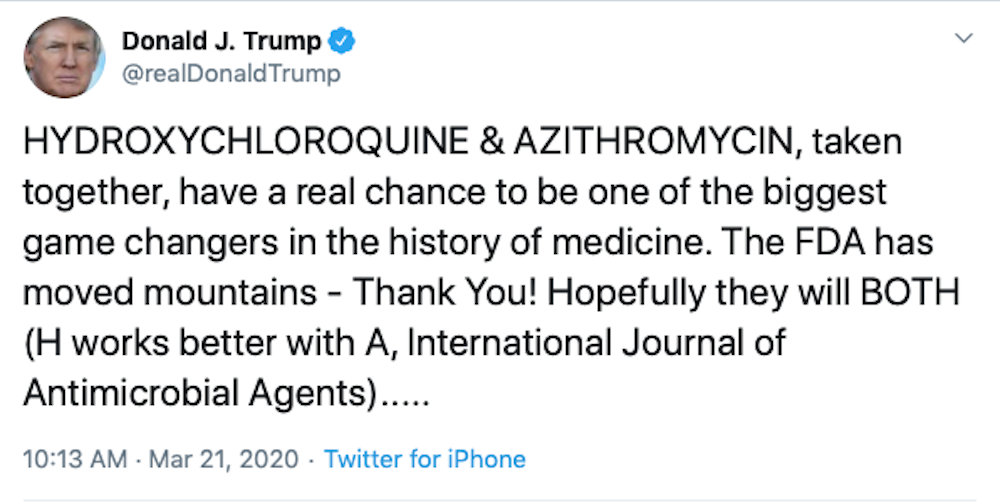
Donald Trump’s Twitter feed.
@realDonaldTrump

I am a medicinal chemist who specializes in discovery and development of antiviral drugs, and I have been actively working on coronaviruses for seven years.

However, because I am a scientist and I deal in facts and evidence-based medicine, I am concerned about the sweeping statements the president has been making regarding the use of chloroquine or the closely related hydroxychloroquine, both antimalarial drugs, as cures for COVID-19. So let’s examine the facts.

What are chloroquine and hydroxychloroquine?

These are both FDA-approved antimalarial drugs that have been in use for many years. Chloroquine was originally developed in 1934 at the pharmaceutical company Bayer and used in World War II to prevent malaria.

Although the FDA has not approved its use for these conditions, both chloroquine and hydroxychloroquine are also used to treat rheumatoid arthritis and lupus.

What triggered talk that this drug might work?

After the initial outbreak of MERS in 2012, scientists conducted random screens of thousands of approved drugs to identify one that might block MERS infection. Several drugs, including chloroquine, showed the ability to block coronaviruses from infecting cells in vitro. But these drugs were not extensively pursued because ultimately they did not show enough activity to be considered further.

When the new coronavirus appeared, many drugs that had shown some initial promise against the related coronaviruses MERS and SARS were at the top of the list as worthy of further evaluation as possible treatments.

So the science is real, and a number of labs around the world are now investigating these drugs and testing them in clinical trials in the U.S., France and China. But so far, there is no consensus about whether the drugs are safe and effective for treating COVID-19, as it is still very early in the testing process.

Why would antimalarial drugs work on a virus?

It is still unclear how the chloroquines (or any antimalarial drug) would work against COVID-19, which is a virus. Malaria is caused by Plasmodium parasites that are spread by mosquitoes, whereas COVID-19 is caused by the SARS-CoV-2 virus.

Viral infections and parasitic infections are very different, and so scientists wouldn’t expect what works for one to work for the other. It has been suggested that the chloroquines can change the acidity at the surface of the cell, thereby preventing the virus from infecting it.

It’s also possible chloroquines help activate the immune response. One study that was just published tested hydroxychloroquine in combination with an antibacterial drug (azithromycin), which worked better to stop the spread of the infection than hydroxychloroquine alone. However it’s only one preliminary study that was done on a limited test group.

Do other drugs show promise?

To my knowledge, no other antimalarial drugs have shown any meaningful activity against treating coronaviruses. However, another potential drug has risen to the forefront. Remdesivir, developed by Gilead Pharmaceuticals, seems to be highly effective at preventing viruses – including coronaviruses such as SARS and MERS, and filoviruses such as Ebola – from replicating.

In late February the National Institute for Allergy and Infectious Diseases launched a clinical trial for Remdesivir. And this month Gilead launched two phase III trials of the drug in medical centers in Asia.

Should I start taking them to ward off coronavirus?

Absolutely not. Chloroquine and hydroxychloroquine have not been appropriately evaluated in controlled studies, not to mention that they have numerous and, in some cases, very deadly side effects.

No one should take a drug that has not been proven to be safe and effective for a disease or condition for which it is not approved. There are just so many issues that can arise, from side effects to serious toxicity and death due to possible interactions with other medications and other underlying health conditions.

So until these or any drugs have been shown to be effective against SARS-CoV-2 in clinical trials and have been approved by the FDA, no one should be self-medicating.

* * * * *

[You need to understand the coronavirus pandemic, and we can help. Read our newsletter.]The Conversation

Katherine Seley-Radtke, Professor of Chemistry and Biochemistry and President-Elect of the International Society for Antiviral Research, University of Maryland, Baltimore County

Header image: An employee in Nantong, China, checks the production of chloroquine phosphate, an old drug for the treatment of malaria. Feature China/Barcroft Media via Getty Images

This article is republished from The Conversation under a Creative Commons license. Read the original article.

Extraordinary Times and Extraordinary Community

March 20, 2020

Dear Members of the UMBC Community,

Many are calling this period a defining moment for humankind, and history will judge us by how we respond. As the COVID-19 crisis continues to unfold, we want you to know how proud we are of the ways that our community of inquiring minds has already been adapting. Thank you for all that you are doing to support one another, your families, and fellow citizens during these challenging times.

Campus leaders are meeting daily to navigate this rapidly changing reality, and we are working closely with USM Chancellor Jay Perman, other System campuses, and shared governance groups to plan necessary transitions in teaching, learning, research, and the daily life of our campus community. 

We have had difficult decisions to make, and we have made them with the understanding that the health and safety of our community must be our top priority. In partnership with the University System of Maryland, we have determined that this means extending distance learning for the remainder of the spring semester. During this time, UMBC will remain open for student support services and business operations. In accordance with guidance provided by the Governor, employees will continue to work remotely whenever possible.

To our undergraduate and graduate students: We know you have been concerned with what happens next, and we are all feeling for you and with you. There is so much you hoped to do this semester, and it is such a disappointment to have these plans interrupted. Online instruction begins on Monday, March 23, and will continue throughout the semester. Faculty have been working with the Division of Information Technology and each other to ensure the highest quality of instruction. 

To the Class of 2020, in particular, please know we recognize how hard you have worked to achieve your goals. We are very sorry that we will not be holding in-person Commencement ceremonies this spring. We know how difficult this is for you, your families, and your friends. Just know this is not the end. We may not be having the in-person ceremony, but we will find ways of recognizing you and celebrating your achievements.

A special thank you to our faculty and staff who have been doing everything they can to provide emotional, academic, and other types of support to our students.Over the coming weeks, patience and understanding will be essential as all of us adjust to these changes. We know that many students, faculty, and staff have questions, and we are committed to providing information and support. Pressing concerns we have heard include the following.

  • We know that the shift to distance learning may have financial implications for students and families. We are working closely with USM to establish a system for refunds. We will announce more details in the days to come. Students with immediate resource concerns are encouraged to contact covid19@umbc.edu.
  • Students who normally live on campus will soon receive information about the process for safely retrieving their belongings. Until this is established, students who have left campus for spring break will continue to be unable to access their residence halls. Students with an urgent need to retrieve items from their residence halls prior to this announcement may contact Residential Life.

We appreciate your patience and partnership as we move forward together in this new reality. Most important, we hope all of you and your families remain safe and healthy.

We will continue to communicate regularly, and we encourage you to visit UMBC’s COVID-19 website at covid19.umbc.edu for prevention steps, updates, and resources. Urgent questions can be sent to covid19@umbc.edu.

We leave you with these words from Jeanne Rikkers: 

May we who are merely inconvenienced,
Remember those whose lives are at stake.

May we who have no risk factors,
Remember the most vulnerable.

May we who have the luxury of working from home,
Remember those who must choose between preserving their health or making their rent.

May we who have flexibility to care for our children when their schools close,
Remember those who have no options.

May we who have to cancel our trips,
Remember those that have no safe place to go.

May we who are losing our margin money in the tumult of the economic market,
Remember those who have no margin at all.

May we who settle in for a quarantine at home,
Remember those who have no home.

As fear grips our country,
Let us choose LOVE.

She concludes by noting that this is a time when we cannot physically wrap our arms around each other, and yet we certainly can find ways of providing a ‘loving embrace’ to our neighbors.

President Freeman Hrabowski and Provost Philip Rous

Vodka won’t protect you from coronavirus, and 4 other things to know about hand sanitizer

by Jeffrey Gardner, Associate Professor of Biological Sciences, UMBC

Editor’s note: As concern about coronavirus grows, hand sanitizer is in high demand. Biologist Jeffrey Gardner explains why alcohol is a key ingredient in hand sanitizer, and why he doesn’t recommend making your own supply at home.

1. Why is alcohol the main ingredient in most hand sanitizers?

Alcohol is effective at killing different types of microbes, including both viruses and bacteria, because it unfolds and inactivates their proteins. This process, which is called denaturation, will cripple and often kill the microbe because its proteins will unfold and stick together. Heat can also denature some proteins – for example, when you cook an egg, the solidified egg whites are denatured proteins.

2. Alcohol doesn’t kill some microbes very well – why not?

There are different types of bacteria and viruses, and some types are more easily killed by alcohol. For example, E. coli bacteria, which can cause foodborne illness and other infections, are very effectively killed by alcohol at concentrations over 60%. Differences in the outside surface of various bacteria make alcohol sanitization more effective against some of them than others.

Similarly, some viruses have an outer wrapping, which is called an envelope, while others are non-enveloped. Alcohol is effective at killing enveloped viruses, including the coronavirus, but is less effective at killing non-enveloped viruses.

Whether you are trying to kill bacteria or viruses, many research studies have found that an alcohol concentration of 60% or greater is needed to be effective.

3. If 60% alcohol is good, is 100% better?

Surprisingly, no. Protein denaturation actually works faster when a small amount of water is mixed with the alcohol. And pure alcohol would evaporate too quickly to effectively kill bacteria or viruses on your skin, especially during winter when the air is less humid.

Using 100% alcohol also would dry your skin out very quickly and cause it to become irritated. That might cause you to not sanitize your hands as frequently as needed. This is why most hand sanitizers contain emollients, which are mixtures that help soften and moisturize your skin.

4. Are homemade hand sanitizers a good idea?

In my view, no. You may see do-it-yourself formulas online, including some that use vodka. However, vodka is typically 80 proof, which means it’s only 40% alcohol. That’s not high enough to effectively kill microbes.

The rubbing alcohol you have in your bathroom for cuts and scrapes might seem like a good alternative, but if you are already near a sink, the best choice is to wash your hands with soap and hot water.

5. Does hand sanitizer expire?

Most commercial hand sanitizers are effective for a couple of years when they are stored properly, and are marked with expiration dates. One thing to keep in mind is that alcohol is volatile, which means that over time the alcohol will slowly evaporate and the sanitizer will lose its ability to effectively kill viruses and bacteria. However, with hand sanitizer in such high demand now, you’re unlikely to buy one that is expired.

* * * * *

[You’re smart and curious about the world. So are The Conversation’s authors and editors. You can get our highlights each weekend.]The Conversation

Jeffrey Gardner, Associate Professor of Biological Sciences, University of Maryland, Baltimore County

This article is republished from The Conversation under a Creative Commons license. Read the original article.
Header image: Soap and hot water is the best way to clean your hands, but sanitizer is a good second choice.
AP Photo/Ric Feld

Chronicling history’s unsung heroes – Kristina Gaddy ’09

Venturing into a Gestapo interrogation cell is not the way many people would choose to do research. 

Nevertheless, Kristina R. Gaddy ’09, history and modern languages and linguistics, felt it was crucial to the process of writing her first book, Flowers in the Gutter. The book tells the true account of the Edelweiss Pirates, German teenagers who resisted the Nazi regime with acts from playing forbidden music to disseminating anti-Nazi flyers.

The kind of stories we need

“There’s a lot of dystopian fiction out there of kids living in an awful world and trying to resist and I always imagine this is the real-life story of kids living in dystopia. What would you actually be doing?” says Gaddy.

Sadly, these stories often ended up in interrogation cells like the preserved one Gaddy visited in Cologne, Germany. “It was really important for me to go to those spaces and experience them as they would have experienced them,” says Gaddy. She also used the trip to dive deep into archives from the time, all in German. It was a chilling and often depressing experience, she says, but it was also part of understanding the pirates’ little-known movement.

While “there’s been so much written about World War II,” Gaddy says that “there are still things that are needed to be written.” Many people know about the White Rose resistance movement, she says, but much of Edelweiss Pirates’ story has remained untold. “We think it’s just natural that you do something heroic and people are going to just say that it’s wonderful [but] that’s not the reality,” she says.

In documenting the teens’ rebellious acts, Gaddy also highlights just how relatable they are. They wore strange clothes and played their own kind of music and had an irreverence that Gaddy says she found appealing.

 “It just felt like alright, this is so compelling, this is the kind of stories that we need,” says Gaddy.

Honing her skills

Figuring out how to tell those stories was a process that started at UMBC. Gaddy graduated in 2009 with degrees in history and modern languages and linguistics before going on to an MFA degree from Goucher College in creative nonfiction writing. Her work has been published in a variety of places including The Washington Post, The Baltimore Sun, Bitch Magazine, and for her first paid publication, UMBC Magazine.

“The type of writing I am interested in doing wouldn’t be possible without the background in history at UMBC,” says Gaddy. “All the research, that’s 100% something I learned to do at UMBC, in terms of writing research papers, getting primary sources, and going in the archives.” All her primary sources being in German called for language skills she honed during her undergraduate years both at UMBC and during a semester abroad in Berlin.

To look critically at history, Gaddy found she also needed to recall her lessons in historiography, or the study of why and how historical stories are told. She says that UMBC history professors Denise Meringolo and Kate Brown helped her ask the questions of “how do we remember this? What is it we are looking at and how is it that different people experience that differently or the same? If we’re then presenting what we know about it, how are we changing the perception as we’re doing that?”

Meringolo says Gaddy distinguished herself early on as a student through her talents in writing and her creative thinking.

I fully expected that Kristina would pursue a career as a public historian after graduation,” says Meringolo. “Arguably, by becoming a writer of creative non-fiction, she is working as a public historian. Her book tells a true story, and she has worked to identify its most provocative and meaningful core. She has also thought carefully about her intended audience, seeking to understand what they care about and how this story might help transform the ‘foreign country’ of the past into a familiar and meaningful landscape. I am proud of her and I am enormously proud to have played a small role in her life.”

“This is real life”

Gaddy’s book is coming at a time when these questions are more relevant than ever. In fact, she started to work on it during the summer of 2016, when “it felt incredibly timely in terms of political climate and what’s going on. As I was working on it, it was almost like it can’t get any timelier, but it kept getting timelier.”

Her target audience of today’s young adults includes everyone from those protesting in the streets to those who are using racial epithets. She hopes that teachers might use her book in their classes. 

“I really feel strongly about non-fiction that it’s a really compelling way to tell stories – this is not a fantasy, this is real life, this is what really happened,” she says. “I hope people feel a little bit inspired by what these kids did and what kind of lessons we can take from their actions and put it into our lives.”

by Karen Stysley

* * * * *

Header image: Gaddy places a candle at the memorial to the Edelweiss Pirates, November 2019.

Predicting the coronavirus outbreak: How AI connects the dots to warn about disease threats

by Vandana Janeja, Professor of Information Systems, UMBC

Canadian artificial intelligence (AI) firm BlueDot has been in the news in recent weeks for warning about the new coronavirus days ahead of the official alerts from the Centers for Disease Control and Prevention and the World Health Organization. The company was able to do this by tapping different sources of information beyond official statistics about the number of cases reported.

BlueDot’s AI algorithm, a type of computer program that improves as it processes more data, brings together news stories in dozens of languages, reports from plant and animal disease tracking networks and airline ticketing data. The result is an algorithm that’s better at simulating disease spread than algorithms that rely on public health data – better enough to be able to predict outbreaks. The company uses the technology to predict and track infectious diseases for its government and private sector customers.

Traditional epidemiology tracks where and when people contract a disease to identify the source of the outbreak and which populations are most at risk. AI systems like BlueDot’s model how diseases spread in populations, which makes it possible to predict where outbreaks will occur and forecast how far and fast diseases will spread. So while the CDC and laboratories around the world race to find cures for the novel coronavirus, researchers are using AI to try to predict where the disease will go next and how much of an impact it might have. Both play a key role in facing the disease.

However, AI is not a silver bullet. The accuracy of AI systems is highly dependent on the amount and quality of the data they learn from. And how AI systems are designed and trained can raise ethical issues, which can be particularly troublesome when the technologies affect large swathes of a population about something as vital as public health.

It’s all about the data

Traditional disease outbreak analysis looks at the location of an outbreak, the number of disease cases and the period of time – the where, what and when – to forecast the likelihood of the disease spreading in a short amount of time.

AI systems look at multiple types of data, like flights in and out of Wuhan Tianhe Airport, to predict disease outbreaks.
Painjet/Wikimedia Commons, CC BY-SA

More recent efforts using AI and data science have expanded the what to include many different data sources, which makes it possible to make predictions about outbreaks. With the advent of Facebook, Twitter and other social and micro media sites, more and more data can be associated with a location and mined for knowledge about an event like an outbreak. The data can include medical worker forum discussions about unusual respiratory cases and social media posts about being out sick.

Much of this data is highly unstructured, meaning that computers can’t easily understand it. The unstructured data can be in the form of news stories, flight maps, messages on social media, check ins from individuals, video and images. On the other hand, structured data, such as numbers of reported cases by location, is more tabulated and generally doesn’t need as much preprocessing for computers to be able to interpret it.

Newer techniques such as deep learning can help make sense of unstructured data. These algorithms run on artificial neural networks, which consist of thousands of small interconnected processors, much like the neurons in the brain. The processors are arranged in layers, and data is evaluated at each layer and either discarded or passed onto the next layer. By cycling data through the layers in a feedback loop, a deep learning algorithm learns how to, for example, identify cats in YouTube videos.

Researchers teach deep learning algorithms to understand unstructured data by training them to recognize the components of particular types of items. For example, researchers can teach an algorithm to recognize a cup by training it with images of several types of handles and rims. That way it can recognize multiple types of cups, not just cups that have a particular set of characteristics.

Any AI model is only as good as the data used to train it. Too little data and the results these disease-tracking models deliver can be skewed. Similarly, data quality is critical. It can be particularly challenging to control the quality of unstructured data, including crowd-sourced data. This requires researchers to carefully filter the data before feeding it to their models. This is perhaps one reason some researchers, including those at BlueDot, choose not to use social media data.

One way to assess data quality is by verifying the results of the AI models. Researchers need to check the output of their models against what unfolds in the real world, a process called ground truthing. Inaccurate predictions in public health, especially with false positives, can lead to mass hysteria about the spread of a disease.

AI for the common good

AI holds great promise for identifying where and how fast diseases are spreading. Increasingly, data scientists are using these techniques to predict the spread of diseases. Similarly, researchers are using these techniques to model how people move around within cities, potentially spreading pathogens as they go.

AI isn’t likely to replace epidemiologists and virologists anytime soon.
Gorodenkoff/Shutterstock.com

However, AI doesn’t eliminate the need for epidemiologists and virologists who are fighting the spread on the front lines. For example, BlueDot uses epidemiologists to confirm its algorithm’s results. AI is a tool to provide more advanced and more accurate warnings that can enable a rapid response to an outbreak. The key is bringing AI’s forecasting and prediction prowess to public health officials to improve their ability to respond to outbreaks.

Even if all else was perfect and AI were a technological silver bullet, the AI field would still face ethical challenges. We have to be more vigilant against phenomena like digital redlining, the computerized version of the practice of denying resources to marginalized populations, that can creep into AI outcomes. Entire regions or demographics could be sidelined, for example, from access to health care if the data used to train an AI system failed to include them.

In the case of AI models collating social media data, digital redlining can exclude entire populations with limited internet access. These populations might not be posting to social media or otherwise creating the digital fingerprints many AI models rely on. This could lead AI systems to make flawed recommendations about where resources are needed.

While researchers are continuously creating new AI algorithms, some of the foundational issues like understanding what’s going on inside the models, minimizing false positives and identifying and avoiding ethical issues are not well understood and require more research.

AI is a powerful tool for predicting and forecasting disease spread. However, it’s not likely to completely replace the tried-and-true combination of statistics and epidemiology first used when John Snow tracked down and removed the handle from the pump of a cholera-ridden water supply in 1854 London.

* * * * *

[You’re smart and curious about the world. So are The Conversation’s authors and editors. You can get our highlights each weekend.]The Conversation

Vandana Janeja, Professor of Information Systems, University of Maryland, Baltimore County

This article is republished from The Conversation under a Creative Commons license. Read the original article.

Header image: Connecting the dots. majcot/Shutterstock.com

Why do Americans say ‘bay-zle’ and the English say ‘baa-zle’?

by Christine Mallinson, Professor of Language, Literacy and Culture and Director of the Center for Social Science Scholarship, UMBC

Curious Kids is a series for children of all ages. If you have a question you’d like an expert to answer, send it to CuriousKidsUS@theconversation.com.


Why do Americans say “bay-zle” and the English say “baa-zle”? – Sly M., age 6, Cambridge, Massachusetts


A person’s voice is like their fingerprint. Everyone talks differently, and everyone’s voice is unique.

Some of these linguistic differences are because of how our individual bodies are shaped, especially the size of our vocal cords and tracts.

Our families, our friends and other people in our communities also influence how we talk. I study language, literacy and culture, and I’ve found that how we use language – including accents – is a way of showing who we are.

Language influences who we are.

Why we have accents

We develop different accents because of whom we interact with and where we grow up.

An accent is how a person sounds. Kids who grow up in Australia develop Australian accents. Kids who grow up in England develop British accents. And kids who grow up in the United States develop American accents. Everyone has an accent.

When we pick up on another person’s accent, it means we are identifying clues in their pronunciation that tell us something about who they are. These differences can be as small as a single sound, but we often spot them right away.

For example, in the U.S., the word “basil” is pronounced “bay-zle.” But in England, it is pronounced “baa-zle,” like the word “dazzle.” In the U.S., “schedule” is pronounced with a “sk” sound at the beginning, but in England, it’s pronounced with a “sh” sound.

There are also spelling differences, like “theatre” in England versus “theater” in the U.S., and word differences, like “aubergine” in England versus “eggplant” in the U.S.

Everyone has an accent.

Across the country

There are also linguistic differences within countries. Not all people from England sound the same, and the same goes for people from the U.S.

In my own research, I study differences in English spoken in the U.S. In the Great Smoky Mountains, you might hear the word “fire” pronounced like “far,” and “tire” pronounced like “tar.” In the U.S. South, the words “bide” and “ride” tend to sound more like “bad” and “rad.”

And in the city of Baltimore, you might hear some African American residents pronounce “dog” as “dug,” and “frog” as “frug.”

Even in a globally connected world, where it is easier to meet people from other countries than ever before, the way we talk still represents who we are.

So be proud of your vocal fingerprint. A kaleidoscope of languages and accents helps make our world a culturally rich and exciting place.


Hello, curious kids! Do you have a question you’d like an expert to answer? Ask an adult to send your question to CuriousKidsUS@theconversation.com. Please tell us your name, age and the city where you live.

And since curiosity has no age limit – adults, let us know what you’re wondering, too. We won’t be able to answer every question, but we will do our best.


Christine Mallinson, Professor of Language, Literacy and Culture and Director of the Center for Social Science Scholarship, University of Maryland, Baltimore County

Header Image: Depending on where you’re from, you say words like ‘basil’ a specific way. Leonie Broekstra/Shutterstock.com

This article is republished from The Conversation under a Creative Commons license. Read the original article.
Sharing a Love of Green Chemistry – Ram Mohan, Ph.D. ’92

According to recent statistics, approximately 6,000 people in the United States apply for Fulbright awards yearly.  Fewer than 800 are awarded and rarely does one person win two.

Nevertheless, Ram Mohan, who received his Ph.D. from UMBC in 1992, was awarded a Fulbright Teacher-Scholar Grant in 2012, and a second Fulbright Teacher-Scholar Grant in 2020 to teach Green Chemistry in India, where he was born and raised, before moving to Baltimore at the age of 21 to attend UMBC.

Now a professor of chemistry at Illinois Wesleyan University, Mohan fondly remembers the people who inspired him as a student at UMBC.

Finding a Research Family at UMBC

Mohan graduated with honors in chemistry from a Hansraj College in New Delhi, and, like many of his friends, he says, wanted to pursue higher education in the United States. His interests were in organic chemistry but he really wanted to focus on the relationship between the environment and cancer. The incidence of cancer, often caused by environmental pollution, is increasing worldwide, especially in India.

Through his research, in the 1980s, Mohan discovered that the work of UMBC’s Dale Whalen, now professor emeritus of chemistry, matched his own interests.  “Simply put,” he relates, “I would not be where I [am] professionally without the kind and caring faculty at UMBC,” adding, “from the day I arrived, [Professor Whalen] took me under his wing . . . whether taking me to the Social Security office or showing me lab techniques.”

“The faculty at UMBC,” explains Mohan, “not only did cutting-edge research, but its members also cared about the success of each and every student.”  Whalen was not the only UMBC professor he remembers fondly. He also mentions Professors Creighton, Hosmane and Pollack. In fact, Mohan says, the entire Chemistry Department “hung out together,” including the staff, Anne Geffert, Patty Gagne, and Audrey Mahoney. He stays in touch with many of them.

After graduating from UMBC, Mohan pursued postdoctoral work at the University of Illinois Urbana Champaign.  He began his teaching career in 1994 as a visiting professor at Coker College in Hartsville, South Carolina. After two years, he moved back to Central Illinois as an Assistant Professor at Illinois Wesleyan University (IWU), a small selective liberal arts college, where he remains today.  Again, Mohan claims his current passion for teaching stems from being a teaching assistant at UMBC for many semesters.

Raising Awareness

His research is inspired by green chemistry—principles and application—and he has traveled to Hong Kong, Malaysia, China and throughout India, lecturing and conducting workshops, which is what he now is doing in India as a Fulbright-Nehru scholar.

He is especially passionate about taking green chemistry to small, undergraduate colleges in rural areas where most students come from a farming background.  “Raising awareness for environmental problems in such areas,” he explains, “will help to solve India’s overall environmental problems.”

For example, a typical workshop consists of 10 lectures on various green chemistry topics and includes interesting case studies that highlight environmental problems and solutions, using green chemistry concepts.

Mohan also has introduced green chemistry into the curriculum at Illinois Wesleyan University and made significant strides in “greening” organic chemistry laboratory experiments.  His course at IWU especially highlights environmental problems in the United States. Undergraduate students at IWU take this enthusiasm for green chemistry on to graduate school and beyond into their professional careers.

Giving Back

Green chemistry, or sustainable chemistry, is the design of chemical processes and products that use nontoxic chemicals.  The goal of green chemistry is to minimize the impact of chemicals on human health and the environment. 

What Mohan finds especially rewarding is “the chance to give back to [his] country of birth while representing the United States as a cultural ambassador.”

Although Mohan enjoys his work—both teaching and research—at Illinois Wesleyan, and he likes to travel by train between Bloomington and Chicago, he says that even after 28 years he still misses UMBC. “Maryland and Baltimore always will remain my first home in America,” he says proudly.

– By Lynne Agress

* * * * *

Header Image: Ram Mohan (second from right) and his Illinois Wesleyan University undergraduate students at The Great Lakes Regional Meeting (May 2019, Lisle, IL). 


Is your city making you fat? How urban planning can address the obesity epidemic

by John Rennie Short, Professor, School of Public Policy, UMBC

New disease outbreaks, like the novel coronavirus that recently emerged in China’s Hubei province, generate headlines and attention. Meanwhile, however, Americans face a slower but much more pervasive health crisis: obesity.

Nearly 40% of Americans are considered obese. Rates of obesity for children have increased in recent decades, putting more people at increased risk of heart disease, diabetes and some cancers. One in 5 deaths of those aged 40 to 85 are now attributed to obesity, and one recent study projects that by 2030, nearly half of all U.S. adults will be obese.

This problem is too often treated only as an issue of personal responsibility, with calls for people to eat healthier diets and exercise more. It is true that Americans need to cut their caloric intake, especially of foods high in sugar and saturated fats, and get more exercise. Nearly 80% of U.S. adults are not meeting federal guidelines for physical activity, which recommend 2.5 to 5 hours of moderate physical activity weekly.

But our built environment, which includes not only buildings but roads, sidewalks and public spaces, also plays an important role in physical health. Researchers call cities that promote sedentary lifestyles and poor diet obesogenic. As a researcher focusing on urban issues, I am encouraged to see city planners paying increasing attention to helping residents lead healthy lifestyles.

Former Oklahoma City Mayor Mick Cornett describes how his city helped residents drop a collective million pounds through public education and investments in parks, sidewalks and sports facilities.

Fat cities

Modern U.S. cities were designed to make exercise unnecessary. Cars and elevators symbolized urban areas as machines for more efficient living. Now it is clear that these improvements provide great benefits but also impose health costs.

Recent studies show that urban sprawl encourages more driving and is associated with higher weight. This correlation suggests that the layout and design of cities can hinder or promote healthier lifestyle choices.

As a thought experiment, what would a city that makes residents more overweight look like? It would probably have few fresh food facilities and discourage physical activity, thus encouraging people to eat fast food and sit in cars rather than walking or bicycling. In other words, it would resemble the standard car-centric U.S. cities that have emerged in the past 50 years.

Cities did not create the obesity epidemic, but they can make it worse by neither promoting nor prompting healthier lifestyles. And it’s not just happening in the U.S. Around the world, health experts contend, cities are making people fat.

Source: WalletHub

One hundred U.S. cities, rated on key indicators of weight-related problems. Low scores (purple/dark blue) connote higher obesity rates; higher rank (light blue) indicates healthier cities. Mouse over locations for individual scores.

Creating the healthy city

Urban planning still centers in large part on solving the problems of the past. Of course cities still need to foster standard public health practices, such as separating toxic facilities from homes and restricting heavy truck traffic through dense residential areas. But it’s also important to create healthier cities – and the discussion is already underway.

One important issue in many poorer neighborhoods is a lack of fresh food. Food deserts are places where good nutritional options are limited. Cities across the country are reshaping ordinances and changing tax codes so as to make it easier to create and sustain the production and sale of local, affordable and nutritious food.

As one example, Tulsa now limits permits for stores that do not provide fresh food. Others, including Boston, Buffalo, New York City and Seattle, have passed new ordinances that allow for community gardens, urban gardens and urban farms.

Cities are pursuing a wide range of nutrition strategies. Detroit modified its zoning ordinances to encourage urban gardens to sell food. Cleveland now allows residents to raise small farm animals and bees. Los Angeles has an urban agriculture incentive zone that promotes farming on vacant lots through reduced property tax assessments.

Other programs include “virtual supermarkets” in Baltimore that enable purchases of fresh food with food stamps; a food hub in New Orleans that teaches people how to grow and cook healthier food; and a statewide program in Pennsylvania that uses public and private dollars to support fresh food projects in low-income neighborhoods. Residents of two low-income communities in Louisville cleared land for a farm that now produces good-quality food for people with little access to healthy options.

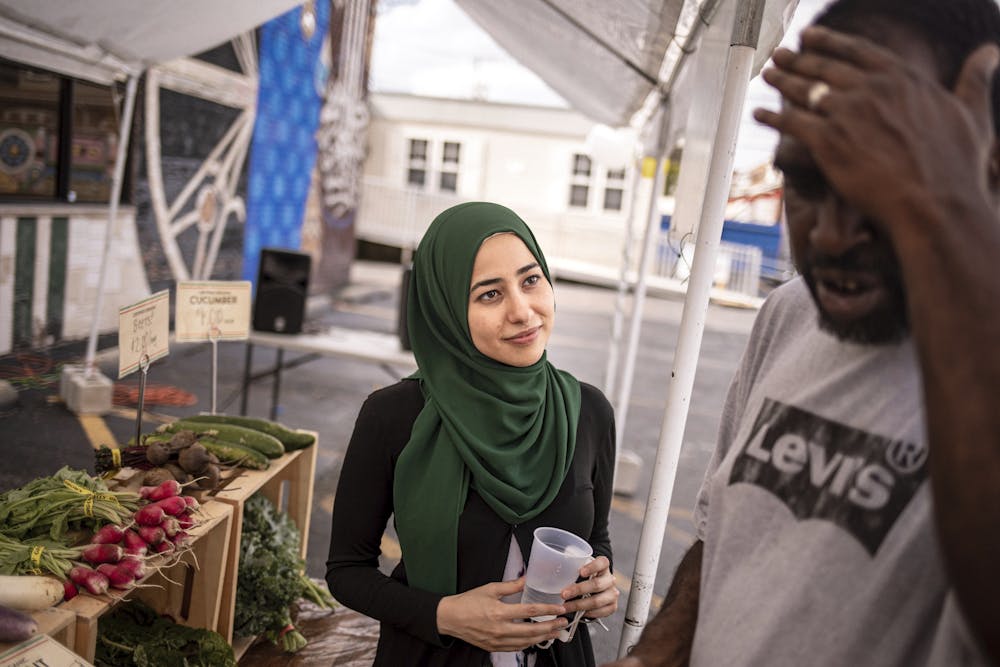
Dietitian Heba Abdel Latief talks to her patient, Richard Ware, at Inner-City Muslim Action Network’s farmers market in Chicago.
AP Photo/Amr Alfiky

Getting out and about

Planners are also paying increasing attention to encouraging physical activity by making it easier and safer for people to recreate, walk, bike and take public transportation. Longevity studies show that people live the longest in environments where physical activity is part of everyday life.

Providing more walkable spaces, better protected bike lanes and more recreational spaces are important steps. But even smaller changes can be effective.

Cities can close off streets on weekends to encourage communities to get out and walk. They also can provide more seating in public places, so that less-fit residents can rest during their journeys. Using public spaces in cities as places where people can exercise promotes equity, rather than allowing physical activity to become restricted to private gyms with often-expensive monthly fees.

Studies show that when cities are designed to provide walkability, bikeability, public transportation and more attractive green recreational spaces, then physical activity across the entire community increases. Minneapolis-St. Paul was rated the nation’s fittest city after it made a commitment a decade ago to expand bike lanes, tree planting and safer sidewalks. The changes encouraged residents to walk more and get more exercise.

Cities as machines

It will be expensive to create healthier cities. But a recent survey of mayors revealed that a majority believes their cities were too car-centric. Many wanted to invest more in bike infrastructure, parks and public sports complexes. Cities with high levels of obesity typically don’t make these features a priority.

The U.S. health care system, with its emphasis on tests and interventions to treat individual illness rather than on prevention, is the most expensive in the world with only modest levels of health outcomes and life expectancy compared to similarly wealthy countries. Integrating better diets and more physical activity into everyday urban life can help Americans become healthier more effectively, and at less cost.

* * * * *

Header image: The Ohio City Farm in Cleveland provides low-cost land, shared facilities and technical assistance to support entrepreneurial farmers. Horticulture Group/Flickr, CC BY

[Insight, in your inbox each day. You can get it with The Conversation’s email newsletter.]The Conversation

John Rennie Short, Professor, School of Public Policy, University of Maryland, Baltimore County

This article is republished from The Conversation under a Creative Commons license. Read the original article.

Retriever Engineer Seeks Space – Kenneth Harris II ’14

Kenneth Harris II caught the engineering bug early.

Beneath the desk of his father, NASA engineer Kenneth Harris, was a slice of foam left over from the Mars Pathfinder. After school, Kenneth the younger would curl up on the foam and nap or color Pokemon pictures while his dad worked. 

Perhaps he became an engineer by osmosis, but that makes it sound too easy.

Harris ’14, mechanical engineering, labored doggedly to become a senior satellite engineer at NASA Goddard Space Flight Center, where his father still works. Recently named to the Forbes Magazine 30 Under 30 List, Harris helped build the NASA telescope set for launch in 2021, and flies satellites that spot wildfires and hurricanes, and tends to the data that can predict weather to save lives. 

High Expectations

But at UMBC, a worried academic advisor once suggested Harris change majors. “It was not an option to change my future goals,” Harris remembered, shaking his head. He talked to his father and friends, then buckled down. “I saw it as adversity to be overcome.”

Anne Spence, a former engineering professor at UMBC now at Baylor University, remembered Harris struggling. 

“There was one course, in particular, that seemed to be his nemesis. Yet he persevered,” Spence recalled. Harris tried the class a third time, with tutoring and faculty support, she said, and passed. “The effort required to be an engineer is high and individuals rise to the occasion at different points in their career. UMBC places high expectations on their students. Kenneth has certainly achieved the dreams that we hoped for him.”

Harris started working at NASA in high school, graduated from UMBC, then finished a master’s degree from Johns Hopkins University. Now, he strolls through the vast NASA building where space telescopes and satellites are built. He peers into cleanroom prep areas stacked with white “bunny suits,” peeks in the vibration chamber that tests whether machines will withstand the rattle of launch, and wistfully motions to a pair of massive venting towers, the last remaining pieces of the James Webb Space Telescope left at Goddard. 

Standing in front of a color-coded schematic, Harris points to connections that he ensured would deliver data and power to each piece of the massive telescope. Set to launch in 2021, the Webb telescope will see back in time to when the universe first began, even farther than its predecessor, the Hubble. 

Pondering the deep questions about time and space, not to mention the engineering steps to reach those nebulous answers, was difficult, Harris admitted. Terrific mentors guided him, he said, but didn’t give him the answers. 

“That’s something I’ve adopted,” Harris said. “I never give my mentees the full answer. It may be frustrating, but you learn more when you come up with the answer on your own.”

Paying it Forward

Passionate about mentorship, Harris has done a TEDx Talk on it and speaks at schools and conferences to promote mentorship and STEM studies. 

“Mentors are the foundation I was built on,” Harris said, and he hopes to “pay it forward.”  

Harris worked as a UMBC resident assistant, and closely with Nancy Young, vice president of student affairs. 

“Ken is making a mark in science, but as a resident assistant, he had great compassion for others,” Young said. “He would be in my office lobbying me about Greek organizations — he would argue up a good storm — but he was always willing to take on another’s perspective to solve problems. People in research are often intensely focused. But Ken is also passionate about leadership, passionate about cultural organizations. He had passion and focus in everything he did. He’s the quintessential UMBC Retriever.”

Driven to Explore 

At NASA, Harris strides into the observation room overlooking the cleanroom, a space large enough to house two Space Shuttle payloads, where he helped build the Webb telescope high up on ladders. Harris is joined by his best friend, Reginald McNeill, also a Meyerhoff Scholar, a planning and facilities project manager at NASA who just finished his masters’ degree at UMBC. They each married UMBC classmates, and all four remain close; Harris often cooks for Taco Tuesdays. 

Harris nodded over his shoulder to a Hubble Space Telescope photograph, a blue and gold marvel of cloud that shows the Eagle Nebula. Exploration drives him, he said. He wants to be an astronaut and excitedly talks about astronauts he knows who are rooting for him. 

“My belief is that as scientists, as engineers, we have the opportunity, no, the responsibility, to be open to the unexpected,” Harris said. “Our goal is to make it more plausible for the next generation to explore with a different definition.” 

– Susan Thornton Hobby

* * * * *

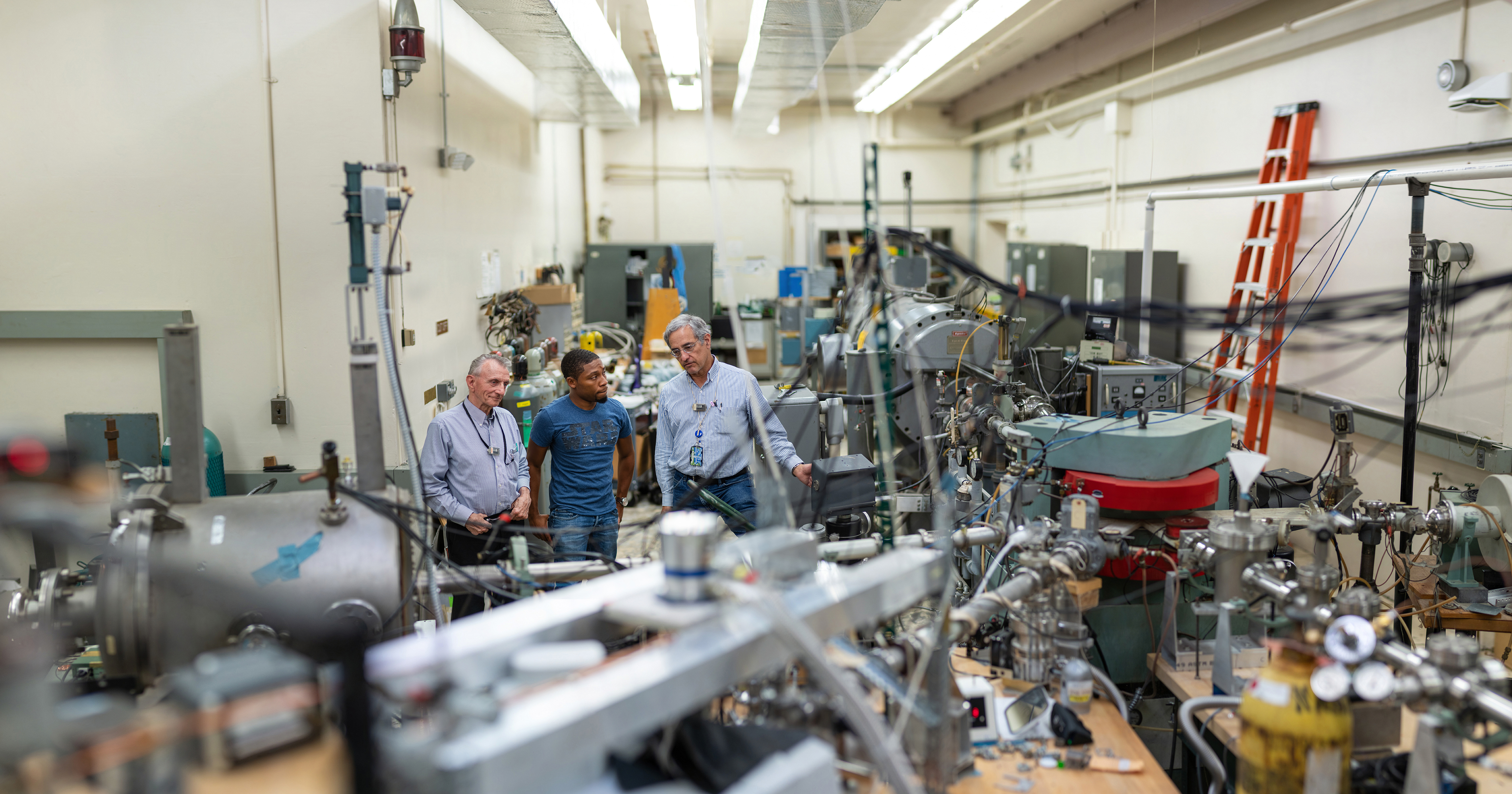
Header image by Christopher Gunn.

Learn more about Harris here.


Antonio McAfee: Through the Layers, Pt. 2

UMBC’s Albin O. Kuhn Library Gallery presents the work of Baltimore artist Antonio McAfee in the exhibition Antonio McAfee: Through the Layers, Pt. 2, now through March 13.

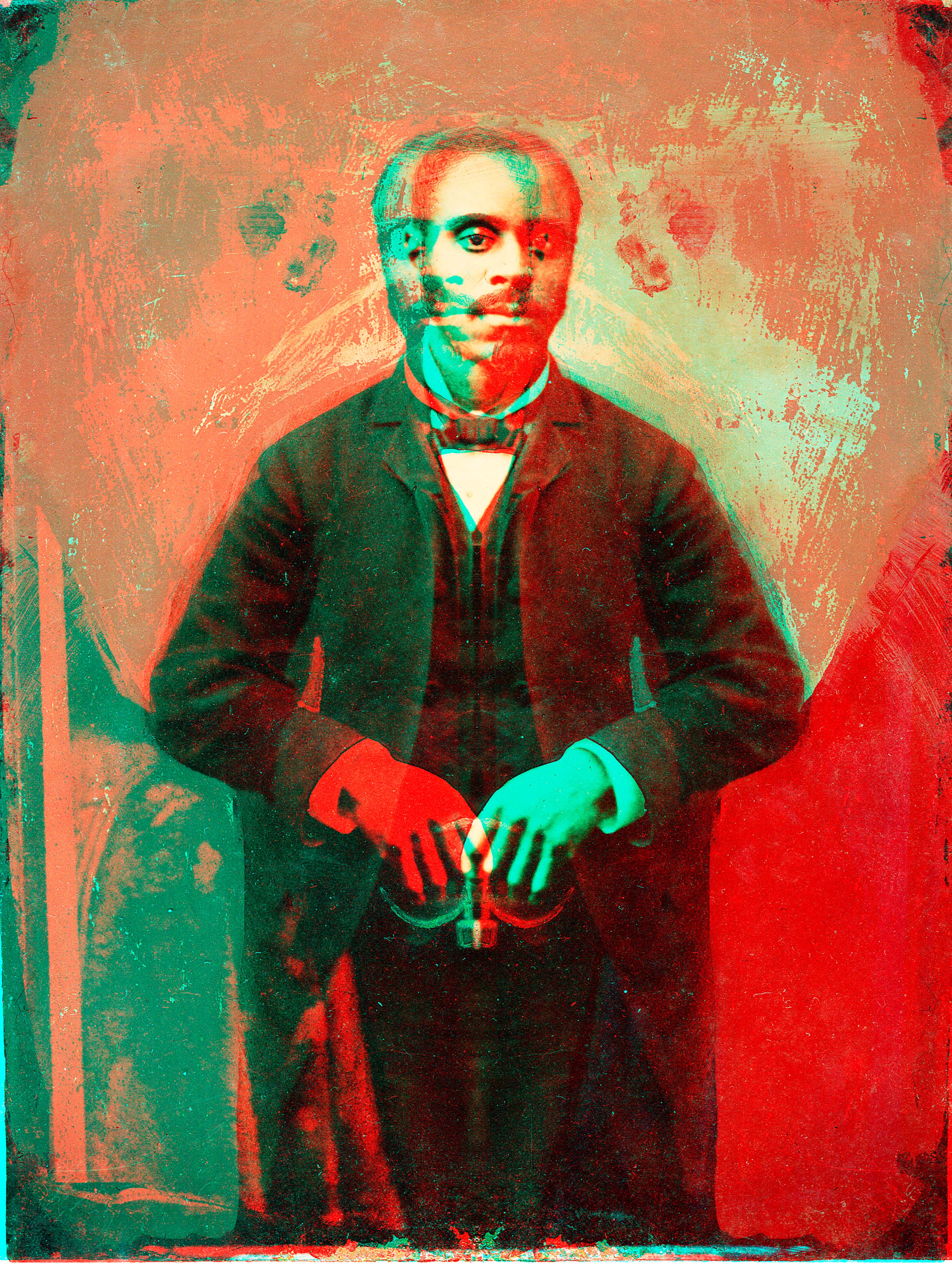
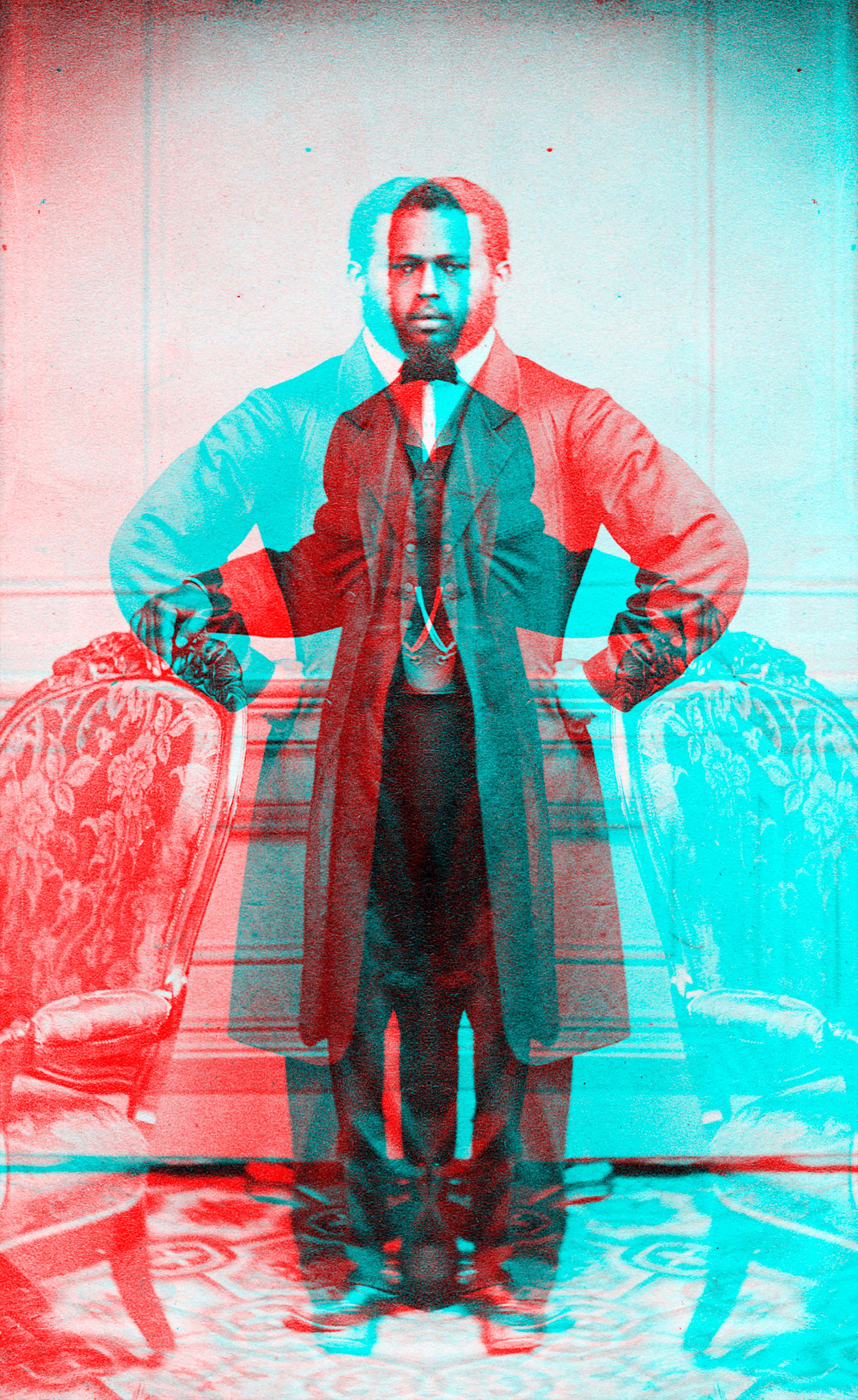
Since 2011, Antonio McAfee has been making work influenced by historical portraiture of African Americans in the The Exhibition of American Negroes. Organized for the 1900 Paris World Exposition by W.E.B. Du Bois, the display functioned as a legislative, economic, and photographic survey of middle-class African Americans living in Georgia from 1850–1899. This ‘counter archive’ challenged racist assumptions steeped in pseudo-science, presenting proof of the vitality and upward social mobility of southern blacks. 

Beth Saunders, curator and head of UMBC’s Special Collection and Gallery, noted that “McAfee’s persistent archival impulse led us to invite him to work with historical photographs in Special Collections.” Once on-site, McAfee engaged primarily with the Rooks Collection of African and African American Photographs, named for Ronald Rooks, a Baltimore art dealer who donated the earliest accessions.

In an interview with curator Emily Hauver for the exhibition catalog, McAfee, a photographer raised and based in Baltimore, said that working with the Rooks Collection expanded the context of understanding the period of 1850-1900: “The assortment of vernacular photography made during and after the Civil War in the Rooks Collection is a resource for accessing the intimate and public lives of African Americans of the Civil War period.” He also relayed that the variety of processes represented in the collection including daguerreotypes, hand-painted tintypes, albumen silver prints, cabinet cards, and gelatin silver prints also triggered more experimentation in his own work with the images. “(Seeing) the markings and strokes on some of the prints in this collection, I have been inspired to incorporate more mark making in my new work.”

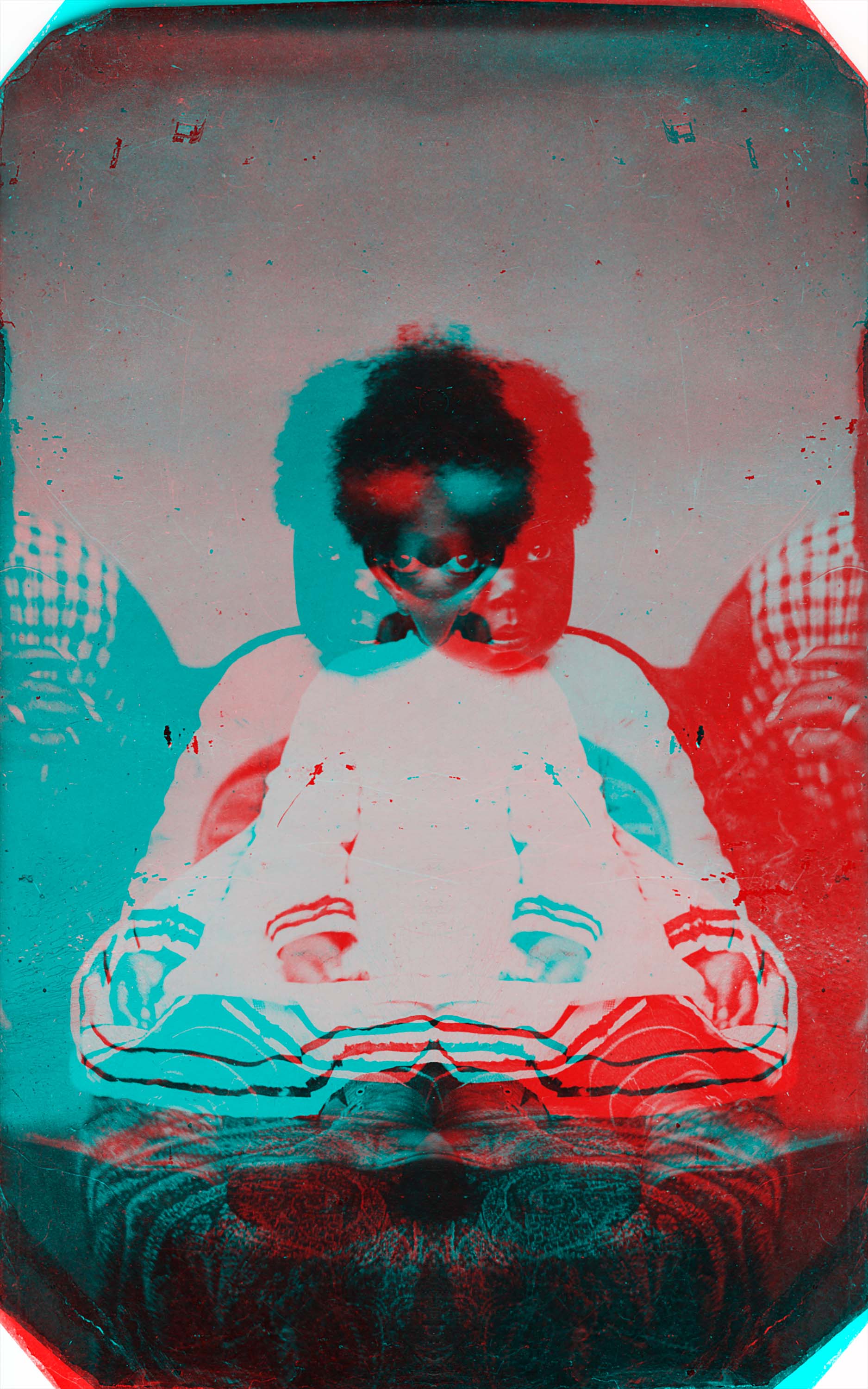
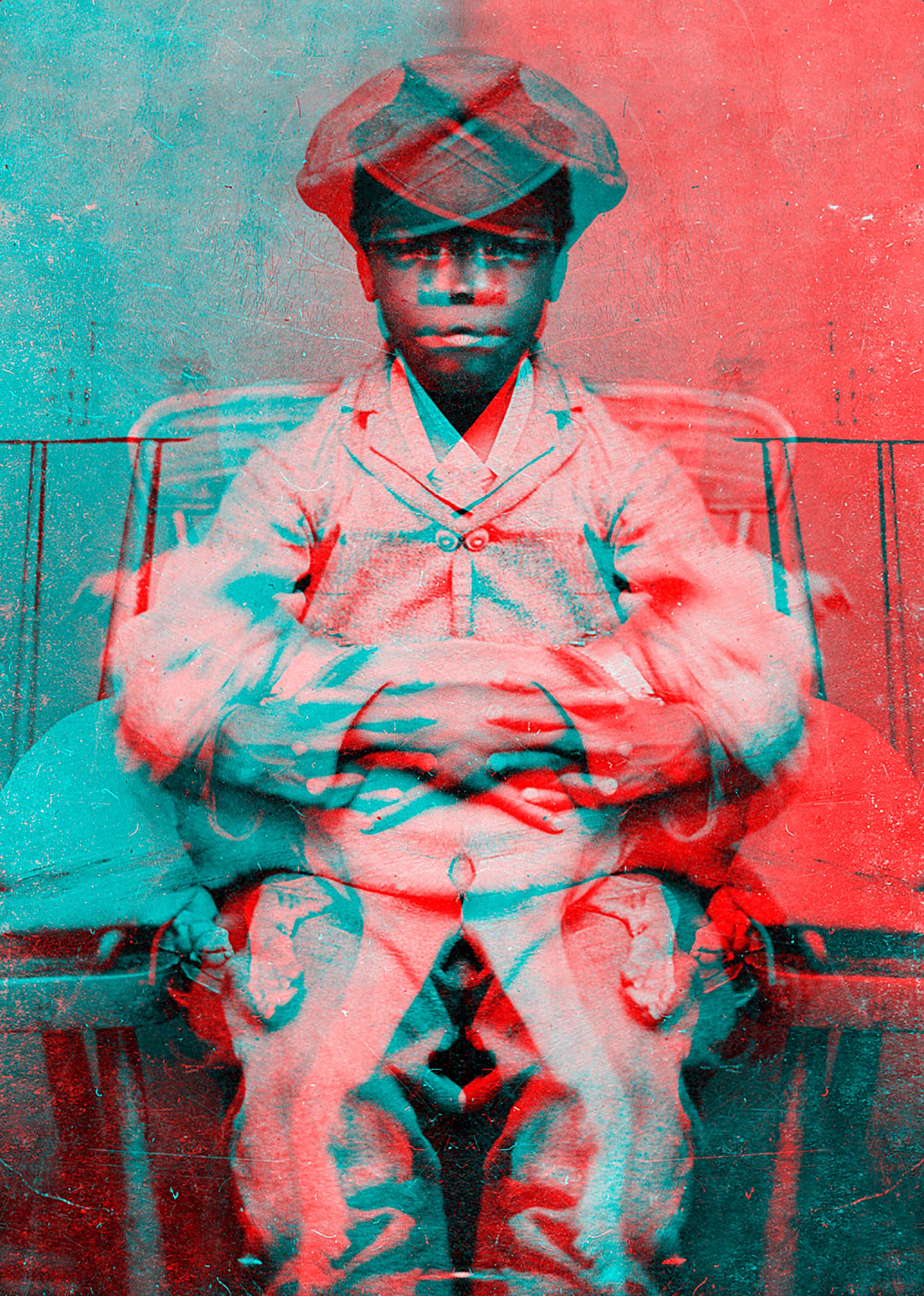
Antonio McAfee, The Magician, 2019. Pigment print, 3D image with 3D glasses. © Antonio McAfee, Courtesy of the Artist

Antonio McAfee, Robert Smalls, 2019. Pigment print, 3D image with 3D glasses. © Antonio McAfee, Courtesy of the Artist 

Antonio McAfee, The Gem, 2019. Pigment print, 3D image with 3D glasses.  © Antonio McAfee, Courtesy of the Artist

Antonio McAfee, Third (3), 2019. Pigment print, 3D image with 3D glasses. © Antonio McAfee, Courtesy of the Artist 

Antonio McAfee, Young Man and Dog, 2019. Pigment print, 3D image with 3D glasses.  © Antonio McAfee, Courtesy of the Artist

* * * * *

A public program with reception to follow is free and open to the public on Thursday, February 27, at 5 p.m.: Art, Race, and the Archive: Antonio McAfee in Conversation with Shawn Michelle Smith

Header Image: Installation view of Antonio McAfee: Through the Layers, Pt. 2. Exhibition, photo by Marlayna Demond ‘11 for UMBC

How did I get my own unique set of fingerprints?

by Sarah Leupen, Senior Lecturer in Biological Sciences, UMBC

Curious Kids is a series for children of all ages. If you have a question you’d like an expert to answer, send it to CuriousKidsUS@theconversation.com.


How do we get the fingerprints we have? – Oscar V., age 8, Somerville, Massachusetts


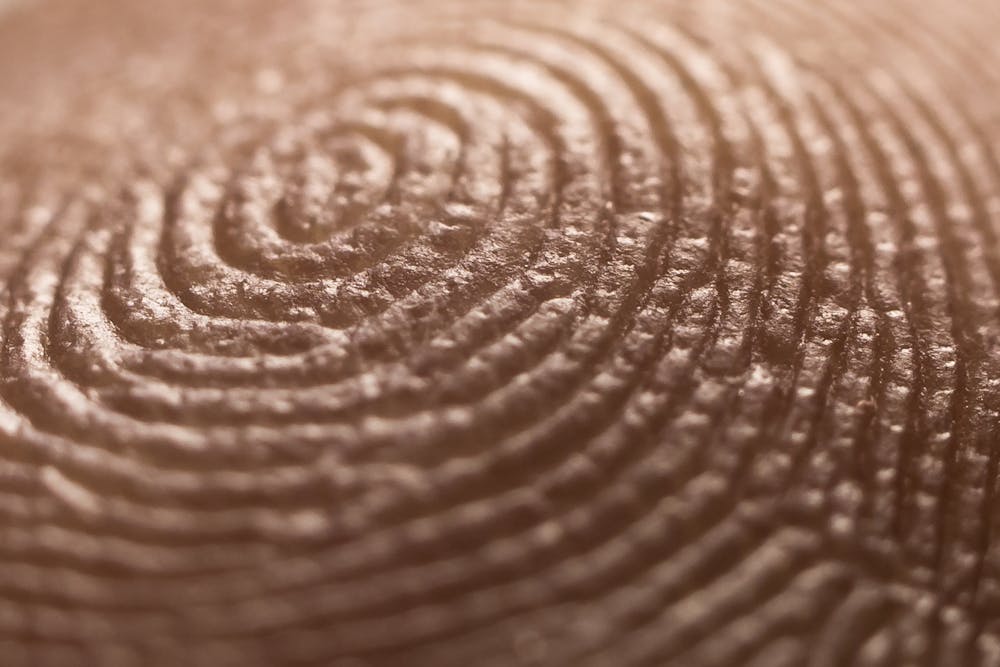
Fingerprints are those little ridges on the tips of your fingers. They’re essentially folds of the outer layer of skin, the epidermis. The “prints” themselves are the patterns of skin oils or dirt these ridges leave behind on a surface you’ve touched.

A careful closeup look will show you your fingerprint’s ridges and valleys. Fotosr52/Shutterstock.com


Your fingerprints began to form before you were born. When a fetus starts to grow, the outside layer of its skin is smooth. But after about 10 weeks, a deeper layer of skin, called the basal layer, starts growing faster than the layers above it, which makes it “buckle” and fold. The expanding lower layer ends up scrunched and bunched beneath the outside layer.

These folds eventually cause the surface layers of the skin to fold too, and by the time a fetus is 17 weeks old – about halfway through a pregnancy – its fingerprints are set.

Although this folding process might sound random, the overall size and shape of fingerprints are influenced by the genes you get from your parents. So you probably share some fingerprint patterns with your family members.

But the details of your fingerprints are influenced by many other factors besides genes. For example, the shape and size of the blood vessels in your skin, how fast the different layers of skin are growing, and the chemical environment inside the womb all play a part. No two people end up with exactly the same fingerprints, even identical twins.

It was only in 2015 that a big long-term study showed that fingerprints are stable over a person’s lifetime. The ridges of a fingerprint are visible on the skin’s surface layer, but the pattern is actually “encoded” below that. Even if you have a major skin injury, your prints will come back when the outer layer heals – though you might have a scar, too.

So your fingerprints are totally unique to you and have been since before you were born. No matter how much you change as you grow up, you’ll always have the set you have now, no matter how long you live.

What’s a fingerprint’s point?

Surprisingly, nobody really knows what fingerprints are for.

People have long thought that fingerprints provide the friction that helps our hands grip objects. This makes sense because the other animals besides human beings that have fingerprints – including many other primates like apes and monkeys, and koalas – are all tree climbers.

But sometimes what makes sense isn’t true, and a recent study found that fingerprints don’t really help people hold onto things – at least, not things with smooth surfaces.

Other possibilities are that fingerprints improve your sense of touch or help protect your fingers from injury. But scientists don’t know for sure yet.

Making use of your prints

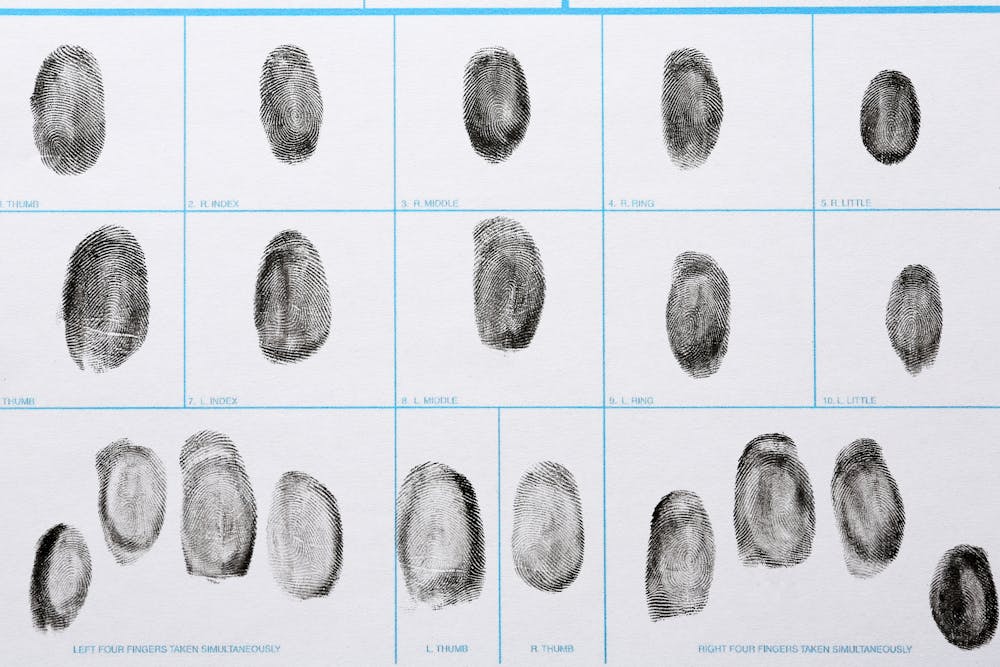
Police have been using fingerprints and their unique loop, whorl and arch shapes to help catch criminals for more than 2,000 years, starting in ancient China.

Fingerprints are now used for many other things as well, all based on the fact that each person’s fingerprints are different. You can use that unique code to unlock your phone or enter a restricted area, for example. In Malawi, fingerprints have been used to identify farmers who have taken out loans. They can even be taken from babies and used throughout the person’s life to access their immunization records.

Do your prints match those left at the scene of a crime? New Africa/Shutterstock.com


Police forces are still finding new uses for fingerprints, too. As fingerprint detection and study methods have improved, detectives can even use them to see who threw a particular stone. Those little ridges can hide tiny amounts of substances too – which means they could be used to detect the use of illegal drugs like cocaine and heroin. And now forensic scientists can detect decades-old fingerprints, too – maybe allowing detectives to solve really old crimes – with a new technique that uses a color-changing chemical to map the sweat glands within your fingerprints.


Hello, curious kids! Do you have a question you’d like an expert to answer? Ask an adult to send your question to CuriousKidsUS@theconversation.com. Please tell us your name, age and the city where you live.

And since curiosity has no age limit – adults, let us know what you’re wondering, too. We won’t be able to answer every question, but we will do our best.The Conversation


Header Image: Even identical twins have different fingerprints. El Greco/Shutterstock.com

Sarah Leupen, Senior Lecturer in Biological Sciences, University of Maryland, Baltimore County

This article is republished from The Conversation under a Creative Commons license. Read the original article.

Who Cares for the Caregivers?

Sarah Christa Butts ’07, social work, is used to battling society’s biggest problems, from ending homelessness to stopping family violence.

Now, the licensed master social worker is taking her advocacy straight to the top of the policymaking world on Capitol Hill. Her next-level challenge? Making sure that professionals working to protect society’s most vulnerable populations are themselves adequately protected.

“I’ve always been driven by social work values,” says Butts, Director of Public Policy for the National Association of Social Workers, for whom the work is incredibly personal. “We’re advocating for the needs of our clients and the social workers serving those clients.”

Education and Advocacy

In her new role, she educates and advocates among members of Congress and their staffs, federal agency officials, lobbyists, and political candidates, working to advance the goals of the world’s largest organization of social workers.

Her issue portfolio includes pay equity and adequate compensation for social workers and access to mental health and behavioral health care services, including substance use disorder treatment and workplace safety.

“UMBC has a special commitment to support
students like me and I am grateful.”
– Sarah Butts

For example, the “Protecting Social Workers and Health Professionals from Workplace Violence Act,” a recently introduced bipartisan bill, would direct federal grants to states to improve facility safety, provide safety training to staff, and purchase safety equipment for social workers and health professionals.

“Sometimes clients are in crisis. We are a lot like first responders,” says Butts. “Social workers work in a number of settings, including visiting clients in their homes. Unfortunately, we are disproportionately the victims of violence. Some social workers have died on the job, but this risk doesn’t stop us in our mission to help others.”

Butts also works to reduce student loans for social workers, who are required to have a high level of education but who are among the lowest-paid professionals in the workforce.

All of these issues address “what attracts and retains social workers,” says Robyn Golden, Associate Vice President of Population Health and Aging at Rush University Medical Center in Chicago. “More hard-to-reach populations will be better served as a result.”

Making Her Mark

Golden has worked with Butts on policy issues such as Medicare beneficiary’s access to social work services, and describes her as “a critical thinker and strategist.” “She balances her clinical knowledge with policy, and listens so well to both the client and constituent voice,” Golden says.

Social work students often follow one of two paths: policy work or clinical practice. Even as an undergraduate, Butts chose both.

“I was interested in the large systemic issues—managing the policy implications—but also in one-on-one practice,” she says.

As part of UMBC’s Title IV-E Education for Public Child Welfare Program, a collaboration with the Maryland Department of Human Resources to prepare social work students for public child welfare practice, Butts spent a year as a caseworker, providing services and going to court with children who had been removed from their homes.

Life’s Work

After receiving her bachelor’s of social work from UMBC, Butts earned a master’s of social work from the University of Maryland, Baltimore, and she is now pursuing a Ph.D. in public policy at UMBC.

“I’ve had such a great experience at UMBC. Grit and Greatness… I see myself in that slogan,” says Butts, who was a Pell Grant recipient. “I identify with being resilient, persistent, passionate about my work and striving for excellence and impact. I had to overcome a lot of complicated life circumstances, including losing my dad at nine years old, my mom’s substance use disorder and returning to college with a young daughter… UMBC has a special commitment to support students like me and I am grateful.”

Butts has held roles in state and local government, as well as nonprofits, including positions in Maryland’s Department of Human Services, Social Services Administration and the Family League of Baltimore. Prior to joining NASW, Butts served as the first executive director of the Grand Challenges for Social Work, a national initiative to collaborate on 12 of the United States’ most deep-rooted and pressing social problems. She’s also the founding administrator of the American Academy of Social Work and Social Welfare, an honorific society for the profession.

“She has always been able to make the connection between what social workers do, for who, and for how long with the larger policies,” says Carolyn Tice, Associate Dean and Professor in the School of Social Work. “She’s absolutely committed to equity and social justice and that permeates her work.”

– Laura Cech