All posts by: Sarah Hansen, M.S. '15


UMBC’s Erin Green receives nearly $1 million NIH grant for cutting-edge epigenetics research

UMBC biologist Erin Green has received a five-year, nearly $1 million grant from the National institutes of Health to examine how cells respond to environmental signals at the molecular level. Her work could provide clues to understanding processes as broad as how cancers take hold, the causes of autism, and aging.

“Any cell, in any species, is constantly bombarded with different signals from its environment,” says Green, assistant professor of biological sciences. Those signals, she explains, “have consequences for how the cell grows, whether it lives or dies, or if it stays as it is or turns into something else, like a cancer cell.”

Green studies epigenetic modifications—changes to DNA that do not involve a change in the sequence of bases (A, T, G, and C). Inside cells, long strands of DNA are wound tightly around proteins called histones. The modifications Green studies involve adding or removing small groups of atoms to the histones, influencing which sections of DNA are “unwound” and eventually translated into protein.

Epigenetic modifications can impact how genes are expressed within minutes, making them one of the fastest ways a cell can respond to environmental signals. “One challenge in the field, though, is directly linking specific modifications to environmental changes,” Green notes. There are many studies that correlate certain epigenetic changes with diseases or environmental conditions—from air pollution to in utero alcohol exposure—but figuring out exactly how the changes lead to complex health conditions has been much trickier.

Green’s work will explore the mechanism of a particular enzyme that adds methyl groups to histones, one of the most common epigenetic changes, using budding yeast as a model organism. Her enzyme is within a class of proteins that is also found in humans, and so far, she says, “many of the things that we know about them in humans started out in yeast research.” The human version of the enzyme Green is studying, a gene called MLL5, is already known to be expressed differently in some cancers, mutated in some cases of autism, and required for male fertility.

Why use yeast in her research? With yeast, Green explains, “we can test many conditions and look at the direct biochemical and molecular outcomes, which is much harder to do in other systems.” She’ll start by looking at how exposure to certain toxic oxygen compounds, a situation known as oxidative stress, affects the enzyme’s activity.

Green’s earlier work, supported by a UMBC START award, looked much more narrowly at a specific enzyme activity, but this new grant will allow her lab to paint with a broader brush. “We’ve been looking in a very targeted way,” she says. “By doing this bigger, more open-ended experiment we might uncover other things that would be good to look at. Are there other stress response pathways that this enzyme might be controlling?”

“I think having a system where we can directly answer these questions in a more controlled and easily manipulated environment is really powerful,” Green says. “If we’re able to…learn more about the function of this enzyme in yeast, that’s likely to give us a handle on what it might be doing in humans.”

Banner image: Erin Green. All photos by Marlayna Demond ’11 for UMBC.

UMBC alumnus Jerome Adams nominated for U.S. surgeon general, to replace alumna serving as acting S.G.

The White House has announced the nomination of Jerome Adams ’97, M4, biochemistry and molecular biology, for the position of U.S. surgeon general. If confirmed, he’ll replace Rear Admiral Sylvia Trent-Adams Ph.D. ’06, public policy, who has been serving as acting U.S. surgeon general since late April. Both UMBC alumni have prioritized serving vulnerable populations and maintaining connections to local communities throughout their accomplished careers.

Sylvia Trent-Adams has worked within the U.S. Public Health Service since 1992, after attending college on a Reserve Officer Training Corps scholarship and serving as an Army nurse officer. She has spent her years in the Health and Human Services Department “working to improve access to care for poor and underserved communities,” her biography reads. The Office of the Surgeon General further notes, “As a clinician and administrator, she has had a direct impact on building systems of care to improve public health for marginalized populations domestically and internationally.”

Trent-Adams’ accomplishments include managing the Ryan White HIV/AIDS Treatment Extension Act of 2009, which had a $2.3 billion budget. She has also advocated for the important role nurses can play in medicine. “We can be involved in many ways: clinically, with creating policy, at the bedside, and creating innovative strategies,” she told the American Journal of Nursing in 2014. “Nurses bring common sense to solving problems.”

Jerome Adams will also bring a patient-focused mindset to the surgeon general role. In October 2014, then-Governor Mike Pence appointed him as the state health commissioner of Indiana. “He has his hands on the pulse of what’s going on in communities,” Virginia Caine, director of the Marin County Health Department, told the Indy Star. “He gets right out there at the grass roots level and really identifies with the folks he needs to serve.”

A few months into his Indiana appointment, Adams found himself dealing with an HIV outbreak driven by intravenous drug use. He advocated for a needle exchange program that Pence approved, first for a 30-day trial period and later in legislation legalizing broader use of such programs in the state. The expansion responded to the program’s demonstrated effectiveness with curbing the HIV outbreak.

During his time as Indiana state health commissioner, Adams advocated for legislation that would give the family members of people struggling with opioid addiction access to Naloxone, a drug that can reverse the effects of opioid overdose. Once confirmed as surgeon general, he hopes to expand on that work to address the rising national opioid crisis.

Adams’ supporters believe his experience working with Pence will serve Americans well as he takes the surgeon general position. As Beth Meyerson of the Rural Center for AIDS/STD Prevention shared with WFYI Public Radio, “He will navigate [Washington] I suspect the same way that he did in Indiana, which is to listen to communities, work with several partners across the arena, and bring public health evidence to the table again as an advocate for community health.”

Reflecting on his time at UMBC as a Meyerhoff scholar, Adams shared with UMBC, “one of my biggest mentors was Dr. Hrabowski, and I still stay in touch with many of my Meyerhoff colleagues and rely on them as a professional support network.” He also pays that support forward, according to Joey Fox, Adams’ legislative director during Indiana’s HIV outbreak. “He was always willing to have his door open,” Fox told the Indy Star. “I got to see the side of him that was a compassionate leader.”

Image: Hubert H. Humphrey Building, home of the U.S. Health and Human Services Department, in Washington, DC. Photo by Tim Evanson, used under CC BY-SA 2.0

.

UMBC’s Chris Shuman discusses trillion-ton Antarctic iceberg in U.S. and international media

After keeping scientists on their toes for weeks, the Larsen C ice shelf on the Antarctic Peninsula parted with a trillion-ton iceberg the size of Delaware on July 12. Chris Shuman, research associate professor at UMBC’s Joint Center for Earth Systems Technology, closely followed the rift in the shelf leading up to the iceberg’s separation, and offered expert comments in the media about this complicated milestone.

Although the calving event is momentous, Shuman thinks an imminent collapse of the rest of the Larsen C ice shelf is unlikely. “At this time we don’t see any signs this is going to cause any further breaks,” he told Vox. “On the other hand, this is over 10 percent of the ice shelf area, so that’s not a good sign.”

Scientists will be watching for other signs of ice shelf instability, including accelerating glacier movement, new rifts, and melting pools accumulating on the glacier’s surface, Shuman explained to Buzzfeed. He told The Baltimore Sun that if any of these signs appear, “That would begin to tell us that, ‘Hey, things are probably going to change more in the future.’” Regardless, “The big picture is clear,” Shuman told WJZ-TV. “Changes are happening.”

One factor that makes the broader collapse of Larsen C less likely is that the shelf is still strongly anchored to the continent at the Gipps and Bawden Ice Rises. “If we had seen the Larsen C lose connection with these grounding points … that would have been much stronger evidence the whole shelf is becoming destabilized,” he told Vox. While signs of accelerated breakup are currently lacking, Shuman says scientists will be watching the shelf closely. If it were to collapse, it would contribute to rising sea levels.

It’s currently unclear how much climate change influenced this particular iceberg’s release. “I myself don’t see clear evidence convincing me that this [specific break] is climate change-related,” Shuman told CNN. “Yes, the Larsen C will have retreated farther west than we’ve ever known it to have retreated before. On the other hand, it has dropped large [bergs] before,” he added on CBC News, noting the last time Larsen C released an iceberg of comparable size was in 1986.

Scientists seeking greater clarity on this iceberg and the future of Larsen C will closely monitor the situation as it continues to shift over time, Shuman notes. “You can think of the Larsen C or really any ice shelf like it is a cork in the neck of a champagne bottle lying on its side,” he told NASA Earth Observatory, re-quoted in Christian Science Monitor in February. “Once you pop that cork, the wine inside – all that glacial ice sitting on land – will start flowing out. And that’s worrisome because such thinning land ice is directly increasing global sea levels.”

Moving forward, Shuman will carefully track the iceberg via satellite imagery as it travels north and east. He expects it to take a path toward South Georgia Island, a British territory east of the southern tip of South America, but that’s not guaranteed. Icebergs like this “kind of bump along over a number of years,” Shuman told the Boston Globe. “The other thing is, of course, it may run aground. It’s going to take a period of years to watch this berg’s journey from start to finish.”

Despite, or perhaps because of, the uncertainties, Shuman shared with the Globe that “watching the evolution and release of this new large iceberg from the Antarctic Peninsula has been a truly humbling and awe-inspiring experience.”

Read more of Chris Shuman’s comments on the iceberg in CBC News, Buzzfeed, The Baltimore Sun, The Boston Globe, Patch, Vox, Forbes, PRI, Christian Science Monitor, KPAX-TV, La Tercera, VOA Noticias, WJZ-TV, CNN, and Motherboard. NASA’s Aqua satellite initially spotted the complete break, and the agency posted its own feature.

Image: A close-up of the rift in the Larsen C ice shelf from November 2016. Photo by John Sonntag for NASA.

UMBC’s Don Engel selected for inaugural cohort of APLU Research Leader Fellows

Don Engel, UMBC’s assistant vice president for research, has been selected as one of just eight participants nationwide in the new Research Leader Fellows program sponsored by the Council on Research within the Association of Public and Land-grant Universities (APLU). The 18-month program focuses on helping emerging research leaders to develop knowledge and skills in new areas related to supporting university research today and into the future. Participants attend conferences, participate in facilitated meetings as a group, and receive direct mentorship from experienced higher education research leaders. “I think the most valuable thing about this program will be that it will expose me to things that we can do that haven’t been on our horizon, because we haven’t yet thought to look creatively in those directions,” says Engel. In his fellowship proposal, Engel outlined plans for two projects in which he’s already deeply invested. First, Engel is working with the UMBC community to develop makerspaces on campus. While many makerspaces in academic settings create opportunities for students to “learn about tech through tinkering,” Engel says, he would also like to see these spaces “conceived as…tools to advance faculty-led research.” That research could be in any field that “depends on rapid fabrication and prototyping,” such as robotics, or into fabrication techniques themselves, he explains. During the fellowship, Engel will attend the International Symposium of Academic Makerspaces at Case Western Reserve University. Case Western is the site of the world’s largest academic makerspace, and Engel intends to take advantage of the symposium’s location to learn how the university developed and now manages the facility. Engel will also travel to the 2018 World Maker Faire in California. Both trips, along with conversations with other academic institutions that house makerspaces, will inform ideas about best practices for building impactful, sustainable makerspaces at UMBC that serve a wide range of people across the university. Engel also intends to expand his current work with the National Cybersecurity FFRDC (Federally Funded Research and Development Center) during the fellowship. UMBC is a founding partner of the center with the MITRE Corporation and the University of Maryland, College Park. “All parties have been navigating uncharted territory in determining how to leverage each other’s strengths and resources toward the critical cybersecurity of our national commercial sector,” Engel says, and one of his goals is to explore “what the university system can do to better enhance academic engagement in the FFRDC.” His trip to California will facilitate visits with University of California schools—especially useful because they operate similarly to the University System of Maryland and already sustain robust relationships with several national laboratories, a subset of FFRDCs. In the case of both makerspaces and the FFRDC, Engel says, “My time as a fellow will allow me to leverage immediate questions facing UMBC as an opportunity to deeply explore what other institutions have done in the face of similar opportunities.” Broadly, Engel hopes to gain skills that will serve him and UMBC long into the future. He sees the Research Leader Fellows program as an opportunity to learn more about the expansive, cross-disciplinary areas that research leaders are expected to supervise, from research compliance to extramural partnerships. He also anticipates the program will help him, and his fellow participants, develop skills to facilitate campus-wide conversations on research issues across disciplines. “I’m very interested in finding ways to use this as an opportunity to take on new challenges and to think of ways to discover new partnerships or other sorts of resources that will allow us to do things we haven’t done before,” he says. “I want to get people excited to work together on interesting, ambitious projects that will advance human knowledge and education, at UMBC and in collaboration with other universities.” Image: Don Engel speaks at a UMBC research event. Photo by Marlayna Demond ’11 for UMBC.

Why do we yawn? UMBC’s Bob Provine dives into a common, but still mysterious behavior on NPR

Yawning may have the dubious distinction of being the least understood common human behavior,” UMBC’s Bob Provine told NPR’s Morning Edition this spring. Yawns can be triggered by boredom, fatigue, hunger, or stress. Although multiple theories attempt to define yawning’s purpose, researchers have yet to settle on a unified explanation of why we yawn.

Provine, professor emeritus of psychology at UMBC, says, “[Yawning] stirs up our physiology, and it plays an important role in shifting from one state to another.” Another study cited by NPR supports the changing-state theory, finding “that yawning has a similar impact on the brain as a dose of caffeine.” Provine mentions that athletes about to compete, musicians about to perform, and military about to enter combat also yawn at higher rates than expected.

However, other studies have not found yawning to have an arousing effect. Rather, their results suggest yawning is important for social bonding. That theory is strengthened by the fact that yawning is contagious—and not only among humans.

“Until the last few years, the feeling was that contagious yawning was unique to humans,” Provine told NPR, but recent studies have found that dogs and chimpanzees also yawn contagiously. Dogs even yawned more often when humans around them yawned, potentially contributing to the emotional bonds people form with their canine companions.

Provine has also been consulted recently for his expertise on another primal vocalization: laughter. In The Trumpet, he shared that his research has found laughter to be most common in “situations of emotional warmth and in groups,” suggesting laughter, like yawning, may contribute to social bonding.

In The Atlantic, Provine commented on how appropriate it was to include laughter on the “Golden Record,” which was launched into space in 1977 intended for discovery by alien life. “Laughing, like crying, is a human instinct. It’s not under conscious control,” he told The Atlantic. “Whereas crying is a solicitation of caregiving, laughter is the signal of play. It is the sound of play, literally.”

Prior to the most recent Atlantic piece, Provine discussed his two decades of laugher research in depth for a popular video produced by the publication, “Why We Laugh.”

Read more of Provine’s recent media on yawning and laughter:

Yawning may promote social bonding even between dogs and humans (NPR)

Why is yawning contagious? (Mental Floss)

A good laugh (The Trumpet)

Solving the mystery of whose laughter is on the golden record (The Atlantic)

 Image: Dog yawning. Photo by Nate Steiner, via Flickr, public domain.

UMBC researchers address diverse factors impacting U.S. schooling

UMBC researchers from across the humanities and social sciences recently earned press coverage for their work exploring factors that shape K–12 education in the United States. From inclusive language in classrooms to math pedagogy, each offers insights to spur change and further research to improve children’s educational experiences.

Christine Mallinson, professor of language, literacy, and culture, writes in The Conversation about how language differences among students can affect student outcomes. “Studies have found that at all levels of education, instructors often favor students who sound like themselves and can be biased against those who don’t,” writes Mallinson. Compounding the problem, “As the U.S. student population continues to rapidly diversify along cultural and linguistic lines, the demographics of the teacher population remain stable at roughly 82 percent white and predominantly female,” meaning non-white students experience negative bias more often.

Mallinson explains that students who are repeatedly told their way of speaking is wrong internalize that message, which may result in students speaking up less often in class. To help educators take on this challenge, Mallinson and colleagues developed a series of webinars, a podcast, and an app called “Valuable Voices” replete with classroom exercises to help students and educators understand and value linguistic diversity.

“Ensuring that students, peers and teachers from diverse backgrounds understand and communicate respectfully with each other is often just as important as helping students understand the material in their textbooks,” writes Mallinson. “Language matters—not just for fostering mutual respect, but for making sure that every student has an equal opportunity to succeed.”

Prior to Hurricane Katrina, the New Orleans Public School System bucked the trend in teacher demographics that Mallinson notes, with a teacher workforce that identified as 71 percent African American serving a predominantly African American student body. However, immediately following Katrina, substantial school system restructuring deeply impacted the teacher workforce, and by 2014, fewer than 50 percent of city teachers were black.

Jane Arnold Lincove, associate professor of public policy, detailed how teacher demographics changed in New Orleans after Katrina in a new study featured in The Hechinger Report. The study, published by the Education Research Alliance for New Orleans at Tulane University, noted that 4,300 fired teachers “were replaced with teachers who were paid less, had less experience, and were more likely to be white and from out of state.” The restructured school district also no longer offers pensions.

These changes have the potential to negatively affect the city’s student body, including having a disproportionately negative impact on black students, given “a bevy of research showing that black kids benefit from having black teachers,” achieving higher referral rates to advanced classes and higher graduation rates, the Report notes. Lincove’s study data only extended to 2013, so it’s unclear what effect a push after that to hire more local teachers may have had.

Christopher Rakes, assistant professor of education, argues in The Conversation that a “culture of over-testing” in the last two decades is another factor that’s shaped teaching. Specifically, Rakes believes testing has contributed to the persistence of math lessons based on rote memorization of procedures to solve specific problem types. These methods are “so common that [they’re] seldom even questioned,” although there is evidence to suggest that concentrating on teaching conceptual understanding is more effective, Rakes says.

With rote learning, Rakes writes, “Children can become dependent on tricks and rules that don’t hold true in all situations, making it harder to adapt their knowledge to new situations,” but with a more conceptual framework, “less information has to be memorized, and students can translate their knowledge to new situations more easily.”

Rakes acknowledges that teaching conceptually “may require additional time commitments both in and outside the classroom,” but, “research has provided evidence that teaching conceptually has benefits not offered by traditional teaching. And students who learn conceptually typically do as well or better on achievement tests.” That means even if testing continues to be the norm to gauge learning, switching to a more concept-focused math curriculum would benefit student success.

More important than any test, “Teaching [conceptually] is a critical first step if students are to begin recognizing mathematics as meaningful,” writes Rakes. “Conceptual understanding is a key ingredient to helping people think mathematically and use mathematics outside of a classroom.”

The article has generated substantial public interest and discussion, and has so far been read over 17,000 times worldwide.

Image: Christine Mallinson, third from right, meets with graduate students. Photo by Marlayna Demond ’11 for UMBC.

UMBC’s John Rennie Short discusses globalization and urban issues in U.S. and international press

John Rennie Short, an expert on globalization, urban and environmental issues, and political geography, recently shared his research and perspective on current global trends in several U.S. and international publications. Most recently, the professor of public policy has commented on topics from shifting political parties to the rapid growth of cities and their roles in society.

In Christian Science Monitor, Short addressed recent seismic shifts in global politics. In this spring’s French election, neither one of the two traditionally-dominant parties’ presidential candidates advanced to the second round of voting, demonstrating “a rupture of the traditional political establishment,” Short said, and reflecting a larger trend in politics seen in Brexit and Donald Trump’s victory.

Short added that “we are in a new political era,” where leaders who hope to preserve Western values must address voters’ very real “economic pain, their cultural uncertainty, and their political anger at the system” and be “aware of the new sensibilities that have been brought to the surface.”

On Radio SputnikShort discussed another course change in politics. The Philippine president announced that the Filipino military would begin to occupy certain islands in the South China Sea, an area to which China lays claim. “This is very strange, because [President] Duterte had spent the last few months encouraging closer ties with China,” Short said, adding that the action was a “provocative move” that would label the Philippines an unpredictable ally for China.

In Smithsonian MagazineShort addressed a historical issue in political geography, commenting on the construction of early maps of North America, where trade priorities could supersede political considerations. In these early maps, “the coastlines were accurate, but they weren’t as concerned about the interiors,” says Short. The attitude was, “as long as you keep bringing the beavers, we don’t care.”

Short has also produced several new publications related to contemporary urbanism, including A Research Agenda for Cities. This volume, which he edited, features case studies from around the world addressing topics such as gentrification, gender, creative economies, and sustainability.

In a piece for the Elgar blog, Short says it’s crucial to research cities because “we are living in an urban moment. The majority of people now lives in cities. Cities are at the very heart of transformations of political economy, civil society and governmentality. They are the setting for progressive politics and the context for new human–nature relations.”

Short also explores how cities can illuminate broader global shifts as “nodes in a global network of flows of people, ideas and practices.” Cities are highly fluid places, Short suggests, constantly “learning from each other and testing policies, with the more successful ones diffused, adopted, and adapted around the global network.”

In Global Citizen, Short adds, “Technology is transferable, knowledge is transferable, consultants move around, there’s a global circulation.” That’s part of the reason he believes cities have a major role to play in combating climate change, the focus of the Global Citizen piece. The other reason is much more practical: “Emotionally you can think of the polar bears and the warming Arctic, but when push comes to shove it still seems a bit distant,” he says. “But the air quality in your city is definitely a real issue,” and, he suggests, it can motivate cities to take action to curb pollution.

Short also addresses reasons that public transportation in U.S. cities lags far behind our European counterparts on The Academic Minute. He suggests the relevant factors include an American “love affair with the automobile,” suburban sprawl, and a large-scale dismantling of privately-owned mass transportation companies in the 1950s. However, he also sees younger Americans as more interested than previous generations in accessing public transit options, and less interested in owning cars, which he suggests could soon cause a sea change in U.S. transportation trends and investments. The interview followed up on a previous article Short wrote for The Conversation (“Why is the U.S. unwilling to pay for good public transportation?”), which was republished by Business Insider, Quartz, Slate, Newsweek, and others, and has been read nearly 300,000 times worldwide.

Reaching this kind of a broad public audience is a commitment Short considers central to his work as university researcher and educator. “Research and knowledge needs to be circulated widely and freely available to as many people as possible. If it is just for a small privileged elite it loses its moral center and social purpose,” he suggests. “Those of us lucky to teach in the academy have the responsibility and obligation where, when, and how we can to advance civic debates and enlightened discourse.”

National media coverage of UMBC leadership highlights collaboration as key to inclusive campus culture

For 25 years President Freeman Hrabowski has led UMBC’s growth as a teaching and research powerhouse with a reputation for inclusive excellence, in partnership with colleagues across the university, the state, and the nation. Recently, several media outlets have asked him to share what he’s learned along the journey, and how UMBC can serve as a model for other institutions at various stages of their evolution.

Above all, Pres. Hrabowski emphasizes how creating a campus culture that effectively supports all students requires close collaboration with all university stakeholders. “It’s only when there is a cultural difference, focusing on everybody from faculty, staff to administration, saying the success of students from different backgrounds is a top priority on campus—only then can you make a difference,” Hrabowski said in The Hechinger Report.

Michael Summers, Distinguished Professor of Chemistry and Biochemistry and Robert E. Meyerhoff Chair for Excellence in Research and Mentoring, shared with Hechinger how the Meyerhoff Scholars program, founded at UMBC in 1988, catalyzed a transformation in campus culture, eventually creating an environment where students from all backgrounds are expected to excel. When faculty members are consistently exposed to large numbers of high-achieving minority students, he said, “it changes what that faculty member expects from all students of color.”

Harvey Mudd College is among numerous institutions nationwide to find inspiration in UMBC’s philosophy of inclusive excellence—achieving excellence through (rather than in spite of) welcoming a diverse range of voices to build community together. “Freeman is extraordinary,” Harvey Mudd President Maria Klawe told Inc., in describing how Pres. Hrabowski helped the college rethink their approach to supporting women and minority students in STEM. “After a 20-minute talk, the language just changed,” she recalled. “Unsurpassed excellence and diversity at all levels became part of the strategic plan.”

In EducationDIVE, Hrabowski stressed how important the representation of diverse perspectives is on university leadership teams for those teams to be most effective and to provide role models for diverse students. To accomplish this, he says it’s important to create more pathways for non-traditional candidates to enter university leadership roles, and also necessary to prioritize diversity among staff and faculty at all levels.

These factors come into play not just in broad ways across university administration, but also at the highest levels of campus leadership, Hrabowski told Inside Higher Ed, in their coverage of an Aspen Institute report on the future of the college presidency. He noted, “We have to ask ourselves and our boards, are we developing and identifying talent, faculty and staff who can move into high-level positions, and are we getting them the experience to prepare them for the presidency?”

Additionally, Hrabowski told Inside Higher Ed, as some critics question the value of higher education today, “We have to be able to show our institutions have a particular mission and role to play in our communities and nation and beyond.”

Part of that role is “to prepare our students to understand the importance of the word ‘citizen,’” he further explained in an interview for The New York Times. “The challenge is to make sure that educated people have a good understanding of all the different disciplines and how they connect,” he told “Corner Office” columnist Adam Bryant. “It’s about critical thinking.”

Pres. Hrabowski also emphasizes in his New York Times interview the importance of a sense of critical self-awareness, for both individuals and institutions. “Even when I was a grad student, I would always speak up and say what I thought was not working well,” Hrabowski shared. “So people would tell me, ‘Then you do it.’ I was always working with other people and saying, ‘Let’s figure out how to make this better.’” After all, he has reflected in interviews throughout the spring, critique becomes effective when it is paired with a community’s willingness to continually work toward growth, with a shared vision of excellence in mind.

Image: Pres. Freeman Hrabowski and students on the Administration Building green roof. Photo by Marlayna Demond ’11 for UMBC.
Christy Ford Chapin recalls lost history of the U.S. health care system in New York Times op-ed

As U.S. lawmakers consider possible paths forward in reshaping health care and health insurance, UMBC’s Christy Ford Chapin has published detailed analysis of historical health care models to inform today’s discussions. Chapin, assistant professor of history, is the author of the award-winning book Ensuring America’s Health: The Public Creation of the Corporate Health Insurance System. Since its publication, she has commented in numerous media outlets on the history of health insurance and factors to consider in developing effective reform.

In a New York Times op-ed, published just ahead of Senate Republican’s release of proposed new health care legislation, Chapin suggests that both Republicans and Democrats “have stumbled to enact comprehensive health care reform because they insist on patching up a rickety, malfunctioning model.” The Democrats’ Affordable Care Act only “added a cracked support beam or two,” and a Republican bill recently passed by the House “will knock those out to focus on spackling other dilapidated parts of the system,” she writes.

But Chapin’s piece isn’t just a critique. She also offers fresh ideas for consideration, based on often forgotten historical models. Reflecting on the perspective she brings to the conversation, Chapin notes, “Historians can use narrative to explain seemingly complex issues, add nuance to national conversations, and highlight overlooked facts.”

Chapin explains that in the early 20th century, a variety of models to organize and pay for health care existed in the U.S. “Unfortunately,” however, “the leaders of the American Medical Association (AMA) saw early health care models…as a threat,” and, she suggests, exercised their power with hospitals and on state licensing boards to retaliate against physicians who participated in them.

After World Word II, President Harry Truman proposed a government-managed universal health care system, similar to some in post-war Europe. In response, writes Chapin, “AMA officials decided that the best way to keep the government out of their industry was to design a private sector model: the insurance company model.”

Chapin argues in the Times that over the years, “because of the perceived threat of reform, insurers weathered rapidly rising medical costs and unfavorable financial conditions to expand coverage from about a quarter of the population in 1945 to about 80 percent in 1965. However, she writes in a related piece for Dissent, “Despite the extraordinary growth of private insurance, high policy costs prevented insurance companies from extending protection to a politically satisfactory percentage of the elderly.” In response, the federal government introduced Medicare in 1965.

Medicare was also designed around the insurance company model, because at the time “the private health care sector had far more capacity to manage a large, complex program than did the government,” writes Chapin in the Times. With more seniors insured, demand for health services spiked. This led insurance companies to introduce cost-containment efforts like standardizing which procedures would be covered for which health conditions, and “shaping the practice of medicine”—exactly what the AMA originally feared would result from government involvement.

Chapin contends in the Times that “to actually bring down costs, legislators must roll back regulations to allow market innovation outside the insurance company model.” In Dissent she further argues, “Only fundamental reforms that reduce corporate influence over health care can make generous universal coverage possible.”

Looking toward the future, Chapin points out that innovative plans are starting to re-emerge in pockets of the country, though they are limited by insurance regulations designed to prevent such practices. Rather than piecemeal workarounds across the country, she suggests a “universal system that grants individuals subsidies to purchase coverage from any medical plan—not just insurance companies.”

“It’s a simple plan for universal care,” Chapin suggests in Dissent. “But it’s also a plan that will drastically reduce costs, encourage doctors to find innovative health care solutions, and liberate the system from corporate control.”

Chapin’s ideas have already sparked conversations across the country, with her New York Times op-ed quickly climbing to top spot as the paper’s most-shared article on its publication day. Learn more about Christy Chapin’s historically-informed perspective on health insurance in The New York Times, Dissent, Forbes, Process, on WYPR, and on EconTalk, one of the nation’s most popular academic podcasts. Read her response to a critique of her work at NewsMax.

Image: Christy Ford Chapin gives a presentation about her work. Photo by Marlayna Demond ’11 for UMBC.
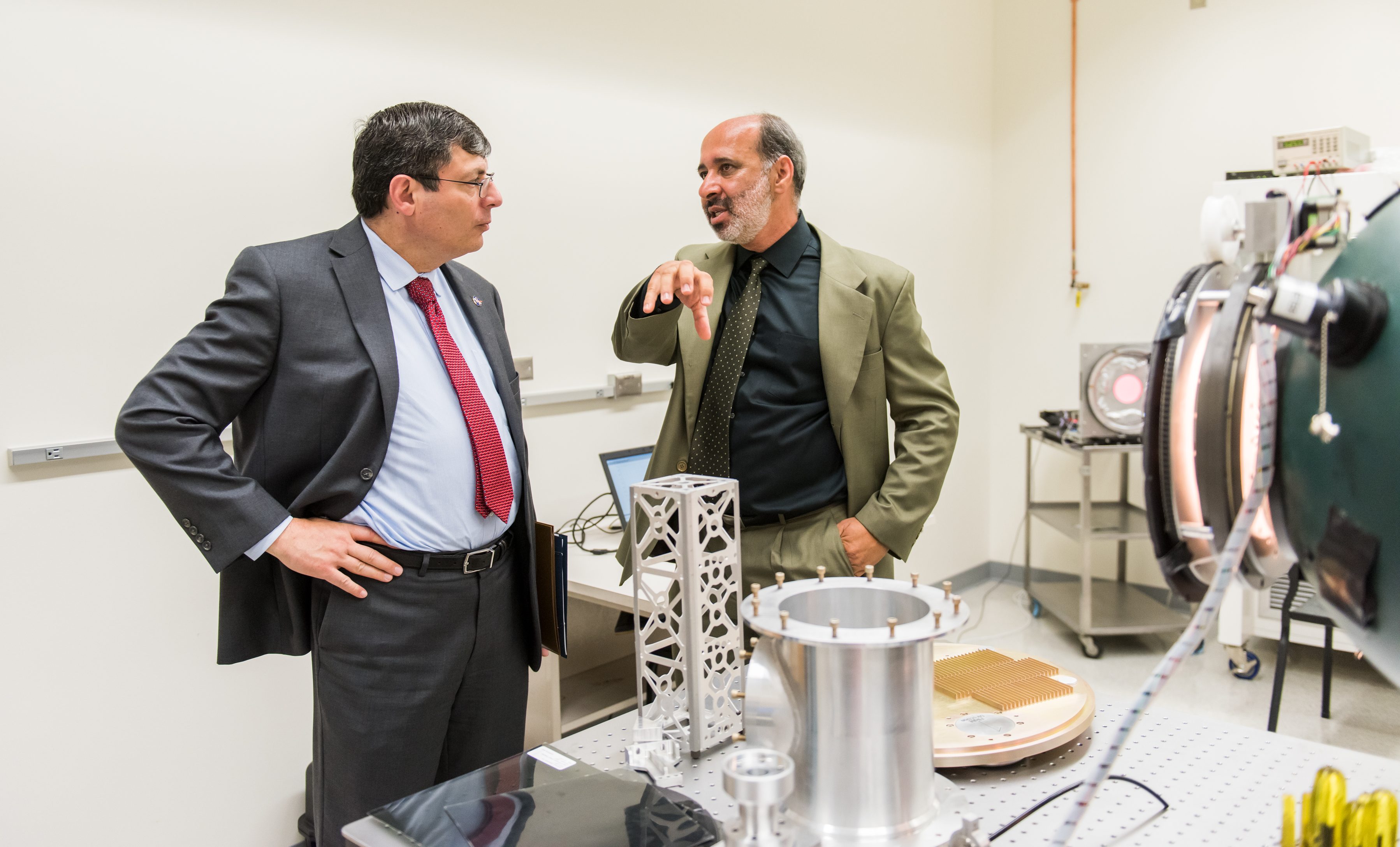
UMBC’s Lipi Mukherjee receives NASA Earth and Space Science Fellowship for atmospheric physics research

Lipi Mukherjee, Ph.D. student in atmospheric physics at UMBC, has received the NASA Earth and Space Science Fellowship (NESSF), which will provide funding to support her research for up to three years. Mukherjee is focused on creating a model to more quickly and precisely detect particles dissolved in large bodies of water that can reduce survival of local aquatic life, cause algal blooms, and modulate global climate.

Satellites in space collect data that describe the light reflected by the ocean’s surface. Current analysis methods allow scientists to use the ocean’s reflectance profile to infer what kind of particles the light interacted with in the water, the water’s depth, and the sea floor’s structure. Although valuable, these methods are slow, require a great deal of computer power, and can’t always distinguish between situations that produce similar data output for different reasons.

Mukherjee’s model will significantly speed up the analysis process by streamlining it to a single equation, while at the same time incorporating additional parameters to improve precision. Specifically, the model will detect the presence of colored dissolved organic matter (CDOM, mostly dead plants) and phytoplankton (tiny photosynthetic organisms), which contribute to dangerous algal blooms. Phytoplankton themselves have highly complex impacts, playing a role in global carbon regulation (by absorbing large volumes of carbon dioxide) while also posing direct threats to marine life by producing toxic compounds.

New in Mukherjee’s model will be the ability to detect water’s turbidity, or choppiness, by measuring polarization of the light returning to the satellites’ sensors. Light in calm water is generally polarized, meaning every light wave is heading in the same direction. In choppy water, the light gets bounced around, changing its polarization. Her model will also take advantage of UV light data for the first time, useful because dissolved organic matter and plankton absorb UV light. The structure of her equation will also make it easier to determine which parameter is responsible for changes in reflectance.

The project requires strong computer programming skills, which Mukherjee has picked up since moving to the United States in 2010, after completing undergraduate and master’s degrees in India in physics, with an electronics concentration. She found a welcoming environment in The Graduate School at UMBC and shares that from the beginning “everyone was very helpful and open.” In particular, Todd Pittman, professor of physics, and Michelle Massey, assistant director of International Education Services, provided a great deal of support as Mukherjee transitioned to UMBC.

Earning the NESSF fellowship is especially noteworthy for a non-U.S. citizen, because preference is given to proposals of equal caliber from American scientists, meaning Mukherjee’s proposal had to go above and beyond the high bar set by proposals from American colleagues. Mukherjee almost didn’t apply for that reason, but her advisor, Pengwang Zhai, assistant professor of physics, encouraged her and provided key support throughout the application process.

Mukherjee shares that she is thankful for the “close-knit community” in the physics department, including faculty and fellow graduate students. Even before moving to the U.S., she says, “I always wanted to do a Ph.D. in physics, and I always dreamed of working for NASA.” Now, she is one step closer.

Image: An algal bloom on the Bering Sea, captured by a NASA satellite and edited by Stuart Rankin. Used under Creative Commons License 2.0.

Seven new UMBC grads to pursue Fulbright fellowships around the globe

Seven recent UMBC graduates will travel around the globe to teach and conduct research as Fulbright fellows for the 2017 – 18 academic year, setting a new record for the university. The UMBC fellowships range from teaching English in Colombia to using animation to recreate Viking Age artifacts in Norway. All will provide the graduates opportunities for transformative cultural exchanges.

More than 11,000 applicants across the United States apply to the program, sponsored by the U.S. Department of State, each year. The Fulbright U.S. Student Program recommends recipients based on academic or professional achievement and demonstrated leadership potential.

“A record number of UMBC students have been given a life-changing year of research or teaching as part of the Fulbright U.S. Student Program this year,” says Brian Souders, interim director of International Education Services and UMBC’s Fulbright Program advisor. The students “started their journey to the award a year ago, attending information meetings and Fulbright Boot Camps,” he explains. They also worked closely with Souders and faculty advisors to hone their research proposals and participated in on-campus interviews as part of the application process.

Fulbright recipients Michael Wolfe, William Klotz, and Kirsten Clark chat in the UMBC Commons. Photo by Sarah Hansen ’15 for UMBC.

Kirsten Clark ’17, Spanish, is looking forward to teaching English at EAN University in Bogotá, Colombia. “I have been dreaming of Fulbright since before I transferred to UMBC,” Clark says, “so I am beyond excited to finally take this next step in my career.”

Clark’s work with UMBC’s Shriver Center and English Language Institute have prepared her to take this next step. “I have not only vastly increased my Spanish proficiency, but I have been challenged to question my own assumptions about language and culture,” she says, “ultimately broadening my perspective to the diversity and complexity of the Spanish-speaking world.”

After returning from Colombia, Clark plans to pursue a master’s in Teaching English to Speakers of Other Languages so she can effectively “teach in a bilingual program and advocate for language and education access for immigrant youth in the D.C./Maryland area.”

Michael Wolfe ’17, physics, expects his research experience at RWTH Aachen University in Germany to bring out the best in his work as a scientist. “In my opinion, science thrives when faced with a multitude of interpretations and explanations,” he says. “Effectively exchanging ideas with scientists on an international scale is an essential skill the Fulbright Program will equip me with as a future physicist.”

Wolfe also shares, “The diversity of UMBC’s student body and faculty provided me with a unique perspective on the importance of intercultural exchange in the scientific community.”

William Klotz ’14, MLLI (Spanish/German), M.A.T. ’17, will teach English at the Secretaría de Educación Pública in Mexico during his Fulbright experience. “I plan on working in education as a language teacher,” Klotz says, “and the Fulbright will further prepare me in my own language education and give me valuable classroom experience outside of the U.S.”

Klotz thanks his UMBC mentors for pushing him to pursue this opportunity, saying they “are the ones who helped me get to where I am today.” Klotz is also featured in among UMBC’s exceptional graduates in the Class of 2017.

Fulbright recipient William Klotz. Photo by Marlayna Demond ’11 for UMBC.
Jacqueline Wojcik ’17, visual arts, will combine her interests in digital animation and history in a unique research project in Oslo, Norway, creating 3D digital models of Viking Age ship burials. “This project aims to connect people with history through technology, and will explore the intersection of games, learning, and archaeological visualization,” Wojcik shares.

“UMBC fostered an interdisciplinary approach to learning, allowing me to develop the skill set to combine my love of animation, history, and programming,” says Wojcik, who was also highlighted in UMBC’s Class of 2017 feature. She anticipates her Fulbright experience will nurture these passions and support her future goal of developing a game exploring gender roles in Viking society.

Aaron Kennet ’16, political science, returned to the U.S. from a year of teaching in Russia driven to learn more, and through his Fulbright will travel back to Eastern Europe to teach English in Ukraine. He is thankful for the opportunity “to explore the territories of the Former Soviet Union, and enhance mutual understanding between the United States and Ukraine.”

Kennet is also grateful for the encouragement of UMBC mentors. Without these mentors, he explains, “I wouldn’t have had the support or confidence to move forward with my ambition of exploring and understanding the cultural nuances of Eurasia.”

Jacob Hippert ’17, cultural anthropology, will teach English in Malaysia, and Brian Shouse ’17, political science, will teach English in Bulgaria for their Fulbright fellowships. Kritika Chugh ’17, biological sciences, was selected for a fellowship in the Czech Republic, but was unable to accept the invitation. Justine Lottermoser ’17, biochemistry; Laura Riddering, Ph.D. candidate in geography and environmental systems; and Christina Smith ’15, global studies, were selected as alternates for the program.

The Fulbright Program is the flagship international educational exchange program sponsored by the U.S. government and is designed to increase mutual understanding among people of different nations. The program operates in more than 160 nations and receives support from governments, host institutions, corporations, and foundations across the globe. Participating in Fulbright fellowships will extend these emerging scholars’ interdisciplinary, culturally diverse experiences and allow them, as Souders says, to “go on to serve as cultural ambassadors of the United States.”

Banner image: Jacqueline Wojcik ’17; photo by Marlayna Demond ’11 for UMBC.
Carole McCann, feminist theory and population politics expert, named 2017 – 18 Lipitz Professor

UMBC has named Carole McCann, professor and chair of gender and women’s studies, the 2017 – 18 Lipitz Professor in the Arts, Humanities, and Social Sciences, in recognition of her ongoing leadership in both teaching and research. Through the professorship, McCann will embark on a complex new research project of both local and national significance: exploring the history and impact of Planned Parenthood  of Maryland.

The Lipitz Professorship is awarded to one UMBC faculty member per year and is funded by an endowment created by Roger C. Lipitz and the Lipitz Family Foundation “to recognize and support innovative and distinguished teaching and research in the arts, humanities, and social sciences at the University of Maryland, Baltimore County.”

Now entering her 30th year at UMBC, McCann joined the faculty as an assistant professor of American studies, just five years after the gender and women’s studies program (GWST) was founded. Becoming the program’s director in 1998, she stewarded its transition to full department status in 2014. The department just tenured its first faculty member, Amy Bhatt, and now supports 40 majors and 45 minors annually. Today, GWST courses are cross-listed in 13 departments, and more than 25 affiliate faculty across campus teach related courses, in addition to five core faculty.

“Carole McCann’s contributions to UMBC have been simply transformational,” says Dean Scott Casper, of the College of Arts, Humanities, and Social Sciences. “In developing gender and women’s studies, mentoring faculty members and students, and leading the university’s efforts to promote interdisciplinary scholarship, teaching, and thinking, she has made UMBC a stronger, better, more inclusive place.”

Upon receiving the professorship, says McCann, “I’ve been particularly gratified and humbled by the very positive response I’ve gotten from colleagues across the campus.” Those colleagues include faculty and staff she has come to know across all fields through her leadership of the Provost’s Task Force on Interdisciplinary Activities and essential role in developing the university’s strategic plan.

An expert on transnational feminist theory and the cultural politics of population, McCann was inspired to explore Planned Parenthood in Maryland after GWST alum working for the organization asked for her help with creating a history exhibit for a related event. “Doing research for that event really piqued my interest in knowing more,” McCann shares.

Her new research project will take her to an array of archives across the region. In contrast to the national Planned Parenthood organization, “There is very little written about the Maryland affiliate,” says McCann, “and in some ways it…reflected the tensions within the movement nationwide in a way that I think could be very interesting to highlight.”

McCann, who has spent her career studying reproductive justice issues, wants to “provide solid grounding for evaluating the organization…[as] a vital resource for supporting women and gender justice in the U.S.,” that has grown and transformed over time and continues to play a major role in public discourse related to health care and women’s rights today. She also hopes to partner with local institutions such as the University of Baltimore, and to pursue exhibitions and publication opportunities, to make the resources she finds more accessible for future researchers approaching the study of women’s movements, reproductive rights and policy, and related topics from a wide variety of perspectives.

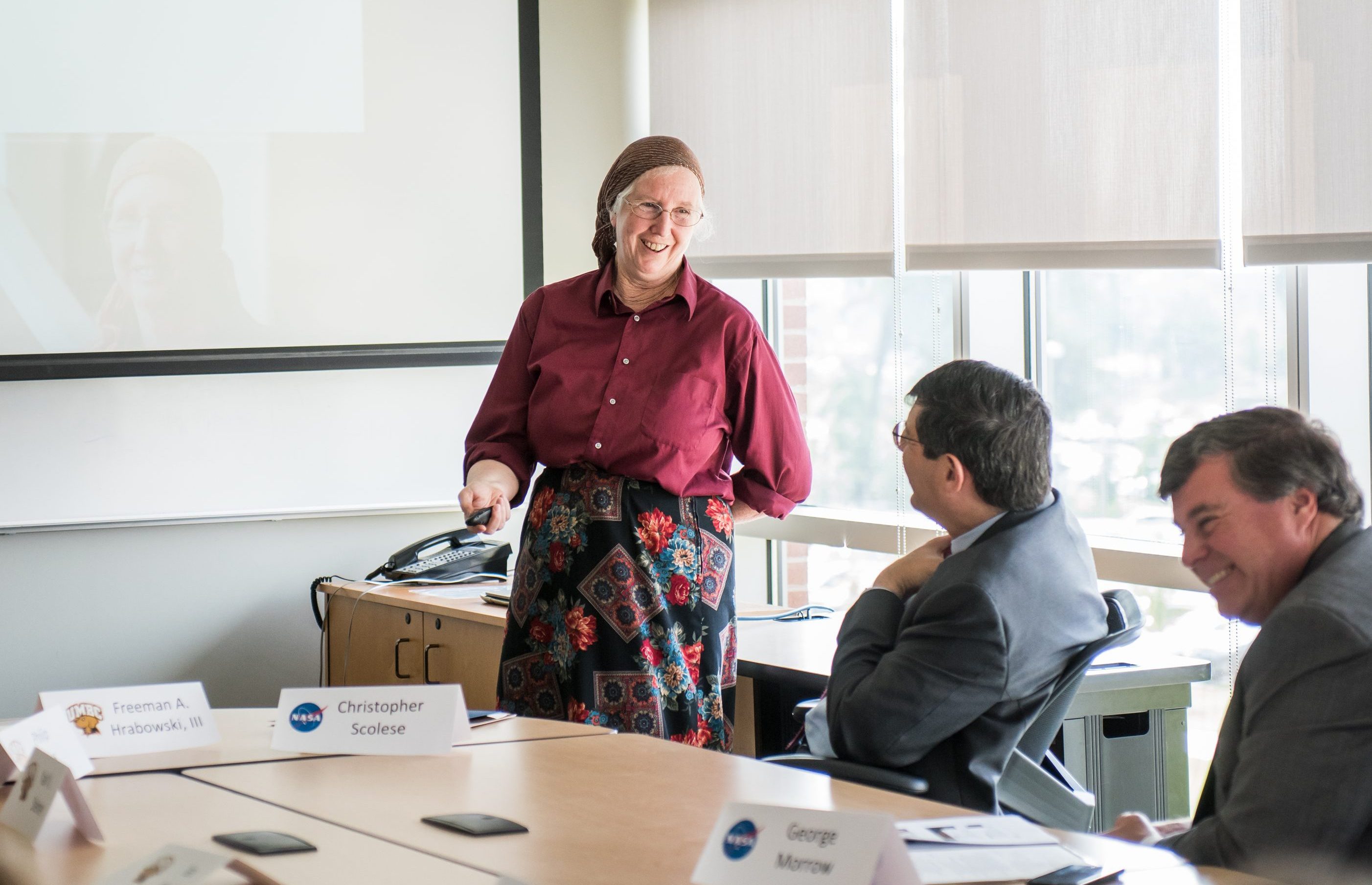
Image: Carole McCann; photo by Marlayna Demond ’11 for UMBC.