All posts by: Sarah Hansen, M.S. '15


Adaku Uchendu to extend passion for mathematics through information sciences Ph.D. at Penn State

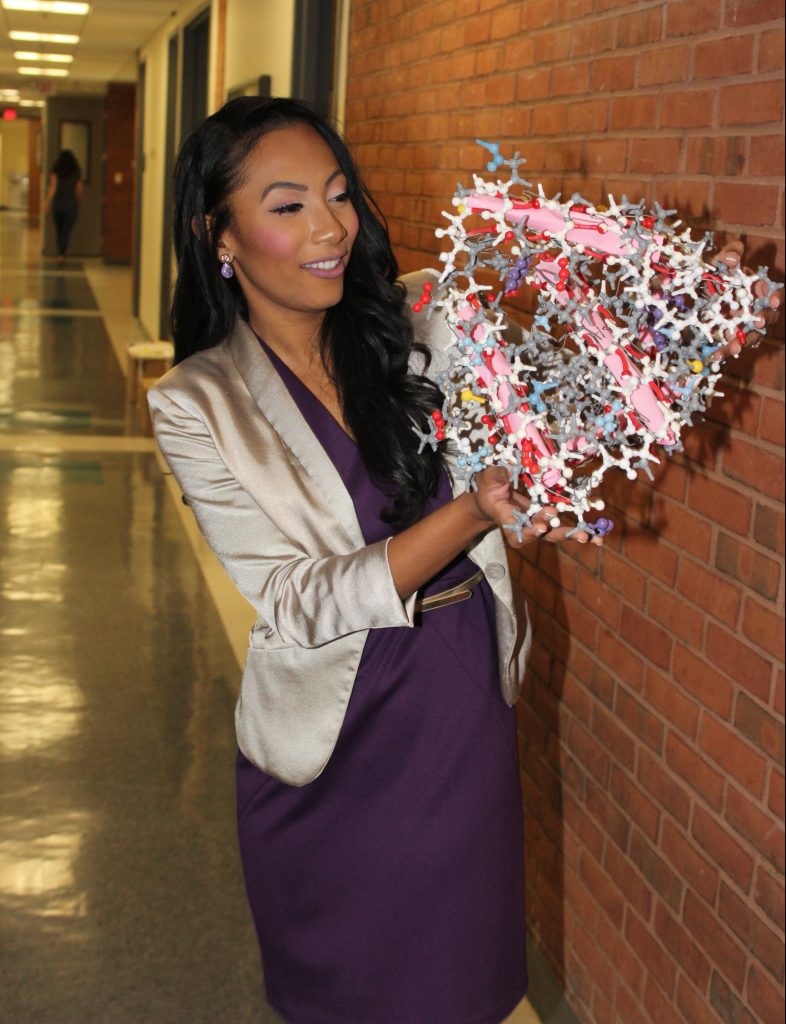
Adaku Uchendu
B.S., Mathematics
Cum Laude
Hometown: Beltsville, Maryland
Plans: Ph.D., Penn State University

A famous saying goes, ‘The sparkle depends on the flaws in a diamond.’ This means all my flaws and strengths make me who I am. Therefore, I can only shine brightly when I accept all of me. I learned this at UMBC.

Adaku Uchendu has had great success as a math major at UMBC, but she actually came to UMBC with the intention of studying biology. “Changing my major took a lot of courage,” she shares, because her love of mathematics did not always translate to high marks in her high school math courses. But her family and professors provided the support she needed to set challenging goals and achieve them, she says, including pursuing high-level mathematics research and competitive internships.

Adaku Uchendu presents “Numerical Simulation of Mechanical Structures” at the University of Maryland McNair Scholars conference. Photo courtesy of Uchendu.

Uchendu joined the UMBC community after graduating from high school in Nigeria. She is a McNair Scholar and received an Undergraduate Research Award to pursue work with Bedrich Sousedik, associate professor of mathematics. She expanded on her research with Sousedik through an internship with the Federal Reserve Board, the central banking system of the United States. She has also joined Pi Mu Epsilon, the mathematics honor society.
“My UMBC journey has been a success due to the support of my parents, the excellent math professors I had, the McNair program, and most of all God, who always has my back,” Uchendu says. She shares her gratitude for that support by paying it forward — tutoring in UMBC’s Math Lab and volunteering with REACH, a student-led group that encourages high school girls in Baltimore City to pursue STEM-related careers by providing mentorship and other resources.
Next fall, Uchendu will begin a Ph.D. in information science and technology at Penn State University, pursuing interests in machine learning, data science, and cybersecurity.
Portrait by Marlayna Demond ’11 for UMBC.
UMBC’s 40th Graduate Research Conference to focus on communication and collaboration

UMBC’s 40th Graduate Research Conference, hosted by the Graduate Student Association on March 28, 2018, will give master’s and Ph.D. students a chance to share their work, receive constructive criticism on their communication skills, and connect with researchers from all corners of the university. This year’s conference will also include talks from Carole McCann, professor and chair of gender and women’s studies, and Taka Yamashita, professor of sociology and gerontology, on the importance of interdisciplinary collaboration, as well as a special presentation by the Alan Alda Center for Communicating Science.

“A major part of the experience as a grad student is to create new knowledge or new modes of creative expression, and to write the best possible thesis or dissertation,” says Jeffrey Halverson, associate dean of UMBC’s Graduate School. As a complement to the research itself, he explains, “the Graduate School also wants to emphasize practicing and honing one’s ‘soft skills’—that is, communicating your results, finding interdisciplinary crossroads to explore, and taking advantage of professional development opportunities.” 

Students will present more than 50 posters and give 20 short talks. Four panels—focused on health, machines, global issues, and communities—will allow graduate researchers to share their work in an interdisciplinary context. All students who present posters or give talks receive feedback from faculty judges on their presentation strengths and how they might more effectively share their work with different audiences in the future.

Lipi Mukherjee, a fifth-year Ph.D. student in atmospheric physics, is participating in the GRC for the second time. The first time, she benefited from both presenting a poster and observing other students’ talks. “It showed me what a good talk looks like, and how you can take advantage of a platform like GRC,” she shares. Her advice? “Take it seriously. It can be your first step in developing your presentation skills, and it is a very unintimidating environment.”

Juan Valdez ‘12, biological sciences, M.S. ‘13, applied molecular biology, a fifth-year Ph.D. student in biological sciences, and a prior GRC participant, agrees. “Any sort of practice in presentation is super valuable,” he says. UMBC’s applied molecular biology master’s program and Bridge to the Doctorate program both required Valdez to present, and he’s glad they did. He says it was scary at first, but he’s seen huge improvements in his presentation skills based on honest feedback from the judges. To uncertain grad students considering presenting, he says, “Just do it.”

Graduate students who are close to completing their degrees may also participate in the Three Minute Thesis (3MT) competition. In the 3MT contest, which began at the University of Queensland in 2008 and now is held at over 200 universities worldwide, graduate students are challenged to present a three-minute talk encapsulating their entire dissertation. The winners continue on to a national competition.

“I think my research is really cool, but sometimes I struggle with trying to explain to people what I do,” says Alex Rittle, a third-year Ph.D. student in geography and environmental systems and a member of the GRC planning committee. “3MT is basically practicing your elevator speech. How do you distill everything you’re doing—which is going to be hundreds of pages of a dissertation—into three minutes? It helps me think about the essence of what I’m doing.”

This year, 3MT participants have had the opportunity to prepare for their talks one-on-one with Scott Morgan, a communication skills expert. After reading Morgan’s book, Mustafa Al-Adhami, M.S. ‘15 and a second-year Ph.D. student in mechanical engineering, was excited for the opportunity to work with him and hone his 3MT presentation. Al-Adhami, who is a budding entrepreneur, notes that “this is how it works in real life—you don’t get much time to present your idea, so I thought the 3MT would be good practice for the future.”

Last year’s 3MT winner, Denise Williams, a third-year Ph.D. student in chemistry, emphasizes that beyond the value of presenting her own work, she’s particularly enjoyed the opportunity to connect with graduate students working in vastly different fields, whom she wouldn’t just run into in the lab or the classroom.

Morgan Bunting, a gerontology Ph.D. student and member of the GRC planning committee, agrees. “GRC gives graduate students training on how to ace professional conferences in the field, and by participating, students practice how to communicate their research in an accessible way,” she says. “It’s also just a wonderful way to engage the community and learn what amazing work is going on in the Graduate School.”

Learn more about this year’s program on the research conference website.

Image: Ashley Wayne Thomas, a Ph.D. student in mechanical engineering, discusses her research with a fellow student at GRC 2017. Photo by Marlayna Demond ’11 for UMBC.

UMBC physicist Sebastian Deffner lays groundwork to better understand birth of the universe

Scientists, across all areas of study, seek to help us better understand the world in microscopic and massive ways. How does it work? What rules does it follow? Theoretical physicists in particular have developed theories that explain how parts of the universe work: classical mechanics for objects at everyday sizes and speeds, quantum mechanics for very tiny objects at everyday speeds, special relativity for things that approach the speed of light. But what about very small objects that also have very high energy, like the universe at the start of the Big Bang?

“This final case—small objects with high energy—is very important if you want to understand where the universe comes from,” says Sebastian Deffner, assistant professor of physics at UMBC. But physics theories to date aren’t quite able to handle it. They assume that systems are at least locally stable, which doesn’t hold for some of the most interesting cases, from the Big Bang to black holes. Deffner adds, “If we want to understand all these cosmological models, and we want to understand the thermodynamics of the universe, we actually have no means to do that.” That may be about to change.

Deffner’s new paper in Physical Review X with co-author Anthony Bartolotta, a Ph.D. candidate at Caltech, builds on an explosion of research in the field of quantum stochastic thermodynamics in the last decade. This field describes the laws of thermodynamics—one of the fundamental pillars of physics—at a microscopic level for the first time. Importantly, it takes into account how their immediate surroundings affect small systems in a way that differs from how the environment affects larger systems. Deffner and Bartolotta’s work extends this field even further to examine tiny systems at very high energies that are changing quickly.

That extension “is really uncharted territory…a completely new idea,” says Deffner. “And the reason no one has done it before is because stochastic thermodynamics is only 20 years old. Quantum stochastic thermodynamics is only 10 years old. As a field, we’ve just learned how to stand. We don’t even know how to walk yet.”

The work is pioneering, but it fits into a larger ecosystem of existing physics theories. For example, in everyday systems, you intuitively expect that if you put one particle in, you will get the same one particle out. It might be going faster or slower, or in a different direction, but it’s still the same single particle. However, at high energies, like those generated at the Large Hadron Collider in Switzerland, it’s actually possible to end up with a different number of particles than you started with. The famous equation e = mc2 allows mass to be created from energy when the energy is extremely large. Deffner and Bartolotta found that in their model system with high energy and at small scale, the system was much more likely to return multiple particles upon sending in just one, than to come out with the initial particle and no more, which was a huge surprise.

The math to calculate it all was “incredibly hard,” Deffner reflects, but the end result, which involved finding a way to compute an infinite number of possibilities, “was actually quite beautiful,” says Bartolotta. He shares, “Our hope is that this paper will now open the doors for other people in other fields that previously couldn’t use these techniques to now use them.”

Deffner’s overall research goal is to broaden the uses of the framework of thermodynamics, “until we find neat things that no one has ever seen before,” and his latest paper fits that bill.

“I’m still totally blown away by the result,” Deffner says, but he’s also already contemplating possibilities for future research directions. When it comes to untangling the mysteries of the early universe, he notes, “there’s a lot that we have to do next.”

Image: Sebastian Deffner, photographed by Marlayna Demond ’11 for UMBC.
UMBC physicists discover unexpected effect of African wildfires on climate

Clouds play a prominent role in moderating Earth’s climate, but their role is still poorly understood. Generally, clouds cool the Earth by reflecting incoming sunlight back out into space. Reducing the clouds’ reflectivity—with a layer of pollution, for example—reduces the cooling effect. However, new research in Proceedings of the National Academy of Sciences by Zhibo Zhang, associate professor of atmospheric physics at UMBC, two of his students, and collaborators from University of Wyoming, University of Science and Technology of China, Universities Space Research Association, and University of Michigan adds another level of complexity to this model.

Every fall, fires race across central and southern Africa. Many are wildfires; others are intentionally set by humans to clear farmland. They create so much smoke that it’s clearly visible from space. Wind sweeps the smoke westward over the Atlantic Ocean, where it rises above the largest semi-permanent gathering of clouds in the world. For years, scientists believed that overall, the smoke diminishes the clouds’ cooling effect by absorbing light that the clouds beneath otherwise would reflect. The new study by Zhang and colleagues doesn’t dispute the existence of this effect, but introduces a new mechanism that counteracts it by making the clouds more reflective.

“The purpose of this paper is to look at these competing processes. Which one is more important?” asks Zhang. A previous paper by Chamara Rajapakshe, a Ph.D. candidate in Zhang’s group (the UMBC ACROS group) and co-author on the new paper, was crucial to answering that question. Using data from a LiDAR system on the International Space Station, Rajapakshe found that the smoke and cloud layers are much closer to each other than previously observed. That means the smoke, which is in the form of tiny particles known as aerosols, can physically interact with the clouds, affecting how they form at the microscopic level. Previous studies usually overlooked these microphysical changes caused by aerosols’ interactions with the clouds.

Clouds need “seeds” to grow. A seed can be any tiny particle around which cloud droplets condense. Aerosols are perfect for seeding clouds, and with more seeds, many small cloud droplets replace fewer large droplets, which then collectively reflect more light and increase the cooling effect.

The team found that in smoky conditions, there are almost twice as many “seeds” per cubic centimeter. By running computer simulations under different conditions, they determined that overall, “The seeding effect is winning,” Zhang says. So, contrary to long-held understanding, the overall effect of the hovering smoke on the clouds near Africa appears to be a cooling one.

Zhang is quick to point out that this result is not an argument in favor of fires. “Aerosols are a very local phenomenon, and they are also short-lived,” he says, so their cooling effects are short-lived, too. “The lifetime of carbon dioxide and other greenhouse gases,” which are released in abundance when plant material burns, “is hundreds of years.”

The team’s ultimate goal is to refine global climate models by improving how they account for clouds. Zhang’s other Ph.D. student and another co-author, Zhifeng Yang, has contributed to that effort by analyzing data collected by a satellite that stays put in the sky (rather than orbiting Earth) to get a more accurate sense of how cloud cover changes in daily cycles.

The next step is to evaluate existing climate models against the team’s new finding. “Now that we know there are two competing mechanisms, and the seeding effect is winning, we can see whether climate models consider these processes properly when they predict the weather and climate in this area,” explains Zhang.

Zhang, Rajapakshe, and Yang are excited to present their findings to the atmospheric physics community in their new paper, and to continue working in this area to further improve climate models—but the more they learn about the complexity of the processes involved, the harder it gets.

“First we had to simulate the clouds correctly. Then we had to simulate the aerosols correctly, and now we have to also simulate the interactions between them correctly,” says Zhang. “It’s becoming a much harder question to address.”

Still, they are up for the challenge. A new NASA mission called PACE is expected to launch in 2020. It will be able to detect polarized light, in addition to everything LiDAR can do.

“With the new satellite you can look at things from different perspectives,” says Zhang, and develop three-dimensional models of the interactions between aerosols and clouds. “Hopefully we can look at this phenomenon even better.”

Beyond the upcoming NASA mission, what really excites Zhang and his team is the opportunity to play a role in making sure communities around the world have the best information available as they prepare for the effects of climate change.

Image: View from a data-collecting aircraft over the Atlantic Ocean, where a layer of smoke is visible above the clouds. (NASA/Kirk Knobelspiesse)

Two species of ravens nevermore? UMBC research finds strong evidence of “speciation reversal”

For over a century, speciation—where one species splits into two—has been a central focus of evolutionary research. But a new study almost 20 years in the making suggests “speciation reversal”—where two distinct lineages hybridize and eventually merge into one—can also be extremely important. The paper, published in Nature Communications, provides some of the strongest evidence yet of the phenomenon, in two lineages of Common Ravens.

“The bottom line is [speciation reversal] is a natural evolutionary process, and it’s probably happened in hundreds or almost certainly thousands of lineages all over the planet,” says Kevin Omland, professor of biological sciences at UMBC and final author on the new study. “One of our biggest goals is to just have people aware of this process, so when they see interesting patterns in their data, they won’t say, ‘That must be a mistake,’ or, ‘That’s too complicated to be correct.’”

“We examined genomic data from hundreds of ravens collected across North America,” says Anna Kearns, the study’s first author and a former postdoctoral fellow at UMBC, who is now a postdoc at the Smithsonian Center for Conservation Genomics. She explains, “Integrating all of the results across so many individuals, and from such diverse datasets, has been one of the most challenging aspects of this study,” but that effort was worth it. “Next-generation genomic techniques are revealing more and more examples of species with hybrid genomes,” she says.

When Omland initially began work on this project in 1999, Common Ravens were considered a single species worldwide. He thought further research might uncover two distinct species—perhaps an “Old World” and “New World” raven—but the real story is much more complicated. Omland reported the existence of two Common Raven lineages in 2000, one concentrated in the southwestern United States dubbed “California,” and another found everywhere else (including Maine, Alaska, Norway and Russia) called “Holarctic.”

Since then, the plot has thickened. Two undergraduates in Omland’s lab, Jin Kim ’16, biological sciences, and Hayley Richardson ’17, statistics, who were supported by the NSF-funded Interdisciplinary Training for Undergraduates in Biological and Mathematical Sciences program, analyzed mitochondrial DNA from throughout the western United States and found the two lineages are extensively intermixed. In 2012, the Norwegian Research Council provided major funding for the project and Kearns spent a year at the University of Oslo analyzing nuclear genome data.

The best explanation based on the team’s analysis is that the California and Holarctic lineages diverged for between one and two million years, but now have come back together and have been hybridizing for at least tens of thousands of years.

“The extensive genetic data reveals one of the best supported examples of speciation reversal of deeply diverged lineages to date,” says Arild Johnsen, professor of zoology and evolutionary biology at the Natural History Museum of the University of Oslo and another leader of the study. “The biggest thing is the degree to which we’ve caught them in the act,” adds Omland.

How does this relate to people? Humans are also a product of speciation reversal, Omland notes, with the present-day human genome including significant chunks of genetic material from Neanderthals and Denisovans, another less well-known hominid lineage. Recent genetic studies have even indicated a mysterious fourth group of early humans who also left some DNA in our genomes.

“Because speciation reversal is a big part of our own history,” says Omland, “getting a better understanding of how that happens should give us a better sense of who we are and where we came from. These are existential questions, but they are also medically relevant as well.”

Next steps in the current avian research include analyzing genetic data from ravens who lived in the early 1900s to investigate the potential role of humans in the speciation reversal process. “Getting genomic data out of such old, degraded specimens is challenging,” says Kearns, “and all work must be done in a special ‘ancient DNA’ lab at the Smithsonian’s Center for Conservation Genomics.” If those ravens have a similar distribution of genes from the Holarctic and California lineages as the ravens living today, it’s unlikely changes in human civilization over the last century played a role.

Co-author John Marzluff, professor of wildlife science at the University of Washington, sums up the experience of being part of such an important study. “It is fascinating to me that this complex history of raven speciation has been revealed. For decades my students and I held and studied ravens throughout the West and never once suspected they carried evidence of a complex past,” he says. “Thanks to collaborations among field workers and geneticists we now understand that the raven is anything but common.”

This research has been published in The Washington PostThe Guardian, National Geographic, Atlas ObscuraScience Magazine, and many others.

Banner image: Two ravens preening, photo by John Marzluff.
Other images: Ravens, photos by Bjørn Aksel Bjerke.

UMBC’s Chris Swan featured in The Atlantic for transforming vacant lots in Baltimore

Baltimore, like many large U.S. cities, struggles to manage thousands of vacant lots. Most of these lots consist of a thin layer of nutrient-poor soil over demolition debris, with hardy grasses poking up here and there, but UMBC’s Chris Swan, professor of geography and environmental systems, is working to break this mold.

Swan and his collaborators have planted native wildflower seeds in dozens of vacant Baltimore lots since 2014, and now more than 50 percent of the plants in those plots are native species like black-eyed Susans and purple coneflowers. A new article in The Atlantic discusses the promise and challenges of Swan’s ambitious project.

Swan’s work is part of the Baltimore Ecosystem Study, launched in 1997, and lies at the intersection of the natural and social sciences. He is scientifically investigating which native plants survive best and absorb the most pollutants in abandoned urban lots while simultaneously navigating neighbors’ reactions and city policies. “Science is hard, but this”—managing competing interests and expectations—“is really, really hard,” Swan says.

As The Atlantic describes, there have been setbacks, such as the day some of his plots were unceremoniously mowed in preparation for a neighborhood visit from the mayor. Still, Swan is excited by how much the project has grown over the past few years, and his early findings. Eventually, he hopes to discover a Goldilocks concoction of plants that tolerate the poor soil, attract native pollinators, and reduce runoff of contaminant-laced water into the Chesapeake Bay.

To find the magical combination, twice a year Swan and his team collect tens of thousands of measurements from the plots. “The data collection is enormous,” Swan tells The Atlantic, and it’s only going to increase heading into the summer, as Swan begins using drones to collect even more data about plant growth.

Swan intends to continue the project for five to 10 more years, but recognizes that the ultimate goal is not to turn the city into a wildflower meadow—it’s to reinvigorate neighborhoods that have a high proportion of vacant land. That means that while some plots might thrive with plant life for years, others might be developed, based on local needs and investments.

Even though the challenges are significant and the plots aren’t permanent, Swan is dedicated to helping the city make incremental improvements, and to moving forward the conversation about urban ecology in Baltimore. “The idea is to take a problem that is huge,” he tells The Atlantic, “and try and work toward a way of managing that space that’s better than it is now.”  For now, he’s gratified to hear neighbors share their delight at spotting new birds and lightning bugs in the area, attracted by his team’s wildflowers.

Read the entire article in The Atlantic, “The ecologists turning vacant lots into labs.”

Image: Chris Swan. Photo by Marlayna Demond ’11 for UMBC.

UMBC physicists develop cost-saving tech for detecting gravitational waves and other applications

In 2016, Jane Sprigg, Ph.D. ’16, physics, submitted a research paper demonstrating a technique that would enable a camera to snap crystal clear images from an airplane or satellite, even over deserts with air turbulence caused by severe heat. Her paper was rejected. Despite strong evidence presented in the paper, one reviewer refused to accept the idea that quantum theory could apply to light other than lasers—and physicists agree that classical theory does not lead to turbulence-free imaging. Sprigg has since successfully pursued her invention in industry, but the academic world remains skeptical.

Yanhua Shih, professor of physics and Sprigg’s advisor, told his new Ph.D. student, Thomas Smith, that the physics community didn’t think it was possible to use ideas from quantum theory, specifically quantum interference, to create turbulence-free measurements. Smith replied simply, “Why don’t we demonstrate that it is?” In less than a year, the pair has done so in a context other than a camera (with the help of the lab’s toaster oven), and they have just published their results in Physics Review Letters, a premier physics journal.

The paper demonstrates Smith and Shih’s development of an interferometer, a device that uses the interference of light to make precise measurements, that is unaffected by turbulence in the air. “For now, large interferometers with high sensitivity have to be put in a vacuum to avoid atmospheric turbulence and vibrations,” says Shih. “Our research shows how you could just put them in the open air—no problem.”

Accommodating the limitations of today’s interferometers can be quite costly, especially for devices precise and large enough to detect elusive gravitational waves from outer space. “Detecting gravitational waves is the most expensive use of the vacuum, because it’s on such a large scale,” says Smith.

Their setup is a modification of a classic type of interferometer, called the “Young’s double-slit,” where light hits a plate with two slits and passes through to a detector beyond the slits. The detector counts the number of light particles (photons) that strike it per second. Analysis software uses that information to calculate the interference (how the light particles interact), which depends on the likelihood of a photon passing through one slit or the other. That’s where the quantum part comes in—at the single particle level, you can’t know for certain which path the photon took, so the analysis is based on probabilities of the potential paths. It’s as if the particle is “interfering with itself,” says Shih, quoting renowned theoretical physicist Paul Dirac.

In Smith and Shih’s interferometer, there is still a plate with two slits, but there are two detectors waiting to count photons on the other side. Much more complex software is interested in how many times one photon strikes the first detector and another photon strikes the second detector within each of many tiny time windows. In typical interferometers, any turbulence in the air will unequally affect the two possible paths of a single photon (either through the first or second slit) and disrupt the interference measurement. In this case, however, the photons are analyzed as pairs. It is possible for the two possible paths of the photon pair to be identically affected by turbulence, so that it does not alter the interference pattern—leading to a result that is “turbulence-free.” In this situation, Shih explains in a nod to Dirac, “the pair is interfering with itself.”

The physics is complex, but Smith says one of the hardest parts was generating enough turbulence in the lab to get strong results. First he tried candles; then they tried heat guns. In the end? At the recommendation of fellow Ph.D. student Brian Uthe, “I took the toaster oven and deconstructed it partially, and I’m using the toaster oven right now,” Smith explains. “Sometimes when you’re doing an experiment, it’s not the high-tech part, but the low-tech part that is the problem,” says Shih with a smile.

Both authors are hoping their new research will bring about a sea change in the physics community, and encourage even the most traditional physicists that quantum interference applies in optics experiments using non-laser light. “It should change the whole picture,” says Shih. There are already signs that they’re stirring the pot: Smith has given invited talks at three major conferences, including at Princeton University in front of physics giants from around the world. Next steps include trying to apply the same principles to other types of interferometer.

Smith, who is in his first year in Shih’s lab, is trying to absorb it all. “It’s a bit overwhelming,” he says. “I guess what’s most exciting for me is that we are working on fundamental physics, and I enjoy working at the basic fundamental level—discussing single photons and quantum interference,” and even so, it’s easy to imagine where the work could lead him. From cameras that can see through heat waves to confirming Einstein’s fundamental theory by detecting gravitational waves in open air, “what’s exciting is seeing the potential applications ahead of us.”

Image: Large interferometers that are part of the Dominion Radio Astrophysical Observatory in Penticton, British Columbia. Photo by Mark Klotz, used under CC BY-NC 2.0.

UMBC scientist opens a “new chapter for biochemistry” with $1.5 million NIH grant to study sugar metabolism

UMBC’s Songon An is on a quest to explain how enzymes direct sugar metabolism through research with implications for cancer treatment. Scientists already know a great deal about how individual enzymes work in a test tube, but “once we move into the living cell system, we barely know about the enzymes,” says An, assistant professor of chemistry and biochemistry. With a new $1.5 million NIH grant, his lab is working to change that.

To explore how enzymes interact and form complex biochemical pathways in the body, An is using various biochemical and imaging techniques from biochemists and biophysicists. New, three-dimensional imaging techniques developed by Minjoung Kyoung, assistant professor of chemistry and biochemistry, will help examine the pathways at work inside living cells. A mathematical model developed by Hye-Won Kang, assistant professor of mathematics and statistics, supports the project.

The research focuses on two processes related to glucose metabolism: One produces energy for the cell to use, and the other generates compounds that assist in building the components of proteins and DNA, supporting the organism’s growth and repair. These two processes start out with the same first steps, and then diverge to generate different small molecules referred to as “metabolites.”

“What decides the direction of the pathway flux?” An is asking. His hypothesis, which his lab will test with the new grant, has to do with the physical arrangement of the enzymes in living cells. The enzymes that catalyze glucose metabolism physically group together, forming complexes that An has dubbed “glucosomes.” Each glucosome contains at least four critical enzymes, and the glucosomes further group together in the cell, forming glucosome clusters.

An hypothesizes that the enzymes present within the clusters and communication among the enzymes determines which metabolic process a given region in the cell favors at a given time. Interestingly, the size of the glucosome clusters also appears to play a role in determining which metabolic pathway dominates, and An intends to test that idea as well. Preliminary data suggest that single-enzyme concentrations (separate from the glucosomes) promote energy production, and multi-enzyme glucosome clusters favor churning out building blocks to grow the organism.

“Eventually, what I’d like to do, if technology allows, is to pinpoint individual clusters in the live cell, and put in some sort of probe to measure the level of the metabolites,” An says. “Then, if this hypothesis is correct, we will see different concentrations of metabolites in clusters of different sizes.”

Most imaging techniques only allow a researcher to detect where an enzyme is, not how much of a given metabolite a reaction is producing. An is hoping to use a more refined technique called secondary ion mass spectrometry (SIMS) to examine cells’ metabolite concentrations. This technique has been successfully applied to detect lipids on the surface of cells, but never metabolites inside cells or related to glucose metabolism. In addition to incorporating Kyoung’s imaging expertise, An is collaborating with researchers outside UMBC who have experience with this challenging, new technique.

Beyond gaining a more complete understanding of the fundamental regulation of glucose metabolism, An seeks to contribute to cancer treatment. Preliminary data suggest that the largest glucosome clusters appear only in cancerous cells, and An is applying for another grant to further test that hypothesis. Patients who donated cancerous cells also donated healthy ones, so An’s team will be able to look for differences between them.

If An’s hypotheses are confirmed, the next challenge will be translating the new knowledge into a treatment that will break up the large clusters without interrupting the function of individual enzymes. “If small molecules inhibit the enzyme activity in diseased cells, they will inhibit the same enzymes in healthy ones as well,” An explains. “So what we’re trying to find is a small molecule that will simply dissociate the cancer-relevant large clusters, without inhibiting the enzyme activity.”

This new area of research is the reason An came to UMBC in 2011. “I’m hoping that in the future many people will be working in this area of cellular biochemistry, studying many metabolic enzymes in living cells,” and, eventually, “connecting the cellular level to the animal level, so we don’t have a scientific gap of understanding metabolism from a test tube to the human body,” he says.

By using fresh imaging techniques in new ways and employing mathematical modeling, An is moving past assumptions of what biochemistry can be, and he’s excited about the possible breakthroughs ahead. “We are opening up a new chapter for biochemistry in the cell,” he says. “This is the next stage of biochemistry.”

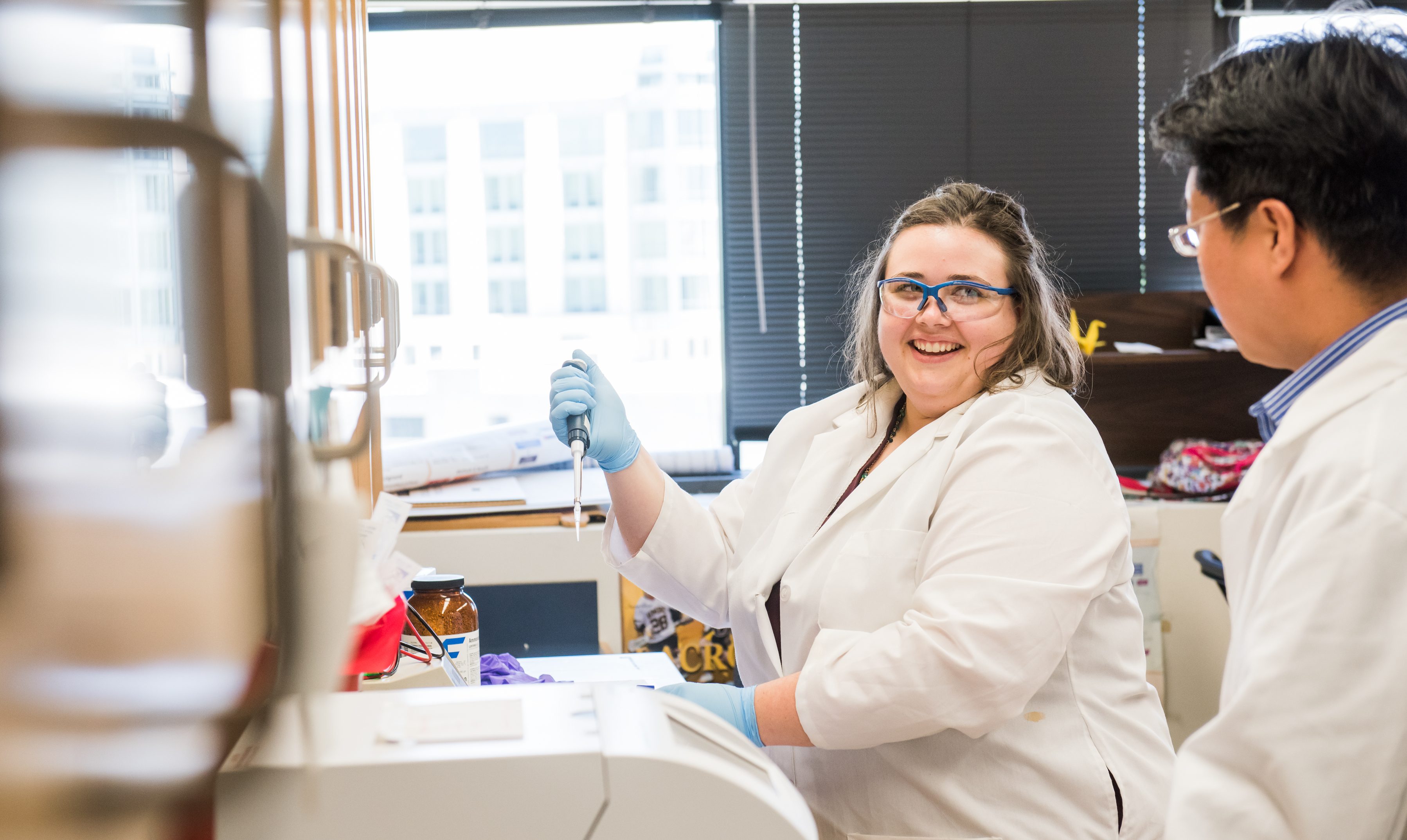
Image: Songon An, assistant professor of chemistry and biochemistry, and Danielle Schmitt, Ph.D. ’17, biochemistry, working in the lab; photo by Marlayna Demond ’11 for UMBC.

UMBC space scientist further confirms Einstein’s theory through new solar research

New research by Sander Goossens, associate research scientist at UMBC’s Center for Space Science and Technology, and colleagues offers a fresh perspective on a question of universal importance. The study, published in Nature Communications, employed a novel method to learn more about the Sun and further confirmed the constant G, the mainstay of Einstein’s theory of general relativity that predicts how extremely large masses warp space-time.

To address such big ideas, “You need the solar system as your laboratory,” says Goossens. The research team, led by Antonio Genova, research scientist in MIT’s Department of Earth, Atmospheric, and Planetary Sciences, used data collected by NASA’s MESSENGER satellite, which orbited Mercury from March 2011 to April 2015 and carried out “flyby” observations in 2008 and 2009. By tracking and analyzing the orbits of Mercury and MESSENGER over several years, the team was able to separate out the various causes of tiny changes in their orbits.

The Sun’s gravity is the biggest factor that keeps the planets in orbit. As the Sun slowly loses mass from interior processes and the solar wind—which constantly rips particles away from the upper atmosphere of the Sun—its gravity weakens, the planets’ orbits creep away from the Sun, and the solar system expands. The team found that the Sun is losing mass at a rate of 0.1 percent per 10 billion years, causing the planetary orbits to shift by 1.5 cm per year per astronomical unit (the distance between Earth and the Sun).

Other factors also affect the planets’ orbits, such as the Sun’s “oblateness” (how much it bulges in the middle, rather than being a perfect sphere) and how much it warps space-time by virtue of its goliath size, which is described by relativity theory. The team was able to estimate relativity-related parameters, confirming Einstein’s theory beyond what previous studies have found.

This study also further constrained the value of the constant G, which governs gravity’s effect on objects. Scientists continue working to demonstrate that G remains constant in as many contexts as possible. This adds evidence for the hypothesis that G is constant across the universe and hasn’t changed since the Big Bang.

“To some people it might sound like, ‘Well, there’s another confirmation of Einstein’s theory,’ but those are important because we have no idea at what level things might deviate,” says Goossens. He explains, “It’s a constant, so people expect it to be constant, but it’s always been a question whether or not G varies with time, and we’ve been able to put quite tight constraints on that.”

This work is an example of the wide range of questions that can be addressed with a NASA mission like MESSENGER. “This study demonstrates that charting the orbits of planets, such as Mercury, may provide simultaneous new findings in different disciplines,” says Genova, from heliophysics—the study of the sun and its effects on the solar system—to theoretical physics, which includes the study of gravity.

This study is the first to calculate the Sun’s mass loss and oblateness based on observation as opposed to theory alone. Also, previous studies had taken Mercury’s orbit as fixed, based on data from NASA’s Jet Propulsion Laboratory, and actively measured only the satellite’s orbit. Genova, Goossens, and colleagues used an innovative approach, yielding more accurate results.

“In this case, we modeled both the orbit of Mercury and the orbit of the satellite,” explains Goossens, “and in a similar way that we normally determine the satellite orbit, we now simultaneously determined Mercury’s and the satellite’s orbit.”

Eventually, Goossens would like to see this type of analysis expanded even further, to consider more than two celestial bodies at once—perhaps even the entire solar system. Even looking at other pairs of bodies, such as the Sun and a different planet, would be a boon for general relativity experts who have a range of ideas about Einstein’s theory, he says. “Perhaps this could show a way forward for testing those theories as well.”

Find the complete research article, “Solar system expansion and strong equivalence principle as seen by the NASA MESSENGER mission” by Genova et al. in Nature Communications.

For more on Goossen’s work with NASA, including the GRAIL mission, see coverage of his research on a massive Moon crater, published in Science.

Image: An artist’s conception of the MESSENGER satellite as it orbits Mercury; photo provided by NASA.

UMBC’s Sebastian Deffner explains how the “quantum speed limit” may put brakes on quantum computers

Classical computers have been getting faster, more powerful, and more compact for decades, but they may be reaching their limits, writes Sebastian Deffner, assistant professor of physics, in The Conversation. People have pinned their hopes on quantum computers for the next leap forward in computing technology, he explains, “but my recent research has revealed that quantum computers will have limits of their own, and has suggested ways to figure out what those limits are.”

The physical laws that govern quantum computers, known as quantum mechanics, are very different from the laws that govern classical computers—and everything else in the physical world with which we are familiar. For example, in the “quantum world,” where the largest objects are about the size of individual atoms, an observer can either know an object’s speed or its location—but never both at the same time.

“It is important to realize that this ‘quantum uncertainty’ is not a shortcoming of measurement equipment or engineering, but rather how our brains work,” says Deffner. “We have evolved to be so used to how the ‘classical world’ works that the actual physical mechanisms of the ‘quantum world’ are simply beyond our ability to fully grasp.”

Most people have a general, intuitive understanding of how a combustion engine burns fuel to release energy, for example. There are theoretical limits to gasoline engines that prevent cars from going at the speed of light, but other challenges to the efficiency of engines get in the way first, so in practice we don’t need to consider the ultimate limitations to combustion engines.

“Until recently, though, scholars only had a rather vague idea that quantum physics had limits too,” says Deffner, “but didn’t know how to figure out how they might apply in the real world.” Deffner has been on the cutting edge of finding those limits and defining their applications. “It’s not clear whether the quantum speed limit is so high it’s unattainable—like the car that will never even get close to the speed of light,” he writes, which means it may be important for the future of computing to figure out how the quantum speed limit affects computers that operate in the quantum world.

Fundamental physical limits impose a delay on detecting an object in the quantum world. Each delay is only a few quadrillionths of a second, but the delays accumulate across a computer’s millions of computations. That prevents a quantum computer from going arbitrarily fast and results in an overall quantum speed limit.

Deffner’s research group has found that the quantum speed limit can differ depending on a quantum computer’s design, and sometimes, “unexpected factors can help speed things up, at times, in counterintuitive ways.”

As an example of how the quantum world operates differently from the classical one, Deffner compares the speed of a quantum computer to a particle moving through water versus honey. You might expect the particle in honey to move more slowly, but in the quantum world, the displaced honey filling in the path where the particle has just traveled “can build up pressure that propels the quantum particle forward. This extra acceleration can make a quantum particle’s speed limit different from what an observer might otherwise expect.”

Growing researchers’ understanding of the quantum speed limit and how different factors may modify it will likely influence quantum processor design, Deffner says, noting, “There’s a lot for researchers like me to explore.” A pioneer in the field, Deffner has already published several papers related to the quantum speed limit, with more on the way.

“Just as engineers figured out how to shrink the size of transistors and pack them more closely together on a classical computer chip,” Deffner writes, “they’ll need some clever innovation to build the fastest possible quantum systems, operating as close as possible to the ultimate speed limit.”

As of January 18, 2018, Sebastian Deffner’s article in The Conversation has been viewed more than 40,000 times and republished in The Chicago Tribune, Live Science, RealClearScience, Space.com, Phys.org, and World Economic Forum.

Image: Sebastian Deffner, photo by Marlayna Demond ’11 for UMBC.

UMBC physicists’ finding has potential to springboard quantum computing to major advances

A discovery by UMBC theoretical physicists could improve the performance of one type of quantum computer enough to stimulate major progress in its development, enabling more practical uses of quantum computers in the future. Classical computers (the kind we use every day, from fitness trackers to desktops) compute by toggling their building blocks, or “bits,” between zero and one, so each bit has only two possible states. But the bits that make up quantum computers, called “qubits,” take advantage of quantum mechanics to access many more possible states, allowing faster and more secure computations.

Quantum computers can be constructed from a range of materials. Those based on superconducting materials have made great strides in recent years, but those based on semiconducting materials lag behind because they are plagued by noise: Even extremely small disturbances in the area surrounding their qubits can render an entire system useless. The new finding from UMBC introduces a set of conditions under which the qubits are not negatively affected by noise. Using those conditions could increase computational precision from a maximum of 90 percent to as high as 99.9 percent, pushing the computers closer to a critical threshold of usability.

The new finding “is attacking the bugaboo of this whole class of possible quantum computers,” says Jason Kestner, assistant professor of physics at UMBC and final author on the new paper in Physical Review B. And yet, Michael Wolfe ’17, physics, and first author on the paper, says the finding “is something we stumbled across almost by accident.”

Kestner didn’t expect anything Earth-shattering when he assigned Wolfe an undergraduate research project cataloging the errors caused by noise in a model of semiconductor-based quantum computers. Wolfe says his results were suspicious when they came back predicting a “sweet spot”—a set of parameters where the qubits weren’t affected by noise. After a careful look, however, they realized the sweet spot was indeed predicted by the model, which had been developed by Fernando Calderon-Vargas, Ph.D. ’16, physics. At that point, “I just told [Michael] to drop everything and to look into this,” Kestner says.

Further examination confirmed Wolfe’s initial results indicating the existence of the sweet spot. Controlling the qubits, which in semiconducting quantum computers are microscopic structures made of pairs of electrons, in a certain way prevented noise from disrupting the computer’s computations, but didn’t interrupt the interactions between qubits that are necessary for the computer to function. Using this sweet spot, a computer could complete anywhere from 10 to 100 times more computations before it accumulated too many errors to continue operating accurately.

That kind of improvement gives semiconductor-based quantum computers a chance at catching up to their superconductor-based peers, which don’t suffer as much from the same challenges associated with noise. That’s why the superconductors are “miles ahead right now,” says Kestner, even though semiconductors come with their own set of advantages. “We’re really hopeful that this ends up being a really useful technique for people with this particular type of qubit.”

Next, it’s up to experimental physicists to test out the sweet spot with physical qubits. Wolfe is making sure he’s one of them. On a Fulbright Fellowship at RWTH Aachen University in Germany, Wolfe says, “I’m convincing our team to search for this mysterious sweet spot, despite initial doubts.” If they find it, semiconducting quantum computers could “get comparable attention from big companies like IBM, Google, Microsoft, and Intel who are investing millions of dollars into other qubit platforms,” says Wolfe, so that the true potential of this quantum computing platform could be explored more fully, potentially even surpassing superconductor-based quantum computers for certain uses.

One of the best aspects of the new finding is that it doesn’t require experimentalists to do anything fundamentally differently—only to choose the parameters wisely for experiments they’re already doing. That should make implementation much easier. Next steps for Kestner’s lab include refining Calderon-Vargas’ model to pinpoint “some of the more nitty gritty details,” says Kestner, which is likely to slightly alter the recommended parameters. “We want to try to make sure we get the details right,” he says. “That’s the next step.”

Image: From left to right, Fernando Calderon-Vargas, Ph.D. ’16, physics; Jason Kestner, assistant professor of physics; and Michael Wolfe ’17, physics, in Kestner’s office. Photo by Marlayna Demond ’11 for UMBC.

UMBC launches program to prep students for biotech careers in partnership with Montgomery College and The Universities at Shady Grove

A new degree program developed jointly by UMBC and Montgomery College (MC), and soon to be offered at The Universities at Shady Grove (USG), will create opportunities for students of all backgrounds to pursue high-demand careers in the life sciences. The four-year Translational Life Science Technology (TLST) program, which leads to a bachelor of science degree from UMBC, will train students in the fundamentals of biochemistry, cell biology, epidemiology, statistics, lab instrumentation, and biochemical engineering, as well as give students opportunities to develop sought-after skills such as analytical thinking, teamwork, and data evaluation. The TLST program is accepting students now, and courses will begin in fall 2018.

“As the biotechnology industry translates basic research from ‘bench to bedside,’ it needs a well-trained workforce,” says Dean Bill LaCourse, of UMBC’s College of Natural and Mathematical Sciences, within which the TLST program resides. “The TLST program is designed from the ground up to meet that need through a flexible and interdisciplinary approach with intensive industry-inspired laboratory skills training.”

Students begin coursework for the TLST program at Montgomery College, taking classes at the new, state-of-the-art Bioscience Education Center on its Germantown, MD campus for the first two years. Successful completion of that curriculum results in an A.A.S. in biotechnology or other associate’s tracks from Montgomery College.

The Biomedical Sciences and Engineering Education Building at The Universities at Shady Grove in Rockville, MD is scheduled for completion in 2019, and will then host the third and fourth year courses of the TLST program.  Both the USG and MC facilities are in the heart of Maryland’s technology corridor and offer well-equipped classrooms and labs where students can master techniques commonly called upon in the biotech industry, such as polymerase chain reaction, gel electrophoresis, gene cloning, mass spectroscopy and chromatography.

The need for workers with these skills is especially great in Maryland, which is one of the top-ranked regions in the nation for its concentration of technology-related jobs. Of the more than 2,300 biotech companies in the state, more than 75 percent are found in Montgomery County, the location of both MC and USG.

“The Universities at Shady Grove is pleased to bring UMBC’s Translational Life Science Technology degree program to Montgomery County,” says Stewart Edelstein, executive director of The Universities at Shady Grove, a regional higher education center in Rockville, MD that hosts courses offered by nine Maryland institutions. “This degree program is the first of its kind in Maryland and is specifically designed to provide the skilled talent needed to support the region’s growing bioscience and biotechnology industry.”

UMBC’s collaboration with Montgomery College adds to the university’s growing list of active partnerships with Maryland community colleges that support the success of Maryland students. “The collaboration between two great institutions, Montgomery College and UMBC, provides a national model for developing a pathway to a bachelor of science degree,” explains Sanjay Rai, senior vice president for academic affairs at Montgomery College. MC has offered A.A.S. degrees in biotechnology and biomanufacturing for more than 20 years, and the new, joint program with UMBC will expand opportunities for students in Montgomery County interested in the field.

“Students will graduate with a combination of ‘know-what’ and ‘know-how’ for in-demand careers,” from developing therapies for disease and next-generation materials, to inventing and refining wearable sensors and cutting-edge forensics techniques, says LaCourse, “supporting the economic growth of Maryland and offering students a novel STEM career path to a bright future.”

More information is available at the Translational Life Science Technology website. The TLST program was featured on I-270 News and the Maryland Department of Commerce blog, MDBizNews.

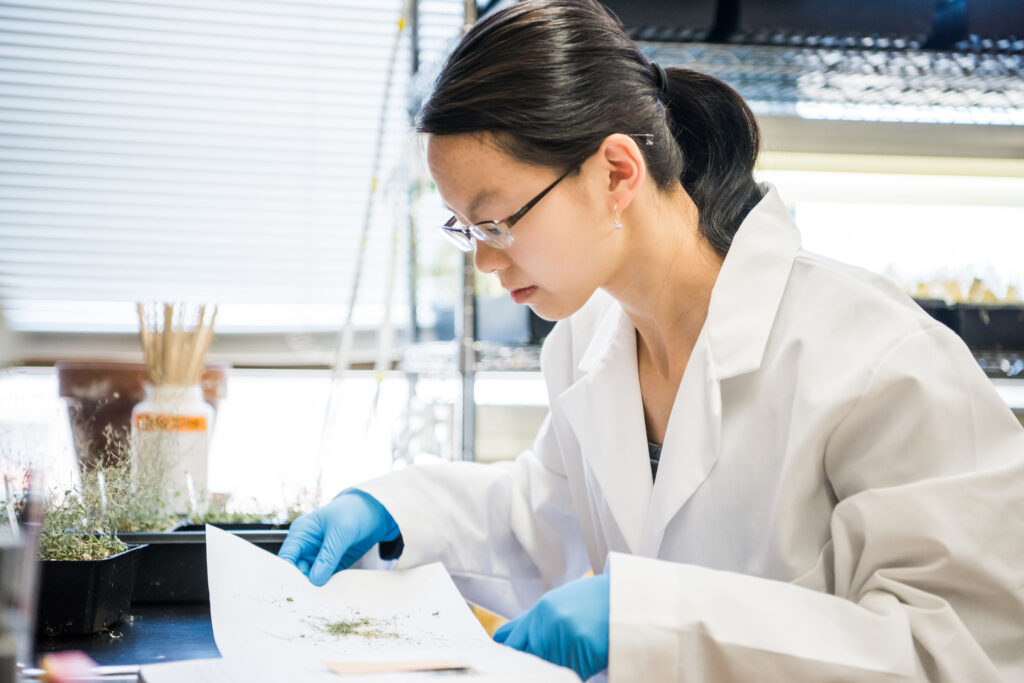
Image: Erin Green, assistant professor of biological sciences at UMBC, and Khoa Tran, a Ph.D. student in her lab, examine experimental plates. Photo by Marlayna Demond ’11 for UMBC.