All posts by: Sarah Hansen, M.S. '15


UMBC study challenges established paradigm, suggests males pickier than females in mate choice

“Males are showy, females are choosy” has been the accepted paradigm in sexual selection research for decades. By extension, scientists expect females to carefully select members of their own species as mates over individuals of very similar, recently diverged species. Males are believed to be much less discriminating. However, new research in Evolution by Tamra Mendelson, professor of biological sciences at UMBC, and colleagues suggests the opposite.

The research team, which included Mendelson, UMBC graduate students, postdocs, and a small army of undergraduates, tested the mate preferences of 15 to 20 pairs of 14 species of darters, a group of small freshwater fish, over six years. “We started with very closely related species and moved out, so it’s as if we tracked the beginning stages of the evolution of differences, before speciation is complete,” Mendelson says.

Testing species pairs that are still extremely genetically similar mimics recent species divergence. In those situations, neither sex had a significant preference. In pairs with greater genetic differences, only males preferred conspecific mates, choosing the conspecific female more often even when the two females were still very similar. Females only showed a very weak preference, and only when the two males were most different.

The study challenges the established paradigm, which is most likely biased by the concentration of major universities in temperate climates, where the classic pattern of showy males and drab females is prevalent. In the tropics, however, both sexes tend to be showy. With temperate species getting the bulk of research attention, “The scientific community thinks that the way this works is that females prefer the bells and whistles of their own species, and that’s how species stay apart,” Mendelson says. “And our research contradicts that.”

Many of the study trials took place in Mendelson’s lab using a standard, but unnatural, experimental setup, but others conducted by Michael Martin, Ph.D. ’16, biological sciences, occurred in artificial streams at UMBC’s greenhouses and corroborated the findings in a more natural environment. Patrick Ciccotto, Ph.D. ’14, biological sciences, and Jennifer Gumm, a former UMBC postdoctoral fellow, are the other authors.

Mendelson says that in the past, scientists also assumed females were choosier than males because the energetic cost of producing eggs is so much higher than producing sperm. However, that argument ignores the cost of direct competition with other males and growing and maintaining showy ornaments, which may also put males at greater risk of predation.

“That theory is just missing an entire aspect,” Mendelson says. “Really? Males never care? A bull will mate with a wolf? At what point are we willing to say the male mind matters?” Now, she says, “There’s a growing push to say, ‘Wait a minute, males may be choosy.’” The new findings should help buoy that idea to greater prominence in the field and inspire further research, because while Mendelson’s data were noisy, the results emerged clearly when the team examined the data set as a whole. Mendelson describes the results as “flecks of gold in a glob of dirt.”

Because female darters lack elaborate ornaments, the question now is, “Given that females are so similar to each other, what are males paying attention to?” One hypothesis is that males notice the scale patterns on females, which are similar to males’ except in mottled browns and grays rather than bright colors. The Mendelson lab members will tackle this question on their next quest for gold.

Mendelson also predicts that the new finding will translate to other animals with showy males and drab females. “Just because one of the sexes has bells and whistles doesn’t mean that that sex is not paying attention to the traits of the other sex,” she says. “We see them as bells and whistles, but they may not be the differences that actually keep species from mating with each other.”

Image: An example of a colorful male darter. Photo by Vance Imhoff.

UMBC a founding partner in coalition to increase transparency on life science career prospects

UMBC is among nine U.S. research universities and a major cancer institute that just announced plans to give would-be life scientists clear, standardized data on graduate school admissions, education and training opportunities, and career prospects.

The presidents and chancellors of the founding institutions announced the Coalition for Next Generation Life Science on December 15 in Science. The initiative is a response to the focus of many new Ph.D.’s solely on a limited number of traditional faculty positions, and to the lack of good marketplace information on training and career options for talented life scientists.

“This important new initiative is critical to our students’ futures,” said UMBC President Freeman Hrabowski. “Transparency in the data is important for students and faculty to shape and improve our programs.  We are delighted to be working with Johns Hopkins and other major research universities as champions for this initiative.”

The other institutions include Johns Hopkins University; Cornell University; Duke University; the Fred Hutchinson Cancer Research Center; the Massachusetts Institute of Technology; the University of California, San Francisco; the University of Michigan, Ann Arbor; the University of Pennsylvania; and the University of Wisconsin-Madison.

The article cited studies showing that only about 10 percent of U.S. biomedical scientists land tenure-track faculty positions at U.S. institutions within five years of their Ph.D. graduation. Among the constraints on the academic job market, the article said, are a nearly 20 percent decline in inflation-adjusted federal research funding from 2003 to 2016. That decline limits hiring by universities and other nonprofit research institutions that receive federal research support.

The coalition members will issue statistical reports beginning in February 2018 with information on admission to and enrollment in doctoral programs in the life sciences; the median time spent in graduate school before earning a doctorate and in postdoctoral fellowships after graduation; the demographics of graduate students and postdoctoral fellows; and the jobs held by an institution’s former graduate students and postdoctoral fellows.

The dearth of faculty positions in the life sciences is no secret, and many postdoctoral trainees are aware of the odds against them when they search for traditional university jobs, the Science article says. Students would be helped by knowing more about the range of options for trained life scientists, such as careers in industry, entrepreneurship, government, and science communication, write the authors.

“The majority of trainees will eventually choose to pursue those careers, but only after having made irreversible investments in what is often more than a decade in training for academic jobs that do not exist,” the presidents and chancellors wrote. “And at least some of this training activity may be unnecessary for their eventual career choices.”

Some relevant data are available now, but for a small number of institutions and in formats that do not allow for easy comparison. Comprehensive data in a form standardized across institutions should be a major help, the presidents and chancellors wrote.

“Open data will allow students and postdoctoral fellows to understand fully the range of likely outcomes of their eventual training and career choices,” they wrote. “It will help universities to better target their programs to actual career outcomes. … And it can help to hold universities and other research institutions to account for their success in training and placing graduate students.”

Each coalition member, the writers said, has also agreed to help graduate students and fellows better explore alternative career paths, improve mentoring, and work to improve diversity in the life sciences workforce. UMBC’s Graduate School has already taken action on this front by implementing recommendations from the Council of Graduate Schools report, Pathways Through Graduate School and Into Careers, with a focus on understanding the career pathways of UMBC Ph.D. alumni to provide better support and guidance to current students as they prepare for careers.

The presidents and chancellors said they chose to begin their transparency initiative with life science because of considerable national concern about the field. They added, however, that “the logic of our initiative extends to other scholarly disciplines.” The coalition’s work could extend in the future to graduate education and training in the natural and physical sciences, engineering, the social sciences and the humanities.

Read the original article in Science, “A new data effort to inform career choices in biomedicine” and related coverage in The Baltimore Sun, Inside Higher Ed, Wisconsin State Journal Cornell Chronicle, and Science Daily. The institutions will publish data at the coalition’s website, which also contains more information about the initiative.

Image: Erin Lavik, professor of chemical, biochemical, and environmental engineering (right) and Adam Day ’16, chemical engineering, work in the lab. Photo by Marlayna Demond ’11 for UMBC.

UMBC students take flight to study weather, pollution in multi-institution initiative

On November 16, Brian Carroll and Christiana Sasser ‘18, mechanical engineering, rose at 3:45 a.m. to drive to Lancaster, PA. After a briefing, they, a student from Millersville University, a pilot, and a technician took to the skies in a research airplane. Carroll, a student in the atmospheric physics Ph.D. program, had used detailed weather forecasting to meticulously plan the route to track a cold front passing through the area. Onboard instruments would collect data about how it affected the local air mass all along the way.

The plane chased the cold front across Atlantic City, NJ and then out over the ocean. But weather can be fickle, even with the best-laid plans.

“We never caught the cold front,” recalls Carroll. “We had to decide in the moment how we were going to salvage this and make it a decent research flight.” They did—the group instead focused their data collection on exploring differences in the planetary boundary layer (PBL) over water, the coastline, and farther inland. The PBL is the lowest layer of the atmosphere and can be anywhere from several hundred to 2,000 meters from Earth’s surface.

Carroll and Sasser’s flight was one of 14 student-led flights that occurred as part of a two-week, NSF-funded educational program led by Millersville University with UMBC, Penn State University, and Rutgers University as research partners and the University of Wyoming King Air aircraft and crew as hired support. Far from being a disaster, their flight met the initiative’s goal to provide experiential learning opportunities. It showed the group “how the science gets done in real life,” Carroll says. “It’s not an idealized problem of ‘Here’s this wonderful data set, you need to get something out of it.’ We needed to improvise with what was going on while we were in the air, and we now know about a lot of very real, small issues that we wouldn’t know about otherwise.”

The third UMBC student participant, atmospheric physics graduate student Zhifeng Yang, participated in a second UMBC-led flight with Carroll on November 11. Belay Demoz, director of UMBC’s Joint Center for Earth Systems Technology and professor of physics, and Zhibo Zhang, associate professor of physics, supported the students.

In all, 175 students participated in the program, which was intended to serve as a springboard for students’ research projects while giving them hands-on experience with the instruments and process required for in-flight data collection. The resulting data cache was immense: Instruments on the aircraft measured a few dozen variables every second for 40 total flight hours, in addition to data collected by 50 weather balloons and two ground stations. The instruments included two Light Detection and Ranging (LiDAR) systems (one pointing skyward and one toward Earth), sensors to detect gases such as methane and carbon dioxide, and tools to measure temperature, humidity, wind speed, and more.

Demoz, who encouraged his students to get involved with the project, would like to see a similar flight series happen in the future, closer to UMBC. “He’s always pushing students to get as much professional experience as they can,” says Carroll.

Carroll didn’t need the nudge, because “it’s possibly a once-in-a-lifetime experience. Even though aircraft are used often, it’s not often oriented in this give-everybody-a-turn sort of way.” Yang agrees. “It’s a very rare opportunity for us to observe the data in flight,” he says, “and now we know how to use a lot of the instruments that we didn’t know before.”

Carroll will use a similar type of aircraft to collect data for his doctoral research, “so knowing their capabilities and how to deal with them is definitely going to be valuable,” he says. Yang’s research seeks to improve weather forecasting models, so “we need observational data to evaluate the model, so we can adjust it to get better simulation results,” he says.

Both of them, however, have goals that go deeper than collecting, analyzing, and modeling data. “After I got introduced to this field, and when I realized that this work is very important for human health,” Yang says, “I wanted to do something to make this field better and better.” As for Carroll, “My long-term goals are to save the world and go into space,” he says. “If I enjoy doing math and science, which I do, then it’s good for me to put those skills to use toward helping the greater good and preserving the planet.”

Banner image: The King Air aircraft, ready to fly. Photos by Zhifeng Yang.

UMBC biologists discuss human health applications of studying plants’ circadian rhythms in The Conversation

Humans have been observing the circadian rhythms of plants for millennia, even if they couldn’t fully explain what they saw. In a new piece for The Conversation, Hua Lu, associate professor of biological sciences at UMBC, and Linda Wiratan ’19, biochemistry and molecular biology, survey current knowledge of plants’ daily rhythms and how recent findings could influence human medical care.

“The internal time-sensing mechanism,” known as the circadian clock, “allows many living organisms to keep track of time and coordinate their behaviors along 24-hour cycles,” write Lu and Wiratan. Important advances in circadian clock research led to the 2017 Nobel Prize in physiology or medicine being awarded for work that explained the molecular basis of circadian rhythms.

Lu and Wiratan, among others, are studying plants’ circadian clocks “for insights into how they affect the health and well-being of all life on Earth,” they write. They point out that bacteria, fungi, insects, plants, and mammals are all affected by circadian rhythms, which are regulated by the circadian clock’s central oscillator, “an elaborate network of genes that turn each other’s activity on and off,” forming “complex feedback loops that accurately calibrate time.”

While the exact genes involved differ across organisms, the basic feedback-loop mechanism is the same. “Such amazing balancing acts reflect organisms’ abilities to anticipate changing environment throughout the day,” Lu and Wiratan write, which includes everything from herbivore activity to light availability.

Researchers have found evidence that improper circadian clock function plays a role in human diseases such as diabetes, obesity, and depression, so a fuller understanding of the clock is important for human health. Plants’ circadian clocks also regulate the function of their immune systems. First-line defenses include ever-present physical features like protective hairs and waxy coatings, but plants also have more sophisticated ways of fending off their foes. Some plant cells can detect the presence of pathogens, triggering a cascade of defense responses such as production of antimicrobial compounds.

“Even in the absence of pathogens, many of these responses show low but rhythmic changes that are influenced by the circadian clock,” Lu and Wiratan say. “When a real attack arrives, the plants’ daily rehearsal of their defense systems ensures a strong and concerted timely defense. Plants with misaligned clocks succumb to the attack.” Their clock allows the plants “to time their defense, which allows them to anticipate likely attacks before they occur and modulate defense responses to real attackers.”

For example, Arabidopsis (a small flowering plant ubiquitous in plant science laboratories) peaks its production of jasmonic acid, a hormone associated with the defense response, at noon, to prepare for the predictable onslaught of cabbage looper caterpillar feeding a few hours later. It’s unknown how in-sync pathogen and plant clocks are, but evidence suggests that some pathogens can manipulate the Arabidopsis clock.

These relationships aren’t limited to plants and their pests. “In humans and mice, some populations of gut microbiota oscillate daily, depending on the host circadian clock,” Lu and Wiratan write, adding that “interestingly, gut microbiota are capable of re-programming the host clock […] Research in this area represents a fascinating and unexplored level of host-invader dynamics.”

All of this research on plants has provided a great deal of knowledge about circadian rhythms “and their role in modulating everything from development to defense,” Lu and Wiratan write. “As researchers continue to untangle more about how these clocks work—including how they influence interactions between hosts and their invading pathogens and pests—new forms of specially-timed precision medicine could be on the horizon.”


The original article, Studying circadian rhythms in plants and their pathogens might lead to precision medicine for people, has been viewed more than 4,750 times and republished in outlets such as Smithsonian Magazine, World Economic Forum, and at Phys.org.

Image: Floral clock in Edinburgh, Ireland. Photo by Patrick Down, used under CC BY-NC 2.0.


Philip Graff ’08 named Outstanding Young Scientist by Maryland Science Center

Throughout his career, Philip Graff ’08, mathematics and physics, has conducted research at Cambridge University on a prestigious Gates Cambridge Scholarship, developed an algorithm that enabled experiments confirming the existence of gravitational waves, and worked to improve cybersecurity measures for the U.S. armed forces and Department of Homeland Security.

This fall, the Maryland Science Center named Graff their 2017 Outstanding Young Scientist – Non-academic Track. At a ceremony held November 15, the center honored two scientists and two engineers, including UMBC’s Lee Blaney, associate professor of chemical, biochemical, and environmental engineering. Researchers younger than 35 in academia and younger than 40 in other sectors who have distinguished themselves with accomplishments in science and engineering are eligible for the awards.

Graff’s research career began at UMBC in the lab of Markos Georganopoulos, associate professor of physics, who noted his potential early on. “Once I gave Philip a suggestion on how to solve a key issue with the stability of our code, but my suggestion was wrong in a subtle way,” Georganopoulos remembers. “Philip found my error by himself, modified my suggestion, and fixed the code in two days.”

Yet, Graff maintained his humility as a new researcher. “When you’re starting out in research, there’s a lot to learn in the beginning,” he says, “and [Georganopoulos] definitely put in the time to help me work through that,” especially pertaining to scientific writing. Graff and Georganopoulos published a paper with Graff as first author—a rare accomplishment for an undergraduate—and Graff presented the findings at an academic conference. The paper dealt with modeling blazars, a variety of quasar that Graff describes as “bright and energetic beams of radiation coming from black holes at the centers of galaxies.”

“As an undergrad, Philip took on and completed a computational astrophysics project that was practically at the level of a heavy Ph.D. thesis,” shared Georganopoulos. “Many astrophysicists at conferences had a hard time believing that the problem we worked on was solved by an undergraduate student.”

Graff’s research experience at UMBC catapulted him to a summer internship at CalTech’s Laser Interferometer Gravitational-Wave Observatory (LIGO) Lab, a leading center for gravitational wave research. After that, he received the Gates Cambridge Scholarship, a younger version of the prestigious Rhodes Scholarship, to pursue a Ph.D. at Cambridge University. Nancy Lloyd Miller ’74, political science, M.P.R. ’85, policy sciences, and the recently-retired associate director of academic and pre-professional advising, provided significant support throughout Graff’s application process, he says.

Graff’s work at Cambridge continued to focus on LIGO, this time developing software tools to analyze data from LIGO and beyond. “We were very focused on making sure any new software we developed for data analysis would be generally applicable,” Graff says, “and that other people would be able to take it and use it to solve their problems as well.”

After completing a Ph.D. in physics at Cambridge, Graff continued his LIGO work at NASA Goddard Space Flight Center in Greenbelt, Maryland. In 2015, he transitioned to the Johns Hopkins Applied Physics Laboratory, where he is working primarily on projects for the U.S. government.

Graff’s years at UMBC, which also included involvement in student government and Greek life, provided the foundation for his success. “UMBC prepared me for the Gates [Scholarship] to get me to Cambridge, and […] set me on the path that I’m on now,” he shares. “It was one of the important steps on the way.”

The award, Graff says, “is a real honor. I hadn’t expected it. Now I just hope I can continue to live up to it, so that I’m not just an outstanding young scientist, but can continue to do good work in the future.”

Undergraduate Research Symposium award winners embody success of UMBC STEM BUILD program

This fall, hundreds of students from across the East Coast gathered to present their research and compete for awards at UMBC’s Undergraduate Research Symposium in the Chemical and Biological Sciences (URS). Fifty-two of the student scientists attend UMBC and participate in a program designed to provide research opportunities to a broad range of students in STEM and boost their confidence, increase the likelihood they pursue STEM graduate degrees, and set them on a path to success.

The program is UMBC STEM Building Infrastructure Leading to Diversity (BUILD).  Eight BUILD students won awards, which is a good sign for the effectiveness of this relative newcomer among UMBC’s cohort programs. UMBC is one of 10 lead institutions on the STEM BUILD initiative nationwide and received $18 million from the National Institutes of Health to launch it in 2014 with the goal to “create a national model of comprehensive support to expand and increase the success of students in STEM.”

“The BUILD participants at URS exemplify the objectives of the program,” says Laura Ott, STEM BUILD active learning coordinator and director of UMBC’s Science Education Research Unit. All BUILD participants complete summer research, either in opportunities they arrange themselves or in small groups on campus organized by the program. BUILD students also receive financial support and extensive academic advising.

STEM BUILD is also a scientific study, so participants’ progress is carefully tracked to try to tease out which supports have the biggest impact on student success. “By participating in the BUILD program, they’re helping us explore novel strategies to increase participation in undergraduate research for all students,” Ott says.

Teodora (“Roxie”) Danaila ’20, biological sciences, Arjun Sharma ’20, biological sciences, and Amber Thompson ’20, biochemistry and molecular biology and mathematics, worked together to characterize antibiotic resistance genes present in local freshwater samples. Their team won second place in their biochemical and molecular biology group at URS. Mohammed Arafat ‘20, psychology; Yasmin Khan ‘20, biological sciences; and Sharanja Mathyvannan ‘20, pre-mechanical engineering, completed a similar project and won second place in their group.

Caitlin Kowalewski ’14, biological sciences, M.S. ’15, applied molecular biology, and now research coordinator for the College of Natural and Mathematical Sciences; Josh Wilhide, M.S. ’10, chemistry, and manager of UMBC’s Molecular Characterization and Analysis Complex; and their assistants, Dave Varisco and Tim Cain ’18, chemistry education, mentored the students in the on-campus, three-week “Summer Bridge” experience.

“Ms. Kowalewski was able to get me to step my game up and allowed me to see what I was capable of,” Arafat shares. “If you ever had questions or were having trouble,” Danaila says, “they were there.” The mentors “allowed us to relay ideas back and forth with people who had much more experience and knowledge than us,” adds Sharma.

Presenting at the symposium had benefits, too. “It allowed me to explore fields of research that may interest me, and also helped me improve my presentation and research methods,” Sharma says. Thompson appreciated the opportunity to speak with students from other schools. “I was interested in how they got into their labs and what it was like for them in a different lab environment,” she shared.

“I felt that my role in mentoring the students was not only to teach them the laboratory skills, but to help them grow as scientists and researchers,” Kowalewski says. She was impressed by their rapid progress in the content-intensive program. “The fact that they were able to understand the information and present it well enough to win an award at URS was a testament to all of their hard work,” she says. Overall, the summer experience under Kowalewski’s tutelage is intended to build the students’ proficiency in a wide range of scientific techniques and prepare them for independent research opportunities.

Temiloluwa Okusolubo ’19, biological sciences, and Ifeoma (“Fefe”) Azinge ’19, biological sciences, are in their second year of BUILD participation and both earned first place in their biochemical and molecular biology groups at URS for independent research. Okusolubo studied the folding of serpin proteins, which are implicated in various diseases related to lung function, at the University of Massachusetts Amherst. Azinge’s research at the National Institute on Aging in Baltimore focused on calcium transport in sweat glands, which is critical for temperature regulation.

Okusolubo and Azinge’s successes are the kind of outcomes that UMBC STEM BUILD hopes to facilitate, using systems that other schools can eventually adopt. Ott is proud of the students in the program, she says, “and I have high hopes for where they’ll go in the future.”

Image: Students and faculty at the 2017 UMBC Undergraduate Research Symposium. Photo by Mohammed Arafat ’20.

20th Undergraduate Research Symposium shines a light on students’ diverse contributions to science

UMBC’s Undergraduate Research Symposium for the Chemical and Biological Sciences has become a destination for young researchers across the Eastern Seaboard, and it’s still growing. This year’s 20th running of the event was the largest yet, with 307 students from 47 institutions presenting 245 distinct research projects to 54 faculty judges, on topics from ecology to molecular biology to inorganic chemistry.

Nearly 100 UMBC students participated in the flagship event, which offers a rare opportunity for undergraduates to gather in large numbers to discuss their work with one another and practice presenting their findings to a wide range of people.

UMBC President Freeman Hrabowski described UMBC’s culture in his morning address, emphasizing the importance of persistence. “Success is about grit—the determination to never never never give up,” he said. “It’s that passion for continuing to learn.”

At UMBC, he continued, which welcomes students from more than 100 countries, “we are interested in making the point to America through you and others that science is exciting, that anyone who is willing to put in the effort can do it, and that you can never ask enough questions.”

Those questions can lead to important answers that impact the lives of others. “The nobility of scientific research is that you work on problems to help people you may never see. Something about that gives me goosebumps,” Hrabowski shared, adding, “What you are doing will save humankind.”

That includes research by students like Emily Bush, from Elmira College in Elmira, New York.  She’s studying the effects of eugenol, an oily substance extractable from various herbs, on cancer cells. The scientist who judged her poster conducts research on the same cell lines, so Bush is heading home armed with useful feedback, inspired to “go back to the lab and really get some results and draw conclusions.”

Myra Dickey, of Salisbury University in Maryland, studied endangered spotted turtles in her research. By examining their DNA, she found that both sexes tend to disperse from their birthplace, which reduces the risk of inbreeding, but populations are so small and isolated that inbreeding’s detrimental effects are still a major concern. That means habitat conservation for the turtles is critical to their long-term survival.

Steven Lawrence and Moises Ridriguez, students at Medgar Evers College in Brooklyn, New York, presented research they conducted through the Research Initiative for Scientific Enhancement (RISE) program at Columbia University and New York University, respectively. Lawrence learned new coding skills to analyze data collected from surveys of Dominican women about their concerns related to HIV. His findings will inform educational programs in Dominica, and he says the experience encouraged him to pursue health outreach activities. Rodriguez studied the relationship between the presence of a molecule called RAGE and the shape of cells in the brain called microglia. His results suggest that RAGE is involved in the inflammatory response, which is part of aging.

Ryan White, associate professor of chemistry and Ohio Eminent Scholar at the University of Cincinnati and former associate professor of chemistry and biochemistry at UMBC, encouraged attendees to recognize the value of their work in his plenary talk. “Undergraduate research projects are not just side projects to give you experience and something to put on your resume,” he said. “Small discoveries you make along the way can really build momentum and lead to something bigger.”

White rebuffed rhetoric in the media suggesting millennials are “lazy” or “hopeless.” “You’re doing research, you’re critically thinking about what you’re doing, you’re solving problems,” he shared. “So my charge to you is to go out there and continue to do that—to prove all these articles wrong.”

White’s interdisciplinary lab is developing a range of bio-inspired sensors, with the broad goal of “building sensors that can help people by providing information to inform personalized medicine,” he said. To do that, he’s employing knowledge and techniques from nanoscience, electrochemistry, and biology—and several undergraduate students.

Dean Bill LaCourse, of the College of Natural and Mathematical Sciences, was also optimistic, and echoed Hrabowski’s sentiments about the value of diversity in science. “When I do my research, I ask questions from the world from which I came,” he shared. “What’s beautiful about a room like this, and all your faces, all your backgrounds, is that the number of problems that can be addressed, the number of questions that can be asked, is multiplied.”

Looking out at the next generation of scientists, he reminded them, “You can answer questions to change the world that you grew up in. You have the power to create the future.”

Image: Students and guests explore the research posters in the University Center Ballroom. Photo by Mohammed Arafat ’19.

UMBC scientists measure plant productivity from space, with applications from farming to forest conservation

Two researchers at UMBC’s Joint Center for Earth Systems Technology (JCET) and colleagues have found that instrumentation on the International Space Station (ISS) can collect data measuring the photosynthetic activity of various ecosystems and landscapes in a way that is both more comprehensive and more nuanced than standard land-based techniques.

“We’re laying the groundwork for developing ways of monitoring vegetation,” says Fred Huemmrich, JCET scientist and lead author on the new study. High-resolution monitoring of photosynthesis on landscapes such as agricultural fields, forests, and grasslands could inform everything from farming practices to our understanding of climate change.

Being able to detect productivity at high resolution could help farmers “evaluate how the field is doing, where there are problems, and perhaps identify things like insect damage and stress responses,” says Huemmrich, noting that similar techniques have successfully detected differences in fertilizer application on corn fields. The same information could be gleaned for managed forests, for example, to detect stress caused by destructive bark beetles.

On a larger scale, Huemmrich says that “most of what we know about how ecosystems respond to climate change and increased carbon dioxide in the atmosphere is from models,” rather than concrete data. If scientists could use satellites, like the ISS, to track photosynthesis in real-time around the globe, that could greatly increase our understanding of how climate change is affecting vegetation. Plants are crucial for managing the global climate, because they take carbon dioxide out of the atmosphere and release oxygen during photosynthesis.

The current gold-standard method for measuring photosynthesis relies on a network of hundreds of “flux towers” around the globe—structures on the ground that detect the flux of carbon in the area by “sniffing the air,” explains Huemmrich, but “the towers can’t be everywhere.” Remote sensing from a satellite would allow scientists to measure carbon fluxes in other places, even those that are inaccessible from the ground.

The new JCET study demonstrates an effective way to do just that, using images taken by the hyperspectral imager for coastal ocean (HICO), which is mounted on the ISS. Petya Campbell, a JCET scientist who was second author on the study, analyzed 26 total HICO images of three sites. Her analysis determined the photosynthetic productivity of vegetation canopies by detecting their reflectance of different wavelengths of light. Reflectance is a reliable measurement of photosynthesis because the amounts of different compounds present in leaves (such as chlorophyll and water) determine the plant’s photosynthetic activity, and each reflects differently.

The team found that multiple algorithms they used with the HICO data matched well with the tried-and-true data coming from the towers, providing strong evidence that this method of remote productivity monitoring can work well in both grasslands and forests. After further confirmation, researchers will be able to trust data about areas not also covered by flux towers. That’s an important advance, Campbell explains, because remote imaging spectroscopy “provides the only practical approach to map canopy functional traits, which are impossible to frequently measure on the ground and comprehensively map across space.”

In some cases, the measurements deduced from HICO data also provide information that flux towers can’t. Remote sensing does a better job distinguishing boundaries in a landscape, such as where a farm field transitions to a forest, and it also performs better on slopes. Plus, data collected by instruments on the ISS are unique because the space station is not in a “sun-synchronous” orbit, which means it passes over the same locations on Earth at different times of day. That allows researchers to detect differences in photosynthesis between morning and afternoon, as well as throughout the growing season and from many viewing angles.

Since the submission of Huemmrich and Campbell’s study, HICO has gone offline, but that doesn’t mean this kind of work is over. A new spectrometer is headed to the ISS in 2018, as well as other instruments that can measure water evaporating from leaves, plant fluorescence, and heat stress. “If NASA had asked me what four instruments I would want in space to study plants, that’s what I would have told them,” Huemmrich says. “Now we’re looking forward to having all four of these instruments on the space station and being able to do something with them.”

Learn more from the full article published in IEEE Journal of Special Topics in Applied Earth Observations and Remote Sensing.

Image: The international space station, provided by NASA.

President Hrabowski signs letter urging U.S. Congress to take action on DACA

UMBC President Freeman Hrabowski has joined nearly 800 other college and university presidents in signing a letter to Congressional leaders urging them to pass a long-term, legislative solution to protect “dreamers”—undocumented immigrants brought to the United States as children—from deportation. The move follows President Trump’s decision to rescind the Deferred Action for Childhood Arrivals policy implemented by President Obama in 2012.

The letter, coordinated by the American Council on Education (ACE), does not put forth specific legislation, but cites polls that show a majority of Americans support a permanent solution that would allow dreamers to remain in the United States. It reminds Congress that DACA recipients are “Americans in every way but immigration status” and “have made incredible contributions to our country and its economy and security.”

“Over the past several decades, researchers have found that students who attend culturally diverse colleges and universities experience greater intellectual benefits than those who do not,” says David Di Maria, associate vice provost of international education at UMBC. “As a world-class university, UMBC is strengthened by the diverse perspectives dreamers bring to our classrooms, the discoveries they make in our laboratories and the service they provide to communities based here in Maryland, across the United States and around the world.”

The ACE letter is one of several ways UMBC has shown support for dreamers and the positive contributions they make to the United States. As early as November 2016, President Hrabowski co-signed a statement urging business, civic, religious and non-profit sectors to support DACA and undocumented immigrant students, and offering to meet with government leaders to discuss the issue. More than 700 higher education institutions have joined the statement since then. President Hrabowski also co-signed a similar letter to President Trump in March with more than 560 college presidents. In addition, he has signed on to the CEO Action for Diversity and Inclusion pledge, a broader commitment to advance diversity and inclusion in the workplace.

As an institution with students, faculty, and staff from more than 100 countries, UMBC knows the value of bringing diverse minds together in the pursuit of knowledge and solutions to society’s greatest challenges.

“At UMBC, we are committed to supporting all members of our community, and we recognize that each person brings a valuable perspective and set of  experiences to our campus,” says President Hrabowski. “It is important for our country to support dreamers, not only so that they can live fulfilling and purposeful lives, but also so that our country can benefit from the ideas and skills they bring to society.”

Visit UMBC’s Diversity and Inclusion site for more information about resources available to the UMBC community, programs and student organizations dedicated to supporting diversity and inclusion, and related UMBC policies. 

GRIT-X talks showcase experiences of outstanding faculty and alumni “from outer space to inner space”

Nine distinguished faculty and alumni shared their stories at GRIT-X, a TED talk-style event during UMBC’s Homecoming. Karl Steiner, UMBC vice president for research, introduced the event, which debuted at last year’s 50th anniversary celebration. “We’ll take you from outer space to inner space,” he said, “from black holes in the universe to a pacemaker for the brain.”

Kafui Dzirasa ’01, chemical engineering, kicked off the program by discussing the latter. Now associate professor of psychiatry and behavioral sciences at the Duke School of Medicine, Dzirasa has a personal connection to his groundbreaking work. “My family has struggled with mental illness for generations,” he shares. While much mental health research has focused on chemical imbalances in the brain, Dzirasa is using new tools and techniques to detect rhythmic waves of electric pulses in the active brain.

“These rhythms work together in the same way that a conductor can allow all the instruments in a symphony orchestra to work together to produce music,” he says. “These little rhythms allow brain cells to coordinate—to produce motions, and thoughts, and feelings.” He calls these rhythms the “metronomic system” of the brain, and is investigating whether psychiatric disorders, such as bipolar and schizophrenia, are a result of faulty metronomes. Dzirasa’s lab is learning about how these metronomes function through animal studies, and he hopes to one day apply the results to humans.

“In the future that I see, our family members would have lived out their life’s greatest dreams,” he says, “because we won’t simply treat psychiatric disorders by tuning electricity, we will cure them.”

Christine Mallinson, professor of language, literacy, and culture, is looking to cure a different ill: the negative biases teachers may harbor against students who speak differently than they do, even if they’re speaking English. Hearing “coffee” pronounced several different ways as a child sparked Mallinson’s lifelong interest in linguistic diversity, which she says “is a resource, not a deficit.”

Demonstrating the value of diverse linguistic patterns in the classroom shows students they are valued, which makes them likely to value school, Mallinson explains. Overall, educators must “give the students the tools they need to succeed on the tests that we require of them, while sustaining and empowering their diverse voices,” she says, “so that we can have all our students with all their diverse voices right here in the front row of our classes at UMBC.”

Nilanjan Banerjee, associate professor of computer science and electrical engineering, is working on wearable sensors—communication of a very different kind. After the iPhone revolutionized “smart” technology in 2007, he says, “Ten years later, we are at the brink of yet another revolution: the revolution of the next generation of wearables.”

Banerjee explained how these tiny computers can make people with spinal injuries more independent, by allowing them to control appliances or communicate via motions as minute as tongue movements. Ankle straps could track health-related statistics from sleep patterns to cardiac conditions, reducing the strain on clinics facing an ever-increasing demand for services as the population ages. Banerjee also sees applications in driving safety, with sensors able to detect whole-body movements that may indicate distracted, drunk, or drowsy driving.

Banerjee acknowledges that “all of these sensors are useless unless people use them,” so this work requires perspective from an array of disciplines, such as human-centered computing, design, software development, and materials science. And of course, privacy and ethics concerns loom large when devices are collecting this much data. To conclude, Banerjee encouraged audience members to “think about what you want these next-generation wearables to do, and more importantly, think about what you want them not to do.”

The second session began with Sean Pang ’09, English, and M.A. ’11, teaching, who recounted his “fortune of misfortunes,” including culture shock and a language barrier upon his immigration to the U.S. as a small child, and poverty and eviction during his undergraduate studies. When he started teaching in Baltimore City after graduating from UMBC, he was the only Asian person in the room, but his background of challenges helped him connect with students. “When they see me come into the classroom, with a smile on my face, with passion, and dedication, and kindness, they see hope,” he shares, “hope that they can make something better from their lives.”

Pang, who was The Washington Post’s 2017 Teacher of the Year, had three recommendations for audience members. First, he said, be kind. In kindergarten, a classmate gave him a plastic dinosaur that Pang keeps to this day—it was the first act of kindness he remembers from a peer in the U.S. Second, “Try everything, because that will lead you to find your passion.” And once you find it, “use it to give hope, because hope is the greatest gift you can give.”

Gymama Slaughter, associate professor of computer science and electrical engineering, is hoping for a future of implantable medical devices that are safe, environmentally friendly, and powered by the metabolism of our own bodies. Her lab has created thin membranes made of nanocellulose—a flexible, permeable, transparent, biocompatible material produced by genetically engineered bacteria—and tiny attachable circuits that harness the body’s energy. Because the byproduct of the energy production process is simply water, it’s completely safe.

So far, Slaughter’s bio-power devices, only a few millimeters on a side, can light up an LED light. “This gives us hope that eventually, with such a small device, we can develop a power system that harnesses the biochemical energy of glucose within our body,” she says, “to power implantable devices that can monitor disease, diagnose diseases, and one day deliver therapeutics into our body to enable our bodies to heal.”

Kate Brown, professor of history, closed the second session with a talk on radioactive blueberries. Brown traveled to the Chernobyl zone expecting to find sadness and isolation. Instead, she found a booming, revitalized economy based on foraging—blueberries in the summer, cranberries and mushrooms in the fall.

“These women and children pickers have made it happen with human-powered resourcefulness. So economically it’s a good idea,” Brown says. “What about biologically? That’s a trickier question.” Brown explains that berries are extremely efficient at absorbing radiation from the soil, and limits have been set on the radiation level allowed in the EU market. But the berries are simply marked as “wild and organic,” so consumers have no idea they are ingesting radiation. There is very little research on the effects of long-term, low-dose exposure to radiation, but in the area surrounding the berry picking region, birth defects are six times as high as the European average.

“I’m here to tell you that even though we think of Chernobyl as something that’s very far away, it’s being brought to us by the global market that’s been so successful,” Brown says. She recommends paying the pickers the same amount to pick the berries, except then disposing of them as waste in the effort to reduce radiation in the area.. Brown even speculates that tourists might be willing to pay to experience picking radioactive berries. “That might be a better way of solving this problem, than just pretending it’s not happening.”

Next, Jane Turner, director of UMBC’s Center for Space Sciences and Technology and professor of physics, took listeners much, much farther away to black holes at the centers of galaxies. The Milky Way contains a black hole 2.6 million times as massive as our Sun, she explained, and “there’s evidence for supermassive black holes at the center of all galaxy nuclei. This is one of the big discoveries of the last decade or so in astronomy.” These black holes are proportional in mass to the mass of the galaxy they’re in, so “these things must grow together,” she says.

Most of the black holes at the centers of galaxies are dark and only detected by their gravitational influence, but a few percent emit an incredible amount of light—these are called “active nuclei.” Turner’s work involves investigating why those few are so bright, by looking at X-rays coming from very close to the black hole “event horizon,” beyond which we cannot make observations. These X-rays can tell scientists about what material is present close to the black hole and how that material is moving. Astrophysicists like Turner have found that black holes are pulling in about one star’s-worth of material per year, which is “enough to feed these active nuclei.”  The black holes are also pushing some of that material back out —enough to affect star formation in the surrounding galaxy. It’s by analyzing results like these, Turner says, that “we’re going to be able to understand the connection between the growth of the black hole and the host galaxy, and from that the growth of structure in the universe on the whole.”

While black holes are helping build galaxies far away, Corey Fleischer ’08, mechanical engineering, is helping people build things in Maryland. As co-founder and general manager of The Foundery, a makerspace in Baltimore, Fleischer’s goal “is to have anybody walk in with a hand sketch on a napkin, for a product or an invention they want to build, and with our tools and classes be able to walk out with a polished, professional-looking prototype.”

Fleischer’s career path has been largely informed by his experience on UMBC’s mini-Baja team, which involved designing and constructing a one-person vehicle and then navigating it around an obstacle course at competitions. “We were learning textbook knowledge in classrooms, but at the same time we were learning firsthand how to build things,” he says. The Foundery provides a space for people with ideas to make them reality, and quickly, by speeding up the design feedback cycle—which involves a lot of failure. “Failure is an empowering way to learn,” Fleischer says. “And makerspaces allow people to fail faster.”

Finally, Doug Hamby, associate professor of dance, and two UMBC dance students, Emily Godfrey ’20 and Samantha Siegel ’18, created an original dance right before the audience’s eyes. Hamby gave them instructions and they absorbed them on the spot, performing turns, rolls, and pliés to the audience’s delight. “When I make a dance,” Hamby shared as he moved fluidly across the stage, “I like to think of it as an investigation of the human body in motion, and in space, and in time.”

After the dancers performed the full sequence to close the program, Hamby tied all the GRIT-X talks together. “That’s one of the ways art is made,” he said, “through serendipity and experimentation.” Replace “art” with language, science, or technology, and the statement holds. UMBC faculty and alumni are creatively exploring the edge of knowledge, and the physical and mental world, from inner to outer space—from black holes to brain pacemakers, from language usage to radioactive fallout, from driver safety to dance—and sharing it with the world.

Watch videos of the complete GRIT-X presentations to learn more.

Banner image: Sean Pang ’09, English, and M.A. ’11, teaching, chats with his wife (right) and President Hrabowski (left) after his presentation. All photos by Marlayna Demond ’11 for UMBC.

UMBC’s comprehensive partnership with Lakeland School boosts math performance

UMBC’s partnership with Lakeland Elementary and Middle School in Baltimore has grown steadily over the last five years, and it bore measurable results this spring: Lakeland performed much above the Baltimore City average, and slightly better than the state average, on the math portion of the PARCC, Maryland’s state test. While less than 20 percent of students in Baltimore passed, almost 50 percent of Lakeland students did, and Lakeland saw big improvements from the previous year. Everyone involved agrees the partnership with UMBC played a major role in the achievements.

“This is not your average partnership,” Carly Harkins, Lakeland math teacher, shared with The Baltimore Sun in a feature story that appeared on the front page. “This is my 16th year teaching, and I’ve never seen anything where the schools are so connected in so many ways.”

The relationship includes professional development for Lakeland teachers, especially around how to use testing data to guide instruction to more effectively address students’ learning gaps. In collaboration with Northrop Grumman, a $1.6 million STEAM (science, technology, engineering, arts, and math) center is currently under construction, and STEAM activities, like family nights at the school, are already taking place. Lakeland students attend UMBC basketball games and special events like the “Hour of Code,” which focuses on computer science, and there are summer and after-school enrichment programs for students and parents. Last year, the partnership expanded to include a math coaching program, where UMBC students travel to Lakeland and work with small groups of students during the school day.

“We love the term math coaching, because not only are we there to help build the skills and help students develop their math processing, but it’s a lot about building a culture of math and STEM at Lakeland,” Josh Michael ’10, political science and education, and assistant director of UMBC’s Sherman STEM Teachers Scholars Program, told Sheilah Kast on WYPR’s On the Record. “A coach may pump you up or help motivate you, and that’s the way we approach math and STEM in our partnership.”

Many of the 26 coaches this year are Sherman scholars, while others are STEM or education majors who have an interest in giving back to the community. Michael says the goal of the scholars program is to develop “culturally responsive and compassionate” teachers. Several are Spanish speakers, which is helpful at Lakeland, where 48 percent of students are Hispanic and one-third of students are English language learners.

A few former coaches are now teachers at Lakeland, such as Jasper Barnes ’17, interdisciplinary studies, whom the students refer to simply as “Coach.” Whether a math coach pursues a career at Lakeland or not, they’re “having an awesome experience in a community school, and they’re contributing to the learning needs and learning engagement of the young people at Lakeland,” Michael told WYPR.

The benefits radiate in every direction. “Some of these children one day should be able to come to UMBC and then go on to work at Northrop Grumman,” President Freeman Hrabowski told the Sun. “It’s almost like an ecosystem that goes all the way from early education through a career.”

“It’s an incredible program and an incredible partnership with UMBC,” shared Lakeland principal Najib Jammal with CBS Baltimore. “It’s the difference of the students getting that extra support and building that confidence to feel like they can be successful in the classroom and in life.”

Learn more in the complete coverage:
UMBC students coach Lakeland Elementary/Middle School students with positive results (Baltimore Sun)
A partnership ignites a STEM spark (WYPR’s On the Record)
UMBC partnering with Baltimore school to improve students’ math skills (CBS Baltimore)

Image: UMBC students volunteer at Lakeland. Photo by Marlayna Demond ’11 for UMBC.

Noemi Petra first UMBC graduate to receive NSF Career Award in Mathematics

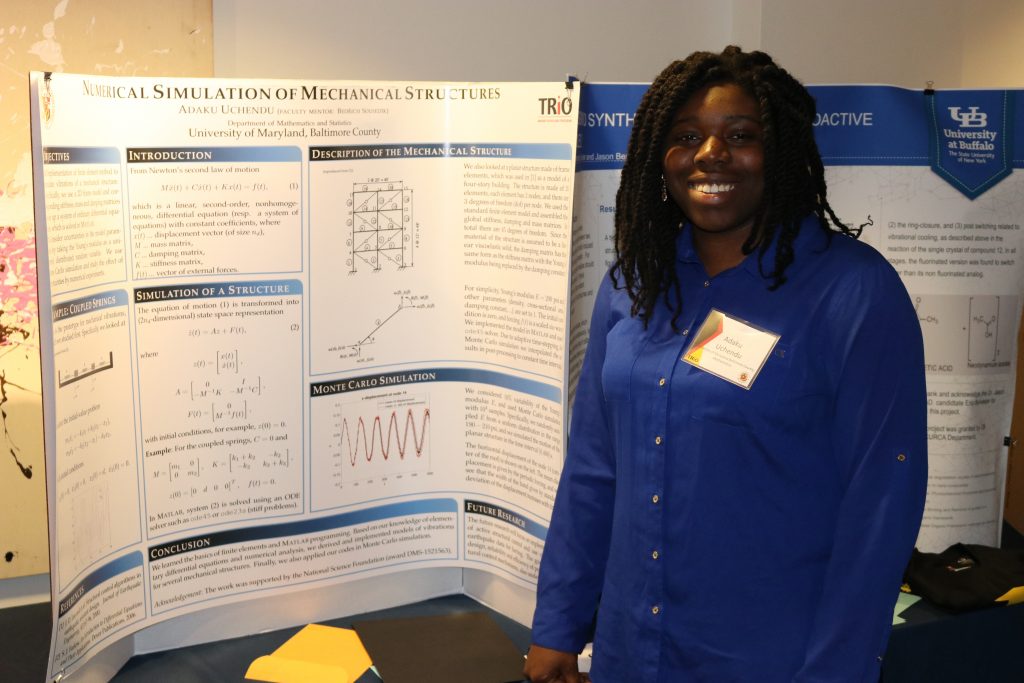
Noemi Petra, Ph.D. ’10, M.S. ’07, applied mathematics, has always been a hard worker. In her dissertation research at UMBC, she forayed into engineering applications, mathematical theory, and computational techniques to answer questions about sensors that detect trace gases, such as carbon monoxide.

“Most math students delve into one of these three general areas of research during their Ph.D.,” explains one of her mentors, John Zweck, former UMBC faculty member in mathematics and statistics. Petra tackled all three.

Petra’s grit has paid off. The National Science Foundation has recognized her ongoing research success with the NSF Career Award, intended to support early-career faculty “who have the potential to serve as academic role models in research and education and to lead advances in the mission of their department or organization.” It is one of the most prestigious awards an early-career STEM researcher can receive. Petra’s award, the first for a UMBC graduate in mathematics, provides $400,000 for her work over five years. Previous UMBC Career Award recipients have supported faculty projects in areas as diverse as developmental biology and artificial intelligence.

The first in her family to attend college, at the University of Babes-Bolyai in Romania, Petra’s willingness to take on new challenges has served her well throughout her career. After UMBC, she was a postdoctoral fellow and then a research associate at The University of Texas at Austin within the Institute for Computational Engineering and Sciences (ICES)  in the prestigious Center for Computational Geosciences and Optimization led by Professor Omar Ghattas, who was also Petra’s postdoctoral mentor. From there, Petra transitioned to the University of California, Merced, where she is now an assistant professor and maintains collaborations with a variety of renowned institutions.

“I think the experience of having to make progress on a very applied problem turned out to be an excellent training ground for Noemi,” explains Zweck, now professor of mathematical sciences at University of Texas at Dallas, “because it gave her the confidence and experience to tackle much harder applied problems in her postdoc and now in her faculty position.”

Her research interests have evolved from gas sensors to other applications for similar mathematical techniques. One of her current projects seeks to model how ice sheets flow using differential equations—a very difficult problem, considering it’s impossible to directly observe some of the required parameters. She applies the same type of problem-solving to model power distribution in electrical grids, which could help make them more efficient in the future.

Petra sees the award as “the result of a long, but extremely exciting and rewarding professional journey.” In particular, she says, UMBC “offered the perfect environment to grow as a researcher and educator. The careful mentorship during my Ph.D. and the diverse set of graduate classes I took at UMBC helped me obtain a very successful postdoctoral fellowship, which led to where I am today. For this I am very grateful.”

“Noemi was a wonderful student to work with,” shares another of Petra’s mentors, Susan Minkoff, faculty in the UMBC math and statistics department from 2000 – 2012 and now at the University of Texas at Dallas. “I felt like we were losing a friend when she graduated.”

Petra says Minkoff “helped me a lot to build confidence and not feel intimidated in a male-dominated environment such as STEM,” and now she plans to support future generations of mathematicians. The award will allow her “to undertake an ambitious agenda that includes cutting-edge research and mentoring for students at the undergraduate and graduate levels,” and she is particularly looking forward to dedicating “a significant part of my efforts toward mentoring and preparing students for careers in applied mathematics and computational science.”

Part of that mentorship will involve teaching students how to handle the uncertainty inherent to her field. “Finding the right problem to solve goes hand-in-hand with the solving process,” she says, which is part of what makes the work exciting. “It is like going on a trip without knowing a specific destination.”

– Sarah Hansen M.S. ’15

Photo credit: Veronica Adrover for UC Merced