We use cookies for analytics and, unless you opt out, advertising.
You can opt out of advertising at any time.UMBC uses essential cookies to run this site. With your permission we would also use analytics cookies (to understand how the site is used) and advertising cookies (to measure and target our ads on other platforms). Nothing else loads unless you accept. You can change your choice any time from Cookie Settings in the footer.Privacy Policy
EssentialRequired for the site to work (login, security, your cookie choice). Always on.
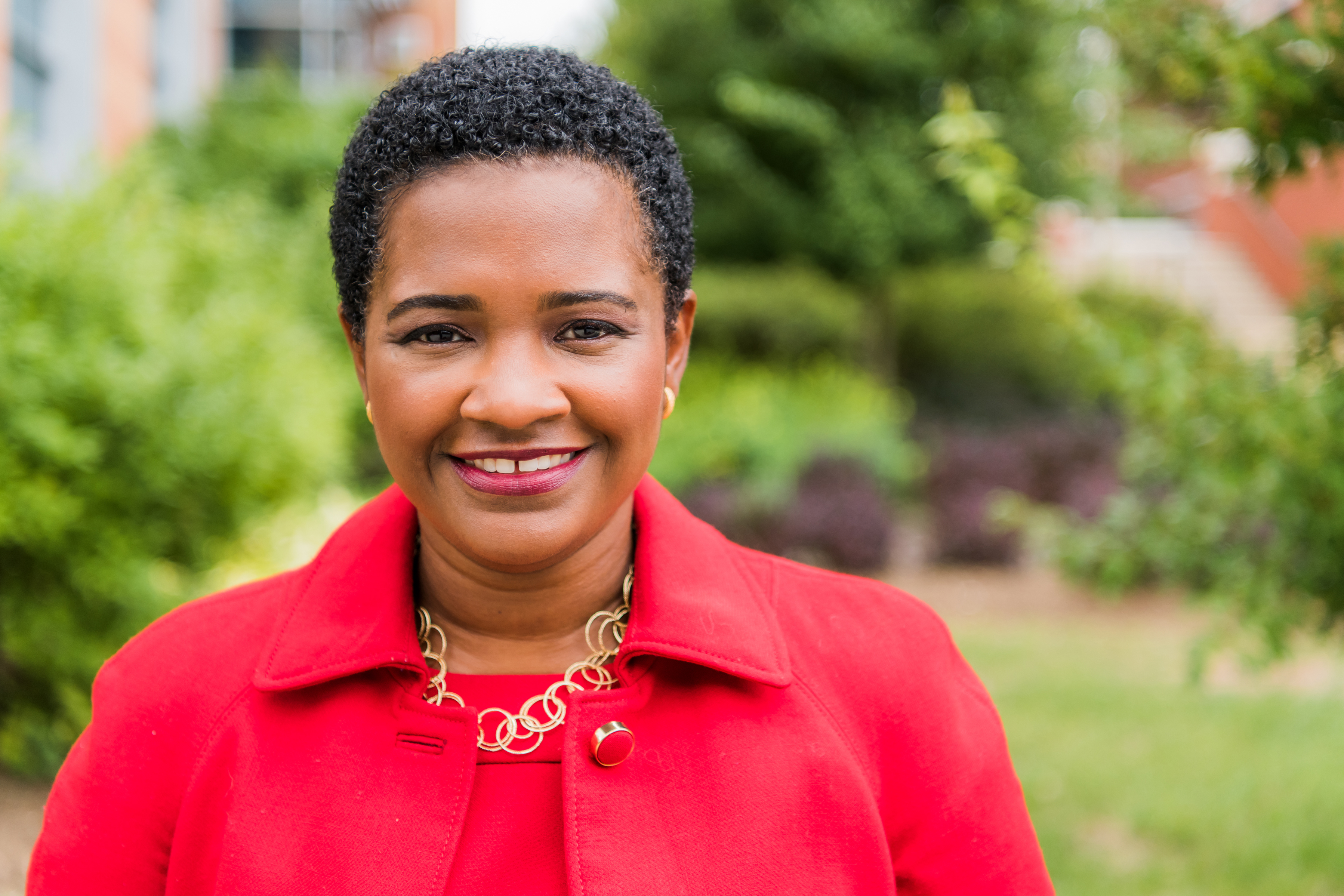
Degree: B.S., Biological Sciences Hometown: Capitol Heights, MD Plans: National Cancer Institute postbac program
“Every time I look at where I am, I always try to look around and give back to other people and to the community, because I feel like that’s what true success is—to be able to give back, and to use my gifts and talents to help others up any way I can.”
Favour Nwagugo ’22, biological sciences, is a Meyerhoff Scholar and LSAMP Scholar. From his first semester, he has also been a dedicated volunteer with the CHOICE Program at UMBC, working each week with elementary through high school students. He’s introduced them to the college campus environment through eating at True Grit’s dining hall and playing basketball in the Retriever Activities Center, and he’s led activities in science, art, computer coding, and more.
By spring 2020, Nwagugo was chosen to be a student coordinator with the program, which involved organizing volunteers, leading reflection sessions, and relaying information back to supervisors at the Shriver Center. Beginning in fall 2020, he also served as a peer health educator at UMBC, working to educate UMBC students about healthy lifestyles and choices.
Nwagugo completed research with Phyllis Robinson, professor of biological sciences at UMBC, and completed a summer research experience at Brown University. After a postbac at the National Cancer Institute, Nwagugo plans to pursue an M.D./Ph.D.
What if no single moment in time pinpoints when life began on Earth? What if, instead, life has unfolded continuously through time, making it impossible to know—and, perhaps, not even worth asking—at which precise moment matter on Earth became what we call “life”? That’s the argument presented in a new perspectives article published in Journal of the Royal Society Interface by Stephen Freeland, director of UMBC’s individualized study program and a computational astrobiologist focused on life’s origins.
Freeland’s argument challenges the concept of the RNA world hypothesis, for decades the leading paradigm for explaining how life arose on Earth. In the RNA world hypothesis, RNA was the first to arise of the three core molecule types necessary for life as we know it: DNA, RNA, and proteins. Traditional versions of the RNA world hypothesis posit that originally RNA both self-replicated and carried out chemical reactions—critical processes for life. Later in life’s evolution, DNA and proteins, respectively, largely took over those functions.
However, over the last several years, even RNA world enthusiasts “are in retreat from the idea that it all begins with RNA,” Freeland says. Acceptance is growing for the potential existence of “pre-RNA” compounds that could have been important stepping-stones on the way to life.
“But this paper is trying to say something more subversive,” Freeland says. Not only was RNA not first, he argues, “Even precursors to RNA evolved many steps into the process.” Perhaps, rather than identifying a single point where life began, “it all traces back in a seamless ad infinitum progression,” Freeland says. “That’s a very different way of thinking about the universe from the way that I was raised to think about it.”
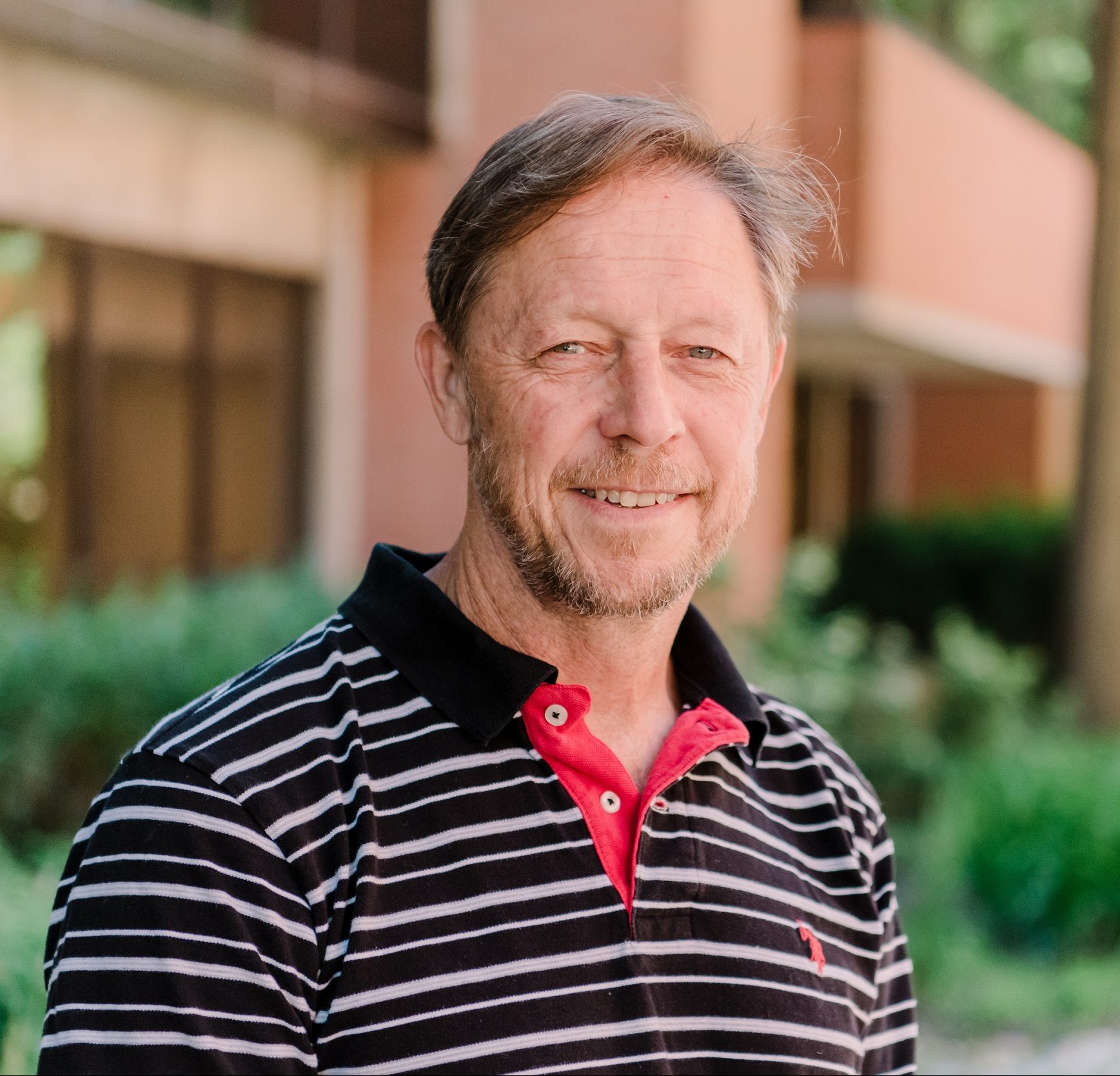
Stephen Freeland. Photo courtesy of UMBC’s Individualized Study Program.
Paradigm shift
Emerging cracks in the RNA world hypothesis have opened Freeland and others’ minds to questioning other long-accepted paradigms. For example, traditionally, complex things are expected to break down into smaller, more stable components over time to reach equilibrium. But it’s not that simple.
In some physical systems, Freeland notes, a constant input of energy can cause building blocks of matter to spontaneously form more-complex structures. Researchers call these phenomena “active matter,” “self-organizing matter,” or other, related terms. This lack of consensus over terminology demonstrates how new a concerted focus on these systems is.
These self-organizing systems don’t defy fundamental physics principles, but they do require a shift in perspective. One must avoid applying assumptions made about systems at rest (without energy input) to understand why a more complex and ordered system would be more stable than a simple, disordered one. As it turns out, there is more than one way to think about equilibrium.
“Traditionally, we have tended to study life’s emergence from a particular equilibrium perspective, and that’s become a paradigm so deep that we’ve forgotten it’s even a paradigm,” Freeland says. Focusing on the ways matter moves and organizes itself, and why, rather than on stability and disorder, “is a different way of thinking about physics that’s so exciting.”
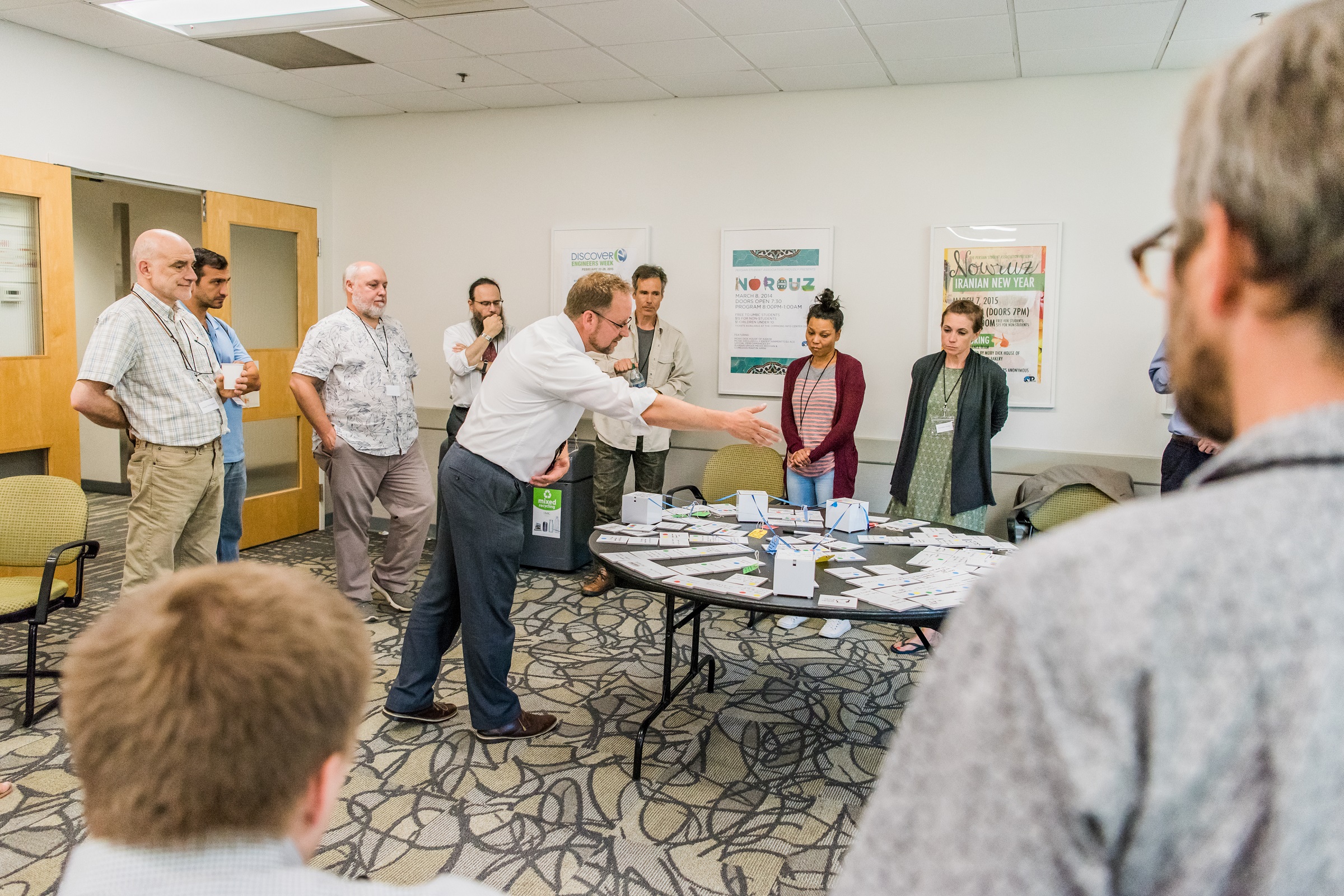
Freeland (center) leads a discussion at an evaluation workshop for a previous Ideas Lab. Freeland is co-leading a new Ideas Lab in June 2022. It will bring together scholars from several seemingly disparate fields that are all relevant to studying the origins of life. Photo by Marlayna Demond ’11 for UMBC.
Window of change
Freeland argues that the physicists asking these questions, the biologists and chemists studying life’s origins, and researchers in other fields, such as artificial life, have more in common than they might realize, despite their fundamentally different views on things like how to define “equilibrium” in physical systems. However, at present they barely understand one another well enough to perceive their connections, he argues. He believes they could usefully collaborate more to tackle these huge questions of how the universe works.
“There’s low-hanging fruit here,” Freeland says, “if we can acknowledge that people outside our normal spheres are working on something relevant to us, then if we could only learn to communicate, we might find we are already a lot further ahead than we think we are.”
To encourage that communication, Freeland received a $226,000 grant from the Templeton Foundation to bring 30 international scholars in biochemistry, non-equilibrium physics, and artificial life to Prague, Czech Republic in June. He is organizing the event in close collaboration with colleagues at University of Tokyo, Georgia Tech, and Charles University in Prague. The attendees will explore what they have in common, develop new research questions, and compete for access to major funding to pursue their ideas.
As momentum builds in the scientific community to reconsider the primacy of the RNA world hypothesis, Freeland believes “a window of change is here” to ask big questions in new ways. And yet, even acknowledging that RNA was not the beginning of life would be just “a side effect of the more interesting point,” Freeland says, “—that there’s an awful lot we don’t know about how all this fits together.”
Header image: The Frederick Douglass Memorial Bridge in Washington, DC looks like DNA when viewed with its reflection at night. Researchers from a range of fields continue to debate when DNA arose in the sequence of events leading to life as we know it. Photo by Miki Jourdan, used under CC BY-NC-ND 2.0.
At UMBC’s 2022 Presidential Faculty and Staff Awards (PFASA), Tamra Mendelson, professor of biological sciences and recipient of the 2022 – 2025 Presidential Teaching Professor Award, said she loves “getting to the core of a concept” in her research and teaching. In her large introductory biology courses, which Mendelson has been teaching with humor, creativity, and enthusiasm since her arrival on campus in 2006, the concept might be an idea like natural selection. But as awardee after awardee addressed the audience, both in person and online, it became clear that all shared the same “core concept” of UMBC: community.
“Teaching and research make me want to come to work every day, but it’s the community here, and Dr. Hrabowski in particular, who’ve made me want to come to UMBC every day,” Mendelson said.
Yonathan Zohar, professor and chair of marine biotechnology and the 2022 – 2025 Presidential Research Professor, added, “This recognition is not about me, it’s about us,” adapting the opening quote from President Hrabowski’s book, The Empowered University. Zohar’s work, nurtured diligently over more than three decades, has in the last few years brought in more than $10 million dollars of research funding, earned international awards, and is poised to reimagine the seafood industry as we know it.
And yet, Zohar says, “None of my research accomplishments would have been possible without the ‘about us’ spirit at UMBC—the spirit that together we can make everything and anything happen.”
Yonathan Zohar, right, accepts his award from Bill LaCourse, dean of the College of Natural and Mathematical Sciences.
Supporting each other
Helena Dahlen, executive administrative assistant in the Division of Information Technology and the 2022 – 2023 Presidential Distinguished Staff Award for Non-exempt Staff recipient, recalled becoming an active member of the community when she started at UMBC in 2015. She joined book clubs, participated in wellness events, attended lectures, and more.
“It felt like I had moved into a small community,” she says. “Almost like a village, surrounded by brilliant people of all ages.” The supportive environment has allowed Dahlen to do her best work at UMBC and to give back. She generously contributes her energy to programs like Retriever Essentials and the Maryland Charity Campaign, and she serves as president of the Non-exempt Staff Senate.
Finally, Michael Pound, director of environmental safety and health and the 2022 – 2023 Presidential Distinguished Staff Award recipient, got to the heart of the matter. Recalling the challenges of managing the university’s response to the pandemic with a team of dedicated colleagues, he says, “I just couldn’t be prouder to work with these great folks.”
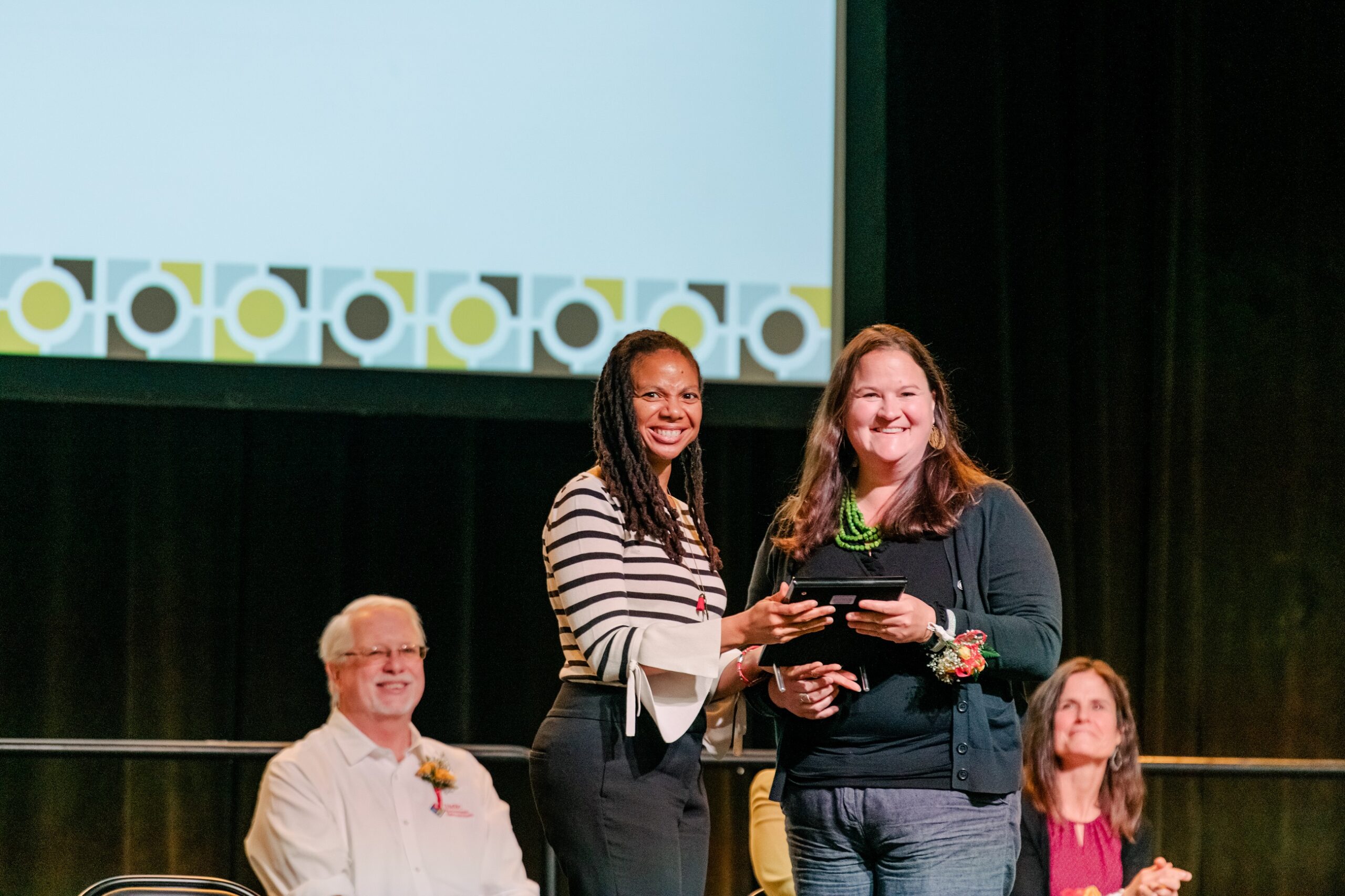
Danyelle Ireland, right, accepts her award from Marc Olano, associate dean of academic programs and learning in the College of Engineering and IT.
Beyond imagination
The UMBC community, all of the awardees emphasized, has grown through years of thoughtful care and collaboration. It’s taken decades to cultivate the UMBC ethos of community support and shared leadership.
“It’s hard to express how far we’ve come,” reflected President Hrabowski, as he offered remarks at his final PFASA as UMBC president. “Growing up, I could never have imagined the concept of UMBC—people from all over the world coming to study, to seek the truth, to get to know people different from themselves.”
UMBC’s newest awardees highlighted how that vision has become a reality, and Pres. Hrabowski honored all that they have contributed. “Leadership isn’t about one person at the top; it’s about what we all do,” Hrabowski said. “When we say we care about UMBC, what we’re saying is we care about each other.”
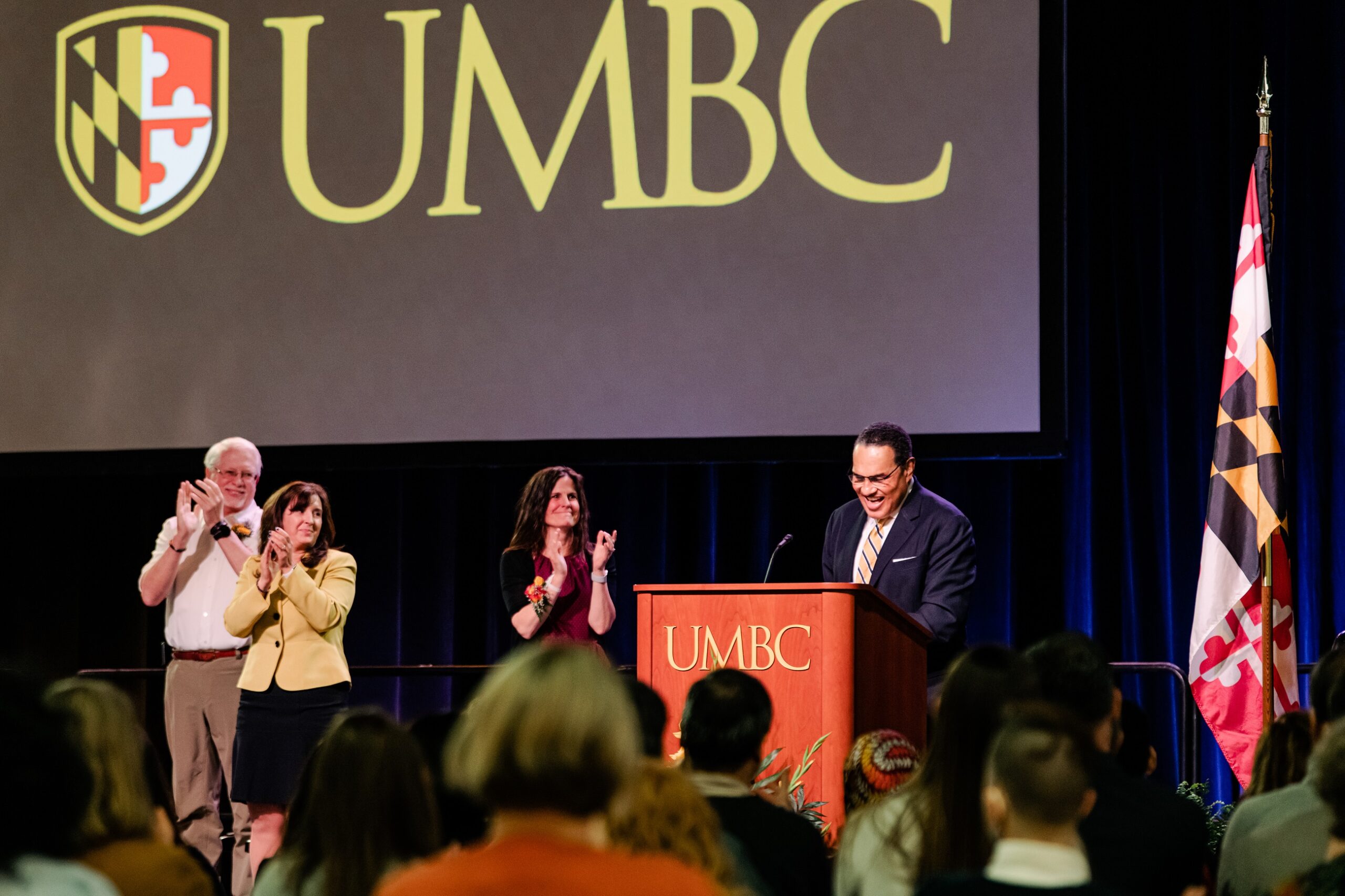
The audience applauds President Hrabowski as he makes remarks at his final Presidential Faculty and Staff Awards.
Honoring excellence
UMBC’s other named awards honor members of the UMBC community who embody the university’s ethos, such as Diane Lee, retired vice provost and dean of undergraduate education; Marilyn E. Demorest, professor emerita of psychology and former vice provost for faculty affairs; and Teresa Lupinek, the late former executive administrative assistant to the president. This year’s recipients include:
Mark Berczynski, M.S. ’17, lecturer, engineering and computing education program Diane M. Lee Teaching Award
Danyelle Tauryce Ireland, associate director, Center for Women in Technology Jakubik Family Endowment Staff Award
Nichole Zang Do, M.A. ’15, program management specialist, biological sciences Karen L. Wensch Endowment Award for Outstanding Non-exempt Staff
C. Jill Randles, assistant vice provost and assistant dean, Academic Engagement and Transition Programs Teresa Lupinek Endowment Award
Tamara Bhalla, associate professor, American studies Marilyn E. Demorest Award for Faculty Advancement
Margaret Holland, associate professor, geography and environmental systems Marilyn E. Demorest Award for Faculty Advancement
Narsingh B. Singh, research professor, chemistry and biochemistry, and affiliate faculty, computer science and electrical engineering UMBC Research Faculty Excellence Award
Margaret Holland, right, accepts her award from Kimberly Moffitt, dean of the College of Arts, Humanities, and Social Sciences.
USM Board of Regents awardees
This year, UMBC also had two University System of Maryland (USM) Board of Regents Award recipients. These awards represent the highest honor bestowed on faculty and staff across the USM by the Board of Regents. Awardees are selected by the Council of University System Staff and approved by the Board. The awards recognize faculty and staff for excellence in teaching; research, scholarship, and creative activity; public service; mentoring; or innovation.
UMBC has received an outsize share of these awards over the years, demonstrating the strength of our faculty and staff across all areas of achievement. This year, Marjoleine Kars, professor of history, received the 2022 USM Board of Regents Award for Excellence in Scholarship. Her latest book, Blood on the River: A Chronicle of Mutiny and Freedom on the Wild Coast, has received widespread acclaim for its discussion of a nearly successful rebellion of enslaved African and Indigenous people in the Dutch colony of Berbice in the 1860s.
Lee Blaney, associate professor of chemical, biochemical, and environmental engineering, received the 2022 USM Board of Regents Award for Excellence in Teaching. Blaney has received awards previously for exceptional mentoring and for engaging his students in high-impact research. His laboratory focuses on contaminants of emerging concern, such as compounds found in pharmaceuticals and personal care products, in waterways such as Chesapeake Bay.
From left to right: Lee Blaney, Marjoleine Kars, and Victor Fulda.
Celebrating together
This year’s ceremony was the first in-person PFASA event since 2019. With that in mind, the ceremony also honored awardees from 2020 and 2021.
Victor Fulda, engineering technician, chemical, biochemical, and environmental engineering 2021 University System of Maryland Board of Regents Award for Exceptional Contribution to the Institution or Unit to which the Person Belongs
Jamie Gurganus ‘04, M.S. ‘11, Ph.D. ‘20; faculty, mechanical engineering; associate director, engineering education initiatives; and director, Center for the Integration of Research, Teaching, and Learning 2020 – 2021 Diane M. Lee Teaching Award
Jonathan Zwi, instructor and affiliate artist, music 2020 – 2021 Diane M. Lee Teaching Award
Header image: Recipients of awards who accepted them in person at this year’s PFASA. From left to right: Marjoleine Kars, Michael Pound, Jamie Gurganus, Maggie Holland, Nichole Zang Do, Jill Randles, Danyelle Ireland, Tamra Mendelson, Yonathan Zohar, Helena Dahlen, Freeman Hrabowski, Tamara Bhalla, Victor Fulda, Jonanthan Zwi, Narsingh Singh, Lee Blaney, Philip Rous.
A new study published in Genes may eventually give doctors the ability to make better-informed decisions about which medications to prescribe for older adults. The research, led by Mariann Gabrawy, Ph.D. ’18, biological sciences, in the lab of UMBC Prof. Jeff Leips, found associations between particular genes and individuals’ responses to a common blood pressure medication, Lisinopril. The drug also sometimes improves mobility and physical performance in older adults—but sometimes it makes things worse.
Better understanding the relationship between genetics and drug responses would help doctors prescribe drugs they know are likely to help, rather than relying on trial and error. Moving forward, researchers could employ the same experimental process Gabrawy used for other drugs.
“Our genetics matters,” says Gabrawy, who completed the research at UMBC as part of her Ph.D. dissertation as a Meyerhoff Graduate Fellow, with a UMBC-Johns Hopkins research team. “Humans don’t all react the same to various prescription medications. So it’s really important to be able to look at an individual patient and figure out if some particular medication is going to work for them or not.”
Mariann Gabrawy. Photo courtesy Mariann Gabrawy.Jeff Leips. Photo by Marlayna Demond ’11 for UMBC.
Super flies
Gabrawy’s study tested the effects of Lisinopril on more than 10,000 individuals’ ability to walk and climb. What made a study of such massive scale possible? The individuals were fruit flies. Gabrawy and a team of UMBC undergraduates used a unique experimental technique to test each individual fly’s walking and climbing ability multiple times. Gabrawy developed the technique and debuted it in a previous paper.
Why is it useful to study drug responses in fruit flies? Humans and fruit flies share about 75 percent of the genes involved in disease, Gabrawy says. And the genes that she and colleagues identified as relevant to the drug response all have parallel genes in humans.
Flies also have a short lifespan, they’re inexpensive, and they’re easy to take care of, making them ideal for laboratory work. Plus, as a workhorse model species, there are hundreds of well-defined genetic lines of fruit flies that are easy to acquire, and genetic tools are readily available to apply to the fly genome.
However, of course, “You can’t just jump from a fly study to a human study,” Gabrawy says. The likely next step for studying the relationships between Lisinopril and different genes would be a mouse study, to eventually be followed by human studies. But by looking at so many flies, and identifying important gene candidates, this study “lays down a necessary foundation,” Gabrawy says.
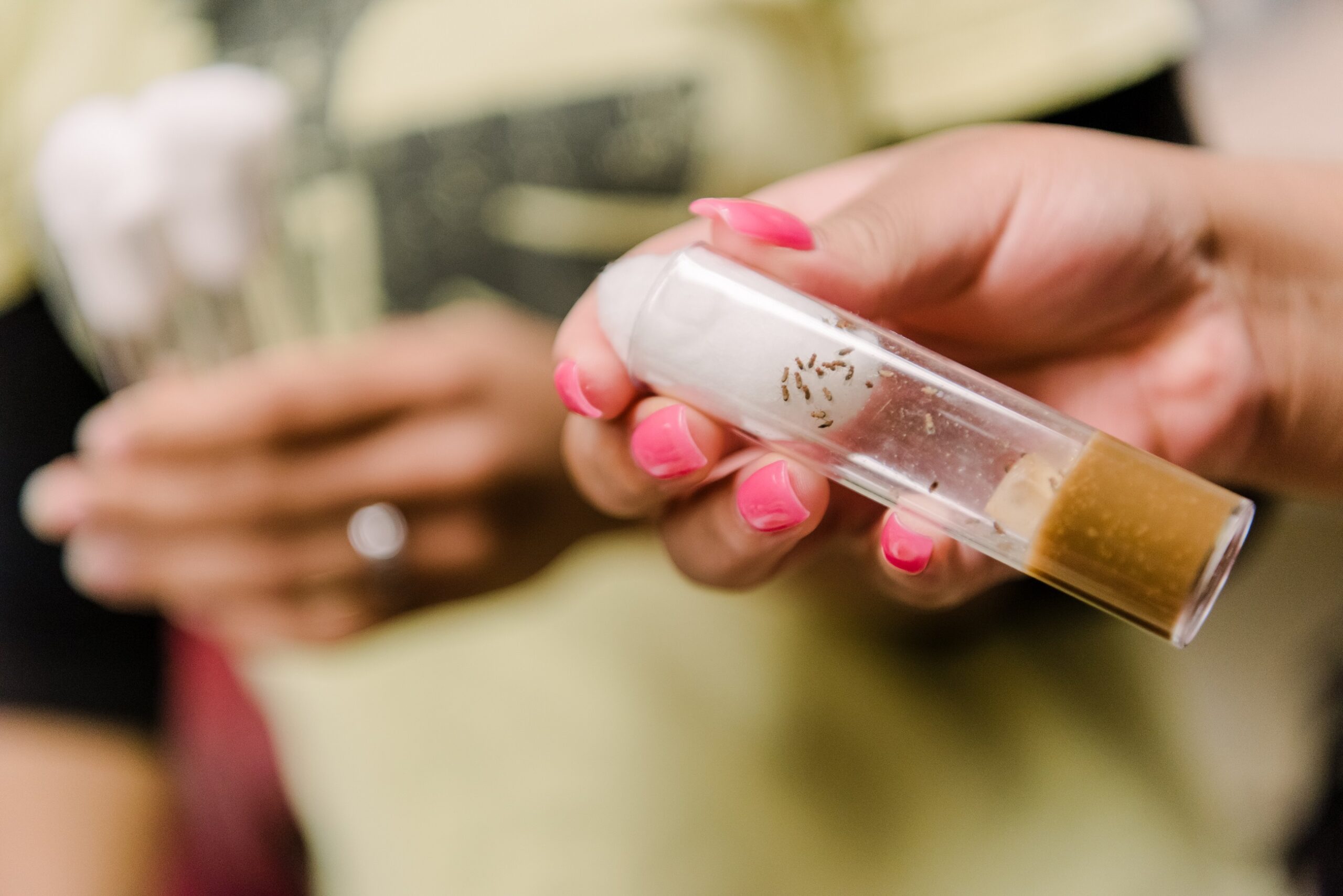
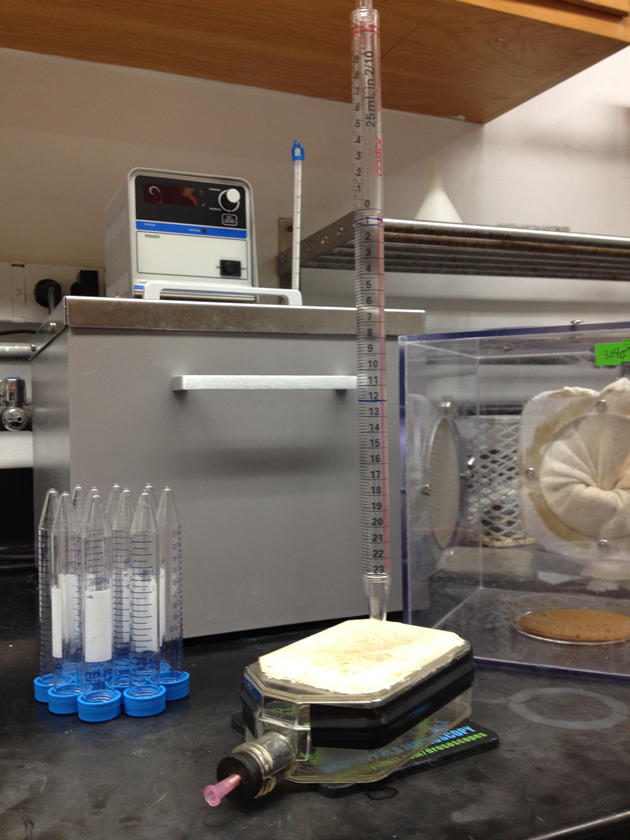
Flies in a vial in Jeff Leips’s laboratory. Photo by Marlayna Demond ’11 for UMBC.Mariann Gabrawy’s innovative setup for measuring the walking speed of individual flies. Photo courtesy Mariann Gabrawy.
Breaking down silos
The project also deepened ties between UMBC and Johns Hopkins University. Gabrawy was co-advised by Leips at UMBC and Peter Abadir, associate professor of geriatric medicine at Hopkins, during her Ph.D. Both are authors on the new paper.
“Research now is never one person or one research group working in a silo,” Abadir says. “I love how this research allowed us to break down the silos between UMBC and Hopkins and see the great things that each of us is doing on our campuses and what we can learn from each other.”
For example, “Mariann was able to take measures that we carry out in humans and create an analogous measure in fruit flies,” Abadir says. “That’s the beauty of working together.”
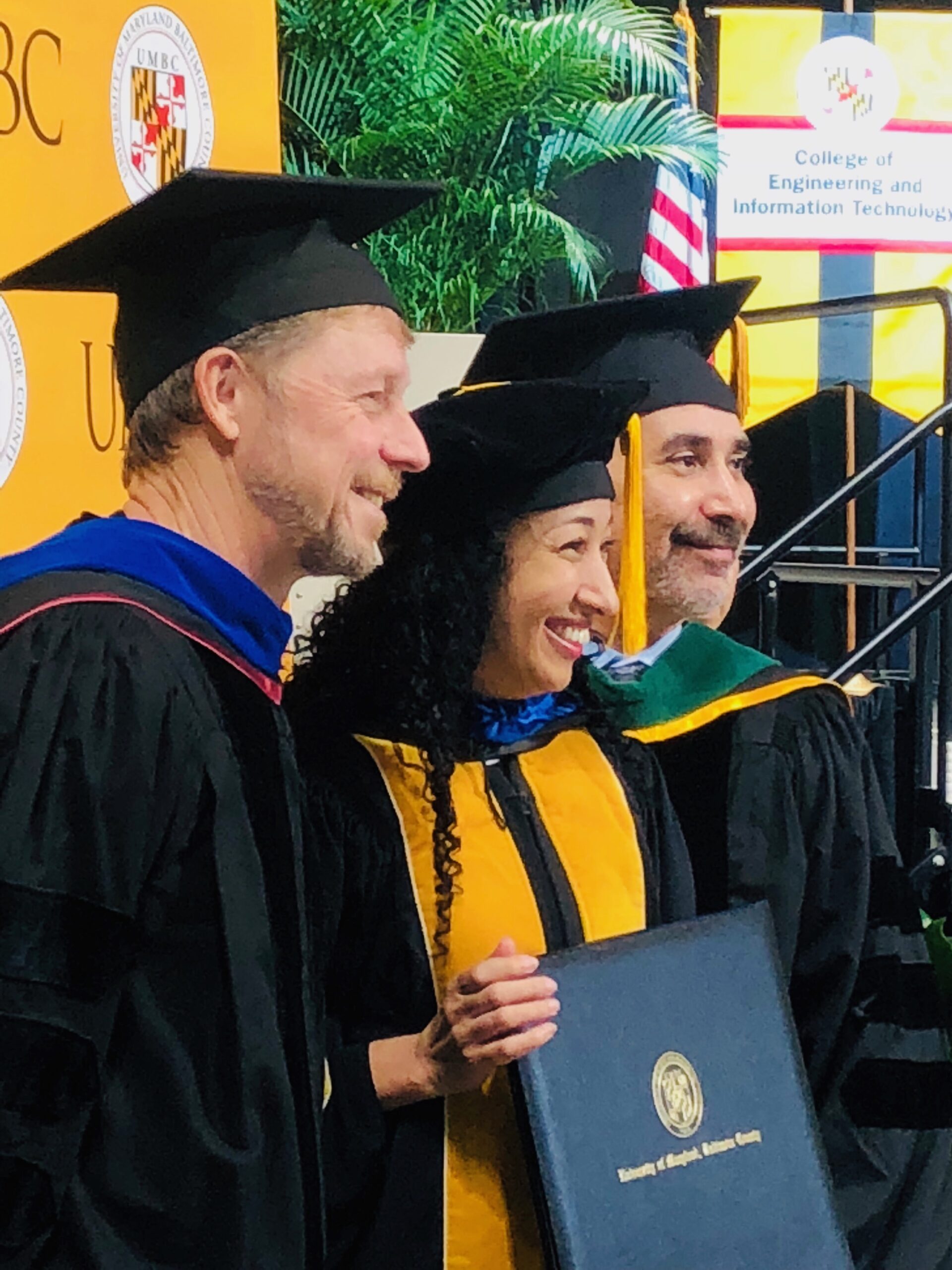
From left to right: Jeff Leips, Mariann Gabrawy, and Peter Abadir celebrate with Gabrawy at her UMBC graduation. Photo courtesy Mariann Gabrawy.
A close-knit team
Abadir was also impressed by the strength of the undergraduate researchers at UMBC, several of whom are authors on the new paper.
Leips has supported undergraduates in his research group for decades. “Kudos to them for not just doing the day-to-day work, but also contributing intellectually to the research,” Leips says of the undergraduate authors. “That’s one of the strengths of UMBC and the student population here—they really engage with the research and become real researchers.”
Gabrawy trained all 17 undergraduates who supported the work herself. Because of their efforts, collecting data took only one year, when it otherwise would have taken at least three. She still keeps in touch with her students; a few even followed her to Johns Hopkins as volunteer research assistants when she completed a postdoctoral fellowship there. Today, most of the 17 are pursuing medical or graduate school.
“It’s a beautiful thing to see that they have also found their own successes within and beyond UMBC,” Gabrawy says, “and to know that I’ve been a part of that in some small way. Mentoring has always been very important to me.”
Gabrawy has taken that spirit to her current role as a lecturer at St. Paul College in Minnesota. She is currently applying for funding to grow the college’s undergraduate research program.
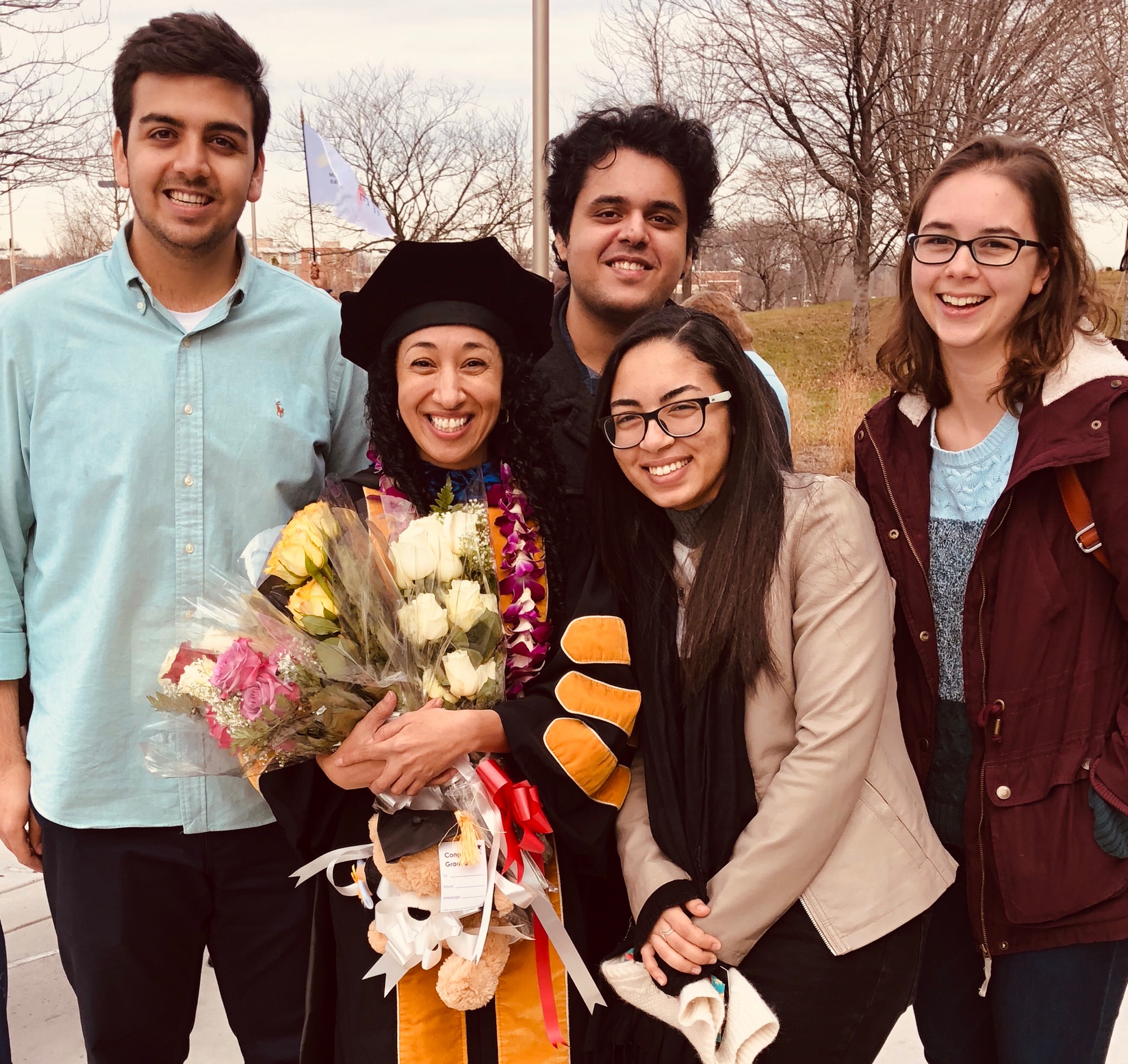
Mariann Gabrawy, second from left, with four of the 17 undergraduates who contributed to the current paper. Photo courtesy Mariann Gabrawy.
Limitless possibilities
Gabrawy is focused on teaching for now, but there are plenty of opportunities to extend the work in her new paper. “One avenue of future work is to look at the mechanism,” Leips says. “We have this tie between genes and traits, but how exactly does that work at the molecular level?”
Whether or not Gabrawy and Leips pursue that question themselves, they’ve set the stage for others to do so. “The coolest part is the ability to share our findings and our data,” Gabrawy says. “We’ve provided really very important fundamental information to other scientists out there. The possibilities for future work are truly limitless.”
Header image: A student in Jeff Leips’s laboratory observes fruit flies under a microscope. Photo by Marlayna Demond ’11 for UMBC.
UMBC researchers regularly share their work and expertise with the public through The Conversation—a nonprofit news outlet that provides current, informative content to news publications worldwide, free of charge. This week, these authors have hit a milestone: 224 Conversation articles written by 125 different UMBC researchers have earned a cumulative 10 million reads.
The 10 million reads milestone demonstrates the commitment of UMBC researchers to sharing their expertise with the broader community. It also shows that UMBC researchers are helping meet public demand for high-quality content on timely topics.
“The Conversation helps us contribute to our public service mission as a public university,” says Karl V. Steiner, vice president for research. “This milestone underscores the importance of academic researchers actively participating in the public discourse of complex issues.”
Sebastian Deffner, physics, wrote a piece for The Conversation in 2017 explaining static electricity. Every winter, when dry air and static increase, the article gets a fresh boost of views. Photo by Marlayna Demond ’11 for UMBC.
Career impact
Many readers have likely seen articles from The Conversation without realizing it, due to the free-to-republish model. Top republishers of UMBC’s Conversation content include Quartz, Smithsonian Magazine, Fast Company, Scientific American, Business Insider, andCNN, along with countless local newspapers around the nation. And these articles often inspire additional original news coverage on faculty research as well.
Charissa Cheah’s April 2021 Conversation article on anti-Asian violence and school safety was followed by related coverage on NBC News and WYPR. Photo by Crystal Tseng, courtesy Charissa Cheah.
The Conversation has a global impact. Forty-two percent of readers of UMBC-authored Conversation articles are based outside the U.S. Many of these readers are based in Canada, India, Australia, the United Kingdom, France, the Philippines, and Singapore, among other nations. They access both English-language content and UMBC articles that have been translated into other languages, such as Spanish and French.
The authors benefit, too. “Working with The Conversation taught me the ropes of writing for the general public,” says Zoë McLaren, associate professor of public policy. “It helped me develop a reputation as a respected COVID-19 expert. And it helped develop the skills I needed to be able to write for FiveThirtyEight, WIRED and TheNew York Times. The editors at The Conversation are knowledgeable and helpful and a real pleasure to work with.”
Katherine Seley-Radtke, professor of chemistry and biochemistry, has also had success with The Conversation. “The experience of writing several pieces for The Conversation has had a significant impact on my career,” she says. “Since publishing my first piece at the beginning of the pandemic, I have given more than 60 interviews for print, radio, and television.”
As a medicinal chemist whose research group focuses on antiviral drug development, Seley-Radtke says, “it is important to have these types of platforms to help educate and inform the public.”
From technical to accessible
Even research areas that aren’t frequently in the news can find an enthusiastic audience on The Conversation. Preminda Jacob, associate professor of visual arts and associate dean of the College of Arts, Humanities, and Social Sciences, has discovered this first-hand. With her expertise in the history of modern and contemporary art, Jacob’s articles in The Conversation have helped the public better understand artists’ social and political impacts.
Preminda Jacob (l) and Andrea Lorick (r) at at exhibition at UMBC’s Center for Art, Design, and Visual Culture. Photo by Marlayna Demond ’11 for UMBC.
Mercedes Burns, assistant professor of biological sciences, studies the evolution of reproductive systems in arachnids commonly referred to as daddy longlegs. She published an article about the ability of some animal species to reproduce with just one parent’s genetic material. Published just before Christmas with the title “Virgin births from parthenogenesis,” the story garnered a huge readership. It subsequently appeared on CNN, Gizmodo, IFLScience, and more.
“I enjoy the challenge of taking technical writing and making it accessible for a wider audience,” says Burns, who is also very active within the science community on Twitter. She in part credits that public engagement for additional opportunities to comment on stories for The New York Times, The Atlantic, Science News, and SmithsonianMagazine.
Burns’s Conversation editor “gave me clear feedback over just two sessions, so I could easily make the changes she suggested,” she says. “All in all, I was glad to have a broader venue for my research, and the process wasn’t too complicated or time-consuming. I would certainly write a Conversation article again.”
Fostering public understanding
Richard Forno, principal lecturer and director of the cybersecurity graduate program, is one of UMBC’s most frequent contributors to The Conversation, writing on topics from election security to ransomware attacks. Forno views sharing his expertise as a civic duty, given cybersecurity threats facing the public. He sees The Conversation as an excellent way to connect with a broad range of readers.
“To me, what’s refreshing about The Conversation‘s role in the world—and why I appreciate contributing to it—is their commitment to providing easily accessible and jargon-free exploration and objective analysis of often-complex issues, technology, and events,” Forno says.
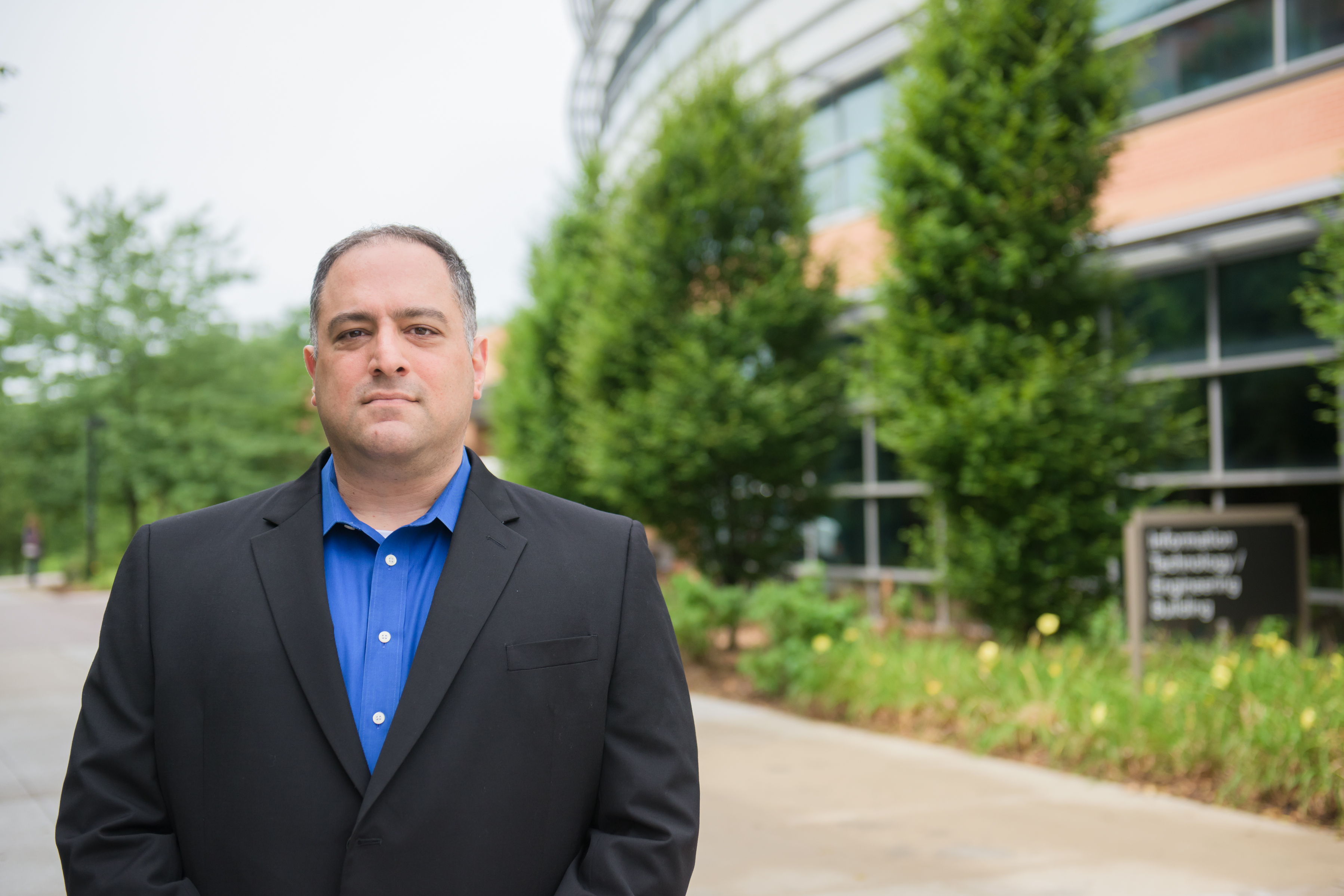
Richard Forno outside the Information Technology and Engineering Building. Photo by Marlayna Demond ’11 for UMBC.
For example, an article by Priyanka Ranade ’18, M.S. ’19, information systems, a Ph.D. student in computer science, and Anupam Joshi and Tim Finin, professors of computer science and electrical engineering, discusses how artificial intelligence can generate fake reports about medical research, cyberattacks, and more, that fool even cybersecurity experts. Public understanding and vigilance around cybersecurity is critical in today’s world, but the issues can seem opaque to those outside the field unless communicated clearly.
“The Conversation reminds academics, researchers, and other experts that knowledge discovery is just as important as how it’s conveyed to others,” Forno says. “This work is so important to fostering public understanding and supporting a more informed global citizenry.”
Banner image: Mercedes Burns (right) and Sarah Stellwagen at work in Burns’s laboratory. Photo by Marlayna Demond ’11 for UMBC.
The Norwegians call it “friluftsliv”—the philosophy of spending time outdoors frequently, regardless of the weather. Or, as the Swedes put it, “There is no such thing as bad weather, only bad clothing.” These denizens of harsh northern climes aren’t just making the best of the cold—there’s a host of documented benefits to going outside.
“Research has demonstrated that spending time outdoors can improve physical health and emotional wellbeing, especially the more time you spend outdoors,” says Samantha Smith, associate director of health promotion at UMBC. “Whether taking a walk or just soaking up some natural sunlight, spending time outside can boost your mood, inspire creativity, help to reduce stress and anxiety-related symptoms, and increase your mobility and flexibility.”
In celebration of spending time outdoors in all seasons, here are a few of the best spots on and near campus to enjoy some fresh air in the new year.
1. Library Pond
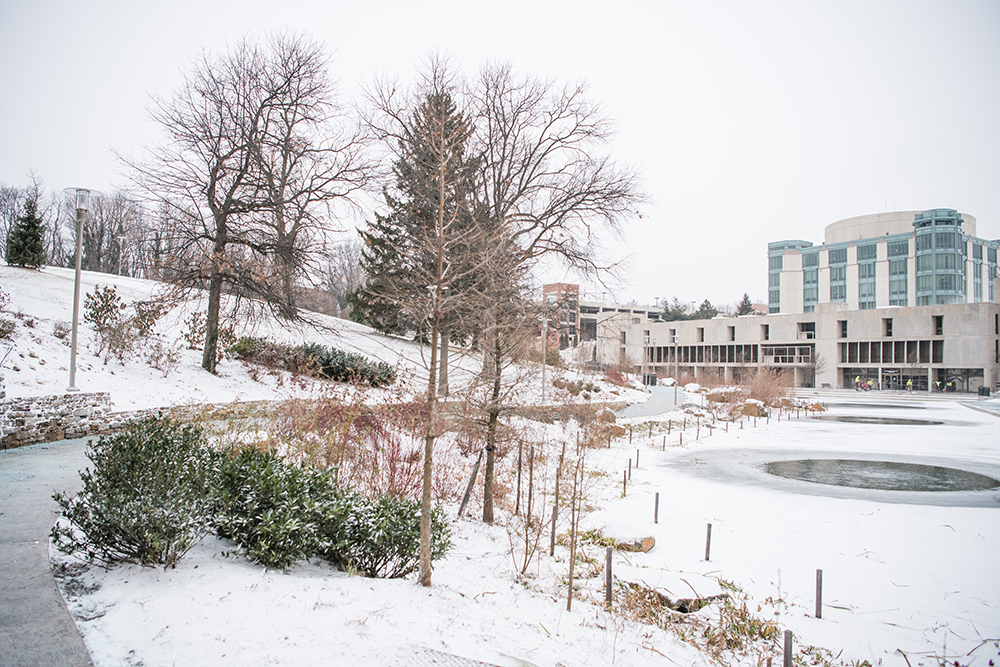
The Library Pond sits at the north end of Academic Row between the AOK Library and Gallery and the Meyerhoff Chemistry Building. Surrounded by native vegetation, it is also a National Wildlife Federation Certified Wildlife Habitat. Ducks, songbirds, and the occasional heron enjoy the pond year round. The pond also supports a small population of catfish (but no fishing!). As a human, you can enjoy a brisk walk around the pond (approximately 500 steps) to get your blood flowing again after a serious bout of screen time, or enjoy your lunch at tables on the pond’s patio or the library’s terraced hillside nearby.
But wait, there’s more: Underneath the surface of the pond lies a complicated series of tunnels and reservoirs that enhances storm water management by preventing flooding and improving filtration of precipitation. The pond was completely gutted in 2013 and the current version completed in 2015, setting the stage for much better support of plants, animals, and the campus.
Circling the Library Pond is an invigorating stroll in any season.
2. Joseph Beuys Sculpture Park
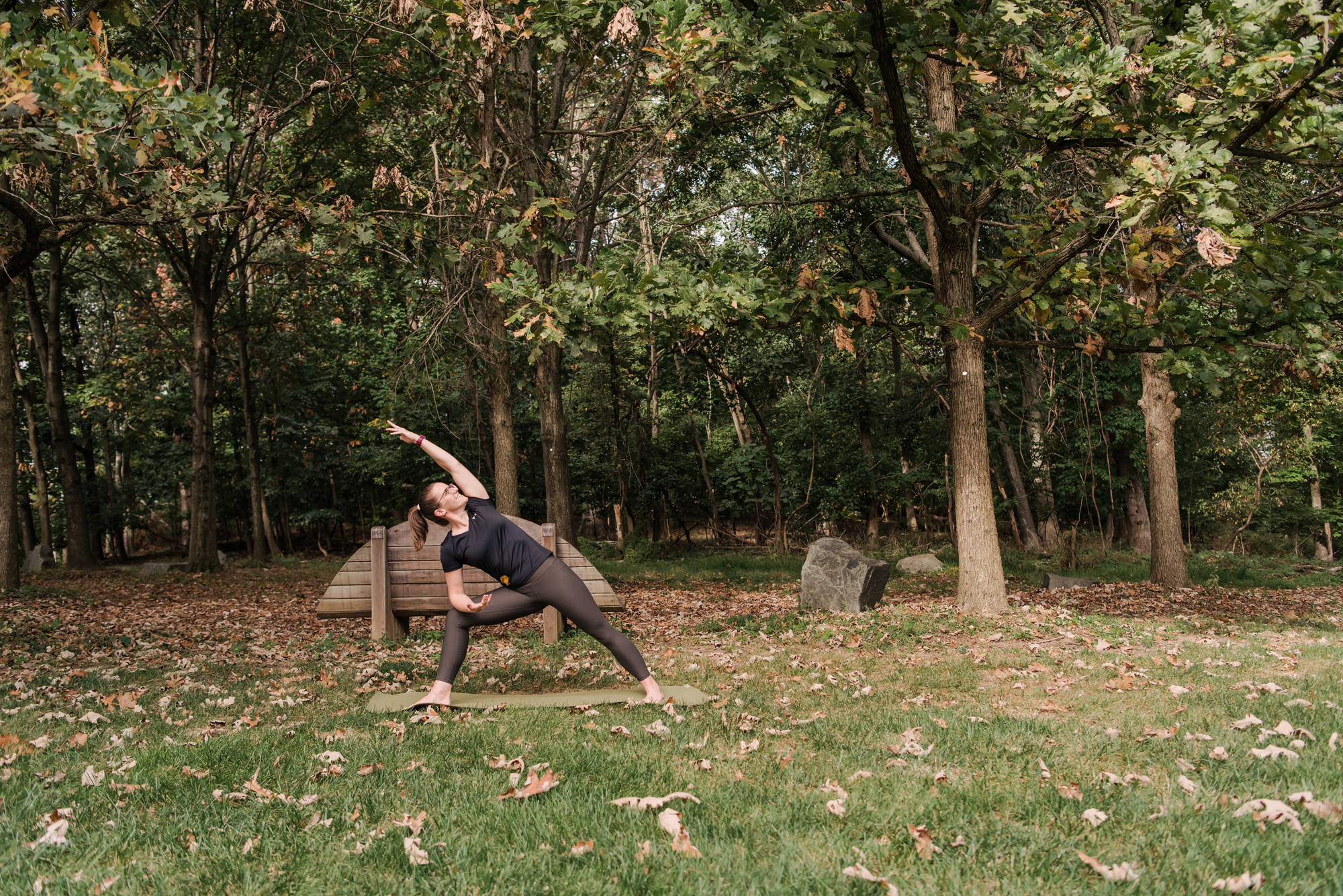
The Joseph Beuys Sculpture Park is not your typical sculpture garden. In 2001, volunteers planted 30 trees on The Knoll, a wooded area between The Commons Garage and Administration Drive. Each tree has a stone at its base. The trees and stones compose a living artwork that emphasizes constant transformation: As the trees grow, the stones erode, shifting their relationship with each other and the landscape. The sculpture garden is modeled after a similar (but much larger) project in Kassel, Germany, which was installed in the 1980s and includes over 7,000 trees. At UMBC, three wooden benches are situated among the trees and one conceals a journal in a small cubby, where passersby are welcome to contribute their musings. The UMBC library archives store all of the completed journals.
When you visit the sculpture park, make sure to write down your thoughts in The Knoll’s shared journal.
As the campus has grown and expanded, The Knoll has remained intact thanks to the support of UMBC community members advocating for the green space over several decades. Today, the sculpture park is a highly valued and peaceful sanctuary that is expected to welcome many future generations of UMBC students.
3. Forum
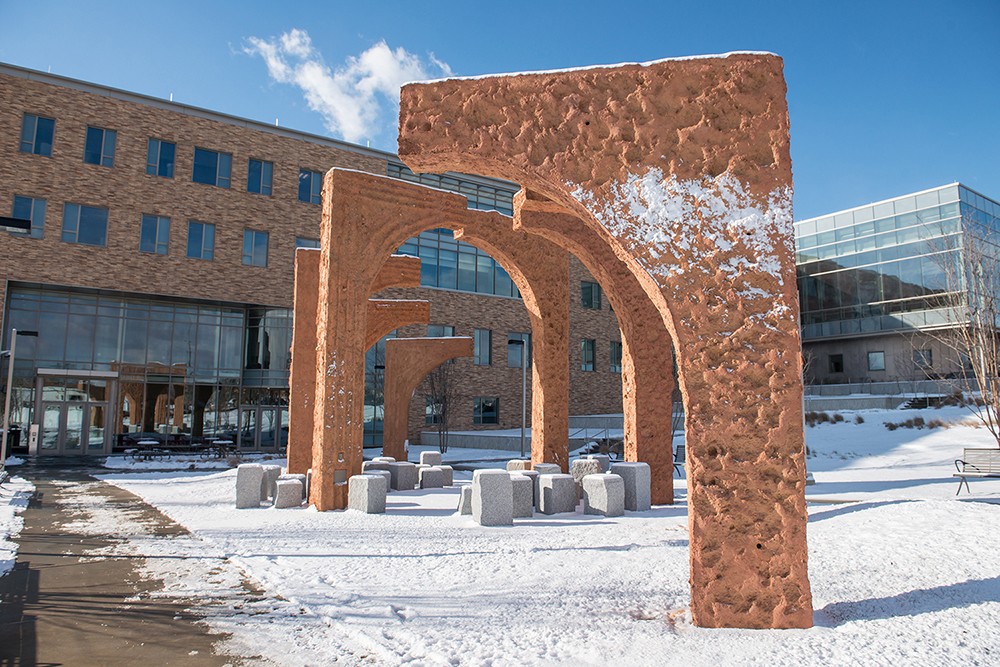
Just outside the Performing Arts and Humanities Building, several large stone structures, almost like upside-down bookends, rise from the earth in ancient Greco-Roman style. Stools of various heights below the columns invite community members to have a seat and wax philosophical. Instructors conduct class discussions around the sculpture, named “Forum” by artist Thomas Sayre, and a colorful sky at sunset is often visible just across The Loop. The Ancient Studies department holds regular readings beneath Forum’s stately columns—even in winter.
Forum was the very first public art installation supported by the Maryland State Arts Council’s “Percent-for-Art” program, which requires new state-owned buildings to set aside a portion of their budgets for public art installations.
Forum draped in a dusting of snow.
4. Commons Terrace
The Commons Terrace, just south of The Commons and looking out on the quad and outdoor pool, is another great outdoor spot. With numerous tables, it’s the perfect locale to enjoy your lunch in any weather. (Make sure to properly sort your trash and compost and recycle whatever you can—even plastic bags can now be recycled in designated bins.) You might even get lucky and see an impromptu performance or tabling event. If it’s nice out, take advantage of the oversize Adirondack chairs on the terraced hillside leading down to the quad.
Find a few minutes to lift your face to the sun even on a chilly day on the Commons Terrace.
5. RAC Plaza
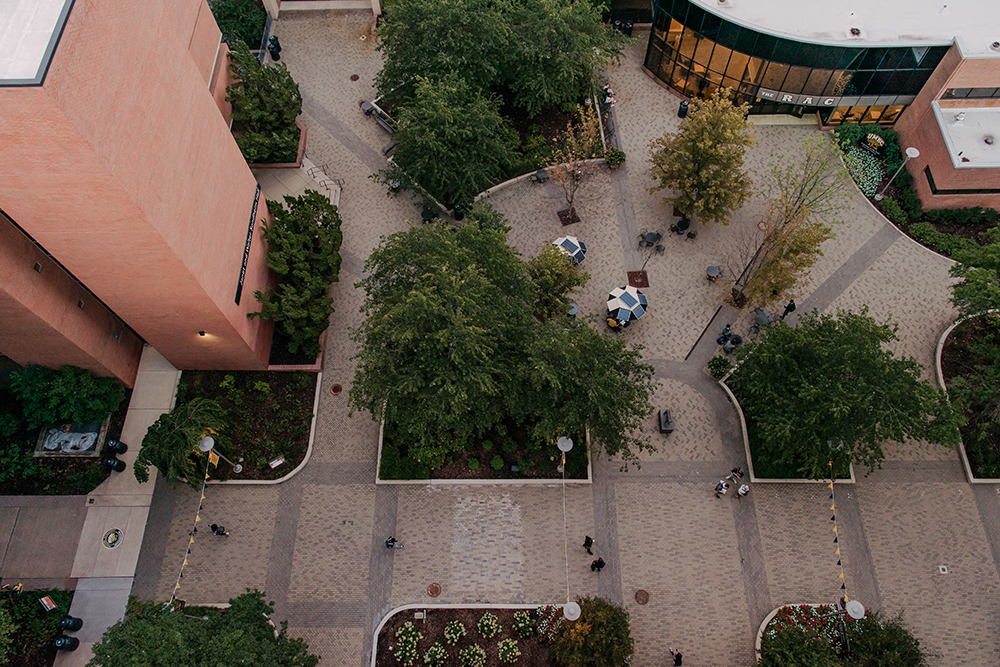
At the main entrance to campus, between the RAC and Administration Building, a handful of tables beckons students to study and socialize. The tables are equipped with umbrellas topped by solar panels that support charging ports, so there’s no need to go inside when your laptop runs out of juice. In fact, UMBC gets 40 percent of its energy from solar and other renewable sources. In early spring, as the campus is just shaking off the cold, enjoy the blooms of the star magnolia trees lined up along the RAC. And don’t forget to rub True Grit’s nose while you’re there!
The RAC plaza viewed from above. Solar panels perch on top of the tables’ umbrellas.
6. Admin Café Terrace
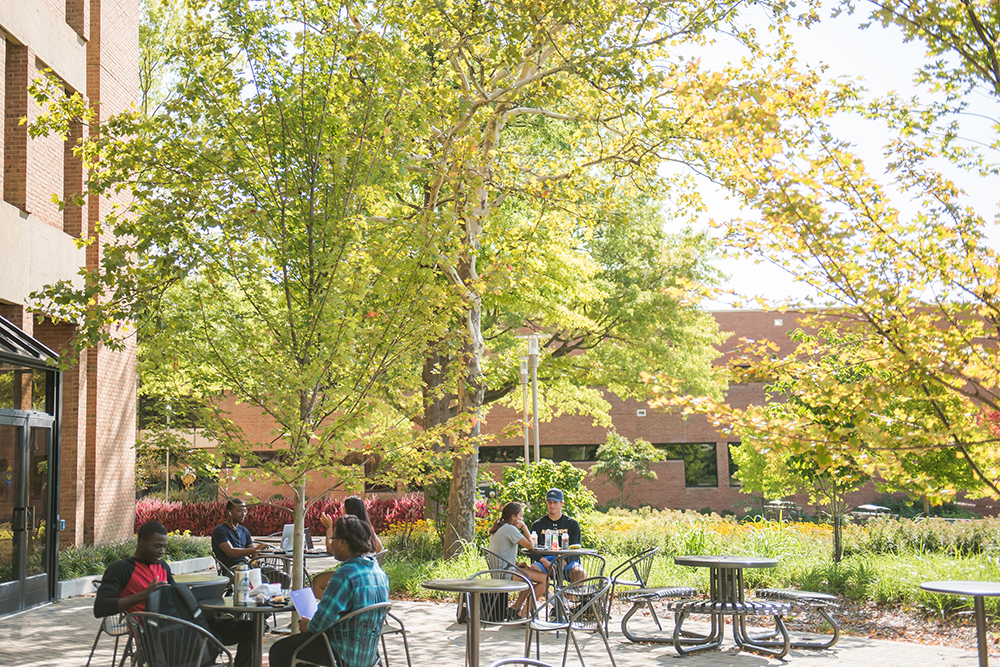
Just across Academic Row from the RAC, in front of the Administration Building, another small enclave of tables welcomes those enjoying a meal from the Admin Café or their own lunch bag. The seating area is protected by mint, bluestar, and more in a garden honoring former Vice President for Administration and Finance Mark Behm. Feel the crisp air and sunshine on your face as you dig into the café ‘s blue plate special, and ponder the meaning of the divided obelisk nearby.
The Admin Cafe Terrace in summer.
7. Erickson Field
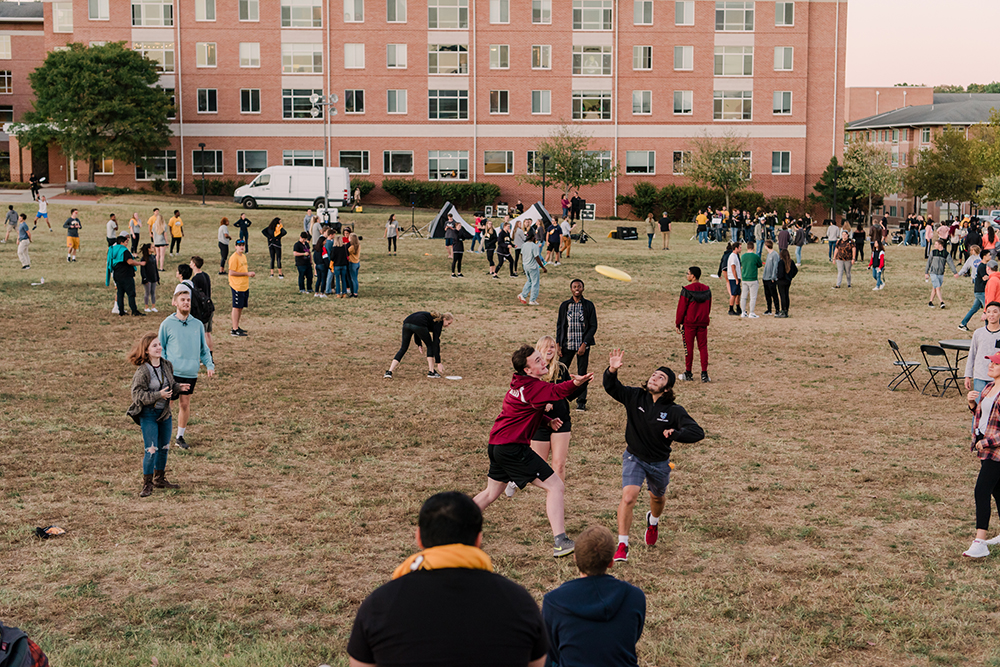
Nothing like tossing a frisbee or football, playing soccer, or partaking in humans vs. zombies to warm you up on a cold day. Erickson Field, the large grassy area between the Library and new Center for Well-Being, is the place to go for casual outdoor sports. In fall, the UMBC Homecoming bonfire and movie showing also take place here.
Make new friends and hobbies by playing pick up games on Erickson Field.
8. Herbert Run Greenway
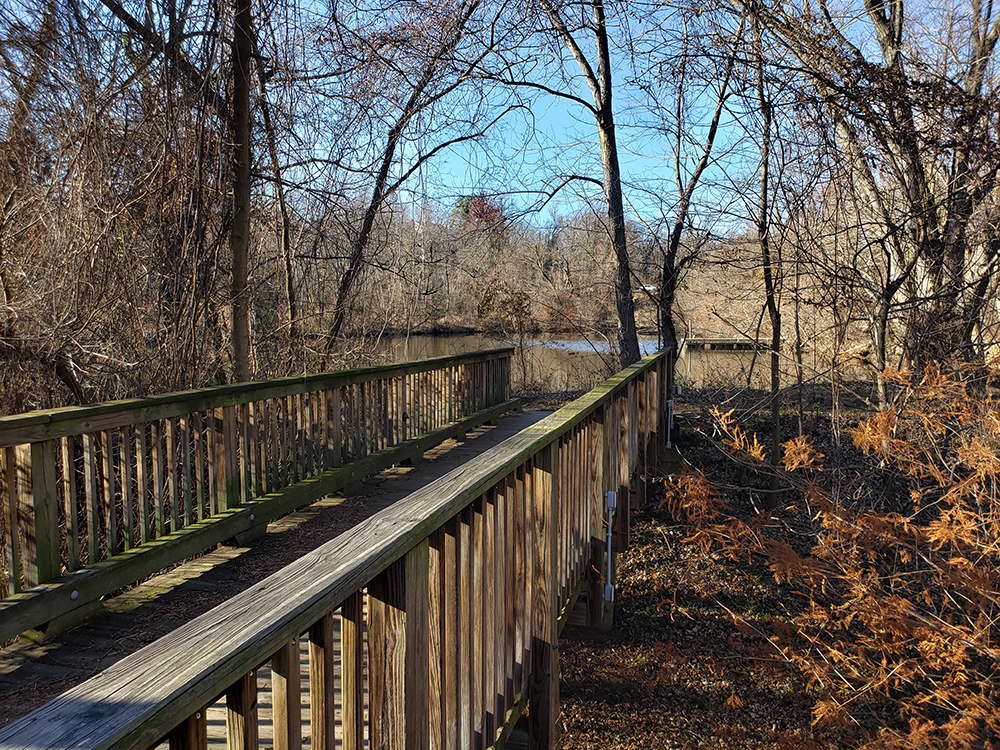
The Herbert Run, a tributary of the Patapsco River, meanders along the southeast quadrant of campus. The Herbert Run Greenway trail traces its path from the sculpture park, around the stadium complex, through the Conservation Environmental Research Area (a designated outdoor research space at UMBC), and toward bwtech@UMBC. The entire trail travels about 1.5 miles, but one of the trail’s highlights is accessible just steps from the campus entrance plaza. Visit the CERA Pond (previously known as Pig Pen Pond) just across The Loop from the Administration Drive Garage. Reach it via a footbridge flanked by two pollinator gardens. A duck house and a small viewing platform will greet you, and possibly some ducks and turtles, too. Currently, a portion of the trail near the stadium is undergoing a major stream restoration to improve habitat, stormwater management, and access to the stadium. It should be completed by mid-spring 2022.
The sidewalk (almost) ends at CERA Pond, right outside The Loop.Photo courtesy of Sarah Hansen.
9. Patapsco Valley State Park
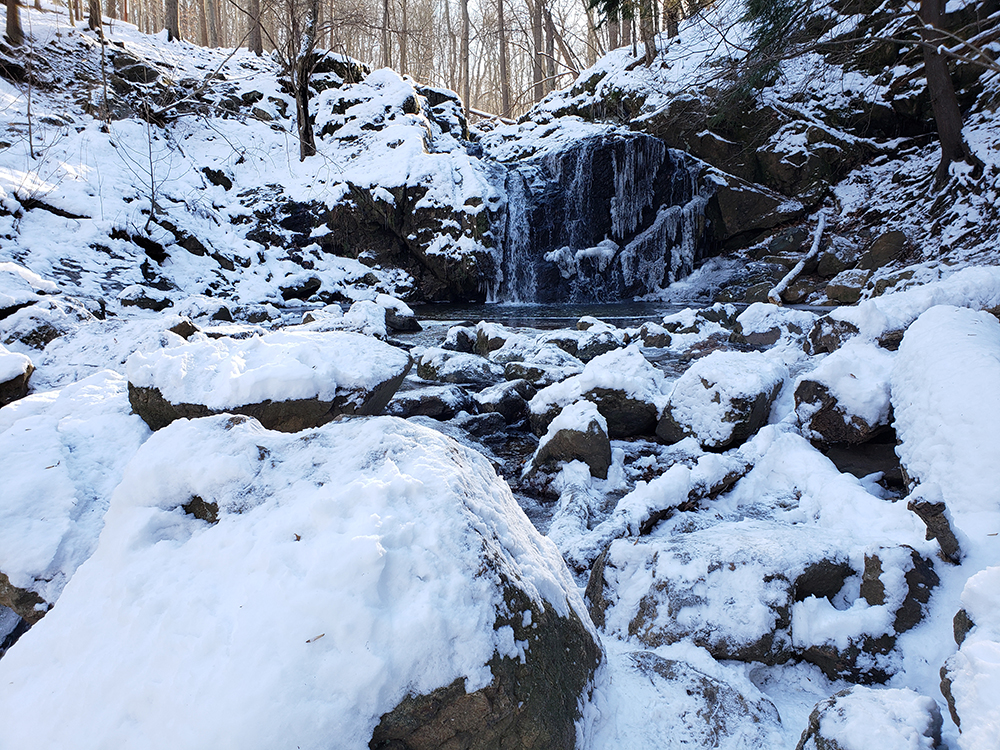
For those interested in a bigger adventure, Patapsco Valley State Park’s Hilton, Glen Artney, Orange Grove, and Avalon areas are located just off campus. One of the premier mountain biking destinations in the state, the park is also popular for hiking, swimming, camping, and grilling at the park’s many pavilions. More than 30 miles of trails wind through the park, from the paved Grist Mill Trail along the Patapsco River to rocky, technical routes. Cascade Falls is a particularly popular destination. The park is also a great location for birdwatching and sighting other wildlife.
Cascade Falls at Patapsco State Park. Photo courtesy of Sarah Hansen.
As you can see, there are plenty of places to enjoy a brisk walk, a quiet moment, or a group activity on campus throughout the seasons. Just remember to grab your hat and gloves, and you won’t even notice the chill in the air.
“Just because it’s cold outside, doesn’t mean the outdoors is closed!” Smith reminds us. “Bundle up, grab your sunscreen, and enjoy the wonders and benefits of spending time outside all year long.”
*****
All photos courtesy of Marlayna Demond ’11, unless otherwise noted.
UMBC has received a $900,000 grant from the National Institute for Innovation in Manufacturing Biopharmaceuticals (NIIMBL) to develop and implement a new, short-term biomanufacturing training program. Four universities, all classified as minority-serving institutions (MSIs), received funding for similar programs, designed to meet critical national workforce needs.
UMBC will offer the biomanufacturing training program at its Universities at Shady Grove (USG) campus in Rockville, Maryland. The program will be adapted from a curriculum first developed at Texas A&M University. Annica Wayman ’99, M6, mechanical engineering, associate dean for Shady Grove affairs in CNMS, and co-lead Manik Ghosh, assistant director of the Translational Life Science Technology (TLST) laboratories at UMBC, will travel to Texas for training on the curriculum and will then work together to adapt it for UMBC. The anticipated training launch is late summer or fall 2023.
“This new program is really the next wave of UMBC expanding our training offerings,” Wayman says. “This kind of short-term programming could enhance our courses as well, to help with educating people in biomanufacturing and strengthening that workforce where there’s a huge gap.”
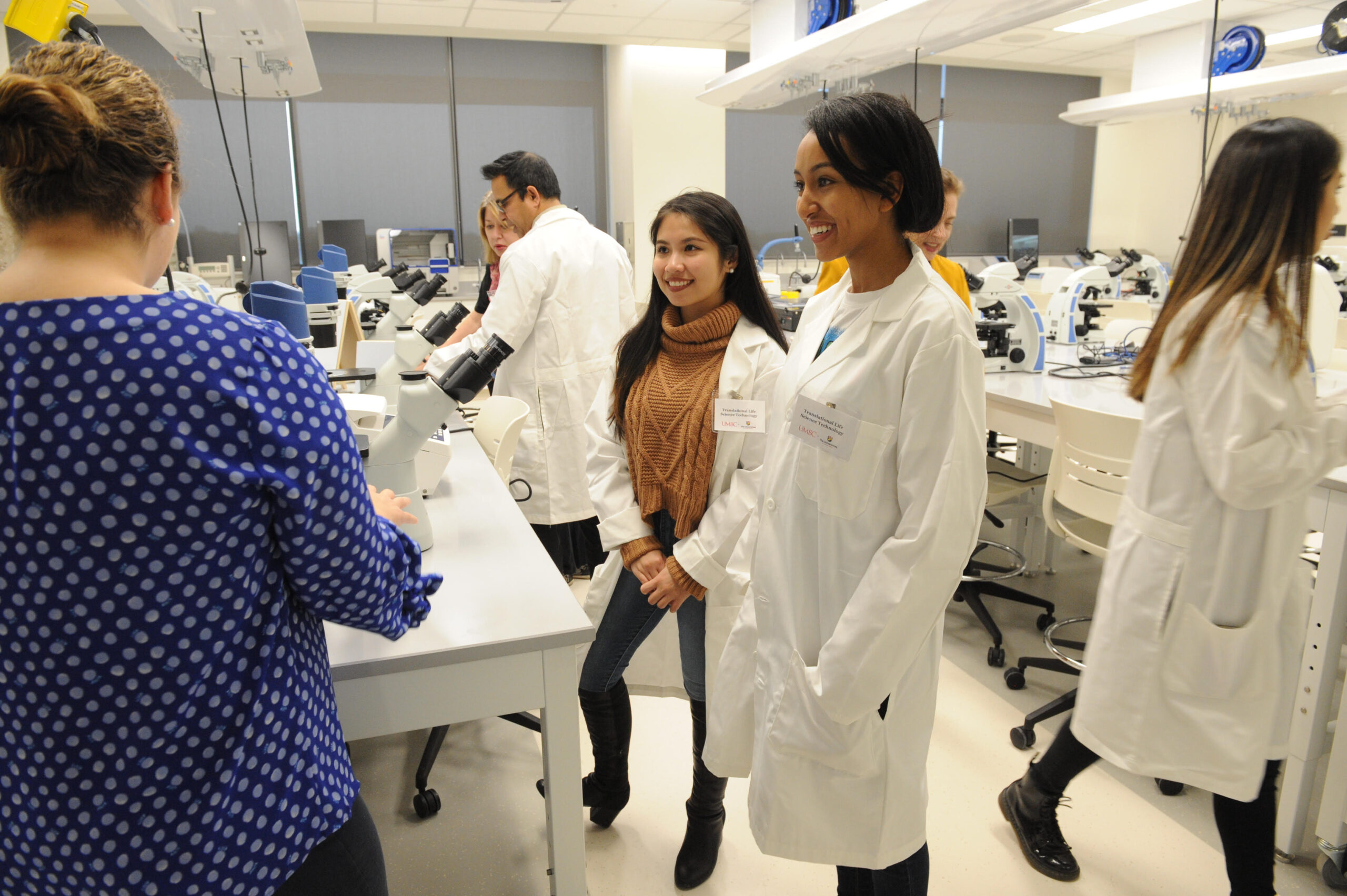
Charmaine Hipolito ’20, and Titina Sirak ’20, right, alumni of UMBC’s TLST program at The Universities at Shady Grove, speak with visitors at a celebration for the opening of USG’s new Biomedical Sciences and Engineering Building in November 2019. Photo by Marlayna Demond ’11 for UMBC.
Snowball effect
The gap between supply and demand for skilled workers in biotech is very real, and it’s only growing in the BioHealth Capital Region. This region, which includes Maryland, Washington D.C., and Virginia, ranks #4 among the top biopharma clusters in the country. The pandemic has further expanded the biopharma industry, so the need for qualified local workers in a range of biotech roles has never been greater.
The new biomanufacturing program is a natural outgrowth of previous work by Wayman, Ghosh, and colleagues. The structure of the program will be similar to UMBC’s award-winning Biotech Boot Camp, which trained people who had lost their jobs during the pandemic for new careers in biotech. The boot camp has run twice so far, both times focusing on cell culture techniques and broader “wet lab” skills. Both times, the Montgomery County government and WorkSource Montgomery partnered with UMBC to offer the boot camps at no cost to the students.
The original boot camp was made possible by UMBC’s TLST bachelor’s degree program, fully launched in 2019 in partnership with Montgomery College. TLST was the college’s first new major developed in response to the growing need for biotech workforce development in the region. The TLST program bridges fundamental knowledge in the life sciences with industry-specific applications, practical laboratory skills, and an understanding of the regulatory process for biopharmaceuticals.
“The launch of the TLST program has led to a lot of education and partnership opportunities,” Wayman says. “It’s allowed UMBC to address gaps in the workforce that already existed, and that became even more prominent with the pandemic. We jumped in to help to fill those gaps in a variety of ways. TLST was the impetus and the start of that, and it snowballed from there.”
Associate Dean for Shady Grove Affairs Annica Wayman. Photo by Marlayna Demond ’11 for UMBC.
Short program, lasting impact
Even a short-term training program can have a huge impact on an individual’s career trajectory. A general biomanufacturing program could be the start of a career in fields as diverse as bench research, regulatory affairs, and biomanufacturing process design. These careers work toward answering big questions like, “How do we know this product is safe for use in the human body?” or, “How can we make this sequence of steps more efficient by taking advantage of new technologies?”
Roles in all these areas will be important to fill in the near future, and continuously asking the big questions as technologies emerge, regulations shift, and new scientific knowledge comes to light will help move the industry forward safely and reliably, Wayman notes. Programs like the new biomanufacturing training, the biotech boot camp, TLST, and more at UMBC have the potential to send thousands of well-prepared students into the biotech workforce.
A participant in the Biotech Boot Camp at USG in February 2021. Photo by Annica Wayman.
Looking ahead
Antonio Moreira, vice provost for academic affairs, has seen the potential for Maryland to be a biotechnology leader for years, and has championed UMBC’s efforts to grow opportunities in related fields. “As a component of the Maryland biotechnology ecosystem, UMBC is a major resource for preparing the workforce needed to develop and manufacture critical therapies,” Moreira explains. “Given a shortage in this workforce, graduating students need to be prepared to hit the ground running as they join these biotechnology companies.”
Bill LaCourse, dean of the College of Natural and Mathematical Sciences (CNMS) at UMBC, agrees. “At UMBC, we are driven by the vision that Maryland will continue to grow as a leader in biotech,” he says. “We’re establishing strong pathways to develop the workforce, where students and professionals have an array of choices about how to get to the biotech career they want and that the region needs.”
Wayman leads much of the day-to-day operations of UMBC’s biotech programs. Even while planning next steps, she tries to remind herself how much progress she and her team have already made toward narrowing the workforce gap and setting a new group of students on a path to success.
“When I take a step back, I see how amazing it is that we achieved all this through a pandemic,” she says. And then she, too, looks forward. “But there’s just so much more to do.”
This article describes work performed under a Project Award Agreement from the National Institute for Innovation in Manufacturing Biopharmaceuticals (NIIMBL) and financial assistance award 70NANB21H085 from the U.S. Department of Commerce, National Institute of Standards and Technology.
Header image: The Biomedical Sciences and Engineering Building at The Universities at Shady Grove. TLST courses, the Biotech Boot Camp, and the new biomanufacturing training program all happen here. Photo by Marlayna Demond ’11 for UMBC.
Two new papers from Can Ataca’s research group at UMBC set the stage for further advances in solar power and other renewable energy technologies. Daniel Wines, Ph.D. candidate in physics, led research using computational modeling to explain surprising properties of materials with potential for use in solar cells. Gracie Chaney, Ph.D. candidate in physics, led a project that used machine learning to characterize a new type of material that could improve lithium ion batteries.
Solving a puzzle
Wines’s paper, published in Applied Materials and Interfaces, will make it easier to design the best material for certain technologies that require energy transfer, from solar cells to LEDs. A research group at Arizona State University led by Sefaattin Tongay had run experiments on a class of materials called perovskites, which have a crystal structure well-suited to a range of engineered materials. They are an attractive candidate for use in solar cells, but the group was struggling to interpret its results.
Tongay and graduate student Han Li, the lead author on the paper, thought Ataca’s group might be able to figure out what was happening by modeling their experiments. They were right. By running computational simulations, Wines was able to confirm the group’s findings and determine the underlying physics causing Li’s surprising observations.
Under pressure
Li was studying how perovskites performed under different amounts of physical pressure. Pressure can change how electrons move through a material, which in turn changes the ideal conditions for generating electricity. In solar cell applications, for example, pressure can affect which frequencies of light will most efficiently produce power when they strike the material.
“It’s all about tuning the structure for the sunlight spectrum,” says Ataca, assistant professor of physics. “You want to absorb at certain frequencies so that you will have the best efficiency if you were making a photovoltaic cell from this.”
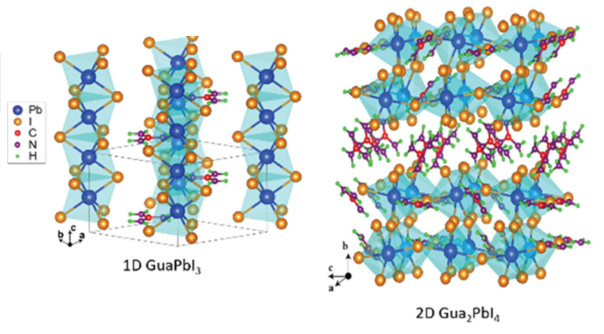
Both Wines and Li found that when the perovskite took a one-dimensional form, where the molecules are bound together in a long line, the amount of energy required to initiate conduction decreased linearly as pressure increased. However, in two-dimensional perovskites, which look more like a flat plane, there was an initial decrease, and then at a certain level of pressure, the required energy increased again. That inflection point was what puzzled Li, and where the simulations at UMBC became crucial.
This portion of figure 1 from Wines’s paper shows the atomic structure of the perovskite he and colleagues studied in its one-dimensional (left) and two-dimensional forms.
Structural change
Simulating the experiments allowed Wines to examine the structure of the perovskite crystals at each pressure level. He found that in one-dimensional perovskites, the primary structure stayed constant, but “stretched” as the pressure increased. However, in the two-dimensional perovskites, “there’s a critical point where there’s a phase transition, and there’s a certain rotation of some of the bonds and atoms,” Wines explains. That transition fundamentally changed the properties of the crystal, and explained the unusual observations.
Understanding why the properties changed at a molecular level will make it much easier to determine the best combination of structure and pressure for different applications of perovskite materials. While it might be possible to determine their properties with experiments alone, using computational simulations will make the discovery process much faster and less resource-intensive.
Two-faced materials
While Wines’s work may help develop solar cells that are more efficient at collecting the sun’s energy, Chaney’s research, also published in Applied Materials and Interfaces, looks at the next step—how to store that energy. “The sun doesn’t always shine, and sometimes it shines too much during the day and overwhelms the grid,” she says. “So we need something to store all that excess energy in the daytime and release it at night and on cloudy days. That’s why we need to improve batteries.”
Lithium ion batteries work by storing positively-charged lithium ions, which can be moved between electrodes inside the battery to generate electric current. A class of materials called transition metal dichalcogenides, or TMDs, are often used in lithium ion batteries to store lithium ions.
TMDs usually take the form of a molecular sandwich: two chalcogens (elements from a column on the right side of the periodic table) surround an atom from the transition metal family (several columns in the center of the periodic table). These sandwiches can form a plane, called a monolayer, or the layers can be stacked on top of each other to form a 3D structure.
Typical TMDs have the same atom on the top and bottom of the sandwich. But Chaney’s study investigated “Janus” materials, which have a different element on each side. These materials are named after Janus, the two-faced god in Roman mythology. “It’s not a typical TMD, and that’s what makes this special,” Chaney says. Her study looked at six different combinations of top and bottom elements.
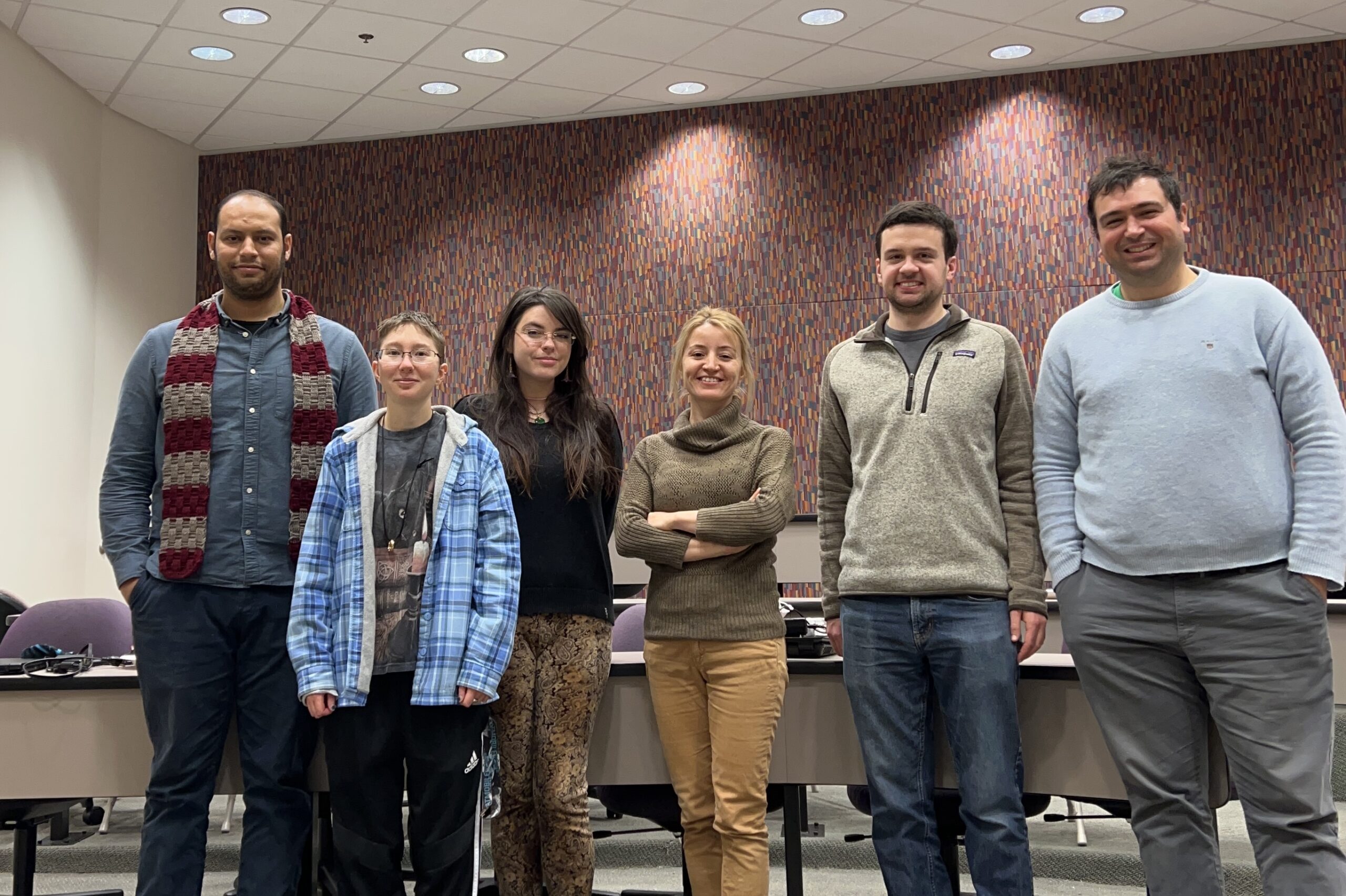
Current members of Ataca’s lab group. From left to right: Akram Ibrahim, Gracie Chaney, undergraduate Brenna Turnbull, postdoc Yelda Kadioglu, Daniel Wines, and Can Ataca. Photo courtesy Can Ataca.
Narrowing the “circle of searching”
Chaney and Akram Ibrahim, another Ph.D. candidate in Ataca’s group, used machine learning to predict the properties of the different combinations. One key property was how tightly the lithium ions would bind to the material. That’s important, “because we want the lithium not to escape from the 2D material where we are storing it,” Ibrahim says. “So we are searching for materials that lithium binds to strongly.”
Using machine learning to find the best composition for battery materials “saves a lot of time and resources,” Ibrahim says. After using the model to identify high-potential materials, only then would the lab use more energy- and time-intensive methods to get an even more accurate and detailed understanding of the materials’ properties. By using the model, Ibrahim says, “we have narrowed down the circle of searching.”
“Something that was really interesting was that the lithium transport and the binding energy really depended on which side you looked at,” Chaney says. The machine learning model was able to predict those differences, suggesting it is useful for better understanding both Janus materials and traditional TMDs.
Using computational models to learn more about how these materials store and transport lithium ions can inform future experimental studies to improve battery efficiency. That information could guide advances in anything from solar power storage to electric vehicle range.
Impact of collaboration
It may be some time before this research finds its way into solar panels or batteries. However, growing the fundamental understanding of how materials function – how they interact with light or store lithium ions – makes future technological advances possible.
“There’s being able to synthesize the material reliably, and then understanding the physics of the material itself and how you can tune the properties,” Wines says—which is where his and Chaney’s work is now. “Then, after that, implementing it into devices and testing the devices in the lab are the next steps” before technologies with the new material can be produced on a large scale.
Along the way, modeling and experiments complement each other, which is why collaborations like the one between the UMBC and Arizona State research groups are so valuable. “There’s a need for both kinds of research at every stage,” Wines says.
Header image: Current and former members of the Ataca lab group. From left: Former postdoc Fatih Ersan;Can Ataca; Gracie Chaney; Jaron Kropp, Ph.D. ’20; and Daniel Wines. Photo by Marlayna Demond ’11.
UMBC will grow its aquaculture collaboration with Israeli colleagues thanks to a new statement of intent signed last week at the Institute of Marine and Environmental Technology (IMET), a collaborative research facility in Baltimore’s Inner Harbor that supports faculty affiliated with UMBC; University of Maryland, Baltimore; and University of Maryland Center for Environmental Science. The new agreement builds on decades of collaboration between Israeli researchersand Yonathan Zohar, professor and chair of marine biotechnology at UMBC. It will enable them to grow their ongoing efforts to improve and expand the aquaculture industry around the world.
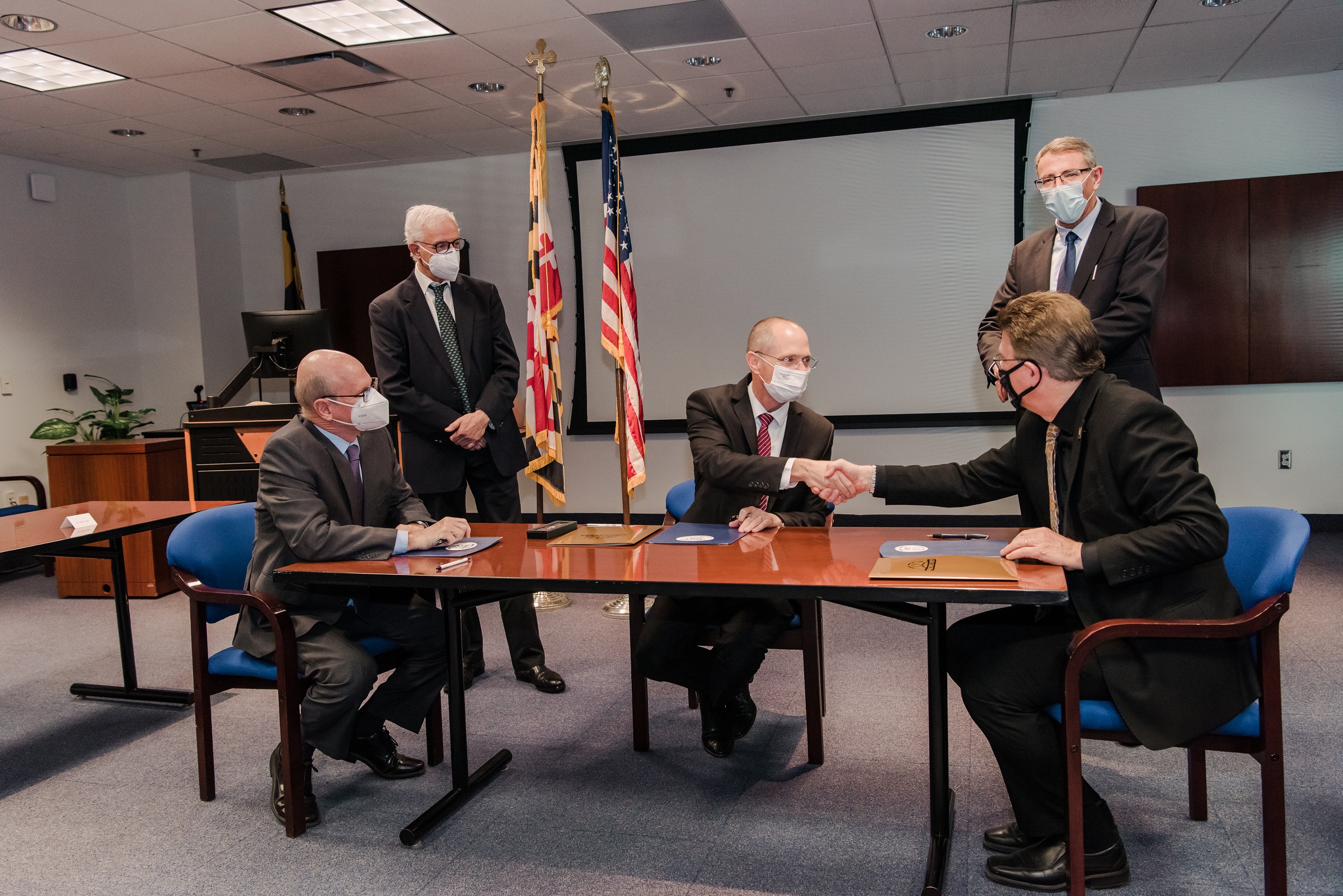
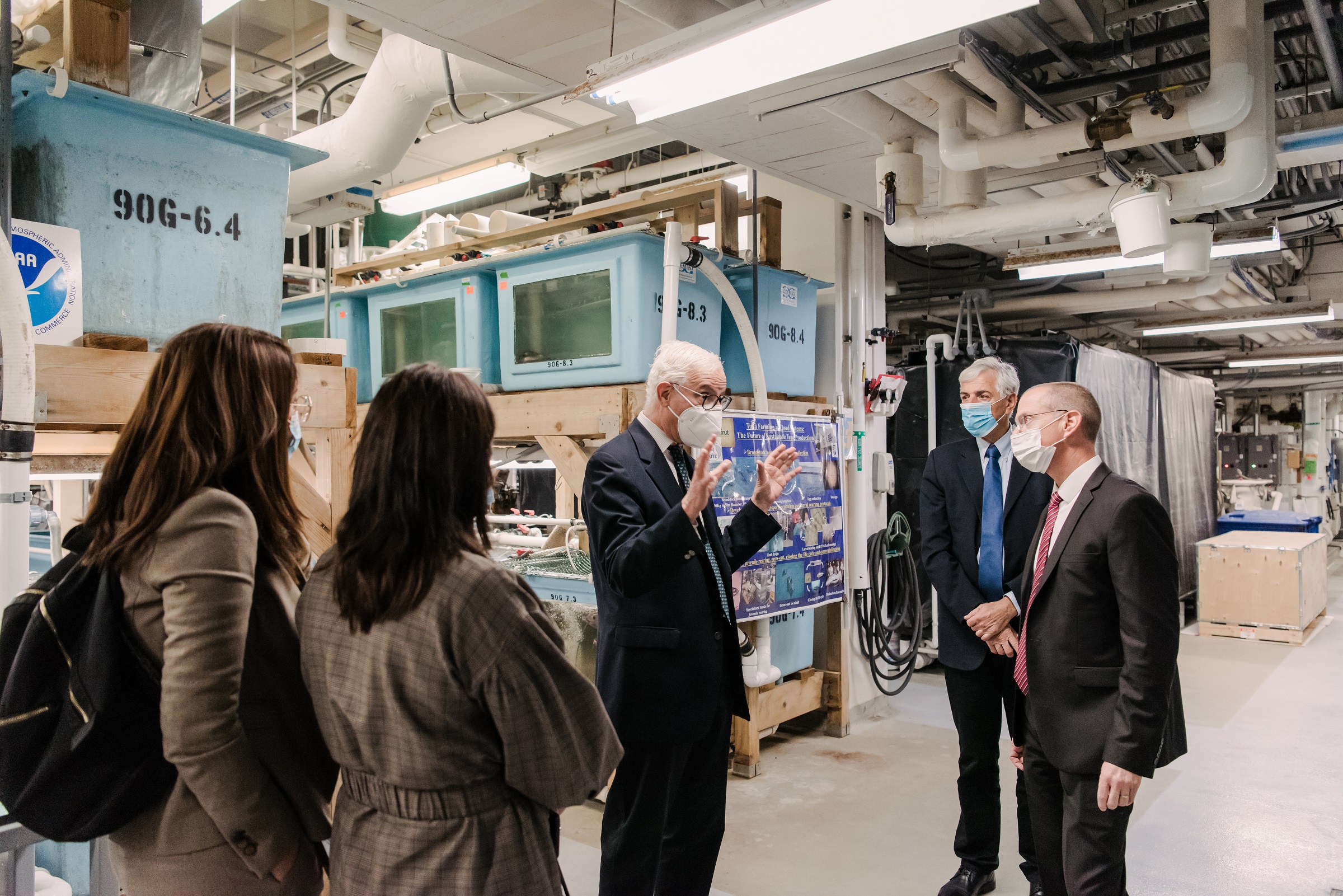
Coming together to sign the document were Oded Forer, Israeli Minister of Agriculture and Rural Development; Russell Hill, executive director of IMET; and Karl V. Steiner, UMBC’s vice president for research. The minister visited IMET on December 1 with a delegation from the agriculture ministry. Leaders from the United States Department of Agriculture (USDA) Animal Production and Protection program also attended the signing event, which was followed by a tour of the Aquaculture Research Center at IMET.
The partnership will center on addressing challenges to the industry that, once overcome, will make aquaculture more efficient and sustainable, and expand it to more seafood species. Developing zero-waste systems, improving fish health and performance in captivity, and scaling up land-based aquaculture systems are all among the partners’ priorities.
“This is a very important day for IMET and aquaculture,” Hill said at the event. “There is an urgent need to promote agriculture in a sustainable way in the U.S., and we hope to contribute as much as possible to that effort.”
Representatives from IMET, UMBC, and the Israeli Ministry of Agriculture and Rural Development signed a statement of intent to increase collaboration on aquaculture. From left to right: Russell Hill, Yonathan Zohar, Oded Forer, Karl Steiner (front), and Yakov Poleg (rear). Photo by Marlayna Demond ’11 for UMBC.
Focused on the future
Zoharhas been working in the aquaculture space for over 35 years and is an international leader in aquaculture research. In fact, in November 2020, the Binational Agricultural Research Development Fund (BARD), a partnership program between the U.S. and Israel, honored him for the economic impact of his research.
In addition to the BARD recognition, Zohar has received several other awards and accolades in recent months. He was awarded a $10 million grant from the USDA to lead a consortium of aquaculture researchers. He also led the creation of a partnership with Aquacon, a Norwegian company investing $1 billion in aquaculture in the U.S., including a large land-based facility on Maryland’s Eastern Shore. And Zohar’s startup, Silfra Biosystems, LLC, founded in partnership with UMBC microbiologist Kevin Sowers, was recognized as a “Maryland Future 20” company for 2021.
Zohar continues to forge full speed ahead in his work to increase food production in a sustainable way for the increasing human population. “The world’s population is growing by 200,000 each day, placing an increasing demand on our food supply,” Zohar says. “Aquaculture is the fastest growing sector in all of agriculture, and now produces more fish than traditional fishing. Still, we must double production by 2030 to meet the growing demand for sustainable protein sources.”
The land-based systems Zohar pioneered and continues to champion will be a big part of the solution, he believes, especially for salmon. “Atlantic salmon’s U.S. future is land-based,” Zohar says.
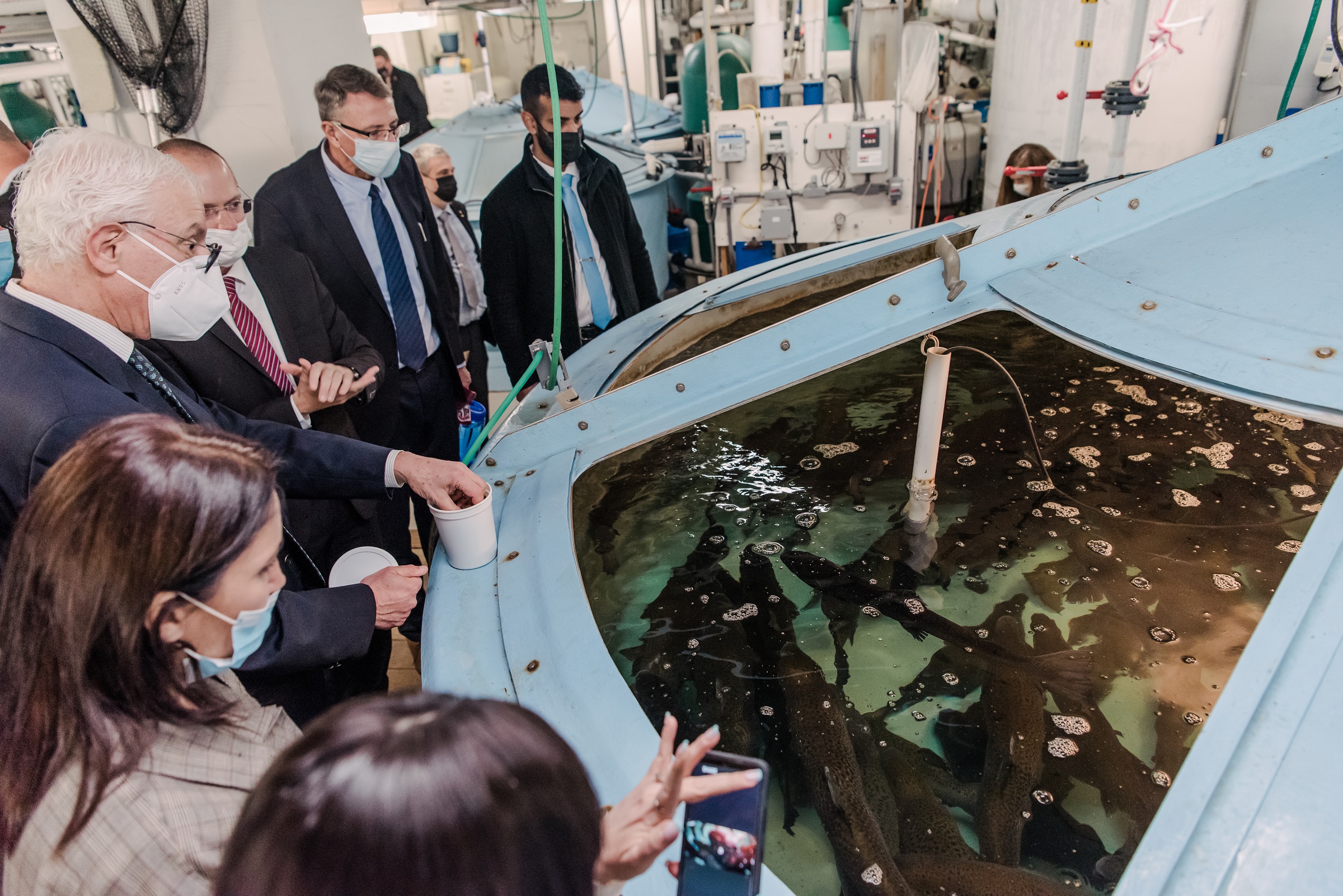
Yonathan Zohar shows the Israeli delegation one of the fish tanks at the Aquaculture Research Center. Photo by Marlayna Demond ’11 for UMBC.
Public research, public good
University System of Maryland (USM) Chancellor Jay Perman called the environmental research being conducted at IMET one of the “crown jewels” of the system, in remarks during the signing event. “I can’t think of anything in higher ed that’s more current than the environment,” Perman said.
Israeli institutions bring their own strengths to this field. For example, they’ve worked to develop agricultural systems that can succeed in drought conditions, which are common in Israel. In particular, the National Center for Mariculture (food production from the sea) in Eilat, Israel is a world leader.
“Bringing together the complementary expertise of UMBC, IMET, and Israeli institutions is exactly the kind of collaboration that is needed to produce innovations that advance aquaculture and the broader mariculture field,” Steiner says, and the public impact this work will have is directly in line with UMBC’s values.
“As a public research university, our motto is ‘public research for public good,’” Steiner continues. “I can think of no better way to embody this motto than by focusing on one of the most pressing questions of our time—how do we ensure that we can feed the world within rapidly changing ecosystems? We are absolutely delighted that this new agreement will allow us to further strengthen the impact of our faculty’s important work.”
Yonathan Zohar (center) talks about operations at the Aquaculture Research Center with a delegation from Israel, including the Minister of Agriculture and Rural Development, Oded Forer (far right). Photo by Marlayna Demond ’11 for UMBC.
Header image: Yonathan Zohar (left) explains operations of the Aquaculture Research Center to Israeli officials Yakov Poleg, Senior Deputy Director General of the Foreign Trade and International Cooperation; Yoram Kapulnik, Executive Director of BARD; and Oded Forer, Minister of Agriculture and Rural Development, during the delegation’s visit. Photo by Marlayna Demond ’11 for UMBC.
A protein produced by viral DNA is orchestrating the critical “SOS response” in a large group of bacterial species, according to a new study in Nucleic Acids Research co-led by Ivan Erill, professor of biological sciences at UMBC, and first author Miquel Sánchez-Osuna, a graduate student at Universitat Autònoma de Barcelona (UAB) whom Erill advises.
Their new results suggest the relationship between these bacteria and the viruses that infect them, called bacteriophages or simply “phages,” may go back more than 1.5 billion years. Because of viruses’ prevalence and their ability to evolve so quickly, Erill believes there are likely other examples of this phenomenon that researchers have yet to discover. The results may even have implications for development of new antibiotics.
“The main message is that the bacterial SOS response is in reality a phage response,” Erill says. “It was not created by bacteria; it was the other way around.”
The bacterial SOS response involves over 40 genes and responds to DNA damage in the cell. When the cell is healthy, a protein called a repressor keeps the genes turned off. But when damage occurs, the repressor molecule self-destructs, allowing the genes to get to work fixing the DNA damage.
Phages also have a molecule that detects DNA damage. When the virus’s host cell experiences damage, that’s a signal to the virus to burst out of the cell and find a new home. “It’s the SOS response because if the bacteria or virus doesn’t get it right, they die,” Erill says.
Ivan Erill. Photo by Marlayna Demond ’11 for UMBC.
Unraveling a mystery
The exact mechanism and proteins involved in the SOS response vary across groups of bacteria. For this study, the research team set out to identify the repressor molecule in Bacteroidetes, a group of bacteria that makes up a significant fraction of the microbiota in the human gut, but for which the repressor was still unknown.
First, Erill used computational tools to search Bacteroidetes genomes for proteins closely related to the repressor molecules found in other groups of bacteria. But, surprisingly, there were none. “So we started scratching a little bit more,” Erill says.
Next, he looked at genes in Bacteroidetes that one would expect the repressor to regulate—those genes generally involved in the SOS response in other bacteria. Many of these genes in Bacteroidetes shared a particular pattern, like a keyhole for a shared key. Upon further investigation, including collaboration with Aaron Smith, assistant professor of chemistry and biochemistry, the mystery “key” turned out to be a known repressor protein—but, surprisingly, from a phage, not bacteria.
“So we have a bacteriophage repressor controlling the SOS response in this group of bacteria,” Erill says. “I always suspected that the bacterial repressor that controls this system was actually a phage repressor in disguise.”
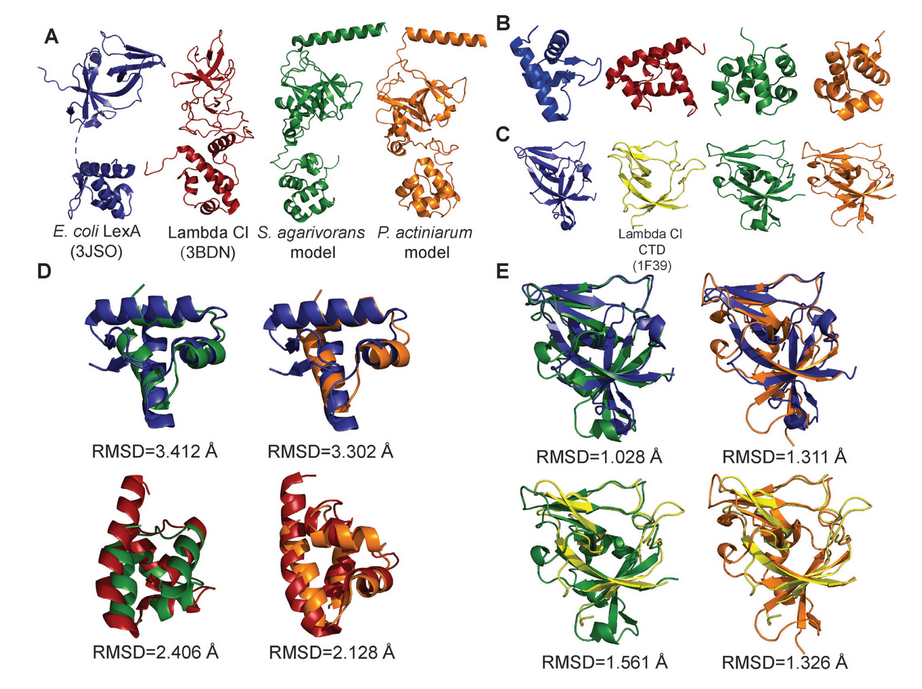
This figure from the paper models the structure of different regions of the Bacteroidetes repressors (green and orange). The researchers compared the Bacteroidetes structures to the structure of known repressors from phages and other bacteria (blue, red, and yellow). That information helped them determine that the repressor in Bacteroidetes came from a phage.
Creative repurposing
It’s well understood that over their billion-plus years of shared history, bacteria have incorporated phage DNA into their genomes and repurposed it for their own needs. “So,” Erill says, “it doesn’t take a stretch to imagine a phage at some point going into a bacterial cell, getting inactivated somehow, and then the cell deciding, ‘This repressor responds to DNA damage—that’s perfect!’”
“Our results suggest that bacteriophage repressors have taken up regulating the SOS response in Bacteroidetes,” says Sánchez-Osuna, who is co-advised by Jordi Barbé at UAB, another of the new paper’s authors. That means the most common SOS repressors in other groups of bacteria “may also have originated from the capture of a phage repressor,” he adds. “Why reinvent a function that already exists?”
A more complicated “trick”
What’s particularly exciting to Erill about this new study is that the SOS response regulated by the phage repressor in Bacteroidetes is so complex. Previous examples of bacteria gaining new functionality from phage genes have been more straightforward. “You can get a new gene and then get a new trick directly from the gene,” Erill says. In fact, bacteria that cause diseases such as cholera and botulism obtain their virulence directly from phage genes, he explains.
But the new study shows something altogether different. After the bacteria took up the phage repressor gene close to a billion years ago, a complex network of interdependent regulation evolved over time, involving dozens of genes and proteins. The phage repressor is the linchpin molecule for this network, and the network is virtually indistinguishable from similar networks in other groups of bacteria that employ a bacterial repressor.
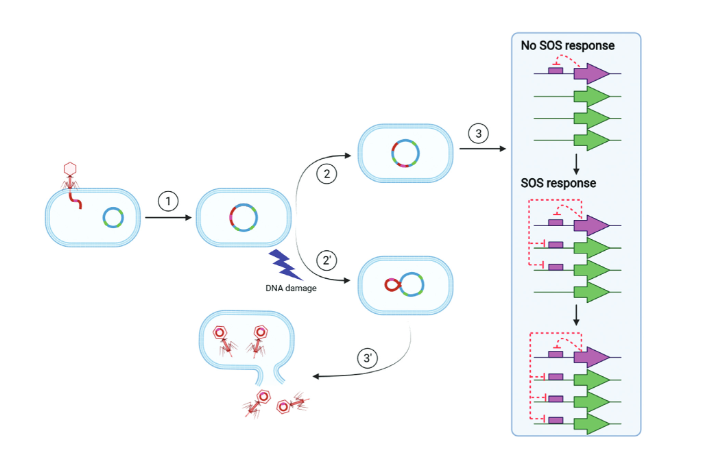
This diagram from the new paper shows how a bacterial cell can take up a phage (red), and incorporate the phage genome into its own (1). In the typical process, when the bacterial cell suffers DNA damage (2′), the phage takes that as a signal to break out of the cell (3′). But, if the normal phage life cycle is inactivated somehow (2), then the phage genes, and the proteins they produce, can be repurposed. Eventually, many of the bacterial genes (green arrows) can come to be regulated by a phage protein (in this case, the repressor, represented by a pink arrow) (3).
One step beyond
“What we show here is that these networks are the result of convergent evolution,” Erill says. Convergent evolution occurs when organisms evolve very similar traits not based on shared genetic history, but, rather, because the organisms experience similar evolutionary pressures that drive the generation of functionally similar—but genetically distinct—systems. Other examples include wings in bats and birds and fins in whales and fish.
It’s easy to think of bacteria as all being closely related, but Bacteroidetes is no more closely related to other bacteria than humans are to sea sponges. So it is remarkable for Bacteroidetes and other bacteria to have evolved nearly identical systems for responding to DNA damage that are based on different “molecular switches”—different repressor molecules that turn the response on and off.
For Erill, this research finding “answers an important evolutionary question, and it points to this process being more frequent and being capable of generating more complexity than we thought,” he says. “We had typically been thinking about getting a gene and using it as-is, and this shows one step beyond that.”
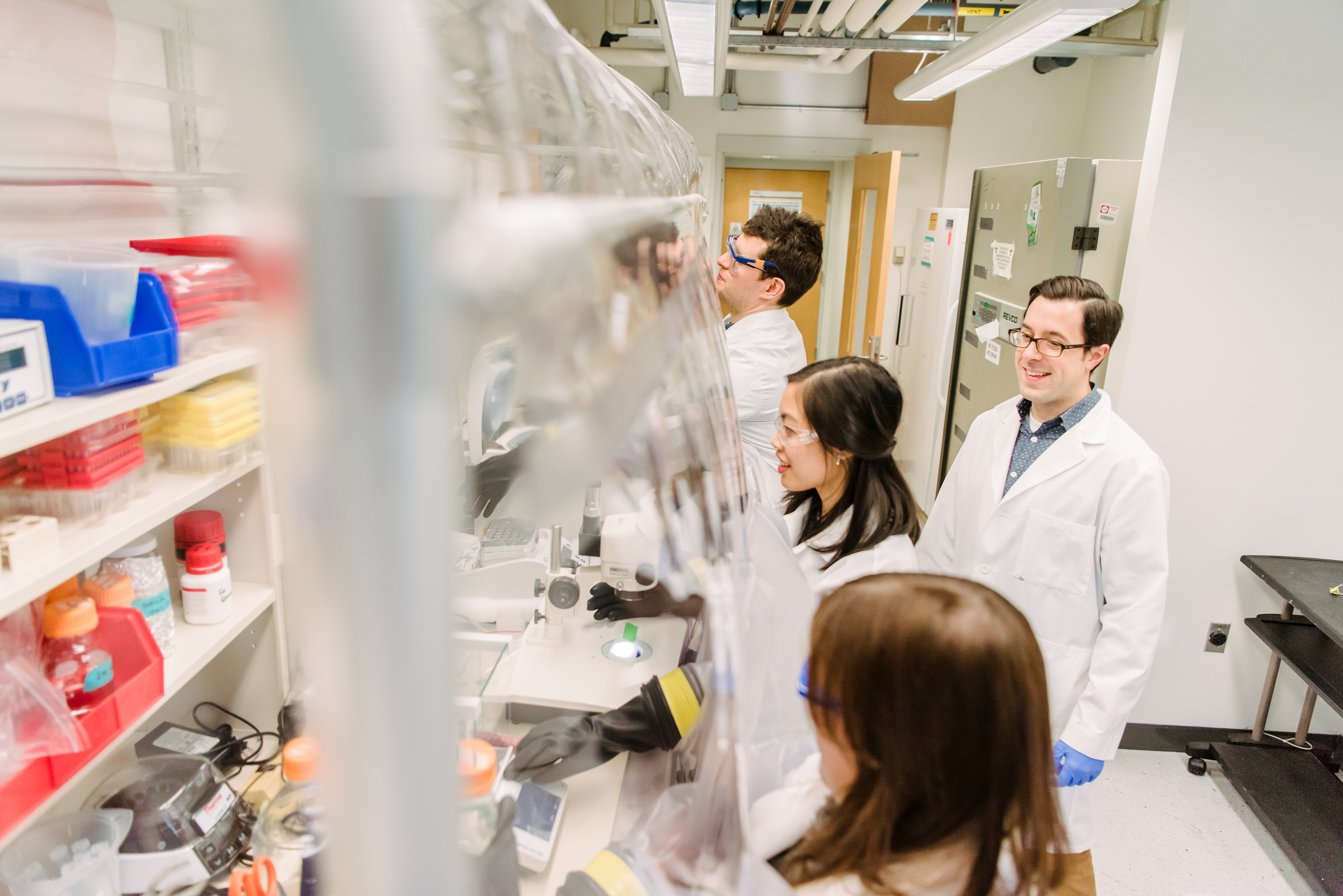
Aaron Smith, right, works with students in his laboratory. Photo by Marlayna Demond ’11 for UMBC.
Rethinking antibiotics
The results may also influence development of antibiotics. Most antibiotics induce DNA damage in the bacteria they target, which activates the SOS response. However, as the SOS response works to repair the damage, it often makes mistakes, introducing mutations into the DNA. More mutations increases the chances that a mutant will be resistant to the antibiotic.
Some scientists have suggested that new antibiotic drugs should also inhibit the SOS response to prevent the increased risk of generating resistant bacteria, Erill says. This study shows that to be effective, new drugs will need to target the phage repressor as well as the bacterial repressor that orchestrates the SOS response.
Viral innovation
While Erill finds the results and implications of this research exciting, he doesn’t find them terribly surprising. “To me, it always made sense that the origin of the switch was the virus,” he says. “In an evolutionary race between a bacterium and a virus, the virus always wins. It has a higher mutation rate and can replicate faster.”
In fact, 20 percent of human DNA is known to come from viruses, Erill says. He believes it is likely much higher. Viruses can do amazing things, like generate a protein that mimics the shape of DNA, which has so far proven impossible for any chemist. Examples like that, and this new study, “show you the level of evolutionary invention that viruses can have,” Erill says, which he discusses more in a piece for The Conversation.
This new study demonstrates Erill’s hunch more convincingly than ever before by deploying a suite of interdisciplinary techniques. Computational work identified the patterns in the Bacteroidetes genes that matched the phage repressor. Then, wet lab work confirmed that the phage repressor would bind to those patterns. Finally, structural analysis in Aaron Smith’s bioinorganic and structural biology lab further proved that the repressor in question was much more closely related to viral proteins than ones with bacterial origin.
“I think this work is a nice illustration of how a blend of big data, computational modeling, and wet-lab experimental biochemistry and molecular biology can come together to answer really intriguing and important questions about evolution,” Smith says.
Header image: Pictured left to right, Ivan Erill, Pilar Cortés (UAB), Jordi Barbé, and Miquel Sánchez-Osuna are all authors on the new paper, along with Aaron Smith and Mark Lee, a chemistry Ph.D. student in Smith’s lab. Photo courtesy of Ivan Erill.
A growing list of programs and partnerships is positioning UMBC as a leader in developing Maryland’s biotech and biomanufacturing workforce. UMBC has just received a $900,000 grant from the National Institute for Innovation in Manufacturing Biopharmaceuticals (NIIMBL) to develop and implement a short-term biomanufacturing career training program. Four universities, all classified as minority-serving institutions (MSIs), received funding for similar programs, which will be adapted from a curriculum first developed at Texas A&M University.
UMBC will offer the biomanufacturing training program at its Universities at Shady Grove (USG) campus in Rockville, Maryland. It will be similar to UMBC’s Biotech Boot Camp, which trained people who had lost their jobs during the pandemic for new careers in biotech. The boot camp has run twice so far, both times focusing on cell culture techniques and broader “wet lab” skills.
Montgomery County government and WorkSource Montgomery partnered with UMBC to offer the original boot camps at no cost to the students. The new biomanufacturing training program will also be free to participants the first time it is offered, thanks to the support from NIIMBL.
The biotech industry is booming in the BioHealth Capital Region, which ranks #4 among the top biopharma clusters in the country. The pandemic has drawn even more attention to the biopharma industry, so the need for qualified local workers in a range of biotech roles has never been greater.
“We are driven by the vision that Maryland can be a leader in biotech,” says Bill LaCourse, dean of the College of Natural and Mathematical Sciences (CNMS) at UMBC. “We’re establishing strong pathways to develop the workforce, where students and professionals have an array of choices about how to get to the biotech career they want and that the region needs.”
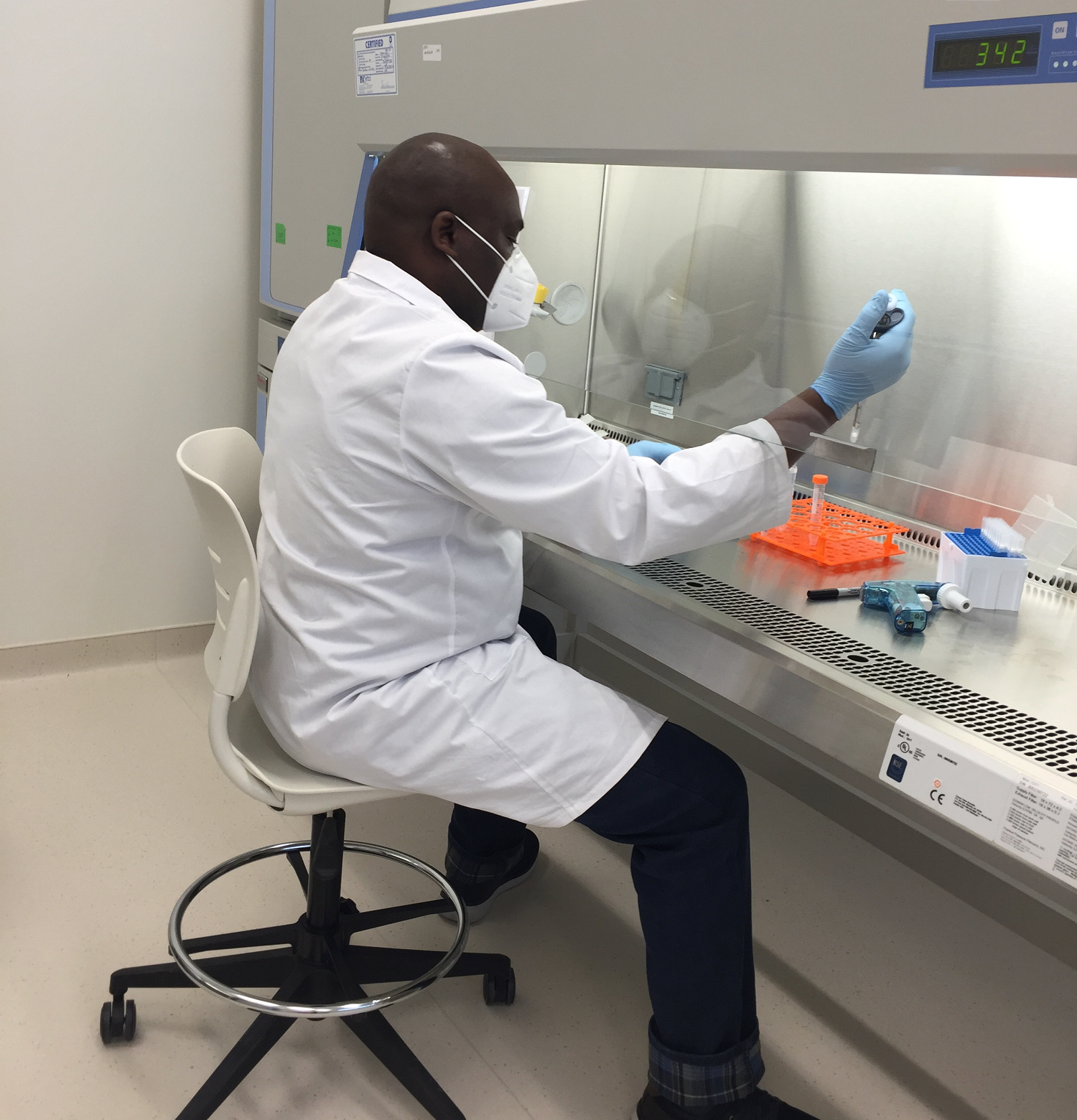
A participant in the Biotech Boot Camp at USG in February 2021 practices their pipetting technique. Photo by Annica Wayman.
Opportunities at every level
The new NIIMBL program is just one of those choices. UMBC’s Translational Life Science Technology (TLST) bachelor’s degree program, fully launched in 2019 in partnership with Montgomery College, was the college’s first new major developed in response to the growing need for biotech workforce development in the region. The TLST program bridges fundamental knowledge in the life sciences with industry-specific applications, practical laboratory skills, and an understanding of the regulatory process for biopharmaceuticals.
“The launch of the TLST program has led to a lot of education and partnership opportunities,” says Annica Wayman ’99, M6, mechanical engineering, and associate dean for Shady Grove affairs in CNMS. “It’s allowed UMBC to address gaps in the workforce that already existed, and that became even more prominent with the pandemic. We jumped in to help to fill those gaps in a variety of ways.”
The TLST program, which has just launched a bioinformatics track, dovetails with the Master of Professional Studies in Biotechnology, also offered at USG. The master’s program is ideal for both recent TLST program graduates and professionals already in biotech seeking to advance their careers.
“We’re trying to build the education pathway that runs in parallel with the career pathways for students in biotech,” Wayman says.
Participants in the Biotech Boot Camp at USG, Feb 2021. Photo by Annica Wayman.
Engaging with industry
UMBC has also cultivated a growing number of partnerships with individuals, industry, government agencies, and regional community colleges that strengthen its offerings. A Biotechnology Advisory Committee includes representatives from companies such as Kite Pharma, Catalent, AstraZeneca, and American Gene Technologies, all of which have facilities in the region. Agencies like the National Institutes of Health (NIH) and National Institute of Standards and Technology (NIST) are also on the committee.
“They’re helping us to refine our curriculum to make sure we’re educating students on the things that industry needs,” Wayman says. “They’re also helping us determine what other gaps we could fill.”
For example, another huge growth area is biomanufacturing process development. With increasing automation and the need for large-scale production of some biopharmaceutical products, there are opportunities to improve the way biomanufacturing facilities operate.
UMBC’s biotech curricula often directly touch industry, as well. TLST courses regularly include guest lecturers from regional companies, and students must complete an internship in order to graduate. TLST classes have also included interviewing support and networking sessions with potential employers, such as members of the Frederick Innovative Technology Center, Inc.
(l to r): Annica Wayman, Antonio Moreira, Keith Bowman, Bill LaCourse. Photo by Marlayna Demond ’11 for UMBC at the grand opening of the BSE building at USG.
Productive partnerships
UMBC’s new partnership with Aberdeen Proving Ground (APG), the U.S. Army facility near Aberdeen, Maryland, will further enhance opportunities for students across the region. APG has built a robust relationship with Harford Community College, while UMBC already has a thriving relationship with Montgomery College and has been deepening its relationship with Frederick Community College. The new APG partnership, still in its early stages, will create opportunities to enhance UMBC’s relationship with Harford Community College, as well.
“We’ve now built this education partnership alliance with Aberdeen Proving Ground, because we’re looking to provide a pathway for these students through their biotech career,” Wayman says. “They can go from Harford Community College to the TLST program, and have Aberdeen be that partner running throughout who provides experiential opportunities and eventually jobs for these students.”
UMBC’s Interdisciplinary Life Sciences Building offers state-of-the-art spaces for research and teaching. Photo by Marlayna Demond ’11 for UMBC.
An economic engine
Antonio Moreira, vice provost for academic affairs, has seen the potential for Maryland to be a biotechnology leader for years, with UMBC as a major driver of growth. Maryland’s strength “is the result of a life sciences ecosystem that includes federal agencies, major research universities, hundreds of biotechnology companies and strong community colleges,” he says. While this growth has been in process for some time, he notes that the pandemic has brought the need for a robust biotech sector into sharp relief.
“As a component of the Maryland biotechnology ecosystem, UMBC is a major resource for preparing the workforce needed to develop and manufacture critical therapies,” Moreira explains. Given a shortage in this workforce, “the students graduating from the universities need to be prepared to hit the ground running as they join these biotechnology companies.”
The innovative partnerships UMBC is developing with industry, government, and community colleges are creating opportunities for students to gain the complex skills needed to contribute to the growing biotech industry and to pursue careers in high-demand fields. “All these projects, programs, and partnerships are helping fulfill the mission of UMBC as an economic engine and source of workforce development in the state,” Dean LaCourse says.
“We are implementing our shared vision to build a workforce for the biotech industry right here, with the people in Maryland,” LaCourse continues. “We want Maryland businesses to look out their windows to find that workforce that they need—and it’s looking good.”
Header image: Charmaine Hipolito ’20 (right) and Titina Sirak ’20, both graduates of the TLST program, use the microscopes in a teaching lab at the Universities at Shady Grove in 2019. Photo by Marlayna Demond ’11 for UMBC.
Tiny particles of mineral dust in the atmosphere transport nutrients around the globe, influence cloud cover and precipitation, and affect how much heat the planet reflects or absorbs. Although these abundant particles play an important role in overall climate, they are still poorly understood. A new study in Atmospheric Chemistry and Physics led by Qianqian Song, Ph.D. candidate in atmospheric physics at UMBC, sheds new light on how dust moves through the atmosphere and how that’s changed over time. The findings also lay the groundwork for further studies to examine dust’s role in climate and its global movement in more detail.
In their study, Song; Zhibo Zhang, professor of physics; and colleagues used data collected between 2007 and 2019 by NASA satellites to distinguish dust from among all the tiny particles in the atmosphere, called aerosols. Smoke and particles that enter the air from the sea’s surface are other examples. MODIS, an instrument on the Aqua satellite, detects dust based on the size of the particles. CALIOP, an instrument on the CALIPSO satellite, can detect dust based on its shape, which tends to be irregular rather than spherical.
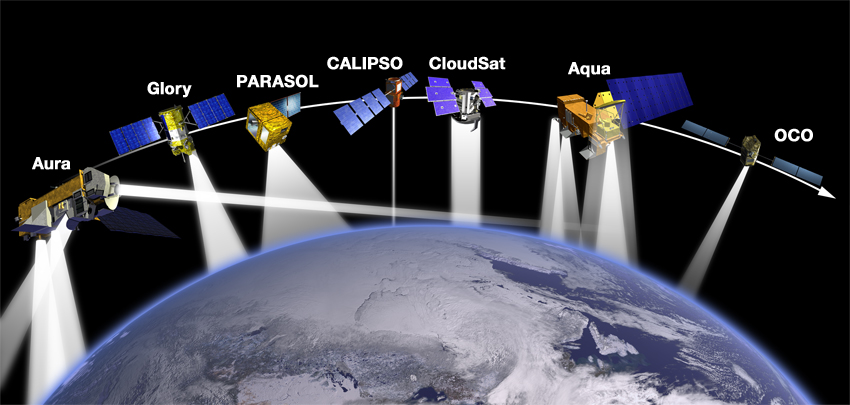
A train of several satellites, including CALIPSO and Aqua, orbits Earth in formation. Each one collects different kinds of data about clouds and aerosols, generating a more comprehensive picture. Rendering courtesy of NASA.
‘Dust aerosols in nature are irregular, non-spherical, and large in size,” Song explains. “By using sensor-specific methods, we were able to separate dust from the total aerosols in size-based MODIS observations and shape-based CALIOP observations.”
While previous studies have looked at dust in specific locations, Song’s study is the most comprehensive look to date at the presence of dust globally over time. The study generated two giant datasets representing the presence of dust globally over 13 years. Song and colleagues used the datasets to determine year-over-year changes in several dust-laden regions.
New data, new questions
There is huge potential for Song, Zhang, and others to use these datasets to learn more about how dust impacts climate. The study also demonstrates a new way to use satellite data to answer questions about dust, opening the door for significant further research in this area.
“These results are important because spatial variation of dust around the globe can help determine whether dust is cooling or warming the planet overall,” which is still unknown, Song says. On the one hand, dust can reflect sunlight back to space, cooling the planet. On the other hand, it can trap heat coming from Earth’s surface, contributing to warming.
Examining how high the dust is in the atmosphere and how thick the dust layer is in various places will help answer this question. And it’s finally possible to better understand these factors with the new data.
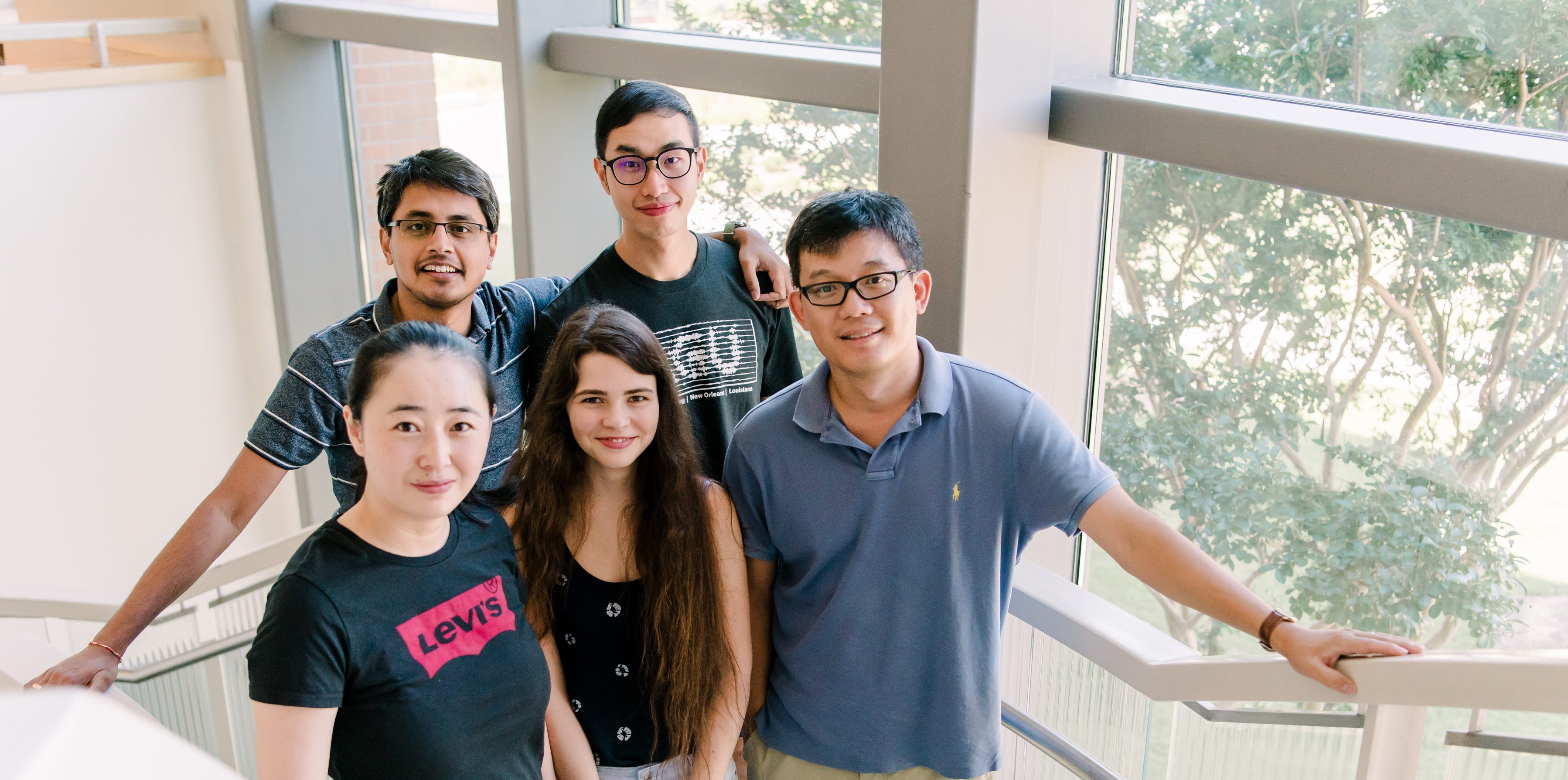
Members of Zhang’s research group. Clockwise from lower left: Qianqian Song, Chamara Raja, Kevin Zheng, Zhibo Zhang, Olivia Norman. Photo by Marlayna Demond ’11 for UMBC.
The new study could also help scientists understand the global circulation of various nutrients within dust. While dust may generally have a bad reputation in our homes, it is a normal and healthy part of the global climate. Atmospheric dust contains essential nutrients like iron and calcium, and previous studies showed that Saharan dust is critical for fueling the nutrient-rich Amazon ecosystem. Any big shifts in dust’s production or circulation could have wide-ranging effects.
In addition to affecting Earth’s energy balance and transporting nutrients, “Dust has even been shown to transport pathogens,” Zhang says. For example, “When there are major dust storms in Arizona, valley fever spikes.”
A greening China
One striking finding from the study was that dust over the northwest Pacific Ocean, near China, decreased by about two percent per year over the study period. Dust also decreased up to five percent per year over the Gobi Desert, which spans southern Mongolia and northern central China.
Song and Zhang hypothesize that climate change is partly responsible, because it is already making parts of China wetter and warmer. The Chinese “great green wall” initiative to plant more trees could also be a factor.
These shifts have increased vegetation and decreased the amount of dust taken up from this region, which previously was extremely arid. How the localized decrease in dust will affect dust’s global distribution, and whether the change will be a net negative or positive, is still unknown—but those are the kinds of questions that researchers can ask using the new methods Song and Zhang are employing.
Song has a personal connection to changes in the Gobi Desert, too. While completing her master’s degree in Beijing, “We traveled several hours by bus to Mongolia to plant trees,” she says. “So it’s especially interesting to me to see how dust has changed in that area, possibly as a result of changes in vegetation.”
An analysis of data from NASA satellites shows that China and India have become greener over the last two decades. Image courtesy of NASA.
Pushing the limits
Taking an even broader view, Song’s new study confirms what other studies have found: that the results from the two methods for detecting dust (by shape and by size) do not exactly match up. Having such large datasets from this study will aid the effort to better under these models’ limitations. The study’s datasets (one for each method) “may also be used to evaluate the dust simulations in global climate models,” write the study’s authors.
Moving forward, dust distribution is likely to continue to change as ecosystems and weather patterns shift. But with the huge new datasets this study generated, scientists will have a head start on understanding how those changes are likely to affect communities around the world.
“We plan to keep working with this data to learn more,” Song says, “and we hope other researchers will, too, so we can learn as much as possible and better understand dust’s role in our climate.”
Zhang’s research group during a lab meeting. From left to right: Chamara Raja, Qianqian Song, Olivia Norman, Kevin Zheng, Zhibo Zhang. Photo by Marlayna Demond ’11 for UMBC.
Header image: Qianqian Song presents at a lab meeting. Photo by Marlayna Demond ’11 for UMBC.