We use cookies for analytics and, unless you opt out, advertising.
You can opt out of advertising at any time.UMBC uses essential cookies to run this site. With your permission we would also use analytics cookies (to understand how the site is used) and advertising cookies (to measure and target our ads on other platforms). Nothing else loads unless you accept. You can change your choice any time from Cookie Settings in the footer.Privacy Policy
EssentialRequired for the site to work (login, security, your cookie choice). Always on.
The Aquaculture Research Center (ARC) at the Institute of Marine and Environmental Technology (IMET), led by Yonathan Zohar, professor of marine biotechnology, has been focused for years on advancing sustainable methods of growing fish on land to meet the growing global demand for seafood. In addition to helping develop new, environmentally responsible ways of producing nutritious food for the long term, the ARC is helping to meet immediate needs in the local community.
Today, the center donated 1,200 pounds of Atlantic salmon to DC Central Kitchen, a food pantry in Southwest Washington, D.C., after donating 1,400 pounds in November 2023. ProFish, located in Washington, DC, processed the salmon for the donations.
The ARC’s seafood donation program launched in 2017, when the Feeding Individuals to Support Health (FISH) initiative was formed in partnership with several local businesses and non-profit organizations. The first major donation distributed thousands of pounds of European sea bass (also known as bronzino) grown in the ARC’s marine tanks to communities in need in the Baltimore area.
“The U.S. is the largest importer of seafood in the world. Currently the oceans are overfished, and IMET is working on innovative aquaculture platforms that will reduce U.S. and global dependence on wild fisheries stocks,” Zohar says. “Through these donations, we can also provide a small level of societal benefit right away and close to home.”
Learn more about groundbreaking work at the Aquaculture Research Center here.
Prostate cancer is the most common cancer in men other than skin cancer, with more than 288,000 new cases diagnosed every year, according to the American Cancer Society. The disease’s fatality rate has decreased by more than half since the 1990s, but there is still room for progress—especially in treating or preventing advanced, metastatic disease, which is much more likely to be fatal.
A new paper published in Science Advances, led by a team of UMBC researchers, clarifies how an enzyme called SMYD3 may be involved in prostate cancer’s progression to a more dangerous and aggressive stage. The enzyme’s newly confirmed role makes it a prime potential drug target for preventing metastatic disease.
Redefiningan enzyme’s role
Researchers have been trying to explain SMYD3’s role in cancer since observing that it is unusually abundant in cancerous tumors, explains Erin Green, associate professor of biological sciences and senior author on the paper.
Previous studies suggested that SMYD3 acted inside a cell’s nucleus and regulated which genes the cell expressed by directly modifying DNA. But research led by Nicolas Reynoird, a scientist at the Institute for Advanced Biosciences in Grenoble, France, and a co-author on the new study, suggested a different mechanism.
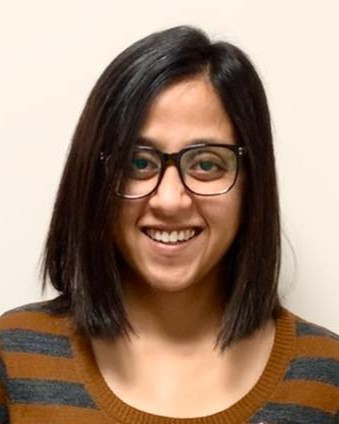
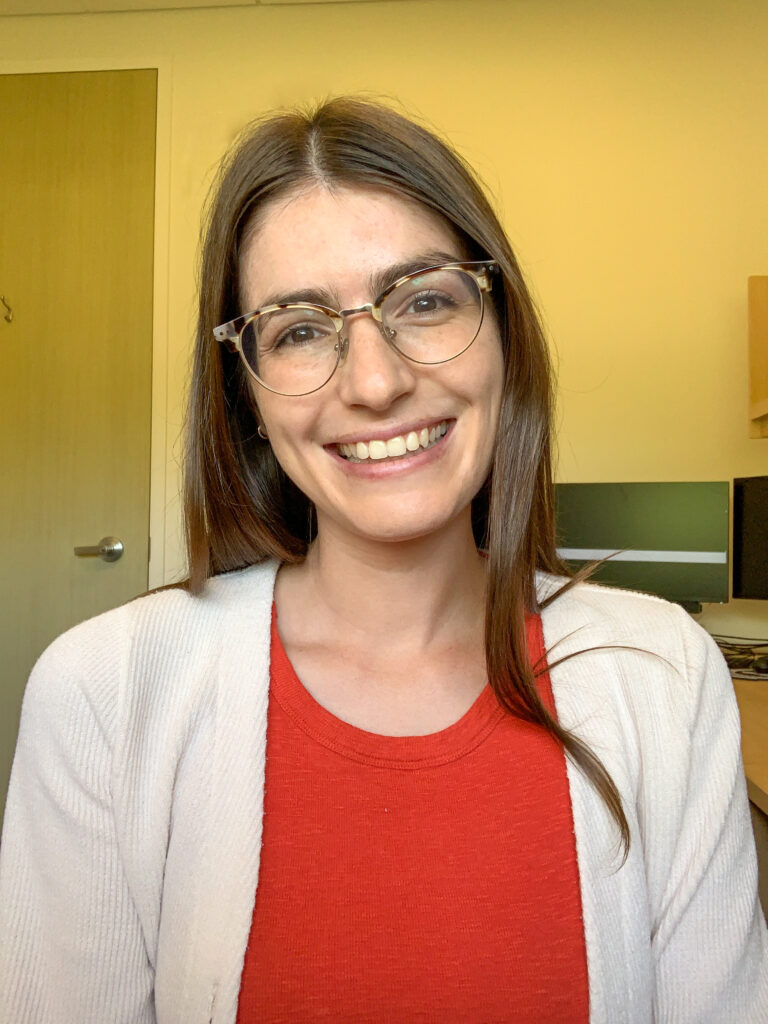
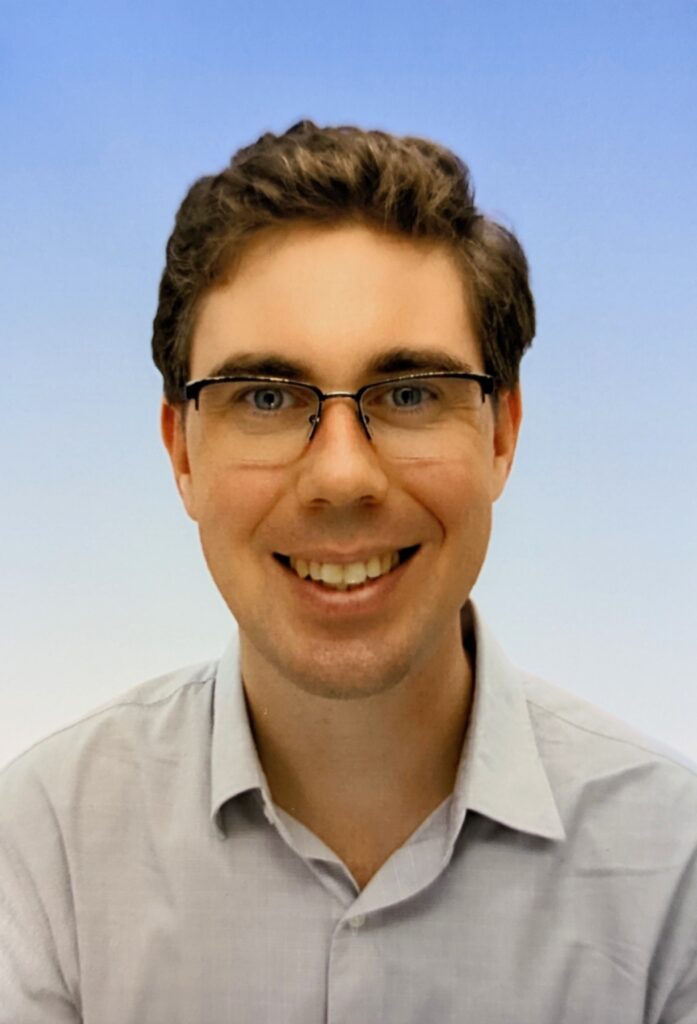
Sabeen Ikram, a recent alumna from Erin Green’s lab, conducted many of the experiments that led to the new results. (Image courtesy of Ikram)
In a key 2014 paper published while Reynoird was a postdoctoral fellow at Stanford, he and collaborators found that SMYD3 was working outside the nucleus and activating a protein called a MAP kinase. Members of the MAP kinase protein family are overactive in cancer cells and can promote tumor growth.
The new Science Advances paper, led by Sabeen Ikram, Ph.D. ’23, biological sciences, built on Reynoird’s previous work. Ikram’s experiments showed conclusively and in more detail how SMYD3 may be triggering metastatic prostate cancer via the MAP kinase signaling pathway. The paper ties together an overabundance of SMYD3 and excessive activation of MAP kinase signaling for the first time in prostate cancer, renewing interest in SMYD3 as a therapeutic target for prostate cancer.
The new study also revealed that SMYD3 regulates a particular protein, vimentin, that is well-studied as a marker of cancer progression. Plus, the team found for the first time that SMYD3 creates a positive feedback loop in the cell, where high levels of SMYD3 contribute to maintaining its overabundance. The study’s findings relied on experiments conducted in cell lines and in mice; the latter were led by UMBC Ph.D. student Apurv Rege.
“She’s extremely motivated, focused, and was really excited about the project. She just got a lot done,” Green says. “It was a new area of research for my lab, and Sabeen was willing to be independent and pioneering in getting these different types of experiments set up and figuring out what to do.”
The positive feelings are mutual. “Dr. Green’s mentorship has helped me transform from this timid, aspiring graduate student into a confident, independent scientist today,” Ikram shares. “She never stopped believing in me, especially at the times when I didn’t.”
Ikram even took unexpected challenges during her Ph.D. journey in stride. She was thrilled to travel to France for a stint with Reynoird’s research group in January 2020. Ikram planned to return in March, but had to stay until July and couldn’t enter the lab for much of that time due to the COVID-19 pandemic.
“Navigating 2020 was indeed difficult for all of us, but the adverse circumstances cultivated stronger friendships and working relationships” with her French colleagues, Ikram shares.
A new direction and new hope for patients
With Ikram at Stanford, and other lab members actively at work on other projects, Green is currently seeking new team members to continue this exciting line of research—and there are many avenues to explore.
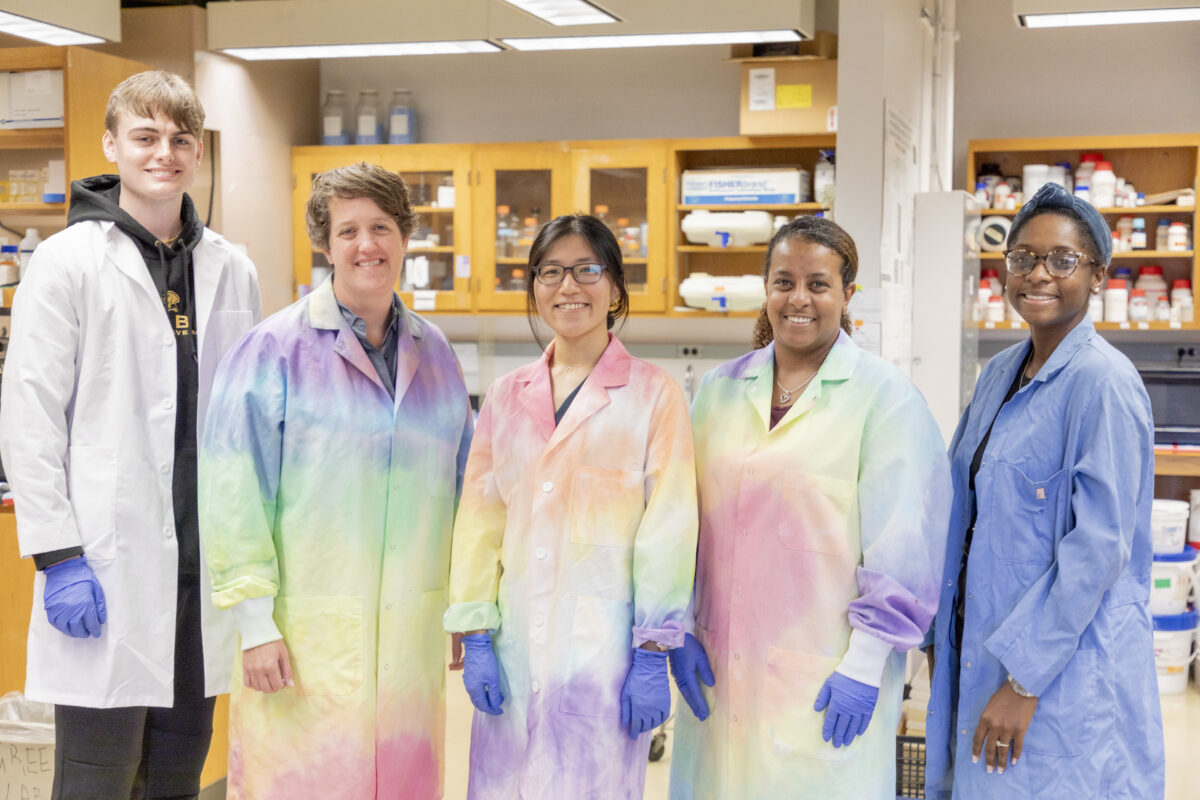
Green’s current graduate students are hard at work on a range of research projects. Left to right: Ph.D. student Luke Mason, Erin Green, Ph.D. students Winny Sun, Maki Negesse, and Devonique Brisset. (Melissa Penley Cormier, M.F.A. ’17/UMBC)
“We’ve only checked this mechanism in prostate cancer so far, but I think it’s likely happening in other cancer cell types,” Green says. “That’s another thing that we want to keep investigating: How common is this?”
Green is also excited for SMYD3’s potential use as a therapeutic target for prostate or other cancers. SMYD3 inhibitors already exist, so the new findings may encourage companies to invest in discovering new uses for them.
“There’s drugs out there that haven’t been fully explored because people decided there was not a good target.” Green says. “So there’s a lot more that could be done there.”
UMBC’s Science Learning Collaboratory buzzes with activity as small groups of students use pipettes to suck brine shrimp out of glass vials, squirt them into petri dishes set over graph paper, then stare intently at the wriggling shrimp while running stopwatches and recording data. They’ll then analyze the data using Excel and write up a laboratory report.
It may not sound like a math class, but this is a typical day in MATH 110: Math in Action, a new laboratory course for non-STEM majors who haven’t taken calculus.
The course, which launched this fall, is a UMBC innovation designed for students “who don’t generally have the most positive association with math,” says lead lab instructor Alexis O’Malley ’18, mathematics and psychology. “But personally,” she adds, “I believe everyone can benefit from some math in their life, so this course is trying to show how different math concepts are applied across various fields.”
Lara Scott, a mathematics Ph.D. student who teaches the lecture portion of the class, concurs. “The hope is that by showing students how prevalent math is in every subject,” Scott says, “they will begin to make those connections themselves and those connections will inspire them to independently wonder how certain concepts can be explained mathematically.”
Empowering students with math
Each week, the students attend Scott’s lecture, then participate in a lab session where they apply what they learned in hands-on activities. The labs are co-designed by O’Malley and a rotating cast of faculty members from departments across the College of Natural and Mathematical Sciences (CNMS). As one might expect, faculty in mathematics and statistics contributed, and so did professors in biological sciences, chemistry and biochemistry, and physics, each exploring math concepts through their own discipline’s lens.
Lab topics include progressive tax rates and mortgage interest rates, the chemistry of mixing dyes for cake icing, card and dice games to learn probability, and more. Chuck Bieberich,professor of biological sciences, co-led the brine shrimp lab, which focused on calculating distance and velocity. William R. LaCourse, dean of CNMS and professor of chemistry and biochemistry, developed a lab where the students built and used clinometers, simple mechanical devices for estimating the height of tall objects, such as trees or buildings.
More than a year before he was teaching in MATH 110, LaCourse saw a need for a more interactive math course and began advocating for its creation. Kathleen Hoffman, professor of mathematics and associate dean in CNMS, came on board and worked with the math department to move the course forward. The resulting class is but one example of the many CNMS courses instructors have reimagined to promote active learning and engage students who otherwise might not take an interest in the natural sciences.
“Math is everywhere, and a math lab course creates opportunities for students to interact with the material in fresh, creative ways,” LaCourse says. “MATH 110 is about empowering students to make decisions and analyze situations in their daily lives—whether they’re critically evaluating statistics in the media or doubling a recipe.”
Dean LaCourse teaches CHEM 101 in spring 2022. The chemistry course for non-majors is another example of a CNMS class on a subject that sometimes intimidates students and connects it to their daily lives—with a dose of humor. (Marlayna Demond ’11/UMBC)
Swapping fear for fun in math class
The course is personal for O’Malley, who did not always love math herself. “I thought I was bad at it, and I hated doing things I was bad at,” she candidly recalls. “It wasn’t the math itself, it was the feeling that I had in a math class—which is how it is for a lot of people.”
A fortuitous sequence of events, including a campus job helping with professional development events for math teachers, led O’Malley from initially pursuing an English degree at UMBC to a combination of math and psychology majors as a Sherman Teacher Scholar. After that, O’Malley set out to make math courses less of a bear for her math-phobic students—and maybe even fun.
She first returned to UMBC as an adjunct professor for introductory calculus while still teaching math at Western Technical High School in Baltimore County. She now serves as a program management specialist in CNMS, and the opportunity to continue her passion—teaching math—in that role came as a delightful surprise.
Unlike calculus, where the curriculum is largely set, MATH 110 “is a growing, evolving, living course,” O’Malley says. “This lab is new and has the potential to always be new. I’m really excited about it.”
Learning to think like a mathematician
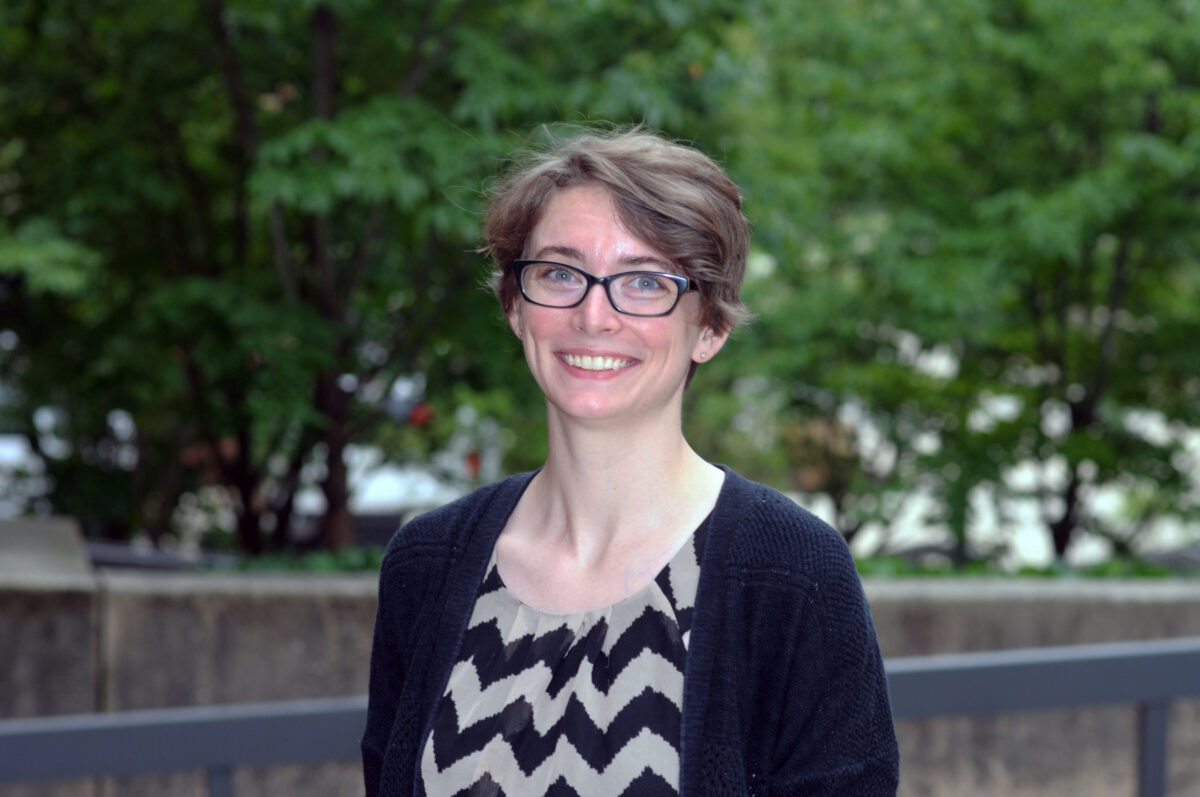
For Alexis O’Malley ’18, teaching MATH 110 is a perfect fit, and it gives her the opportunity to help students connect to math in new ways. (Image courtesy of O’Malley)
O’Malley and Scott have both witnessed substantial growth in their students this fall. Each lab report asks students to connect their work to previous labs, STEM fields, and their own lives. “That’s one of my favorite sections to read, because they always come up with examples I never would have thought of,” O’Malley says. “Sometimes they take away something that has even more depth than was my intention.”
The investigative nature of the course also supported students’ increasingly independent problem solving. Later in the semester, “Suddenly, students weren’t walking up with a blank page and asking for help, but instead explaining where they started and the specific point where they couldn’t bridge the gap on their own,” Scott shares.
As for lightbulb moments, “I wish that I had cataloged them,” O’Malley says. “But I remember their ‘aha!’ faces.”
By the end, “even in the labs where students struggled with the math, they could easily explain why and how the lab related to their life,” Scott says. “For students who won’t continue in the math field, it’s pretty incredible to watch them (sometimes begrudgingly) accept how intertwined mathematics is with our world.”
Changing minds, creating opportunities
During the last few weeks of the fall semester, rather than conducting faculty-designed labs, the students are developing their own. Next semester, the curriculum will incorporate one of the students’ labs. That process will continue, and eventually, with enough different labs to choose from, the course might become adaptable to the interests of students each semester, O’Malley says.
The spring course is filling up, which speaks to its positive reception with students. If that section fills, the college will open another. A more advanced math laboratory course is also in the early stages of development.
The new course is already opening students’ eyes to what a math class can be.
“I didn’t think you could do math and lab at the same time,” shares Taye Olorunsola ’25, management of aging services, who took a chance on the new course this fall. But now? “I recommend it to a lot of my friends.”
Sebastian Deffner, associate professor of physics, attended “Quantum Science and Technology: Recent Advances and New Perspectives,” a workshop hosted by the Pontifical Academy of Sciences in Vatican City from November 30 to December 2. Deffner was among only about 70 global experts invited to the workshop, and the guest list included numerous Nobel laureates.
“The leading experts in quantum science met in a unique place for a unique workshop to discuss the past, present, and future of quantum technologies,” Deffner says of the workshop.
For Deffner, it was an exciting and rare opportunity. The invitation recognizes his leadership role in developing the young field of quantum thermodynamics on an international scale. In 2019, he co-authored the first textbook focused on the subject, and his research group consistently contributes to the researchliterature.
Recordings of talks from the workshop are available here.
Members of UMBC’s chapter of the National Society of Black Engineers (NSBE) traveled to Norfolk, Virginia for their annual regional conference in November and came home with numerous awards.
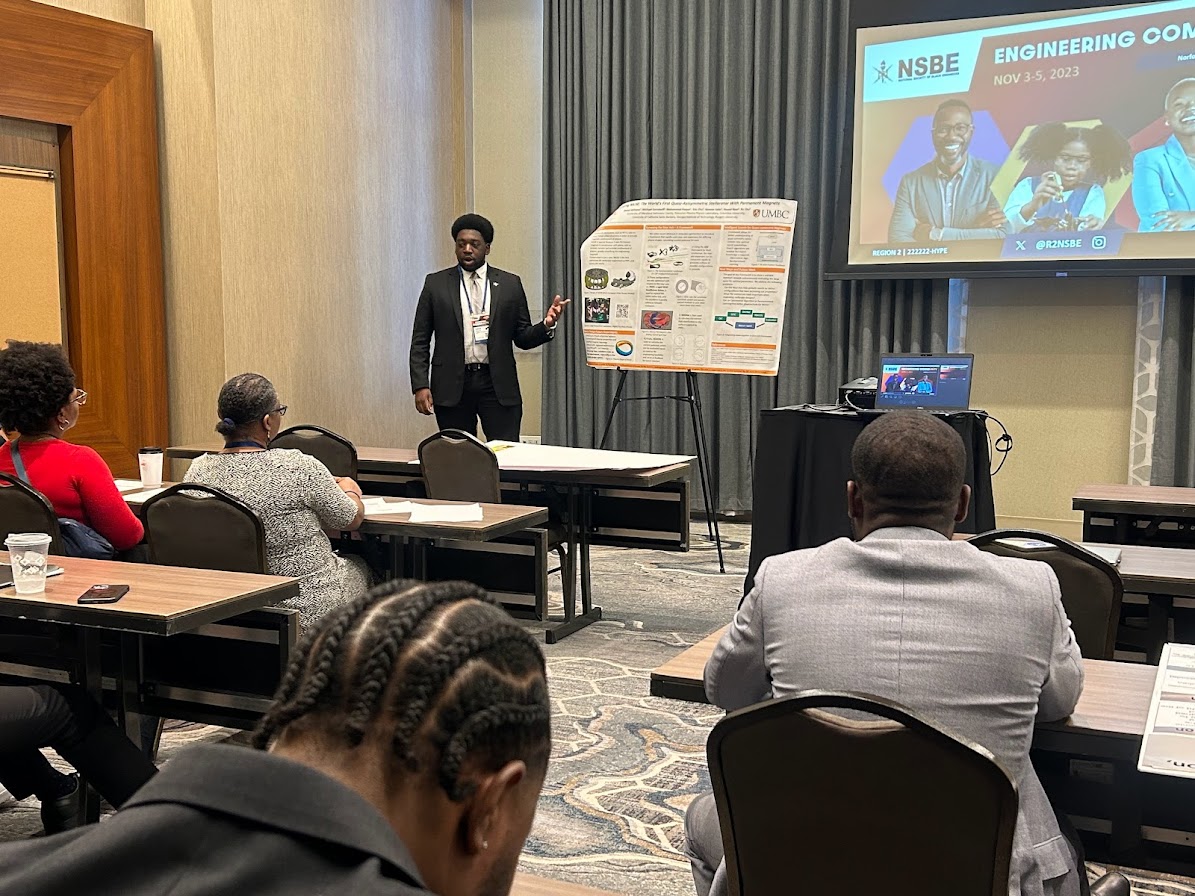
The UMBC team defeated Carnegie Mellon University and North Carolina State University to win the Tech Bowl competition, a Jeopardy-style game that tests teams’ knowledge of fundamental engineering principles. UMBC also claimed first through third place in the research poster presentation contest, which involved a 10-minute technical research talk followed by questions from the judges and audience.
The team relied on prior knowledge to excel in the Tech Bowl, only having decided to participate upon arriving at the conference. “It was really exciting getting so many questions right with our only practice being from our coursework,” shares UMBC NSBE chapter president Nelanne Bolima ’24, chemical engineering. “That just goes to show how well UMBC’s College of Engineering and IT prepares students to succeed.”
Daniel Williams gives his research presentation at the NSBE conference. (Image by Nelanne Bolima)
In addition to Bolima, the Tech Bowl team members included Kayla Magruder ’26, chemical engineering; Saleem Lawal ’25, computer science; and Daniel Williams ’24, computer science. Presentation winners were Williams (first), Bolima (second), and Christopher Appiah ’24, mechanical engineering (third). Keith Harmon, director of the UMBC Meyerhoff Scholars Program, serves as the chapter advisor.
“We are so proud of the UMBC NSBE Chapter,” Harmon shares. “They do tremendous work supporting UMBC STEM majors and offering service impacting youth in the Baltimore-Washington corridor.”
Students supporting students
NSBE is a completely student-run organization, creating leadership opportunities for hundreds of students across the country. UMBC’s NSBE chapter supports members through activities such as mentoring initiatives, conference preparation, networking opportunities, and leadership development programming. The chapter also focuses on community outreach, such as visiting high schools, collaborating with non-profits, and welcoming younger students to shadow the chapter’s board meetings.
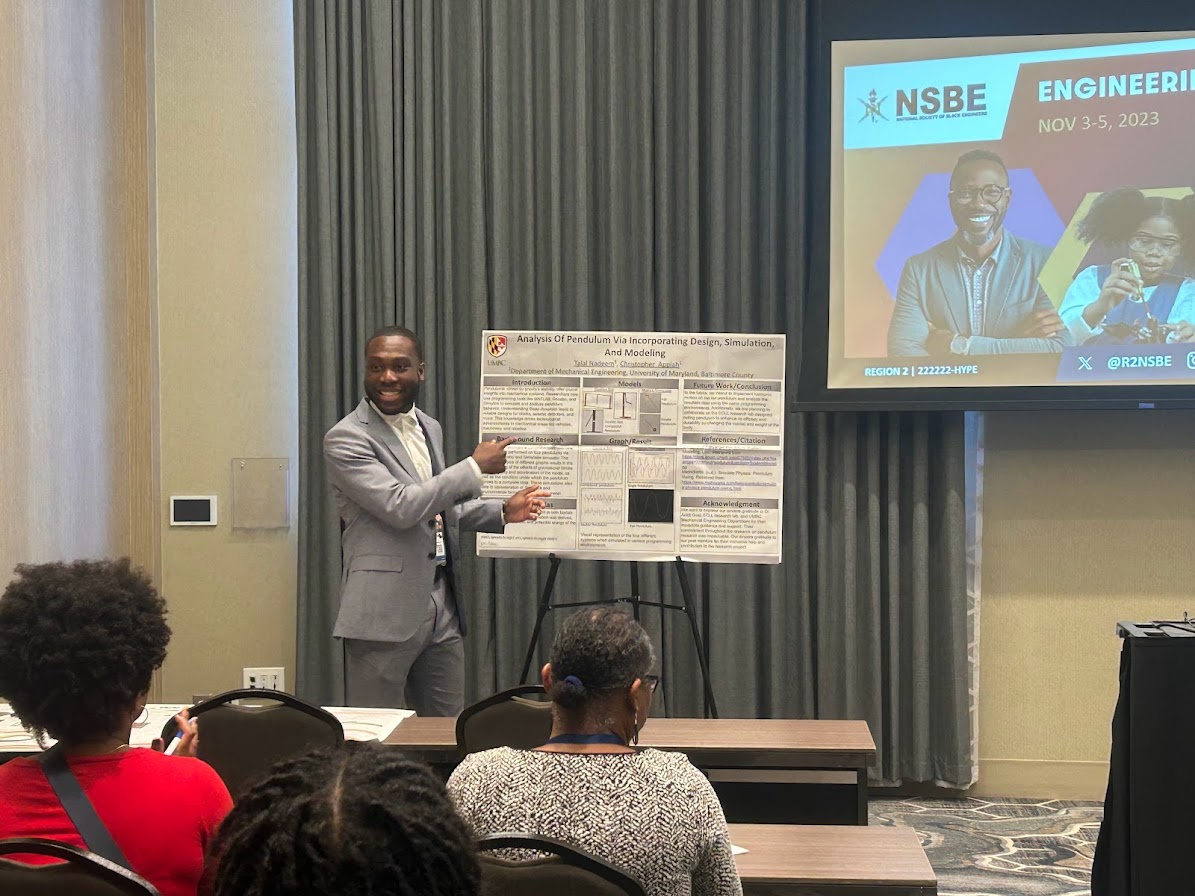
Christopher Appiah gives his research presentation at the NSBE conference. (Image by Nelanne Bolima)
“I have benefitted from being a member of this team by gaining invaluable public speaking and collaboration skills,” Appiah shares. “I learned how to effectively present, detailing the broader impact of research I have done.” Appiah conducts research with Ankit Goel, assistant professor of mechanical engineering. Goel’s group works on complex applications of control theory in robotics and autonomous systems.
For Jaden Somerville ’25, mechanical engineering, “the competition not only improved my technical skills, but also taught me teamwork, problem-solving, and effective time management.”
In March 2024, the chapter will take its talents to the 50th annual NSBE convention in Atlanta, Georgia.
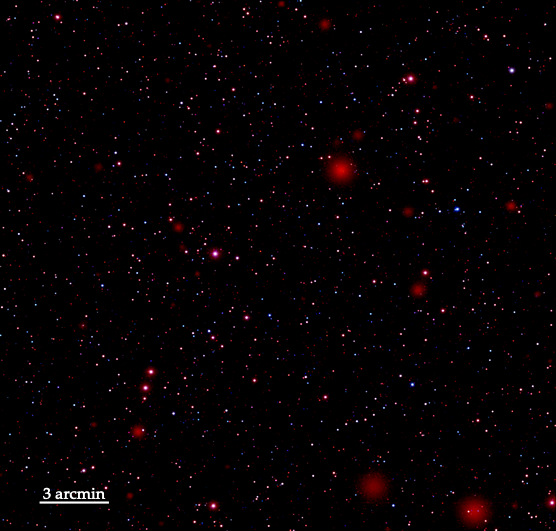
A simulation of the sky as viewed by AXIS in one 5 million-second exposure to deep space. This simulated image shows some of the earliest detected supermassive black holes. (Simulation by Stefano Marchesi)
After 18 months of intensive design work by a team of more than 100 scientists, which followed years of preliminary work and investment, in November the scientists and engineers on the Advanced X-ray Imaging Satellite (AXIS) science team took an important step toward delivering this next-generation space telescope. They became one of 10 teams to submit their formal project proposal to NASA, requesting nearly $1 billion in funding to further develop the design and build the telescope.
Adi Foord, assistant professor of physics, and Eileen Meyer, associate professor of physics, serve on the central AXIS leadership team, and Foord co-leads the sub-team focused on supermassive black hole evolution. If selected for production, AXIS will improve upon the highly successful,but aging, Chandra X-ray Observatory launched in 1999.
As an X-ray telescope, AXIS aligns with one of the established priorities laid out in NASA’s 2020 decadal survey. These surveys initiate a years-long competition to be the one major instrument eventually selected for launch to address one of the priorities.
A revolutionary x-ray telescope
Adi Foord co-leads the AXIS Supermassive Black Hole science working group. She is also the project’s communications and outreach lead. (Image courtesy of Foord)
“AXIS is going to revolutionize our understanding of supermassive black hole growth and evolution by detecting some of the earliest known supermassive black holes to date and tracking them across cosmic time,” Foord says. “AXIS will be the premiere high-angular-resolution X-ray mission of the 2030s, observing deeper into our universe than currently possible with existing X-ray telescopes.”
The lead investigator on the AXIS team is Chris Reynolds at University of Maryland, College Park, and the co-lead is Erin Kara at MIT. The team will know by fall 2024 if its proposal is one of two or three selected to move on to the next phase. After that, one proposal will eventually emerge the winner, and the selected team will build their satellite for launch in the early 2030s.
The team is optimistic about their prospects, given the strength of the proposal and the potential impact of the new satellite’s capabilities. AXIS’ “superb resolution means that it will be able to detect many new systems of interacting supermassive black holes,” Foord explains, such as pairs orbiting each other very closely and expected to merge. “We currently don’t know of too many of these systems, and AXIS is predicted to find hundreds to thousands of them.”
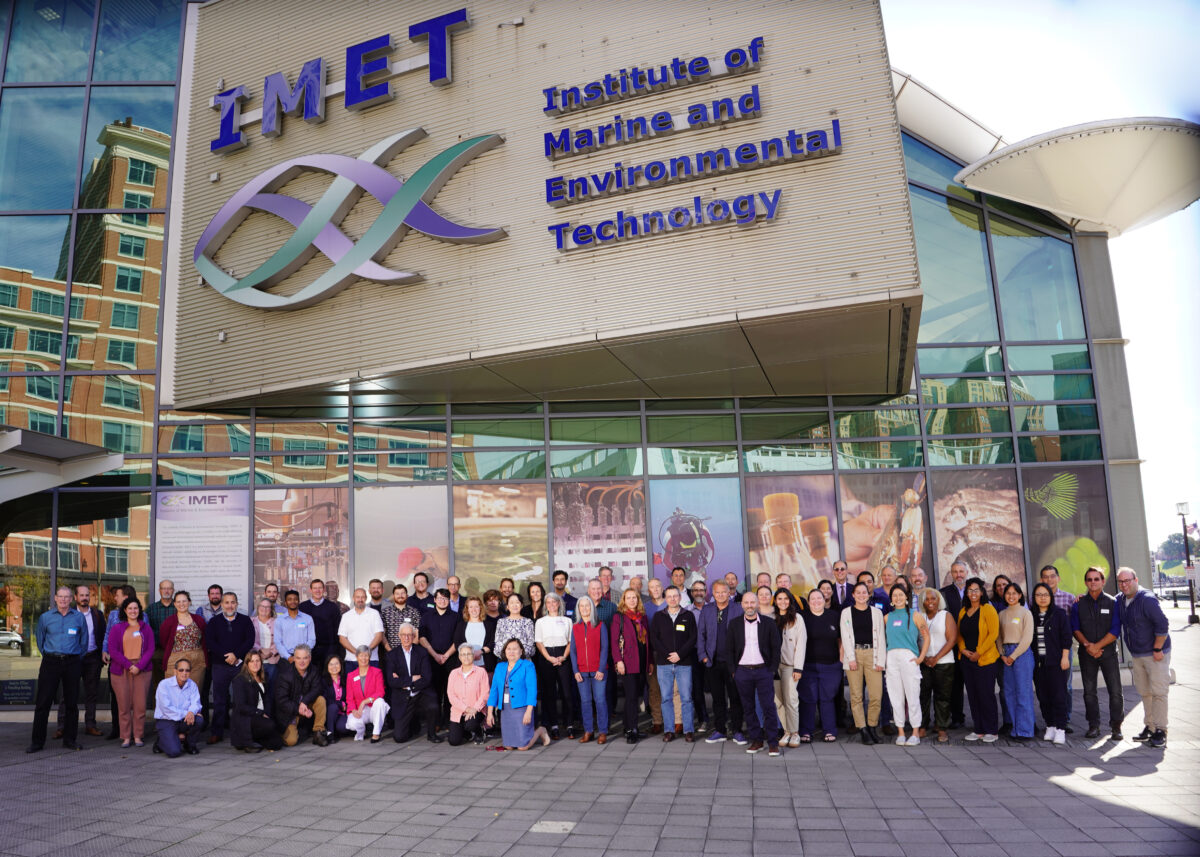
More than 110 academic researchers, industry pros, government officials and educators met at the Institute of Marine and Environmental Technology (IMET) for the second annual Sustainable Aquaculture Systems Supporting Atlantic Salmon (SAS2) conference in October. The conference’s nine panel discussions (with more than 50 panelists), local field trips and tours, and social events gave stakeholders the opportunity to share progress and address remaining challenges to move the aquaculture industry forward.
Yonathan Zohar, professor of marine biotechnology at UMBC and IMET, leads the SAS2 consortium, which includes 32 co-investigators, 12 research institutions, and 11 industry partners, from around the U.S. and internationally.
Salmon is consumed more than any other fish in the U.S., but over 90 percent of it is imported at a value of $3.8 billion annually, Zohar shared in introductory remarks. People across sectors are interested in reducing this trade deficit and improving environmental sustainability of salmon aquaculture by eliminating the carbon footprint associated with transporting salmon from overseas. As a result, domestic salmon aquaculture is experiencing an investment boom, Zohar says. The investment is particularly strong for land-based aquaculture, which Zohar and colleagues are advancing at IMET’s Aquaculture Research Center (ARC).
“This is a stakeholder-driven program,” Zohar says. “Industry and academia are engaged in genuine brainstorming towards enabling salmon aquaculture in the U.S. to be a success story.”
University System of Maryland Chancellor Jay Perman shared that the SAS2 team’s efforts, from biotechnology to market strategies to workforce development and education, “are poised to change the face of food scarcity and food production the world over.”
Conference attendees gather in front of the Institute for Marine and Environmental Technology. (Image by Barry Freeman)
IMET, and the ARC in particular, are “a showcase of our best ideas, ideas that promise solutions to so many essential challenges—food security, environmental sustainability, economic resilience,” Perman shared. The SAS2 consortium is “research for the public good,” Perman added. “That’s our mission and this project is emblematic of that.”
Session topics at the conference included scientific and engineering challenges like waste remediation, water reuse, and managing the salmon life cycle in captivity. Other sessions discussed market research for salmon produced on land and examples of education programs that increase awareness of aquaculture careers.
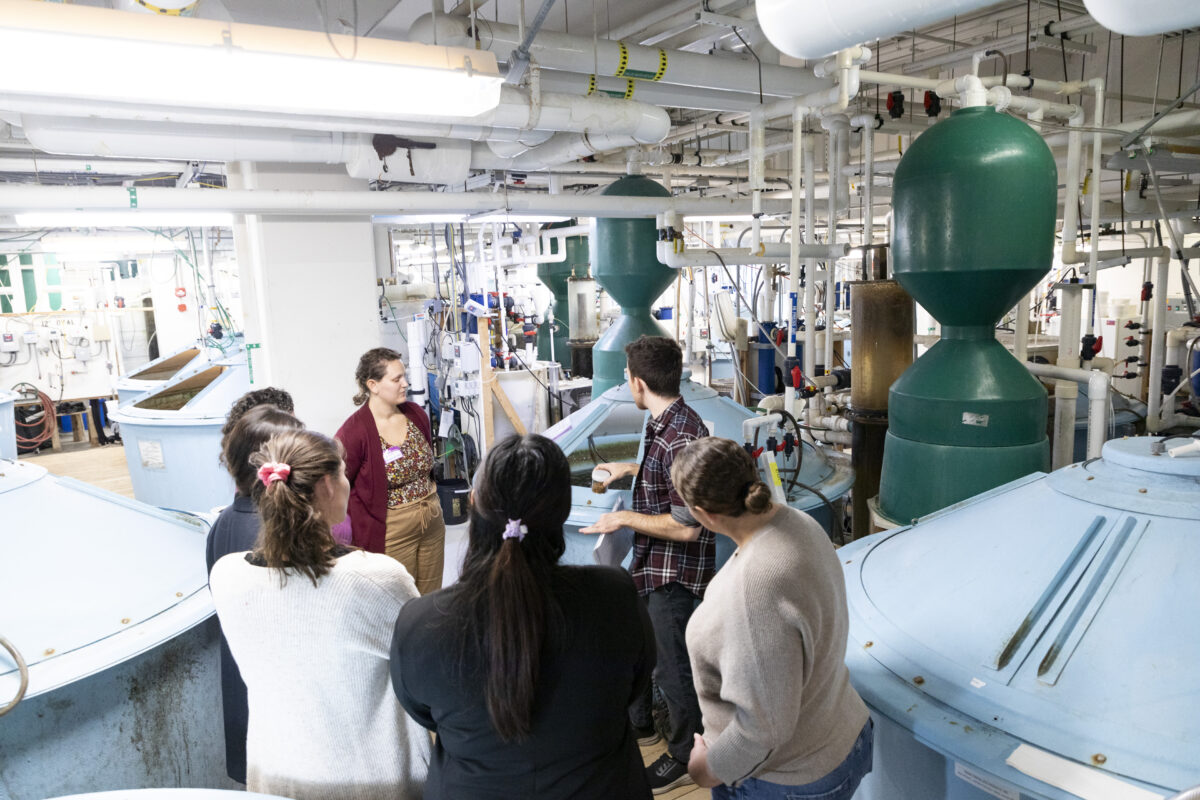
Attendees also traveled to The Conservation Fund Freshwater Institute in West Virginia to see collaborative SAS2 research, visited Baltimore City Schools that incorporate aquaculture into the curriculum, toured the ARC, and heard from graduate students contributing to the research arm of SAS2.
“SAS2 is an amazing accomplishment—the best example of public-private partnership to solve problems for industry,” shares Steve Summerfelt, a conference panelist and the chief science officer at Superior Fresh, which raises land-based salmon and recycles the nutrient-rich wastewater to grow greens. “SAS2 is providing relevant and groundbreaking research with strong tech transfer to help land-based salmon farmers.”
Conference attendees took tours of the Aquaculture Research Center, the land-based salmon production facility at IMET led by Yonathan Zohar. (Image by Melissa Penley Cormier, M.F.A. ’17)
Enabling aquaculture innovation
Overall, the conference emphasized aquaculture’s important and growing role in worldwide food production.
“Land-based, sustainable production of seafood is critically important technology to meet the rapidly growing need for healthy seafood as a source of protein in diets worldwide,” Russell Hill, director of IMET, said. “A land-based approach has huge advantages for minimizing pollution in the coastal environment and taking pressure off wild fish populations—and all of this can be done through this resilient technology that’s also adaptable in the face of a changing planet.”
By bringing together people from across industries, the event created opportunities that will enable more breakthroughs.
“The lively engagement and productive brainstorming of all relevant sectors led to several innovative ideas and collaborations which will contribute in the short term to making Atlantic salmon farming in the U.S. and globally more environmentally responsible and economically feasible” concluded Zohar. “Everyone left inspired and excited about the opportunities being created by the SAS2 program for innovative and sustainable aquaculture.”
The shower was full of mantis shrimp. Bubblers burbled and the cranky crustaceans skulked in their tanks, looking for things to punch with their famously fast strikes. Complicated electronics for measuring brain activity stood sentinel beside the bed in the next room. And out on the balcony, Kathryn Feller, Ph.D. ’14, biological sciences, was wearing a respirator and gloves, working with nasty chemicals.
In other words, it was another day of fieldwork as a behavioral neuroscientist—a career Feller has embraced after a journey of self-exploration that took her to surgical operating theaters, drama summer camps, and a range of research institutions around the world. At UMBC, Feller found a robust research atmosphere, supportive lab mates, and a lifelong mentor. Now, as a professor and mentor herself, she’s able to exercise her natural creativity in a way she might never have predicted and play off her strengths from visual arts to handling sensitive scientific instruments.
Feller was in Malaga, Spain, living and working out of an attic apartment in her collaborator’s mother’s home. She was collecting data for her work at the University of Cambridge, where she was fulfilling a two-year Marie Skłodowska-Curie Actions Postdoctoral Fellowship focused on a new line of research into mantis shrimp vision.
Mantis shrimp are famous for two things: their powerful punches and their vision. Humans have three types of cones in our eyes for seeing color. Mantis shrimp have 16. They can see UV light and polarized light, and there is still more to learn. Feller’s Ph.D. at UMBC in Thomas Cronin’s lab focused on vision in mantis shrimp larvae. At the time there was almost no work in that area.
“While studying the visual system, a lot of times I kept wondering: ‘There’s all these cool things that mantis shrimp eyes can do, but what are they actually using this for?’” Feller says. “What are the consequences of this in a behavioral context?”
Her Ph.D. opened up the field of larval mantis shrimp vision and took her down rabbit hole after rabbit hole. “If something interests me, I follow it, and—uh-oh—here’s something else I’m interested in,” Feller jokes. In the end, her thesis explored the visual system using umpteen different scientific techniques, each providing its own insights, she says. “It was like the whole package of describing mantis shrimp visual systems.”
The broad scientific foundation Feller obtained at UMBC set her up well for postdoctoral experiences that have taken her around the world, including stints studying butterflies in Japan, mouse brains in Minnesota, and insects in England. In fall 2020, she launched her own laboratory as an assistant professor of biology at Union College in Schenectady, New York.
Feller’s research interests now include new projects on the connections between vision and behavior and work on brain-machine interfaces, initially inspired by a student in one of her classes. That work helped spawn a brand-new course on cyborgs that she’s teaching with Union colleagues in English and computer science.
Things are going well.
“Life is awesome. It really is. You know, it has its ups and downs; it’s not like every day is a dreamboat—I live with a two-year-old,” Feller laughs. But “at this point, I’m just really jazzed about the research I’m doing.”
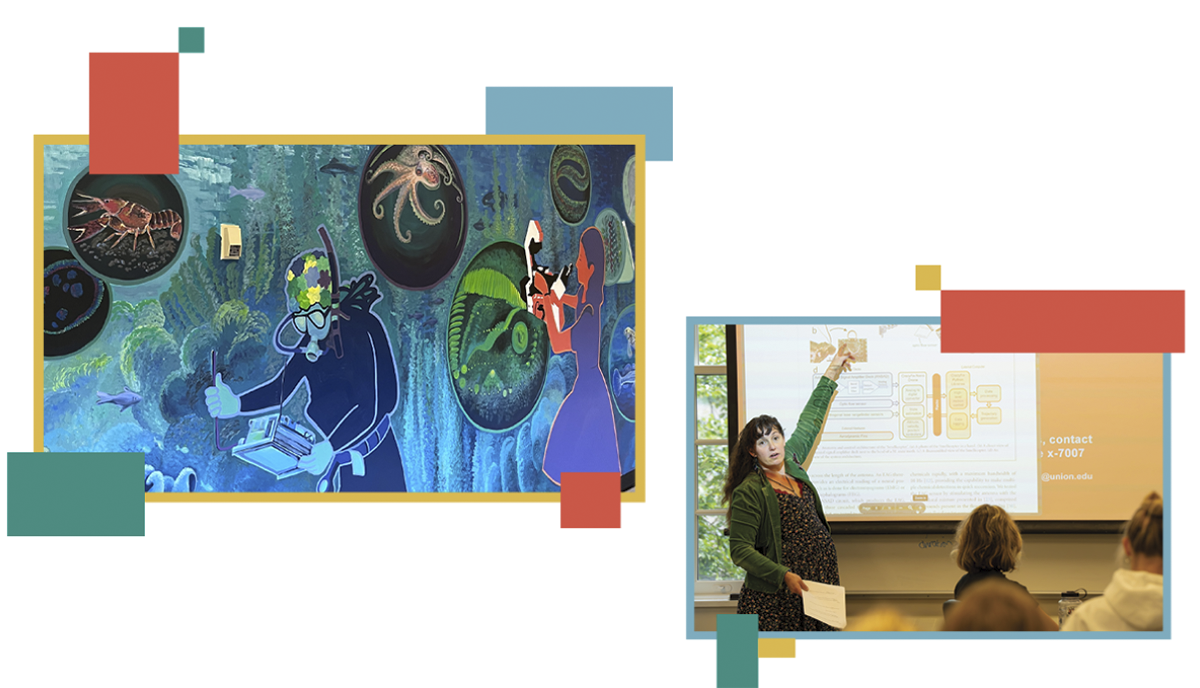
(Left) Feller is the only identifiable person in the mural on the first floor of the Biological Sciences Building at UMBC. Her swim cap covered in bright plastic flowers is unmistakable. (Image; Randianne Leyshon ’09/UMBC) (Right) Kate Feller, left, teaching a new course she co-developed with English and computer science colleagues at Union College on cyborgs. (Image by Paul Buckowski/Union College)
Into the limelight
Back in Malaga, Feller was getting lots of great data, “but also psychologically it was a bit difficult,” she says. She didn’t speak Spanish, and her hosts barely spoke English. “For six weeks, I was just alone in someone’s house, doing science.” And then came the email: an invitation to participate in FameLab, an international competition for scientists based out of the United Kingdom. Each participant had three minutes to explain a scientific concept using only their body and any props they could carry on the stage—no slides. Entries were judged on content, clarity, and charisma.
“I got this email, and I wrote my script in one night,” Feller says. The topic? Glittery camouflage structures in the eyes of mantis shrimp larvae. “When you’re in the field, you have a finite number of hours to do what you need to do, so you need to push yourself to the extreme—but you also need to take a break. And that was my break—just to sit down and poke fun at the ridiculousness of my life.”
She won her region in the U.K. and got to spend a weekend in Devonshire, England, with the other county winners, learning about science communication and refining her talk. The final performance was at the London Museum of Science.
“I didn’t win, but it was awesome,” Feller says. After that, she was hooked on science performance. Back in Cambridge, she pursued science stand-up comedy with a group called “The Variables.”
Research requires creativity
Feller’s affinity for performance didn’t come out of nowhere. As a teenager, she attended Camp Quin, a summer arts camp in the Finger Lakes region of New York. And despite a natural affinity for visual arts, she ended up focusing on drama at the camp. A skit she developed with other campers “was hilarious, and it was a hit, and from that I was like, ‘I really like this,’” Feller remembers.
As an undergraduate at Hobart and William Smith Colleges (HWS), she participated in an improv comedy troupe and in her senior year, the Shakespeare club. In the summers, she served as a counselor at Camp Quin. Performance may have taken a backseat in her life for now, but Feller still finds that her communication skills and natural creative energy are huge benefits in her current role.
“As I’ve progressed as a scientist, I’ve learned how much imagination it takes to be a researcher,” Feller says. “And now that I’m a faculty member, I understand how much creativity you need to run an interesting class. I love that aspect—designing a new course is a super fun and creative process, and I find that my students respond quite well to the different ways of communicating I throw at them.”
Feller also applies her visual arts skills to creating research talks and class lectures. “The art of slide design is underrated,” she says. “I think that’s why I’ve been invited to give so many talks—not only do I have that performance element, but I understand the connection between hearing and seeing and information transfer.”
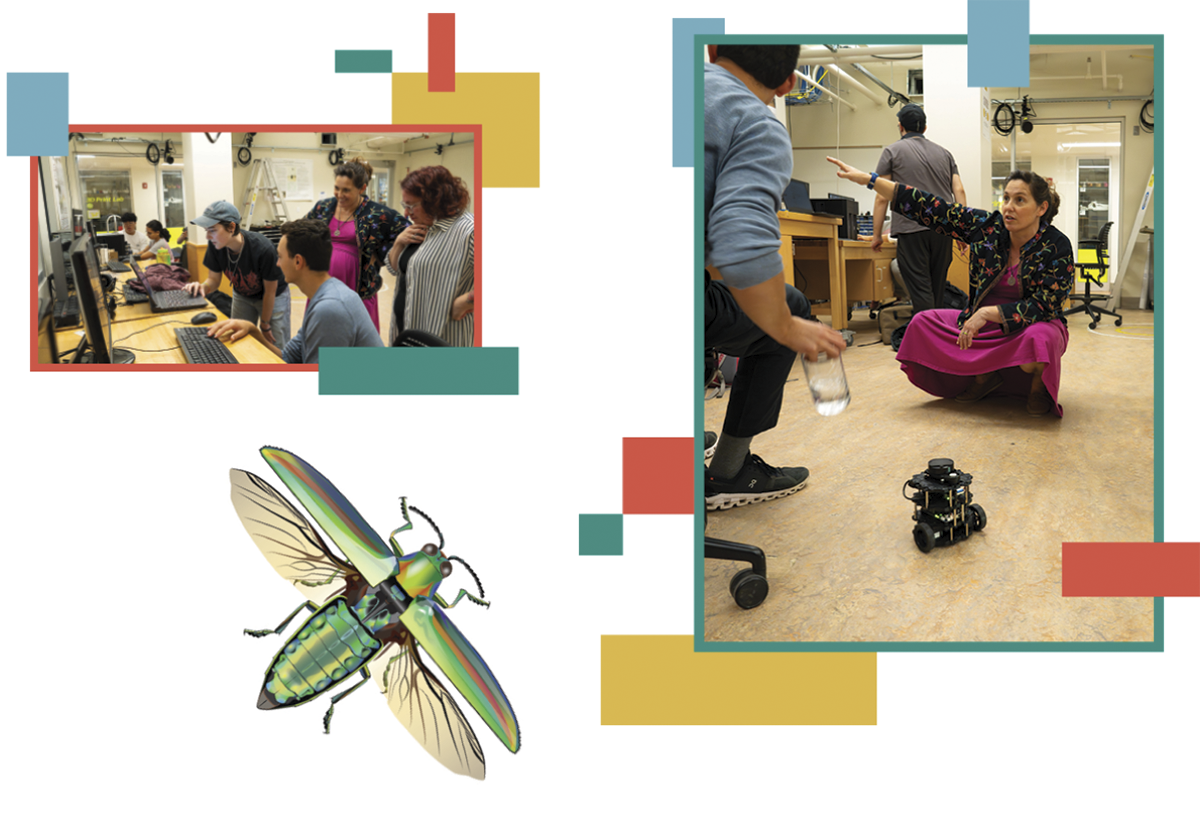
Feller (pink dress) is involved with a robotics laboratory at Union College. Her work has recently expanded into brain-machine interfaces after a student in one of her classes expressed enthusiasm for the topic—just one example of how her teaching continues to inform her research. (Image by Paul Buckowski/Union College) (Lower left) One of Feller’s digital designs. She has been hired to create logos for other labs and continues to make art as a hobby—ranging from using iridescent eye shadow to recreate beetle carapaces to shaping clay sculptures.
An “all-in” personality
Feller has always recognized her artistic side, but she wasn’t always encouraged to integrate it into her career plans. She was a good student, and her kindergarten teacher told her parents she would probably become a doctor. “I got that message my whole life,” Feller says.
It sunk in, and she started at HWS on the pre-med track. As an undergrad, she took an internship as a surgical assistant in a hospital. “There was a major clash with who I was as a person,” Feller says. “Literally, you are in a sterile environment. So while I was good at that job, it crushed me.”
But expectations die hard, and in her junior year, she was still looking at medical school. She decided she should do research to boost her chances. “Literally, it was just for my CV,” she says. Little did she know the experience would permanently shift her trajectory.
For this design, Feller incorporated the organisms studied in the UMBC biological sciences department for its annual, informal graduate student t-shirt.
Feller did some background research and requested a meeting with HWS biology assistant professor Kristy Kenyon, who studies development of the visual system in frogs and fruit flies, to pitch an honors project. As it turned out, her pitch was a little off the mark. “It was at least within the organ system that I worked,” Kenyon says. Yet, Kenyon decided to give her a chance.
Why? “Kate Feller is such a dynamic person,” Kenyon says. “She was such an all-in, live-life-to-the-fullest kind of person, that it was very easy for me to get excited about working on a project with her despite having never had her in a class. The energy, the creativity, the curiosity—those are three words I would use to describe that initial impression of Kate.”
Research in sight
Feller and Kenyon settled on a bat vision project, and it transformed Feller’s future. Kenyon gave her a crash course in what she needed to know, and Feller thrived. The project led to Feller’s first scientific publication, reporting the discovery of a type of UV-sensitive cell in bat eyes that is evolutionarily related to the same cells in mice.
“I loved it,” Feller says. “Just the idea of thinking about how a different creature sees, because I’m so visual—it just fit so well. It took me a while to realize why I found it so exciting, but then I was like, ‘Oh, that makes sense.’”
And yet. After graduating with a double major in biology and environmental science, Feller took a position as an ophthalmology surgical assistant. She quickly soured on that, though, for the same reasons she had struggled with roles in sterile environments before. Her personal life brought her to Baltimore, and looking for new opportunities, she found Tom Cronin on a Google search.
She applied to other Ph.D. programs, but when she visited UMBC, “there was the pond, and all the grass, and meeting Tom, and I was like, ‘Oh, this is where I need to be.’”
A tight-knit group
Feller’s Ph.D. years spanned a special time in the Cronin lab. “It was an incredible group of people who formed a tight-knit community and helped each other grow into outstanding scientists,” says Megan Porter, a postdoctoral fellow in the lab during that time. Sometimes, that support involved tough love. An intervention conversation Porter had with Feller when she was experiencing a third-year slump helped get Feller’s Ph.D. back on track. The exchange helped Porter as well.
“It has helped me to be a better mentor to my students now, to have had that conversation first with a friend,” says Porter, who now is a professor at the University of Hawai‘i at Mānoa. “It’s an important conversation to have with any graduate student, as it isn’t the right path for everyone. There are many other careers out there for anyone who loves science.”
If Porter was the nurturing mother figure in the lab, Michael Bok, Ph.D. ’14, biological sciences, was the goofy uncle. Feller and Bok started the same year, and both needed to earn an advanced level of scuba certification to conduct fieldwork in Australia. Given the limited diving options in the mid-Atlantic, “we spent a total of 15 hours goofing around in a pretty uninspiring quarry, but it was worth it for the diving we got to do in Australia,” says Bok, who is now a researcher at Lund University in Sweden.
Feller and Bok conducted fieldwork at Lizard Island Research Station off the northeast coast of Australia for many months across five years. “Some of these stressful and intensive work experiences would probably strain some people’s friendship, but Kate and I seemed to always be quite happy with each other despite having pretty different personalities,” Bok says. “We were definitely kindred in our love for science, appreciation for being out in nature, and senses of humor.”
Feller came to love diving and did so with typical flair. “You could always tell where Kate was in the water,” Cronin says, because she always wore a brightly colored swim cap with plastic flowers stuck all over it. “It was very Kate because it made her look kind of silly but also very distinctive, because even underwater far away you could identify her.”
Dance parties and lost turtles
Alex Kingston, Ph.D. ’15, biological sciences, arrived in the lab after Porter, Bok, and Feller. “I really wouldn’t be where I am today without each of them,” she says.
Kingston, who today is an assistant professor at The University of Tulsa, was always very organized and on top of things, Cronin recalls—“very type A.” She kept the lab running smoothly as lab manager but wasn’t afraid to have fun. Feller and Kingston would have dance parties as a break from drafting scientific manuscripts. “It was hilarious when other people would come into the lab, not expecting us in the middle of the lab blaring music and dancing around,” Kingston remembers.
The group had other shared adventures, like caring for Scott, a box turtle who frequently escaped, necessitating a lab-wide search. And Feller took it as her role to decorate the lab. “In my lab today you can still see Kate stuff,” Cronin says. “She had a tendency of sticking stuff up there that didn’t want to come down again.”
Cronin’s approach to mentorship allowed each of his students to find their own way, with the level of support or independence that worked best for each of them. That means Cronin’s students have complete ownership of both their successes and their struggles and grow the confidence to face both once they leave UMBC.
“Tom was really hands off. However, he was so supportive,” Feller says. “Pretty much any time I came to him with an idea, he was like, ‘Cool, let’s do it.’ So it was that mix of, you’re steering the ship, but you don’t have to worry about resources.”
“Kate was not afraid to try anything— she was particularly inclined to do things her own way,” Cronin recalls. While she may have taken some time to find her footing, in the end, “she did really great work—really original and creative work.”
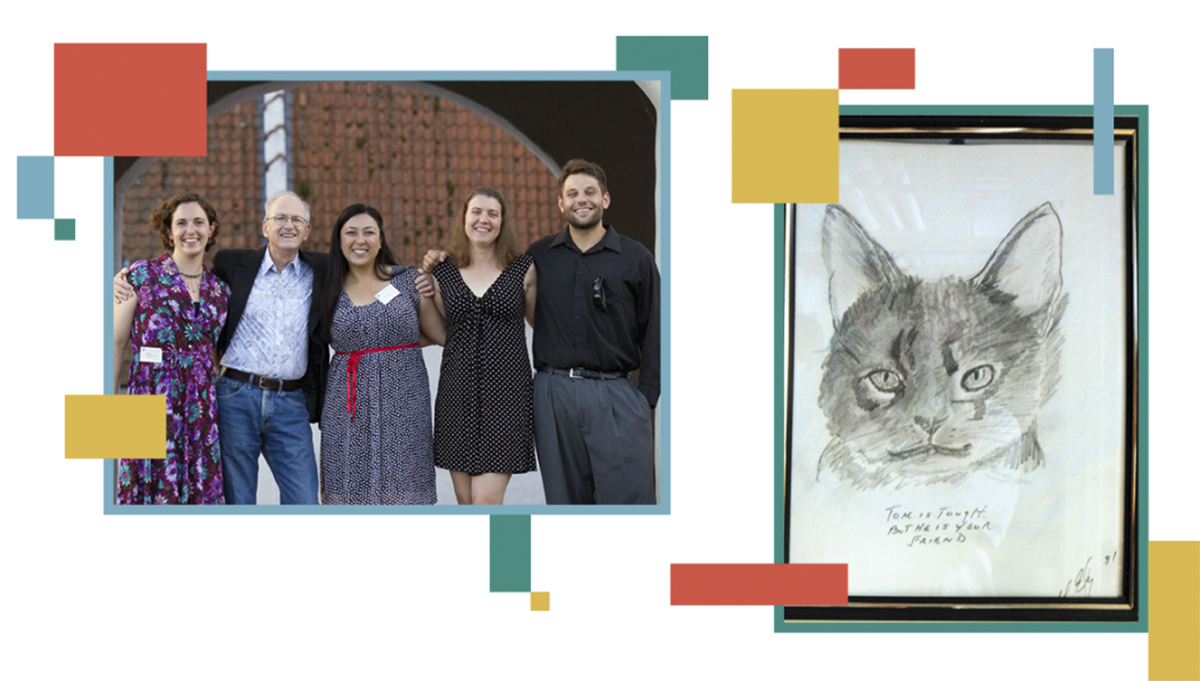
(Left) Current and former members of Tom Cronin’s research group have made it a tradition to reunite at professional conferences and take a “family photo.” From left to right: Kate Feller, Tom Cronin, Alex Kingston, Megan Porter, and Michael Bok in 2013. (Image courtesy of Tom Cronin) (Right) Feller contributed substantially to decorating Tom Cronin’s lab. One day she came home from a thrift shop with a gift for Cronin: this sketch of a cat, with the inscription, “Tom is tough. But he is your friend.” It was a perfect fit for an advisor who held high expectations along with offering generous support. It still hangs in the Cronin lab today.
Rigor, excitement, and resilience
Today, Feller is focused on furthering her research, engaging her students, and raising her family—her second child arrived this October. As a faculty member, Feller is maintaining old connections and forging new ones.
“Kate is really doing a fantastic job of creating and maintaining a network across different areas of science and education, in the research that she does but also in the way that she teaches and the way she facilitates those connections across institutions,” Kenyon, her mentor from HWS, says. For example, Kenyon is now collaborating with a colleague at Union because Feller connected them. And Kenyon is using a book in her courses that features the Cronin lab’s research— including some carried out by Feller.
“What I have thoroughly enjoyed is watching Kate progress at each step along the way, and find her passion, and be able to pursue something with such rigor, and excitement and resilience,” says Kenyon.
Illuminating the unknown
Whether creating art, performing on stage or in the classroom, working hard in the lab, or collecting specimens underwater, Feller is embracing each stage of her life and career with a zest that is uniquely hers. As Cronin puts it, “She was always Kate. She never started or stopped being Kate.”
“The thing that I love most is just trying to figure out how the world works,” Feller says. “I like to describe myself as an explorer. I am not a Magellan or a person on a ship looking to explore new places—I’m pushing the boundaries of knowledge. Where is the edge, and how can I shed light on the unknown?”
Feller is on the exploration of a lifetime, discovering new things about how brains work, transforming the lives of students, and doing it all in full color. As her research program takes off, her family grows, and her network broadens, her greatest adventures may be ahead of her.
A new study using data from the CALorimetric Electron Telescope (CALET)instrument on the International Space Station has found evidence for nearby, young sources of cosmic ray electrons, contributing to a greater understanding of how the galaxy functions as a whole.
The study included more than seven million data points representing particles arriving at CALET’s detector since 2015, and CALET’s ability to detect electrons at the highest energies is unique. As a result, the data includes more electrons at high energies than any previous work. That makes the statistical analysis of the data more robust and lends support to the conclusion that there are one or more local sources of cosmic ray electrons.
“This is one of the primary things that CALET is made to look for,” says Nicholas Cannady, an assistant research scientist with UMBC’s Center for Space Sciences and Technology, a partnership with NASA Goddard Space Flight Center, and a leader on the study. With this paper, he adds, “We were really able to push into the realm where we have few events and start to look for things at the highest energies, which is exciting.”
A better understanding of the galaxy
Nicholas Cannady, the lead U.S. scientist on the new study, is excited that the CALET mission is bearing fruitful results. (Image courtesy of Cannady)
Current theory posits that the aftermath of supernovae (exploding stars), called supernova remnants, produce these high energy electrons, which are a specific type of cosmic ray. Electrons lose energy very quickly after leaving their source, so the rare electrons arriving at CALET with high energy are believed to originate in supernova remnants that are relatively nearby (on a cosmic scale), Cannady explains.
The study’s results are “a strong indicator that the paradigm that we have for understanding these high-energy electrons—that they come from supernova remnants and that they are accelerated the way that we think they are—is correct,” Cannady says. The findings “give insight into what’s going on in these supernova remnants, and offer a way to understand the galaxy and these sources in the galaxy better.”
CALET is a collaborative project built and operated by groups in Japan, Italy, and the United States, led by Shoji Torii. The lead contributors to this work in Japan are Torii, Yosui Akaike, and Holger Motz at Waseda University in Tokyo, and Louisiana State University is the lead institution in the U.S. The findings were published in Physical Review Letters.
New data lead to new cosmic ray sources
Previous work found that the number of electrons arriving at CALET decreased steadily as energy increased up to about 1 teravolt (TeV), or 1 trillion electron volts. The number of electrons arriving with even greater energy was extremely low. But in this study, CALET did not see the expected dropoff. Instead, the results suggest that the number of particles plateau, and then even increase, at the highest energies—all the way up to 10 TeV in a few cases.
Previous experiments could only measure particles up to about 4 TeV, so the highest energy event candidates above that in this study are a crucial new source of information about potential nearby sources of cosmic ray electrons. Cannady led the effort to individually analyze each of those events to confirm they represent a real signal, and a deeper dive into those events is forthcoming.
Addressing challenges
It’s difficult to distinguish between electrons and protons at high energies, and there are many more protons arriving than electrons, which poses challenges to an accurate analysis. To tell the particles apart, a program developed by the researchers analyzes how the particles break down when they hit the detector. Protons and electrons break down differently, so comparing the cascade of particles they create in that process can filter out the protons. However, at the highest energies, the differences between protons and electrons decrease, making it harder to accurately remove only the protons from the data.
To address this, Cannady led the CALET team’s effort to simulate the breakdown patterns of both protons and electrons coming from the exact direction each of the high-energy events arrived from. That increased the team’s ability to determine whether the events are electrons or protons as accurately as possible.
Based on that work, “We believe we are evaluating the likelihood of events being protons in a realistic fashion,” Cannady says. Enough presumed electrons remain in the dataset after that careful analysis to conclude there is a real signal.
An x-ray image of Cassiopeia A, an example of a young supernova remnant. (Image courtesy of NASA)
Pushing boundaries
T. Gregory Guzik, professor of physics at LSU and the U.S. CALET collaboration lead, is excited that further analysis of the data suggested that electrons coming from the three best candidates for nearby supernova remnants can explain the high-energy arrivals.
“These CALET observations open the tantalizing possibility that matter from a particular nearby supernova remnant can be measured at Earth,” Guzik shares. “Continued CALET measurement through the life of the International Space Station will help shed new light on the origin and transport of relativistic matter in our galaxy.”
For Cannady, “The most exciting part is seeing things at the highest energies. We have some candidates above 10 TeV—and if it is borne out that these are real electron events, it’s really a smoking gun for clear evidence of a nearby source,” he says. “This is essentially what CALET was put up to do, so it’s exciting to be working on this and to finally be getting results that are pushing the bounds of what we’ve seen before.”
No one had ever seen one virus latching onto another virus, until anomalous sequencing results sent a UMBC team down a rabbit hole leading to a first-of-its-kind discovery.
It’s known that some viruses, called satellites, depend not only on their host organism to complete their life cycle, but also on another virus, known as a “helper,” explainsIvan Erill, professor of biological sciences. The satellite virus needs the helper either to build its capsid, a protective shell that encloses the virus’s genetic material, or to help it replicate its DNA. These viral relationships require the satellite and the helper to be in proximity to each other at least temporarily, but there were no known cases of a satellite actually attaching itself to a helper—until now.
In a paper published in the Journal of the International Society of Microbial Ecology, a UMBC team and colleagues from Washington University in St. Louis (WashU) describe the first observation of a satellite bacteriophage (a virus that infects bacterial cells) consistently attaching to a helper bacteriophage at its “neck”—where the capsid joins the tail of the virus.
In detailed electron microscopy images taken byTagide deCarvalho, assistant director of the College of Natural and Mathematical Sciences core facilities and first author on the new paper, 80 percent (40 out of 50) helpers had a satellite bound at the neck. Some of those that did not had remnant satellite tendrils present at the neck. Erill, senior author on the paper, describes them as appearing like “bite marks.”
“When I saw it, I was like, ‘I can’t believe this,’” deCarvalho says. “No one has ever seen a bacteriophage—or any other virus—attach to another virus.”
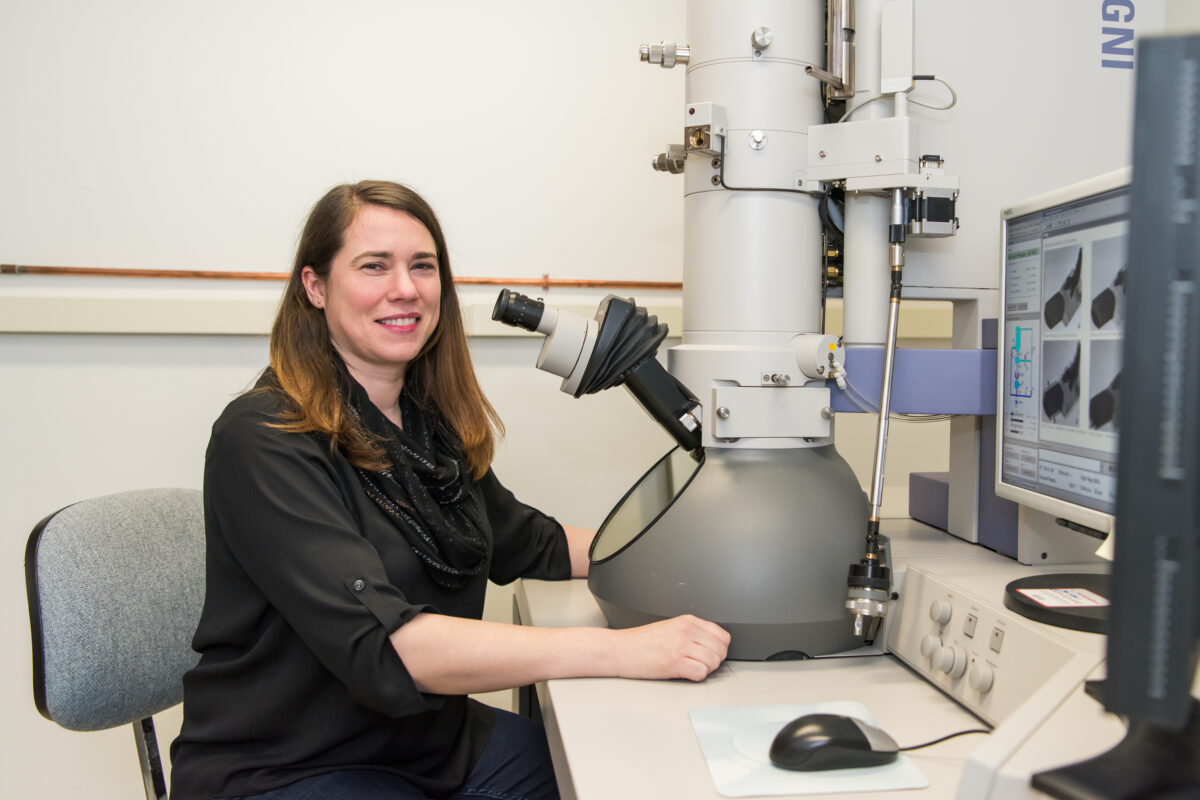
Tagide deCarvalho in the Keith R. Porter Imaging Facility. deCarvalho took advantage of the facility’s transmission electron microscope (TEM) to capture striking images of the satellite-helper virus system discussed in the new paper. (Marlayna Demond ’11/UMBC)
A long-term virus relationship
After the initial observations, Elia Mascolo, a graduate student in Erill‘s research group and co-first author on the paper, analyzed the genomes of the satellite, helper, and host, which revealed further clues about this never-before-seen viral relationship. Most satellite viruses contain a gene that allows them to integrate into the host cell’s genetic material after they enter the cell. This allows the satellite to reproduce whenever a helper happens to enter the cell from then on. The host cell also copies the satellite’s DNA along with its own when it divides.
Ivan Erill co-leads the SEA-PHAGES program at UMBC. His research group focuses on bioinformatics. (Image by Marlayna Demond ’11/UMBC)
A bacteriophage sample from WashU also contained a helper and a satellite. The WashU satellite has a gene for integration and does not directly attach to its helper, similar to previously observed satellite-helper systems.
However, the satellite in UMBC’s sample, named MiniFlayer by the students who isolated it, is the first known case of a satellite with no gene for integration. Because it can’t integrate into the host cell’s DNA, it must be near its helper—named MindFlayer—every time it enters a host cell if it is going to survive. Given that, although the team did not directly prove this explanation, “Attaching now made total sense,” Erill says, “because otherwise, how are you going to guarantee that you are going to enter into the cell at the same time?”
Additional bioinformatics analysis by Mascolo and Julia López-Pérez, another Ph.D. student working with Erill, revealed that MindFlayer and MiniFlayer have been co-evolving for a long time. “This satellite has been tuning in and optimizing its genome to be associated with the helper for, I would say, at least 100 million years,” Erill says, which suggests there may be many more cases of this kind of relationship waiting to be discovered.
Contamination or discovery?
This groundbreaking discovery could easily have been missed. The project started out as a typical semester in the SEA-PHAGES program—an investigative curriculum where undergraduates isolate bacteriophages from environmental samples, send them out for sequencing, and then use bioinformatics tools to analyze the results. When the sequencing lab at the University of Pittsburgh reported contamination in the sample from UMBC expected to contain the MindFlayer phage, the journey began.
Steven Caruso co-leads the SEA-PHAGES program at UMBC. He also conducts pedagogy research to improve science education. (Marlayna Demond ’11/UMBC)
The sample included one large sequence: the phage they expected. “But instead of just finding that, we also found a small sequence, which didn’t map to anything we knew,” says Erill, who is also one of the leads for UMBC’s SEA-PHAGES program, called Phage Hunters, along withSteven Caruso, principal lecturer of biological sciences. Caruso ’94, Ph.D. ’02, biological sciences, ran the isolation again, sent it out for sequencing—and got identical results.
That’s when the team pulled in deCarvalho to get a visual of what was going on with the transmission electron microscope (TEM) at UMBC’s Keith R. Porter Imaging Facility (KPIF). Without the images, the discovery would have been impossible.
“Not everyone has a TEM at their disposal,” deCarvalho notes. But with the instruments at the KPIF, deCarvalho says, “I’m able to follow up on some of these observations and validate them with imaging. There’s elements of discovery we can only make using the TEM.”
The team’s discovery sets the stage for future work to figure out how the satellite attaches, how common this phenomenon is, and much more. “It’s possible that a lot of the bacteriophages that people thought were contaminated were actually these satellite-helper systems,” deCarvalho says. “So now, with this paper, people might be able to recognize more of these systems.”
Animals must constantly make the choice between using energy to gather information about their environment or to carry out goal-driven tasks. Animals use sensory input, including humans’ five senses and other senses like electromagnetics and echolocation, to make those decisions.
A new study published in Nature Machine Intelligencefinds that all 11 species the research team investigated—ranging from amoebas to humans—demonstrate similar patterns of movement. These results have implications for robotics, because robots must be programmed to make the same kinds of decisions animals do to move safely and efficiently through unpredictable environments.
The research team ran experiments with glass knifefish, and then analyzed data available in the scientific literature on 10 other species: humans, mice, bats, moles, three butterflies, cockroaches, and two amoebas. Every single species demonstrated the same pattern of decision making, which involved turning the information-gathering mode, called “explore,” on and off depending on how uncertain the animals were about their environment.
Kathleen Hoffman says the research team for this project “was one of the coolest interdisciplinary groups I’ve worked in.” (Image courtesy of Hoffman)
The mathematical strategy that best represented the animals’ behavior “is the trace of a covariance matrix—which I don’t think the fish is actually computing,” jokes Kathleen Hoffman, professor of mathematics and statistics and an author on the new paper.
Robots, too, must constantly interpret the sensory input they’re receiving and use that information to make decisions. Understanding how real animals tackle that process, even if they don’t know themselves, is useful for robotics, Hoffman explains, “because the robot actually can compute the trace of a covariance matrix.”
Interdisciplinary innovation advances robotics
Specifically, the paper’s results showed that an animal explores until its certainty about its environment decreases below a given threshold. Then it switches to using that information for tasks, which is called “exploit” mode. When uncertainty rises again, it goes back to exploring. This kind of mode-switching is called “triggered excitation.” It differs from a model called “persistent excitation,” which involves constant exploring.
Applications involving sensory processing, like robots, often use the persistent excitation model, so the team was surprised to discover that persistent excitation is not consistent with their observations and analysis. The team’s findings could have a significant impact in the field of sensory modeling.
The work for this paper required many areas of expertise, and the team included researchers in mathematics, engineering, and biology. Debojyoti Biswas, a postdoctoral fellow at Johns Hopkins University, is the first author on the new paper, and the other authors include Hoffman and researchers at University of Minnesota, Cornell University, and the New Jersey Institute of Technology.
The project grew out of a conversation between Hoffman and John Guckenheimer, an emeritus professor of mathematics at Cornell. They invited the rest of the team members on board as their expertise was needed. From figuring out how to track the position of the knifefish in the experiments with extreme precision, to analyzing the data on other species, to interpreting the math in a way that made sense in a biological context, everyone had a role to play.
“This was one of the coolest interdisciplinary groups I’ve worked in,” Hoffman says. “I really don’t think that any one of us could have done it on our own.”
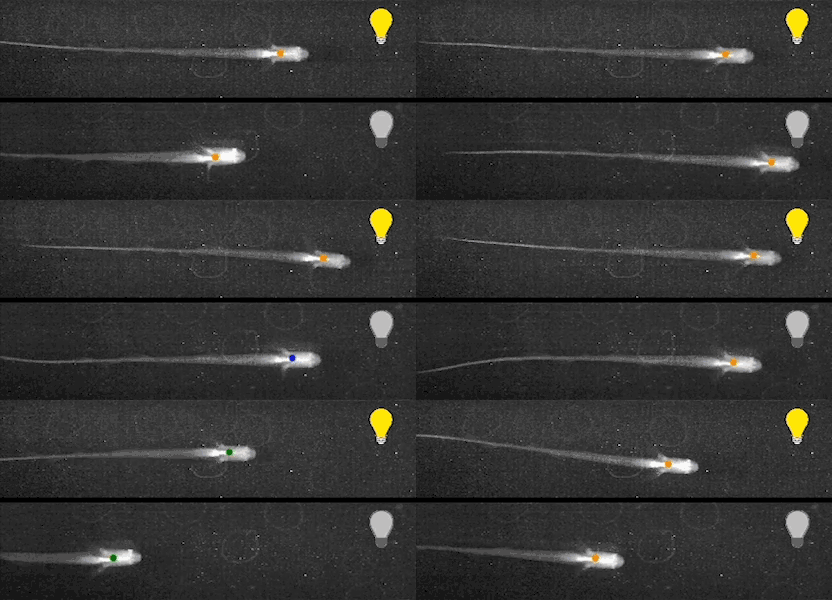
This clip of the knifefish in the team’s experiments shows how they switch between darting forward and back to “explore” their surroundings and “exploiting” that information to keep themselves in the middle. (Video courtesy of Debojyoti Biswas)
The remaining “head-scratcher”
The new paper has generated new questions as well as answers. “Here’s the head-scratcher,” Hoffman says: “What’s the mechanism that leads to this?” The team observed the same pattern in species as different as butterflies and moles, which use completely different senses. And they were able to deduce the pattern from published research that was originally undertaken to answer completely different questions.
Moving forward, some of the same team members, including Hoffman, plan to dig deeper into the mechanism behind this surprising pattern—and whether the mechanism is the same or different across species. “To me,” Hoffman says, “this is fundamental and really important.”
Hoffman is grateful to have been a part of the team. She took the opportunity to grow as a mathematician by contributing primarily to the project’s data analysis, when her focus is usually in mathematical modeling.
“I wanted to really push the limits of what I could do and make it broader. I wanted to develop skills that I didn’t have before,” she says. Overall, “I had fun. You never know what you’re going to be working on as an applied mathematician.”
A new study used a novel technique to assess types of habitat provided by oyster reefs across 12 tributaries in the Chesapeake Bay. Researchers from UMBC; the University of Maryland, Baltimore (UMB); and the Smithsonian Environmental Research Center (SERC) used underwater cameras to collect images of reef structure at approximately 50 sites in each tributary—a total geographic span of 134 miles. They also repeatedly sampled habitat in two of the tributaries in 2017, 2019, and 2021 to track change over time.
The study included sites in Maryland and Virginia with a wide range of salinities. The team observed restored and unrestored reefs, oyster sanctuaries, and harvested reefs. The results indicate that unharvested reefs and restored reefs had the most complex reef structures, including more surface area covered with oysters and greater reef height, meaning the height of the reef above the bay bottom. Complex reef structure tends to create richer habitat for oysters and other bay wildlife, such as fish and crustaceans. The role of salinity was more nuanced and depended on a reef’s restoration and harvest status.
“Managing harvest and managing restoration are two of the biggest tools that managers have,” says Allison Tracy, assistant professor of marine biotechnology at UMBC/UMB and lead author on the new study. “It’s interesting to see at this scale that we’re able to pick up important contributions to habitat patterns from harvest, restoration, and salinity together.”
The sites tracked over time all saw an overall upward trend in habitat scores over the years of the study, which is good news for the bay and people who depend on it. “Reefs that were unharvested and restored maintained a higher habitat score more consistently over that time period,” Tracy explains.
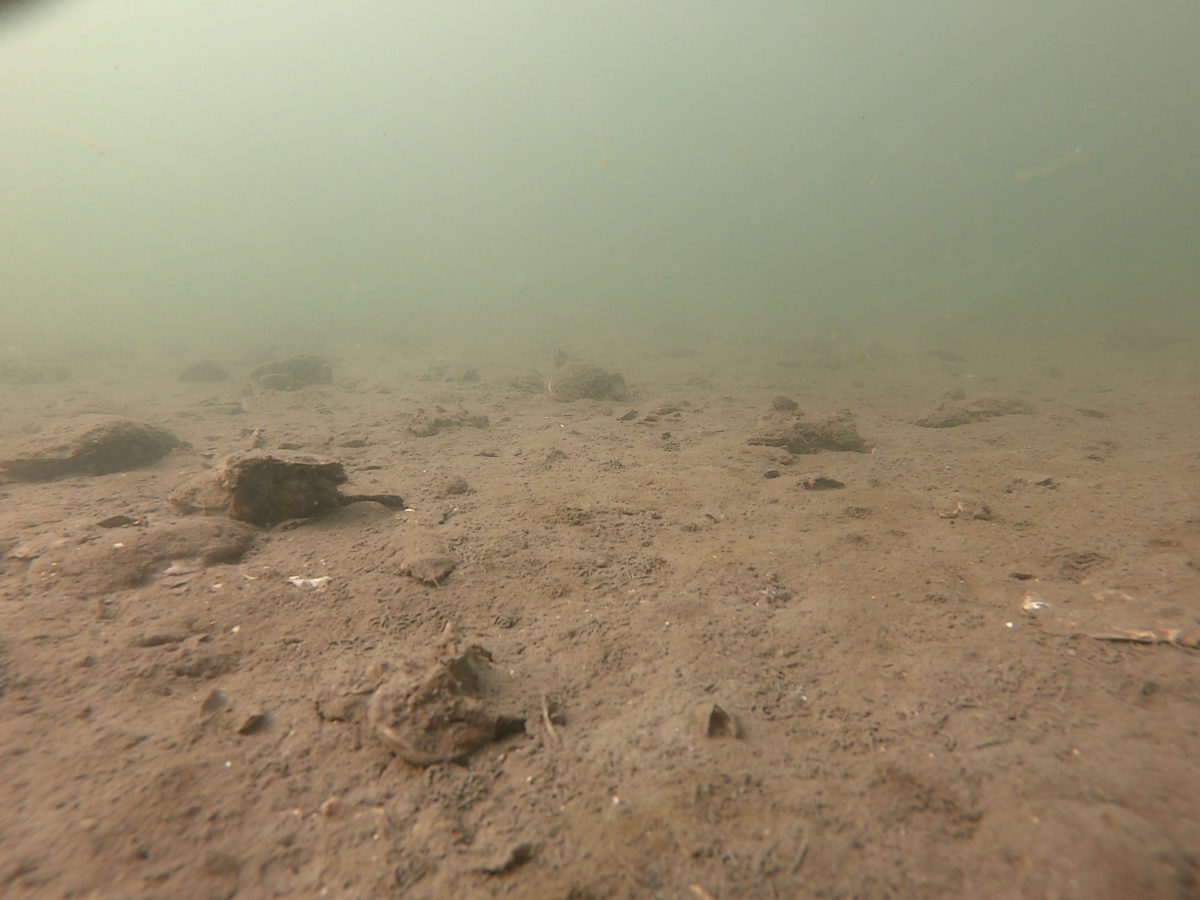
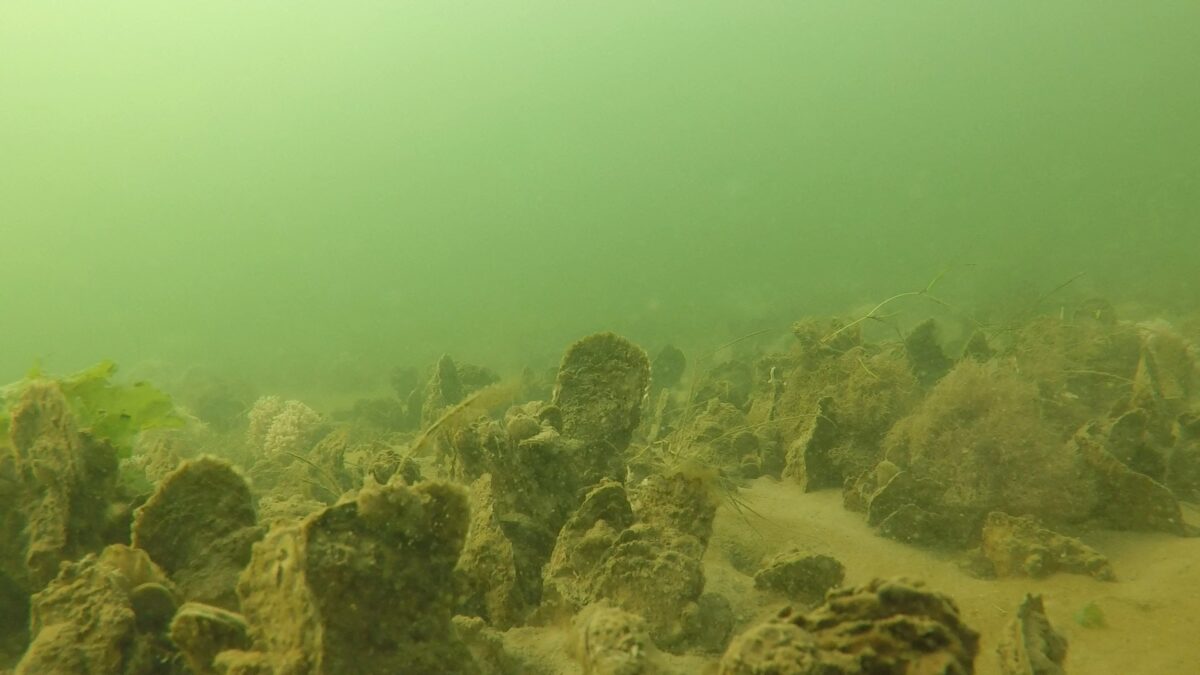
An example of a low-scoring oyster reef image.An example of a high-scoring reef image. (Images courtesy of Allison Tracy)
New technique addresses longstanding challenges
In the new study, published in Marine Ecology Progress Series, “we used underwater photography to solve two big challenges to understanding restoration success,” says Matthew Ogburn, senior scientist at SERC and senior author on the new paper. Previous studies have primarily focused on oysters themselves, rather than the habitat their reefs generate, and different monitoring techniques are not always comparable, he explains. Ogburn and Keira Heggie, another SERC scientist and co-author on the paper, previously published a paper outlining the new underwater camera technique.
“Using one simple method of assessing oyster reefs allowed us to survey a large number of sites efficiently and to make comparisons among all different types of oyster reefs,” Ogburn explains. “Our research supports the idea that oyster restoration results in more oysters but also more complex reefs that provide habitat for other species.”
While restoring reefs and designating some reefs as sanctuaries for oysters are important, “the solution is not to stop harvesting,” Tracy says. The authors note that harvested reefs still provide important, if different, habitat. For example, some species prefer sparser reefs.
“Those harvested reefs are still providing habitat,” Tracy says. “It’s not that habitat on harvested reefs is not important, they’re just contributing something different while also having economic importance.”
The best place for oyster reef research
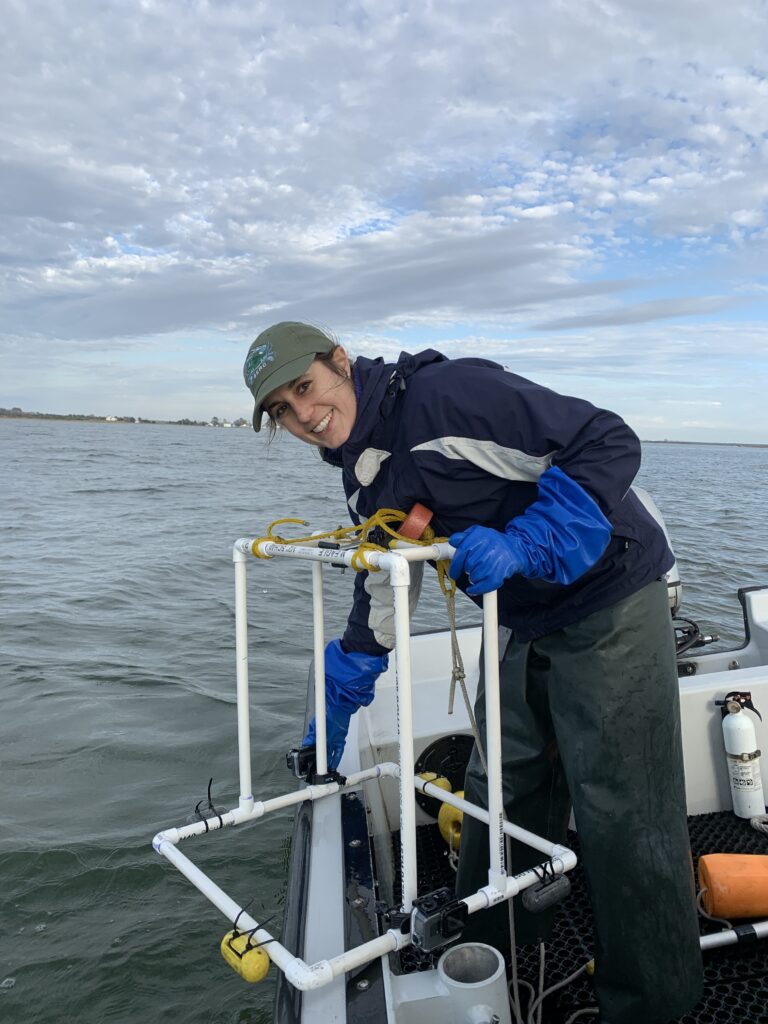
Allison Tracy on Chesapeake Bay collecting data. She’s holding the frame the research team used to lower the underwater cameras down to each sampling site. (Photo courtesy of Allison Tracy)
Moving forward, the research team hopes to build on this work. Tracy and coauthors are working on a forthcoming paper that uses more-intensive sampling methods at a subset of the study sites to verify the results from the rapid assessment technique. The team would also like to find creative ways to collect more underwater data at each site to identify which other species are using the reefs—but right now that effort is limited by the camera’s battery life.
The authors would also like to find ways to use machine learning to analyze the images, making that process more efficient while retaining a human’s level of accuracy. To date, this application of machine learning has proven less accurate than human analysis—but that may change in the future.
For this study, co-author and dedicated SERC citizen scientist David Norman analyzed all the images to determine reef habitat scores. Having one person score all the images for surface cover and reef height improves consistency considerably, but computerized scoring could help achieve this consistency across multiple studies going ahead. SERC is also testing whether crowd-sourcing the image analysis could be an effective way to increase consistency and efficiency.
There is much work ahead, but the new study provides an important large-scale perspective on the relationships between management practices, environmental conditions, and reef habitat across the Chesapeake Bay.
With significant restoration efforts underway, a wide range of management practices in use, and strong engagement from conservation organizations, fisheries, state governments, and local citizens, Tracy is grateful to be conducting research on one of the largest estuary systems in the world, noting, “We’re really fortunate that Chesapeake Bay is such a great place to do this research.”