The following message was shared with the UMBC community on April 28 to announce the naming of a new interim dean for the College of Arts, Humanities, and Social Sciences:
* * * * *
Dear UMBC Community,
As you probably are aware, the current dean of the College of Arts, Humanities, and Social Sciences (CAHSS), Kimberly Moffitt, will be leaving UMBC this summer to join Howard University. I am excited to announce that John Stolle-McAllister has been appointed interim dean of the College of Arts, Humanities, and Social Sciences effective July 1. John brings two-and-a-half decades of experience at UMBC to his new role. He is a professor of modern languages, linguistics, and intercultural communication and currently serves as chair.
John previously served as associate dean in CAHSS from 2014 to 2022, and in that role he focused on student success initiatives, including creating the CAHSS advising center, collaboratively designing classroom renovations, leading the college’s response to COVID, and organizing faculty participation in the Planning Instructional Variety for Online Teaching (PIVOT) program.
John earned his bachelor’s from Bates College, and he received his master’s in Hispanic literatures and Ph.D. in comparative studies of discourse and society from the University of Minnesota. His research and teaching interests include multilingualism, cultural change, environmental issues, and social movements in Latin America.
A national search for a permanent dean will be conducted over the next year. I have asked Ana Oskoz, vice provost for faculty affairs, to chair the search committee. Isaacson Miller will support UMBC in this search for the next dean for CAHSS.
Please join me in welcoming John to his new role as interim dean of the College of Arts, Humanities, and Social Sciences.
Sincerely,
Manfred H.M. van Dulmen
Provost and Senior Vice President for Academic Affairs
As you probably are aware, the current dean of the College of Arts, Humanities, and Social Sciences (CAHSS), Kimberly Moffitt, will be leaving UMBC this summer to join Howard University. I am excited to announce that John Stolle-McAllister has been appointed interim dean of the College of Arts, Humanities, and Social Sciences effective July 1. John brings two-and-a-half decades of experience at UMBC to his new role. He is a professor of modern languages, linguistics, and intercultural communication and currently serves as chair.
John previously served as associate dean in CAHSS from 2014 to 2022, and in that role he focused on student success initiatives, including creating the CAHSS advising center, collaboratively designing classroom renovations, leading the college’s response to COVID, and organizing faculty participation in the Planning Instructional Variety for Online Teaching (PIVOT) program.
John earned his bachelor’s from Bates College, and he received his master’s in Hispanic literatures and Ph.D. in comparative studies of discourse and society from the University of Minnesota. His research and teaching interests include multilingualism, cultural change, environmental issues, and social movements in Latin America.
A national search for a permanent dean will be conducted over the next year. I have asked Ana Oskoz, vice provost for faculty affairs, to chair the search committee. Isaacson Miller will support UMBC in this search for the next dean for CAHSS.
Please join me in welcoming John to his new role as interim dean of the College of Arts, Humanities, and Social Sciences.
Sincerely,
Manfred H.M. van Dulmen
Provost and Senior Vice President for Academic Affairs
The following message was shared with the UMBC community on April 21 to announce the naming of a new dean for the College of Engineering and Information Technology:
* * * * *
Dear UMBC community,
I am pleased to announce the appointment of Jeanne M. van Briesen as the dean of the College of Engineering and Information Technology (COEIT) effective July 1. Jeanne is a distinguished academic leader with a bold vision for the future of engineering and information technology research and education and a commitment to inclusive excellence.
Jeanne joins UMBC from Carnegie Mellon University where she is the Duquesne Light Company Professor in the departments of Civil and Environmental Engineering and Engineering and Public Policy. She recently completed service as the division director in the Division of Chemical, Bioengineering, Environmental, and Transport Systems, in the Engineering Directorate, at the U.S. National Science Foundation. She previously served as the vice provost for faculty at Carnegie Mellon and as the chair of the faculty senate.
Jeanne holds a bachelor’s in education and a master’s and Ph.D. in civil engineering from Northwestern University. She is a licensed professional engineer, a board certified environmental engineer, and a diplomate of water resources engineering.
An accomplished scholar, Jeanne has published more than 75 scientific articles and given more than 200 professional presentations. Her research, which has been funded by the National Science Foundation, the Department of Defense, the Colcom Foundation, the Heinz Endowments, the Packard Foundation, and the Pennsylvania Infrastructure Technology Alliance, focuses on environmental systems, including biotransformation of recalcitrant organics, detection of biological agents in drinking water and natural water systems, speciation-driven biogeochemistry of chelating agents and disinfection by-products, and environmental impacts of energy extraction.
An award-winning educator, visionary leader, and active mentor, Jeanne has supervised 24 Ph.D. dissertations and numerous M.S. theses. She has served on several boards, including the U.S. EPA Science Advisory Board, and she is a fellow of the American Society of Civil Engineers, the Environmental Water Resources Institute, the Association of Environmental Engineering and Science Professors, and the American Association for the Advancement of Science.
I want to give a special thanks to Bill LaCourse and the dedicated members of the search committee for their efforts in conducting a comprehensive national search.
I am excited for Jeanne to join UMBC and build on the tradition of integrating undergraduate and graduate education, research, innovation, and service to address evolving global needs. Please join me in welcoming Jeanne to the UMBC community.
Anupam Joshi Named Special Assistant to the Provost for AI and Computing
I am also pleased to announce an exciting opportunity for Anupam Joshi, who selflessly served as the interim dean for the past two years. In addition to his current roles as the Oros Family Professor and director of UMBC Cybersecurity Institute, Anupam will be transitioning to a new role as the special assistant to the Provost for AI and Computing. In this role Anupam will lead UMBC’s strategy for AI and Computing including coordinating and leveraging current efforts in this space, lead the strategic planning for university goals in this area, and leverage new resources and university partnerships.
Anupam is a renowned expert in cybersecurity, AI, and data science. He brings decades of leadership, research excellence, and visionary thinking to this new role. His appointment marks an exciting chapter for UMBC as we expand our efforts to drive innovation, foster interdisciplinary collaboration, and shape the future of ethical and impactful AI on campus, across the USM, and around the globe.
Please join me in congratulating Anupam on this well-deserved recognition. I look forward to the continued growth and success of the AI and computing programs under his leadership.
Sincerely,
Manfred H.M. van Dulmen
Provost and Senior Vice President for Academic Affairs
Later this week, we will host two gatherings where we may reflect on UMBC’s successes and imagine together what’s next for our university. Both occasions call for participation from our entire community, and so I write to invite you to join me at the following:
Feedback on Middle States Self-Study Wednesday, April 23, noon – 1 p.m. (virtual)
This gathering will give community members a chance to share feedback on UMBC’s self-study draft, an important part of the Middle States Commission on Higher Education’s accreditation process. Learn more and RSVP here.
Shaping UMBC’s Future: A Strategic Planning Conversation
Friday, April 25, noon – 2 p.m. (hybrid) President Valerie Sheares Ashby and I look forward to sharing a conversation about the future of UMBC, and how the community can be a part of our continued strategic planning process. Learn more and RSVP here.
I look forward to seeing later this week for these important community conversations.
Sincerely,
Manfred H. M. van Dulmen
Provost and Senior Vice President for Academic Affairs
The following message was shared with the UMBC community on April 21 to announce the naming of a new dean for the College of Engineering and Information Technology:
* * * * *
Dear UMBC community,
I am pleased to announce the appointment of Jeanne M. VanBriesen as the dean of the College of Engineering and Information Technology (COEIT) effective July 1. Jeanne is a distinguished academic leader with a bold vision for the future of engineering and information technology research and education and a commitment to inclusive excellence.
Jeanne joins UMBC from Carnegie Mellon University where she is the Duquesne Light Company Professor in the departments of Civil and Environmental Engineering and Engineering and Public Policy. She recently completed service as the division director in the Division of Chemical, Bioengineering, Environmental, and Transport Systems, in the Engineering Directorate, at the U.S. National Science Foundation. She previously served as the vice provost for faculty at Carnegie Mellon and as the chair of the faculty senate.
Jeanne holds a bachelor’s in education and a master’s and Ph.D. in civil engineering from Northwestern University. She is a licensed professional engineer, a board certified environmental engineer, and a diplomate of water resources engineering.
An accomplished scholar, Jeanne has published more than 75 scientific articles and given more than 200 professional presentations. Her research, which has been funded by the National Science Foundation, the Department of Defense, the Colcom Foundation, the Heinz Endowments, the Packard Foundation, and the Pennsylvania Infrastructure Technology Alliance, focuses on environmental systems, including biotransformation of recalcitrant organics, detection of biological agents in drinking water and natural water systems, speciation-driven biogeochemistry of chelating agents and disinfection by-products, and environmental impacts of energy extraction.
An award-winning educator, visionary leader, and active mentor, Jeanne has supervised 24 Ph.D. dissertations and numerous M.S. theses. She has served on several boards, including the U.S. EPA Science Advisory Board, and she is a fellow of the American Society of Civil Engineers, the Environmental Water Resources Institute, the Association of Environmental Engineering and Science Professors, and the American Association for the Advancement of Science.
I want to give a special thanks to Bill LaCourse and the dedicated members of the search committee for their efforts in conducting a comprehensive national search.
I am excited for Jeanne to join UMBC and build on the tradition of integrating undergraduate and graduate education, research, innovation, and service to address evolving global needs. Please join me in welcoming Jeanne to the UMBC community.
Anupam Joshi Named Special Assistant to the Provost for AI and Computing
I am also pleased to announce an exciting opportunity for Anupam Joshi, who selflessly served as the interim dean for the past two years. In addition to his current roles as the Oros Family Professor and director of UMBC Cybersecurity Institute, Anupam will be transitioning to a new role as the special assistant to the Provost for AI and Computing. In this role Anupam will lead UMBC’s strategy for AI and Computing including coordinating and leveraging current efforts in this space, lead the strategic planning for university goals in this area, and leverage new resources and university partnerships.
Anupam is a renowned expert in cybersecurity, AI, and data science. He brings decades of leadership, research excellence, and visionary thinking to this new role. His appointment marks an exciting chapter for UMBC as we expand our efforts to drive innovation, foster interdisciplinary collaboration, and shape the future of ethical and impactful AI on campus, across the USM, and around the globe.
Please join me in congratulating Anupam on this well-deserved recognition. I look forward to the continued growth and success of the AI and computing programs under his leadership.
Sincerely,
Manfred H.M. van Dulmen
Provost and Senior Vice President for Academic Affairs
The following message was shared with the UMBC community on April 15 to announce the naming of a new vice provost and dean of the Graduate School:
* * * * *
Dear UMBC Community,
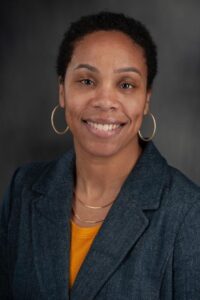
I am pleased to announce the appointment of Christa J. Porter as the next vice provost and dean of the Graduate School. Christa joins UMBC on July 1 from Kent State University in Ohio where she serves as the interim dean of the Graduate College and as a faculty member.
Christa J. Porter
The vice provost and dean of the Graduate School is a key position in serving the university to guide the future of graduate education and graduate student success at UMBC. Christa is a collaborative leader who brings a wealth of experience and a deep commitment to inclusive excellence and student success to the role. She brings substantial administrative experience at the department and university level, working across colleges and divisions in a shared governance environment.
As we embark on strategic planning, Christa also has significant experience in this space. In addition to her administrative experience, Christa brings a very strong record as a faculty member. Christa is a nationally recognized scholar, teacher, and mentor. Her areas of expertise include the socialization and trajectory of Black women in higher education, student development at the intersections of identities, and research and praxis in higher education and student affairs. In addition to serving as the next vice provost and dean of the Graduate School, Christa will also have a faculty appointment in the Language, Literacy, and Culture doctoral program.
Christa earned a Ph.D. in college student affairs administration and an interdisciplinary qualitative research studies certificate at the University of Georgia, a M.A. in higher education from the University of Maryland, College Park, and a B.A. in social relations and policy from Michigan State University.
I want to give a special thanks to Jeffrey Halverson, who has selflessly served as the interim vice provost and dean of the Graduate School. His thoughtful leadership has been invaluable during this season of transition. I also want to take this opportunity to thank Ana Oskoz for chairing the search committee and everyone who was involved in the search process. I appreciate your continued commitment to graduate education at UMBC.
Please welcome Christa to the UMBC community as she returns to Maryland.
Sincerely,
Manfred H.M. van Dulmen
Provost and Senior Vice President for Academic Affairs
I write to you today with an update about the leadership of the Division of Administration and Finance. As you know, we are currently searching for our next vice president to lead the division. That search continues, and I am grateful to the search committee, led by Jake Weissmann ’06, vice president for government relations and community affairs, for its important work.
I am grateful, as well, for the temporary co-leadership of the division over the last several months by Lenn Caron, senior associate vice president for administrative services, and Kristy Michel, associate vice president for administration and finance. As many of you know, Lenn resigned from his role earlier this year, and Kristy was recently named as the next vice president for finance and administration at Loyola University Maryland. This is an exciting and well-deserved appointment for Kristy, and I wish both her and Lenn all the best in their future endeavors.
Kristy’s last day at UMBC was Friday, March 28; she was very helpful in seeing to a smooth transition of leadership, particularly at such a busy time for the finance team and its work with partners across campus.
I am pleased to announce that we will be bringing on Daniel Petree as the interim vice president for administration and finance, who will serve in the role starting April 15 until a permanent vice president is named. Daniel was selected from a highly qualified pool of interim candidates from The Registry, a firm specializing in placing interim higher education leaders.
Daniel has had a successful career over 25 years in higher education, serving as a faculty member, dean, vice president of finance and planning, and chief financial officer at both public and private institutions. He was the founding dean of the School of Business Administration and Economics at Brockport State University in New York, and he has held interim roles at Illinois State University, Bellarmine University, Indiana University South Bend, and others. Beyond higher education, Daniel was the first CEO of the Labor Management Council of Greater Kansas City.
He earned a bachelor’s degree in business accounting and a Master of Business Administration from Rockhurst University, and a doctorate in labor and human resources from the University of Kansas.
In addition to his expertise across diverse administrative and financial functions and his experience through The Registry serving in interim roles, Daniel’s record of partnering with and advising presidents and senior teams, leading through change, and achieving significant financial and administrative improvements as well as a strategic focus make him exceptionally well-suited to meet UMBC’s needs in this transitional period.
I am delighted that Daniel has agreed to join us, and I look forward to partnering with him. Welcome, Daniel!
President Valerie Sheares Ashby Invites You to Join Us for the
Presidential Faculty and Staff Awards Ceremony
Wednesday, April 30, 2025
University Center Ballroom
11:30 a.m. Community Lunch
12 p.m. Awards Ceremony
Please join me in sharing gratitude for the UMBC community, and celebrating this year’s Presidential Faculty and Staff awardees, University System of Maryland awardees, and additional distinguished university honorees.
Student Government Association (SGA) election season is here! As undergraduates, each one of you is a member of the SGA, and the SGA represents you in the shared work of creating the best possible student experience and advancing the university.
The 2025 SGA elections get under way today: Online early voting begins at 5 p.m. on Friday, April 11, and runs through Sunday, April 13. You can vote in person on campus between 10 a.m. and 6 p.m. Monday, April 14, through Friday, April 18.
These elections matter. SGA’s work is important—to you and to all of UMBC. Please visit SGA’s website to learn about the candidates in all of the races and find out about voting locations and hours. Then, cast your vote so that your voice is heard!
In recent weeks, the Trump administration has escalated immigration enforcement actions against noncitizens across the country. The Secretary of State cancelled the visas of multiple individuals for the stated reason that their continued presence in the country “would have potentially serious adverse foreign policy consequences for the United States.”
More recently, Immigration and Customs Enforcement (ICE), the investigative arm of the Department of Homeland Security (DHS), began terminating the SEVIS immigration records of international students who are alleged to have criminal records or whose visas have been cancelled by the Department of State. In some cases, neither students nor their schools are being notified of these terminations.
UMBC conducts daily audits of all SEVIS immigration records it manages, and will inform affected students and scholars of changes to their immigration status as quickly as possible. Any UMBC student or employee who receives a communication from the U.S. Department Homeland Security or U.S. Department of State regarding the validity of their visa or immigration status should contact the Center for Global Engagement (CGE) immediately.
Any member of the campus community who has concerns that they may be at risk of status termination or visa revocation is encouraged to speak with a qualified immigration lawyer who specializes in deportation defense. Such attorneys may be located through the American Immigration Lawyers Association.
DHS Screening of Social Media Activity for Antisemitism
On April 9, 2025, the U.S. Department of Homeland Security announced that U.S. Citizenship and Immigration Services (USCIS) will begin considering antisemitic activity on social media and the physical harassment of Jewish individuals as grounds for denying immigration benefit requests.
New Registration and Document-Carry Requirements
Executive Order 14159, issued on January 20, 2025, directs the Department of Homeland Security (DHS) to require all noncitizens in the United States to register with the government, under section 262 of the Immigration and Nationality Act (INA) (8 U.S.C. § 1302).
While this law has been on the books for many years, until now there was no formal process to comply with the rule apart from mandatory fingerprinting when applying for a visa abroad or submitting certain applications to U.S. Citizenship and Immigration Services (USCIS). In addition to the registration requirement itself, noncitizens are required to carry with them proof that they have satisfied the requirement, a policy known as the “document-carry” requirement. Both the new registration requirement and the document-carry requirement are set to go into effect on Friday, April 11, 2025.
Registration Requirement
Most people in F-1, J-1, or H-1B status already met the registration requirement when they applied for their visa and for entry to the United States. Proof of compliance with the registration requirement for most individuals is the Form I-94 Arrival/Departure Record, which is available online for those admitted at a U.S. port of entry, or in paper form attached to the Approval Notice issued to those who filed a change of status application within the U.S.
Among those who will need to take action to meet the new registration requirement are those who last entered the U.S. before they were 14 years of age. At UMBC, this is likely limited to individuals in F-2, J-2, or H-4 dependent status, based on a parent’s principal F-1, J-1, or H-1B status. Anyone who is the parent of an F-2, J-2, or H-4 status child who is (1) under 14 years of age and (2) was not registered (or fingerprinted, if required) when applying for their visa must register within 30 days of arrival. And anyone who is the parent of an F-2, J-2, or H-4 status child who last entered the U.S. before reaching 14 years of age is now required to register their child with DHS within the 30 days following their child’s 14th birthday.
There is a helpful guide to this new requirement available here from Cornell Law School, Penn State Dickinson Law, and the President’s Alliance on Higher Education and Immigration. Additional resources from NAFSA: Association of International Educators are available here, and a detailed write-up of the new requirements is available from Klasko Immigration Law Partners here.
Document-Carry Requirement
In addition to meeting the registration requirement, all noncitizens in the U.S. are required to carry proof that they have done so. As noted above, for the vast majority of individuals, their I-94 Arrival/Departure Record is their official proof of compliance with the registration requirement. Individuals can and should download a copy of their most recent I-94 record as soon as they enter the U.S. after a trip abroad. In order to ensure compliance, individuals in F-1, J-1, H-1B, and other nonimmigrant statuses are required to carry a paper copy of their I-94 record with them at all times.
We recommend printing out a copy of your I-94 record from the online system and placing it in your wallet or purse so that it is always with you. In addition, individuals in F-1 status are advised to carry a copy of their Form I-20 with them, and those in J-1 status should carry a copy of their Form DS-2019 with them at all times. Lawful permanent residents (LPRs) should always carry their green card (Form I-551) with them. Additional information about the document-carry requirement is available from NAFSA here.
I write to share an update on the university’s response to federal actions and orders and the work ahead to continue undeterred in advancing our mission and vision and standing up for our institutional values.
This update is not exhaustive in reporting on every piece of work being done by our core team and others involved in our rapid response; but it provides important information in a few key areas that I know are of shared concern. We anticipate providing an update on our federally funded research, education, and training programs and projects in the coming days.
International Student Immigration Status
First, as you may know, UMBC recently discovered that the federal government terminated the F-1 immigration status of four of our international graduate students. We are running daily audits of UMBC’s records in the federal Student and Exchange Visitor Information System (SEVIS), and these audits revealed the record terminations by U.S. Immigration and Customs Enforcement (ICE).
In each instance, we reached out immediately to the students. Neither UMBC nor the students received any prior notification or subsequent explanation from ICE for the terminations. Some of the affected students plan to depart the U.S. immediately, while others have engaged immigration counsel and are exploring their legal options. We are coordinating with the students and with faculty and administrators to explore options for any of these students who must depart the U.S. to complete their coursework and degree programs.
These are extremely concerning developments, and the actions affecting our international students are among hundreds of such actions that have been reported at more than 80 colleges and universities across the country. We continue to closely monitor the SEVIS records of our UMBC community members holding F-1 or J-1 status, and we will continue to provide support and guidance to our international community.
As I noted in a message before spring break, there remains much uncertainty about the scale and scope of impact of a variety of federal actions and orders on our research and, more broadly, on our university operations. While other institutions have seen massive cuts in federal research funding, leading some of them to announce austerity measures, we have not, to date, seen a similar impact. We are proceeding thoughtfully to assess existing and potential impacts and to determine what measures are needed.
One piece of clarity we now have is our funding from the state. With the close of the General Assembly session on Tuesday and its final passage of Maryland’s $67 billion budget, we know that in the coming fiscal year, UMBC will see a 7 percent reduction in its state operations budget. This is more than the 5 percent reduction we had originally expected, but given the uncertainties in recent months at both the state and federal levels, we anticipated that the state’s reduction would grow.
The University System of Maryland has directed its institutions, including UMBC, to prepare a 3-year budget projection incorporating the current cuts and anticipating additional ones, if needed. We will be engaging with members of the community, including shared governance, as we develop this projection, which will be completed by early May. We will be able to share further details about the projection, as well as the budget planning process for FY26, at that time.
Affirming Our Core Values
At UMBC, excellence is our imperative, and we define excellence as inclusive. We seek out and value a wide range of viewpoints and backgrounds and work to ensure that our university community is welcoming and safe to all. We know excellence in the pursuit of knowledge requires a wide range of inputs and perspectives; we know that excellence in teaching means providing safe environments that welcome a range of viewpoints and foster learning across differences; and we know that excellence in community engagement means we must always ask how can we better serve our communities? whose communities have we not engaged?
Time and again, I have heard this community express to me its commitment to inclusive excellence. As we uphold state and federal laws and our own university policies, we will not step back from our commitment to our deeply held values.
In addition to inclusive excellence, academic freedom and free speech remain core values that are imperative to our academic excellence and to the advancement of our public-serving mission. We remain committed to academic freedom across all of our disciplines—in the arts, humanities, social sciences, and sciences and engineering–and will continue to uphold this value that is fundamental to higher education.
In Gratitude
In addition to the thanks I have shared above to the team in OISS, I want to extend gratitude to all in this extraordinary community who are working every day to protect and advance the critical importance of the university and its work and to demonstrate the impact of our work to the wider world.
I am grateful, as well, to the many who have asked, “How can I help?” I appreciate the questions and the ideas that we have seen emerge, sometimes turned into quick action. One example of that is the website of resources for displaced federal workers and the Paws and Pivot webinar series launched to provide practical resources and community for individuals affected by recent federal workforce changes. Thank you to the Alumni Engagement and Career Center teams for their incredible work to stand up these resources in record time.
In the midst of such challenging times that I know weigh heavily on many, this and other stories inspire and encourage us all to carry on with our important work, knowing the meaningful difference it makes to individuals and communities. Thank you, and we will be in touch with you again soon.
At UMBC, we seek to create an environment characterized by openness, fairness, and equal access for all students, staff, and faculty. A welcoming and inclusive environment is grounded in mutual respect, nurtured by dialogue, and evidenced by a pattern of civil interaction, and it is one of the foundations of our educational model. Creating and maintaining a community environment that respects individual needs, abilities, and potential is critically important.
To that end, UMBC is undertaking a campus climate assessment survey, led by the Division of Institutional Equity and its vice president, Tanyka Barber. We have engaged Rankin Climate, a firm with more than 22 years of experience in conducting more than 300 campus climate assessment projects.
A committee of faculty, staff, and students, co-chaired by Jasmine Lee, associate vice president for community and culture, and Orianne Smith, associate professor of English, is collaborating with Rankin Climate to develop and implement the assessment.
The findings will be shared with the campus community in the fall, once the data analysis is finalized. This information will help identify areas for growth in the development of new programs and policies, as well as enhance and replicate those that are already effective.
A project website has been developed to keep the community informed about the process and results of the assessment. You will receive an email with an invitation to participate in the survey shortly.
I encourage you to join me in supporting this important initiative.





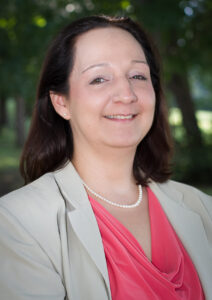

 Jeanne joins UMBC from Carnegie Mellon University where she is the Duquesne Light Company Professor in the departments of Civil and Environmental Engineering and Engineering and Public Policy. She recently completed service as the division director in the Division of Chemical, Bioengineering, Environmental, and Transport Systems, in the Engineering Directorate, at the U.S. National Science Foundation. She previously served as the vice provost for faculty at Carnegie Mellon and as the chair of the faculty senate.