All posts by: UMBC News Staff


Book Smart: Joseph Howley ’06, Ancient Studies,

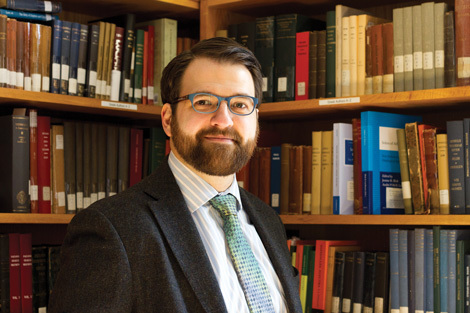
Joseph Howley“Roman poets were a lot like rappers,” observes Joseph Howley ’06, ancient studies, who is an assistant professor of classics at Columbia University. It’s the kind of observation – presented as an almost offhand remark – that typifies Howley’s approach to the discipline.

As a scholar particularly attuned to the unexpected, Howley thinks the modern fixation on Roman poetry, as opposed to other classical texts, has tended to constrict our perceptions of Roman experiences. His current research on different aspects of the book as a physical and technological object in ancient times sets out to radically broaden that understanding.

“A country singer won’t generally sing about what a good singer he is, but rappers will do that,” Howley explains, “or they will elaborate on how bad a rapper some rival might be. There’s quite a lot of that in Roman poetry.” The analogy doesn’t end there, either: “The other thing is that the Roman poets use so much allusion, which might have its best analog in contemporary rap, especially with sampling and so forth, which creates a new text that is emerging from overtly identified elements of an older text.”

Yet privileging Roman poets over other classical authors, he continues, may narrow our knowledge about the way the ancients experienced books as physical objects. “What these poets really want to talk about is how true they are to their form, which is fine,” he says, “but that doesn’t tell us anything about what the lived experience of the average Roman book reader was like.”

Continue reading “Book Smart: Joseph Howley ’06, Ancient Studies,” →

UMBC’s Modern Men

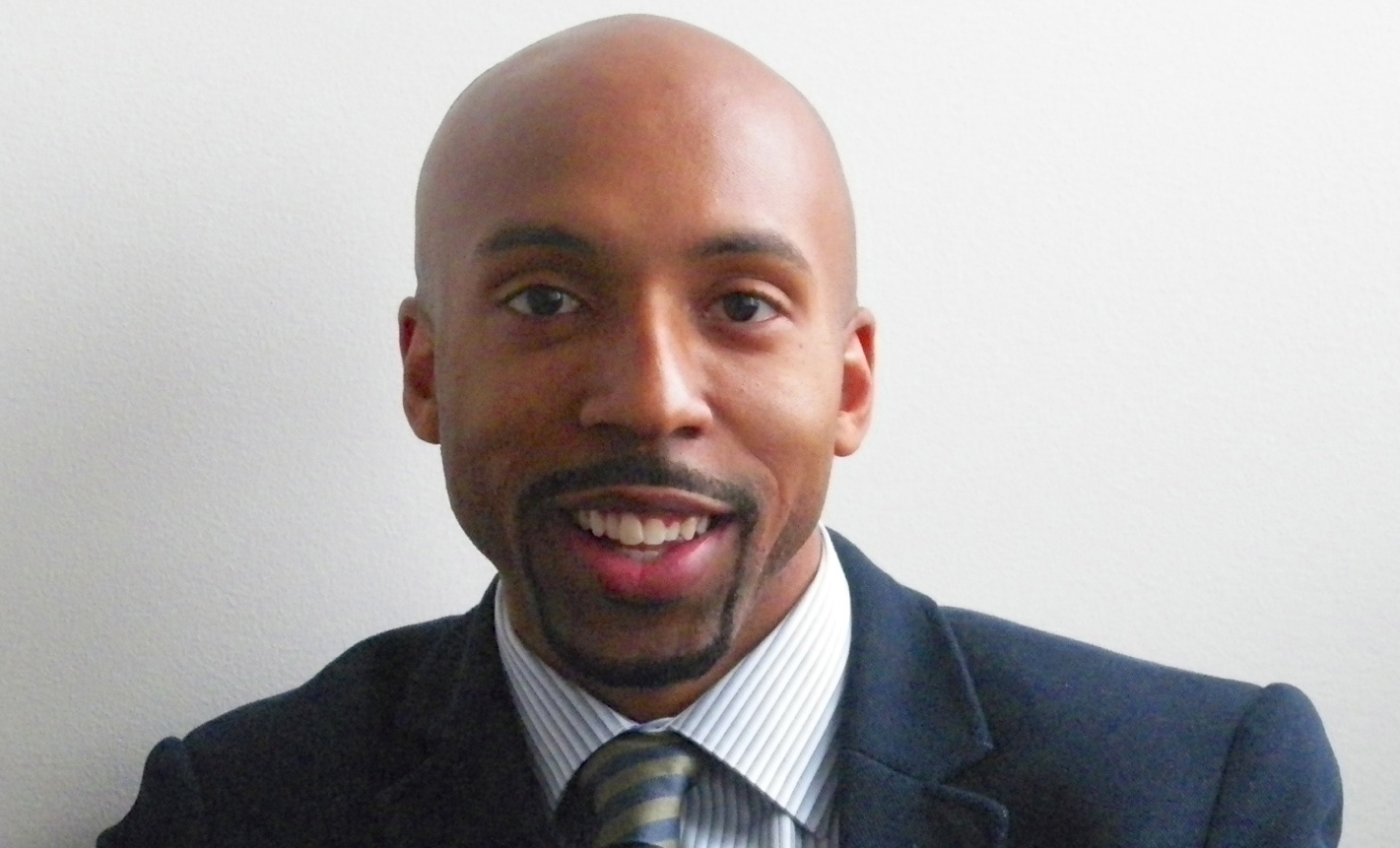
Two UMBC alums were featured in “BE Modern Man,” a program that honors the accomplishments, challenges, and victories men of color have endured all while making a positive impact on the world. We are proud to share the extraordinary work of Dr. DeLeon Gray ‘07, interdisciplinary studies and Dr. Nnadozie Onunkwo ‘06, computer engineering.

DeLeonGrayDr. DeLeon Gray ’07, interdisciplinary studies is a professor at North Carolina State University. He is passionate about giving back to the community and is especially interested in investing his own time and talents back into the African American community as he understands his own personal responsibility to continually make improvements. Dr. Gray has created SMART Collaborative, a program that is centered around the coming together of educators and researchers who want to improve the education challenges facing society today.


Dr.DozieOnonkwoDr. Nnadozie Onunkwo ’06, computer engineering learned the importance of living a healthy lifestyle and understood that becoming educated in health and fitness issues was also important win the fight against obesity. He created a website, www.unbiasedhealth.com, to organize current scientific information regarding relating to health and fitness in an easily accessible medium. He also understood that in order to combat these issues awareness need to be spread amongst the youngest members of society. Through his clothing line, Dr. Onunkwo uses sports to build that relationship with the youth to empower them academically and athletically.

Learn more about Drs. Gray and Onunkwo.


UMBC: Maryland Matters

Maryland Matters

UMBC establishes a School of Public Policy with regional focus, national presence.

UMBC proudly announced the establishment of a School of Public Policy this November at a special event marking the 40th anniversary of the university’s public policy program. Maryland Governor Martin O’Malley presented the keynote address and officially announced the school.

The UMBC Policy Sciences Graduate Program was conceived as a novel interdisciplinary program that initially had no dedicated faculty or budget. The School of Public Policy, established after four decades of sustained growth, consists of ten full-time faculty and more than 30 affiliated faculty from economics, education, history, sociology, and political science. It is home to more than 130 students and has $23 million in active research grants.

George La Noue, professor emeritus and research professor of public policy and political science, was director of public policy for 18 years and has been involved with the program since its inception. Reflecting back on the program’s lengthy track record of success over the years, La Noue says it has been the perennial commitment to interdisciplinary study that has made UMBC’s program so distinctive.

“The reality is that people don’t stay in narrow vocational slots for most of their lives anymore. They move around,” says La Noue. “So training that’s multi-disciplinary and multi-policy for many students provides the best preparation for a career in public policy.”

Another key to the program’s success has been its focus on policy research impacting Maryland, says Donald Norris, professor and director of the School of Public Policy.

Public policy faculty research some of the Baltimore-Washington region’s most pressing issues, including health, education, poverty, and urban development. Faculty have studied gambling prevalence in Maryland, ambulance response times for heart attack victims, reducing asthma in children who live in low-income households, and implications of Maryland’s Dream Act. These topics have national resonance, but are also tremendously important locally and regionally.

Faculty also maintain strong connections with state and local governments, and bring those connections into the classroom as they involve students in their research.

“We have two really important dimensions,” explains Norris. “We teach students about how public policy is made, and we teach them how to analyze public policy and its impacts.”

Many public policy graduates land jobs working in the public sector, with more than half of public policy students who graduated in the last ten years finding employment in Maryland’s state and local governments, federal agencies, and nonprofits. UMBC students, Norris shares, are “really committed to public service.”

Recent alumni have had a major impact through positions in the Maryland General Assembly, the Maryland Department of Health and Mental Hygiene, Baltimore City, Baltimore County, Harford County, the Social Security Administration, and the Centers for Medicare and Medicaid Services.

After the recent 40th anniversary celebration, La Noue, who is writing a book on the history of UMBC, commented that the success of the public policy program reflects the overall culture of the university.

“There are so many good things happening at UMBC. There’s so much development. This is just one of the many success stories here.”

To read Donald Norris’s recent Baltimore Sun op-ed on the value of studying public policy, click here.

For more information on the School of Public Policy, click here.

(Updated 12/18/2014)

© University of Maryland, Baltimore County • 1000 Hilltop Circle, Baltimore, MD 21250 • 410-455-1000 •

UMBC: Gaming Gets Real

Gaming Gets Real

UMBC competes in the “final four” of game development at the Microsoft Imagine Cup.

In a year of tremendous success in national competition — with UMBC teams vying for titles in the “final four” of men’s soccer and chess — another team of talented UMBC students is heading to a U.S. championship, this time in video game development. Microsoft is flying four Retrievers to San Francisco, where they will pitch their project to Silicon Valley entrepreneurs in the software giant’s Imagine Cup worldwide technology competition.

UMBC’s students will compete against teams from the Rochester Institute of Technology, University of Houston and University of Southern California. The team that claims the national championship will compete internationally for the chance to bring its game to market and a prize of $50,000.

“Everybody is really excited about the game,” says Michael Leung ’16, computer science, the team’s lead, who has received congratulatory notes and well wishes from leaders across Maryland. UMBC President Freeman Hrabowski recently highlighted the team’s work in an opinion piece for CNBC, where he wrote, “As the students vie for the honor of representing the U.S. internationally, they’re also showing us the future of teaching, learning, and careers.”

The game, called HueBots, features vibrant, friendly robots of different colors designed by Erika Schumacher ’17, and animated by Jasmine Martin ’15. Both are visual arts students with an interactive media concentration. The concept, programming, and music are the work of Tad Cordle ’16, computer engineering, with assistance from Leung. The game asks players to solve a series of increasingly challenging puzzles that revolve around the bots’ affinity for color-matched objects in a maze.

“Even people who don’t like puzzle games like HueBots,” Leung shares. Martin reflects that the game is positive, friendly, fun, and engaging, in contrast to the other three games in the national finals, described with terms like “mortality,” “combat,” and “domination.”

The teammates met for the first time in Fall 2014 through UMBC’s Game Developer’s Club, mentored by computer science professor Marc Olano. Olano founded and oversees UMBC’s game development track in the computer science and electrical engineering department. He’s familiar with the Imagine Cup, having previously judged the competition’s game entries.

Leung first considered the Imagine Cup as a real possibility in September 2014, when he was blown away by the quality of Schumacher’s art. After Cordle presented HueBots as a potential project for the Game Developer’s Club, Leung asked the longtime games enthusiast to collaborate with him, as well as Schumacher and Martin, as animator, in developing the game as a four-person team.

Leung reflects that after previously seeing himself as a “lone wolf” in gaming, he now tremendously values and enjoys the collaborative team experience. He shares, “We have different talents that back each other up.”

In addition to the success that comes from harnessing their diverse skills and viewpoints, the team members say they’ve benefitted from the club and the UMBC spirit it embodies, including the passion UMBC students have for their work. The club’s orientation has grown more professional, they say, moving from a focus on gaming as a hobby to gaming as a $22 billion per year industry that is hungry for fresh talent and ideas.

Olano, who spent a recent sabbatical working on the Civilization series of strategy games in nearby Hunt Valley, praises the growth he has seen in HueBots since the team developed a prototype in the fall. “With this kind of a puzzle game, it’s hard to get it just right — not too easy and not too hard,” he says. “I think they did it.”

The team is preparing for San Francisco, where they will be judged not only on how much fun their game is to play, but also the polish of its execution and the quality of their presentation and marketing plan. The U.S. winner will receive $4,000 and national champion status for the international competition in July.

Team Huebotics is also looking further ahead toward what it will take to bring the game to market, with or without the national title. Cordle reflects that developing a business plan solidified his ambition and made his game design work more “real-world” — more focused on bringing games to players, rather than developing games as only a personal hobby. He shares, “This is a magical moment.”

Watch Team Huebotics’ Round 1 and Round 2 competition videos, and check out their game, HueBots. The national Imagine Cup competitions will be broadcast live on MSDN Channel 9 on April 23, 2015. Viewers are invited to vote for a Public Choice Award.

(04/16/2015)

© University of Maryland, Baltimore County • 1000 Hilltop Circle, Baltimore, MD 21250 • 410-455-1000 •

UMBC: Hope as a Commitment, Not a Sentiment

Hope as a Commitment,
Not a Sentiment

UMBC community reflects on Baltimore protests and commits to action to address city’s challenges.

“This is about all of us… What we see in our city is what we see in our country. When we think about inequality, when we think about questions of justice, these are issues that we face in our nation. And the role of the university is to teach people to think critically about the challenges that human beings face.”

UMBC President Freeman Hrabowski opened a university teach-in with these remarks on May 1, 2015. The standing-room only event followed weeks of major protests across Baltimore in response to the death of Freddie Gray on April 19, 2015, after his arrest by Baltimore police, who now face criminal charges.

Hrabowski spoke directly to hundreds of students in the audience when he shared, “35 years ago, the father of Freddie Gray was a student at Coppin when I was an administrator there. And so this is all…very personal for me. Because 35 years ago, I thought that we were educating in a way that the world would be so different by the time you were born. And while in some ways it is, it is in many ways still with the [same] challenges.”

Students, faculty, and staff came together for the teach-in to grapple with all that had happened in previous three weeks, and to understand those events in the broader context of Baltimore’s social, economic, and political history. For many, this was a continuation of ongoing thoughtful reflection, dialogue, service, and action, while for others it was an opportunity to begin to understand the significance of the Baltimore Uprising and how to contribute to a path forward.

The event, organized by Dean Scott Casper of the College of Arts, Humanities, and Social Sciences, featured speakers from Africana studies, American studies, history, geography and environmental systems, and political science, as well as UMBC Police and The Shriver Center.

Focusing on the Home Owner’s Loan Corporation (HOLC) created in 1930s, Dawn Biehler, associate professor of geography and environmental systems, discussed the severe negative impact of redlining in Baltimore, where homeowners in minority neighborhoods were systematically denied equal access to loans. She also explored the violence poor communities have experienced and continue to experience through environmental inequalities, such as exposure to toxins.

Several speakers deeply engaged with data to explore inequalities, including Tyson King-Meadows, associate professor of political science and chair of Africana studies, whose charts illuminated the “cumulative disadvantage” faced particularly by black Baltimore residents. Referencing data from the Baltimore City Survey to provide context for unemployment, spatial displacement, and quality of police protection in Baltimore City, King-Meadows noted that it’s important to ask, “How will the lived experiences and opportunities in Baltimore connect to race, gender, geography, and wealth amongst a whole set of things that intersect?” He reflected, “We need to start looking at a constellation of forces instead of individual stars.”

Kimberly Moffitt, associate professor of American studies, discussed the need for mental health support and greater educational opportunities for schoolchildren in Baltimore. “The systemic denigration of our children and the underacknowledgement of psychological trauma upon their black bodies does not require additional force, but a renewed foundation,” she said. “As a community, we should come together to strategize and cultivate healthy relationships with children and our students.”

George Derek Musgrove ’97, associate professor of history, also shared very personal reflections on unequal access to opportunity. Musgrove discussed his upbringing in Baltimore and how many of his peers turned to the drug trade in response to joblessness and poverty. He described how UMBC students can get involved by studying what is happening, so they understand the broader context and history, and by joining (or creating) organizations that will respond to issues they feel passionate about addressing.

Joby Taylor, director of the Shriver Peaceworker Program, reflected on his experience living in Baltimore for the last 20 years and the layers of history and struggle that have contributed to recent events. He described service and community engagement as a long arc, and encouraged those in the audience to think about “social hope as a commitment, not a sentiment.”

Using examples of work completed with her students, Nicole King, associate professor of American studies, highlighted the importance of listening and showing up. Referencing an essay by the No Boundaries Coalition of Central West Baltimore, she emphasized the importance of “doing with and not for” Baltimore communities—working together, from the ground up, by using public humanities and oral histories to amplify the voices of Baltimore residents.

Providing a law enforcement perspective, Paul Dillon, deputy chief of UMBC police, discussed the need for police officers to be more engaged, on a daily basis, with the communities they serve, to form relationships built on trust and respect. He also discussed the effect of emerging technologies on policing, such as reduced use of force following the implementation of body cameras.

In a message to the campus community on April 28, 2015, President Hrabowski and Provost Philip Rous wrote, “Our words and our actions speak volumes about our values. Courage to address critical social challenges—while respecting others—is a hallmark of the UMBC community. As a university, we have a civic responsibility to lead these conversations.” Indeed, the conversations have continued.

Several faculty members have published passionate, thought-provoking op-eds in local and national publications. In a Baltimore Sun op-ed, Suzanne Lea, adjunct professor of sociology, reflects on her students’ research on trends in police deadly force incidents in the Baltimore-D.C. area over the last 25 years, and deficiencies in available data on such incidents. Rita Turner, lecturer in American studies and media and communication studies, wrote about the environmental injustices many Baltimoreans face in an article in The Conversation, republished in The Ecologist.

The student group UMBC for Ferguson, with support from the College Democrats, gathered a panel of community activists and organizers on May 7, 2015, to share tangible ways for UMBC students to get involved with their communities. In promoting the event, organizer Jazmin Simmons, ’17, interdisciplinary studies, told fellow students, “By showing up and sharing your thoughts, you become someone to honor and respect. You may not realize it now, but you are a strong leader in your own way.”

Simmons’ invitation to continue the conversation mirrors a commitment voiced by President Hrabowski when he recently wrote, “What gives me hope is the honest look we are all taking at our city’s most pressing problems—from academic achievement gaps to health disparities—and our willingness to embrace these struggles.” Simmons shared, “As you may know, this past week was not a one-time deal. Forever, these events will be ingrained within us. And I only hope you will continue to find your passion and do good for your community.”

Additional faculty writing on the Baltimore protests:
Baltimore riots: the fire this time and the fire last time and the time between (The Conversation)
Why Baltimore burns for Freddie Gray (Baltimore Sun)
Baltimore’s truth in Freddie Gray’s life and death (Reuters)
Baltimore cyclist catches riots in action (Bicycling Magazine)
Keeping ‘Us’ Safe in Baltimore (Huffington Post)
Freddie Gray: death by legal intervention (Baltimore Sun)
The slow poisoning of Freddie Gray and the hidden violence against black communities (The Conversation)
Baltimore could become key election issue (The Philadelphia Tribune)
Black and young in Baltimore: a roundtable discussion (KPCC Radio)

(5/8/2015)

© University of Maryland, Baltimore County • 1000 Hilltop Circle, Baltimore, MD 21250 • 410-455-1000 •

UMBC: Catalyst for Collaboration

Catalyst for Collaboration

UMBC and UMB celebrate research partnerships with symposium and innovation grants.

Celebrating the rapid growth of our collaborative research programs, UMBC and the University of Maryland, Baltimore (UMB) joined together for an inaugural Research & Innovation Partnership Symposium on Friday, January 30, 2015.

UMBC President Freeman Hrabowski and UMB President Jay Perman greeted a standing-room only audience of faculty researchers, students, and research support staff, and reflected on the value of collaborative research for both institutions. Yvonne Maddox, acting director of the NIH Institute on Minority Health and Health Disparities (NIMHD), delivered a keynote address focusing on the need to expand research on health disparities and how our institutions can support diverse young researchers entering this field. Scientific talks presented by collaborative research teams that received UMBC-UMB Partnership Grants in 2013 and an interactive poster session rounded out the symposium agenda.

“We are thrilled about the positive response by our campus communities to this inaugural research symposium,” stated Karl V. Steiner, UMBC’s vice president for research. “It serves as an important milestone for us to take stock of how far we have come with our relationship, but to also recognize how much more work and opportunities still lay ahead.”

The UMBC-UMB Research & Innovation Partnership Seed Grant program seeks to establish, enhance, and promote inter-institutional research collaborations between the two USM institutions and to stimulate joint grant proposals to federal agencies and foundations. USM Chancellor William E. Kirwan has praised the program for its “focus on cutting-edge science and health concerns” and its emphasis on interdisciplinary teamwork. The grant program is now in its second year, and the symposium offered an exciting stage to announce a new group of grant recipients.

This year’s grant program consists of two tracks — Innovation Seed Grants of up to $50,000 and Innovation Challenge Grants for senior researchers for up to $75,000 per year for two years. The committee received 21 applications — nine for the innovation seed track and 12 for the innovation challenge track — and awarded funding to four teams of three researchers each.

Innovation Seed Grant recipients include the team of Ronghui Ma and Liang Zhu (UMBC, Mechanical Engineering) and Hongbing Wang (UMB School of Pharmacy), and the team of Nirmala Roy and Aryya Gangopadhyay (UMBC, Information Systems) and Elizabeth Galik (UMB School of Nursing).

Innovation Challenge Grant recipients include the team of Raimi Quiton (UMBC, Psychology), Radi Masri, and David Seminowics (UMB School of Dentistry); and the team of Zeev Rosenzweig (UMBC, Chemistry and Biochemistry), Toni Antalis, and Rajabrata Sarkar (UMB School of Medicine).

Ronghui Ma, associate professor in mechanical engineering, is working with her colleagues to create a 3D-printed chip that will allow scientists to test drugs on cells from different organs at the same time. She says that with this work, made possible by the grant program, the team can provide a new model for drug testing.

Zeev Rosenzweig, chair and professor of chemistry and biochemistry, and his UMB colleagues are working to develop a new method to prevent or delay amputation in diabetes patients. He explains that his goal is to prepare an NIH proposal using the preliminary data obtained during the next two years of research. “Without this funding mechanism,” Rosenzweig shares, “this collaboration wouldn’t happen.”

Previous seed grant recipients, reflecting on a year of collaboration across institutions, share this view. The inaugural program received 42 collaborative proposals in the summer of 2013, and awarded five teams 12-month grants of $75,000 each:

• Kathleen Hoffman (UMBC, Mathematics and Statistics) and Asaf Keller (UMB School of Medicine)

• Tülay Adali (UMBC, CSEE) and Kelly Westlake (UMB School of Medicine)

• Charles Bieberich (UMBC, Biological Sciences) and Paul Shapiro (UMB School of Pharmacy)

• Marie-Christine Daniel (UMBC, Chemistry and Biochemistry) and Peter Swaan (UMB School of Pharmacy)

• Bradford Peercy (UMBC, Mathematics and Statistics) and Martin Schneider (UMB School of Medicine)

The grant recipients describe the program as having a dramatic impact on their work. “This program helped me start a whole new collaboration,” says Kathleen Hoffman, professor of mathematics and statistics.

Charles Bieberich, professor of biological sciences, agrees. “Having a pool of money that I could apply for made me stop and think about whom at UMB I could reach out to and establish a collaboration,” he says. “The funding acts as a catalyst to move the work forward.”

The UMBC-UMB Partnership Grants program is supported by the Office of the Provost and Office of the Vice President for Research at UMBC, and by the deans of the UMB schools of medicine, pharmacy, nursing, and dentistry.

(Updated 2/12/2015)

© University of Maryland, Baltimore County • 1000 Hilltop Circle, Baltimore, MD 21250 • 410-455-1000 •

UMBC: Community, Collaboration, Career

Community, Collaboration, Career

Reimagined UMBC Graduate Research Conference focuses on unique professional development opportunities.

For the past year a dedicated team of graduate students has been carefully retooling UMBC’s annual Graduate Research Conference (GRC). Their hard work and creativity paid off on March 25, 2015 when the largest-ever group of conference participants gathered to celebrate and promote student research, interdisciplinary collaboration, and diverse career paths.

UMBC’s Graduate Student Association (GSA), GSA Senate, and Office of Graduate Student Life (OGSL) together hosted this day-long event. GSA Vice President and GRC Chair Romy Hübler ’15, Ph.D., Language, Literacy, and Culture, shares, “The whole idea of the redesign was to make it more collaborative, more interdisciplinary…a way to build community, not just among graduate students, but also faculty, staff and undergraduates.”

The reimagined conference attracted 140 presenters—more than double the number that participated last year. Oral and poster presentations came from a variety of disciplines, and for the first time included Artist Talks and Works in Progress. Janet Rutledge, vice provost and dean of the Graduate School, shared, “I’m really excited about the inclusiveness of the new format of the conference, which allows graduate students at all stages of research to have an opportunity to present their work.”

Jaclin Paul ’17, intermedia and digital arts, shared her project “First Contact,” which uses twelve digitally altered images of American Girl dolls to explore themes of cultural identity in Colonial America. Paul explained: “In creating ‘First Contact,’ I wanted to engage conversation about [indigenous identity], the nature of the colonialism, and subverting the traditional cultural assimilation hierarchy.”

Ann Kellogg, a Ph.D. student in public policy, presented “Collaborating for Success: The UMBC Student Success Network.” This ongoing project examines formal and informal relationships across campus that shape the networks and resources impacting student progress toward graduation. “We continue to push out rules and regulations at the state and federal level, but if we don’t understand how they diffuse across a campus and how they are adapted to local practices, I think it’s hard to make effective policy,” Kellogg shared.

Cailing Dong, a Ph.D. student in information systems, presented “Predicting Behavior on Online Social Networks.” The goal of her work was to create a decision-making model for social media consumers to assist them in protecting their privacy online. Through her research, Dong observed what she calls a “privacy paradox”—a “disconnection between users’ intention of privacy protection and their actual privacy activity.” She explains, “Even if a person claims that they have a high level of privacy, when it comes to sharing some information on social networks, you really share more than is intended.”

Kayla Lemons, a Ph.D. student in biological sciences, examined the system in mice responsible for detecting odors to determine how exposure to harmful pollutants and irritants may affect cells that contribute to long-term sensory capabilities. “It’s important for this system to be able to maintain function on a long-term basis for animals like mice who need to detect predators and mates,” Lemons asserted.

Beyond welcoming a broader range of research presentations, the redesigned GRC also included professional development workshops on industry and non-profit/government hosted by the Career Center and an entrepreneurial careers workshop hosted by the Alex. Brown Center for Entrepreneurship.

Renetta Tull, associate vice provost for graduate student development and postdoctoral affairs, described this new aspect of the conference as “addressing a key issue that the Council of Graduate Schools identified in their report, ‘Pathways through Graduate School and into Careers,’ which notes that students need to have a broad view of career options.”

This year, a highly interdisciplinary keynote panel replaced the usual keynote speech, bringing together faculty from the Erickson School; chemical, biochemical and environmental engineering; and American studies. The GRC planning team also offered a resource-rich research fair and, to foster collaboration, added a closing reception for students, faculty, and staff to share ideas and reflect on presentations.

Planning for next year’s conference is already underway, with the committee exploring new opportunities for student-led workshops, roundtable discussions, and, as Hübler describes, making the most of this opportunity to “build community and make connections.”

For a complete list of presentations and to learn more about the 2015 conference, see the GRC website.

(03/27/2015)

© University of Maryland, Baltimore County • 1000 Hilltop Circle, Baltimore, MD 21250 • 410-455-1000 •

UMBC: From K-12 to P-16

From K-12 to P-16

U.S. Secretary of Education Arne Duncan discusses strengthening American education through partnerships, from preschool through college.

UMBC’s national leadership in innovative teaching and K-12 partnerships made the university a fitting choice to host “A Conversation with Arne Duncan,” on February 18. The talk by U.S. Secretary of Education Duncan focused on opportunities to continue strengthening education across the continuum, from early childhood through college.

Secretary Duncan spoke to an audience of UMBC students, faculty, and staff, along with educators and other members of the public that filled the Performing Arts and Humanities Building Concert Hall. The nation’s top education official discussed the significant progress made by U.S. schools, and the collaborative and innovative work that has helped Maryland become a national leader in preparing students for college and careers.

“Teachers, principals, community leaders, families and the students themselves have helped to bring about some of the biggest and boldest changes in American education in decades to prepare all of our children for college, careers, and life,” Sec. Duncan said during his remarks. “These changes include higher standards, better support for teachers, a powerful focus on improvement in instruction, and underlying all of that, a fundamental conviction that great schools, principals, and teachers can and do transform the lives of our children.”

Duncan highlighted UMBC’s strength in preparing the next generation of teachers and affirmed the Choice Program’s pledge to empower at-risk youth and families.

Following his remarks, Duncan participated in a wide-ranging discussion with UMBC President Freeman Hrabowski on topics such as improving literacy rates among low-income children, reinvesting in supporting women in technology, and what universities can do to be better partners of K-12 education.

During the discussion, Sec. Duncan praised UMBC for investing in course redesign and innovative teaching, and for the university’s commitment to changing the broader culture of education. “You’re not just talking about this, you’re living it. You’re walking the walk,” Duncan said.

The focus of Secretary Duncan’s talk — supporting students’ educational progress through partnerships — is core to what makes UMBC programs for aspiring and professional teachers so exceptional.

“We have worked with our partners from pre-K through high school from four surrounding school systems to develop unique programs in biology, chemistry and physics, as well as state- and nationally -recognized programs in the arts, humanities, elementary and early childhood education,” shares Eugene Schaffer, professor and chair of education.

UMBC serves as a pipeline for K-12 teachers at a critical time for schools across the nation. Undergraduates aspiring to teaching careers also have a wealth of training and support opportunities, including the Sherman STEM Teacher Scholars Program and the TEACH (Federal Teacher Education Assistant for College and Higher Education) Grant Program.

The Sherman STEM Teacher Scholars Program is a selective scholarship program that identifies and nurtures students seeking to become math and science teachers serving high-need communities. “The Sherman program teaches UMBC students to be empathetic to the complexity of students’ situations, while still serving as teachers who help them grow academically,” says Rehana Shafi, director of the Sherman program.

About 75 percent of the Sherman program’s graduates go on to teach students in communities that are financially challenged. Shafi adds that K-12 schools say one of the extra benefits of the program is the opportunity for UMBC students to talk with their students about how college is important and attainable. “They demystify college and share what students need to do to prepare for it.”

The TEACH Grant Program provides grants of up to $4,000 a year to students who are completing or plan to complete course work needed to begin a career in teaching. Students commit to teaching in a high-need field at an elementary school, secondary school or educational service agency that serves students from low-income families for at least four full academic years within eight years after completing (or ceasing enrollment in) their course of study.

Teacher training in collaboration with K-12 schools, and educational partnerships more broadly, are an important part of UMBC’s mission. Drawing on strong examples of successful, inspiring partnerships, Duncan emphasized that the United States needs to move from thinking about K-12 and college separately to thinking about the P-16 continuum.

“Today, school should mean preschool through a postsecondary degree. What worked for the past 100 years I think is insufficient as we move forward,” Duncan said. “What’s really striking is that in places that have shown the most courage and commitment to these changes, those places have seen the most progress.”

(02/20/2015)

© University of Maryland, Baltimore County • 1000 Hilltop Circle, Baltimore, MD 21250 • 410-455-1000 •

UMBC: Intensive Advocacy

Intensive Advocacy

White House commission summit at UMBC promotes academic success for at-risk youth, highlighting The Choice Program.

For college senior Imhotep Simba, helping youth find their own path to success comes down to three things: encouragement, exposure, and mentorship. Growing up in Baltimore’s Upton neighborhood, Simba says, he didn’t have a sense of possibility or opportunity, but The Choice Program at UMBC changed that.

Simba, who will graduate from Coppin State University in May, spoke from his perspective as an alumnus of The Choice Program to a standing-room-only crowd that filled UMBC’s Albin O. Kuhn Library Gallery on February 25, 2015. He was one of several young people who shared a story of resilience and perseverance at “Supporting Academic Success of Youth in Juvenile Justice Settings.”

The summit was designed to raise awareness and enable discussion of resources and strategies to accelerate post-secondary success for youth enrolled in alternative and correctional education facilities. The event was organized by the White House Initiative on Educational Excellence for African Americans, for which President Freeman Hrabowski serves as commission chair, in partnership with the U.S. Department of Education’s Office for Civil Rights (OCR) and UMBC.

Representatives from OCR, the Maryland Department of Juvenile Services (DJS), University of Maryland School of Social Work, and The Choice Program at UMBC shared insights and best practices on providing support and mentoring services for at-risk youth.

Central to the summit were the mission, values, and achievements of The Choice Program, which now serves more than 800 youth and families in Baltimore City and Baltimore, Prince George’s, and Montgomery Counties. For the last 25 years, The Choice Program has been the direct service arm of UMBC’s Shriver Center and a national model for supporting adjudicated youth.

“We’re honored to have this summit at UMBC,” said LaMar Davis, director of The Choice Program. “It takes a lot of conviction and fortitude for a university to take on such a big issue like this.”

AmeriCorps Community Service Fellows form the core of The Choice Program. The fellows work with youth ages 8–18 who are referred to the program through DJS. The fellows provide a community-based alternative to institutionalization that emphasizes caring relationships, meaningful participation, and setting high expectations.

“When someone looks at our kids, frequently they see someone who is struggling in school, has gotten into some kind of trouble, and who is not necessarily thriving,” said Davis. “What our fellows see is someone who has potential, has no ceiling, and who is really just looking for the right types of supports and structures that we can help channel them into.”

Abdul Brannum, a Choice Program alumnus and now a full-time college student working toward a degree in business management, admits he didn’t know what to expect when he became involved with Choice, but he credits his mentors’ sincerity and kindness for keeping him engaged.

“They were so full of life and laughter that it was contagious,” Brannum reflected at the event. “From that moment, I realized it was cool to be myself. I wanted to experience the same passion which they felt and shared with me.”

Through its intensive advocacy program, 92 percent of participating DJS youth have completed the program and have not been adjudicated with new charges. Eighty-eight percent of youth who have participated in The Choice education program have reduced or maintained the number of suspensions from the previous school year, and more than 100 youth have secured employment.

These metrics are certainly powerful results, but they stem from a basic idea, made a reality through the collaborative work of hundreds, from Choice Program leaders and fellows, to partner agencies, to the youth themselves.

“Start by believing in young people’s ability to transform their lives,” LaMar Davis told the UMBC crowd, “and then just support them.”

Media coverage: Read “White House-sponsored event at UMBC probes help for students in juvenile justice system” in the Baltimore Sun and watch the CNS video “Wise choices: UMBC’s Choice Program is helping teens get back on track.”

(02/27/2015)

© University of Maryland, Baltimore County • 1000 Hilltop Circle, Baltimore, MD 21250 • 410-455-1000 •

UMBC: Partners in Leadership

Partners in Leadership

UMBC named first university in Maryland to host a Naval ROTC unit.

Beginning April 1, students passionate about serving as commissioned officers in the Navy and Marine Corps saw a new name on the Naval ROTC scholarship program’s application list: the University of Maryland, Baltimore County.

UMBC and the Naval Service Training Command (NSTC) have signed an agreement to host a Naval ROTC unit at UMBC. The multi-year program, which runs concurrently with a student’s regular college or university degree path, will prepare midshipmen for leadership positions as U.S. Navy officers in an increasingly technical and globally interconnected environment.

“We are delighted to have been selected for this honor,” says UMBC President Freeman Hrabowski. “Many of our students are from military families, and many want to serve their country through the Navy. Already, hundreds of our graduates are working for the Navy. We envision many more doing so through this program.”

UMBC is the first higher education institution in Maryland to be selected as an NROTC host site and one of only 75 colleges and universities in the nation. The agreement is part of the new Maryland NROTC consortium that includes the University of Maryland, College Park. UMBC also enables students to participate in the Army University ROTC program through Johns Hopkins University and the Air Force ROTC program through the University of Maryland, College Park.

“I am so pleased that the U.S. Navy is establishing an ROTC program at UMBC,” Senator Barbara Mikulski said. “With the Naval Academy already in Annapolis, Maryland has a proud history of supporting those who sacrifice so much to keep us safe. Now, UMBC, a longtime leader in math and science education, will grow that historic relationship as it teaches and trains our young leaders for the jobs of tomorrow.”‎

With this agreement, students can take courses toward a UMBC undergraduate degree while fulfilling their Navy ROTC commitment through classes in Naval Science and participation in the unit’s drills, physical training, and other activities. A Professor of Naval Science appointed by the NSTC, in collaboration with UMBC, will lead the NROTC and coordinate instruction on campus.

“By partnering with UMBC, we are continuing to work with elite colleges and universities committed to producing graduates with exemplary education, character and leadership for service to our nation,” says Rear Adm. Richard A. Brown, Commander, Naval Service Training Command. “We are excited to have a host unit in the state of Maryland, a state with a honored naval tradition.”

Students selected for this highly competitive national program will receive four-year scholarships covering full tuition and mandatory fees, as well as stipends for books and living expenses. Students pursuing any academic major may apply to the program for study beginning in fall 2016.

For more information on the program, including how to apply, visit the Naval ROTC website.

(04/6/2015)

© University of Maryland, Baltimore County • 1000 Hilltop Circle, Baltimore, MD 21250 • 410-455-1000 •

UMBC: Progress through Partnership

Progress through Partnership

UMBC hosts a conversation with U.S. Secretary of Education Arne Duncan.

Note: This story was posted prior to the 2/18 campus event. A recap of the event, including video, will be posted shortly.

UMBC’s national leadership in innovative teaching and K-12 partnerships makes the university a fitting choice to host “A Conversation with Arne Duncan,” scheduled for Wednesday, February 18, 2:30-3:30 p.m. This talk by U.S. Secretary of Education Duncan will focus on opportunities to continue strengthening education across the continuum, from early childhood through college.

UMBC community members, particularly students interested in teaching careers, are invited to attend this lecture in the Performing Arts and Humanities Building Concert Hall. Members of the public interested in learning about UMBC’s collaborative work with K-12 schools are welcome as well. The event is free, but an RSVP is requested.

Secretary Duncan will highlight the U.S. Department of Education’s K-12 priorities and Maryland’s role as a leader in core reforms. He will also share the significant progress made by U.S. schools, thanks to the commitment and collaborative leadership of parents, teachers, principals, school districts, and state officials who strive to help every student succeed in school and in life.

“We are delighted with Secretary Duncan’s second visit to campus and his recognition of UMBC’s commitment to exceptional programs for both prospective and experienced teachers,” shares Eugene Schaffer, professor and chair of education.

The focus of Secretary Duncan’s talk — supporting students’ educational progress through partnership — is core to what makes UMBC teaching programs so exceptional.

“UMBC is fortunate to have many partnerships with K-12 education across a broad range of fields,” reflects Dean Scott Casper of UMBC’s College of Arts, Humanities, and Social Sciences.

Schaffer shares, “We have worked with our partners from pre-K through high school from four surrounding school systems to develop unique programs in biology, chemistry and physics, as well as state- and nationally -recognized programs in the arts, humanities, elementary and early childhood education.”

Secretary Duncan, America’s top education official, first visited the university last May, when he commended UMBC for our commitment to K-12 partnerships and outreach, in addition to a strong record of producing graduates committed to teach at high-need schools.

UMBC serves as a pipeline for K-12 teachers at a critical time for schools across the nation. Schaffer explains that at the graduate level this means working with partners to provide “advanced degrees and specialized training to experienced teachers in mathematics, science, literacy and English as a Second Language.” UMBC undergraduates aspiring to teaching careers also have a wealth of training and support opportunities, including the Sherman STEM Teacher Scholars Program and the TEACH (Federal Teacher Education Assistant for College and Higher Education) Grant Program.

The Sherman STEM Teacher Scholars Program is a selective scholarship program that identifies and nurtures students seeking to become math and science teachers serving high-need communities. “The Sherman program teaches UMBC students to be empathetic to the complexity of students’ situations, while still serving as teachers who help them grow academically,” says Rehana Shafi, director of the Sherman program.

“We do this by sending our students into classrooms with teachers who are great mentors and role models, and by educating them about the challenges students in these communities face every day. They learn how to have sensitive conversations with students and to create meaningful lesson plans because they are geared toward the specific populations they serve.”

About 75 percent of the Sherman program’s graduates go on to teach students in communities that are financially challenged. Shafi adds that K-12 schools say one of the extra benefits of the program is the opportunity for UMBC students to talk with their students about how college is important and attainable. “They demystify college and share what students need to do to prepare for it.”

The TEACH Grant Program provides grants of up to $4,000 a year to students who are completing or plan to complete course work needed to begin a career in teaching. Students commit to teaching in a high-need field at an elementary school, secondary school or educational service agency that serves students from low-income families for at least four full academic years within eight years after completing (or ceasing enrollment in) their course of study.

“The grant is critical to students’ ability to pursue their degree so they can go on to pursue a career in teaching,” says Shafi. “Many students would not have been able to continue their education without it.”

Educational partnerships and teacher training for both UMBC students and professional teachers are an important part of UMBC’s mission. “Our school partnership programs help students develop into engaged citizens who understand the complex issues some K-12 students in Maryland are facing,” Shafi shares. “These programs provide thoughtful, meaningful and reflective training experiences. At UMBC, it is important for us to leave campus, go out to communities, and help make a difference. It’s part of who we are as a university.”

(02/16/2015)

© University of Maryland, Baltimore County • 1000 Hilltop Circle, Baltimore, MD 21250 • 410-455-1000 •

UMBC: PFASA 2015

Honoring Excellence

UMBC community celebrates ten distinguished faculty and staff members at annual awards ceremony.

The campus community celebrated the exceptional performance, leadership, and service of ten faculty and staff members at the Presidential Faculty and Staff Awards Ceremony held on April 1, 2015.

“The Presidential Faculty and Staff Awards Ceremony is an important annual tradition for the UMBC community,” says President Freeman Hrabowski. “Our faculty and staff are dedicated to fulfilling the University’s mission and vision, and this event gives us the opportunity to honor their professional achievements and commitment to our campus.”

The 2015-18 Presidential Teaching Professor is Michelle R. Scott, associate professor and director of graduate studies in history and an affiliate associate professor in gender and women’s studies; Africana studies; and the language, literacy and culture doctoral program. She is also recipient of the 2015 University System of Maryland Board of Regents’ Faculty Award for Excellence in Mentoring. Scott, who joined the UMBC faculty in 2002, is a nationally recognized scholar in the fields of African American history and the history of music, and highly regarded as a dynamic role model, teacher, and mentor.

Katherine Seley-Radtke, professor of chemistry and biochemistry, is the 2015-18 Presidential Research Professor. A UMBC faculty member since 2003, she is internationally known in her field for research focused on the design and synthesis of chemotherapeutic agents to treat infectious diseases and cancer, and biological probes to explore the structure and function of DNA.

The 2014-15 Presidential Distinguished Staff Award, Professional Staff recipient is Susan Martin, associate director, Center for Women in Technology (CWIT). Martin began her tenure at UMBC in 2005, and joined CWIT in 2010. She has been integral to CWIT’s efforts to increase diversity in engineering and computing fields by expanding resources that support student success and graduation rates.

Susan L. Harrell, executive administrative assistant, English, received the 2014-15 Presidential Distinguished Staff Award, Non-Exempt Staff. Harrell has served UMBC’s department of English for 33 years. She is also the department’s graduate program coordinator and administrative assistant for the medieval and early modern studies minor. Known for her administrative skills, loyalty and work ethic, her colleagues consider her a model of professionalism and dedication.

The recipient of the 2015 University System of Maryland Board of Regents’ Faculty Award for Excellence in Teaching is Eileen O’Brien, senior lecturer, psychology. She joined the UMBC faculty in 2003 and has spearheaded successful innovations in course design on campus and throughout the University System of Maryland.

Kate Brown, professor of history, has received the 2015 University System of Maryland Board of Regents’ Faculty Award for Excellence in Research/Scholarship/Creative Activity. An internationally recognized scholar who joined the UMBC faculty in 2000, her work is characterized by leaders in the field as original, fearless, and based on an imaginative approach to sources, oral history, and narrative. Her book Plutopia: Nuclear Families in Atomic Cities and the Great Soviet and American Plutonium Disasters has won several prestigious book prizes, and she recently received a collaborative fellowship from the American Council of Learned Societies for the project “Chernobyl Revisited.”

The 2013-14 University System of Maryland Board of Regents’ Staff Award for Exceptional Contribution to the Mission of UMBC (Professional Staff) goes to David Hoffman ’13 Ph.D., language, literacy and culture, who joined the UMBC community in 2003. He has been a leading force behind UMBC’s BreakingGround movement, and his dedication to supporting students as they become engaged citizens has had a significant impact on the campus and garnered national attention for UMBC.

Julie Rosenthal is the recipient of the 2013-14 University System of Maryland Board of Regents’ Staff Award for Exceptional Contribution to the Mission of UMBC (Non-Exempt Staff). She joined the UMBC community in 2008, and her dedication and initiatives have played an important role in building the Asian Studies program. She has also had a major impact through community service, namely her work organizing Food on the 15th and the Asian Food Pantry.

Dottie Caplan, executive administrative assistant, College of Natural and Mathematical Sciences, has received the 2014-15 Karen L. Wensch Endowment Award for Outstanding Non-Exempt Staff. Caplan, whose UMBC career began in 1997, is committed to serving both CNMS and the campus, and her coworkers call her an invaluable asset to UMBC.

The 2014-15 Jakubik Family Endowment Award goes to Brian V. Souders ’09 Ph.D., language, literacy and culture. Souders, associate director of International Education Services, began his UMBC career in 2000, and his initiatives have significantly increased the number of students who have participated in study abroad experiences and received prestigious awards and fellowships.

To learn more about the awards ceremony and all of this year’s recipients, see the Presidential Faculty and Staff Awards website.

(04/1/2015)

© University of Maryland, Baltimore County • 1000 Hilltop Circle, Baltimore, MD 21250 • 410-455-1000 •