
All posts by: Dinah Winnick


Donald F. Norris, Public Policy, in Capital News Service Article

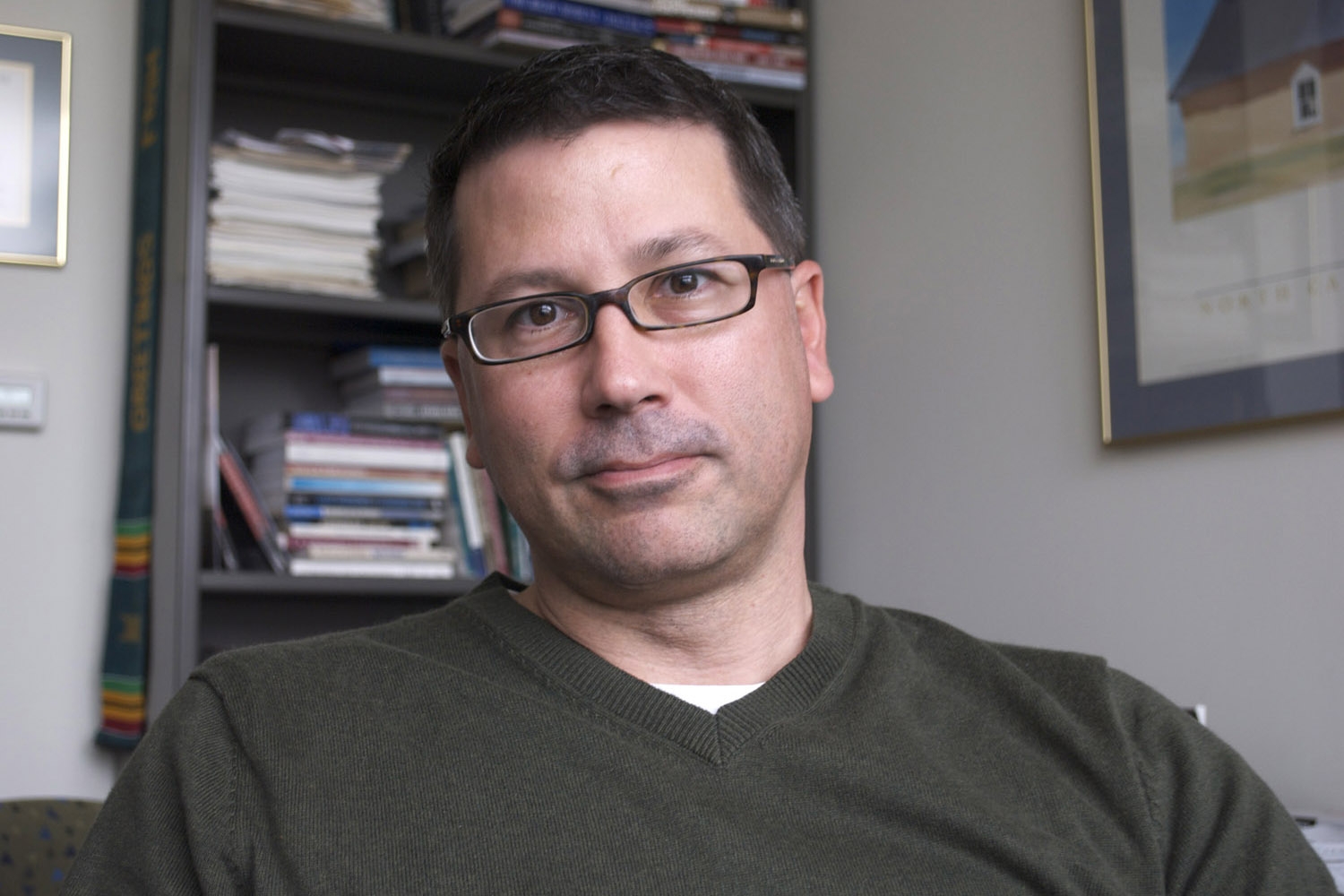
Donald Norris UMBCIn the wake of Maryland’s recent vote to expand gambling locations and allow table games, Capital News Service asked Donald F. Norris, professor and chairman of UMBC’s Department of Public Policy, if sports gambling is in the state’s future. “It’s always possible that somebody could pursue it,” Norris said, “I just can’t foresee that happening.”

Norris further commented, “I’m willing to guess that the current governor is so fed up with the gambling issue that I’m sure he will not support anything.” To move sports betting forward, he suggests, there would have to be more active support for such legislation across the state. The full article is in the Afro, Washington Times and other local papers.


Eric Zeemering, Public Policy, in the Windsor Star

Eric Zeemering (UMBC)Canadian newspaper The Windsor Star has featured new research from UMBC’s Eric Zeemering, assistant professor of public policy, on how government and NGOs in Windsor, Ontario and Detroit, Michigan form cross-border cooperative relationships to promote economic development and create sustainable communities (see full article in the Journal of Urban Affairs).

Zeemering told reporter Dave Hall that although there are great opportunities for collaboration between Windsor and Detroit, the international border often serves to keep the communities apart and “there needs to be a concerted effort to forge those relationships.” Zeemering notes, “The danger in creating cross-border relationships at the political level is that those people change, and the best way to forge those relationships is to establish them at the ground level with city employees.” He cites the Windsor-based International Joint Commission, which focuses on water quality in the Great Lakes, as a strong example of lasting cross-border cooperation.

Eric Zeemering, Public Policy, on “Better Faster Cheaper”

Eric Zeemering (UMBC)In the latest post on Governing magazine’s blog “Better Faster Cheaper,” John M. Kamensky, senior fellow with the IBM Center for the Business of Government, reports on compelling new findings from a study by UMBC’s Eric Zeemering, assistant professor of public policy, and co-researcher Daryl Delabbi.

Zeemering and Delabbi have found that more than half of county officials across the country are either participating in or delivering shared services or are in active discussions to do so. Why counties? Kemensky writes, “Typically, small local governments jealously guard their independence. County government is a natural place to turn to coordinate or deliver common services, whether they are police investigative services, road paving or group-purchasing contracts.” To learn more, read “The Accelerating Movement to Share Services” or see the full study, “A County Manager’s Guide to Shared Services in Local Government” (pdf).

Mapping Baybrook in Baltimore Magazine

Mapping BaybrookWhat’s Baltimore buzzing about? A fascinating community project from UMBC’s Departments of American Studies and Visual Arts.

Students from the multidisciplinary BreakingGround course “Mapping Baybrook” have been working toward a special community event all semester, producing oral history recordings, a walking tour brochure and other work to highlight the area’s history and culture. The community celebration, highlighted on the Baltimore Magazine blog “The Chatter,” will take place this Saturday, December 1, 1:00-5:00 p.m. at the Polish Home Hall, 4416 Fairhaven Avenue in Curtis Bay. The event will also launch the new Mapping Baybrook website, designed in collaboration with UMBC’s Imaging Research Center. Learn more about the event and the students involved.

Thomas Schaller, Political Science, in the Baltimore Sun

The latest Baltimore Sun column by Thomas Schaller, professor of political science, explores critiques of U.N. Ambassador Susan Rice’s potential nomination for secretary of state given her role in providing inaccurate information to the American public following the attack on the U.S. consulate in Benghazi, Libya.

Schaller writes that although he questions the motives of those critiquing the nomination, they “are asking important questions about what the State Department and the White House did before, during and especially after the attacks,” such as, “Why weren’t requests by U.S. officials in Benghazi for upgraded security in advance of the anniversary of the Sept. 11, 2001, terrorist attacks honored?” and  “Even if that anniversary were not approaching, why weren’t the movie protests sufficient to prompt heightened security?” Read the full commentary at the Baltimore Sun.

Hilltop in the Baltimore Business Journal

The Maryland Health Care Reform Simulation Model report produced by The Hilltop Institute at UMBC continues to get press coverage. The Baltimore Business Journal cites a Hilltop estimate of the number of new jobs to be stimulated by health reform in Maryland in the article, “Medical sector heightens focus on jobless to fill demand” [log-in required]. The article states, “A report by the Hilltop Institute at University of Maryland Baltimore County estimates Maryland employers will add 26,900 jobs by 2020 in response to health reform. Labs need assistants to oversee safety and animal care, and hospitals need people to transport patients between rooms; clean and decontaminate rooms; and talk to patients.”

Donald Norris, Public Policy, in the Baltimore Sun

“Now that the governor’s proposal to expand gambling in Maryland has passed at the ballot box, some state senators and delegates who backed the controversial measure are looking to collect,” writes reporter Annie Linskey in today’s Baltimore Sun.

The idea that those legislators who backed Gov. O’Malley in his support of the gambling legislation would seek benefits in return for its passage is not a new concept to Donald F. Norris, professor and chairman of UMBC’s Department of Public Policy. “I think it is a nearly universal phenomenon in legislative bodies,” he says. “It is a matter of bargaining and cooperation among people. It is human nature.”

Linskey suggests that Baltimore City and County would like to access additional funds for school renovations, while Montgomery County’s top funding priority is transportation.

The Hilltop Institute in “Governing” Magazine

A new article in Governing magazine, titled “How Higher Education Could Save Medicaid,” explores public universities as effective partners in states’ efforts to reform their Medicaid systems to be more fiscally sustainable and prepare for a significant enrollment expansion under the Affordable Care Act. The Hilltop Institute at UMBC offers one of three examples nation-wide for how this partnership can work.

Governing calls Hilltop “one of the primary Medicaid policymaking labs for the state,” noting that it “is responsible for all financial modeling, helped [Maryland] develop its managed care program and works with an actuarial firm to set the capitated rates that health-care providers receive to participate in that program.” The article also notes that Hilltop houses all of Maryland’s Medicaid data and, since 2010, has “conducted the official analysis of the Affordable Care Act’s impact on Maryland, which has been a guiding force for the state’s Health Care Reform Coordinating Council.”

Thomas Schaller in the Baltimore Sun and Washington Post

Tom SchallerPolitical science professor Thomas F. Schaller’s latest Baltimore Sun column responds to the claim that “President Obama won re-election because Americans want ‘free stuff’.” He argues that “contrary to what talk-show conservatives imply, many government programs skew toward middle-class and upper-income Americans” and usage of federal benefit programs is near universal, rather than tied to political affiliation.

Schaller writes, “according to political scientists Suzanne Mettler and John Sides, 96 percent of Americans have benefited from at least one (and typically more) of just 21 federal programs, ranging from student loans to the mortgage interest deduction, from the employer health care exemption to Medicare. Most of the remaining 4 percent are too young yet to have benefited but will. We’re all beneficiaries.”

Schaller also commented for a Washington Post story recapping the election in Maryland and Gov. O’Malley’s prominent role in the passage of ballot measures on same-sex marriage rights, gambling and education for undocumented immigrants. “It was almost as though he was standing for a second reelection,” Schaller told the Post. “To a certain degree, his administration was on the ballot.”

Social Science Faculty Gindling, Mandell, Norris and Hussey in Post-Election News

In the wake of Maryland’s vote for Question 4, UMBC professors T.H. Gindling (economics) and Marvin Mandell (public policy) recently discussed their study, “Private and Government Fiscal Costs and Benefits of the Maryland Dream Act” on NBC Washington news. Their interview highlights the net positive economic impact that each incoming class of undocumented students would have, due to factors such as decreased incarceration rates (and thus lower incarceration costs) for college versus high school graduates.

Donald F. Norris, professor and chairman of UMBC’s Department of Public Policy, commented on Maryland’s passage of both Question 6 (approving same-sex marriage rights) and Question 7 (approving gambling expansion). Of Question 7 he remarked, “Frankly, I’m surprised that it passed statewide,” suggesting that voters might have been swayed by the promise of using increased gambling revenues to boost education funding.

Laura Hussey, assistant professor of political science, told Patch that Gov. O’Malley’s vocal leadership style might have encouraged voters to turn out for the issues he supports. “It’s only recently that we’ve seen Democratic leaders take strong stances on issues like the Dream Act,” Hussey said. “Eventually, some of their voters are going to follow behind them.”

UMBC Study on Economic Impact of Dream Act in National Press Following Vote

On Tuesday, Nov. 6, Marylanders voted to extend in-county/in-state tuition at local community colleges and public universities to undocumented immigrants who graduate from Maryland high schools and meet other requirements. Press following the 59% to 41% Maryland Dream Act victory have cited a recent study on the Dream Act’s economic impacts by UMBC’s T.H. Gindling (economics) and Marvin Mandell (public policy).

Their study concludes, “the Dream Act would generate $66 million in economic activity for each incoming new class of undocumented students.” See the website of UMBC’s Maryland Institute for Policy Analysis and Research (MIPAR) for the original working paper: “Private and Government Fiscal Costs and Benefits of the Maryland Dream Act.”

NPR’s political news site and Inside Higher Ed link directly to the study itself. Other media referencing Gindling and Mandell’s findings include the Chronicle of Higher Education, Baltimore Sun, Gazette, Washington Times, Washington Examiner, Capital News Service and Delmarva Now.

Donald Norris, Public Policy, in Election Coverage

Donald F. Norris, professor and chairman of UMBC’s Department of Public Policy, has offered insight on topics from Maryland ballot measures to the advertising wars throughout the election season.

He recently commented in a Patch article on early voting, stating: “There is little or no evidence that early voting matters in overall turnout or in overall turnout among sub groups of voters—elderly, young, minorities, etc. So I am not inclined to say anything about this except that turnout is up.”

Why the increase in turnout of early voters? Norris told WBAL, “We’ve got at least three ballot questions that are very emotional in nature.” Norris will provide election commentary tomorrow night on WBAL.

Update (11/8/2012): Norris appeared on WJZ, where he commented that voter turnout will likely not be as high as the last presidential election, but, “that prediction could be upset…by the fact that we’ve got ballot questions that people are very, very invested in.” He also provided election night commentary for WBAL as the returns came in and commented on the election results in the Daily Record (on Governor O’Malley’s plans and on the gambling referendum).