All posts by: Dinah Winnick


Thomas Schaller in Salon and the Baltimore Sun

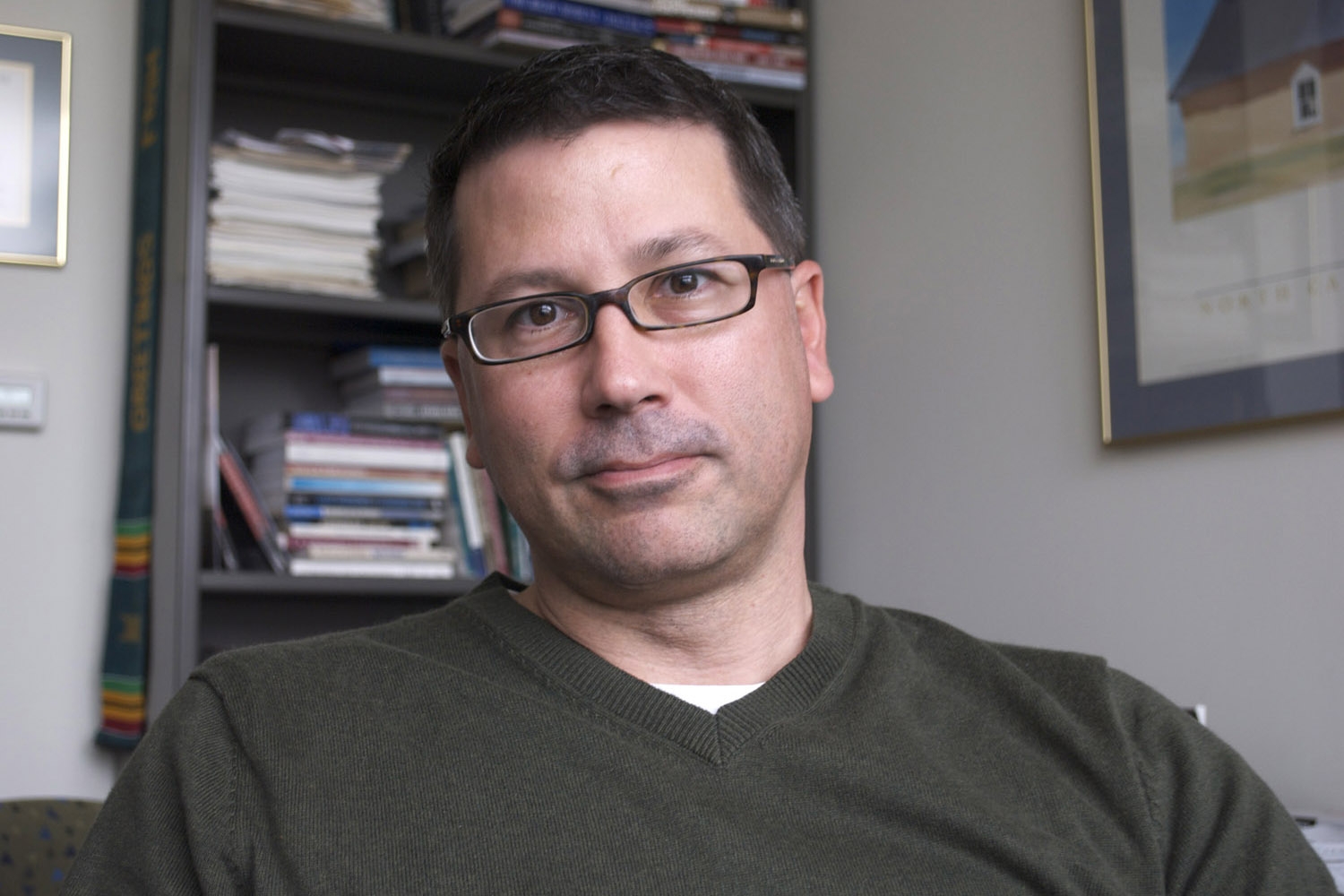
Tom SchallerU.S. voters frustrated by competing claims of who will win the upcoming presidential election and why can turn to political science professor Thomas F. Schaller’s latest Salon column—“Why Obama/Romney will win/lose”—for insight on election theories.

Schaller’s top theories for why Obama will win include: (1) He’s got a huge field advantage in the swing states. (2) No matter what Romney does, it all comes down to one state, Ohio—and Obama has it locked. (3) The Latino vote is being undercounted. (4) Cell phone users are being undercounted. (5) The 2012 electorate will look similar to 2008. (6) Nate Silver is a genius, and he pegs Obama as a 3-to-1 favorite.

Major theories for why Romney will win include: (1) He’s locked down the independents. (2) Actually he, not Obama, has the turnout advantage. (3) And that’s because Obama’s ground game “edge” is mythical—and besides, a secret Mormon army is quietly mobilizing out West. (4) The youth vote won’t be there for Obama this time. (5) The liberally-biased polls are skewed. (6) Nate Silver’s all wrong.

See also Schaller’s latest Baltimore Sun column, “The virtues of a president with humble origins,” which argues, “The president’s humble beginnings will allow him to continue working on behalf of working-class Americans.”

Donald Norris, Public Policy, in the Daily Record and Gazette

According to the Daily Record, the Maryland Democratic Party is accusing MDPetitions.com (used to help petition three state laws to referendum over the last year) of violating campaign finance laws. Website founder Del. Neil C. Parrott has responded by saying, “Here we have the Maryland Democrat party trying to use scare tactics” to prevent voters from striking down the referenda.

Donald F. Norris, professor and chairman of UMBC’s Department of Public Policy, comments that with so many hotly debated issues on the ballot this year, Maryland is getting a taste of types of accusations that more politically-diverse states experience regularly during the election season. Norris notes that using online tools such as MDPetitions.com to put issues on the ballot is a major way that Maryland conservatives are trying to increase their reach; he predicts that in the next General Assembly session laws will likely be adopted to “restrict the ability to petition legislation to the ballot.”

Norris also discussed early voting and the same-sex marriage referendum in the Gazette.

Laura Hussey, Political Science, in the Gazette

Laura HusseyToday’s Gazette reports on clergy in Prince George’s County who are encouraging parishioners to vote against the referendum to expand gambling in Maryland and in Prince George’s County in particular. But Laura Hussey, assistant professor of political science, remarks in the article that clergy who talk politics from the pulpit are less common than some might expect.

Hussey suggests that this is in part because the multifaceted nature of ballot questions, such as the gambling referendum, can make it difficult to take a clear religious stance. “It’s an issue that doesn’t lend itself to being easily decided by the average voter,” she says.

Update (10/27/2012): In a later Washington Examiner article, Hussey remarked on the meaning this election’s historic ballot measures have for voters in Maryland, an overwhelmingly Democratic state where presidential and senatorial races are usually a foregone conclusion. Hussey said, “Here citizens have an opportunity to weigh in, to cast a vote that means something.”

Eric Zeemering, Public Policy, Shares Research in New Video

[youtube http://www.youtube.com/watch?v=XzVW-RaTDiY&w=560&h=315]

In a new UMBClife video, Eric Zeemering, assistant professor of public policy, explores how local governments, constrained by tight budgets, find partners to deliver public services and achieve policy goals.

Zeemering’s work focuses on public management, intergovernmental relations and urban policy, including policy relating to the sustainability of cities. He was recently named recipient of both the Clarence Stone Young Scholar Award and the Norton Long Developing Scholar Award from the Urban section of the American Political Science Association, in recognition of his scholarship, teaching and public service.

UMBC Study on Economic Impact of Dream Act in TIME

Maryland voters will soon decide whether to allow undocumented immigrants who graduate from Maryland high schools and meet other requirements to pay in-county/in-state tuition at local community colleges and public universities. A recent study on the Dream Act’s economic impacts by UMBC professors T.H. Gindling (economics) and Marvin Mandell (public policy) has received significant media attention and today appeared on TIME magazine‘s online coverage of the referendum.

TIME notes that Gindling and Mandell’s study concludes, “the Dream Act would generate $66 million in economic activity for each incoming new class of undocumented students.” See the website of UMBC’s Maryland Institute for Policy Analysis and Research (MIPAR) for the original working paper: “Private and Government Fiscal Costs and Benefits of the Maryland Dream Act.”

Donald Norris, Public Policy, in the Washington Post

Donald F. Norris, professor and chairman of UMBC’s Department of Public Policy, commented Sunday on the Washington Post‘s finding that out-of-state gambling companies and their allies have spent $56 million in the fight over Question 7, which would allow a Las Vegas-style casino to be built in Prince George’s County.

Post poll revealed that 51% of likely voters say Maryland’s existing slots program has been a “good thing” for the state, but that 55% are not confident that the plan to expand gambling will produce more money for schools, as proponents suggest.

“I think one has to conclude the ads are making a huge difference,” said Norris, continuing, “People don’t trust politicians, and they’re being told politicians sold them a bill of goods. I think that resonates.”

School Board Candidate David Murray ’14, Economics, in the Gazette

Today’s Gazette highlights the Prince George’s County Board of Education race between District 1 candidates David H. Murray ’14, economics, and Zabrina Epps, CCBC academic adviser.

Murray told the Gazette, “One of most important things we have to do is try to recruit the most effective teachers we can.” He supports an external audit on the school system’s operating budget, to redirect funds toward increasing teacher pay.

As one of three candidates in Prince George’s County who are currently university students, Murray argues that his age and familiarity with the school system as an alumnus afford him an important perspective on issues that matter to students and faculty today.

Thomas Schaller, Political Science, in Salon and the Baltimore Sun

Tom SchallerA new Salon column by UMBC political science professor Thomas F. Schaller responds to what Romney strategist Eric Fehrnstrom called “hit[ting] a reset button for the fall campaign.” Moving from the primary to the general election, Fehrnstrom remarked, “everything changes. It’s almost like an Etch-A-Sketch. You can kind of shake it up, and we start all over again.”

Schaller argues that the Etch-a-Sketch metaphor is apt in that Romney aspires to “invite all center-right voters, be they hardcore conservatives or libertarian Republicans or fence-sitting moderates, to compose whatever sketch of him they find most appealing — and then vote, accordingly, for him.”

Instead of the presidential election, Schaller’s latest Baltimore Sun column focuses on Maryland’s 6th District, which he calls “the only consequential contest on the ballot.” He writes that the Western Maryland district was recently redrawn to include to include chunks of heavily Democratic Montgomery County, with the intent to unseat Republican incumbent Roscoe Bartlett. Bartlett will debate Democratic nominee John Delaney four times in the next two weeks.

Update (10/18/2012): See Schaller’s newest Salon column, responding to the presidential debate, “Cool cat Obama shows his claws.”

Don Norris, Public Policy, in the Gazette

Donald F. Norris, professor and chairman of UMBC’s Department of Public Policy, commented in today’s Gazette on both the Dream Act and same-sex marriage, topics of two referenda on Maryland ballots this November.

In “Same-sex marriage ad campaign begins,” Norris argued that in general advertisements won’t sway voters already committed to a position. However, he suggested, ads featuring black ministers supportive of same-sex marriage rights could persuade some black voters whose churches oppose the measure to vote for it themselves.

In “Dream Act fiscal impact remains murky,” Norris argued that a recent UMBC report which found the legislation to be economically beneficial for Maryland is “not going to change the minds of the hard-core opposition.” On this issue, he said, “Many have made up their minds regardless of cost.”

Center for Aging Studies Receives $1.37 Million NIH Grant for Diabetes Research

The National Institutes of Health has awarded researchers from UMBC’s Center for Aging Studies a three-year research grant totaling $1,366,702 to examine “The Subjective Experience of Diabetes among Urban Older Adults.” This ethnographic study seeks to inform targeted interventions to improve diabetes-related outcomes among underrepresented populations. Results may be used to design more sensitive and culturally appropriate education and self-management programs.

J. Kevin Eckert, professor and chair of the Department of Sociology and Anthropology, and Sarah Chard, associate professor of anthropology, are co-PIs on the project. Additional collaborators from the department include Assistant Professor Brandy Harris-Wallace, Professor Robert Rubinstein and Senior Ethnographer Erin Roth. See the press release for details.

Update: Sarah Gantz reported on this grant for the Baltimore Business Journal and Scott Dance covered it for the Baltimore Sun.

UMBC Study on Economic Impact of Dream Act in Washington Post, Baltimore Sun, WYPR

In one month Maryland voters will decide whether to allow undocumented immigrants who graduate from Maryland high schools and meet other requirements to pay in-county/in-state tuition at local community colleges and public universities. Until now, voters had little information to go on about the Dream Act’s likely effects, but a new report from UMBC professors T.H. Gindling (economics) and Marvin Mandell (public policy) offers hard data on its economic impacts.

“Private and Government Fiscal Costs and Benefits of the Maryland Dream Act” is a working paper funded by the Maryland Institute for Policy Analysis and Research (MIPAR) at UMBC. The conclusion: For each annual cohort of students who utilize the Dream Act, total net benefits to the economy are approximately $66 million.

The Baltimore Sun heralded the study’s detailed analysis and concluded: “The emotional, philosophical and moral debates stirred by the referendum on this issue are certainly important. But on a practical level, there is no question: The Dream Act is good for Maryland.” The Washington Post and WYPR’s Maryland Morning featured additional comments from researchers Gindling and Mandell.

Access the full working paper and a policy brief summarizing the study at umbc.edu/mipar.

Update (10/16/2012): Additional coverage has appeared in the Gazette, Daily Record Baltimore Sun, Washington Post, DC Examiner, Westminster Patch and Lutherville-Timonium Patch. WYPR’s Inside Maryland Politics, Immigration Impact, Capital News Service (1, 2), ABC2News and WBAL and have also reported on this study.

Thomas Schaller, Political Science, in the Baltimore Sun

Tom SchallerIn his latest Baltimore Sun column, UMBC political science professor Thomas F. Schaller critiques conservative pundits’ concerns about “redistributive welfare” in the U.S. today. Schaller argues, “the threat of socialism swallowing America is as imaginary as a Martian invasion.” He writes:

In fact, on almost any measure — from the growing share of income earned or wealth controlled by either the top 1 percent or 10 percent; the geometric rise in CEO-to-worker pay ratio; the declining rates of intergenerational mobility that reinforce and exacerbate these disparities — America is not becoming more socialist, nor is the country’s wealth being redistributed. (At least not from rich to poor.)

Read the full commentary at the Baltimore Sun.