All posts by: Dinah Winnick


Thomas Schaller, Political Science, in the Baltimore Sun

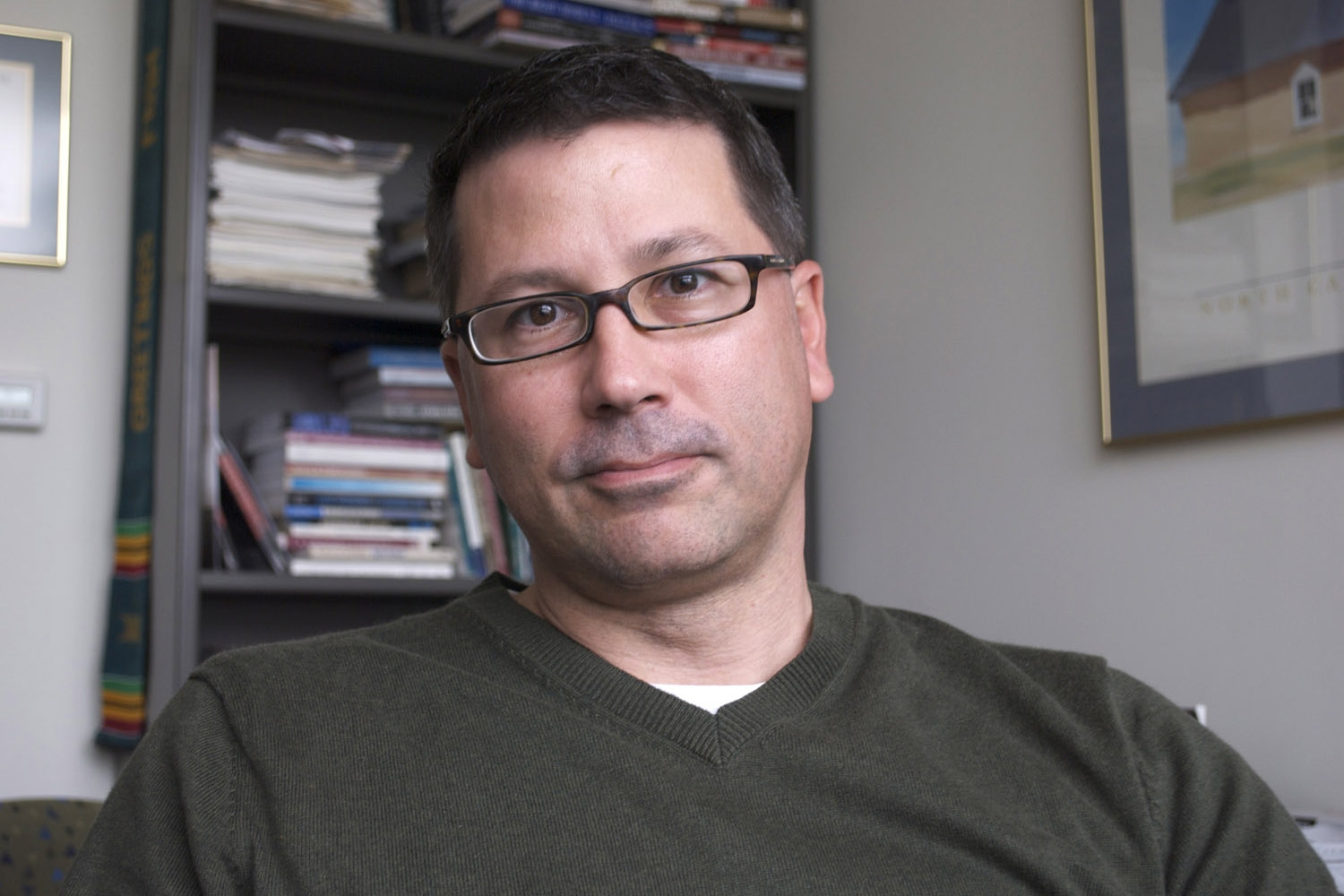
Tom Schaller“Presuming he avoids over-reaching on assault weapons or immigration reform — or unless the president makes a major push on climate change, as he hinted in his inaugural address Monday — Mr. Obama’s second-term success or failure will be largely defined by how he handles these fiscal battles with Capitol Hill Republicans,” writes political science professor Thomas Schaller in his latest Baltimore Sun column.

And what can we expect those fiscal battles look like? Schaller suggests, “no matter how ugly the squabbling gets on Capitol Hill during the next two years, there’s almost no incentive for Republicans…to work with Mr. Obama during his second term.” But aside from “fiscal fighting interrupted by the occasional international episode,” Schaller anticipates the U.S. will see a “no drama Obama” in the next four years and a fairly uneventful second term.

Donald Norris, Public Policy, in the Baltimore Sun

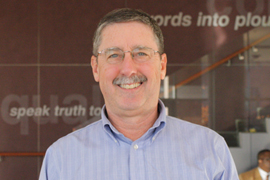
Donald NorrisAnnual campaign finance reports released this week indicate three fundraising leaders among potential Democratic candidates for Maryland governor: Lt. Gov. Anthony Brown (taking in $1.25 million), Attorney General Douglas Gansler ($1.24 million) and Howard County Exec. Ken Ulman ($1.14 million). A fourth potential candidate, Montgomery County Del. Heather Mazeur, collected $248,671 in 2012, leaving her with $380,000 in cash on hand.

Donald F. Norris, professor and chairman of UMBC’s Department of Public Policy, told the Baltimore Sun that Ulman’s fundraising figures were particularly surprising, saying, “You would think the other candidates would be ahead of him, but he’s been out there on the hustings.” Regarding relative newcomer Mazeur, Norris notes that the little-known delegate would face long odds in a gubernatorial race but, “This is very early and is very fluid. A lot of things can happen.”

Leading potential candidates from the Republican party include Harford County Exec. David Craig and Frederick County Commission Pres. Blaine Young.

Laura Hussey, Political Science, on the Marc Steiner Show

Laura HusseyLaura Hussey, assistant professor of political science, participated in a lively conversation on the Marc Steiner Show discussing the 2013 Maryland legislative session, in which lawmakers will grapple with topics like gun control and the death penalty. Joining her on the program were Cory McCray, co-founder of the BEST Democratic Club; Jon Cardin, Delegate for Maryland’s 11th District in Baltimore County; and E.J. Pipkin, Minority Leader in the Maryland State Senate.

Hussey initially focused on the question of whether we have too many people in prison, responding,  “I think that the answer has got to be ‘yes.’ If you look at the U.S. relative to the rest of the world, we are a tremendous outlier in terms of our rate of incarcerating people.” She also detailed how having a prison record has serious implications for individual people’s lives as well as continuing the larger cycle of poverty.

Additional topics Hussey covered in the radio segment include perceptions of environmental policy relating to the Chesapeake Bay and public views on raising transportation funds through increasing the gas tax.

Donald Norris, Public Policy, in the Baltimore Sun

Donald Norris UMBCIn the weeks since the shooting in Newtown, Conn., Gov. Martin O’Malley has repeatedly referred to gun violence as a “public health issue.” On Monday he announced a plan that would give Maryland one of the nation’s strictest gun laws, reports the Baltimore Sun. To own a handgun, residents would need to pass a training course and provide fingerprints to a police database, and Maryland would ban the sale of assault rifles and high-capacity magazines.

How was the proposal received and how might this impact O’Malley’s prospects in a national election? Donald F. Norris, professor and chairman of UMBC’s Department of Public Policy, notes, “This appeals to the Democratic base,” continuing, “If he can get out in front on this and show some success legislatively on this, it bodes well for him in the Democratic primary.” The Sun reports O’Malley aides have dismissed the notion that the gun proposal signals his presidential aspirations.

Roy Meyers, Political Science, on WYPR’s Maryland Morning

Roy Meyers (UMBC)On Wednesday, Governor Martin O’Malley is expected to deliver his budget proposal for the coming year to the Maryland legislature. Last year the General Assembly garnered a lot of unwanted attention for failing to pass a budget before time ran out in the regular legislative session. WYPR’s Sheilah Kast interviewed UMBC political science professor Roy T. Meyers on Maryland Morning to learn if there might be any surprises in store for this year.

“The state has made some very tough choices over the past couple years in reducing spending,” says Meyers. Listen to the full interview to learn about the relationship between federal and state budget cuts and what Meyers anticipates in the coming year for the Transportation Trust Fund and a possible gas tax.

Thomas Schaller, Political Science, on Sabato’s Crystal Ball and Politico

Tom Schaller 1A new post by UMBC political science professor Thomas F. Schaller on Sabato’s Crystal Ball discusses the concept of election “drop-off” and why he expects it to benefit the Republican Party in the 2014 election.

Schaller explains, “‘Drop-off’ is the political science term for the decline in turnout between the high-water benchmark of presidential elections and other electoral moments” such as “midterm elections for both chambers of Congress” and “state and local elections…held in non-presidential years.” Between 1964 and 2010, the average drop-off effect was 14%, with election turnouts ranging from 54.2% to 69.3% in presidential cycles and from 41.8% to 55.4% in midterm cycles.

What effect does this have? Schaller writes, “It’s no mystery why Democrats generally perform better in presidential years while Republicans tend to excel in midterm cycles: Lower midterm turnouts tend to skew the electorate toward older, white and/or more affluent voters.” He concludes, “Democrats will need to employ new strategies to compel voters who disappear when the presidency isn’t on the ballot to show up.”

For discussion on this topic, see also Charlie Mahtesian’s Politico blog, which excerpted and linked to the piece.

Thomas Schaller, Political Science, in the Baltimore Sun

Tom SchallerThomas F. Schaller, professor of political science, writes in his latest Baltimore Sun column, “As Washington politicians search for budget solutions, imagine if there were a magical revenue source that operated not unlike a national consumption tax that many conservatives prefer and would mitigate global warming to please liberals, all while helping repair America’s infrastructure and strengthening our national security, to the delight of almost everyone. Actually, such a tax already exists: It’s called the federal gasoline tax, and it’s been stuck at 18.4 cents per gallon for two decades. We’re long overdue to increase it — maybe even double or triple it.”

How does the gas tax work and what is Schaller’s argument for increasing it? Read his commentary to learn more.

Donald Norris, Public Policy, in the Baltimore Sun, Gazette and BBJ

Today’s Baltimore Sun suggests the next 90 days will likely be the most important that remain in Martin O’Malley’s tenure as Maryland governor. Reporters Michael Dresser and Erin Cox write, “As the General Assembly opens its 2013 session Wednesday, O’Malley will be looking to cap a record that many people believe he will use as a springboard for a future presidential run.”

Donald Norris UMBCKey issues to be debated include the death penalty repeal, assault weapons ban and offshore wind power, all of which have national resonance. Donald F. Norris, professor and chairman of UMBC’s Department of Public Policy, told reporters, “Objectively, if you look at what he’s proposed and what he’s gotten, he’s gotten a lot of what he proposed,” but a few more wins this legislative season give him the strong record he would need to take to Iowa and New Hampshire if he seeks the presidency in 2016. Norris stated, “If he gets the death penalty nullified and wind energy, those kinds of things appeal to the liberal base of the Democratic Party.”

In the Baltimore Business Journal, Norris commented more specifically on a potential increase in the state gas tax this session, noting that the CEOs of major Maryland companies would need to get behind such a bill to move it forward, given previous concerns that lawmakers could redirect money out of the Transportation Trust Fund.

Norris also spoke to the Gazette about the upcoming 2013 session, suggesting bans on assault weapons and high-capacity magazine clips are likely to pass even if some conservative Democrats unite with Republicans to oppose them, and that overall, the Republican Party’s limited influence in the state is “not enviable.”

Donald F. Norris, Public Policy, Publishes New Article on E-Government

PAR coverHas the promise of e-government fulfilled expectations? Donald F. Norris, professor and chairman of UMBC’s Department of Public Policy, has co-authored a new article in Public Administration Review on the trajectory of local e-government in the United States, comparing it with early predictive writings on the topic.

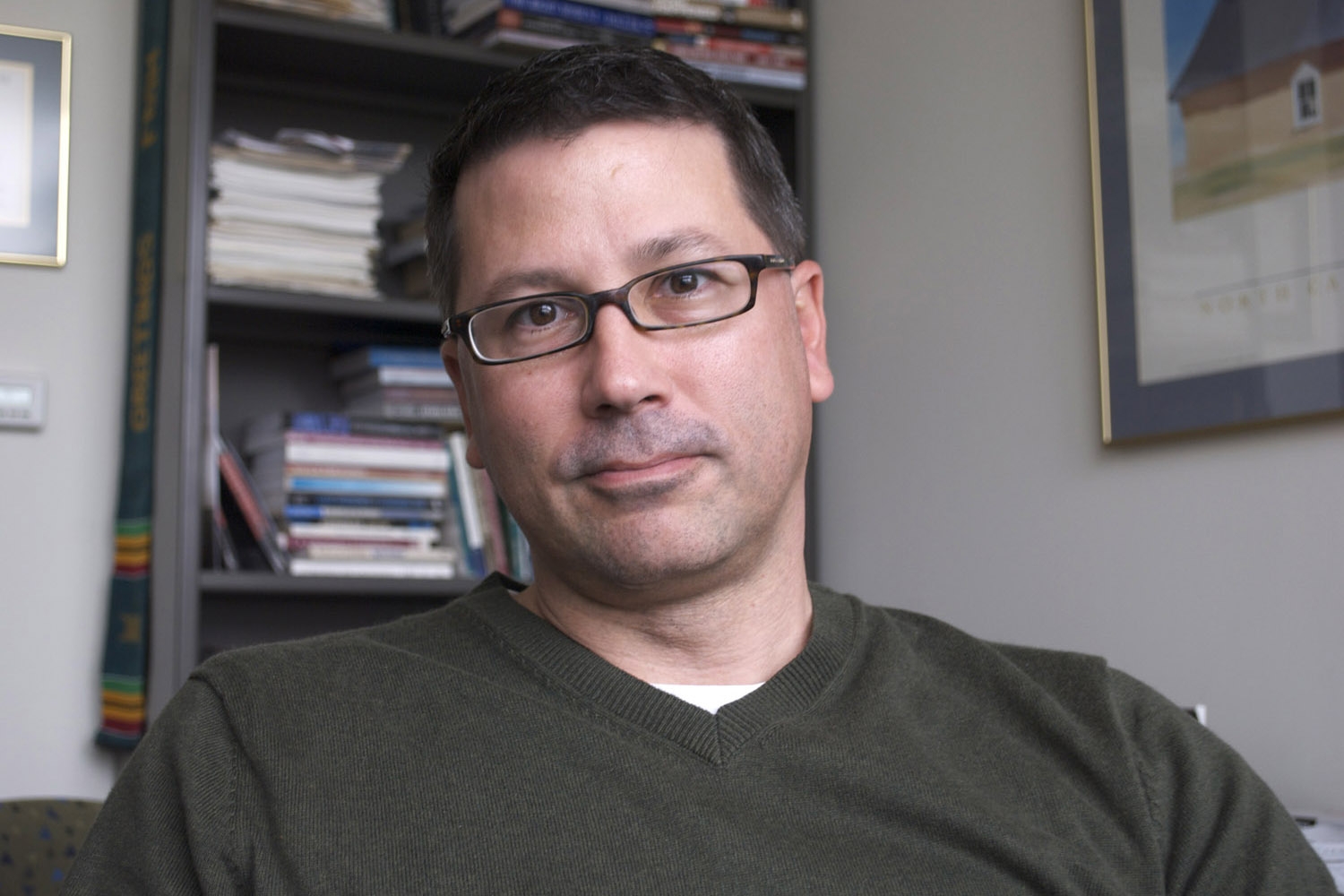
Donald Norris UMBCIn “Local E-Government in the United States: Transformation or Incremental Change?” Norris and Christopher G. Reddick (U Texas-San Antonio) describe how local local e-government has not produced the results predicted by early analysts. With limited interactivity, local e-government today is mainly about delivering information and services online; in other words, it is a one-way communication tool. Further, the authors expect this trend to continue for the foreseeable future.

Click to read abstract (open) or full article (requires subscription).

Thomas Schaller, Political Science, in the Baltimore Sun and NYT

Tom SchallerIn the last week of December, UMBC political science professor Thomas Schaller published a year-in-review in the Baltimore Sun, highlighting Maryland’s legalization of same-sex marriage, the rise of Gov. Martin O’Malley on the national stage, decreasing rates of violent crime and property crime in Maryland, and improvements in Maryland students’ performance on national education tests. He then recognized the achievements of UMBC President Freeman Hrabowski, who in 2012 received the Heinz Award for Human Condition and was appointed by President Obama to the new Advisory Commission on Educational Excellence for African Americans.

Schaller also appeared in a New York Times blog post by Paul Krugman, who applied the central argument of Schaller’s book Whistling Past Dixie to the issue of gun control.

Roy T. Meyers, Political Science, Writes Baltimore Sun Op-Ed

Roy Meyers (UMBC)Rather than voting for or against a debt ceiling increase, lawmakers should vote to eliminate the debt ceiling entirely, suggest UMBC political science professor Roy T. Meyers and colleague Philip G. Joyce in a recent Baltimore Sun op-ed.

The scholars call the debt ceiling “an anachronism that causes more harm than good” and “a distraction from any reasonable debate on taxes and spending.” They suggest Congress should vote to repeal it, set reasonable targets for debt reduction over a multiyear period, and then use performance data to identify which government programs do and don’t work. Such data could inform arguments for cutting, sustaining or boosting spending for different programs.

Dennis Coates, Economics, in Bloomberg Businessweek

A new Bloomberg Businessweek article sheds light on tax subsidies that benefit college athletic programs, including hundreds of millions in funding for stadium construction and sports departments’ exemptions from taxes on ticket, television and other income generated by their stadiums.

UMBC’s Dennis Coates, professor of economics, argues that college sports may not be the best use of tax exemptions. “When one thinks of charity, they don’t think of charity flowing to the head football coach of a big state university.” Questioning municipal  financing for stadiums Coates notes, “Using the borrowing power of the state and tax-exempt interest to build stadiums for sporting events isn’t the real purpose of the university, either.”