All posts by: Dinah Winnick


UMBC Again Named to Times Higher Ed List of “Top 100 Under 50” Universities Worldwide

THE 100 Under 50For the third consecutive year, UMBC has been named to the Times Higher Education‘s 100 Under 50 list of the world’s best young universities. 

This year, UMBC ranked #65, joining such institutions as the École Polytechnique Fédérale de Lausanne, Korea Advanced Institute of Science and Technology, Université Paris-Sud, University of Calgary and University of Warwick.

THE‘s “100 Under 50” highlights colleges and universities established less than 50 years ago that have promising futures. Particular attention was given to institutions with strong research, innovation and an international outlook.

Phil Baty, editor of Times Higher Education Rankings, said: “The academy’s traditional, ancient elite should be warned – many of the exciting young universities on this forward-looking list do not see their youth as a disadvantage in the global knowledge economy. While they may not have had centuries to accumulate wealth and cannot draw on generations of alumni and rich traditions of scholarship to drive their reputations, they are free from the burdens of history: free to be more agile, lean, flexible and risk-taking, giving them an advantage in a rapidly changing global marketplace; free to offer innovative teaching and focus their research on niche, high-impact areas.”

For the full list, see the World University Rankings website.

Justin Jacobs, Statistics Ph.D. student, receives Presidential Early Career Award in Science and Engineering

Justin Jacobs, a doctoral candidate in statistics at UMBC, has won the prestigious Presidential Early Career Award in Science and Engineering (PECASE). This is the highest honor bestowed by the U.S. government on science and engineering professionals in the early stages of their independent research careers, and recognizes Justin’s work with the intelligence community.

Justin received the award from Director of National Intelligence James Clapper on January 23, 2014, and he will be recognized by President Obama in a ceremony at the White House later this month.

At UMBC, Justin is being co-advised by Anindya Roy and John Zweck (now at UT Dallas), and plans to graduate this May. His dissertation is titled, “Density Estimation on Differential Manifolds.” He is completing his Ph.D. while employed with the National Security Agency.

President Clinton established the PECASE award program in 1996. The White House website notes, “Awardees are selected for their pursuit of innovative research at the frontiers of science and technology and their commitment to community service as demonstrated through scientific leadership, public education, or community outreach.” Learn more about PECASE and this year’s recipients in this White House Press release.

Congratulations, Justin, for this is a remarkable achievement!

Image: Director of National Intelligence James Clapper (far right) presents UMBC’s Justin Jacobs (center right) with his PECASE plaque. Photo courtesy of Justin Jacobs.

Manil Suri, Mathematics, Writes Washington Post Op-Ed

ManilSuriHeadShotIn a Washington Post op-ed titled, “Court ruling ignores India’s rich heritage of diversity,” UMBC mathematics professor Manil Suri critically examines the Indian Supreme Court’s recent decision to reinstate a 19th-century law criminalizing homosexual acts (Section 377), a law which had been repealed by a lower-court decision in 2009.

In his analysis, Suri draws attention to how the ruling “criticized previous judges for relying too much on foreign precedents in their ‘anxiety to protect the so-called rights of LGBT persons.'”

Suri argues that the foreign imposition in this case is actually the statute itself. He notes: “The statute was passed in 1860 as part of Britain’s colonization of India. Other former British colonies, from Malaysia to Jamaica, have the same law on their books, also labeled Section 377.” He concludes, “India needs to be reminded of its rich heritage of diversity, its historically liberal attitude toward variations in human behavior.”

You can read Suri’s full op-ed here.

Hilltop Presents on ACA’s Impact on Small Business

Hilltop Senior Regulatory and Policy AdvisorMaansi Raswant, Maansi Raswant, JD, gave a presentation titled The Affordable Care Act’s Impact on Small Business to the Catonsville Chamber of Commerce on October 30, 2013 at the Charlestown Retirement Community.

In the presentation, Raswant gave an overview of the basic provisions of the Affordable Care Act (ACA) and described health reform implementation in Maryland; described the ACA mandates for coverage (who needs to have it and who needs to provide it); and discussed how to determine whether an employer is considered a large or small employer, how to purchase coverage through exchanges, new benefits of and requirements for health plans, and how tax credits will be allotted. Access the full presentation here.

Raswant is a member of Hilltop’s Health Reform team, which provides essential support to Maryland’s Health Benefit Exchange as it implements health reform. For more information, go to www.hilltopinsitute.org/hrr.cfm.

Roy Meyers, Political Science, on PolitiFact

Roy Meyers (UMBC)In an October 1st tweet, U.S. Rep. Debbie Wasserman Schultz suggested the current federal government shutdown will result in “$10 billion in costs to the economy per week.” Is that accurate? PolitiFact consulted with UMBC political science professor Roy T. Meyers to find out.

The $10 billion figure Wasserman Schultz quotes is from the White House, which itself acquired the estimate from an August report from Goldman Sachs. To check this figure, PolitiFact went back to Meyers’ analysis of the 1995-96 government shutdown, which was estimated to cost $1.4 billion (mainly in back pay to furloughed workers). However, Meyers shares, you can’t simply add inflation to that figure to come up with an estimate for today, because of differences between the current shutdown and the previous one.

“This one is going to be bigger in terms of daily costs…,” Meyers told PolitiFact. “The economy is weaker. It can’t handle as much of a shock as it could handle in ‘95-’96.”

PolitiFact concluded that Wasserman Schultz’s statement was “mostly true.” Read their full analysis online. Meyers also contributed to PolitiFact’s analysis of Newt Gingrich’s recent statement that shutdowns are “a normal part of the constitutional process.”

Thomas Schaller, Political Science, Op-ed in The Baltimore Sun

Tom Schaller“The federal government has shut down,” reads a new Baltimore Sun op-ed by political science professor Thomas F. Schaller. “And it’s the Republicans’ fault — period.” In contesting the House Republican’s use of legislation funding the federal government to block or alter the Affordable Care Act and its implementation, Schaller notes:

The Constitution clearly establishes that a bill becomes a law if it passes both chambers of Congress and is signed by the president or if his veto is overridden by two-thirds supermajorities in both chambers. In 2010, Democrats in Congress passed, and President Barack Obama signed, the Affordable Care Act. […] The Constitution’s legislative process remains available to those who want to repeal it, of course. If unable to do so now, they can try to win elections and push to replace the law at some future point.

Schaller suggests members of the U.S. House of Representative who identify with the Tea Party have rejected this process. Read the full op-ed at the Baltimore Sun.

Roy Meyers, Political Science, in The Hill, Washington Post, Le Monde, on NBC News and More

Roy Meyers (UMBC)The threat of a government shutdown has become a reality and political science professor Roy Meyers is again in the news describing the direct and indirect costs of this action.

NBC News shared Meyers’ finding that the 1995-65 closure of national parks, monuments and battlefields alone cost businesses and local governments $295 million by preventing seven million park visits.

In MSNBC coverage of the shutdown, Meyers shared the importance of not just accounting for all of those costs, but also for those that are less measurable. “The real costs are really not in terms of consumer confidence or any of the standard measures in macroeconomics or even the federal budget,” he said. “The real costs are in trust in government and belief that government officials are paying attention to the real issues of the country.”

Read these articles to learn more:

Washington Post: Day One of the government shutdown: Now what?
Le Monde: Quel sera le coût du blocage budgétaire américain
Pew: How much might a government shutdown cost? Plenty, history says
The Hill: Small percentage of lawmakers served during 1990s government shutdown
NBC News: Why a government shutdown could be a pricey proposition
MSNBC: Taxpayers pick up bill if government shuts down
Politifact: Ted Cruz says ‘a strong bipartisan majority’ in the House of Representatives ‘voted to defund Obamacare’

Update: Meyers has also written a blog post for the London School of Economics on the shutdown: “Congress should be a venue for deliberation and compromise over policy, but the shutdown shows that Washington’s budget process is broken.”

Thomas Schaller, Political Science, in The Baltimore Sun

Tom SchallerAlthough Maryland voters won’t elect a new governor until the November 2013 general election, six gubernatorial candidates are already “poised to start running in earnest — touring the state, signing up volunteers and raising millions of dollars for a spirited race,” reports The Baltimore Sun.

“We’re moving into this phase when the policy and platforms are being rolled out,” says UMBC political science professor Thomas Schaller. “It doesn’t necessarily mean that voters want to be on that timeline.”

Why the rush? Because of a change by the General Assembly in 2011, the primary will be held in June rather than September. Plus, notes the Sun, it’s expected to be the most competitive primary in 20 years.

Learn more about the election in “Maryland governor’s race off to an early start.

Kate Brown, History, Book Talk on C-SPAN BookTV

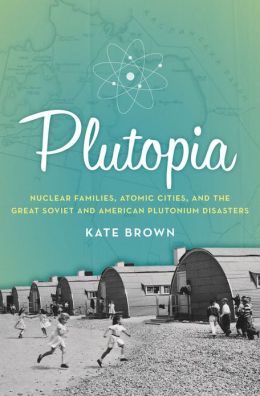
plutopiaHistory professor Kate Brown’s recent discussion of Plutopia: Nuclear Families, Atomic Cities, and the Great Soviet and American Plutonium Disasters (Ivy Bookshop, Baltimore, Md., Sept. 18) is now available online through C-SPAN BookTV.

In Plutopia, Brown writes about the “atomic cities” of Richland, Washington and Ozersk, Russia, where plutonium was first produced. To uphold secrecy during the nuclear arms race and compensate for the hazards of working in and around nuclear production facilities, the U.S. and Soviet governments offered generous salaries, educational and health care benefits in these “plutopias.” Brown argues that contamination to the cities and their surrounding environments occurred on a scale that dwarfed the disaster at Chernobyl.

Watch the full book discussion video on C-SPAN.

New Q&A with Pres. Hrabowski in the Baltimore Business Journal

President Hrabowksi’s new interview with reporter Sarah Gantz in the Baltimore Business Journal explores the role of technology in education across disciplines and how students benefit from having well-rounded educational experiences.

President Hrabowski shares:

…there are some skills [all students] need regardless of major — problem solving, knowing how to work in teams, knowing how to use technology as a tool in presenting and analyzing data. I am constantly encouraging students in STEM…to take courses in humanities and arts. We want arts and humanities students to take courses related to technology. The broader a person’s education, the stronger a person’s thinking skills and ability to solve problems.

Read the full interview on the Baltimore Business Journal (requires login).

Tyson King-Meadows, Political Science and Africana Studies, on Facing South

In “Why the 2014 Election Matters for Voting Rights,” the online magazine Facing South delves into analysis by UMBC’s Tyson King-Meadows on last week’s CBC Annual Legislative Conference panel “Protecting the Right to Vote.” King-Meadows is associate professor of political science and chair of Africana studies.
The panel discussed voting rights issues in the wake of the U.S. Supreme Court’s recent invalidation of Section Five of the Voting Rights Act of 1965 (VRA). In his remarks, King-Meadows described two ways the VRA’s influence could shrink further, including underfunding for the attorneys who address claims relating to voter rights and appointing people who are hostile to the VRA’s tenets to roles in the Department of Justice (DOJ) or federal courts.
“Let me give you a number: 684,” said Kings-Meadows. “That’s the number of non-competitive appointments in the DOJ alone.”
King-Meadows suggested that means an individual who is antagonistic toward the VRA could direct Justice staff to interpret the law in ways that could lead to further weakening of its powers, “or simply ignore meritorious complaints that come in,” Facing South notes. Read the full analysis on Facing South.

Roy T. Meyers, Political Science, on NPR’s Morning Edition

Roy Meyers (UMBC)Throughout the week, with a possible government shutdown looming, UMBC political science professor Roy T. Meyers has provided analysis for media from the Washington Post to USA Today on the costs of previous shutdowns and what is at stake this time around.

On NPR’s Morning Edition today, Meyers noted that it’s hard to estimate the true cost of a shutdown:

For example, what does it cost the American people when you tell somebody who leads the Centers for Disease Control and Prevention to plan for a shutdown rather than try to reduce or eliminate public health threats. To me, the cost there is the increased risk associated with not paying as much attention to public health.

The problem of diverted attention isn’t just felt in agencies — it has serious impacts for Congress itself, Meyers argues:

Think for example about immigration. After the last presidential election, a lot of people in Washington said, “Well, this is the year to have an immigration law.” Where is it? Well, there are still big issues there to resolve and one reason why they are not resolved is that Congress is spending far too much time fighting over this…

Listen to the full story on NPR.

Update: Additional coverage linking to Meyers’ research appeared on the Washington Post‘s The Fed Page blog on Sept. 26 and Wonkbook on Sept. 27.