All posts by: Dinah Winnick


Language, Literacy and Cultural PhD Students Publish and Present

Language, Literacy and Cultural (LLC) doctoral candidate John Fritz has been named editor of the “reflective practitioner” section of the new Journal of Learning Analytics published by the Society of Learning Analytics Research (SoLAR). Earlier this year, the Educause Center for Applied Research (ECAR) published Fritz’s research bulletin “Using analytics at UMBC: Encouraging student responsibility and identifying effective course design” (free Educause login required until October 30, publicly available thereafter).

Several LLC students have published book reviews in HyperRhiz, the peer-reviewed online journal specializing in new media criticism and net art:

Additionally, LLC PhD student Erin Berry will present “‘The Vivid Memoirs of an Obnoxious Slave… Unearthing Sylvia Wynter’s Revolution in Jay Electronica’s Rap Narratives” at the upcoming Africana Studies Conference as part of the panel “Revolution: Reclaiming Traditions, Redefining Change in Africa and the Diaspora.

Roy T. Meyers, Political Science, in the Washington Post, USA Today and More

Roy Meyers (UMBC)As the nation again faces the risk of a government shutdown, media have been turning to political science professor Roy Meyers’ research on past shutdowns to understand what is at stake.

In 1996, the Office of Management and Budget reported that the two major shutdowns of the decade cost approximately $1.4 billion ($2 billion in today’s dollars), but Meyers has suggested that estimate didn’t account for several factors, such as the lost value of work that wasn’t done, $300 million federal parks would have taken in if they had remained open, and the reduced pace of IRS audits. Inefficiencies and bottlenecks develop when large parts of the workforce are furloughed, adding to the cost of a shutdown. Also, Meyers notes, contractors might start charging the government a premium after shutdowns to compensate for the uncertainty of their payments.

Meyers’ work in this area appears in reporting and analysis on the possible shutdown in USA Today, on the Washington PosWonkblog and New York Times Economix blog, and on the Center for Effective Government website. Additional interviews with NPR and NBC news will be available soon.

Update: Coverage of the risk of government shutdown, linking to Meyers’ research, also appeared on the Washington Post Federal Eye blog.

Dennis Coates, Economics, in The New York Times and Newsday

The Nassau County Legislature unanimously approved a $229 million bid by Forest City Ratner to restore and update the Nassau Coliseum on Monday. Naussau County voters turned down a plan to borrow $400 million to build a new arena two years ago and this deal is intended to save taxpayers the expense of the renovation, but critics wonder if the Coliseum can be successful without the New York Islanders, as the team will move to the Barclays Center after the 2014-15 hockey season.

UMBC economics professor Dennis Coates tells The New York Times that he doubts the arena can generate the revenue it needs without the draw of a big sports team. He suggests the arena could be forced to rely on concerts for revenue, competing against Barclays, Madison Square Garden and the Izod Center.

“The bottom line is,” Coates says, “are they going to have to back out of the deal at some point and come back to the county and say we need more money, and the county will be on the hook.”

In Newsday coverage of the deal Coates notes, “There does not seem to be any corporate welfare in this plan. And that makes me wonder — where is the corporate welfare? At what point are they going to say: ‘We need a handout to pull off what we promised but never in a million years could have delivered’?”

Read the full articles in The New York Times and Newsday.

Kevin Wisniewski, LLC Doctoral Student, Publishing and Presenting Research

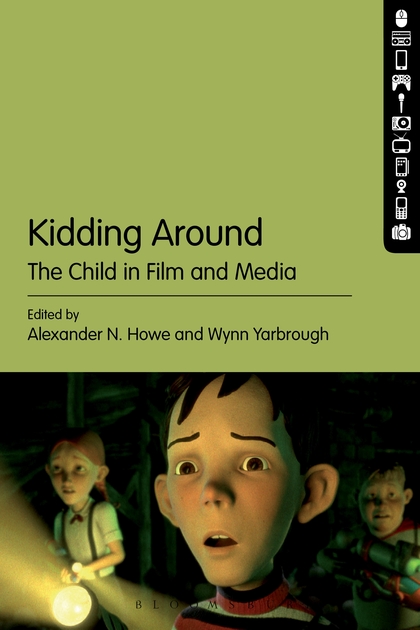
Kidding Around book coverUMBC Language, Literacy & Culture doctoral student Kevin Wisniewski is publishing the lead chapter in the new anthology Kidding Around: The Child in Film and Media (Bloomsbury, January 2014). The chapter, “Betwixt and Between: Reading the Child in M. Night Shyamalan’s Films,” appears at the start of the first section of the book, “Rites of Passage and Impasse.”

Wisniewski will also present a paper at the upcoming conference of the South Atlantic Modern Language Association (SAMLA) & Society for the History of Authorship, Reading, and Publishing (SHARP), Nov. 8-10. Wisniewski will present his paper, “Improving the Art of Paper War: Francis Hopkinson and the Performance of the Press in the Early Republic,” alongside colleagues from Duke and the University of Wisconsin, Madison in the session “Making Meaning in American Print Culture.”

Thomas Schaller, Political Science, in the Baltimore Sun

Tom SchallerPolitical science professor Thomas F. Schaller’s latest Baltimore Sun opinion column responds to the Western Maryland Initiative — an effort to organize Maryland’s western counties to secede and create their own state.

Organizer Scott Strzelczyk’s main complaint, Schaller notes, is that Maryland is so heavily Democratic that non-Democrats are not as well represented. Strzelczyk has suggested, “If we have more states, we can all go live in states that best represent us, and then we can get along.”

Schaller recognizes Maryland as a blue state and “leader nationally even among liberal Democratic states on issues like gay marriage and gun control.” He notes, “it’s understandable that tea party-affiliated Western Marylanders like Mr. Strzelczyk feel a bit displaced, or at least ignored,” but he argues that creating a new state is far from viable.

Read the full column at The Baltimore Sun.

Tyson King-Meadows, Political Science and Africana Studies, Speaks on Voting Rights Panel

Tyson King-Meadows, associate professor of political science and chair of Africana studies, will speak this afternoon on the panel “Protecting the Right to Vote” at the Congressional Black Caucus (CBC) Annual Legislative Conference. Panelists will discuss voting rights issues in the wake of the U.S. Supreme Court’s recent invalidation of key parts of the Voting Rights Act of 1965.
Panel organizers share:

Through its opinion in Shelby County v. Holder, the Supreme Court substantially altered the web of laws protecting the voting rights of the African-American Community.  While the federal government still retains formidable authority under the Voting Rights Act, Congress will be required to re-examine federal authority under Section 5 of the Act.  When combined with the challenges raised by voter suppression statutes passed by the states during prior to the 2012 elections, important concerns exists about the state of the law and whether the Court has turned back the clock.  This Braintrust will explore the impact of the Shelby County decision and how Congress can act to restore Voting Rights Act authority and continue to protect voter from evolving discrimination.

Prof. Spencer Overton, George Washington University Law School, will moderate the panel today, 1:00-3:00 p.m. at the Washington Convention Center, Room 143-A.
King-Meadows’ fellow panelists Nicole M. Austin-Hillery, Director and Counsel, Washington Office, Brennan Center for Justice; Wade Henderson, President & CEO of The Leadership Conference on Civil and Human Rights; Rev. Jesse L. Jackson, Sr., Founder Rainbow/PUSH Coalition; Greg Moore, Executive Director, NAACP National Voter Fund; Charles Ogletree, Harvard Law School; Becky Pringle, Secretary/Treasurer, National Education Association; Hilary Shelton, Senior Vice President for Advocacy and Policy, NAACP; and Deborah J. Vagins, Senior Legislative Counsel, ACLU Washington
Legislative Office.

Erle Ellis, GES, in The New York Times

Erle EllisIn a thought-provoking new op-ed in The New York Times, Erle Ellis argues that when it comes to global sustainability “overpopulation is not the problem.”

Ellis, an associate professor of geography and environmental systems at UMBC and visiting associate professor at Harvard’s Graduate School of Design, writes, “Many scientists believe that by transforming the earth’s natural landscapes, we are undermining the very life support systems that sustain us. Like bacteria in a petri dish, our exploding numbers are reaching the limits of a finite planet, with dire consequences. Disaster looms as humans exceed the earth’s natural carrying capacity. Clearly, this could not be sustainable. This is nonsense.”

Such claims about “natural carrying capacity,” Ellis suggests, are based in a fundamental misunderstanding of the ecology of human systems, which assumes they have a natural equilibrium. Ellis instead argues, “The conditions that sustain humanity are not natural and never have been. Since prehistory, human populations have used technologies and engineered ecosystems to sustain populations well beyond the capabilities of unaltered ‘natural’ ecosystems.”

Read the full op-ed on The New York Times website and learn more in a follow-up guest post on the Dot Earth blog.

Manil Suri, Mathematics, in The New York Times and on Public Radio

ManilSuriHeadShotMathematics professor Manil Suri has made quite an impact with a fresh New York Times op-ed ed that re-introduces readers to mathematics through an approach based in the humanities.

In “How to Fall in Love with Math” Suri writes, “Despite what most people suppose, many profound mathematical ideas don’t require advanced skills to appreciate.” One idea that he finds often intrigues people is the origin of numbers.

He writes, “Think of it as a magic trick: harnessing emptiness to create the number zero, then demonstrating how from any whole number, one can create its successor. One from zero, two from one, three from two — a chain reaction of numbers erupting into existence. I still remember when I first experienced this Big Bang of numbers. The walls of my Bombay classroom seemed to blow away, as nascent cardinals streaked through space. Creatio ex nihilo, as compelling as any offered by physics or religion.”

The op-ed received the maximum of 360 comments in its first day online and quickly became the #1 most emailed article of the day. Read the full op-ed on The New York Times website and stay tuned for recaps of Suri’s upcoming radio interviews on the beauty, power and mass appeal of math.

Update: After Suri’s New York Times op-ed appeared in print, he was invited to interviews with Joy Cardin on Wisconsin Public Radio (listen) and Michael Cohen on 1320 WILS radio in Lansing, Michigan (listen). Suri’s Times piece remains the #4 most emailed article of the month.

Gloria Chuku, Africana Studies, Publishes New Edited Volume “The Igbo Intellectual Tradition”

Gloria Chuku, associate professor of Africana Studies and affiliate associate professor of both Gender and Women’s Studies and Language, Literacy and Culture, is editor of the new volume The Igbo Intellectual Tradition: Creative Conflict in African and African Diasporic Thought. Chuku’s publisher, MacMillan, shares:

In this groundbreaking collection, leading historians, Africanists, and other scholars document the life and work of eleven Igbo intellectuals who, educated within European traditions, came to terms with the dominance of European thought while making significant contributions to African intellectual history. Mediated through a variety of interpersonal relationships, debates, and changing ideas over the course of three centuries, the figures covered here – including Oluadah Equiano, Chinua Achebe, Nnamdi Azikewe, Mbonu Ojike, Kenneth Dike, and many others – struggled to balance the defense of Africa against Western imperial discourse with the development of an authentic African intellectual heritage, even as their identities were shaped by both forces.

Simon Ottenberg (University of Washington) writes of the volume, “This is a very useful pulling together of major historical figures in Igbo discourse, allowing for contrasts and comparisons of their lives, and showing that the Igbo contribution to African development has been considerable.”
Chuku is the author of Igbo Women and Economic Transformation in Southeastern Nigeria, 1900-1960, in addition to over 30 scholarly articles. Her research has focused primarily on Igbo history and culture, gender studies, and women and the political economies of Nigeria and Africa more broadly.

The Hilltop Institute on Baltimore Sun “Picture of Health” Blog

Under the Affordable Care Act everyone who files a federal income tax form will soon be required to have health insurance or face a penalty. Open enrollment in the Maryland Health Benefit Exchange and similar exchanges across the nation begins on October 1. In the Baltimore Sun‘s “Picture of Health” blog, analysts from The Hilltop Institute at UMBC demystify this insurance requirement, explaining the penalty as well as exemptions, such as for individuals whose income is below a certain threshold or who can claim one of the exemptions specified in federal law (e.g., religious conscience, hardship).

Read the full article to learn more.

Donald Norris, Public Policy, in The Baltimore Sun

The Baltimore Sun reports that Texas Gov. Rick Perry will hold private meetings with companies during a visit to Maryland next week as part of his “mission to rustle up business for the Lone Star State.”

Donald Norris UMBCDonald F. Norris, professor and chair of public policy at UMBC, suggests it’s not just about jobs for Texas, saying, “It’s an effort by Perry to get his name out there.” Perry is viewed as a possible Republican presidential candidate in 2016.

Read the full story in The Baltimore Sun.

MIPAR and Hilltop Awarded $750,000 Grant for Healthy Homes Research

The U.S. Department of Housing and Urban Development has awarded a 3-year, $750,000 grant the Maryland Institute for Policy Analysis and Research (MIPAR), The Hilltop Institute at UMBC, and the Green and Healthy Homes Initiative™ (GHHI) to conduct a cost-benefit analysis of the reduction in asthma and associated Medicated expenditures resulting from the implementation of GHHI interventions.

GHHI is a national program spearheaded by the Coalition to End Childhood Lead Poisoning. GHHI integrates health-based housing interventions with weatherization to create access to healthy homes for children in low-income neighborhoods.

The UMBC study will focus on GHHI interventions in the homes of low-income families with asthma-diagnosed children in Baltimore City. The project will evaluate the extent to which GHHI interventions impact asthma morbidity and health care utilization costs, school absences, utility costs and work-loss days for parents or caregivers of children with asthma. The study will also examine how different levels of GHHI interventions impact post-intervention resident health and overall non-medical and energy cost savings.

The interdisciplinary research team includes principal investigator David Salkever, public policy/MIPAR; co-investigator Michael Abrams, Hilltop; researchers from the Johns Hopkins School of Medicine and Bloomberg School of Public Health; and co-principal investigator Ruth Ann Norton, executive director of the Coalition to End Childhood Lead Poisoning/GHHI.