We use cookies for analytics and, unless you opt out, advertising.
You can opt out of advertising at any time.UMBC uses essential cookies to run this site. With your permission we would also use analytics cookies (to understand how the site is used) and advertising cookies (to measure and target our ads on other platforms). Nothing else loads unless you accept. You can change your choice any time from Cookie Settings in the footer.Privacy Policy
EssentialRequired for the site to work (login, security, your cookie choice). Always on.
The American Physical Society, an influential professional society founded in 1899 to “advance and diffuse the knowledge of physics,” is highlighting the fusion research of UMBC’s Carlos Romero-Talamás at its largest annual meeting, held March 3 – 8 in Minneapolis this year. A short film showcasing Romero-Talamás and colleagues’ work on a relatively simple and cheap approach to fusion power will be broadcast on APS TV, a channel that plays on screens around the meeting venue, in selected local hotels on dedicated TV channels, on the virtual meeting platform, and on YouTube.
Fusion, which is the reaction that powers stars, releases enormous amounts of energy when light atomic nuclei combine to form heavier ones. Initiating, sustaining, and controlling the process in a way that allows humans to generate clean, safe, and near limitless commercial power has long been a goal in the physics community and beyond. The film, created by the international film and broadcasting company WebsEdge, brings viewers into the lab where Romero-Talamás, alongside colleagues and students from UMBC and the University of Maryland, College Park, are questing to bring this celestial energy down to Earth.
Romero-Talamás’s group is exploring a promising alternative to traditional fusion power approaches, using equipment that is smaller, cheaper, and more simple to operate. The group’s current experiments are going well, and they are working to attract public and private investment to build a next-generation machine that could be fitted to produce more power than it takes to run, a key milestone on the road to commercial fusion power.
“The APS March Meeting is an opportunity to connect and promote our research with the largest physics audience in the world,” Romero-Talamás says. The video aligns with the lab’s work to raise their visibility and attract additional students and researchers interested in fusion energy. “At the levels of effort that we will require for the next step in our quest for fusion energy, we will need to grow quickly,” Romero-Talamás says.
The positive environmental and health impacts of work led by Upal Ghosh, professor of chemical, biochemical, and environmental engineering at UMBC, was recently highlighted by the National Institutes of Environmental Health Sciences (NIEHS). The agency showcased a low-cost technology that Ghosh and his colleagues developed to clean waterways contaminated with polychlorinated biphenyls (PCBs), a group of likely carcinogenic chemicals that were used in insulation, coolants, and electrical equipment for decades before being banned in the U.S. in 1979.
The chemicals are stable and persist in the environment, often accumulating in fish that live in contaminated waterways and posing a risk to humans who consume those fish. NIEHS funded Ghosh’s research into using activated carbon pellets to bind the chemicals in place at the bottom of the waterways. This prevents the PCBs from circulating through the aquatic food chain. In projects carried out in contaminated lakes, rivers, and harbors in Delaware, Maryland, and elsewhere, Ghosh’s team demonstrated that the technique could significantly reduce the concentration of PCBs in the water and in aquatic lifeforms. Importantly, the technique is also significantly cheaper than standard clean-up approaches, such as dredging and disposing of contaminated sediment.
In related work performed with Kevin Sowers, from the Institute of Marine and Environmental Technology, Ghosh’s team also developed a way to combine the activated carbon with microbes that break down PCBs, reducing their toxicity.
With NIEHS support, Ghosh has co-founded two companies—Sediment Solutions and RemBac—to commercialize the technology and deploy it at full-scale to clean up contaminated sites across the country, such as at Mirror Lake in Delaware.
“The technology brings together innovations in material science and biology,” says Ghosh. It’s an honor, he says, that the NIEHS, the leading agency in the country that funds research on public health and the environment, recognized “the real impact our research is having on improving public health.”
Curtis Menyuk, professor of computer science and electrical engineering at UMBC, has won the 2024 SPIE G.G. Stokes Award in Optical Polarization. The award honors Menyuk’s pioneering work in the 1980’s developing equations to describe how light propagates through optical fibers, as well as his ongoing contributions to the fields of optics and photonics.
The fast and reliable internet we enjoy today would not be possible without the fundamental work that Menyuk and his colleagues performed decades ago. Modern global telecommunication systems are built on backbones of optical fiber, and the rate of information flow through the fibers is limited by physical phenomena that affect the way light spreads. Over time and distance, these phenomena can turn a crisp signal into indecipherable garbage, and so optical communication system engineers must account for them in their designs.
Menyuk developed equations that allow engineers to effectively model optical communication, most importantly by being the first equations to incorporate the effects of a property of light called its polarization. (Light travels as an oscillating electric field coupled to an oscillating magnetic field, and the direction of the electric field determines the polarization.)
One consequence of the equations was the realization that spinning optical fiber can minimize signal distortion.
“Curtis is a renowned pioneer in the field of optical communications, and over the years I witnessed the tremendous impact of his group’s work on the telecom industry, photonic technologies, and the field of optics in general,” says DEVCOM Army Research Laboratory physicist Michael Brodsky in a news story from SPIE announcing the award.
For his part, Menyuk credits much of the impact of his work to his successful collaborations with colleagues and students. “It’s what comes from working with good people,” he says.
The U.S. News rankings evaluate programs based on qualities such as strong faculty credentials, a good reputation among peer institutions, and the opportunity for students to use diverse online learning tools and engage with their instructors and classmates.
In response to surging interest in artificial intelligence, this year the UMBC program added a new class on AI fundamentals. AI is also one of four program tracks that students can choose to tailor their degree to their career goals. The other tracks are cybersecurity, data science, and user experience.
Recently, the program also launched five certificates, which students can pursue on their way to a master’s degree, or as a stand-alone credential.
In September, in honor of national online learning day, the information systems department interviewed the new graduate program director for the online master’s program, Jimmy Foulds, an associate professor in information systems at UMBC.
Below is a lightly edited version of the interview, which touches on trends in information technology, and the advantages of UMBC’s brand of education.
Jimmy Foulds (Marlayna Demond ’11/UMBC)
Information Systems: Can you shed light on some of the biggest trends, milestones, and challenges shaping online programs right now?
Jimmy Foulds: With the rapid advancement of artificial intelligence in recent years, the field is coming to the point where we need to take stock of the impacts of AI and other computing technologies in our world, both good and bad, and to better account for humans in the design of computerized systems. Large language models such as ChatGPT are poised to both make our lives easier and to possibly tip over the apple cart of the entire workforce. More than ever, there is a need for skilled computing professionals. Online programs, such as the online M.S. at UMBC, provide a flexible opportunity to advance your knowledge and get ahead in your career while keeping up to date with the rapidly changing computing landscape.
Information Systems: In thinking about these advantages and trends, what are some of your immediate and long-term goals for the program?
Jimmy Foulds: In the short-term, we are increasing our (already broad) AI course offerings, including a new AI course that I will teach myself next semester. We have also recently created program tracks that allow students to specialize in the cutting-edge areas of artificial intelligence, cybersecurity, data science, and user experience. In a new addition to our program, you can now earn certificates in these areas, as well as the foundations of information systems, without committing to completing a full master’s degree, which provides more flexibility.
In the long-term, as more computing professionals look to upskill themselves, we want to grow the program to reach more students, while maintaining the rigor and high quality of instruction that our students have come to expect. I will not compromise on that.
Information Systems: As online options become more prevalent and important among universities, and students wanting even more online options, how do you address the concerns of those that may still be skeptical of online learning?
Jimmy Foulds: I understand the concerns, as there are some programs out there that give online learning a bad name in the eyes of some prospective students. The UMBC online M.S. is not one of those programs. We have exceptional instructors in our program, including many of the tenure track faculty in the department who are leading experts in their fields, as well as highly experienced lecturers and professors of the practice (i.e., professors who specialize in teaching) with doctoral qualifications. UMBC has a reputation for teaching excellence and is a national leader in student-centered learning. Regarding the expertise of our faculty, the university is renowned as a doctoral university with very high research activity under the Carnegie Classification system, commonly known as an R1 institution. The courses offered in our online M.S. program aim to fulfill the full educational experience of our on-campus offerings.
Information Systems: Your research interests are in the area of socially conscious machine learning and artificial intelligence. How does your work aim to improve AI’s role in society regarding fairness and privacy?
Jimmy Foulds: Data-driven artificial intelligence systems now make many decisions that impact our lives, both big and small, from what restaurant we are recommended to try, to whether we get access to medical care, to whether we get offered a job interview. While it’s easy to think of data as being inherently objective and algorithms as being neutral and unprejudiced, the reality is that data reflects bias and inequity in our society, even if it were perfectly representative of the population, which is far from guaranteed. Bias in data leads to bias in algorithms, and to biased, unfair decisions by AI systems. In my research, I aim to help combat AI bias, and I try to shift the field toward taking a more human-centered perspective on the design of these systems. I have also worked on privacy-preserving machine learning algorithms, protecting users from having their personal data leaked by the algorithms themselves.
Information Systems: With your expertise in artificial intelligence and AI being a specialization in the M.S. online program, how will you be expanding the student experience for those interested in this path?
Jimmy Foulds: I am teaching a new introductory course on artificial intelligence that covers high-demand skills sought after by companies in both the public and private sector, including search, constraint satisfaction, and reinforcement learning. The course also covers reasoning and decision-making via propositional logic, probability, and Bayesian networks. As the incoming graduate program director, together with our faculty and staff, I also plan to take a close look at our curricula and see if and where we can make any improvements to take our course offerings to the next level.
Information Systems: The program just launched five new certificates, AI, cybersecurity, data science, UX design and foundations of information systems, all available 100 percent online. What are the advantages of a certificate versus the full master’s degree?
Jimmy Foulds: I am excited about our new certificate programs as they provide students with the opportunity to upskill themselves in a specific area and get recognition from employers without having to invest in completing a full master’s program. Flexibility is what online learning programs are all about, so these certificates are a welcome addition. Students can take up to two certificates concurrently. If they choose to go further, building on their certificate studies they may enroll in and finish an M.S. degree. Our online M.S. degree students can also earn these certificates along the way to their master’s degrees if they so desire. The freedom that the certificates offer to students is really empowering, and is much needed as it allows students to adapt their educational goals to fit into their busy lives.
Timmie Topoleski, professor of mechanical engineering at UMBC, has received the 2024 Society for Biomaterials Award for Service, which honors individuals who have devoted significant time and energy to advancing the goals of the professional society.
The Society for Biomaterials brings together professionals from academia, government, and business to promote advancements in biomaterials science, education, and professional standards to enhance human health and quality of life.
“I do not know anyone for whom “Service” is written in their DNA as it is for Tim,” said Paul Ducheyne, a professor of bioengineering at the University of Pennsylvania who nominated Topoleski for the award and is quoted in a society press release.
Topoleski has served on and chaired many Society for Biomaterials committees and has taken on leadership positions for many years. His own research has focused on understanding the behavior of a range of biomaterials, from the harmful plaques that can build up in people’s arteries, to the metal, ceramic, and cement used in joint replacements. The work may lead to better ways to diagnose and treat diseases such as arthritis and heart disease.
“I enjoy working to make the Society for Biomaterials a society that serves the needs of our members and provides a forum for the exchange of the latest developments in our biomaterials research,” Topoleski says. “It is an honor and very humbling to be in the company of those who previously received the award.”
The Center for Research in Emergent Manufacturing (CREM), which started as the ambitious idea of two UMBC researchers in 2019, is launching a major new project with the U.S. Army and other partners this year. UMBC has received an initial amount of more than $3 million to fund the first year of the project, which will investigate ways to digitize the army’s supply chain.
CREM is led by director Nilanjan Banerjee, professor of computer science and electrical engineering, and associate director Donna Ruginski, associate vice president for center development in the Office of Research and Creative Achievement at UMBC. It aims to help manufacturers reap the benefits, and manage the risks, of new manufacturing approaches increasingly centered around computer systems—a concept known as digital manufacturing.
Since its founding, the center has already established programs to educate manufacturing professionals in cybersecurity. The new project will significantly advance the center’s research activities and impact.
“The partnership with the army is an important step in our evolution as a research center. We will be working on cutting edge problems for the Army in the areas of digitization,” says Banerjee.
“We’re new and full of energy,” says Ruginski. “I’m confident we’ll make a difference.”
From spinning jennies to generative AI
Manufacturing has come a long way since the 18th-century textile industry was revolutionized by the invention of machines such as spinning jennies, which greatly increased the amount of thread a single worker could produce. Since then, new technologies, such as the electric grid in the early 20th century and computers in the mid-century, brought further waves of change to the way goods are made.
On a modern factory floor, robots and their computer control systems increasingly take the place of humans in the assembly process, and the future of manufacturing will likely be even more automated and digitized than it is today. Companies are increasingly turning to new technologies such as smart sensors, AI, cloud computing, and advanced analytics to increase the flexibility, resilience, and efficiency of their operations. This transformation—called industry 4.0—holds enormous promise to improve living standards by increasing productivity, but it also comes with some perils, including vulnerability to cyberattacks.
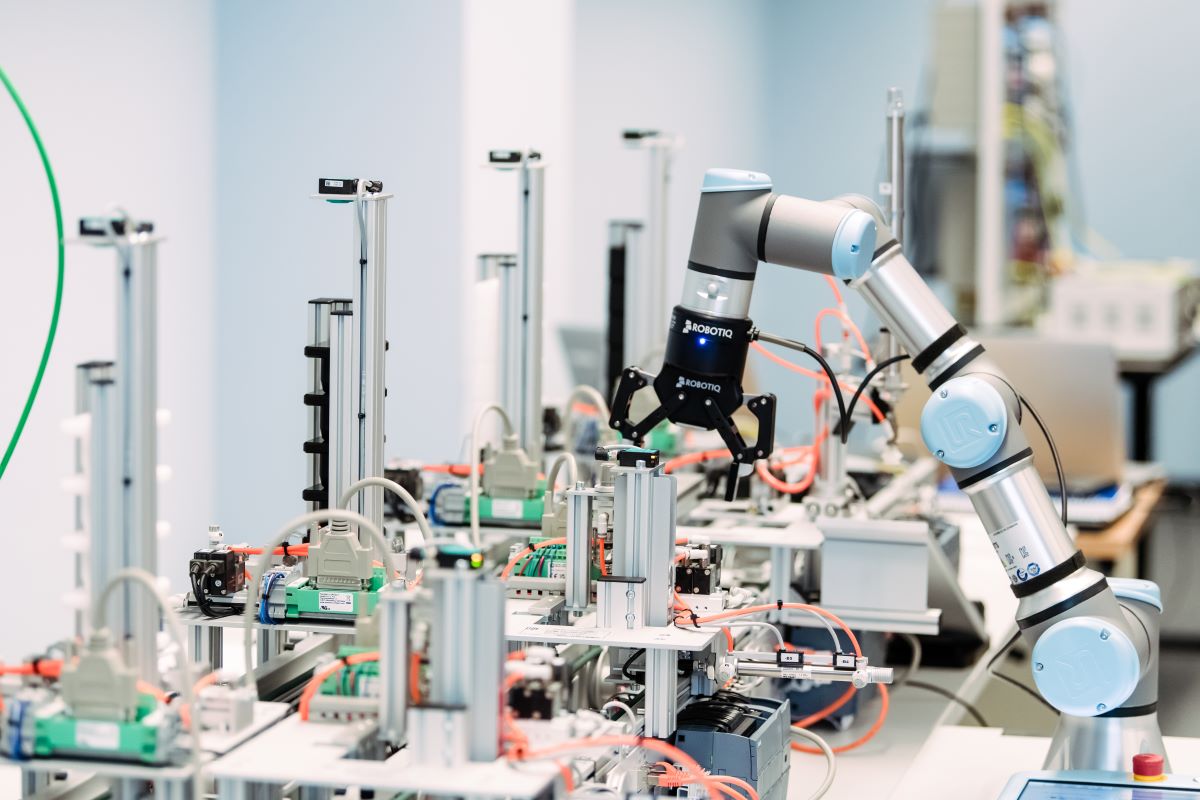
Equipment in the operations technology cyber range. (Marlayna Demond ’11/UMBC)
Training and research
UMBC aims to help manufacturers navigate the industry 4.0 shift. Part of that mission will be to educate future workers in digital manufacturing, be they UMBC students or working professionals looking to expand their skill set.
In 2020, under the auspices of CREM, Banerjee and Ruginski launched the Cybersecurity for Manufacturing Operational Technology (CyMOT) program to train manufacturing professionals in best practices for preventing cyberattacks on manufacturing operations. Through the program, CREM has educated more than 300 manufacturers from small and medium-sized businesses.
“The manufacturing sector has suffered a number of cyberattacks recently, so it’s important to make sure people in the sector are trained in cybersecurity,” says Banerjee.
CREM also hosts a state-of-the-art cybersecurity training and research facility, called a cyber range, specifically focused on digital manufacturing technology—one of only a few in the country. In the coming months, the cyber range will move to a new and dedicated location on the UMBC campus.
“The research and training efforts conducted by CREM under Dr. Banerjee’s leadership have wide-ranging consequences,” says Karl Steiner, the vice president for research and creative achievement at UMBC. “As digital manufacturing rapidly becomes a national and global standard, it is critical to develop adaptive cybersecurity strategies and protocols to secure the global supply pipeline. I am delighted that CREM is supported through one of three major research partnerships that UMBC developed in recent years with the U.S. Army.”
Earlier this month, UMBC joined dozens of other founding institutions at the kick-off meeting of a newly launched initiative to ensure sustained resources and opportunities in tech fields for women of color.
The effort, called the Action Collaborative on Transforming Trajectories for Women of Color in Tech, is organized by the National Academies of Science, Engineering, and Medicine and guided by the findings and recommendations detailed in a 2022 National Academies report. According to the report, while women of color make up a substantial and growing percentage of the female population in the United States, they earn a small percentage of computing degrees, and remain significantly underrepresented in the tech workforce.
UMBC has a history of success running programs, such the nationally recognized Meyerhoff Scholars Program and the Center for Women in Technology, that work to advance equity and inclusion and increase diversity among future leaders in science, technology, engineering, and related fields.
“Tech jobs are a vital part of our society,” says Anupam Joshi, the acting dean of the College of Engineering and Information Technology at UMBC. “We need to tap the entire talent base of the country to fill these jobs.”
UMBC’s efforts as part of the action collaborative will be a continuation of the university’s commitment to supporting students from underrepresented groups as they pursue technical education, he says. “UMBC has a solid foundation that we can build on.”
The action collaborative will offer participating institutions—representing higher education, national laboratories, and government—a platform to exchange ideas and promising practices for increasing the recruitment, retention, and advancement in tech fields of women who identify as African American, Black, Hispanic, Latina, Native American, Asian American, Alaska Native, Native Hawaiian, or Pacific Islander.
The action collaborative’s member institutions will collaborate over the coming four years to share novel, promising, and evidence-based practices, discuss and advance research priorities, share data collection practices, and more.
“This initiative will require dedication and collaboration from all of us,” said National Academy of Sciences President Marcia McNutt, in a press release. “We are committed to facilitating research, collaboration, and action that reflect the representation and lived experiences of women of color, in hopes of driving substantial change in the tech and engineering ecosystem.”
Many recent artificial intelligence (AI) breakthroughs—such as smartphone tools that recognize your friends’ faces or understand your spoken commands—are based on a computing approach that was first dreamed up nearly 80 years ago. Called neural networks, the approach loosely mimics the way biological brains work. For decades, it was a quixotic idea with results that fell far short of the power of human brains. Yet starting in the early 2000s, the technique took off. What changed? In short, computers finally got fast enough (and training data plentiful enough) for neural networks to realize their hoped-for potential.
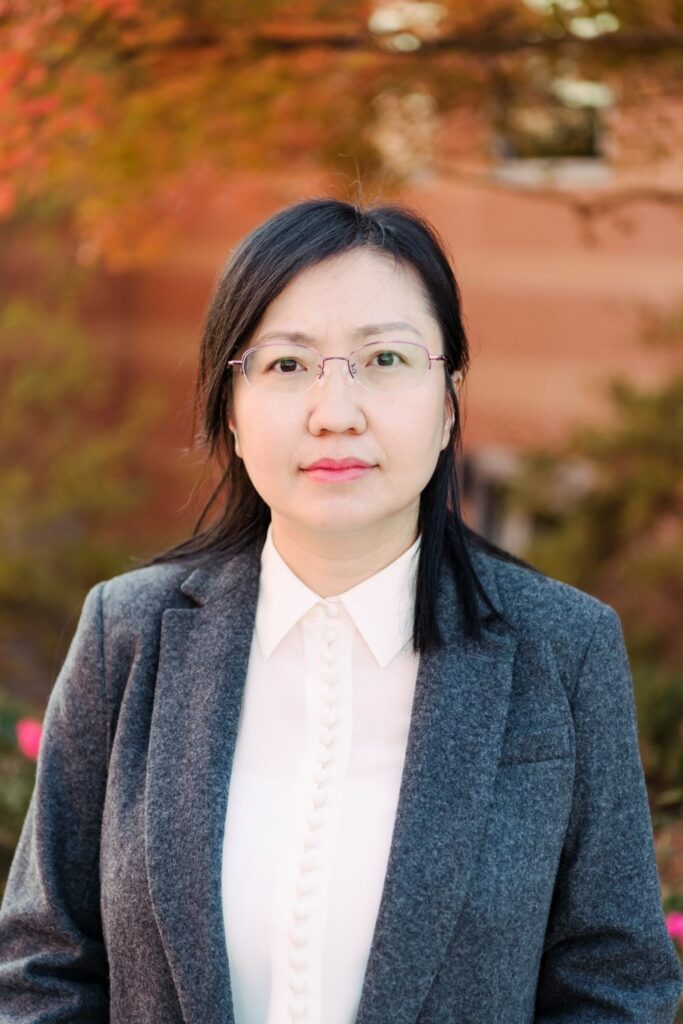
Chenchen Liu (Marlayna Demond ’11/UMBC)
The story of neural networks illustrates a key principle in computer science: the power of any computing technique is bound by the capabilities of the hardware that runs it. Improving that hardware is a major research focus for Chenchen Liu, an assistant professor of computer science and electrical engineering at UMBC. Liu was recently awarded a prestigious NSF CAREER award totaling nearly $540,000 that will fund her efforts over the next five years to advance the next generation of powerful computer chips.
As society continues to engage with the implications of the latest commercial iterations of AI, research efforts such as Liu’s are looking ahead to an even newer wave of applications, including self-driving cars, immersive virtual reality, and AI-assisted agriculture. These new applications often require separate neural networks—for example, an image recognition system and a collision avoidance system, to share information and work together.
Working with students and colleagues, Liu is studying how modifications to state-of-the-art AI chips could make such coordination easier.
UMBC News asked Liu about her research, the NSF CAREER award, the future of AI, and the need for responsible AI use.
UMBC News: What are some of the main challenges holding back next-generation AI applications?
Liu: In next-gen AI applications, machines are faced with a complex composition of multiple tasks, requiring them to run multiple AI models simultaneously. And not only do the models need to run at the same time, they need to share information from one to the other. The computing needs of the models may be different. Some models may need a lot of computing power, others may need a lot of memory. It becomes very difficult to coordinate these distinct resource needs on a single computing platform and to run everything in parallel and as efficiently as possible.
UMBC News: What are some ways that you plan to tackle these challenges in your NSF CAREER-funded research?
Liu: We first need to map the interactions of the different models and understand what computing resources they need and how they work together. We then plan to investigate a novel computer chip architecture designed to support these interactions. We will look for ways to flexibly schedule tasks and allocate computing power and memory so the system can operate differently for different scenarios. Eventually, we will integrate these techniques into a comprehensive framework that could be widely applied to various next-gen AI applications.
UMBC News: What are you the most excited about in your work?
Liu: I believe an incredible increase in AI complexity will be the next big thing in the world, and I am excited to become a small part of it. The increase in complexity comes with an urgent need for novel computer architecture to support it. Since the first computer was invented, people have been trying to optimize computing performance. Now with AI, current computing resources cannot meet the requirements caused by larger and larger volumes of data. A lot of researchers are working on novel computing architectures to improve performance and I am happy to be one of them.
UMBC News: Do you see a lot of opportunities for students in the field?
Liu: AI is changing everything in the world now. You can hear about job opportunities in Silicon Valley or with new AI start-ups nowadays, indicating a thriving new era of careers centered on AI computing. This trend is also shaping the interests of students on campus. They want to work on projects with AI components and we offer opportunities like that in many of our classes. It’s not only an opportunity for students, but also an opportunity for us to review our course development and career guidance.
UMBC News: What do you think is the future of AI?
Liu: The overall feeling is one of awe. Just like the first word carved on stone and the first rocket launched to the sky, AI is another milestone in human history. It marks humankind’s exploration of intelligence itself, asking questions about how it is formed and how it might evolve.
We should proceed cautiously, since AI is also strong enough now to challenge human intelligence and even deceive us. Many governments have made calls to regulate it.
I believe in a few years, we will have every perspective of our world reshaped by AI, with clear impacts on the economy and society.
Starting this May, a series of wildfires in Eastern Canada sent enormous smoke clouds wafting into the U.S., triggering air quality warnings in cities from the Midwest to the Northeast. For days, orange skies backdropped landscapes clouded by acrid air. People who could hunkered inside with the doors and windows shut. Those who had to go out faced itchy eyes, burning throats, and worse.
As a resident of the Baltimore area—which was blanketed with particularly bad smoke in both early and late June—UMBC Professor Chris Hennigan looked at the haze with dismay. But as an environmental engineer who studies air pollution, he had an additional thought: “We were looking at the air quality forecasts, and we thought ‘We have to gather data,’” he says.
The public found many colorful words to describe the summer’s unwanted smoke: brutal, eerie, dystopian.
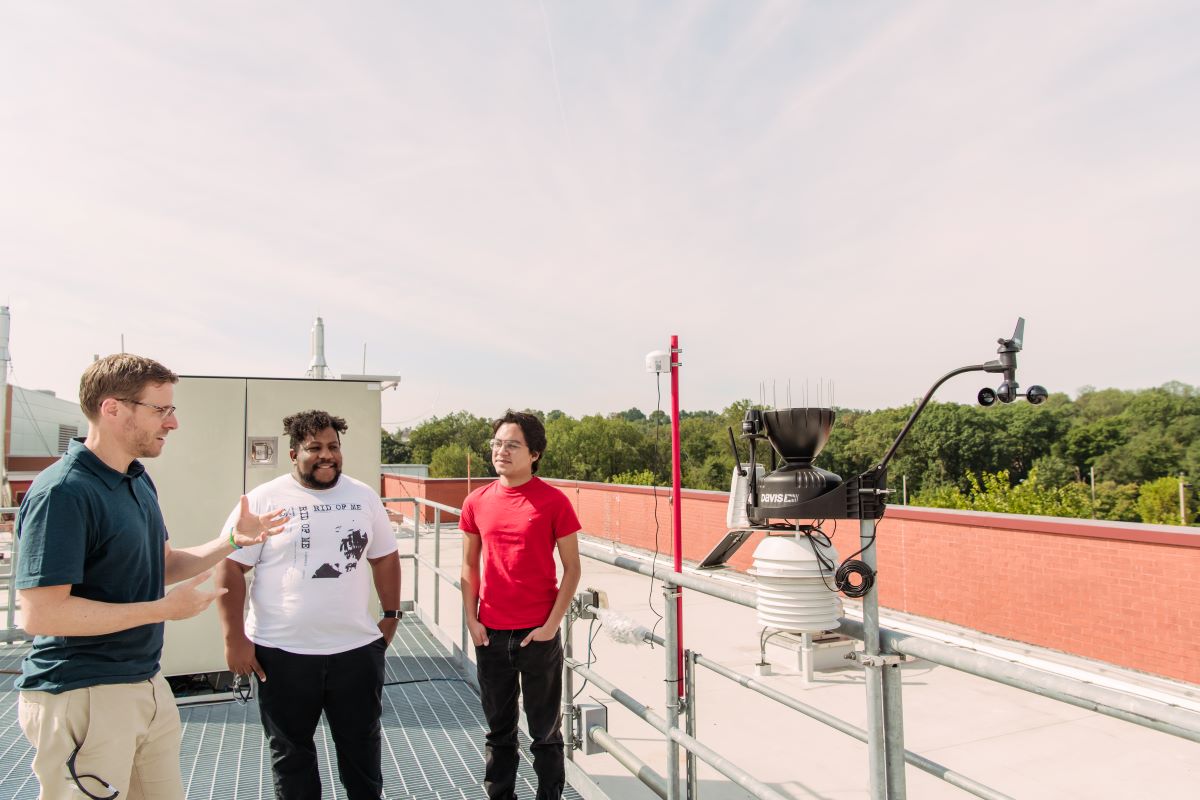
Hennigan and his team have been working to put numbers to the adjectives. On the roof of the engineering building, the researchers installed a squat, white sensor that monitors the levels of tiny particles in the air, particularly those measuring 2.5 micrometers in diameter or less—smaller than most bacteria. Called PM2.5, these particles are released in large numbers during fires. They are dangerous to human health because they can work their way into the deepest parts of the lungs and even enter the bloodstream.
Chris Hennigan, Joel Tyson, Ph.D. ’23, and Luis Rodriguez ’25 (left to right) on the roof of the engineering building next to an air quality sensor. (Marlayna Demond ’11/UMBC)
The sensor showed huge spikes in PM2.5 when the smoke blew through, on some days reaching levels considered unhealthy for anyone to breathe.
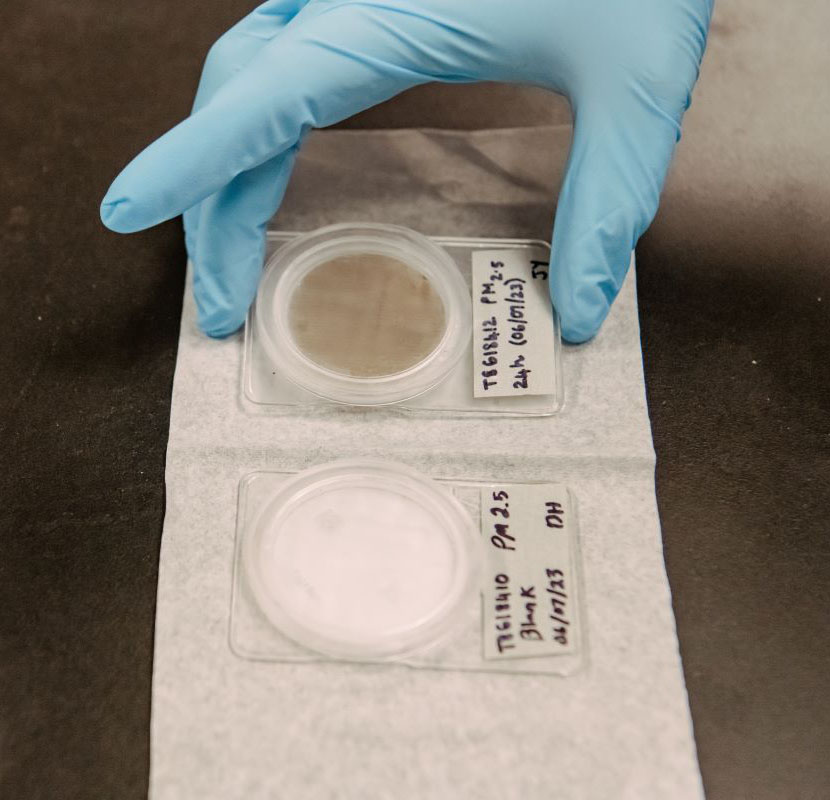
The researchers also set up equipment to filter particles out of the air. After 24 hours, they collected the filters, which they are storing, neatly labeled, in a refrigerator in Hennigan’s lab.
Hennigan shows samples of smoke particles collected this summer. (Marlayna Demond ’11/UMBC)
The filtered samples will advance at least two ongoing investigations, Hennigan says. In one avenue of inquiry, Joel Tyson, Ph.D. ’23, biochemical engineering, is studying how tiny particles can harm human lung cells. Before this year’s smoky summer, Tyson had been studying the toxic effects of particulate matter normally found in the Baltimore air. With the new smoke samples, he will start to investigate whether wildfire smoke particles, per unit, are more toxic than regular urban particulate matter, which comes from sources such as cars and power plants. Some studies have indicated that wildfire particulate matter is indeed more toxic, but more research is needed before any definitive conclusions can be reached.
In another line of research, Hennigan is also studying how particles in the air, including from smoke, may affect the climate. Undergraduate chemical engineering students Danielle Larios ’25 and Luis Rodriguez ’25 are assisting in the investigations.
The researchers study how particles of brown-colored carbon-containing material absorb light. Burning vegetation sends large amounts of this brown carbon into the atmosphere. It’s possible that the particles are trapping significant heat from the sun, accelerating the pace of planetary warming. Such effects are not normally included in global climate models, and better understanding of the process could improve humanity’s ability to predict, and manage, the coming years of climate upheaval.
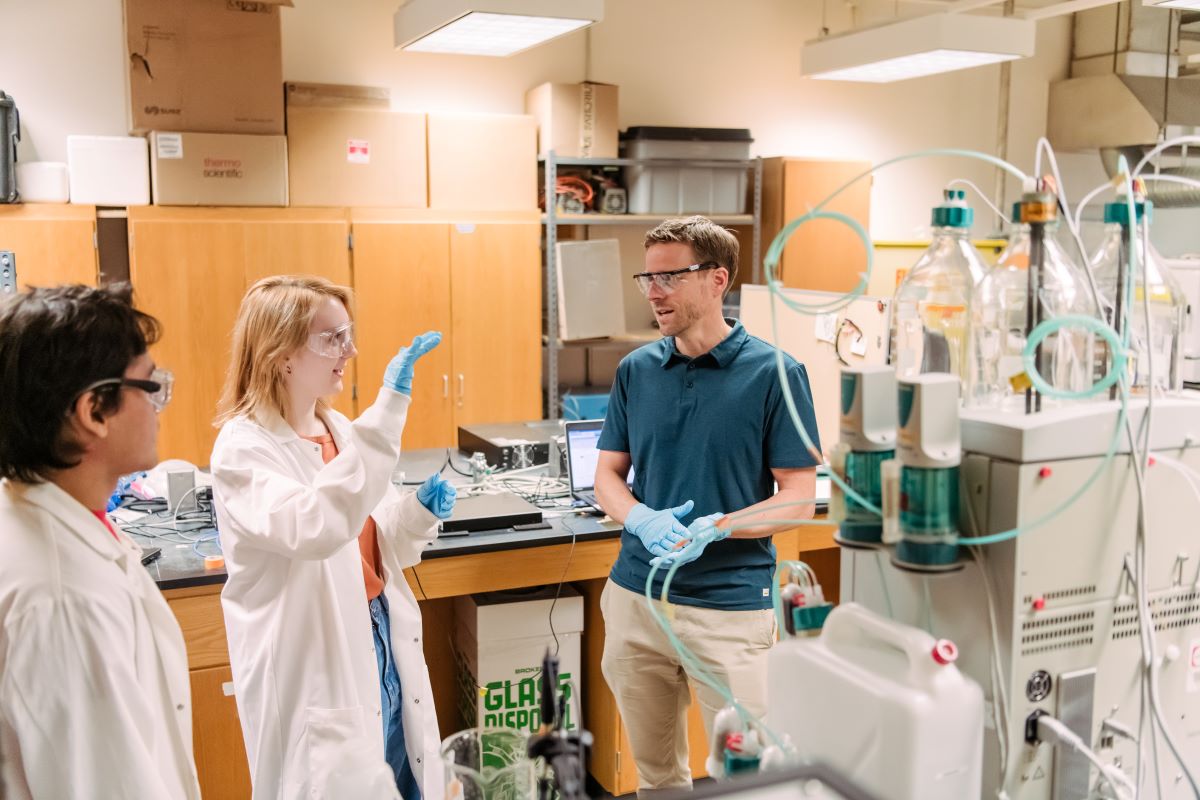
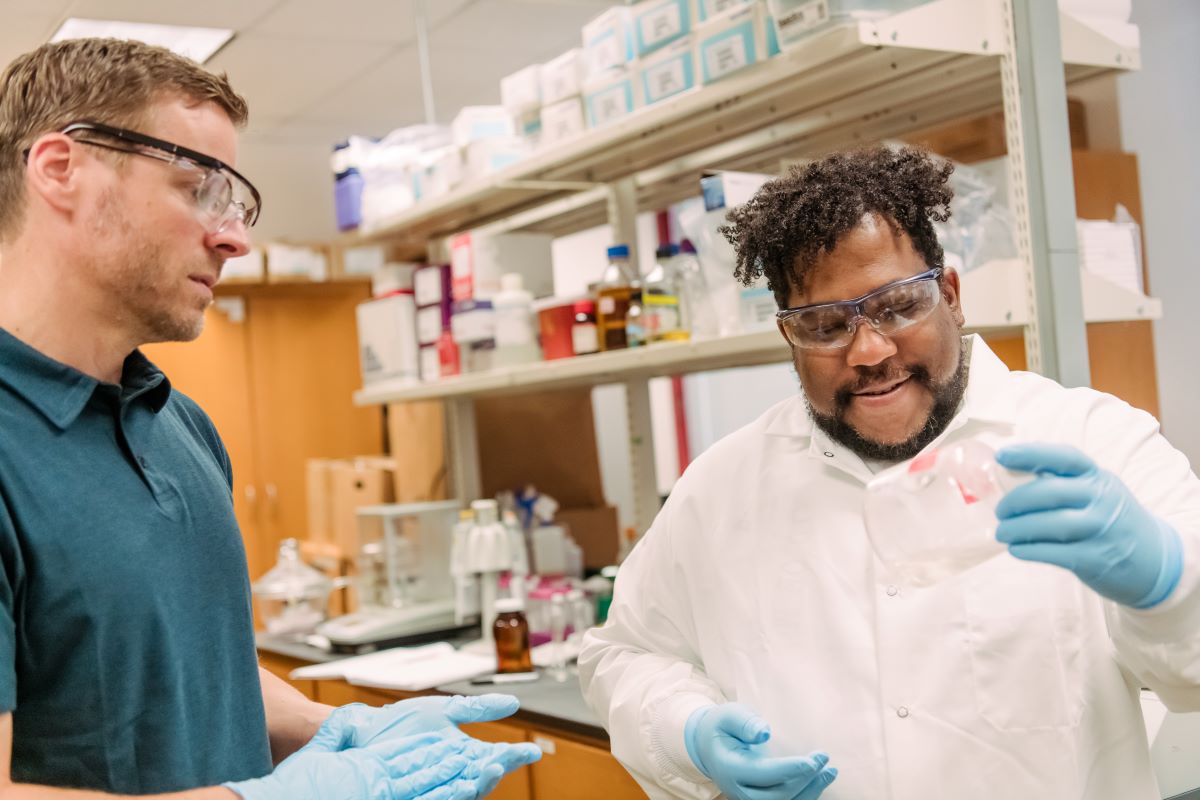
Rodriguez, Danielle Larios ’25 and Hennigan (left to right) discuss research in the lab. (Marlayna Demond ’11/UMBC)Hennigan and Tyson in the lab. (Marlayna Demond ’11/UMBC)
Climate change and wildfires are intimately linked. This summer was not only smoky, but also scorching. July marked the hottest month ever recorded, and scientists predict that as the world continues to warm, wildfires will continue to increase in quantity and intensity. “Smokeageddon,” as headlines put it, may become the new normal.
Hennigan says recent research illuminates how much wildfire smoke has contributed to air pollution trends. He points to a paper published in September in the scientific journal Nature that estimated that since 2016, wildfire smoke in the contiguous United States has undone around 25% of the progress in air quality made between 2000 and 2016.
For the researchers in Hennigan’s lab, those effects have been felt personally.
Rodriguez recalled how in June he had to go out to buy a fresh pack of N95 masks. “The smoke was just awful,” he says. Larios says she felt a burning at the back of her throat in just 15 minutes walking to her car.
For Tyson, the effects of the smoke were so bad that at one point he struggled to breathe and had to visit the doctor. The episode, he says, drove home the importance of his toxicology research.
All three note both the complexity of the systems they are studying and the importance of discovering new knowledge that might help society handle the environmental challenges it faces.
“Our work can have real-world impact, and that’s exciting,” says Larios.
She didn’t exactly experience a Sir Isaac Newton-like epiphany after being conked by a falling apple, but Priya Narayanan, Ph.D. ’08, mechanical engineering, spent a lot of her time at UMBC interacting with the iconic red fruit.
For her Ph.D. thesis, Narayanan worked with the U.S. Department of Agriculture to study whether a simple device made of a long, inclined track could reliably orient apples. The ultimate goal was to automate visual inspection of the fruit—using cameras to spot blemishes—and the cameras required the same view of the apple each time.
Narayanan spent thousands of hours performing experiments with rolling fruit, filming high-speed videos of its descent down the track, and developing mathematical models of the apple’s motion to explore why the fruit ended up in its final orientation at the bottom of the track.
“I was able to shape the direction of the research and got interested in modeling the contact mechanics of the apples,” Narayanan says. “I thought it might be easy, but it turned out to be very hard.”
Rouben Rostamian, a professor in the Department of Mathematics and Statistics at UMBC who worked with Narayanan on the modeling, commended her persistence.
“Priya was interested in studying the problem deeply,” he says. “She learned new areas of math so that she could really pursue her questions.”
Developing her skill set
Headshot courtesy of Priya Narayanan.
Curiosity and commitment to learning have been a constant of Narayanan’s approach to problem solving—even as the systems she studies and the roles she takes on have shifted over her career. Narayanan was recently named chief of the autonomous systems branch at the U.S. Army DEVCOM Army Research Laboratory (ARL). She leads teams working to develop intelligent robots to assist the U.S. military.
“I’m not studying my apples anymore,” she says. “But in graduate school, I broadened my skill set. That has really helped me throughout my career.”
After graduating from UMBC, Narayanan worked for a few years at the University of Maryland School of Medicine in Baltimore. She studied robotic systems that could assist patients recovering from strokes. The work gave her the opportunity to develop expertise in computer vision and image processing as well as gain experience making prototypes for robotic research and conducting clinical trials.
In 2014, Narayanan was awarded a National Research Council fellowship to work at the Naval Research Laboratory.
“It was around this time that deep learning started making waves,” she says. She shifted her focus to building artificial intelligence (AI) models. When her fellowship ended after three years, Narayanan joined the ARL, headquartered in Adelphi, Maryland, and has been there ever since.
She has ascended the ranks at the organization, moving from a research engineering position, to leader of a small team, to ultimately head of an entire branch.
Overlapping work with UMBC
Researchers under Narayanan’s leadership conduct research in robotics to help aerial, wheeled, and legged robots autonomously navigate rugged landscapes and difficult terrains, and coordinate their actions with other robots and humans.
As part of her role, Narayanan has worked with UMBC researchers affiliated with the Center for Real-time Distributed Sensing and Autonomy. The center, which is led by information systems professors Aryya Gangopadhyay and Nirmalya Roy, coordinates with ARL on research to develop AI-enabled smart robots.
Narayanan with fellow graduate students Raghavendra Angara and Jingrui Wang in the robotics lab at UMBC. (Photo courtesy of Narayanan)
Narayanan says she found her way into management by embracing leadership opportunities that came her way, such as leading an ARL seedling program that encouraged researchers to form teams and submit proposals for new high-risk, high-payoff projects. “I’ve also attended an entrepreneurship and leadership program organized by ARL in collaboration with UMBC Training Centers, so I’m still learning from the university,” she says.
She honed soft skills, such as communication and networking, that have been critical to her success. She also says her broad range of research experience has been useful in her leadership positions, helping her connect with team members who have varying areas of expertise.
Narayanan at a performance at UMBC. (Photo courtesy of Narayanan)
Looking back at her days at UMBC, Narayanan remembers a wonderful community and the feeling of being supported. Not long after she arrived on campus, she and a few fellow students found themselves in the same elevator as then President Freeman Hrabowski. He introduced himself and asked all the students their names and what they were studying. Later, when Narayanan and a friend performed a classical dance on campus in celebration of the Indian holiday Diwali, she remembers how President Hrabowski came backstage to complement their performance.
She encourages current students to take advantage of all that the university and the region have to offer: “Realize how many resources you have at your disposal, and really make use of them,” she says.
Uri Tasch, her Ph.D. advisor, who is now an emeritus professor of mechanical engineering, recalls how Narayanan showed up nearly every day at the lab. “You couldn’t stop her,” he said. “She did beautiful work, and she always had a smile on her face.”
The discovery of the Higgs boson. The first picture of a black hole. The Covid-19 vaccine. Many recent scientific advances, such as these, owe much to a largely unsung hero: high-performance computing.
Vandana Janeja (Marlayna Demond ’11/UMBC)
Yet the use of high-performance computing is generally limited to a niche group. “Some researchers are very sophisticated in the use of these tools, but many are not,” says Vandana Janeja, a professor of information systems at UMBC.
Janeja is on a mission to spread advanced computing know-how far beyond its current borders. “It’s not just for the elites,” she says.
She was recently awarded a nearly $1 million grant from the National Science Foundation (NSF) that will help further that mission. The grant is part of a larger NSF collaborative award with the University of Maryland Center for Environmental Sciences (UMCES).
Janeja and her UMBC and UMCES colleagues will work to connect a wide range of students and faculty with high-performance computing experts, creating and nurturing what has been called the cyberinfrastructure pipeline. The ultimate goal is to facilitate the flow of knowledge.
“Once one person gains experience, they can turn around and help someone else,” Janeja says. “It’s about supporting and connecting people with resources and not just about setting up the hardware and software.”
Building a high-performance computing workforce
The need for fast computers in research is driven in part by a modern deluge of data. For example, NASA estimates that it will soon have accumulated hundreds of petabytes of Earth science data, from sources such as satellites flying overhead and sensors installed on the ground. Making full use of all that data requires new approaches to computing. While traditional computers generally perform calculations one at a time, high-performance computing facilities break up the work between multiple computing nodes and run processes in parallel.
UMBC has its own high-performance computing facility, which houses computing equipment that can process data significantly faster than a standard laptop. University researchers have employed the fast computers to study topics as diverse as weather modeling, cancer treatment, and flight dynamics.
“Learning how to use high-performance computing is not straight-forward,” says Janeja. Users have to gain a good understanding of the infrastructure of the computers, and also hone their skills in identifying the best techniques to take full advantage of that infrastructure.
People with a good understanding of how these machines and their software work will be in high demand, Janeja adds.
Many modern AI algorithms, which are used by scientific researchers and big tech companies alike, require high-performance computing to operate. “While everyone is running toward the shiny object of AI, many don’t realize that there is a backbone, called cyberinfrastructure, that runs AI,” says Janeja.
Part of Janeja’s goal with the new grant is to educate students who may pursue careers building, maintaining, utilizing, and improving that cyberinfrastructure backbone. She also cares deeply about ensuring diverse groups of people have access to these roles.
“We are trying to democratize the use of cyberinfrastructure and make it accessible to people who have never used it,” Janeja says.
Jack Suess, ‘81, M.S. ‘94, UMBC’s vice president of information technology, says he is excited for his division to play a key role in the award, helping shape best practices and build a national cyberinfrastructure support structure. “I look forward to watching how this work informs not just how we support faculty, but how we train and support advanced undergraduates and graduate students to evolve into these roles,” he says.
Tackling environmental challenges
While there is no shortage of scientific questions that might be tackled with high-performance computing, Janeja and her colleagues on the new grant will test-run their collaborative initiatives with projects in environmental science.
Changes to the ice and snow in Greenland could contribute to sea level rise. (Image credit: NASA)
Janeja is also director of iHARP, an NSF-funded institute that aims to harness big data and advanced computing tools to better model how climate change will affect the polar regions. As part of the new grant, iHARP and UMCES researchers will partner with cyberinfrastructure professionals to explore environmental science questions, such as in iHARP investigating how to predict the rate of snow melting in Greenland.
Scientists increasingly rely on big data and high-performance computing to understand and predict changes in the environment. As human activities continue to put pressure on natural systems, it will be more important than ever to forge collaborations between researchers and computing experts that advance the science.
“I’m excited to leverage high-performance computing to solve real-world problems and make it accessible to students and researchers of all backgrounds,” Janeja says.
This week UMBC was named as one of four institutions chosen to work together on a National Science Foundation-funded project to establish a new science educational center at the Arecibo Observatory site in Puerto Rico. NSF will contribute more than $5 million over five years to establish the multidisciplinary center, called the Arecibo Center for Culturally Relevant and Inclusive Science Education, Computational Skills, and Community Engagement (Arecibo C3).
The center is expected to open in early 2024 and will include a research laboratory and a hands-on, interactive science center open to the public.
Patricia Ordóñez (Photo courtesy of Patricia Ordóñez)
Patricia Ordóñez,M.S. ’10, Ph.D. ’12, computer science, an associate professor in information systems, will lead UMBC’s contributions to the project. As part of the Arecibo C3 collaboration, Ordóñez is organizing a Women in Data Science Puerto Rico conference, as well as several workshops in data science that will be held both online and in person. One of the workshops will prepare attendees to participate in the 2024 Women in Data Science Worldwide datathon. Other workshops will recruit mothers and daughters to learn coding together, and will teach new skills to women and other participants who already code.
Several UMBC graduate and undergraduate students and staff members have been involved in developing and testing the workshop materials.
“My passion has always been to increase the number of Latinas in computing,” says Ordóñez, who, before joining the faculty of UMBC, was a member of the computer science department at the University of Puerto Rico-Río Piedras. “There are too few of us in the field—creating inclusive programs from Arecibo C3 will help us bridge that gap.”
The other grant awardees are Cold Spring Harbor Laboratory, University of Puerto Rico-Río Piedras, and the Universidad del Sagrado Corazón. In addition to data science programming, Arecibo C3 will offer a suite of activities, including explorations of biodiversity and how to identify species using short segments of DNA. The Arecibo C3 team will also advance research to explore how STEM teaching can be enhanced through the presentation of data in audio, tactile, and other sensory forms, to increase accessibility.
“The new educational center builds on the great scientific, educational, and cultural legacy of the Arecibo Observatory and is closely aligned with NSF’s goal to create STEM opportunities everywhere,” said James L. Moore III, NSF assistant director for STEM Education, in a press release. “The center aims to create new opportunities for STEM education, exploration, discovery, engagement and participation of students, scientists and researchers in various STEM disciplines ranging from astronomy and radio science to biological, computer and natural sciences in Puerto Rico and beyond.”
Ordóñez credits the talents of the whole Arecibo C3 team with turning what feels like a dream of hers into a reality. “We recognize the responsibility of what we are doing and we are going to work very hard to create the environment of inclusive excellence in Arecibo that everyone deserves, so that everyone sees they have a place in STEM,” she says.