All posts by: Allison Cruz '18


My UMBC Commencement: “Black and Gold Runs in My Family”

Four years ago, I graduated from high school. I remember experiencing conflicting emotions, both the pride of academic achievement and the questions about where to go to college and what to study. Family and friends often asked me, what do you want to be? Because whatever I wanted to be must transfer into what I study in college, right?

All I knew was that I wanted to go to UMBC, but not because of its stellar academics, social life, or diverse student population — which, of course, I became well acquainted with during my time here. I chose UMBC because it was a 15-minute drive from my house and I wanted to stay near my family and my friends.
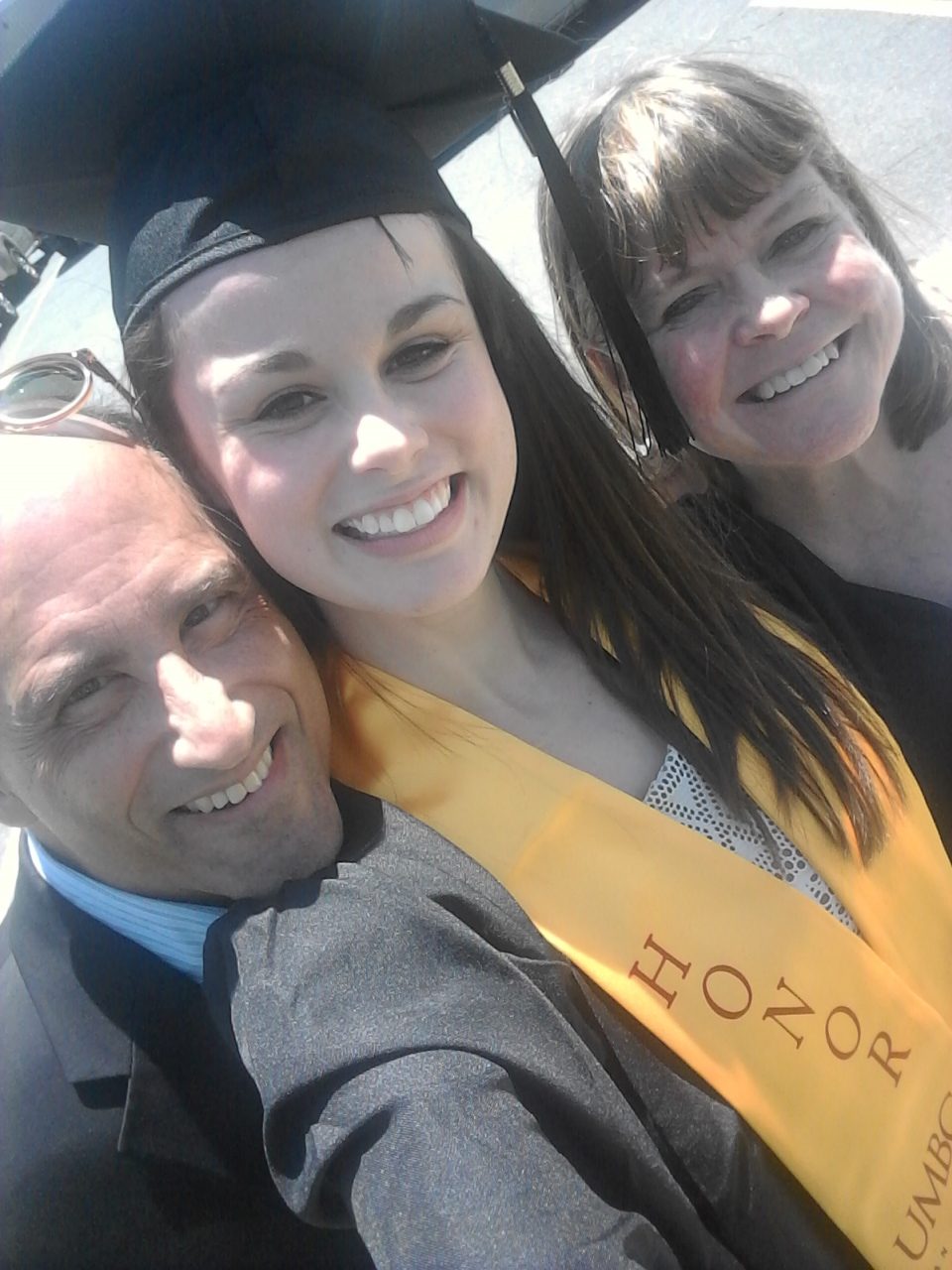
Attending UMBC has become somewhat of a family tradition. Elisabeth Cruz ’13, English, was the first of my five siblings to graduate from UMBC. She was soon followed by my brother James Cruz ’16, mechanical engineering. I am the third in my family to graduate from UMBC with my younger sister, Karyn Cruz ’20, graphic design, close behind. Of course none of this would be possible without the support from our parents. I guess you could say black and gold pride runs in my family.

Now that I have graduated from UMBC with a Bachelor’s degree in English, I am facing similar questions to those I did at the end of high school: What will you do now? What kind of job do you want with an English degree? Unlike my commencement from high school four years ago, I have no answers as of yet.

But no matter what my future outside UMBC holds, my final year here was truly a memorable one for the whole black and gold community. UMBC produced its first Rhodes scholar, enjoyed a history-making NCAA run by the men’s basketball team, saw the return of our Commencement ceremonies to campus with the completion of the Event Center, and was recently listed in the top 3.5% of universities worldwide by a global ranking.

This is truly an exciting time to be a Retriever, which makes my graduation that much more bittersweet. Commencement felt almost surreal as my four years here went by so fast. I so much enjoyed my experiences here pursuing a degree in English, relishing new challenges and new triumphs each semester. One example is public speaking.

When I started at UMBC, I hated public speaking. But throughout my time here, I delivered so many class presentations I lost count. Each one felt like a triumph; no matter how long (I remember one of my presentations had to be a full hour) or how short, it always took the same amount of courage to address a class. There was also a time when I struggled with writing, particularly creative writing. However, my studying English forced me to practice all kinds of writing and communication skills, and in facing these particular challenges at UMBC, I learned the valuable lesson that challenges pay off in the long run.

My Final Weeks

The weeks leading up to Commencement were crazy but wonderful. It was crazy to think everything I was working on here was wrapping up. My last semester of classes neared its end much like previous semesters; the workload felt overwhelming. But, of course, the difference was the fact that it was my last time facing the stress of final projects and examinations. Also, my internship with UMBC Magazine, which had lasted during my whole senior year, was soon to end. But there is something wonderful about knowing that no matter what happens after UMBC, I continue to enjoy the support of this community in the form of friendships with my UMBC peers, former professors, and magazine staff. I know that my experiences here, while difficult to leave, have prepared me well for my future.
Commencement is the honored celebration of ending one chapter with the beginning of the next. While I do not yet have concrete plans regarding a career with my degree, I am fully confident in the skills I have developed, the connections I have made, and the resulting confidence in my education during my time at UMBC. I currently enjoy incredible support from my dear family and friends moving forward, and I am encouraged by President Freeman Hrabowski’s words to the UMBC community after the Retrievers’ Cinderella run in the NCAA Tournament: “They said could not be done because it has never been done – and then we did it.” As I am now a proud UMBC alumna, I know going forward that I could not have received better preparation and education than that here at UMBC.

At the top: The moment I was most excited for…shaking hands with President Freeman Hrabowski!

* * * * *

Allison Cruz ’18, English, served as UMBC Magazine’s editorial intern during her senior year. We wish her the best of luck in all she does, and hope she comes back to visit often!
Beat of a Different Drum: UMBC’s Unique Musical Instrument, the Gamelan

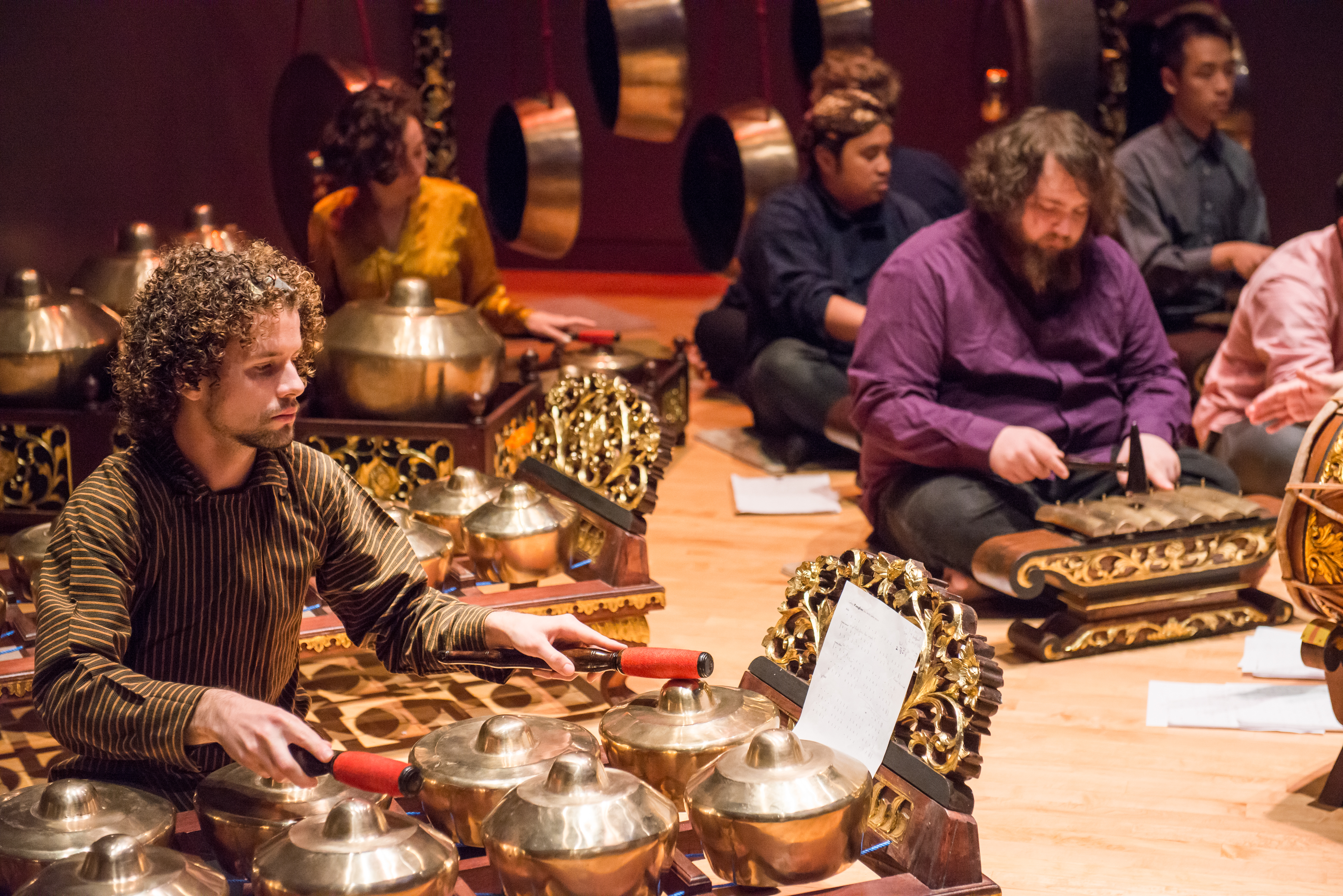
In the corner of the Music Box theater, a spacious room on the first floor of the Performing Arts and Humanities Building, lives a curious collection of gold-colored instruments. Organized in an ensemble on the floor, all of the pieces make up the gamelan, one of the most unique musical instruments on campus.

“Take your shoes off and find a spot to jump right in,” says instructor Gina Beck, M.A. ’90, ethnomusicology, as she invites her students to sit on floor mats behind each individual piece of the Indonesian instrument. They file in toward the gamelan and choose their places. Some sit behind the bronze bars of the sarons in the front and second row; some choose mats behind the shiny kettle-like bonang instruments to the left; and a couple go for the gongs in the back.

Once the students are settled, the professor counts off a song and they begin to play. The music evokes a kind of ringing sound like an ensemble of bells, but more delicate on the ear. Beck observes the gamelan “has a sound that can come forth dramatically as well as so delicately that it is floating on air.”

A Sound “Like Floating on Air”

Each piece of the ensemble contributes to the gamelan’s warm, relaxing sound made up of melodic tunes, musical flourishes, and percussion all working together. Most of the instruments are made out of bronze casing and keys that the player taps with a tabuh (a padded hammer). UMBC’s ensemble also includes hand drums and stringed instruments.

Tyler Whittenburg ’20, Asian studies, says, “there’s different instruments with different levels of skill required to play, so the sarons in the middle are what everybody starts off playing.” The sarons provide the melody for the whole ensemble and are traditionally made up of seven numbered bronze metal keys encased on a decorative wooden frame. In order to play, one taps the numbered keys with a tabuh and follows the melody’s numbered pattern. Rather than relying on sheet music, players follow a pattern of numbers, such as “6-3-6-3-6-3-6-3-5-6-3-6-3-6- 3-5-3-2-1-3-2-1” and repeat.

However, more rhythmically inclined students might enjoy a challenge with the bonang instruments. The bonang consists of gold-colored “pots” placed in two rows within a wooden frame that the player taps with a tabuh. Because this is an elaborating instrument, it does not play the basic melody with the sarons but, rather, adds flourishes around the melody. Any gamelan ensemble would struggle, however, without the help of a drummer to provide the steady beat. At the front of UMBC’s student ensemble is a two-faced drum that is tapped by the musician’s hands.

All of these elements together — the rhythm from the drums, the saron’s resounding melody, the bonang’s colorful elaborations, and additional music from stringed instruments and the gongs — create the gamelan’s unique sound.

Because the gamelan can be played by musicians of all levels, UMBC’s course attracts a diverse group of students — even non-music majors without any prior musical training. Whittenburg enjoys playing as a part of the gamelan ensemble “because it is a relaxing way to gain insight on a new culture while simultaneously adding new depth to my understanding of music.”

— Allison Cruz ’18

Learn more about cultural performances at UMBC

Images by Marlayna Demond ’11, Video by Allison Cruz ’18

Baltimore’s Flickering Treasures: Amy Davis at UMBC

Baltimore City offers much in terms of history, entertainment, and beauty. But from the outside looking in, the city’s widespread poverty and racial problems capture the most attention. Since media narratives often focus solely on the idealistic or the negative aspects, it can be difficult to view this city with a realistic lens.

As part of The Dresher Center Humanities Forum series, Baltimore Sun photojournalist Amy Davis presented her take on what makes for an honest Baltimore narrative, acknowledging both the city’s strengths and failings. She also shared images and stories from  her recent book Flickering Treasures: Rediscovering Baltimore’s Forgotten Movie Theaters.

Davis’ work – a collection of historic photographs, her own modern photographs, and extensive research on the city’s movie theaters –  brings to life Baltimore’s movie-going history. But not only does Davis offer a contemporary view of these theaters, she also presents a glimpse of Baltimore residents in relation to these theaters.

“Our theater buildings reflect the change, loss, and rebirth of neighborhoods,” Davis noted. “My color photographs are a reminder that many people still live in depopulated and neglected sections of the city.” She hopes her book, published in 2017 by Johns Hopkins University Press, “will spark a dialogue about how we can transform more of our forgotten theaters into catalysts for building thriving communities.”

Davis’ interest in Baltimore’s movie theaters began in the 1990’s with her admiration of the Senator Theatre. When this theater was facing foreclosure, Davis realized her dismay was shared by many around her. She thus set out to research Baltimore’s past and present movie theaters, collecting historical photographs and also taking her own pictures of the structures as they stand today –  some of which are now churches or parking garages, among other things. Flickering Treasures proves to be an apt title for Davis’ work as it refers to both the transient state of these theaters and acknowledgement that each is “a precious vessel for our dreams and desires.”

The number of Baltimore’s theaters has greatly declined over the years, but the life-span and current use of each provides a fascinating lens with which to view Baltimore’s past and present. Christopher Corbett, professor of the practice in English and former Associate Press news editor for the Mid-Atlantic states, observes, “These ‘Dream Palaces’ were irreplaceable parts of the city that will never be recovered. But Amy Davis has saved their memories for us.”

Header image:  Parkway– 5 West North Avenue, 2012 – The Parkway is now the home of the Maryland Film Festival, showing films year round. The annual film festival will take place on May 3 – 6, 2018. The auditorium retains much of its Baroque glory, despite more than three decades of abandonment.

All photos are from “Flickering Treasures: Rediscovering Baltimore’s Forgotten Movie Theaters,” by Amy Davis. Used with permission.

* * * * *

This forum was sponsored by the Dresher Center for the Humanities, the English Department, and the Visual Arts Department.

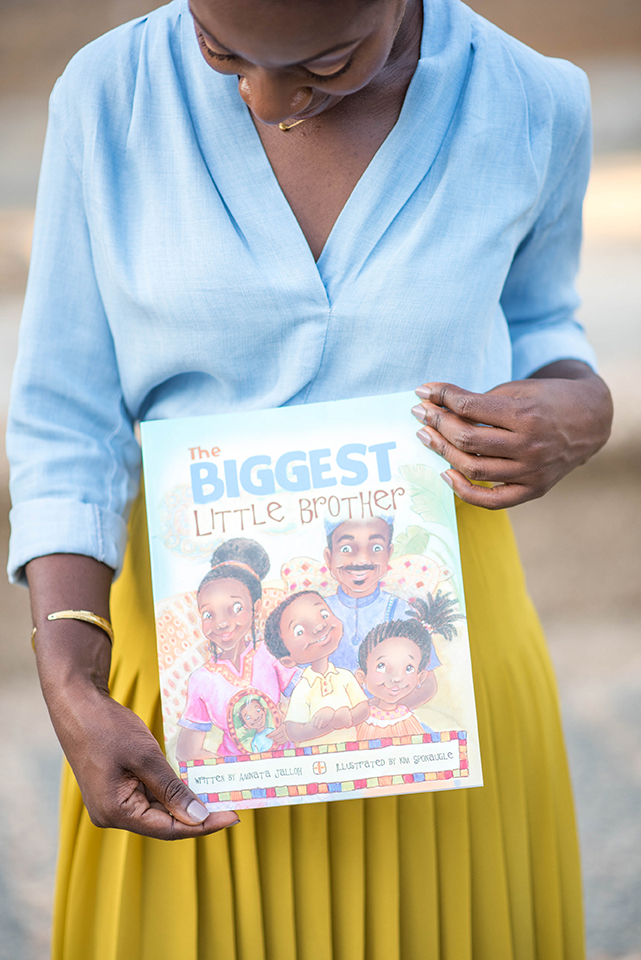
Q&A: Aminata Jalloh ’10, First-Time Children’s Author

Aminata Jalloh ’10, American studies, recently published her first children’s book titled The Biggest Little Brother, a story about the complexities of sibling relationships and immigrant families. Here, the first-generation Sierra Leonean-American shares how her time at UMBC shaped her career in teaching and writing for children.

– Allison Cruz ’18

How did your education at UMBC impact your career in teaching and now writing children’s books?

I was always interested in the experiences of first and second generation Americans, so attending UMBC and majoring in American studies was a natural fit. It was an interdisciplinary area of study which allowed me the scope to go both deep and wide on issues of how race, ethnicity, national origin, and class intersect.

I also opted to add an Africana studies minor to further explore the construction of racial identity by and for people of African descent, and how both shapes their experiences. My studies at UMBC gave me the theoretical framework and the language to articulate the unique experiences many people from black immigrant background have.

The Biggest Little Brother is loosely based on your own childhood experiences as a first-generation Sierra Leonean-American. In what ways is this book based on your experiences and in what ways is it a story you created?

I was the first in my family to be born in the United States. When my parents moved to the U.S.  – my father came first and later my mother came – they were unable to bring my sister. Unfortunately, family separation is more common than it should be in immigrant communities. It was through this lens that I wrote The Biggest Little Brother, through this experience of adjusting to a new family member moving in, and the complexities it brings. I also wanted to normalize family structures like my own.

Why did you choose children as your audience for this story? Have you always had a passion to write for children?

After graduating from UMBC, I began my career in education as a classroom teacher for kindergarten to 3rd grade in Washington, D.C.! Many of my students were first- and second-generation Americans from Central America and East and West Africa. I loved teaching reading and wanted to supplement the core curricular materials with stories that not only reflected their own experiences but also provided opportunities to learn about other cultures.

However, there was an absence in children’s literature with immigrant themes, particularly in stories with African lead characters. I struggled to find children’s stories that captured the unique complexities of immigrant families in a way that was authentic, relatable, and enjoyable to read. This absence inspired me to write The Biggest Little Brother because I believe that every child has the right to see themselves in the books they read.

What do you want your child audience to learn from your book, and what lessons should they come away with?

Children’s literature has the remarkable ability to reinforce and change narratives. I hope with The Biggest Little Brother children will see that every family is unique and special and that we are more alike than we are different.

What goals do you have for the future? Would you like to write more children’s books?

Yes, I would love to continue the story of Sowa and his family! Also, I want to continue promoting children’s literature with dynamic African lead characters! I curated a list of really great titles on my website www.readersinspired.com and I post related content on Instagram via www.instagram.com/readersinspired.

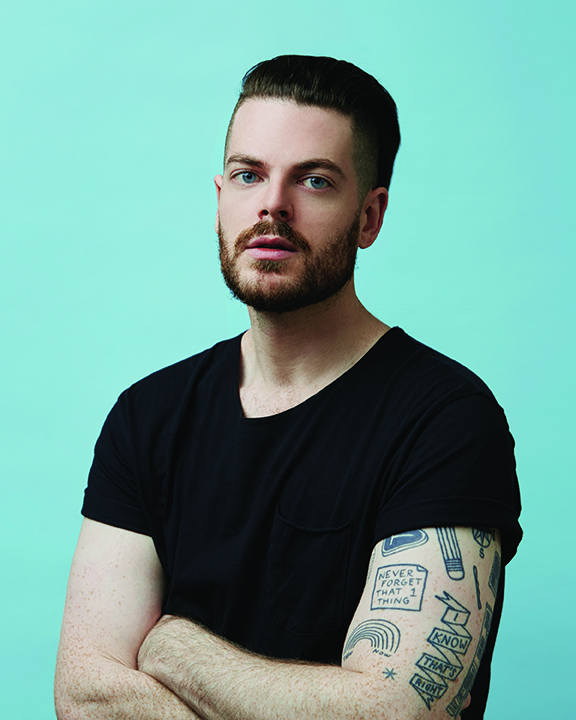
Q&A: Adam Kurtz ’09, Artist, Author, and Brand

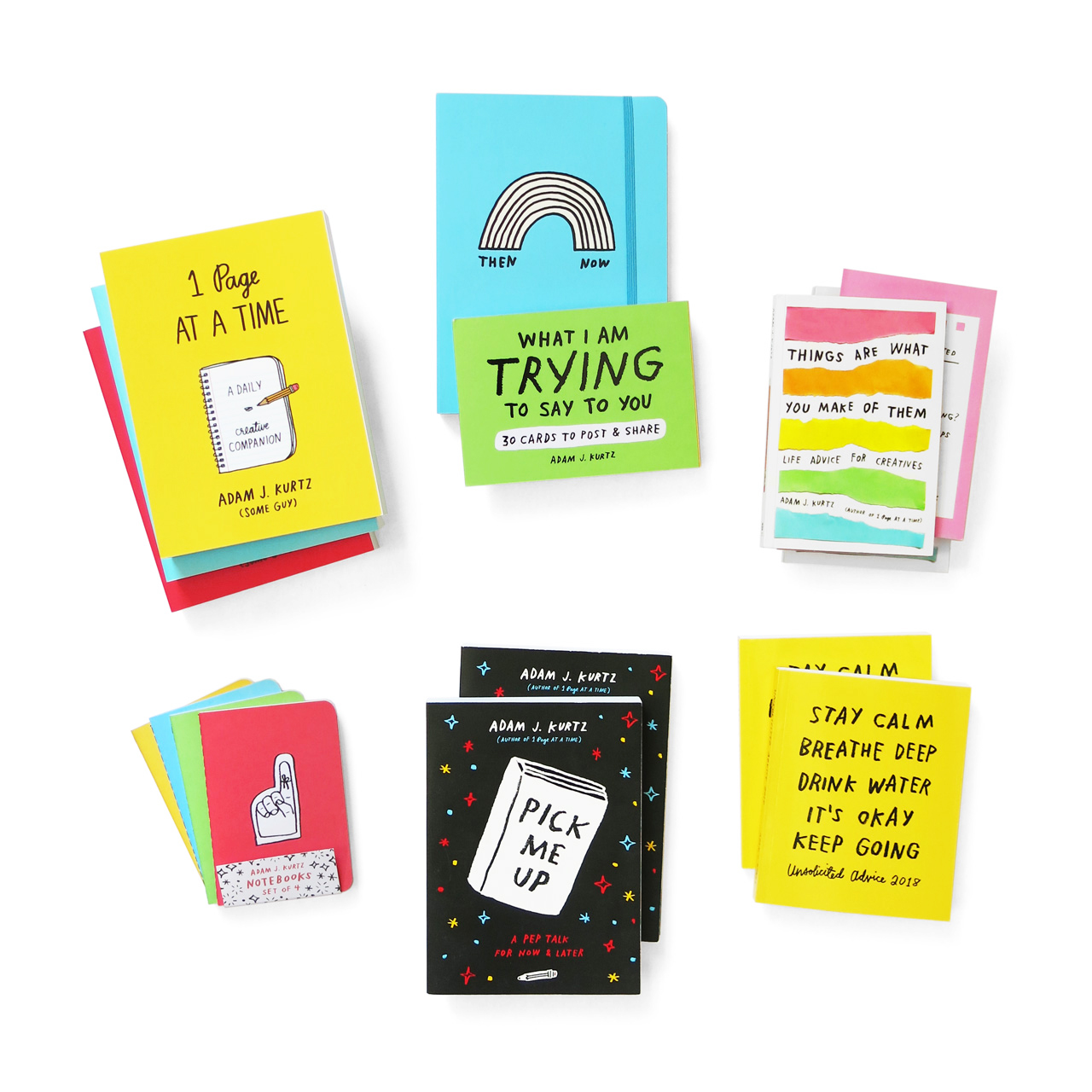
Adam J. Kurtz ’09, visual arts, is an artist and author whose work for brands such as Urban Outfitters, Fishs Eddy, Tumblr, Penguin Random House, and Strand Bookstore (among others) offers emotion, humor, and at times darkness. His books, the most recent entitled Things Are What You Make of Them, contain insightful thoughts about communicating one’s personality and emotions into meaningful work. Here, Kurtz talks about his talents and artistry, and about how UMBC impacted his career after graduation.

– Allison Cruz ’18

Q: You have done so much creative work as an artist and as an author. What inspired you to explore these talents and how did you turn them into a career?

A: It’s tricky to ever explain how personal creative work becomes a sustainable career, and it’s something for which I’m constantly appreciative. I started with small, personal projects for fun –  self-published work and products – and over time, people took notice. Success is about so much more than actual talent once you define what “success” even means to you in your given profession. I feel very lucky.

Q: Talk a little bit about what currently inspires your projects and how you relay this inspiration through your work.

A: A lot of the work I make is just about exploring everyday emotion as a person in the world and a person in their own head. Most recently, I hand-wrote an entire book of essays called Things Are What You Make of Them: Life Advice for Creatives for Penguin Random House. It’s all about the challenges that people who make creative work (professionally or personally) experience, challenges such as self-doubt, fear, tricky collaborations, or even just how to be happy when you feel compelled to put all of yourself into everything you do constantly.

Q: When it comes to the work you have with clients such as Urban Outfitters and Fishs Eddy (along with others), do you create your product and then they take notice or is the product more of a collaboration between you and your client?

A: Every project is different but it usually starts with the end first. It’s important to think not just about the work you are going to make, but also the context and the end result. So a conversation with Urban Outfitters might go like, “We want to work together! Here are the types of products we’re able to produce given our timeline.” And then I work to conceptualize and execute my art and illustration in a way that makes sense for that. It’s always a true collaboration, and if something feels weird or isn’t working, we don’t do it.

Q: Does your work as an author relate to your illustrative work and graphic design work in some ways? Do you have projects that combine all these talents together?

A: My books are all illustrative, using simple line-art and text to guide the reader through interactive journaling and introspective activities. 1 Page at a Time and Pick Me Up are all about looking inwards to figure out who we are and what we have to offer. This sounds cheesy as hell, but when you see the final book in my style and start using it, the response is usually like “Wow, I thought this was going to be b.s. but it wasn’t!”

Q: You got your degree in visual arts here at UMBC. Do you recall why you chose UMBC? And what reflections do you have on how your time at UMBC impacted your career?

A: I chose UMBC because it was in-state and had a graphic design department. A counselor at a local community college mentioned it and I transferred in for my sophomore year. I applied to no other schools. I hate to act like it was a random choice, but it was.

What I learned at UMBC is that education happens as often outside the classroom as it does inside the classroom. I worked at commonvision, the campus print and design center, for several years as well as with the Student Events Board (SEB). I curated Art Week one year, organized an exhibition at The Commons Art Gallery, and had a radio show on WMBC. I was one of those annoying people on campus who was always handing out handbills for something. Ultimately, I got as much out of my three years at UMBC as I possibly could have and I took all of it with me when I graduated.

Q: What kind of advice do you have for current UMBC students and other alumni who are pursuing creative opportunities in visual arts and design?

A: In creative fields, your degree is only as important as your work itself. Make sure that you’re doing coursework that makes you proud as well as taking on extracurricular responsibilities. UMBC is a relatively small community and there’s a real opportunity to make an impact on campus life, or at least your own. Take courses that cover a wide range like coding, printmaking, and film so you leave with as many skills as you can.

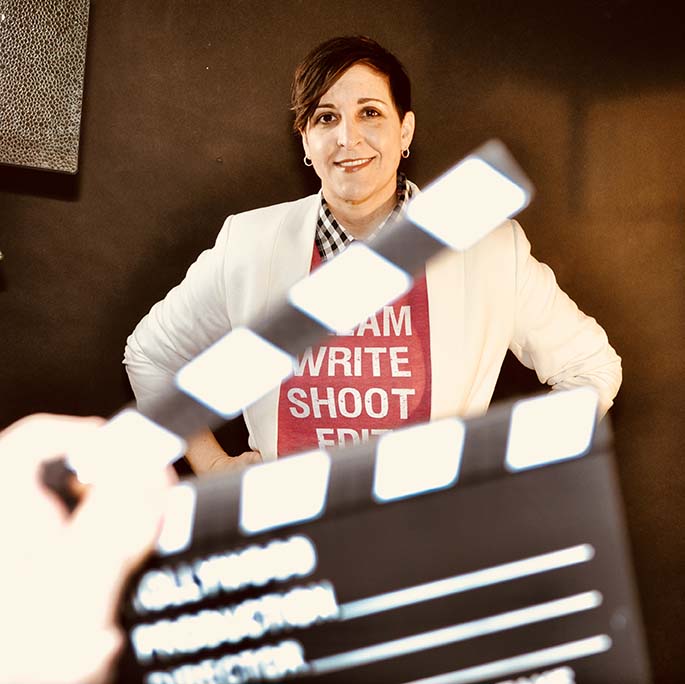
Q&A: April Householder ’95, New Director of Undergraduate Research

UMBC’s new Director of Undergraduate Research and Prestigious Scholarships, April Householder ’95, spends her days opening doors to students exploring the vast world of research.  As an alumna of visual and performing arts with a minor in art history, she also boasts a fascinating background in documentary filmmaking and media criticism. Here, Householder talks about how her time learning and working at UMBC helped shape her work in film, teaching, and her new work in the division of Undergraduate Academic Affairs (UAA).

Q: What are your thoughts about your education at UMBC? How did UMBC help prepare you for your research, teaching, and administrative work?

A: I was a transfer student to UMBC from Villanova University. I initially chose Villanova because it had a great name brand, but I quickly realized that it wasn’t for me because it lacked diversity, and it didn’t have many academic offerings in my growing fields of interest – art history and film/media studies. I was very familiar with the UMBC campus because I am native of Arbutus, and as a kid, I grew up riding my bike from my house to play video games in the game room at UMBC. So at the end of my sophomore year, I transferred to UMBC and was thrilled to find  diverse student life on campus and a vibrant arts community in the film/video department. I worked with really creative professors such as Vin Grabill and Dr. Kathy O’Dell, both of whom encouraged me to pursue graduate school, and inspired me creatively. The visual arts program drove me to work hard, and because of this I was the Visual Arts Student of the Year in 1995. As a first generation college student, I found the students and faculty at UMBC to be engaging and challenging, and I worked alongside some really talented film students like alumni Eric Dyer and Brian Dannelly, who have gone on to do amazing things. At UMBC, I learned filmmaking and research skills, and made great personal connections that helped me later in my professional life as an academic.

Q: You have done much work with documentary films and film criticism, you have written books, and you have taught classes (including some at UMBC) related to representations of gender, sexuality, and race in media. How did your interest in these areas develop and what inspired you to focus on these topics in your work?

A: My interests in visual representation began in a course I took as an undergraduate student- we studied Michel Foucault’s interpretation of Diego Velazquez’ painting Las Meninas. That moment sparked my interests in issues of representation, identity, and gender in visual art. In graduate school, my focus shifted from film production to film history, theory, and criticism, and my research and teaching today has continued along the same themes that I became interested in as an undergraduate student. My doctoral dissertation was a documentary film about Bouboulina, the heroine of the 1821 Greek War of Independence. My first book is called Feminist Perspectives on Orange is the New Black. I’ve published essays on the HBO series, Girls and another essay on the biased ways in which the Greek economic crisis was represented in the media. I have a book chapter coming out this year on the history of Baltimore’s radical feminists with my colleague from the Honors College, Dr. Jodi Kelber Kaye. I’ve taught courses at UMBC about feminist and LGBT films; gender, race, and media; and even one about pornography. I feel that these topics continue to be important areas around which young people should develop critical thinking and cultural literacy. This way, they can have tools to interpret the world around them, form their own identities, develop a political consciousness, and be able to see clearly through the fog of media messaging that constantly surrounds us.

Q: You are UMBC’s new Director of Undergraduate Research and Prestigious Scholarships, and have taught classes here in the past. What brought you back to the UMBC community?

A: I got my first work study job in the Student Support Services office as an undergraduate. Years later when I was finishing my Ph.D. at the University of Maryland, College Park, and working part-time at the RAC, I landed my first job as the Assistant Director of the McNair Scholars program at UMBC. I also worked as an adjunct faculty member in the Gender and Women’s Studies Department where I taught courses related to film and media. In January 2017, I moved into my current role as the Director of Undergraduate Research and Prestigious Scholarships. So, most of my academic career has been spent here at UMBC. I still have connections that I made as a student, and now I work with amazing colleagues who are supportive of my research, teaching, and administrative work. I love being able to give back to the community that supported me, and my greatest joy is to inspire UMBC students who are just like me.  My time as an undergraduate student, and now fourteen years as a professional at UMBC has made me bleed black and gold!

Q: What future work do you see yourself doing in research?

A: Currently, I am working on research that focuses on themes of resistance and catharsis in Greek art, music, and film in the context of the European economic crisis. My research looks specifically at contemporary Greek poetry, graffiti, and the resurgence of Rembetika music (known as the “Greek blues”).

Q: What are your future plans here at UMBC?

A: I hope to continue to support UMBC’s undergraduate students by engaging them in meaningful research experiences and exposing them to opportunities for after they leave UMBC. Being a researcher myself, I am uniquely positioned to help students find their path, no matter how that might look. I enjoy exposing new students to research and getting them excited about working with faculty mentors on something that they are passionate about. Engaging in undergraduate research is a great resume builder for graduate school and their careers, introduces them to the culture of their disciplines, and builds their skills and networks in their fields.  I also work with seasoned students who are applying for prestigious scholarships, and hope that I can help them be competitive on a national and international scale. My goal is to contribute to UMBC as an institution that provides a distinctive undergraduate experience, and to the growing recognition that UMBC is an intellectual powerhouse that stands shoulder to shoulder with the highest ranking universities in the nation. I hope to build on the success of our first Rhodes scholarship (senior chemical engineering major Naomi Mburu) to motivate more students to do great things. UMBC undergrads inspire me!

— Interview by Allison Cruz ’18

URCAD 2018 is coming! Learn more about Undergraduate Research & Creative Achievement Day, April 25, here.

Slideshow: Moving In at UMBC

Move-in day is a highly anticipated undertaking for college students everywhere, and UMBC is no exception. Lugging their suitcases, decorative furnishings, and pre-semester anxieties, UMBC students swarm the campus to turn their little dorm into home for the next four months. Sometimes they enjoy a little help from family and friends. Below are recent images of Retrievers moving in and enjoying the campus-wide welcome. A big thank-you to Alexis Harris ’19 for taking the photos!

[nivoslider id=”8438″]

Move-in day excitement always carries over into Welcome Week activities where students meet up with old friends and make new ones, too! Below you can see glimpses of move-in days and welcome weeks of the past, courtesy of Retriever Weeklys past, available online in UMBC’s digital archives.

[nivoslider id=”8495″]

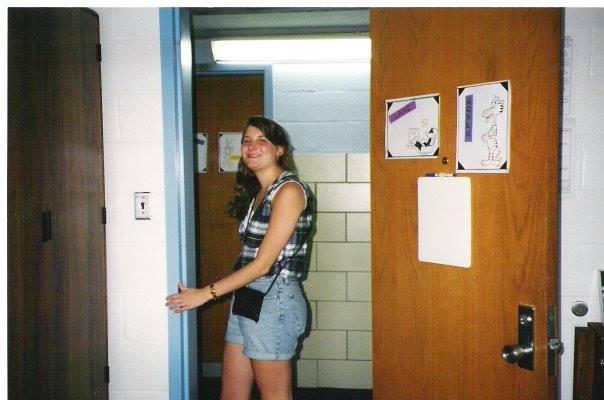
“I loved those first days so much that I decided to become a New Resident Student Assistant helping freshmen with their move-ins for the next two years, and a Resident Assistant my senior year,” recalls Karen Lewis ’97, American studies, about moving in at UMBC. Lewis is pictured below.

Karen Lewis Move-in Image

What are some of your favorite move-in day memories at UMBC?

#YouAreWelcomeHere: Making International Students Feel Right at Home

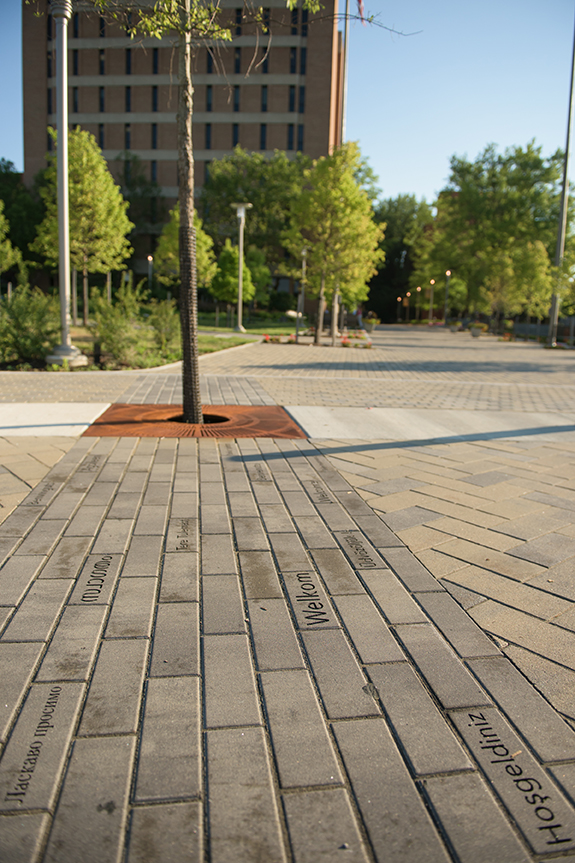
Upon entering the UMBC campus, visitors arriving at the drop-off circle in front of the Administration Building are greeted in a way that’s uniquely UMBC — with bricks saying “Welcome” in dozens of languages from around the world. The greetings are subtle but plentiful, displayed on the grey areas of the brick pavement.

This is but a small example of the many ways that diversity is celebrated on this campus, including the numerous flags of the world on display in The Commons, the variety of culturally-based clubs and organizations, and more. And, UMBC is always finding new ways to welcome international students to our campus, including participation in a nation-wide social media campaign.

The #YouAreWelcomeHere campaign is a message from United States higher education to welcome international students from all around the globe to attend our schools. According to the campaign website, the idea for #YouAreWelcomeHere started in 2016 with this short video from Study Group and some of their university clients:

[youtube https://www.youtube.com/watch?v=61YgRD_B6FY]

Temple University soon made their own video with the hashtag #YouAreWelcomeHere and then extended the campaign for U.S. higher education. Today, the campaign is growing with more than 250 institutions participating. UMBC is now one of them.

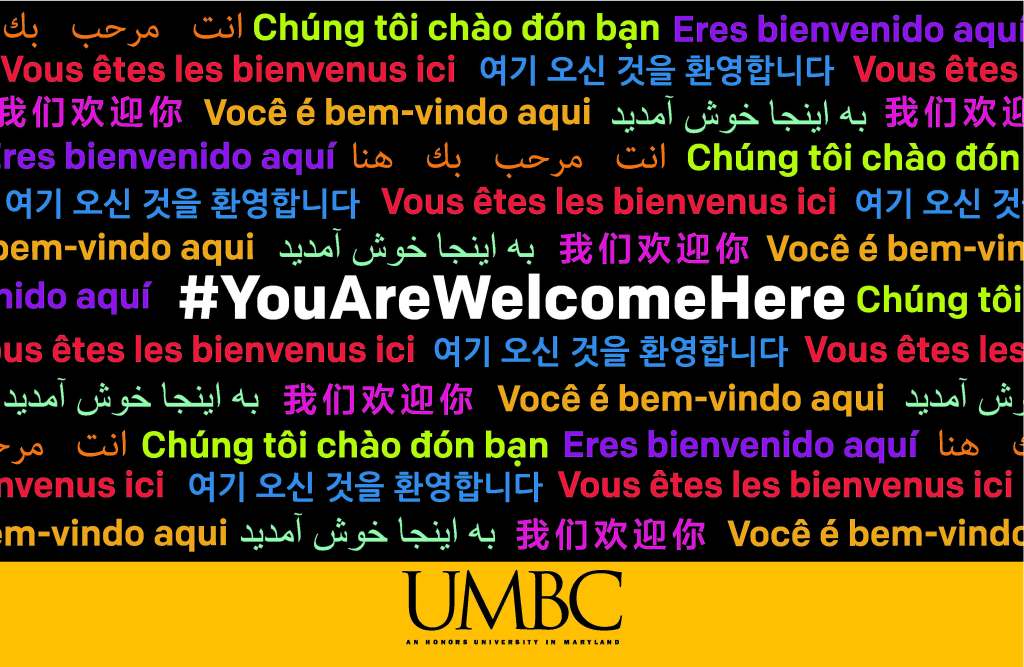
So, what does #YouAreWelcomeHere look like at UMBC? Since the start of this Fall 2017 semester, the large screen outside the RAC has displayed this #YouAreWelcomeHere image for all entering UMBC to see.

YouAreWelcomeHere_Poster1

UMBC’s English Language Institute (ELI) has also produced a series of videos featuring welcomes from members of the UMBC community. Check out those videos here.

“I think UMBC is a special place because we really are a community of people from all over the world that come together to work and learn and share our ideas and backgrounds,” says Ryan Sheldon M.A. ’15, ELI Assistant Director. “And this, to me, is why YOU are welcome here and why UMBC is special.”

— Allison Cruz ’18

Winter 2012: UMBC Closed for Snow?

UMBC is known as a hale and hearty campus that rarely closes its doors because of winter weather. But the great ‘Snowpocalypse’ of 2011 closed down the campus for almost a week. Fortunately, no cars skidded down into the Library Pond – an event caught on film by The Retriever’s William Morgenstern and featured on the front page of the newspaper’s February 10, 1970 edition.

Summer 2011: UMBC’s Women’s Center

In its almost two decades, the Women’s Center at UMBC has touched countless lives. As the center and its staff (left) begin a yearlong celebration of its 20th anniversary in September, acting director Jess Myers is looking for your memories of this UMBC Institution. Does our collection of Women’s Center memories jog your own memory? Find out more about the ‘100,000 Stories – Which One is Your’s?’ commemoration and how you might get involved or share your story at www.umbc.edu/womenscenter/.

Winter 2010: Traveling the World with UMBC’s Ancient Studies

Ancient studies at UMBC has always meant to travel, as we discovered when Phyllis Hicks Clark ‘70, history, shared her photos with UMBC Magazine of a 1969 ancient studies trip to Greece. Forty years later, UMBC students went back to Greece on an ancient studies-organized trip. Here are some photographic relics of both journeys.

Picture Captions:

The amphitheatre at Epidauros (330 BCE), shot in 2009.

1969 UMBC sojourners caught Jacqueline Kennedy Onassis on film at an Athens market.

Larry Wilder ‘70, biological sciences, at Olympos.

Billy Johnson, a current student in Ancient studies, at the Temple of Athena Aphaea on Aegina.

Phyllis Hicks Clark remembers that “most of us had never been on a plane before.”

Winter 2009: UMBC’s Sounds of Music

UMBC’s Quad has been filled with the sound of music in every era, from today’s Quadmania (above) to a student music performance (inset) in the university’s earliest days.