All posts by: Magazine Editor


Discovery – Winter 2009

“Smog Blog” Tracks Air Quality

When fires blaze across the Western United States, it’s just a matter of time until the resulting haze and dirty air plumes travel downwind to neighboring states – even as far away as the East Coast.

In 2003, environmental scientists at UMBC invented a method to track significant air pollution events and to provide a daily diary of air quality across the United States. The result is an innovative Web site known as the “Smog Blog,” which now attracts some half a million users annually.

The Smog Blog alg.umbc.edu/usaq offers realtime analysis and an extensive archive of satellite imagery and air quality data for scientists, allowing for instant communication about important pollution events. The site’s postings also inform regulators and forecasters.

Jill Engel-Cox ’04, Ph.D., marine estuarine environmental science, was a doctoral student in that program in 2003 when she presented the idea for the blog to her advisor, Ray Hoff, director of the Joint Center for Earth Systems Technology and the Goddard Earth Science and Technology Center.

“It made a great deal of sense,” says Hoff, a professor of physics at UMBC. “The best way to know what the air quality in Baltimore is going to be is to look at what the air quality in Ohio was yesterday.”

Smog Blog entries are the products of analysis by environmental science faculty and students from both UMBC and the Battelle Memorial Institute, who look at incoming data from satellite sensors and merge it with information from sparsely-distributed ground-based monitoring stations. Bloggers then post images, and make daily entries, providing a sort of “one-stop shopping” for information on air pollution across the nation and the globe.

“We look at all these data sources and do the analysis to mesh all the data together so we can tell the whole story,” says Nikisa Jordan, a doctoral student in environmental science at UMBC. The blog primarily focuses on events in the U.S., but it occasionally highlights air quality in other parts of the world, as it did during the Beijing Olympics.

The site also serves as an extensive archive, allowing scientists and students to refer back to pollution events from previous months and years. “Having over five years of that information and analysis put together is really exciting,” says Engel-Cox.

Hoff adds that the blog works as something of a detailed lab notebook to keep track of important data. “It’s really tough for faculty members to instill in students the importance of keeping a lab book,” says Hoff. “The blog is a wonderful way for them to keep [one].”

While scientists associated with the Smog Blog – including Hoff, Engel-Cox, and Jordan – have all published peer-reviewed papers that resulted directly from postings, the Web site has evolved over time from a daily log to a sort of instantaneous communiqué within the scientific community. And while blogging can never replace peer-reviewed literature, Hoff observes, it enables researchers to engage in the sort of back-and-forth dialogue reminiscent of the late 1800s and early 1900s.

But while those scientists had to wait for their letters to arrive by boat or post, blogging allows for much more immediate discussions. “What a blog brings to this is instant communication with your colleagues that identifies events that you can react to in real time,” says Hoff.

The Smog Blog has become an important source of information for air-quality regulators. Its postings have made it possible for local and state officials to determine the source of pollution events and to sometimes avoid penalties that might otherwise be incurred as a result of pollution from other regions. A group of astronomers in the Midwest even uses the site to determine the best nights for stargazing.

Even these unlikely users bring unexpected insights to the blog. “You get some very intriguing questions asked by people who you wouldn’t expect to be looking at the site,” says Hoff.

— Amanda Leigh Mascarelli

Shogun Stories

From the 17th century through mid-19th century, Japan’s daimyo (or “lords”) answered to a higher power – the shogun. And they did so in person, splitting time between their own domains and the imperial city of Edo.

Tour of Duty: Samurai, Military Service in Edo, and the Culture of Early Modern Japan (University of Hawai’i Press), a new book by UMBC professor of history Constantine Nomikos Vaporis, plunges the reader into the world of “alternate attendance” upon Japan’s ruler. Fulfilling the edict required the daimyo and their retinues to make expensive road trips combining elaborate ceremonies and clashing egos. And when they arrived in Edo, the traveling lords lived in elaborate compounds in which spheres of political influence were carefully calibrated.

Preserving the shogun’s rule provided much of the impetus for the practice. But Vaporis writes that the ingress and egress of daimyo from city to provinces spurred profound cultural changes.

“The city of Edo…not only exported culture,” he observes, “but acted as an entrepot where the various cultural currents from the more than two hundred domains interacted and, at times, took on new configurations.”

— Richard Byrne ’86

Celluloid Deities

Can street paintings and advertisements be studied as art? And can examining other cultures inform our answer to that question?

Preminda Jacob, an associate professor of art history and theory in UMBC’s Department of Visual Arts, replies in the affirmative to both questions. In her new book, Celluloid Deities (Lexington Books), she examines the collision of cinema, politics and religion in South Indian culture at street level. Movie posters in the city of Chennai, she found, not only advertise a film – they can also be improvised into religious shrines or impart a political message.

“The street is a great equalizer of the visual experience,” she told an attentive crowd at a November presentation of her research at UMBC. Jacob also created a Web site, www.celluloiddeities.com, that extends her research on what she calls the “multitudinous signs that jostle for attention” into startling images and video.

— Richard Byrne ’86

Painful Fallout

Sickle cell disease does not simply afflict the bodies of the estimated 70,000 Americans who suffer from it. The condition often packs another powerful, though largely hidden, wallop.

“According to some studies, between 50 and 80 percent of people with this chronic illness are unemployed,” says Shawn Bediako, an assistant professor of psychology at UMBC. “These are extremely high rates.”

In individuals with sickle cell disease, irregularly shaped red blood cells form clumps in small blood vessels, restricting blood flow to limbs and organs and often causing pain that can last for weeks.

Those afflicted with the illness often find that their ability to work and perform other daily activities is greatly limited. And if they cannot work, their access to employer based health insurance is also diminished.

Few studies have examined the interrelation between sickle cell disease, unemployment and healthcare use. But that is now changing. Last year, Bediak received a one-year, $55,000 grant from the Robert Wood Johnson Foundation to study the problem. He plans to publish his findings sometime this year, and hopes that his research will help policymakers develop effective services and programs for adults with sickle cell disease.

— Al Staropoli

Can Concrete Help the Chesapeake?

Most of us barely give the pavement beneath us a second thought. But Stuart Schwartz, a senior research scientist at the UMBC’s Center for Urban Environmental Research and Education, thinks deeply about it.

Schwartz studies pervious concrete – a building material riddled with voids that allow water to trickle through it. If this material becomes standard for driveways, parking lots and low-traffic roads, it may help manage the flow of storm water and pollutants into the Chesapeake Bay and other imperiled waterways.

When storms douse roads or parking lots in Maryland, mind-boggling gallons of water careen from the pavement into storm water systems and eventually into the Chesapeake Bay. That runoff also carries sediments, nitrogen and phosphates – substances linked with a range of phenomena that are unhealthy for the bay, including deadly algal blooms and decimation of the habitat for young fish and crabs.

“What we’re really talking about is restoring hydrologic function in the landscape,” says Schwartz. Pervious concrete is made with a cementious binding material that is devoid of the sand or silt sized particles used in traditional concrete. “Think of a rice crispy treat, with all the little spaces in between the kernels,” he says.

Despite its promising benefits, some contractors and engineers remain skeptical of pervious concrete. Catastrophe can strike if ice forms within the voids of pervious concrete and bursts the material’s rigid matrix — which happened on a test section using the material on a Maryland interstate in the 1980s.

Highway officials nicknamed it “popcorn pavement,” because the loose aggregate that broke into pieces that ping-ponged through traffic and damaged cars. Schwartz is working to reverse that skepticism with new test plots on UMBC’s campus. He is also taking practical steps to win converts – helping to certify contractors and organizing a workshop attended by 200 people last August.

“There was so much interest, we had to turn people away,” he says.

— T. DeLene Beeland

Aging Boomers in a Class of Their Own

When Jena Rathell ’09, management of aging services, watched YouTube videos on her laptop this past semester, there was a good chance that she was doing homework.

Rathell was a student in “Aging 100: You Say You Want a Revolution? How Baby Boomers are Revolutionizing Aging” – a new high-tech undergraduate course offered by UMBC’s Erickson School of Aging Studies. It is a class with no textbook. The mid-terms and finals are taken online. Students can blog for extra credit.

Aging 100 acquaints students with key events and experiences of the baby boom generation. It is tailored for “millennials” – 75 million strong, and all born between 1981 and 1993 – who likely have never known life without computers. They learn about the Cold War and the civil rights movement, as well as debates about the national debt and Social Security. Lectures are interwoven with videos, so students see guitarist Jimi Hendrix play at the 1969 Woodstock Festival as they learn about his cultural influence.

“They will be living with this population for the rest of their life,” says Dr. Judah Ronch, a professor at the Erickson School who devised the course with another Erickson colleague, Bill Thomas. “Boomers are different than the aging population now. On average they will live longer, be healthier and more active.”

Ronch also hopes to place the inevitable societal challenges of boomer aging in healthy perspective: “When they hear debates on the future of Social Security it will not be an abstraction that puts them to sleep – they’ll really know what it’s about.”

— Al Staropoli

Digging Through Images

Photography freezes a moment in the present, creating an artifact. Archaeology uncovers artifacts and structures to make them accessible to the present.

As two endeavors that traffic in time, photography and archaeology have much to say to each other. That dialogue was highlighted in the gallery of UMBC’s Albin O. Kuhn Library this past autumn, in “The Creative Photograph in Archaeology” – a traveling exhibition on loan from the Benaki Museum in Athens, Greece.

The exhibit showed visitors how 11 photographers – whose work ranges from the mid-19th to 21st centuries – offer us new ways of seeing archaeological sites, monuments and sculpture. It also offered three UMBC students who major in ancient studies a chance to learn about the mechanics of creating and interpreting an exhibition.

Cally Brandt ’09, Lauren Nagel ’09 and Sarah Ryan ’09 completed internships connected to the exhibition under the direction of Richard Mason, a lecturer in the Department of Ancient Studies. The students closely studied the exhibit’s arrangement and content, which was comprised of photographs taken of high classical architecture on and around the Athenian Acropolis, along with other images inspired by ancient Greece. The semester-long project also gave students an active role in educating the campus community about the exhibit.

“We didn’t just look through books for our research,” said Nagel. “We walked through the gallery and really examined the photographs in a way most people would not.”

Mason credits Kuhn Library curator Tom Beck and assistant curator Emily Hauver for making the exhibit (which will travel to multiple cities) and internship a success. “This type of work really shows how a university gallery can assist in teaching,” says Mason.

— B. Rose Huber

Moving Targets

As an associate professor of computer science and electrical engineering at UMBC, Hillol Kargupta logs thousands of frequent flier miles each year to do research, conduct business for a successful, global firm – and to visit his family. But it is his quest to make those flights friendlier to the environment that has won him a highly competitive IBM Innovation Award and a $20,000 grant this past fall.

Kargupta is an expert on deep data mining in distributed and mobile environments. He is also the founder and president of Agnik – a company that pioneered the use of sensor-based data mining technology to improve efficiency in ground transportation fleets.

Now he’s looking to take his research and business skyward. And when the European Union includes aviation pollution in its ambitious cap-and-trade emissions market system next year, Kargupta hopes his sensors will analyze the data that makes Europe’s skies greener.

“Every second of flight burns about a gallon of fuel.” says Kargupta. Airplanes already have sensors that monitor and adjust gasoline/air ratios to yield the best fuel economy, he observes, but analyzing that data for emissions purposes “is a chance to meet a real market need.”

The available information is staggering. Kargupta observes that one hour of flight produces a continuous stream of about 10 megabytes of data. “Multiply that times all the world’s airports,” he continues, “and it equals a huge amount of data changing rapidly over a large area.”

Kargupta is enthusiastic about the daunting task, however: “It’s just the type of challenge we like at UMBC.”

— Chip Rose

Ballot Boxers

Four UMBC alumnae who have made careers in politics and government look back at an electoral cycle that held landmarks and heartbreaks for women candidates.

By Richard Byrne ’86

The year 2008 saw a momentous breakthrough for African-Americans in U.S. electoral politics. But it was a landmark year for women as well.

UMBC Magazine talked with four prominent political alumnae just after Election Day 2008. We asked them to reflect not only on the tumultuous political year, but also about gender and politics issues in their own careers.

And to add some scholarly perspective, Cheryl M. Miller, an associate dean in UMBC’s College of Arts, Humanities and Social Sciences and a professor of political science, examines how 2008 advanced historical trends for women’s presence in government at all levels. (See “Herstory Lessons”)

Collecting a Caucus

As late as the 1980s, fewer than 25 percent of the members of Maryland’s House of Delegates were women.

Today, however, that number stands at 40 percent – and it is growing. Delegate Adrienne A. Jones ’76, psychology, is not only a part of that fast-increasing contingent of women; she is among its leaders.

In January 2008, Jones was elected for the sixth time to the position of Speaker Pro Tem of the House of Delegates. She is the first African-American woman to serve in that position. Jones also sits on the powerful House Appropriations Committee, which wields significant authority over Maryland’s state budget.

“It is important that women increase their numbers,” says Jones. “Women have a different perspective.”

In 1997, Jones was appointed to the House of Delegates by Governor Parris Glendening, when Delegate Joan Parker’s death created a vacancy in the 10th District. She won the seat in the 1998 election and has held it since.

Jones grew up in Baltimore County and attended its public schools before coming to UMBC. Shortly after graduation, she was hired to work in Baltimore County government. For more than three decades, Jones has served as executive director of the county’s Office of Fair Practices and Community Affairs. (She was named UMBC Alumna of the Year in 2003.)

She believes that her strong grounding in local government prepared her well for her ascent to state politics – and led her to apply for appointment to the state legislature in 1997.

“I thought that my background, in local government, lent itself well for transformation over to the state level in terms of issues and concerns,” says Jones. A reputation as a hard worker and a team builder in Annapolis has also had an impact on her success.

“I don’t have a big ego,” says Jones. “I’m a consensus builder. What’s more important to me is the end result, as opposed to the means. I believe in looking at the potential for other members.”

As she surveys the growing power of women in Annapolis, Jones puts her finger on one key factor. “A lot of it is attributable to House leadership under this speaker, Mike Busch,” she observes.

Jones says that navigating her way through male-dominated state politics as a woman, especially early in her career, was made easier because of her background.

“I am used to dealing with men,” she says. “I have four brothers and two sons, so I’m used to a male-dominated atmosphere. It doesn’t bother me one way or another. You’ve got to get it done? You get it done.”

Having more women legislators in Annapolis obviously means more power for the women’s caucus – and a greater focus on women’s issues. “The numbers help you in terms of counting the votes, which is all important in the House,” observes Jones.

While women legislators do not operate in lockstep on some issues, including abortion, Jones says that “they’re all members of the caucus. Their philosophies may be different. But a lot of times when it comes to key issues affecting women, such as pay parity, we are all together.”

Jones was a strong supporter of Sen. Hillary Clinton in the Democratic primary. “I knew her. I met her. And I knew her positions, particularly on health care,” she says. But she was a strong supporter of Sen. Barack Obama in the general election.

“For me as a Democrat,” says Jones, “what is important is our agenda.”

Sen. John McCain’s hope that the selection of Alaska Gov. Sarah Palin might sway disaffected Democratic women, says Jones, was incorrect. “Just because you’re a woman doesn’t necessarily mean anything,” she says.

“What’s important is your ideology.” Jones says Clinton’s campaign created new momentum for women leaders in politics. “What Hillary was able to do, as you heard often from her, was to get those 18 million votes that she had,” she says. “That had a tremendous impact as far as breaking that glass ceiling.”

She also hopes Clinton’s example attracts young women to careers in public service. “We want them to go into science and engineering, but also don’t forget about public service,” says Jones. “That’s what I think Hillary’s candidacy brought to the American people.”

Climbing Up (Capitol) Hill

Some women come to politics later in life, but Patricia Clark Adora Taylor ’84, political science, had her first brush with ballots in 1958, when she was 16 years old and attending a Florida high school.

“I was just rocking along in high school, having fun, being a cheerleader, when I was chosen from my high school for Girls’ State,” recalls Taylor. Girls’ State – and its associated program, Boys’ State – are youth leadership programs run by the American Legion. The experience swept Taylor into a lifelong interest in politics. She was elected “governor” of her Girls’ State class and participated (as the only female representative) in a conference at the White House.

Gov. Leroy Collins also tapped Taylor for a state Youth Advisory Council to advise him on a most contentious issue of that era in the South. “He was interested in integration in public schools,” she says. “He had to be. It was a burning issue of the times in the late ’50s, and Florida was slow to do it. ”

After high school, Taylor married Chester Taylor, an engineer who had a long career with the U.S. Army Corps of Engineers. She traveled all over the world, including substantial travel in the Middle East and Israel – experiences that she wrote about in her self-published memoir, Unveilings: A Desert Journey 1973 to 1983.

But Taylor never gave up her interest in politics and education. When she and her family moved to Maryland, UMBC accepted college credits earned at various military bases and she finished her political science degree in Catonsville after spending her junior year at Tel Aviv University.

Taylor says that Louis Cantori, a professor in UMBC’s political science department who passed away last year, was a big influence on her world view. In particular, he urged her to investigate both sides of the Israeli/Palestinian divide.

“He said to understand the conflict, you must meet Palestinians and talk with them and understand about them as well,” she recalls. “And that was a good suggestion.”

After graduation, Taylor embarked on two busy decades working for legislators on Capitol Hill and for Ross Perot at Electronic Data Systems, as well as earning a graduate degree from Duke University. When Taylor took her first job on Capitol Hill in the mid-1980s, there was still a considerable gap between men and women in legislative offices.

“I had a friend who’d been there in the Kennedy years, and she said that there were almost no women on the Hill. Secretaries here and there. But women in decision-making roles? There were just about none. Then you get to the ‘80s, and women are on the Hill. Some are in legislative staff roles, but not many. They’re still mostly in scheduling, office management, that sort of thing.”

Her first job was working for Florida Rep. Charles Bennett, who served for over four decades in the House. As an aide to Bennett, Taylor wrote legislation that created the Timucuan National Preserve near Jacksonville. In later jobs on the Hill with Pennsylvania Rep. Marjorie Margolies-Mezvinsky and Florida Rep. Corinne Brown, she worked on health care and international issues.

“When you work on the Hill,” she observes, “your product is your legislation or your policy, and you always have to be selling.”

When Taylor moved from Washington to Jacksonville earlier this decade, she did not lose her desire to stay involved in politics. During the primary, she was a strong supporter of Hillary Clinton’s campaign. And while Taylor was disappointed in Clinton’s primary loss, she backed Obama in the general election.

“It took me about a week to get on board,” says Taylor. “You had to get on board, because there was no alternative for people like me who are lifelong Democrats.”

Taylor wrote talking points and speeches for local Obama surrogates, including Florida state representative Tony Hill. “By the end, I was just on street corners,” she says. “Handing out literature, doing everything that you could.”

The Republican Party’s selection of Sarah Palin as their vice-presidential candidate did not sway Taylor. Palin is “lovely and talkative, but she’s against Roe v. Wade. It was the biggest slap in the face. I don’t care if she cooks well, or juggles schedules well, or if she learns her world geography. If she’s against Roe v. Wade, then that’s declaring that women do not have a lifestyle choice.”

While she still admits to feeling “crushed” by Clinton’s loss, Taylor says that the imperative for change likely spurred many women to support Obama. “As disappointed as they must have been,” she says, “they realized they did not want four more years of the Republicans.

“If I stop and think about it,” Taylor concludes, “I could get angry, because I think the media did not treat [Clinton] right.”

Leader of the PAC

Money is the lifeblood of American politics, and a rich vein for such fundraising is the political action committee, or PAC. Various industries and interest groups use PACs to exert influence on elections and navigate a complex net of campaign finance laws.

But PACs have also been maligned for giving those groups outsized influence on American elections. Barack Obama, for instance, made a ban on the acceptance of PAC money a building block of his successful presidential campaign.

As the manager of the political action committee at national accounting firm Deloitte LLP, Courtney Mattingly ’01, history, is a rising figure in the PAC landscape. Deloitte is one of the so-called Big Four accounting firms, and its committee disburses approximately $2 million in contributions per election cycle – raised exclusively from senior partners and managers in the firm.

Despite Obama’s much-publicized move to restrict PACs in his campaign, Mattingly says that political action committees are still the best way for businesses and other constituencies to make their voices heard, especially after campaign finance reform enacted earlier in this decade restricted unlimited contributions (known as “soft money”) from donors to national political parties.

“I think that after the soft money ban, the number of PACs is growing, and it’s growing faster than it was 10 years ago,” says Mattingly. Less than a year after leaving UMBC, Mattingly found work as the political compliance officer for the PAC run by the National Federation of Independent Business (NFIB) in Washington, D.C. The federation represents American small business owners, and the job stoked Mattingly’s interest in electoral politics.

“NFIB is really where I cut my teeth in the political stuff,” she says. “I was not terribly politically active before.”

Mattingly moved to a job with Deloitte’s PAC in 2005. She was promoted to manager of the committee in 2007. The job requires a nimble touch in calibrating the lobbying needs of the firm with astute analysis of the political landscape. Though the PAC had a tilt toward Republicans during the years of GOP ascendancy in Congress, Mattingly says that “we’ve tried to make our ratio of Republicans to Democrats more at parity than it had been in the past…. In 2006, it was more in the 70 to 30 range. This year we’re looking at 55 to 45 Republican to Democrat.”

In 2008, Mattingly sought to identify key legislators who are not directly involved with financial industries as potential candidates for the PAC. “I took a lot of interest over the summer tracking the key races,” she says. “How many seats the Republicans would be losing, and looking at some open seats. I was able to recommend a couple Democratic open seat candidates.”

Navigating public attitudes toward PACs is also tricky, but necessary. “We were a little taken aback,” says Mattingly, “when after Obama got the nomination, he told the Democratic party not to accept any PAC contributions. I can understand the tide of animosity against lobbyists after Jack Abramoff. I think people are interested in seeing the amount of power held by K Street be reduced. But I think they’re in for a battle if they try to limit PAC contributions. It’s definitely something that the business community and others will fight as far as the First Amendment goes.”

Mattingly points to EMILY’s List – a political action committee formed in 1985 to help elect more women candidates – as an example of how PACs can be a positive influence for change. “I don’t think PACs are going away anytime soon,” says Mattingly. “And I don’t think their importance is going to be diminished. We will have to perhaps explain what we do and why we do it.”

Mattingly believes that the 2008 election held promises yet to be fulfilled for women. “I think it’s still a glass ceiling that needs to be broken,” she says. “It’s trending in the right direction, but we still have a long way to go.”

The recipe, says Mattingly, is more bottom-up movement. “We need to see a base of women getting involved in state legislatures, then moving their way up the ranks. We need to encourage women to keep trying. It might be a Republican woman who does it first.”

On the Move

For Lisa Dickerson ’78, political science, all politics is local. Local transit, that is.

Dickerson has spent much of her career as an executive and a consultant in the business of moving people to their destinations, including three years as the chief executive officer of the Maryland Transit Authority from 2004 to 2007.

“Where you lay tracks, people build communities,” says Dickerson. And transit jobs offer chances for advancement, she adds, particularly for women.

“Anyone can have a career in transit,” she says. “It’s an excellent career choice for women.”

Transit, observes Dickerson, is built on easily quantifiable data: on-time bus and train arrivals, fares collected. She also points out that over half of today’s MTA drivers are African-American females.

“If you can measure it,” she says, “you can achieve it.”

Dickerson’s career has been a varied one, including a job as president of a transit firm serving Baltimore and Washington, D.C. airports and a stint as manager of field operations for the National Association for the Advancement of Colored People (NAACP). She started her professional career working for Maryland Republican Congressman Newton I. Steers in 1976, even before she graduated from UMBC.

Dickerson says that those varied experiences were part of the reason that Gov. Robert Ehrlich appointed her to the top post at the MTA in 2004.

“I came into the agency with a background in private industry,” she says. “I had run ground transportation at National Dulles and BWI airports. I had implemented MetroAccess service for [Washington Metropolitan Area Transit Authority]. I believe that the Ehrlich administration was looking for someone with transit experience, and they were looking to have diversity in their executive leadership.”

Since leaving the MTA in 2007, Dickerson has been busy doing consulting work for MTA and other agencies, with a special emphasis on community outreach.

Dickerson holds two other UMBC distinctions: She was named UMBC Alumna of the Year in 2006. And she was the last woman to serve out a full term as president of the Student Government Association (SGA) at the university. She remembers attending a reunion of SGA officers and realizing that no other woman had yet to follow her as elected president of the body in the three decades since she held the position in 1976.

Dickerson says she grew up in a household that nurtured high expectations. “I’m from an all-female family,” she says. “Five girls, no boys. So we grew up being told that we could do anything and be anything that we wanted to be, if you applied yourself – and your Christian values – and got a good education.”

In Dickerson’s view, 2008 broke a lot of new ground for women, as well as African-Americans, in electoral politics. “As far as women and minorities, what we grew up being told, all children, was that any little boy can be president,” she says. “Now we know that anybody can be president. That the American dream is possible. Not just in theory. Not just a dream. But that it is possible for someone who looks like me.”

Despite Hillary Clinton’s narrow loss, Dickerson views her candidacy as a milestone, in particular for the way that it allowed women to confound the simple dynamic of having to seem tough enough for the job. She cites a well-publicized incident during the New Hampshire primary campaign in which Clinton showed her vulnerable and human side after a tough defeat in Iowa’s primary. It was a pivotal moment, says Dickerson, especially since the former New York senator rebounded to win the state.

“I think people respond to the truth,” says Dickerson. “It was a moment when she said, ‘I am myself and I am qualified and I feel.’”

Dickerson says that she felt considerable sympathy for Sarah Palin, too. “There have been so many moments when I thought I’d be asked a question I didn’t know the answer to,” she says with a laugh. “So I could identify with that.”

Dickerson is also bullish on the chances of a female in Oval Office in the near future. Reflecting on her own upbringing in New Orleans, she points out that Barack Obama broke a barrier that many thought would never be shattered in their lifetime.

“I think it will be soon,” she says. “I grew up in the segregated South. So I didn’t know if [Obama would win] until election night. Dickerson spent election night with her two nieces, aged 15 and 13 years, and asked them if they thought a woman would ever be president. “They said, ‘Why not?’ The fact that it is a ludicrous question to the next generation means that it is going to be sooner rather than later.

“Women,” she concludes, “have to envision themselves there.”

At Play – Winter 2009

Sound & Strength

Imagine a few sounds: a squeaky door, the shredding of paper, a bowling ball falling down a staircase, and a persistent buzz. Then: a drum beat, some notes from a piano and a wailing saxophone enter the mix. Soon pauses are woven in, here and there, filling up space not with sound but with silence. Until the sounds renew themselves again.

This music filled the UMBC Fine Arts Recital Hall on an evening last November, created by five composers – four of them alumni of the university’s music department. It was a celebration of improvisation, experimentation – and deep connections made at UMBC which have endured long after graduation.

Though the performers that night had collaborated in the past, the autumn performance by Jeff Arnal ’97, John Dierker ’88, Will Redman ’98, Jonathan Vincent ’97 – accompanied by former UMBC student Marc Miller – was the first time that they had played together as a cohesive group. It was a chance for these professional musicians to commemorate bonds they formed at UMBC a decade ago and to revel in the diversity of their own creative approaches to contemporary music.

“Even though we all work in the avant-garde or experimental realm,” observes Redman, a percussionist who organized the concert, “we have very different approaches to what we do.”

The quintet’s members point to another shared bond: the influence of music professor Stuart Saunders Smith. “Smith had an incredibly profound influence on the direction that my musical career took,” says Redman.

“I encourage each student to let composition emerge from their unique self, untethered by commercial culture,” Smith says. “And each of them did that.”

— B. Rose Huber

Many Tiny Moments

Robert Deluty simply can’t help himself.

Poetic moments may strike at any time, in any place. He wouldn’t be so rude as to compose a full haiku during an administrative meeting, per se, but he’s certainly not above scribbling a few choice phrases on the nearest sugar packet.

He hopes you don’t mind.

“If you are aware and alive, every day provides new opportunities,” says Deluty, an associate professor of psychology at UMBC since 1980 and associate dean of UMBC’s Graduate School since last July. “You just open your eyes and you’re bombarded with sights and smells and sounds.”

Deluty opens his eyes wider than most. Having released his eighteenth volume of haiku, As With Sunbeams, last fall, he has published more books of poetry than there are syllables in most of his works.

In tiny pieces, with the observance of a psychologist, he chronicles everything from the shocking price of a young bride’s gown, to the stark beauty of an albino peacock, to the rich history of his Jewish family in Poland. Some end with a punch line; others with a punch to the stomach.

Many of the poems draw from his own life. His favorite isn’t a haiku or a senryu, the haiku’s more humanistic/satiric/ironic/humorous first cousin. It’s “Lessons,” a 21-liner (“That’s epic for me,” he jokes) encompassing four generations of his own family. In another, “For Elise,” he recalls his mother, a former diamond cutter with the eyes of hawk, in her later years, nearly blind.

Other poems come from acquaintances and strangers, real and imagined. If you see him grabbing a pen and napkin on the fly, his next haiku just might be about you.

“I try to write them down as quickly as possible,” he says. “I wouldn’t want to lose the moment.”

— Jenny O’Grady

Choice Strokes

The Choice Program is one of UMBC’s most successful initiatives – helping at-risk youth through personal intervention by program workers. And now the Commons boasts a new work of art that celebrates the innovative program’s 20th anniversary.

“Choosing to Make a Difference” is a mural conceived by artist Joey Tomassoni. Choice Program participants helped create the mural in collaboration with Class Acts Arts – a nonprofit group based in Silver Spring, Md. The work was unveiled in February 2008 at the Maryland Statehouse before its move to UMBC.

Based at UMBC’s Shriver Center, the Choice Program’s intensive efforts to attack youth delinquency and aid in personal development have been copied in other cities. Lamar Davis, director of the Choice Program, is proud of the program’s statistical successes, including the fact that 85 percent of its participants do not acquire new delinquent charges. “But numbers tell only part of the story,” he says. “Choice stories are stories of struggle and challenge but above all, they are stories of achievement, triumph and hope.”

— Joseph Cooper ’08 and B. Rose Huber

Got Gritty?

He may not fit into a jersey yet, but UMBC’s new mascot Gritty (so named by the nearly 900 athletics fans who voted online last fall) is already a regular on the courts and fields. Our new favorite Chesapeake Bay Retriever’s rookie card is sure to be a collector’s item.

— Jenny O’Grady


Abnormal Ambitions

Sondheim Scholar Ari Ne’eman has plunged headlong into the maelstrom of controversy over autism. His goal? To give autistics – including himself – a significant voice in the debate.

By Mat Edelson

Staring over a plate of Crispy Beef, Ari Ne’eman is contemplating extinction. Not only his own extinction, but that of everyone just like him.

Spectrum StormsPulitzer Prize-winning journalist Joel N. Shurkin examines the wide range of opinions surrounding autism. Read more.

Everyone with autism.

Ne’eman is dead serious. So much so that he created the Autistic Self Advocacy Network (ASAN) to take on the medical establishment’s thinking about one of the most complex and contentious diagnostic categories in contemporary medicine.

“We’re willing to spend millions to ‘cure’ autism,” says Ne’eman, who started ASAN as a freshman at UMBC. “There’s a high possibility this research will lead to pre-natal tests and selective abortions.” To back up his assertion, he cites studies showing that 90 percent of pregnancies are terminated when the pre-natal fetuses test positive for Down’s syndrome, Spina Bifida, and other developmental conditions.

Now a junior at the university, Ne’eman has built his network into a prominent voice in the autism wars. Too often, he says, the voices of those with autism are supplanted or diminished by those who do not have it. Ne’eman is especially troubled by those who argue that autism is a disorder to be eradicated – and not a culture to be embraced.

“Nothing about us without us,” is ASAN’s motto. And it is a message that Ne’eman has taken nationwide with an evangelistic fervor that has surprised his mentors and administrators.

“He’s incredibly impressive,” says Carolyn Forestiere, an assistant professor of political science at UMBC. “It feels like every other week, Ari’s in some magazine or on a news program. I’m not talking local; I’m talking national coverage.”

Indeed, Ne’eman’s activism has him flying around the country appearing before educators, legislators…anyone whom he feels needs to hear his message. And National Public Radio, the Canadian Broadcasting Corporation, and New York magazine are among the news organizations that have provided a forum for a young man they’ve described as being at the forefront of the autism advocacy movement.

Ne’eman, 21, says he is compelled to speak so often to so many for a simple reason: He knows what it’s like to have been spoken for.

It doesn’t work.

Exile from Mainstream

By the time he was 14 years-old, Ari Ne’eman came to a realization: If he didn’t start advocating for himself, he recalls, he was “going to rot.”

Ne’eman recounts his story in a nearly deserted Chinese restaurant on Frederick Road that is edging towards closing time. Though his voice is quiet and measured, his matter-of-fact recitation only seems to amplify the pain woven into his tale.

In 2000, Ne’eman was diagnosed with Asperger’s Syndrome. It was a term relatively new to the established autistic spectrum at that time. Unlike so-called ‘high functioning’ autistics, who are often diagnosed as toddlers, many individuals with Asperger’s often are identified much later in their development. (In Ari’s case, the diagnosis did not come until he was nearly out of elementary school.)

Clumsiness is one tip-off to Aspberger’s. The ability to speak well, and yet still perform below par in school, is another. And the social dysfunction that accompanies it, though not nearly as marked as it is in so-called “low functioning” autistic children – many of whom shriek constantly and can be uncontrollable – can still be disabling without extensive assistance and therapy.

Such classifications may help clinicians and therapists, but Ne’eman and many others with autism find such labels problematic.

“I never like the terms ‘high’ and ‘low’ functioning,” he says. “If you state that the ‘high functioning’ people are better than the ‘low functioning’ people, then the implicit message is that the ‘normal’ people are better than all of them.”

The most profound consequence of the Aspberger’s diagnosis for Ari was a three-hour roundtrip journey each day to a New Jersey public high school populated by kids with every emotional and mental diagnosis under the sun.

Ari’s mother, Rina Ne’eman, says that the decision to send her son to that particular school – which emphasized social skills over academics – was agonizing. Her son was struggling tremendously in a mainstreamed high school, and extensive research on Rina’s part to find a better environment for Ari came down to two no-win alternatives.

“It became rapidly apparent that it was next to impossible to find a placement that could cater to Ari’s social needs and his outstanding academic intellect,” she recalls. “We had to make a choice. It was unfortunate.” She observes that Ari’s deficiencies in recognizing non-verbal communication were akin to the problem that dyslexic children have processing written language. “Dyslexic children have to work extra hard to learn language cues. Kids with Asperger’s have to do the same with social cues.”

In retrospect, Ari says he did get obtain some benefit from the school. But at the time, he saw it as nothing short of a dumping ground for kids for whom the system’s highest goal was “normalization.” One look at his classmates, kids who never quite ‘fit’ the norm, and he felt the subtext of the place pulse through his bones like dissonant tympani: Forget your own wants, your own desires and dreams; we’re here to teach you how to stay the heck out of the way.

Staying out of the way – or fitting in – had always been hard. As a small boy in private school, his laser-like and inquisitive mind was already light-years ahead of his mates. But Ari was operating in only two dimensions, and his as-yet unrecognized autism wreaked havoc on his social and emotional development.

“He was horribly bullied,” recalls Rina Ne’eman.

Compounding Ari’s problems were a hodgepodge of misdiagnoses common to autistics –including attention deficit disorder – that left him confused and frustrated and carrying a bulls-eye on his back in the schoolyard.

“I was ostracized. I didn’t understand why,” he says. But time has given him some perspective on his young classmates. “To be fair, my interests were vastly different than theirs,” he says. “I wanted to talk about paleontology. It was one of my earliest perseverations. I brought a newspaper to school. In the first grade. They just wanted to talk about when they had seen on TV last night.”

Ne’eman felt himself slowly being pulled away from mainstream education. When the Jewish day school he attended couldn’t easily provide the full range of speech, occupational, and psychological services that can help autistic students realize their potential, Ne’eman moved into public junior high schools.

Much was promised to Ari and his concerned and involved parents in the way of services and support. “Ari was given an aide who shadowed him his first year, helping him in social situations,” says Rina Ne’eman. But it soon became apparent that a shadow wasn’t a substitute for an integrative supportive program. In truth, his public school administrators were insuring that Ne’eman was on his way to becoming, in author Douglas Adams’ insightful acronym, an S.E.P.: Somebody Else’s Problem.

Ari’s transfer to the special-ed high school two years later only confirmed his suspicions that he was being academically exiled. “I was moved into an environment that wasn’t designed to help me,” says Ne’eman. “We were being written off because of what society expects of people with disabilities. It becomes a self-fulfilling prophecy. The assumption was ‘these are special education students; they’re not going to be able to achieve at the same level so we’re not going to provide them with access to the same kind of opportunities academically. We’re going to focus on teaching them how to act normal, using a heavy social skills curriculum.’ In reality, it amounted more to day care than a real education.”

A Way Back In

If the system was attempting to put Ari into check, it underestimated its opponent. In the end, his masterful manipulation of the pieces available to him—his teachers, case workers, and administrators—got him back in the academic game.

Playing various professionals in his educational ecosystem off against each other, Ne’eman and his parents had two case managers dismissed until landing a more sympathetic manager.

Then Ari plead his case to school officials to take just one class at the mainstream high school near his home. In the face of his determination, officials acquiesced.

With one foot in the door of that high school, Ari arranged for his mainstream class to be the last one of the day. Thus, he could quietly slip into extracurricular activities including Model U.N, the economics team, and other academic competitions. Soon the faculty advisors to these clubs were wondering who this wunderkind was. And, better yet, would Ari like to take regular classes with them?

“Sure,” answered Ne’eman, coyly adding that it would sure be helpful if the teachers would pass their request directly to his case manager.

By the 11th grade, Ne’eman was fully mainstreamed again. Almost. His advisors felt it was unrealistic for a special education student to take any Advanced Placement courses. But he argued in his way into two such classes and studied three more on his own, scoring five out of five in a menu of A.P. courses including comparative politics, European and American history, and English Literature.

At the same time, Ari became more adept at negotiating social conventions. Soon, he felt comfortable enough to take his first steps as an activist. Ne’eman’s parents hired a consultant to help him transition back into the mainstream. The consultant was planning to attend an educational conference on special education reform at the College of New Jersey, and knowing Ari’s erudition, he invited Ne’eman to sit on a panel and address the attendees.

“I was nervous, but I knew what I wanted to say,” recalls Ne’eman. “I wrote out a speech before hand but I kept making revisions. At the last minute I tossed it out and just spoke for fifteen minutes off the cuff, and it worked out really well.”

That’s an understatement. Ari left the conference with a Blackberry full of speaking engagements and a path to his eventual appointment by New Jersey’s governor, Jon Corzine, to the New Jersey Special Education Review Commission.

But as his mother picked him from the conference, they had a more immediate journey in mind. They were heading down I-95 that evening, to visit a university that had caught Ari’s eye.

They were headed to Catonsville. There, the offer of a Sondheim Scholarship, a political science/public policy education, and the chance to publish research as an undergraduate was an irresistible lure, a place—perhaps the place–that would allow his activism to blossom.

Ari Ne’eman knew that at UMBC, his voice would be heard.

Debating Difference

“I am abnormal,” admits Ari Ne’eman, between sips of green tea at the restaurant. “I don’t have a problem with that.”

How abnormal Ne’eman and others with Asperger’s Syndrome are is the cause of considerable debate. (See “Stormy Spectrum.”) But he argues that such debate misses the point entirely.

Some medical professionals feel that Asperger’s is closer to a social learning disorder than it is to the sensory hypersensitivity and language issues more aligned with classic autism. But talking to Ne’eman over dinner, it becomes clear that the diagnostic lines are fuzzy.

It is not that Ari sounds or acts differently than—and here’s that subjective word again—”normal” folk, but he’s had to work at it. On the sensory side, he observes that certain random input used to drive him to utter distraction. As a kid, for instance, the fabric on the roof of the interior of his dad’s car used to make him cringe, but he was unable to ignore it.

“It drove me nuts,” he says. “I hated riding in that car.”

Other issues dealt more with language interpretation. Extreme literalism is an Asperger’s trait, and though Ne’eman can laugh about it now, certain idioms used to baffle him.

“It’s common for many of us. When I was younger, I found the phrase ‘raining cats and dogs’ an extremely bizarre expression,” says Ari. “One time I read in a TV magazine the phrase ‘Rumor has it that a character will disappear during the next season.’ So I thought that a villain named ‘Rumor’ was going to make this other guy disappear.’ It was a problem at the time.”

That it isn’t a problem now is at the heart of Ne’eman’s proselytizing for what he calls neuro-diversity. In short, neuro-diversity advocates argue that instead of trying to medically eliminate autism (and, by proxy, Asperger’s itself), resources and research should be redirected towards providing education, therapy, skills, and services, regardless of where someone is found along the autism spectrum.

Given his druthers, Ari would replace labels and restrictive systems with integrated medical, technological and academic support that lets people with autism dictate their career and life paths. Instead of ranking people, says Ne’eman, “I’d rather put forth a model where we assess people on the basis of their objective traits and their needs.

Not surprisingly, there is a vast chasm between Ne’eman and other neuro-diversity advocates and the parents of children so severely affected by autism that the family’s waking life consists of endless shrieking tantrums, relentless hyperactivity, and an almost-complete disconnect from the world.

When asked why scientists shouldn’t devise methods to prevent this kind of disorder in developing children, Ne’eman deflects the question away from prevention and toward his own concern for those who have already been diagnosed – and who may be diagnosed before they are even born. While people with autism do have high rates of mood disorders, he says, the answer is to treat those symptoms, not eliminate the patient.

“We think there’s value in addressing how many of us are more likely to be severely depressed, [and/or] suffer from tremendous anxiety,” argues Ne’eman. “But the way to address that isn’t in saying: “Well, we’re going to take a certain class of people and prevent them from existing. These things don’t come out of nowhere. There’s a susceptibility because of biochemistry, but also we’re anxious because of the significant number of communication issues and social rules that we’re expected to perceive and follow.”

Ne’eman places great faith in advances in communication technology that may redefine the capabilities of people with autism. He points out that across the autism spectrum, keyboard-oriented communication devices have allowed non-verbal people with autism to prove that lack of verbal skills does not equal impaired intelligence. Such results have compelled educators to reassess what disabled people are capable of achieving, he says.

“A friend of mine with autism, up until age 12, was assumed to be… the term then was ‘mentally retarded,'” he says. “That evolved into ‘has mental retardation.’ That evolved into ‘has an intellectual disability.'”

Ne’eman breaks into a smile. “Now he’s graduated from Syracuse University. He’s expressed his ability by being able to communicate.”

Clear parallels between the autistic and deaf communities also intrigue Ne’eman. To those looking in from the outside, both groups appear to be laboring under severe handicaps. Yet many in the deaf community consider themselves not to be disabled, but rather part of a unique culture with its own form of complete communication. (In the deaf community’s case, American Sign Language.) Wipe out their disability, they claim, and you’ve committed the medical equivalent of genocide.

Neuro-diversity proponents make a similar contention. People with autism have much to offer the world just as they are, these advocates insist. The spotlight should be on helping them to communicate their unique ideas, creativity, and viewpoints.

There’s little doubt that Ne’eman has succeeded in getting his message out. Ari chose UMBC over schools such as New York University, he says, because he was convinced that his outside advocacy work could flourish while he studied the intricacies of public policy and government.

His instincts were correct: In his role as president of the Autistic Self Advocacy Network, Ne’eman has been interviewed and featured in numerous media outlets: ABC’s Good Morning America, Salon, Education Week and in a Canadian Broadcasting Corporation documentary titled Positively Autistic.

Ne’eman’s closest mentors at UMBC see him as an amazing intellect – and as a work in progress. “He’s one of the brightest students we’ve ever seen. Uncommonly prepared,” says Carolyn Forestiere, with whom Ari conducted comparative politics research as a freshman.

He’s since presented his own position papers on autism at several educational forums. His article on how popular culture portrays people with autism will soon be published in the International Journal of Inclusive Education.

Listening to Ne’eman is much like being in the presence of a tenured professor capable of deftly marshalling facts to support his position. And his assurance in the rightness of that position can be fierce and unyielding to the point of impatience with alternative arguments.

When a talk show host openly wondered why Ne’eman wouldn’t take a pill if he could to cure his autism, Ne’eman could hardly hide his disgust. “That’s an unfortunate perspective,” Ne’eman told the host. “(Autism is) part of who we are. I think there’s something deeply unethical and very troubling with rewiring the fundamental aspects of how somebody thinks and perceives the world.”

“He doesn’t suffer those he considers to be fools gladly,” says mentor Simon Stacey of UMBC’s Honors College. Stacey points specifically to Ne’eman’s dismissal of many parents who claim that their infants developed autism as a result of childhood vaccinations. While almost all medical evidence rules out a link between the two, Ari cuts little slack to parents who still seek to establish such a connection.

“If you get him started on [these parents’ concerns], he’s really quite vitriolic, almost,” says Stacey. “He needs to temper his comments a little bit. This is a big movement that he needs to get on his side and behind him.”

Ne’eman acknowledges he’s gradually becoming more politic as he progresses toward his degree and life after college. But he is no less focused on his future goals. He has just received an appointment to Maryland governor Martin O’Malley’s Maryland Youth Advisory Council, and he is beginning to look to his post-UMBC career. Law school, applying for a Rhodes Scholarship, post-grad work in International Relations…all are possibilities.

What is definite is Ari’s desire to remain what he calls ‘a change agent’ – someone helping to redefine the face and the future of people with autism.

“I feel like I’ve set up a good foundation,” says Ne’eman, of both his advocacy and his education. “As long as I stick to my ideals, the core values that I hold, I’ll be able to continue to make a difference. That’s really what I’ve always aimed to do.

“I think that’s one of the most important things anyone can do in this world.”

Mat Edelson is a national award-winning freelance medical and investigative journalist based in Fells Point. His current book, with Chef Rebecca Katz, is One Bite at a Time: Nourishing Recipes for People with Cancer, Survivors, and Their Caregivers (Second Edition, Ten Speed Press).

2008 UMBC Alumni of the Year & Distinguished Service Award Winners

Each year, the UMBC Alumni Association presents awards to honor alumni for their professional and personal achievements and service to the University.   Learn more about our past award winners.

DISTINGUISHED SERVICE AWARD

Eric Conn ’85, Computer Science, is an accomplished entrepreneur, executive, technologist, and software engineer and a member of the board of UMBC’s Alex. Brown Center for Entrepreneurship. He is the president and co-founder of Gloto Corporation, which specializes in the design, development, and deployment of innovative products that integrate mobile devices and computers. In 2006 Gloto launched Cellblock.com, which allows users to instantly publish photos and videos from their computers or camera phones to a shared, online photo album. This technology was used to highlight participation at UMBC’s 40th Anniversary. As guests watched from in front of the Library and other locations, real-time photos from events happening all over campus were instantly posted and shared, creating a unique, campus-wide experience for thousands of visitors that night – a new twist that took the concept of a traditional photo album and turned it into a social event.

OUTSTANDING ALUMNA
VISUAL & PERFORMING ARTS

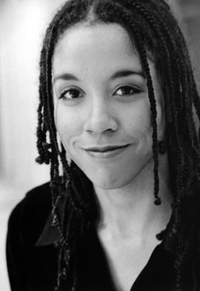
Kara Lee Corthron ’99, Theatre, is an award-winning playwright whose works depict the challenges brought by economic circumstances and the power of the human spirit. “Wild Black-Eyed Susans,” which was performed during UMBC’s Homecoming in 2007, earned Corthron the Helen Merrill Award for Emerging Playwrights in 2007.  Another work, “Like a Cow or an Elephant,” received the 2007 Theodore Ward Prize for African-American Playwrights and was produced at the DePaul Theatre School in Chicago. Her work “End-Zone Zephyr” earned Corthron the 2006 New Professional Theatre Writer’s Award. Corthron is a graduate of the Lila Acheson Wallace Playwriting Program at the Juilliard School in New York, where she has been playwright-in-residence, and is also a three-time recipient of the Lincoln Center’s Lecomte du Nouy Foundation Award

OUTSTANDING ALUMNA
SOCIAL & BEHAVIORAL SCIENCES

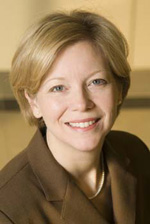
The Honorable Marcella A. Holland ’80, Political Science, is Chief Administrative Judge of the Circuit Court for Baltimore City. She was first sworn in as an Associate Judge in 1997, having served as an assistant state’s attorney for 13 years. Judge Holland oversees a $15 million budget and the work of 31 other active judges, several retired judges and several masters. Among her honors are Maryland’s “Top 100 Women” and induction in the “Circle of Excellence” in 2004; and the Ben Cardin Pro Bono Service Award from the University of Maryland School of Law, her alma mater. She has an extensive record of community service with organizations including Associated Black Charities and the Druid Hill YMCA. She is also active in bar associations, having served as President, Monumental City Bar Association; Member, Board of Governors, Maryland State Bar Association; and President, MD Chapter of National Association of Women Judges

OUTSTANDING ALUMNUS
HUMANITIES

Kevin M. Maxwell ’02 Ph.D., Language, Literacy & Culture, is the superintendent of schools for Anne Arundel County Public Schools, a position he has held since 2006. An educator for more than 20 years, he also has served as chief educational administrator in Prince George’s County Public Schools, where he also taught, and as one of six community superintendents within the Montgomery County Public Schools system, as well as a principal in both counties. Under his leadership as principal, Walter Johnson High School in Montgomery County was named one of the 100 best high schools in the United States. In 2000 he received the Washington Post Distinguished Educational Leadership Award and he was named a Fulbright Scholar in 2004

OUTSTANDING ALUMNA
ENGINEERING AND INFORMATION TECHNOLOGY

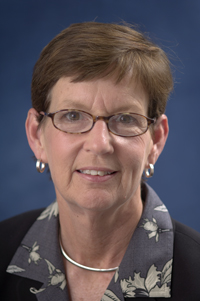
Stephanie Reel ’85, Information Systems, is vice provost for information technology and chief information officer for the Johns Hopkins University. Since 1994, she has also been vice president for information services for the Johns Hopkins Hospital. As the CIO for all divisions of the university and health system, Reel leads operational redesign for information services, networking, telecommunications, as well as clinical research and instructional technologies. Her work to develop electronic patient records management has been honored by Computerworld magazine and the Smithsonian Institution, and she has been named CIO of the Year by the College of Healthcare Information Management executives. She is a member of EDUCAUSE, the Healthcare Information Systems Executive Association, and the National Alliance for Health Information Technology and she serves on the client advisory boards of IBM, GE Medical Systems, Verizon, the editorial advisory board of Healthcare Informatics magazine and the Information Systems Advisory Council for the U.S. Department of Homeland Security

OUTSTANDING ALUMNUS
NATURAL & MATHEMATICAL SCIENCES

Reid C. Thompson ’85, Biological Sciences, is vice chairman of neurological surgery, director of the Vanderbilt Brain Tumor Center, and associate professor of neurological surgery at Vanderbilt University in Nashville, Tenn. Thompson received his M.D. from the Johns Hopkins University School of Medicine, where he completed his internship and residency, followed by a fellowship in cerebrovascular surgery at Stanford. A diplomat of the American Board of Neurological Surgery, he also is the author or more than 30 published research papers and abstracts. Thompson’s expertise is in the surgical treatment of patients with complex brain and spinal cord tumors, particularly those involving the most critical parts of the brain such as the brain stem and skull base.

2007 UMBC Alumni of the Year & Distinguished Service Award Winners

Each year, the UMBC Alumni Association presents awards to honor alumni for their professional and personal achievements and service to the University.   Learn more about our past award winners.

Outstanding Alumnus
Social & Behavioral Sciences
Eric A. Carlton ’91, Africana Studies

After becoming the youngest high school principal in the country at age 29, Eric A. Carlton ’91, Africana studies, later launched Banner Schools, a private company that partners with public school districts to provide a successful educational environment for at-risk youth. The company has three schools in Chicago, one in Miami, and will open another in Detroit. Together, the schools serve some 500 middle- and high-school students from the most troubled environments. A former UMBC SGA vice president and president, member of the men’s soccer team and tutor for the Shriver Center’s Choice Program, Carlton has received numerous accolades for his services as an educator.

Distinguished Service Award
Eli Eisenberg ’86, Interdisciplinary Studies

Eli Eisenberg ’86, interdisciplinary studies, is connected to UMBC through both service and philanthropy, as a member of the board of UMBC’s Alex. Brown Entrepreneurship Center, the “Exceptional by Example” Alumni Campaign Committee and the 2016 Alumni Strategic Planning Committee. In addition, he has endowed a scholarship in the name of his parents that supports two students per year.  Eisenberg is founder and principal of VPC, Inc., a company providing multimedia production services, event management and studio and technology systems design. Guests at UMBC’s Commencement ceremonies and the spectacular 40th Anniversary celebration have seen VPC’s technical expertise at work.

Outstanding Alumna
Visual & Performing Arts
Sheila López ’92, Visual and Performing Arts -Theatre

After earning her M.F.A. from the Yale School of Drama, Sheila M. López ’92, visual and performing arts/theatre, founded Antecesores, a non-profit organization in Buffalo, NY, that advances, nurtures and celebrates Latino cultures through theatre. Antecesores (translated as “ancestors”) focuses in particular on programs for children, to allow them to explore and discover their cultural heritage. She also works to bring different generations of Buffalo’s Latino community closer together and to provide a cultural bridge between Latinos and those of non-Latino descent.

Outstanding Alumnus
Engineering and Information Technology
Robert S. Marshall ’88, Mechanical Engineering

Robert S. Marshall ’88, mechanical engineering, is president and CEO of AWS Convergence Technologies, better known as “WeatherBug.” Marshall pioneered the networking of weather instrumentation and cameras using the Internet, and has built this capability into the single largest network of weather stations and Internet cameras in the world.  Since it was launched in 2000, WeatherBug has become one of the top 10 news and information sites on the Internet. It is the leading provider of real-time, local weather for broadcast television and, through a landmark agreement with the National Weather Service, now also provides critical weather data to federal, state, and local government agencies.

Outstanding Alumnus
Natural & Mathematical Sciences
Joseph P. McCloskey ’81 M.S., ’83 Ph.D., Applied Mathematics

Joseph McCloskey, M.S. ’81, Ph.D. ’83, applied mathematics, is a senior cryptologic mathematician for the National Security Agency, where he has worked since 1968. As technical director of the agency’s Mathematics Research Group for the past 11 years, he is responsible for coordinating and supervising the professional training of newly hired mathematicians and statisticians. Throughout his career, Dr. McCloskey has received numerous citations, including the prestigious Presidential Rank Award in 2006 and the President’s Award from the Crypto-Mathematics Institute, the agency’s oldest learned society, in 2001. He is the author of more than 80 professional papers, and he has taught one course each semester at UMBC for 20 years

Outstanding Alumna
Humanities
Patricia A. Smith ’74, Ancient Studies

A distinguished attorney, Patricia A. Smith ’74, ancient studies, has acted as People’s Counsel for the State of Maryland, a special solicitor and chief counsel to the Baltimore Police Department for the City of Baltimore, and has served as an administrative law judge in the Maryland Office of Administrative Hearings, as an assistant United States Attorney for the District of Maryland and an assistant attorney general in the Office of the Attorney General for the State of Maryland. She is also an instructor at the Johns Hopkins University.

2006 UMBC Alumni of the Year & Distinguished Service Award Winners

Each year, the UMBC Alumni Association presents awards to honor alumni for their professional and personal achievements and service to the University.  Learn more about our past award winners.

Outstanding Alumna

Natural & Mathematical Sciences
Diane Auer Jones ’88, M.S. Applied Molecular Biology
In addition to a successful career as an entrepreneur, government policy maker and administrator at Princeton University, in November Jones was appointed Deputy Associate Director for the White House Office of Science & Technology Policy. She also has served as an active member of the UMBC Research Park Corporation’s board of directors for the past eleven years.
Outstanding Alumnus
Humanities
Steven Eidelman ’73, American Studies
After serving for three decades as an advocate for people with disabilities – most recently as national executive director of The Arc of the United States – Eidelman last fall was named the University of Delaware’s first Robert Edelsohn Chair in Disabilities Studies, as well as a Senior Fellow at the university’s Center for Disabilities Studies. In his new position, Eidelman also develops leadership training programs for government and not-for-profit managers who support people with disabilities.
Outstanding Alumnus
Visual & Performing Arts
Billy Kemp ’95, Visual and Performing Arts – Music
An accomplished multi-instrumentalist and producer, Kemp received three nominations from the Washington Area Music Association (WAMA) in 2004 including best producer. In 2003 Kemp produced Grammy-nominated and Wammy award-winning singer Debi Smith. He has been the composer for the regional Emmy award-winning Maryland Public Television series, “Outdoors Maryland,” since 1997. He has been adjunct faculty at UMBC since 1996.
Outstanding Alumna
Social & Behavioral Sciences
Lisa L. Dickerson ’78, Political Science
Prior to her appointment as the first African-American female Administrator for the Maryland Transit Administration in 2005, Dickerson served as Assistant Secretary for Equity and Economic Empowerment at the Maryland Department of Transportation, and before that garnered successes working as a congressional fellow in Washington and serving as vice president of a national telecommunications firm. During his time in office, President George H.W. Bush also appointed Dickerson to the prestigious Committee for Small Business and the Republican Council of 100.
Outstanding Alumna
Engineering and Information Technology
Donna Stevenson ’87, Information Systems
As head of Early Morning Software, Stevenson is one of only a few minority women CEOs of an IT company in Maryland and the rest of the United States. She remains an active volunteer at UMBC, most notably as a member of the Center for Women and Information Technology advisory board and a mentor-in-residence for the ACTiVATE program, which promotes entrepreneurship among women.
Distinguished Service Award
Michael L. Oster ’74, Economics
As chairman of the UMBC Economics Advisory Board since its inception in 2001, Oster has helped shape the council’s objectives, facilitate scholarships and internships for students and created many valuable connections for the University. An accomplished banking executive, Oster joined BB&T in 1999 as a regional president and became Maryland Group President in 2001. His time and talents also benefit the boards of a number of worthy organizations, many of them in his home, Carroll County.
Visionary Leadership Award
The Alumni Association Executive Board will present this special award to the Reginald F. Lewis Event Committee in recognition of their achievement in advancing the mission of the Alumni Association. The committee members are:
Kisha Matthews ’03
Yvette Mozie-Ross ’88
Devin Walker ’89
James Wiggins ’75
Gary Brooks ’79
Michael Sterling ’85
Juan Holcomb ’81
Crystal Watkins ’95

2005 UMBC Alumni of the Year & Distinguished Service Award Winners

Each year, the UMBC Alumni Association presents awards to honor alumni for their professional and personal achievements and service to the University.  Learn more about our past award winners.
Life Sciences
Sheldon Broedel, 1984 M.S. and 1990 Ph.D. Biological Sciences, is chief executive and science officer of Athena Environmental Sciences. This 10-year-old company, headquartered at techcenter@UMBC, specializes in “ecologically responsible and economically sound solutions to environmental problems.”
Humanities
Sean Carton, 1990 English, is Dean of Digital Design at Philadelphia University, the author of Dot Bomb and a frequent contributor to Wired magazine. As co-founder of Carton Donofrio Interactive, a web and multimedia design firm in Baltimore, he created a multi-million dollar company with numerous Fortune 500 clients.
Visual and Performing Arts
Brian Dannelly, 1997 Visual and Performing Arts, whose first feature film “Saved!” was released in 2004. It was reviewed by major national media and is now on DVD. Dannelly has several other feature projects under way.
Social and Behavioral Sciences
Renato A. DiPentima, 1984 Ph.D. Public Policy, is president and CEO of SRA International, a leading provider of technology services to clients in national security, government, health care and public health. Fortune magazine has named SRA as one of the “100 Best Companies to Work For” for five consecutive years.
Engineering and Information Technology
Dr. Yue (Joseph) Wang, 1995 Ph.D. Electrical Engineering, an associate professor at Virginia Tech, leads a $5.5 million breast cancer research effort. He was recently inducted into the College of Fellows of the American Institute for Medical and Biological Engineering for his contributions to biomedical informatics.
Distinguished Service Award
Walter Kerr, 1996 B.S. and 1997 M.S. Emergency Health Services, a flight paramedic with the Maryland State Police, provides in-flight clinical training for UMBC paramedic students, a unique opportunity available only at UMBC thanks in large measure to his efforts.

UMBC Alums Encourage Change in the Community

Here at UMBC, we take pride in what our alums accomplish after graduation. Take a moment to see which Retrievers have been on the move and making news! 

Karina Velasco ’15, social work, shares her positive experience with Deferred Action for Childhood Arrivals (DACA) and calls for comprehensive immigration reform. She discusses how the recent executive order signed by President Obama has helped secure a life that would have been taken away. She is now able to maintain her job, health insurance, and driver’s license.

Click here to learn more about Velasco’s story.


Alfred SanchezAlfred Sanchez ’83 M.A., community/clinical psychology, is the new regional chief executive officer for the South Florida Region of the American Red Cross. He will be continuing his work as executive Director for the Greater Miami and the Keys while progressing into his new role as CEO.

To read more about Sanchez’s accomplishments, click here.

UMBC Alums Transform the Written Word

Here at UMBC, we take pride in what our alums accomplish after graduation. Take a moment to see which Retrievers have been on the move and making news!

Monica GallagherMonica Gallagher ’01, visual arts, wrote Part-Time Princesses, which was nominated as a Great Graphic Novel for Teens by the Young Adult Library Services Association. The graphic novel follows the lives of four girls’ plans after high school fall apart, go to work as costume princesses at a local amusement park and end up defending their job to a gang of local thugs.

To find out more about Gallagher’s nomination, click here.


StricklandVanessa Strickland ’06, theatre, wrote and directed “Materialize,” a puppet show exploring themes of identity. The idea for Stickland’s puppet show centered around identity, came about following a question she posted on social media asking people to share about an experience they have had where they felt invisible or dehumanized. She has taken their responses and put them to motion by way of several vignettes. 
Click here to read more.