All posts by: Magazine Editor


Interrogating Images: Q&A with Maurice Berger

Whether he is enlightening readers on the nuances of photographs with his posts on “The Lens” blog at The New York Times, curating an exhibit such as For All the World to See, or testing the boundaries of memoir and cultural criticism (as he did with his book White Lies: Race and the Myths of Whiteness), you can count on Maurice Berger to be at the forefront of American culture’s engagement with its history and visual culture.

Berger is research professor and the chief curator at UMBC’s Center for Arts, Design and Visual Culture (CADVC). He is also a consulting curator at the Jewish Museum in New York City. He took a B.A. from Hunter College and his Ph.D. from the Graduate Center at the City University of New York. Berger’s range of activities is prolific – including cultural criticism in books and articles, curating exhibits and filmmaking. (His short film, Threshold, was screened in May at the Whitney Biennial.)

Berger’s interests range widely, and he has written about and organized exhibits taking in the grand sweep of 20th Century U.S. culture and its artistic movements. Yet it is his eagerness to tackle some of the thorniest issues in American race relations that has catapulted him to greatest prominence. Early in his career, Berger was a key voice in the debate over whether art museums were perpetuating racism (including a 1990 piece in Art in America – “Are Art Museums Racist?”). And his memoir, White Lies, dissected his own experience and attitudes about race while simultaneously conducting a rigorous yet empathetic analysis of the entire fraught concept of racial categories. (The New York Times called the book “startlingly original.”)

As Berger receives recognition and rewards for For All the World to See and his other work in cultural research (including an Emmy Award nomination for his work on a PBS Sunday Arts story about For All the World to See and the “Outstanding Exhibition in a University Art Museum 2010″ from the Association of Art Museum Curators), he is moving forward on new projects that include three future exhibits that will also appear at the CADVC in coming years: a 25th anniversary exhibit for the center and a new exhibit tracing the influence of modernism on the birth of American television.

Berger talked with UMBC Magazine recently about his career and those future exhibits. He is particularly excited about the opportunity to reach even wider audiences through his posts on “The Lens” blog.

“It’s an opportunity to explore the story of race in America through photographs,” Berger says. “The enormous audience that the Times affords will provides me with a broad, international platform to explore the fraught, but also vital, subject of race. The response to my first piece this July, on Gordon Parks’ civil rights photographs, was extraordinary. My plan is to write an essay every other month.”

– Richard Byrne ’86

UMBC Magazine: One thing that immediately stands out to me when looking at your career is that you have spent a great deal of time questioning how race works in our institutions and in our own individual lives – as you did so eloquently with your own life in White Lies.

Maurice Berger: My interest in questioning institutional attitudes about race goes back to my childhood, to growing up in an environment in which very few white people lived or worked. I saw how the system operated very early in life. I could walk around a department store and not be followed by security guards, for example, while my black friends would walk around the same stores and be followed. Even early on, I understood.

I also saw teachers who would treat black students quite differently from the way they treated me – since I for most of my early education I was one of the few white kids in the schools I attended. Even from that early vantage point, I could see things were not quite equal – and that institutions had certain kinds of collective attitudes.

I became a professor at Hunter College in the early 1980s. (First thing you know I was back as a professor at my undergraduate college.) And even there, I found it interesting that I had only one African-American colleague – and he was an artist, not an art historian. I had never heard a black artist discussed in any of my art history classes as an undergraduate or a graduate student, perhaps with the exception of a mention of Jacob Lawrence in passing.

Given that my field is 20th century American art and culture, that’s pretty amazing. And my teaching career began just about the time I began publishing in 1980. So at that point, I started to see that there was a problem. And I realized that I had to do something about it as an art historian and a cultural historian (as well as a responsible human being).

As you see with White Lies, I’ve always been thinking about these issues. But the reason that the memoir was published in 1999 and not in 1989 was that I wasn’t ready. One of the hardest things that I have accomplished as a writer was to write autobiographically. It brings up memories. It brings up things you’d rather not think about. It exposes you in a certain way. And then when you publish it, you rightfully (in an almost paranoid way) feel that what you’ve published isn’t a piece of writing, but you. If it is rejected, then you are rejected.

The good news is that White Lies was widely reviewed and almost every review was very positive and some were raves (it even was nominated for several awards). The book remains in print and it still has a relatively wide audience, especially among young people and in academia. So it turned out all right, but it was very scary at the time.

UMBC Magazine: When I went back and read the profile of you that The New York Times published shortly after White Lies came out, one of the things you noted was that readers’ responses to the book were very different and very personal. Telling your own story seemed to compel readers to share their journeys.

Berger: I think with race – and attitudes and behavior around race – if you want to change, it has to begin with personal honesty. I’ve always said that if people can’t see the problem and acknowledge the problem, then you can’t get past it.

Remember, so much of what I am writing about in White Lies is not just the domain of white supremacy in the South, it is also the domain of white liberals and leftists. Racism is not limited to conservatives or Southerners. We all need to collectively – and, even more important, intimately and privately, where there is less room to be rebuked or embarrassed – assess ourselves.

And that’s the point of White Lies. And it’s also part of the apparatus of For All the World to See. All the images and stories in the exhibit invite you to think about your own attitudes. Or, if you are older, to reflect on when you yourself first saw these images. How did they make you feel? Did they help change your attitudes? Did they awaken you to the reality of racism and segregation and the problems they presented for the country?

UMBC Magazine: Do you remember the moment when you had the vision for For All the World to See? Was there a particular image that set you in the direction you took in the exhibit?

Berger: It’s a funny thing to think about, because I can usually answer that question when someone asks it about a particular project. It’s not that I don’t remember with regard to For All the World to See, but the thing that’s different with this project – and possibly why it has been so well received and reached so many people (almost one million to date) – is that for the first time, in a dynamic and comprehensive way, I have been able to put together my two primary cultural research areas. The first is the history of American race relations – the issues of race and racism and the analysis of them.

The other interest I have been able to bring to bear on For All the World to See is how visual images manipulate, inspire, infiltrate and integrate ideas in American society and culture. As a cultural historian, my focus is on visual culture and how it operates in society.

So maybe that’s why I can’t remember a particular image. This project has been so natural. It’s the culmination of the two things I have been most driven to do and to explore, two things that have preoccupied me for most of my life.

UMBC Magazine: One of things in the exhibit that impressed me greatly was the way that the iconic journalistic images of the political and moral battles of the Civil Rights movement are juxtaposed and connected with lesser-known visual images created to build self-esteem in the African-American community and portray life in that community as very much like that in white America.

Berger: Until this project most exhibitions of Civil Rights history or Civil Rights culture focused on one particular thing: The way that photographers, and mostly well-known photographers or photojournalists (many of them white), documented the struggle for Civil Rights. And what that has meant is that these exhibitions are dominated by images of the events that we have come to associate with the Civil Rights movement: the protests, the marches, conflagrations, violence, poverty, and all the outward vestiges of racial segregation and prejudice. And that is what Civil Rights imagery has come to mean for most Americans.

For All the World to See argues that the Civil Rights movement is not just about who documented it, or the story of these protests and other events. It proposes that images of all kinds—from film and television to picture magazines and advertising (to quote the great, late photographer Gordon Parks) were employed by African Americans as a “weapon” against racism in America.

Thus, the story of the visual culture of the civil rights movement is far more complicated than we realize. For as [Supreme Court Justice] Thurgood Marshall said, the struggle for civil rights was not just about the protests or the legal cases, but also about African-American morale and legitimacy. How do you inspire a community that is continually beaten down by the realities of racism to rise up and keep the faith? How do you convince white people that the habitually negative and subservient images of black Americans in the culture at large were wrong and immoral? And, perhaps most important, how do you bolster the morale of African Americans scarred by racism and segregation? How to you reflect back to them images that showed the wholesome nature of black life, despite the onslaught of racism in myriad forms?

And, just as importantly, while much of white America did not perpetuate Jim Crow segregation, most white people remained uninformed about the African American community and the pervasive reality of racism, particularly their own. Once again, visual culture played an important role in educating white Americans about the reality of race and racism in America. Affirmative images of black people served as a very important aspect of the movement. These images not only bolstered the morale of African Americans in the face of withering prejudice, but also reminded white Americans that black people led the same kinds of lives and had the same kinds of family relationships as their white counterparts. Such imagery, in other words, powerfully appealed to the empathy of white readers and viewers.

UMBC Magazine: What’s next for you as a cultural historian and curator?

Berger: I am working on a number of projects simultaneously. Much of what I’ll continue to do revolves around the question of American race relations and the study of racism and segregation in America. I am working on another large Civil Rights exhibition and book, though it’s still a long way off, and it will be at CADVC in 2017: The Site of Memory: Reimagining the History of Civil Rights. Plus, I will be contributing regularly to the “Lens” blog at The New York Times, which I am very excited about. Writing for the Times gives me a broad, international platform through which I can share my ideas about race in America (and hopefully make a difference, even change minds and hearts).

I’ve also had a long term relationship with The Jewish Museum, where I have worked on a number of projects over the past twenty years. Last December, shortly after she came on board, newly hired Jewish Museum director Claudia Gould asked me to join the museum as consulting curator. She felt that my work and my point of view were a good fit. Over the past eight months, we’ve been working together with our colleagues to reshape the mandate of the museum and move forward in a bigger and more dynamic way.

I am also working on a collaborative project with The Jewish Museum and the CADVC, an exhibition and companion book (the latter to be published by Yale University Press): Revolution of the Eye: Modern Art and the Birth of American Television. It’s the first major research project in a long time that does not focus on the story of American race relations It tells the extraordinary story of the birth and rise of American television from the 1940s to the 1960s, and how its executives and writers and producers – most of whom were Jewish – embraced the modernist avant garde as a source of inspiration, aesthetics, and ideas. Television pioneers such as Rod Serling were actively looking at surrealism; Ernie Kovacs was embracing both Dadaist and surrealist sensibilities in his work. And CBS employed some of the top modern artists and designers of the period to help them develop what was at the time one of the most progressive design campaigns of any American company.

The exhibit also argues that television was born not just in the spirit of entertainment, some of it frivolous, but also with deeply held artistic and intellectual concepts and ambitions. This story is virtually unknown to most Americans (and even most art and cultural historians).

Yet, even an institution as famous as the Museum of Modern Art (MOMA) got into the act of producing, curating, and analyzing the medium. In the 1950s, the museum established the MOMA “Television Project,” dedicated to exploring the creative possibilities of television and producing content that sold the gospel of modern art and established the importance of modern artists. We will actually be working with MoMA to produce an array of public programs and TV screenings around the exhibition.

Ultimately, and despite the commercialism of it all, art has always been present on television. The point of “Revolution of the Eye” is that art is in the medium’s DNA.

I am also proud to say that I will also be curating CADVC’s 25th anniversary exhibition, which will open in 2014. So at UMBC alone, over the next five years, three of my projects will premiere.

– Return to Staging the Struggle

Howard '10, Acting and MCS, Brings History to Life

Howard as “Christian Fleetwood,” Civil War soldier

Sometimes, recent grad Roderick Howard II ’10, acting and media communications studies, just isn’t himself.
But, that’s the life of an actor — especially one, like Howard, who portrays multiple roles with the Maryland Historical Society Players. One day he’s Christian Fleetwood, a free black man who fought in the Civil War and received a Medal of Honor for bravery. The next he’s Charles Ball, a sailor in the War of 1812.
Howard loves bringing history to life. He and other MHS Players were profiled in a recent story in the Hagerstown Herald-Mail. Read it here.
For Howard, who has been with MHS since 2011 and who recently took on additional duties as a teacher for school programs, especially at the elementary and middle school level, it is exciting to teach as an actor.
“I enjoy the people I work with; the opportunity to expand my knowledge in American history, especially Maryland history; and the honor to portray a historical figure (Fleetwood) who, hopefully, will become even more of a well-known figure amongst those who consider Maryland to be their home, especially African-Americans,” said Howard.
“I also enjoy the opportunity to interact with visitors of the Maryland Historical Society and audiences of our outreach performances. It’s always a pleasure to hear how much they enjoy our performances and/or tours; how interested and knowledgeable they are with history; and stories about how historical events have directly impacted their lives or their loved ones.”
And the job has proved just as educational for Howard, he says.
“My work there has certainly opened my eyes. As an African-American, I have grown an even greater appreciation for those before me, who proudly and willing fought for the liberties and freedoms of America, despite being denied those same liberties and freedoms in their own country.”
Read more about the Maryland Historical Society Players and their schedule of appearances here.

Howard ’10, Acting and MCS, Brings History to Life

Howard as “Christian Fleetwood,” Civil War soldier

Sometimes, recent grad Roderick Howard II ’10, acting and media communications studies, just isn’t himself.

But, that’s the life of an actor — especially one, like Howard, who portrays multiple roles with the Maryland Historical Society Players. One day he’s Christian Fleetwood, a free black man who fought in the Civil War and received a Medal of Honor for bravery. The next he’s Charles Ball, a sailor in the War of 1812.

Howard loves bringing history to life. He and other MHS Players were profiled in a recent story in the Hagerstown Herald-Mail. Read it here.

For Howard, who has been with MHS since 2011 and who recently took on additional duties as a teacher for school programs, especially at the elementary and middle school level, it is exciting to teach as an actor.

“I enjoy the people I work with; the opportunity to expand my knowledge in American history, especially Maryland history; and the honor to portray a historical figure (Fleetwood) who, hopefully, will become even more of a well-known figure amongst those who consider Maryland to be their home, especially African-Americans,” said Howard.

“I also enjoy the opportunity to interact with visitors of the Maryland Historical Society and audiences of our outreach performances. It’s always a pleasure to hear how much they enjoy our performances and/or tours; how interested and knowledgeable they are with history; and stories about how historical events have directly impacted their lives or their loved ones.”

And the job has proved just as educational for Howard, he says.

“My work there has certainly opened my eyes. As an African-American, I have grown an even greater appreciation for those before me, who proudly and willing fought for the liberties and freedoms of America, despite being denied those same liberties and freedoms in their own country.”

Read more about the Maryland Historical Society Players and their schedule of appearances here.

Moreno ’96, History, Talks “New Space” in PAHB Panel

In a fitting tribute to UMBC’s newest space — the Performing Arts and Humanities building — a stage-full of area cultural luminaries discussed the concept of “New Space” at the building’s opening ceremonies September 19. Among them was alumnus Kevin Griffin Moreno ’96, history, founder and host of Potluck Storytelling.
“The places we inhabit shape the stories we tell ourselves about ourselves,” Moreno told the audience during the standing room only panel moderated by Tom Hall, WYPR radio host and Baltimore Choral Arts Society director.
Read the full story about New Space and the PAHB opening.
Listen to a clip of Moreno at the New Space panel.
Moreno, who describes himself as “nonprofit policy geek by day; story collector by night,” runs Potluck Storytelling, which brings artists together to share stories, songs — and delicious food. Read more about Potluck Storytelling here.

Moreno '96, History, Talks “New Space” in PAHB Panel

In a fitting tribute to UMBC’s newest space — the Performing Arts and Humanities building — a stage-full of area cultural luminaries discussed the concept of “New Space” at the building’s opening ceremonies September 19. Among them was alumnus Kevin Griffin Moreno ’96, history, founder and host of Potluck Storytelling.
“The places we inhabit shape the stories we tell ourselves about ourselves,” Moreno told the audience during the standing room only panel moderated by Tom Hall, WYPR radio host and Baltimore Choral Arts Society director.
Read the full story about New Space and the PAHB opening.
Listen to a clip of Moreno at the New Space panel.
Moreno, who describes himself as “nonprofit policy geek by day; story collector by night,” runs Potluck Storytelling, which brings artists together to share stories, songs — and delicious food. Read more about Potluck Storytelling here.

Cantori ’85, Geography, New President of Maryland Nonprofits

Greg Cantori ’85, geography, will take the helm of Maryland Nonprofits, on October 1, the organization reports.

From the Maryland Nonprofits website:

Greg brings an impressive record of leadership experience to the position – as the CEO of two nonprofit organizations and key leadership roles in the region’s foundation community. He began his career as a Senior Cartographer at the National Geospatial Intelligence Agency (formally known as the Defense Mapping Agency), where he helped support our forces during Desert Shield and Desert Storm. He then joined the nonprofit sector, serving seven years as Executive Director of the Light Street Housing Corporation, where he implemented a comprehensive vision of “homelessness to homeownership.” Moving to the philanthropic community, he directed the general operations of the Marion I. & Henry J. Knott Foundation for 12 years. He served as an advisor to many nonprofits including the Bearman Foundation, as President of One Less Car, and as a boardmember of the Association of Baltimore Area Grantmakers. Most recently he served as the Executive Director of the Downtown Sailing Center.

Read stories about the appointment in:

Cantori is the son of Lou Cantori, late professor of political science, and brother of Eric Cantori ’86, computer science.

Cantori '85, Geography, New President of Maryland Nonprofits

Greg Cantori ’85, geography, will take the helm of Maryland Nonprofits, on October 1, the organization reports.
From the Maryland Nonprofits website:

Greg brings an impressive record of leadership experience to the position – as the CEO of two nonprofit organizations and key leadership roles in the region’s foundation community. He began his career as a Senior Cartographer at the National Geospatial Intelligence Agency (formally known as the Defense Mapping Agency), where he helped support our forces during Desert Shield and Desert Storm. He then joined the nonprofit sector, serving seven years as Executive Director of the Light Street Housing Corporation, where he implemented a comprehensive vision of “homelessness to homeownership.” Moving to the philanthropic community, he directed the general operations of the Marion I. & Henry J. Knott Foundation for 12 years. He served as an advisor to many nonprofits including the Bearman Foundation, as President of One Less Car, and as a boardmember of the Association of Baltimore Area Grantmakers. Most recently he served as the Executive Director of the Downtown Sailing Center.

Read stories about the appointment in:

Cantori is the son of Lou Cantori, late professor of political science, and brother of Eric Cantori ’86, computer science.

Alumni Band Plays to Support Amnesty International

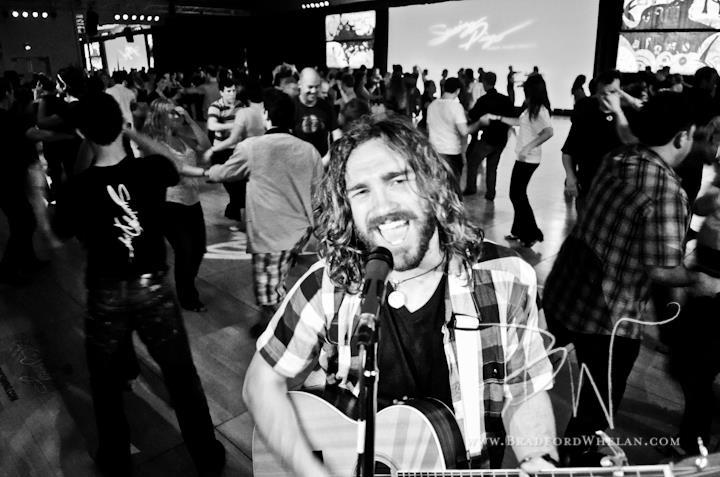
Alumnus musician “Leify Green” (Leif Huber) ’10, economics and modern languages & linguistics, will play a concert in Washington, D.C., next month to support Amnesty International. The Leify Green Conspiracy will play at Axum’s Lounge on October 12.

For more information about the event, click here.

The concert will specifically support the Women of Zimbabwe Arise (WOZA) and the
General Agriculture and Plantation Workers Union’s (GAPWUZ) work to support
the civil and human rights of all Zimbabweans through grassroots activism.

“I believe in supporting human rights and those who struggle to defend them,” said Green. “That belief was a major influence in my decision to study Economics and Modern Languages in Cultures at UMBC, where I focused largely on economic development, particularly in Latin America. I am proud to play in support of Amnesty International and excited that my music is being used to further a cause I believe in.”

Since 2010, The Leify Green Conspiracy has independently released an EP, Give
Me A Push (recorded in UMBC’s own studios), that has sold over 1,000
copies. The band also includes former UMBC student Luke Solomon. Green has toured the United States extensively as a solo act. His latest single, Sweet On The Phone, will be available on iTunes and other digital stores on October 8th. For more information about the band, click here.

Q&A: Karsonya Whitehead '09, Ph.D. LLC, on Life as a New Professor


What’s it like adjusting to life as a professor?
For language, literacy and culture Ph.D. grad Karsonya “Kaye” Whitehead ’09, it was just as much about embracing a new sort of teaching — the Jesuit educational traditions upheld by her employer, Loyola University Maryland — as the challenges found in the everyday classroom. A member of Loyola’s full-time communications faculty since 2009, Whitehead was recently interviewed by the university about her experiences so far.
Read the full story here.
Whitehead earned her bachelor’s degree in history from Pennsylvania’s Lincoln University and her M.A. in international peace studies from the University of Notre Dame. She answered some additional questions about the professor’s life for UMBC’s Alumni Blog.
Q:  As a relatively new Ph.D. grad, what has it been like adjusting to your new work?
A:  One of the things that I enjoyed the most about my doctoral program was working so closely with my dissertation committee. I had both the support and the ear of five very accomplished scholar teachers who were committed to my success. They read every word that I wrote, listened when I felt overwhelmed, cheered for my every accomplishment, and believed in me even during the times when I could not believe in myself. My co-chairs were Drs. Christine Mallison (LLC) and Kriste Lindemeyer (former chair of the History department) and my committee members were Drs. Michele Scott (History), Cristel Temple (former associate professor in Africana Studies) and Debra Newman Ham (History, Morgan State). My biggest adjustment has been adjusting to the fact that I am now the teacher scholar and that I must do for others, what was done for me. I miss my committee and there are days when I miss being the student (who could focus only on myself) rather than the professor (as I must look outward to ensure that my students are learning and growing and are not being left behind).
Q:  What has been your most surprising discovery so far?
A:  I am constantly amazed by how much I enjoy teaching at a Jesuit university. I was first introduced to the Jesuit teachings when I was in graduate school at the University of Notre Dame. I was living in the “Peace House,” while I was working on my masters in international peace studies (fourteen graduate students in the peace program—students were from all around the world with no more than two from one country—were selected every year to live in the peace house and to actively work on building and maintaining a peaceful community. It was a yearlong commitment and it forced us to listen to one another and to bear one another’s burden. We had a white and a black student from South Africa, a student whose mom was Jewish and her father was Palestinian, students from China, Korea, Vietnam, Russia…) and someone mentioned that the Jesuits were committed to promoting peace when peace was an option and protesting when it wasn’t. I had never really heard of the Jesuits but I was familiar with protest and resistance and I was interested in hearing more about this group that did both and that did them in the name of love.
Since arriving at Loyola, I have immersed myself in the culture. I have gone on an Ignatian Pilgrimage, visiting all of the places in Spain and Rome where St. Ignatius developed the Jesuit teachings; I have participated in an Ignatian pedagogy class, where I learned how to infuse Jesuit teachings into my classroom; I have attended the Collegium program, a week-long retreat for faculty members from Jesuit and Catholic universities; and I have worked with a Jesuit priest to learn about the Examen process of daily meditative reflection and discernment. I enjoy being at a place where we take seriously the idea of cura personalis – the care of the entire student. We are concerned about them as people and we want them to think seriously about what they have to offer the world and how they can make a difference in whatever field they choose to enter.
Q:  And what advice might you give to current UMBC students looking to begin careers as professors?
A:  I am going into my fourth year and what I value the most about my colleagues is the feeling of collegiality and community. Loyola is a good fit for me and for my family. I like the way the school values both teaching and scholarship. For students that are considering becoming a university professor, I would advise them:

  • Find a campus where they can see themselves working at everyday for the next 20+ years (even if they are not planning to stay that long, the field is always changing and you have to gauge when to make a move to another university, so just in case…)
  • Find a department where they have a connection with the other professors (they will be your campus family and you will need them to support your annual reviews, your tenure package, your teaching…)
  • Find a university whose mission fits with the way that you see the world; if you want to focus solely on research then look only at R1 universities and if you want to focus on both your teaching and your research – look for places like Loyola.

Earlier this week, I left class, walked across my campus, and realized how much I love being a university professor. I get paid to make an impact on the lives of the next generation; to think deeply about issues that are important to me; and to be engaged in the world around me!

Q&A: Karsonya Whitehead ’09, Ph.D. LLC, on Life as a New Professor

What’s it like adjusting to life as a professor?

For language, literacy and culture Ph.D. grad Karsonya “Kaye” Whitehead ’09, it was just as much about embracing a new sort of teaching — the Jesuit educational traditions upheld by her employer, Loyola University Maryland — as the challenges found in the everyday classroom. A member of Loyola’s full-time communications faculty since 2009, Whitehead was recently interviewed by the university about her experiences so far.

Read the full story here.

Whitehead earned her bachelor’s degree in history from Pennsylvania’s Lincoln University and her M.A. in international peace studies from the University of Notre Dame. She answered some additional questions about the professor’s life for UMBC’s Alumni Blog.

Q:  As a relatively new Ph.D. grad, what has it been like adjusting to your new work?

A:  One of the things that I enjoyed the most about my doctoral program was working so closely with my dissertation committee. I had both the support and the ear of five very accomplished scholar teachers who were committed to my success. They read every word that I wrote, listened when I felt overwhelmed, cheered for my every accomplishment, and believed in me even during the times when I could not believe in myself. My co-chairs were Drs. Christine Mallison (LLC) and Kriste Lindemeyer (former chair of the History department) and my committee members were Drs. Michele Scott (History), Cristel Temple (former associate professor in Africana Studies) and Debra Newman Ham (History, Morgan State). My biggest adjustment has been adjusting to the fact that I am now the teacher scholar and that I must do for others, what was done for me. I miss my committee and there are days when I miss being the student (who could focus only on myself) rather than the professor (as I must look outward to ensure that my students are learning and growing and are not being left behind).

Q:  What has been your most surprising discovery so far?

A:  I am constantly amazed by how much I enjoy teaching at a Jesuit university. I was first introduced to the Jesuit teachings when I was in graduate school at the University of Notre Dame. I was living in the “Peace House,” while I was working on my masters in international peace studies (fourteen graduate students in the peace program—students were from all around the world with no more than two from one country—were selected every year to live in the peace house and to actively work on building and maintaining a peaceful community. It was a yearlong commitment and it forced us to listen to one another and to bear one another’s burden. We had a white and a black student from South Africa, a student whose mom was Jewish and her father was Palestinian, students from China, Korea, Vietnam, Russia…) and someone mentioned that the Jesuits were committed to promoting peace when peace was an option and protesting when it wasn’t. I had never really heard of the Jesuits but I was familiar with protest and resistance and I was interested in hearing more about this group that did both and that did them in the name of love.

Since arriving at Loyola, I have immersed myself in the culture. I have gone on an Ignatian Pilgrimage, visiting all of the places in Spain and Rome where St. Ignatius developed the Jesuit teachings; I have participated in an Ignatian pedagogy class, where I learned how to infuse Jesuit teachings into my classroom; I have attended the Collegium program, a week-long retreat for faculty members from Jesuit and Catholic universities; and I have worked with a Jesuit priest to learn about the Examen process of daily meditative reflection and discernment. I enjoy being at a place where we take seriously the idea of cura personalis – the care of the entire student. We are concerned about them as people and we want them to think seriously about what they have to offer the world and how they can make a difference in whatever field they choose to enter.

Q:  And what advice might you give to current UMBC students looking to begin careers as professors?

A:  I am going into my fourth year and what I value the most about my colleagues is the feeling of collegiality and community. Loyola is a good fit for me and for my family. I like the way the school values both teaching and scholarship. For students that are considering becoming a university professor, I would advise them:

  • Find a campus where they can see themselves working at everyday for the next 20+ years (even if they are not planning to stay that long, the field is always changing and you have to gauge when to make a move to another university, so just in case…)
  • Find a department where they have a connection with the other professors (they will be your campus family and you will need them to support your annual reviews, your tenure package, your teaching…)
  • Find a university whose mission fits with the way that you see the world; if you want to focus solely on research then look only at R1 universities and if you want to focus on both your teaching and your research – look for places like Loyola.

Earlier this week, I left class, walked across my campus, and realized how much I love being a university professor. I get paid to make an impact on the lives of the next generation; to think deeply about issues that are important to me; and to be engaged in the world around me!

Lebherz ’08, MLL, Discusses Olive Oil in Baltimore Sun

Maggie Lebherz ’08, modern languages and linguistics, was featured in a recent Baltimore Sun article about the evolution of olive oil. The owner of an olive oil shop in her native Frederick, Md., Lebherz shared her thoughts on the way the public has embraced the versatile oil in their cooking.

Read the full article in the Baltimore Sun.

Lebherz also shares her recipe for lemon olive oil cake with wild blueberry icing.

In an interview with UMBC Magazine in Fall 2011, Lebherz explained how she decided to pursue her business, Lebherz Oil & Vinegar Emporium (LOVE), and how she fell in love with olive oil while visiting Salamanca as an exchange student:

“Tasting fresh olive oil added an entirely new dimension to it, and I also learned about the health benefits of olive oil,” she says. “I had never had true balsamic vinegar, and even the best ones on the market here could not compare to what I had in Spain.”

Read the UMBC Magazine story here.


Five Alumnae Photographers Featured in Professor's Gallery Opening, Oct. 5


When UMBC political science professor Carolyn Forestiere moved to Catonsville, she and her husband knew they wanted to fill their new home with local art. After thinking about it some more, they decided to take their curatorial endeavor up a notch — and open their home as a part-time gallery.
Their first show, “UMBC Through the Lens,” will feature five UMBC visual arts alumnae — Brittney Danielle ’12, Chrystal Smith ’12, Marlayna Demond ’12, Stephanie Ellis ’12, and Kimberly M. Haines ’12 — who will present photography related to their time as students at UMBC.
Forestiere said she was pleased to have five “wonderful photographers,” explaining she hopes “that the artists will receive exposure and further their professional credentials.”
The first show will be on Friday, October 5th, from 5 to 7 p.m. Read more about the show and get the gallery address here. The community is welcome.