All posts by: UMBC News Staff


Announcing Critical Social Justice 2015 (2/16-2/20)

CSJ-2015-General-Flyer-e1418248437290Departments, student groups, and individuals from across the UMBC campus and community have organized a week full of exciting programming for the 2nd annual Critical Social Justice campaign. This year’s theme is “Creating Brave Spaces,” inspired by the essay “From Safe Spaces to Brave Spaces” by Brian Arao and Kristi Clemens.

Our keynote speaker will be comedian and social justice blogger Franchesca Ramsey (a.k.a. Chescaleigh), who’s perhaps best known for her viral parody video on racial microaggressions “Sh*t White Girls Say…To Black Girls.” Franchesca Ramsey’s keynote lecture “Your Powerful Online Voice: Social Media for Social Change” will be Tuesday, February 17th at 7:30pm in the UC Ballroom.

Several other programs will be held throughout the week which will support interdisciplinary learning and active engagement with social justice, including:

  • CSJ 101 roundtable – Mon. 2/16, 12-1pm in Commons 329
  • Invisible Privilege (Made Visible) activity & discussion – Tues. 2/17, 1-3pm on Main Street (event sponsored by: Mosaic Center)
  • Women’s Center Occupies Main Street interactive exhibit & activities – Wed. 2/18, 11-2pm on Main Street (event sponsored by: Women’s Center)
  • Social Justice Pedagogy: Tensions, Triggers & Teachable Moments faculty panel discussion – Wed. 2/18, 3-4pm in Sherman B-wing 220 (event sponsored by: Women’s Center)
  • CSJ Reflection discussion – Thurs. 2/19, 3-4pm in the Mosaic Center
  • Making Queer Spaces Safe Spaces roundtable – Thurs. 2/19, 7:30-9pm in the Women’s Center
  • Feminist Art Gallery – Mon. 2/16 through Fri. 2/27 in the Commons Mezzanine Gallery

CSJ aims to support ongoing engagement with social justice across campus and we encourage all members of the UMBC community to get involved. Check out the CSJ website to find out more about the discussions, workshops, and other activities planned for February 16-20, 2015.

More details and events will be announced leading up to CSJ 2015, so like us on Facebook, follow us on Twitter, and use the hashtag #CSJ2015 to keep up-to-date with the latest news!

Critical Social Justice is an interdisciplinary initiative coordinated by the Women’s Center with Student Life’s Mosaic Center.

David Hoffman, Student Life, Publishes Chapter in Democracy’s Education

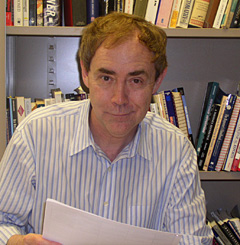
david_hoffman_300x375David Hoffman, assistant director of student life for civic agency, wrote a chapter in the recently published Democracy’s Education: Public Work, Citizenship and the Future of Colleges and Universities. The book challenges educators to rethink the meaning of citizenship and education.

Hoffman’s chapter, entitled “Fostering Civic Agency by Making Education (and Ourselves) ‘Real,'” describes the philosophy of BreakingGround, a collaborative approach to innovative campus and community engagement at UMBC. Hoffman draws on his research and experience at UMBC, focusing on students who gained civic agency by causing meaningful change on campus through launching new organizations and engaging in purposeful conversations. The chapter also mentions work done by President Hrabowski, Provost Rous, the Shriver Center and The Retriever Project.

Hoffman writes, “The process at BreakingGround’s heart is a series of real conversations. There is strategy and design behind them: the initiative’s organizers have sought out people on campus who have seemed to embrace or demonstrate civic agency, or who have been in a position to help support its promotion on campus. But the conversations have been essentially free of maneuvering and salesmanship. Mostly we have asked students, faculty, and staff about their own experiences with civic agency (though typically not in those words) and have sought to make the road to BreakingGround’s objectives by walking it with them.”

Click here to learn more about BreakingGround. Learn more about Democracy’s Education here.

Michele Wolff, Shriver Center, and Stephen Freeland, INDS, in The Catonsville Times

Michele Wolff, Shriver Center, and Stephen Freeland, interdisciplinary studies, were featured in an article about UMBC’s new Summer Enrichment Experience in The Catonsville Times. The Summer Enrichment Experience (SEE) is a commuter day program through the Shriver Center which offers academic courses for middle and high school students.

Michele Wolff, UMBC Shriver Center DirectorWolff shared her goals for the program, saying, “The idea is to give the middle and high school students the opportunity to be on a college campus, but also the opportunity to have an interesting and exciting way to learn about the sciences or arts and humanities based content.”

Stephen Freeland, INDSFreeland, who will teach “Cosmos on Campus” at SEE, described the importance of exposing middle and high school students to a different way of learning science. “We teach them that science is about the steady accumulation of facts and that has no resemblance to what an actual scientist does,” he said. “That completely underestimates the creativity, the role of hypothesis testing- the whole point is investigating what we don’t know, not what we do know.” Instead, Freeland has designed his course to enable students to “ask important questions in a way that gives reliable answers.”

SEE will run from July 13- August 7. Registration is open and there is a discount available for UMBC faculty, staff and alumni. Visit see.umbc.edu to learn more.

Kate Brown, History, Awarded ACLS Collaborative Research Fellowship, Publishes Op-ed in Time

History Professor Kate Brown has been awarded an American Council of Learned Societies (ACLS) Collaborative Research Fellowship to study the long-term effects of low doses of radiation on human health in the context of the Chernobyl disaster nearly three decades ago. Brown will be working with Timothy Mousseau, an evolutionary biologist at the University of South Carolina.

Kate Brown

The two scholars, with Brown providing the humanist perspective and Mousseau the scientist perspective, will collaborate to explore how knowledge and ignorance of the impact of the disaster has been produced over the last thirty years. The project will aim to historically analyze three decades of scientific research on Chernobyl and Fukushima to highlight the known and debated impact on humans, animals, and plants from long term, low dose exposure to radiation. The research comes at a time when nuclear power is being discussed as a solution to climate change and energy independence.

The project, titled Chernobyl Revisited: An Historical Inquiry into the Practice of Knowing, will run for two years. For more information on the ACLS Collaborative Research Fellowship program, click here.

In related news, Brown published an op-ed on January 21 in Time that discussed nuclear waste cleanup at the Hanford plutonium plant in eastern Washington State. In her article, she analyzed why the cleanup has been such a prolonged, difficult problem to deal with: “…the former Hanford plutonium plant became the largest nuclear clean-up site in the western hemisphere. It costs taxpayers a billion dollars a year,” she wrote.

To read the full column titled “How the Atomic Age Left Us a Half-Century of Radioactive Waste,” click here.

Donald Norris, Public Policy, Provides Analysis as Maryland Gov. Larry Hogan Takes Office

In the days surrounding Maryland Gov. Larry Hogan’s inauguration, Donald Norris provided insight and analysis as to how the Maryland legislature may work with the new governor. Norris, professor and director of UMBC’s School of Public Policy, also reflected on outgoing Gov. Martin O’Malley’s legacy.

Donald Norris UMBC

In an NBCWashington.com article, Norris analyzed the relationship between Maryland’s new governor and legislature: “So if Hogan chooses to fight with the Democrats, it’s going to be an ugly four years,” Norris said. “He won’t get anything accomplished. If he can find ground for compromise and cooperation, then I think things will work out pretty well for both sides. We just have to wait and see.”

In an article in the Herald-Mail, Norris discussed outgoing Gov. O’Malley’s handling of the economy: “He balanced the budget in 2007 and corrected the fiscal deficit,” Norris said. “But then the recession hit.” He added, “he is really a data-driven guy.”

Norris was also quoted in two Washington Post articles in which he discussed Gov. Hogan and former Lt. Gov. Anthony Brown’s gubernatorial campaign: “He didn’t have a compelling narrative. He didn’t give people a reason to vote for him,” Norris said.

To read complete coverage of Norris’s analysis, click below:

“A Big Mystery”: What to Expect from New Maryland Gov. Hogan (NBC Washington)
O’Malley defends legacy in helping rural areas (Herald-Mail)
Maryland Gov. Larry Hogan’s appeal to “middle ground” could revive state GOP (Washington Post)
Anthony Brown, once a rising star in Maryland politics, returns to private life (Washington Post) 
Can Larry Hogan, Maryland legislature cooperate? (Baltimore Business Journal– subscription required)

Sunil Dasgupta, Political Science, in Eurasia Review

In a recent article published in Eurasia Review, Sunil Dasgupta provided analysis on al-Qaeda’s announcement that it is launching a branch in the Indian Subcontinent. Dasgupta, director of UMBC’s political science program at the Universities of Shady Grove, examined why a terrorist group with a substantial presence in the region would need to make a formal announcement about activities in that part of the world.

Sunil Dasgupta

“The answer may be an alarming one,” Dasgupta wrote. “The move may be part of a broader strategy to enlist elements of India’s disenchanted Muslim underclass in the service of the group’s global agenda.”

In his column, Dasgupta discussed how Al-Qaeda in the Indian Subcontinent (AQIS) has shifted its focus to a larger, global scale: “What makes the emergence of AQIS significant, however, is that it is the first time a global jihadi organization has explicitly targeted the governments and the people in the region. The entire Indian subcontinent has seen an extraordinary amount of terrorism in the last 35 years, but most of it was home-grown.”

To read Dasgupta’s full analysis in his column “Al Qaeda in India: Why We Should Pay Attention,” click here. The original article appeared in ISN Security Watch blog.

Kimberly Moffitt, American Studies, on The Marc Steiner Show

Kimberly Moffitt, an Associate Professor of American Studies, appeared on twice on WEAA’s The Marc Steiner Show earlier this month to discuss race and representation in film and advertising.

Kimberly Moffitt

On January 8, Moffitt participated in an engaging discussion about the recent films Annie, Exodus, and Top Five, and her personal experience viewing the film Annie with her daughter: “This is a film that really resonates with her, and I think it has a lot to do with us listening to our children that they want to see themselves reflected in society and here is a perfect opportunity for that to happen.”

Moffitt participated in the discussion along with Ray Winbush, Director of the Institute for Urban Research at Morgan State University. To listen to the full segment, click here.

On January 16, Moffitt participated in a discussion on race and representation in Selma, the Golden Globes, and other topics with Kalima Young, Director of the Baltimore Art + Justice Project.

The segment began with a discussion on Ava DuVernay, the director of Selma: “I appreciate her voice and I’m happy that she’s at the table making a stance and telling stories through her lens because it’s not a lens or a set of eyes that we often get to see films through,” Moffitt said. To listen to the full segment, click here.

Christopher Corbett, English, in Baltimore Style

Christopher Corbett, English, recently penned an essay reflecting on the harsh winter months in Baltimore Style.
In the piece, Corbett decries January as the most unloved month, calling it the season of remorse. He writes, “January is really about winter, the bleak midwinter spoken of in the poem and hymn… I do not believe anyone enjoys January. We endure it.”
Click here to read “In the Bleak Midwinter.”

Student Scholarship Q&A: Samantha Carestia, visual arts

Every so often, we highlight the importance of student scholarships by introducing you to the very students they help to succeed. Today, we’re featuring Samantha Carestia ‘15, visual arts (animation), who is a UMBC Grant recipient.

Name: Samantha N. Carestia
Major: Visual arts (animation / interactive media concentration)
Extra Curricular Activities: March of Dimes Walks, The National Society of Collegiate Scholars, creating digital ads for a local restaurant
Scholarships received: UMBC Grant

Q: Why did you decide to attend UMBC?
I decided to attend UMBC because of the Visual Arts degree program, which contains many of the aspects that I find desirable in my major. The visual arts program with the animation/interactive media concentration allows me to focus on both 2D and 3D artwork, made both physically and electronically, and extend the range of tasks I can perform in my desired field. I was also attracted to UMBC because it is an “in-state” school with a very high academic rating. I had looked at other institutions, even attending a different one in my freshman year that offered a large scholarship. I transferred to UMBC when I realized that UMBC had a program that better suited my educational needs.

Q: What’s been the most amazing discovery you’ve made so far as a student here?
I think that the most amazing thing I discovered at UMBC is the instructors. They are very compassionate about what they are teaching and do so in a way that draws you into the subject. They are also so very helpful and accessible when I have a question or a problem. I am also amazed at how kind and active the UMBC community is.

Q: Tell us about a class or club that has really opened your mind.
I feel that [the] course ART 384 — Introduction to 3D Computer Animation — was the class that most opened my mind. This class let me work with 3D modeling, which is something I have always wanted to do. I found I have a knack for it, which is great!

Q: How important is it to you as a student to get scholarship support?
I am the daughter of what some may call “older parents.” My father is retired on Social Security, and my mother’s job is their only other income. They have sacrificed a lot to assist in my college tuition and expenses as best they can so I won’t be saddled with a huge amount of loans when I graduate.With the economy as it is today, there are challenges obtaining employment. A large amount of school loans may make it very difficult to concentrate on my employment search. This scholarship also means a lot to me because it means my parents won’t have to struggle as much in their efforts to help me achieve my goal of a college education.

Q: What are you most proud of accomplishing in your time at UMBC?
I am most proud of my high GPA. I am especially proud of the past two semesters with 6 courses each, and obtaining and maintaining a 4.0 GPA both semesters.

Q: What would you say to the people who provided your scholarship?
I feel it is my obligation to continue doing my very best in my studies to prove not just to myself and my parents, but also to those that believe in me and have helped me that their faith and assistance are not in vain.

Q: What do you hope to do after graduation?
After achieving my goal of a degree from UMBC, I hope to obtain employment at a nearby game-making studio, such as Bethesda, or find a job making web pages for a local firm. I will probably have to prove myself and start from the bottom and work my way up to my ultimate goal.

 Support UMBC student scholarships today!

Roy Meyers, Political Science, on WYPR’s Maryland Morning

Roy Meyers (UMBC)On Friday, January 9, Political Science Professor Roy Meyers appeared on WYPR’s Maryland Morning with Sheilah Kast to discuss Maryland’s budget process for the upcoming year. Meyers was a guest on the program along with The Daily Record Government Reporter Bryan Sears.

Meyers offered insight into what Maryland Gov.-Elect Larry Hogan will encounter with negotiations with the legislature when he takes office next week. He discussed mandated entitlement spending, discretionary spending, and analyzed Maryland’s unique budget process.

“Every year the governor makes a budget proposal. That budget proposal not only includes recommended spending levels for agency operations which the legislature can’t increase, but also asks for changes in those laws. They’re normally packaged in a law called the BRFA- the Budget Reconciliation and Financing Act.”

To listen to the full interview and hear Meyer’s in-depth analysis of the Maryland budget, click here.

Lia Purpura, English, in The New Yorker

Lia PurpuraIn its January 19th issue, The New Yorker published a poem by English Writer in Residence Lia Purpura. The text of Purpura’s poem “Probability” is below. An audio recording of Purpura reading her poem can be found here. A link to previous poems by Purpura published in The New Yorker can be found here.

Probability

Most coincidents are not
miraculous, but way more
common than we think—
it’s the shiver
of noticing being
central in a sequence
of events
that makes so much
seem wild and rare—
because what if it wasn’t?
Astonishment’s nothing
without your consent.

Zakaria Fatih, MLLI, Selected as Review Editor of The French Review

Zakaria FatihZakaria Fatih, modern languages, linguistics and intercultural communication, has been selected to the editorial staff of the French Review, the journal of the American Association of Teachers of French. After serving two years as the Assistant Editor, he has been promoted to the position of Review Editor (section: Culture and Society). The French Review “has the largest circulation of any scholarly journal of French and Francophone studies in the world.”

Fatih also recently published an article titled: “The Aesthetics of Fragmentation, or a Way to Read El Maleh” in Expressions maghrébines: Revue de la Coordination Internationale des Chercheurs sur les Littératures Maghrébines. The article is an attempt to read analytically the complex fiction of Jewish Moroccan author Edmond Amran El Maleh, who is also referred to as the James Joyce of Morocco