All posts by: UMBC News Staff


Richard Bissell, Emergency Health Services, Analyzes Nepal Earthquake Response in The Conversation

Rick-BissellIn response to a devastating 7.8 magnitude earthquake that hit Nepal over the weekend, Richard Bissell wrote about the international relief effort in The Conversation. Bissell, a professor of emergency health services, along with his colleague Thomas Kirsch at Johns Hopkins Medicine, analyzed what can be done to improve and effectively maximize resources of international health-oriented disaster responses.

“The most important aspect of this process is called the ‘needs assessment,’ which uses an initial damage assessment to predict what kinds of rescue, health, food and shelter needs exist at that time, as well as what will likely be needed going forward in the near- and midterm. As the needs are established, then the appropriate response can be directed to meet those needs,” Bissell and his colleague wrote.

Bissell also wrote about the need for immediate search and rescue operations and urgent trauma care with a focus on working closely with local medical practitioners and to not use technologies that are beyond local capacities for continued use after the disaster response.

“The lesson here is that international response teams need to know the resilience status of local health care facilities before embarking on a response,” Bissell wrote.

To read the full article in The Conversation titled “What works and what doesn’t in disaster response,” click here.

Kate Brown, History, Receives Book Review from Inside Higher Ed and Los Angeles Review of Books

Dispatches Kate BrownHistory Professor Kate Brown will soon publish a new book at the end of May on her experiences traveling and conducting research in the Chernobyl Zone of Alienation, the basement of a hotel in Seattle, Ukraine, Russia, and Illinois. The book, titled Dispatches from Dystopia (University of Chicago Press) examines the histories of places that have been silenced, contaminated, or broken and the lives of people who remain in those places.

The work recently received a positive review from Inside Higher Ed columnist Scott McLemee. “So for the first several pages of Dispatches From Dystopia I braced myself, only to find that Brown is the rare case of someone who can incorporate a number of registers of narrative and reflection within the same piece of writing, shifting among them with grace and quiet confidence. Her essays might be called position papers: topographical surveys of historical sites, with the mapmaker’s own itinerary sketched in,” he wrote.

“Brown’s first-person reflections are embedded in narratives and place descriptions that are more intricate and varied than a reviewer can even begin to suggest, and certain issues and motifs link the essays in ways that would probably reward a second reading. Each piece, like the volume as a whole, is an example of nonfiction that uses the first person, rather than just indulges it,” McLemee added.

The review contains several excerpts from the book. To read the full article, click here. For more information about the book, due out May 30, click here.

Updated 6/11:

Brown’s book was also reviewed by the Los Angeles Review of Books on May 31st. To read the complete article, click here.

Sunil Dasgupta, Political Science, Writes Article for ISN on Failure of Foreign Aid to Pakistan

Sunil Dasgupta, director of UMBC’s political science program at the Universities of Shady Grove, recently published an article in International Relations and Security Network (ISN) Digital Library News about the impact of foreign aid on curtailing extremist violence in Pakistan.

Sunil DasguptaIn his article, Dasgupta outlined how Pakistan has been at the center of several international security concerns for years, is a source of Islamist extremism and violence, and possesses nuclear weapons.

“Those invested in transforming Pakistan—the United States and the Western world in general, overseas and liberal Pakistanis—have concluded from these facts that the solution in Pakistan lies in strengthening the state so that it can make difficult choices and undertake necessary reforms. In support of that goal, the United States has provided Pakistan with billions of dollars in foreign aid. Far from reversing the problem, Pakistani state policy has exacerbated Islamist extremism in the country. Arguably, external assistance itself has undermined the possibility of change, tainting the Pakistani state as a foreign agent,” Dasgupta wrote.

“As currently constituted, the state in Pakistan simply cannot deliver, but there is no commitment and viable pathway to reconstituting the state. Instead, there is fear that reconstituting the state at this time will strengthen Islamist groups and open the possibility of nuclear weapons falling into terrorist hands. Foreign aid diplomacy, then, becomes something to do in the belief that doing nothing may be worse; and the reason a failed policy does not see the end that it deserves,” he added.

To read the full article titled “The Failure of Foreign Aid to Pakistan,” click here.

Christopher Swan, Geography and Environmental Systems, Discusses Maryland Green Prisons Initiative in the Baltimore Sun

Christopher Swan, an associate professor of geography and environmental systems, is leading the Maryland Green Prisons Initiative, which was launched in partnership with the Maryland Department of Public Safety and Correctional Services, Baltimore Office of Sustainability and other local collaborators. As part of the program, Swan works with inmates at the Metropolitan Transition Center in Baltimore to spruce up and test wildflowers and grasses in vacant West Baltimore lots.

Swan was recently interviewed in the Baltimore Sun about the initiative. “One of the goals of the project is to bring nature into the prison,” he said. “Cities all over the place are having a problem with vacant land and what to do with it. The Baltimore Office of Sustainability has goals and we try to help them meet them by having inmates help out as a human resource in order to make that happen.”

Swan also noted the initiative will likely beautify two dozen vacant lots and said about 14,000 vacant lots exist in the city. To view a video about the project, including information on the “Portrait Garden,” by Lynn Cazabon, an associate professor of visual arts, see below. To read more about the project, click here.

[youtube https://www.youtube.com/watch?v=C8iFFoJPadc&w=560&h=315]

From the Stage to the Screen: Theresa Columbus ’11

Every so often, we’ll chat with an alum about what they do and how they got there. Today we’re talking with Theresa Columbus, about her work a creator of the feature-length film “Chaza Show Choir,” a musical comedy about a high-school show choir’s journey to Europe. The film was screened April 29th at the Charles Theatre in Baltimore.

Name: Theresa Columbus
Major: Interdisciplinary Studies
Grad Year: 2011

Q: Where did you first come up with the idea for “Chaza Show Choir”?

I had been writing and directing lots of short plays in Milwaukee, and my partner, Didier Leplae, was interested in collaborating on a longer piece that would have an orchestra, since he wrote music. I tried to explain that I really wanted to include a funny flavor that had to do with being in a show choir in high school and being a theater person in high school. I described a show choir I was in that traveled to Germany, and someone suggested it should be about a show choir that ends up in Germany.

Q: Can you tell me more about when you were introduced to musical theatre and how it has impacted you?

Musical theater was a joyful experience for me in high school. I could not wait to get to high school and jump into these activities which seemed so electric and full of life. My first theatrical experience in high school was not a musical: my sister was an incredible actor and had just gotten back from an intensive theater experience over the summer. She then directed a play that consisted of about 10 people–including me–wearing jeans and black turtlenecks, saying monologues created by young writers and doing movement pieces. The hours of theatrical exercises and movement and communication was so new and thrilling to me. The one performance of the play, “Insights,” was one of the most intense experiences of my teenage years. That happened within the first few months of my attending high school!

Q: What is your favorite musical?

My favorite musical… I don’t know. I’ve been working on collaborating on performance with kids and I just watched one of my roommate’s (Jake Budenz) favorite musicals of all time: The Phantom Tollbooth. It’s animated, full of wordplay, and is the best musical I’ve seen in a long time. We hope to cover one of the songs in a performance piece soon!

Q: Do you have any other projects in the works?

Yes! I’m working with my partner Aaron Smith on a participatory theater stage that will be part of “Lazy River,” an area of Artscape. I will write short pre-recorded plays that festival attendees may act out with us, and they may be able to compose their own, record them, and act out amplified versions of them! We’re still working out the kinks. Also, I am collaborating with 5 performers, as well as musicians and visual artists, to create public theater based on ideas of stages of life, in a project called “Sphinx & Co.” Also, I am in a group art show/performance that will take place in October in Milwaukee entitled “Distance.” It is a yearlong project where I and 3 artists in different locations around the USA are collaborating on text and visual exquisite corpses, as well as portraits taken at dawn and a performance based on concepts of distance.

Q: If you could meet one person in the world who would it be and why?

If I could meet a person in the world I think it would be Laurie Anderson. Listening to her recordings where she tells stories and sings, you can tell she would be an incredible person to talk to. She’s inspired so much good art in this world. She has carved a life doing performance art that I find fascinating.

Q: Looking back on your time at UMBC, tell us what you think makes this place so special.

Preminda Jacob, Lisa Moren, Temple Crocker, Steven McAlpine, Fred Worden, James Mahoney, Mark Durant, Steve Bradley, Kathy O’Dell . . . there are so many teachers, advisors and role models that I felt so fortunate to have access to! Many of these teachers were open to and encouraged discussion outside of class… there are so many gems at UMBC, that’s what makes it special. And though I didn’t meet with him, I have so much respect for the school’s president: Freeman Hrabowski. My most memorable experience at UMBC was walking and talking with Preminda Jacob, noticing the beauty of the decorative grasses on campus, after an art history class that she taught with unbridled enthusiasm.

Learn more about Theresa’s work.  

UMBC in Times Higher Education’s “100 Under 50” 2015 Rankings

100-under-50-logoUMBC has been named to the Times Higher Education “100 Under 50” ranking for the fourth consecutive year — one of seven U.S. universities to be recognized on this year’s list. THE’s “100 Under 50” ranks the top 100 universities worldwide under 50 years old.

“So many universities in this ranking have shown they can match the ancient global elite and have proven that with the right drive, what others have developed over centuries can be achieved in a matter of decades,” said Phil Baty, editor of THE. “They are a truly exciting and dynamic group of institutions which should serve as a lesson to the rest of the world – that the traditional global world order is not unassailable and visionary young universities can break through.”

Click here for details.

UMBC Faculty Provide Perspective and Reflect on Recent Events in Baltimore

In response to recent events that have transpired in Baltimore over the last several days, several UMBC faculty have engaged in thoughtful reflection and dialogue in the news around the complex challenges facing the Baltimore community. The substantive commentaries come from different viewpoints and add various perspectives to the ongoing conversation of the past week’s events.

John Rennie Short

In The Conversation, School of Public Policy Professor John Rennie Short wrote about three background factors that should be considered when asking why the violence and riots took place in response to the death of one young man: the momentum of the police brutality narrative, the lack of trust between police and minority black populations, and the stifled economic opportunities and limited social mobility of many inner-city residents. “This country needs to address structural issues of poverty and economic opportunity as well as immediate concerns of how we make the streets safer for all our citizens,” Short wrote.

Kate Drabinski

Kate Drabinski, lecturer of gender and women’s studies, wrote about decades of disinvestment in Baltimore and uneven development that have disadvantaged largely low-income communities. “One of the dangers of seeing the riot as an event is precisely this danger of losing historical perspective about the ways the neighborhoods burning on television are the very ones that have been cut off from the growth of the city’s downtown core,” she wrote. Drabinski was also featured in a Bicycling Magazine article about her observations of Monday’s events.

Kimberly Moffitt

Kimberly Moffitt, an associate professor of American studies, examined Baltimore City Schools and the important element of focusing on the mental health needs and frustrations of many students. “Now we are faced with the next generation of marginalized youth who demand to be heard, even as they are seen as counterproductive by those who continue to ignore their physical, academic, and psychological needs to be successful in an educational setting,” Moffitt explained. She also participated in a roundtable discussion on Southern California Public Radio about her thoughts on this issue.

Rita Turner, a lecturer of American studies, wrote an article for The Conversation that focused on environmental health issues: “Environmental injustice may seem like a secondary issue in the face of massive police brutality, poverty, and civil uprising, and I don’t suggest that it should preempt conversations about other forms of systemic racism. But as we talk about the devaluing of black lives and black bodies that has taken place in Baltimore and across the country and the world, we cannot ignore the ways that this manifests in a subtle and constant disregard for the health of marginalized communities,” she wrote.

In a Baltimore Sun op-ed, Suzanne Lea, an adjunct professor of sociology, wrote about an in-depth study she conducted with her students to examine trends in police deadly force incidents that have occurred in the Baltimore/DC area over the last 25 years. The column outlined five key findings from the research, including the vast majority of incidents occurred early in an officer’s career. “Too often, without a video, police officers are exonerated via internal investigations based on rules that prioritize officers’ accounts. Let’s start collecting the data we need to track and systematically examine such incidents and use it to challenge and improve upon our policing until it fully reflects the integrity of our American ideal of equality under the law,” Lea wrote.

In the Huffington Post, Amy Bhatt, an assistant professor of gender and women’s studies, examined the question “what does it mean to be safe?” In her article, Bhatt discussed her experience living in the Federal Hill neighborhood and provided a closer look at discussions of property, race, and resources in light of recent events. “When we talk about safety, we need to look beyond our neighborhoods and ask how we decide who stays safe and who does not,” she wrote.

Tom Schaller

In his column in the Baltimore Sun, Thomas Schaller, professor and chair of political science, discussed the impact of inequality on the past week’s events. “Rather, the fact of social protest is prima facie evidence of political disgruntlement, and of an extant imbalance between those who wield power and those subjected to it. When these inequities persist and have no other form of expression, there will be unrest. And in this case, those suffering from Baltimore’s power imbalances are disproportionately black.”

Chris Corbett

Christopher Corbett, professor of the practice of English, wrote a column in Reuters in which he discussed his observations and experience living in Baltimore for 35 years after moving from Maine. In his article, “Baltimore’s truth in Freddie Gray’s life and death,” Corbett examined the history and current state of many of the city’s neighborhoods in the context of the events of the last several days.
Jana Kopelentova Rehak, a visiting professor of anthropology, recently published an article on her applied anthropology collaborative project in Baltimore in partnership with Habitat for Humanity to address urban inequality, poverty, and health in relation to housing.

To read the complete news coverage, click below:
Baltimore riots: the fire this time and the fire last time and the time between (The Conversation)
Why Baltimore burns for Freddie Gray (Baltimore Sun)
Baltimore’s truth in Freddie Gray’s life and death (Reuters)
Baltimore cyclist catches riots in action (Bicycling Magazine)
Keeping ‘Us’ Safe in Baltimore (Huffington Post) 
Freddie Gray: death by legal intervention (Baltimore Sun)
The slow poisoning of Freddie Gray and the hidden violence against black communities (The Conversation)
Baltimore could become key election issue (The Philadelphia Tribune)
Black and young in Baltimore: a roundtable discussion (KPCC Radio)
With little choice, O’Malley defends Baltimore tenure (Washington Post)
Mayor Martin O’Malley Versus Governor Martin O’Malley (Governing)
Riots invoked as lobbying tool (Baltimore Sun)
Media coverage and politics (Midday with Dan Rodricks) 
Practicing urban anthropology in Baltimore

A Challenge in the Classroom and on the Course

Baja cars may be small, but they are incredibly tough — they’ll tackle the rockiest terrain and make seemingly impossible jumps. And while they’re fun to watch on the track, they’re also taking on important work here on UMBC’s campus, where our students design, build, and race these rough and tumble automobiles.

The ultimate test for any Baja team is the Baja SAE International Collegiate Design Series, an engineering competition that gives undergraduate and graduate students a chance to enhance their engineering and project management skills through a series of real-world challenges. And this year, UMBC is proud to play host to one of the three competitions in North America. Come May, more than 100 international college teams put their Baja vehicles to the test in Mechanicsville, MD. Each team will be challenged to design and build a prototype for a rugged, single-seat, off-road vehicle suitable for use in a variety of conditions. The vehicle must be designed for safe operation over rough terrain, including dirt, rocks, sand, mud, logs, steep inclines, and shallow water.

Of course, hosting the Collegiate Design Series involves several significant expenses, including renting the track location, purchasing materials to build the track, and supporting up to 400 volunteers throughout the competition. That’s why we’re asking for your help. Through your gift to Baja SAE, you’ll not only ensure that our students are getting invaluable real-world engineering experience, you’ll also help them develop project management, marketing, and leadership skills that will be critical in their future careers. And you’ll help us make the 2015 SAE International College Design series unforgettable.

Support UMBC Baja as a donor or volunteer! 

Challenging Times

To: The UMBC Community
From: Freeman Hrabowski and Philip Rous

We hope you have read our note from earlier today providing guidance to the campus regarding the recent events in Baltimore. We write now to encourage our community to continue to engage in thoughtful reflection, dialogue, and service around the complex social and economic challenges facing our Baltimore community—and communities across the nation.

Freddie Gray’s family has suffered a tragic personal loss, and we send them our sincere condolences. This event stands as a reminder of systemic issues of social injustice and inequality. These difficult times mark an opportunity to engage in honest conversations about these issues.

Our words and our actions speak volumes about our values. Courage to address critical social challenges—while respecting others—is a hallmark of the UMBC community. As a university, we have a civic responsibility to lead these conversations. We thank our faculty and staff who are supporting our students and leading discussions in classes and other venues on campus. We also thank our students who are participating in discussion and helping with clean-up activities and other initiatives in the city.

We recognize that one of the greatest strengths of our nation is the right of citizens to protest. As you each consider your personal response to the events unfolding in Baltimore, we ask that you act safely and responsibly.

The University’s administrative leadership met today with representatives of the faculty, staff, and student leadership to discuss our approach to supporting the broader Baltimore community. We encourage you to continue to be involved in programs and services that improve and enrich the lives of others through civic engagement.

UMBC has a long tradition of engaged scholarship, service learning, and community service. We are deeply involved in addressing critical social challenges in Baltimore and surrounding communities, whether in courses and research or providing direct services for youth through the Shriver Center and other programs. Through these programs we have established partnerships that will continue to serve our community in the months and years ahead.

12662635094_f87ada2242_k

NeighborhoodNet Wins First Place at Cangialosi Business Innovation Competition

CBIC

The second annual Cangialosi Business Innovation Competition (CBIC) was held on Thursday, April 23. The CBIC allows graduate and undergraduate students from UMBC the chance to plan a start-up and is coordinated by the Alex. Brown Center for Entrepreneurship through a gift from Greg Cangialosi ’96, English. The award offers teams cash awards, as well as a membership to Betamore, an incubator and educational facility in Federal Hill co-founded by Cangialosi.

This year, seven teams were chosen out of 28 applicants to present their business ideas to a panel of three judges, including Ed Chalfin, co-chair of the Baltimore Angels, Kelly Trumpbour, founder of See Jane Invest, and Demian Costa, partner of Plank Industries.

Michael Gardner ’17, information systems, and Nathan Hefner won the first place award of $5,000 by presenting NeighborhoodNet, a software platform for creating and managing community association websites. Patrick Wheltle ’87, emergency health services, and Robert Oehrli ’14, mechanical engineering, and ’15 M.A.T., technology education, placed second with Baltimore Emergency Medical Technology, an electronic triage tag that can be used in mass casualty accidents to help save more lives. Annah Seo ’13, psychology, and M.P.S., industrial/organizational psychology, won the third place award by presenting PiVot, an app that would let students and professionals independently assess their abilities and interest to explore career paths.

Alums in the News: Newhouse, Burnett, Chinn

Robin NewhouseDr. Robin Newhouse ’87, nursing, has been named dean of the Indiana University School of Nursing. Newhouse is nationally known for her research methods to improve the quality of care for patients. She was inducted into the International Research Hall of Fame in 2014, which recognizes nurse researchers who have achieved national or international recognition for their work.

To read more, click here.


Kris BurnettKristerfer Burnett ’11 M.P.P., public policy, is honored on The Daily Record’s “20 in their Twenties” list. “20 in their Twenties” honors those who have had promising starts to their careers while in their twenties.

Click here for the full list of honorees.


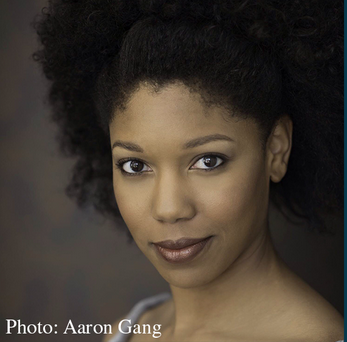
McKenzie ChinnMcKenzie Chinn ’06, acting, has won a fellowship from the Leonore Annenberg Fellowship Fund for the Performing and Visual Arts. It provides $50,000 for up to two years for talented artists on the cusp on a professional breakthrough. She has appeared at the Goodman Theater and the Steppenwolf Theater in Chicago. She plans on using her stipend to write, co-produce, and star in an original, ultra-low budget feature-length movie currently titled “Instruction Manual for How Things Work.”

For more information, click here.

Have a story of your own to share? Tell us about it in a class note.

Support & Guidance for Our Community in Light of Recent Events

TO: The UMBC Community

FROM: Freeman Hrabowski and Philip Rous

During this challenging time for our Baltimore community, our primary goal is to ensure the safety of all members of our community.

We are aware that events in Baltimore City and the 10 p.m. to 5 a.m. curfew affect many of our students, faculty, and staff living, working, and studying in and around the city. We encourage everyone who may be impacted to use their best judgment when making decisions about travelling to and from campus.

We encourage our faculty, staff, and students to be flexible in accommodating the challenges that some of the members of our community may face in travelling to classes, meetings or other on- and off-campus engagements. We understand that affected faculty may need to reschedule classes or temporarily use alternative methods of instruction, such as Blackboard. In addition, the University has approved liberal leave for personnel who are affected by these circumstances.

We are closely monitoring the situation across the region and will respond quickly should circumstances change. We will continue to update the campus and will inform the community immediately of any changes that would impact campus operations.

We understand this is a difficult time for UMBC and our Baltimore community. The UMBC Counseling Center is available to students who may need support. Please visit the Counseling Center website for additional resources or call 410-455-2472.

The Women’s Center is sponsoring a discussion at 4 p.m. today in the Commons. Students, faculty and staff are welcome to attend. Additional opportunities for community conversation and reflection are currently being developed and information will be shared as it is available.