Major: Media and Communication Studies Hometown: Baltimore, MD High School: Arlington Baptist High School
For Kyle Taylor, college has been more than just lectures and assignments; it’s been about finding purpose, building community, and discovering new opportunities. While he once dreamed of playing college basketball, Kyle found a different way to stay connected to the game behind the scenes.
From Courtside Dreams to Media Production
Basketball shaped much of Kyle’s early aspirations, but when the path to becoming a collegiate athlete didn’t unfold, he pivoted. Through UMBC’s New Media Studio in the Division of Information Technology (DoIT), Kyle found a new role in the world of sports by helping produce live broadcasts for Division I games, including basketball, lacrosse, and soccer.
Working in the sound booth or behind a camera gave Kyle a unique perspective on the game. “It was surreal,” he shares. Being part of the production team that brings games to life let him reconnect with his passion from an entirely new perspective.
Learning by Doing in the New Media Studio
Kyle’s work in the New Media Studio became a training ground where theory and practice converged. Whether he was operating equipment, managing live feeds, or troubleshooting technical issues, the fast-paced environment honed skills in communication, adaptability, and creative thinking.
A commuter student, Kyle was on the hunt for community and he found it through the studio, blending professionalism with camaraderie. The relationships he built through shared responsibilities and creative work became one of the most rewarding parts of his UMBC experience.
Advice for Future Creators
Reflecting on his time in the studio, Kyle offers two key pieces of advice to future media interns and students: Enjoy the process and connect with people around you.
It’s easy to focus on outcomes, but Kyle emphasizes the importance of having fun and being present. Every live show or project brings a new learning opportunity, and staying open to growth makes the journey more meaningful.
Whether it’s fellow students, staff, or faculty, Kyle encourages others to take the time to build relationships.
“
“You never know who might teach you something unexpected,” he says. Those connections can lead to mentorship, collaboration, and even lifelong friendships.”
Kyle Taylor ’25
Looking Ahead
Kyle leaves UMBC with a portfolio of professional experiences and a clearer sense of purpose. His journey proves that passions can evolve—and sometimes, stepping behind the camera is the best way to move forward.
Major: Visual Arts (Cinematic Arts) Minors: Photography Hometown: Baltimore City, MD High School: Baltimore School for the Arts
Exploring Film and Photography at UMBC
Jonathan Veale, a visual arts major at UMBC with a concentration in cinematic arts and a minor in photography, is turning his passion for storytelling into a promising creative career. A graduate of Baltimore School for the Arts, Jonathan has spent four years honing his craft through UMBC’s Linehan Artist Scholars Program and engaging deeply with the campus art community.
From Behind the Camera to Leading a Film Project
Jonathan’s academic journey culminated with a standout project through UMBC’s Undergraduate Research Awards (URA) program. His short film, showcased at the Undergraduate Research and Creative Achievement Day (URCAD), highlights his talent as a director and storyteller.
He shares, “This project pushed me to do a lot of things that I was not particularly comfortable doing. Being thrust into a position of complete control and basically being a producer and director at the same time was challenging yet exciting.”
Hands-On Experience in Film Production at UMBC
Though Jonathan managed multiple roles, he emphasizes the team effort behind the film’s success. “Most successful films have a team to handle all of these different producer and director roles—or at least assistants—but for this piece, I had to take charge,” he explains. “My actors and costume designers stepped up when they were needed and were with me every step of the process. They provided feedback and stepped up when they were available. This was a team effort, and I am proud of our ability to come together and create such an engaging piece with the wonderful group of students and professionals we had.”
Creating Community Through Art
Jonathan’s experience as a student artist at UMBC has been about more than technical skills. Living in the Visual and Performing Arts Living Learning Community (VPAC) and serving as a resident assistant helped him grow personally and professionally.
“
“The best part of my UMBC experience was the friends and connections that I made here on campus,” he says. “As a part of the Linehan Artist program and a member of the VAPC floor, I was able to click with my fellow students and artists.”
Jonathan Veale ’25
He adds, “College is about more than just learning your craft. It’s also about creating those connections with others that will outlast even some of the academic knowledge you may gain on campus.”
Ready for What’s Next
While Jonathan is still deciding where his artistic path will lead, he leaves UMBC with strong creative work, professional experience, and a tight-knit network of peers and mentors.
Major: Psychology Minors: Entrepreneurship, Social Welfare Hometown: Baltimore County, MD High School: Perry Hall High School
Blending Psychology, Storytelling, and Social Impact
Mary Rose Khamfong, a psychology major at UMBC with minors in entrepreneurship and social welfare, is determined to make well-being science accessible to all. Born in Baltimore County and a graduate of Perry Hall High School, she’s building a future grounded in education, digital storytelling, and purpose-driven content creation.
Her goal? To become a digital content creator who creates meaningful, accessible resources that help people grow, heal, and thrive.
Empowering Others Through Research and Mentorship
During her time at UMBC, Mary served as a McNair teaching fellow and a writing fellow for the psychology department and the Writing Center. In these roles, she mentored first-generation and underrepresented students in academic writing, professional development, and graduate school preparation. She also led workshops on personal branding and reflective writing, thoughtfully incorporating principles of positive psychology and well-being throughout her work.
“These roles allowed me to support students from diverse backgrounds, empowering them to achieve their goals,” she reflects. “Helping others build confidence, refine their narratives, and take ownership of their futures reaffirmed my calling—to uplift others by supporting their holistic well-being.”
Hands-On Research for Real-World Change
Mary’s academic journey took her beyond the classroom. At Brown University, she participated in a prestigious summer research program, conducting a review of long-term services in the veteran healthcare system. At UMBC, she collaborated on a civic storytelling curriculum for Latinx youth through the Interdisciplinary CoLab.
In both roles, she applied psychology to address social inequities, sharpen her communication skills, and deliver impactful presentations at national research conferences.
She earned national recognition through the APIA Scholars Community Service & Leadership Award, a competitive $10,000 scholarship honoring her dedication to service and educational equity.
A UMBC Journey Rooted in Growth and Connection
Mary’s college experience was as much about relationships as it was about academics. Living on campus gave her the opportunity to travel, explore new places, and form deep connections with fellow students, mentors, and faculty.
“
“The best part of my UMBC experience has been the blend of adventure, building relationships, and having the space to grow,” she says. “These connections will outlast even some of the academic knowledge I’ve gained.”
Mary Rose Khamfong ’25
Looking Ahead
Mary is now focused on creating digital platforms that promote holistic well-being across physical, emotional, financial, relational, and cultural dimensions. By combining evidence-based research with authentic storytelling, she aims to give others the tools they need to build better, more fulfilling lives.
“I don’t just want to create content—I want it to have a purpose and to work,” she says. “There’s science that answers how to live a good life. That knowledge needs to be shared, and I want to be the one who shares it.”
Carlos Jensen and Sophia Sotilleo will join the University of Maryland, Baltimore County provost leadership team beginning August 1. Jensen will serve as vice provost for student success and dean for the division of undergraduate academic affairs and Sotilleo will serve as vice provost and dean of the Albin O. Kuhn Library and Gallery.
Jensen and Sotilleo fill out a provost leadership team that has been reimagined to meet UMBC’s unique needs in an evolving educational landscape. In his role as vice provost for student success and dean of undergraduate academic affairs, Jensen will oversee undergraduate academic programs and services while fostering an environment of inclusive excellence. As vice provost and dean of the Albin O. Kuhn Library and Gallery, Sotilleo will lead the library in its vital efforts to support the teaching and research needs of an R1 institution.
Jensen comes to UMBC from the University of California, San Diego where he has served the last five years as the associate vice chancellor for educational innovation. Sotilleo joins UMBC from its USM sister institution, Bowie State University, where she has served as the dean of the Thurgood Marshall Library since 2022.
Sotilleo’s academic interests center on embedded librarianship, particularly its intersections with access, advocacy, and leadership in higher education. At Bowie State, she led transformative initiatives in digital access, research support, and campus-wide library engagement. She served as previous chair of the Council of Library Deans and Directors for the University System of Maryland and Affiliated Institutions, where she led efforts to improve system-wide digital access, research support, and inter-campus collaboration. Sotilleo is a dedicated academic librarian and higher education leader with a career rooted in intellectual freedom, student-centered service, and inclusive access to information. She brings a collaborative and visionary approach to librarianship, championing innovation, advocacy, and engagement across academic and community contexts.
While at UC San Diego, Jensen provided strategic leadership to advance education and innovation, including the implementation and improvement of curricular analytics to help departments close equity gaps and help all students progress toward their degrees. He oversaw instructional development for educators and comprehensive academic support for students and played a key leadership role in the academic affairs response to the COVID-19 pandemic.
It is my great pleasure to share the news that Lisa K. Van Riper has been appointed as UMBC’s vice president for communications and marketing. She comes to UMBC from Goucher College in Baltimore, where she serves currently as vice president for marketing and communications. She will begin in the role at UMBC on July 21.
Lisa has more than 25 years of experience in communications and marketing in higher education, consumer packaged goods and services corporations, and public service agencies. At Goucher, she leads a team of professionals who collaborate across campus to support the college’s goals for recruitment, fundraising, reputation-building, and more through an integrated, digital-first approach to storytelling and marketing. She successfully led a major branding initiative for the college and has overseen a broad effort to enhance and modernize the college’s digital marketing strategy and develop a cohesive, unifying brand identity.
As a member of the president’s cabinet at Goucher, Lisa has also attended thoughtfully to internal communications for the college, serving as lead for crisis and issues management communications and for presidential and cabinet communications generally.
Prior to her role at Goucher, Lisa served as vice president for marketing, communications, and information technology at Knox College in Galesburg, Illinois, and as vice president for communications and public relations at Common App. Her higher education leadership experience includes several years as assistant vice president for university communications at the University of Richmond, and her professional experience outside of higher education includes communications leadership roles with CarMax, Inc., and Alexandria Renew Enterprises, an independent, special-purpose government unit in Virginia that manages wastewater for the city of Alexandria and surrounding areas.
Lisa earned a bachelor’s degree in English literature from Trinity College in Hartford, Connecticut, and is currently enrolled in Goucher’s Master of Fine Arts program in Nonfiction. She is an active member of Leadership Baltimore County.
In addition to being an expert marketer and talented communications professional, Lisa is a strong manager and leader who has successfully built and developed teams and fostered effective collaborations with campus partners. I am particularly excited about her skills in these areas and her deep interest in supporting the leadership and staff in University Communications and Marketing (UCM). Lisa’s expertise and experience will contribute enormously to our shared work to advance UMBC’s strategic priorities and our mission as a dynamic, inclusive public research university.
My thanks to all who participated in this important search and to the UCM team for its steadfast dedication to their work and to UMBC. I want to offer my sincere thanks, as well, to Tim Cobb, who has provided valuable support as interim vice president of the division since January. Congratulations and welcome, Lisa!
Lisa K. Van Riper has been appointed as UMBC’s vice president for communications and marketing. She comes to UMBC from Goucher College in Baltimore, where she serves currently as vice president for marketing and communications. She will begin in the role at UMBC on July 21.
Van Riper has more than 25 years of experience in communications and marketing in higher education, consumer packaged goods and services corporations, and public service agencies. At Goucher, she leads a team of professionals who collaborate across campus to support the college’s goals for recruitment, fundraising, reputation-building, and more through an integrated, digital-first approach to storytelling and marketing. She successfully led a major branding initiative for the college and has overseen a broad effort to enhance and modernize the college’s digital marketing strategy and develop a cohesive, unifying brand identity.
As a member of the president’s cabinet at Goucher, Van Riper has also attended thoughtfully to internal communications for the college, serving as lead for crisis and issues management communications and for presidential and cabinet communications generally.
Prior to her role at Goucher, Van Riper served as vice president for marketing, communications, and information technology at Knox College in Galesburg, Illinois, and as vice president for communications and public relations at Common App. Her higher education leadership experience includes several years as assistant vice president for university communications at the University of Richmond, and her professional experience outside of higher education includes communications leadership roles with CarMax, Inc., and Alexandria Renew Enterprises, an independent, special-purpose government unit in Virginia that manages wastewater for the city of Alexandria and surrounding areas.
Van Riper earned a bachelor’s degree in English literature from Trinity College in Hartford, Connecticut, and is currently enrolled in Goucher’s Master of Fine Arts program in nonfiction. She is an active member of Leadership Baltimore County.
“In addition to being an expert marketer and talented communications professional, Lisa is a strong manager and leader who has successfully built and developed teams and fostered effective collaborations with campus partners. I am particularly excited about her skills in these areas and her deep interest in supporting the leadership and staff in University Communications and Marketing (UCM),” UMBC President Valerie Sheares Ashby shared in a message to the campus community.
“Lisa’s expertise and experience will contribute enormously to our shared work to advance UMBC’s strategic priorities and our mission as a dynamic, inclusive public research university.”
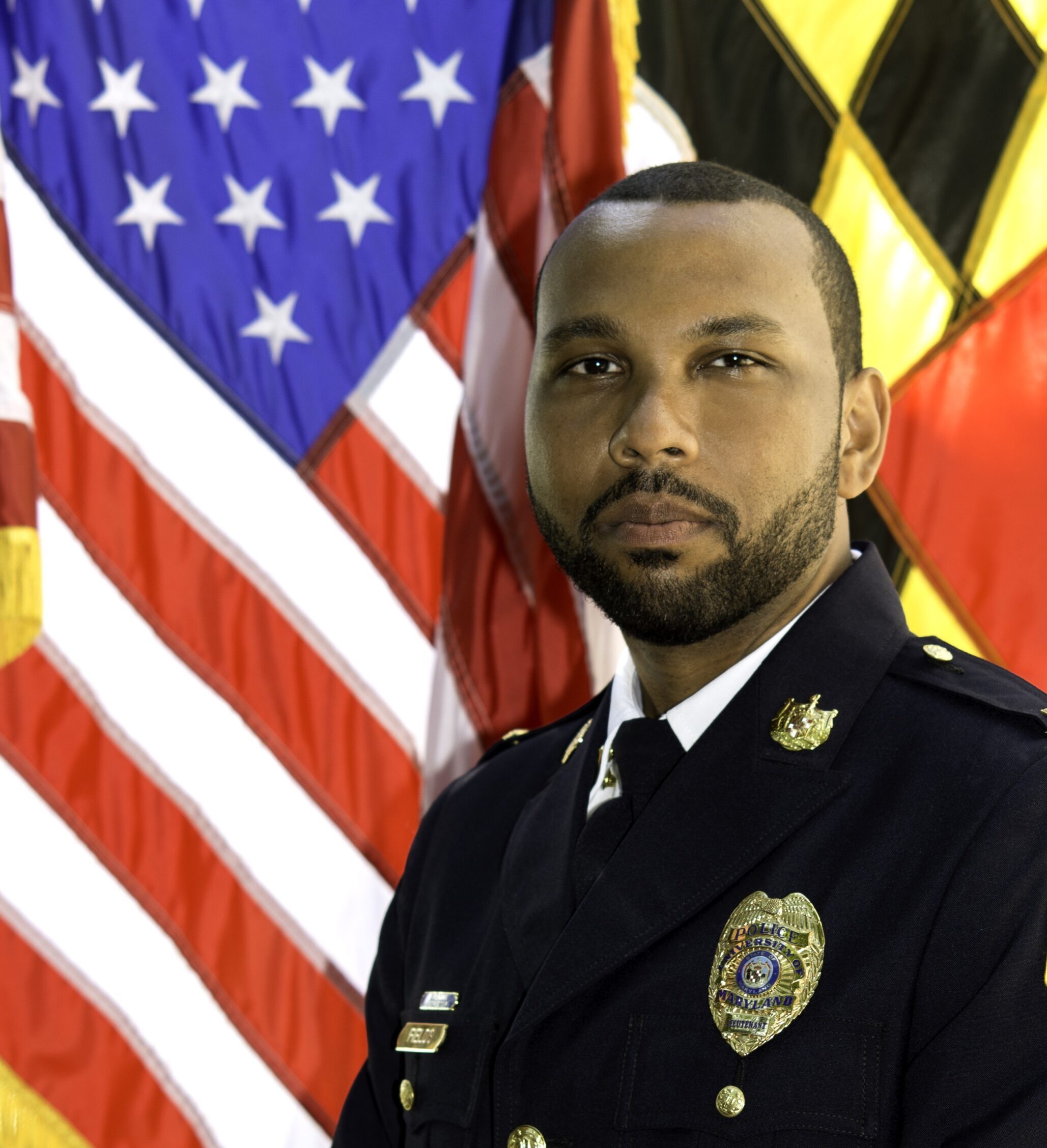
I am delighted to share the news that David M. Fields, who has been serving since late January as acting chief of police at UMBC, has been named to the permanent role. He assumes the leadership of the department following the retirement this spring of former chief Bruce Perry.
Prior to joining the UMBC community, Chief Fields spent 17 years as a sworn police officer at the University of Maryland, College Park. In 2014, he became the lead firearms instructor in the Training Division Fire Academy, which began a longtime role for Chief Fields in the training of officers and community members in emergency response. At College Park, he created and led the first Tactical Response Unit for the department, and he served as assistant training director of the Training Division before being promoted to captain and then patrol commander of the university’s police department.
In addition to his service as an officer, Chief Fields has spent more than a decade as an adjunct instructor with the Prince George’s County Municipal Academy providing firearms training and qualification to retired law enforcement officers under the Law Enforcement Safety Act, as well as instruction in patrol tactics for veteran and entry-level officers. Since 2016, he has served also as an adjunct instructor with Intelligence Consulting Partners, a firm that provides threat assessment, interactive training, and policy solutions for private and public agencies and organizations across the United States.
Chief Fields studied criminal justice at Bowie State University and University of Maryland University College (now University of Maryland Global Campus). He has provided us with exemplary leadership from the moment he joined UMBC. His expertise, integrity, and commitment to ensuring the safety of every member of the community are evident in everything he does, as is his dedication to the support and development of the sworn officers and staff members who comprise the department.
I am delighted that he has agreed to take on the permanent role of police chief for UMBC. I am grateful, as well, that Lieutenant Ed McDermott, who joined the department with Chief Fields in an acting capacity in January, will now assume a permanent role in the department. Having served previously as executive officer to the chief of the University of Maryland Police Department, Lt. McDermott will serve as chief of staff to Chief Fields at UMBC.
I know that many members of our community have had the opportunity to meet and/or work closely with Chief Fields and Lt. McDermott over the last few months and that those who have will share my enthusiasm about this terrific news. Welcome—once more—to Chief Fields and Lt. McDermott!
I am writing with an important update regarding the U.S. Department of State’s temporary visa interview pause for students and scholars in the F, J, and M categories that has been in place since May 27, 2025.
The information contained in this communication is provided for informational purposes only and should not be construed as legal advice on any subject matter.
On June 18, 2025, the Department of State announced that interview appointments for F student, M student, and J exchange visitor visas will reopen for scheduling “soon” and that expanded guidance on the screening and vetting of visa applicants will be implemented. Politico reported that the guidance to U.S. Embassies and Consulates directed consular officers to implement these vetting procedures within five business days.
The State Department’s announcement outlines the updated guidance regarding expanded screening and vetting for visa applicants. Under the new guidance, visa applicants will be asked to adjust the privacy settings on all of their social media profiles to “public.”
The “comprehensive and thorough vetting” will include review of applicants to ensure their eligibility for the visa type sought and that applicants “do not intend to harm Americans and our national interests.” Politico reported that consular officials have been instructed to flag applicants for additional review whose social media includes indications of political activism, hostility towards the U.S., support of foreign terrorist groups, and antisemitic harassment.
Guidance:
Individuals in F or J status should read the announcement to review the updated policy.
Individuals in F or J status should contact the Center for Global Engagement for additional guidance prior to planning international travel.
Individuals in F or J status who are abroad, need to renew their visa, and do NOT have an appointment scheduled should regularly check the website of their nearest U.S. Embassy or Consulate, as new appointments may be added at any time.
Individuals with a previously scheduled visa interview appointment should attend their appointment as scheduled.
Some international students renewing their visa may qualify for a visa interview waiver. They should check with their nearest U.S. Embassy or Consulate to see if they meet the requirements.
UMBC’s Center for Global Engagement is committed to providing comprehensive support to all international students. If you have further questions about this immigration policy, or any other questions, please reach out to our team by visiting our contact page.
Additional information and resources related to immigration and other federal policy updates are available on UMBC’s Federal Orders and Actions Page.
Center supports transformational education in the Baltimore community
Michael Sarbanes, a leading voice in educational transformation, has been appointed the inaugural executive director of the George and Betsy Sherman Center beginning June 23, 2025.
The George and Betsy Sherman Center furthers the University of Maryland, Baltimore County’s (UMBC) commitment to excellence in urban schools in Baltimore City and the region. Established by a visionary gift to UMBC from the Sherman Family Foundation, the center brings together initiatives to support transformational education in four connected areas:
Sherman Scholars: The Sherman Teacher Scholars Program develops STEM and early childhood educators who are skilled, passionate, and committed to an excellent education for all children.
School Community Partnerships: The Sherman School Partnerships program works with schools, families, and community groups to create innovative, responsive, and effective partnerships that help students thrive.
Early Childhood Learning: The Sherman Center engages parents, community groups, and schools to ensure that a child’s early years become the foundation for life-long learning.
Research: The Sherman Center supports applied research linking the insights of UMBC’s outstanding faculty with the daily educational experience of school communities.
“Michael Sarbanes’ experience as a visionary community leader and educator in Baltimore City and Maryland uniquely qualifies him to lead the transformational work of the Sherman Center,” said Manfred H.M. van Dulmen, provost and senior vice president for academic affairs at UMBC. “I am excited to see the advancements that the Sherman Center and Michael will bring to education in the Baltimore community.”
The Sherman Center for Early Learning in Urban Communities served Baltimore City’s early childhood education field from 2017-2024. Several of the initiatives are being continued through the George and Betsy Sherman Center.
“Michael and I share a passion for the transformational power of education,” said Betsy Sherman. “He knows first-hand the importance of equipping future educators with the necessary skills to meet students’ unique needs, the value of forging innovative community partnerships, and the life-altering capacity of early childhood education. Michael’s passion and experience have prepared him to launch the George and Betsy Sherman Center as the inaugural director.”
As the inaugural executive director of the Sherman Center, Michael brings to UMBC a unique range of leadership experiences in education, partnerships, and community engagement. As executive director of engagement for Baltimore City Schools, he led the city’s efforts to mobilize Baltimore’s institutions and communities around educational excellence. He brings to the Sherman Center a decade of experience and passion for excellent classroom teaching, as a physics teacher at Green Street Academy in the same Baltimore City neighborhood where he lives. His work has also involved leadership roles in community safety as the head of the Governor’s Office of Crime Control and Prevention, and in transportation, and housing as executive director of the Citizens Planning and Housing Association.
Anupam Joshi, Ph.D., has been named vice provost and chief AI officer for the University of Maryland, Baltimore County (UMBC) beginning July 1. Joshi brings almost three decades of experience at UMBC to the new role. For the last two years he has served as the interim dean of the College of Engineering and Information Technology in addition to his position as the Oros Family Professor and director of the UMBC Cybersecurity Institute.
In this newly created role, Joshi will oversee various areas previously managed by the vice provost for Academic Affairs (e.g. academic resource planning and management, space management), provide leadership to academic affairs strategic initiatives, and lead the university’s strategy for AI and computing. This includes coordinating and leveraging current efforts in AI and computing, leading the strategic planning for university goals in this area, and leveraging new resources and university partnerships.
A prolific scholar, Joshi obtained a B.Tech degree from Indian Institute of Technology (IIT) Delhi in 1989, and a master’s and Ph.D. from Purdue University in 1991 and 1993. His research interests are at the intersection of AI and systems. He is a pioneer in data management and security for mobile and ad-hoc networks using AI approaches.
Over the last decade, Joshi has explored this intersection to improve cybersecurity – using distributed AI approaches for attack detection and resilience in CPS/IoT systems that undergird critical infrastructure and policy-driven approaches to security and privacy. He has worked with scholars from areas as diverse as medicine, psychology, linguistics, gerontology, and public policy to explore AI-based approaches in those domains that have led to publications and extramural funding.Joshi is an affiliate faculty in the School of Medicine at the University of Maryland, Baltimore and in UMBC’s Erickson School of Aging Studies. He is also an adjunct professor at IIT Delhi’s School of IT. He is a fellow of the Institute of Electrical and Electronics Engineers and serves on the Maryland Cybersecurity Council chartered by the Maryland legislature. Anupam has published more than 300 technical papers with an h-index of 97 and over 34,000 citations (per Google scholar), been granted nine patents, and has obtained research support totaling more than $22 million from the National Science Foundation, NASA, Defense Advanced Research Projects Agency, U.S. Dept of Defense, NIST, IBM, Microsoft, Qualcomm, Northrop Grumman, and Lockheed Martin amongst others.
I am writing to update you on recent travel restrictions that affect certain members of our campus community.
The information contained in this communication is provided for informational purposes only, and should not be construed as legal advice on any subject matter. If you have specific legal questions about your own immigration status, please seek assistance from a private immigration attorney.
On June 4, 2025, President Trump issued a proclamation establishing “full” suspension of entry to the United States for nationals of 12 countries and a “partial” suspension of entry to the United States for nationals of seven additional countries effective June 9, 2025.
During the spring 2025 semester, 54 UMBC students were citizens of one of the designated countries. An additional 32 students who were admitted and already confirmed their intent to enroll at UMBC for the fall 2025 semester may no longer be able to join our campus community due to the new travel restrictions.
Countries subject to the “full” suspension include:
Afghanistan, Burma, Chad, Republic of the Congo, Equatorial Guinea, Eritrea, Haiti, Iran, Libya, Somalia, Sudan, and Yemen.
A “full” suspension constitutes a restriction on entry into the United States and applies to most immigrant and nonimmigrant visa holders with limited exceptions for:
Certain diplomatic and official visas;
Certain immediate relative immigrant visas (spouses, children, and parents of U.S. citizens);
Adoptions by U.S. citizens;
Immigrant visas for ethnic and religious minorities facing persecution in Iran;
Dual nationals applying with a passport nationality not subject to a suspension;
Special Immigrant Visas (SIVs) for U.S. government employees;
Afghan SIVs;
Participants in certain major sporting events; and
Lawful Permanent Residents (LPRs).
Countries subject to a “partial” suspension include:
Burundi, Cuba, Laos, Sierra Leone, Togo, Turkmenistan, and Venezuela
A partial restriction mostly applies to the issuance of immigrant visas and B-1, B-2, F, M and J nonimmigrant visas with limited exceptions for:
Certain immediate relative immigrant visas (spouses, children, and parents of U.S. citizens);
Adoptions by U.S. citizens;
Immigrant visas for ethnic and religious minorities facing persecution in Iran;
Dual nationals applying with a passport nationality not subject to a suspension;
Special Immigrant Visas (SIVs) for U.S. government employees;
Participants in certain major sporting events; and
Lawful Permanent Residents (LPRs).
Applicability:
According to a June 7, 2025, news posting made by the U.S. Department of State,
This Presidential Proclamation only applies to foreign nationals who are outside the United States on the effective date AND do not hold a valid visa on the effective date (June 9, 2025). Foreign nationals, even those outside the United States, who hold valid visas as of the effective date are not subject to the Proclamation. No visas issued before June 9, 2025, have been or will be revoked pursuant to the Proclamation.
Visa applicants who are subject to this Presidential Proclamation may still submit visa applications and schedule interviews, but they may be ineligible for visa issuance or admission to the United States.
Support:
International students and scholars from the designated countries should consult with the Center for Global Engagement before making arrangements to travel outside of the United States.
The Center for Global Engagement will continue to monitor White House and U.S. Department of State communications for any updates on this proclamation.
Please check your email regularly and refer to our website for announcements regarding future updates to immigration and visa policies. Additionally, we recommend reaching out to a private immigration attorney if you have specific legal concerns.
Guidance:
Nationals of the designated countries should fully understand how this proclamation applies to their individual circumstances before planning travel outside of the United States.
Individuals who are considering changing their current immigration status should consult with a private immigration attorney about how the proclamation may impact their future intended status.
Anna Ortiz ’25, social work, has shown true resilience during her college journey, and she’s not done yet. Anna’s path to earn a bachelor’s degree from UMBC-Shady Grove has been longer than many, but she’s continuously been driven forward by the desire to set an example for her children. Her professors describe her as insightful, passionate, and as someone who will make “good trouble” in the tradition of social work. She credits her mentors for seeing something greater in her, encouraging her to keep going, and for being a listening ear when she has needed one most.
Q: What was your path to UMBC-Shady Grove?
A: I began my journey in 2013 at Montgomery College, and I am super proud to be able to say that I am finally done with my bachelor’s of social work. When I first found out I was pregnant with my daughter in 2012, I didn’t know what I was going to do. I was having a kid with no stable career. I decided I couldn’t repeat that cycle and chose to go back to school once I had her.
I didn’t know specifically what I wanted to do but I knew I had a passion for helping people. I did private duty certified nursing assistant work before, and by that time I was doing billing. So I knew I liked the healthcare dynamic and that type of workplace. So I went to Montgomery College hoping that they would point me in the right direction.
Ortiz stops for a selfie at the UMBC-Shady Grove offices.
Since I was working and taking care of my kid, I was there longer than most people. I was there for three or four years since I was taking a class here and there. I did my associates in general studies. My advisor said that would allow me to go into whatever I wanted to do. After that I transferred to UMBC-Shady Grove. It was a bigger campus but quite similar when it came down to the class sizes and the environment.
Q: From that point, how did you decide to pursue social work?
A: After that I was still working at a clinical forensics office under a doctor named Dr. Ronald Weiner, who was really well known. He started mentoring me and giving me insight into what he does, and I grew more of an interest in the work. He told me, “You know you could do this. You could become a clinical social worker and be my protégé. I see that you have the mind to think outside the box, and you pick up things immediately.”
He told me that I should go back to school and become a social worker. At the time, I was just doing billing and coding, and I was okay with it. But he pushed me to keep going and try to do something better. Hearing what he saw in me inspired me.
That experience made me remember a time in fourth grade when my counselor took me under her wing. She would take me to schools where she worked with kids with disabilities, and I really liked helping her. So I thought maybe Dr. Weiner is right. I went back to school and now here I am with my BSW, and I plan to continue my education to earn a master’s in social work and become a clinical social worker.
Q: What are your plans after graduation?
A: After grad school my end goal is to open my own practice one day and to mentor and inspire others the way that Dr. Weiner did for me.
I have young kids and recently became a single mom. I had to make the hard decision to defer grad school for a year or two because I don’t want to go into grad school not being able to get what I need out of it. So I will continue working and test the waters to see what I specifically want to study in grad school.
Right now, I’m working as a registered behavioral technician, analyzing the behaviors of autistic kids. I like it so far, but I’m planning to continue exploring my options.
Q: How do you plan to use the skills you’ve learned in UMBC-Shady Grove’s social work program in your life and future career?
A: All of the fundamentals I learned from the program have really helped me in my life. I think I’ve grown a lot in this year alone with everything I’ve learned, especially about family structures. That part really intrigued me because it hit my heart and soul. Learning that the way that me and my sisters were raised was dysfunctional allowed me to apply those lessons to raising my kids in a different way. I’ve learned better mechanisms and techniques to cope with uncertainty, handle the curveballs life throws at you, and not be reactionary or go into crisis mode.
UMBC-Shady Grove Campus. (Maximilian Franz Photography)
I also apply a lot of those things in my field, in my work, especially now working with autistic kids. I implement a lot of what I’ve learned from fundamental theories and treatments like cognitive behavioral therapy and dialectical behavioral therapy. Thank goodness I learned these things in the program because they have made my transition from being a student into the workforce much easier.
Q: What advice do you have for other students who may be facing challenges when it comes to earning their bachelor’s degree?
A: Don’t sit there and look at all of the negatives. Life is going to be life—it comes in waves—so you just have to keep looking forward. Don’t procrastinate because if you don’t take your life seriously, then nobody’s going to take you seriously.
But it’s definitely a challenge. I believe that nothing in this world is easy. It’s going to be challenging, and that’s just how you grow. So for sure, go and pursue your degree.
When I talk to my young kids, I always tell them: Do something that you want to do, that you’re going to be happy doing, that you’re going to wake up wanting to do—because that’s your life. And then you’re doing a benefit to the community and yourself.
Q: Was there anything that surprised you about the UMBC-Shady Grove community or your time as a student here?
A: What was really inspiring was how helpful my advisor was. Dr. Katie Morris [Ph.D. ’21, language, literacy, and culture] was behind me all the time. I loved her for that because I needed that. The social work faculty was there for me, listening to my problems this whole year, especially my field coordinator, Natalie Sanchez. Wow, I love Natalie. She’s been a great liaison on my behalf, holding me accountable and keeping me on my toes.
Ortiz takes a break at Shady Grove for a selfie.
The two professors I will remember for sure are Dr. M. Nicole Belfiore and Professor JeanetteHoover, the best teachers ever. They were very understanding, even though at first I wasn’t sure if they were going to be nice enough. Come to find out, they’re the nicest people I’ve ever dealt with. Professor Hoover has been very understanding, very accommodating to me with everything I’ve gone through in this past year alone, especially with the two losses of my brother and my mom. It was a lot. When you go to school, you think, ‘Oh, these people don’t care about me.’ No, they do. And they definitely will keep you going. And that right there, that was actually really beautiful to see that I had support in that way.
Q: What was your best experience as an undergrad at UMBC-Shady Grove?
A: My best experience was my field placement with La Clínica del Pueblo – Mi Refugio because I gained the experience of working at a school-based mental health clinic. It was a great opportunity to guide the kids into their senior year of high school, help them with school navigation, and of course to be a listening ear to them during these hard times.
Q: Is there anything else you would like to share with the community about your story?
A: Finances can make things really difficult, and it would have been easy to give up and not to graduate. But I kept going. One of my biggest inspirations was my kids. I realized that I can’t hold them accountable for going to school and becoming somebody later if they know that I didn’t do it. So I had to lead by example, and that’s always been my head-on-goal—to show them that it can be done.
By Evie Hoff ’18, senior marketing coordinator, Division of Professional Studies