
All posts by: UMBC News Staff


CAHSS Faculty Research Awards and Fellowships Announced for 2015-2016

CAHSS_2_BANNER

The College of Arts, Humanities and Social Sciences has announced its faculty research fellowships for the summer and upcoming academic year. The complete list can be found below.

CAHSS Research Fellowships: These fellowships, available to tenured associate professors and full professors, support outstanding research and creative activity by permitting release time for one semester to focus on scholarship. Preference is given to associate professors preparing for promotion review in subsequent academic years. Recipients for 2015-16 are:

  • Terry Bouton, History: “Foreign Founders: How European Financiers Helped Write the U.S. Constitution”
  • Kathy O’Dell, Visual Arts: “The Dot: A Small History of a Big Point”
  • Michele Osherow, English: “Staging Shakespeare at the Folger”
  • Elaine Rusinko, Modern Languages, Linguistics, & Intercultural Communication: “Andy Warhol’s Mother”

CAHSS Dean’s Research Awards: These grants, new in spring 2015 and to be available twice each year, are awarded through a competitive process and recommended by the faculty members who comprise the CAHSS Research Advisory Committee. The inaugural recipients are

  • Linda Baker, Psychology: “What Factors Contribute to the Academic Success of College Students with a Reading Disability”
  • Piotr Gwiazda, English: “Translation of Zero Visibility: Poems by Grzegorz Wroblewski”
  • Tyson King-Meadows, Political Science & Africana Studies: “Racial Priming and Support for Congressional Action to Address Income Inequality”
  • Susan McDonough, History: “Vile Sluts and Gassy Whores: Prostitutes in the Medieval Mediterranean”
  • Susan McCully, Theatre: “Production of Kerrmoor – a new play by Susan McCully”
  • Calla Thompson, Visual Arts: “Interviews with Lesbian and Gay Activists Regarding 1981 Riots and Aftermath”

MIPAR/CAHSS Summer Faculty Research Fellowships:

  • Amy Froide, History: “Eighteenth Century England’s Charitable Corporation:  A Cautionary Tale of Microfinance, Fraud, and Government Bailouts”
  • Nancy Miller, Public Policy: “Facilitators and Barriers to State Provision of Medicaid Community-based Long-term Services and Supports for Children, Youth and Adults with Significant Mental Health Conditions”

Dresher Center for the Humanities/CAHSS Summer Faculty Research Fellowships:

  • Michael Nance, Philosophy: “Anarchy, Legitimacy, and Economic Planning in Fichte’s Jena Political Philosophy”
  • Piotr Gwiazda, English: “Translation of Zero Visibility: Poems by Grzegorz Wróblewski”
  • Nicoleta Bazgan, Modern Languages, Linguistics, & Intercultural Communication, “Parisiennes: City Women in French Cinema”

Center for Innovation, Research, and Creativity in the Arts (CIRCA)/CAHSS Summer Faculty Research Fellowships:

  • Brian Kaufman, Music: “El Sistema and Music for Social Change”
  • Peggy Re, Visual Arts: “Design, Desire and Consumption: Contemporary American Textiles, Contemporary American Wallpaper and American Containers and Packaging”

Imaging Research Center/CAHSS Summer Faculty Research Fellowships:

  • Kate Brown, History: “Mapping Contours of Community”
  • Matt Baker, Geography & Environmental Systems, and Tim Nohe, Visual Arts: “Urban Forest Stewardship Projects”
  • Lisa Moren, Visual Arts, and Marcus Zupan, Engineering, “Monuments Baltimore”

Hrabowski Innovation Grants:

  • Nicole King, American Studies, and Bill Shewbridge, Media & Communication Studies: “Baltimore Stories: Emerging Media Across the Curriculum”

John Rennie Short, School of Public Policy, Discusses Cities’ Impact on Climate Change in Citiscope

In a new article published in the journal Citiscope, School of Public Policy Professor John Rennie Short argued that “cities are a focal point for action on climate change — and in time, climate action will seem as compelling to urbanites as the introduction of clean water systems in the late 1800s.”

John Rennie ShortThe article was a combination of a recent talk Short gave at the Conference on Communities and Urban Sustainability hosted by the French Embassy in Washington, D.C. and a subsequent Citiscope interview. In the article, Short highlighted the importance of cities in an interconnected world.

“Cities are points in a network. The map shows the world divided into nation states. Actually a much more important way is to see the globe as a network of cities. Most flows of globalization move between city regions in different nations. So rather than think of a world of nation states, see it as a network of globally connected cities — for knowledge, for best practices,” Short said. “Cities are also key because nation states can be too big to connect with local communities and often too small to influence global events. Cities are a powerful point of leverage and connection to get things done.”

Short also commented on the growing need for better metrics of urban sustainability: “We need a system that’s comprehensive, reliable, and predictive. Because urban sustainability is the right, smart, only thing to do. Environmental issues are still like fighting the good fight. While economic measures — especially jobs — often seem more compelling. We need to bring sustainability to the same level as jobs, or saving money.”

To read the full article “The world’s cities: the “sweet spot” of climate change,” click here.

Anne Rubin, History, Gives Voice to Union Soldiers in Sherman’s Army in The Conversation

Anne RubinOn Memorial Day, The Conversation published a series of insights into wars that have been waged and their aftermath. Anne Rubin, an associate professor of history, published an article that gave voice to the Union soldiers in Sherman’s Army and their view of their impact on the end of the Civil War.

“Sherman’s veterans, at least those who spoke and wrote publicly about their experiences, were remarkably untroubled by the war they made against civilians. They looked at the march not as something that broke the laws of war, but instead as one of the great experiences of their lives,” Rubin wrote.

“For all their minimizing of hardships and the horrors of war, they well understood what they fought for, and they believed wholeheartedly that their march, their efforts, had brought the war to an end,” she added. “They never wavered in their belief that the march was necessary. The Confederacy had brought destruction on itself by tearing apart the Union, they believed, and it was the duty of these soldiers to reunite the nation, by any means at their disposal.”

To read the full article titled “The grand review of Sherman’s Bummers,” click here. Rubin is author of Through the Heart of Dixie: Sherman’s March and American Memory (UNC Press 2014).

Be a Relationship Violence Prevention Advocate!

The UMBC Relationship Violence Prevention Advocates program, sponsored by a Verizon Foundation Grant, is a comprehensive program designed to educate the UMBC Community on specific relationship violence prevention information.

The program includes:

  • a dating/relationship/intimate partner violence prevention communication campaign
  • enhanced online relationship violence prevention resources specific on UMBC community websites
  • relationship violence prevention advocates training

UMBC Relationship Violence Prevention Advocates are UMBC community members who:

  • are able to provide relationship/dating/intimate partner violence prevention information to their community networks
  • observe the UMBC community and take notice of and report community issues to relationship violence advocate trainers
  • encourage bystander intervention techniques within UMBC community network and individuals
  • make appropriate referrals
  • provide helpful resource information to UMBC community network and individuals
  • support speak and poster series and other campus initiatives to prevent violence

For more information please contact Jacki Stone at 410-455-2393

The application can be found here. The last day to apply for Fall 2015 is August 5, 2015. Applications are accepted on a rolling basis.

Pres. Hrabowski Discusses Impact of Study Abroad in International Educator

hrabowskiPresident Hrabowski appears in this month’s edition of International Educator to discuss how studying abroad shaped his career path. International Educator is a bimonthly publication of NAFSA: Association of International Educators.

In the article, Dr. Hrabowski shares about his time at the American University in Cairo. “It opened my eyes to a totally different world and everything changed,” he said. “It really put growing up in perspective and helped me understand other people.”

He goes on to discuss how his semester abroad has helped him in his role as the president of UMBC. He remarked, “It allows me to relate to and interact comfortably with people who came here from other countries. I’m always working with colleagues to create a culture that’s welcoming, and we’re always encouraging both our American students and our students from other countries to go beyond their comfort zones.”

Click here to read “Seeing the Story Through Different Eyes” in International Educator.

Inspiring Hope: The Choice Program

Every day, kids in Maryland are at risk. These are kids who slip through the cracks, kids who, if given appropriate and individualized support, can be successful. That problem is one that a team at UMBC is trying to address through the Choice Program. The program’s mission is two-fold: it strives to invoke change and inspiration into lives of Maryland’s at-risk youth, and it also helps recent UMBC graduates become agents of change in our community.

“Every child of any race needs that village, that community to support him or her,” says UMBC president Dr. Freeman Hrabowski. That village is what Choice tries to provide through initiatives like the Intensive Advocacy Program (IAP), which provides a cost-efficient and effective alternative to the incarceration of youth. Through this program Choice partners with the Department of Juvenile Services to provide services like around-the-clock crisis intervention, legal advocacy, curfew checks, and structural and educational activities. Additionally, the Choice Program strives to keep children out of foster care by preserving the family unit through intensive mediation and informal counseling.

Through a partnership with the Baltimore City Department of Social Services, the program provides parental support; links to individual, group, and family counseling; and educational support services such as school visits, attendance monitoring, and school visits.

Another initiative is the Choice Jobs Program, which gives teens and young adults real-world work experience at the Choice Program’s Flying Fruit Fantasy stand in Camden Yards, kiosk in the Inner Harbor, and cafe at the University of Baltimore Law School. In addition to on-the-job learning, Choice staff also provide participants with individual and group readiness training by teaching time management, job search and interviewing skills, and much more.

At the same time that these programs are providing much-needed support for Maryland’s at-risk youth, they’re also offering unique opportunities for UMBC graduates through the Choice Service Learning Fellowship.  The Fellowship provides young professionals a launching pad for their careers by way of a stipend, extensive training, and professional experience. Instead of a job, Fellows are given a chance to learn about the environment and lifestyles of Maryland youth and how to bridge the gap between community, education, and the corporate world.

“The Choice Program takes experiential learning to the next level,” says Choice Program director LaMar Davis. “Our Community Service Learning Fellows are effecting real and meaningful change to our communities, while learning and becoming the next change agents who will lead our state in the 21st Century.”

The Choice Program at UMBC is effecting real change in our community, and they need your help to continue their critical work.  Whether you give of your time and talent as a volunteer, or make a monetary donation to the program, your support will make a real and lasting impact on Maryland’s youth.

-Samantha Hanssen ’15

Learn about how you can support the Choice Program.

UMBC Sends Record Number of Interns to 2015 NIST SURF Program

UMBC is sending a record number of interns this year to the summer 2015 National Institute of Standards and Technology (NIST) Summer Undergraduate Research Fellowship (SURF) program. The highly competitive internship program offers students in the science, mathematics, and engineering fields the opportunity to participate in undergraduate research at NIST’s Gaithersburg, Maryland or Boulder, Colorado offices.

This year, 26 students were accepted into the program and 20 will be participating. The interns include several Meyerhoff Scholars and Honors College students.

Biological Sciences Faculty and Ph.D. Student Find Light-Sensitive Components in Cephalopod Skin

croninThomas Cronin, biological sciences, and Alexandra Kingston, Ph.D. candidate in biological sciences, worked with scientists at the Marine Biological Laboratory in Massachusetts to find that squid and cuttlefish possess light-sensitive proteins called opsins on their skin. Their findings were published in the Journal of Experimental Biology last week and have received widespread media coverage.

Their discovery suggests, but does not prove, that cephalopods might be able to sense light through their skin. “All the machinery is there for them to be light-sensitive but we can’t prove that,” Cronin told National Geographic. “We don’t know if they contribute to camouflage or are just general light sensors for circadian cycling or are driving hormonal changes. They have a job to do but we don’t know what it is.”

Click here to read “Octopuses, and Maybe Squid, Can Sense Light With Their Skin” in National Geographic.

Additional coverage:
Light Sensors in Cephalopod Skin (The Scientist)
Scientists say octopuses use opsins in their skin to detect light and color, not their eyes (Standard Daily)
Cephalopods can sense Light through Skin (NY City News)
Cephalopods skin is intrinsically light sensitive contributing to unique and novel patterning abilities (US Finance Post)

Christopher Gardner ’18, Computer Science, Places First at Kaizen Capture the Flag

Earlier this week, UMBC CyberDawg Christopher Gardner ’18, computer science, took first place out of approximately fifty competitors at Booz Allen Hamilton’s Kaizen Capture The Flag event held at the Jailbreak Brewing Company in Laurel, MD.
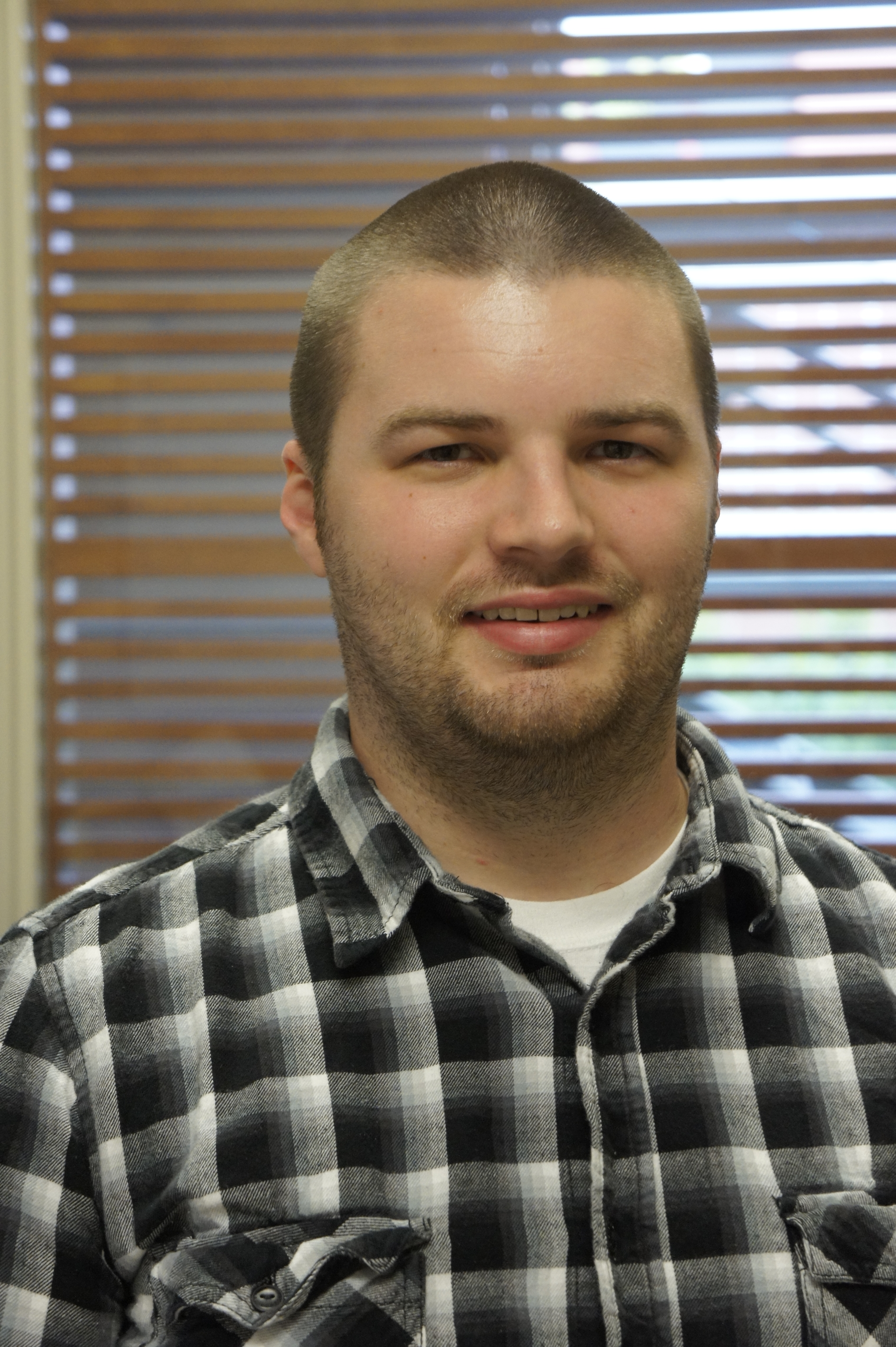
The event focused around navigating through a series of progressively harder cybersecurity obstacles. The challenge’s theme centered around a narrative that competitors were assisting the FBI in finding and then defusing a bomb. Competitors needed to complete a series of increasingly harder challenges to locate clues and other information, such as examining an Android .apk to find a wireless access point password, finding the login page for an website’s administration panel, and gaining access to a web server’s log directory.

Congratulations again to Christopher and to all of the CyberDawgs who competed.

Pres. Hrabowski Shares UMBC’s Response to Baltimore’s Challenges in Inside Higher Ed

In light of the Baltimore protests, President Hrabowski penned an essay in Inside Higher Ed about the importance of UMBC’s continued work in the community and the need for ongoing conversations with students about confronting systematic injustice and inequality.

hrabowskiDr. Hrabowski began by sharing his experience in the Children’s March and how it developed into his life’s work of making education accessible to all Americans. He drew comparisons to the Baltimore protests, saying that the most important work of fighting issues of poverty and injustice is yet to come.

Sharing examples of UMBC’s commitment to Baltimore city through initiatives such as The Choice Program, Dr. Hrabowski emphasized the role of universities as “community anchors, educators and researchers.” “The future will depend heavily on universities– not only the policies we shape but the leaders we produce,” he wrote.

He also called for higher education institutions to encourage its students to connect with people from different backgrounds and circumstances and to apply their classroom discussions of justice, economics, and history to work in the community. “We are having renewed conversations on our campus about how we can deepen our ties to the community and keep issues of inequality and inequity at the forefront of our teaching and service,” he shared.

To read the article titled “After the Cameras Leave” on Inside Higher Ed, click here.

Dr. Hrabowski also participated in a discussion with New Jersey Senator Cory Booker at the Urban Institute on Wednesday, May 18. The conversation centered around how to reduce racial opportunity gaps for boy and men of color and create trust between the police and impoverished communities.

Dr. Hrabowski spoke about the need to support boys and men of color and how The Choice Program at UMBC is one strategy for increasing trust. “We need many more programs like this so that before the difficulty arises, these people know each other,” he said. “There’s a role for places like universities to play in building these intervention strategies that can build trust.”

Click here to read excerpts from the conversation at the Urban Institute.

David Hoffman, Student Life, Considers Higher Education’s Future in Zocalo Public Square

david_hoffman_300x375Zocalo Public Square, a non-profit website specializing in humanities journalism, recently invited scholars to describe the ideal 21st century university. David Hoffman, assistant director of student life for civic agency, responded with an article emphasizing the need for universities to become spaces for discourse and action in order to remain relevant in society.

In the article, Hoffman discussed UMBC’s response to the Baltimore protests in the wake of Freddie Gray’s death, noting that the campus teach-in focused on sharing knowledge to support construction action in a way that respected everyone’s stories and abilities to contribute. “That spirit of mutual respect and creativity belies the dichotomies common to conventional thinking about higher education: distinctions between teacher and learner, scholar and citizen, research and action, university and community,” he wrote.

Hoffman also mentioned the national push for civic engagement through networks such as Imagining America. UMBC faculty, staff and students have participated in Imagining America’s work in the past through BreakingGround and our campus will host Imagining America’s 2015 National Conference in October.

Click here to read “Take action, and leave the ivory tower stereotype behind” on Zocalo Public Square. The article was also re-printed in TIME.

Career Q&A: Mark Jarzynski ’11, Computer Science

Every so often, we’ll chat with an alum about what they do and how they got there. Today we’re talking with Mark Jarzynski ’11, computer science, about his work as Technical Director of Software Development here at UMBC’s Imaging Research Center (IRC).
SONY DSCName: Mark Jarzynski
Job Title: Technical Director of Software Development
Major/Minor: Computer Science/Game Development
Grad year: 2011
Q: What drew you to UMBC for your studies?
When I was in high school, I was really interested in making video games. I had heard that UMBC had a game development track within Computer Science so I went for it.
Q: You now work at the university in the IRC. Could you tell us how you got the position and talk a bit about what you do there?
I had a job as a student working for CSEE. I maintained their servers and I developed their website. When I graduated in 2011, the IRC was looking for someone with my skillset, and my boss, Geoff, encouraged me to apply.
At the IRC I maintain all of our desktops and servers,  I’m the lead programmer on our projects, and I am currently supervising six programming students. I can be working on 4-5 projects at any given time.
Q: Is there a particular professor or class at UMBC that really inspired you?
I had quite a few professors that inspired me throughout my time as a student such as Don Miner and Dr. Olano. I think the class that inspired me the most was CMSC 313, “Computer Organization and Assembly Language,” with Dennis Frey. One of my favorite projects for that class was a “bomb” program. When the program was run, it would ‘explode’ by sending an email to Professor Frey. We had to disassemble the program and use the debugger GDC to disarm the bomb so when the program ran it didn’t explode and send an email to Professor Frey saying that we’ve failed.
Q: How goes the video game design? Are you working on anything right now?
I have a license for Unity Pro and Unreal Engine. I dabble with them every once in while on my free time.
Q: What games have had the most lasting impact on you?
Warcraft III. I started playing this game back in high school and it is what got me really interested in game development. It had a map editor which I would spend an enormous amount of time creating custom maps in.
Q: What advice would you give to students considering UMBC?

Follow your passion wherever it takes you.