
All posts by: UMBC News Staff


Rebecca Adelman analyzes the public consumption of images related to Syrian refugee crisis

In a recent article posted on Antenna‘s website, Rebecca Adelman, an associate professor of media and communication studies, examined public reaction to the images of Aylan Kurdi.

“I am not suggesting that the story the photographs tell isn’t wrenching (it is); but the difficulty of the image is the very thing that makes spectatorship of it easy. Certainly, spectators far removed from the Kurdi family’s suffering might genuinely experience the photos as painful. But the experience of feeling bad about the photos is accompanied by a range of sentimental rewards that ameliorate this discomfort. In part, the hyper-visibility of Aylan Kurdi is a function of the vacuous efficacy of social media, but the clicktivism it inspired is more a symptom than a cause,” she wrote.

Also in the article, Adelman discussed other images related to the civil war in Syria and how they can present different interpretation from spectators, including the U.S. government, such as viewing images of the Assad regime’s chemical weapons attacks against Syrian civilians.

“Seeking to galvanize popular and legislative support for his plan to intervene militarily in Syria, President Obama implored Americans to view the images  and the Senate Intelligence Committee compiled 13 of the most explicit  for review by its members and, presumably, the public. These images failed to persuade lawmakers or their constituents that the situation warranted U.S. involvement. Of course, there were many reasons for this reluctance and we cannot know if different pictures would have garnered different results, but it remains significant that these photos never achieved the iconic status that Aylan Kurdi’s already have.”

Read “Feeling Good about Feeling Bad about Aylan Kurdi” in Antenna.

Ramon Goings writes about diversifying Maryland’s STEM teacher workforce

In response to a question posted on Education Week‘s website about universities’ responses to the call to increase diversity of the teaching force, Ramon Goings, program coordinator for the Sherman STEM Teacher Scholars Program, wrote about the mission of the Sherman Scholars program and its efforts to address to the shortage of highly qualified STEM teachers serving in high-needs schools.

ramongoings“The Sherman Program provides professional development for both UMBC students and alumni who are currently teaching in school districts across Maryland and other states. In particular, our professional development is focused on developing culturally competent students. Through our partnership with Lakeland Elementary/Middle School, a Baltimore City Public School, our students are able to work in an actual classroom settings with children and experienced teachers prior to student teaching,” Goings wrote.

Writing further about the evidence-based support system to diversify the STEM teacher workforce, Goings stated that, “We believe it is imperative to work with students prior to college in order to develop their desire to become teachers and desire to pursue a STEM degree. Thus, through our partnership with Lakeland and other applied learning placements, our students are able to build the next cadre of STEM teachers and innovators while improving their pedagogical practices. UMBC and the Sherman Scholars Program are committed to fighting for diversity in the STEM teaching workforce.”

Read “Diversifying the STEM Teacher Workforce in Maryland” in Education Week. 

Image:  Ramon Goings


Alumni Awards 2015: Dr. Tara Carpenter

In the weeks leading up to the Alumni Awards Ceremony, we’ll be profiling each of this year’s honorees in detail here on the blog. First up is our Outstanding Faculty Award winner, Dr. Tara Carpenter of UMBC’s own Department of Chemistry and Biochemistry.

CarpenterDr. Tara Carpenter is a senior lecturer in the Department of Chemistry and Biochemistry at UMBC. Dr. Carpenter developed a passion for teaching as a graduate teaching assistant at Duquesne University, and after she completed her Ph.D., she sought out academic positions that made teaching undergraduates a priority. She was drawn to UMBC’s welcoming campus culture and its enthusiasm for undergraduate success. In her 11 years here, she has worked to change the way undergraduate students experience their first chemistry courses by helping to create a variety of resources for them, from the Discovery Center to online homework and in-person as well as virtual office hours. She enjoys working with UMBC students for their ability to “think outside the box.” She considers every semester an adventure as students continue to engage her with new and exciting questions.

Click here to register for the Alumni Awards Ceremony on Thursday, October 8 in the Albin O. Kuhn Library and Gallery!

Doing Good with Trauma: Lia Mack ’98 releases new novel

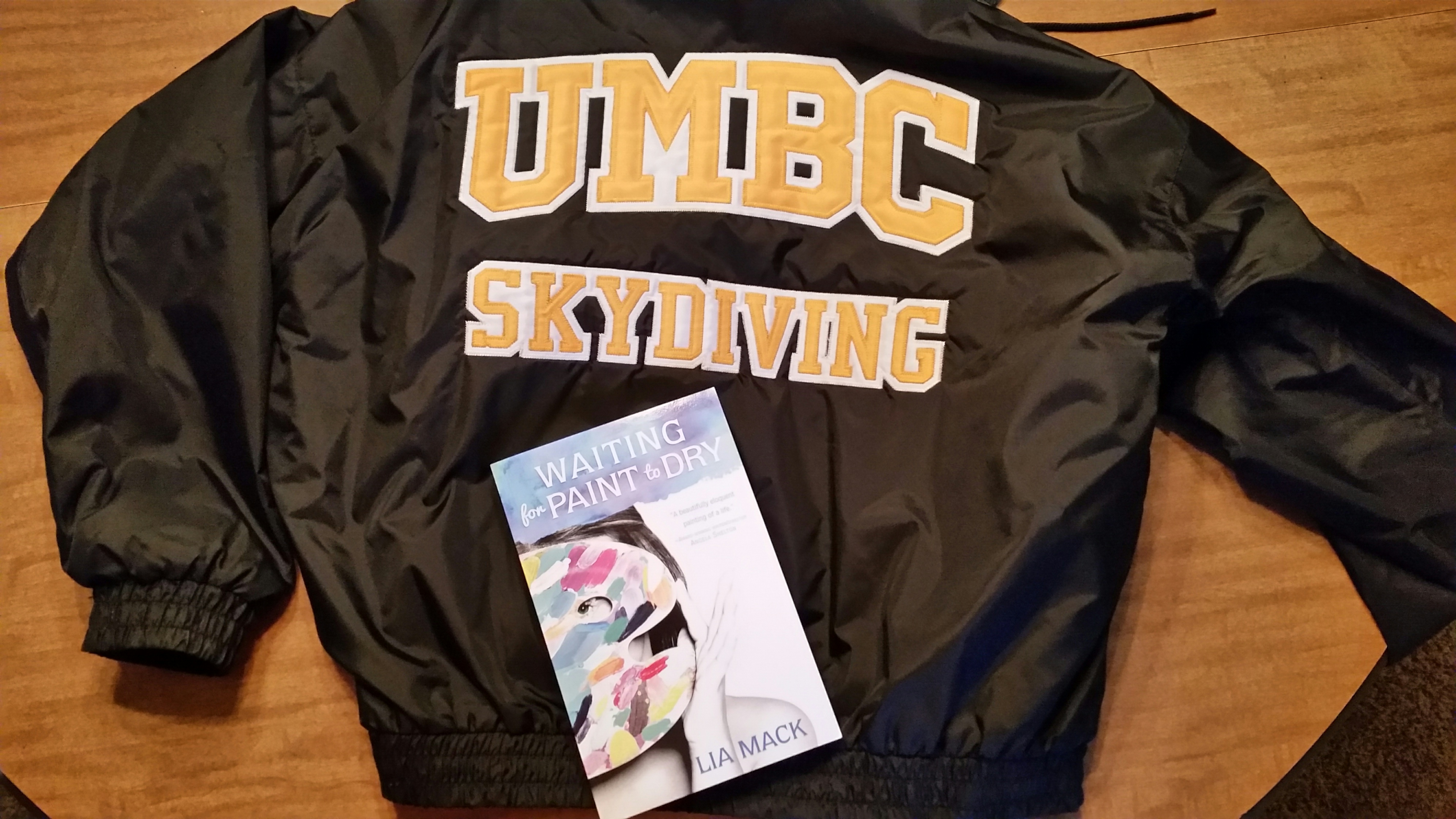
Lia-21Matty Bell, the 30-year-old protagonist of the novel Waiting for Paint to Dry, is a woman in constant survival mode, a woman, wounded as a girl, who hasn’t fully healed. The novel follows her through her recovery from a traumatic rape during her teenage years, as she learns to fully embrace life again. Hers is an experience the book’s author, Lia Mack ‘98, psychology, is intimately familiar with as a survivor of sexual assault, and her story arose from the author’s own healing process.

The book was a long time coming, says Mack. Writing the novel itself was a ten-year process complicated, amongst other things, by a near-deadly bout with Lyme disease. But she wouldn’t succumb that easily: “I am very hardheaded,” she says.

Getting a handle on her creative side again in the aftermath of her trauma was a large part of the battle. “[I] kind of swallowed myself whole” after the assault, she says, and it would take well over a decade for her to channel the experience through writing.

After transferring to UMBC from Anne Arundel Community College, Mack went from major to major, career aspiration to career aspiration, before settling on psychology. While she has fond memories of college – she was treasurer of the UMBC Skydiving Club, and still has the jacket – she now believes that she should have been an English major all along. She had always wanted to write, but she says that after her rape, “[I] didn’t trust myself to accomplish what I wanted.”

So she turned to other pursuits, in college and beyond. Mack’s first post-grad job had her delivering computers to day care centers from Maine to Virginia, spending about two days a month at home. After that, she worked as a research assistant in the child psychiatry unit at Johns Hopkins. She had taught herself to code in UMBC’s computer labs in the early days of the Internet, a skill that proved quite handy later on when she was a web developer at T. Rowe Price.
20150728_201300_resized_1

When her son was about nine months old, and she was, in her words, coming out of her shell, she decided to paint his nursery. She realized, to her own astonishment, that she hadn’t painted in well over a decade.

“Wait a minute. I am an artist…why haven’t I painted in so long?” she remembers thinking at the time. Her creative side, buried for so many years, was finally resurfacing. A while later, on a trip to San Diego, an experience at the airport prompted the idea for the novel. As soon as the plane landed, she bought a notebook and got to work. The result? The story of a woman taking back her life, finding love, and creating her own happiness.

“They say it takes five to ten years to write [your] first novel,” she says, and that it did. Finally, this past May, the book was released through a small Arkansas publishing house called Pen-L. A portion of the proceeds will go to the Rape, Abuse, and Incest National Network (RAINN), and Mack wants to raise $10,000 for the organization through her book sales.

“It’s not a memoir,” she says, “but I did utilize my emotional journey of healing in my writing.”

Mack also spoke with other survivors to get a wider breadth of experiences to draw from, and she credits Angela Shelton’s online healing courses with helping her recover. Shelton, an actress, filmmaker, and child sexual abuse survivor, directed the documentary Searching for Angela Shelton, wherein she interviewed 40 women who shared her name and discovered that the majority of them had experienced sexual or domestic violence. Mack occasionally writes for Shelton’s blog, Survivor Manual, which bills itself as “a place where survivors who have moved on to thriving can share what worked for them under all aspects of healing.”

Now living in Maryland and working as a UX designer – a job that marries her psychology training with her web development experience – Mack says that this book is her “restitution” after what was done to her. She wants to, as Angela Shelton would put it, “use [her] sword of trauma for good.”

“My goal is to help others” who have been through sexual violence, Mack says, and to show them that “you’re not a mess forever…you can make your own happily ever after.”

– Julia Celtnieks ’13

Roundup: UMBC in the News

One of the things that makes UMBC great is how wonderful our alumni, students, faculty, and staff are. Because of these amazing people, UMBC often finds itself “in the news,” so each week, we’ll be sharing with you a round-up of the most newsworthy achievements from our community.

Dr. Marilyn E. Demorest establishes new faculty advancement fund

Demorest-1957When Professor Emerita of Psychology Dr. Marilyn Demorest started teaching at UMBC in 1972, the university was six years old, and the psychology department had ten faculty members. As her career grew and developed, so did UMBC. By the time she retired in 2010, the school had exponentially increased in size, both in terms of enrollment and faculty hiring.

The latter was one of Demorest’s many responsibilities as Vice Provost for Faculty Affairs from 1998 through her retirement. Her years of experience as both a professor and an administrator showed her the many challenges a university’s faculty may face. To that end, she’s created the Marilyn E. Demorest Faculty Advancement Fund, an endowment set up to support faculty members’ career development.

Dr. Patrice McDermott, current Vice Provost for Faculty Affairs and Dr. Demorest’s successor, says she’s not surprised that Dr. Demorest created an endowment related to faculty advancement. Demorest trained McDermott for the job. “Her devotion to faculty was well-known, and she instilled those values in me as well,” McDermott says.

As a professor, Dr. Demorest sat on several committees related to faculty promotion and tenure, and got a firsthand look at some key issues facing faculty members at such a young university. At that time, she explains, the university usually had to do more with less. Faculty often had to take on substantial service activities, which could hinder their research efforts.

She cites her work with Advance, the National Science Foundation’s initiative for women in STEM fields, as the biggest influence for her gift. Through that project, she says, “we saw how innovative programs” could be effective in advancing all faculty, not just women and not just STEM faculty.Demorest-1970

At a university as committed to innovation as UMBC, a faculty advancement grant like this one provides the resources for professors to mentor and connect with each other, and Dr. Shawn Bediako, the inaugural recipient of the award, is committed to those ideals.

As a previous recipient of an NIH career development grant, Dr. Bediako, an associate professor of psychology at UMBC, developed an interest in helping faculty define their professional and scholarly goals beyond just achieving tenure. He has also served as a mentor to junior faculty both at UMBC and at other institutions.

“I am deeply honored to be the first recipient of this award. Dr. Demorest’s generous gift will provide an opportunity for me to collaborate with faculty colleagues across campus and find innovative ways to align our personal and professional goals with the institution’s vision,” he says. He is currently finalizing his plans for the award as the fall semester gets under way.

As the award is announced to the entire campus community, Dr. Demorest says the key word in the delivery is the “advancement” rather than “development” of faculty, and that the award will ideally expand beyond mentoring efforts. When faculty members can define and pursue their goals, whether in research or teaching, the entire university community will benefit.

“The notion is [one of] moving forward,” she says, and adds, “I’m looking forward to the fund growing over time and supporting even broader programs and initiatives.”

Learn more about how you can support UMBC!

Economist Douglas Lamdin shares analysis of gold mining stocks

Douglas Lamdin, Economics, had his recent study featured on the website of the American Association of Individual Investors (AAII). The article, “New Evidence on Whether Gold Mining Stocks are More Like Gold or Like Stocks” was co-authored with Mark Johnson of Loyola University, Maryland, and is forthcoming in the journal Alternative Investment Analyst Review.

Doug LamdinThe study examined the role of gold and gold mining stocks in diversified portfolios. Lamdin and Johnson found that neither gold nor gold mining stocks are a hedge against declines in the stock market. Both gold and gold mining stocks, however, do provide diversification benefits, with gold the preferred diversifying asset.

Sarah Jewett, STEM Transfer Student Success Initiative, Discusses Workforce Prep on WalletHub

In a ranking of the nation’s community colleges, WalletHub asked experts about changes in the higher education landscape. Sarah Jewett, executive director of the STEM Transfer Student Success Initiative, spoke about whether community colleges should focus on preparing students for the workforce or a four-year institution.

“Both community colleges and universities can benefit from collaborative inter-institutional partnerships in which everyone shares the responsibility for helping students to develop a robust and realistic set of academic and career options,” Jewett said. “Early exploration of majors and fields, active participation in experiential learning opportunities, sustained development of  goals and plans, and transitional support can enhance the success of all students.”

Read Jewett’s response on WalletHub.

First Video Game From UMBC’s Game Developer’s Club Up on Steam

win_huebots_storyA game developed by a four-student UMBC team was recently added on Steam, the giant PC game platform. The success prompted stories in the Baltimore Daily Record and in Technical.ly/Baltimore featuring interviews with team lead Michael Leung ’16; programmer Tad Cordle ’16; and Marc Olano, who heads the game-development track in the computer science department.

HueBots made it to the national “final four” of college game video development this spring. The competition for the Microsoft Imagine Cup entailed not only creating the game but a business plan that included getting the game onto Steam.

Acceptance is a significant boost because the website is the go-place place for PC games. Olano pointed out that Steam’s vetting process invites public feedback, indicating that the game drew wider interest than from just the campus.

HueBots features friendly, colorful robots that players build and use to solve maze puzzles that revolve around the bots’ affinity for color-matched objects. It’s the first game to come to market from the Game Developer’s Club. But, Leung said, not the last. “We want to get as many different games out there as we can.”

Read “Full Steam Ahead: UMBC Students Take Video Game to Market” in The Daily Record and “HueBots, a Videogame Created by UMBC Students, Is Now on Steam” in Technical.ly/ Baltimore.

Cangialosi Business Innovation Competition creates a new platform for student startups

CBIC-LogoGreg Cangialosi ‘96, English, has made a name for himself as a serial entrepreneur with a passion for helping others succeed.  Since he graduated from UMBC, he has gone on to run two companies, and made it a personal mission to turn Baltimore into a hub for startup companies. To help support that initiative, the MissionTix CEO and co-founder of the startup incubator Betamore gave a generous gift to UMBC to establish the Cangialosi Business Innovation Competition.

The CBIC launched last year through the Alex. Brown Center for Entrepreneurship to give undergraduate and graduate students an opportunity to develop and present their business plans, and get a head start on establishing their companies. The first competition was held in the spring of 2014.

“His spirit is all about entrepreneurism,” says Susie Lynch, a development officer at UMBC. “[He’s] passionate about others’ success…[and] having a thriving startup community in Baltimore.”

Cangialosi had been involved with the Alex. Brown Center for some time before the competition began, according to the Center’s director, Vivian Armor. Among other initiatives, he was a featured speaker for the Entrepreneurship Speaker Series, developed and taught UMBC’s Entrepreneurial Marketing course, and served as a judge for the university’s annual Idea Competition, upon which the CBIC is based and which still runs every fall.

“As a result of his long term involvement with the Center, [Cangialosi] realized there was a need to provide the next level of competition and support for students who were serious about starting a business,” says Armor. The CBIC, she explains, was intended to connect students with the larger Baltimore business community.

To enter the competition, students submit their business plans to a panel of qualified experts. Those selected for the next round are paired with a mentor to help them fine-tune their ideas, and in the final round, they present their fully-formed startup plans to a panel of community business leaders and investors. In addition to a cash prize of up to $5,000 for seed funding, competition winners receive free Betamore membership, as well as free legal services, accounting advice, and fundraising and pitch advice.

Andrew Mavronicolas ‘14, information systems, is one such beneficiary. He was one of 10 finalists in last year’s inaugural competition, and his company, Backpack ‘Em, is now located in UMBC’s Cyberhive incubator. The company provides a platform for an intra-campus marketplace, its most popular use being textbook selling and trading. Mavronicolas says the support he received during and after the competition was invaluable in helping him get his business off the ground.

“The greatest gain that we had from the competition was easily the insights given by judges [and] investors, our mentor, students, and the university. This allowed us to improve upon our business idea by expanding our revenue models. It also helped us to perfect our pitch and gain the confidence to go meet with university decision makers and investors,” he says.

According to Armor, the competition will continue every spring semester, and has been a boon to the Brown Center’s visibility on campus. “[…Now] more students are aware of the wide range of initiatives and programming the Center makes available,” she says.

Lynch says Cangialosi is personified by his Twitter hashtag of choice: #neverstop. “That’s him in a nutshell,” she says. As the CBIC enters its third year, one hopes that that tenacious entrepreneurial spirit will be fostered within and passed onto several generations of students.

Cross-posted from the UMBC Alumni Blog.

Kimberly Moffitt, American Studies, Discusses Growth of #BlackLivesMatter on ABC 2 Baltimore

Kimberly MoffittAs #BlackLivesMatter continues to grow on social media, ABC 2 TV in Baltimore recently hosted Kimberly Moffitt for a discussion to explain how the movement has spread and how it is different from the Civil Rights Movement. Moffitt, an associate professor of American studies, noted that social media has changed the way in which messages and viewpoints are shared through expanded access.

“That’s the space that we’re in now with social media that anyone has access to the platform,” she said.

She explained that during the Civil Rights Movement, people would often gather at local churches, community centers, homes, and other spaces to strategize and coordinate messages. With social media, anyone can be behind a computer or mobile device and type the hashtag to spread their message.

“At this point, everyone becomes an expert. Everyone becomes that lead activist as long as they have the right platform to access a number of different individuals,” Moffitt explained. “The Civil Rights Movement, it was almost very strategic to make decisions about who should be those individuals to speak on behalf of the movement in order to carry out the particular strategy. Now, it’s anyone’s fair game.”

View the full discussion on ABC 2’s “In Focus” program.

John Rennie Short, School of Public Policy, Explains the Impact of Wealth on Immigration Policy in The Conversation

In a new column in The Conversation, School of Public Policy Professor John Rennie Short revealed how immigrants can be treated differently based on wealth.

John Rennie ShortShort wrote about how Canada’s Immigrant Investor Program and the UK’s Tier 1 investor visa are among many programs that provide economic incentives for wealthy immigrants. Short also focused on how such policies play out in the United States: “Since 1990, the US has an employment-based program tailored for the wealthy entitled EB5. Under this program, 10,000 visas each year are reserved for investors to receive permanent residence status if they invest at least US$1 million (only $500,000 in high unemployment and rural areas) in a commercial enterprise that employs at least 10 full-time US workers.

Studies by trade groups estimate that the program contributed $3.39 billion to US GDP and resulted in 42,000 jobs in fiscal year 2012, while a more critical review of the EB5 program came to the conclusion that the visas are too cheap, the program is badly run and the bulk of the money goes to already overheated real estate markets.”

Professor Short wrote about how the programs referenced in his column often do not reflect their intended consequences: “Most official reviews now come to the conclusion that the programs, hastily conceived in the rush to attract the newly wealthy citizens of Russia, China and other countries, are too cheap with few benefits for the host countries.”

Read “The other immigrants: how the super-rich skirt quotas and closed borders.“