The National Science Foundation recently awarded UMBC a Major Research Instrumentation (MRI) award totaling more than $550,000 to expand the university’s High Performance Computing Facility (HPCF). The funding will go toward upgraded hardware and increased computing speeds for the interdisciplinary core facility, which supports scientific computing and other complex, data-intensive research across disciplines, university-wide. As part of the NSF grant, UMBC is required to contribute 30 percent of the amount that NSF is providing to further support the project, meaning a total new investment of more than $780,000 in UMBC’s High Performance Community Facility.
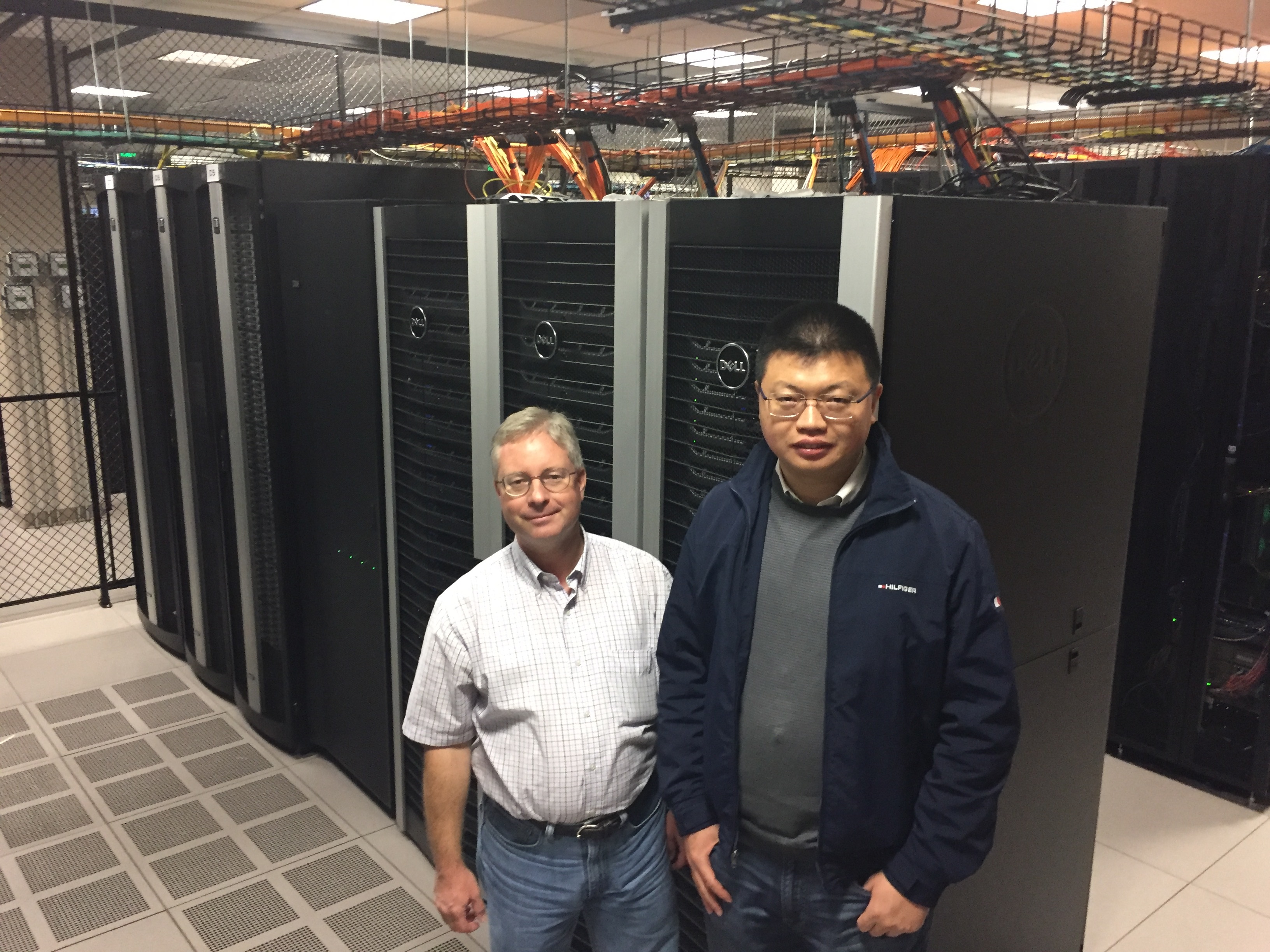
Meilin Yu, assistant professor of mechanical engineering, is the principal investigator on the grant. He replaced Matthias Gobbert, professor of mathematics, who served as principal investigator on previous grants for the core facility in 2008, 2012 and 2017 on behalf of the 51 faculty investigators from academic departments and research centers across all three colleges.
“The MRI grant will allow us to upgrade the UMBC HPCF with state-of-the-art computing nodes and networks,” explains Yu. “It will boost sustained growth in research and education relating to computational science and engineering, including but not limited to, high performance computing, cybersecurity and big data, atmospheric physics, environmental science and engineering, and life sciences.”
Through the facility, researchers can run simulations with a range of applications, including industrial designs and weather prediction. UMBC faculty will utilize the upgraded system to complete simulations and modeling tasks significantly faster than the current system allows, explain Yu and Gobbert. The updated technology includes accelerated graphics processing units that, in addition to speeding up calculations, will “improve the quality of digital visualization,” says Yu.
The HPCF governance committee is working with UMBC’s Division of Information Technology to purchase and implement the upgraded hardware, including central processing units, which completes computing tasks, graphics processing units, which manages the visual displays on computers, and cores. “We hope to have at least 72 nodes in service to the UMBC community by spring 2018, with 16 core Central Processing Units, Graphics Processing Units suitable for integer/single-precision and double-precision arithmetic, and cutting-edge many-core Intel Xeon Phi KNL processors with 68 cores,” Gobbert explains, adding that by increasing the number of nodes, UMBC’s HPCF is worth more than $2 million.
UMBC faculty are able to use the facility for their research at no charge, and they receive technical support from graduate assistants as well as staff in UMBC’s Division of Information Technology. The upgraded facility will support projects from researchers in more than a dozen academic departments across all three colleges at UMBC. Gobbert shares that he expects this community of scholars will expand further as the core facility continues to grow. “I am most proud of the fact that such a large number of faculty total put their trust in me to lead the writing and management of this proposal,” he said. “Our success at the NSF validates that the strong interdisciplinary cooperation of many researchers from across the campus is valued there.”
The HPCF was established in 2008 in response to a university-wide need for technology to support high-performance computing. The initial system had 35 nodes, and was funded by UMBC’s Division of Information Technology, the Office of the Vice President for Research and faculty contributions. Over the past nine years, the HCPF has grown to include over 300 nodes, and has been used by more than 400 researchers and students for their work. The facility has led to more than 250 publications, including 100 in peer-reviewed journals, in addition to 30 theses. The recent funding will support the expansion of the facility to include 84 nodes, which individually communicate with each other, and cutting-edge processors. The oldest portion of the HPCF will be replaced with with more powerful nodes.
Banner image: High-performance computing equipment. Photo by Andrew Hart via Flickr, shared under CC BY-SA 2.0.
More than 200 million people around the world have visual impairments, making retinal research crucial to the development of more effective treatment plans. To that end, Erin Lavik, professor of chemical, biochemical and environmental engineering, and her collaborators have received funding from the National Eye Institute to develop a screen printing technique for human eye tissue.
Lavik and her team have proposed a method of layering adult stem cells in a way that is structurally similar to human retinas. Their idea was selected by the National Eye Institute’s 3-D Retina Organoid Challenge (3-D ROC) to receive one year of funding to create a model of the human retina, the part of the eye that is sensitive to light.
“Eye diseases have a tremendous impact on people’s quality of life and function,” says Lavik. “We do not have good models for studying these diseases, but it is our hope that we can use this prize to build new models of the eye that can be screened rapidly to allow researchers to not only understand eye diseases but to look for new therapies.”
Her work will allow researchers to address specific challenges to understand eye diseases or test eye therapies. Lavik is collaborating with Steve Bernstein, professor of ophthalmology and visual sciences at the University of Maryland School of Medicine, Adam Day ’16, chemical engineering, Ph.D. ’23, chemical engineering, and Bryan Ibarra, a student at the University of Miami, who worked in her lab over the summer. The team’s approach is simple and easy to reproduce, and uses inexpensive materials that can be found online, says Lavik.
After the funding ends, Lavik and her collaborators will be able to submit a proposal for the second phase of the 3-D ROC program. The NEI, a part of the National Institutes of Health, received 13 proposals for the first phase of the project.
Banner image: Erin Lavik and Adam Day in the lab. All photos by Marlayna Demond ’11 for UMBC.
The National Science Foundation (NSF) has awarded funding to a group of UMBC faculty in two colleges to study how applying heat to drug-carrying nanoparticles can cause tumors to shrink. The researchers will use the three-year grant totalling more than $330,000 to develop a more targeted, non-surgical approach to treating tumors in cancer patients.
“Our proposed experiments and simulations will help determine whether elevating temperature in the body is a viable approach to increase the amount of drug-carrying nanoparticles in tumors,” explains Liang Zhu, professor of mechanical engineering and PI of the grant. “This strategy, if successful, will not only ensure delivering high payloads of anticancer drugs directly to tumors where they are needed the most, but also result in an overall reduction of drug dosage, and thereby reduce systemic toxicity in other body organs.”
The work combines mechanical engineering, biology, and chemistry to use 3D X-ray imaging to understand the amount of nanoparticles transferred from the bloodstream into tumors, and the distribution of these nanoparticles in the tumors. Zhu, Ronghui Ma, associate professor of mechanical engineering, Chuck Bieberich, professor of biological sciences, and Marie Christine Daniel-Onuta, associate professor of chemistry and biochemistry, will collaborate on the grant.
After injecting nanoparticles into the bloodstream, Zhu and her collaborators will look at the distribution and concentration of the nanoparticles eventually deposited in the tumor. This will allow them to evaluate whether applying heat to tumors lowers the pressure in the tumor, and determine how the application of heat impacts the blood supply to the tumors. Utilizing heat to enhance drug delivery to targeted tumors could lead to reduced toxicity in other body organs, Zhu explains.
Treatment options that are currently available to target tumors include surgery, radiation, and chemotherapy. Although potent therapeutic drugs have already been developed, delivering them to tumors and achieving sufficient drug concentrations throughout the entire tumor remain significant hurdles to overcome, explains Zhu. “Not every patient can have surgery so this is an alternative treatment option,” she says.
One important aspect of the research is to develop a drug delivery method that can be repeated and customized for individual patients. The faculty will use 3D imaging to visualize the distribution of nanoparticles in the tumor, and mathematical simulations to predict how increased temperature might work in tumors of different sizes and shapes.
This NSF grant will continue work on controlling how heated nanoparticles are delivered to cancer tumors. The work began in 2008 and was extended in 2013.
Banner image: Ronghui Ma, Liang Zhu, and Marie Christine Daniel-Onuta working in the lab. All photos by Marlayna Demond ’11 for UMBC.
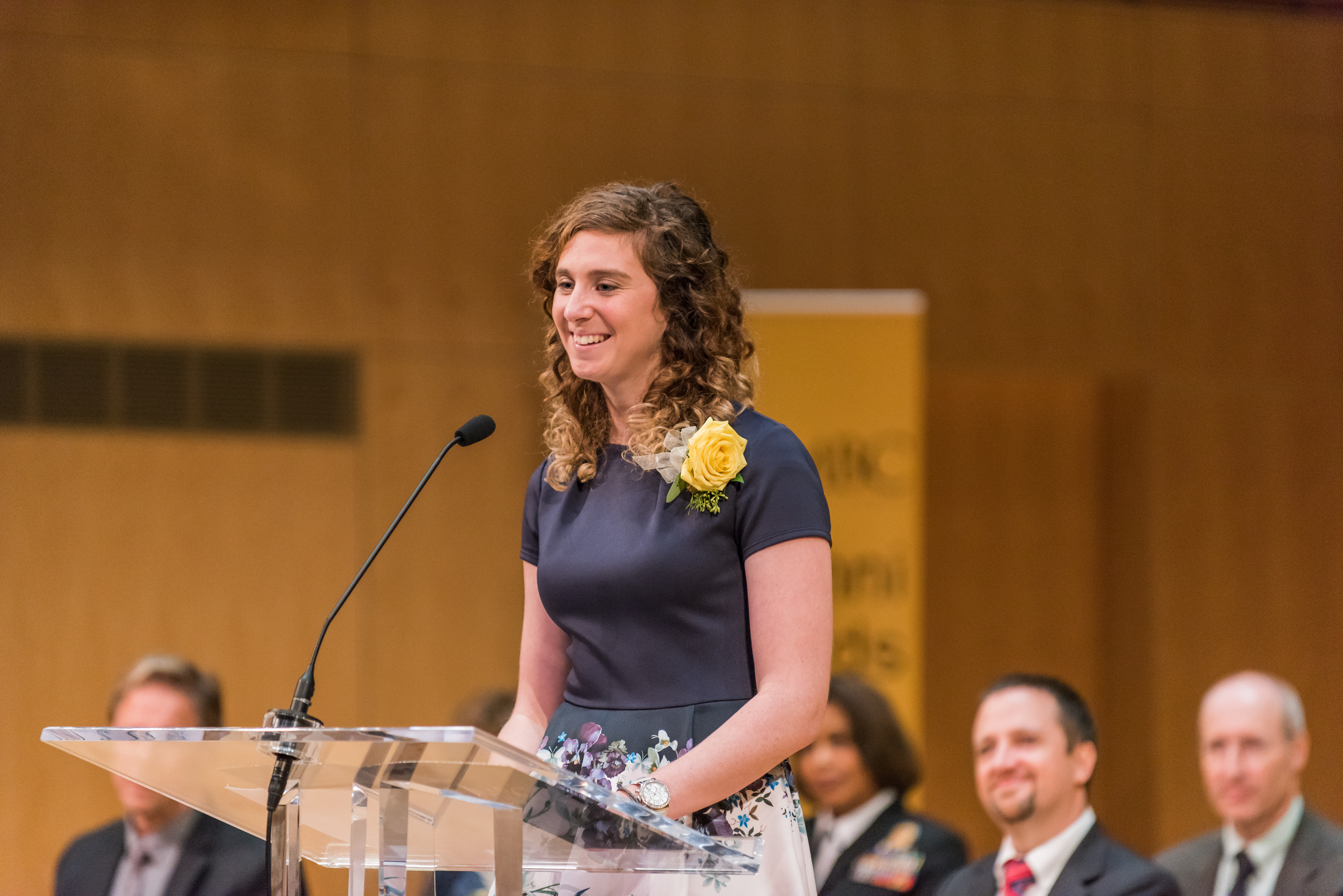
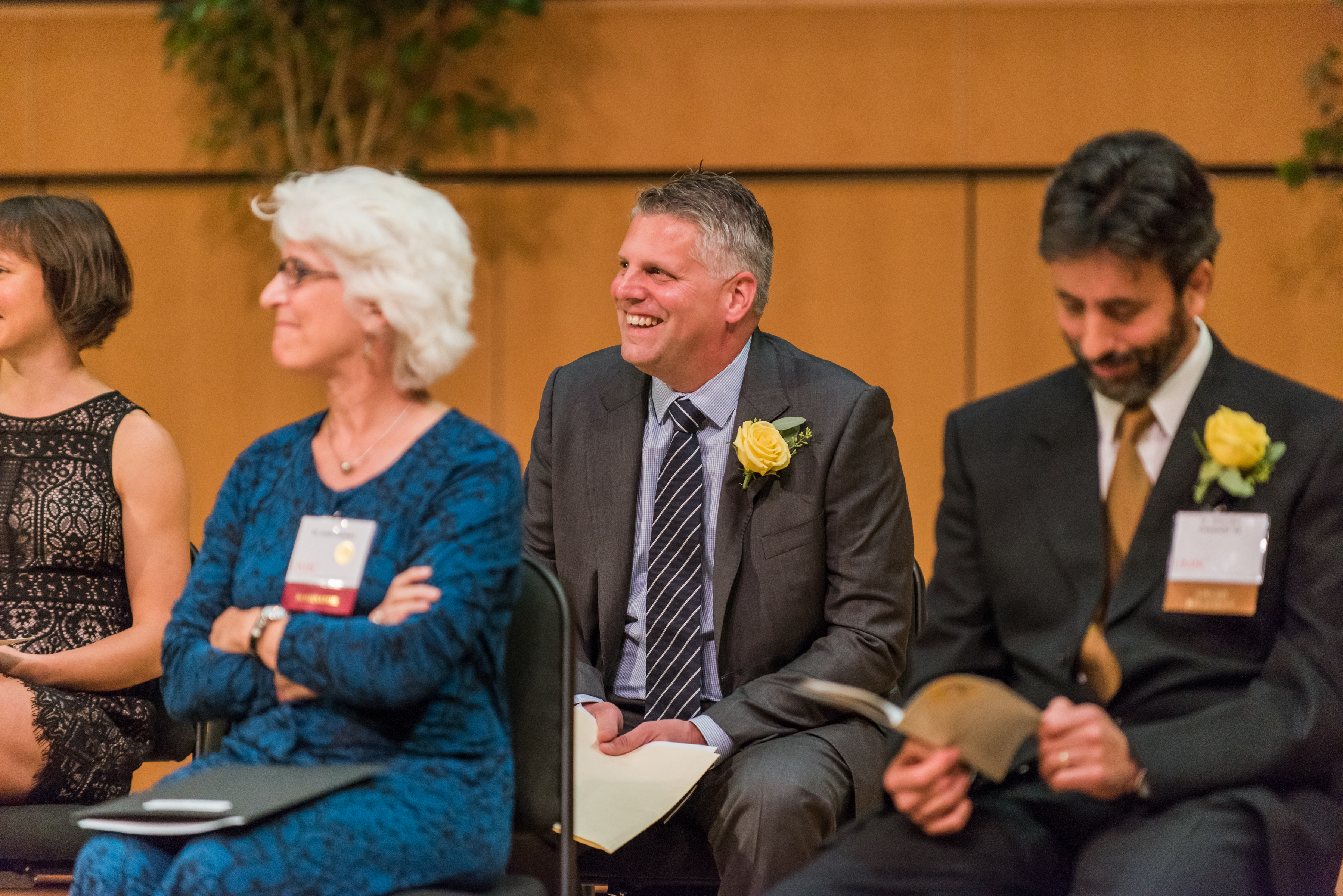
The UMBC community gathered for the 2017 UMBC Alumni Awards on October 5 in the Linehan Concert Hall to celebrate individuals who have made impressive contributions to society through their work. The UMBC Alumni Awards are held annually as part of Homecoming week, which welcomes alumni and members of the community back to campus for a range of events. This year, eight awards were presented to alumni and members of the community across all Colleges and from a range of disciplines. “I’m thrilled that the legacy of excellence embodied by these amazing individuals can be shared this evening and for many years to come,” said John Becker ’01, information systems management, president of the Alumni Association board. “Tonight you will hear from people from a range of disciplines. You will get a sense of people who are already at the top of their fields and others who are rising stars,” shared President Freeman Hrabowski. “Across these disciplines you will see UMBC graduates, from undergraduates to Ph.D graduates, doing very well. Tonight we get a chance to celebrate a lot of grit, a lot of hard work, and wonderful moments of greatness.”
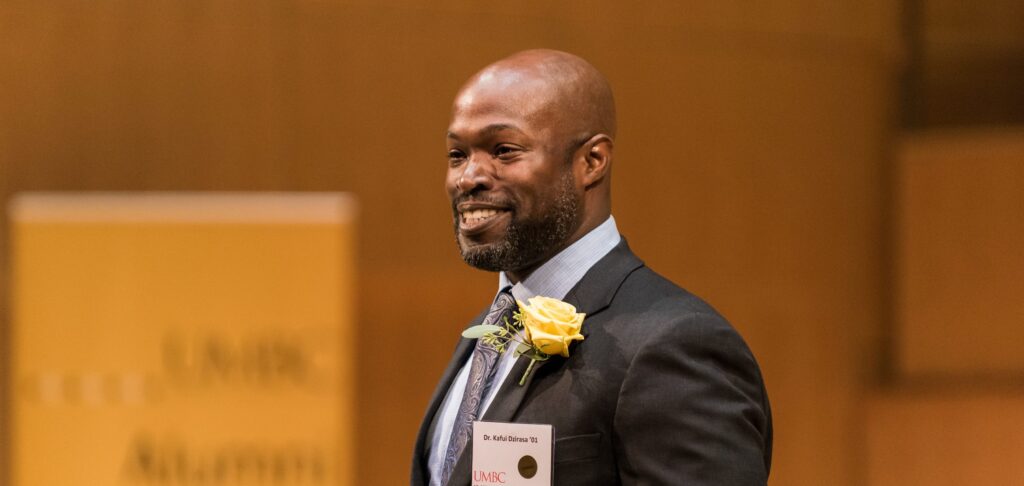
Kafui Dzirasa ’01, M8, chemical engineering, accepting the Outstanding Alumnus, Engineering and Information Technology award.
Mark Marten, professor and chair of chemical, biochemical and environmental engineering, introduced Kafui Dzirasa ’01, M8, chemical engineering, calling him a “powerhouse,” mentor, teacher, motivator and life coach. “Our honoree is recognized not only for his research and scientific expertise but also for his compassion for his patients, and his determination to pay it forward to the next generation of young scientists,” said Marten. Today, Dzirasa is an associate professor of psychiatry, behavioral science, neurobiology, and neurosurgery at Duke University School of Medicine. He explains how he grew up in a family that was always “competing with integrity,” which helped shape him into the leader and person he is today. K. Dzirasa, who received the Outstanding Alumnus, Engineering and Information Technology Award, inspired the audience to “see one, do one, teach many.” Dzirasa’s two brothers also graduated from UMBC, including Delali Dzirasa ‘04, computer engineering, who received the 2012 Rising Star Award from the UMBC Alumni Association.
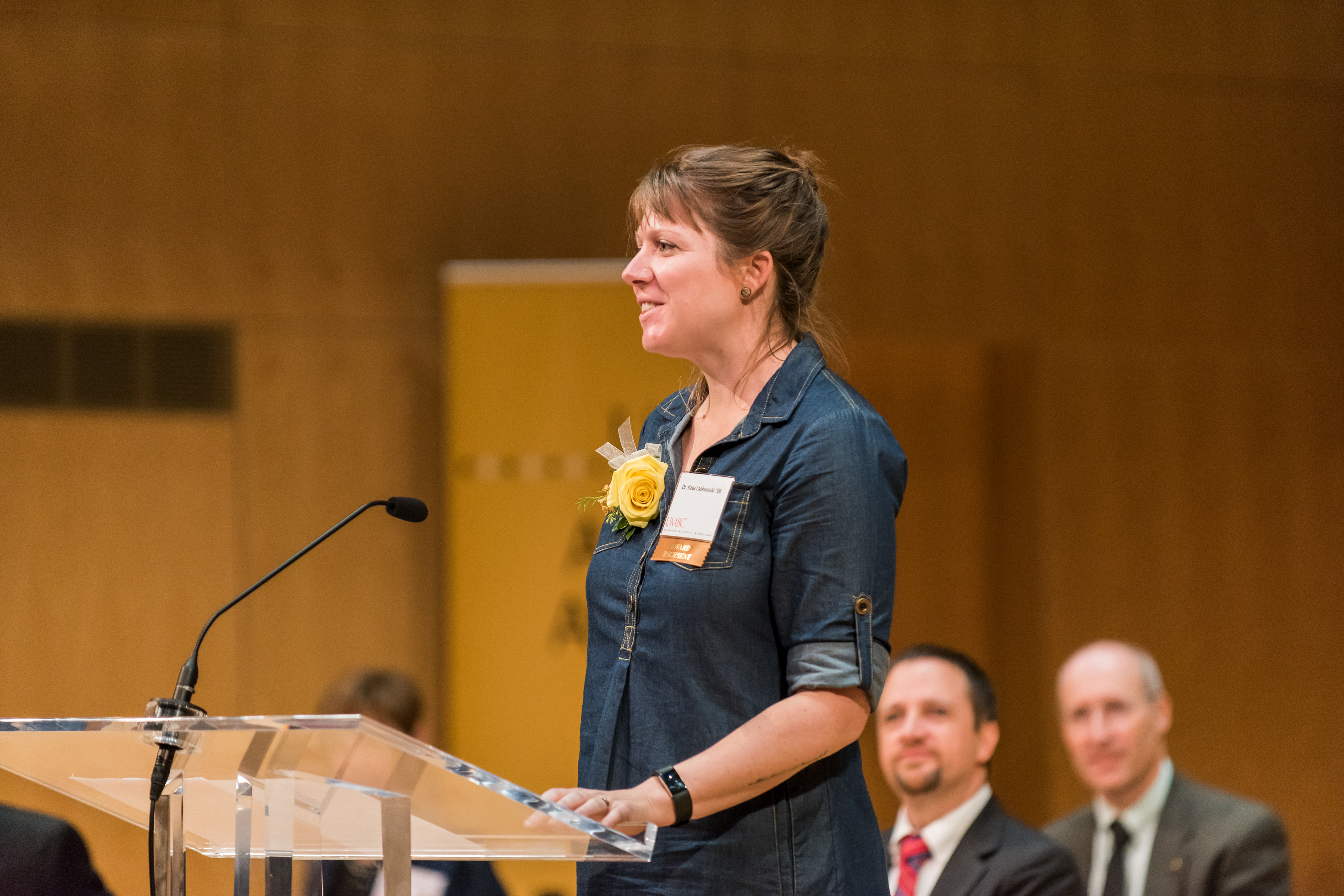
Kate Laskowski ’06, biological sciences and chemistry, received the Outstanding Alumna, Natural and Mathematical Sciences award.
Kate Laskowski ’06, biological sciences and chemistry, the recipient of the Outstanding Alumna, Natural and Mathematical Sciences award was introduced by Jeff Leips, professor of biological sciences. Laskowski is a scientist in the department of biology and ecology of fishes at the Leibniz-Institute of Freshwater Ecology and Inland Fisheries in Germany. She explained that her love of science began during the introductory biology course that focused on ecology and evolution that Leips taught, which she guest taught during her time on campus for the Alumni Awards. “Standing in the front of the classroom telling the students about the research that I now do, in the class that actually excited my interest in research was totally surreal,” she said. “It was one of these things that came full circle.” Laskowski stood out in a class of 350 students, recalled Leips. “She stood out as someone who was very engaged. Her curiosity, her need to know really stood out as an undergraduate,” Leips said. Because of this curiosity, Laskowski was one of the first undergraduate students to work in Leips’ lab, and she laid the groundwork for several Ph.D. and master’s students who came after her.
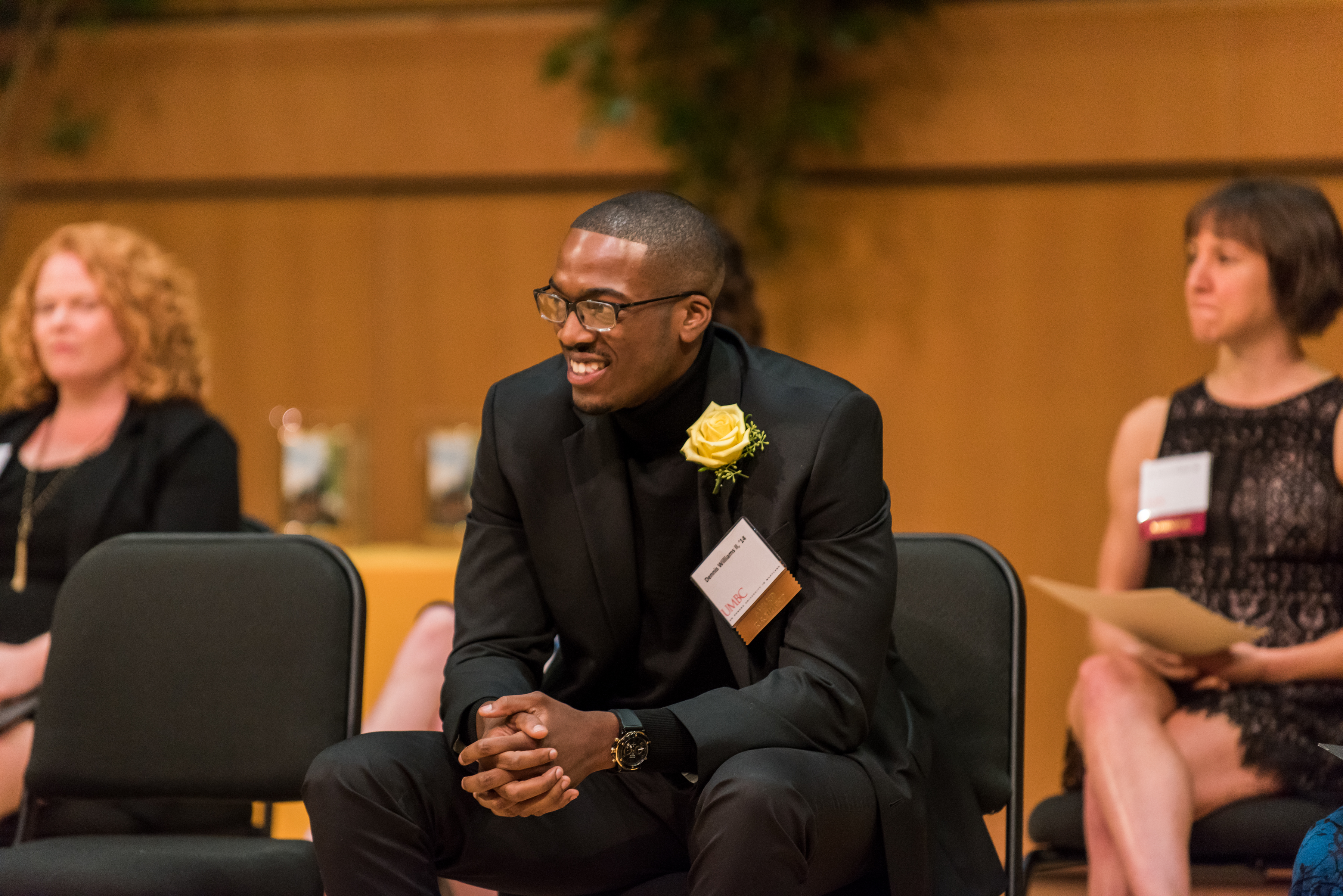
Dennis Williams II ’14, American studies, received the Outstanding Alumnus, Humanities award.
Kimberly Moffitt, associate professor of American studies, introduced Dennis Williams II ’14, American studies, who received the Outstanding Alumnus, Humanities award. Williams is the head of content marketing for Skillshare, is an Oculus Content Fellow, and was named one of LinkedIn’s Top Voices in 2016. Moffitt said that Williams has “made a career out of storytelling.” Williams uses film to tell compelling stories about his life. “I found myself inspired by his determination, drive, and optimism,” Moffitt shared. Williams talked about the unknown in life, and how people can thrive during uncertain times by looking inward and building their own paths. “We rarely know what the next step is and we rarely have it all figured out,” he said. “That was the epitome of my time at UMBC. I didn’t have it figured out when I got here.”
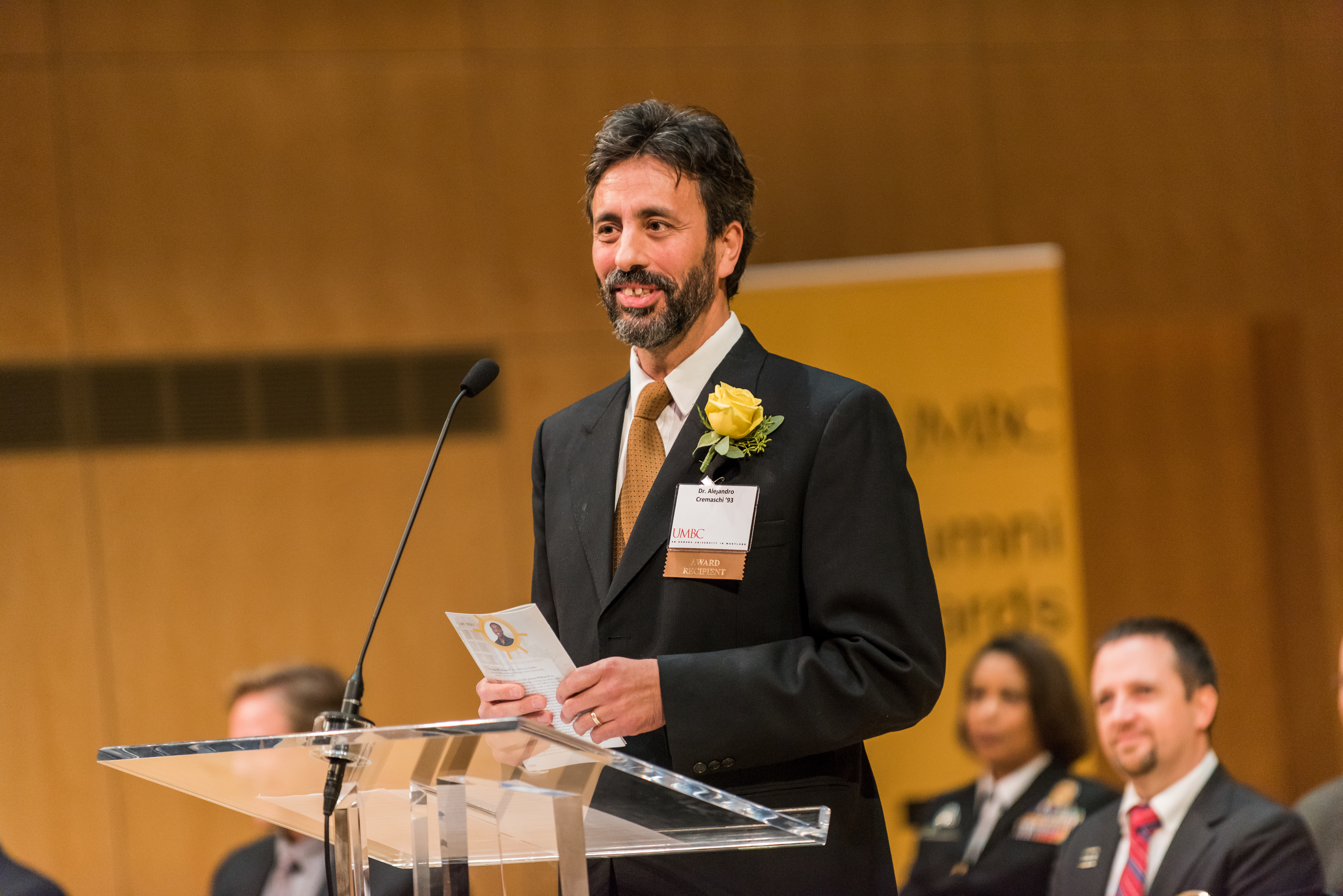
Alejandro Cremaschi ’93, music, accepted the Outstanding Alumnus, Visual and Performing Arts award.
Linda Dusman, professor and chair of music, nominated Alejandro Cremaschi ’93, music, for the Outstanding Alumnus, Visual and Performing Arts award. She explained that while Cremaschi was not one of her students, she enjoyed his performance at UMBC earlier in the semester that highlighted Latin American composers, and is inspired by his teaching style. “It was wonderful to see the artistry and pedagogical brilliance of this alumnus,” Dusman said. He recalls coming to UMBC as an international student from Argentina, and says that he “was very fortunate to find a lot of loving people and friends” at UMBC.
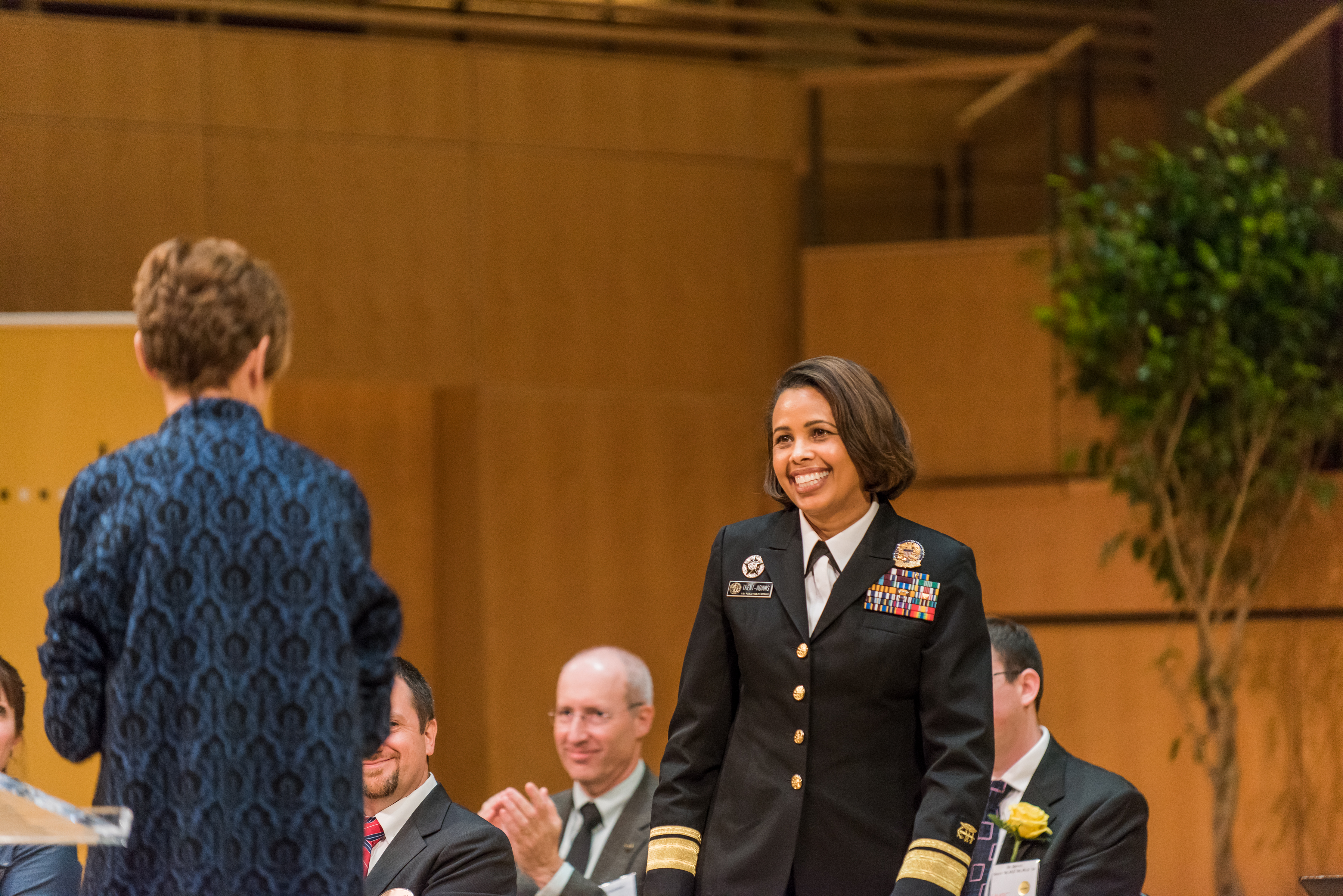
Sylvia Trent-Adams Ph.D. ’06, public policy, accepted the Outstanding Alumna, Social and Behavioral Sciences.
Nancy Miller, professor of public policy, introduced Sylvia Trent-Adams Ph.D. ’06, public policy, saying she is “committed to public service, research, and improving the quality of healthcare for the most vulnerable populations.” Trent-Adams, who received this year’s award for Outstanding Alumna, Social and Behavioral Sciences, currently serves as the Deputy Surgeon General for the United States, and is a Rear Admiral in the U.S. Public Health Service Commissioned Corps. Earlier this year, she served as the acting U.S. Surgeon General. Trent-Adams said that her passion for helping people, particularly those who are underserved, was one of the reasons that she became a nurse. By working with researchers and individuals in the public health industry, she explained that she has grown and pushed herself past the limits she thought she had, and that UMBC provided a framework to think outside the box. “What UMBC prepared me to do was stretch my knowledge, to put on a different thinking cap about what was possible for a nurse and for a young woman who came from a family with low educational attainment,” she said.
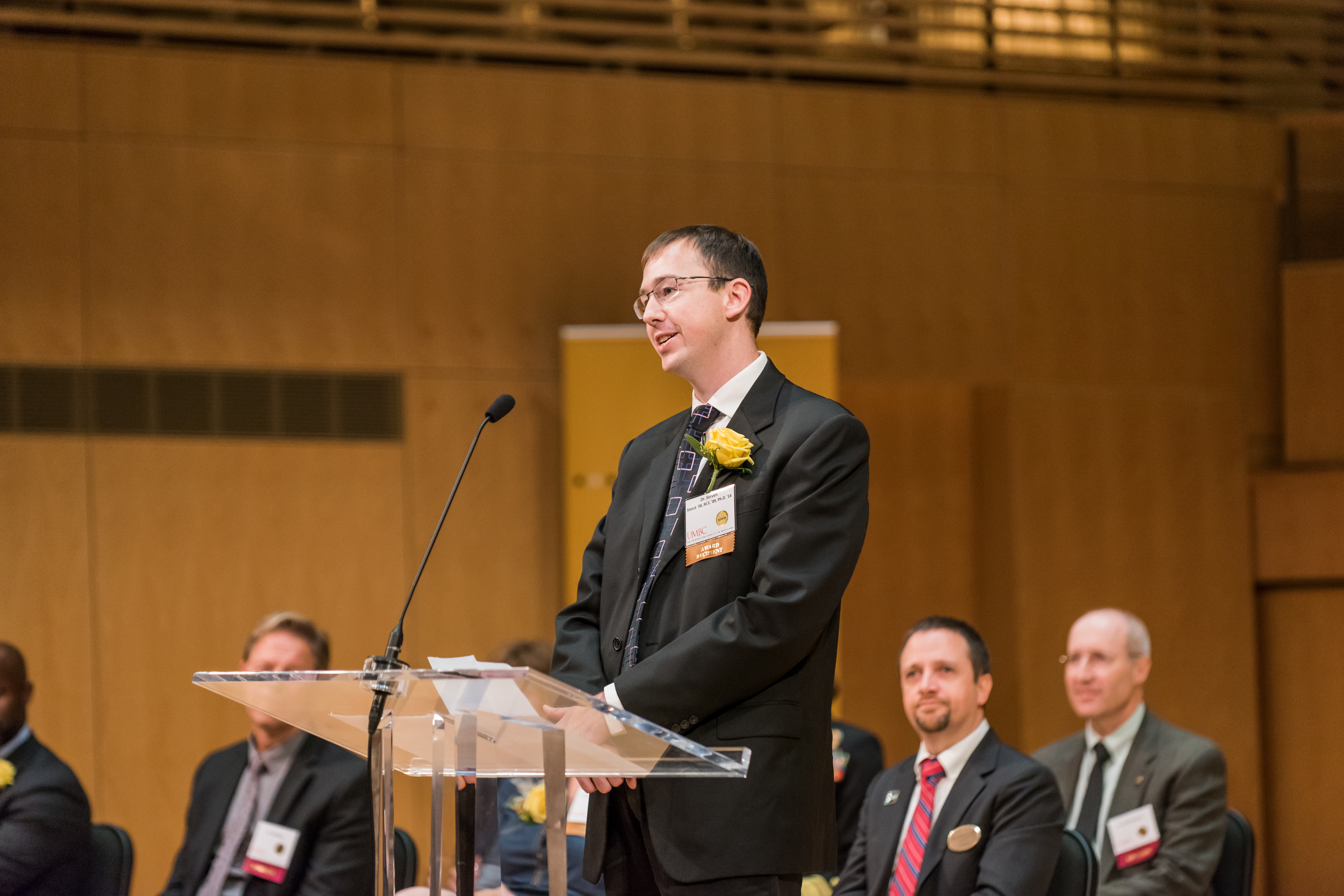
Steven Storck ’08, mechanical engineering and mathematics, M.S. ’09, mechanical engineering, Ph.D. ’14, mechanical engineering, received the Distinguished Service award.
As a student, Steven Storck ’08, mechanical engineering and mathematics, M.S. ’09, mechanical engineering, Ph.D. ’14, mechanical engineering, was very involved with UMBC’s Baja SAE team, serving as team captain. Since graduating, he has led UMBC’s Baja SAE alumni association, said Neil Rothman, professor of practice of mechanical engineering and faculty advisor of the team. Storck, who received the Distinguished Service award, organized the 2015 Baja SAE Maryland event, which brought more than 1,500 students from around the world together in Mechanicsville, Maryland. “His work raised the profile of our university and of our mechanical engineering program, and has given students countless opportunities to develop and showcase their skills,” explained Rothman. Storck, an additive manufacturing application engineer at the Johns Hopkins University Applied Physics Lab, explained how UMBC enables innovation and how people at UMBC are willing to help make your vision a reality. “UMBC is an environment where each individual can leave their fingerprint on the culture, and really change it and shape it and make it their own,” he said.
Lauren Mazzoli ’15, computer science and mathematics, M.S. ’17, computer science, accepted the Rising Star award.
Lauren Mazzoli ’15, computer science and mathematics, M.S. ’17, computer science, was in the first cohort of UMBC’s Cyber Scholars program and received the 2017 Rising Star award. Cindy Greenwood, assistant director for the Center for Women in Technology, said that Mazzoli is “a role model for our current students in the Cyber Scholars program, and other women in the field.” As the liaison between CWIT programs and Northrop Grumman, Mazzoli has helped coordinate a range of events to strengthen the relationship between UMBC and Northrop Grumman, explained Greenwood. Mazzoli’s passion is educating women and children of all backgrounds about the field of cybersecurity. Her work at Northrop Grumman has allowed her to pursue her passion while giving back to UMBC. “UMBC is the house of grit, which means you’re going to work hard,” said Mazzoli. “These faculty members are going to give you a lot of work and they have high standards. It also means that when you find something that you are really passionate about you will have the courage, strive, and strength of character to pursue it.”
Marc Zupan received the Outstanding Faculty award.
The 2017 Outstanding Faculty award was presented to Marc Zupan, associate professor of mechanical engineering. Asynith Palmer ’06, English, who has worked with Zupan to secure funding and design curriculum for the Global Engineering Program, and to infuse elements of the humanities into engineering courses, said she has seen the lengths that Zupan will go to connect students with industry professionals. “It’s amazing to me how confidently UMBC alumni go around knowing that the world will be changed by their example,” Zupan said. “When you were admitted to UMBC it was because of one simple idiom. You showed promise. As I continue to interact and speak with UMBC alumni, I see that they have promise. You always have promise, you never lose that promise.” Six current undergraduate students received scholarships from the UMBC Alumni Association. The scholarships will support Melanie Biddinger ’17, psychology; Matthew Bleakney ’18, mechanical engineering; Jeffrey Carr ’19, interdisciplinary studies; Daniel Gallagher, III ’18, information systems and music technology; Hannah Kiesel ’18, computer science; and Iman Said ’18, psychology, as they pursue internships, research opportunities and a range of courses. Each award recipient shared how they use their passions to give back to the UMBC community. “You see this great cadre of people who represent the best of our university, the best of our country and the best of humankind. They are solving the problems of humankind,” said Hrabowski. “This is by far the best of UMBC.” Banner image: The 2017 Alumni Award recipients. All photos by Marlayna Demond ’11 for UMBC.
How Girls Code held its third annual camp at UMBC this past summer, enrolling a record 130 girls in grades 3 – 9. Supported by a grant from the National Science Foundation, the campers learned about computer science and robotics, and balanced time spent completing technical projects with yoga practice designed to promote health, self-awareness, and mindfulness. CBS Baltimore recently highlighted the camp, founded by Katie Egan ‘94, history, and Lisa Schlossnagle out of a desire to connect girls with greater opportunities to learn about STEM fields early on. “As a parent, I noticed that a lot of the after school classes were tailored toward boys,” particularly in STEM, Egan explained.
As Associate Dean Marie desJardins, of UMBC’s College of Engineering and Information Technology, has previously commented, early exposure can be key to capturing children’s interest in a technical field and sustaining it over time, and thus plays an important role in diversifying computer sciences fields. “Coding, robotics, and computational thinking is a practice,” Schlossnagle told a reporter from Diverse: Issues in Higher Education,inadditionalmediacoverageoftheprogram. “You don’t just get introduced to one little bit of it and you suddenly master it and you can just do it. It’s like learning an instrument, it’s like any discipline.”
UMBC’s Summer Enrichment Experience program offers the How Girls Code camp in addition to 16 other camps, which welcomed nearly 275 K – 12 students to UMBC this summer. Additional programs focused on everything from Japanese anime to music performance to chess.
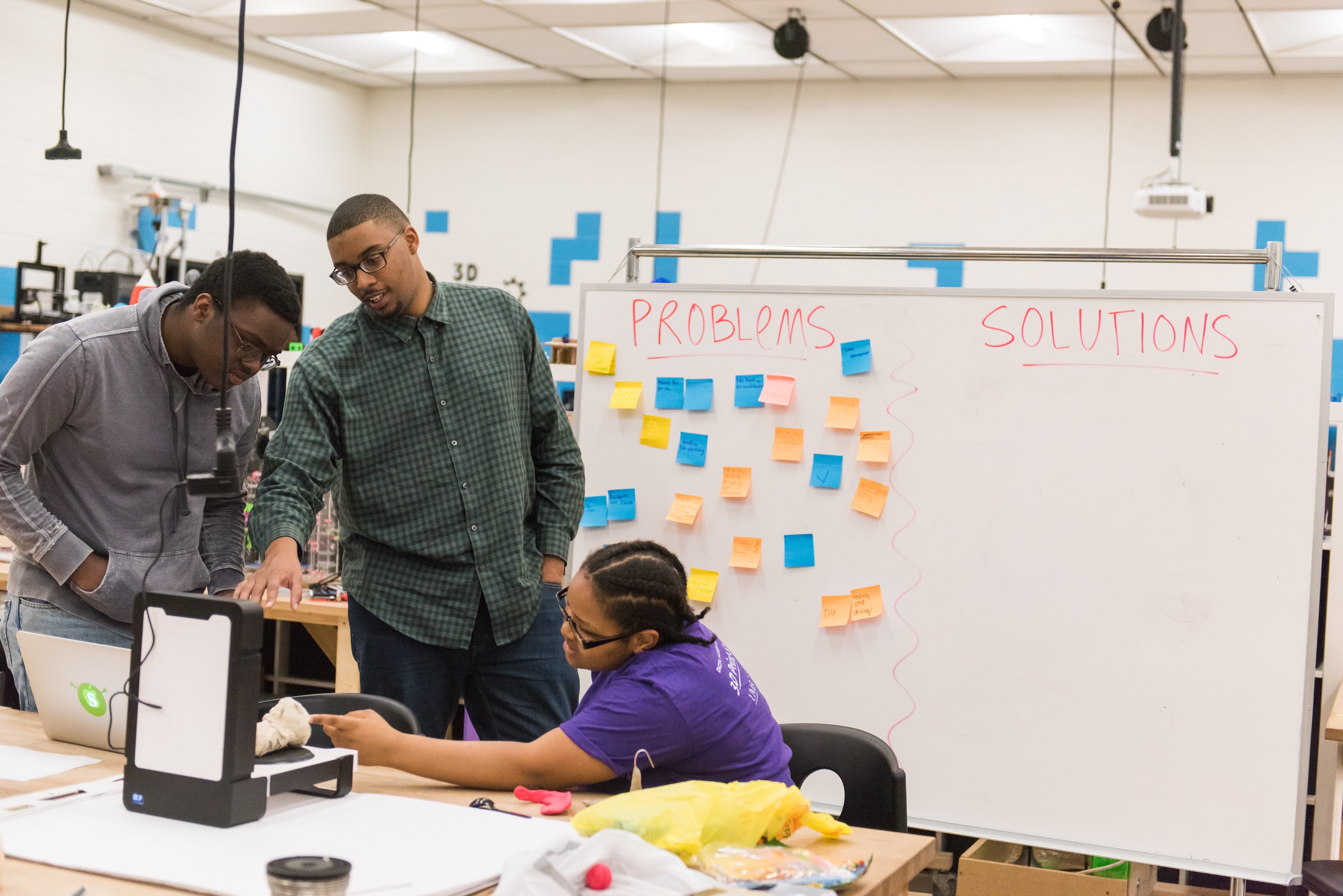
In the heart of Baltimore’s Federal Hill, the Digital Harbor Foundation (DHF) is bustling with students of all ages. The building features makerspaces that encourage innovation and creativity, and help students build their technical skills through activities like 3D printing. Here, Amy Hurst, associate professor of information systems, works alongside middle school students to help explore and prepare for future careers at the intersection of science, technology, entrepreneurship, and the arts.
Hurst began developing the makerspace in collaboration with the DHF through a grant from the National Science Foundation in June 2016. It features a large open room filled with tables, chairs, 3D printers, and dozens of small objects, such as animal figurines, that students have created using 3D printers. It doesn’t function as a traditional classroom, teaching design concepts in the abstract, to be applied later. Rather, the 3D print shop accepts orders from clients, and the student employees then work through each step in the production process, with mentorship and support.
“The print shop serves as a ‘living laboratory’ where we test the limits of modern 3D printing and scanning technology and how to design technical after-school jobs,” explains Hurst.
In addition to Hurst, William Easley ‘13, information systems management, M.S. ‘15, human-centered computing, and Ph.D. ‘22, human-centered computing, plays a major role in managing the shop’s activities. “William is at the print shop throughout the week, working with the youth employees and helping design workflow in the shop,” she says.
As part of the grant, Hurst and Easley are researching how the experience of being employed at the DHF shop impacts the educational and career trajectories of the Baltimore youth who participate. Will this experience, and this broader connection to the maker movement, help them remain engaged in STEM study — majoring in related fields in college — or open up new job prospects for them? So far, Hurst, Easley, and the DHF have been encouraged by the results.
“Since opening in January 2017, nine youth have had paid positions in the print shop and we have completed jobs from local companies, schools, universities and nonprofits,” says Hurst.
While the project is ongoing, Hurst and Easley have already begun sharing lessons they’ve learned so far about running the print shop at the Digital Harbor Foundation, and the ways in which the youth are impacted through this work. They’ve spoken at the annual conference of the Society for Engineering Education and NSF recently highlighted the Baltimore project in a widely-shared Science Nation video and article. In the video, Hurst explains the print shop’s immediate goals — to help participating Baltimore youth develop the skills necessary to pursue STEM degrees and careers — and her broader focus on increasing diversity in STEM fields.
“I think an important part of growing up is having some experience working, and starting to think about who you are and who you want to be after you’ve finished school,” says Hurst in the NSF video.
Banner image: Amy Hurst, center, mentors youth who work at the Digital Harbor Foundation’s makerspace. Photos by Marlayna Demond ’11 for UMBC.
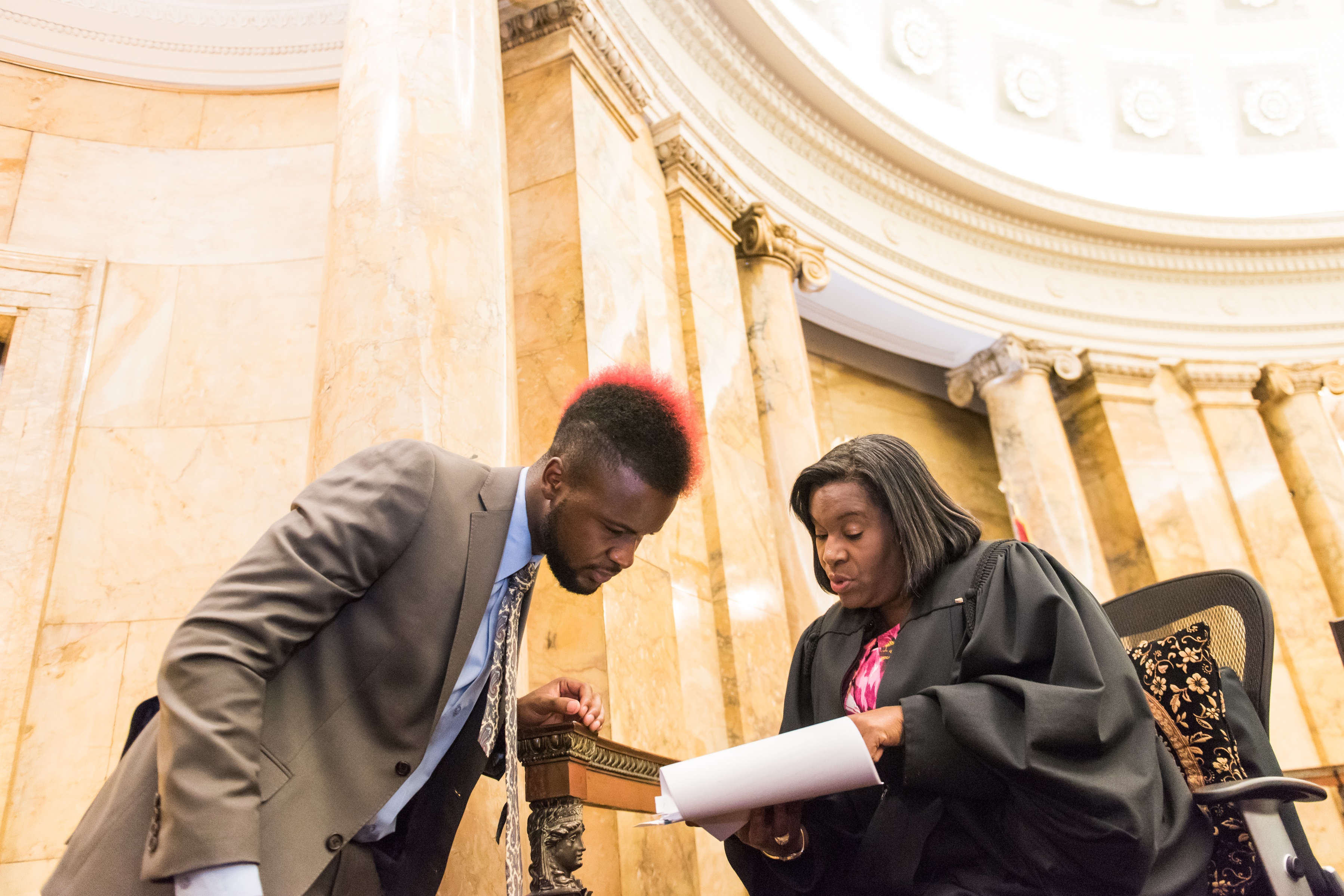
During the summer months, hundreds of UMBC students immersed themselves in high-value internships at companies, nonprofits, and government agencies. There, they learned about new fields, developed skills, and expanded their connections, taking advantage of UMBC’s strong network of emerging and established professionals who value both leadership and mentorship. Over the past 18 years, Wanda Keyes Heard ‘79, political science, an associate judge in the Baltimore City Circuit Court, has mentored 25 UMBC students as interns in her courtroom. Randall Ainsworth ‘20, philosophy, spent this summer working with Heard. Receiving permission to join her on the bench during court proceedings offered him a bird’s-eye view of the round courtroom in the Clarence M. Mitchell, Jr. Courthouse.
Randall Ainsworth, left, and Hon. Wanda Keyes Heard.
Through her experience supervising interns over the years, Heard says that UMBC students have consistently exceeded her expectations and have delivered high-quality work. “This is real life. I am not giving [interns] busy work, I am giving them meaningful work,” she says. One of Ainsworth’s primary assignments has been to make recommendations for non-hearing motions based on what defendants request, and Heard notes that she has proceeded with many of his suggested actions.
Ainsworth has particularly valued the chance to see the unique way Heard handles monthly “collateral days,” which have changed his perception of how the judicial system operates. Rather than only bringing people on probation into her courtroom after they have violated their probation, Heard began using collateral days to bring probationers in to check on their progress hitting the milestones required by their probation. Heard realized that some of the people who came into her courtroom were unable to read or lacked the education or skills needed to meet the job requirements of their probation. In response, she compiled a list of resources that people on probation can use to find jobs or advance their skills.
“It’s a very satisfying feeling to see someone turn their life around, and contribute to society,” she says. For his part, Ainsworth has tremendously valued the chance to see how such a firm commitment to supporting people’s growth, even in difficult circumstances, plays out in the courtroom.
Justyna Kurbiel ‘18, visual arts, spent the summer interning at Image Factory D.C. (IFDC), a full-service design and production agency in Silver Spring, Maryland. Kurbiel learned of IFDC through her work at UMBC’s Commonvision studio, and then connected with IFDC senior designer and animator Andy Hsu ‘06, visual arts, M.F.A. ‘10, imaging and visual arts, through a UMBC visual arts project class.
Justyna Kurbiel.
Kurbiel took advantage of the Career Center’s portfolio review services before reaching out to Hsu to submit her application materials. Her initiative and polished portfolio combined helped her land the IFDC’s first-ever student internship. She says that working alongside Hsu and two other UMBC alumni has helped her access valuable critiques of her work and has helped her learn about the design industry, workflow, and how to engage with clients.
“The project I’ve been working on has made an impact, which I think is the most important part of having a paid internship,” Kurbiel reflected. “I do feel like I am working here and that I’m part of the team because my contributions matter.”
For her mentors at IFDC, Kurbiel’s initiative, enthusiasm, and drive has made all the difference. “My advice to students is to try obtaining that internship and not be intimidated,” says Hsu. “You may get a few rejections but if you never try, you’ll never land one.”
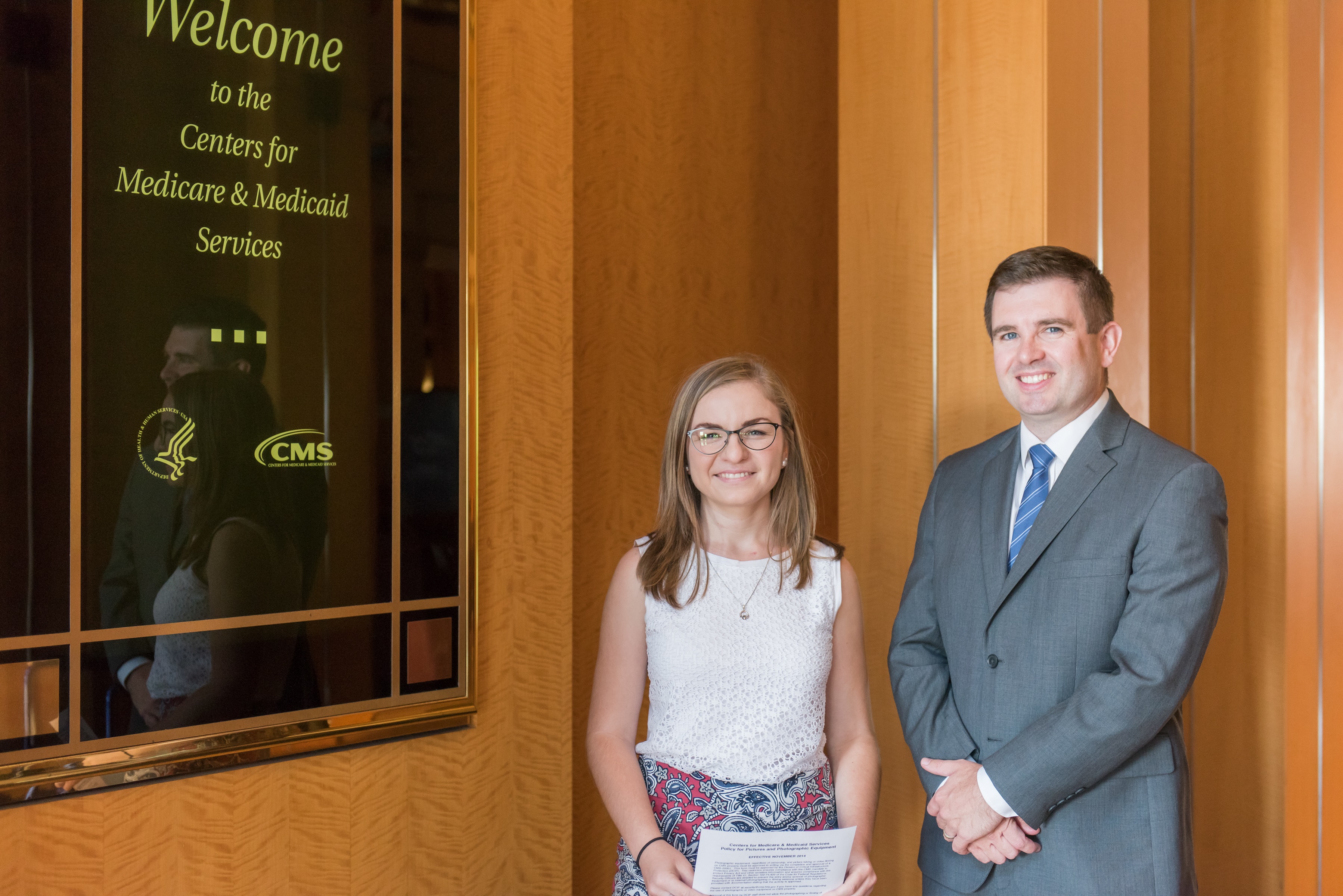
At the Centers for Medicare and Medicaid Services (CMS), Norina McAuliffe ‘18, mathematics, worked with Christopher Truffer ‘00, mathematics, a deputy group director on a team that reviewed Medicare and Medicaid spending and budgets from individual states. Truffer works to project Medicaid spending, budget and enrollment, and predicts the impact that proposed legislation could have on the program. He also reviews rates that states and private insurance companies negotiate and establish to ensure that they are actuarially sound, and comply with CMS and federal policies.
Norina McAuliffe, left, and Christopher Truffer.
McAuliffe was able to contribute substantively to this work thanks to rigorous math coursework at UMBC. It was also math and statistics faculty who connected her with the CMS internship in the first place, identifying it as a valuable opportunity for students interested in actuarial science. At CMS, “everyone wants you to do interesting work…They want you to learn something,” she says. “Everyone is really helpful. They care about your opinion.”
That’s all part of the mindset of CMS, Truffer explains, noting that it’s important to keep learning and remain open to fresh perspectives and approaches. Even in a midst of highly complex, technical project, says Truffer, “Be open to trying something new and different.”
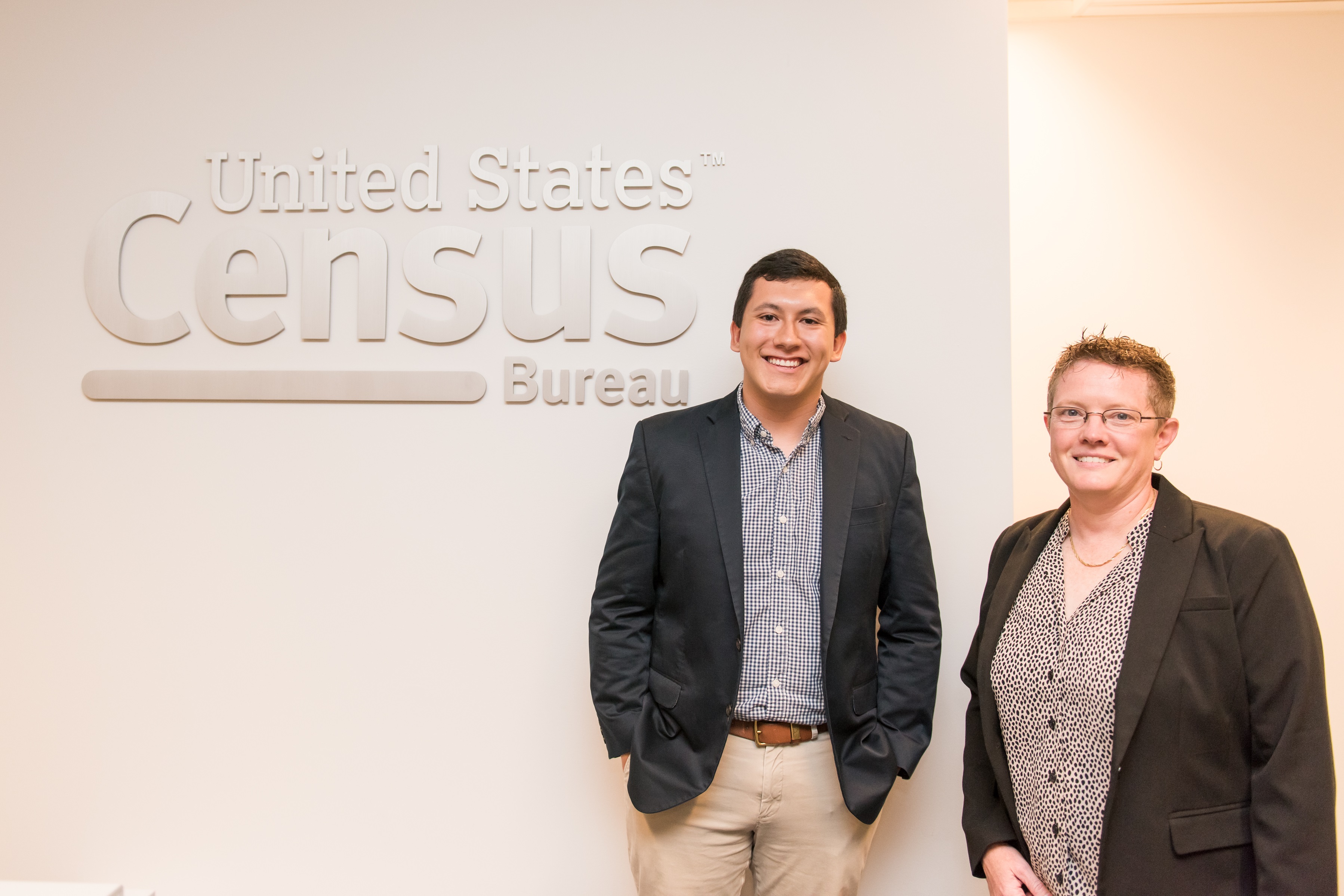
Like McAuliffe, Evan Avila ‘19, economics, also spent the summer interning at a federal agency, supervised by Angela Delano ‘95, mathematics, at the U.S. Census Bureau. He learned of the opportunity through the Hispanic Association of Colleges and Universities (HACU), a nonprofit organization that works with government agencies to increase diversity in the federal workforce, and, after applying, was selected for an internship by the head of the U.S. Census branch.
Evan Avila, left, and Angela Delano.
Avila worked with the Residential Construction office in the Economics Indicators division of the agency, which handles surveys and monthly reports about permits in cities across the country. Avila’s internship focused on big data—how to collect and process survey responses in the most efficient and precise way possible. Having more automated systems to collect, process, and display the data “would cut out the middleman,” he explains. Delano valued his novel perspective and fresh ideas and reflected, “He has taught me some shortcuts, so the knowledge flows both ways.”
Through HACU, Avila, a Sondheim Scholar, lived in Washington D.C. during his internship. He says that the experience of living in D.C. and working at the bureau—where he’s had the chance to connect with interns from across the country—emphasized for him the quality of his UMBC education. “I’ve met people who go to Ivy League schools, and I can say, unequivocally, that the education I have received at UMBC has been world-class, and been on par with the other people I have worked with at the Census Bureau,” he says. Cyber Scholar Priyanka Ranade ‘18, information systems, spent the summer at Northrop Grumman as a cyber strategy intern, under the mentorship of Lauren Mazzoli ‘15, computer science, M.S. ‘17, computer science. Mazzoli herself was mentored by Chris Valentino ‘02, information systems management, M.S. ‘06, information systems management, as an intern during her undergraduate days, and is now on his team at Northrop Grumman.
Lauren Mazzoli, left, and Priyanka Ranade.
Ranade heard about the internship opportunity through a Cyber Practicum course offered at UMBC, and embraced the chance to learn more about the varied facets of the cybersecurity field. “When people think about cybersecurity, they usually think about tools and cyber warfare, but a lot of times people fail to think about the business,” she says. As an intern, Ranade had a chance to build, review, and update business briefings, examine corporate policy and goals, and review white papers.
“[Lauren] always encourages me to connect with different people and take up different opportunities, so I have kind of built my own rotation,” she explains. “I do strategy, but I also get to work in the Cyber Operations Center, and I also get to work on different business projects and engineering-related tasks.” As her internship supervisor, Mazzoli values Ranade’s drive and curiosity. “Priyanka exemplifies a UMBC student—the fire in the belly, willing to work hard, never taking anything for granted,” says Mazzoli. “When she started on our team, I had no doubt in my mind that she wasn’t going to succeed. She went in there, she worked hard, she proved herself, and kept taking on more and more tasks…[Colleagues] recognized her as a natural leader. That is something that I keep seeing time and time again with UMBC students.” Zach Dzielinski ‘19, information systems, interned with Dan Hood ‘01, computer science, at ClearEdge IT after learning about the company at a UMBC career fair. He focused on setting up software used by in-house developers to perform various analytical tasks, and he particularly valued the chance to gain experience with industry-specific tools. “The amount of resources available at ClearEdge IT gives me the opportunity to work with a lot of things that I might not be able to [work with] somewhere else,” he said.
Zach Dzielinski, left, and Dan Hood.
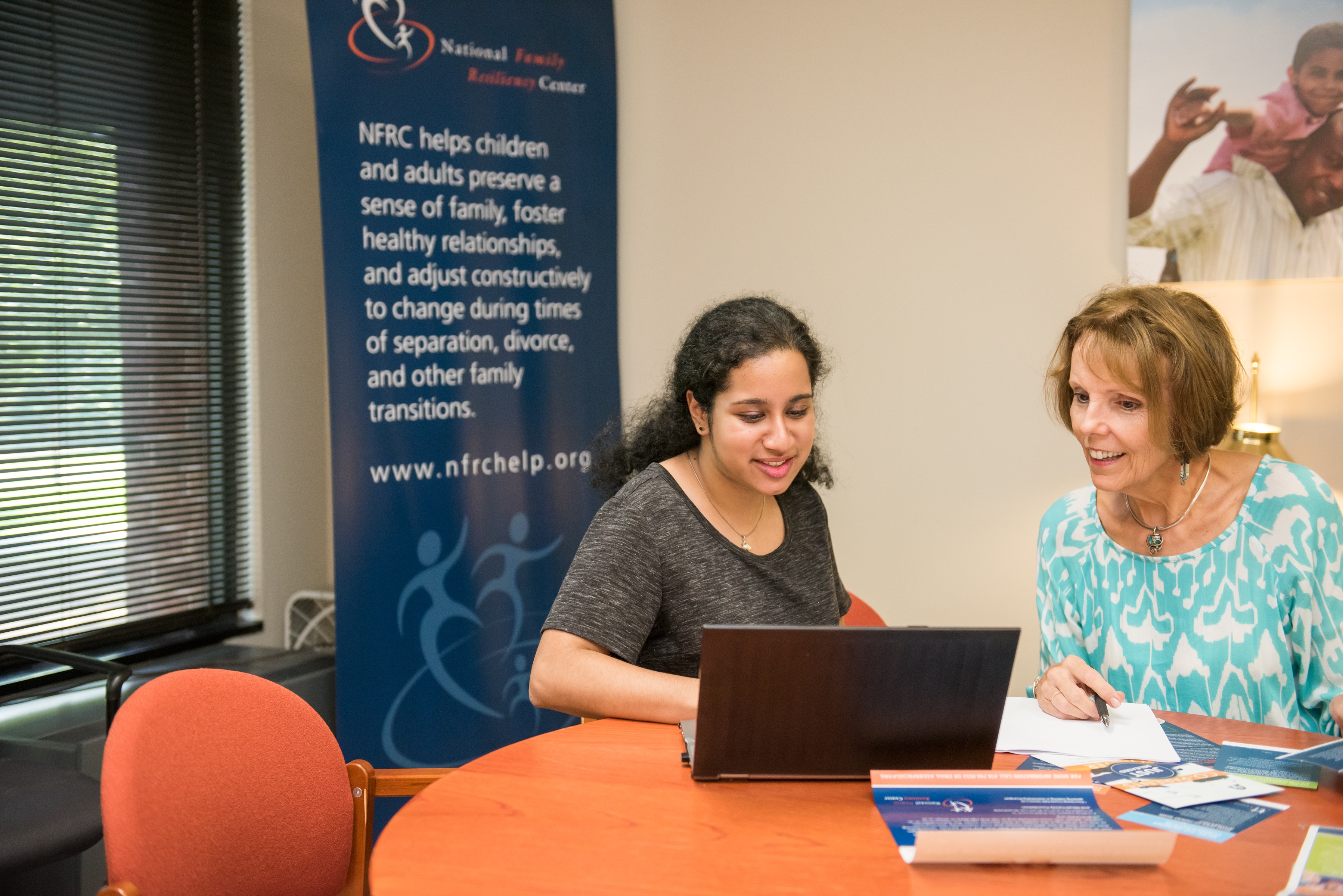
Hood has supervised several interns from UMBC during his time with the company. He focuses on getting a sense of “the particular skills they are coming in with, and where the gaps might be,” to make sure he provides an internship experience that will “leverage the strengths and close the weaknesses as much as possible.” Dzielinski is keen to continue using the new skills he has developed as he grows his expertise. Geeta Shanbhag ‘18, media and communications, initially connected with the National Family Resiliency Center in Columbia, Maryland, as a volunteer, supporting their mission to provide programs and counseling services to children and adults who are working through divorce and other changes within their families. As an intern, she gained an opportunity to boost the organization’s visibility through marketing, outreach, and social media. “A lot of times people know about NFRC through smaller networks, but those networks don’t quite intersect in a way that would be beneficial to getting the word out about the Center,” Shanbhag explains.
Geeta Shanbhag, left, and Kathy Helt.
Kathy Helt ‘87, health science and policy, associate director at the NFRC, supervised Shanbhag and says that she aims to give interns comprehensive overview of the Center and have them “experience as much hands-on work as possible.” By getting a broader sense of the supports the NFRC offers, Shanbhag was able create more effective communications to reflect the experiences of families at the Center in a relatable way.
CWIT Scholar Theodora Martin ‘18, chemical engineering, interned in the hydroprocessing unit of the W.R. Grace chemical plant in Baltimore, where she frequently collaborated with processing engineer Mike Dzingeleski ‘91, chemical engineering. The company makes silica gels and catalysts that are incorporated into toothpastes, plastic gallon containers, paints, medicine, and spices. In toothpastes, the silicas are the abrasive agents that clean teeth, and in spices and herbs, silicas prevent caking.
Theodora Martin, left, and Mike Dzingeleski.
Martin first connect with W.R. Grace through a tour of their Columbia, Maryland, headquarters, coordinated through UMBC’s Career Center. She chose to pursue an internship to gain industry experience that would complement her previous work in the classroom and academic labs, sharing, “I just finished my third year of chemical engineering, and my past experiences were research, research, research. I wanted to see what it would be like to work in an industry.”
One of rewards an internship can offer a student, Dzingeleski reflects, is a chance to get a sense of what type of job is a good match for their interests and strengths. “It’s just as important to find out what’s not a good fit as what is a good fit,” he says. For her part, Martin tremendously enjoyed the chance to see what she learned in class be put into action at the W.R. Grace plant. The experience is helping her reimagine her possible career paths in new ways, and with fresh enthusiasm.
For more information on how to prepare and apply for internships, and to connect with employers, visit the UMBC Career Center. Find photos of more student summer internship experiences—from Apple, Microsoft, and Cisco to law offices, chemistry labs, and construction sites—on Twitter with #UMBCintern.
Banner image: Randall Ainsworth, and Hon. Wanda Keyes Heard. All photos by Marlayna Demond ’11 for UMBC.
UMBC’s Gymama Slaughter will develop a bioreactor to extend the viability of lifesaving human organs as they await transplant through a major new grant from the U.S. Army Medical Research and Material Command. Funding for the project totals nearly $1.5 million for a period of three years. Slaughter, associate professor of computer science and electrical engineering, will collaborate closely with Warren Grayson and Gerald Brandacher, both associate professors at Johns Hopkins.
The team will create a bioreactor integrating in-line sensors, mechanical stimulator, and blood perfusion system to more accurately and continuously monitor organs as they are transported for transplantation. They will also “develop a system that closely mimic the organ’s natural environment,” explains Slaughter.
Currently, organ and tissue donors typically need to be in close proximity to transplant recipients due to limitations in organ transport. Some organs are only viable for about six hours, and they must be kept at very cool temperatures to remain viable, so the transport process can be a race against time. With technological improvements, Slaughter says, the viability of the organs could be increased to about 36 hours, greatly expanding the distance an organ could travel from donor to recipient, and the likelihood of a successful transplant.
Slaughter will focus on developing the metabolic sensors to continuously monitor the organ’s nitric oxide and oxygen levels. Grayson will create a mechanical stimulator to keep the organ moving during the transportation process, so the organ tissue does not become rigid and die. Brandacher will develop technology to continuously supply the organ or tissue with blood, to maintain viability, and will focus on the clinical aspects of the grant.
“This interdisciplinary research will enable us to tackle complex organ transplant viability problems to create the next big breakthrough platform technology for extending and monitoring the viability of organs to improve patient care,” says Slaughter. Together, the researchers hope their work will lead to a new era of successful human organ transplantation, saving the lives of wounded soldiers and others in need of transplants in hard-to-reach locations around the world.
Keith J Bowman has begun his tenure as the new dean of UMBC’s College of Engineering and Information Technology (COEIT). He joined UMBC on August 1, 2017, from San Francisco State University in California, where he served as dean of the College of Science and Engineering since 2015.
“Having lived in the San Francisco Bay area for a couple of years, I am looking forward to connecting with UMBC, Baltimore, and people on a completely different bay,” Bowman shared.
Bowman holds a Ph.D. in materials science from the University of Michigan, and B.S. and M.S. degrees in materials science from Case Western Reserve University. Prior to his role at SFSU, he held various positions at the Illinois Institute of Technology and Purdue University. At the Illinois Institute of Technology, he was the Duchossois Leadership Professor and chair of mechanical, materials, and aerospace engineering. In Purdue University’s School of Materials Engineering, he served as a professor and head of the school. He also held visiting professorships at the Technical University of Darmstadt in Germany and at the University of New South Wales in Australia.
Over the span of his career, Bowman has received nearly $20 million in research funding and awards. He is a fellow of the American Ceramic Society, a professional association dedicated to advancing the study, understanding, and use of ceramic and glass materials for the benefit of society.
As an education leader, Bowman is particularly interested in advancing diversity and inclusion across engineering disciplines. While at Purdue University, he was recognized for his commitment to teaching and mentoring, receiving the Charles B. Murphy Undergraduate Teaching Award and College of Engineering’s Mentoring Award.
“COEIT has embraced two compelling strategic directions—to advance research that benefits society and to elevate student success through innovative education experiences—and I’m very committed to both,” Bowman says. He explains, “My first year goal is to know and understand how we can best create synergy among all of our stakeholders and supporters to further propel us forward toward these goals.”
As dean, Bowman will work to advance COEIT’s mission by building on its strengths in research and teaching. He will support and continue to build a diverse faculty within the College, and will oversee their recruitment and development, promotion and tenure, and the appointment of department chairs and center directors. He will also identify innovative strategies to strengthen research activity and infrastructure, technology transfer, venture creation and other economic development initiatives.
Bowman’s appointment concludes a successful national search that began during the spring semester, led by Mark Marten, professor and chair of chemical, biochemical and environmental engineering. In welcoming Bowman as the new dean, Marten also recognizes previous dean Julie Ross, now engineering dean at Virginia Tech, for her significant contributions to the UMBC community over many years.
“Julie Ross and I both started in the CBEE department within about a year of each other, and developed a great friendship while establishing our respective careers. While I’m sad she is leaving UMBC, I’m excited for the impact I know she will have at Virginia Tech,” said Marten. “As the chair of the search committee, I am delighted we were able to bring in Keith Bowman as our new dean. He brings a wealth of experience and wisdom that I know will have a strong, positive impact both on the college and at UMBC.”
Banner image: Dean Keith J. Bowman. Photo by Marlayna Demond ’11 for UMBC.
Chuck Eggleton, professor and chair of mechanical engineering, has received a Fulbright award to teach two engineering courses and conduct research at the Universidad de los Andes in Bogotá, Colombia during the fall 2017 semester. Eggleton will work with Colombian Mechanical Engineers and biophysicists to research cellular adhesion, and will utilize the wind tunnel facility at the Universidad de los Andes for research using Particle Image Velocimetry. He also hopes to develop a study abroad program for UMBC students to travel to Colombia to expand their research in the future.
“This will be a life-changing experience for me and my family,” he says. “I am grateful to UMBC for making this opportunity possible.”
While in Colombia, Eggleton will teach global engineering to undergraduate students and fluid mechanics to graduate students. UMBC’s Marc Zupan, associate professor of mechanical engineering, has previously taught global engineering concurrently to students at UMBC and the Universidade do Porto in Portugal, giving the students a chance develop their cross-cultural communication skills and better understand how to work with international colleagues to solve engineering problems on a global scale. Eggleton will collaborate with Zupan to bring the course to South America for the first time, and teach the course on three different continents at the same time.
“This is an exciting time to be in Colombia,” Eggleton says. “I’m looking forward to working with my colleagues at UMBC and Universidad de los Andes to create global engineering opportunities for American and Colombian students.”
In addition to Eggleton’s award, UMBC announced in June that seven recent graduates will pursue Fulbright teaching and research fellowships around the world during the 2017-2018 year, from Germany to Malaysia.
Banner image: Chuck Eggleton. Photo by Marlayna Demond ’11 for UMBC.
Two faculty in UMBC’s College of Engineering and Information Technology (COEIT) have received special honors, at the national level, in recognition of their contributions as teachers and mentors.
The Association of Environmental Engineering and Science Professors (AEESP) Foundation recognized Lee Blaney, associate professor of chemical, biochemical and environmental engineering, with the AEESP Award for Outstanding Teaching in Environmental Engineering and Science during the organization’s annual AEESP conference, held June 22. Each year, the award is presented to one professor of environmental engineering or environmental science to recognize their particularly meaningful contributions as an educator in the field.
“I was absolutely thrilled to receive the 2017 AEESP Award for Outstanding Teaching in Environmental Engineering and Science. As this is the premier teaching award for environmental engineering, I was immensely honored and humbled to be chosen,” Blaney says. “In putting together the documentation for the award package, I was able to reflect not only on teaching traditional courses, but also mentoring students in my laboratory and working with students to complete humanitarian service projects.”
In addition to his teaching, international infrastructure development work, research on water contaminants of emerging concern, and mentoring students in the field and in the lab, Blaney is now focusing on growing collaboration opportunities in Baltimore. As part of his recent NSF CAREER Award, he is developing and launching a citizen science program in Baltimore City. The program will help community members become more connected with their environment, and increase their scientific and environmental literacy, while valuing their contributions to the study of local water safety.
“The common thread in all of these activities is the hardworking, positive, and diverse UMBC student body. I am grateful to those students that have taken my classes, worked in my laboratory, and dedicated their time and effort to ensuring that others have clean water and safe sanitation,” he says. “They are my motivation, and I look forward to continuing to work with them in the coming years.”
Blaney also presented during the annual AEESP meeting. Using data from the American Society of Engineering Education, he discussed the demographics of students and faculty in the field, and and the importance of workplace diversity in engineering. Diversity in STEM fields is an area that both Blaney and UMBC are working to address in numerous ways. He says that supporting students from underrepresented groups as they pursue undergraduate degrees in environmental engineering plays a crucial role in encouraging their future success in graduate school, as researchers, and as educators.
Marie desJardins, COEIT associate dean and professor of computer science and electrical engineering, has been named the recipient of the A. Richard Newton Education ABIE Award from the Anita Borg Institute. The award “recognizes educators for developing innovative teaching practices and approaches that attract girls and women to computing, engineering, and math in K-12 or undergraduate education.” The Anita Borg Institute will formally honor desJardins with the award during the upcoming Grace Hopper Celebration of Women in Computing, an annual conference that desJardins describes as “the heart of the movement to increase gender diversity in computing.”
Increasing gender diversity in computing has become both a professional focus and personal commitment for desJardins over the course of her career. “It’s part of a broader equity issue — for everyone to be able to envision themselves as creators of technology, and for the future of technology to be created by a diverse community of scientists and engineers,” she says.
This summer, desJardins shared her passion for encouraging girls and women to pursue careers in computing with nearly 150 elementary and middle school girls who attend the Mind, Body, Coding camp at UMBC. “Seeing these young girls whose lives could be transformed by greater access to computing is incredibly inspiring,” she says. “It’s a big part of what gets me energized every day to do the work that I do, from supporting diversity in K-12 computing education to mentoring junior female faculty who will train the next generation of computer scientists.”
Banner image: Lee Blaney, left, works with a student in his lab. Photo by Marlayna Demond ’11 for UMBC.
The latest special section on education in The Baltimore Sun highlights several UMBC programs that prepare students to succeed in careers in rapidly growing and already high-demand industries. The Sun highlights how the flexibility of these programs makes them particularly accessible and valuable to students, allowing students to tailor their pathway to match specific areas of interest.
Marc Olano, associate professor of computer science and electrical engineering and director of the game development track in computer science, described UMBC’s multiple pathways for learning game development. “We created two programs, the game development track in computer science and the animation and interactive media concentration in visual arts,” he explained. “In both cases, the students get a degree in the primary discipline, a B.S. in computer science or a B.A. or B.F.A. in visual arts,” he noted. The “track” system helps students focus their electives specifically on skills “that are used in the games industry.”
Jacqueline Wojcik ‘17, visual arts, who completed a concentration in animation and interactive media and a minor in computer science, shared her experience as a member of UMBC’s Game Developers Club. Collaborating with other students in the club helped her apply skills she learned in the classroom to other creative opportunities. For the coming year, Wojcik has received a Fulbright research grant to complete an innovative project in Oslo, Norway. “I will create digital models from two Viking Age ship burials and then place in interactive, game-like environments so that people can see how the artifacts would have used in the lives of their owners,” she told the Sun. “The project will explore the intersection of games, learning and archeological visualization.”
The education section also highlighted UMBC programs in health information technology and cybersecurity.
The health IT program prepares professionals with backgrounds in computer science, information systems, and health care for growing opportunities in work to prevent medical errors, improve care delivery, and address other major health care challenges through technology. “Not only does it provide students with technical information technology skills, but it also provides a pragmatic understanding of the health care system, which has its own terminology,” explains Krystl Haerian ‘99, biological science, an instructor in the program.
Laura Humber ‘16, health administration and policy, a current student in the health IT master’s program, says that she didn’t think she would end up pursuing an advanced degree in such a technical-sounding field, but she came to realize it could help her take the next steps in a research career focused on addressing opioid addiction. “People think when you say, ‘IT’ that you’re dealing with computers, but it’s making computers work for you and get you the information you need,” Humber explained.
Rick Forno, assistant director of UMBC’s Center for Cybersecurity and director of the graduate cybersecurity program, described in the Sun how UMBC’s cybersecurity graduate programs are also designed work across fields and to connect students with skills that will help them advance their careers. He noted that at UMBC, studying cybersecurity can include courses in economics, public policy, and biotechnology. “Pick a field or major, and cybersecurity applies to it,” he said. “It really is interdisciplinary.”
Students are encouraged to tailor the program to their interests, and gain experience through research and internship opportunities, so they can explore the full range of career opportunities available to them.“You can go to grad school and get a degree and get a job,” Forno reflected. “But we want you to be a professional. You can do more than just your degree. There’s depth to what we offer.”