All posts by: Dinah Winnick


John Rennie Short Presents Workshop at Michigan State University

Public policy professor John Rennie Short will present the talk “Restless Urban Landscape” at Michigan State University on Friday, March 29th, through MSU’s Global Urban Studies Program. The talk will be at 2:00 p.m. in MSU’s Eustace Cole Hall 207/208.

John Rennie Short is an expert on urban and environmental issues, globalization, political geography and the history of cartography. He is the author of over 30 books, founding co-editor of the journal Society and Space, and founding editor of both the Space, Place and Society book series and Critical Introduction to Urbanism book series. His most recent books include Korea: A Cartographic History (watch video) and the soon-to-be-released Stress Testing the USA: Public Policy and Reaction to Disaster Events.
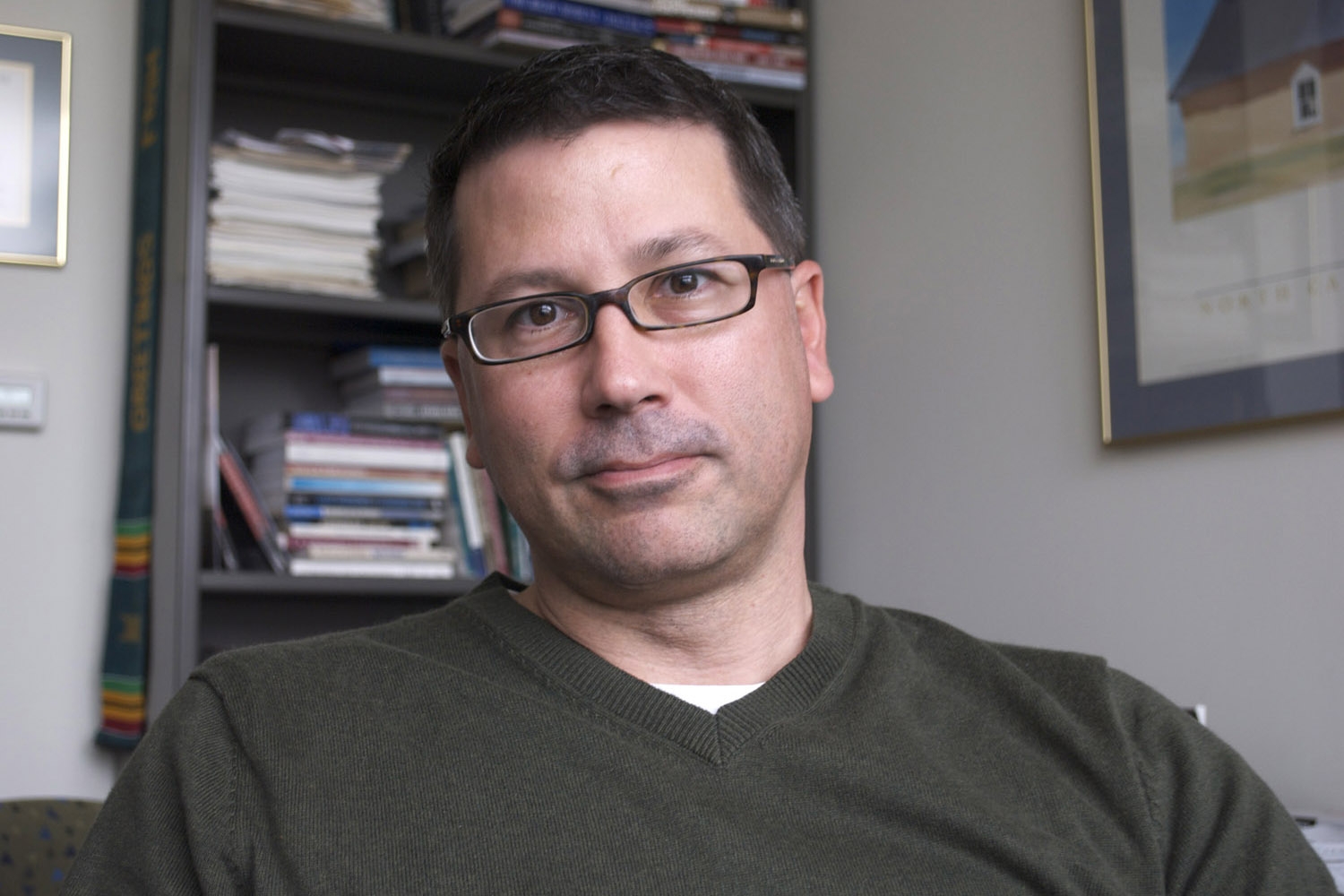
Thomas Schaller, Political Science, in the Baltimore Sun, on Sabato’s Crystal Ball and on CBS DC

Tom SchallerPolitical science professor Thomas F. Schaller’s latest Baltimore Sun column takes a personal approach to examining the selection of Jesuit Cardinal Jorge Bergoglio as pope, now known as Pope Francis. After reflecting on his own Catholic upbringing and how his religious identity has changed over time, Schaller highlights Pope Francis’ reputation for humility and what it might mean for the Catholic Church.

“It’s encouraging to have a humble, fresh face from the ‘new world’ heading the Catholic Church,” writes Schaller, continuing, “What’s unclear is whether Pope Francis’ background and temperament can actually reform the Vatican and the church, and guide the planet’s 1.2 billion Catholics toward a more promising future.”

In addition to the Sun column, this week Schaller also wrote a guest column for Sabato’s Crystal Ball on multiple-member districts (MMDs), or statewide at-large U.S. House districts — their history, their decline and their possible future.

Earlier this week, Schaller also contributed to the CBS-DC news story, “Maryland Becoming More Liberal.” “This is not the Democratic Party of William Donald Schaefer anymore,” he said, referring the former Maryland governor who endorsed George H.W. Bush. Schaller added, “It’s a blue state, but the blue hue is getting darker over time because of the demographics of the state.”

Judah Ronch, Erickson School, in the New York Times

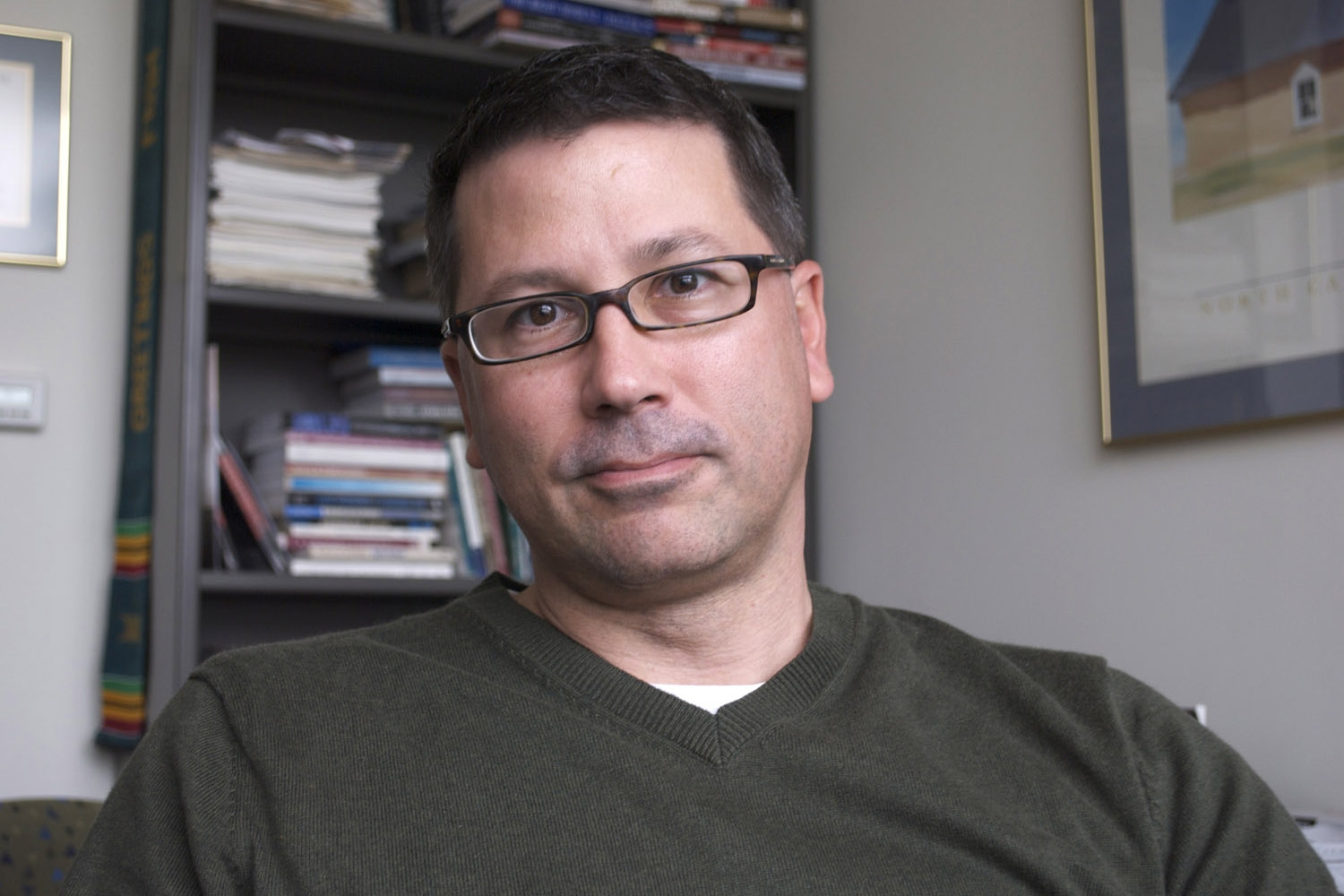
Judah RonchThe New York Times today examined the experiences of older students — in their 60s and beyond — at colleges and universities. The article cites many reasons for retirees taking college courses, including tuition waivers, social connections and an interest in lifelong learning.

“Novelty is something the brain thrives on,” said Erickson School Dean Judah L. Ronch, commenting on the physiological and psychological health benefits that older students experience. “It helps connections between nerve cells form, and that’s the basis of new knowledge and ability. Research now supports the idea that at any age these connections can continue to be made.”

In addition to supporting brain health, the classroom can also be a helpful for adults coping with the death of a spouse and struggling to socialize with friends who are intact couples. Ronch noted that in college fellow students are unlikely to ask, “Is your husband dead or alive?” Read the full article to learn more.

UMBC’s Hilltop Shares New Hospital Community Benefit Resource

The Hilltop Institute’s Hospital Community Benefit Program has just released a new online resource: the Community Benefit State Law Profiles.

The profiles are a compilation of hospital community benefit laws and regulations across the United States, analyzed in the context of the Affordable Care Act’s community benefit framework. They include data on tax exemptions that most states make available to nonprofit hospitals. Readers can access this information through a new interactive map, or see a summary table for side-by-side comparisons of different state policies.

A companion issue brief, “Hospital Community Benefits after the ACA: The State Law Landscape” (pdf), presents the profiles’ findings and begins the analysis of each state’s community benefit landscape and its significance in the context of national health reform.

The Hilltop Institute at UMBC is a non-partisan health research organization dedicated to improving the health and wellbeing of vulnerable populations. Hilltop’s Hospital Community Benefit Program is the central resource created specifically for state and local policymakers who seek to ensure that tax-exempt hospital community benefit activities are responsive to pressing community health needs. The program is funded through the Kresge Foundation and Robert Wood Johnson Foundation.

T.H. Gindling, Economics, and Marvin Mandell, Public Policy, in Governing Magazine

A new Governing magazine article examines a recent study by UMBC professors T.H. Gindling (economics) and Marvin Mandell (public policy) on the economic impact of Maryland’s Dream Act, which extended in-county/in-state tuition at local community colleges and public universities to undocumented immigrants who graduate from Maryland high schools and meet other requirements.

The article notes that 13 states have similar “tuition equity” laws in place and more than a dozen additional states are considering proposals for them. “As state lawmakers think about offering in-state tuition to undocumented immigrants,” suggests J.B. Wogan, “the UMBC study could offer a model for weighing long-term net benefits and costs.”

Summarizing Gindling and Mandell’s report, Wogan writes, “For government at all levels, the total impact would be a net gain of $39.6 million. For society as a whole, they estimate a total economic benefit of $63.6 million.”

See the website of UMBC’s Maryland Institute for Policy Analysis and Research (MIPAR) for the original working paper: “Private and Government Fiscal Costs and Benefits of the Maryland Dream Act.” Coverage of the study has previously appeared on NPR, Inside Higher Ed, The Chronicle of Higher Education, Baltimore Sun and other news outlets.

Thomas Schaller, Political Science, in the Baltimore Sun

Tom SchallerThomas F. Schaller’s new Baltimore Sun column critiques the concept of “liberal media bias.”

Schaller writes, “Yes: The opinion media generally skew liberal on social issues related to abortion, gay rights, religion and maybe — maybe — guns. But that’s about the extent of it. On issues of war and peace, taxes and spending and government regulation, the corporate-owned American media are frequently anything but liberal.”

Read the full column on the Baltimore Sun website.

Donald Norris, Public Policy, in Baltimore Magazine

“Martin O’Malley is on the short list of Democratic presidential contenders. Can he win?” So reads a headline in this month’s Baltimore Magazine, which delves into O’Malley’s political background and aspirations, personality and reputation. Donald Norris, professor and chair of public policy at UMBC, comments in the article on O’Malley’s experience.

Donald Norris UMBC“He has a lot going for him as a potential candidate,” says Norris. “He’s run a city government, a state government, and managed to balance the budget every year. He came into office [as governor] at the start of the recession, balanced the budget, and at the same time, has come close to closing the state’s structural deficit.”

As for O’Malley’s prospects, Norris responds to recent poll numbers indicating 58% of Marylanders don’t think O’Malley should run for president by saying that ultimately he believes the majority of Marylanders would support an O’Malley bid.

Laura Hussey, Political Science, in the Gazette

The Gazette reports that following Congressional reauthorization of the Violence Against Women Act (VAWA) Frederick’s Heartly House will be able to continue providing counseling services for victims of domestic abuse without worrying about major program cuts. Heartly House receives about $30,000 in federal funding under the law each year. House Republicans had resisted reauthorizing the legislation because it expands coverage to new groups.

Laura HusseyUMBC assistant professor of political science Laura Hussey told the Gazette that blocking VAWA put House Republicans in a tough position. Although some stated that they opposed VAWA because they want to curb federal spending and involvement in state issues, Hussey notes that their position played into the Democratic message that Republicans are waging a “war Against women.” Read the full article online.

Thomas Schaller, Political Science, in the Washington Post

A new Washington Post poll, published this weekend, explores Marylanders’ views on Governor Martin O’Malley in the context of a potential future run for president. O’Malley received mediocre marks in some areas of the poll, which the authors note could be due to his work on polarizing issues, including same-sex marriage.

Tom Schaller 1“He’s taken some very gutsy positions on some controversial issues,” said UMBC political science professor Thomas F. Schaller. “My suspicion is that’s poisoned the well and brought him down some.” read the full article at the Washington Post.

Roy T. Meyers, Political Science, in USA Today

A new USA Today article exploring the impacts of sequestration suggests federal budget cuts designed to save $85 billion in the short term might end up costing the government more money in the future through lower tax revenue, increased unemployment, contract terminations, and deferred maintenance on warships and airplanes.

Roy Meyers (UMBC)UMBC political science professor Roy T. Meyers, a former Congressional budget analyst, adds, “It makes it less likely that some contractors will want to supply services into the federal government, and in the future they’re going to charge a risk premium.”

Meyers further argues, “We’ve been paying this cost of sequester for a while already, just through wasted administrative time preparing for conditional cuts that generate absolutely no value for the American public.” Read the full article online at USA Today.

Richard Bissell, Emergency Health Services, in the Baltimore Sun

On March 27th, Dominick Tolli of the American Red Cross visited UMBC to discuss four revolutionary mobile apps his team created to better serve people impacted by natural disasters and other emergencies. When Superstorm Sandy hit, tens of thousands of people accessed the apps for information on storm conditions, available shelters, first aid and even gasoline pick-up sites.

RichardBissell (Red Cross-UMBC)The Baltimore Sun reported on the event, organized by Richard Bissell of the Emergency Health Services Dept., who serves on the Scientific Advisory Council of the American Red Cross. Bissell commented that the app developers “are helping move the Red Cross into the public in a way that has never been done before.”

In an emergency situation, standard forms of communications are often unavailable, making it difficult for public health groups to serve those most in need of help. Bissell says using mobile devices is “actually a pretty robust way of getting information to the people,” because cell phone signals generally remain intact during power outages.

Sunil Dasgupta, Political Science, on East Asia Forum

Sunil Dasgupta, director of UMBC’s political science program at the Universities at Shady Grove and non-resident Senior Fellow at the Brookings Institution, has published a new East Asia Forum commentary on India’s potential responses to civil war in Pakistan. Dasgupta writes:

In 1971, India intervened militarily on behalf of Bengalis in the civil war in East Pakistan, dividing the country in two and helping to create Bangladesh. In 2013, prospects of another civil war in Pakistan — this time one that pits radical Islamists against the secular but authoritarian military — have led once again to questions about what India would do. What would trigger Indian intervention, and who would India support?

Dasgupta explores several key factors and possible scenarios before concluding that, given present and foreseeable conditions, “India is likely to sit out a Pakistani civil war while covertly coordinating policy with the United States.” Read the full article to learn more.