All posts by: Dinah Winnick


Ann Christine Frankowski, Center for Aging Studies, in the Washington Blade

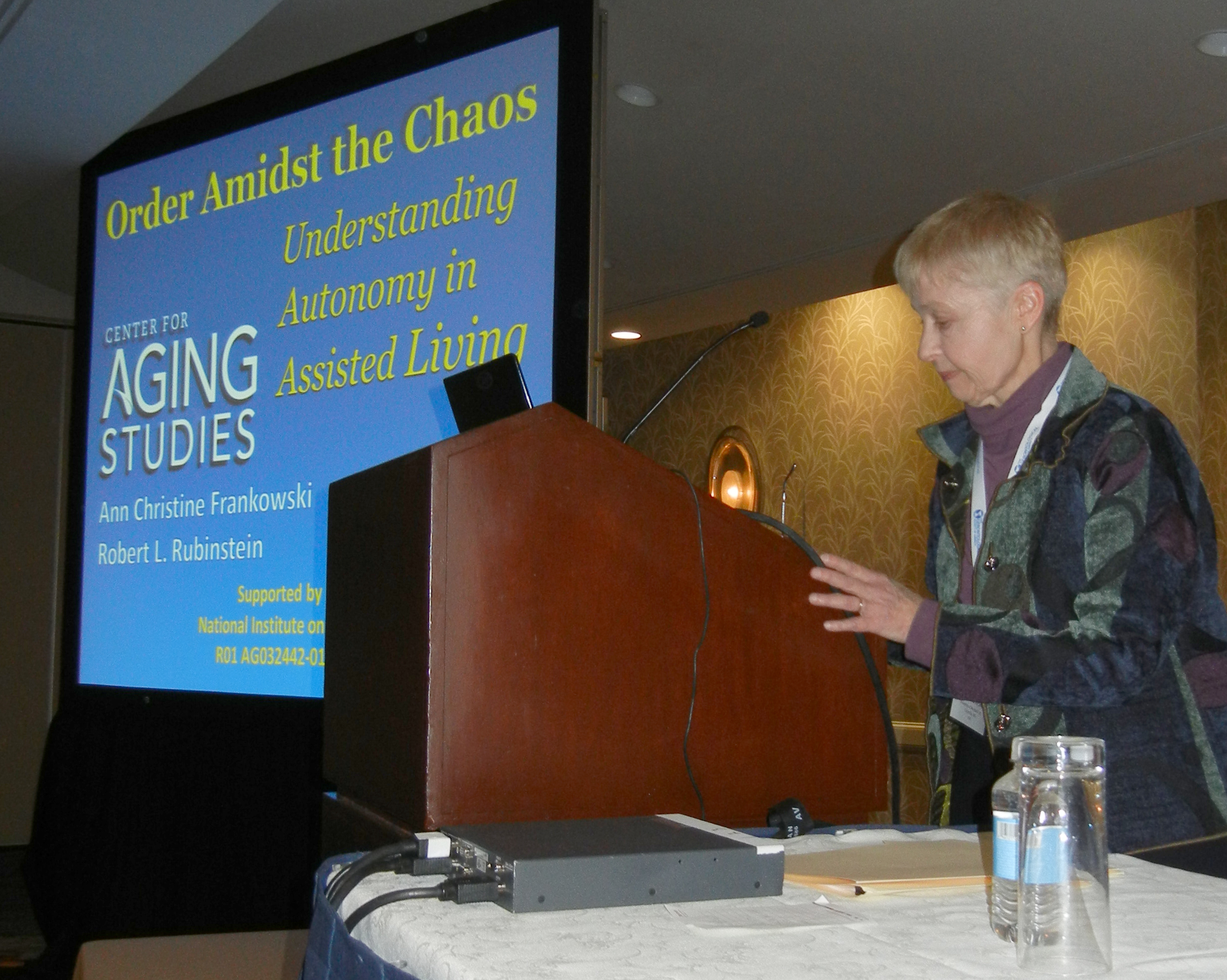
The Washington Blade today highlights a talk presented by Ann Christine Frankowski, associate research scientist and associate director of UMBC’s Center for Aging Studies, and Imani Woody, of Services and Advocacy for GLBT Elders (SAGE), on challenges facing older LGBT people.

Frankowski’s work examines autonomy, independence and freedom for older adults, with a focus on minorities, especially sexual minorities. The article notes:

An estimated 1.4 to 3.8 million LGBT people in the U.S. are over the age of 65 with the number expected to double by 2030. In pursuing her research, Frankowski found that “there is no discussion of sexuality, no talk about sex. People are treated asexually, and the question of sexual orientation is totally ignored.” In addition, [assisted living] staff members, with whom there is a high turnover rate, do not respect individual choices, and supervision of these staff members is inadequate. As a result, many LGBT older adults are forced to return to the closet to remain safe.

To learn more about this issue, read the full article in the Washington Blade.
Center for Aging Studies Receives NIA Grant for Autonomy Research

UMBC’s Center for Aging Studies has received a 17-month grant from the National Institute on Aging (NIA) to expand the research project “Autonomy in Assisted Living: A Cultural Analysis.” This grant extends a four-year ethnographic study of autonomy to include dementia care units affiliated with three of the sites in the parent grant. The Principal Investigators of this research are Professor Robert L. Rubinstein and Associate Research Scientist Ann Christine Frankowski. The research team includes ethnographer Amanda D. Peeples and GRA Colleen R. Bennett.

Ann Christine Frankowski, Autonomy symposium

Seth Messinger, Sociology and Anthropology, in the New York Times

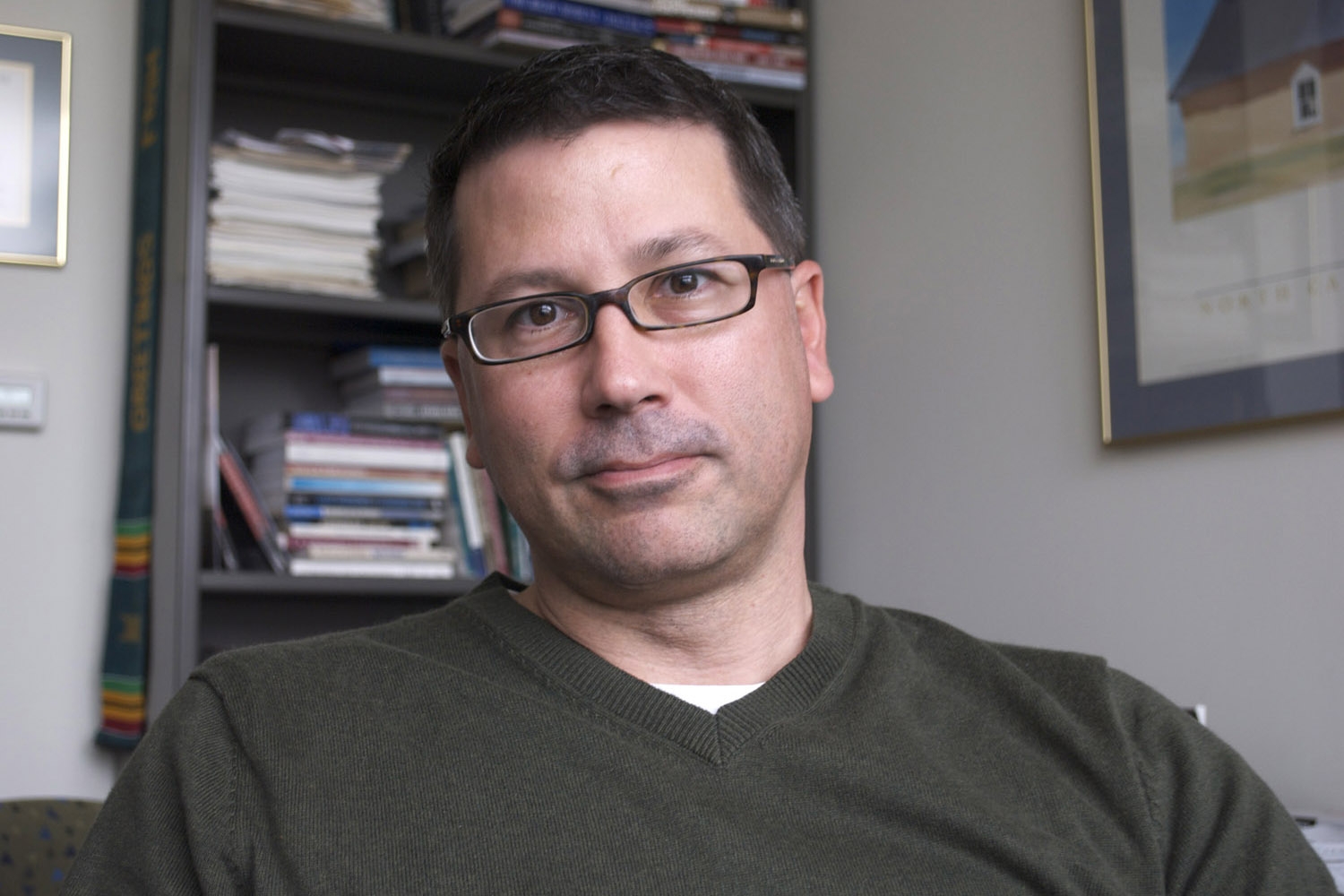
Seth MessingerSeth D. Messinger, associate professor in the Department of Sociology and Anthropology, commented in today’s New York Times on the long-term process of recovering from limb loss, in the wake of Monday’s Boston Marathon bombings.

Messinger told Times reporter James Dao that training for athletics gives amputees a clear way of measuring recovery incrementally. “Rehab for traumatic limb loss is not a short thing, and patients want to know what they have to do next,” he said. “A sports model offers people a set of stages. You’ll walk between parallel bars, then walk with canes, then learn to run.”

He also cautioned, however, that a sports model of recovery is not comprehensive and it can fail to address issues like PTSD and anxieties about future employment.

In addition to his work at UMBC, Messinger is the director of qualitative research for the Center for Rehabilitation Sciences Research at the Uniformed Services University of the Health Sciences.

Thomas Schaller, Political Science, in the Baltimore Sun

Tom SchallerIn today’s Baltimore Sun, political science professor Thomas F. Schaller writes,

Less than 24 hours ago, an apparent act of terrorism marred this year’s Boston Marathon. It’s too early to know many of the details about this tragic event. Late last night, officials were reporting three deaths and well over 100 injuries; soon we will have a clearer sense of how many were killed and wounded. […] But we don’t need to know every detail to draw a few sad, cautionary lessons about what happened Monday.

Among those lessons is recognizing that “the primary purpose of terrorism is not to kill victims but to terrorize survivors.”

In addition to its horrific impact on victims and their families, writes Schaller, “[t]errorism poisons if not destroys our public spaces and the physical and psychic experiences we share with one another while in such spaces. After incidents like Monday’s, it’s tempting to retreat and turn our public spaces into fortresses.” But to do so, he warns, would be “fatal to our collective identities.”

Roy Meyers, Political Science, on WPR and in the Gazette

Roy Meyers (UMBC)In today’s Gazette, Roy T. Meyers, professor of political science, explains his expectation that Gov. O’Malley’s final legislative session will focus on job creation — an issue that will continue to be relevant to any office O’Malley might pursue in the future. Meyers suggests that O’Malley’s decision to run for president in 2016 will likely depend on whether former Secretary of State Hillary Clinton chooses to run, but that in the meantime he should work on building his national visibility on key issues.

For now, the governor’s administration notes that in 2014 he is likely to focus on the economy. Referencing O’Malley’s investments in education, biotechnology and cybersecurity, Meyers says, “He’s adopted a more intelligent job-building strategy, rather than the smokestack-chasing policies of some states.” He continues, “That being said, there are limits to what a governor can do. The reality is it’s going to be a long slog [to recovery].”

Earlier this week, Meyers appeared on Wisconsin Public Radio, discussing the specifics of President Obama’s $3.8 trillion federal budget proposal with CQ Roll Call White House Correspondent Steven Dennis and host Kathleen Dunn.

The Hilltop Institute in the Baltimore Business Journal

Hilltop LogoThe Baltimore Business Journal reports that Maryland is pushing back the launch of its small business health exchange by at least three months to allow more time for leaders to prepare the complex IT system involved and to train brokers who will bring businesses to the exchange.

The story cites analysis from The Hilltop Institute at UMBC that approximately 8,500 people are expected to get insurance through the small business exchange in its first year. This compares with the 138,764 people to buy health insurance through the individual exchange by 2014. By 2020, Hilltop expects the small business exchange to grow to around 10,157 people and the individual exchange to grow to 273,583.

Thomas Schaller, Political Science, in the Baltimore Sun

Tom SchallerIn his latest Baltimore Sun column, UMBC political science professor Thomas F. Schaller explores how the 2010 and 2012 elections put Maryland on “a steady path toward leading a new vanguard of progressive policy and politics in the United States.”

Maryland voters last year approved both the Dream Act and marriage rights for same-sex couples. This year the Maryland General Assembly has prioritized raising the gas tax and repealing the death penalty. Although a plastic bag tax and bottle deposit bill failed, Schaller suggests both proposals are gaining support and might pass in the coming years.

“Already one of America’s bluest states,” Schaller writes, “Maryland seems to be getting bluer with each passing year.” Read the full column on the Baltimore Sun website.

Judah Ronch, Erickson School, in McKnight’s

Judah RonchIn a new guest column for McKnight’s Long-Term Care News, Erickson School Dean Judah Ronch explores how technology can enhance relationships between older adults with dementia and their caregivers, and also clarifies misconceptions about technology as panacea for compassionate caregiving. He writes,

Technology is not valuable as an (expensive) electronic attendant to deterioration. It is a vehicle that can help the person restore, replace, and compensate for the assault on identity of self that is dementia through pleasurable experiences with others (remote and on site), and by experiencing the pleasure found in successfully meeting challenges through problem solving – like all people do.

Technology can be a partner in caring for the whole person by enhancing relationships that go beyond physical care giving and enabling the whole person to be present with others and experience joy, rich sensory stimulation and success. This use of technology will take us beyond caring for the person’s memory and provide care for the whole person.

Read the full McKnight’s column to learn more.

Dennis Coates, Economics, in the Tampa Bay Times

“How much do the Tampa Bay Rays boost their local economy?” asks the Tampa Bay Times. In arguments for building a new stadium, St. Petersburg mayor Bill Foster estimates the team’s local economic impact at $100 million a year, but experts, including UMBC economics professor Dennis Coates, question the assumption that stadiums have a notable economic benefit to their home cities.

Coates explains that when a couple spends $100 for dinner and a movie, much of that money goes to waiters, ticket takers and other local workers and suppliers, who in turn spend their paychecks on rent and food, creating a positive ripple effect in the local economy. In contrast, argues Coates, “Spending that goes on inside a stadium tends to flow into the pockets of a relatively few, high-income individuals who live a large portion of the year outside the city,” so much of the money spent inside stadiums actually flows out of the cities where they are located.

Gerontology Honor Society Gives Back to Local Seniors

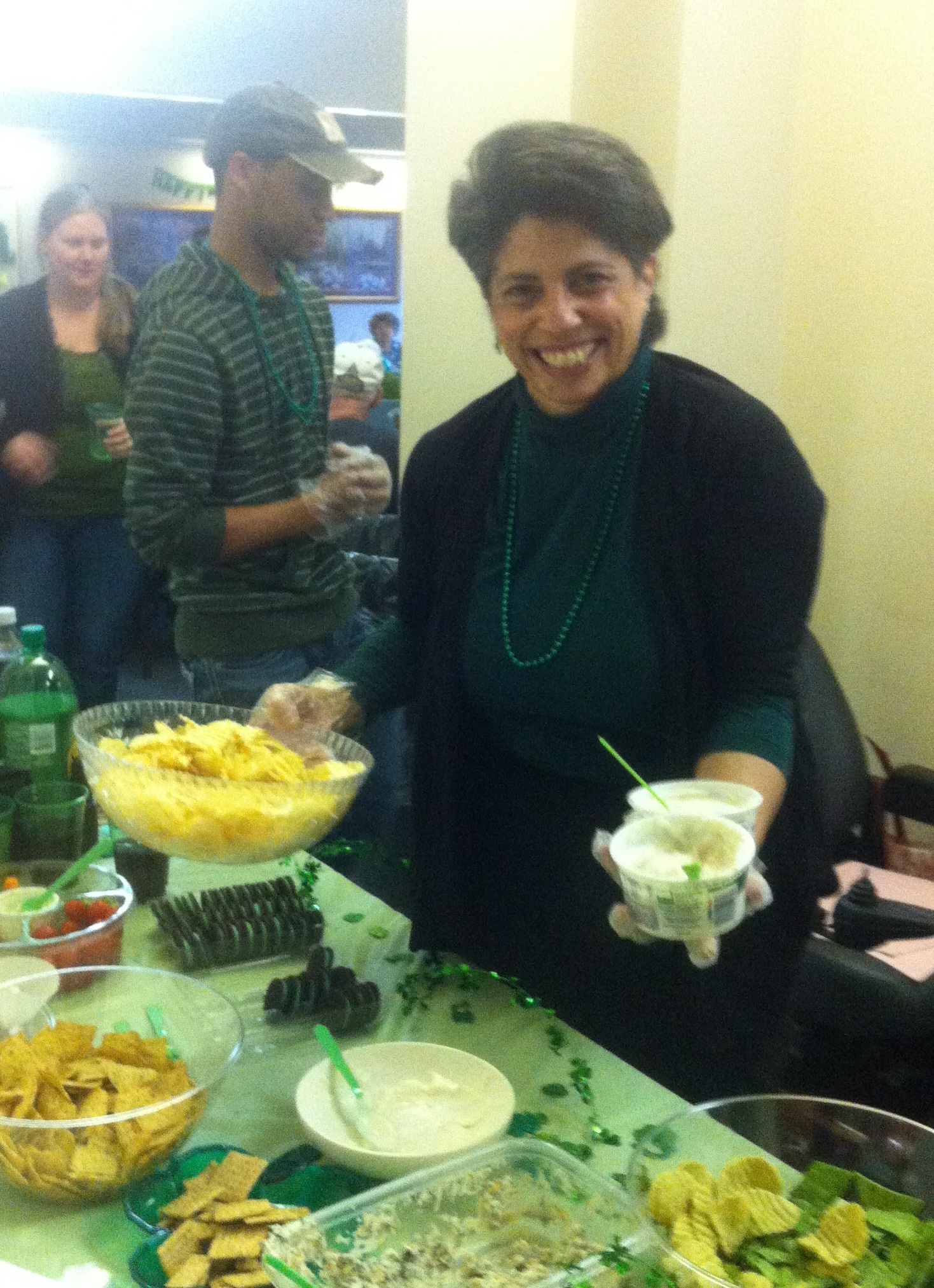
Delta Lambda chapter Secretary Alida Loinaz at the St. Patrick’s Day party.

Sigma Phi Omega (SPO) is the national academic honor society in gerontology, for professionals who work with or on behalf of older persons. The UMBC chapter of SPO, Delta Lambda, has been tremendously active this year with volunteer activities, nurturing an ongoing relationship with Catholic Charities of Maryland, specifically two independent senior living apartment buildings near UMBC: DePaul House and St. Joachim House.

Delta Lambda has been assisting Congregate Housing Services (CHS) with a project to interview residents about their personal journeys coming to live at DePaul and St. Joachim, as well as their experiences utilizing the CHS program. These stories help to personalize the CHS program, which facilitates continued program funding at the local and state levels. Member Jennifer Howard-Doering has also led weekly computer classes for residents, helping the seniors learn to use email and other online tools.

Delta Lambda SPO_Kathy Humber Jennifer Howard-Doering

Finally, Delta Lambda hosted a festive St. Patrick’s Day party for residents in mid-March (see photos) and is planning an annual Senior Prom and summer barbeque.

To learn more about this work, contact Delta Lambda at dlspoumbc@googlegroups.com. Thanks to this tremendous group of gerontology students for giving back to our senior community!

Donald Norris, Public Policy, in the Baltimore Sun

Former Baltimore Mayor Sheila Dixon will kick off the Associated Black Charities’ speaker series next month, sparking speculation of a possible return to politics. “This is the year I’m going to decide,” Dixon told the Baltimore Sun, of her desire to run for office again after having completed probation following her 2009 embezzlement conviction. “I’m not going to hide the fact that I enjoyed what I was doing during my 27 years in public office.”

Donald NorrisDonald F. Norris, professor and chair of public policy at UMBC, told the Sun that the substance of Dixon’s talk might signal, more definitively, her interest in returning to elective politics. “I would be listening for some indication that she is repentant for what happened,” Norris said, “and recognition that she’d made some mistakes.”

Although Dixon still has some supporters in Baltimore, Norris noted that if the city’s voters were to return Dixon to public office, “It would say to the outside world that a corrupt elected official can spend a little time away and get re-elected.” He concluded, “That’s not an image Baltimore wants, or that any city needs.”