All posts by: Catalina Sofia Dansberger Duque


PIEoneer Awards recognize UMBC for career initiatives supporting international students

UMBC’s work to support international students in their career development has earned the university a place in the global spotlight. Professionals in International Education (PIE) has selected UMBC as a finalist for a 2018 PIEoneer Award, with UMBC being the only U.S. university honored in the Student Support category. The selection recognizes UMBC’s work to cultivate a supportive community for international students and to help them pursue careers that utilize and value their unique language, academic, and professional skills.

PIE is specifically recognizing a series of programs designed by UMBC International Education Services (IES) in collaboration with the UMBC Career Center. Responding to the needs of international students and area employers, these initiatives help international students be as competitive as possible in entering the workforce after graduation.

“This recognition is incredibly important for UMBC because it acknowledges on a global stage our commitment to meeting the real and unique needs of our international students,” says Michelle Massey, associate director, International Student and Scholar Services. “We listen to our students, we develop solutions together as a community, and we implement them to help these students have the best possible experience at UMBC, and as alumni.”

A sign reflecting UMBC’s participation in the national #YouAreWelcomeHere campaign.

These opportunities help international students manage a range of challenges that they may encounter on their path to career success in the United States through a tiered process. International students learn about the Career Center’s supportive resources in their earliest days on campus, during orientation. As they progress in their degree programs, the Career Center guides them through the process of identifying and exploring specific career goals and skill sets that match their talents and aspirations within the sphere of the U.S. job market, particularly through internship experiences.

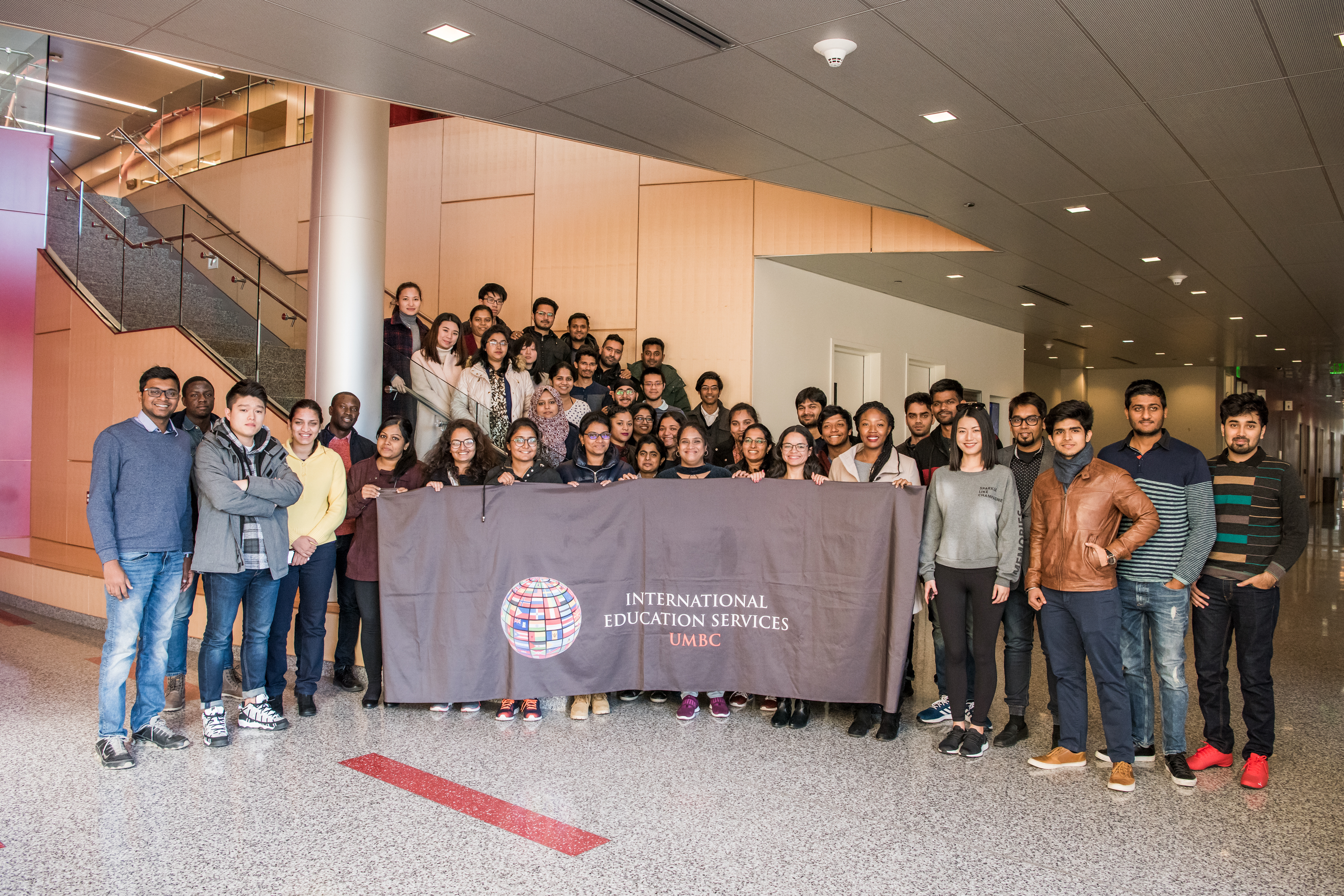
Spring 2018 UMBC International Student Orientation.

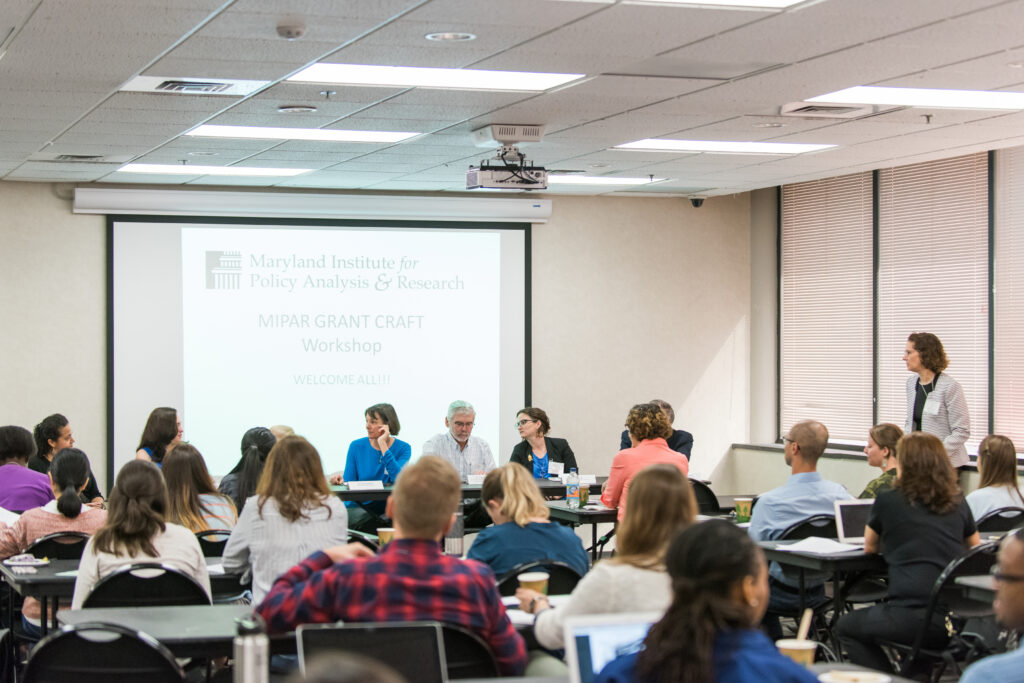
IES and the Career Center co-organize an annual International Student Career Conference focused on the unique needs of international students in their job search process in the United States. Now in its fourth year, the conference is an opportunity for students to network with alumni, industry experts, and local employers, and get expert legal information from an immigration attorney.

IES has also partnered with the Career Center and UMBC’s Mosaic Center to offer the workshop “International Identities in the Workplace.” International students who have already completed internships in the U.S. share their experiences with others through the workshop. The event also explores the interview process, business etiquette in American culture, and policy issues like protections against workplace discrimination.

2018 UMBC Career Fair

Networking opportunities, career fairs, internships, and conferences help connect students directly with local start-ups and global companies such as Google, McCormick & Company, and Amazon. “Obtaining internship and work experience is vital for student career success,” says Christine Routzahn, director of the Career Center. “By working with partners such as IES, we ensure our international students have access to these opportunities and are prepared to advocate for themselves and thrive in the workplace.”

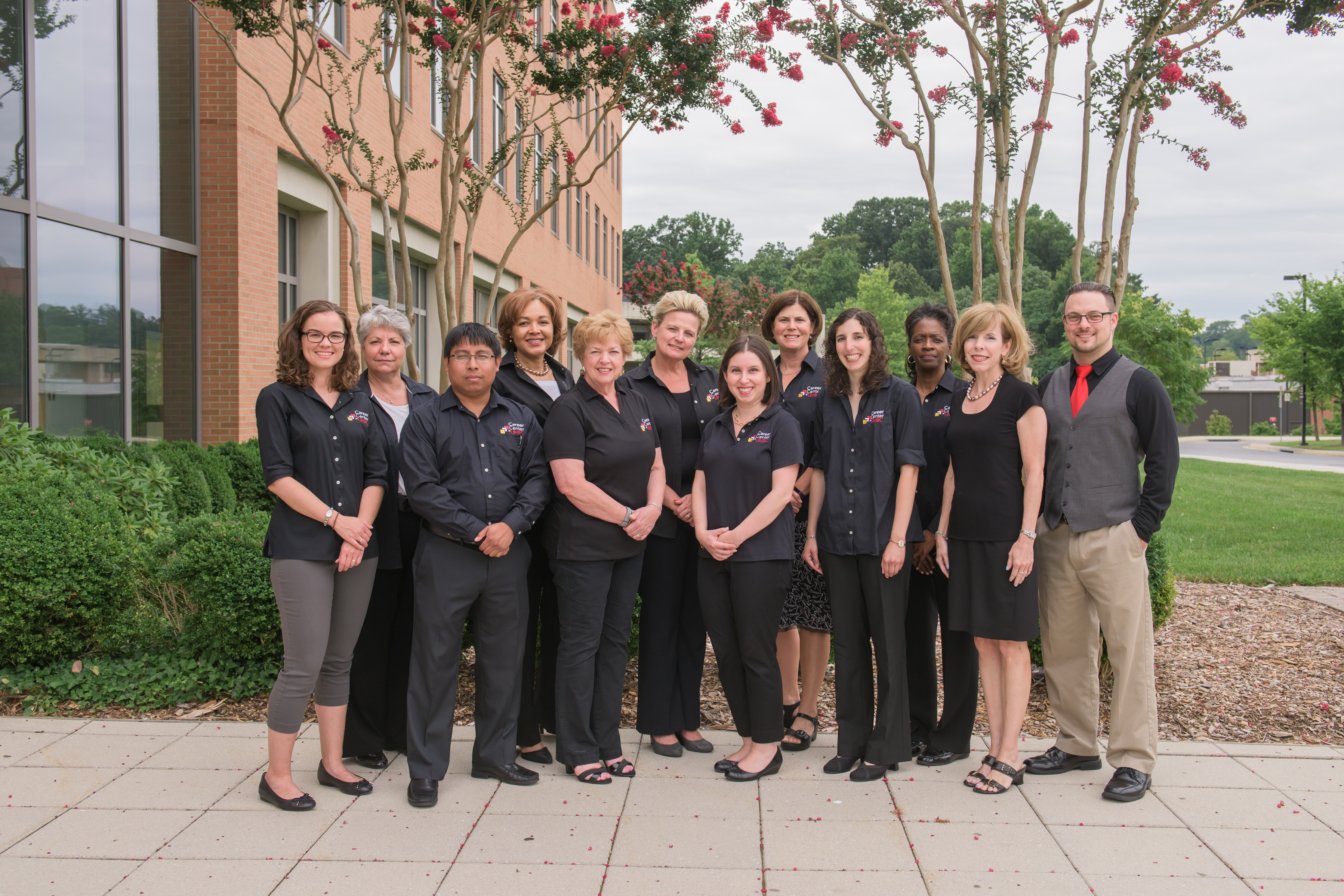
The UMBC Career Center team.

The impact of these programs has been profound. After first connecting with the Career Center during orientation, 93 percent of international students report that they continue to access Career Center services during their time at UMBC. Over one hundred international students attend the International Student Career Conference each year. International graduate students participating in these programs overwhelmingly report finding jobs that align with their career goals. Employers participating in the summer internship initiative report very strong interest in working further with students, extending job offers to those who have already participated or offering internships to future students.

“The value of this campus-wide partnership is immeasurable for international students working to overcome significant obstacles to meet their goals in the U.S.,” shares Massey. “I am so proud at how quick the UMBC community is to rise to the occasion of learning about these challenges and supporting this group of students to reach their potential together.”

Maseey will attend The PIEoneer Awards ceremony on behalf of UMBC International Education Services, in London on September 7, 2018.

Banner image: International flags in the UMBC Commons, looking out on a crowd of students gathered for a campus event. All images by Marlayna Demond ‘11 for UMBC.

National “Humanities for All” initiative features innovative work by UMBC scholars

How are scholars across the country creating humanities-centered solutions for our communities’ most pressing challenges? The National Humanities Alliance (NHA) is working to answer this question through Humanities for All, a new website connecting researchers, students, and community members with a database of over 1,400 public humanities projects across all fifty states, Washington, D.C., and Puerto Rico. Over fifteen UMBC projects are included in the site, half of them from UMBC’s Baltimore Traces initiative. Jessica Berman, director of the UMBC Dresher Center for the Humanities, is proud of the work the center supports, and how it is featured through Humanities for All. “Word is getting out that UMBC is a powerhouse school for humanities teaching and research,” she says. Our faculty are showing how exciting publicly-engaged humanities work can be, and how crucial the humanities are to the way we live and imagine our future now.” Daniel Fisher, project director at the NHA, notes that the goal was not to define “publicly-engaged humanities,” but to provide an active resource. “First, we want to encourage humanities faculty members and students to engage with the public in their research, teaching, and programming. Second, we want to help humanities advocates tell a broader story about the value of the humanities in higher education and in communities across the U.S.,” shares Fisher. The site is also intended to grow and change over time. “We have built into the website a submissions portal so the database will always be reflective of the evolution of the field as it engages diverse audiences in the creation of knowledge and solutions,” Fisher explains. “UMBC’s humanities projects are reflective of this. We want to provide support for the kind of work Baltimore Traces produces.” Bill Shewbridge, professor of practice in media and communication studies, has multiple collaborative projects represented under the broader Baltimore Traces initiative. He appreciates being included in Humanities for All, with its potential to connect his work to new audiences. “A site like Humanities for All is an opportunity to have these stories heard beyond our immediate community,” says Shewbridge. “Seeing Baltimore Traces included in this showcase of publicly-engaged humanities work reinforces that these stories resonate beyond Baltimore and should be a part of a wider conversation.” Through Humanities for All, the NHA has also sought to show how these kinds of projects are advancing teaching and learning at universities and enriching communities through partnership. “These projects highlight what is possible in the humanities and focus not on the transfer of knowledge but the creation of an experience and the strengthening of communities,” says Fisher. “Projects like Baltimore Traces are creating innovative and practical learning experiences for undergraduates and are creating forums for dialogue to talk about what is happening in the community.” Several projects by Nicole King, associate professor and chair of American studies, are featured on the NHA site, particularly under the Baltimore Traces feature. King’s work is representative of the variety of multimedia projects included in the database, incorporating not just written materials but also apps, podcasts, websites, and photography, to effectively facilitate and enhance conversations about identity, history, self-expression, culture, political agency, and power. “Public-engaged humanities are essential to UMBC’s vision, specifically its commitment to civic engagement and social justice,” she says. “It is essential for our students to show up and to listen to the neighborhoods and communities that surround the university in ways that are honest, respectful, and ethical.” Shewbridge and King’s work includes collaborations with several essential partners, including Kate Drabinski, senior lecturer in gender and women’s studies; Dustin Roddy ’14, manager of New Media Studio; Steve Bradley, associate professor of visual arts; Michelle Stefano, Library of Congress folklife specialist; Stefanie Mavronis ’12, political science and media and communication studies; and Marc Steiner, radio host. The Humanities for All database also includes “Revolution of the Eye: Modern Art and the Birth of American Television” and “For All the World to See: Visual Culture and the Struggle for Civil Rights,” led by Maurice Berger, research professor of visual arts. Additionally, it features Preserve the Baltimore Uprising, led by Denise Meringolo, associate professor of history, and Joe Tropea ‘06, history, M.A. ‘08, historical studies, and the Breaking Ground civic engagement movement initiated by David Hoffman and collaborators. Banner image: Discover Baltimore group tour of historic Lexington Market, UMBC summer session 2017, by Marlayna Demond ’11 for UMBC.

UMBC education policy expert Jane Arnold Lincove helps launch national center for research on school choice

UMBC’s Jane Arnold Lincove, associate professor of public policy, is collaborating with colleagues across the U.S. to launch the National Center for Research on Education Access and Choice (REACH) through a $10 million dollar grant from the U.S. Department of Education’s Institute of Education Sciences.

“The goal is to gather top researchers across the United States who are studying different aspects of schools of choice,” says Lincove. “It allows us to share information and research questions to better understand the impact of how different school districts implement school choice.”

The new center will be based at Tulane University. Additional partners include faculty from Michigan State University, Syracuse University, Johns Hopkins University, and ten other higher education institutions across the United States.

Lincove’s research on education policy includes a focus on the charter school system in New Orleans post-Katrina. In addition to her academic publications in journals like Education Finance and Policy, Lincove has also written for policymakers and the public, through groups like the Brookings Institution and the Education Research Alliance for New Orleans.

Through REACH, Lincove will do further research to identify whether schools systems that utilize school choice deliver on the promise of improving educational equity and offering greater access to high-quality education for students, given the variability of school enrollment practices and children’s transportation and housing challenges. Her work will include research in Baltimore’s public school system, which enables schools of choice, with the support of UMBC School of Public Policy graduate students. This work will be in collaboration with the Baltimore Education Research Consortium led by Baltimore City Public Schools, Morgan State University, and Johns Hopkins University.

Lincove explains that REACH will enable scholars in this field, who are based in cities across the United States, “to share information and research questions to better understand the impact of how different school districts implement school choice.” She points out that this is especially important in districts where leaders have replaced traditional education systems with school choice in hopes of better meeting the needs of vulnerable or underserved students, such as low-income students, students from racial or ethnic minority groups, English language learners, and special education students.

Lincove is highly aware of the complexities this work involves, but she looks forward to shedding light on an issue of such public importance. “Researching school choice is challenging because there are so many stakeholders that are for and against it. But in the end,” she says, “looking at research across the United States allows us to identify what is working and help inform policy to help school systems create equitable, successful, and safe learning environments.”

Learn more about Jane Lincove and REACH.

Banner image: Jane Lincove, public policy. Photo by Catalina Sofia Dansberger Duque for UMBC.

UMBC alumnus Chris Haffer becomes EEOC’s first chief data officer

Building on 25 years of experience in public policy research, UMBC alumnus Chris Haffer has started a new leadership role with the key federal agency that enforces civil rights laws against discrimination in the workplace. Haffer, M.P.S. ‘91, public policy, and Ph.D. ‘93, public policy, is now the first chief data officer and director of the Office of Research, Information and Planning for the Equal Employment Opportunity Commission.

“In this role, I have an opportunity to help foster innovation and creativity to proactively identify how we share data safely with the public and ensure the greatest impact and reach for the community,” says Haffer.

Haffer began his first year of college with a love of foreign languages, and he expected that would be his career. That was until a social sciences requirement introduced him to sociology.

The course sparked in him an interest in applied research, leading to a summer job as a research assistant at the U.S. Department of Veteran Affairs. He continued on to UMBC’s master’s and Ph.D. public policy programs, and a career spanning over two decades at the Center for Medicaid and Medicare Services (CMMS).

For Haffer, UMBC offered an important bridge between public policy theory and practice. Professors emeriti Marvin Mandell and Donald F. Norris, public policy, shared their vast applied research experience through both their teaching and also connecting Haffer with opportunities in the Maryland Institute for Policy Analysis and Research. Both mentors also guided Haffer to the highly competitive Presidential Fellows Program that began his 25-year service at CMSS.

“I remember Chris as a smart, talented and driven graduate student who was passionate about public service,” says Norris. “I know him now as a friend and it has been no surprise to me that he has achieved so much and risen so highly in governmental service.”

Through Norris and Mandell’s examples, Haffer says, he saw how public policy could make a difference in people’s lives. “I learned that with applied public policy research I could turn research into action in a focused way to help programs and agencies better meet the needs of the community,” he shares.

His advice for anyone wanting to work with big data and in the federal service is to move beyond misconceptions. Haffer explains that big data is not only about analysis, nor is federal service solitary work.

“We need more creative minds to help tell a more engaging and accessible data story,” says Haffer. He encourages graphic designers, media and communications majors, and marketing graduates to consider federal service careers in data-focused areas.

The most rewarding aspect of big data and federal service for Haffer has been learning how to best use, disseminate, and implement data with the collaboration of interdisciplinary teams.

“When you are trying to solve a problem, you may be able to do it faster yourself,” reflects Haffer, “but the product a team creates is better because it represents the intersection of different views. It will be of more value to your customers, who will be as diverse as the team that created the product.”

Banner Image: Chris Haffer at the EEOC.  All photos by Marlayna Demond ’11 for UMBC.

UMBC’s Evan Avila wins iOme Challenge with ideas to help millennials save for retirement

Evan Avila ‘20, economics and political science, is a millennial with retirement on his mind, and his fresh ideas are now capturing the interest of policymakers. Avila recently won first place in the national 2018 iOme Challenge, which asked students across the United States to innovate policies to help millennials save for retirement. Avila presented his winning paper, Rethinking Millennial Retirement: Policy Recommendations for a Gig Economy, to policymakers on June 20 at a symposium on Capitol Hill.

This year’s iOme (“I Owe Me”) Challenge asked participants to imagine they were invited to join a bipartisan task force to address a growing retirement crisis in the U.S. What policies might they propose on issues relating to gig economy workers or using social media to increase awareness about saving for retirement?

Avila had dealt with these topics before, in the classroom and through volunteering with tax assistance and financial counseling. Avila has served as a certified volunteer in the federal Volunteers Income Tax Assistance (VITA) program at UMBC, which provides tax return filing support for eligible people no cost to them. He’s also offered financial literacy clinics for fellow college students and was familiar with their common questions and concerns about how to make smart financial decisions.

Avila applied this knowledge and experience to creating an iOme Challenge entry that contest judge David Wegge, interim dean of Schneider School of Business and Economics at St. Norbert College, said, “demonstrated great policy depth, a keen understanding of the challenges millennials face, and creativity in devising solutions that are achievable for this age cohort.”


Cindy Hounsell is president of the Women’s Institute for a Secure Retirement (WISER), which sponsored the competition. She shared, “We are impressed by Mr. Avila’s response to the more complicated challenges and deterrents millennials face in preparing for their future retirement.”

UMBC economics professor Doug Lamdin mentored Avila as he developed his three-part policy proposal and transformed his essay into a video. He shares that typically students enter the contest as teams, but he wasn’t surprised that even competing as a team of one Avila emerged the winner.

“That Evan won the competition is not exactly a surprise. He had a very strong proposal,” said Lamdin. “Evan balanced the demands of the competition, usually placed on a team, exceptionally well in addition to a full class schedule, working as a teaching assistant, a research assistant, presenting at the Undergraduate Research and Creative Activities Day (URCAD), volunteering at the Esperanza Center teaching English, and his activities as a Sondheim Scholar.”

Avila, who recently completed his fourth semester with a 4.0, is currently serving as an intern in the Office of Comptroller of the Currency in Washington, D.C. This follows an internship in 2017 at the U.S. Census Bureau, where he worked in the Economics Indicators division, focusing on how to efficiently process massive quantities of survey data in a precise way.

Looking ahead, Avila plans to pursue a career in tax or administrative law. “I came from a Peruvian and Mexican household. I saw how hard my parents worked and the challenges they faced to have financial security,” says Avila. “In college, I see my peers trying to make sense of personal budgets, savings, loans, credit, and retirement. It is very rewarding to help people be financially literate and understand the laws and policies that affect their wallet.”

Banner image: Evan Avila with his economics internship supervisor in 2017. Photo by Marlayna Demond ’11 for UMBC.

When did humans start to transform Earth? UMBC’s Erle Ellis introduces the Anthropocene.

Humans have emerged as a force of nature on this planet,” UMBC’s Erle Ellis says, as he begins to explain his work. Ellis, a professor of geography and environmental systems is one of the world’s leading thinkers on the Anthropocene, a new word scientists are using to describe Earth’s current geological epoch, defined by human transformation of the planet. 

“We are changing Earth’s climate faster than at any time since the fall of the dinosaurs,” says Ellis. For scientists, he notes, “What’s controversial…is when did this begin? […] When did humans literally become the global shaper of the earth?”

In 2009, the International Commission on Stratigraphy, through its Subcommission of Quaternary Stratigraphy, created the Anthropocene Working Group (AGW) that is officially charged to examine whether the Anthropocene should be added as a formal time interval in the geologic time scale (following the Holocene, the current geological epoch after the last ice age) and, if so, what should mark its beginning. Shortly after its formation, Ellis was asked to join the Anthropocene Working Group as an expert on human transformation of the biosphere.

Scientists today disagree about when human impact on Earth reached levels sufficient to identify the start of the Anthropocene. Did this come with early forest clearing and agricultural production some 5,000 – 8,000 years ago? Or did this begin with European colonization of the Americas? Or very recently, with the Great Acceleration of environmental change that began in the 1950s?

Ellis tackles this question and others in his new book, Anthropocene: A Very Short Introduction. Right now the Great Acceleration of the 1950s is the leading candidate for the Anthropocene’s beginning, but heated discussions are ongoing, and will likely continue even after a formal Anthropocene is defined in the Geologic Time Scale, which could occur as early as 2020, when the International Union of Geological Science next meets.

The book Anthropocene builds on Ellis’s earlier writing about the complexities, evolution, and controversies surrounding the emergence of humans as a force transforming Earth in The New York Times, The Economist, and other media. Ellis offers readers new to this debate varying viewpoints from geologists, geographers, environmental scientists, archaeologists, political scientists, and scholars of the humanities. In exploring how people have impacted air and water quality, plant and animal life, and our own health and wellbeing through practices that have made our immediate lives easier but are also having serious, long-term consequences for the health of the planet.

“The Anthropocene engages us in seeking new narratives about what it means to be human, from humans as environmental destroyers to humans as the salvation of this planet,” explains Erle Ellis.

“One of the biggest questions about the Anthropocene is whether it should be considered to be a bad thing and the reason that it’s such a big question is because so many of the definitions of what humans are doing to this planet are negative things, like changing the climate and causing mass extinction,” says Ellis. “Yet, on the other hand, the Anthropocene is not over, and it really remains to be seen what we’re going to make of this human time period.”

Ultimately, Ellis argues, “We humans are going to shape the future of this planet.” So, he asks, “what kind of planet are we going to shape?”

Banner image: Grand Erg Oriental, Algeria, October 31, 2017. Image provided by the Sally Ride EarthKAM@Space Camp on the International Space Station.

UMBC celebrates opening of new Lakeland Community and STEAM Center

Marigold, a seventh grader at Lakeland Elementary/Middle School, moved through the crowd with the poise and professionalism of a public relations veteran as she guided visitors through the Lakeland Community and STEAM Center on their first visit to the new space.

The South Baltimore center opened its doors on June 1, after a two-year, $1.6 million renovation and programming revamp supported by the Northrop Grumman Foundation and Northrop Grumman Mission Systems in partnership with UMBC. Other contributors included the Harry and Jeanette Weinberg Foundation and the South Baltimore Gateway Partnership. Students and their supporters quickly filled the fresh space, excited to view its state-of-the-art equipment and learn about the activities it will support.

“Marigold is a perfect example of a student who dives into not only school, but extension opportunities,” shared Lakeland Principal Najib Jammal. Her experience shows how “being involved” in enrichment activities “can accelerate learning and growth,” he said.

Group takes a tour of a newly renovated building, with balloons decorating the space.

Sen. Ben Cardin (center right) greets Lakeland Elementary/Middle student Marigold (center left) and tours the Lakeland Community & STEAM Center with Reginald Moore (far right), director, Baltimore City Recreation & Parks. Photo courtesy of Northrop Grumman.

Just one year ago, Marigold arrived from Ghana, with a love of reading but limited spoken English skills. After a year of hard work in Lakeland’s ESOL program, her English language speaking skills have blossomed. In addition to volunteering as a guide in the STEAM Center (which stands for science, technology, engineering, art, athletics, and math), Marigold serves as captain of her school’s competitive cybersecurity team.

Supporting Baltimore Students

UMBC President Freeman Hrabowski spoke at the June 1 event of the need to spotlight and support the future of Baltimore’s talented youth. He shared, “We believe in the need to be more deliberate and proactive in helping our children. We believe in Baltimore City and Baltimore City Public Schools.”

UMBC’s partnership with Lakeland Elementary/Middle School began in 2013. “The history of the Lakeland partnership has been wide-sweeping and centered on wraparound services to address the needs of the administrators, teachers, students, parents, and the community at large,” explained Rehana Shafi, director of UMBC’s Sherman STEM Teacher Scholars Program and partnership with Lakeland.

Started through the vision and support of George and Betsy Sherman and the Sherman Family Foundation, the Sherman STEM Teacher Scholars Program prepares UMBC students to become both experts in teaching STEM subjects and civic-minded educators committed to social justice and community engagement in urban schools. Sherman Scholars provide support for in-classroom instruction and afterschool enrichment, and the program has been closely involved in developing the STEAM center.

Group poses on a staircase in professional attire.

Current and former Sherman Scholars celebrate the program’s 10th anniversary, with George and Betsy Sherman (front left), program staff (front center), and Jackie and Freeman Hrabowski (front right). Photo by Marlayna Demond ’11 for UMBC.

The UMBC Peaceworker Fellows Program is also closely involved in the holistic partnership. Peaceworkers focus on community connections, which will grow dramatically now that the new center is open. This is particularly essential in a community without a library or other public meeting areas. The center will give residents access to computers and services like financial counseling, and the community association will soon begin meeting in the space.

Growing Together

Northrop Grumman reached out to offer support for this South Baltimore community three years ago. “After the unrest of 2015 we wanted to make a difference in Baltimore, but not just make a difference in that moment,” recalled Northrop Grumman President and COO Kathy J. Warden. “We wanted to make a lasting difference.”

Warden explained, We had resources, we had dollars, and people that wanted to help, but we didn’t know how. We reached out to UMBC and joined a fantastic partnership that already existed.”

The opening of the new center represents the growth and lasting strength of this community partnership. Knowing that Lakeland students start walking through the center doors as early as 6:45 a.m., Sandra Evers-Manly, president of the Northrop Grumman Foundation, arrived at the center ahead of the launch event to share in the children’s excitement over their new space.

“The Lakeland Community and STEAM Center places a shining light on the stars that were already here and provides them with the resources and the platforms to get out and show how special they are,” said Evers-Manly. Looking out at the crowd that came to celebrate, she shared, “Our young people are so proud that so many across Baltimore took time out to say yes, you can, and yes, you will.”

Ripple Effect

The new space was created by renovating an existing Baltimore City Recreation and Parks building at Lakeland Elementary/Middle School in an innovative way. “This new STEAM Center expands our notion of what recreation should be,” said Rec and Parks Director Reginald Moore. “It is more than just athletics. It is robotics, drones, music. The possibilities are endless.” And, most importantly, says Moore, it’s a place for students to “better prepare for their future.”

Lakeland students explore new resources in the STEAM center. Photo by Kait McCaffrey for UMBC.

This shift is visible in the center’s new recording studio, computer lab, and makerspace. Students can now perform, record, and produce music and audio interviews on site, and the school will have room for robotics teams to develop their projects. The center will also host parenting classes, community fitness sessions, adult education, and mental health services thanks to additional collaborations with local agencies and organizations.

“The incredible transformation of the Lakeland Community and STEAM Center will provide a resource for people of all ages to acquire life-changing knowledge and skills,” said Senator Ben Cardin, at the launch event. “Large-scale, positive changes like these usually require a strong group of partners standing shoulder-to-shoulder.” Senator Chris Van Hollen and Mayor Catherine Pugh also spoke to the power of supporting Baltimore City youth through working together.

Man in suit at center of photo converses with a group. Balloons on the edge of frame.

Sen. Chris Van Hollen (center) speaks with Lakeland Community & STEAM Center visitors. Lakeland Principal Najib Jammal in background (center right). Photo courtesy of Northrop Grumman.

Tangible Impact

For the students, these partnerships have already had a major impact. The Baltimore Sun recently highlighted Lakeland students’ major gains in PARCC test scores, thanks to strong collaboration between Lakeland teachers and UMBC math coaches. “This is not your average partnership,” math teacher Carly Harkins told the Sun. “This is my 16th year teaching, and I’ve never seen anything where the schools are so connected in so many ways.”

College student in yellow UMBC shirt leads elementary students in a movement-based activity.

UMBC Sherman Scholar leads Lakeland students in an activity. Photo by Marlayna Demond ’11 for UMBC.

Kenniyah, a rising 8th grader at Lakeland, learned journalism and media skills through the Media and Rhythm Institute, a hip hop youth program the STEAM center and Sherman Scholars brought to Lakeland as the new space was still in development. In the past two years, she has interviewed the mayor, helped create podcasts, and assisted in producing educational DVDs. With the recording studio officially open, she looks forward to expanding her broadcast skills to recording music.

Now planning her applications for the BARD High School Early College program and Baltimore School for the Arts, Kenniyah shared, “My journalism skills and video production skills will make me stand out.”

Woman in gray suit speaks with students seated near recording studio equipment.

Kathy Warden (right), president and COO, Northrop Grumman, discusses media production with Lakeland Elementary/Middle School students in the Lakeland Community & STEAM Center. Photo courtesy of Northrop Grumman.

For Betsy Sherman, herself a retired teacher, Marigold and Kenniyah show what the Sherman Scholars and the new Lakeland Community and STEAM Center are all about. At the launch, she shared, “It is time we stop talking about ‘at risk’ and start talking about possibility.”

Banner image: UMBC Sherman Scholar leads Lakeland students in a hands-on learning activity. Photo by Marlayna Demond ’11 for UMBC.

UMBC health justice research forum focuses on the value of community voices

How does unequal access to health care affect the lives and experiences of people from different communities across Baltimore and the nation? UMBC’s Public Humanities and Health Justice Research Forum addressed this question through remarks and conversations with researchers from UMBC’s College of Arts, Humanities, and Social Sciences (CAHSS), College of Engineering and Information Technology (COEIT), and College of Natural and Mathematical Sciences (CNMS), as well as Johns Hopkins University, Morgan State University, Coppin State University, and Columbia University.

The forum was the fourth in a series organized by UMBC’s Office of the Vice President for Research to bring together faculty tackling shared topics from widely diverse angles. “We established the research forum series in 2014 to provide an opportunity for scientists and scholars to collaboratively explore multiple facets of a topic central to the research and scholarship of UMBC,” says Karl Steiner, vice president for research. Previous forum focus areas include high-performance computing, climate change and the environment, and the visualization of science.

UMBC’s Dresher Center for the Humanities sponsored and helped organize the latest forum, focused on how the humanities can help address challenges related to health care access. Dresher Center Director Jessica Berman shared, “It was exciting to see how much humanistic scholarship is taking place all across campus and the potential partnerships it creates, between UMBC and other universities. This research forum helped to highlight the humanities in their capacity not only to ask good questions but also to help solve important problems such as health justice and access.”

Racism in Health Care Policy

Keynote speaker Graham Mooney, professor in the Institute of the History of Medicine at Johns Hopkins University, presented his research on the Baltimore Medical Care Plan of 1948. “By using the history of medicine and public policy we can better understand how the process of racism and segregation have interacted to prevent black residents’ access to quality medical care in Baltimore,” explained Mooney.

Presenter Graham Mooney stands behind a podium. Presentation slide visible on left side of image.

The topic led to an interactive conversation about the negative impact the 1948 plan had on the quality of life of Baltimore’s black community and how it served as a model for similar approaches in other states, and later for Medicare and Medicaid. During the discussion, Shawn Bediako, associate professor of psychology, argued that analyses of health care access across U.S. history should also include how black communities have responded to inequities. He mentioned, as examples, the establishment of the National Negro Health Movement and Office of Negro Health Work.

Listening to Communities

Valuing community voices was a key theme in the two interdisciplinary panel discussions that followed. These discussions revealed how key humanities methods, such as attending to history, paying attention to narrativeincluding who gets to speak and whenand thinking critically about how we understand and value specific human experiences can be crucial to addressing issues important to contemporary public life.

In the first of those panels, Kristen Slesar, from the Narrative Medicine Program at Columbia University, shared her experience using personal narratives to inform medical research. Slesar is a licensed clinical social worker and psychotherapist who focuses on child trauma. She regularly teaches about health care justice and health care for underserved communities.

Scott Casper, dean of the College of arts, humanities, and social sciences (CAHSS),  then moderated a discussion on “Listening as Public Practice: Towards Equity and Justice” that included Bediako as well as colleagues Drew Holladay, assistant professor of English; Amy Hurst, associate professor of information systems; and Denise Meringolo, associate professor of history. The panelists explored how centering the narratives of individuals in their research improves the quality of their findings and the potential impact of their work. “Confronting the barriers to health equity compels us to look across disciplines and toward collaborations among social scientists, scientists and engineers, and humanists and artists,” noted Casper. 

Lawrence Brown, assistant professor of community health and policy at Morgan State University, spoke during the second panel about the impacts of residential displacement and financial disinvestment on community health. In addition to his work on the impact of historical trauma on community health, he also leads the student-driven #BmoreLEADfree project focused on ending lead poisoning in Baltimore.

Berman then led a group discussion on the topic “Communication, the Urban Environment, and Health Justice,” with Dena Aufseeser, assistant professor of geography and environmental systems; Katherine Bankole-Medina, professor of history at Coppin State University; Dawn Biehler, associate professor of geography and environmental systems; and Jennifer Maher, associate professor of English. The discussion showed how paying attention to the ways local communities understand issues of health and the environment can challenge the kinds of changes we propose and the ways we communicate about them.

New Health Equity Collaborative

The forum also introduced UMBC’s new Collaborative for the Interdisciplinary Promotion of Health Equity Research (CIPHER). The collaborative will form working groups bringing together UMBC researchers across different fields to examine current challenges to health care equity, and to inform innovative solutions for the future.

Bediako, whose research focuses on health care inequities experienced by patients with sickle cell disease, will serve as the founding convener of this initiative. He shares, “I am most excited that CIPHER will aim to reach across disciplinary boundaries and use multiple perspectives to address specific challenges to health equity.”


Banner image: (L to R) Courtney C. Hobson M.A.’14, history, coordinator for the Dresher Center; Karl Steiner; Rachel Brubaker M.A. ’00, history, assistant director for grants and program development for the Dresher Center; Don Engel, assistant vice president for research; Scott Casper; and Jessica Berman. All photos by Kait McCaffrey for UMBC.

Maryland Humanities honors Pres. Hrabowski, James Brady, and Catherine Gira

Maryland Humanities celebrated its 45th anniversary in May through a special event bringing together over 200 supporters. The event highlighted the relevance of the humanities to Marylanders and honored three transformational leaders who have supported the growth and mission of the organization: UMBC President Freeman A. Hrabowski; James T. Brady, chair of the University System of Maryland Board of Regents, and Catherine R. Gira, president emerita of Frostburg State University.

“James Brady, Dr. Gira, and Dr. Hrabowski exemplify empathy as three friends who…speak about the power of the humanities in Maryland,” said Phoebe Stein, executive director of Maryland Humanities. “Through their service, commitment, and understanding of our mission, they give us the energy to continue to focus on the ‘public’ in public humanities.”

Stein also reflected on how the gathering came at a pivotal time, with critical issues about equity, race, sexuality, citizenship, diverse communities, education, and safety being at the forefront of public discourse. She recognized the important role of the humanities in these conversations, noting, “There is an urgency right now to relate to one another, to understand what is human between us and highlight the empathy in our communities.”

UMBC faculty and staff attended to support and celebrate Hrabowski. “President Hrabowski has been an abiding champion of this work,” says Jessica Berman, director of the UMBC Dresher Center for the Humanities. “He reminds people at every turn that society’s most pressing problems can’t be solved by technological solutions alone and that history, philosophy, and the stories we tell are crucial to our ability to understand human life.”

On the occasion of the anniversary, the three honorees spoke of the value of the humanities and the role of the humanities in their lives and their leadership. They also reflected on their work together and their friendships over the past 25 years.

“Freeman and Catherine are two of my favorite people in the planet and some of my closest friends. They have been an inspiration to me,” said Brady. “They understand that the humanities teach you how to listen, be thoughtful, and live a meaningful life.”

Gira said of her fellow honorees, “Freeman and Jim understand that documents and statistics are valuable, but you need the humanities story to give a face to the facts.” She described Hrabowski as “one of the most brilliant, creative, innovative leaderspeoplethat I have ever known.” She said, “He has that incredible ability to inspire other people and then empower them to take a project, an idea, and run with it.”

Hrabowski commented further on how humanities have made possible his approach to leadership and building relationships. “I think of the humanities as having given me a context for living my own life, and for knowing how I would work with and be as supportive as possible of others,” he said.

Hrabowski also reflected on Brady and Gira as friends and as leaders. Speaking of Brady, he shared, “Jim is so connected to ideas. He is able to do so many things and do them really well. He loves to make a difference.” Of Gira, he said, “She has been an inspiration to thousands.”

When Maryland Humanities asked the honorees for their thoughts on the value and impact of the humanities, a common thread emerged. “We live in a divisive world and this is a place where we want to say what binds us together as humans,” said Gira. Echoing that sentiment, Hrabowski offered, “The humanities will always matter because they…give us hope.”

Banner image (L to R): Phoebe Stein, James Brady, Catherine Gira, and Freeman Hrabowski. Photos by Howard Korn Photography. Video courtesy of Maryland Humanities.

After the Storm – UMBC Community Volunteers Around the World

The fall of 2017 was marked by wildfires that burned most of Napa, Sonoma, and Mendocino counties in Northern California, and a hurricane season with 17 tropical storms — 10 of which became hurricanes and six that reached a category three or stronger. Millions of people dealt with and continue to face loss of power, as well as shortages in water, medical care, and food, through the fall and winter.

While media coverage of these events often focuses on the initial impact, rarely do we get to see what happens behind the scenes as first responders prepare or during the civilian disaster relief and the long haul to recovery that follows. Among these helpers were UMBC faculty, staff, and students who joined the relief efforts as first responders, fundraisers, and aids in navigating the social, legal, and political complexities of disaster relief and recovery.

Helping the Most Vulnerable

As Hurricane Harvey wreaked havoc in Texas in late August, Brian Grodsky, assistant professor of political science and a health technician with the U.S. Department of Health and Human Services, enlisted as a volunteer with the federal MD-1 Disaster Medical Assistance Team. Days later, when Irma, a Category 4 hurricane, roared towards Florida, he began working in emergency rooms to triage less critical patients so the hospital could focus on higher-risk patients.

“Being able to directly help people in the most vulnerable situations helps satisfy a need for more tangible outcomes that sometimes is hard to come by from research, teaching, and speaking,” says Grodsky. “There is always a way to give and to connect your professional skills to the many needs a disaster presents.”

He hesitantly returned to civilian life two weeks later while part of his team headed to Puerto Rico, where Maria, a Category 5 hurricane, shut down the entire power grid. Meanwhile, on campus, several of UMBC’s Puerto Rican volleyball players waited to hear from their families and figure out how they could help from afar.

Hometown Heroes

Claudia Lopez ’18, biology and psychology, a native of Puerto Rico, used a crowdfunding platform to raise more than $10,000 from friends in the UMBC community and beyond, which was split between two major foundations that focus on aid for Puerto Rico. Lopez also collected donations of water, toiletries, and clothing, which she delivered in person at the end of the fall semester.

“I felt helpless being here, but in Puerto Rico we always help each other. I knew I could do something,” says Lopez. “The response on campus was amazing. There was a staff member that donated every day. Student athletes and coaches donated the most in the first three days. I hope people remember the need even after the media leaves.”

Emergency services students like Charniece Johnson ’18, and Ian Hamilton M.S. ’20, served as FEMA reserve workers for more than a month and a half at the beginning of fall semester

“It was very emotional. I helped people feel heard and understood, and explain what they could expect from FEMA,” recalls Hamilton, who helped connect affected residents with financial and other services in Florida. “There are a lot of people that after you finish listening and talking with them, they give you a hug. I feel like I am making a difference and getting paid for it, more than just financially, in hundreds of ways.”

Johnson worked with Disaster Survival Assistance, helping people from the Virgin Islands with critical health care needs get the care they need. “I want to do something for people. I don’t want to be behind a desk,” said Johnson, who said she enjoys working in the field.

Examining Inequity

Susan Sterett, director of the School of Public Policy and a native of Sonoma County, California, used her personal blog to explore the social and political inequities that limit disaster response efforts as she saw her own hometown burn. Sonoma was and is a vacation spot for the wealthy that is surrounded by homelessness, poverty, and working class people, many immigrants.

“We need to build in equity before disaster strikes since disaster often makes already existing inequalities worse,” says Sterett, who analyzed the social, environmental, and psychological impact of what it means to be in a natural disaster when there already exists so much inequality, and how relief efforts that are often driven by policy — but removed from the everyday reality — can deepen trust issues between the lawmakers and the people they aim to protect.

Sterett added: “As we have seen, inequality is a complex, multi-dimensional problem and one that becomes more evident during the long aftermath of natural disasters.”

— Catalina Sofia Dansberger-Duque

U.S. Coast Guard photo by Senior Chief Petty Officer Kyle Niemi

UMBC grads ready to travel the world as Fulbright Scholars

Eight of UMBC’s explorers, dreamers, teachers, and thinkers will soon travel to countries across Europe and Asia as 2018 – 19 U.S. Fulbright Scholars. The grantees are all graduates of UMBC’s College of Arts, Humanities, and Social Sciences (CAHSS), representing majors in modern languages, linguistics and intercultural communication, history, english ancient studies, economics, political science, and global studies. They will research and teach English in China, Kyrgyzstan, Macedonia, Lithuania, Indonesia, South Korea, Sri Lanka, and Romania.

“This year’s Fulbright Scholars demonstrate the excellence of the humanities and social sciences at UMBC, as well as the centrality of global understanding to a contemporary liberal arts education,” says Scott Casper, dean of CAHSS.

UMBC’s Fulbright History

The United States government established the Fulbright Program in 1946 to increase mutual understanding between people of the U.S. and other nations around the world. Today, this “flagship international educational exchange program” is active in over 160 countries. It is highly competitive, receiving over 11,000 applications each year. Recipients are chosen based on academic or professional achievement and demonstrated leadership potential.

(L to R) Brian Souders, Flora Kirk, Sophia Lopresti, Morgan Zepp, Kelly Daughtridge, Manisha Vepa, Marc Schultz, Jessica Willis, and Morgan Chadderton.

UMBC began participating in the Fulbright Program in 1970. Since then, Fulbright has chosen 70 UMBC students to represent the United States through research, teaching English, or pursuing graduate studies internationally. UMBC has been particularly successful in the past 5 – 10 years, seeing a major increase in the number of Retrievers—students and alumni—recognized as Fulbright Scholars.

“In the last ten years we have had 51 Fulbright recipients, with three students choosing other competitive options,” explains Brian Souders Ph.D. ’09, language, literacy, and culture, Fulbright Program advisor. “In general, we have gone from one to three recipients a year to seven to eight annually over the past five years.”

Supporting Students

UMBC’s increasing success rate is thanks to dedicated support from faculty and staff, as well as the International Education Office’s Fulbright Boot Camp. Participating students receive guidance and advice throughout the application process and access to a supportive network of peers and mentors as they plan for their journeys.

David Di Maria, associate vice provost for international education, is excited that UMBC is connecting more and more students with transformative learning experiences. In Fulbright applications over the past year, he notes, “UMBC demonstrates a higher success rate than 123 of 183 top institutions, including half of the eight Ivy Leagues.”

Di Maria believes UMBC’s substantial foreign language offerings, intercultural learning opportunities, and focus on community engagement inspire and prepare students to pursue Fulbright experiences. This year’s recipients are exploring a broad range of fields through a global lens, from urban planning to music and dance, to women’s leadership.

UMBC’s New Fulbright Scholars

Morgan Chadderton ’18, modern languages, linguistics, and intercultural communication, will teach English in Kyrgyzstan while continuing to strengthen her Russian language skills. Chadderton, a Humanities Scholar, previously studied in Kyrgyzstan as a Gilman Scholar in 2016. She looks forward to her Fulbright experience as the next step toward a foreign service career.

Morgan Chadderton

Morgan Chadderton

“I plan to work with American Corners, a program associated with the United States Embassy,” says Chadderton. “I want to create a book club, host film screenings of popular American films, and plan cooking classes.” She notes, “It’s important to me to create an immersive, informal, and educational environment similar to my first experience in Kyrgyzstan that helped me to better understand the language and culture.”

Kelly Daughtridge

Kelly Daughtridge

Kelly Daughtridge ’14, history, ’17 M.A., historical studies, will teach English in Macedonia. She has already visited Turkey, Greece, Malta, Italy, Germany, Austria, the Czech Republic, and Hungary, and is fascinated by the cultures of the region. In addition to teaching English, Daugherty will conduct independent research on contemporary perspectives on tombs in Orthodox churches.

Sophia Lopresti

Sophia Lopresti

Inspired by her father’s cross-cultural work in the U.S. Marine Corps, Sophia Lopresti ’18, global studies, has already led humanitarian and educational trips to Nicaragua and Panama. She looks forward to teaching English in Indonesia as a Fulbright Scholar and hopes to continue her work there supporting access to oral health care.

“Helping others at home and abroad has allowed me to reflect extensively on the many privileges I have in the United States,” says Lopresti, focusing in particular on access to education and healthcare. Following her Fulbright, she will pursue graduate education in nursing or public health.

Manisha Vepa

Manisha Vepa

Growing up in Howard County, Maryland, Manisha Vepa ’18, economics and global studies, developed an understanding of her Indian-American identity through dance. She also found common ground with classmates from other cultural heritages, particularly Chinese- and Korean-Americans, through the arts, including orchestra. As their friendships developed, they shared food, religious, and cultural traditions. “Instead of focusing on my ‘otherness,’ I started to recognize and become comfortable with the similarities we shared and the differences that made us unique,” says Vepa.

What started as a personal interest became an academic and professional one. As a Fulbright Scholar teaching English in South Korea, Vepa hopes to use popular music as a teaching tool. She also looks forward to learning traditional Korean dance. Vepa plans to enroll in a graduate program on East Asian Affairs upon her return.

Jessica Willis

Jessica Willis

Jessica Willis ’17, modern languages, linguistics, and intercultural communication, is passionate about women’s leadership development. As a young woman, Willis enjoyed growing as a leader through the Girl Scouts, which eventually granted her its highest honors, the Gold Award. For the past year, she has served in the Maryland Conservation Corps, an AmeriCorps program focused on protecting natural resources. She hopes to apply skills learned through both experiences to her work teaching English in Sri Lanka as a Fulbright Scholar. While there, she will also work with young women in the Sri Lanka Girl Guides Association and other women’s groups.

Morgan Zepp

Morgan Zepp

Morgan Zepp ’18, global studies and English, developed a deep interest in Lithuanian culture through growing up in a community with a significant Lithuanian-American population. She looks forward to expanding her cross-cultural communications skills by teaching English in Lithuania as a Fulbright Scholar.

As a Humanities Scholar, senior editor of UMBC’s creative arts journal Bartelby, and a longtime tutor at UMBC’s Writing Center, Zepp wants to share her passion for writing to broaden students’ understanding of the English language. She shares, “I am enthusiastic about creating public workshops open to the Lithuanian community based on any kind of writing, where people can assist one another in writing and reading English-language documents.”

Flora Kirk ’18, ancient studies, will be conducting research on Roman coins at Babeș-Bolyai University (UBB) in Romania. Her Fulbright Study/Research Award follows preliminary research conducted in Great Britain.

Kirk has traveled extensively throughout Europe, including researching and interning at museums and archaeological sites in Romania, the United Kingdom, and Italy. She has knowledge of Italian and advanced Latin. In addition to continuing her research through local museums and libraries, she looks forward to developing her Romanian conversation skills, while helping Romanian students perfect their English.

Marc Schultz

Marc Schultz

Marc Schultz ’18, political science and global studies, will return to China through a Fulbright Study/Research Award focused on urban development after previously studying at the Harbin Institute of Technology as a Boren Scholar. He will take intensive Sichuanese Mandarin language courses funded through the Critical Language Enhancement Award to help him better conduct research in the Sichuan province.

The Sichuan province was heavily impacted by a deadly earthquake in 2008. Schultz hopes to explore how Sichuan residents are using innovative urban development practices to address issues of inequity and displacement following the earthquake. “Living in Baltimore has deepened my awareness of the massive effect that the urban environment has to uplift or further oppress its residents,” says Schultz.

Following his Fulbright experience, Schultz plans to complete a graduate degree in international studies in preparation for a foreign service career.

UMBC’s International Education Services office encourages students interested in the next Fulbright cycle to attend Fulbright Boot Camps starting in late June. These workshops support current students and recent alumni in choosing an appropriate program and honing competitive essays for their application.

Banner image: (L to R) Morgan Chadderton, Flora Kirk, Kelly Daughtridge, Morgan Zepp, Jessica Willis, Manisha Vepa, Marc Schultz, Sophia Lopresti.

All photos by Marlayna Demond ’11 for UMBC. Video by Corey Jennings ’10  for UMBC.

Measuring the Early Moments

Psychology professor Susan Sonnenschein is on a mission to help the parents of premature or medically fragile babies make the most of their time in the neonatal intensive-care unit (NICU).

As a former NICU mom herself, she is delighted that parents at the University of Maryland Medical Center NICU enjoy the Mother Goose on the Loose (MGOL) “Goslings” program and follow the early literacy strategies taught in the hour-long workshop there. As a scientist and the program’s evaluator, she wants to make sure the resulting data matches the participants’ enthusiasm.

Based on Betsy Diamant-Cohen’s nationally recognized Mother Goose on the Loose program, which promotes early literacy for parents and caregivers with children from birth to age the three, the Goslings program gives new parents and caregivers tips on how to incorporate literacy practices in the NICU and beyond. Goslings workshops help families of premature babies, as well as medically fragile full-term babies, bond with their children by learning when and how to stimulate their language development through singing, reading, and play, and by using “I’m happy and ready” body language.

“Liking the program is a necessary step, but it is not enough. The goal of the program is to make sure the families are engaging with their baby in a developmentally appropriate way not just during their hospital-guided workshop but at home as well,” explains Sonnenschein.

It was for this reason that Brenda Hussey-Gardner, associate professor of pediatrics at the University of Maryland School of Medicine and adjunct psychology professor at UMBC, reached out to her colleague to evaluate the effectiveness of the program, which received funding from the PNC Foundation Grow Up Great initiative for development, implementation, and evaluation. Port Discovery Children’s Museum also brings its expertise in language, literacy, and play to the project by administering the program delivery with trained facilitators.

Sonnenschein enlisted doctoral students Rebecca Dowling ’16, M.A., applied developmental psychology, and Lisa Shanty ’13, M.A. ’16, applied developmental psychology, both of whom were interested in educational interventions. Dowling had experience as an Education Coordinator in Americorps and had already helped Sonnenschein to develop a math workshop for Maryland State Head Start Association meetings. This process helped her develop an interest in implementing effective interventions that supported teachers, specifically in early childhood education.

Shanty’s prior experience came from working as an intern for Hussey-Gardner in the University of Maryland Medical Center NICU Follow-Up Program, where she worked with whole family units to support the development of infants and toddlers. When she heard about the researcher, she did not hesitate to take another opportunity to gain early childhood research and applied learning experience.

Led by Sonnenschein, Dowling and Shanty gathered and analyzed pre- and post-test data from families about the usefulness of the strategies they learned to better communicate with their child, and their comfort level in applying the strategies independently in the hospital and after being discharged.

“Collaboration is key. Being part of the process together, figuring out the intricacies of working with other researchers, stakeholders, and having consistent data is what adds value for professors and students,” reflects Sonnenschein. “There are many opportunities in the Applied Developmental Psychology program to gain experience and apply what students are learning in the classroom to real life.”

The UMBC evaluation team found parents were adopting the strategies and ideas taught in the Goslings workshop in a developmentally appropriate way while their child was in the NICU. What has yet to be determined is the effects of the program once babies have graduated from the NICU and are at home. The team hopes that during this third year of the pilot program, further funding will allow for more data to be gathered to determine the program effectiveness long after families have left the hospital.

— Catalina Sofia Dansberger Duque

Photos by Marlayna Demond ’11 for UMBC Magazine