All posts by: Catalina Sofia Dansberger Duque


UMBC’s Kindel Nash’s new book shares best practices for culturally sustaining teaching in early education

UMBC’s Kindel Nash, associate professor of education, and colleagues have produced one of the first books to address culturally sustaining literacy education in early childhood, Toward Culturally Sustaining Teaching (Routledge 2020). The book shares findings from the first cohort of the Professional Dyads of Culturally Relevant Teaching (PDCRT) program. This program pairs educators who are interested in developing culturally relevant literacy practices in diverse pre-K, kindergarten, first, and second grade classrooms. 

The PDCRT program is supported by the Early Childhood Education Assembly of the National Council of Teachers of English, and purposefully elevates the work of teachers and researchers of color. All participants in the cohort central to the book, with the exception of Nash, were educators and researchers of color. 

Nash edited the book with Crystal Polite Glover, associate professor of early childhood education at Winthrop University in South Carolina, and Bilal Polson, principal at Northern Parkway school in Long Island, NY, who also participated in PDCRT.

Defining culturally sustaining teaching

Culturally sustaining pedagogy, Nash explains, focuses on countering structures that systematically erase the culture and language of communities of color. 

Nash notes that widely adopted practices in early childhood education view communities of color from a highly problematic deficit mindset. “Culturally sustaining teaching is a conscious decision to teach and work within communities of color from an asset mindset,” she says. This framework has been widely researched in secondary education but, Nash notes, little has been done in early childhood until now. 

H. Samy Alim and Django Paris are recognized for developing foundational scholarship in this field. Alim is the David O. Sears Presidential Endowed Chair in the Social Sciences and professor of anthropology and African American studies at the University of California, Los Angeles, and the founding director of the Center for Race, Ethnicity, and Language. Paris is the inaugural James A. and Cherry A. Banks Professor of Multicultural Education and director of the Banks Center for Educational Justice in the University of Washington College of Education.

“Culturally sustaining pedagogy is about revitalizing and transforming, about ultimately undoing schooling as we know it to return to and imagine anew the ways our communities have sustained and must sustain each other, our society, our planet,” Paris writes in the book’s foreword. “As we continue to build together, I remain grateful for projects like this book, which are part of our collective effort to sustain the world we need, with our ancestors, our young ones, our elders, forward.”

Sustaining success for all

The book provides in-depth examples from the experiences of the first PDCRT cohort, which paired four highly successful early childhood educators with researchers across the U.S. The researchers found that the teachers they were paired with were already applying this framework without previous training. 

Patricia Piña, a dual-language early childhood educator in Kansas City, Missouri, was Nash’s PDCRT partner. Piña valued and connected the culture and language of her predominantly Latinx classroom by using different culturally sustaining teaching strategies. She created bilingual books and made assessments language-accessible. Among other strategies, she also used translanguaging daily—communicating concepts and ideas via different cultural frameworks in a student’s native language. 

Piña’s students experienced great success developing age-expected skills in English and Spanish across all subjects. However, as successful as Piña was as an educator, she ultimately left teaching after a young child who spoke Spanish in the classroom was referred for special education services after being tested in English. This experience had unfortunately happened many times over her teaching career.

Tackling an inequitable system

Piña’s experience is one many teachers of color have to face. They must not only be their own advocate in a profession dominated by white teachers and administrators, but they must also often be the only advocate for students of color, Nash says. It is something she has witnessed frequently in eight years of research with high-performing urban teachers. 

“The dominant ideas about schooling are connected to Western individualistic notions of learning that broadly support how White American students learn,” explains Nash. “It is a very inequitable system.” 

Nash feels that there is still a long journey to successfully implement culturally sustaining teaching in the U.S. education system, particularly for White teachers who primarily work with other White educators. Further, she explains that it is not enough for White teachers to have close relationships with people of color. She notes, “White educators must unlearn the deep feelings about communities of color they have been socialized to have in a system built on slavery and White supremacy.”

Unlearning racism

Nash hopes educators understand that this is why recruitment and retention of educators of color benefits everyone. “White educators and researchers will not be able to apply culturally sustaining teaching if they are only working with other White teachers in reflecting on their Whiteness,” says Nash. 

Her book is an example of the impact teachers can have when they commit to this work. “This includes not only changing how we teach,” she says, “but whom we teach with.”

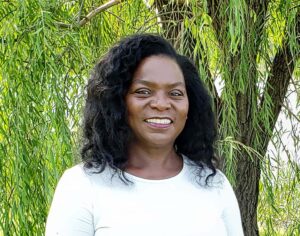
Banner image: Kindel Nash. Photo by Arionna Gonsalves ’19, media and communication studies and modern languages, linguistics, and intercultural communication.

Chinese American parents and children have experienced increased racism due to COVID-19, report UMBC researchers in Pediatrics

A team of researchers led by Charissa Cheah, professor of psychology at UMBC, has found that a high percentage of Chinese American parents and children have witnessed and experienced an increase in racial discrimination since the outbreak of COVID-19. 

The team was one of the first to receive a National Science Foundation Rapid Response Research (RAPID) award to examine an issue related to COVID-19. The study is titled “RAPID: Influences of the Coronavirus (COVID-19) Outbreak on Racial Discrimination, Identity Development and Socialization.” The researchers’ findings are now published in Pediatrics

The impacts of experiencing racism

The data reveal that large percentages of Chinese Americans are experiencing racism at interpersonal, institutional, and collective levels, both in person and online, during COVID-19. These experiences harm both adults’ and children’s mental health, and reflect a history of racism against Asian Americans in the United States. 

Portrait of woman in navy blue top and necklace, taken outdoors
Charissa Cheah.
Photo courtesy of Cheah.

The team suggests that public health strategies are urgently needed to decrease fear, stigmatization, and discrimination. They recommend that schools develop strategies to address racism targeting Asian American youth. They also note that healthcare professionals need to be educated on how to address the mental health needs of this population.

Cheah is a cultural developmental psychologist. She completed the research with co-investigators Shimei Pan, assistant professor of information systems at UMBC, and Cixin Wang, assistant professor of school psychology at the University of Maryland, College Park. 

Sharing research with the public

Cheah has shared different aspects of the research with the media.

In The Washington Post, she cautioned against using language to describe COVID-19 that could fuel discrimination against Asian Americans. In an interview for WYPR she explained the prevalence of racism against Chinese Americans as a result of the pandemic. She commented on the negative health outcomes caused by persistent discrimination in The Baltimore Sun.

Cheah also spoke in a video for Science Magazine about the mental health of Chinese American children and teens during the COVID-19 pandemic.

Banner image: The Coronavirus. Image by Alachua County, used under Public Domain Mark 1.0.

UMBC celebrates 2020 – 2021 Fulbright recipients

Eleven recent UMBC alumni are recipients of 2020 – 2021 Fulbright U.S. Student Program awards, including seven from UMBC’s Class of 2020. Each year over 11,000 students apply and just over 2,000 are selected from hundreds of colleges and universities across the United States. The award secures funding for U.S. students to pursue international graduate study, research, internships, or teaching.

While COVID-19 has presented a range of challenges and uncertainties for Fulbright recipients, UMBC is proud to celebrate their hard work and achievements. 

“This year’s recipients have demonstrated great flexibility and maturity as they navigate the changes that our current global situation requires,” explains Brian Souders, M.A.‘19, TESOL and Ph.D. ’09, language, literacy and culture. He serves as associate director of global engagement opportunities in UMBC’s office of International Education Services. 

Souders, who is also UMBC’s Fulbright program advisor and scholar liaison, says that these hurdles have also not deterred UMBC faculty, students, and alumni from applying for the 2021 – 2022 Fulbright award.

A group of twelve people smile at the camera while waving small international flags.
Souders with Fulbright class of 2019 – 2021.

UMBC’s 2020 – 2021 Fulbright U.S. Student Program award recipients

Middle East

  • Kiplyn Jones, M.P.P. ’20, public policy, Jordan, English Teaching 

East Asia

Young woman wearing ripped blue jeans, a white sweatshirt with the words UMBC written in the middle in black, and black boots, stands in front of some trees and shrubs while smiling at camera.
Osia on campus.
Photo courtesy of Osia.
  • Hannah Jang ’20, global studies, Korea, English Teaching Assistant
  • Phillip McKnight, M.A. ’19, instructional systems design, Laos, English Teaching Assistant
  • Samina Musa ’20, chemical engineering, Malaysia, English Teaching Assistant
  • Uchenna Osia ’19, computer science, Malaysia, English Teaching Assistant

Europe and Eurasia

  • Brandon Ables, M.F.A., ’20, intermedia and digital arts, Romania, English Teaching Assistant
  • Alida Hartwell ’20, bioinformatics/computational biology, Latvia, English Teaching Assistant
  • Matthew Linz ’20, modern languages, linguistics, and intercultural communication, Kazakhstan, English Teaching Assistant
  •  Idania Ramos ’20, psychology, Spain, English Teaching Assistant
  • Jocelyn Wilkins ’20, mechanical engineering, University of Porto, Portugal, Master’s Program
Young man with short brown hair, wearing black sunglasses and a light blue shirt with a multicolored design, stands in front of some objects hanging from a wooden pole and with mountains and a body of water behind him.
Kashett in Costa Rica, where he previously studied abroad. Photo courtesy of Kashett.

Western Hemisphere

  • Daniel Kashkett ’19, global studies, Mexico, Bilateral Internship Program

Top Fulbright producer

The Fulbright U.S. Student program is highly competitive, and recipients are chosen based on academic or professional achievement and demonstrated leadership potential. UMBC’s ten 2020 – 2021 recipients include students from a broad range of majors. And they’ve been selected for a diverse range of experiences, as English teaching assistants, interns, and graduate students in Europe, East Asia, Western Hemisphere, and the Middle East. 

This success comes after UMBC was named a Fulbright Top Producing Institution for receiving fourteen Fulbright U.S. Student awards in 2019 – 2020. Only a small portion of institutions participating in the Fulbright program are designated as top producers each year, an honor granted by the U.S. Department of State’s Bureau of Educational and Cultural Affairs. 

Circular blue, white, and grey logo for the Fulbright Program Top Producer.

Both the Fulbright U.S. Student Program and the Fulbright U.S. Scholar Program are designed to help build networks to support cross-cultural understanding. They connect people from the United States with people from around the world to dispel stereotypes and help each other reach common goals.

Faculty Fulbright for research in Southeast Asia

Beyond the student program, faculty are eligible to apply for the Fulbright U.S. Scholar Program to further research on critical world problems in all disciplines. This year, UMBC’s John Rennie Short, professor of public policy, has received a Fulbright award to conduct research in Southeast Asia on the geopolitics of the South China Sea.

A photo of a variety of sky scrapers with mountains in the background.
Kuala Lampur, one of the places Rennie Short will visit for research.
Photo courtesy of Rennie Short.

The award will support Rennie Short’s research in Malaysia and the Philippines and allow him to visit Cambodia, Indonesia, and Vietnam. He will interview scholars and foreign policy analysts while at the Asian Center at the University of the Philippines Diliman and the Centre for ASEAN Regionalism at the University of Malaya, in Kuala Lumpur, Malaysia. Rennie Short also plans to give public lectures and seminars about U.S. public policy and other topics while in Southeast Asia.

A photo of a variety of sky scrapers with mountains in the background.
Kuala Lampur, one of the places Rennie Short will visit for research. Photo courtesy of Rennie Short.

This research will inform Rennie Short’s second book on East Asian maritime issues. “The book will widen our understanding of the complex and troubled geopolitics of the South China Sea,” he explains. “It will provide an Association of Southeast Asian Nations perspective to counter the dominant Chinese and U.S. narratives.” 

Rennie Short’s first book on East Asian geopolitical issues, Korea: A Cartographic History (2012, University of Chicago Press), tackled the East Sea versus Sea of Japan naming dispute between South Korea and Japan. He has also written “Troubled Waters: Conflict in the South China Sea Explained,” republished in U.S. News & World Report.

Other recent UMBC faculty recipients of Fulbright U.S. Scholar awards include Charissa Cheah, professor of psychology; Guenet Abraham, associate professor visual arts; Chuck Eggleton, professor and chair of mechanical engineering; and Marc Zupan, associate professor of mechanical engineering.

Women in sunglasses and UMBC Retrievers sweatshirt stands on a grassy hill.
Abraham in Ethiopia as a Fulbright Scholar in 2018. Photo courtesy of Abraham.

Banner image: International hanging from the ceiling of UMBC’s Commons. Photo by Marlayna Demond ’11 unless otherwise noted.

UMBC’s Taka Yamashita receives $1.4 million grant for research supporting workers returning to community college

UMBC’s Taka Yamashita has been awarded a $1.4 million grant from the U.S. Department of Education’s Institute of Education Sciences for an innovative three-year research project on how adult literacy impacts success in community college STEM education and job training programs. Yamashita is an associate professor of sociology and faculty member in the UMBC/UMB gerontology Ph.D. program. He will explore how the literacy, numeracy, and problem-solving skills of adults (ages 18 and over), can be indicators of career and academic readiness in community college STEM programs.

Meeting workers’ and STEM industry needs

Many workers with limited academic credentials or skills face the need to expand their skill set to fit a rapidly changing STEM-focused labor market. The wide range of skills needed for STEM jobs creates both challenges and opportunities for workers to begin “middle-skill” positions, which do not require four-year undergraduate or graduate degrees. Career training programs can make a significant difference for these workers.

Yamashita notes that community colleges are uniquely positioned to meet the needs of adults who seek STEM skill training. However, in addition to knowledge and work skills, many workers also need to learn the basic skills to manage college level coursework, he explains.

“While community colleges can offer a path, students’ community college readiness may present a barrier to completing the training and entering the STEM workforce,” shares Yamashita. He explains, “Recent national data clearly showed that many of the adults seeking to acquire new new knowledge and skill sets do not have the sufficient basic reading and math skills needed for higher education coursework in the U.S.”

The power of three perspectives

This research project is led by Yamashita, principal investigator; Rita Karam, senior policy researcher at RAND Corporation; and Phyllis Cummins, assistant director of research at Scripps Gerontology Center at Miami University of Ohio. The team will gather quantitative and qualitative data from three community college STEM programs. These include programs at Clover Park Technical College in Washington state, Cuyahoga Community College in Ohio, and Ivy Tech Community College in Indiana. 

The researchers will assess students’ basic math, reading, and technology skills to predict their academic success in STEM skills training programs. They will also analyze national data and create the first national profile of basic skills across different segments of the adult population for a variety of STEM industries.

“We’re seeking to explore relationships between basic skills, college readiness, and academic outcomes,” says Yamashita. “Our goal is to better understand the underlying themes and/or key factors that are linked to enhanced basic skills and academic success in the STEM-related sub-baccalaureate programs.” These findings, Yamashita notes, could have a long-lasting positive impact on current and future workers’ lives as well as the STEM labor market.

Banner image: Yamashita. Photo courtesy of Yamashita.

UMBC’s Elizabeth Patton dives into history of remote work with “Easy Living: The Rise of the Home Office”

Elizabeth Patton’s new book Easy Living: The Rise of the Home Office (2020, Rutgers University Press) explores how Americans think about the modern home office and why. Patton’s book is a historical view of how marketing and popular media have shaped how mostly white, heterosexual, upper-middle-class families in the United States have talked about working from home. Due to COVID-19, remote work has hit unprecedented highs, but Patton’s scholarship reveals that it’s far from a new idea. 

“I was interested in learning about how people talked about working from home from the early 19th century to today,” says Patton, an assistant professor of media and communication studies at UMBC. “I wanted to understand how certain public figures, technology and real estate companies, film and TV contributed to these conversations and shaped today’s idea of working from home.” 

Patton explains this phenomenon, as her family redefines work spaces during COVID-19, in her latest article: “In the work-from-home battle for space, women are the reluctant nomads.” Originally published by The Conversation, the article has been republished by CNN, Fast Company, and others, reaching nearly 140,000 reads so far.

The gendered home office

Patton’s research reveals how early-19th century advertising and media portrayed women in two traditionally private spaces: the kitchen and the bedroom. This shifted during WWII as ads encouraged women to work jobs men had to leave behind. However, by the 1950s many women were expected to leave careers and return to domesticity. 

Patton found advertising campaigns from phone companies motivating women to work more efficiently by having a phone line installed in the kitchen and in the bedroom. “Typewriter ads also encouraged women to work as typists from their kitchen office,” shares Patton. “This work was not to advance a career but to support their household economy.” 

Men, on the other hand, occupied the public space in the home—the living room or den—to work, relax, or entertain. Patton’s research also describes how advertising and media discussed the work men brought home from the office as a way for them to maintain a work-life balance, especially with the rise of long commutes. Real estate and furniture ads lured urban families to the suburbs with the promise of a garage or a home office to give men more family time and bigger kitchens to help women more efficiently run their household.

Hollywood’s influence

Patton made a particularly compelling, unexpected discovery during her research at the Library of Congress: evidence of the influence of Hugh Hefner, the founder and editor-in-chief of Playboy magazine. Hefner played a significant role in conceptualizing the modern work-from-home lifestyle, the bachelor pad, and the “man cave.” 

“While he is an extremely problematic figure, there is no denying his influence in this area,” explains Patton. Research shows how Hefner used advances in phone, computer, television, and architecture to conceptualize private and public home spaces for a successful work-life balance, making commutes irrelevant.

Family life on TV

Bill Cosby, a disgraced public figure, helped transform the portrayal of men and women having successful careers and a thriving family life on television, says Patton. 

“The Cosby Show was a primetime family show that created an aspirational lifestyle,” shares Patton. “It was a very purposeful portrayal of how men, working as doctors, lawyers, or writers, could have a successful and fulfilling work-life balance while at the same time supporting their wives in leaving the home to pursue similar careers.” 

Patton also shares how it wasn’t until the 1980s and early 1990s, with second-wave feminism, that women were more frequently portrayed in advertising and popular media as having a career outside of the home or having a home office. Still, these portrayals were seen as controversial, especially when central female characters were single working mothers. And if women had to bring work home, their office was still the kitchen. 

COVID-19 and the home office evolution

Patton’s book comes at an unprecedented time when many adults and children have had to shift their work and learning spaces from the public office and school to the private home. This change has reopened questions about private and public work spaces and work-life balance, as well as class, equity, and access. 

“I’m always thinking about who is missing or left out in the conversation. I’m telling this history, but this history is not possible without depending on people of color and people working in service jobs,” explains Patton. “This is where class and race intersect. And it is necessary to keep this idea of working from home going, even more so now with a pandemic.”

Banner image: Patton on campus in academic row. Photo by Marlayna Demond ’11.

UMBC alumnus Mark Doms is appointed chief economist of the Congressional Budget Office

UMBC alumnus Mark Doms ‘85, economics and mathematics, has been appointed chief economist of the Congressional Budget Office (CBO). Doms will be one of the leads of the agency that provides Congress with objective, nonpartisan, and high quality information about the economic and financial impacts of existing laws, new laws, and policies under consideration.

“It is really important to get the best information so policymakers can decide which path to move forward on,” explains Doms, who has served as an economics expert for over three decades. 

“At CBO we strive to provide high quality, nonpartisan information so Congress can make their decisions,” Doms says. “We believe that better information makes better decisions, especially now, with the huge, adverse economic impacts of COVID-19.”

His team helps provide Congress with data to better understand ongoing public policy issues such as living conditions, government assistance, and poverty. Through quantitative analysis, the agency is able to look at different facets of an issue by asking questions about what is known, what needs to be known, and what may not be known. CBO projections and analysis provide valuable insights into complex issues, allowing for in-depth understanding of the costs and benefits of various policies.

A man with grey hair and a grey mustache wearing glasses and a blue and white checkered dress shirt smiles at the camera. There is a wall behind him with the word speak truth to written on it in white.
Roy Meyers. Photo by Marlayna Demond ’11.

Doms is one of four UMBC alumni currently serving in the Congressional Budget Office. Kate Green ‘05, information systems, is a human resource specialist. Jorge Salazar ‘02, graphic design, is a visual Information and data visualization specialist. Ryan Mutter ‘01, M.A., economics, and Ph.D. ‘06, public policy is a principal analyst in the Health, Retirement, and Long-Term Analysis Division of CBO. And Roy Meyers, professor of political science, was an analyst at CBO before joining UMBC.

The power of math and economics

Doms’s love of mathematics is a personal passion he fostered in high school and immersed himself in while at UMBC. He also remembers spending time at UMBC learning the computing and analytical skills needed to conduct research, and collect and analyze data. 

“All of my professors at UMBC were inspiring,” shares Doms. “What was most valuable to me was their insistence that we learn a quantitative approach to inform policy not just from books, but from the real world,” he says. 

A man with greying hair wairing glasses and wearing a t-shirt that says UMBC Retrievers with a picture of a Chesapeake Bay Retriever with the U.S. Capitol in the background.
Mark Doms in front of the U.S. Capitol. Photo courtesy of Doms.

Doms also benefited from the professional experience of UMBC faculty in understanding the world from a quantitative lens. “Most of my professors had hands-on experience working with policymakers in Washington, D.C.,” he recalls. “They were able to share an invaluable insider’s perspective.” 

From them he learned the power of research and data analysis to help inform policy and the challenges they present. 

Quantitative analysis for the greater good

In addition to quantitative analysis skills, Doms also notes the importance of communication skills to anyone wanting to enter the field of economics. He appreciates the skills he learned in his English and philosophy classes, which help him communicate important ideas with different audiences. For Doms, the best data and analysis in the world is not of service if it can’t be communicated clearly to a general audience.

After UMBC, Doms earned a Ph.D. in economics from the University of Wisconsin–Madison.

He then served in the U.S. Census Bureau and the Board of Governors of The Federal Reserve as an economist. He was also the senior economist for The Federal Reserve Bank of San Francisco. 

A man with short grey hair wearing glass, and a grey dress shirt, stands smiling at the camera
Mark Doms at alumni awards. Photo by Marlayna Demond ’11.

Doms was appointed and confirmed by the U.S. Senate as the under secretary for economic affairs at the U.S. Department of Commerce under the Obama administration. He has also worked at Japan’s largest investment bank and at the Organisation for Economic Co-operation and Development in France. In 2018 UMBC recognized his leadership in the field of economics with an Outstanding Alumnus in Natural and Mathematical Sciences Award.

Strength in diversity

In his decades of experience, Doms has always studied and worked with people from diverse backgrounds. He sees diversity as a necessary aspect of strong teams that produce great ideas. 

Doms encourages students interested in economics to study abroad and become fluent in another language. While his travel and language experience happened on the job, he has seen the benefits of having these experiences early on in a field that requires an understanding of interconnected global issues.

For Doms, diversity in the economic field is key to helping communities learn more from one another and address today’s major challenges. He welcomes students from all backgrounds to apply to the CBO’s summer internship program and he actively engages in helping diversify CBO’s workforce.

“I really enjoy that I can use the economics, math, and communications skills I learned at UMBC and elsewhere to help us understand the world just a little bit better,” says Doms.

Banner image: Doms in front of the U.S. Capitol. Photo by Tim Lordan .

UMBC’s first virtual conference on inclusive language engages hundreds of education professionals from around the world

UMBC hosted “The Evolving World of Inclusive Language” on June 10, 2020, at a moment of intense focus on anti-racism and inclusion in higher education. The event was organized by Catalina Sofia Dansberger Duque of UMBC’s Office of Institutional Advancement in partnership with Montgomery College and supported by the CASE District II Venture Capital Fund. 

The virtual inclusive language conference, UMBC’s first virtual conference, was initially planned as an in-person event for 50 higher education communicators from across the mid-Atlantic. Following COVID-19, the event moved online. And with increased recognition of the importance of the inclusive language, the number of participants quickly jumped. 

By the day of the online event, nearly 800 people from across the U.S. and around the world had registered. They represented universities near UMBC, like Towson University and Morgan State University, and as far away as Canada and England. Around 250-300 participants joined each of the day’s six sessions.

A call to action

A headshot of a woman with short black hair wearing a red blazer with a grey shirt and a chain linked necklace with a heart, and pearl earrings, with a yellow background smiles at camera.
DàVida Plummer,

DàVida Plummer, dean of the Scripps Howard School of Journalism and Communications and assistant vice president for marketing and media at Hampton University, provided the conference keynote address. She spoke of the importance of this moment in history, reflecting on both the COVID-19 pandemic and increasing support for the Black Lives Matter movement. She noted the duty that communicators and media professionals have to not only evolve language, but to be agents of change by writing stories that reflect the lived experiences of the communities they want to represent. 

“To acknowledge that Black lives matter, that abuse of power must be stopped” is paramount, shared Plummer, “and for journalists the world over, we must capture this reality, tell our stories, and maintain objectivity.”

She further noted that communicators must evolve the language they use by respecting how each person identifies themselves and speaking with and about each other with empathy and dignity. To accomplish this, Plummer explained, we must become vigilant of the everyday phrases that subtly perpetuate injustice and inequality. This includes common use of “white,” and “light” to describe positive things, and “black” or “dark” to describe negative things.

“I hope that the words that follow will help us change and make a change for the good for everyone who walks this earth in our time—every gender and every ethnicity,” said Plummer. “We should try to set a sustainable precedent.”

Leading by example

Candace Dodson-Reed ‘96, English, chief of staff in the Office of the President and executive director of the Office of Equity and Inclusion (OEI), and Ever Hanna, OEI training and case manager, provided the UMBC staff keynote. Dodson-Reed opened by bringing attention to the importance of language when speaking out against systemic racism. She then read the names of Black people recently killed by police: George Floyd, Breonna Taylor, Ahmaud Arbery, Tony McDade, and Sandra Bland.

Outdoor portrait of a black woman with shoulder-length hair, wearing a blazer, in front of a tree.
Candace Dodson-Reed

Dodson-Reed focused her address on campus leaders’ responsibility to assure that university communications are responsive and speak to the needs of their communities. She pointed to the intentional and clear use of the words “social justice,” “inclusive excellence,” and “civic engagement” in UMBC’s own vision statement as a set of guiding principles for communications. She also encouraged participants to directly include the communities they wish to reach by listening and involving them in the communication process. 

“Being collaborative, as you address such big societal challenges, is not simple,” said Dodson-Reed. “But the decision to use inclusive language in our vision helped guide our response as a campus community,” says Dodson-Reed.

Disrupting exclusivity

Ever Hanna’s remarks asked the audience to not just think about using inclusive language, but also make a conscious choice to disrupt entrenched processes that lead to exclusion. “If you have ever had to confront a privilege that you have, you may be familiar with the concept of being uncomfortable and learning to disrupt something that you thought was normal or easy,” said Hanna. 

A headshot of a person with short brown hair and glasses wearing a pink dress shirt with a grey brick background, smiles at the camera.
Ever Hanna

They reinforced that for inclusive language to continue to evolve it is essential to take into account intersectionality. Hanna, who identifies as a trans and non-binary person, provided examples of how gendered language, such as sister and brother, can exclude people because it is so entrenched in binary language norms.

Hanna also pointed out, “We sometimes communicate exclusivity by not giving information.” Having intentional conversations and sharing tools are necessary to gain a deeper understanding of practicing inclusive language. 

Hanna says all of these efforts are necessary to create and sustain inclusive language practices. And more importantly, they empower people to disrupt and interrupt exclusive language. “In order to be in solidarity with the people in our lives we need to change the way we do those things,” they noted.

Watch the introduction and keynote presentations.

Inclusive language best practices

The conference continued with five sessions delving deeper into inclusive language practices within specific communities. Each session included a panel or a speaker, plus time for questions and answers. Participants used the Q&A opportunities to learn how to apply inclusive language best practices within their institutions. 

A headshot of a woman, wearing a blue-grey dress and blazer, with a long silver necklace and a pearl necklace, with a blue and black background, smiling at the camera.
Sharon Bland

Sharon Bland, chief equity and inclusion officer for Montgomery College, presented on “Creating Inclusive Communities Among Students, Employees, Alumni, and Trustee Boards through Equity Dialogues.” 

UMBC faculty and staff led the four other sessions. “Inclusive Language for Students and Staff” was presented by Jasmine Lee, director of inclusive excellence for the Division of Student Affairs; Lisa M. Gray, associate director of diversity and inclusion for Campus Life; Carlos Turcios ’14, psychology, M.A. ’17, sociology, coordinator for student diversity and inclusion for Campus Life; and Vladimir Rodriguez, assistant director of Off-Campus Student Services.

A person with short black hair wearing glasses, a white dress shirt with purple polka-dots and a purple bow-tie smiles at camera.
J. Enscoe

Christine Mallinson, professor of language, literacy, and culture (LLC), and director of the Center for Social Science Scholarship, and J. Inscoe, LLC Ph.D. candidate in language, literacy, and culture, presented on “Gender-Inclusive Language and the LGBTQ Community” (video coming soon). Drew Holladay, assistant professor of English, led the “Disability, Neurodiversity, and Practicing Inclusion” session. 

Randianne Leyshon ’09, modern languages and linguistics, assistant editor of UMBC Magazine, and Amelia Meman ’15, gender and women’s studies, assistant director of the Women’s Center, ended the day with a session on “How to Create and Maintain an Inclusive Language Style Guide.” 

To access all presenter slide decks, session recordings, and additional information visit the inclusive language conference page.

Banner image: Bench on academic row dedicated to Walter Sondheim. All photos by Marlayna Demond ’11.

Videos will soon be available through YouTube.

UMBC’s Sydney Gaskins competes in the final round of Trial by Combat, a national mock trial championship

UMBC Mock Trial continues to reach new heights at a national level, even with COVID-19 impacting the competition season. Sydney Gaskins ’22, political science, finished as a runner-up in the final round of the national Trial by Combat (TBC), a head-to-head individual mock trial championship hosted this summer by the UCLA School of Law and Drexel University Thomas R. Kline School of Law. 

Gaskins competed virtually against fifteen graduating seniors from the most successful mock trial teams across the country, including Harvard, Stanford, and Yale. She was the only junior to participate this year and among the first underrepresented women to compete in the championship’s history.

A UMBC Mock Trial Facebook post of a young woman with black hair pulled back wearing a dark purple dress with white stripes on the waist, a black blazer, and pearl  necklace point to her left and stands behind a beige table that has a laptop and papers spread across it.
Gaskins presenting her case at virtual Trial by Combat 2020.

The hosts of Trial by Combat selected the sixteen contenders out of hundreds of applicants. “Sydney continues to break barriers in Mock Trial and specifically in Trial by Combat,” shares Ben Garmoe ’13, political science, a litigation attorney in Baltimore. Nine years ago he co-founded the intellectual sports team with Travis Bell ’14, psychology and political science, now a public defender in Alabama. 

Garmoe notes, “She defeated some of the best competitors in the country to get to the final round.”

A recording of the entire 2020 Trial by Combat competition.

A formidable opponent

“TBC 2020 was a special and unique experience,” shares Gaskins. She says she has struggled with not being able to interact with the people she cares about because of COVID-19. “The virtual tournament was not only a much needed opportunity to reconnect, but to also make my team proud.”

Gaskins, the UMBC Mock Trial president, has a long history as a formidable opponent in her three years with the team. This year, in addition to her TBC award, she has received two Outstanding Attorney Awards and three All-National Attorney Awards. In 2019 she earned ten awards, including two All-National Attorney Awards from the Opening Round Championship Series (ORCS). Then she helped the team place eighth at the American Mock Trial Association National Championship Tournament—the team’s second trip to nationals

Seven young women dressed-up in blazers, dresses, and skirts stand in a line holding a trophy with a gold star attached to a gold cup with two green bars on each side; and four young men in suits stand behind them; they are all standing facing the camera, smiling in a circular room on a beige and maroon carpet
UMBC Mock Trial A-Team at AMTA 2019.

At the 2019 national competition, Gaskins received an All-American Attorney Award, the highest individual honor in collegiate mock trial. Her success earned her an invitation to compete at last year’s Trial by Combat, and solidified her status as one of the top college mock trial competitors in the U.S.

Young woman with dark hair wearing a grey blazer and a light blue dress smiles at camera while holding two plaques and one trophy while standing in an auditorium.
Sydney Gaskins wins two trophies at Georgetown Mock Trial.

Rigorous teamwork

TBC requires students to prepare quickly for a trial and under great pressure, giving them just 24 hours between receiving the case and arguing it. Ethan Hudson ’21, English, and Garmoe were Gaskins’s support team. 

Hudson helped develop the case theory and served as the “second chair” in the competition. This role is a (silent) co-counsel who is in charge of displaying exhibits and demonstrative aids, and who is permitted to communicate with the counsel. He was also responsible for managing all of Gaskins’s technology during each trial. 

Together, the trio created a rigorous trial strategy for all the roles Gaskins had to perform: defense, prosecutor, and as a witness for each side. Gaskins performed each role once during the four preliminary trials, with the attorney performance carrying the most weight in scoring. Four students continued to the semi-finals as attorneys, and only two advanced to the championship trial. Gaskins was one of those final two. 

Gaskins’s setup for the 2020 Trial by Combat competition.

A meaningful opportunity

Gaskins and Hudson’s experience as teammates dates back to their high school years as members of the Franklin High School Mock Trial team. Both joined the UMBC team their first year. They were set to lead UMBC’s team this spring at the 2020 National Championship Tournament before the rest of the season was cancelled due to COVID-19. This year marked the third time UMBC has qualified for the nationals in the last four years. 

Face book post of UMBC Mock Trial from 2019 with text describing several competition wins and  below it a picture with eight young people dressed in suits standing in a Stevenson University office.
UMBC Mock Trial 2019. Hudson is the third on the left and Gaskins is fourth on the left.

“This tournament was special for two reasons. It was my last opportunity to compete alongside Ethan, my friend and teammate,” explains Gaskins, who plans to apply to top J.D and MBA programs in the spring. “And it was also an opportunity to once again show everyone who Sydney Gaskins is.” 

Banner image: Gaskins defending her case at a Mock Trial competition. All photos are courtesy of UMBC Mock Trial.

UMBC and Baltimore’s Lakeland Elementary/Middle School launch innovative online summer math program

UMBC’s Sherman STEM Teacher Scholars Program has launched an intensive virtual math incubator for Lakeland Elementary/Middle School in Baltimore City this summer. The free, voluntary five-week program is a math intervention for 150 Lakeland students in third through eighth grade. The program seeks to prevent summer learning loss, which could increase this year, intensified by COVID-19’s impact on student learning during the school year. 

“With the changes this spring to learning, the UMBC/Lakeland Summer Math Program has allowed us to make up ground and get a head start with students in a targeted approach to math instruction,” says Lakeland Principal Najib Jammal. “This partnership lets us plan for students’ needs this fall knowing that 150 of our students had access to high-quality math instruction the summer.” 

Jammal recently spoke about the collaboration in an interview for the segment “Staving Off Summer Slide” on WYPR’s On The Record.

The summer program was designed to also have a lasting impact beyond improving specific STEM skills. Lakeland teachers and UMBC partners are helping Lakeland students develop a positive math identity that will carry them forward into higher level math courses.

Moving online

The summer STEM program was originally designed to be held in person. COVID-19 both increased the need for the program and required Lakeland to move instruction online, decreasing student–teacher and peer interactions. To counter this challenge, program organizers knew they’d need more teachers to decrease the student–teacher ratio and reach more students overall. 

A rug with colorful multiplication grid.
A rug in Lydia Coley’s classroom during her student teaching internship.

The Goldseker Foundation and Baltimore Children’s Youth Fund (BCYF) provided the funding needed to implement the program online and to hire more teachers. Their financial support also expanded the program from the initial 60 rising fourth through sixth graders to 150 rising third through eighth-grade students. 

This creative intervention has three priorities: whole child development, math identity development, and math growth. The program is implemented under the direction of Josh Michael ‘10, political science and education, assistant director of UMBC’s Sherman STEM Teachers Scholars Program, in collaboration with five Baltimore City school teachers and twelve interns from the Sherman Scholars program. 

Whole child development

UMBC has fostered a strong partnership with Lakeland for more than five years. It has supported Lakeland’s wrap-around academic and community services through the Sherman STEM Teachers Scholars Program, the Sherman Center for Early Learning in Urban Communities, and the Shriver Center Literacy Fellows program. Through additional collaboration with area community groups and companies, such as Northrop Grumman, Lakeland has built a safe and supportive community where students can thrive socially and academically.

The summer program also relies on a firm foundation of strong teacher, student, family, and community relationships. The Sherman STEM Teacher Scholars serve as program leaders. In this role, they dedicate the majority of their day to fostering relationships with students and their families through video chats, phone calls, texts, and emails. 

A colorful hanging sign that reads, "It's okay for me to make mistakes!"
Coley’s classroom during her student teaching internship.

These program leaders coach the three Lakeland teachers who serve as program facilitators, including one UMBC alumna. Former Sherman Scholar Molly Hart, M.A.T. ‘19, elementary education, is now a sixth grade math teacher at Lakeland and serves as a facilitator for the summer STEM program. 

“The program’s support system is incredible,” shares Haleemat Adekoya ‘23, political science. She says this experience has made her aware of the importance of consistent communication in the classroom. 

If a student is absent one day, her priority is to get in touch with their family as soon as possible. “Every time I let a student and their family know they were missed, as an intricate part of the classroom community, they’ve shown up the next day and actively engaged.”

This structure of robust support is cultivating strong student and family relationships and student participation. Out of 150 enrolled students, an average of 120 consistently engage in math instruction and STEM activities each day. Nearly 100 percent engage each week. Once students feel supported and are engaged, teachers can then move forward to focus on further developing students’ math identity and math skills.

Math identity

Historically many Black, Latinx, and first-generation students, as well as English Language Learners (ELL) and students experiencing economic hardship, have faced obstacles in math achievement. Limited public school resources, insufficient access to quality culturally relevant instruction, and high social/emotional stresses have created learning gaps at lower grades, which often deepen in upper grades. 

For many students, negative experiences in trying to build fundamental math skills have impeded their development of a positive math identity. Math identity is a student’s perception of their ability to perform well in math. It has been shown to impact math performance. 

A colorful hanging sign that reads, "When I practice, my brain gets smarter!"
Coley’s classroom during her student teaching internship.

These factors have also contributed to a lack of diversity in STEM fields, reinforcing the negative stereotype that underrepresented students can’t do math regardless of the resources available to them. As a result, underrepresented students are less likely to feel confident enough to pursue higher level math courses. This further limits their access to a variety of academic, career, and social opportunities. 

“I am terrified of math even though I was given all the support and resources to excel in math,” explains Adekoya. “Josh Michael and Lydia Coley give me the support and confidence to lean into this opportunity and not give in to imposter syndrome. I have to lead by example.” 

Lydia Coley ’20, American studies, valedictorian of UMBC’s most recent graduating class, is also a program leader and a Sherman Scholar alumna. She is a first-year, sixth grade math teacher at Maree G. Farring Elementary/Middle School in Baltimore City.

Me, myself, and math

Lakeland serves 1,000 Pre-K to eighth-grade students. The majority come from underrepresented populations in STEM fields. They are less likely to have a positive math identity. Black students make up 32 percent of the school, 62 percent are Latinx, 42 percent are English Language Learners, 11 percent receive special education services, and most students come from low-income families. 

The summer program aims to help Lakeland students break the cycle of underrepresentation. Immersing students in a safe and nurturing space encourages them to engage in the math learning process. It also broadens and strengthens their math skills and fosters a positive math identity.

Through daily interactive synchronous video lessons, based on common core standards, program leaders teach, model, and provide individualized instruction. Students develop a toolkit of strategies that build the confidence needed to take risks and see mistakes as learning opportunities. 

A green binder laying flat with a white paper on top that has the words "lesson plan book" written in green. There is green paper with a border of cacti in the background.
Coley’s classroom during her student teaching internship.

Program facilitator Iliana Hernandez, a fifth-year, third grade math and dual-language teacher at Lakeland, provides program leaders with best practices to support ELL learners. She admits her own fears of math in elementary school. “I don’t want my students to fear math like I did,” shares Hernandez. “When students stay connected and feel valued and cared for their confidence grows and they feel ready to learn.”

Math growth

With this foundation in place, rigorous math instruction can move forward. Program Director Carly Harkins leads the team in curriculum development and instruction. Under her guidance, program facilitators coach program leaders in weekly lesson planning, lesson delivery, assessments, and student support. After daily class, students practice independently through proven online learning tools wherever they are on their math journey.

The program also provides hands-on experience to help students apply what they are learning. Josh Massey, the STEM facilitator, works with Michael and Harkins to create hands-on STEM activities for students. 

Massey ‘18, computer engineering, and M.A.T. ‘19, technology education, is a first-year computer science teacher at the Baltimore Polytechnic Institute in Baltimore City. He creates 150 STEM kits weekly, and helps deliver them to students’ homes. Each kit includes the materials needed to complete a project. They tie into the week’s topic, like circuits or small machines. 

Young woman with long wavy black hair and wearing glasses smiles and holds a flashlight to the camera.
Adekoya showing the circuit flashlight STEM Kit project. Photo courtesy of Adekoya.

Students first work on the project independently and then share their process in class. Each student is then the proud owner of something they have built themselves. These projects help support both math growth and a positive math identity.

Access to a bright future

When Michael sees students participating in these activities, he sees them as accessing the building blocks they’ll use to excel in the years ahead. 

UMBC and Lakeland partners hope this extra support will ensure more Lakeland students will be better prepared for Algebra I when they enter eighth grade. Why? “Algebra I is a key academic gateway,” says Michael. “There is strong evidence that successfully completing Algebra I in eighth grade is related to higher math achievement in high school and attainment in college.”

Michael notes that it’s long been the case that students of color have had less access to Algebra I in eighth grade. He shares, “Our goal is to provide that access by helping students believe success in math is for them.”

Banner image: A math chart in Coley’s classroom during her student teaching internship. All images by Marlayna Demond ’11 unless otherwise noted.

UMBC historian Constantine Vaporis brings samurai scholarship to the public through TED-Ed animation

UMBC’s Constantine Vaporis, professor of history, has partnered with TED-Ed Animations to produce A Day In The Life of A Teenage Samurai. This original video draws from over thirty years of scholarship Vaporis has completed on Japanese history and culture. The video is part of TED’s award-winning youth education program whose mission is to “amplify and capture the work of the world’s greatest teachers.” It currently has over 550,000 views.

The life of a samurai

“The creative process for the video required about eight months and involved me as the writer and educator in collaboration with a large creative and technical team,” shares Vaporis, the first UMBC history professor to have his research animated. “It was crafted in a style that is meant to be engaging to young viewers, historically truthful, but not photorealistic.” 

The video is set in Kôchi, Japan in 1800. It is a brief window into the fictional life of 16-year-old Mori Banshirô, a samurai in training who aspires to be an artist. Banshirô’s journey takes place during the Edo period (1603 – 1868), which is the focus of Vaporis’s research. 

During this time, samurai also served as government officials, teachers, masters of the tea ceremony, and artists. In his latest book, Samurai. An Encyclopedia of Japan’s Cultured Warriors (ABC/CLIO, 2019), Vaporis explores the life, practice, and history of these warriors.

Vaporis continues to partner with TED-Ed. TED-Ed has invited him to be a regular collaborator on future videos about Japan. He has already critiqued two other animations.

Decades researching Japanese history

In addition to his appointment in history, Vaporis has also served as the founding director of UMBC’s Asian studies program and is an affiliate professor of gender, women’s, and sexuality studies. This year he is one of forty scholars selected from around the world as a 2020 – 2021 fellow in residence in the School of Historical Studies at the Institute for Advanced Study in Princeton, NJ. During his fellowship Vaporis will work on his sixth book, Sword and Brush: Portraits of Samurai in Early Modern Japan.

Funding for Vaporis’s early research in Japan was through a Fulbright Scholars Award and a National Endowment for the Humanities Fellowship for College Teachers. He lived in Japan for seven years, completing archival research through these and additional fellowships.

This led to the books Breaking Barriers: Travel and the State in Early Modern Japan (Harvard University Press, 1995); Tour of Duty: Samurai, Military Service in Edo and the Culture of Early Modern Japan (University of Hawai’i Press, 2009); Nihonjin to sankin kôtai [The Japanese and Alternate Attendance] (Kashiwa shobô, 2010); and Voices of Early Modern Japan: Contemporary Accounts of Daily Life During the Age of the Shoguns (ABC/CLIO, 2012; Routledge, 2014, 2020).

Banner image: Constantine Vaporis at UMBC. Photo by Marlayna Demond ’11 for UMBC.

UMBC’s Gloria Chuku is named the 2020 – 21 Lipitz Professor for her research on the Igbo people of Nigeria

Gloria Chuku, chair and professor of Africana studies, has been named UMBC’s Lipitz Professor of the College of Arts, Humanities, and Social Sciences (CAHSS) for 2020 – 21. This distinguished professorship, funded by Roger C. Lipitz and the Lipitz Family Foundation, recognizes and supports innovative teaching and research. During her professorship, Chuku will carry out research for her new book project, Becoming Igbo in Nigeria and the Diaspora: A History of Ethnic Identity Formation and Negotiation

Many university employees chat around large round tables in a conference room.
UMBC faculty and staff retreat, summer 2017. Photo by Marlayna Demond ’11.

“I am humbled and grateful for my colleagues’ recognition of my contributions to the Africana studies department, CAHSS, and UMBC; to my profession; and to the fields of Igbo and Nigerian histories, African studies, and gender studies,” shares Chuku. “I feel validated.”

In the span of thirty years, Chuku’s internationally-renowned scholarship and teaching has explored the topics of ethno-nationalism, gender, economics, decolonization, conflict, and African-centered epistemological traditions of the Igbo people, the third largest ethnic group in Nigeria. 

Scholarship on Igbo culture

Chuku will spend time studying the Commonwealth and African manuscripts at Oxford University’s Bodleian Libraries in the coming year. She will also do archival research at The National Archives in London. Chuku will then return to the United States to review the unpublished papers on the Igbo people at the Melville J. Herskovits Library of African Studies at Northwestern University. 

This research will inform the writing of Chuku’s second book, about the processes of Igbo ethnic identity formation, negotiation, and integration across time. This includes Igbo identity within Nigeria and the global diaspora.

Chuku’s first book, Igbo Women and Economic Transformation in Southeastern Nigeria, 1900 1960 (Routledge, 2005), remains the most comprehensive study on Igbo women, covering all Igbo subculture zones. As a result of her work she was the first woman to receive the prestigious Ali Mazrui Award for Scholarship and Research Excellence in 2017. This international award recognizes a pre-eminent scholar of African studies for their research and scholarly achievement. 

Adult woman wearing Nigerian clothing and head piece holds a glass award in her right hand as she smiles at camera, green fields and trees are behind her
Chuku’s 2017 Ali Mazrui Award. Photo courtesy of Chuku.

Enriching UMBC

In addition to her research, Chuku has been a vibrant part of the UMBC community. As affiliate professor in gender, women’s, and sexuality studies and language, literacy, and culture, she has served on their undergraduate and doctoral program advisory committees, respectively. She has also served on the Provost’s Advisory Committee on Interdisciplinary Activities. 

In 2018 Chuku organized an international conference at UMBC on the history and legacy of women’s roles in the Nigeria-Biafra War. The conference brought renowned scholars and activists from Nigeria, South Africa, Germany, England, Canada, and the United States to UMBC.

UMBC students have also benefited from the intellectual and cultural opportunities Chuku has cultivated at the University. Chuku revived UMBC’s participation in the Model African Union and created the annual Taste of Africa, a celebration of Black History Month and African cultural heritage through unique cuisine and culinary traditions.

Seven young and adult women along with six young and adult men wearing winter jackets stand in a group on a staircase outside in front of a beige building, the building has a circular shield hanging on the wall.
Model African Union (2020) in front of the Embassy of Liberia. Photo courtesy of Chuku.

More broadly within the University System of Maryland (USM), Chuku also serves on the executive council of the USM Women’s Forum.

Twenty adult women gather closely in a group facing and smiling at the camera standing on a field of grass with green trees in the background.
USM Women’s Forum 2019 retreat. Photo courtesy of Natasha Rodriguez.

Liptz Lecture

Similar to previous Lipitz Professorship recipients, Chuku will share her work with the campus community through the Lipitz Lecture. The lecture is the culminating event of the professorship, part of the Humanities Forum lecture series hosted by the Dresher Center for the Humanities. 

Chuku follows Jessica Berman, professor of English and director of the Dresher Center for the Humanities, the 2019 – 2020 Lipitz Professor, and Dan Bailey, a professor of visual arts who focuses on animation and interactive media, the 2018 – 2019 recipient.

“Dr. Chuku is recognized worldwide as a leader in her field,” shares CAHSS Dean Scott Casper. “Her service to UMBC and the national and international research community is wide-ranging and deep. I am delighted that she is this year’s recipient of the Lipitz Professorship.”

Banner image: Chuku at UMBC. Photo courtesy of Marlayna Demond ’11 for UMBC.

UMBC’s Fei Han, of The Hilltop Institute, receives grant to develop model predicting patients’ COVID-19 hospitalization risk

UMBC’s Fei Han has received a COVID-19 Accelerated Translational Incubator Pilot (ATIP) award for research to help predict and reduce patients’ risk of being hospitalized due to COVID-19. He will further develop the Hilltop Pre-AH Model™, a preventative risk model, to apply to pandemic conditions.

Han is a senior data scientist at The Hilltop Institute who develops predictive analytics related to healthcare. The ATIP award he has received provides seed funding for University of Maryland, Baltimore (UMB) and community researchers to rapidly address issues related COVID-19 or the causal virus SARS-CoV-2. ATIP’s focus is on prevention measures that can improve public health.

“I am excited that I have the opportunity to help with COVID issues and practice data science for the public good,” shares Han. His project with a UMB collaborator is one of ten selected to receive funding, from among forty applicants.

Fostering innovative research

Han is collaborating with co-PI Zachary D.W. Dezman, assistant professor of emergency medicine at the University of Maryland School of Medicine. Their project, “Reducing Patient Risk through Actionable Artificial Intelligence,” will estimate individual-level risks of hospitalization due to COVID-19 and other communicable diseases for Medicare fee-for-service beneficiaries across the state of Maryland. 

The ATIP award is a grant competition held by the UMB Institute for Clinical and Translational Research. The competition is funded through a partnership between UMB and Johns Hopkins University through the National Institutes of Health National Center for Advancing Translational Sciences Clinical and Translational Science Awards Program. That program helps support high-quality translational clinical research and fosters innovation in research methods, training, and career development.

Public healthcare solutions

Han’s project is an extension of the Hilltop Pre-AH Model™ developed for the Maryland Primary Care Program (MDPCP). Physicians in the program received access to large patient data sets that they hoped could improve their ability to provide care. But they lacked a mechanism to process the data into actionable information to care for their patients. 

The Hilltop Institute uses data analytics and translational research to provide solutions for publicly funded healthcare. When MDPCP approached Hilltop with this problem, Ian Stockwell, chief data scientist, was confident that Hilltop’s advanced learning machine models could generate a solution. After all, they were built to process big data to predict the risk of adverse events. 

Man with grey hair and goatee, wearing a white and blue checkered shirt, stands smiling at camera with international flags in the background.
Ian Stockwell, chief data scientist at The Hilltop Institute.

Stockwell worked on the problem with Hilltop senior data scientists Fei Han and Morgan Henderson for over a year. Then, in October 2019, they launched the Hilltop Pre-AH Model™. 

The model uses Medicare claims data and a series of factors based on diagnoses, procedures, medications, healthcare utilization, demographics, and environmental and geographic factors to create a value identifying each patient’s level of health risk. Primary care providers then use this as a tool to identify patients who would benefit most from intensive primary care coordination. This type of care can effectively prevent hospitalization for routine care conditions. 

Data science improves patient care

As a result of this initiative, 500 primary care providers with almost 350,000 patients across Maryland are now able to better coordinate the care for those most at risk of preventable hospitalization. 

“The reason why I’m so proud of this work is that I feel it has a real impact on patients,” says Stockwell. He explains, “Primary care practices are overwhelmed. They have seen phenomenal growth over decades. The tool gives physicians a way to effectively triage the resources they have.”

Man with brown hair, wearing a white dress shirt and black pants, with a row of international flags hanging in the background, smiles at camera.
Morgan Henderson, senior data scientist at The Hilltop Institute.

The Hilltop Pre-AH Model™ fills a market need as a preventative risk model for public healthcare that draws from an extensive catalogue of risk factors. This unique feature allows a user to apply conditions particular to specific events, populations, or data sets, and it will still model the risk appropriately. 

Han will now expand the Hilltop Pre-AH Model™ by applying new events and features to help healthcare providers prospectively identify individuals at risk of hospitalization from COVID-19 and other communicable diseases. Both Henderson and Stockwell are joining his collaboration with Dezman to extend this work. 

“It is not building a new model,” says Stockwell. “It is adding capacity to our current model that will allow it to answer this new question.”

Banner image: Fei Han, senior data scientist, at The Hilltop Institute. All photos are courtesy of The Hilltop Institute.