All posts by: Dinah Winnick


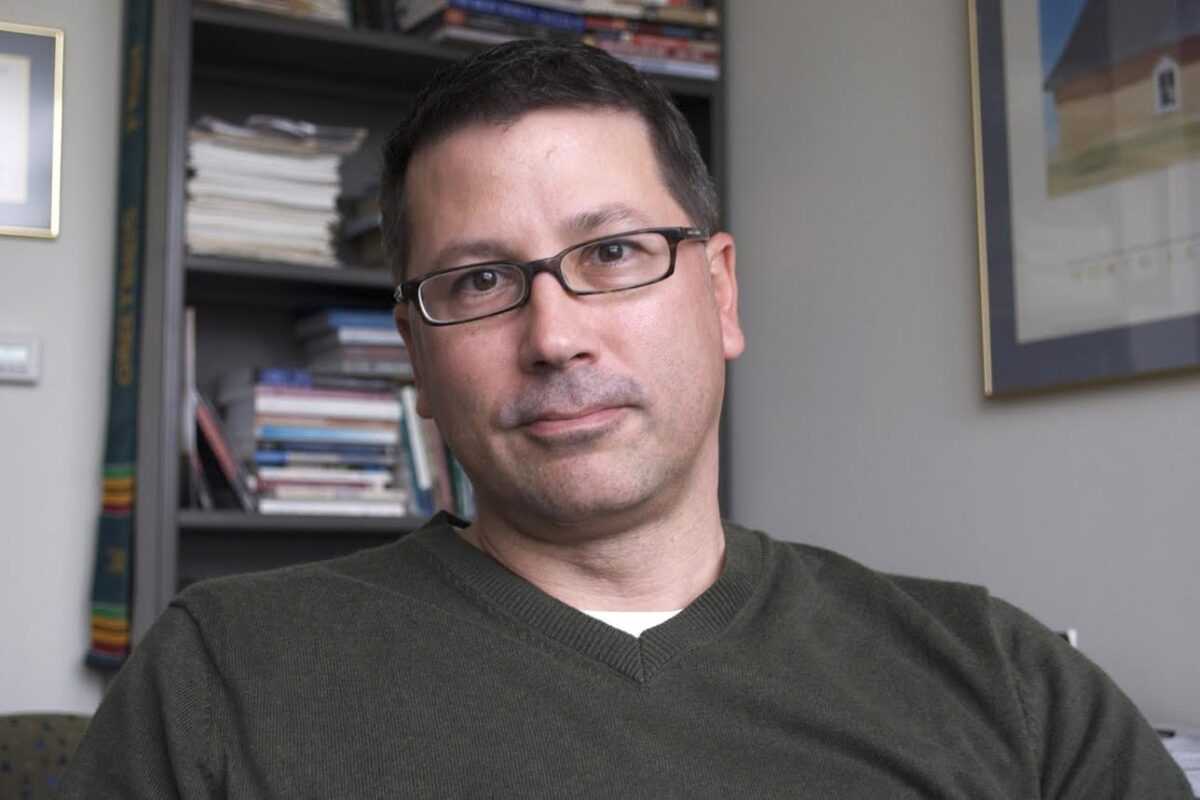
Thomas Schaller, Political Science, in Salon

“This is the moment [Obama] and his presidency promised to deliver,” writes UMBC political science professor Thomas Schaller in Salon, of the fight over the payroll tax cut extension. “This is,” he suggests, “a moment  for the president to demonstrate the resolve that earned his hopeful believers’ support three years ago, and it comes as he begins asking the electorate for another four-year lease on the Oval Office.”

Beyond supporting the payroll tax cut extension, Schaller argues, “the president should go a step further and call out the GOP’s Tea Party wing,” which blocked the passage of a two-month extension earlier this week. “He can’t let their stalling tactics break him,” Schaller writes, “Because this is not just the fight of his presidency — it could very well be the fight for his presidency.” Read the full column at Salon.com.

UMBC’s New Media Studio and Erickson School in Catonsville Times

Today’s Catonsville Times highlighted an exciting collaboration between UMBC’s New Media Studio and Erickson School: a digital storytelling project paring university students with seniors at the Charlestown Retirement Community. Bill Shewbridge, Director of the New Media Studio, noted that the participation of freshman in the course inspired the theme of life transitions.

The students and elders learned from one another’s life experiences through weekly meetings, culminating with the creation of 14 three-minute films, presented in the UMBC Library Gallery. “You can’t tell your life story in three minutes,” Shewbridge said, but the results are compelling. “They’re all different. Some are funny. Some are poignant. But they all have their own value and their own message.” The digital stories are now also online for public viewing.

Thomas Schaller, Political Science, in Salon

“With the Iowa caucuses less than three weeks away, the narrowed Republican presidential contest between Romney, Newt Gingrich, and the surging Ron Paul remains a muddle,” writes UMBC political science professor Thomas Schaller in Salon.com. This landscape has led Romney to focus on a new strategy to win the GOP presidential nomination: surviving a tough fight in January to win more favorable states in February.

Schaller argues that the crucial step for Romney is to attack Gingrich “using a negative television and radio blitz on the issue of Medicare to win Florida’s pivotal seniors.” He suggests, “If Romney can pair his younger support four years ago with a better performance among Florida seniors this year, he can win Florida on January 31.” Such a win might carry him through to February’s primaries in Colorado, Maine, Michigan, Minnesota and Nevada, where he was successful in 2008.

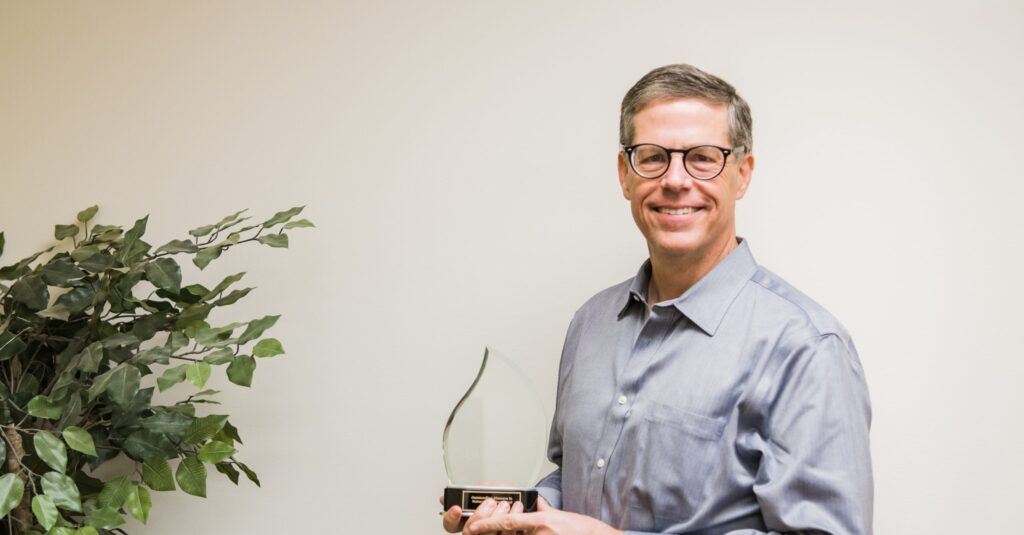
Judah Ronch, Erickson School, in Maryland Family Magazine

The December issue of Maryland Family magazine features a unique article on seniors who volunteer in local K-12 schools — a practice that Judah Ronch argues has significant benefits for both children and adults. Dean Ronch of UMBC’s Erickson School comments, “Doing things you enjoy makes [your activities] meaningful, and that means you are more likely to remember them.” For seniors who enjoy interacting with kids and sharing their skills and knowledge, volunteering in a local community can have positive effects on their physical and mental health and well-being.

Thomas Schaller, Political Science, in Colorlines and Baltimore Sun

UMBC political science professor Thomas Schaller offered insight on the upcoming GOP primary election in two publications today. In the Colorlines article, “Why (Very White) Iowa and New Hampshire Mean So Much in Politics,” Schaller commented, “The prominence and first-in-nation position of Iowa and New Hampshire do elevate white primary voters over non-white ones, and in both parties.” However, the electoral process is beginning to change to better account for our nation’s diversity. According to Schaller, “Both parties, and especially the Democrats—who receive the lion’s share of the black and Latino vote in general election—have tried to address this inequality by moving Nevada and South Carolina up earlier into the calendar.”
Schaller also commented in a Baltimore Sun article that suggested for Maryland to have an impact on the primary, “Gingrich and Romney would have to come to a draw in several early battles.” For Schaller, “The real question is do they make it to March or do we have a clear winner by the end of February.”

Thomas Schaller, Political Science, in the Baltimore Sun

“Paul Schurick’s recent conviction for voter fraud is a sad coda to the 2010 Martin O’Malley-Bob Ehrlich gubernatorial rematch,” writes UMBC political science professor Thomas Schaller in his latest Baltimore Sun column. Schaller notes that was saddens him most is a broader trend that Schurick’s actions exemplify: an increase in efforts to suppress U.S. voter turnout.

Schaller writes: “In the past year, 19 new laws and two executive orders were issued in 14 states to create stricter voter identification requirements.” Citing the Brennan Center for Justice, Schaller argues such restrictions “disproportionately disfranchise poorer and nonwhite voters, as well as senior citizens and college-age students” — populations that would be more likely to vote Democratic. Read the column for Schaller’s full argument.

KAL, UMBC Artist-in-Residence, on WYPR’s The Signal

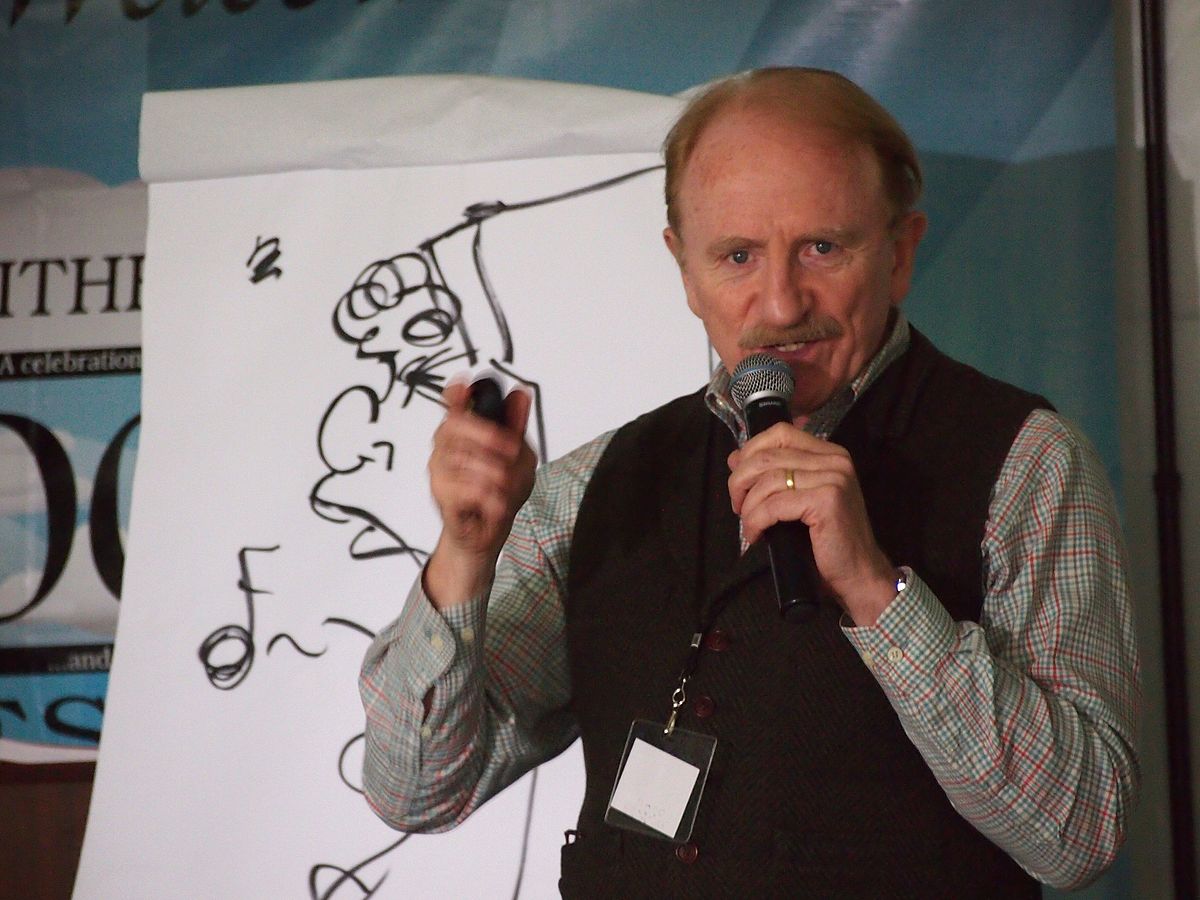
Portrait of Kevin "Kal" Kallaugher

Kevin “KAL” Kallaugher, editorial cartoonist for The Economist and UMBC artist-in-residence, discussed his current work in an insightful interview on “The Signal” that aired December 9 and 10 on WYPR. KAL is known internationally for his lectures on freedom of the press and the power of caricature. At UMBC he advises student bloggers in their coverage of current events and politics on USDemocrazy, a particularly exciting project moving into the new electoral season. Listen to “The Signal” to learn more about KAL’s work at UMBC and the value he places on seeing current events — particularly the economic crisis — through the eyes of college students.

Sociology and GES Students in Baltimore Sun

The front page of todays Baltimore Sun highlights Operation Oliver, a local partnership that seeks to revitalize Baltimore’s Oliver neighborhood through community art, garbage removal, crime watch and landscaping, involving several UMBC students. The article follows Jeremy Johnson ’12, sociology, and two fellow volunteers as they walk through the neighborhood, noting both concerning conditions and exciting rehab projects.

Johnson is a board member of The 6th Branch, a nonprofit that applies the leadership and organizational skills of military veterans to local community service initiatives — one of two lead organizations for Operation Oliver. Incoming project coordinator Dave Landymore ’13, GES, is featured in a photo series accompanying the Sun article (images 1, 7 and 11), along with project volunteer Heather Hryczshyn ’13, GES (images 12 and 13).

The initiative’s next service day will be Saturday, 12/10, 9:00 am-1:00 pm. Several UMBC students have already signed up to help. To learn how to volunteer, visit Operation Oliver on Facebook.

Roy Meyers, Political Science, Source on PolitiFact

A man with grey hair and a grey mustache wearing glasses and a blue and white checkered dress shirt smiles at the camera. There is a wall behind him with the word truth written on it in white.
Roy Meyers.

UMBC Political Science Professor Roy Meyers joined Yale’s David Mayhew and other scholars this week in providing PolitiFact with insight into Newt Gingrich, as the site explored David Axelrod’s claim that Gingrich is the “the godfather of gridlock.” The site offers evidence for Gingrich’s reputation as both a bare-knuckled fighter and a deal-maker, suggesting “Gingrich has been more of a prince of partisanship than a godfather of gridlock.”
Meyers also disputed the godfather characterization in his comments to PolitiFact, arguing that Gingrich is far from consistently quiet and disciplined, as the persona suggests. Meyers alternatively argued that Gingrich is the father of a different practice, using a technique Paul Krugman has called “doublethink” — believing in what he’s saying “even when he knows what he’s saying isn’t true” — to gain and retain party control through persuasive rhetoric.

Donald Norris, Public Policy, in AP and on CBS Baltimore

UMBC Chair of Public Policy Donald Norris was quoted Tuesday in an Associate Press article on the conviction of Paul Schurick, political aide to former Maryland Gov. Robert Ehrlich. The article notes that Schurick was convicted of “conspiring to use Election Day robocalls in what prosecutors cast as an effort to suppress black voter turnout during the 2010 gubernatorial election.”
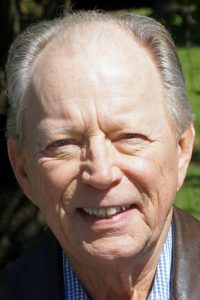
Norris commented that the robocall message was a clearly a misrepresentation of facts intended to discourage voter turnout. “This was free speech in the same sense that lying is free speech and lying is not permitted,” he said. “What they were perpetrating was a fraud.” The AP story was picked up by the Huffington Post, ABC News, Washington Post and several other news organizations.

Update: Norris discussed the ruling and its implications in greater detail on WJZ/CBS Baltimore on December 7 (see video).

Thomas Schaller, Political Science, in the Baltimore Sun

In his latest Baltimore Sun commentary, “Newt Gingrich Is the GOP’s Only Serious Candidate,” UMBC political science professor Thomas Schaller argues that despite claims of his unelectability, Gingrich stands out as unique in the GOP presidential field. Schaller calls Gingrich “the Republicans’ one-man walking, talking think tank” and argues, “he will be able to conduct a serious debate about America’s future because he’s the only GOP contender who has spent the past three decades actually pondering the problems, large and small, facing the country.” Read the column to learn more about Schaller’s 2010 interview with Gingrich and their conversation on Gingrich’s book “To Save America.”

Donald Norris, Public Policy, in The Urbanite

This month’s Urbanite cover story “El Nuevo Baltimore” begins with a compelling premise: “Baltimore’s burgeoning Hispanic community could be a force for broader change—but only if we can make them welcome here.” In the extensive piece, Donald Norris, chair of public policy at UMBC, explains why the economic impact of Latino Baltimore residents has so far been limited, despite robust population growth.
Norris suggests that currently “there is only so much in the form of gentrification that they can do,” given that many Latinos who move to the US are working class and “here for the economic opportunity.” The article notes that Baltimore’s Latino population currently has a median household income of $37,868, versus $54,514 for white residents.