All posts by: Dinah Winnick


Thomas Schaller, Political Science, in the Baltimore Sun

In his latest Baltimore Sun column, UMBC political science professor Thomas F. Schaller, responds to the White House’s challenging month, including more Benghazi developments and scandals involving the IRS and journalist bugging.
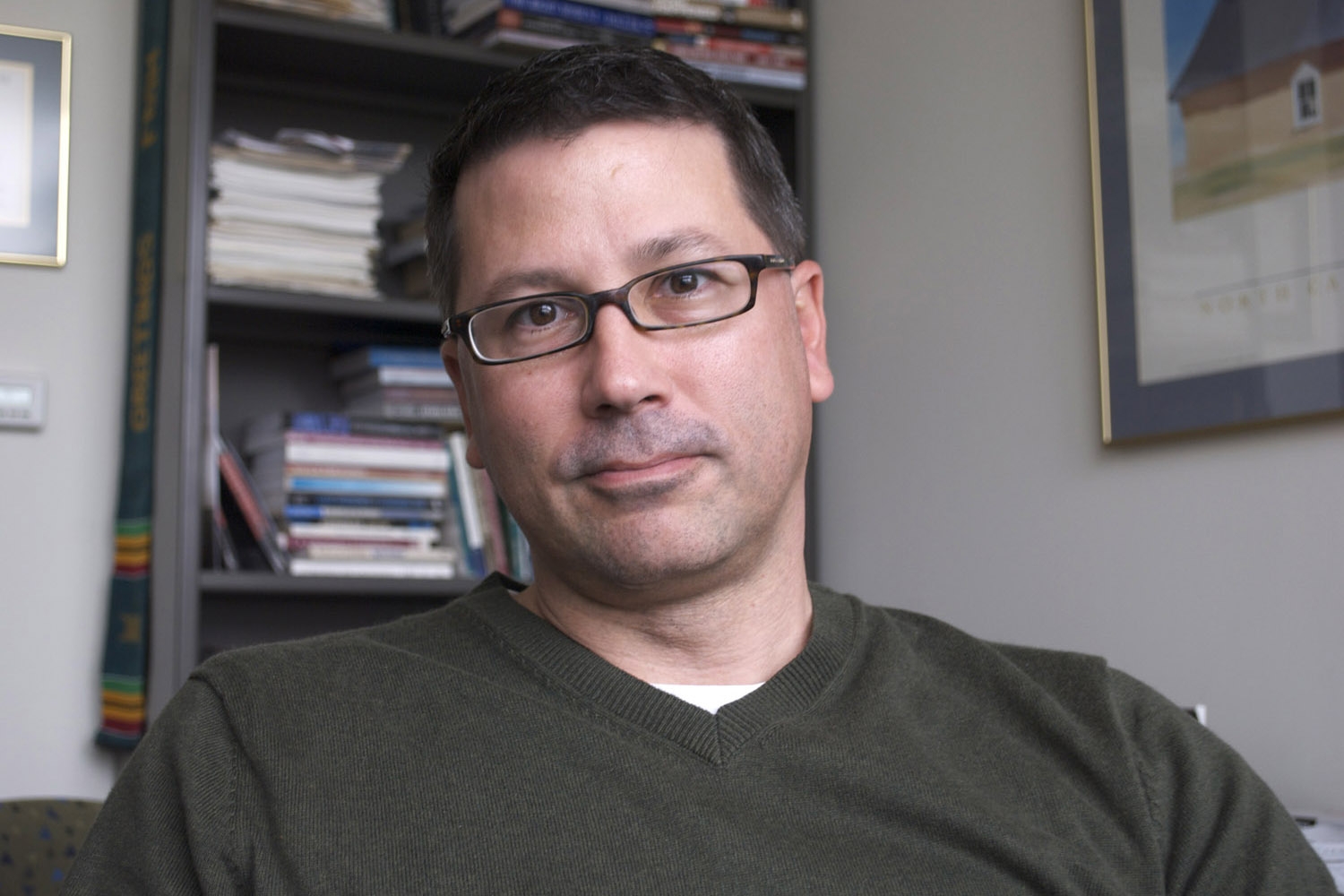
Tom Schaller“Taken separately, none of these episodes is fatal,” writes Schaller, “But, taken together, these three political problems reveal an underlying fault in President Obama’s leadership style. […] Mr. Obama too often seems politically detached.”

How has this become problematic in the Obama presidency? Schaller suggests, “We tend to equate the abuse of presidential power with its use…In Mr. Obama’s case, however, the abuse of power emanates from non-use. Failing to employ the power of the presidency to protect journalists, whistleblowers, and political opponents constitutes the abuse of power in absentia and is byproduct of this president’s political detachment.”


Tyson King-Meadows, Political Science, Elected to WYPR Board of Directors

UMBC’s Tyson King-Meadows, associate professor of political science and incoming chair of Africana studies, has been elected to the WYPR Board of Directors for a three-year term (July 1, 2013–June 30, 2016).
For the past year, King-Meadows has participated in the prestigious American Political Science Association (APSA) Congressional Fellowship Program, with his experience on Capitol Hill complementing his teaching and research on the U.S. Congress.
King-Meadows is the author of When the Letter Betrays the Spirit: Voting Rights Enforcement and African American Participation from Lyndon Johnson to Barack Obama (Lexington Books, 2011). He is currently writing a book on post-Reconstruction Era efforts by Congress to curtail deceptive election practices and to standardize election procedures.

Jeffrey Davis, Political Science, on the Marc Steiner Show

f_davisOn May 24th, WEAA’s Marc Steiner Show featured guest Jeffrey Davis, associate professor and chair of political science at UMBC, to discuss the recent guilty verdict for former Guatemalan dictator General Efraín Ríos Montt, its overturning, and possible implications for the U.S. Davis appeared alongside Anita Isaacs, associate professor of political science at Haverford College.

Contextualizing the court cased, Davis told listeners, “This is a trial based on a genocide that took place during Guatemala’s 30-year civil war. During that war more than 200,000 people were killed. 40,000 or more were disappeared. That’s around 3% of their population. To give you an idea, that’s about 8 million Americans if you put it in our terms.”

Davis is the author of Justice Across Borders: The Struggle for Human Rights in U.S. Courts (2008) and the forthcoming Seeking Human Rights in Latin America: Truth, Extra-Territorial Courts and the Process of Justice (Cambridge Univ. Press, Nov. 2013).

Roy Meyers, Political Science, on MarylandReporter.com

This week the OpenGov Foundation and MarylandReporter.com led a focus group to examine transparency in Maryland politics and government. Conversation centered on the Maryland General Assembly website, redesigned in December 2012. The groups also asked for feedback on the website from external experts, including UMBC political science professor Roy T. Meyers.

Roy Meyers (UMBC)Meyers told MarylandReporter.com that he was glad the new site moves away from the previous subscription model, which charged a fee to access the most current legislative information. However, he critiqued “delays in [posting] voting records on second and especially third reading.” The article suggests this problem is in part due to a policy that gives senators and delegates until the end of the business day to record or change their electronic votes in the case of a mistake or malfunction, delaying final tallies.

Sunil Dasgupta, Political Science, in the Gazette

Sunil Dasgupta USG“The lesson we’ve learned over these last 10, 15 years is no matter how good your [crisis management] plan is, it’s always going to fall short,” says Sunil Dasgupta in today’s Gazette.

Dasgupta, director of UMBC’s political science program at the Universities at Shady Grove (USG) and non-resident Senior Fellow at the Brookings Institution, is co-teaching a crisis management class at USG. The point of the course, he explains, is not to prepare for specific disasters, but to get students thinking about how to build resilience and make decisions in catastrophic situations that they cannot fully plan for or predict. Although many students in the course have not yet selected majors, Dasgupta says he hopes some of them will explore careers in crisis management.

Donald Norris, Public Policy, in the Baltimore Sun

Maryland Gov. Martin O’Malley today signed a bill banning the sale of assault weapons, limiting magazines to 10 bullets, requiring handgun purchasers to submit fingerprints and get a license, and creating penalties for people who don’t notify police when their firearms are lost or stolen. The Baltimore Sun reports that gun control advocates are now planning Baltimore-area TV ads to bolster support among Maryland voters, in case of a future referendum or campaigns to oust lawmakers who backed the bill in the General Assembly.

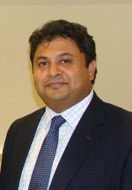
Donald Norris UMBCThis ad buy begs the question: Could Maryland’s anti-gun control community gather enough support to change course in the state? The NRA’s threats “scared the pants off Congress,” says Donald F. Norris, professor and chair of public policy at UMBC. But, he clarifies, the national stage and state are different matters.

Asked about potential efforts to remove legislators who supported the gun control bill, Norris noted, “Whether that will work in Maryland, I’m not so sure. My gut tells me no. They might be able to knock off a few people, but I think it’s very much a long shot.”

Thomas Schaller, Political Science, in the Baltimore Sun

Tom SchallerIn his latest opinion column for the Baltimore Sun, UMBC political science professor Thomas F. Schaller takes on accusations surrounding the recent U.S. Department of Homeland Security purchase of large quantities of ammunition (up to 1.6 billion rounds in some reports)—including claims that the Obama administration is arming itself while simultaneously trying to disarm the citizenry through gun control legislation.

In researching the purchase, Schaller found:

It turns out the order is closer to 750 million rounds and covers a five-year period and the 70,000 federal officers who require firearm certification or retraining. That’s roughly 2,200 rounds per officer per year; recreational gun users often dispense several hundred rounds during a single firing range visit.

Schaller concludes that this “scandal” is more conspiracy than legitimate critique of government overreach. He suggests that gun advocates would benefit from ignoring such distractions and instead focusing on what he identifies as real examples of government abuse of power, or addressing the risks that can come with gun ownership.

Scott Farrow, Economics, Publishes “Principles and Standards for Benefit-Cost Analysis”

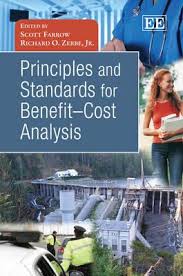
PrinciplesEconomics professor Scott Farrow is co-author and co-editor, with Richard Zerbe, Jr., of the new book, Principles and Standards for Benefit-Cost Analysis (Edward Elgar Publishing 2013). The book website notes:

Benefit–cost analysis informs which policies or programs most benefit society when implemented by governments and institutions around the world. This volume brings together leading researchers and practitioners to recommend strategies and standards to improve the consistency and credibility of such analyses, assisting analysts of all types in achieving a greater uniformity of practice.

Reviewer John D. Graham of Indiana University writes, “This book is a superb textbook treatment of benefit-cost analysis. It is well designed for students in public policy, public administration, public health, social work, environmental affairs, law and business.”

Larry DeWitt, Public Policy, Publishes “The Other Welfare”

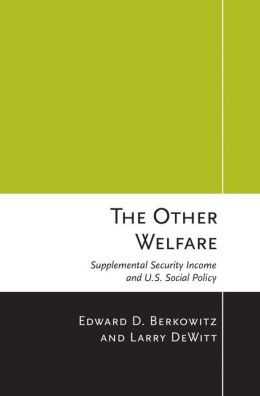
The Other WelfareLarry DeWitt, public policy Ph.D. student and former public historian for the U.S. Social Security Administration, has published the new book The Other Welfare: Supplemental Security Income and U.S. Social Policy (Cornell University Press 2013) written with co-author Edward D. Berkowitz.

The book offers a comprehensive history of Supplemental Security Income (SSI), from its origins in 1972 as part of President Nixon’s social reform efforts to its pivotal role in the politics of the Clinton administration.

Reviewer Christopher D. Howard (College of William & Mary) writes, “Calling The Other Welfare one of the best histories of a U.S. social program would be true, but that would not be strong enough praise…Edward D. Berkowitz and Larry DeWitt take a relatively unknown social program and make its history seem absolutely central to the history of U.S. social policy.”

John Rennie Short, Public Policy, Publishes “Stress Testing the USA”

Stress Testing the USA: Public Policy and Reaction to Disaster Events, a new book by professor of public policy John Rennie Short, arrives in stores tomorrow!
[youtube http://www.youtube.com/watch?v=DcUEyXn28hI]
Stress testing is a procedure, common to fields from medicine to engineering, that is used to reveal a system’s weaknesses. In his new book, Short applies this concept to analyzing four serious traumas the United States experienced at the start of the 21st century: the invasion of Iraq, Hurricane Katrina, the financial meltdown, and the BP oil spill.

In Stress Testing the USA (Palgrave MacMillan), Short identifies specific structural flaws with the potential to fracture our nation: a large, active military that promotes a state of permanent war; an aging physical infrastructure with bridges and roads that receive failing grades; financial and corporate deregulation; and a blind acceptance of institutions’ increasingly risky behavior.

Identifying these systemic problems clarifies a broader concern for Short: our tendency to sideline unpopular perspectives or more subtle voices that might alert us to possible threats. “For every event there was a small group of people who new exactly what was happening,” says Short, “we just didn’t listen to them. So the point of the book is we should be more careful and more attentive to alternative, dissident voices.”

His book website notes, “Illuminating and relevant, Stress Testing the USA is a guide to what ails the United States and what needs to be done to fix it that proves essential to any scholar of public policy, current affairs, or disaster management.”

Donald Norris, Public Policy, in the Baltimore Sun and AP

Donald NorrisMaryland Lt. Gov. Anthony G. Brown is widely expected to officially announce his candidacy for governor today in his home county of Prince George’s. Donald F. Norris, professor and chair of public policy at UMBC, told the Baltimore Sun that support from current Gov. Martin O’Malley is one of the reasons Brown is the “odds-on favorite” for the job.

“He’s going to have the governor’s endorsement, and he will have access to the governor’s election organization,” Norris said, in an AP story on the anticipated announcement. These factors could give him a notable advantage over potential opponents, such as State Attorney General Doug Gansler.

Erickson School Presents Institute for Leaders in Senior Living

This week, UMBC’s Erickson School is spearheading the Executive Director Leadership Institute (EDLI) at the annual conference of the Assisted Living Federation of America (ALFA) in Charlotte, North Carolina. The program has expanded from 40 to 200 participants in just one year. It offers a rigorous curriculum designed for rising community leaders in the senior living industry.

Chris Hollister, Southern Assisted Living co-founder and senior fellow at the Leadership Institute at the Erickson School, serves as EDLI 2013 co-leader; Erickson School Dean Judah Ronch serves on the EDLI faculty. Their curriculum will address topics from senior community culture to best practices for memory-impaired residents.