We use cookies for analytics and, unless you opt out, advertising.
You can opt out of advertising at any time.UMBC uses essential cookies to run this site. With your permission we would also use analytics cookies (to understand how the site is used) and advertising cookies (to measure and target our ads on other platforms). Nothing else loads unless you accept. You can change your choice any time from Cookie Settings in the footer.Privacy Policy
EssentialRequired for the site to work (login, security, your cookie choice). Always on.
Degree: B.A., Social Work (minor: psychology) Hometown: Catonsville, MD Plans: Master’s of social work
“Being older than most students, I didn’t know if I’d have a place, but becoming part of UMBC’s Returning Women Student Scholars program gave me that community that I really wanted.”
Jane De Hitta ‘22 was initially drawn to UMBC by its strong academic reputation and she quickly fell in love with the university. As a social work major who had long worked with adults with disabilities, she wanted to invest in the lives and stories of those around her. But when faced with a cancer diagnosis and chemotherapy, she knew she needed a break to focus on herself. She also knew UMBC would be there to welcome her back when she was ready.
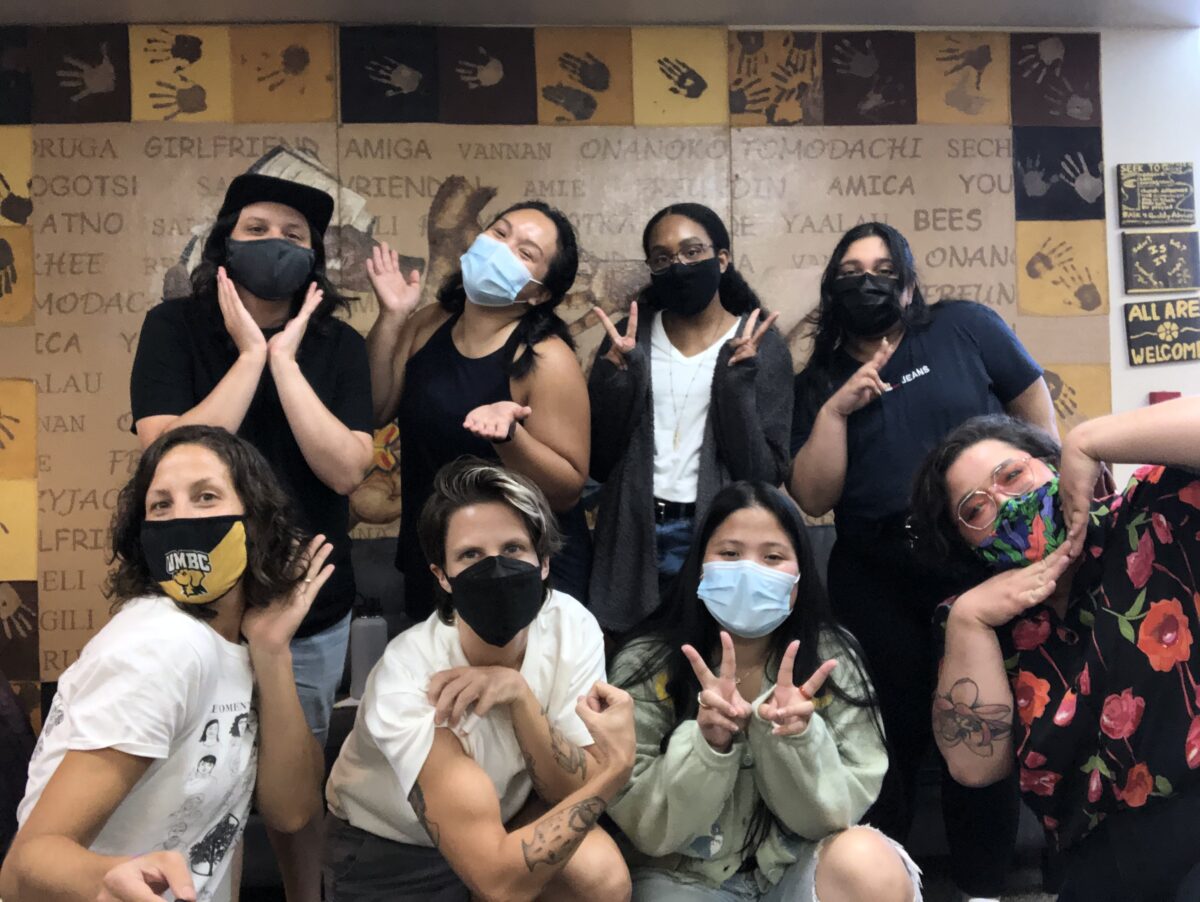
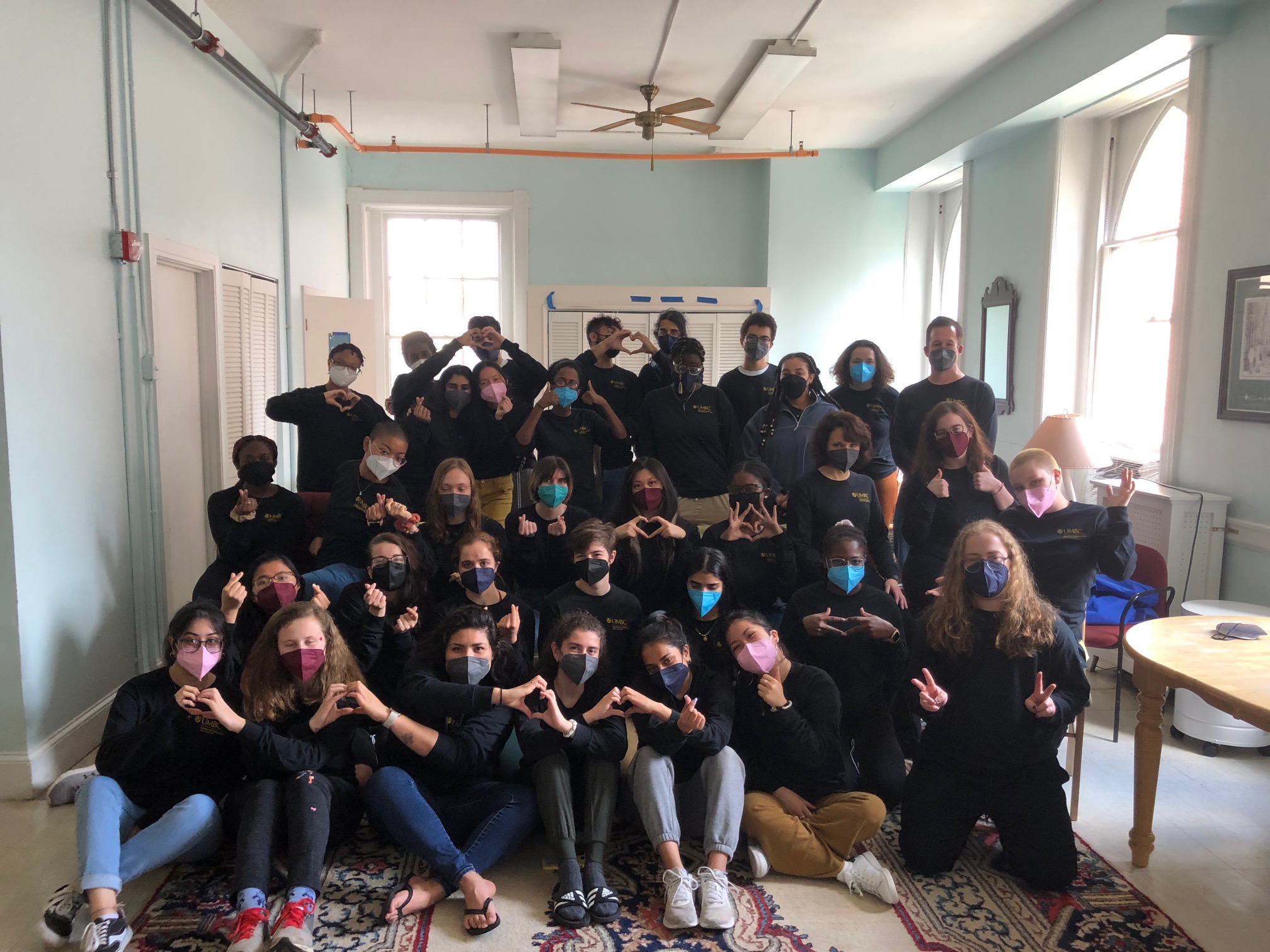
Jane De Hitta (top row, second from left) with Women’s Center staff. (Image courtesy of De Hitta)
That welcome came in the form of an email about a scholarship administered by UMBC’s Women’s Center to support adult learners returning to complete their degrees. De Hitta not only received the scholarship, but also became a social work intern in the Women’s Center, where she could support other returning students on their journey.
She looks forward to a research, policy, and advocacy career focused on helping others navigate challenging systems to reach their goals.
Degree: B.A., Sociology Hometown: Woodstock, MD Plans: CASA of Baltimore board member and volunteer
“Students can come to UMBC and get a whole new experience of working with different types of people on different levels, and it is a great experience. I’m very proud to be part of the school.”
Charles Harris ‘22 is graduating this month at the age of 80, after beginning his college journey and his military career in the 1970s. Reaching this lifelong goal is such an important occasion for him and his family that he and his wife postponed their 50th wedding anniversary plans to celebrate the achievement.
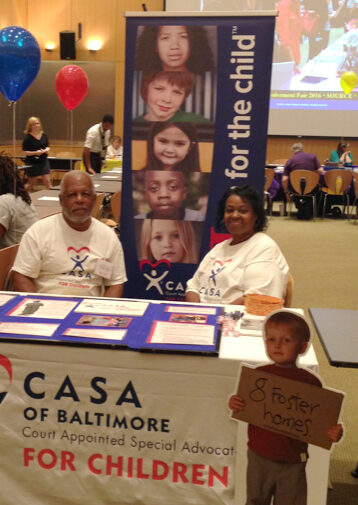
Charles Harris promoting CASA of Baltimore’s advocacy work. (Image courtesy of Harris)
He’s adding a sociology degree to a powerful list of achievements, including a career focused on child welfare at CASA of Baltimore and other child welfare organizations, as an IT specialist at the Social Security Administration, and in the U.S. Army (retired).
Harris and his wife of 50 years opened their home to raise over 100 children. This includes their own biological and adopted children, children under their guardianship, and many others. He has volunteered with and is on the board of CASA, which provides court-appointed special advocates to speak for the best interests of abused and neglected children involved in Baltimore’s juvenile court system.
“My wife and I, we have taken in kids that were neglected or abused and homeless. This is a commitment we made,” he shares. He also made a commitment to himself to complete his college degree. Thanks to the support of Hope Weisman, transfer academic advocate in UMBC’s Academic Success Center, and others, he is now crossing the stage to receive his bachelor’s degree.
UMBC’s annual Undergraduate Research and Creative Achievement Day—known on campus as URCAD—has long been a must-see event. It’s a chance for community members to get a glimpse of what students have dedicated hours to exploring and creating throughout the year. This year, many wondered if the event would be in person, as COVID cases dipped, but URCAD XXVI will again be online, for the third year in a row, starting today. Why? Going virtual has boosted access and engagement.
During the pandemic, what was once a day-long in-person event shifted gears. The new online URCAD format that launched in 2020 spanned a full week. The virtual format enables community members to easily browse projects, performances, and creative works of all types. With VoiceThread, student researchers upload poster presentations, performances, and visual artwork, adding commentary and responding to questions from the online audience over a period of days rather than hours.
For each of the past two years, audiences have tuned in from nations around the world at all hours of the day, yielding unprecedented engagement.
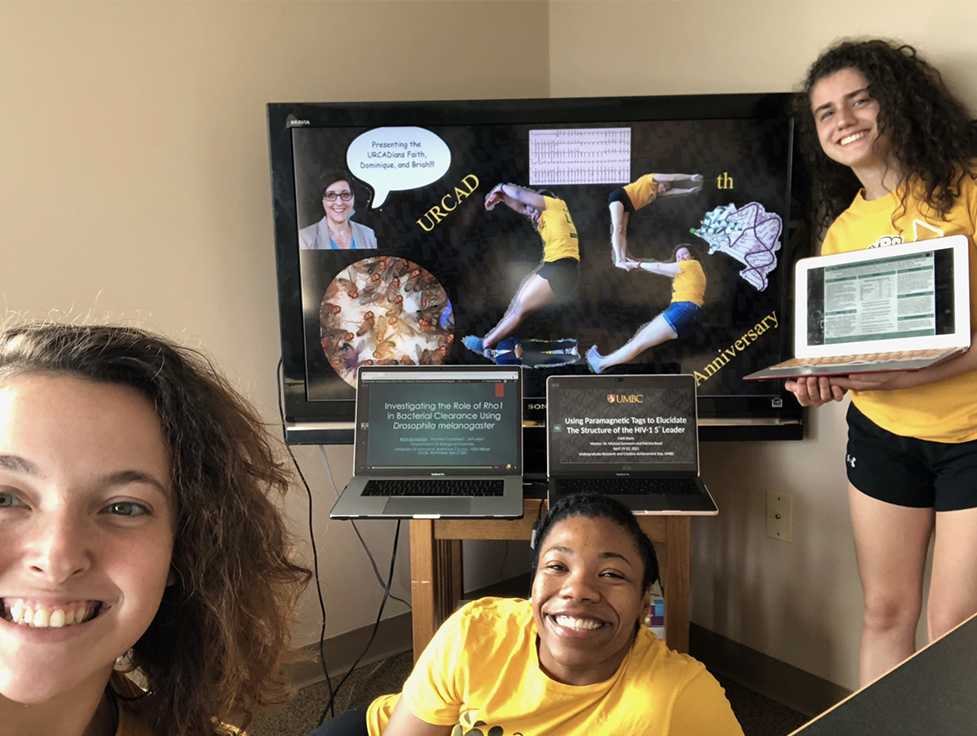
Faith Davis, left, the winner of the 2021 URCAD selfie contest, with her roommates and their URCAD presentations. Photo courtesy of Davis.
This year the event will take place April 18 – 24. Student creativity is on display, not just in the work itself but in how each presenter uses the online format to their advantage. Many share their work in ways that wouldn’t be possible at an in-person event with physical posters and more traditional presentations and performances.
Here are four tips from faculty whose students have participated in URCAD in years past on how to navigate this exciting event.
#1 Set aside more time than you expect. You’ll use every minute.
“Because you’ll be blown away by the depth and creativity of everyone’s projects, give yourself time to fully experience presentations, from start to finish,” says Lia Purpura, writer in residence at UMBC. “As when attending any big conference—pace yourself.”
Consider starting by taking the time to explore the full list of URCAD projects, which is available by student name and department. You can search for specific terms that interest you, or peruse “sneak peeks” of highlighted projects.
#2 Post a comment or question—it makes a huge difference.
“Interact with the presenters via VoiceThread. Since this year is virtual, the presentations will be live over several days and presenters will have a chance to answer questions and take comments within the VoiceThread platform,” explains Corrie Parks, assistant professor of visual arts.
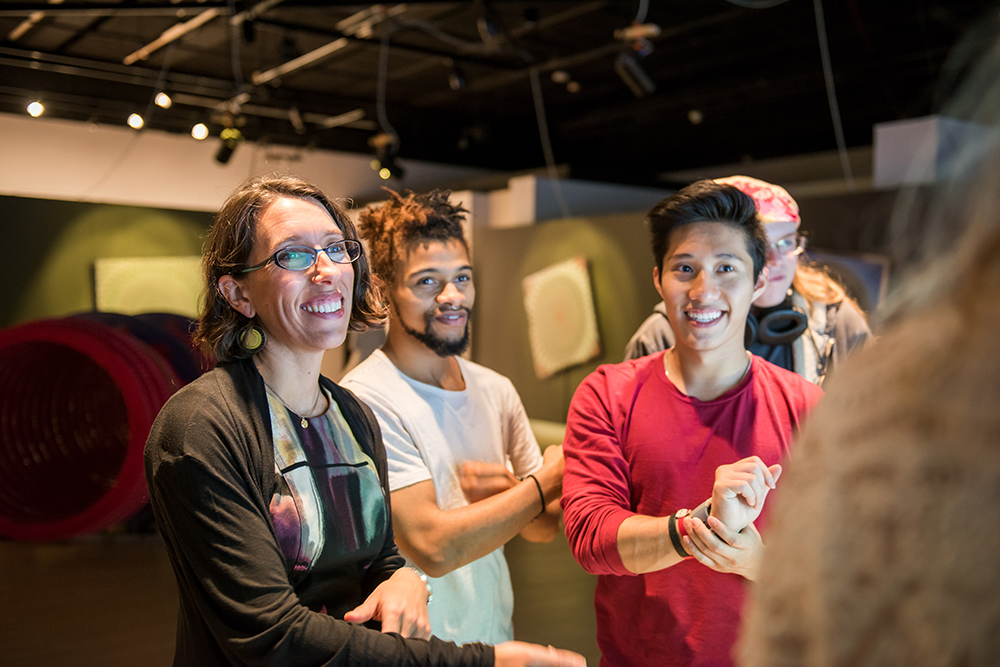
Corrie Parks, visual arts, smiles with students at an art exhibit.
Parks’ students often share their animations through URCAD. “As a presenter, it’s a great encouragement to get a question or comment, because then they know someone is watching their presentation,” she shares. Instructions on how to use VoiceThread are available through an online visitor guide.
#3 Seek out projects on topics that are new to you.
URCAD is a great chance for people interested in the same topic to connect with each other. It’s also a wonderful opportunity to explore something that’s entirely new.
Marc Olano, associate dean of academic programs and learning for UMBC’s College of Engineering and Information Technology, says, “Don’t forget the creative achievement pieces. There can be a lot of focus on the research side of the Undergraduate Research and Creative Achievement Day, but the artistic work is well worth checking out!”
Olano is also director of the game development track in computer science, so it’s no surprise when he shares, “I am, of course, partial to the games!”
#4 Always catch the keynote speaker. They offer relatable advice.
“The keynote is with no doubt a highlight of the event. It usually is a perfect combination of inspiring work accomplishments and career advice at the personal and professional level,” says Fernando Vonhoff, assistant professor of biological sciences.
Fernando Vonhoff, biological sciences, works with a student in his lab.
“It is encouraging for anyone to hear from people who had to work hard and overcome all kinds of challenges to get where they are now,” Vonhoff says. “Most importantly, we get a realistic feeling that we can do it, too.”
This year’s keynote speaker is Kaitlyn Sadtler’11, biological sciences, introduced by President Freeman Hrabowski. Sadtler is an Earl Stadtman tenure-track investigator at the National Institute of Biomedical Imaging and Bioengineering, a division of the NIH, and a UMBC Alumni Award winner.
Portrait of Kaitlyn Sadtler by Bret Hartman/TED, provided by Sadtler.
Sadtler will discuss her work studying SARS-CoV-2 infections as well as her path from student to scientist.
Participants and attendees alike are invited to share their URCAD advice, experience, and congratulations to students via #UMBCurcad.
Featured image: An illuminated signboard welcomes people to URCAD. All photos by Marlayna Demond ’11 for UMBC, unless otherwise noted.
In a large room, around 30 participants sat in two semi-circles of foldable chairs facing a panel of people invested in Baltimore and connected to UMBC. Despite the perfect spring break weather, these UMBC students weren’t on vacation. Instead, they gathered around three blue coffee-stained rugs of different shades and sizes with brightly marked poster paper on the walls depicting the community standards like “Take space when you need it,” “Listen non-judgmentally,” and “Don’t be afraid to ask questions.” Pens move steadily across the pages of students’ decorated notebooks.
It was the first day of Alternative Spring Break (ASB), a week-long program hosted by the Center for Democracy and Civic Life and coordinated by Faith Davis ’22, sociology and biological sciences, the Center’s community civic engagement intern. “Our program is student-led, so it evolves and takes new forms every year,” explains Davis. “By staying in Baltimore, we are able to equip participants with the tools and knowledge to contribute to sustainable change regarding the social issue their group focuses on. We believe that students are capable contributors to a better world, and ASB orients them to become aware of that.”
“Alternative Spring Break is about opening the door to sustained engagement in Baltimore,” said David Hoffman, Ph.D. ’13, language, literacy, and culture (LLC), and Romy Hübler ’09, modern languages and linguistics, M.A. ’11, intercultural communications, Ph.D. ’15, LLC, director and associate director ofthe Center, respectively.“Participants learn about the systemic and human dimensions of issues affecting the city, make connections with people doing creative and important work, and discover opportunities to make their own meaningful contributions.”
Learning to ask good questions
This year ASB consisted of three student-led groups: Immigrant Health Equity, K-12 Education Equity, and Transformative Justice. The first session of the week: “Contextualizing Baltimore,” allowed for all of the students to engage with the content together. Campus and community leaders discussed the reality of Baltimore City as separate from the negative stereotypes that are sometimes associated with it.
“Baltimore has a very rich history… the persistence of the negative narratives are by design,” Eric Ford, director of the Choice Program shared. “When you hear stuff you should always question what people mean and who it’s coming from. Ask questions not just of people with the title, but also with the people who don’t.”
David Hoffman introduces panelists, from l-r: Eric Ford, and UMBC professors Jodi Kelber-Kaye, Kate Drabinski, and Felipe Filomeno.
Throughout the week, UMBC students in each of the ASB groups would follow Ford’s exhortation and ask hard questions—of their community guides and also of themselves, ultimately using the week to begin building relationships with organizations focused on education, provision of services, and advocacy.
Approaching education critically
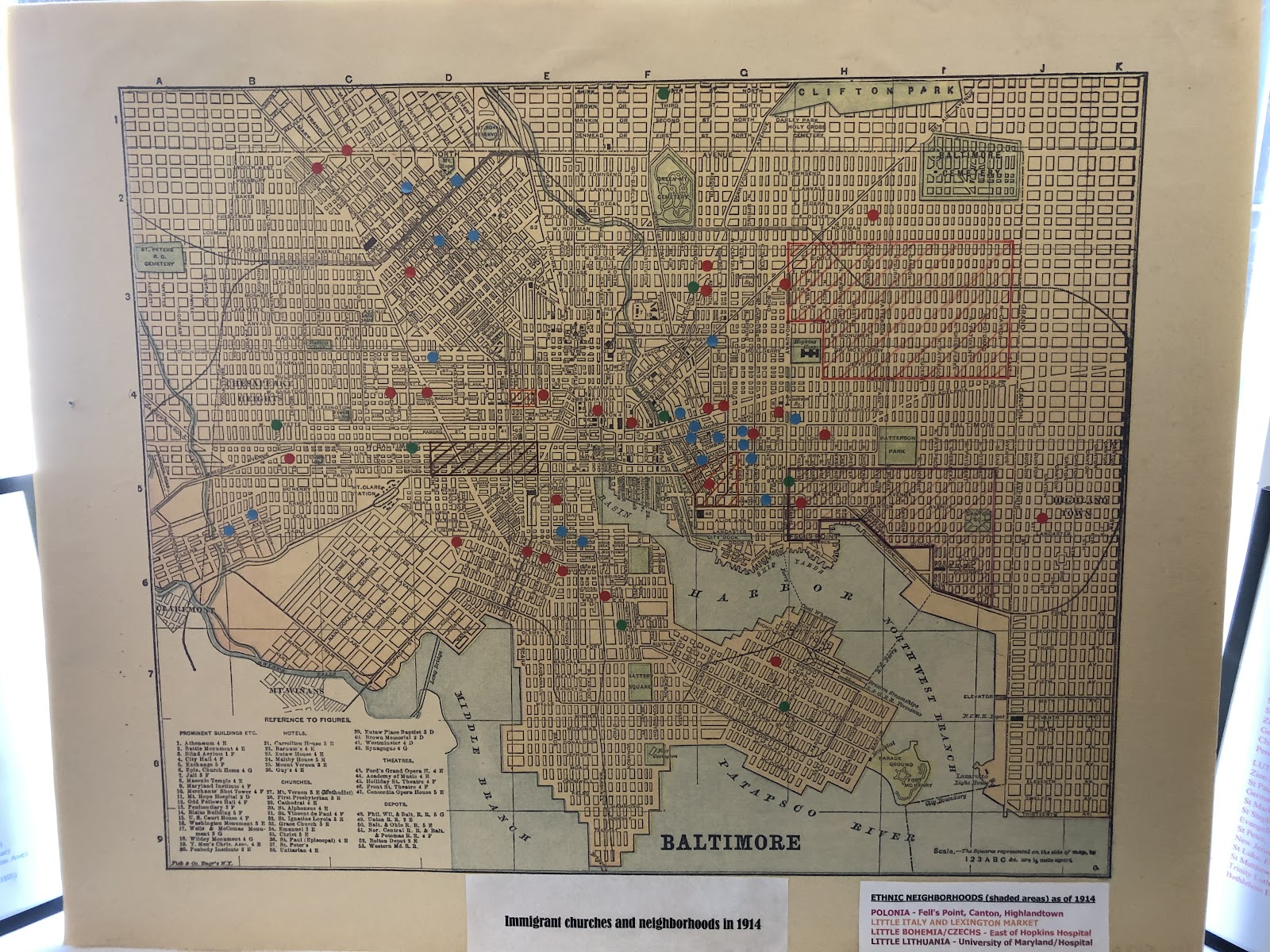
As Retrievers know, learning is a continuous process, and the Immigrant Health Equity group exemplified that by seeking more in-depth knowledge of the immigrant communities in Baltimore. They traveled to a small museum situated next to a beautiful little church to hear a speech about immigrant trends from the beginning of America to current times.
Inside the museum, students gather around the different stations before heading into the city.
At the end of the lecture, Mokeira Nyakoe ’23, health administration and policy—one of the student leaders—shot her hand up, inspiring others to follow. Students raised critical questions about the information they were given and continued to interact with the docent as they queried for more in-depth information on Black immigrant experiences and the historical context and impact on current immigrant restrictions. After the facilitation ended, students actively reflected on the history they heard—and didn’t hear—by traveling to different parts of Baltimore with immigrant communities and supporting local businesses.
New ways to dream
Learning in many ways is a foundation for bringing about the changes you want to see. The Transformative Justice group went to meet with H.O.P.E (Helping Oppressed People Excel) an organization dedicated to providing relief and advocacy for previously incarcerated individuals.
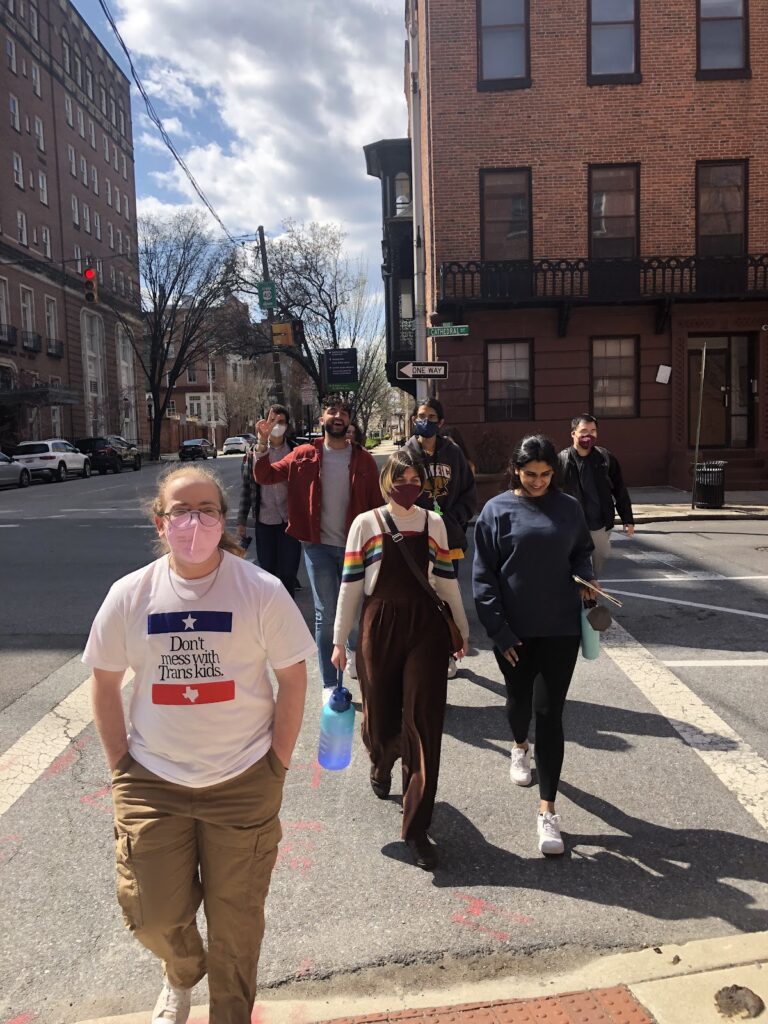
Students walk to Emmanuel Episcopal Church where H.O.P.E operates.
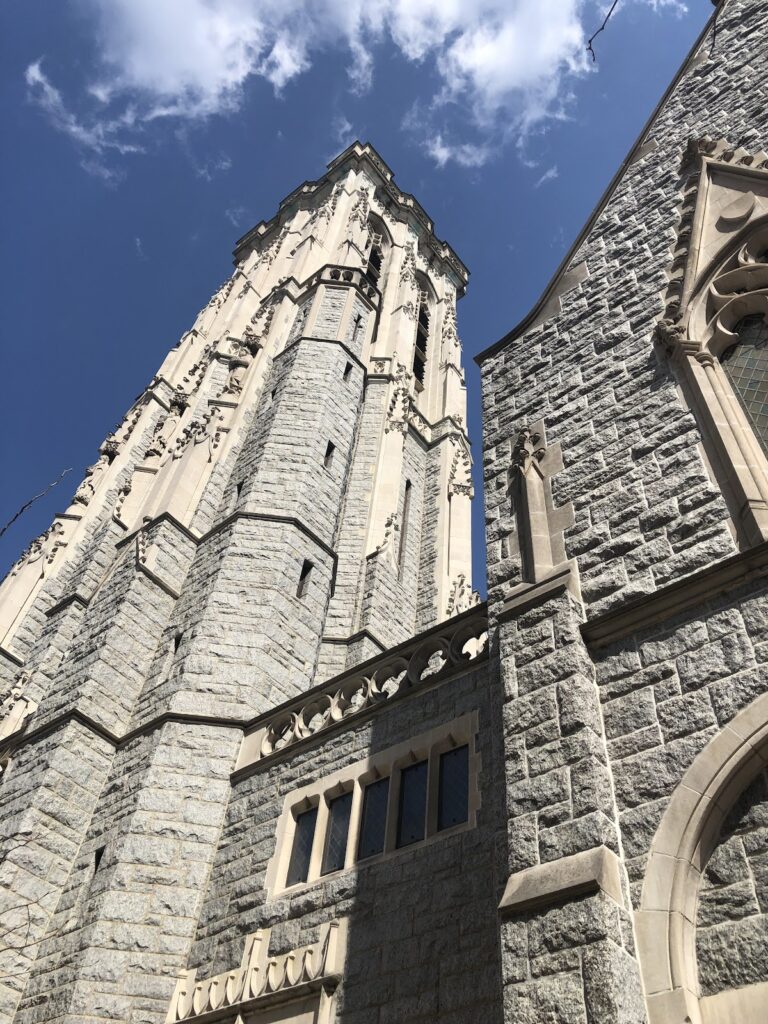
Antoin Quarles, the founder of H.O.P.E, met with the students in midtown Baltimore, guiding them through an ornate building that reached for the heavens. Inside, the walls held both the solemn faces of long-dead church leaders and colorful Black Lives Matter flyers with pictures of Quarles standing side-by-side with Maryland leaders.
Quarles started the session by sharing his past. What started as a heartbreaking story—the result of generational trauma and systemic racism which had transformed the streets of Baltimore into “a battleground” and left Quarles in prison multiple times—eventually evolved into a story of direct advocacy, when Quarles founded H.O.P.E. “Whether it be finding housing, auto insurance, or a job, prison puts a noose around your neck which you can never escape from,” Quarles relayed.
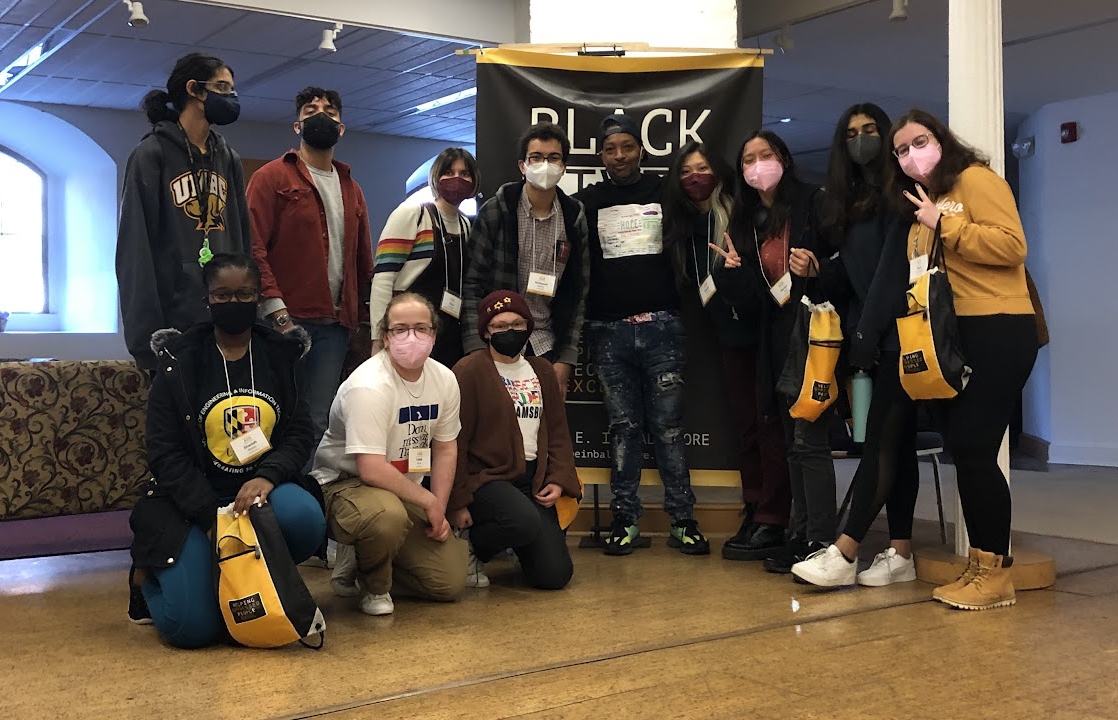
The Transformative Justice group poses with Quarles in the center.
While also assisting with resources like expungements, clothes, and backpacks, the organization’s main focus is advocacy. Spearheaded by Quarles, the organization fights for changes in housing, insurance, job market, and hospitals relating to the treatment of formerly incarcerated individuals. “Before, I wouldn’t ask myself, ‘Did I like prison? Did I consider [going to prison] normal? Was I scared?’ Those were questions I didn’t ask myself,” says Quarles. “But now, I would lose my mind because of the freedom I have learned to have for myself. Before, I felt comfortable living terribly.” Quarles sees it as his life’s work to support other released folks in walking down a different path.
As UMBC students listened to Quarles’ overview of what H.O.P.E has accomplished, ASB student leader Wendy Zhang ’23, psychology and economics, immediately inquired on how students could get more involved. “The way you dream is determined by what you are exposed to,” reflected Shaniah Reece ’23, information systems, as the students sat arranged in a semicircle around Quarles.
A need-based community approach
Meanwhile, the K-12 Educational Equity group toured Lakeland Elementary and Middle School. Colorful artwork decorated almost every inch of the school and the students conversed freely in Spanish and English. The school was described by the ASB students as a “happy and inviting” place.
Ramona Dowdell, the community school coordinator, explained the importance of a community school. Lakeland Elementary and Middle is interwoven with the surrounding neighborhoods, which largely are home to an underserved Central American immigrant population. On top of the academic work that a school usually does, Lakeland—in partnership with UMBC and other organizations—also provides bilingual education, a food pantry, communal baby showers, college advising, giveaways of backpacks, uniforms, and more. Because the school is connected to the parents and guardians of their students in multiple ways, Lakeland can provide programs and resources based on their unique needs.
ASB students tour Lakeland.
During the tour, ASB participants walked past the MedStar mobile health center to unload a van full of grocery bags to a table set up right outside the school, where people from the community could grab what they needed. UMBC students saw the patch of dirt that come spring would transform into a garden, a soundproof studio where kids could record songs, and space for residents of the area to do their laundry.
Throughout their time there, students were warmly welcomed and given more information from the principal, Dowdell, and Brian Francoise, project director of Lakeland Community and the STEAM Center, one of the many members of UMBC tied to the community of Lakeland.
While reflecting on the group’s experience, Karen Griffin ’23, biology, began to ask more questions like, “Why is there not a push to have more community schools around Baltimore? What would my childhood, as someone who grew up low-income in Baltimore City, have looked like if my neighborhood had a community school?”
Investing in the communities around you
ASB participants, leaders, and staff from the Center for Democracy and Civic Life pose together at the end of the week.
UMBC’s 2022 ASB took the first steps of building and maintaining long-term relationships with Baltimore organizations and deconstructing the idea of the city that often finds its way to the front pages. Together, participants unpacked ways to build trust with the respective communities their groups worked with, while not assuming what those needs are.
“The idea of an ‘Alternative Spring Break’ on college campuses has been around since the 1980s and was meant to provide students with a meaningful alternative to going to the beach all week” explains Davis, the student organizer. “The idea has since been commercialized, and many schools travel to a location, hours away, do service with an organization, and then return to their home campus. The ASB program at UMBC is unique because the goal is not to find something to fill your spring break but to use your spring break as an introduction to how meaningful change is made in Baltimore City.”
*****
Header image provided by the Center for Democracy and Civic Life.
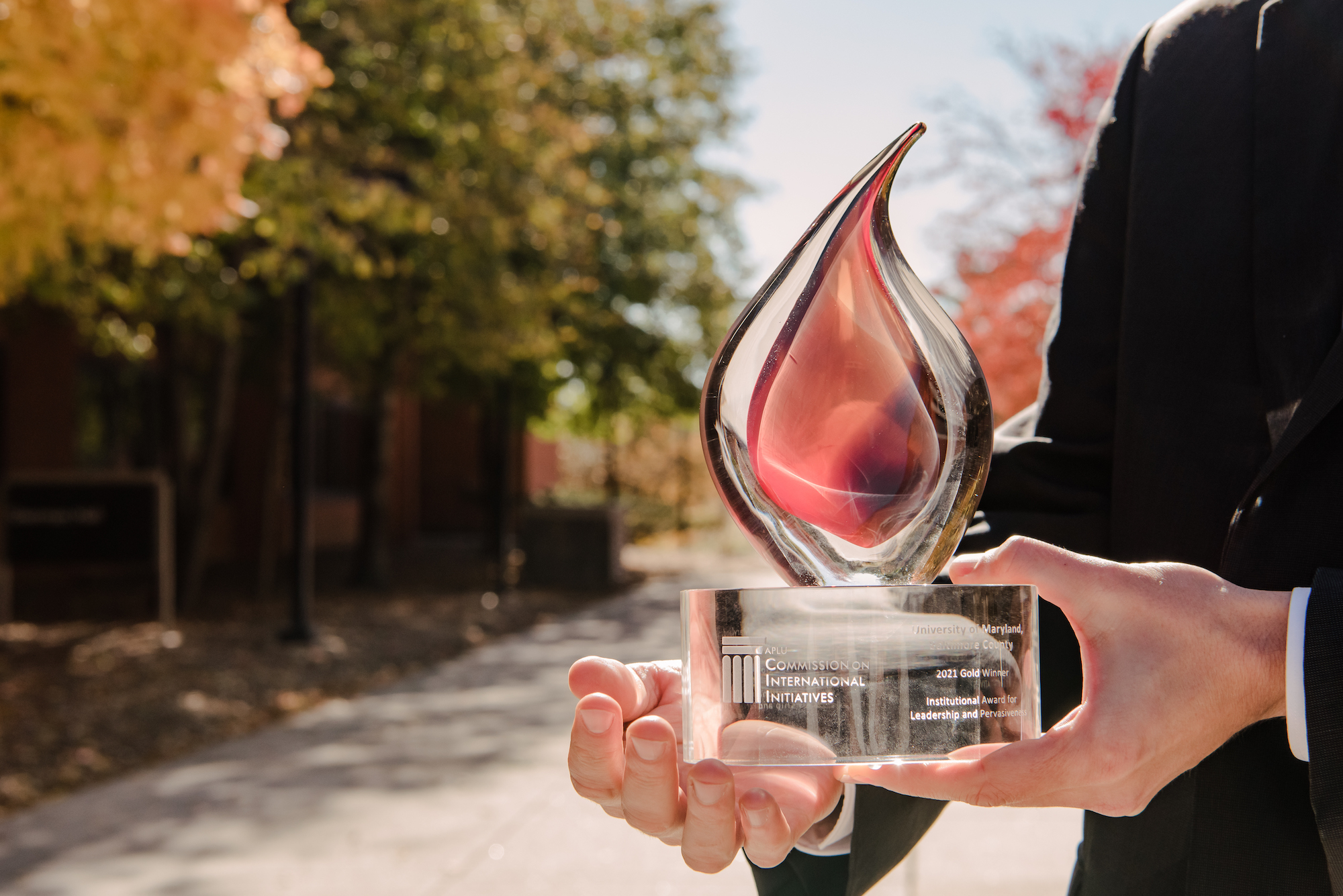
The Association of Public Land-Grant Universities (APLU) has honored UMBC with its 2021 Gold Award in Leadership and Pervasiveness for Internationalization. UMBC is the only North American university to receive this prestigious Gold Award. This honor affirms the collective, intentional work behind UMBC’s global engagement strategy.
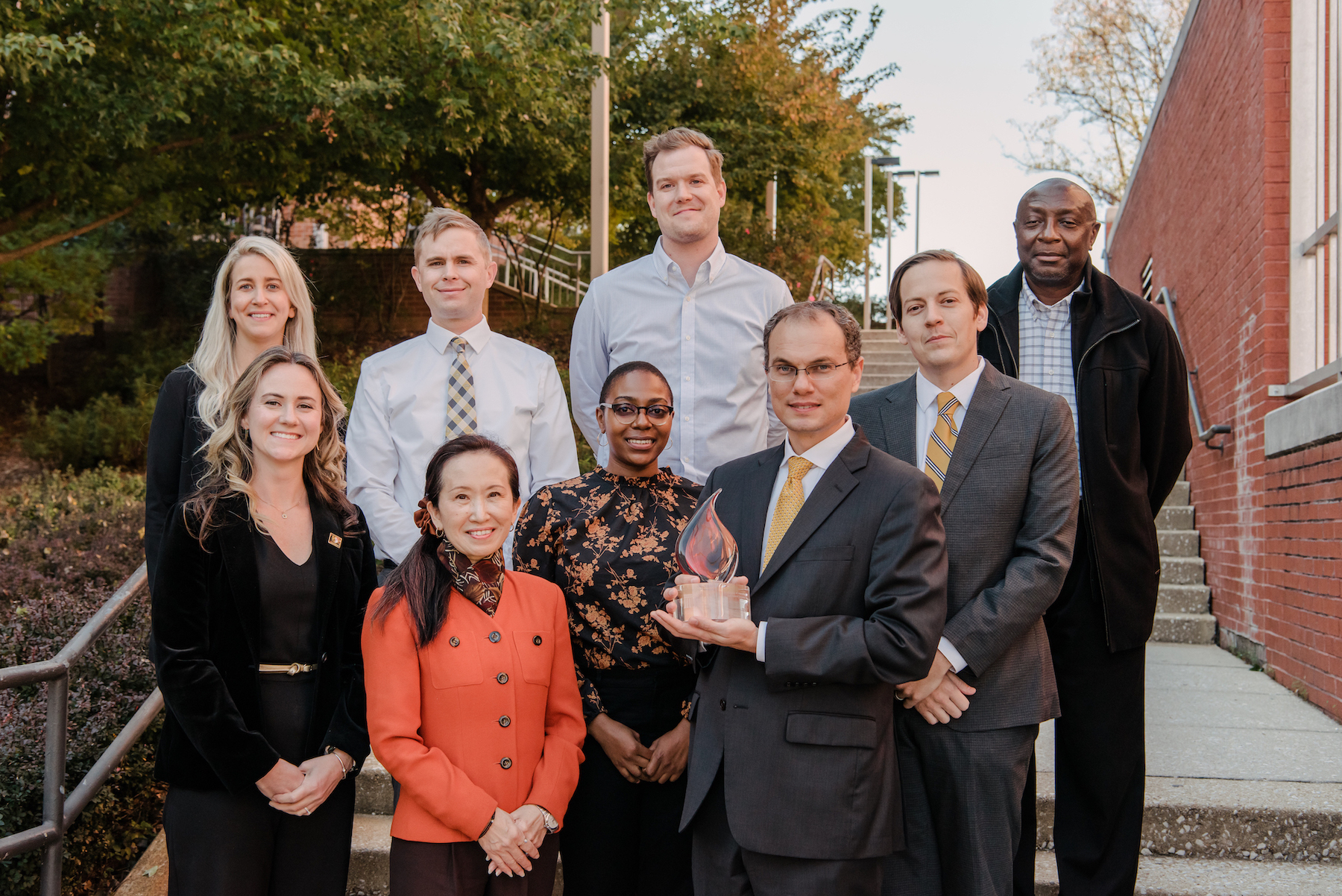
Staff from UMBC’s Center for Global Engagement, with David Di Maria holding the 2021 Gold Award.
Working toward a vision
APLU’s driving purpose is to strengthen and advance the work of public universities, from improving college access to promoting public impact research. “In our increasingly globally linked world, internationalization of campuses is critically important for the excellence of education, research, and community engagement work,” said APLU President Peter McPherson.
APLU asserts that to be successful, today’s universities can’t simply note the importance of global engagement and inclusivity. They also need to have campus leadership committed to creating a campus culture that reflects this value. And UMBC President Freeman Hrabowski agrees.
“It’s important for institutions to have a clear understanding of their values, and also to find ways to assess whether they are living up to those values,” Hrabowski says. “At UMBC, we take this seriously, and that includes our focus on growing international inclusivity.”
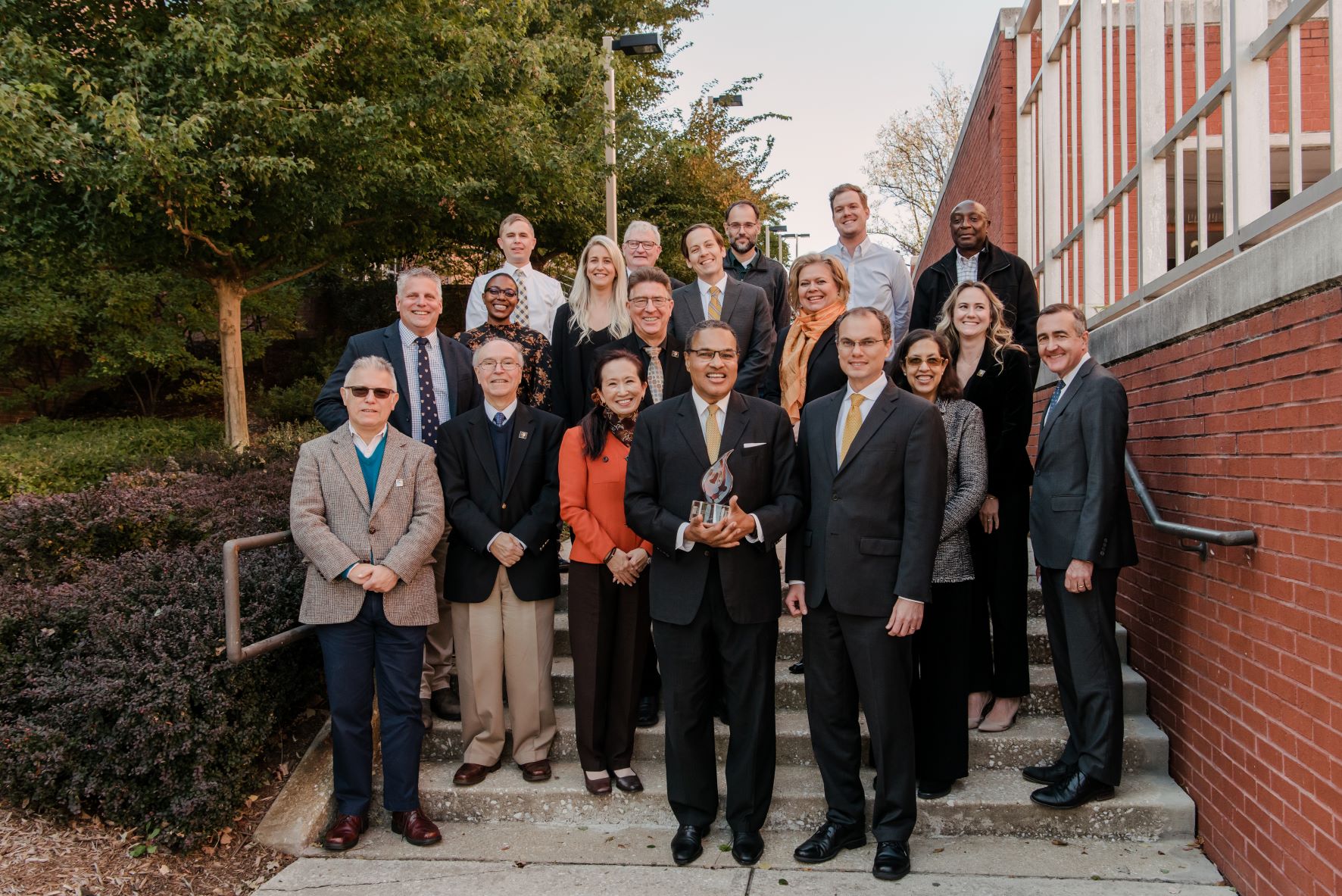
President Hrabowski (front, center) with UMBC’s senior leaders and Center for Global Engagement staff.
The Leadership and Pervasiveness Award for Internationalization reflects two years of work engaging over 400 members of the UMBC community, who together envisioned the future of UMBC’s global interconnections. In addition to faculty, staff, and other stakeholders in the UMBC community, contributors also include UMBC students.
“I am inspired by the engaged energy within the UMBC community to position the university as a significant contributor to education, research, and community engagement in a global environment,” says Antonio Moreira, vice provost for Academic Affairs.
Global access
UMBC’s internationalization work has been multifaceted, with a focus on making global engagement more accessible for all community members. And it’s produced results.
In 2019, UMBC launched Dawg Days Abroad to help new Retrievers build their community through an abroad experience before their first UMBC semester. UMBC is also a Fulbright Top-Producing Institution and has one of the nation’s highest proportions of U.S. Student Program applicants earning Fulbright awards—reflecting both the quality of applicants and the support students receive throughout the application process.
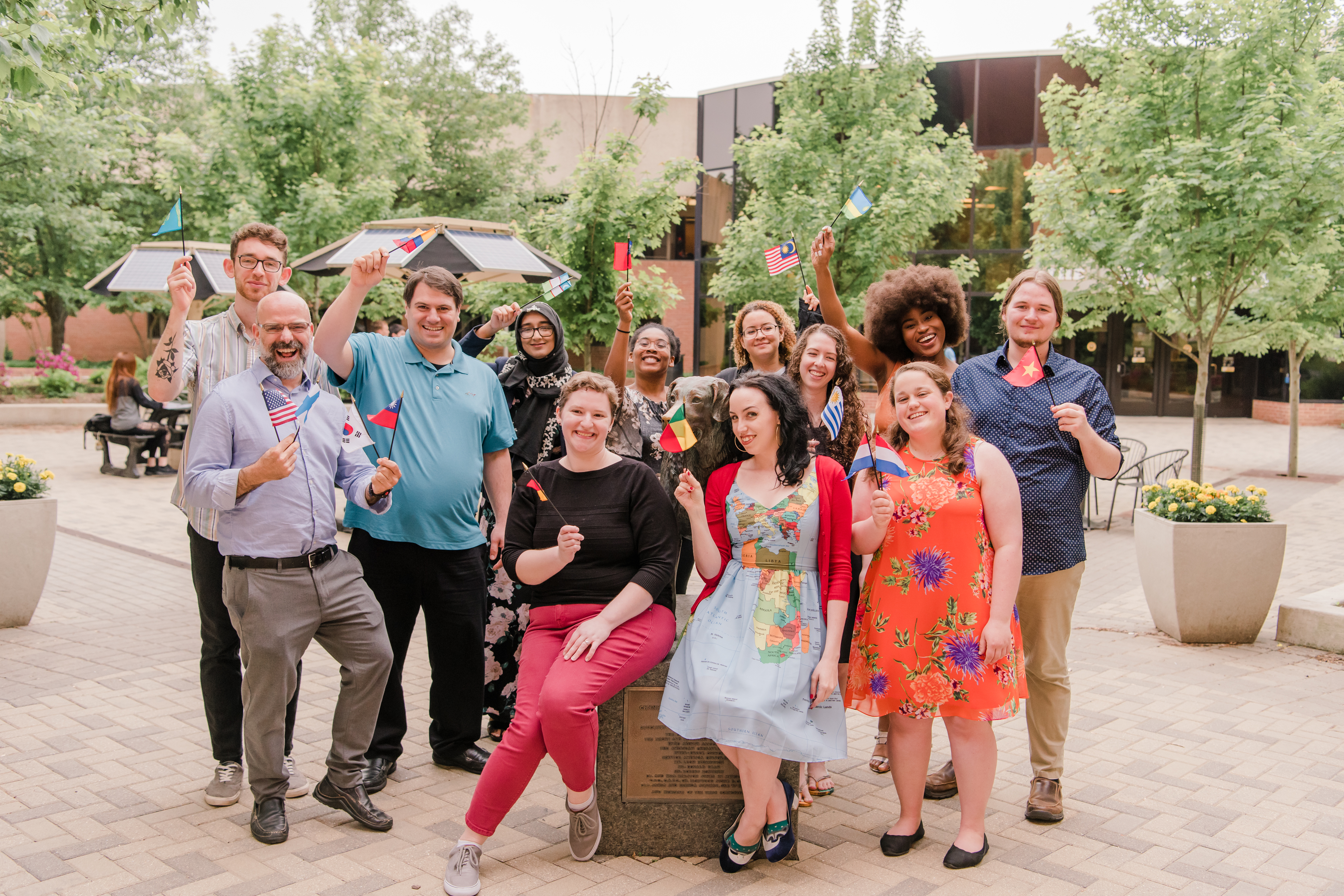
Brian Souders, M.A. ‘19, TESOL, and Ph.D. ’09, language, literacy and culture, UMBC’s Fulbright program advisor, second from the left, celebrates with UMBC’s 2019 – 2020 Fulbright U.S. Student recipients.
At the same time, this fall UMBC welcomed a record number of international students to the university. This trend is particularly meaningful given the current challenges that international students face in studying at U.S. universities.
The UMBC community recently came together to celebrate International Education Week, which included events on topics from international community-building through art and finding community away from home, to common challenges in learning a new language and how to apply for a passport.
Success through partnership
David Di Maria, associate vice provost for international education, shares that UMBC’s internationalization process has also heavily focused on partnership—strengthening relationships with other institutions that prioritize global engagement.
The fall 2021 issue of Savoy Magazine highlights several noteworthy members of the UMBC community, including a number of alumni and President Freeman Hrabowski. In keeping with the magazine’s theme of “Most Influential Black Corporate Directors,” the issue brings Black UMBC superstars to the forefront—and highlights the impact they are making in their fields.
For example, alumna Alicia Wilson ’04, political science, vice president for Economic Development for Johns Hopkins University,discussesthe importance of choosing your closest advisors. Kimberly Ellison-Taylor ’93, information systems management, founder and chief executive officer at KET solutions, is distinguished as one of 2021’s most influential black corporate directors for her work a board member for EverCommerce. Stephanie Hill ’86, computer science and economics, is praised for her work as senior vice president of Enterprise Business Transformation at Lockheed Martin.
Alumna Alicia Wilson ’04, political science, (right) shares some advice with student Sydney Fryer ’22, psychology, outside the Retriever Activities Center at UMBC.
Hrabowski was honored in different ways throughout the issue for the impact he has had on higher education across the country, including his role in building the Meyerhoff Program, a proven model for increasing diversity among future leaders in science, engineering, and related fields.
A sense of reverence filled the virtual air as panelists for a UMBC event commemorating the 20th anniversary of the September 11th terrorist attack shared their stories with participants. Some speakers stumbled over the emotional burden of their memories, while some were more analytical and overarching. Others still were descriptive and chronological. Despite the individual ways of processing that collective trauma, along with the fallout of the war that followed, UMBC participants gave the space needed to handle the difficult and nuanced responses.
UMBC leans into having difficult conversations, especially ones built around inspiring future change and community-building—asking collectively “What values do we want to reflect?” With an emphasis on creating a community of inquiring minds, UMBC is a space where people from different perspectives have difficult conversations but informed by skills learned in and out of the classroom. Regarding issues like disability equality and the Israel-Palestinian conflict, for example, campus groups encourage participants to lean into possible discomfort for the end goal of forming a stronger, more authentic community.
Critical social justice on campus
“Navigating campus might be difficult for students without disabilities just because it’s a very physical undertaking, but there’s a lot of us out there who are physically disabled with a lot of issues…I can move under my own power, but that doesn’t mean that I should be doing certain things regularly,” says Darcie Adams ’23, gender, women’s and sexuality studies (GWST) and Russian. “Sometimes I have to walk dramatically out of my way to avoid [inclines] and stairs.”
Headshot provided by Darcie Adams
For students like Adams, taking a look at campus requires a critical social justice (CSJ) lens—one that examines the physical hurdles that everyone, especially disabled individuals, face. Certain buildings and classrooms, Adams points out, are made inaccessible by small desks, inclines in hallways, and other half measures that only meet the bare minimum. To tackle these issues from a CSJ perspective means to look at solutions that can help the UMBC community as a whole.
“Improvements for the disability community impact and improve the lives of everyone, and it really needs to be thought about from that perspective,” Adams puts it.
This academic year, the Women’s Center at UMBC announced that their annual Critical Social Justice initiative will tackle disability justice and accessibility. This initiative asks us to confront the barriers that still exist for students, staff, and faculty with disabilities, affirming those in disability communities, moving past stereotypes that hinder true representation on campus, and pushing for accessible spaces both inside and outside of the classroom.
The Women’s Center pushes for equity from a perspective that affirms all identities. In previous initiatives, this meant engaging in conversations about resilience, what home means in relation to identity and community, systemic injustices, and creating brave spaces where difficult subjects can be brought forth.
Identity can inform the ways in which people engage with social justice activism. “Critical social justice asks us to really consider how we can come at activism in a way that’s authentic to us and true to our own strengths,” says Amelia Meman ’15, GWST, assistant director of the Women’s Center.
Working together toward social change
It’s not always easy to talk about the exclusion of students, staff, and faculty, or about the ongoing process to replace normative depictions of disability. But when we grapple with inequities, critical social justice asks us to challenge the narrative that demands the disabled individual change in order to fit in with society. And that can mean having some difficult discussions.
“The focus of CSJ is creating what we call brave spaces where we can sit in a place of discomfort and have harder conversations that need to be had in order to get social change to occur,” says Elise Turner ’23, social work, a member of the Women’s Center planning committee for the initiative.
Brave spaces, as Turner puts it, are spaces where we can not only feel safe as a community, but where we can learn about one another and about the reality of hardships. At the same time, these spaces can draw understanding and empathy from non-marginalized groups.
For the remainder of the 2021-22 academic year, the Women’s Center will be facilitating virtual events and workshops where members from the CSJ committee and disabled community will speak about the history of disability justice and making UMBC a more inclusive and accessible place. Some of the upcoming events include a screening and discussion of the documentary Crip Camp in October and a reading group starting in November. Anyone is welcome to attend these virtual events.
“Disability looks like a lot of different things, and the one uniting factor of what disability is, is that…bodies and minds are different and diverse,” notes Meman. “I hope that CSJ can center and uplift the voices of disabled folks at UMBC and in a way that allows them to speak their truths.”
Hope for the world
For UMBC Hillel, one of the Jewish communities on campus, the concept of “Tikkun Olam,” the Jewish ideal to repair the world, frames these difficult conversations. The Hillel community sees campus as a great launching point for critical social justice because a multitude of communities exist within a small place.
“If we can get people on this campus with different perspectives to get along with each other, even if they disagree on their perspectives, that gives us hope for what is happening in the Middle East,” says Danielle Baron,Hillel’s Israel engagement associate. “The hope is we can be models for what can happen around the world.”
With their program Resetting the Table, a series of two-hour facilitated conversations for students discussing the Israeli-Palestinian conflict, the goal is not to necessarily change people’s perspectives. Instead, using a dual-narrative approach, they want participants to gain a more nuanced understanding of the Israeli-Palestinian conflict and the skillset to discuss the topic respectfully regardless of background or perspectives.
As Aliza Silverman, director of Jewish Student Life at UMBC, puts it, the group hopes that people leave with “willingness to have these conversations— walking away with the skills and the enthusiasm for continuing them.”
Finding Common Ground
UMBC provides additional access to these skills through several organizations. ConnectionCorps, a program run through the Center for Democracy and Civic Life, is a cohort of students dedicated to facilitating tough conversations. Through long-term discussions on the theory and practice of facilitation, students can take their skills and conduct conversations on systemic injustices, oppression, ways to strengthen the surrounding communities, etc.
The Center’s Director David Hoffman, Ph.D. ’13, language, literacy, and culture, and Assistant Director Romy Hübler ’09, MLL, M.A. ’11, intercultural communications, Ph.D. ’15, LLC, share, “We believe facilitation is an underappreciated but enormously important practice. People who know how to create spaces in which participants can tell their stories, develop trust, and engage challenging issues with mutual respect can help to build thriving communities. The ConnectionCorps will help students become adept and compassionate facilitators and leaders.”
The idea that hard conversations do not have to be polarizing is not a new concept, and it is one that UMBC holds as an integral part of its identity. During the 9/11 Pivotal Moments program, while the stories portrayed a similar sense of uncertainty and fear during that time, they also showcased that at UMBC there was still a sense of community and safety. This truth continues to be a reality today, in the Women’s Center, interfaith groups, and other spaces on campus. Speaking at the 9/11 event, President Freeman Hrabowski said, “For me, the message for us in education is we must teach our students about the importance that we are connected with others across the world and the worst thing we can do is hate other people but rather [we should] find ways of finding that common ground.”