All posts by: Bobby Lubaszewski '10, M.P.S. '23


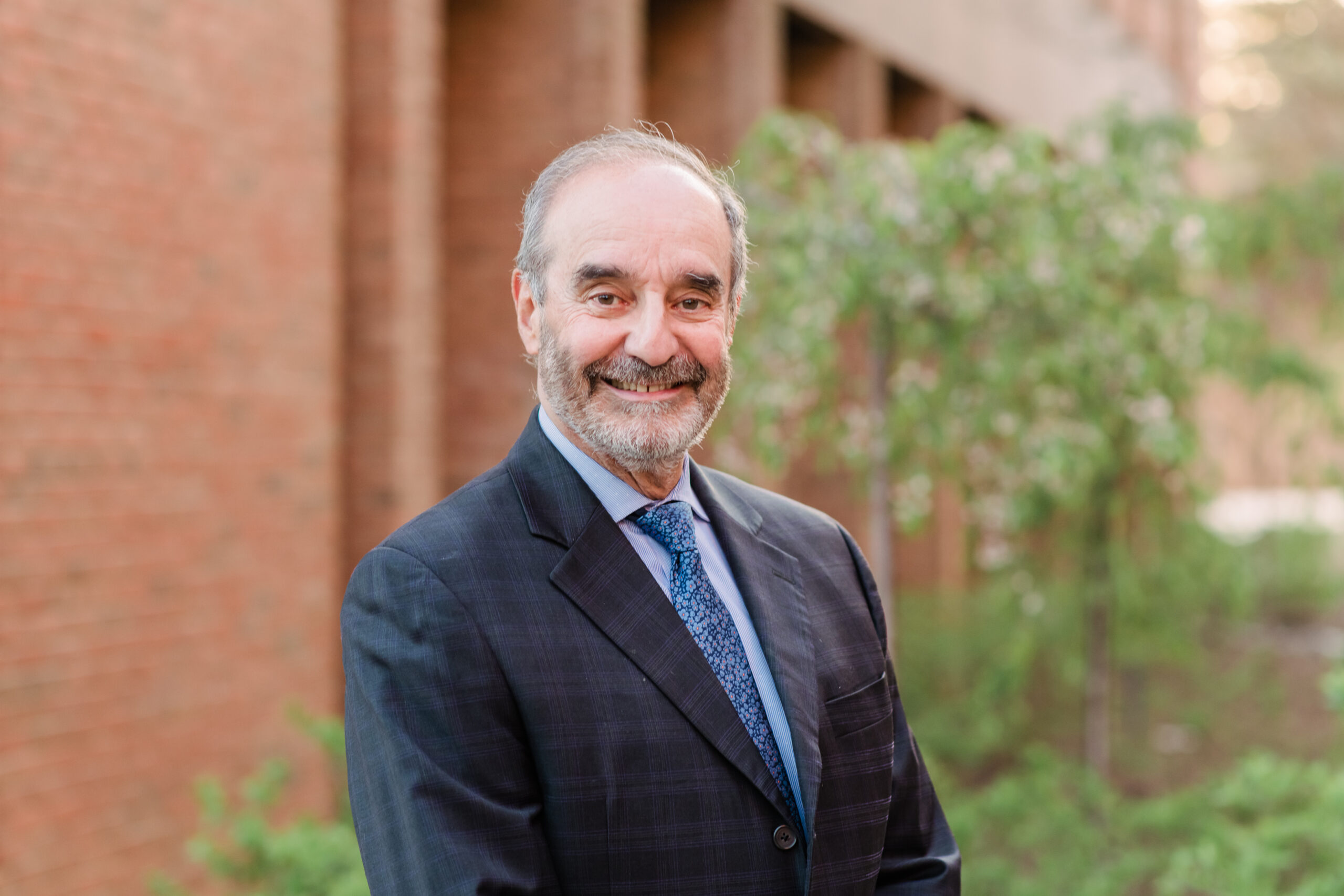
Chuck Peake—Pioneer of UMBC’s economics program

As Charles “Chuck” Peake celebrated his 90th birthday late one December evening in 2022, a contingent of middle-aged investors, bankers, and academics—Retriever alumni of various decades—were present to cheer on the founder of UMBC’s economics program. As their professor and mentor, Peake had built a tight-knit but inclusive community of economics students and, half a century later, those social bonds still held strong.

“I was honored on my 90th birthday to have several of my former students travel from around the country to celebrate our formative years together at UMBC,” says Peake. 

While sitting around the table, one of those students, Andrew Colyer ’89, economics, was inspired to ask his mentor about the early days of UMBC and the role Peake played in building the economics department.

The house that Chuck built

At UMBC, one of the benefits of being such a young university—just 57 years old—is that we are still so connected with our past and able to learn from the pioneers who helped found this university. Peake is one of those pioneers—here from the very beginning when campus consisted of just three academic buildings, plywood sidewalks, a lot of mud, and a whole lot more vision.

“Dr. Albin O. Kuhn, UMBC’s first chancellor, could be seen in his spare time using his tractor to carve out the route for the loop road that he envisioned,” recalls Peake.

“Chuck came to UMBC with the vision that the fledgling campus could become the ‘Swarthmore of Public Higher Education,’” says Marsha Goldfarb, professor emerita, economics, referring to the liberal arts college ranked No. 1 multiple times by U.S. News & World Report

Peake was hired as the university’s very first professor in economics and entrusted with a daunting task—building the economics department from the ground up. Peake was up for that challenge but, holding fast to his vision of what UMBC could become, he had two conditions.

Pictured right: Peake in his office in 1969.
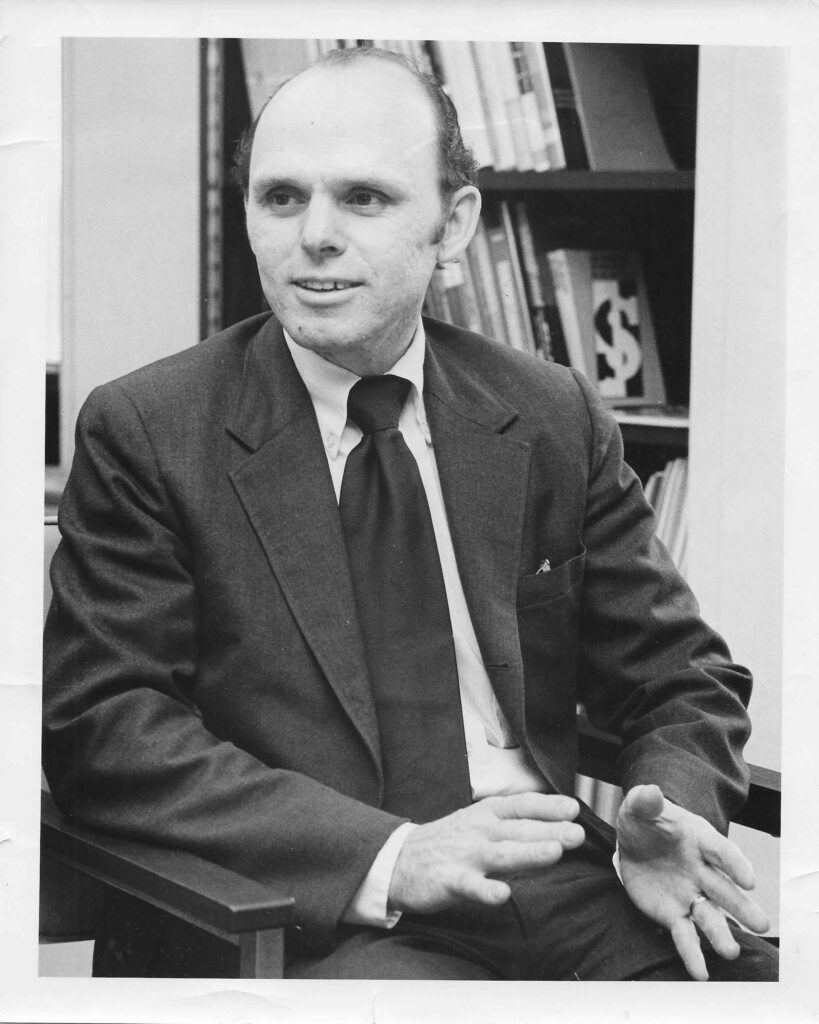
Chuck Peake in his office in 1969.

“First, I would get a graduate assistant, and second, economics professors would not be required to give large lectures.” However, Peake, recalls, “For the first economics course offered in 1967, we expected 30 or 40 students and, to our surprise, 170 students enrolled and we were compelled to offer a large lecture.”

Peake prioritized getting to know his students and engaging them in the learning process, says Joseph Gallagher ’93, economics. “As a student, the first thing Dr. Peake did was give you agency,” recalls Gallagher. “‘Mr. Gallagher, what are your thoughts on this?’ He did this with all his students. By empowering his students, it conveyed a gravity to his classes and made you take stock of your opinions and your own retention of concepts. Dr. Peake wanted you to be engaged in his class and wanted it to be a conversation.”

Of course, this type of classroom model is not really possible in a large lecture format. So, the emphasis quickly became recruiting additional faculty members to meet demand and decrease class sizes to support greater interaction between student and teacher. Peake set his sights high and started his recruitment efforts by contacting the department chairs of the top 10 economics programs in the country.

“Our strategy was to start with young faculty members who studied at the highest quality institutions,” says Peake. “Amazingly, our first six core faculty members did their graduate study at a top 10 economics program.”

The foundation for the economics department was in place. The students were eager to learn. The faculty members were young and ready to prove themselves. There was just one thing missing—a sense of community. 
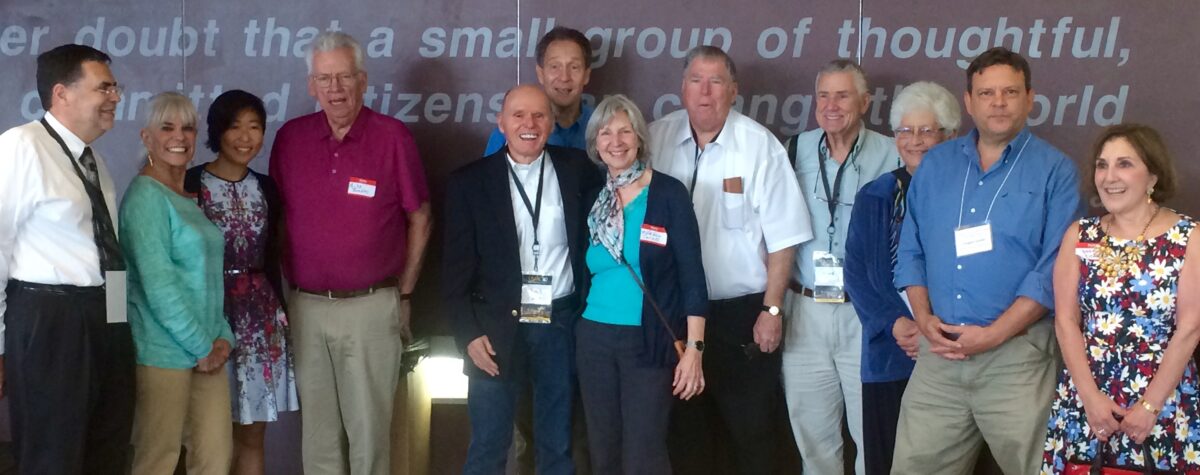
Chuck Peake and UMBC economics faculty from throughout the years return to the university to celebrate its 50th anniversary.
Peake and UMBC economics faculty from throughout the years return to the university to celebrate its 50th anniversary in 2016.

Building community beyond the classroom

“Dr. Peake was not only a great professor, role model, and mentor, but he was also very social and loved to have a good time,” says Donald Blair ’89, economics. “He definitely helped create a sense of strong culture within the economics department.”

Peake was instrumental in the formation of two student organizations: the Political Economy Club and the UMBC chapter of Omicron Delta Epsilon (ODE), an international economics honor society. He also sponsored the annual ODE banquet, when students were inducted into the honor society and awards were given out. 

“This banquet was a major social event in the life of the department,” says Goldfarb.

At the banquet, recipients were also presented with the Gerald Goldman Scholarship, established in honor of an early economics major tragically killed during a summer construction project, the Omicron Delta Scholarship, and the Charles F. Peake Fund, established in honor of Peake by the UMBC Economics and Administrative Sciences Alumni Association, Inc. (EASAA). 

Another endowment honoring Peake—the Charles F. Peake Endowment for Economics—was later started by Jack Mullen, III ’72, economics, the first UMBC alumnus to work on Wall Street, along with his wife, Carol Mullen ’70, American studies. This endowment helped establish the annual Mullen Lectures, which bring top economic minds from across the country to speak at UMBC. 

As part of his community-building project, Peake began hosting social gatherings for the Political Economy Club and ODE at his home. He would cook a ham and students would bring various dishes for what Peake called a “Tennessee-style dinner.” One summer, he held a crab feast at his home to help educate out-of-state students on the culinary benefits of the Maryland blue crab.

“He was trying very hard to make UMBC more than just a commuter school,” says Colyer who, like Blair and Gallagher, credits Peake with much of his career success. “I definitely benefited from his getting to know me,” he says.
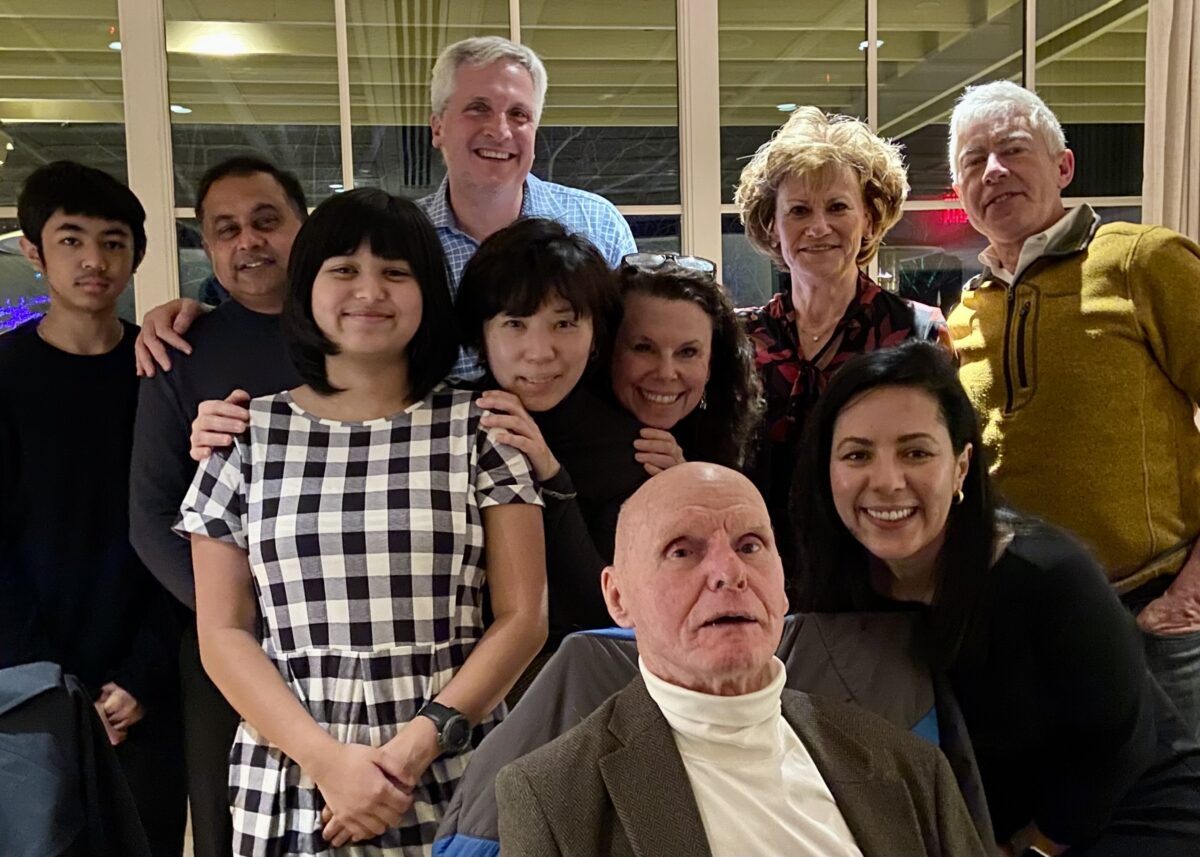
Chuck Peake on his 90th birthday surrounded by family, friends, and former students.
Peake on his 90th birthday surrounded by family, friends, and former students.

Credit where credit is due

“My office used to be down the hall from his office, and I just recall a line of students and alumni stopping by to hang out,” says David Mitch, current UMBC economics department chair.

“Dr. Peake helped me straighten up my life,” says Colyer, who had nearly failed out of another institution before transferring to UMBC. Today, Colyer is the director of research at The Ithaka Group and still values Peake’s practical approach to advising and education. “You weren’t just going to get an econ degree,” says Colyer. “Dr. Peake took some personal responsibility in making sure you had a career after graduation.”

Blair, who is now an investment banker at Raymond James, had a similar experience at UMBC. “I give Dr. Peake tons of the credit for steering me in the direction that completely influenced my career,” he says. “I was late to the job recruitment cycle, and Dr. Peake made calls on my behalf to the big four accounting firms at the time and was able to get me an interview and eventually a job at KPMG in Baltimore.” 

“Dr. Peake’s influence went well beyond the classroom,” says Patricia Rudolph ’72, economics. “I believe that Dr. Peake’s help and guidance made my career possible. I had the vague idea that I wanted to be a college professor but I had no idea what I needed to do to achieve that goal. Dr. Peake took the time to help me through the entire process of applying for admission to a Ph.D. program.”

“He probably wrote more recommendations for grad school than any other professor,” says Colyer, who reconnected with Blair in the same MBA program at the University of Virginia.

Chuck Peake spending time with his great grandchildren, Charlie and Cabell.
Peake spending time with his great grandchildren, Charlie and Cabell.

Innovating after retirement 

Not even retirement can slow down a man like Peake. In fact, what he calls his “most important academic contribution to UMBC” didn’t even occur until 2001—two years after retiring—when the economics department launched its second major, the B.S. in financial economics, to go along with the traditional B.A. in economics.

“I spent about a decade preparing the proposed major,” says Peake. “With this credential, graduates found that it opened doors to Wall Street and other real-world pursuits well beyond academia.”

“Financial economics became extremely popular,” says Goldfarb. “And, before long, it attracted more students than the B.A.”

While Peake points to the B.S. as his most important academic contribution to UMBC, his former students know his kind nature and love for his students is his real legacy.

“He was always very supportive of his students and wanted the best for us,” says Blair.

“He always had time for everyone,” says Colyer, who was honored to have Dr. Peake attend his wedding.

“He is just a vessel of pure goodness,” adds Gallagher.
The man behind the camera

When LeBron James comes calling, you answer the phone. Philip Knowlton ’03, visual arts, knows this better than most.

The NBA legend doesn’t have the UMBC alum in his contacts because Knowlton is great at one-on-one (probably). Instead, Knowlton has collaborated with James’ media company Uninterrupted on several documentaries as a director, editor, producer, and director of photography. Uninterrupted was founded to empower athletes to tell their stories in their own words. This time, Knowlton was called upon to direct and co-executive produce Redefined: J.R. Smith, a four-part Prime Video documentary series released in April 2023 that follows J.R. Smith, a retired two-time NBA champion, as he navigates a new challenge—college.

“This is the story of him post-NBA as he decides to go to college at North Carolina A&T [State University] to pursue a degree but also to try out for the Aggies golf team,” explains Knowlton.

Student-athlete turned filmmaker

“It was just a really inspiring project to be a part of,” says Knowlton, who made his first sports documentary about UMBC track and field when he was a student-athlete on the team. Having played (and won championships) with James on both the Cleveland Cavaliers and Los Angeles Lakers, Smith became good friends with James. So, when Smith made the decision to pack his book bag, head to college, and try out for the golf team, his team connected with Uninterrupted to see about interest in a possible film project.

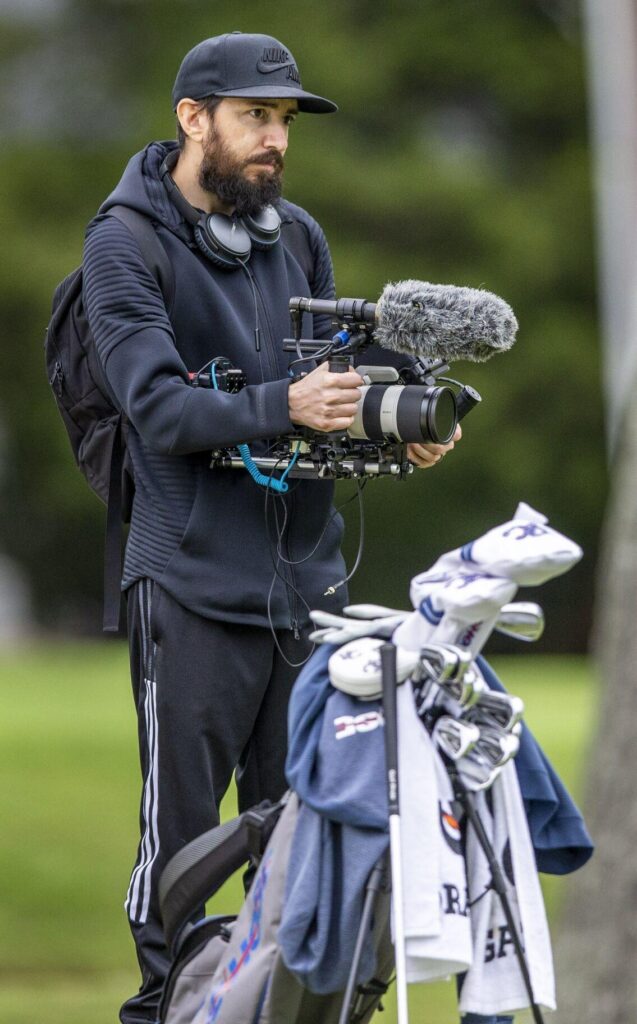
with a bag of golf clubs in the foreground, a man stands holding a high tech camera
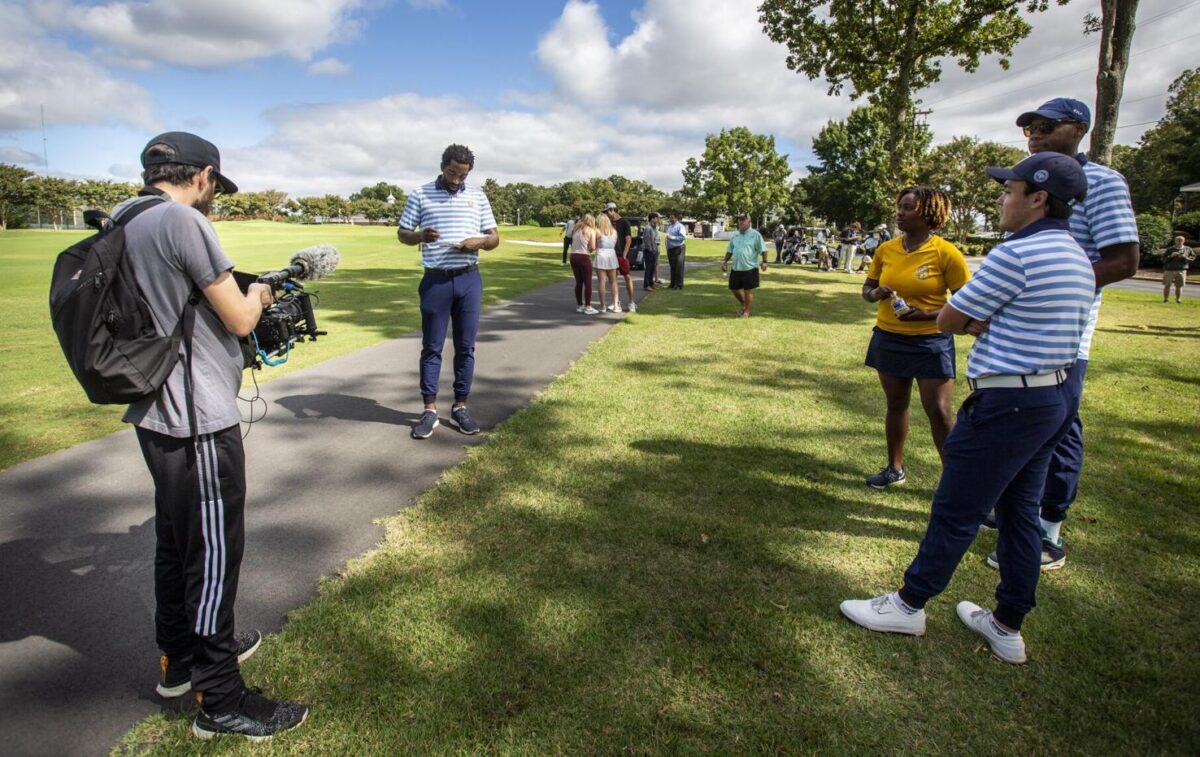
Knowlton filming J.R. playing golf.

“Of course they were on board,” says Knowlton, who received the call from Uninterrupted soon after. “They asked me if I’d be interested in flying to Greensboro to film a sizzle.” In the film world, a sizzle is like a demo—a short trailer used to pitch the story to networks.

Knowlton jumped at the opportunity to once again work with Uninterrupted.

“I think what they really like about me is that I’m able to direct and shoot,” says Knowlton. “It keeps the team smaller and more intimate. So, you’re able to be in places that a big crew may not be able to get into. Or athletes may not want a whole big team following them around.” 

Knowlton worked with the team at Uninterrupted to put together a treatment and map out the story they wanted to tell. Then, he hopped on a plane to Greensboro and filmed the sizzle.

“Next, we took meetings with everyone like HBO Max, ESPN+, Amazon—all of them,” explains Knowlton. “There was interest from quite a few networks, but it ultimately landed on Prime Video.” 

By this point, Smith was just about two or three weeks out from starting school. So, Knowlton had to move quickly. “This production, specifically, was really dictated by Smith’s golf season and his school year,” says Knowlton. The team made it in time to film the first couple days of school and practice. Then, they returned every month or two for different milestones throughout Smith’s first year, like his first tournament and A&T’s homecoming celebration. 

“It was amazing to see J.R., who could have retired and moved to Miami to hang out by the pool, want to go to college for the first time and push himself,” says Knowlton.

Find a place that let’s you do both

Of course, this story starts way before Smith decided to trade basketballs for golf balls. This story starts at a still-burgeoning university in Baltimore County, Maryland.

“I was looking for a school where I could run cross country that also had a good video or digital art program,” explains Knowlton, who now owns and operates Opposit, a creative studio he founded in 2018 specializing in original documentary film content. “A lot of schools have one or the other but not both.” UMBC gave Knowlton the opportunity to explore both.

filming on a golf course
Knowlton filming in North Carolina.

“It was kind of a no-brainer,” admits Knowlton, who received an athletic scholarship to run on the cross country and track and field teams while pursuing his B.A. in imaging and digital arts. “That program was perfect in that it let me experiment in a lot of different art forms.”

Throughout college, Knowlton was still trying to find his passion. He knew he loved visual arts but was unsure where to focus his energy. He enjoyed photography, graphic design, and film. It wasn’t until Vin Grabill’s video art class that it all started to click.

“I taught students that video could be seen as a kind of ‘painting in time.’ Utilizing video edits as brushstrokes, students created short rhythmic works that brought impact to their source material,” explains Grabill, associate professor emeritus in UMBC’s Department of Visual Arts. “Phil’s exercises exemplified these goals, eventually leading to final projects where narrative content was successfully built around a solid rhythmic structure. I’m very happy to see Phil pushing his work forward 20 years later!”

“Today, when I do Q&As about my films, I like to quote [basketball coach] Jim Valvano, who said, ‘Every single day, in every walk of life, ordinary people do extraordinary things,’” says Knowlton. “When I work on documentaries, a lot of the time I am filming everyday people doing amazing things. But J.R.’s story almost feels like the reverse. He’s this extraordinary person doing something more ordinary—going to college. To have been a part of J.R.’s journey and help share with the world has been a great experience.”

Out of office—Developing underwater technologies to best support ocean life

Three weeks exploring the beautiful, pristine waters of Indonesia to study seagrasses—that was the plan. But before Terry Smith ’00, computer science, could get to work, he had another problem to solve. What do you do when half of your research equipment gets stuck in customs? For Smith, that just means it’s time to get creative. “I love finding the fun problems,” he says. So, he created a camera float using any materials he could get his hands on—PVC pipe, a life ring, and a bit of rope.

Smith is a solutions engineer on the Tidal project in Alphabet’s X division, a semi-secret research and development organization founded by Google in 2010. The Tidal project’s initial focus is on developing technologies that bring greater clarity to what’s going on below the ocean surface, with the goal of preserving ocean life and sustainably providing food for humanity. Recently, Smith worked with the governments of Indonesia and Australia to come up with technology to visualize, analyze, and track the growth of seagrasses, which are particularly effective at absorbing carbon dioxide from shallow waters.

Smith displays a prototype ocean mapping technology made from PVC pipes.
Smith working on a handmade prototype for ocean mapping technology made from PVC pipes. His well-used book of knots is nearby.

“Traditionally, if you wanted to make a map of all of the seagrasses, it would probably take 10 years and 1,000 grad students,” explains Smith. “We’re trying to come up with technology that’ll make that happen a lot faster. So, I go out into the water with some prototype technologies that my team built and run robots over seagrass and then do 3D visualization of the data we capture.”

Tidal is just the latest in a long line of exciting projects Smith has gotten to be part of throughout his career, which has seen him travel all over the world. And throughout it all, Smith follows a simple philosophy: “Go see what’s happening in your field and make early contact with the real world.”

A bird's-eye view of Smith and his team working on a boat at sea studying ocean life.
A bird’s-eye view of Smith and his team studying seagrass in the islands near Labuan Bajo, Indonesia. Smith is standing, guiding the umbilical cable between the cameras and the computers.

This core belief has guided Smith from UMBC all the way to X—the so-called moonshot factory in California. But this journey from coast to coast was not a linear adventure. Like many UMBC alumni, Smith’s story doesn’t even begin at UMBC. His story starts a little further south.

Hands-on industry experience

A man underwater with scuba gear inspects a piece of equipment
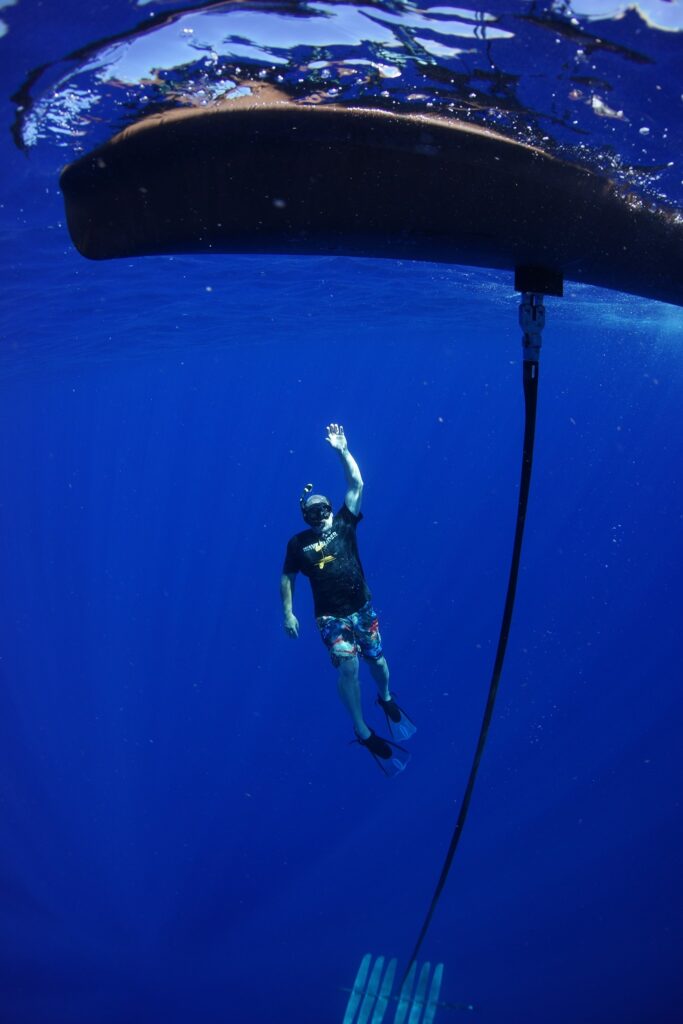
Smith inspecting an autonomous wave glider for Liquid Robotics around 2018.

For three years, Smith studied electrical engineering at the Florida Institute of Technology, but then he pressed pause. Eventually, he transferred to UMBC in 1997 to be closer to his parents. He decided to lean into the tech boom and major in computer science.

“I found a really amazing department,” said Smith. “There are so many opportunities at UMBC to work with outside companies. Being able to interact with industry gives you such an advantage.”

Smith parlayed all of this experience and his natural charisma into a part-time job while still in school, but not in the way you may think. As a bartender on Main Street, Ellicott City. Smith says one of his regulars asked about his summer plans. “Serving you drinks,” said Smith. The regular, a hiring manager at TRW Inc., a defense contractor since acquired by Northrop Grumman, ended up helping Smith find a summer job in the signals processing lab near Fort Meade.

That summer job eventually turned into a part-time job and then, “I left UMBC with a full-time job in hand and a lot of experience,” says Smith.

After working at TRW for a few years, Smith moved up to Boston, working at Draper Laboratory and eventually M.I.T. Lincoln Laboratory. But, like any good engineer, Smith continued to wonder what was next. So, he headed out west, eventually landing a job at NASA’s Ames Research Center, working on the next generation of air traffic control.

At that point, Smith says, “I had done a lot of work in simulation and I wanted to get back to the real world.” He moved on to Liquid Robotics, a Boeing company that works on wave-powered ocean robots to track whale migration using hydrophones or look for oil leaks around oil rigs using hydrocarbon sensors. After seven years there, X and the Tidal project came calling.

X marks the spot

Smith has been at X just shy of two years, working on Tidal to find ways to use Google technology to benefit ocean life.

“We’re using the experience we got doing salmon aquaculture to branch out into different areas, like the seagrass experiments in Indonesia” said Smith. “We’re looking for ways that AI, ocean robotics, and the other technologies we developed can be used to make human work on the ocean more efficient, sustainable, and better for both people and the ocean.”

Staying anchored to UMBC

No matter what he’s doing, or what far-flung location he finds himself, Smith has continued to find ways to stay connected with the UMBC community. He jumps at the opportunity to attend events whenever UMBC makes it out to the West Coast—most recently during the San Francisco stop on the 2022 RetriEVER Grateful Tour—and he remains close with his college roommate, Tim Craig ’02, computer science, who also relocated to California. “We see each other quite a lot,” says Smith. “His kids play with my kids.”

Smith and Tim Craig during their time as college roommates.
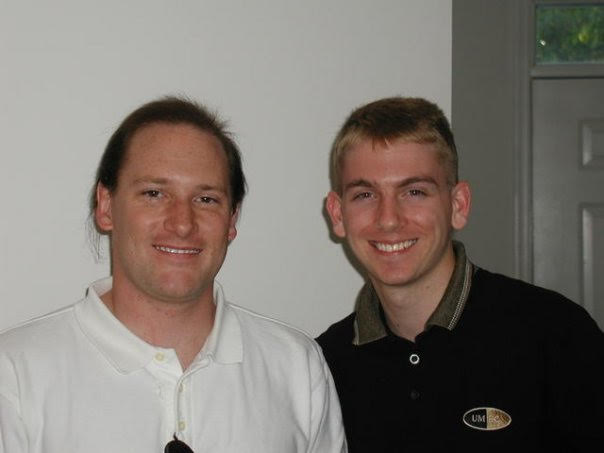
Smith and Tim Craig met as college roommates and still keep in touch. Pictured here circa 2002.

Smith is also working with the UMBC Alumni Engagement team to host an event at X for UMBC alumni working in Google-affiliated companies. “We all try to find each other,” says Smith of his fellow California-based Retrievers.

“Terry Smith’s example provides a road map for other alumni in how to stay engaged with UMBC,” says Stacey Sickels, UMBC Associate Vice President for Alumni Engagement and Development. “Terry has shared about job opportunities with the UMBC Career Services Office, his work could have potential research synergies with UMBC faculty, he wants to create a UMBC community within his company, he attends Bay Area alumni events, and Terry gives back with his time and giving.”

Up next for Smith, he will be investigating new areas to apply X’s machine learning and artificial intelligence technology, prototyping novel solutions, and helping commercialize Tidal’s aquaculture platform across the world. “It’s going to be a busy couple of years,” jokes Smith.

UMBC’s 2023 commencement speakers represent the best of higher education

This year’s UMBC commencement speakers represent the best of what higher education strives to be, applying insights to meet the needs of humanity.

Commencement speakers

Keith T. Elder, Ph.D. ’02, health policy and policy sciences, will address graduates at the ceremony for the College of Arts, Humanities, and Social Sciences; School of Social Work; and Erickson School of Aging Studies on May 25 at 10 a.m.

Paula Therese Hammond, this year’s honorary degree recipient, will speak at the 3 p.m. ceremony, addressing graduates from the College of Natural and Mathematical Sciences, College of Engineering and Information Technology, and Division of Undergraduate Academic Affairs.

Keith T. Elder’s commitment to improving healthcare

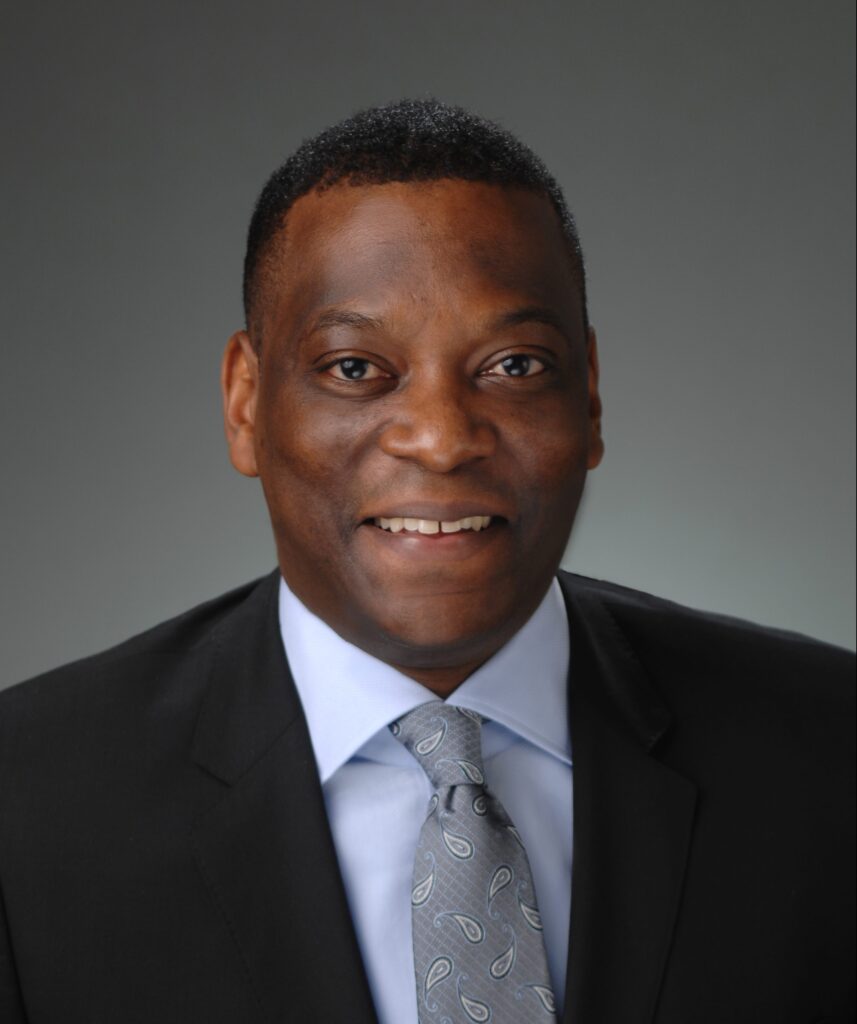
Keith T. Elder (Image courtesy of Keith T. Elder)

Elder is the provost and executive vice president of Mississippi College. His research focuses on finding ways to improve the quality of healthcare for our most vulnerable populations. 

Elder is the founding editor-in-chief of the journal AIMS Public Health and has published more than 50 peer-reviewed articles and book chapters. His research has been supported by the National Institutes of Health, the Centers for Disease Control and Prevention, and the Alzheimer’s Association, among others. Elder is a 2022 UMBC Alumni Award winner for Outstanding Alumnus in Social and Behavioral Sciences, and has also received a distinguished service award from the Robert Wood Johnson Foundation.

“I got the chance to learn more about Dr. Elder’s research and work in public health and academia when he received a prestigious award from our alumni association this past fall,” says Stanyell Odom, director of alumni engagement. “Our graduates will gain inspiration from his UMBC story and life’s work as this year’s commencement speaker.”

Paula T. Hammond, nanomedicine innovator

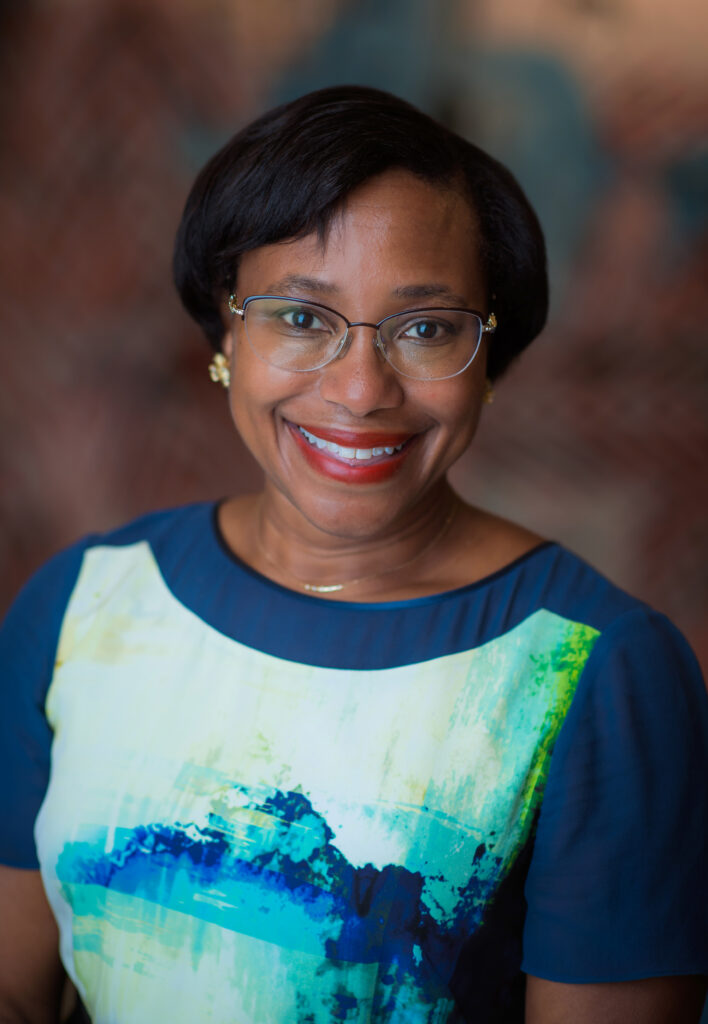
Paula Hammond smiling with glasses.
Paula T. Hammond (Image courtesy of MIT)

Hammond is an Institute Professor at the Massachusetts Institute of Technology, head of the department of chemical engineering, and a member of MIT’s Koch Institute for Integrative Cancer Research. Her research focuses on nanomedicine and novel responsive polymer architectures for targeted nanoparticle drug and gene delivery. She is a member of all three National Academies: Science, Engineering and Medicine.

In 2019, Hammond received the American Institute of Chemical Engineers (AIChE) Margaret H. Rousseau Pioneer Award for Lifetime Achievement by a Woman Chemical Engineer.

“Dr. Hammond is an extraordinary scientist and educator,” says Greg Simmons, M.P.P., ’04, vice president for Institutional Advancement. “We are very excited to have her participate in our commencement exercises and look forward to hearing her remarks.”

UMBC valedictorians

Also speaking during the commencement ceremonies will be UMBC’s two valedictorians: Christopher Slaughter ’23, M31, computer engineering, and Zinedine Partipilo Cornielles ’23, financial economics and mathematics. 

Partipilo Cornielles’s passion for public service is fueled by his experience fleeing Venezuela at age 16 with his family to seek asylum in the U.S. He is a Sondheim Public Affairs Scholar who has researched the impact of financial literacy on student loan decisions among undergraduates across the United States. He also served as a teaching assistant and tutor for fellow students, taught English to local immigrants through the Esperanza Center, and was a member of the national championship-winning UMBC Mock Trial team. He is part of the Sloan Predoctoral Program through the UMBC economics department and will pursue a Ph.D. in economics.

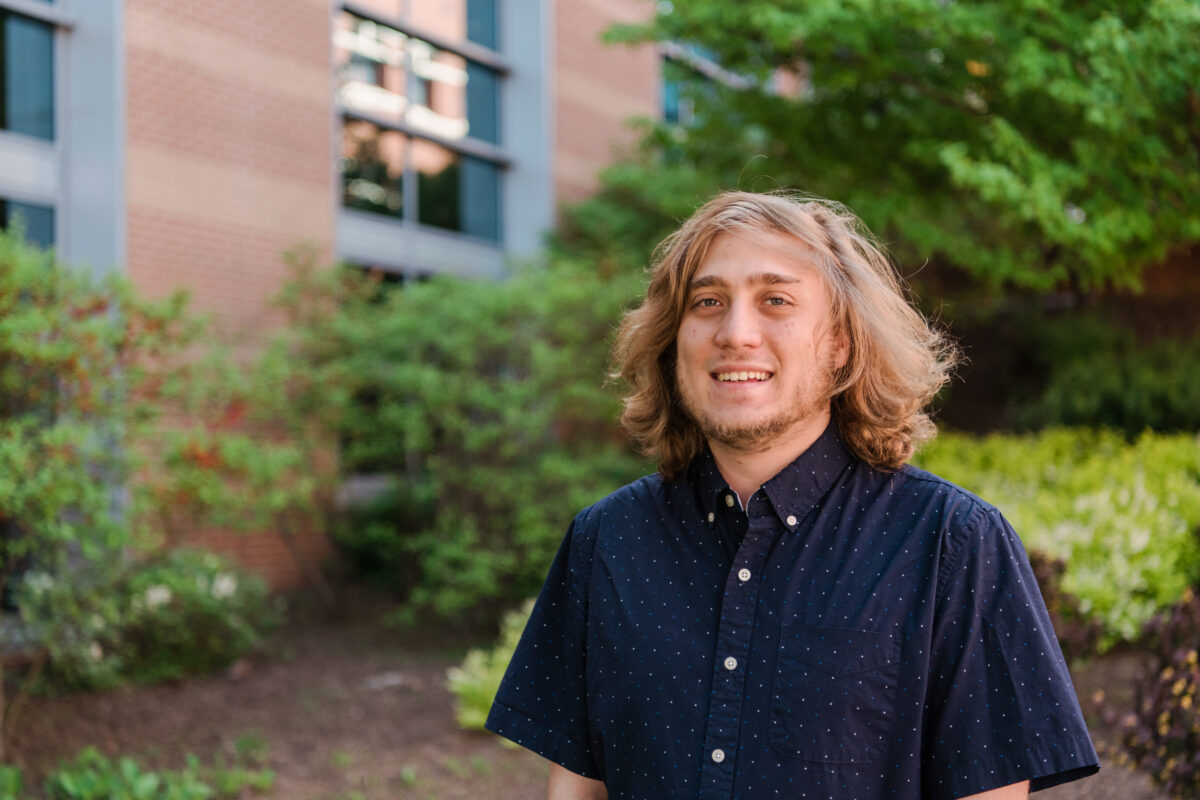
Portrait of student outdoors on UMBC campus
Zinedine Partipilo Cornielles (Marlayna Demond ’11/UMBC)

Christopher Slaughter is a Meyerhoff Scholar who won a Gates Cambridge Scholarship to pursue a Ph.D. in electrical engineering at the University of Cambridge this coming fall. He has worked with Govind Rao, professor of chemical and biochemical engineering, in the Center for Advanced Sensor Technology (CAST), helping develop technology that can sense glucose levels through the skin. He hopes to focus his career on developing novel biomedical technologies that meet the healthcare needs of under-resourced communities.

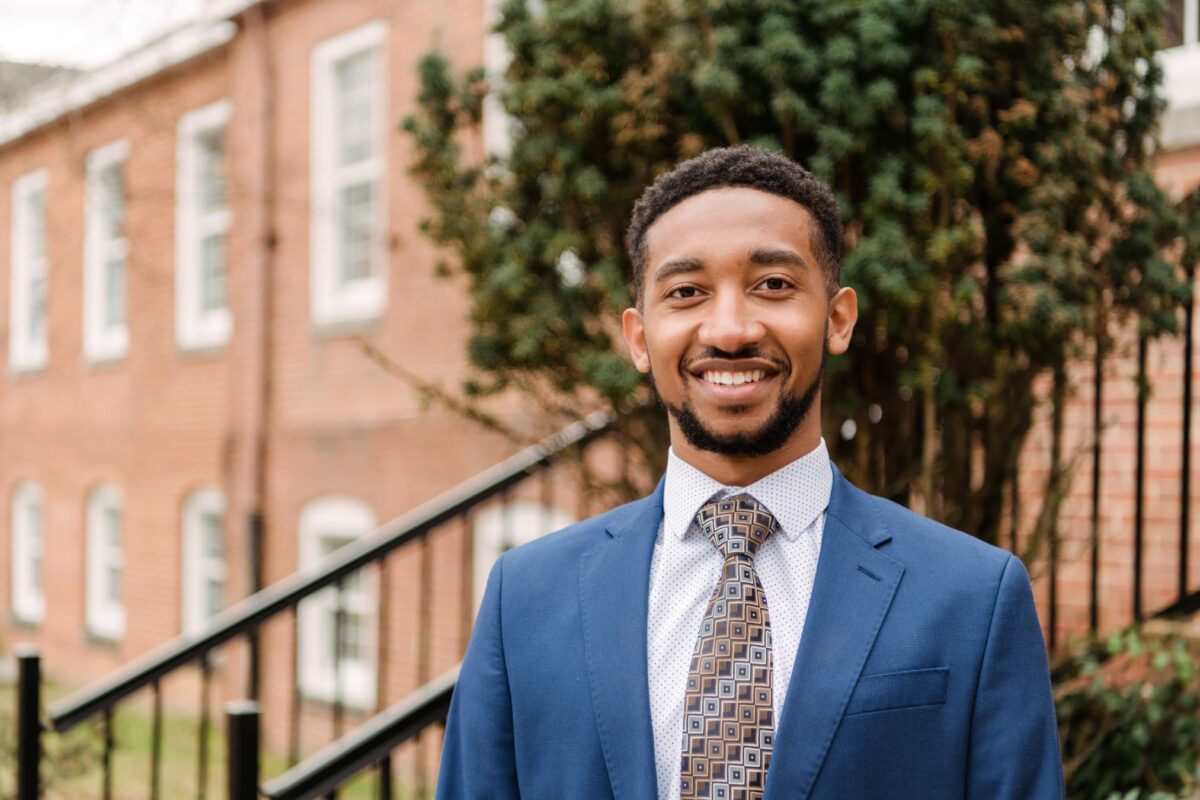
Smiling student stands in front of academic building
Christopher Slaughter (Marlayna Demond ’11/UMBC)

Partipilo Cornielles will address graduates at the 10 a.m. ceremony, and Slaughter will speak at the 3 p.m. ceremony. UMBC’s graduate commencement ceremony will be May 24 at 10 a.m. Live videos of all three ceremonies will be available at commencement.umbc.edu.

Celebrating Retriever Achievements

The weeks around Homecoming offer multiple ways for the UMBC community to reconnect with our Retriever pride and celebrate the accomplishments of our amazing alumni. Two marquee events during this time are the Alumni Awards ceremonies and the UMBC Athletic Hall of Fame Induction.

Recognizing alumni excellence 

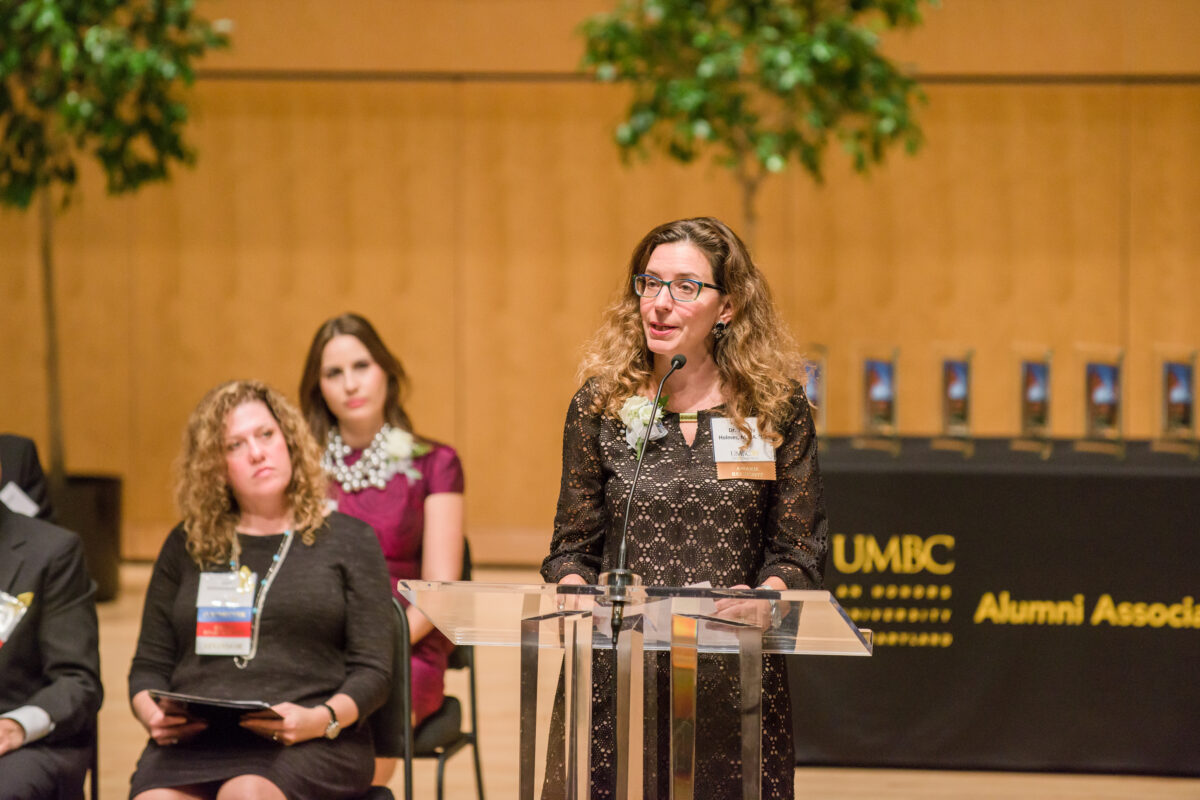
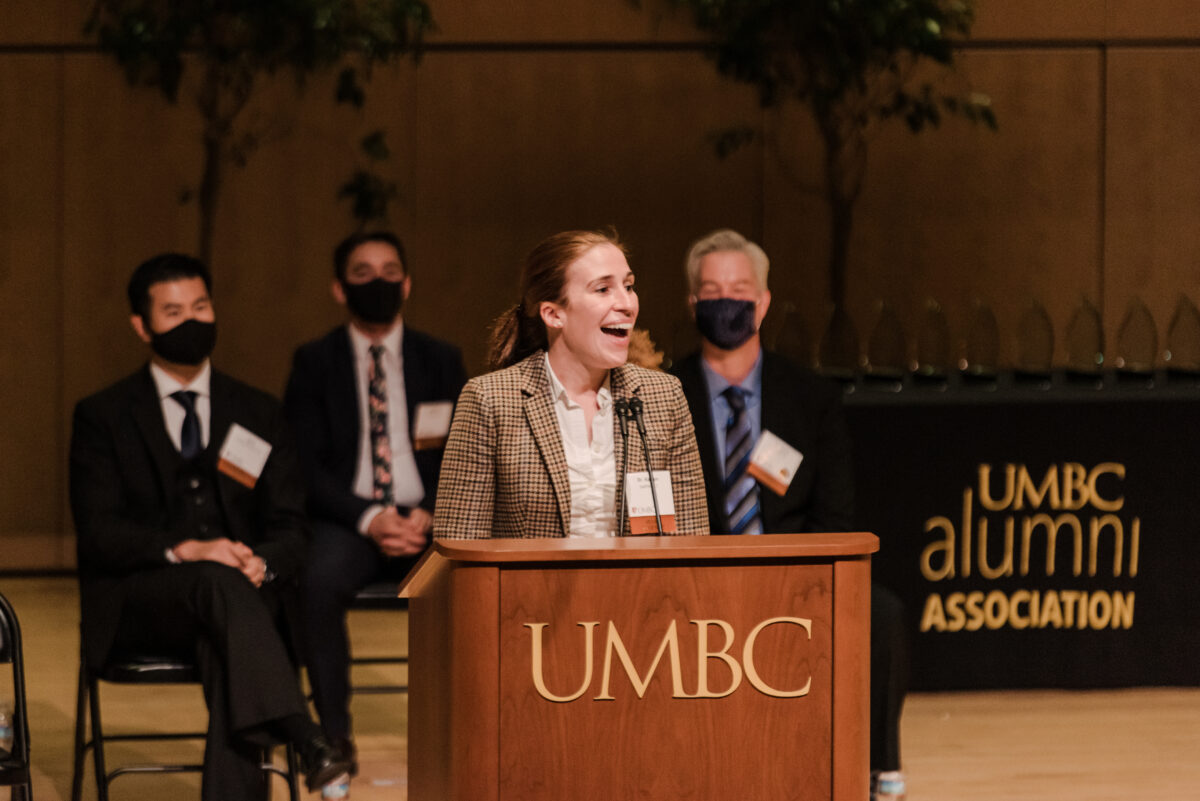
Standing out on the Alumni Awards stage, Rising Star honoree Stefanie Mavronis ’12 shared a sentiment echoed by several other speakers—UMBC is a place to flourish. 

“UMBC did more than accept students like me who brought idealism and lots of passion to campus,” said Mavronis, chief of staff in Baltimore City Mayor’s Office of Neighborhood Safety and Engagement. “This institution embraced it, it fostered it, and it gave us space to actively change the culture.”

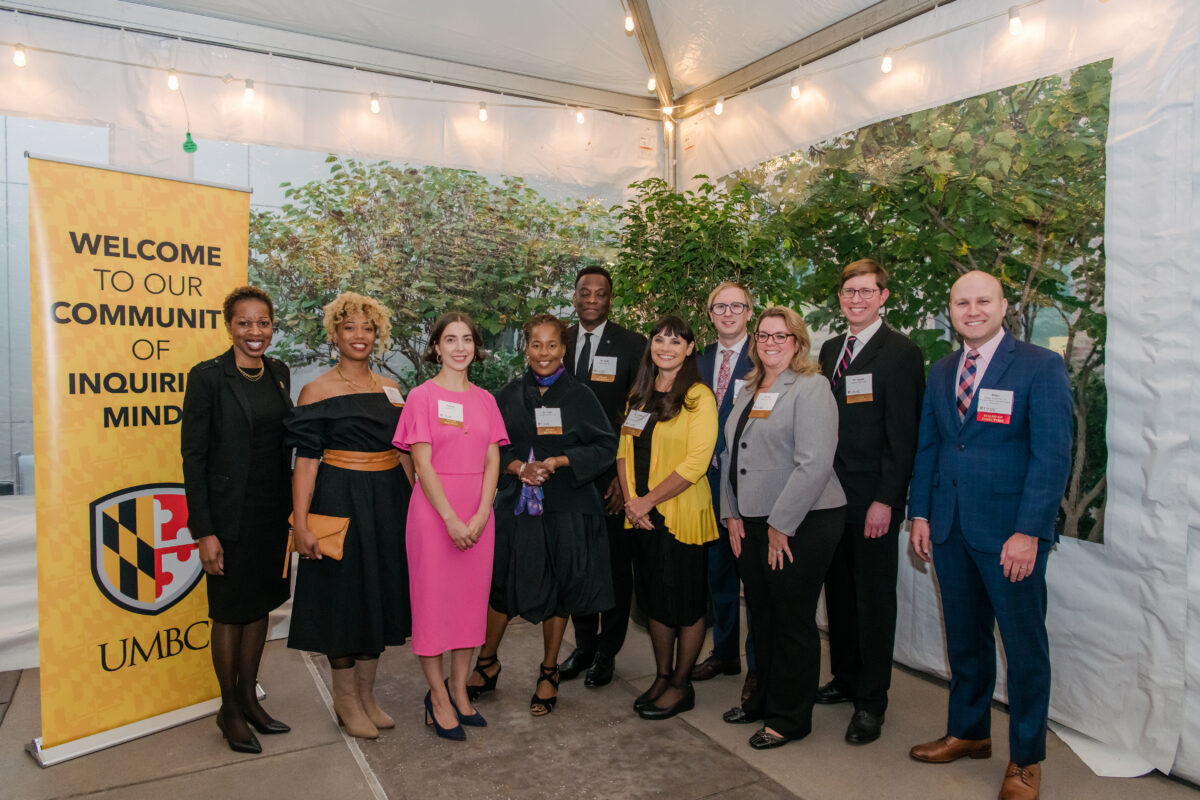
Left to right: President Valerie Sheares Ashby; McKenzie Chinn ’06; Stefanie Mavronis ’12;
Karsonya ‘Kaye’ Wise Whitehead, Ph.D. ’09; Keith Elder, Ph.D. ’02; Carolyn Forestiere; Benjamin
Garmoe ’13; Joy Haley, Ph.D. ’01; Josiah Dykstra, Ph.D. ’13; and Brian Frazee ’11, M.P.P. ’12.
Left to right: President Valerie Sheares Ashby; McKenzie Chinn ’06; Stefanie Mavronis ’12; Karsonya ‘Kaye’ Wise Whitehead, Ph.D. ’09; Keith Elder, Ph.D. ’02; Carolyn Forestiere; Benjamin Garmoe ’13; Joy Haley, Ph.D. ’01; Josiah Dykstra, Ph.D. ’13; and Brian Frazee ’11, M.P.P. ’12.

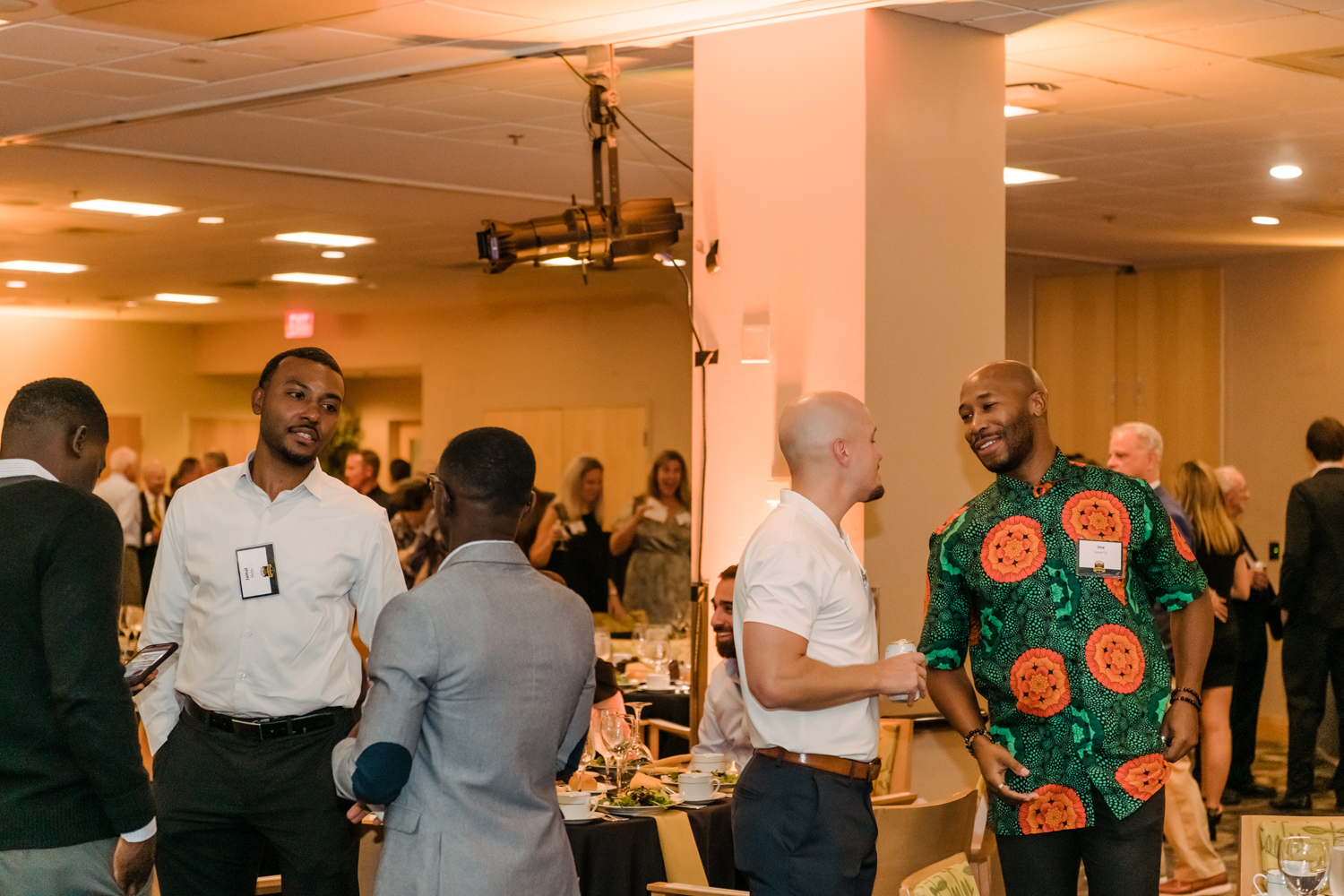
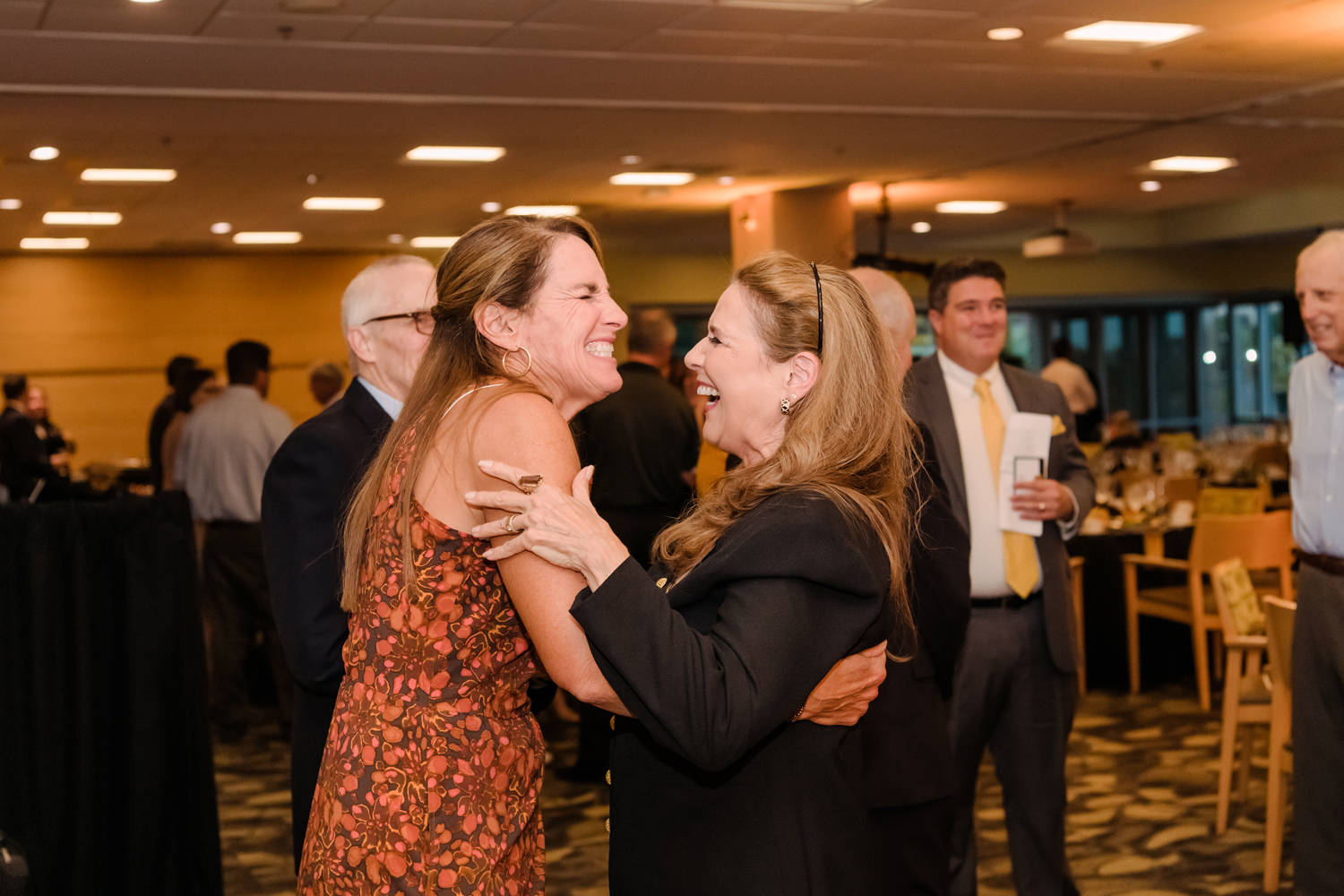
The 33rd annual Alumni Awards celebration was one event of many in the weeks around Homecoming that allowed the UMBC community to reconnect with our Retriever pride and celebrate the accomplishments of our amazing alumni.

On Thursday, October 27, the UMBC community gathered in the Earl and Darielle Linehan Concert Hall to recognize eight Retrievers at the 2022 Alumni Awards, hosted by the UMBC Alumni Association Board of Directors. 

“This year’s honorees represent the very best of our alumni community, and their contributions are making a difference all over the world,” says Brian Frazee ’11, political science, M.P.P. ’12, UMBC Alumni Association President.

“This is one of my favorite events because it brings the UMBC community together in such a beautiful way,” says Stanyell Odom, director of Alumni Engagement. “We are proud to continue to support the Alumni Association and its board of directors in this annual celebration of excellence.”

Three different types of awards are given to alumni during the ceremony: Outstanding Alumni of the Year awards (by major or field affiliation), Distinguished Service, and Rising Star (Young Alumni). The alumni board also recognizes one Outstanding Faculty member who has demonstrated commitment to student success beyond the classroom.

This year’s awardees are:

  • Josiah Dykstra, Ph.D. ’13, computer science—Outstanding Alumnus in Engineering & Information Technology
  • Karsonya ‘Kaye’ Wise Whitehead, Ph.D. ’09, language, literacy and culture—  Outstanding Alumna in the Humanities
  • Joy Haley, Ph.D. ’01, chemistry—Outstanding Alumna in Natural & Mathematical Sciences
  • Keith Elder, Ph.D. ’02, health policy, policy sciences—Outstanding Alumnus in Social & Behavioral Sciences
  • McKenzie Chinn ’06, theatre—Outstanding Alumna in Visual & Performing Arts
  • Benjamin Garmoe ’13, political science—Distinguished Service
  • Stefanie Mavronis ’12, media and communication studies, political science—Rising Star
  • Carolyn Forestiere, Professor of Political Science—Outstanding Faculty

Athletics’ legacy of excellence

The UMBC Athletics Hall of Fame first launched in the 1970s and was later made an annual ceremony in 1990. This celebratory event recognizes UMBC community members for their athletic excellence and contribution to the university. To date, 129 members have been enshrined. And this year, Brian Barrio, UMBC Director of Athletics, made a key change, moving the popular event to Homecoming weekend to capitalize on the #RetrieverNation excitement.

“We are thrilled that the Athletics Hall of Fame has been moved to the Homecoming weekend, and grateful to UMBC’s Office of Alumni Engagement who have been great partners in the re-launch of this event,” says Barrio. After postponing the event for two years due to COVID 19, says Barrio, Athletics is eager to celebrate their community. “This class is a diverse and talented group that set high standards of excellence for Retriever Nation.” 

The 22nd edition of the Hall of Fame inductions took place on Friday, October 7, in UMBC’s Skylight Room honoring:

  • Steve Levy ’85, interdisciplinary studies—associate director of Athletics/director of athletic communications, 1986 – present
  • Dana Eberly Keiner ’97, biological sciences—volleyball, 1993 – 1996
  • Jean Salkeld Battista ’98, sociology—softball, 1997 – 1998
  • Mohamed Hussein ’14, mechanical engineering, M.S. ’17, systems engineering—swimming, 2011 – 2014
  • Levi Houapeu ’15, financial economics—men’s soccer, 2007 – 2010
  • Mercedes Jackson ’15, psychology—track and field, 2011 – 2015)
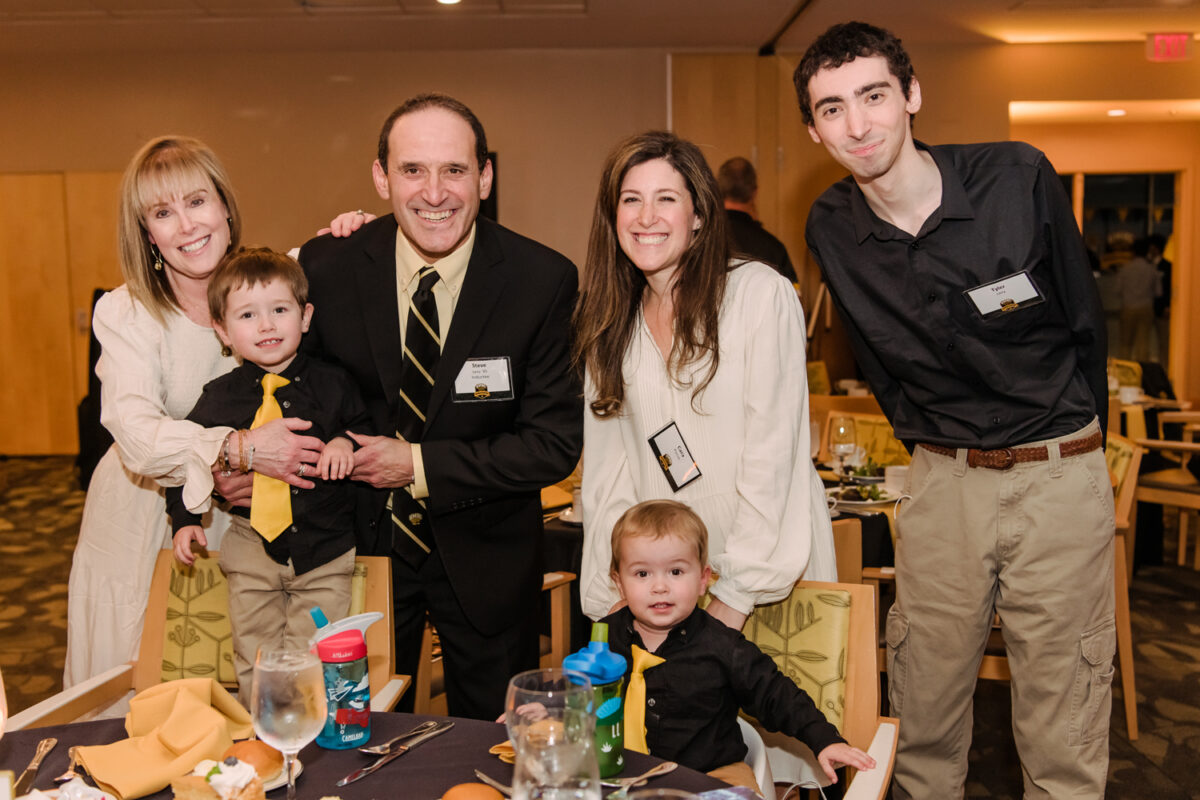
A family dressed in black and white and gold poses together behind a dinner table
Steve Levy ’85 and his family at the Hall of Fame induction. (Marlayna Demond ’11/UMB

Learn more about the 2022 Alumni Award winners and register for the event

Six alumni to speak as honorary degree recipients at 2022 Commencement

The six 2022 honorary degree recipients speaking at UMBC’s commencement ceremonies next week have a lot in common. They are each doing amazing things in their respective fields. And they also all happen to be UMBC alumni.

“These honorary degree recipients are wonderful examples of the best of UMBC,” said Greg Simmons, M.P.P., ’04, Vice President for Institutional Advancement. “They are brilliant individuals at the top of their fields, who care deeply about making the world a better place, each in their own way.” 

Graduate ceremony speakers

Mark Doms ’86, economics and mathematics, and Kafui Dzirasa ’01, M8, chemical engineering, will speak at UMBC’s graduate commencement ceremony on May 25.

After graduating from UMBC in 1986, Doms went on to earn a Ph.D. in economics from the University of Wisconsin-Madison. As an economist with a focus on public policy, Doms has held roles in the Federal Reserve system, the executive branch, and the legislative branch, including joining the Obama administration in 2009 as the Chief Economist at the Department of Commerce. In 2013, the United States Senate confirmed Doms as Under Secretary for Economic Affairs at the Department of Commerce. Currently, Doms serves as the Chief Economist at the Congressional Budget Office, providing high-quality, non-partisan analysis to Congress.

Meanwhile, after leaving UMBC, Dzirasa went on to earn his Ph.D. in neurobiology from Duke University and his M.D. from the Duke University School of Medicine. His ultimate goal is to combine his research, medical training, and community experience to improve outcomes for diverse communities living with neurological and psychiatric illness.

Dzirasa’s work has earned him numerous accolades, including the Presidential Early Career Award for Scientists and Engineers in 2016 and the Benjamin Franklin NextGen Award in 2022. He was inducted into the American Society for Clinical Investigation in 2019, and in 2021 was inducted into the National Academy of Medicine and named a Howard Hughes Medical Institute investigator. Dzirasa currently serves as an associate professor at Duke University with appointments in the Departments of Psychiatry and Behavioral Sciences, Neurobiology, Biomedical Engineering, and Neurosurgery.

Leaders in law and the arts

On May 26, UMBC will host two undergraduate commencement ceremonies. Tiffany Holmes, M.F.A. ’99, imaging and digital arts, and Ricardo Zwaig ’77, Spanish, will speak at the first ceremony, addressing graduates in the College of Arts, Humanities, and Social Sciences, the School of Social Work, and the Erickson School. 

Holmes earned her B.A. in art history from Williams College, an M.F.A. from the Maryland Institute College of Art (MICA), an M.F.A. in digital arts from UMBC, and a Ph.D. from the University of Plymouth. Her studio practice explores the potential of art and design to promote environmental awareness, and has exhibited across the globe at the Museum of Contemporary Art Chicago, J. Paul Getty Museum in Los Angeles, 01SJ Biennial, Siggraph 2000, Interaction ’01 in Japan, ISEA Nagoya, Microwave Festival, Hong Kong. Holmes is currently the interim vice president of Academic Affairs and provost at MICA, after spending 18 years at the School of Art in Chicago as a full professor and dean.

Judge Zwaig earned his law degree from the University of Maryland School of Law after graduating from UMBC. He began his career as a state public defender in Baltimore City before joining the Office of the Federal Public Defender in 1991. He and his brother Michael Zwaig ’81, history, also established the Law Offices of Zwaig & Zwaig, P.A., and helped establish UMBC’s Esperanza Fund in 2008, which offers scholarships for Latinx students.

In 2010, Judge Zwaig became the first Hispanic male appointed to the Maryland Judiciary and was awarded the Maryland Hispanic Bar Association’s Outstanding Achievement Award. He has also served on the Board of Directors for the Columbia Foundation, taught at Catholic University, Columbus School of Law, and at the National Institute for Trial Advocacy Program at the Georgetown University Law Center. 

Biomedical research innovators

Kizzmekia Corbett ’08, M16, biological sciences and sociology, and Kaitlyn Sadtler ’11, biological sciences, will speak at UMBC’s second undergraduate commencement ceremony, addressing graduates in the College of Natural and Mathematical Sciences, College of Engineering and Information Technology, and Division of Undergraduate Academic Affairs.

After graduating from UMBC, Corbett went on to earn her Ph.D. in microbiology and immunology from the University of North Carolina at Chapel Hill. Throughout her more than 15-year career studying infectious diseases, she has received several prestigious awards, including the Benjamin Franklin Next Gen Award and the Salzman Memorial Award in Virology. Her work was also instrumental in the development of mRNA-1273, a leading vaccine against SARS-CoV-2 deployed by industry partner Moderna, Inc. Corbett is currently an assistant professor of immunology and infectious diseases at Harvard’s T.H. Chan School of Public Health, Shutzer assistant professor at Harvard’s Radcliffe Institute of Advanced Study, and associate member of the Phillip T. and Susan M. Ragon Institute. She also recently established the Kizzmekia S. Corbett Endowed Scholarship to support students in the Meyerhoff Scholars Program who are emerging leaders at UMBC or in the community.

Sadtler earned her Ph.D. from Johns Hopkins University School of Medicine after graduating from UMBC. She completed a postdoctoral fellowship at the Massachusetts Institute of Technology. Sadtler is currently an investigator and chief of the section on immunoengineering at the National Institute for Biomedical Imaging and Bioengineering, of the National Institutes of Health. Her work has earned her several awards, including a TED Fellowship, an NIH Director’s Award for Mentorship and for her work on COVID-19, as well as inclusion on the 2019 Forbes 30 Under 30 List in Science and the 2021 MIT Technology Review 35 Innovators Under 35 List. Sadtler was also named a World Economic Forum Young Global Leader in 2022.

Pride in UMBC

“When I learned of this year’s honorary degree recipients, I was immediately filled with a sense of pride in knowing that they are not only UMBC alumni but that each has been recognized by the community as Alumni of the Year recipients in recent years,” said Stanyell Odom, Director of Alumni Engagement. “The individual and collective stories and the impact they’ve made will continue to inspire me for many years to come.” 

Learn more about UMBC’s 2022 Commencement .