All posts by: Eric Widemann '21


Charting His Own Map for Success

Donovin Acaro Smith ’21, geography and environmental studies, was 11 years old when he did something bold, but not out of the ordinary for him. It was a sunny day. His school was taking a class trip to the local swimming pool, and parents were welcome to join. Smith’s mother Sonia, thought there was a problem. As far as she knew, her son didn’t know how to swim; he however, disagreed. Along with some buddies, he sprinted and leaped into the pool water, as his mom screamed, “Noooooooo, Donovin!” 

But surprisingly, he wasn’t drowning, or even floating. He was swimming. It was a concerning, yet proud moment for his doting mother. 

As he grew older, Smith would find himself surviving other sink and swim moments in life—two gunshot wounds as a teenager left him with anxiety and PTSD that would stop him from leaving his house for a year. And just last year, he overcame another obstacle he previously thought insurmountable: graduating from college.
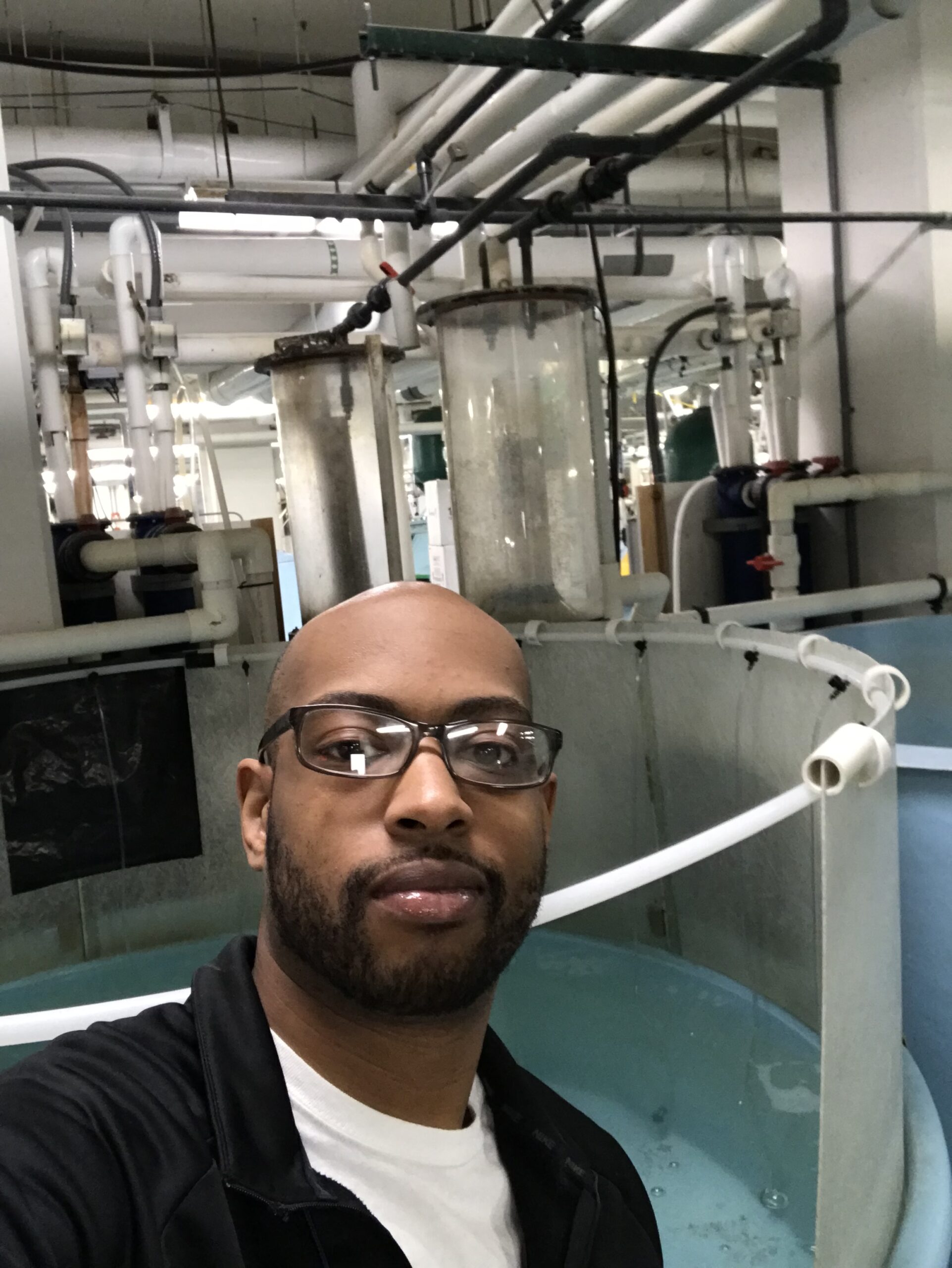
Smith while interning at the Institute of Marine and Environmental Technology (IMET).

Reimagining his future

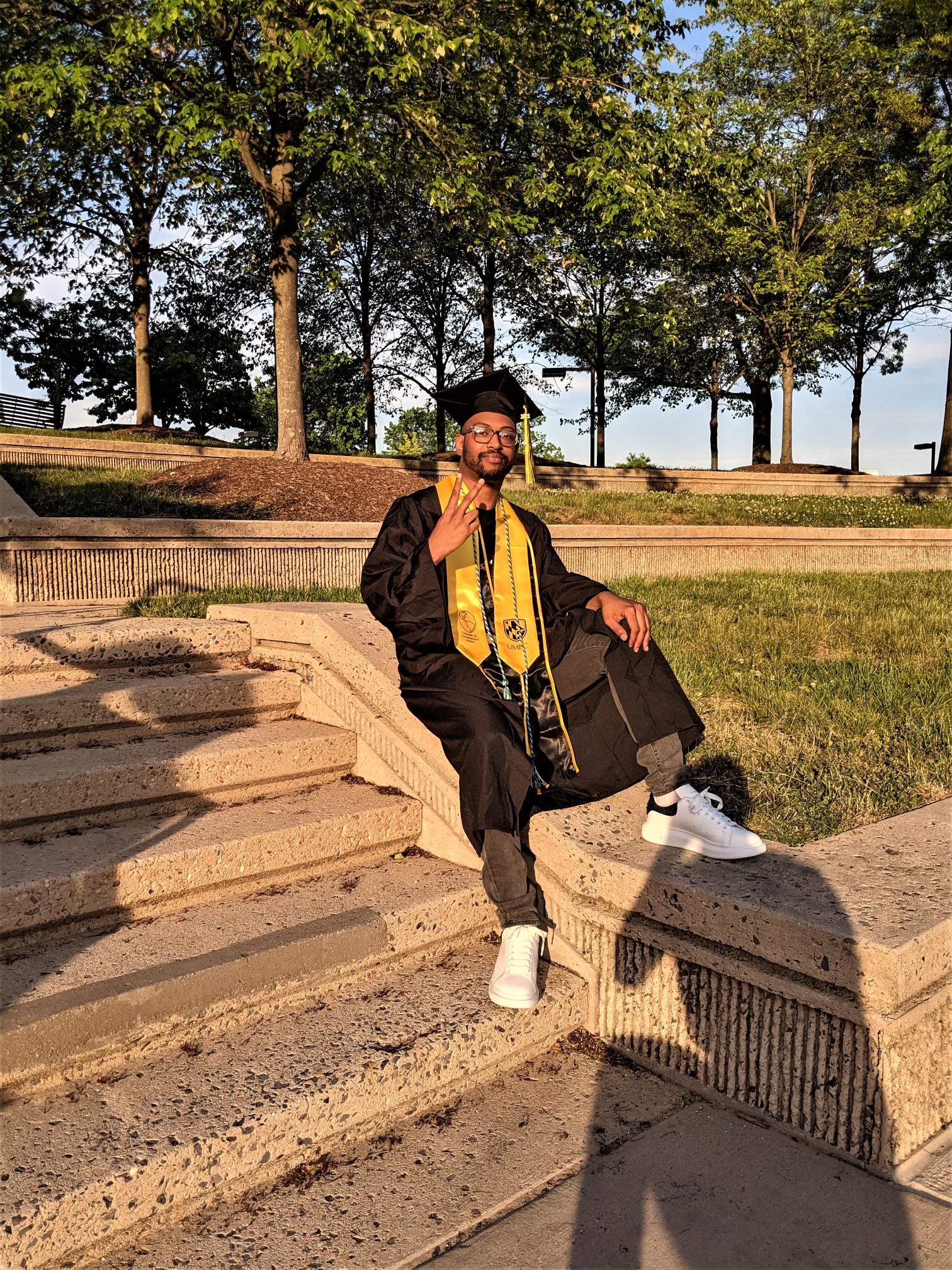
In his late 20s, Smith followed in his maternal grandmother’s footsteps and pursued a new life focused around one goal: getting a four-year college degree. By the time he was 32, and after five internships in his field, he had a diploma in his hand and an unstoppable urge to keep moving forward.

Through his internships and connections in the Retriever Learning Center and Student Disability Services, Smith developed invaluable relationships with the people around him.

Matthew Baker, professor of geography and environmental systems, and associate dean of the College of Arts, Humanities, and Social Sciences, and Smith’s mentor and teacher says, “given the challenges he faced at the outset of his undergraduate program at UMBC, what he’s achieved is probably one of the greatest success stories that I’ve experienced in my 20 years of instruction.”

Growth pains

Even though he grew up just 20 minutes away from UMBC, the institution wasn’t on Smith’s radar as a young man.

At 18, when some kids were moving into their college dorm rooms, Smith told his mom he was heading to a cookout with some friends, just minutes away from his grandmother’s place. Later that same night, he called to say that he was on his way to the hospital. He’d been shot twice, once in his left thigh, and once in his lower ribcage. 

The pain didn’t hit him right away, perhaps because gunshots weren’t new to Smith—when he was a child, he witnessed his father being shot. 

“Not to sound like a tough guy, but I guess those experiences from my dad numbed me—he was set up when I was four. Somebody came in and shot him and he fell off the balcony and ever since then he’s been a parapelegic. So when it happened to me,” says Smith, “it didn’t really hurt. I was just trying to control my breathing so I could make it to the hospital.”

Even after surviving his gunshot wounds, Smith says he struggled to find purpose and meaning in his life. Smith’s mother recalls, “after Donovin got shot, for like a year he wouldn’t go out. He stayed in so much he ended up having a vitamin D deficiency.”

“Whatever lifestyle [my father] indulged in at the time, I saw those things firsthand,” says Smith of his teenage years. “I guess once you keep seeing the same things over and over, it just sorta keeps resonating in you, so when I got to that age, I wanted to do the same thing,” even though his father frequently warned him away from it.

“Some things I was doing I didn’t feel right about, or I felt bad about. Maybe because of those circumstances, I was confused about what it means to be a human being,” he says.

But he kept the right people around him from the start. His mother’s positive influence, and the love and support of other family members helped Smith through his most turbulent years. 

A new mindset for a new environment

Smith wishes his interest in academics had started in high school. “I remember I used to walk into class, only thinking about getting through the day, I didn’t care what I learned about,” he says. “When I finally got to college, and I was in chemistry class, I could see how excited those students were to be in there. I just thought to myself, ‘Wow man, this is foreign to me.’ I wish I developed that attitude way earlier.” 

At first, he only saw higher education as a way to please his family, but eventually it became Smith’s own passion. When he graduated from high school, Smith enrolled in the Community College of Baltimore County (CCBC), eventually earning an associate’s degree. He then applied to a few four year institutions. When he got into UMBC, he recalls his mother saying, “Wow Donovin! You gotta do it.”

“At first, I was just [going to college] to keep my mother and grandmother off my back, and to try and make my father happy, to make sure he knew that I’m grateful for some of the mistakes he made for me to be where I’m at. Then, when I started believing this was real, and not some kind of unrealistic reach or a joke, I knew I was doing it for myself, too,” says Smith.

A humble approach to learning

But before he got to that stage, he had to work to adapt to a new atmosphere and new environment. “The biggest obstacle to be honest, for me, was building up my self-esteem and feeling comfortable in my own skin. My first couple of years were rough. Like I might get a B or a C and then maybe like two D’s or an E,” shares Smith. “I was going to tutoring, I was trying. But I noticed when my self-esteem went up, my grades improved and I skyrocketed and I never looked back.”

The moment he started believing he could succeed at UMBC inversely began after failing GES 286, a mapping class. He retook the class a second time with a friend, and “I felt way more comfortable,” says Smith. “When I started excelling in that class, that’s when I started feeling like I could do it,” he says.
Smith says he regularly reached out to friends for help studying and found a private tutor through Student Disability Services (SDS). “The Retriever Learning Center is where I did the majority of my tutoring and it was really helpful. But having anxiety and PTSD, I had to get my questions off. I was trying to survive,” Smith says. 

“But sometimes with so many students attending, there wasn’t enough time for me to get as much help as I wanted. Thankfully I was able to get accommodation from SDS who granted me an individual tutor which made a big difference.”

“One of the things that has impressed me about Donovin the entire time that he was here was his resilience,” says Baker in GES, “his ability to bounce back from challenges, his perseverance and his absolute, unwavering dedication towards reaching his goals and because of those things it was really easy to support him, and it became an obligation to see that he did well.”

Also helpful was Smith’s fearlessness in regards to asking questions. 

“He was always really clear about why he was asking what he was asking, and what he was trying to understand,” says Baker. “I think he was also willing to be humble about what he was learning so that he didn’t let embarrassment get in the way of his learning. As a result he made remarkable progress.”
Interning his way up

Smith, who is currently looking for a position in the conservation and environmental management field, began mastering these skills in a series of five internships.

In his first, under the wing of Baker, he researched sediment pollution in the Patapsco River. He also worked as a lab technician at the Institute of Marine and Environmental Technology. His most recent internship before graduation was at the Smithsonian Environmental Research Center, looking at the environmental influences on barnacles. 

“The most rewarding part for me was working next to and being close to doctors and biologists every day, asking them as many questions as I wanted so I could really learn from them,” says Smith. “It taught me that you have to keep building your skills, learning how to compile fragments of information that might coincide with one another,” he continues. 

Today, Smith sees his graduation from UMBC as his life’s crowning achievement. He describes his educational experience as a microcosm of his life as a whole. “There was a point at UMBC where my grades were looking so bad that I was about to switch to community college and try to come back. One of my highlights was being able to turn that around and just survive the tough academic atmosphere,” says Smith, who credits his mom, Baker, his friends, and some of UMBC’s organizations who helped him succeed. 

To anyone that finds themselves in a similar position to the one he was in before attending UMBC, Smith recommends perseverance: “Give yourself a chance, and time to grow on your own. Separate yourself from your friends and environment and try to look at life from as many positive angles as possible.”

Looking at her son’s achievements today, Smith’s mother Sonia says, “He’s on his way, he is on his way.”

*****

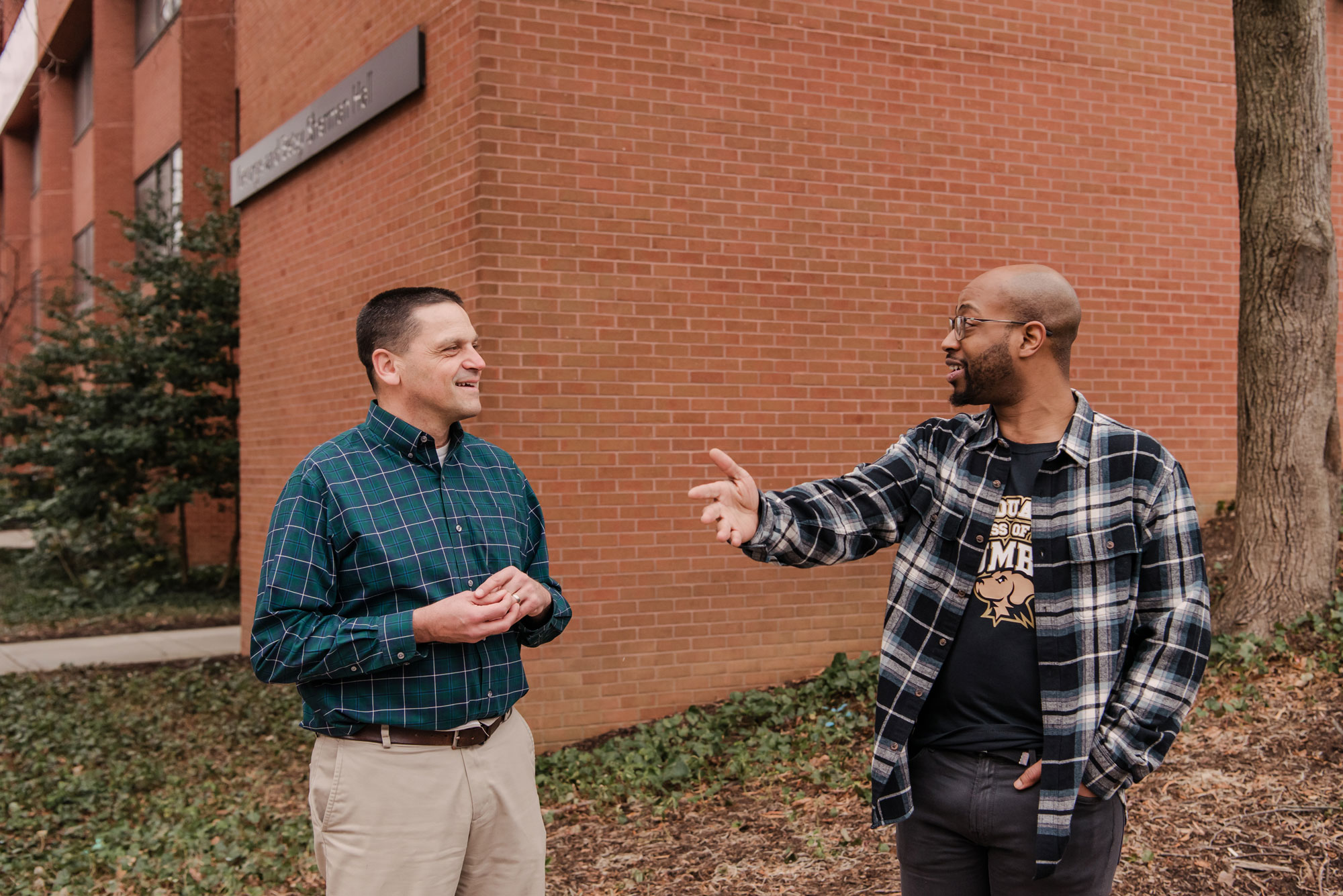
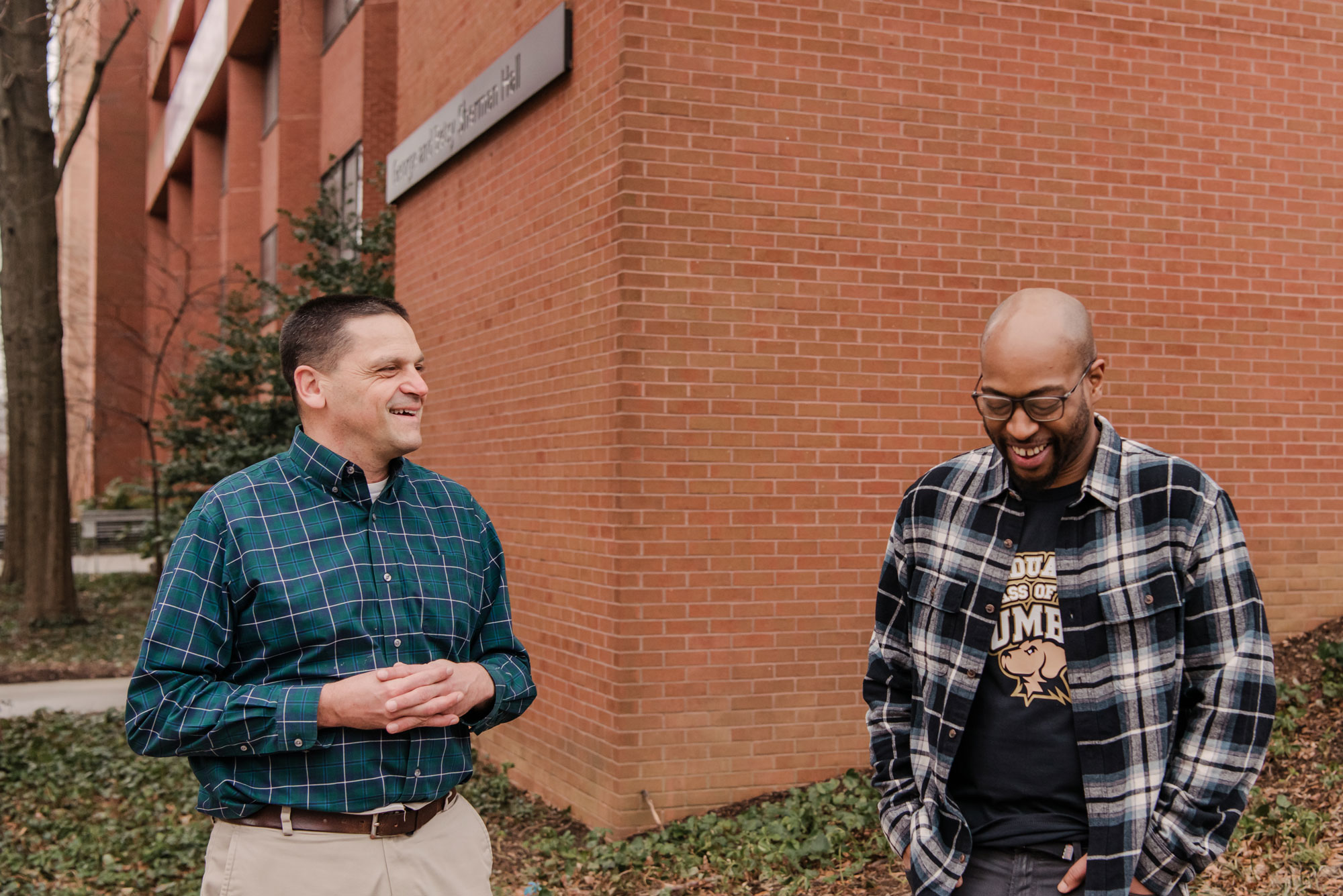
Header image: Baker and Smith meet up on campus in 2022. Photo by Marlayna Demond ’11.
Then & Now—Cicada Invasion

The world has changed a lot over the past 17 years; smartphones have found their way into everyone’s pockets, social media has taken over traditional media, video rental stores like Blockbuster have made way for streaming services like Netflix. 

Things at UMBC have changed, too. The Chesapeake Employers Insurance Arena is now home to UMBC Athletics and world renowned musical acts. The Performing Arts and Humanities Building has a gorgeous presence on campus. And our men’s basketball team shocked the nation, becoming a household name. The list goes on.

Now imagine, while all of those things have happened, the cicadas have only changed guard twice.

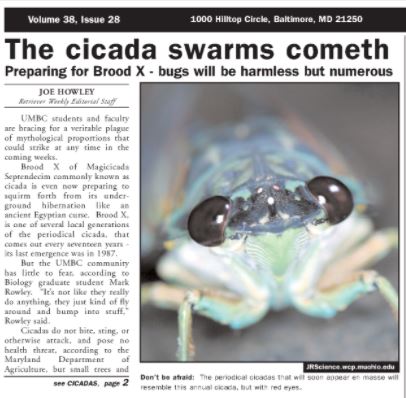
The 2004 appearance of the screeching locusts only warranted one story in the-then Retriever Weekly. But this year’s cicadas got a celebrity welcome—it’s possible that the doldrums of the pandemic particularly set the stage for this year’s cicada pandemonium.

When they first arrived, it was as if aliens made their first landing on earth. Their mammoth physique and prehistoric appearance took some getting used to. Soon, they were everywhere, both wreaking havoc and making friends. 

Rachel Wesley ’22, visual arts, describes her first interaction with a cicada this summer as nothing less than alarming. “I looked over my shoulder and it was there staring at me with those outward pointing eyes. I didn’t freak out but it was a deep breath and I was like ‘okaaay’. They’re so big,” she says.

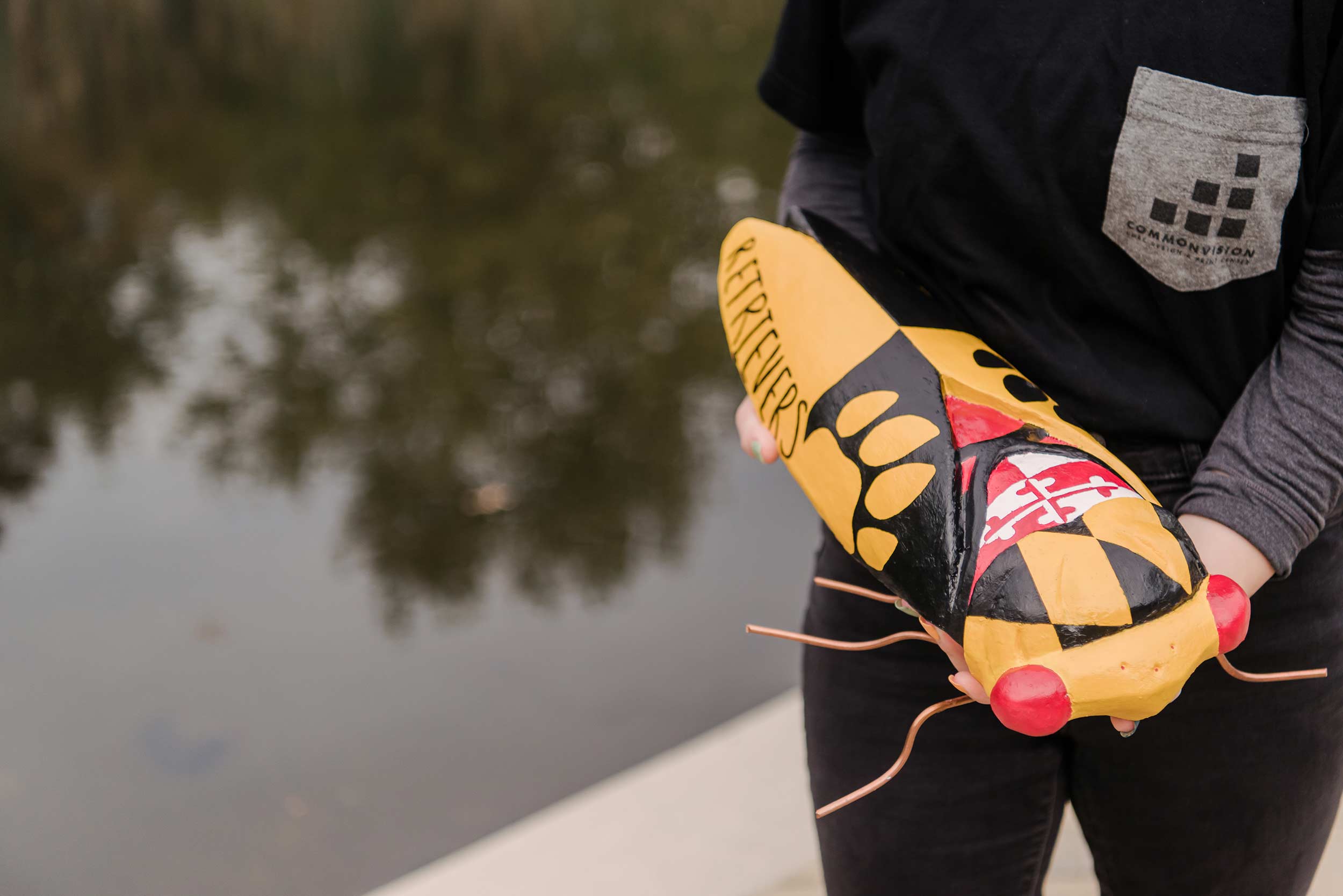
But before long, the intimidation factor dwindled. “By the end of summer, I was actually picking them up with my hand,” says Wesley, the painter behind UMBC’s new Retriever-themed cicada sculpture, a part of the Formstone Castle Collective’s Cicada Parade-a, a Baltimore-based public art installation of plaster insects. “If they were on the sidewalk, I put them into a bush to get them away from the sidewalk,” says Wesley. 

When the next swarm visits UMBC in 2038, this brood will have faded in our memories, and their comeback will surely feel like aliens have first landed on earth yet again.

Special thanks to Creative Services senior designer Jill Blum who purchased “Harold” the cicada to be painted and donated to UMBC for posterity.

*****

Photos of Rachel Wesley and the cicada courtesy of Marlayna Demond ’11.

Resiliency of Student Leaders Keeps Clubs Alive

President of the System Administration and Software Development Club (SAD Club) Nikola Bura ’22, computer science, and former vice president—now “keeper of the (non-alcoholic) drinks”—Henry Budris ’22, computer science, talk fondly of the quirky origins of their student org. SAD Club came into existence in 2019 with lighthearted and humorous ambitions (thus the funny titles). Over time, however, it has expanded into a meaningful place to learn about software development, finding ways to thrive even as other student orgs have had to adapt their approach to community in order to maintain membership during the switch to virtual in 2020. 

The relentless positive energy from Bura and Budris certainly helped keep things going, but both always had the sense that their club was one that could work in a fully online format. “We’re computer people,” says Bura, with a chuckle.“All of the computer classes can be done online, so we were definitely in a good position to continue our organization virtually.”

Budris adds that a new goal for SAD is bringing in people who are brand new to the field of software development. “We want people to know, if you’re new to this, we can teach you cool things.”

Other student groups have found different ways to ride out the changing pandemic guidelines to keep their communities intact. It comes as no surprise that these Retriever club leaders found unique pathways to keep their clubs connected.

Preserving the essence of community

Another relatively new club, the Association of Black Artists (ABA) announced its presence for the first time in the fall of 2019. 

“The idea was to have us all collaborate because the arts department here is relatively small, and then the population of Black students within each department is even smaller. So we were focused on just creating a place or a safe space where all of us can come together and share our own experiences, art, and even possibly having collaborations with different members,” says President Kayla Massey ’22, dance and information systems, an initial member of the executive board. 

ABA’s executive board from left to right: Joshua Gray, Tochi Nwachinemere, Obinna Ezejiofor, and Kayla Massey. Photo taken by Julianna Falcon, ’24.

Much like SAD club, ABA didn’t have much of a history leading into the transition to the virtual world. They did, however, have two or three in person meetings before getting sent home. “It was devastating for us. We were new, fresh, and exciting,” notes Massey.

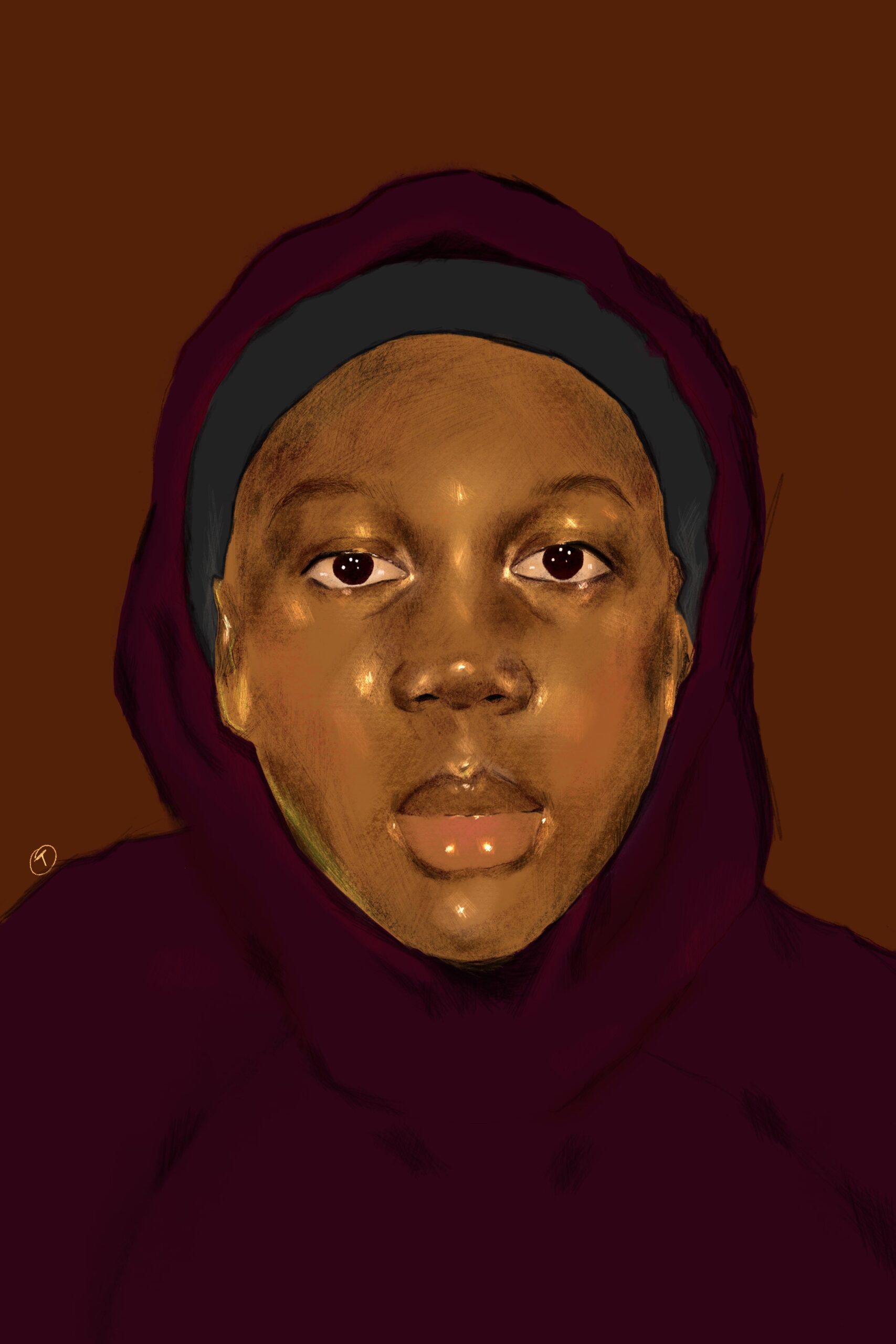
“Chisom” by Tochi Nwachinemere.

Prior to COVID-19, about 15 – 20 members met once a week in the evenings at the Performing Arts and Humanities building. “ We’d feed off each other’s energy, just enjoy being in the same room with each other,” says Massey.“ But when COVID first hit, everyone was just trying to figure out what was next. We took a hiatus for the rest of the semester, but we did continue meeting as a board just to make sure that we kept a sense of community.” 

The only reality you know

Meanwhile, Vice President Tochi Nwachinemere’s ’24, biology, entire experience with the Association of Black Artists has been a virtual one.  

“I don’t really know any other way. The online format we had to do during COVID, wasn’t my favorite. When you have so many classes and things you need to take care of, it’s hard to convince people to participate in something they technically don’t have to do.” Nwachinemere notes. 

Massey is looking forward to the fall, when some of their meetings will resume in person—and she’s not worried about the future of ABA. “In terms of the longevity of the club, I am not worried at all, and it is because of Tochi. With everything she’s experienced within the club, the fact that she’s working with the people who started this club, and just with her personality, she’s got this, she’ll be great. She understands the mission,” says Massey. 

How must the show go on?

Unlike new clubs like SAD and ABA, the dance group Major Definition is practically a campus landmark. Founded in 2005, Major Definition is well-known for their vibrant hip-hop dance performances and competitions, but how could a dance organization continue its craft online?

According to Timothy Huynh ’22, computer science, executive director since fall 2020, it was quite a process, riddled with highs and lows. “Our last practice before the shift to online was just before spring break, which initially was extended by just two weeks. It’s funny, because we were thinking, ‘These next two weeks, we’re just going to have people send in videos of themselves practicing the set. And then after those two weeks we’re going to return, and get back to practicing right away again.’ Then that fell through,” he says.

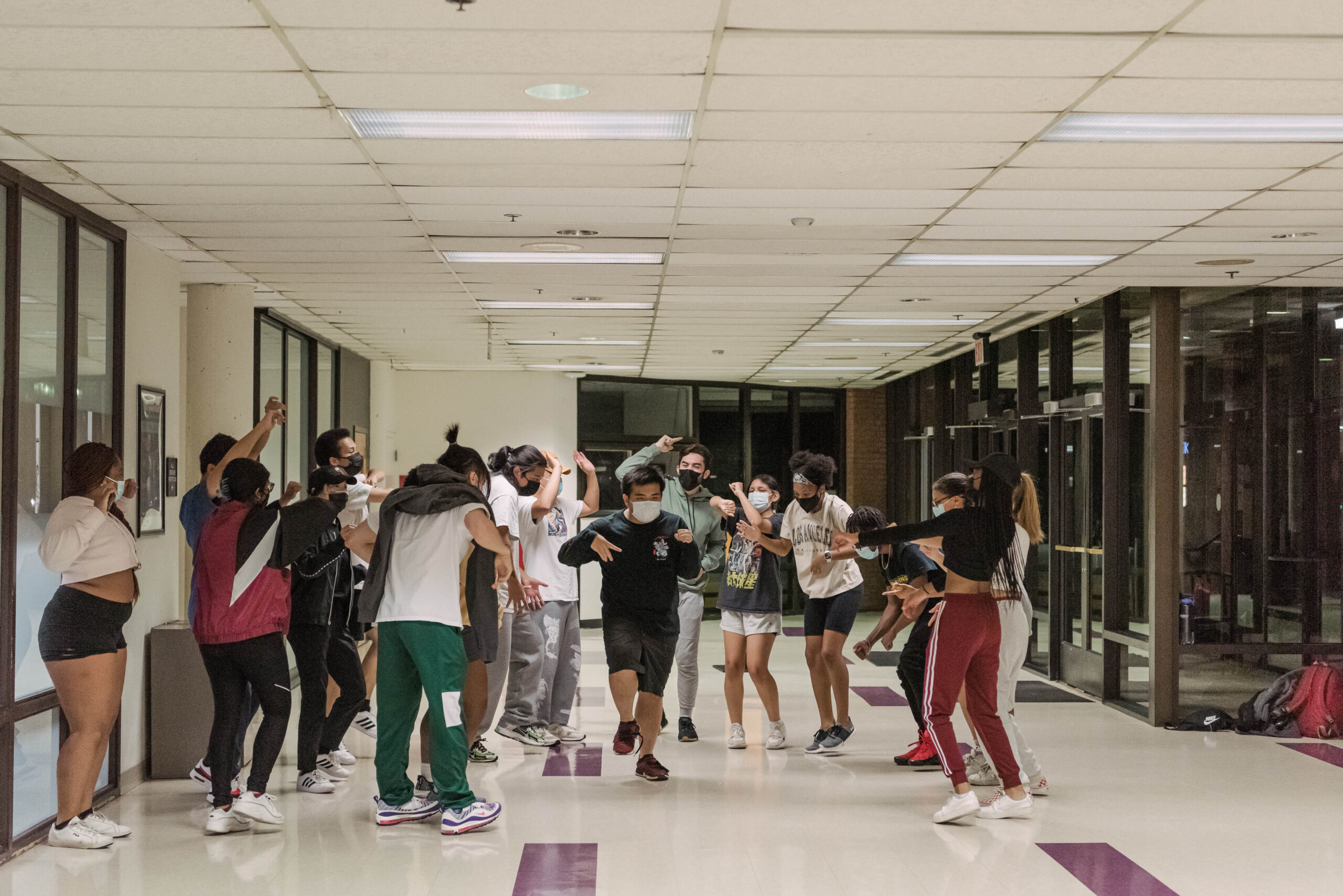
Major Definition practices in the bottom hallway of the UC in 2021. Photo by Marlayna Demond ’11.

The following months continued to put Huynh and Major Definition to the test. “Typically we plan for a semester before it even starts. When we were sent home indefinitely we decided to end the season early, because we really couldn’t do anything without it being a last second solution, and I always prefer quality over a rushed solution,” says Huynh

Nevertheless, there was some joy at the end of a tough semester. “We still had our end of the semester choreo-showcase where members can show off the choreography that they worked on in a show-and-tell style and we just cheer each other on. We managed to do that virtually and it was really nice to watch all the videos together at the same time,” says Huynh. 

Trial and error, in the name of success

https://www.instagram.com/p/COV_NgaDksa/

Major Definition developed an impressive, and aesthetically pleasing online presence during the pandemic, amping up their Instagram and YouTube output with stand-out production quality. 

Now that student organizations have more freedom in how they meet, Major Definition is set to return to one thing for sure. “No matter what, we’re going to be having in person practices, because at this point we have to. But for online dance classes and auditions, we are adopting a hybrid approach to maximize our accessibility to those who aren’t comfortable or are unavailable for in person meetings,” says Huynh. 

The organization has plans for a big semester once the ball is rolling. “We have pre-audition workshops which are basically dance classes for anyone who’s interested in auditioning, or just interested in taking a dance class. Beyond that, throughout the semester we typically offer free public dance classes to UMBC and beyond called public classes,” Huynh says. 

While there were certainly doubts about this semester’s potential at some point, Major Definition now looks poised to have a productive semester. 

“We have gotten lots of interest from Involvement Fest and our recent performance at the Fall Fest Friday event. It is reassuring to see all of the people excited about our group.”

A new trajectory for SAD

Despite the group’s growing success, Bura and Budris’s tenure in SAD started auspiciously. “When this club was handed over to Henry and me in spring 2020, I got the sense that it was a bit of a joke, in the sense of ‘hey you know what’d be funny? Let’s start a sysadmin club with a bunch of meme roles that we can assign our officers to,” says Bura.

“We kind of ran with the meme aspect of it,” says Budris, “but now it’s actually turned into an official club. We’re trying to keep that sense of ‘this isn’t a super serious club,’ but we do meaningful things.”

SAD, like other clubs, relies on the tenacity of its members to stay relevant and spread the word about their activities. “After virtual Involvement Fest we had one new person join us, and they brought a bunch of their friends,” says Budris. With the influx of new members, SAD club has developed new objectives to open up what comes next. 

“I think the main goal we’d like to implement is bringing in people who are brand new to the field instead of making this a club that’s ‘only for experts,’” clarifies Budris. “We want people to know, if you’re new, we can teach you cool things.”

SAD Club’s table at the Fall ’21 Involvement Fest.

After having their first meeting on September 10, offered both in-person and virtually, to maximize accessibility, Bura sums up the situation best. “I’m really proud that we have our club, we had to do a lot to get where we are right now.”

******
Header image: Student groups adjust to an outdoor Involvement Fest in 2021. Photo by Marlayna Demond ’11.

Playing at the Next Level—Retriever Rises to MLS Star

“New England goes back in front 2-1, and it’s the center back Jon Bell who gets forward and gets his first MLS goal! …Jon Bell creeps in between, it’s a beautiful delivery, and how about that for a header? Fabulous placement…. It’s a great goal!”

Even the rival New York City FC commentary team couldn’t deny the special nature of former UMBC men’s soccer left-back Jon Bell’s first professional career goal which aided his New England Revolution side to a nail-biting 3-2 away victory at Red Bull Arena in New Jersey in June 2021. 

Bell runs across field
New England Revolution defender Jon Bell (23) celebrates his goal against New York City FC during the second half at Red Bull Arena. Vincent Carchietta-USA TODAY Sports

A capstone achievement, on just his fifth appearance for his team, it’s a moment that millions of soccer players and fans around the world dream of, but will never realize. Bell channeled his Retriever roots to make a name for himself on the highest playing field.

MLS bound, but college first 

Described by UMBC men’s soccer head coach Pete Caringi Jr. as “one of the best-attacking collegiate left-backs in the country,” Bell, media and communication studies, realized the first part of his lifelong dream of playing professional soccer when he was selected at the 2020 Major League Soccer (MLS) SuperDraft before he even graduated from UMBC. Soon, he would join a new team, enter a new locker room, and have a new set of expectations in front of him.

Fortunately, he already experienced that during his first days at UMBC. “I was just trying to fit in with the guys… knowing that Coach Caringi was really excited and happy to have me on the team helped,” says Bell.

“I was an advocate of his through his first year here,”  says Caringi, who has coached at UMBC for more than 30 years. 

Jon Bell during his playing days at Retriever Soccer Park. Credit Gail Burton UMBC Athletics.

A Maryland native, Bell was originally committed to play out of state before complications arose, extinguishing that prospect. Coach Caringi, catching wind of this, knew he wanted Bell’s qualities on his roster, which would require only a little convincing at first. 

“In the recruiting process he saw the fact that we were just coming off the Final Four appearance—from a soccer standpoint we’d done really well. Also, I think he knew that pursuing a college degree from UMBC is a really valuable thing…. It’s not a hard sell to be honest,” says Caringi.

“I remember telling a lot of people here that Jon is going to have the opportunity to play at the next level and it’s just a matter of how hard he continues to work at it,” Caringi continues. “But he kept working at it and getting better and better, but there were glimpses of a guy who has all the tools to play at the next level in MLS.” 

But the nature of college athletics ensured that Bell had challenges beyond soccer, including the expectation to keep up academically. “It was hard, especially at first. When you had exams and papers at the same time, you had to go to practice every day, two and a half hours at a time. So it was just about being responsible, managing your time well, knowing that we couldn’t stay up late. You just had to come in ready for class or training the next morning,” says Bell. 

Student-athletes across the country face this challenge, but according to Bell, at UMBC, “it’s not like what you might see at other colleges where you have someone leaning over your shoulder helping you every time. We weren’t guided to our desks and given paper and a pencil—no one did the work for us.” Instead, Bell says, UMBC and Athletics gave him and the others motivation to embrace their studies. The academic support for student-athletes shows as the 17 varsity UMBC teams repeatedly increase their average grade point average, topping 3.19 in fall 2019. “Everything that we had to do academically, we did ourselves.”

After the fall 2019 semester when Bell was drafted to the MLS, he took a hiatus from school to give professional soccer his full attention, but Bell knows his time at UMBC isn’t over. He still plans to finish his degree virtually. 

Getting picked in the MLS SuperDraft 

Much like other professional sports leagues, MLS uses a college draft system, called the MLS SuperDraft when college soccer players are selected by teams in a pick-by-pick format. It’s the clearest path for a college soccer player to play at the highest national level. 

But getting selected in the SuperDraft is by no means the same thing as being a MLS player with a professional contract, Caringi explains. “The MLS draft is growing increasingly tougher to end up on the first team. You can get drafted, but to sign for the first team on most of these MLS teams is very difficult.” 

“Even in my first year of college, my number one goal was to work really hard to get the opportunity to get drafted into MLS. Each year, my goal was the same, just to build up my portfolio [for that],” says Bell.

When Bell’s moment at the SuperDraft arrived, his former head coach was watching the proceedings. “I was really excited,” says Caringi.“We spoke to the MLS coaches before the SuperDraft, so we knew there was a really good chance of Jon getting drafted. I’ve been a fan of Jon as a player, as a person, as a student—he was the whole package.”

Bell would experience a range of post-draft trials. He was selected in the second round by the San Jose Earthquakes, who ultimately didn’t offer him a place on the team. Instead, his rights were traded to the New England Revolution, where he started out playing for their B-team—New England Revolution Ⅱ in the third division United Soccer League One (USL1). But challenges and setbacks are just as welcome as successes to Bell. 

Finding a place on the first team

He never doubted that he would make the first team. “My coaches were telling me that the first team coaches were watching me and for me, hearing that was motivation to continue to push harder,” says Bell. “It was just a battle of mental fortitude with myself to continue to pursue even though there were times where things weren’t going my way, just keeping that focus and mentality throughout training sessions when I was with the first team for preseason.”  

After playing a season with the New England Revolution Ⅱ, Bell’s mentality paid off when he signed a contract with the Revolution’s first team. 

Playing alongside teammates who have participated at the highest levels of professional soccer has been “a great experience,” says Bell. “I can use their work ethic as a blueprint as to what I need to do to play at that level. It’s a cool experience to have not only with them but also with [head coach] Bruce Arena who’s been in this for a long time and has a long list of accolades and respect in the world of soccer.” As Bell adjusted to his new surroundings, he was also getting used to a new position on the field. 

New England Revolution defender Jon Bell (23) celebrates his goal with midfielder Carles Gil (22). Vincent Carchietta-USA TODAY Sports

“He started playing center-back which he never played here at UMBC,” explains Caringi. “I’m not surprised that he’s playing there, I think Jon can play anywhere on the field. I have to give him a lot of credit for transitioning to center-back which isn’t easy in general but at that level, it’s particularly challenging,” he continued.

After a pair of months with the first team, Bell made his debut for the Revolution, where he played the full duration of the match, a few games later, he got his goal. A perfectly placed header that whizzed past the New York City FC goalkeeper.

“It’s just a blessing. I can’t put it into words because at the moment when you score, that first second you don’t know if it really happened or not… It was late in the game at that stage where your legs are tired but scoring that goal refueled me to finish off that game,” Bell says, ultimately leading his team to victory.

The future of UMBC Men’s Soccer

UMBC’s men’s soccer program has produced its share of professional soccer players over the years, including five previous MLS SuperDraft picks, but Bell is the only Retriever actively playing in MLS. 

Nevertheless, both Bell, and Caringi see a bright future for the UMBC men’s soccer program, suggesting that Bell may have some former teammates joining him in MLS before long. 

Quantrell Jones had a lot of accolades and a lot of people watching him… His future is bright. If he decides to pursue going pro he has everything in his toolbox to do it,” notes Bell on his former teammate who still plays for the Retrievers.

Caringi agrees. “I’ve been saying that Quantrell is a MLS goalkeeper. When the time comes, Quantrell is going to get drafted, he’s going to get his opportunity…. Now it’s just a matter of how hard he works at it, and if he does, then we’ll be talking about him in a couple of years.”

Beyond Jones, Caringi sees several potential stars in the making. “Just like I told Jon when he was a freshman that ‘someday you’re gonna be a pro.’ I’m looking at some of these guys right now and seeing as they continue to develop, one day they’re going to have the same opportunity. It goes back to your love, your drive, your determination, but clearly, they can get there…. We’re not dry of players who could play at the next level,” says Caringi, who cites former Retriever Sam Solomon who recently signed for the Richmond Kickers in the USL, among others. 

Meanwhile, Bell hopes his rise to MLS “opens doors for other people. If I continue to play consistently at this level, not only can it help the coaches bring in new players, but it can help the players that are there now. When pro teams are looking at them, they can look at me as a kid who came from that school, so they know that there are players at UMBC who have the potential to play at the next level.”

*****

Header image: Jun 19, 2021; Harrison, New Jersey, USA; New England Revolution defender Jon Bell (23) celebrates his goal against New York City FC during the second half at Red Bull Arena. Vincent Carchietta-USA TODAY Sports.

Corrie Francis Parks: Artist, Community Builder, and Advocate for Students

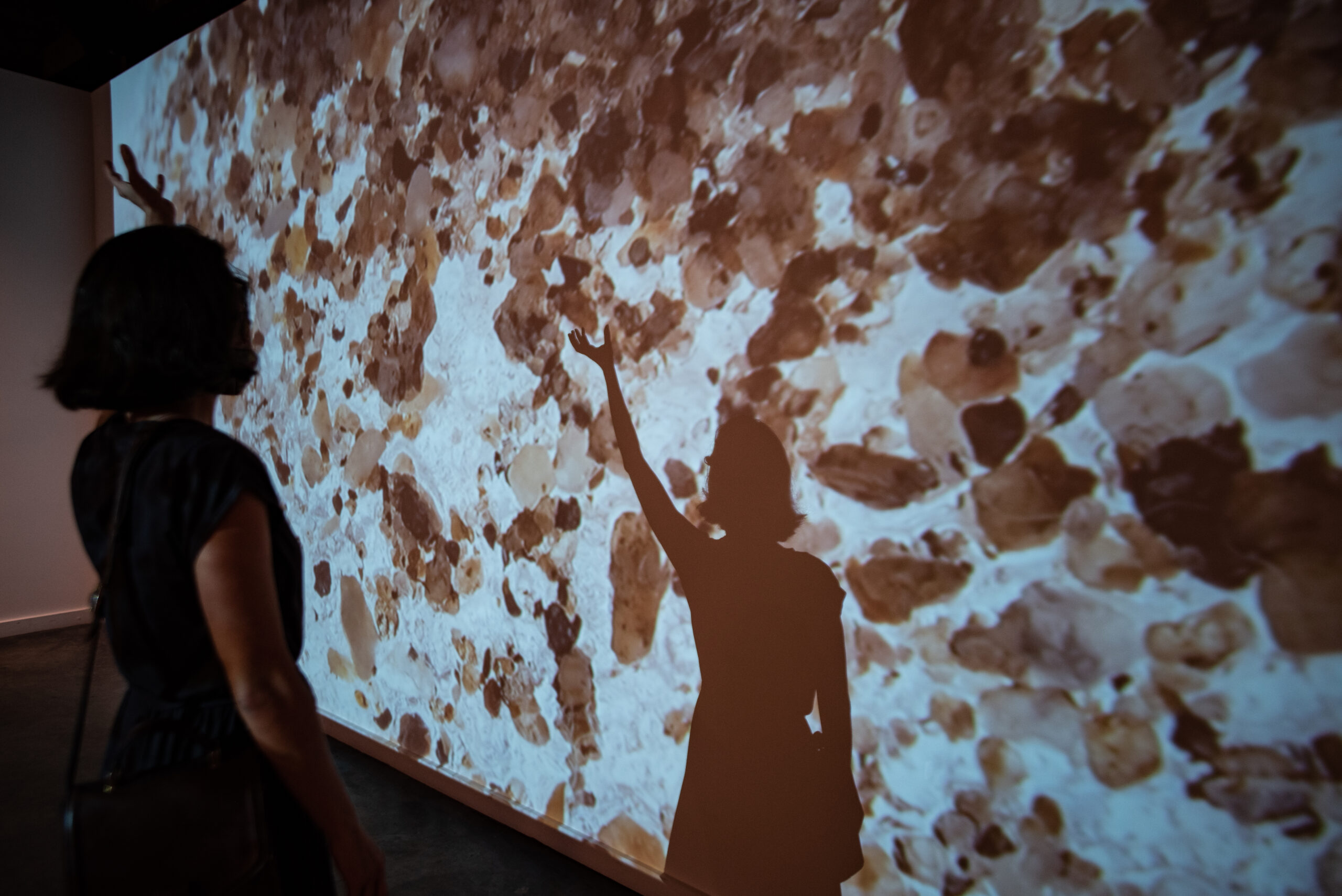
Compared to the tropical midsummer heat outside the Montpelier Arts Center in Laurel, Maryland, UMBC visual arts professor Corrie Francis Parks’ latest show “Uncanny Bodies” provides cool respite.

The exhibit’s home is in a dark room, where multiple projectors coat the walls in Parks’ unique animation style through which tiny sand particles are enlarged, diminishing your own size as they dance across your vision. The exhibit is multidimensionally entrancing, meanwhile, the sound design created by visual arts instructor Jason Charney, M.F.A. ’20, imaging and digital arts, is body-encompassing. 

View from inside artist Corrie Francis Parks’ exhibit “Uncanny Bodies” displayed at the Montpelier Arts Center. Photo courtesy of Thom Parks.

Even before her career began as an animator, and now as a professor, Parks has always made a point of creating her artwork through uncharted channels. Parks attributes her animation origins to her mentor and professor David Ehrlich at Dartmouth College. “He became very influential in challenging me to try things differently, like painting on glass which was really interesting to me because it looked different from anything else that was being made,” says Parks, “and I liked having my work stand out.” 

Eventually, this path of striving for the unique led to Parks’ remarkable sand animation technique which has been displayed on walls from Disney to Serbia, and currently, at Montpelier Arts Center. And now Parks hopes to play a similar role promoting her own students’ work as her mentor did for her.

Giving students space to develop ideas 

“People are interesting, and I see my students as people with really unique ideas that sometimes just need a little push,” says Parks. “As a professor, you’re supposed to do that. You have that authority and experience.” Throughout her past seven years as a professor at UMBC, Parks’ posture has allowed her to develop a reputation as an “above and beyond” professor. Her pride in promoting and developing her students’ talents is evident, her Instagram account @corrieeeee features a collection of her students’ animations, but goes beyond social media, too. “Some of the most influential professors I’ve had,” says Parks, “are the kind of professors who don’t necessarily develop that student-teacher relationship but rather a colleague relationship with their students.”

Camille Ollivierre, a senior visual arts student with a concentration in animation, describes Parks as someone who talks “to us with the same level of respect she would other professors, while still acknowledging we are young adults with much room for growth.” 

Where that growth can come from is something that Parks helps her students find.

Parks with students at a 2017 show at UMBC’s Center for Art Design and Visual Culture. Photo by Marlayna Demond ’11.

“She encouraged me to apply for an Undergraduate Research Award grant (URA),” says Ollivierre, “to explore my idea to create paint on glass animation by creating my own multiplane animation camera.” Receiving the URA allowed Ollivierre to work closely with Parks as her mentor. “She encouraged me to push myself further than I thought I was capable of,” says Ollivierre. “Also, since I’m interested in professionally pursuing stop motion animation, I’ve really enjoyed working with someone who has extensive experience using unconventional materials like sand and paint.” 

Visual arts major senior Chase Nickoles expands upon Parks’ ability to connect students with new professional experiences. Nickoles found an opportunity to submit the class’s rotoscoping project to be displayed at the Carroll Arts Center in Westminster, Maryland. “Corrie was quick to help as much as possible with the logistics and providing necessary information,” says Nickoles. “Thanks to her help, our project was successfully displayed, pushing me into the Westminster art world as a representative of the piece, and pushing all the students to be seen by a wider circle.”

Constructive classroom communities

Meanwhile, within the classroom, Parks has found ways to connect with students on a level that is accessible and relatable to them—including creating a Discord server for her students to continue building community. 

Visual arts senior Aaron Wescott says that “the space Corrie created online for the whole class was amazing, and it really let us bounce ideas off of each other and her. Being able to talk to someone who had genuine experience and talent in the field made me feel comfortable enough to start branching out and grow as an artist, and I even looked forward to talking with her. She is an amazing teacher and colleague.” 

For Parks, creating a community that cultivates her students’ abilities is something that comes naturally. 

Angle of Repose. Photo courtesy of Thom Parks.

“The thing that I love about teaching college is we’re all adults, my students are just a few steps behind me in their development as an artist… I’m really happy to share my experience as to what it means to be an artist, I love sharing information,” she says. 

Her exhibit, “Uncanny Bodies” is available from now until August 1, 2021. In Parks’ own words “It’s a really enveloping and calming space that is good to go to on a hot day, it’s cool in there. It takes you into a different perspective and it allows you to take a little break from whatever you’re dealing with right now”.  

Visit it now and see what it means to be a grain of sand.

Persevering Through Turbulence

After years of strife, fortunes have changed for this West Baltimore native with a college degree in hand, and a new life on the horizon.

Donovin Acaro Smith ’21, geography and environmental studies, was 11 years old when he did something bold. It was a sunny day. His school was taking a class trip to the local swimming pool, and parents were welcome to join. Smith’s mother, a honey-voiced woman named Sonia, thought there was a problem. As far as she knew, her son didn’t know how to swim; he however, disagreed. Along with some buddies, he sprinted and leaped into the pool water, as his mom screamed, “Noooooooo Donovin!”
But surprisingly, he wasn’t drowning, or even floating. He was swimming. It was a concerning, yet proud moment for his doting mother.

As he grew older, Smith’s boldness led him to more dangerous situations. At 18, he told his mom he was heading to a cookout with some friends, just minutes away from his grandmother’s place. Later that same night, he called to say that he was on his way to the hospital. He’d been shot twice, once in his left thigh, and once in his lower ribcage.
The pain didn’t hit him right away, perhaps because gunshots weren’t new to Smith;when he was a child, he witnessed his father’s shooting. “He was set up when I was four. Somebody had came in and shot him and he fell off the balcony and ever since then he’s been a paraplegic.”

But the event traumatized him.

“After he got shot for like a year he wouldn’t go out,” says Smith’s mother.

“He stayed in so much he ended up having a vitamin D deficiency,” she continues.

To this day, Smith has to manage with PTSD and Anxiety as a result of his youthful traumas.

An unimaginable future

Despite his turbulent childhood, in his late 20s, Smith following in his maternal grandmother’s footsteps pursued a new life focused around one goal, getting a four year college degree. By the time he was thirty two, he had one to his name, and a big smile on his face.

In addition to obtaining his degree, Smith buffed his resume during his time at UMBC, participating in 5 internships, and developing invaluable relationships with the people around him.

Smith’s advisor and teacher Matthew Baker, professor of geography and environmental systems, and associate dean of the College of Arts, Humanities, and Social Sciences, sums up his experience with Smith accordingly.

“Given the challenges he faced at the outset of his undergraduate program at UMBC, what he’s achieved is probably one of the greatest success stories that I’ve experienced in my 20 years of instruction.”

Growth pains

Even though he grew up just 20 minutes away from UMBC, Smith had to endure, and grow from his personal hardships before he enrolled in his first classes.

“Not to sound like a tough guy, but I guess those experiences from my dad numbed me, so when it happened to me, it didn’t really hurt. I was just trying to control my breathing so I could make it to the hospital,” says Smith on being shot.

Life continued to be tough for Smith, as he struggled to find purpose, and meaning in his life.

“Whatever lifestyle [my father] indulged in at the time, I saw those things firsthand. I guess once you keep seeing the same things over and over, it just sorta keeps resonating in you, so when I got to that age, I wanted to do the same thing,” even though his father frequently warned him about that lifestyle.

“Some things I was doing I didn’t feel right about, or I felt bad about. Maybe because of those circumstances, I was confused about what it means to be a human being,” he said.

The right people were around him from the start. His mother’s positive influence, and the love and support of other family members helped Smith through his most turbulent years.

By the time Smith got to high school, he realized he could “get anything I want up there.”

“What do you mean?” his mother asked,

“Mom, I can get anything I want. Guns, drugs, anything,” he replied.

His mother quickly transferred him to Pikesville High School, where he still got into trouble, but “it got much better” his mother says, “Without a doubt it changed his trajectory.”

Smith expresses regret at his lack of interest in academics during his high school days.

“I remember I used to walk into class, only thinking about getting through the day, I didn’t care what I learned about,” he said. “When I finally got to college, and I was in Chemistry class, I could see how excited those students were to be in there. I just thought to myself, wow man, this is foreign to me. I wish I developed that attitude way earlier.”

A new mind-frame for a new environment

Ultimately, he did develop a more positive attitude towards education. When he graduated from high school after being held back a year, Smith enrolled in the Community College of Baltimore County (CCBC). He struggled there, but he got through it, earning an associates degree. He then applied to a few four year institutions. When he got into UMBC, his mother said, “Wowww Donovin! You gotta do it.”

“At first, I was just [going to college] to keep my mother and grandmother off my back, and to try and make my father happy, to make sure he knew that I’m grateful for some of the mistakes he made for me to be where I’m at. Then, when I started believing this was real, and not some kind of unrealistic reach or a joke, I knew I was doing it for myself too,” says Smith.

But before he got to that stage, he had to work to adapt to a new atmosphere and new environment. “The biggest obstacle to be honest, for me, was building up my self esteem and feeling comfortable in my own skin. My first couple of years were rough. Like I might get a B or a C and then maybe like two D’s or an E. I was going to tutoring, I was trying. But I noticed when my self esteem went up, my grades improved and I skyrocketed and I never looked back,” he says.

How did he get his self esteem up? Through trial, error and trial again.

“The moment I started believing was when I was with a friend in a mapping class called GES 286. I ended up failing, and he got a D. But when we took it over the second time, I felt way more comfortable. When I started excelling in that class, that’s when I started feeling like I could do it,” he says.

“One of the things that has impressed me about Donovin the entire time that he was here was his resilience,” says Baker in GES, “his ability to bounce back from challenges, his perseverance and his absolute, unwavering dedication towards reaching his goals and because of those things it was really easy to support him, and it became an obligation to see that he did well.”

Anyone who has met Smith will know that his courteous behavior, and radiant smile go a long way to winning people over. Also helpful was Smith’s fearlessness in regards to asking questions.

“He was always really clear about why he was asking what he was asking, and what he was trying to understand. I think he was also willing to be humble about what he was learning so that he didn’t let embarrassment get in the way of his learning. As a result he made remarkable progress,” says Baker.

Interning his way up

Throughout his time at UMBC, Smith developed tremendous experience in his field, undertaking five separate internships since his second shot at life began at UMBC.

His first, was under the wing of Baker, where he researched sediment pollution in the Patapsco river. His most recent internship before graduation involved environmental research at the Smithsonian, researching environmental influences on barnacles.

“The most rewarding part for me was working next to and being close to doctors and biologists every day, asking them as many questions as I wanted so I could really learn from them,” says Smith.

“It taught me that you have to keep building your skills, learning how to compile fragments of information that might coincide with one another,” he continues.

Today, Smith sees his graduation from UMBC as his life’s crowning achievement. He describes his educational experience as a microcosm of his life as a whole. “There was a point at UMBC where my grades were looking so bad that I was about to switch to community college and try to come back. One of my highlights was being able to turn that around and just survive the tough academic atmosphere,” says Smith, who credits his mom, Dr. Baker, his friends and some of UMBC’s institutions who helped him succeed.

“The Retriever Learning Center (RLC) is where I did the majority of my tutoring and it was really helpful. But with me having anxiety and PTSD I had to get my questions off. I was trying to survive! Sometimes with so many students attending, there wasn’t enough time for me to get as much help as I wanted. Thankfully I was able to get accommodation from student disability services who granted me an individual tutor which made a big difference.”

Several months post graduation, he misses “being in the library, chilling with my friends. Even though we didn’t all have the same majors or classes, we really developed good study habits and it made me feel better than just being at the library by myself.”

To anyone that finds themselves in a similar position to the one he was in before attending UMBC, Smith recommends perseverance: “Give yourself a chance, and time to grow on your own. Separate yourself from your friends and environment and try to look at life from as many positive angles as possible.”

And with that perseverance “he’s on his way, he is on his way,” says Smith’s mother.