
All posts by: Julia Celtnieks


Path to Success: Psychiatrist Chinedu Varma ’04, M12, serves Retrievers at UMBC Counseling Center

When asked what kind of advice she has for first-year students as an alumna, Chinedu Onyedike Varma ’04, M12, interdisciplinary studies, has a simple answer: find your passion, get involved, and have fun – “as long as it’s safe,” she’s quick to add.

As a consulting psychiatrist at the UMBC Counseling Center, keeping students safe is a big part of her job, along with giving them the mental health support they need to have the best college experience possible.

Students seek out Counseling Center services for a whole range of concerns, whether they’re grappling with anxiety and depression, questioning aspects of their identity, or dealing with the myriad stresses that come from both college life and the daily news cycle. Last year, more than 1,000 individual students visited the center, according to its director, Bruce Herman.

“I think there’s starting to [be] better recognition of how important mental health is, but despite this, there’s still this huge stigma,” says Varma. To her, her role is not just to treat students, but to educate them on how to navigate their formative years.

Varma knew from a very young age that she wanted to be a doctor: “My mom was a nurse, and she often had her stethoscope, and I would play with it. That’s where I got the idea.” When she got to UMBC, she forwent the traditional pre-med route to design an INDS major in biomedical ethics, which she figured would set her apart from the crowd when application time came. Like many students do, she re-evaluated her career goals throughout her time at UMBC. After graduation, she returned to her home state of Virginia to serve a year with the AmeriCorps VISTA program, and became a certified mediator for family and small-claims court cases, which helped her hone her skills as a communicator.
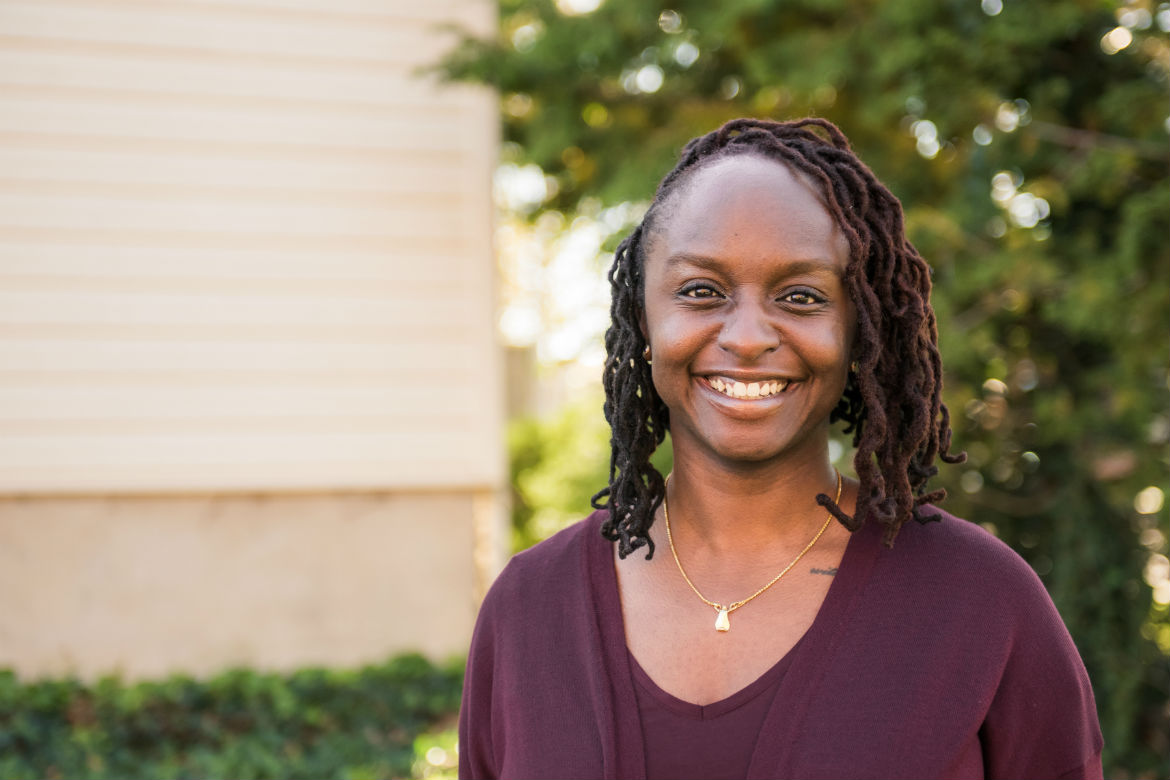
At the end of her year of service, Varma enrolled at the Johns Hopkins University School of Medicine, where she started out in internal medicine, but wound up enjoying her pediatrics rotation a lot better. It was a sub-internship in the pediatric HIV clinic, where she worked weekly with a psychiatrist who treated children facing unimaginable circumstances, that convinced her to go in another direction entirely.

“The patients would come in, and they were predominantly born with HIV. [They] would be depressed or anxious…like, ‘I’m not going to have a life, what’s the point, why did my mother do this to me…I’m not going to be able to get married, I’m not going to be able to have kids.’ And in that depressed state, in that anxious state, they were not really making the best decisions.”

For Varma, the experience was “heartbreaking and fascinating,” and spoke to her interest in public health, along with working with young people. She went on to earn an M.D./M.P.H. and complete an adult psychiatry residency at Hopkins before serving as chief resident in her child and adolescent psychiatry fellowship at New York Presbyterian Hospital and Cornell University.

In 2015, Varma returned to Baltimore to start a career in community mental health, working with youth in Baltimore City Public Schools and in juvenile detention centers. When she started looking for work that would allow her to spend more time with her newborn daughter, she came across a part-time position at the counseling center at another university in Maryland.

While some child and adolescent psychiatry fellowships offer clinical rotations at colleges, hers did not, and when she started her new position, surrounded by students and trainees, she fell in love with being on a campus again.

“I really like academics in general,” she says. “I enjoyed training at Hopkins, I enjoyed those university settings, and that was the pull for me. […] When I got there, I was like…this. Is. Awesome. This is so great. I want to do this all the time.”

Varma enjoyed the new job so much that she wrote to the counseling center at UMBC, asking if there were any open positions for a consulting doctor. Now, she works part of the week in a small, unassuming practicum office in the portable building across from Erickson Hall, dividing the rest of her time between two other colleges.

It’s an interesting time to be a mental health professional, no less a mental health professional in a university setting. At UMBC, many of Varma’s patients are international or immigrant students who face an uncertain future under the current presidential administration.

“For a lot of reasons, this is an emotionally trying time for a lot of people,” she says. “Especially on this campus, I have a greater appreciation for those students that are coming from other countries…[regarding] their concerns about ‘Where am I going to be next semester? Am I going to be allowed to be in this country?’” She has also met with several students concerned about their fellow Retrievers in light of the current political climate.

No matter their concerns, Varma wants students to know the Counseling Center is open to them all.

“Someone that’s struggling…wants to be able to know that there are treatments that work, there are people that can help, that the Counseling Center is there on campus and accessible,” she said. “Students are … incredibly grateful for the dedication and support that the counseling center staff provides…[and] being able to set them up for success is a big motivating factor for me.”

— Julia Celtnieks ’13

photos by Marlayna Demond ’11
Shout Out Loud: WMBC halfway to fundraising goal

For more than 40 years, UMBC’s student-run radio station, WMBC, has been a reliable source of news and entertainment for our campus, as well as an incubator for our students’ creative talents. As times have changed the station is now broadcasting completely online, and has recently pivoted to livestreaming so have the station’s equipment needs. With this in mind, WMBC officers started a fundraiser on UMBC’s brand-new crowdfunding platform, Gritstarter…and with just three days left, they’re already more than halfway to their $3,000 goal!

Click here to read more about WMBC, and to make your gift heard (you can also check out their Facebook page here.) To learn more about the dozens of other student-run projects on campus, and to give to the cause closest to you, head to our Gritstarter site.

Career Q&A: George Derek Musgrove ’97, Historian, Author, and UMBC Professor

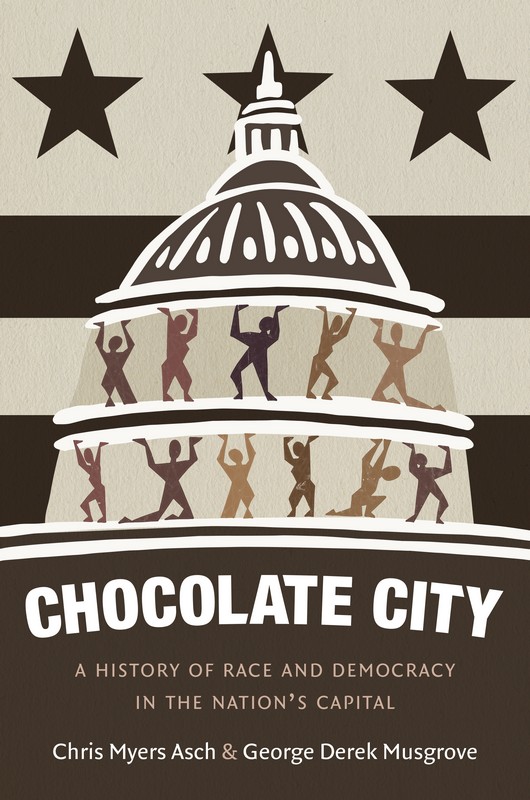
Every so often, we chat with an alum about what they do now and how they got there. Today’s guest, George Derek Musgrove ’97, history, is an alum-turned-faculty member whose latest book, Chocolate City: A History of Race and Democracy in the Nation’s Capital, explores Washington, D.C.’s relationship to race over the last four centuries. We caught up with him ahead of the book’s November public launch.

NAME: George Derek Musgrove
MAJOR: History
GRAD YEAR: 1997
CURRENT JOB TITLE: Associate Professor of History, UMBC

What made you decide to study post-WWII U.S. history, and what specifically led you to the subject matter for Chocolate City?
I have always approached history as a way to inform activism, and I have always looked to my parents’ generation for those lessons. My father was involved in Black Power activism and my mother was deeply influenced by the Black Arts movement. That naturally led me to pursue post-1945 history.  I wanted to understand what political and cultural struggles had shaped the world in which I lived and how. I also wanted to understand what worked and what did not in previous struggles, specifically struggles for African American equality.

I came to the topic of D.C. history quite by chance. In 2009, when I was still teaching at [the University of the District of Columbia], my African American history course under-enrolled.  As per an unfortunate university policy, the class was cancelled and I was assigned another course on the spot: History of the District of Columbia. A Baltimore native with no background in D.C. history, I stumbled through the ensuing semester, hurriedly reading any book on the District I could get my hands on just moments before heading to class.

The following year, I shared this story with my colleague, Chris Myers Asch, a D.C. native who had returned to his hometown and taken a position at UDC. Together we tackled the D.C. History course, and we jointly rewrote the syllabus. After teaching the course, both of us mused that “someone” should write a good survey text on race and democracy that captured students’ attention and addressed the themes we emphasized in the course. Enterprising historian that he is, Chris thought that that “someone” should be us. He wrote a proposal in 2011 and suggested that I join him in producing just such a book. I did.


Choclate City cover image

Chocolate City isn’t your first book…do you have any other projects that we should look out for?
My other book projects focus on black politics on the post civil rights period.  My first book, Rumor, Repression, and Racial Politics: How the Harassment of Black Elected Officials Shaped Post-Civil Rights America, explores black elected officials’ allegations of state repression between 1965 and 1995.  I hoped to understand African American leadership’s evolving relationship to the government in the years after passage of the Voting Rights Act.  I am currently working on an exploration of black power politics and culture during the years that I came to political maturity, tentatively titled “We must take to the streets again”: The Black Power Resurgence 1983-97.  My generation was fascinated by our parents’ civil rights and black power exploits, and we tried to bring back many of their ideas and activist projects in the 1980s and ’90s as a way to push back against the Reagan Revolution and the urban crisis.


Tell me a little bit about your post-UMBC career path, and how it eventually led you back to UMBC.
After graduation I headed to NYU to pursue a Ph.D. in history.  I was lucky enough to secure a full scholarship for my graduate study through the efforts of several members of the UMBC administration, principally Earnestine Baker, who had connections with the NYU Medical School where she had placed a number of Meyerhoff Scholars. After leaving NYU, I secured a postdoc at Trinity College in Hartford, Connecticut, where I taught very well-to-do students from the New England private school circuit. The experienced convinced me that I would prefer to teach working- and middle-class students, so I headed to the University of the District of Columbia. I was happy teaching the predominantly working-class student population at UDC, but […] having come up with the example of Dr. Hrabowski as what a college president should be…I made an effort to work for that administration by returning to UMBC. When a job opened in the history department in 2012, I jumped at the chance.  

What’s the one piece of advice you’d give to an incoming UMBC student, and why?
I will give them the same advice that was given me: take control of your educational experience and mold it into something unique that suits your particular needs and aspirations.  Students have a choice: they can listlessly move through a proscribed curriculum like they did in high school, or they can figure out what training they need for their chosen career and secure it.  With the support of advisors like President Hrabowski and historian Rebecca Boehling, I chose the latter. I knew I wanted to be a historian, so I actively searched for the classes that would help me to understand the profession and my place in it; secured internships that gave me hands on experience in the field; and studied abroad to give myself perspective on the peculiarities of my country and chosen subject. This directed approach to my major made me an attractive candidate for a Ph.D. program at NYU. It set me on the path to becoming a historian.

Chocolate City will launch publicly with a lecture and book signing at the National Museum of African American History and Culture on Thursday, November 2. Advance registration required; click here for more information.

Got exciting news to share with us? Send in a Class Note for the next print edition of the magazine!

Grit & Glory: #UMBCHomecoming 2017

Bedecked in black and gold, the Retriever community came out in full force for the 2017 Homecoming celebration. Held over the first two weekends in October, this year’s festivities combined old favorites with new traditions, and brought faculty, staff, alumni, students, and members of the wider UMBC community together to celebrate another year of grit and greatness.

THURSDAY, OCTOBER 5: Alumni Awards

Homecoming kicked off on Thursday, October 5, with our Alumni Awards ceremony, an annual event honoring graduates and faculty who have made outstanding contributions to their fields and their communities.

This year’s Alumni Award winners were Sylvia Trent-Adams, Ph.D.’06, public policy; Kafui Dzirasa ’01, M8, chemical engineering; Kate Laskowski ’06, biological sciences and chemistry; Steven Storck ’08, mechanical engineering and mathematics, M.S. ’09, mechanical engineering, and Ph.D. ’14, mechanical engineering; Dennis Williams II ’14, American studies; Lauren Mazzoli ’15, mathematics and computer science, and M.S.’17, computer science; and Alejandro Cremaschi ’93, music. Our Outstanding Faculty Award went to Marc Zupan, associate professor and graduate program director in the Department of Mechanical Engineering.

For a full recap of this year’s event, click here; you can also check out a live video of the ceremony on our Facebook page.

FRIDAY, OCTOBER 6: Bonfire and Big Prize Poetry Slam

Homecoming festivities continued into Friday, as we brought alumni, students, faculty, and staff around the traditional Erickson Field bonfire. The blaze has been a Homecoming mainstay since 2005; this year’s celebration boasted food, fun, and plenty of Retriever spirit to go around.

Elsewhere on campus, the English Department’s annual Big Prize Poetry Slam was in full swing as alumni and students competed for the top spot in the spoken-word competition. “It’s a perfect storm of students, alumni, faculty, fans, all supporting each other, caring about poetry, recognizing that this art form matters and that these poets sharing their work really matter[s],” Sally Shivnan, associate director of the writing and rhetoric division of the Department of English, told The Retriever Weekly.

Amber C. Wheeler ’21, English, took home the night’s $200 top prize; Calista Ogburn ’21, health administration and policy, and Charles Griffin ’18, philosophy, came in second and third, respectively.

SATURDAY, OCTOBER 7: Retriever Dance Marathon and Block Show

Students spent the first Homecoming Saturday getting their groove on across campus, as the annual Retriever Dance Marathon kicked off in the UC Ballroom, and members of the National Panhellenic Council, Multicultural Greek Council, Caribbean Student Council, Black Student Union, and Major Definition performed in the UMBC Block Show.

MONDAY, OCTOBER 9: Homecoming Hype

The dance team, the pep band, the free (seb) swag…all was present and accounted for on the Commons Mainstreet at free hour to kick off the first official week of Homecoming.

WEDNESDAY, OCTOBER 11: Campus Campaign Kickoff

On Wednesday afternoon, folks from all across the campus community gathered on Erickson Field to help kick off UMBC’s Grit and Greatness Campaign (which you can read more about here). We asked students, faculty, and staff to share with us their proudest accomplishments, what the word “partnership” means to them, and how UMBC has changed their lives…and we were bowled over by the answers we got. In exchange, participants received a limited-edition Grit and Greatness Campaign t-shirt…which proved to be so popular that we ran out early!

FRIDAY, OCTOBER 13: Student Leader Reunion and Comedy Show with Trevor Noah

Friday the 13th was a lucky one for UMBC, as The Daily Show host Trevor Noah played live to a sold-out crowd in the RAC! Right before the show, alumni members of (seb), Greek Life, SGA, and former Commons student staff gathered in the RAC fitness center to share memories and a meal.

SATURDAY, OCTOBER 14: Grit-X, Alumni Reunions, Carnival, and Soccer Game

Homecoming Saturday started with the second annual Grit-X Talks, where we brought faculty and alumni in fields from neuroscience to engineering to teaching to dance back to campus to share their expertise in bite-sized presentations. Check out the full recap of that event here.

Elsewhere, students enjoyed breakfast with their families in the Skylight Room; folks from all over the surrounding community came to the Homecoming Carnival, featuring rides, face painting, and a petting zoo; and alumni from every Retriever decade reconnected at reunions in the Alumni Tent and across campus.

The night ended with a 3-1 win for the Retriever men’s soccer team against defending conference champs Albany, a fitting coda to more than a week of Grit and Greatness.

— Julia Celtnieks ’13; all photos by Marlayna Demond ’11 unless otherwise noted

Alumni Awards 2017: Steven Storck ’08, Mechanical Engineering and Mathematics, M.S. ’09, Mechanical Engineering, and Ph.D. ’14, Mechanical Engineering

In the weeks leading up to the Alumni Awards Ceremony, we’ll be profiling each honoree in more detail here on our blog. Today, meet Steven Storck ’08, mechanical engineering, M.S. ’09, mechanical engineering, and Ph.D. ’14, mechanical engineering, additive manufacturing engineer at the Johns Hopkins University Applied Physics Laboratory and this year’s Distinguished Service honoree.

As a triple alumnus of UMBC, Steven Storck ’08, mechanical engineering and mathematics, M.S. ’09, mechanical engineering, and Ph.D. ’14, mechanical engineering, knows his way around campus, to say the least. In addition to his day job as an additive manufacturing application engineer at the Johns Hopkins University Applied Physics Laboratory, he still makes his way back to UMBC frequently, both as an instructor and an advisor for the school’s Baja SAE team. This is the place where he first discovered his passion for research, and he says he had a lot of support throughout his academic career. “If you were willing to put in the work and had a good idea, everyone at UMBC seemed to encourage you to take on the challenge, no matter how large,” he writes. Storck began his research during his sophomore year at UMBC, when he took over a project from a graduate student who had left. As he continued his education, he had more and more opportunities to delve deeper into his study of materials science and engineering, and was eventually able to apply for a Graduate Assistance in Areas of National Need (GAANN) fellowship as a doctoral student. That funding allowed him to develop a material over four times lighter and six times stronger than the current state of the art, and his findings earned him top honors from the Society of Advanced Materials and Process Engineering (SAMPE). Today, at the APL, Storck heads up research and development for various projects, most notably an additive manufacturing technology demonstration part for NASA’s Parker Solar Probe, which is hoped to be the first spacecraft ever to “touch” the sun. He’s also lent his considerable project-management skills to the UMBC SAE Baja team; in 2015, he organized UMBC’s first international Baja event. “This was particularly rewarding,” he writes, “because it allowed [our team] to highlight UMBC on a global stage.”

Join us for the Alumni Awards Ceremony on Thursday, October 5!