All posts by: Cristina Reid '24


WMBC is back on the air

“You’re listening to WMBC, UMBC’s freeform student radio station. And you’re in the 2000s right now, thanks to the radio time machine.” 

Four years ago, hearing those words would have been impossible. UMBC’s radio station, WMBC—now a bustling hive of musical joy, live concerts, and record painting parties—had been silent after a lack of student staffing and resource issues, leading the student group to hang up their headphones. 

But recently, music is on the airwaves again as students and staff work around the clock to breathe new life into the station. After combining operations with The Retriever, UMBC’s long-running student newspaper, and Bartleby, UMBC’s Creative Arts Journal since 1972, WMBC found a new home in the University Center, and a fresh start as part of the newly chartered Student Media Center.
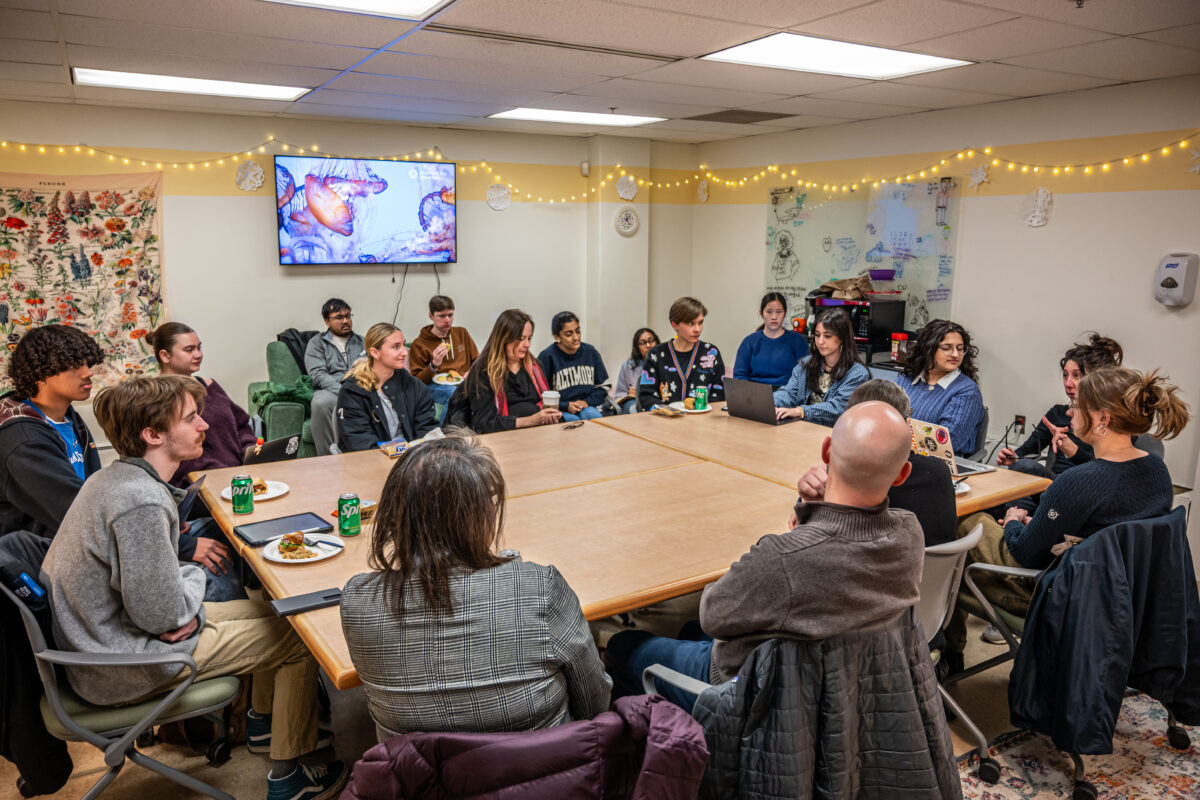
A group of people sit crowded around a conference table. Yellow streamers hang around the room and on the walls it says WMBC and The Retriever
An editorial roundtable event of Student Media Center participants. Photo by The Retriever staff photographer Joshua Able-Carter, sophomore visual arts major.

Legacy media outlets

Retrievers have been media-conscious from the university’s inception. Within the first month of classes at UMBC, a newsroom was established, and the first issue of the student newspaper was published on September 19, 1966. Ever since then, the tradition of reporting student and campus life continued to expand and evolve. 

By 1979, the student-run radio station, WMBC, was founded. Originally called the WUMD Radio Club, the station began broadcasting over carrier current circuits, enabling students to tune in from their dorms and at a couple of dining areas on campus.

In recent years, these media outlets, which depend on the ever-changing student body, took a hit. But students weren’t willing to give up their media platforms so easily. 
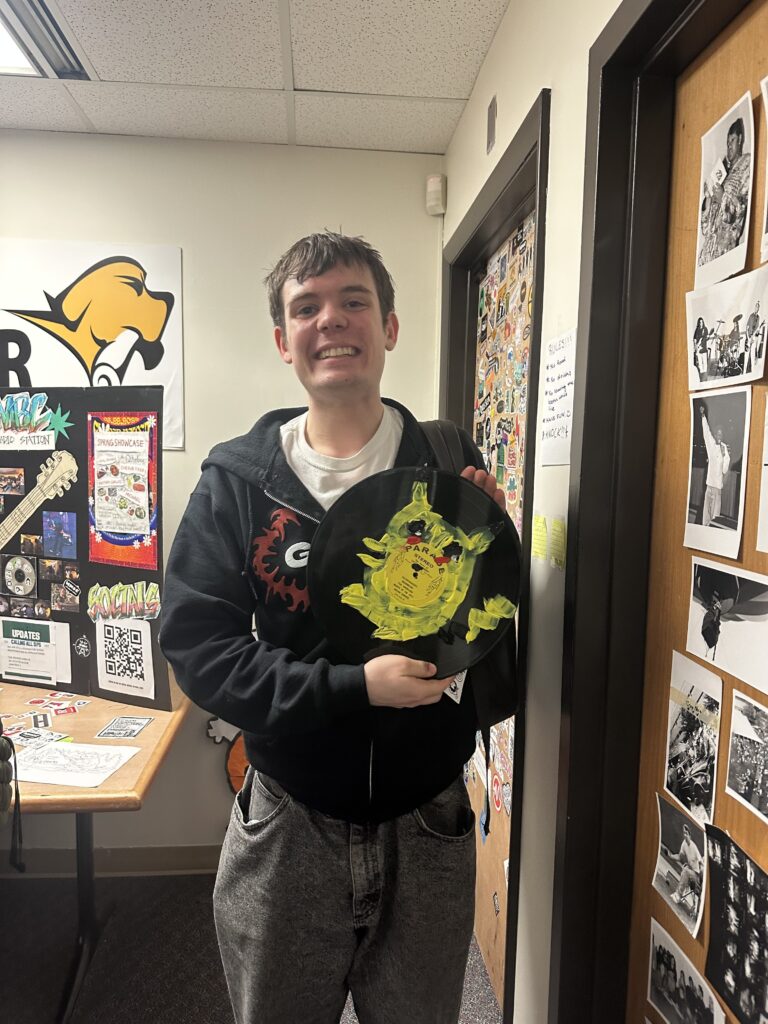
a smiling student holds up a painted record with a Pikachu character on it
The station held a record-painting party to draw in students to the UC 214 space. Photo by Miani Kozlowski, sophomore computer engineering major.

In 2022, WMBC had been inactive for roughly four years. Before COVID even, the student group was having trouble staffing the station, but the org really lost its footing—and its physical space—during the pandemic. Sean Stultz ’24, computer science, WMBC’s station manager his senior year and their chief engineer prior to that, was storing the station’s equipment in his Hillside apartment in Breton, until the station found a permanent place for it.

Around the same time, The Retriever, the student-run newspaper, ran into similar complications. They were working without a dedicated advisor, and the weight of managing everything from organizing meetings to pitching and writing stories, publishing and distributing both in print and online, marketing/running social media accounts, and much more became too much for students to handle alone. 

That changed at the end of 2023, when Ann Tropea, the assistant director of the Center for Democracy and Civic Life, was hired as the newspaper’s media advisor. The Retriever members say she has helped immensely with finding advertisers, organizing documents, and advocating for them as a student organization. 

“I began working with students from The Retriever and WMBC to create a shared structure that went beyond the two groups simply sharing space in our suite of offices in the UC,” says Tropea, who has a background in law and communications. 

The student-run creative arts journal Bartleby joined the other media groups in 2024, and after a year of planning, SGA recently approved a new charter organization—the Student Media Center. The group’s stated mission is to “create a more engaged, informed, and civically empowered student body, and assert First Amendment freedoms at UMBC through the active production of student-run media.” 

The Student Events Board (seb) is the only other charter organization at UMBC, so this is historic, says Tropea. And the new structure ensures the longevity and continuous operations of not just WMBC, but The Retriever and Bartleby as well, Tropea adds, who during this planning period was directing her efforts into assisting with WMBC’s revitalization. 

Creating a shared mission

Michelle Ibino, a biological sciences junior, who is the events manager for WMBC, says, “Sharing a space and a mission has been positive as it allows for students to cross over into each club. Members of the station have found and gone on to write/work for The Retriever and vice-versa.”

The Retriever has been able to seamlessly work with WMBC to produce stories that provide coverage about the station’s events, and it’s also common to see members of The Retriever enjoying WMBC’s events, which turns the newsroom into a Tiny Desk Concert vibe. “The WMBC/Retriever space is small, but turns out to be a really cool music venue if you just rearrange a few chairs and tables!” says Tim Rogers, The Retriever’s music columnist. 

“We might be known as a commuter school, but that doesn’t mean we can’t have a rich student culture just like any other university. The efforts of The Retriever and WMBC bring life to campus,” says Rogers, a sophomore.

When it comes to on-campus events, WMBC hosts concerts, album listening parties, zine creations, record painting, and other activities. WMBC puts together bills that showcase student artists, as well as local bands from the surrounding Baltimore area.
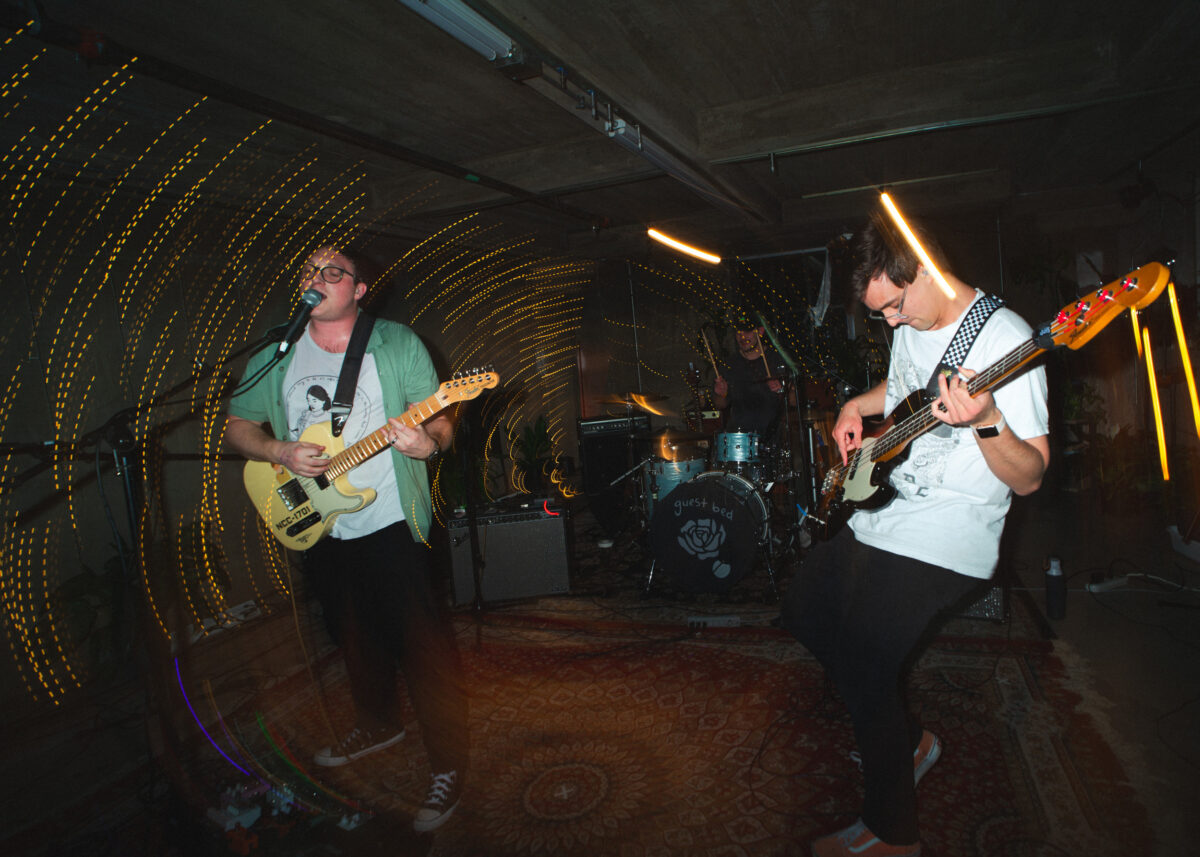
two people play the guitar while lights swirl around them on stage at a small concert
Baltimore band Guest Bed performs at WMBC’s Zine Release Party. Photo by Erin Bennett ’25.

While the newsroom can accommodate only a few dozen people, WMBC is able to organize large-scale events in different places around campus. “WMBC has put together a bunch of really cool music events, some in collaboration with Retriever Music Society (RMS) and others run entirely by the club,” says Rogers. The station’s previous spring music festival was a collaboration with RMS, taking place in the UC Ballroom.

When planning events, Ibino knows how crucial it is that the students have both on-campus and off-campus options. “The off-campus concerts we run are especially important because they allow UMBC students to connect with the large local Baltimore/DMV music scene. As a school in the Baltimore area, I think it is especially important for us to encourage students to explore, interact, and support the Baltimore community, and these concerts are a great way for students to start building connections to do that. Further, our events help like-minded students find each other,” she says.

In addition to events, the integration of the groups has positively impacted campus-wide projects. This has helped both groups to become better advocates for the student community. “Advocating for different groups is an important job that both organizations share as part of the Student Media Center,” says Ibino. “Collaboration is what helps us better represent the diverse voices and interests of the UMBC community.”

Musical connections

Although he’s graduated—and no longer housing the station’s equipment—Stultz has stayed connected with WMBC and appreciates watching it thrive. “The overall campus is thankful for a lot of the stuff that we do,” says Stultz. “We’re equally thankful back to the people on campus who support us and everything because we wouldn’t be able to do any of this without them.”

In addition to being the events manager for WMBC, Ibino is one of the many DJs who broadcast a show through the station. Currently, there are about 40 different shows, and the station is on air weekly from Monday through Friday. With her show “Reverie,” Ibino connects with other students and educates anyone interested in the goth subculture.
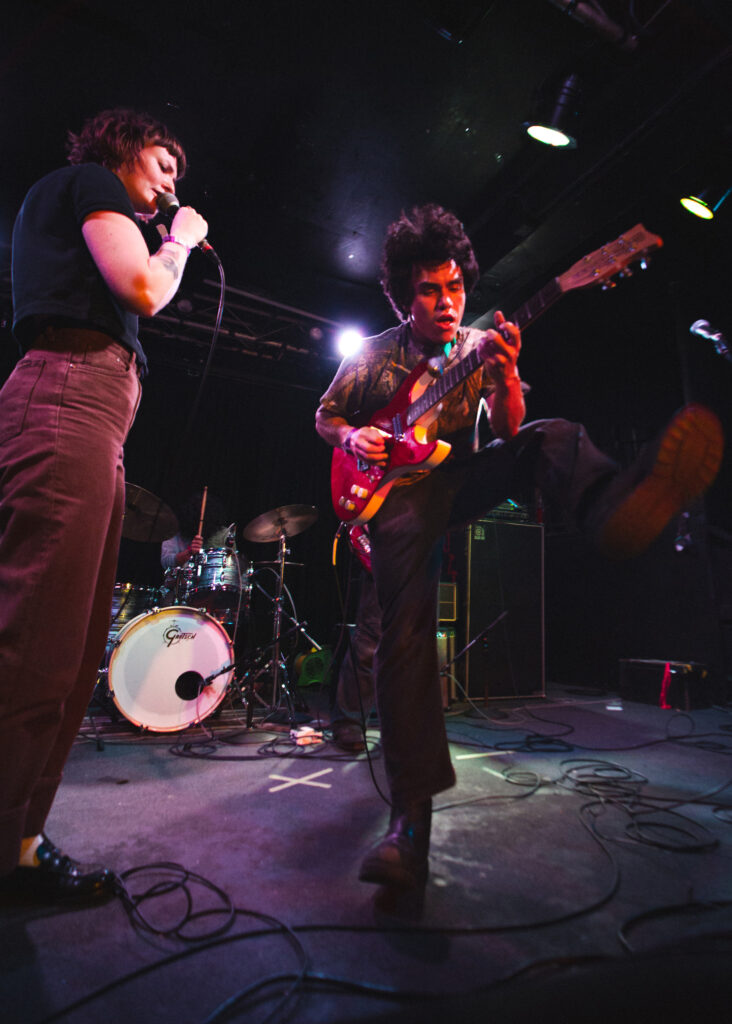
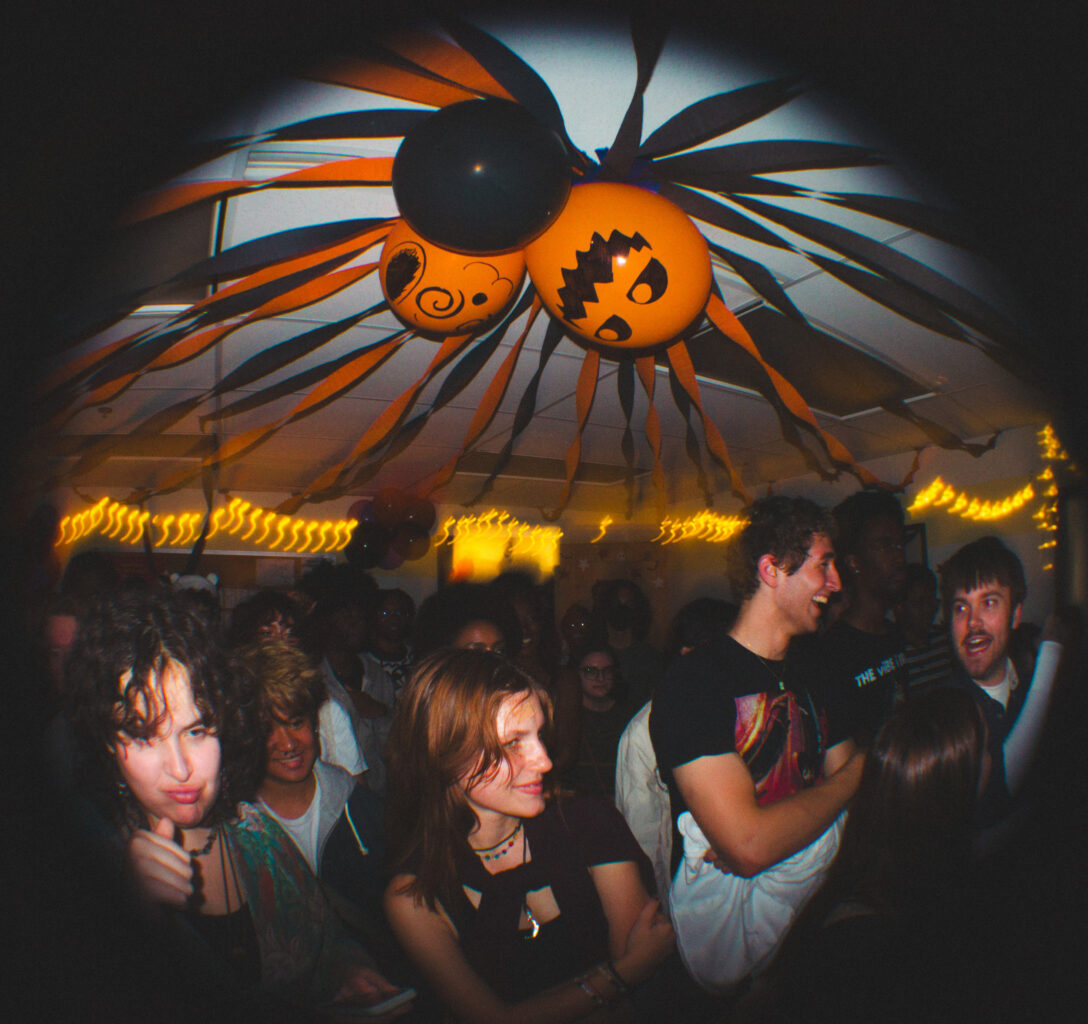
Left: NYC-based band Lyoko at The Ottobar in Baltimore at a WMBC-off campus event. Right: Audience members watch Omanti perform at WMBC’s Great Pumpkin concert in the Student Media Center. Photos by Erin Bennett ’25.

This platform has been valuable to her and has made her feel more grounded within the community. “One of the core principles of the goth community is to be involved and contribute to the subculture,” says Ibino. “Getting to do that through my show has made me feel more connected within the scene. Creating a space where people feel welcome to explore and embrace goth culture has helped me grow more confident in my identity and strengthened my connection to the broader alternative community.”

Another DJ, Daniela Salguero, a junior psychology major, has also used her show as a way to explore her cultural identity. Her show, “Luna Roja Radio,” focuses on alternative Latin American music, and she provides commentary as to what certain songs represent in a wider political context. She explains, “Every week, I pick a theme to hone in on, and I think it’s a really great way for me to just get my feelings out there and to connect more with myself.”

The media organizations have enriched campus life by helping students to get more involved with the Baltimore community. They have also served as an inclusive space for everyone.

The door to the Student Media Center is almost always open. With the station broadcast aired on the office speakers, students are there, working and socializing under the band posters and stories that dot the walls—they’re making and sharing media but they’re also continuing a legacy for the next generation of Retriever writers, editors, and DJs. 
Healing from home—with Taylor Gaines ’13, Doc on the Go

On a warm April morning, Taylor Gaines ’13, has a short visit with one of his regular patients, who is typically anxious and standoffish. This is the reason why Gaines goes directly to this family’s home for checkups.

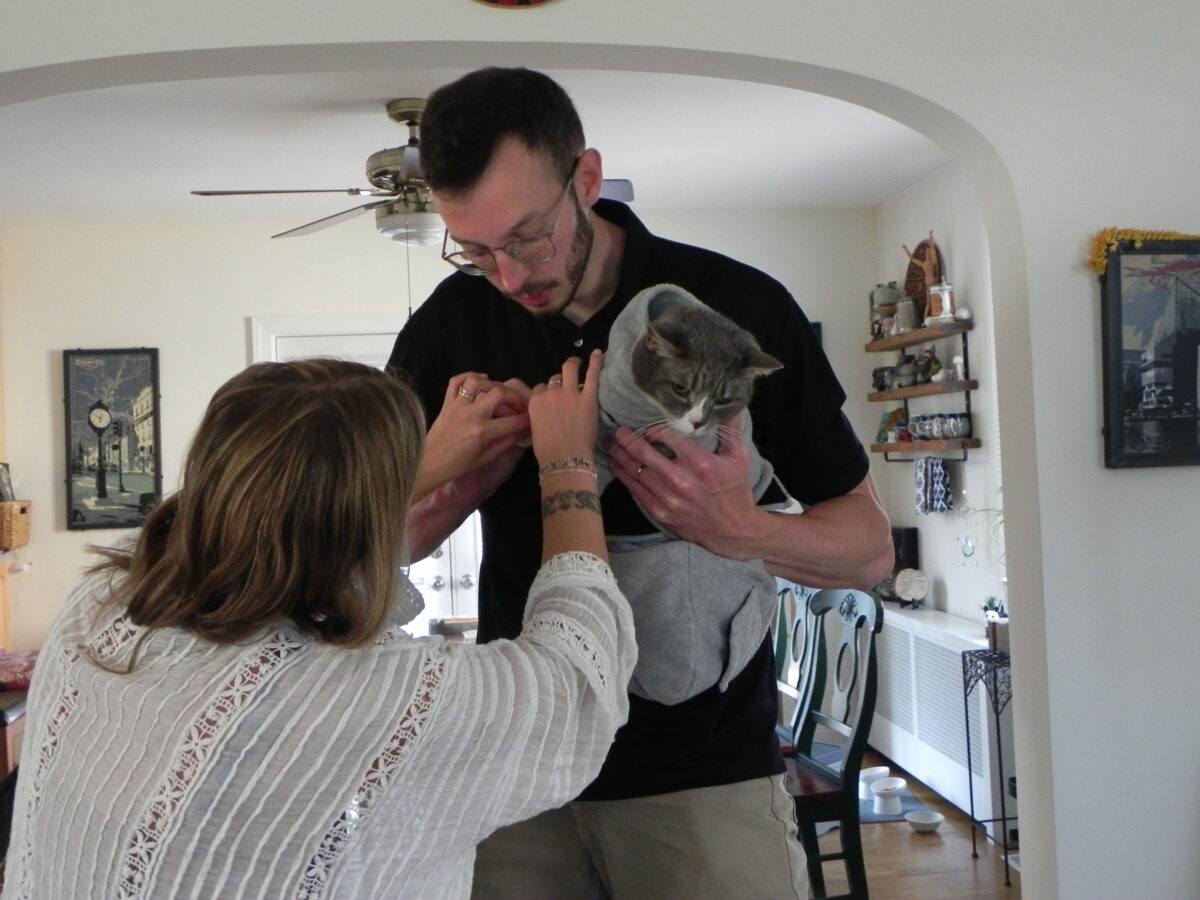
Before the treatment, Gaines collects some information from his clients and sets up his supplies, while the patient sits comfortably on the couch in the living room, purring. Gray with white patches, Poe is a cat who has arthritis, and today she will be getting her regular treatment to manage it. Gaines, a vet who does home visits, will give Poe her second dose of Solensia, which numbs the feeling of arthritis, and he also plans on trimming her nails. 

Gaines picks Poe up and wraps her in a swaddle blanket for more control and so Poe will feel more at ease. Gaines quickly gives her the shot, to which she responds with a hiss, but after this, nothing more painful will take place. 

a vet holds a swaddled cat while he and a woman trim the cat's nails, one of his duties as a traveling animal doc
Gaines visits Poe at home on a monthly basis. (Photo by Cristina Reid ’24)

Poe doesn’t seem too happy about Gaines trimming her nails, but she doesn’t make much of a fuss. As soon as her treatment is all done, Poe continues her day as normal and runs over to eat from her food bowl.

Gaines talks with his clients about helping Poe maintain a consistent weight, and from there the visit wraps up. Gaines will see Poe again soon.

Take the time to figure out what you love

Gaines did not begin his UMBC career thinking he’d be swaddling cats as part of his living. Originally, he majored in biochemistry and molecular biology to combine his favorite subjects from high school. Later, he added a minor in statistics, but it wasn’t until his senior year that he realized he wanted to be a veterinarian.

“In my junior year, it finally dawned on me what biochemistry was—the chemistry of living things. That led me into veterinary medicine, and my interest in how the chemicals in the medicines we use are interacting with the body,” he said.

“I like the problem-solving aspect of veterinary medicine. I always say, I could probably be an auto mechanic or something similar, too…. Figure out a problem and try to solve it—work within constraints, people’s budgets, and things like that.u0022

Taylor Gaines '13

After his junior year at UMBC, Gaines signed up for an organic chemistry summer research program at Texas A&M University that focused on drug design. But as he worked through the program, he found himself spending his mornings at Texas A&M’s veterinary school, talking to people about their experience, “And I said, ‘Okay, this is what I actually want to do.’ I didn’t go to college with an idea of what I wanted to do,” says Gaines. “I didn’t find it until I had one year left of undergrad.”

Gaines channeled this newfound understanding, and after UMBC, he graduated from the Virginia-Maryland College of Veterinary Medicine with a doctorate of veterinary medicine and a master’s of public health. “I like the problem-solving aspect of veterinary medicine. I always say, I could probably be an auto mechanic or something similar, too. It’s the same job,” says Gaines. “Figure out a problem and try to solve it—work within constraints, people’s budgets, and things like that. That’s just a fun challenge, and you get to help people out, and they’re appreciative. I like all that stuff—it’s a very fun job.”

Gaines remembers how helpful the professors at UMBC were in fostering his success and helping him to figure out that he wanted to become a veterinarian. “I was able to work in Dr. Mauricio Bustos’s biology lab at UMBC. That led to me getting into that program at Texas A&M, and eventually, that’s how I found vet med.” 

“It’s cool to learn there”

Standing in front of a play structure, Gaines watches his 3-year-old daughter, Opal, on the playground. Gaines explains that he enjoys the variety his job as a veterinarian gives him. Aside from doing house calls, he also works at a veterinary hospital. “One day a week I do house calls; on Wednesdays I do surgery; and Fridays I do office visits in the hospital. So every day is different,” he says. 

a man and a woman gather around their young daughter for a family photo outside. the man is an animal doc
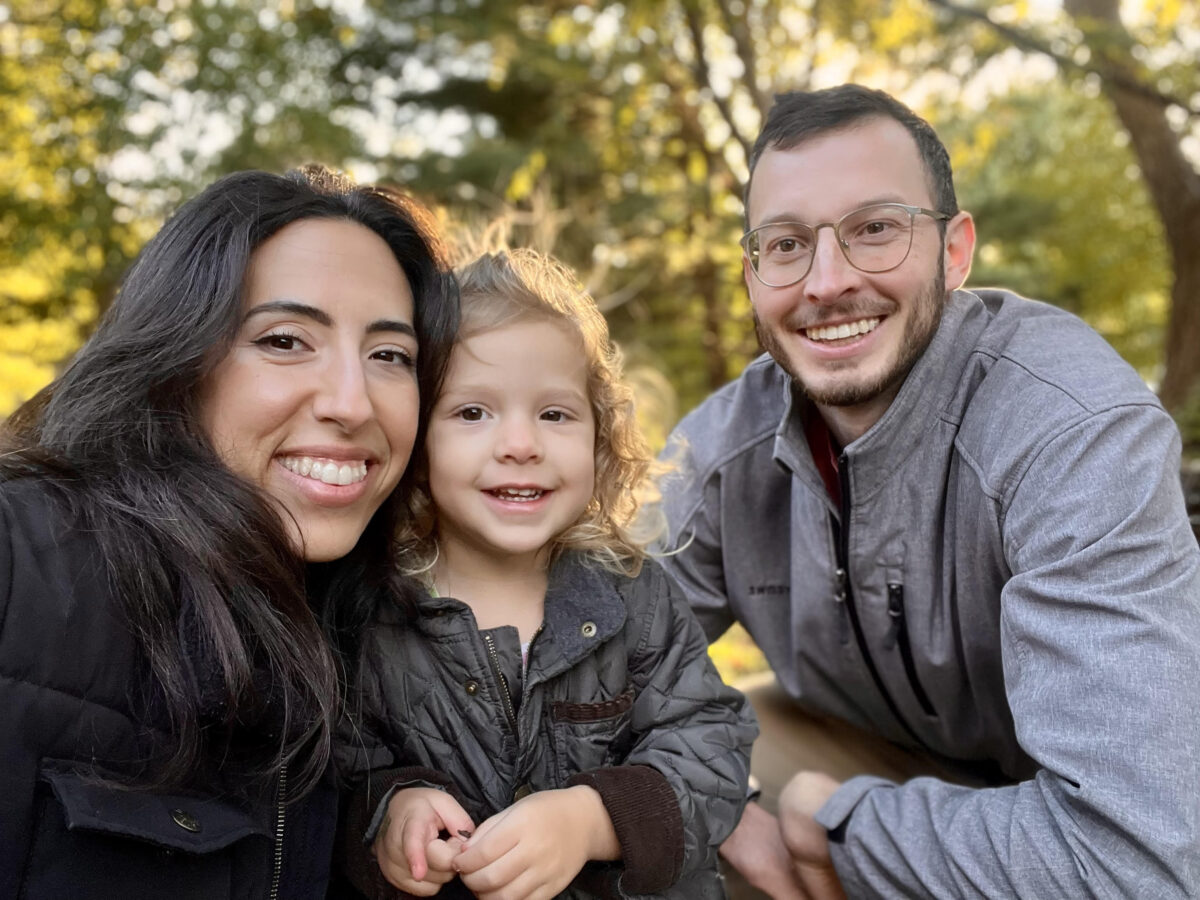
Taylor and Taylor Gaines with their oldest daughter, Opal. (Photo courtesy of Gaines)

Not only this, but he enjoys the flexibility it offers his schedule. “Like right now, I’m here watching my daughter. I’m able to provide for my family without working all the time,” he explains.

Prior to starting Catonsville Doc on the Go—his house-call veterinary business—in 2020, Gaines was working for the U.S. Department of Agriculture, an office job working in the export of animal products. “I found the office job unfulfilling, so I made a plan to transition to what you’d normally think of a vet—hands-on working with animals.”

Gaines met his now wife at UMBC, coincidentally, also named Taylor (Westhoff ’13). She majored in modern languages and linguistics, studying Spanish. “We never actually had any classes together, but we just met through a friend group,” he says. 

“We always say we appreciate how focused on academics UMBC is,” says Gaines. “It’s not like you have to like a football team or be in a fraternity—you can just go there and learn. It’s cool to learn there.”

For now, Gaines says, he’s satisfied with his Doc on the Go business and that he enjoys making house calls. Sometimes it allows him the opportunity to treat more unique pets. “It is nice that you get to see things that people might not bring to the vet. I’ve done parrots, parakeets, and rats,” he says.

Opal chimes in, “And chickens!”  

“And chickens, you’re right,” he replies.

Live Music Strikes a Chord for Retrievers

Singer, Gerard Way looking into a mirror putting on eyeliner.
Singer Gerard Way of My Chemical Romance at the UMBC Fieldhouse (currently known as the RAC) on October 21, 2005. Photo by Kenneth Cappello.

It may be coincidental that UMBC was founded in the midst of rock n’ roll’s most revolutionary years, but early Retrievers certainly made sure to create spaces to bring live music to the campus, in intimate settings and on much bigger stages.

Since then, iconic bands and artists such as Frank Zappa, the Goo Goo Dolls, Alanis Morissette, All-American Rejects, the Strokes, Brand New, Foo Fighters, Yellowcard, All Time Low, My Chemical Romance, and more, have all played shows for UMBC’s students. But while UMBC has a rich history of hosting renowned artists, they have always had a soft spot for local music and student artists too.

On September 21, 1968, the Collage, an on-campus weekend coffee house, was first opened. The Collage was one of the first notable instances of live music on campus, often drawing in a large crowd, especially on Saturday nights, and was the go-to place to check out the best student performers, as well as local performers from the surrounding Baltimore area. With music, poetry readings, and films, it was a perfect social and artistic atmosphere for its students.

Although the Collage is no more, today, UMBC still supports its local and student musicians with the many events held on and off campus, and through the creative spaces it provides. The Students Events Board (seb) frequently hosts open mic nights where students can sing, play an instrument, and present poetry or spoken word. In recent years, (seb) seems to have drawn on a similar ethos to the Collage, with its Coffee House: Open Mic Night Edition.

Audience members watching a performance inside a coffee house.
Audience members at the Collage in 1969.
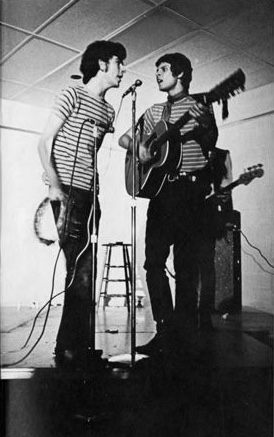
Two men on stage singing into a microphone. One playing tambourine, the other playing the guitar.
Two performers, Lewis and Dolgoff, on stage at
the Collage in 1969.

Yearly events like Quadmania and campus radio station WMBC’s and the Retriever Music Society’s (RMS) music festival often provide a chance for student artists to play for an audience, and the support and turnout for these events shows how tuned in Retrievers still are to good music.

WMBC’s recent revitalization has played a big role in organizing live music events and booking student and local bands for on-campus shows. ​​WMBC’s station manager Sean Stultz ’25, computer science, says, “We have so much great music being made on campus and we really want to highlight that when we can. This year we made it a goal to have a UMBC band headline the festival, which is why we had Fly By the Seat. The station has been blown away with the turnout for the concerts we have hosted on campus.” 

Additionally, off-campus, OCA Mocha, the UMBC student-founded coffee shop, provides a venue for UMBC’s student musicians, including jam sessions hosted by RMS, classical music from UMBC’s Cello Group, and performances by UMBC’s jazz groups. 

While the Collage may now be gone, after all these years it is apparent that UMBC has expanded its creative spaces, and is still passionate about fostering these venues for its students. Stultz says, “I think this last semester has shown that small shows are something that people are interested in seeing on campus.”

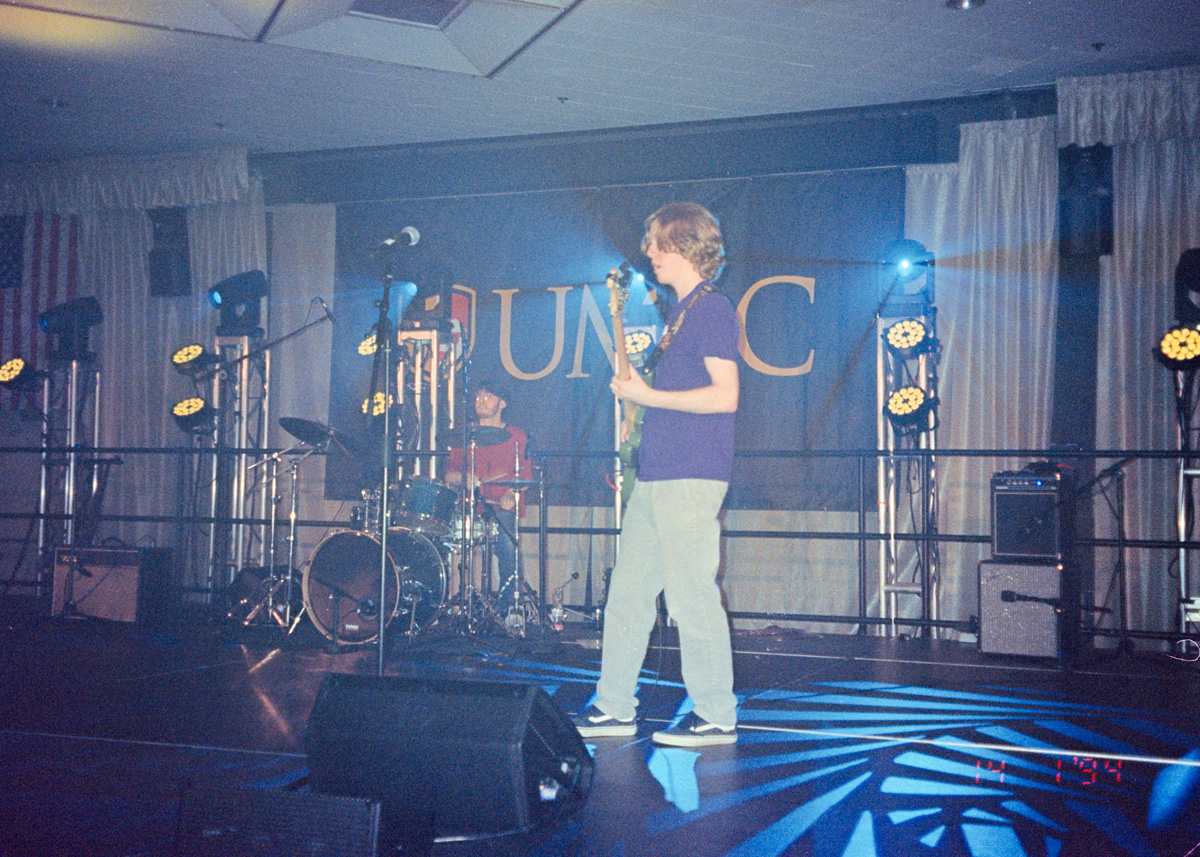
Two students on stage playing music. One standing towards the front playing bass guitar, and the other one in the background playing the drums. Stage lights shine overhead.
Fly By The Seat playing at WMBC & RMS’s 2024 Spring Music Festival. Photo by Erin Bennett.

Sharing the beat of his own drum—Connor LeFevre ’23 finds success through UMBC’s music tech program

On a chilly February night, some of the most dedicated local music fans pile in for a floor show at a small grunge venue, Baltimore’s Ottobar. Tonight it’s a stacked indie bill and not one person seems to trickle in late, as they don’t want to miss a minute of the long night of live music ahead.

When the first band, Lean Tee, takes the floor and begins playing, the mood of the room shifts from anticipation to excitement. Connor LeFevre ’23, music technology, sits behind the drum kit in the center. Lean Tee’s music is full of hard-hitting drum beats, but LeFevre easily supports the rhythms of the guitar and bass without overshadowing either. His sticks complement the unmodulated and fervent sounds of the vocals. 

This show and this energy represent a pretty typical night for LeFevre, as he has completely centered his life around music—a career move, he said, made possible by his major at UMBC, which gave him full-time access to recording spaces and instructors who remain active in their musical fields.

Lean Tee performing at the Ottobar.

Finding the rhythm of Baltimore’s music scene

Originally from New Jersey, LeFevre had to do some groundwork to find his way into the Baltimore music scene. He is currently a drummer for multiple local Baltimore bands—he wields his sticks for Lean Tee (indie rock), Love For Strangers (prog rock), and Curver (shoegaze), to name a few. He also works at a Hampden, Baltimore, music studio, The Moose House, as a junior engineer.

“Drumming is really fun for me, especially with bands that I’m fully involved in. But bands can be a lot,” says LeFevre. Playing so many different gigs requires him to memorize sets on tight turnaround times. “But recording is a lot less stressful. The client’s paying a lot of money, so you want to deliver them the best product possible. but it’s calmer in the moment because it’s a lot of smaller, micro decisions,” he says.

LeFevre goes for an uncomplicated personal style—usually a baggy t-shirt, hat, and glasses, easily fitting in with musicians in the indie scene. And while he may come off as laid back, music is something he takes seriously. He has been playing drums for roughly 10 years and first became interested in recording when he was in high school. “That’s when I bought my first recording interface and the first set of mics. And that was just to record drums to make demos,” he says. Eventually, he knew music tech was something he wanted to study in college.

Making musical connections

A deciding factor for LeFevre in attending the music technology program at UMBC was the studio space provided for students. “You have 24-hour access to the studio and you can use it for anything you want once you reach a certain year,” LeFevre says, and this alone made it worth it to come out of state. “Once you’re a sophomore in the program, you can use the whole thing—whenever you want, for free!”

LeFevre credits UMBC for making multiple connections for him. For one, he met all of the original members of Love For Strangers at UMBC. He says, “When lockdown started loosening up, I wanted to start a band, and I saw Jeff Hirshman during a Zoom class—he was practicing during class—and I was like, ‘Oh, that’s the person I want to be in a band with!’ Because they don’t care about anything but music, obviously.”

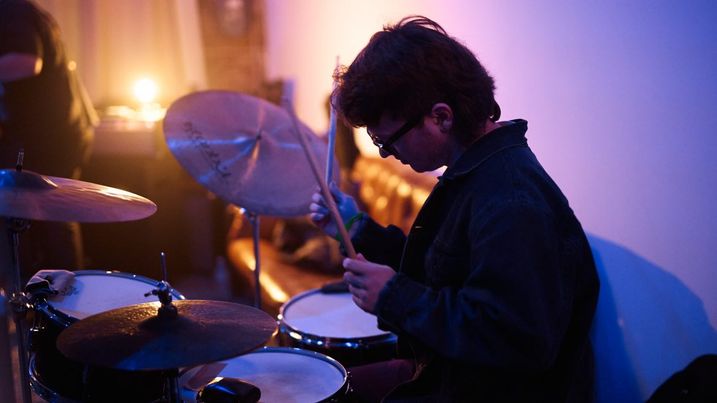
Man sitting behind drum kit playing.
Photo by Nick Huges.

Hirshman, now the band’s main songwriter, recalls their encounter similarly, and after jamming together for the first time, they decided to start making music together. “I met Connor because we were in the same online music theory class during COVID,” says Hirshman ’24, music technology. “I would practice guitar in class, and he thought I seemed like a good rock guitarist. So he DM’ed me, and we met with a bassist and jammed, and we started writing music right away.” 

Hirshman humorously remarks, “He was the first drummer I ever met who cared enough about drums to clean them.”

The community makes the program

During his time at UMBC, LeFevre appreciated the styles and output of many of his music technology professors. “Eric Taft, Alan Wonneberger, and Greg Kalember—all three of them had works that I really respected. Eric made a lot of records that had a big impact on me as a kid growing up,” says LeFevre “And then, Greg did things like the Pokémon movie soundtrack. So, a lot of the things they’d done, I had heard in my life without even knowing.”

Along with his professional accomplishments, Kalember brings his enthusiasm for teaching into the classroom. While he acknowledges that there are many new challenges in the ever-changing music tech industry, Kalember notes that the music community at UMBC presents an antidote to some of these modern problems. 

“There is no substitute for being part of a music-making community every day for four years. You don’t get that on YouTube, or by working by yourself on your laptop,” says Kalember. 

“Students will learn more by osmosis—by being around other students and faculty over their years here. There are all sorts of lessons to be learned about networking, being part of a collaboration, putting together a project and seeing it through, trying to convince other people to get on board with your vision, and setting your personal opinions aside in order to realize someone else’s creative vision,” says Kalember. “These are all key skills that I believe students need when trying to go out into the music industry.”

The music technology program gave LeFevre the ability to combine his outside projects with what he was learning in the classroom. For his senior project, he recorded a live video for his band Love For Strangers. “We recorded that at school,” he says, “and then the album that we’ve been sitting on, I also recorded that at UMBC.”

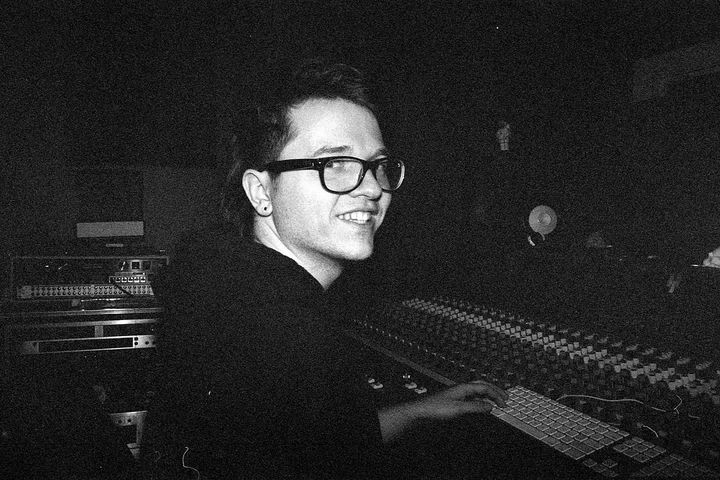
Man sitting inside a recording studio room behind a mixer and other various mixing equipment in a music tech program
Photo by Chris Daquino.

Kalember emphasizes the hands-on opportunities UMBC provides, “To work in the facilities at UMBC is a great advantage for our students. They have access to multiple studio spaces—each with its own quirks and advantages—our concert hall, networked performance spaces throughout the building, and an amazing collection of instruments,” he explains.

Kalember is also delighted to see all that LeFevre has accomplished. “I can say that I’ve seen tremendous progress in his drumming since I’ve been here. He was good the first time I saw him play, but he’s really made some strides from there and is playing at a very high level now,” says Kalember. “He’s really bought into the idea that collaborating is a big piece of success in the music industry, and he’s been very generous with his time and talents throughout our program. Everything I’ve seen him do both at UMBC and outside of school, has been executed with professionalism and skill.”

The music doesn’t stop after graduation 

LeFevre has always kept himself busy with his projects. “I’ve played, like, pretty much every rock venue in this city,” he says. And things have been no different after graduating. He soon expects to put out an album with his UMBC band Love for Strangers, and he has many shows booked throughout the next few months.

Since graduating, LeFevre has been able to utilize his degree and the connections he’s made at UMBC in many ways. Tom Lagana, LeFevre’s guitar professor, helped him to get into a wedding group called Bachelor Boys Band, which is one of the many ways he is able to make a consistent income playing shows. But aside from playing shows in a multitude of bands and working at The Moose House, he also enjoys teaching recording and drums, as well as doing electronic repairs. 

Back at the Ottobar, for the entirety of Lean Tee’s set, it’s evident how much precision and control LeFevre commands over the kit, a skill that becomes even more apparent as the final notes linger in the air. After a second’s pause after the last beat, the audience applauds.

*****

LeFevre will be on tour with Lean Tee during April and will also be playing multiple shows with Curver and Love for Strangers throughout both April and May. LeFevre suggests keeping up with these bands and other local live music through @baltshowplace on Instagram and Tumblr.

6 Earth Day events that will ground you to our planet 

While Earth Day may be a one-day affair, our everyday actions affect the Earth 365 days of the year. This April, UMBC is celebrating Earth Month, allowing the community to dedicate time to reflect more deeply on the environmental challenges we are facing and also celebrate the many gifts our world has to offer. In partnership with the Environmental Protection Agency (EPA) and the United States Geological Survey (USGS), UMBC is hosting a lineup of free, exciting, Earth Day events happening all month! You don’t even need to leave campus to join in on the fun all while learning about how we can all do our part to take care of our planet.

1. Watch the Solar Eclipse (with proper glasses)

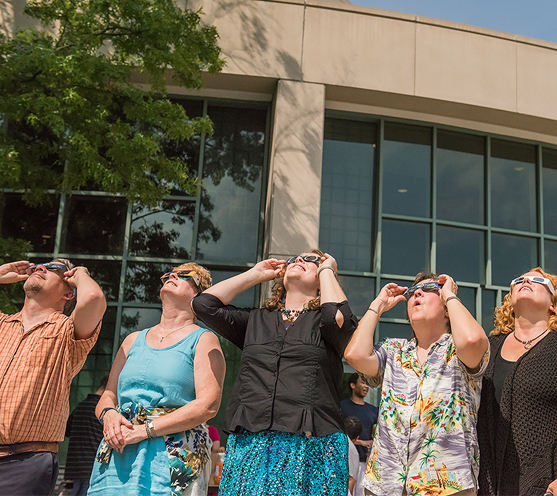
Head over to the Quad, on April 8 from 2 to 4 p.m., and join your fellow earthlings from the Astronomy Club for a watch party of the solar eclipse! The eclipse will trace a narrow path of darkness across North America where the moon will pass between the Sun and the Earth, creating a partial eclipse. Watch as more than 88 percent of the Sun will be obstructed from view at UMBC. (Left, a group watches the 2017 eclipse in front of the AOK Library.)

2. Go see the play “SLIME”

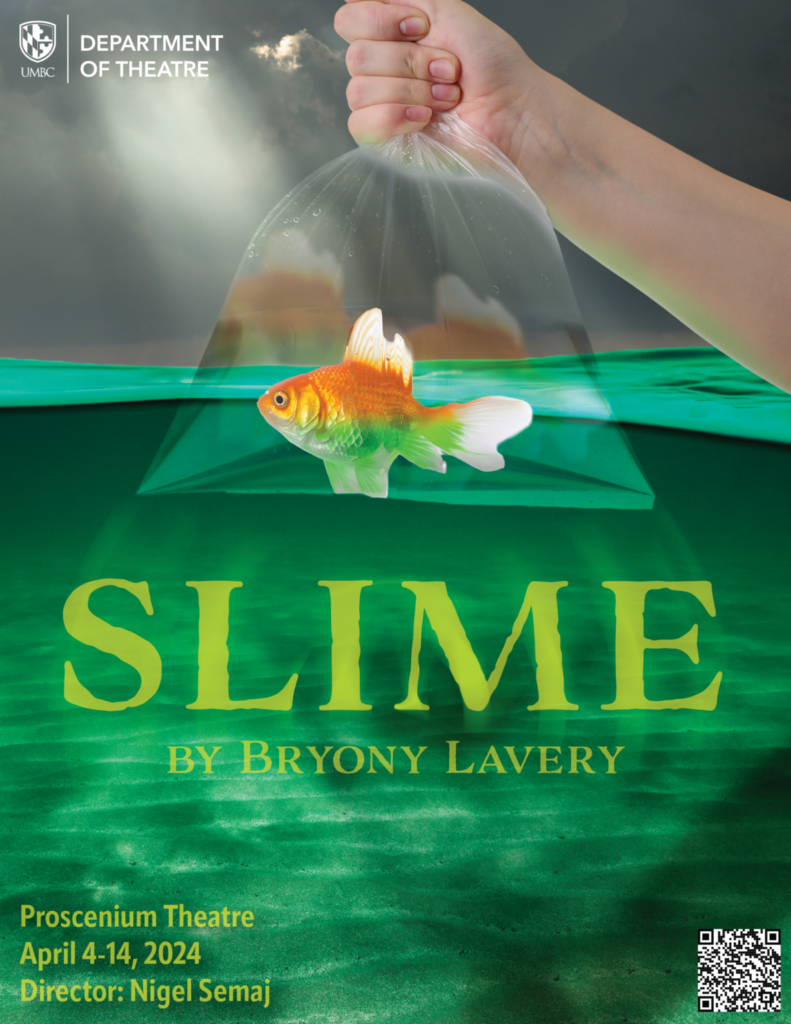
As part of the Plays for Our Planet initiative, the Department of Theatre is producing Byrony Lavery’s “SLIME,” directed by Nigel Semaj. The play is about seven graduate students who appear at the Third Annual Slime Crisis Conference, fighting to save the Earth from a toxic slime that is threatening all animal life.

Performances will take place from April 4 to 14, and on April 14, there will be a free matinee for students, followed by a post-show actor talk-back, featuring, Dawn Biehler of UMBC’s Department of Geography and Environmental Systems. You don’t want to miss this opportunity to educate yourself on climate change in an engaging and entertaining way.

preview poster for the theatre production Slime, an upcoming arts event

3. Run the Earth Day 3K 

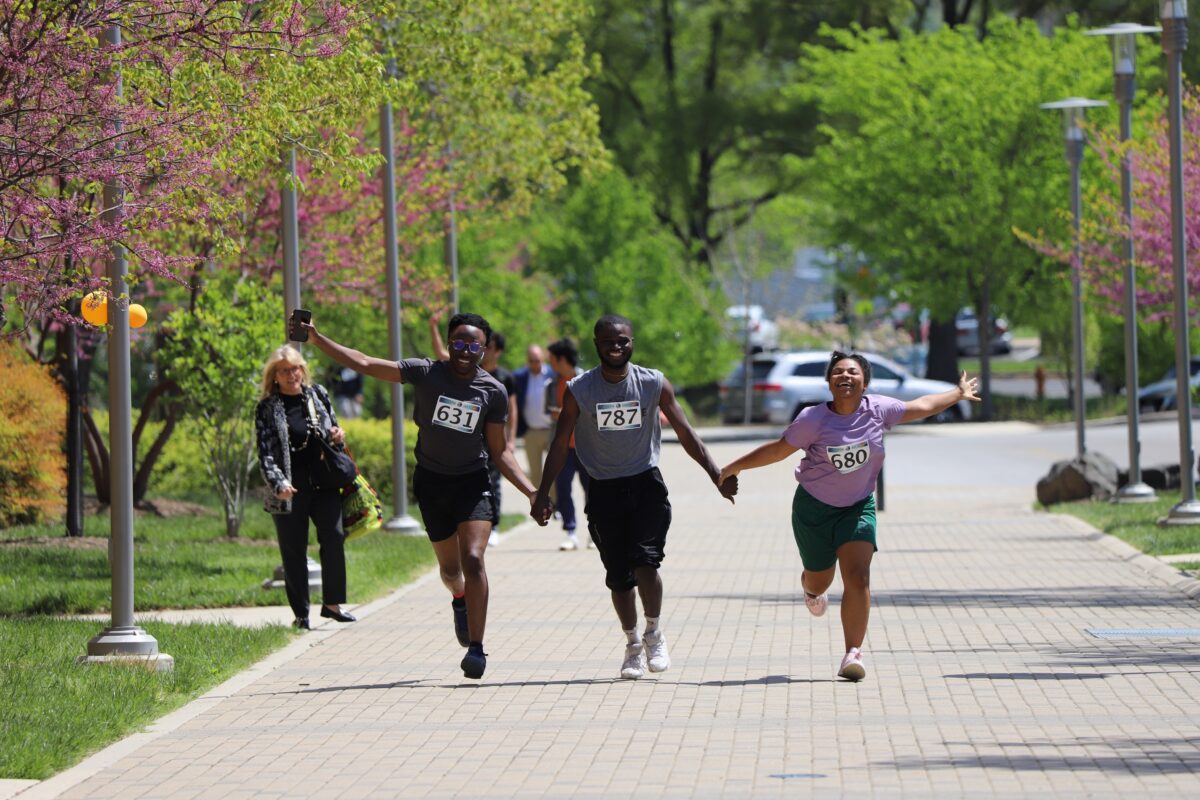
Enjoy the spring weather and head over to RAC for the annual free Earth Day 3K Run on April 17. Don’t worry if you’re not a competitive runner, walking is encouraged as well. If you’re up for the challenge, you can sign up here, or via walk-up registration the day of from 11 a.m.to noon. Prizes will be awarded to the top finishers, and the first 100 completed racers will receive Earth Day T-Shirts. 

3 students hold hands running while completing UMBC's Earth Day 3K.
A group of students running the 2022 Earth Day 3K on campus.

The event begins at 12:15 p.m. and refreshments will be provided post-race. All participants will have a chance to connect with the community and become more aware of earth sciences and the environment. UMBC students, faculty, as well as anyone in the Baltimore community is encouraged to participate!

4. Bring global change down to Earth

For most of us, managing greenhouse gas emissions and watching distant islands flood or glaciers melt are far beyond our reach. However, the pervasive reach of an environmental reckoning means we have local issues, with much for all of us to work on. This panel on April 22 will bring together scholars from public policy, geography and environmental systems, and beyond to discuss multiple ways to understand climate work.

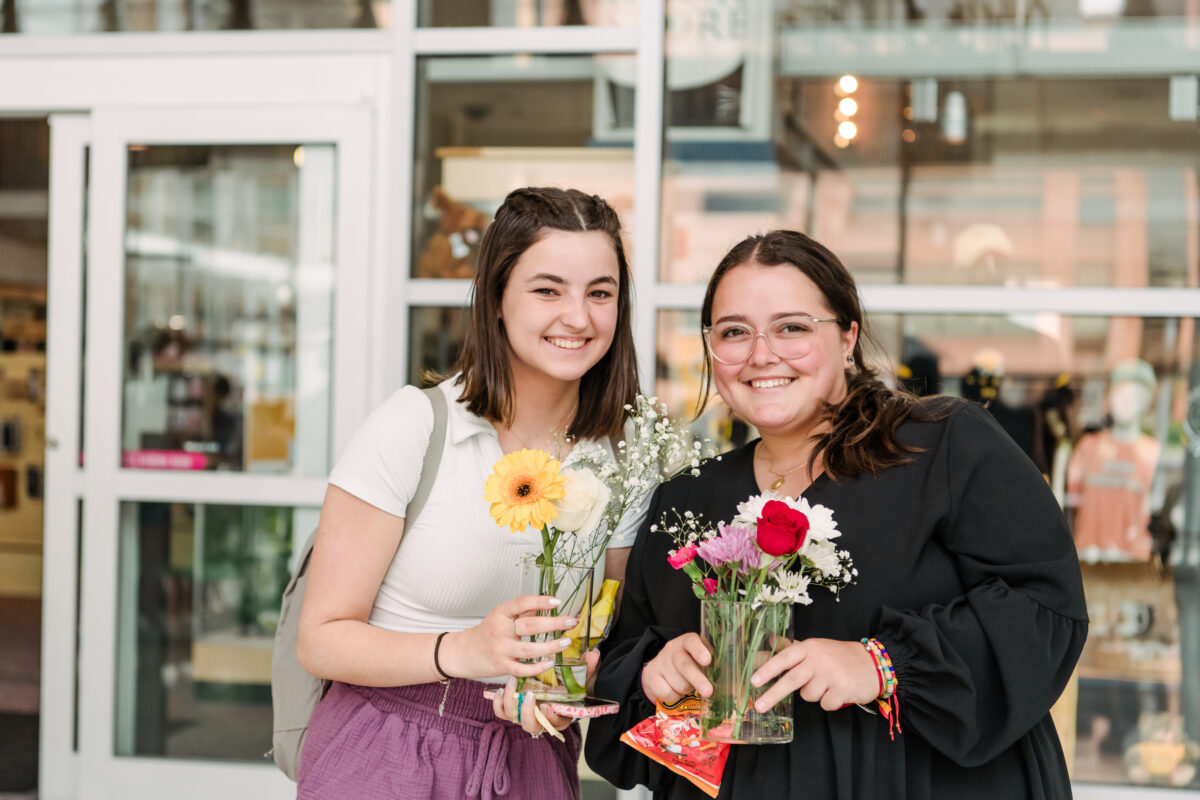
two women pose holding vases of flowers
Students gathered in The Commons to make bouquets of flowers in spring 2023. (Marlayna Demond ’11/UMBC)

5. Check out research from the UMBC community

There is so much groundbreaking research happening at UMBC conducted by students, faculty, staff, and community members, and you can learn all about it at Earth Day Community Day on the Quad on April 22. There will be two sessions, one starts at 10 a.m. and another at 1 p.m. Take this time to enrich your understanding of the research being carried out at UMBC and how it has had a significant impact on the Baltimore community and beyond.

6. Attend an Earth Day panel

After checking out Community Day on the Quad, be sure to catch the panel, Climate Change, Science Communication, and the Arts. Artist Anastasia Samoylova (Gator, 2017, left) will be joining scientists and media historians for a panel discussion on April 22. 

Along with Anastasia Samoylova—the photographer behind the vivid pictures in the exhibit “Floodzone” which takes a look at how climate change has affected the southern U.S.—the panelists will include, Autumn Powell, a UMBC graduate student in geography and environmental systems, Lavar Thomas, a special assistant within the EPA’s administrator’s office, and Tracy Tinga, assistant professor in media and communication studies. This event will be a discussion of how to use of how to use alternate forms of communication, including art, to describe climate change findings to a general audience. The event will take place at the AOK Library Gallery at 5 p.m. 

a green toned photo of a gator's legs hanging down into water

7 ways to spring into the arts at UMBC

As flowers start popping up on campus and we get some warmer (if rainy) days, it’s the perfect time to go out and catch some of the arts events happening at UMBC. Whether you need a break from studying, work, or are just looking for some fun, you can be sure to find many entertaining and thought provoking arts and culture events happening on campus!

1. Enjoy an Artful Conversation All About Dance

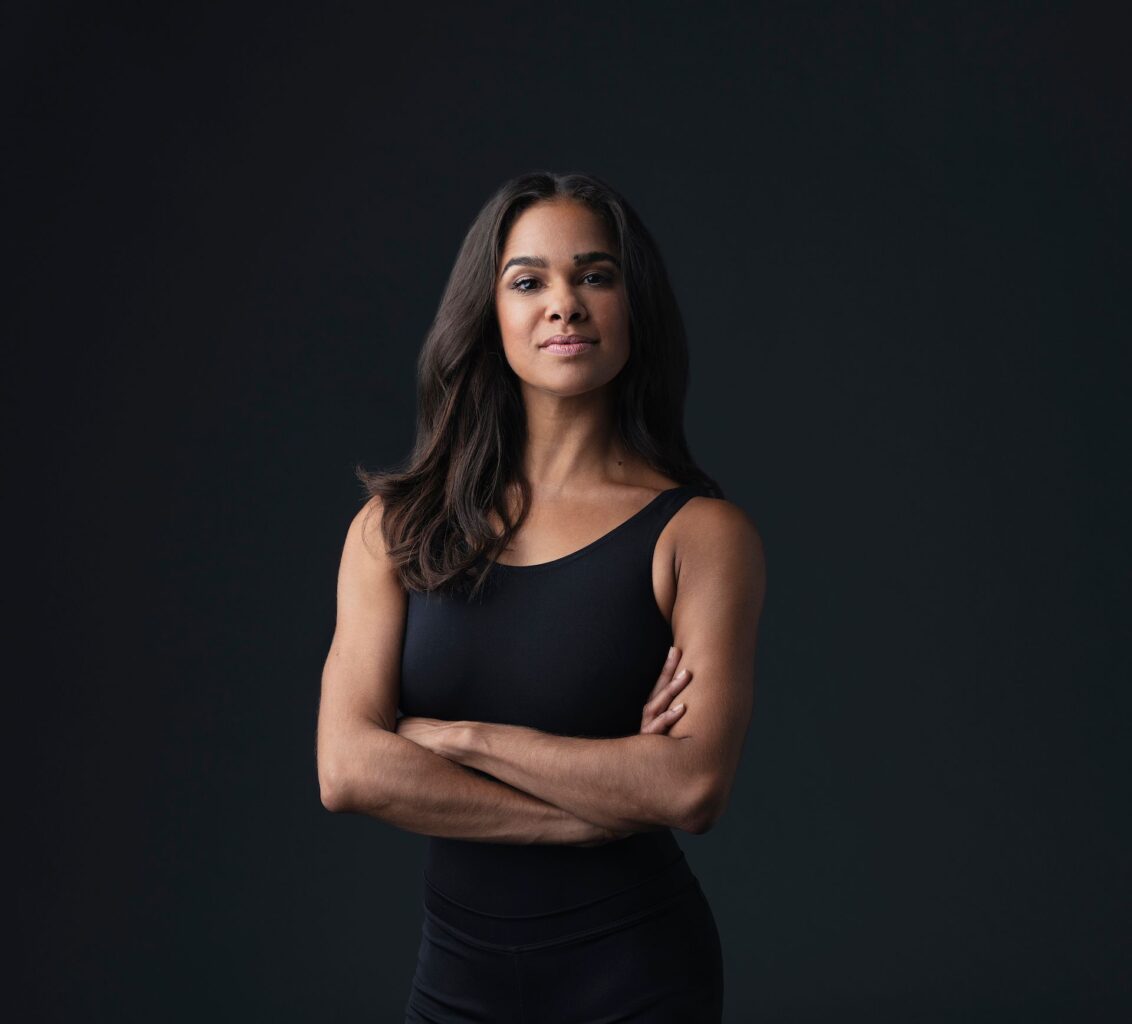
No dance skills are required to enjoy an evening all about dance with Artful Conversations: An Evening with Misty Copeland. On the night of March 6, from 6 to 7:30 p.m., Misty Copeland, the first African American female principal dancer with the American Ballet Theatre, and a New York Times best selling author, will be discussing topics all about dance and her historical performances. The night will begin with dance works performed by UMBC students and faculty. Later, in conversation with College of Art, Humanities, and Social Sciences Dean Kimberly Moffitt, Copeland will talk about her ground-breaking career.

In case the event is sold out or if you just want to watch on a later date, a livestream and recording will be available via the UMBC Youtube Channel. (Photo by Drew Gurian/MasterClass)

2. Bask in the Glow at a Poetry Reading

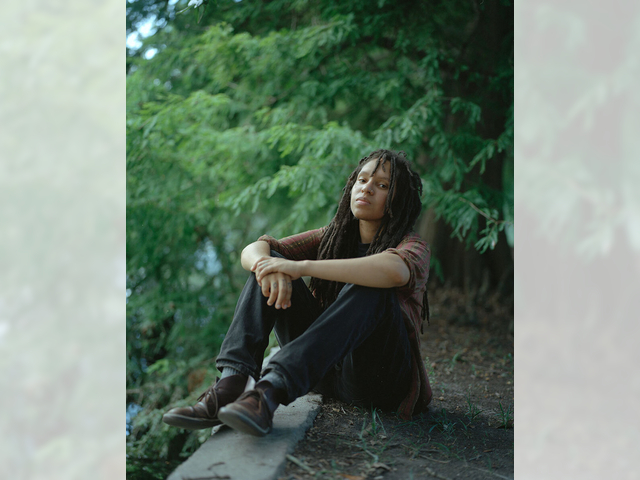
If you’re unable to make the Misty Copeland event, the English Department’s spring reading series event on March 6 features Taylor Johnson, poet laureate of Takoma Park, Maryland. Johnson is the author of Inheritance, and winner of the 2021 Norma Farber First Book Award from the Poetry Society of America. Inheritance was influenced by living in Washington, D.C., and it explores the complexities of language. The event, which includes a reading, Q&A, and book signing, is free, and runs from 4 to 5 p.m. in the Albin O. Kuhn Library. (Photo by Sean D. Henry-Smith)

3. Listen to an Enchanting Evening of Music from the Baltimore Symphony Orchestra

On March 8, the Baltimore Symphony Orchestra will perform at UMBC. The ensemble will be led by conductor Ken-David Masur. The program includes Tchaikovsky’s Fourth Symphony, Toshio Hosokawa’s Meditation to the victims of Tsunami 3.11, and the orchestra will be joined by cellist, Zlatomir Fung, for a performance of Camille Saint-Saëns’s Cello Concerto. The performance is being held at the Linehan Concert Hall from 8 to 10 p.m., and tickets are only $5 for students. (Ken-David Masur conducting. Photo taken by Stu Rosner.)

 4. Join WMBC for its Entertaining Spring Music Festival

WMBC Radio, UMBC’s independent, student-run radio station, will be hosting their second annual music festival on March 29 in the UC Ballroom, from 6 to 11 p.m. The festival will be featuring some student artists, bands, and other creatives! The bill includes Fly by The Seat, Regan Lewis, Eat the Cake, and more. Don’t forget to check out the art vendors who will be there as well!

students dance together at a music arts festival
Students enjoying live music at WMBC’s Lonely Heart’s Club Music Festival on February 9, 2023. Event photos by Emily Bryant, Maya Classon, and Mason Doan.
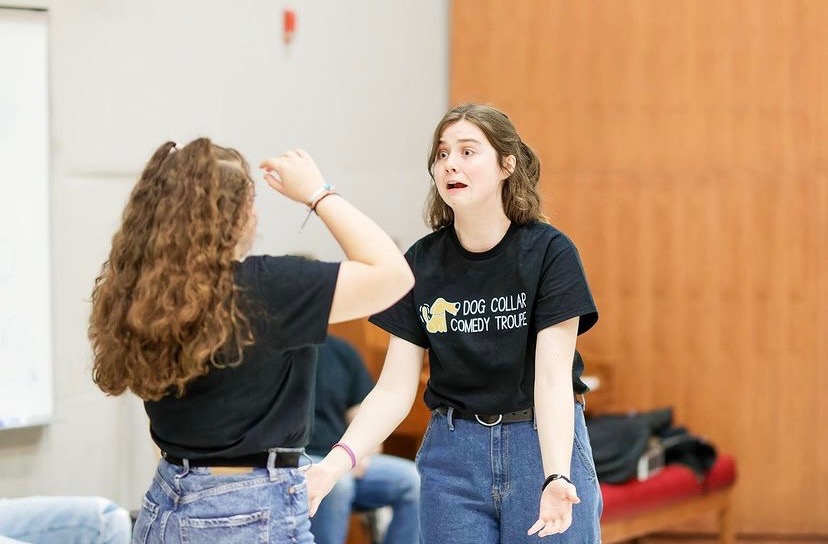
two people stand across from each other in an improv acting situation

5. Chuckle with Dog Collar at “Saturday Bite Live”

Either before or after WMBC’s music festival, stop by Saturday Bite Live, a free improv show put on by UMBC’s comedy troupe, Dog Collar. Contrary to its name, the show will be on a Friday, March 29, and will take place in the ITE building in room 104. Doors open at 7:30, and the show begins at 8 p.m. Come out and support these students while having a laugh! (Members of the Dog Collar troupe performing at the UMBC Gritty Kitties charity show. Photo by Anthony Rivera.)

6. Check out Plays for Our Planet

Get an early start on Earth Day this year at one of the UMBC Department of Theatre’s multiple plays centered around the theme of climate science and activism. The play Slime, by Bryony Lavery, directed by Nigel Semaj, will run from April 4 to the 14 in the Performing Arts and Humanities Building’s Proscenium Theatre. Slime is a dystopian comedy about seven grad students who are translators of different animal species, who must work to save all life on earth from a toxic slime. On April 14, there will be a free matinee for UMBC students and post-show actor talk-back. 

For more theatre events, you can check out the entire production season here!

7. Explore the FloodZone

The eerie and alluring photographs of Anastasia Samoylova’s FloodZone, depict the painstaking reality of what it’s like to live in the southern U.S. at a time when the climate crisis has greatly affected the environment. The exhibition was first featured at the George Eastman Museum in 2022, and has been on display in a few other locations throughout the U.S. as well as internationally, but the alligators and flamingos and other coastal life forms have now arrived at UMBC for a limited time. The exhibition will be on display at the AOK Library Gallery until May 29.

a green toned photo of a gator's legs hanging down into water
Image: Anastasia Samoylova, Gator, 2017. From FloodZone. Photo mural, printed by UMBC © Anastasia Samoylova

On Monday, April 22, in the Library Gallery, the artist will participate in an Earth Day panel on Climate Change, Science Communication, and the Arts. How do climate scientists share their research and data with the wider public in a way that non-specialists can understand? How might art contribute to this urgent work? Samoylova will discuss her photography while in conversation with scientists and media historians specializing in science communication.