



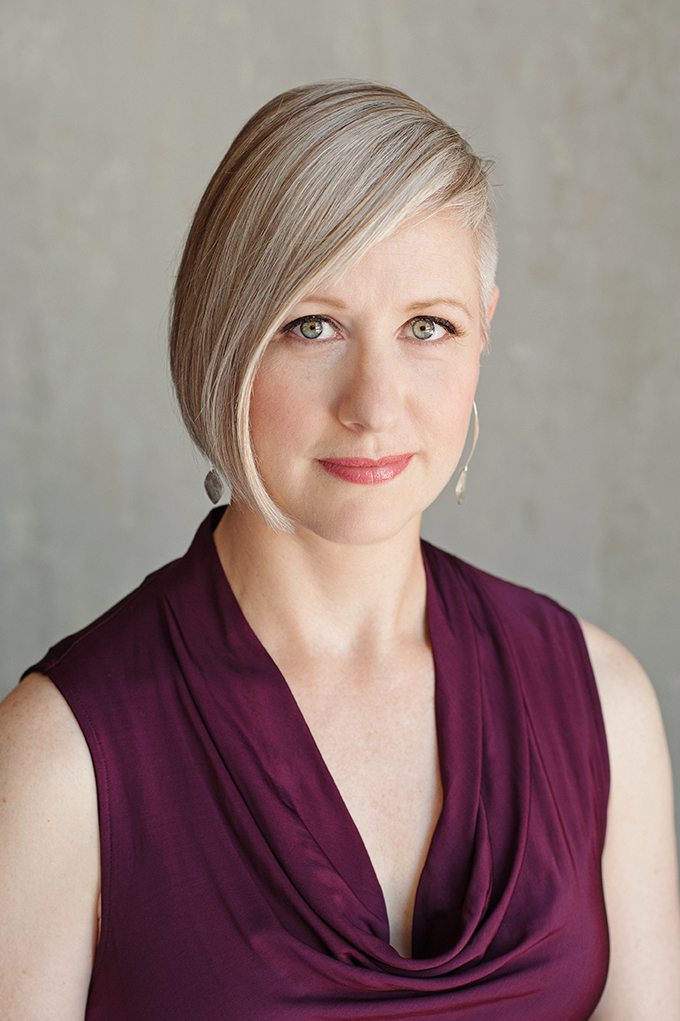
Elizabeth Anne Johnson
Associate Professor
Department of Dance Department of Sociology, Anthropology, and Public Health
College of Arts, Humanities, and Social Sciences
She/Her/Hers/Herself
About
Elizabeth Johnson (MFA, GL-CMA, M.AmSAT, RSME/T, RYT200) is a performer, choreographer, educator, Laban/Bartenieff Movement Analyst, certified Teacher of the Alexander Technique (AmSAT & ATI), Registered Somatic Movement Therapist, and Registered Yoga Teacher. Her greatest professional joys are making dances and synthesizing and teaching dance/movement pedagogies and somatics that center developmental movement, prosocial/trauma-informed education, and critical perspectives. Her dances often explore the dynamics of intimacy, exhaustion, and transcendence through rigorous yet somatic physicality and straightforward, egalitarian partnering that challenge tropes regarding propriety and popular culture’s obsession with objectifying, exaggerating, and disfiguring the (particularly female) body. She danced professionally with NYC-based companies Molly Rabinowitz Liquid Grip, Sara Hook Dances, and David Parker and The Bang Group and, for over a decade, directed her critically acclaimed, Milwaukee-based dance company, Your Mother Dances. Johnson teaches nationally and internationally and writes/co-writes book chapters featuring applied somatics. With co-writers Rebecca Nettl-Fiol and Luc Vanier, she has an upcoming book on an emergent movement analysis tool distilled from the Alexander Technique and the Dart Procedures called Framework for Integration. Johnson is Chair of the Department of Dance at the University of Maryland, Baltimore County UMBC. https://dance.umbc.edu/faculty-and-staff/
Research interests
My research spans choreography, performance, guest/master teaching, the integration of somatics into dance technique pedagogy, written scholarship, and presenting at national and international dance education, dance-science/medicine, and somatics conferences. As a Laban/Bartenieff Movement Analyst and certified teacher of the Alexander Technique (AT), I also research, compare, and synthesize the developmental movement sequences and patterns associated with both practices: the Bartenieff Fundamentals created by physical therapist and dance educator, Irmgard Bartenieff and the Dart Procedures articulated by paleoanthropologist Raymond Dart and Alexander Technique teachers Alex and Joan Murray. Dance/movement practices have long been associated with therapeutic and rehabilitation contexts; I present and co-present pedagogy and movement workshops on how developmental movement contributes to healthy bodily organization and coordination, regularly referencing ontogeny (the development of the human person from embryological stages through the lifespan) and phylogeny (the evolution of the human species over millennia).
Independently and with collaborators, I publish and present about how developmental movement patterns are inherent in and support both the functional and aesthetic aspects of dance/movement as well as mitigate the effects of traumas that disrupt healthy learning and development. Recurrent emphases center on pedagogies that: 1. Take into account student stress and trauma 2. Are designed to mediate such by redirecting students with somatic and prosocial principles 3. Include the most recent neuroscience on trauma as well as statistics on racial, physical, and sexual violence. I have presented on this work in numerous international and national venues.
I make dance and dance-theatre works that explore feminisms, embodiment, relationship, and gender and popular culture clichés and imagery. I am interested in how bodies become habit-ridden or are objectified and fragmented by the dominant gaze/media. My work often includes digital media/projections to further complicate the audience's looking/watching as well as to point to how media can manipulate every activity into performance (including being the audience)
Through somatics, choreography, and performance, I investigate Laban scholar Carol-Lynne Moore’s concept “Body Knowledge/Body Prejudice,” the paradox that embodied histories are unique and precious yet also deeply bias us in our unconscious assessments of others and the world at large. This phenomenon of bias consistently permeates Dance technique, style, and aesthetics, leading to privilege and exclusion, and limits access to “what dancing is” and “who can dance.” My ongoing research in the aforementioned spheres fosters pedagogies, choreographic processes, and scholarship that aim to level playing fields of privilege and open wide access to dance knowing for all students.
Other interests of note:
Collaborative design for Dance for Multiple Sclerosis classes
Research presentations on Dance for MS with national and international collaborators (Georgetown University, Marquette University, Scottish Ballet) as well as collaborative published articles and abstracts.
Recent and upcoming:
Book: The Dance of Everyday Movement: A Developmental Framework for Whole-Body Integration - co-author (University of Illinois Press - 2026)
Chapter: Conditions for Cognizance: Ballet Class as a Reflective Embodied Lab in the Oxford Handbook of Ballet Pedagogy (Oxford University Press) - co-author
Chapter: Whole Person/Whole Learner: Using Alexander Technique Principles to Help Modulate Trauma-Related Stress in Performing Arts Teaching and Learning in Perspectives in Performing Arts Medicine Practice II: Occupational Health, Public Health, Arts for Healing - author
Teaching interests
Contemporary Dance Technique: integrate anatomical, kinesiological, somatics, and rigorous physicality. Pedagogies rooted in extensive and eclectic training informed by classical Modern techniques, Post-Modern Release forms, Laban/Bartenieff Movement Analysis, Alexander Technique, and developmental movement. Prosocial/trauma-informed.
Somatic and educational methodologies: certified in Laban/Bartenieff Movement Analysis, certified Alexander Technique teacher, Registered Yoga Teacher (RYT200), Registered Somatic Movement Educator/Therapist, certifying in Dynamic Embodiment. Additional expertise in musculoskeletal anatomy and kinesiology.
Dance Composition: look at compositional learning/making as developmental: solo to group work. Develop students' unique choreographic voice and point of view through clearly designed choreographic exercises, research, and writing. Emphases: iterative practices, interdisciplinary modes and histories of creation, autoethnography.
Directing, choreography, creation: Experience as Artistic Director of Your Mother Dances (2004-present) informs professional ethics in university contexts. My dance-theatre works provide students wide range of technical and aesthetic challenges: connectivity, coordination, qualitative specificity, bold physicality, and fearless theatricality.
Ballet Technique: unique integration of experiential anatomy/kinesiology and developmental movement. Pedagogies rooted in extensive and eclectic training in classical ballet forms: Cecchetti (Italian), Vaganova (Russian), and Balanchine (Russian-American hybrid). Additional emphases: Somatic awareness and musicality. Prosocial/trauma informed.
Rehearsal directing: extensive experience rehearsing works by Twyla Tharp, Mark Morris, Heinz Poll, Sara Hook, David Parker, Rebecca Stenn, Daniel Gwirtzman, Rebecca Bryant, and Maria Gillespie.
Mentoring: Creative: have mentored graduate and undergraduate thesis committees since 2004. Senior Projects, choreography showings, University Scholars Projects, which include approved IRB studies. Professional: recommend and refer students to educational, choreographic, and performance opportunities with professional organizations and colleagues.
Education
- MFA, Dance — University of Illinois, Urbana-Champaign (2003)
- Other, Dance — George Mason University (1994)
Publications
- Whole Person/Whole Learner: Using Alexander Technique Principles to Help Modulate Stress in Performing Arts Teaching and Learning 2025
Courses Taught
- Contemporary Ballet Practices 3 (University of Florida)
- Contemporary Dance Practices 2 (University of Florida)
- Dance Ensemble (University of Florida)
- Senior Project Choreography (University of Florida)